Second Grade Math Warm-Ups: 8-24 to 9-4 (2 weeks worth!)

We’re in the swing of some things in 2nd grade.  Math warm-ups are one of those things–just I’m not yet in the swing of writing about them!  Here are last few warm-ups we’ve been working on:

Monday

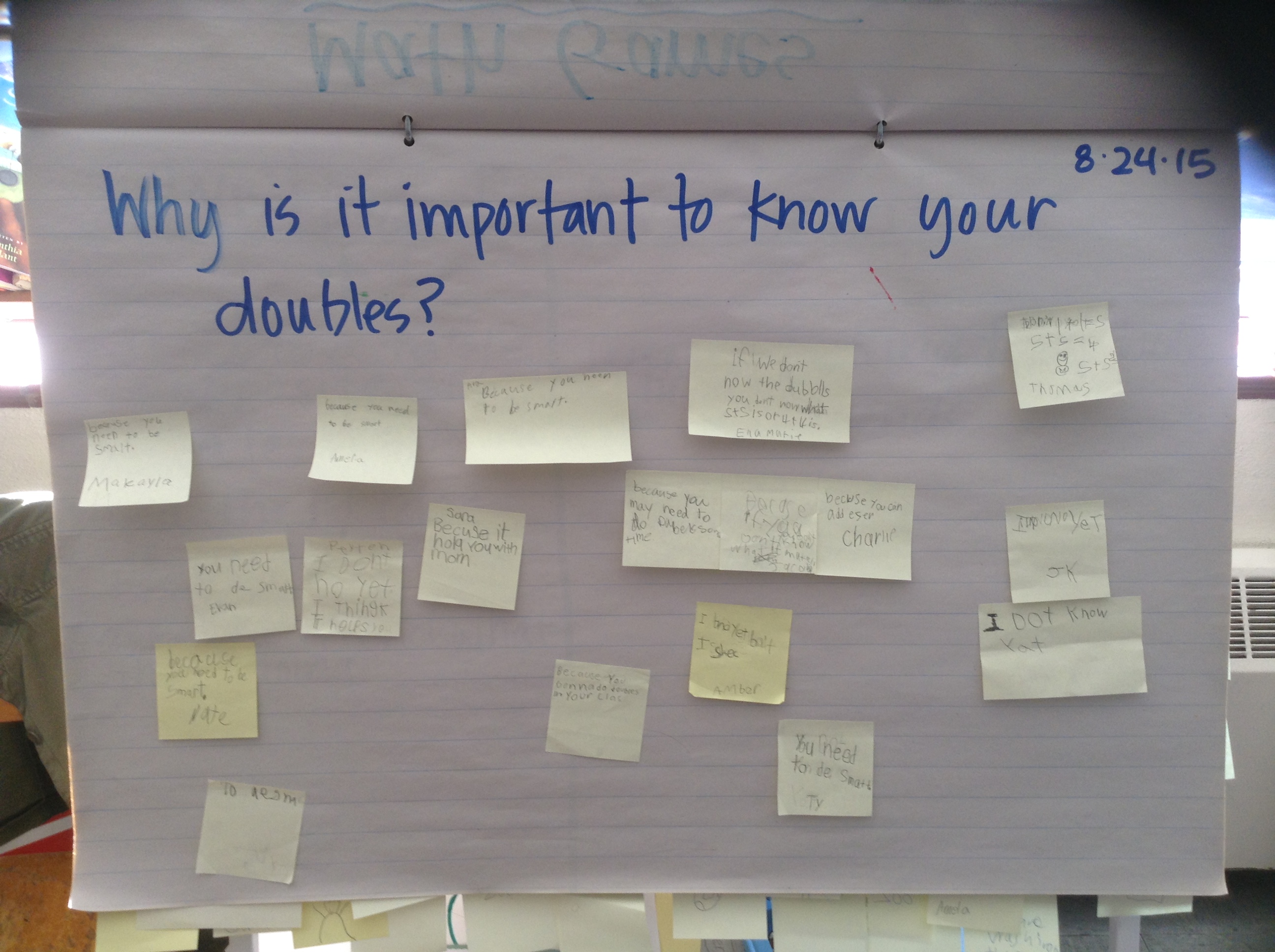
Even though we worked on this last year, many kiddos had a hard time with the answer to this question.  We’ve since been doing many things (games, two-pen tests, conversations) to help us remember (or learn!) our doubles, near doubles and combos of 10.  They all form the basis for the bigger things we’ll do with numbers later on.

IMG_5294Tuesday

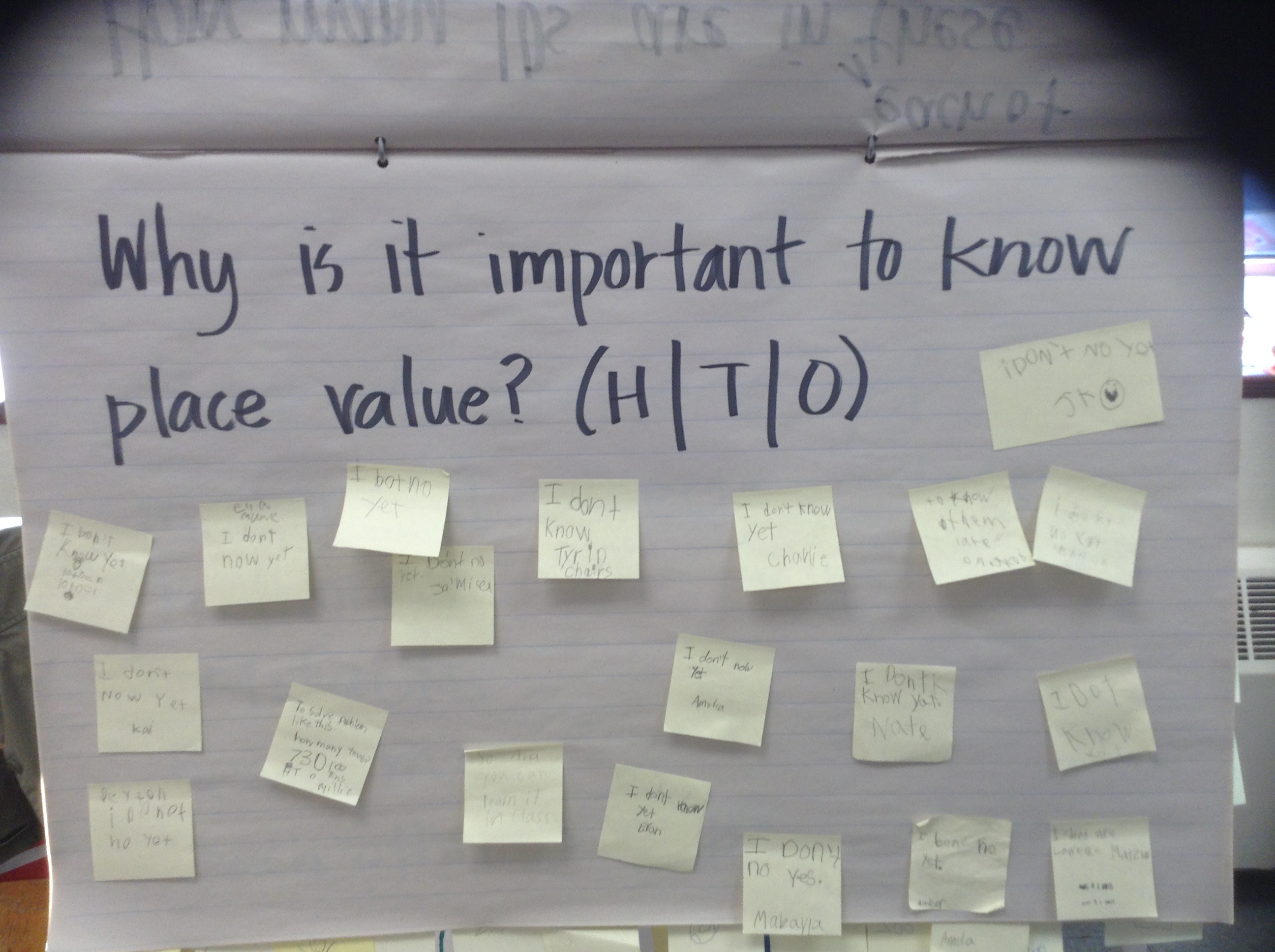
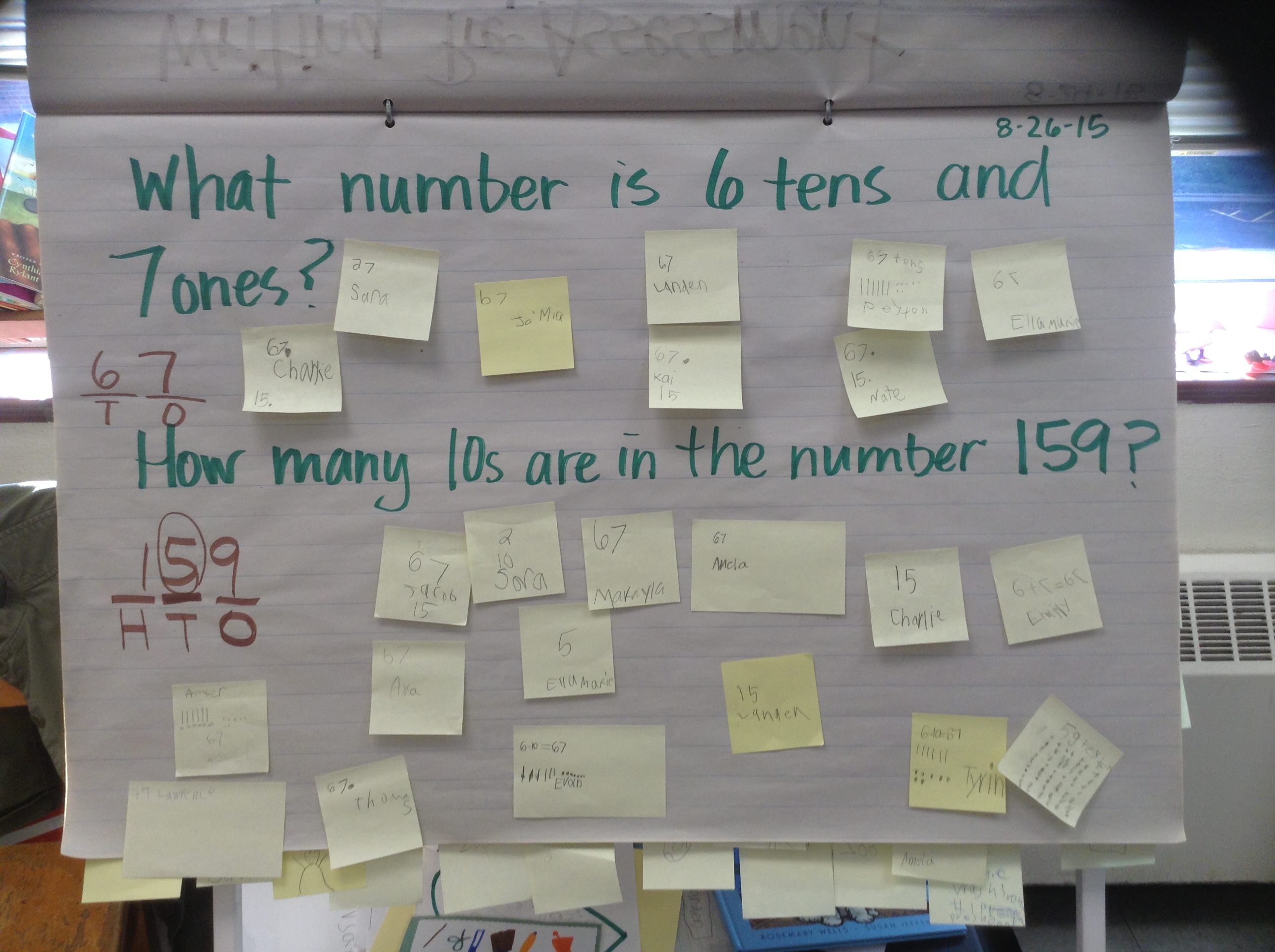
While I’m not entirely sure about the order of these next few warm-ups, the concept that is highlighted in them all is certain–the importance of place value.  Here was another that many had a hard time with.  Most of their answers were “I don’t know yet...”

IMG_5298

Wednesday

IMG_5295

Thursday

IMG_5297Tuesday, 9-1

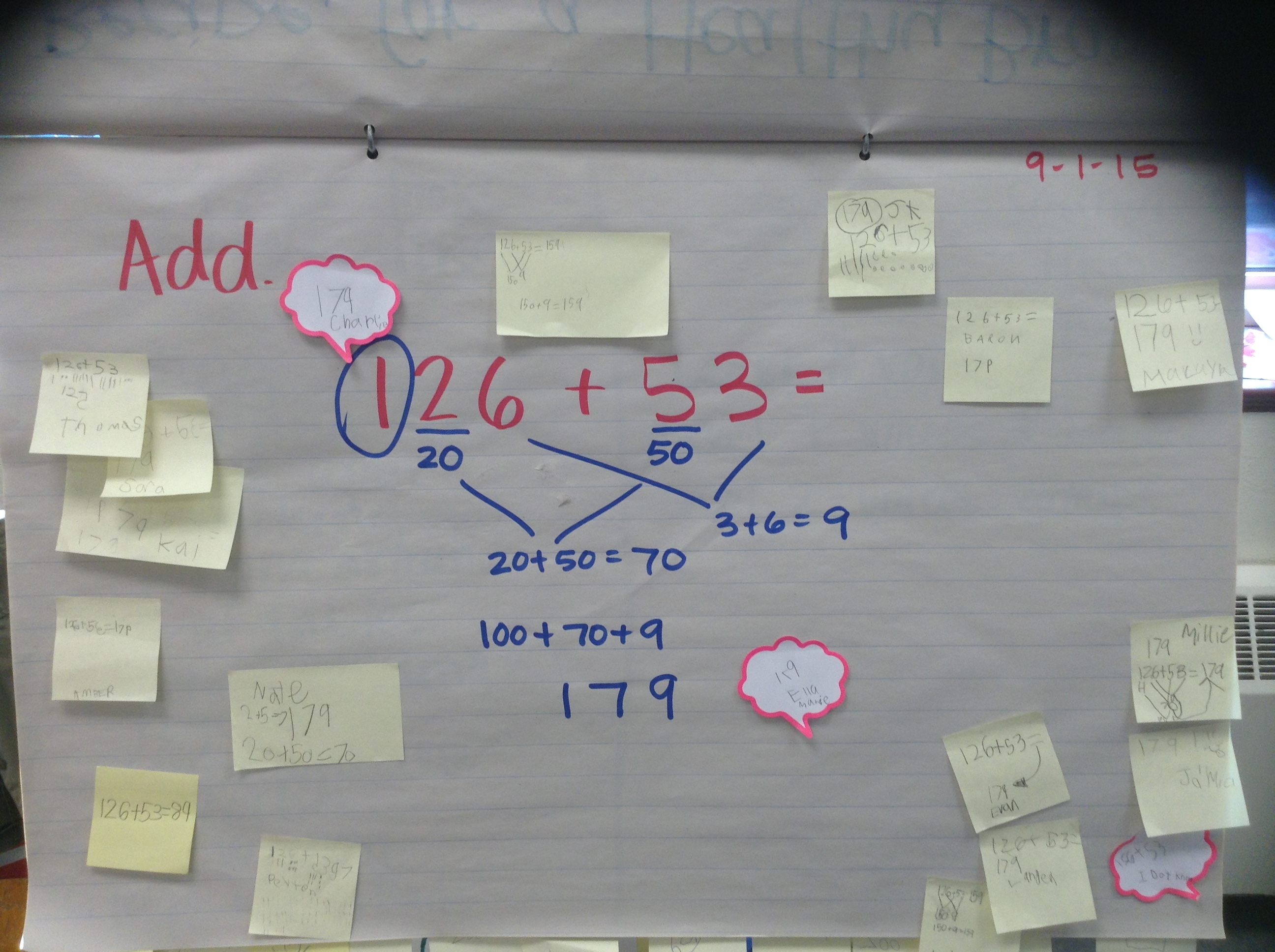
This one was an easy connection to the essential question (EQ) I had asked earlier.  They had to think about place value to answer this one, knowing which numbers to add to each other.

IMG_5300Wednesday

Although not related to place value, this warm-up was related to a conversation we had had in math workshop the day before, and is definitely something all 2nd graders need to know how to do–tell time!  Often I will spiral older concepts into math warm-ups to keep them on the front of our minds!

IMG_5302

Thursday

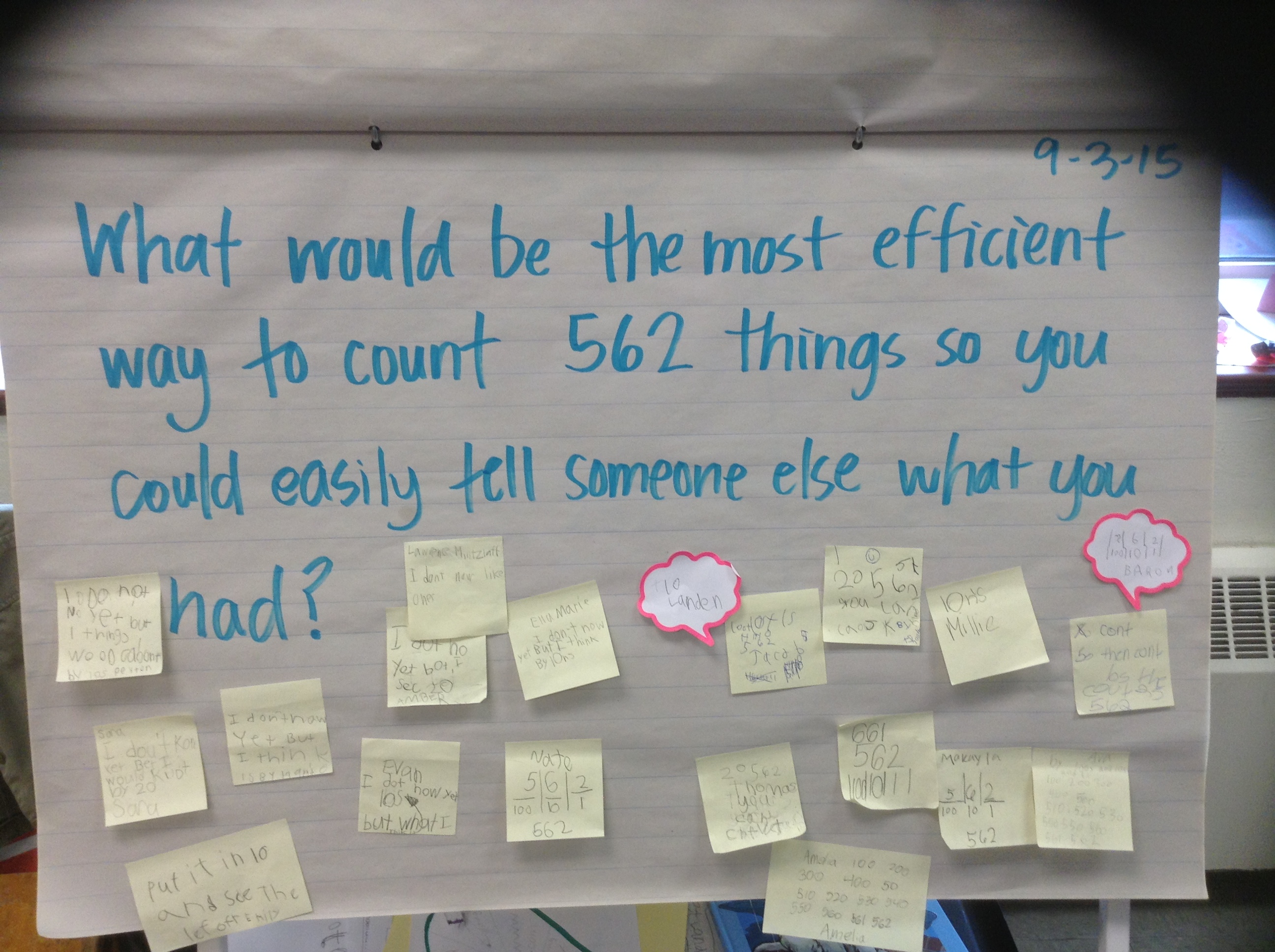
This warm-up, although badly worded, gave kiddos a little peek into a task I would have them do later that day in math workshop.  The question was really about the most efficient way to count a big ‘ole stack of something, which they’d have to do with a pile of popsicle sticks in a group that afternoon. I was happy to see how many of them were already thinking about bundling into 10s and 20s (rather than counting them all by 1s).

IMG_5303Friday

The warm-up on Friday was actually the end of the lesson from Thursday, and mathematicians completed their thinking with their learning partner in their math journal, which is different from how they MWU normally works.  I love how we can adapt this structure to work for our needs!  Since many of us have been doing this for a whole year now, it was easy to make that little tweak and still have them know what to do.  In this warm-up, kiddos were asked to model the counting we had done together the day before.

IMG_5304

Second Grade Math Warm-Ups: 8-18 to 8-21

When I first started using math warm-ups a couple of years ago, I had no idea how useful they would end up being in my classroom.  They are quick, easy and definitely give me a bank for the buck.  So of course I am using them again now that my mathematicians are second graders!  Here is how we got started this year:

Wednesday

I waited until the second day of second grade to start, and since we spent all last year doing this, most of my friends knew exactly what to do.  I just had to introduce my new friends (there are 4 of them) to this routine.  I started with a question everyone could answer (and if I remember correctly, it’s one of the first problems we did last year, too).

Screen Shot 2015-08-23 at 2.49.46 PMFriday

As I think about how we’re getting started in Math this year, our focus will be on making sure we have a firm foundation of basic skills and facts before we move on to other things.  That means we’re going to review combinations that make 10, doubles, doubles +/- 1 and basic addition/subtraction facts.  Hence the next question:

Screen Shot 2015-08-23 at 2.50.00 PMNote that I had to revise my question, since kiddos wrote 1 combination and thought they were finished.  I drew the visual of the 10s “rainbow” as we discussed the problem, and it was good to hear a couple of friends say, “Oh, now I get it!”  Like me (who is a visual learner), seeing how those numbers connect is important to their understanding.  This is definitely become an anchor chart in our classroom!

Getting Started in Second Grade

Wahoo!  We’re finally getting started!  I spent some time getting ready, and it was fun to stop getting ready and finally get started!  And since we’re looping, it has definitely been fun doing just that.  I was looking back at the beginning of the year from last year to see what I had written about, and MAN–our kiddos were BABIES!!  You should take a look and see how much all those munchkins have grown since last fall.

As is usual fashion for me here on 20somethingkids, I have TONS of stories to tell you!  I am making a list of it all here, partly to help me make sure I get it all in, but also just in case you want a place to land to find it all.  Once I add the post, I’ll link to it on this page and you can easily find it again.  Ok, here we go!!

Over the last few weeks, we have done so many things!:

Marshmallow Challenge: Second Grade Style
Getting Started with Reading: Reading museum
Getting Started with Writing: Tiny Notebooks

Tiny Notebooks: Sharing

Self-Portraits
Appleletters
Reflection with plusses and deltas
2nd Day of 2nd Grade Selfies
Getting Started with Math: How Much is Your Name Worth?
Weak side/Strong side
Anchors of Learning
Math Warm-ups 8-18 to 8-2

…yet

I Hope You Make Mistakes

I know there were many things crammed into those first days together, but when I see it all in a list, I’m still amazed.  Let’s get into it!

First Grade Math Warm-Ups: Week of May 4-May 8, 2015

I had thoughts all last week of how I couldn’t wait until the Warm-Ups post to brag on the awesomeness that happened, but alas, I guess I saved it anyway….so get ready, this is definitely NOT first grade math happening here, people!

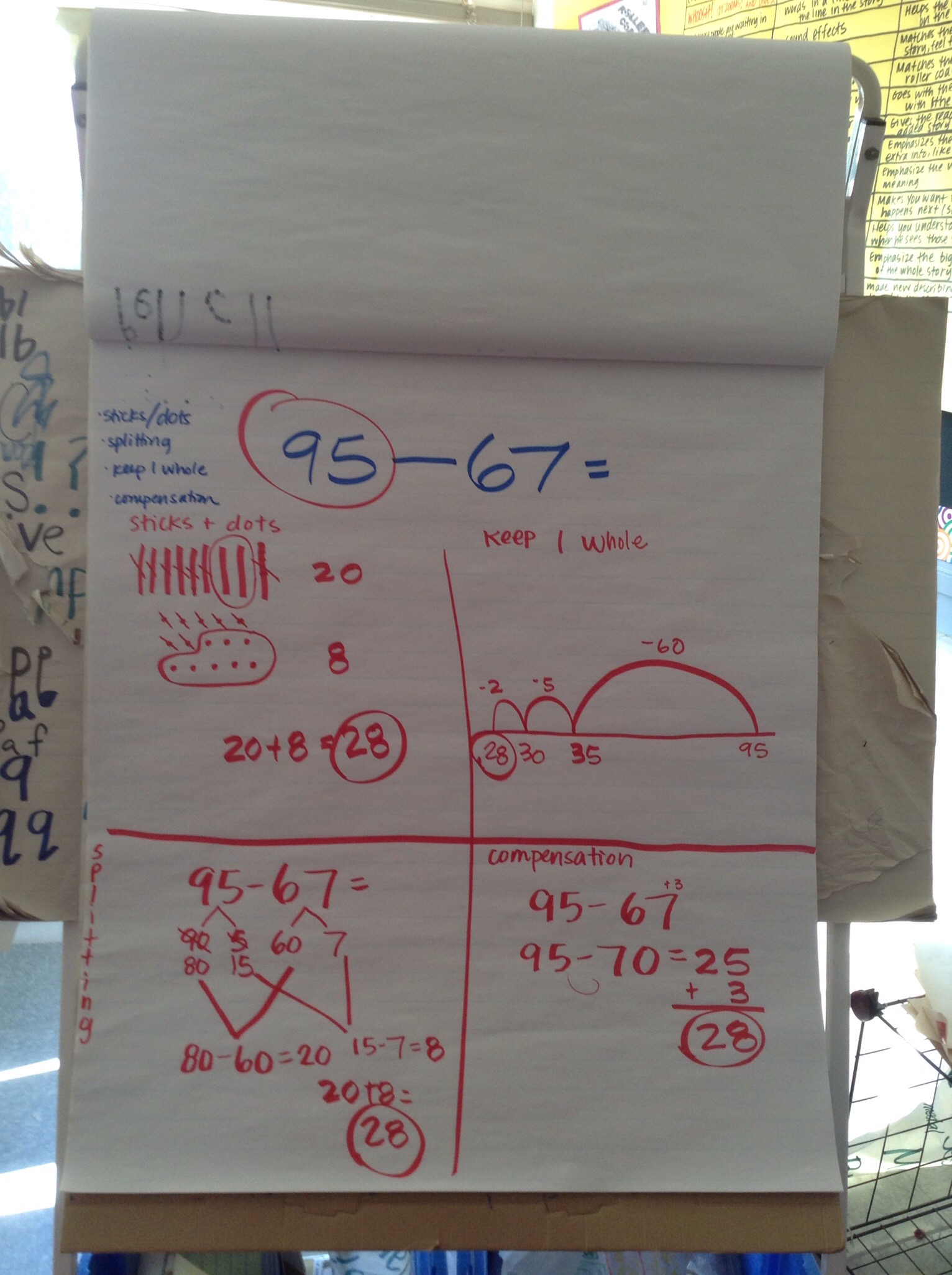
We had three problems this week, and they were all in the same vein–2-digit subtraction where kiddos were asked to try ALL 4 STRATEGIES we’ve worked on in our class this year.  And they were up to the challenge, even though it had been a while since we’d worked on subtraction.  I was SUPER impressed, and I think they were, too!

The benchmark in 1st grade says that only have to be able to subtract to 20, but since we were doing addition to 100, we went ahead and followed along with subtraction as well (why stop them if they can go farther??).  They also only had to be able to do it in 2 ways, but again, I think it’s good to be flexible with strategy and begin (even as a first grader) to learn which strategy is best for the numbers.  In this case we used each strategy each time, but talked about which ones made the most sense.  Let me show you the part we were most proud of:

IMG_3072I don’t know if you can tell, but that’s not an ordinary 2-digit subtraction problem.  Nope–it’s one that will need to use what we used to called regrouping but that honestly now we don’t really call anything.  It’s just what you do to make the problem work!  Please also notice that there’s no “stacking” or traditional algorithms here and these littles can still figure out the solution.  Nice, right?  I know some wouldn’t believe it’s possible….:)

My favorite part is when we started with sticks and dots, and we realized that we couldn’t do what the numbers told us to do–we couldn’t take 7 dots away from the 5 we had drawn.  Millie noticed it right away and then we had a great conversation about what we could do about that.  Makayla suggested that actually there were 10 dots inside each of the sticks we drew (how’s that place value work for ya?). We decided if we crossed off that last stick (which represents a 10) and added those 10 dots instead to the dots already there, then we could do it.  We ended up with 15 dots (ones) that we could take 7 away from.  We used the double-minus-1 problem of 14-7 is 7 so 15-7 is 8 to get that part of our answer.

Then, when we tried to do the same problem with splitting, we ran into the same problem–we didn’t enough to do that part of our problem.  Since we had just done it, we knew we could try it again, and moved the 10 from our 90 to make 80 and then the 5 became 15.  Voila!  It all worked out. 🙂

This is some pretty amazing stuff, and I’m impressed to hear both their fearlessness and pride when they figure out what to do.  I also love how differently 1st graders seem to tackle problems like this that are hard, or challenging, or that don’t at first seem like they’ll work–they just jump in and try something and see what happens.  They haven’t yet learned that they can’t do it, they aren’t worried about whether or not they make a mistake, they know they have many tools in their toolboxes that they can use till they figure it out.  I hope to be able to encourage this kind of approach to problem solving as I work with them again next year—crossing my fingers that I can help them keep that mindset for longer than maybe they would have…there’s hope at least. 🙂

First Grade Math Warm-Ups: Week of April 27-May 1, 2015

It seems that the later we get into the year (or maybe it’s just that we’re at the end of a math unit), the less interesting our warm-ups are.  I mean I guess they’re not for entertainment, but I guess I’d like for them to be fun and motivating.  We’ll see how well we did with that this week…

Monday

Guess we didn’t have a one on Monday.  Must have been a busy morning (is it bad that I can’t remember back to LAST WEEK?)

Tuesday

We continued on with data here…

IMG_4508

And then I showed how I would represent this data and we discussed what we learned from it, as well as other options for showing what the data tells:

IMG_4507Wednesday

Besides giving us practice with adding (and with bigger number!), and reminding us of some math vocabulary, this equation held some significance for our class.  Only I can’t tell you what it is until after Monday morning….sorry. 😦

IMG_4506Thursday

We had a fabulous field trip first thing on Thursday, so no math warm-up.

Friday

I think I’ve mentioned before, but one thing I love about how we do math warm-ups is when kids start to apply things you’ve learned (or are learning) during the unit to their work here.  For this one, I mean that someone thought we should have a t-chart to help us organize our thinking and our data.  It’s super easy to see that most kids in our class are 7.  🙂

IMG_4505

First Grade Math-Warm Ups: Week of April 20-23, 2015

This was a short week with only 4 school days anyhow, and I was gone for one of those, so only 2 warm-ups this week, friends.  Still working on data collection….

Monday

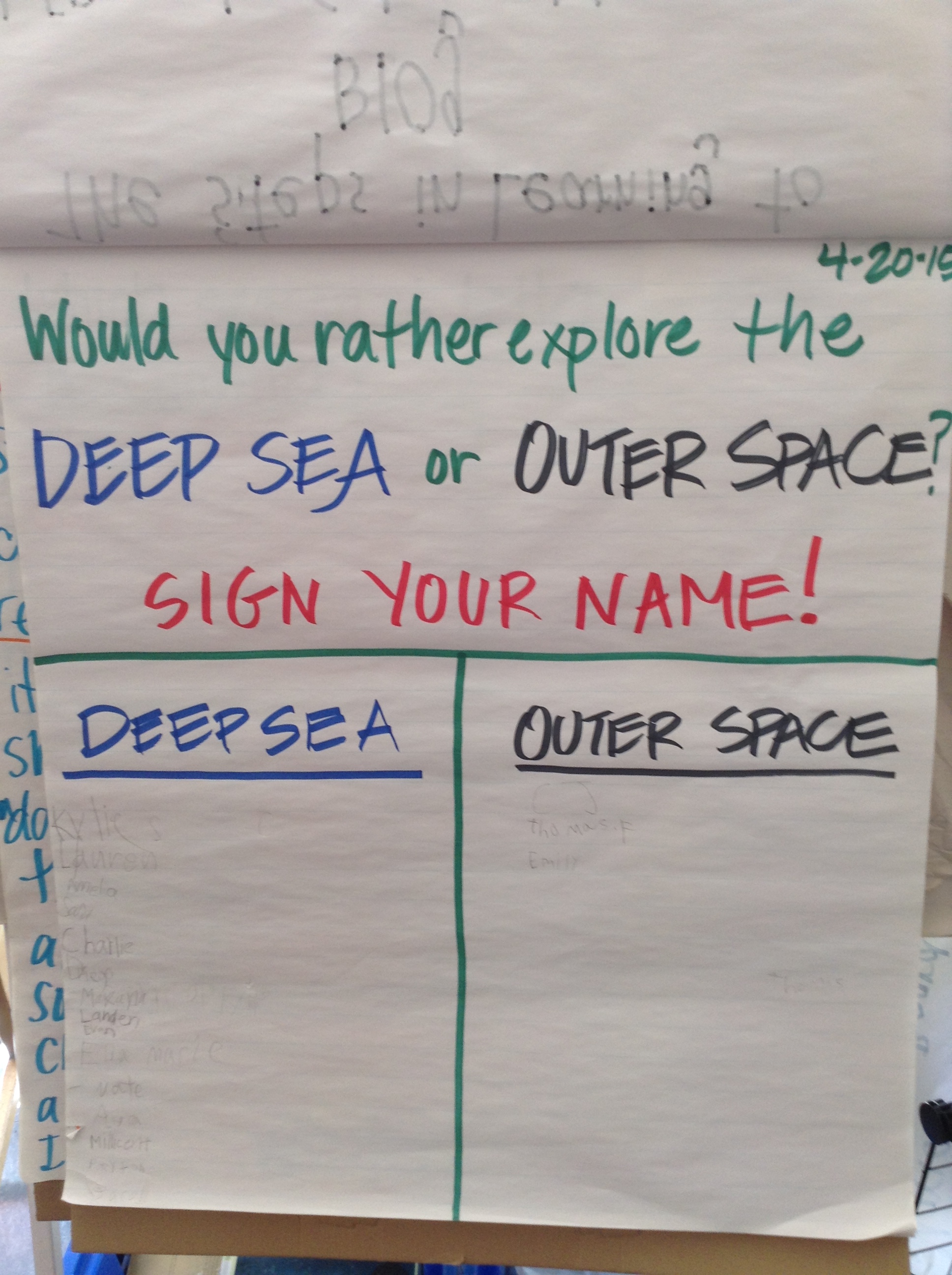
The warm-up for this morning directly tied to our work in Math, as it was the basis for a formative assessment.  We had been working on collecting, organizing and analyzing data for many days in whole group and partner situations, and it was time to try it on their own.  It’s hard to see, but there are names signed on each side of the t-chart.  We skipped the post-its on this day to make sure the data didn’t change before we could analyze it (we do this EARLY in the day and hours pass before we talk about it).

IMG_4469Tuesday, Wednesday and Thursday

Ok, so we really didn’t spend 3 days doing this one, but with a strange week, we did it on Tuesday morning, but didn’t have a chance to discuss it until Thursday afternoon.  The conversation we had around the analysis is documented on the sheet; the post-its were how we “voted.”  This is good stuff here. 🙂

IMG_4468

First Grade Math Warm-Ups: Week of April 13-17, 2015

Just like the focus several weeks ago was Walker’s Club, and last week’s were about data, these are data-focused as well.

Tuesday

This one was kind of a freebie, but was supposed to get kiddos ready for the work we’d do later on in the day (which really is the focus of how the Math Warm-Ups are meant to work anyway. 🙂 ).

IMG_4454 Wednesday

The warm-up on Wednesday was a little different from previous ones lately, whereas instead of them collecting the data, kids were asked to analyze the data and tell what they have learned from the data I’ve given them.

IMG_4453 Thursday

This one’s all about the chart Mrs. Appelbaum shared with us about the many ways we can represent the data we collect (which is exactly what kiddos would be doing later in the day!).  This one got them thinking early in the day, and also served as the introduction to our math lesson.

IMG_4452  Friday

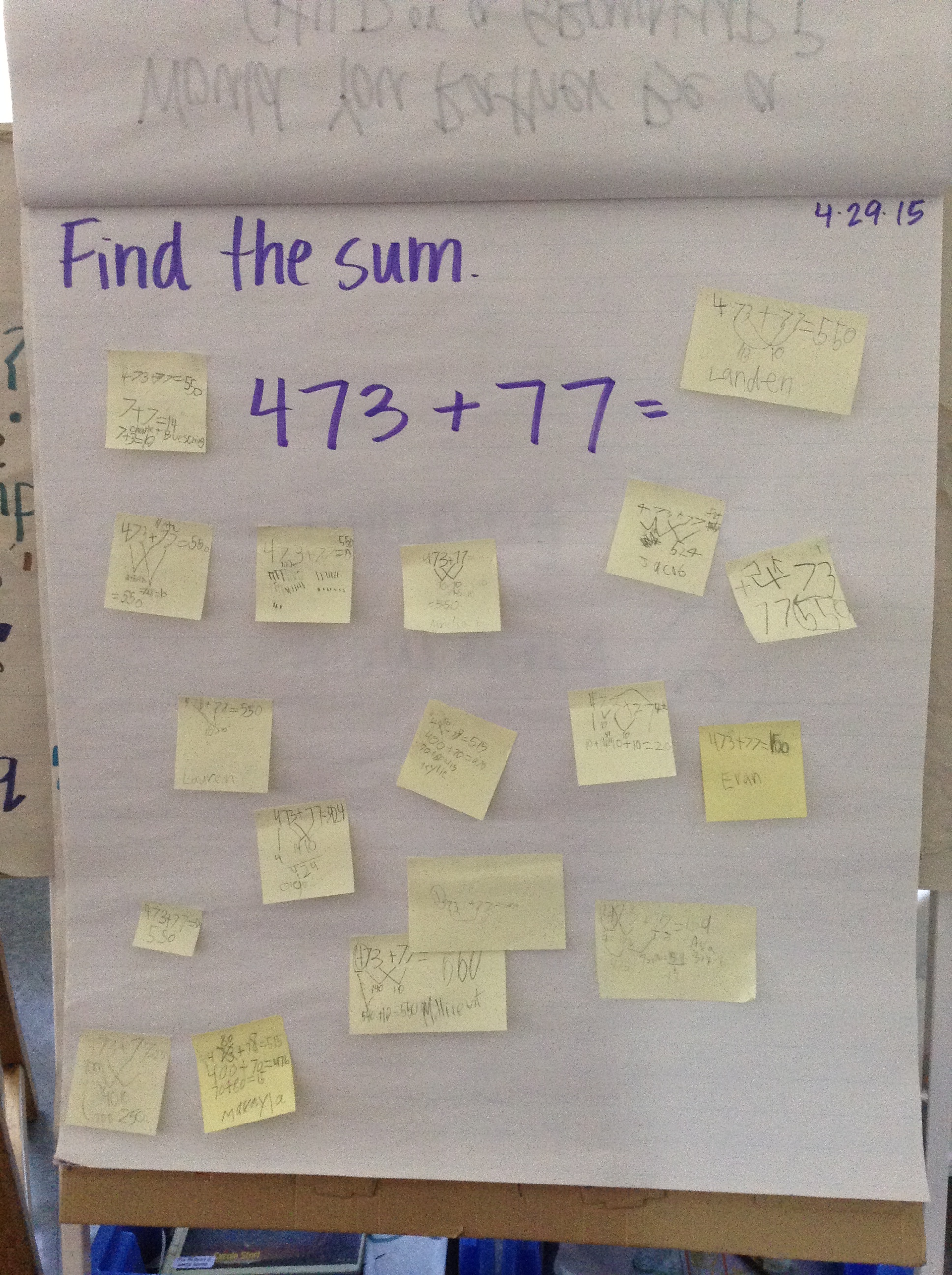
This one, you can tell, is not about data (directly), but IS about Walker’s Club laps and is a SUPER HARD one for first graders (our benchmark for addition is 2-digit numbers up to 100).  But you know what?  They TOTALLY KNEW WHAT TO DO!!  Those strategies we learned and used for 2-digit numbers?  They work for hundreds, too!  Way to go, Rm. 202 kiddos.  But you know what? I’m not surprised.  You’re pretty much always awesome. 🙂

IMG_4451

Walker’s Club UPDATE–Using 10s to Add Laps

I’m sure you know about our Walker’s Club competition that is happening at Robinson for April.  Well, I’m SUPER excited to say that two weeks strong our class is in the LEAD!!!  We have done both amazing walking AND amazing adding as we figured out our totals.

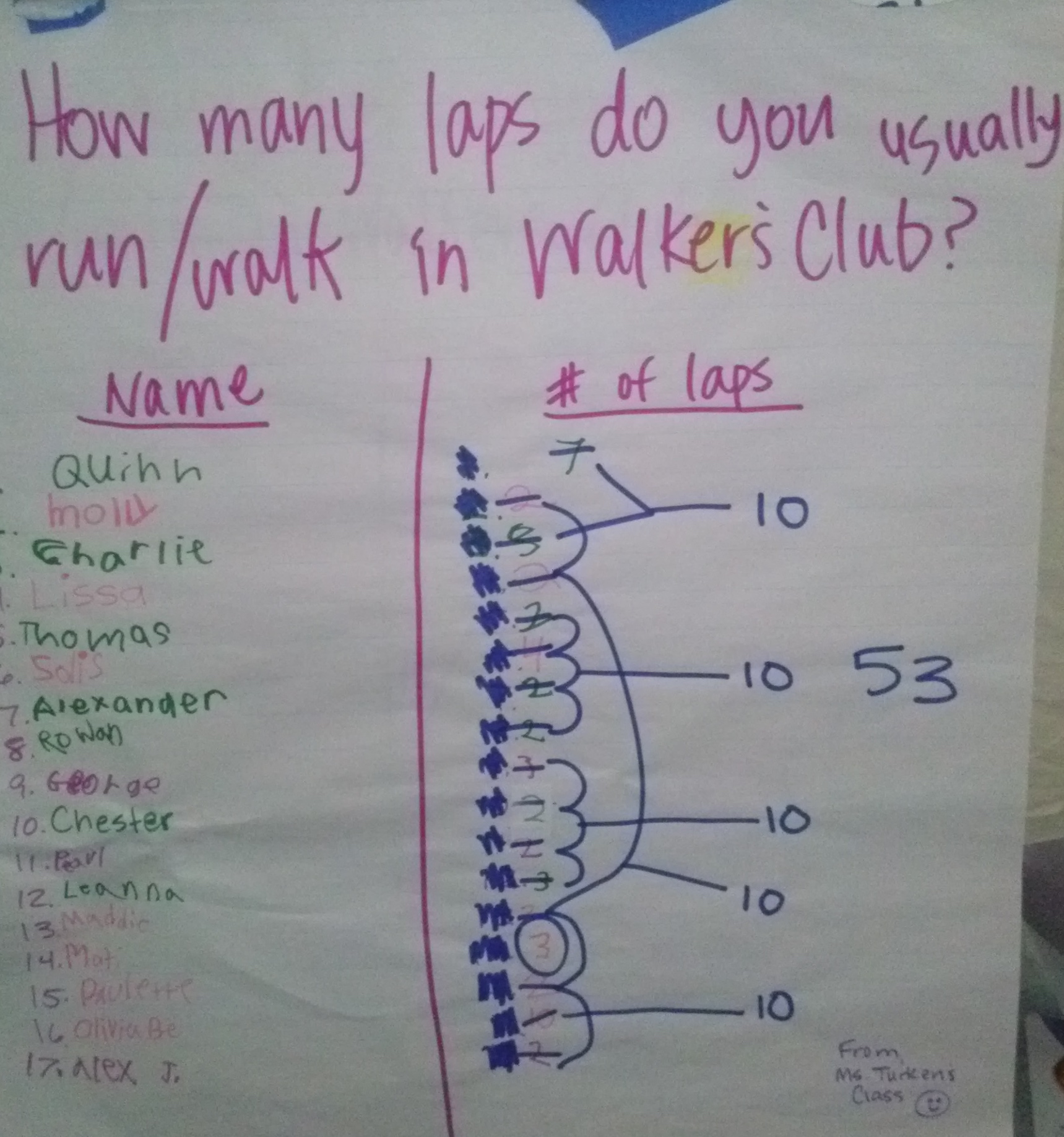
This week (well really the week ends tomorrow), we used a strategy that I stole learned from my neighbor Ms. Turken to add our laps.  Instead of using the strings to make combinations of 10 (like we had many times previously), we each wrote our lap total on an index card and used these cards to create combos.  It was a great way to be able to manipulate the numbers in an easier way, and actually SEE the 10s–they made piles, after all.

Thomas and C.J. worked hard this morning to add up our mid-week total for Week 3 of the competition.  Their work looked like this (they did the card work, and I put it on the chart):

Way to go Rm. 202 kids–for walking and adding in an amazing way!! 🙂

SPECIAL EDITION–First Grade Math Warm-Ups: Data Collection Focus

So I missed posting last week’s math warm-ups because my phone has decided not to talk to my computer (which, I believe is a ruse to make me finally give in and get an iPhone–everything else I use is Apple anyway, so I guess it only makes sense…) so I can’t show you the pictures I took.

Well, it seems that wasn’t so big of a deal anyway, because there have been lots of math activities (not just warm-ups) that have been related to data collection, and this way I can connect them all.  Bonus. 🙂

We began several weeks ago, as I knew we’d be launching into a unit on data collection and analysis, to try our hand at some easy surveys in our math warm-ups.  We talked with the very first one about the idea that we’ll be collecting, organizing and analyzing data (and what all of those things mean).   Then we spent many days answering survey questions, and doing just those things:

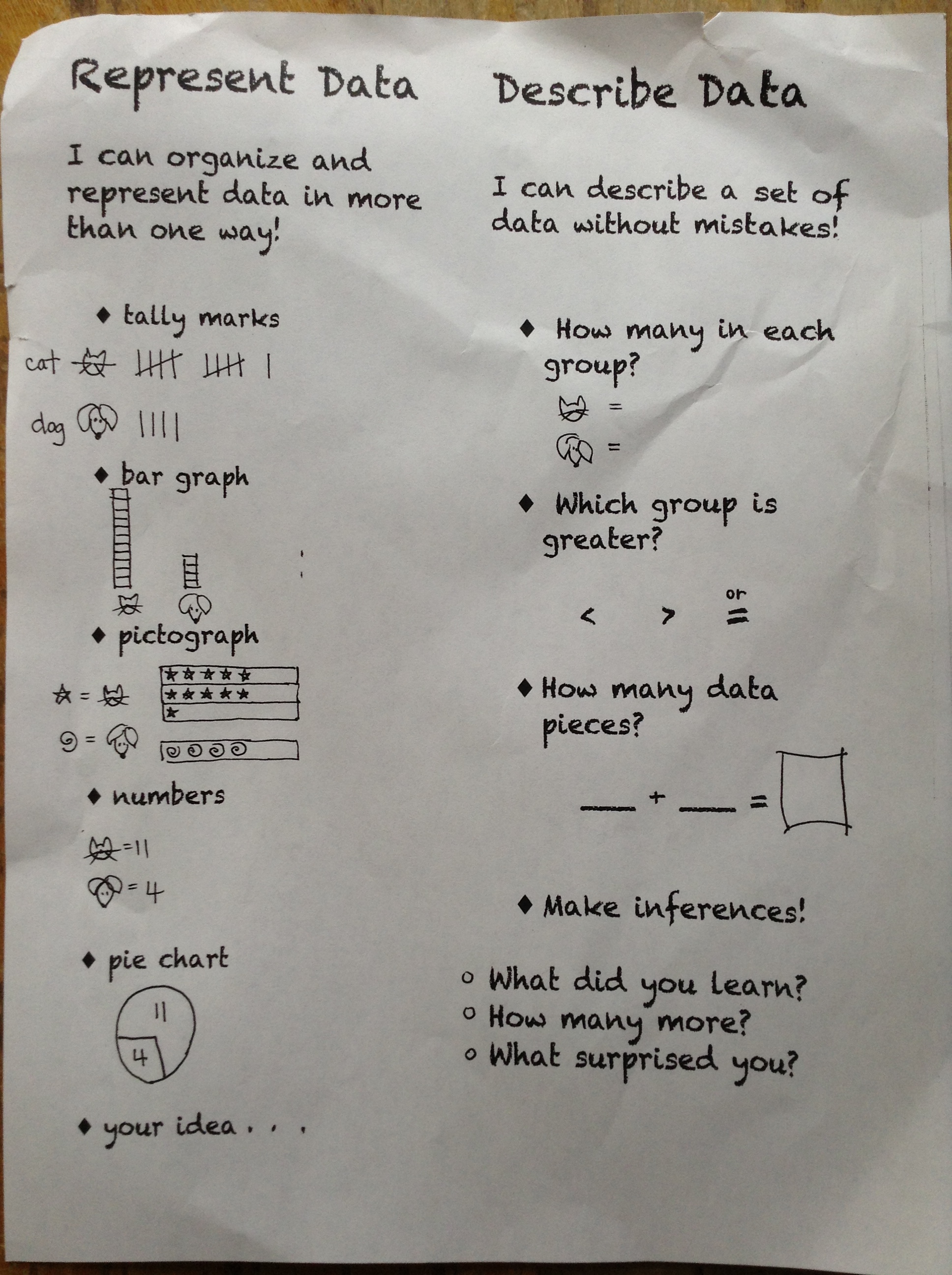
After we’d had some practice with the actual answering the question and orally analyzing the information, we started working on how to represent that information.  Thanks to my friend Mrs. Appelbaum (remember her, with the AWESOME name and the great idea for webs in writing/science?), I had a really good visual to show my kids the expectations for what they should be able to do with both describing and representing data by the end of this unit:

IMG_4345

I think the best part about this checklist is that a kiddo in her class asked her to make it so he’d remember what to do.

This checklist was the next step for us and with it we began to look at how to SHOW what the answers were, especially to people who weren’t there in our class when we took the survey (this meant that they would have to be clear and concise).

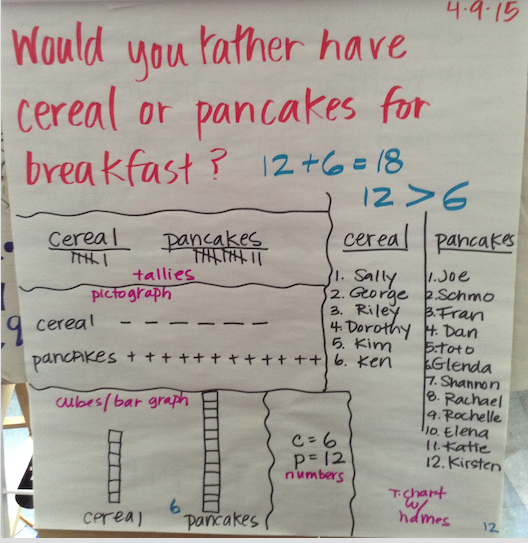
We had a go at the idea with that question about cereal and pancakes, trying it ourselves and then coming back together and trying many different ways that were on Mrs. Appelbaum’s sheet.  WOW–look at all of those ways to say the same thing:

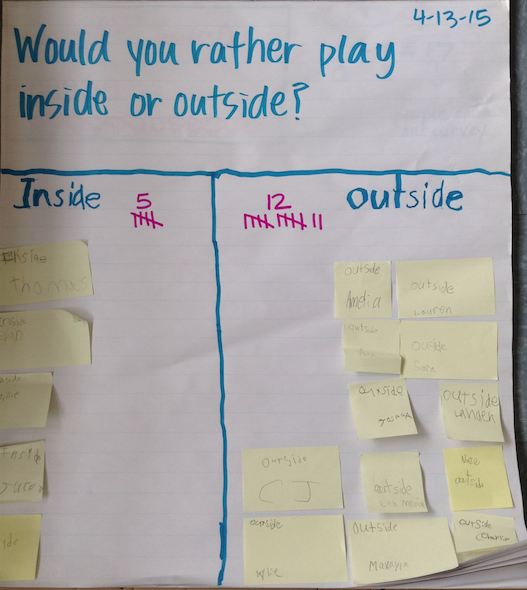
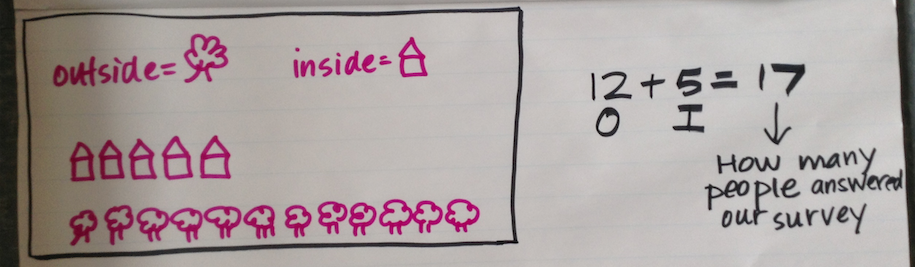
Screen Shot 2015-04-13 at 7.57.08 PMToday’s work was really cool as 3 friends decided to start organizing it AS we were collecting it.  Jacob, Lauren and Amelia made the paper into a t-chart and even put labels so kiddos would know where to put their answer:

Screen Shot 2015-04-13 at 8.17.44 PMWe showed the total with both tallies and numbers, and then also tried a pictograph:

Screen Shot 2015-04-13 at 8.19.53 PMWe also talked about the part of the checklist where we make sure to show how many people took the survey, which we did by adding the totals of both columns.

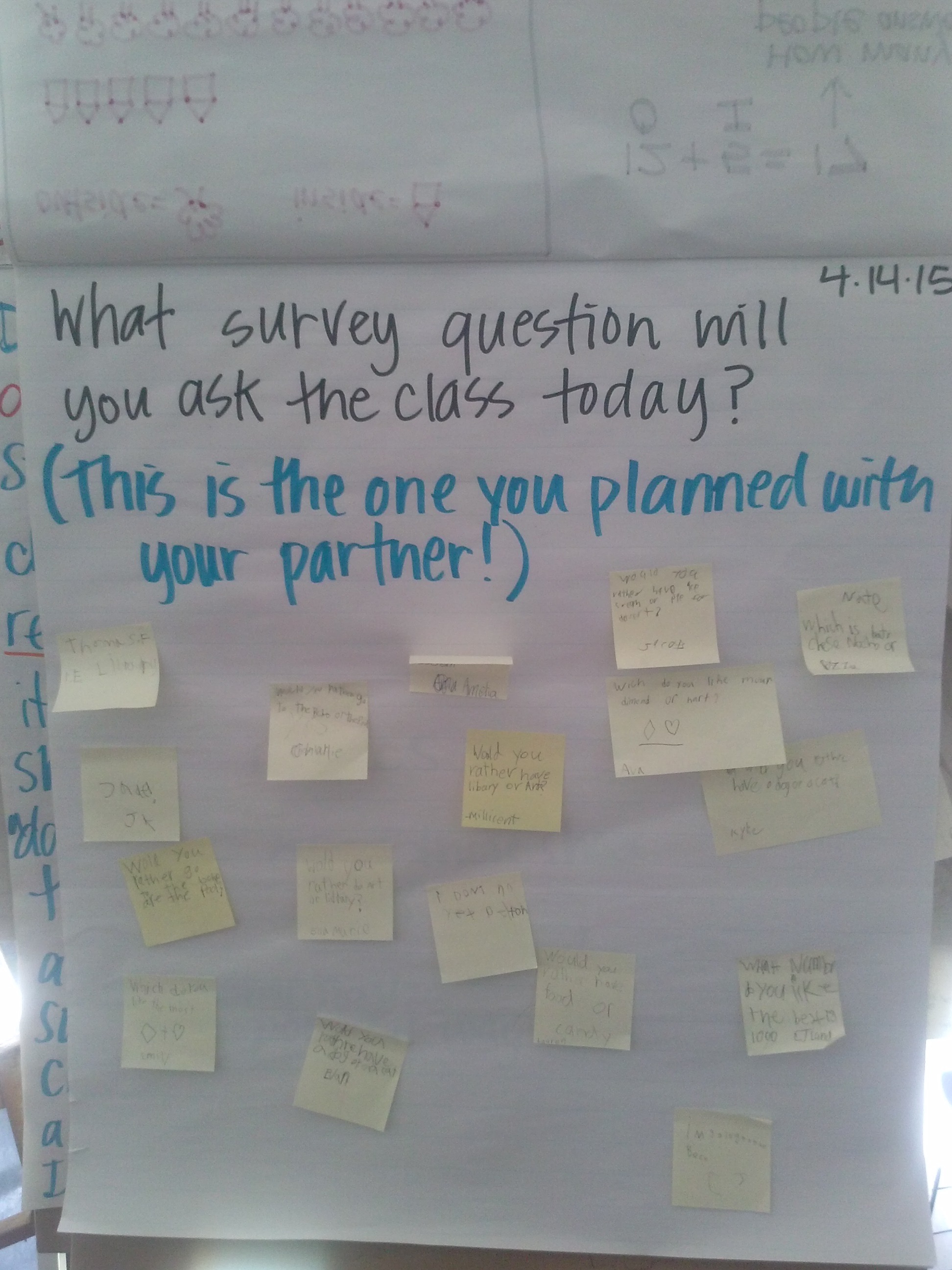
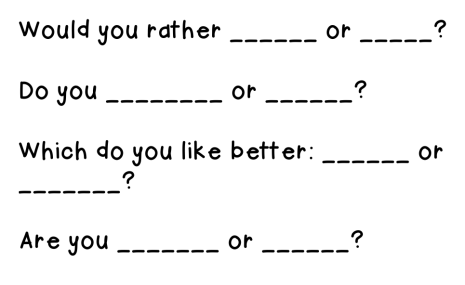
Today we took a fun and important step and began to do surveys on our own!  We reviewed the steps and then worked with a partner to plan the question we’d be asking, using these ideas for stems:

Screen Shot 2015-04-13 at 8.22.46 PMTomorrow we ask the question of our friends and start collecting data!  Stay tuned for the fun! 🙂

First Grade Math Warm-Ups: Week of March 30-April 3, 2015–WALKER’S CLUB EDITION

Our math warm-ups are almost always related to what we’re working on in math.  Sometimes it’s the beginning of the unit, and so kiddos don’t have much schema yet and aren’t really sure what to do.  Later then, the warm-ups become practice of the strategies they’ve learned and are working on perfecting (or at least using more efficiently).  This week, they were even the same topic: Walker’s Club.

Let me explain…

In a nutshell, this year we started a program to help our Robinson kids stay healthy and active, as well as have productive fun at recess.  We call it Walker’s Club, and on Tuesdays and Thursdays, everyone walks laps around our playground at recess.  Every kiddo (and now even teachers!) has a card to keep track of laps that is punched each time they come around.  Parents, principals, teachers and even a group of kids volunteers to be punchers, and there’s always a big buzz about how many laps kiddos have at any given time.  There are prizes called Toe Tokens that kiddos earn at certain increments along the way.  So fun!
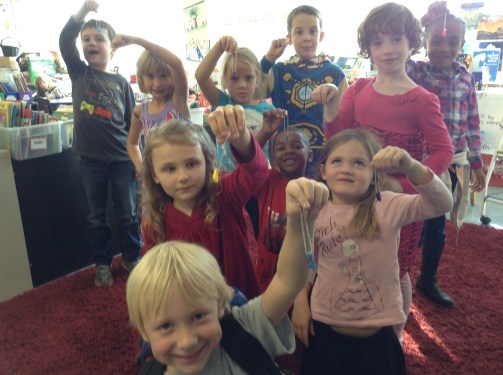
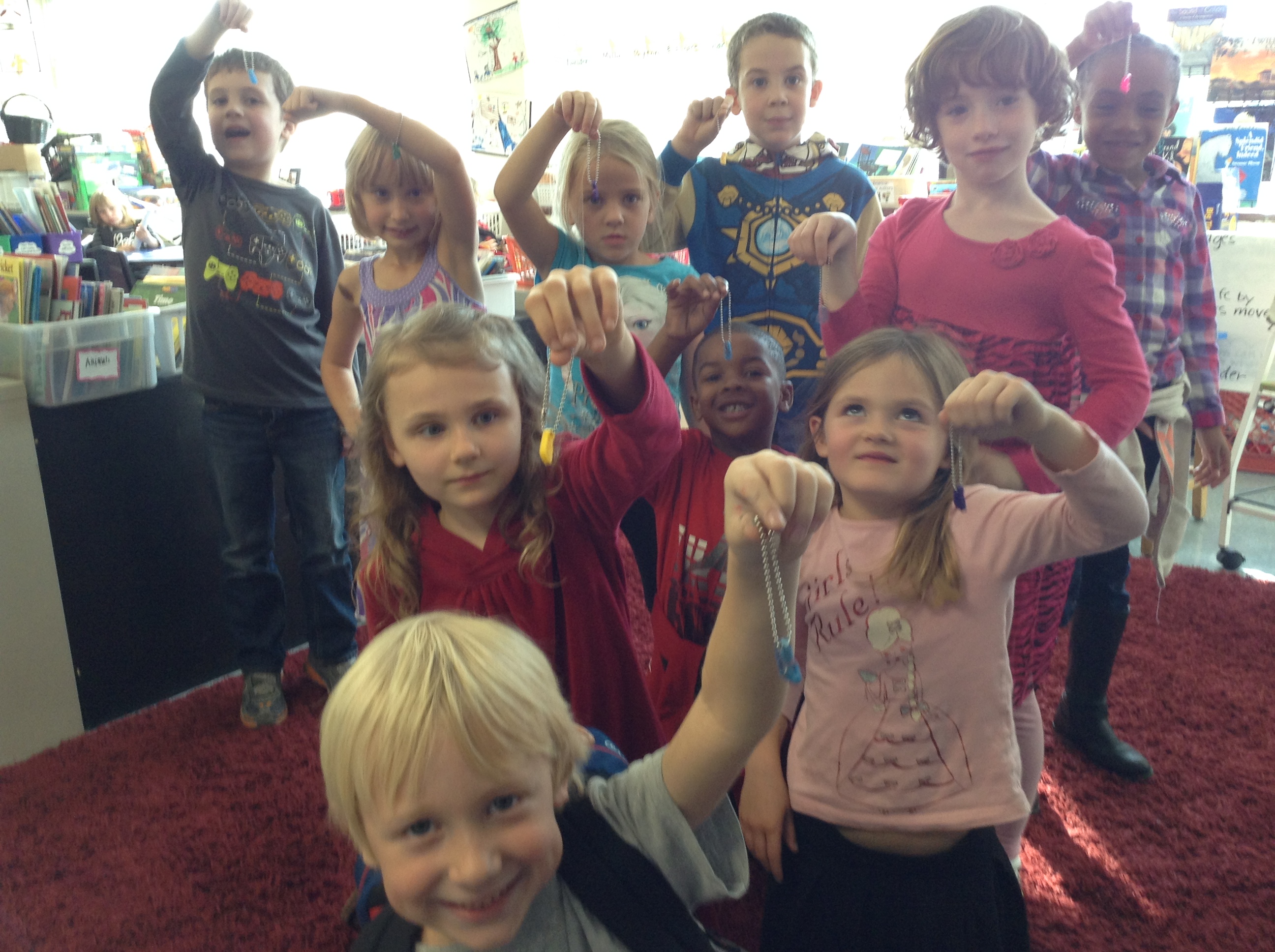
IMG_3705

This picture seems like it’s from so long ago! Don’t know how I didn’t share it earlier–they seem so little, don’t they?? 🙂

Well, to make it even better, and to celebrate National Walkers’ Day (which happened on April 1), Mrs. Wilson decided to make a competition for the month of April to see who can walk the most laps.  Each grade level will have a winner, and that class will earn an extra 20 minute recess + POPSICLES!!  Needless to say, it. was. on.

Math this week, then, naturally began to revolve around Walker’s Club laps: setting goals (first it was a conversation on how to set goals) how many laps other classes were walking, how many we could walk in a day, and how many we actually walked in one day.  Oh, and strategies for how to add up long strings of numbers so we could answer each of those previous questions.

Check out what we’ve been working on this week!

CAM01851

As we started out our goal-setting, we decided (ok, so I suggested) that we should figure out how many we laps we usually walk on a Walker’s Club day. We could use this number (along with some other data we collected) to set a goal for how much each kiddo would walk/run every WC day.

CAM01852

After we knew how many laps was our usual, we decided to ask our first grade friends the same question. Since they were the ones we’d be competing against, we also needed to know their usual number so we could adjust ours and make a goal that would matter.  This one’s from Ms. Turken’s class.  We got some data back from other classes, too, but haven’t yet analyzed it.

I need to insert a little note here: the first time we sat down together to add up that big string of numbers, we didn’t really know what to do.

Screen Shot 2015-04-03 at 9.23.00 PM

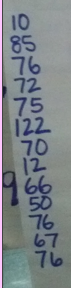
See this?  These are all of the answers we got when we went to work with our partners to add up the data.  WOW!  All the way from 10 to 122!  We needed some practice with an efficient and ACCURATE way to put lots of numbers together.  This gave me some ideas for future work in warm-ups.

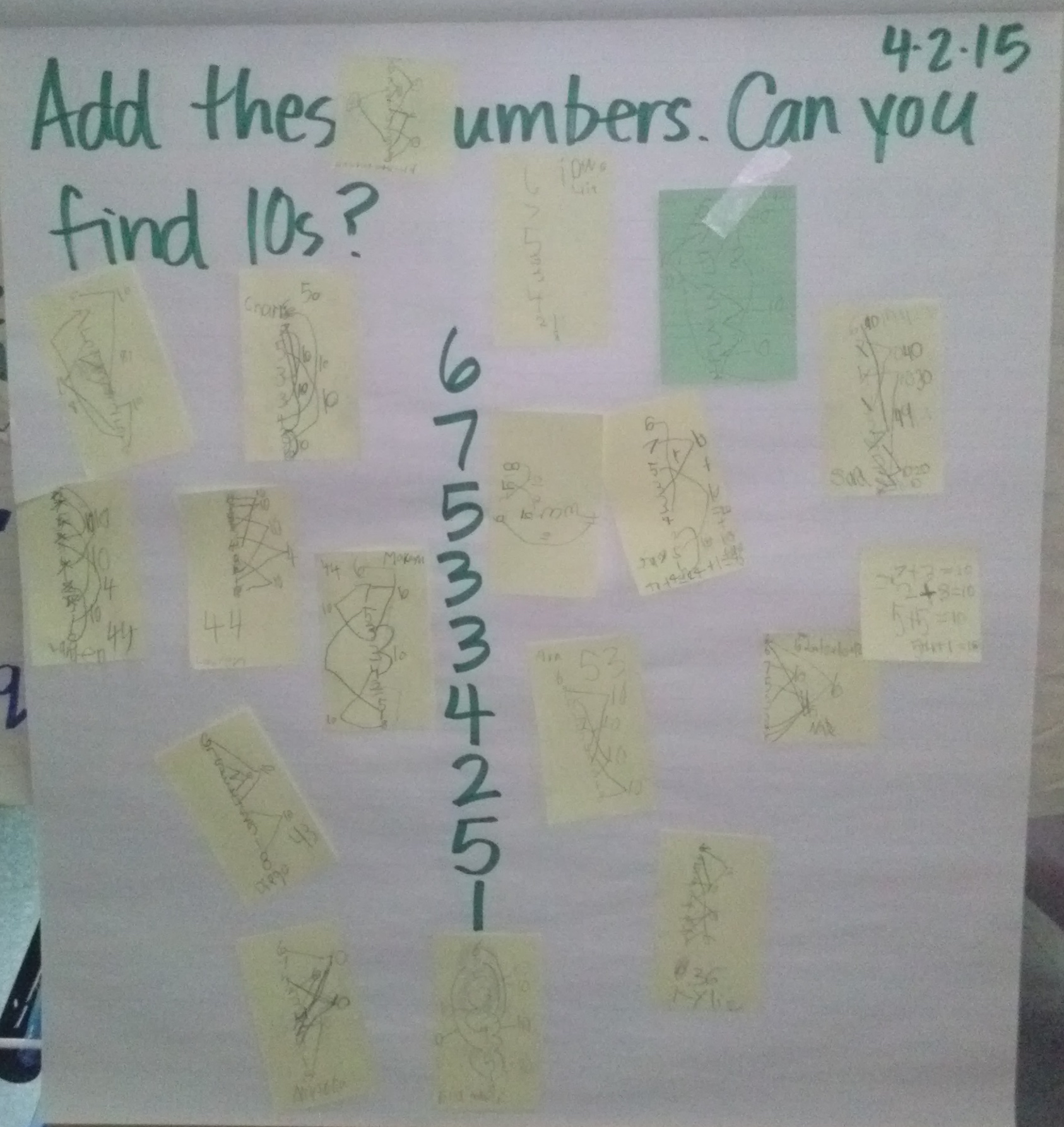
So next came the idea of finding 10s as a quick (and organized) way to put lots of numbers together.   We then added (and readded) all of our data together from our chart and Ms. Turken’s chart.  We also tried it with other random lists throughout the week (so that when we came up on Walker’s Club data again, we’d be better at using that 10s strategy):
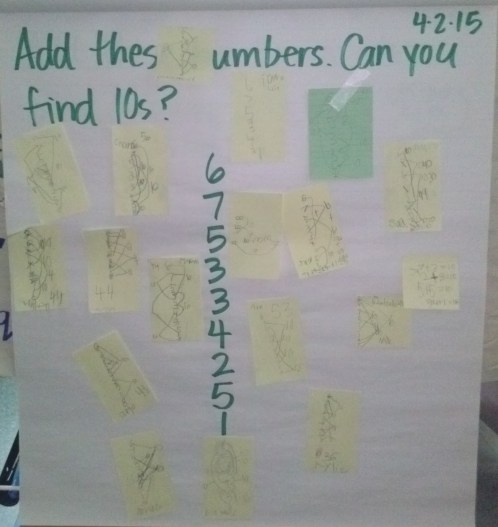
This one was a practice problem from the morning, but we didn't quite get time to review it later in the day.

This one was a practice problem from the morning, but we didn’t quite get time to review it later in the day.
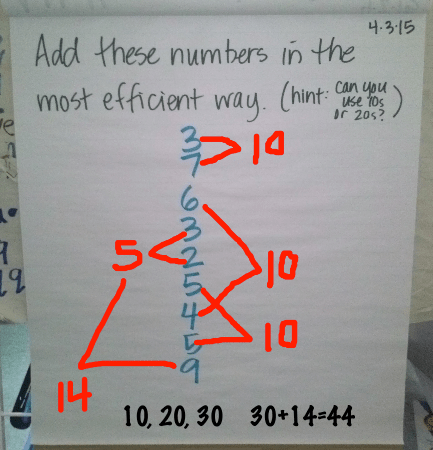
This one was actually the warm-up from Friday (when I was out of the classroom), and I showed the sub how to record the combinations of 10s.

This one was actually the warm-up from Friday (when I was out of the classroom), and I showed the sub how to record the combinations of 10s.

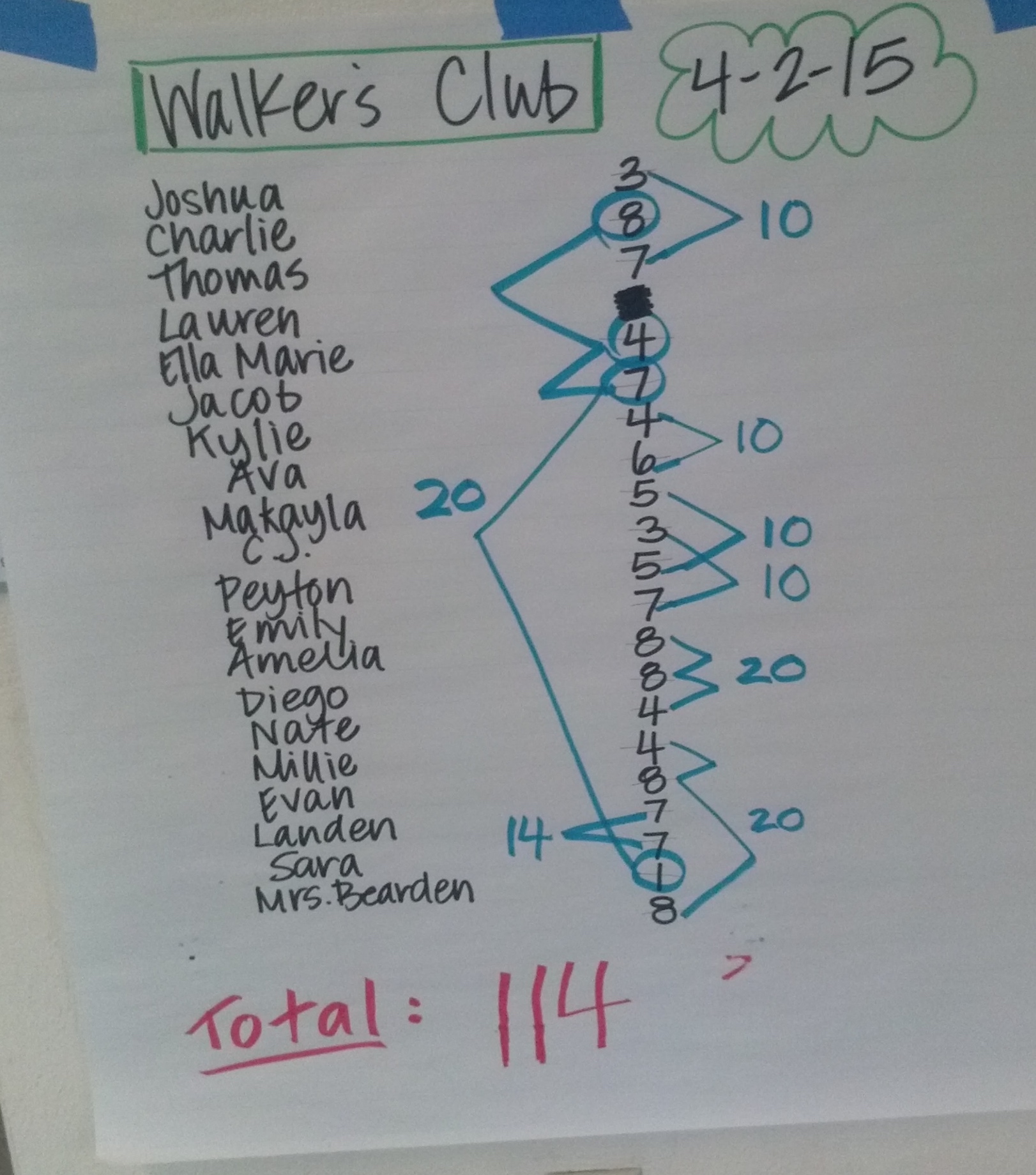
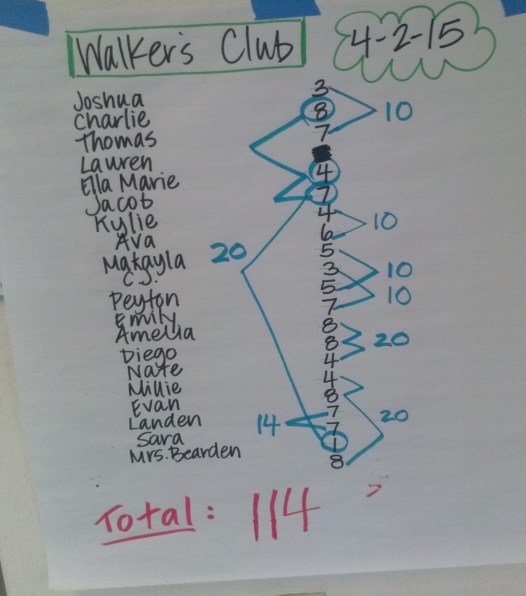
This practice did help us, and when we added together our first OFFICIAL Walker’s Club list of laps, we knew what to do.  The problem (which was a good one to have) was that our list included lots of numbers that we couldn’t put together to make 10s.  That’s totally cool, though, because Evan had just been working on how to put numbers together to make 20s and 30s (and other multiples of 10) on Dreambox, so he helped us figure out what to do with all of those 8s:
CAM01855

When I wrote my lap number up there, I felt a little bit funny since it was so much less than my Rm. 202 friends. I was SUPER glad to know it helped us out, though, as we could use it to go with some other numbers to make a combination of 20. Whew!

Check that out: on our first day we walked (and ran) 114 laps!!  This made us feel like we were off to a tremendous start (especially since we knew Ms. Turken’s class had only done 75 on their first day) and helped us set at least a preliminary goal for ourselves: we need to walk/run at least the number we did today to stay ahead of our friends.  We’ll talk more about how many that will be in all when we come back next week, and we’ll adjust that goal as we go forward and begin to hear what the other 3 classes are doing.  And hey, no matter who wins this April competition, we ALL WIN because we’ve got new strategies in our toolbox! Plus we will all have had lots of fun and lots of fresh air and exercise!  How can anyone complain about that!?

We’ll keep you updated on our progress as we go through the month! 🙂