We only had two warm-ups this week–more Number Puzzles. This time there were four clues, though, instead of just two. We discussed strategies for where to start and where to go next.
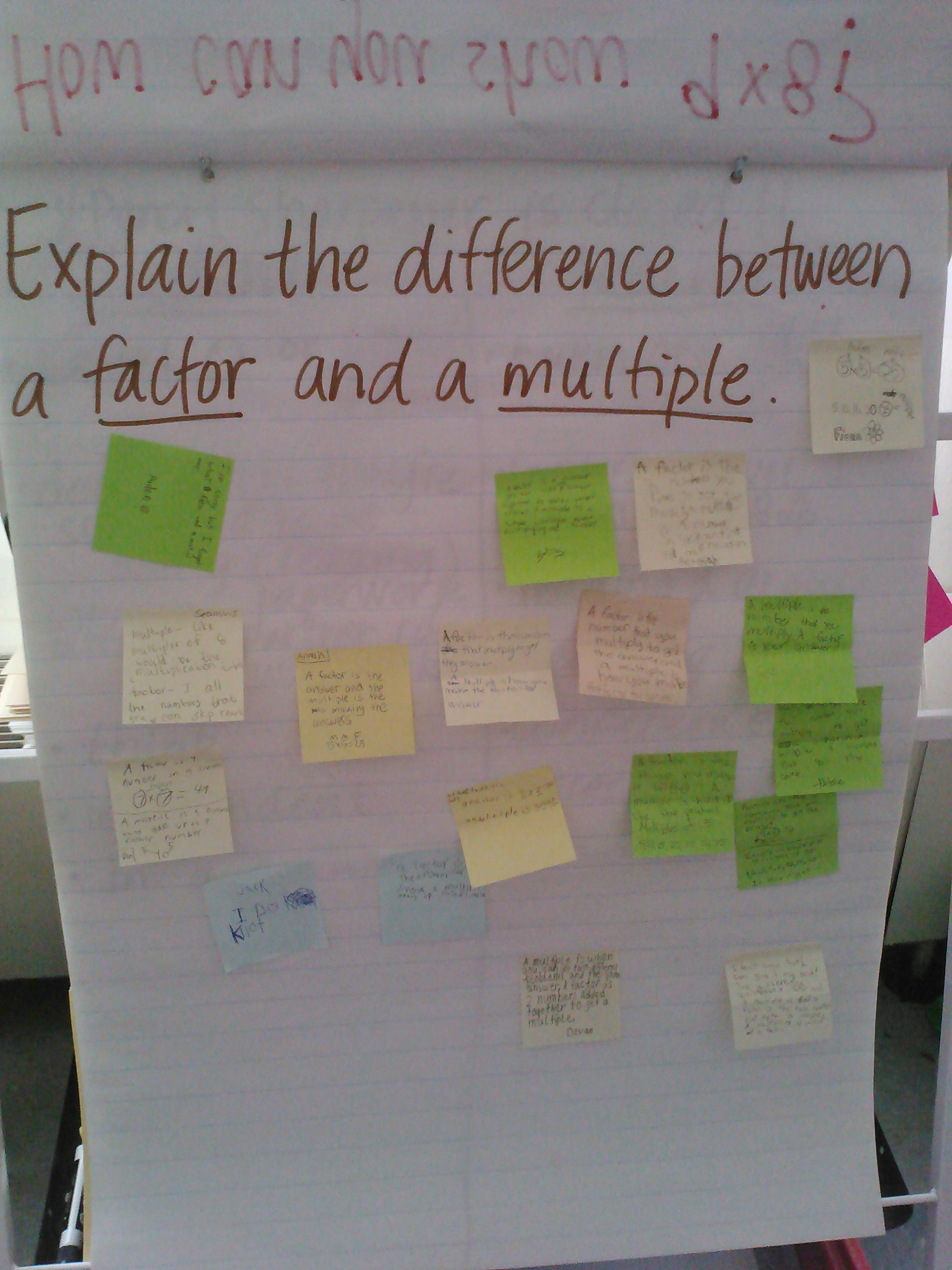
These were great puzzles to help us use our new knowledge of factors and multiples! The kiddos totally rocked. 🙂
So after I posted about our Morning Math Warmups last week, I figured I would start doing that every week. It will be great to see all of them once we’re finished this year. We would really appreciate it if you followed along with our learning this year, and even comment with your own answers. We could learn from you!
Since Monday was Labor Day, there are only four this week:
How would you answer these? What warmups would you use for factors and multiples? Leave us a comment!
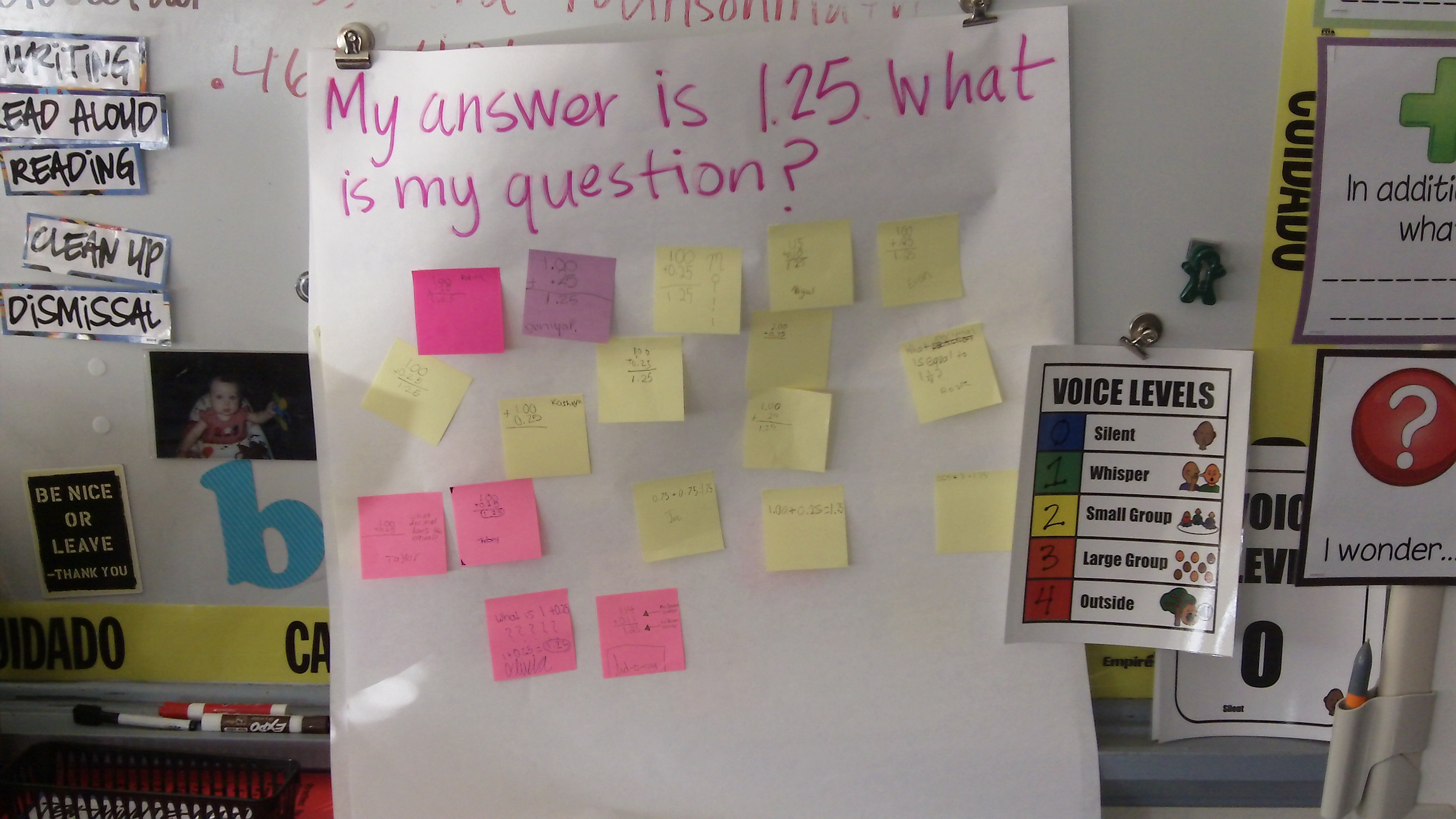
This being the second week of school, we got a little closer to following our regular daily schedule. In Math, that meant that we practiced the components of Guided Math. One of those components is our Morning Math Warm-ups.
Each day when they come in, there will be a question on the easel to get their brains warmed up. Generally they will be math-related, but sometimes not obviously so–not just “solve this equation” type questions. These were the warm-ups for the week:
How would you answer these questions? If you’re a parent: talk to your mathematician about how they answered them. If you’re a teacher: how do you use warm-ups in your classroom? Tell us about it! 🙂
Remember how I told you about how lucky we were to be able to Adopt-a-Pilot?
Well, since that first visit, he’s come back two other times, teaching us all sorts of awesome things about geography and flight, as well as life-lessons related to doing our best and working to achieve our goals.
During this second-to-last visit with Mr. Smith, we got to Skype with him while he was out-of-town! We got to guess “Where in the USA was Mr. Smith?” using clues he gave us. We used our big map to mark where we thought he might be:
Molli guessed on the FIRST CLUE that it was Birmingham! Way to go, kiddo!
Check out a clip of our Skype session:
This was only the second time I’d ever Skype’d (and the first was the end of Adopt-a-Pilot last year!), and it was so great! I know lots of teachers use it in really creative ways in their classrooms for mystery read-alouds, conversations with authors and for class-to-class chats. I can’t wait to see what else is out there that I might try next year!
How do you use Skype? I’d love to hear about it! 🙂
I really hate it when I have an idea for a post and then time gets away from me. Eventually I find the time (or I remember the post that I had forgotten to write!) and it happens. Eventually. Today is one of those posts.
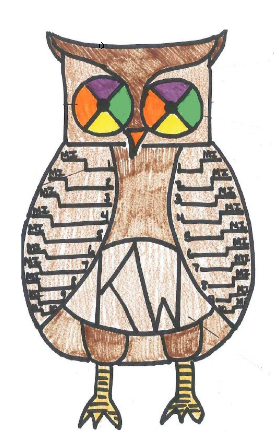
We actually met S.H.A.D.O. weeks ago. She is now our good friend. And boy is she helpful!
Who’s S.H.A.D.O., you ask? And why is her name spelled like that? Let me tell you all about it.
This is S.H.A.D.O.:
And she is one smart cookie. No wait–she’s an owl. Ok, so she is one wise owl.
Her name stands for:
And while I would love to take credit for creating her, I can’t. I found her when I was on www.prometheanplanet.com, which is a support site for the interactive whiteboard we use at school. The flipchart she came from (and that we now reference frequently in our classroom!) was submitted by Melissa McGahan. So, like many great ideas that I use in my classroom, I did not think it up, I just figured out the right time and place to use it!
Ok, back to S.H.A.D.O. She has been helping us during the recent weeks as we prepare for MAP testing (which I talked about related to science the other day here ). She helps us remember that there are some basic strategies that good test-takers use when they tackle a test (whether it’s a state test or just a plain ‘ol end-of-unit test) to help make sense of it. There are different parts of her body that remind us of these strategies.
Here’s what they are:
I have been amazed at how this representation–in picture form–has been so helpful to so many of my students. While I have always taught these strategies, I’ve always done it with words, not images. We have always created a list of “smart” things to do, then had that list displayed in a variety of places around our classroom. Just like in the past, S.H.A.D.O. is now displayed all around our room, as a reminder when you look at her to do what she suggests. (As a side note, I love how the other day someone wrote a blog post about how they love S.H.A.D.O., but she’s a little creepy because she’s always watching us with those big eyes of hers! HA! The minds of 5th graders kill me sometimes!). It’s simple, really, and I don’t know why I didn’t think of using a picture before–I’m a very visual learner myself, so it’s something that would have helped me, too!
So since we’ve become introduced to S.H.A.D.O., we’ve tried out her strategies on various assessments we’ve done in our classroom. Is she helpful to everyone? No. Does everyone need her reminders? No. Do we always go through all of the steps she suggests? No. Just like every strategy I share with my students, they have learned which steps at what time with which assignment she is helpful. That’s the key actually–know how to use the tools at your disposal. So she’s there in our toolboxes if and when we need her.
And as a side note, I believe that S.H.A.D.O. was originally created to help with reading/communication arts tests, but we’ve found that you can apply most of her strategies to other subjects as well. The other day we tried them with a math test and they were perfect. Nice how that works out.
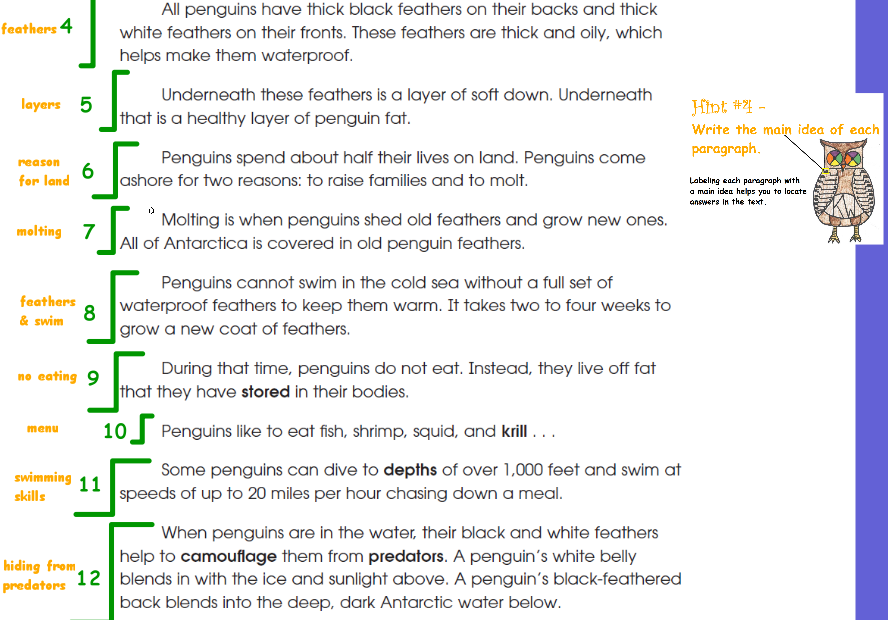
If you are a teacher, and you got through this post and you’re still thinking “Great idea, but I already do other things to prepare my kids,” I ask that you focus in on a part of S.H.A.D.O.’s suggestions that maybe you don’t specifically do. For me, it was the steps related to bracketing and numbering the paragraphs, then marking the main idea next to each one. Using that step has forced (in a good way!) my students to slow down and really think through each and every part of the texts they read on tests (both fiction and nonfiction–and heck, we even used it on poetry today!). I think that if there is a magic bullet here, it’s that one. Having the paragraphs marked like that has made it so much easier to go back to the text to find support for answers. They now know so much more quickly exactly which paragraph to go to find the information they need. Genius. 🙂
I’m adding a screen shot of what that step looks like next, because for me the words I just wrote wouldn’t make much sense (See? Me=very visual):
So, I invite you to introduce S.H.A.D.O. to your class. Come on, she has great ideas. And hey, S.H.A.D.O. knows. (Ah, you didn’t think I could get to the end of this post without a joke like that, did ya?)
One more thing…if you’re a parent, I am interested in knowing what your kids are saying about S.H.A.D.O. Maybe you were already introduced to her, or maybe you have another story about how she’s helped your student in class. Share with us!
In honor of the 100th post on our blog (yahoo!), I’m going to ask you to celebrate some amazing work my 5th grade friends have been doing. Check our blogs to see what we’ve written lately! Today we posted about proud moments, math, Spring Break, getting braces and much, much more. Don’t forget to comment to let my friends know you visited. They usually ask really good questions, so answer a few! 🙂
Also, I feel like it’s an ok time to remind you of our class connections project. If you haven’t yet commented, or commented and didn’t tell us where you are from, please do so! We haven’t added a new pin in a while, and would love to see our map connections grow!
Thanks, readers, for all the time you spend here. We appreciate you!!
We’re off to Spring Break after one more school day tomorrow. Do you have any exciting Spring Break plans to share?
Ok, so I’m open to any and all readers/comments, but this one is especially for my 5th grade (or any other student) readers! Think about our Math Warm Up today, and answer these questions:
1. Write the number 143, 674, 998 in expanded and word form.
2. Round that number 143, 674, 998 to the nearest 10, 100, 1,000 and 10,000.
So I’m home with a sick baby again today. I HATE to be gone, but sometimes I just have to be a mom, you know?
So today’s absence reminded me of an idea I learned about recently. I was out a couple of weeks ago, and I used a great idea from a couple of teachers I met when I attended an EdCamp St. Louis conference earlier this month. They both teach middle school, and are out of the classroom periodically for activities with their school, and so need to leave plans for a substitute. Rather than just leaving written ones, they record videos to leave for their classes, often teaching the lesson from their couch and giving directions for what they want their students to do.
Last time I was out, I knew ahead of time, since her fever popped up in teh evening. So with my MacBook, my plans and my couch, I set to work putting together what I hoped would be a great day of learning for my kiddos, even in my absence. Here’s what I left as a welcome to the day, along with our normal morning routine screen on the ActivBoard:
After they went off to specials, it was time for Writer’s Workshop in our room:
That big blue button sent them here to this video:
Next in our day was Math Workshop. This video was a little different, but hopefully just as helpful.
Off to lunch and recess they went, and then back into the room for Read Aloud and then Reader’s Workshop. Again, a flipchart welcomed them with directions:
Ok, well at least it had a place to send them for directions. Those were here:
And here:
Social Studies followed Reader’s Workshop, as it normally does, and the lesson that they worked on that day was about the Natural Features of Europe:
Unfortunately this was the last day of the week, since we had a Professional Development Day the following day on Friday. We were also going to be out on Monday, too, since it was President’s Day! That meant I wouldn’t see them for what seemed like FOREVER, so I sent them off to their long weekend with this Goodbye and Good Weekend video:
Ok, so if you’re a frequent visitor to our blog, you know that I can’t write anything without ending with my thoughts and reflections. And of course the topic of this post means that those thoughts and reflections are definitely doosies! (Is that how you spell that? There was no choice for it in the dictionary. 🙂 )
(Now would be a great time to take a break and grab a snack if you want one! I know I didn’t warn you that last part would take so long. Sorry. It’s ok, I’ll wait for you.)
Thoughts and reflections from using video sub plans:
Ease: The only reason I tried this whole thing originally is because I knew at around 6:00 the night before that I would be gone. Since that was the case, I had lots of prep time to get it all ready. This would not have been possible had I woken up and been surprised with an absence (like today, for example!). Also, this was for an absence for a sick kid, not a sick teacher. Had I been the one that was ill, this would have been almost an impossibility. I hope, though, that since I’ve done it once now, and figured out all the logistics, the next time it won’t take me quite so long to put it all together. And no, I don’t really want to admit how long it took me. Ask your kiddo if you want. I told them. 🙂 The other idea I had just now, though, is to prepare a generic “sub plan video” that could be used at any time if I had to suddenly be out. It could then be added to my normal sub folder or uploaded to the portal that we use online to secure our subs. Who knows, maybe I’ll start working on that one.
Logistics: I know this is partly related to the “ease” subject I just mentioned, but what I mean with this one is that there are a lot of logistical things on the school end that have to happen in order for my video plans to work like I had hoped they would. The substitute has to know how to use the ActivBoard flipcharts I made, they have to know how to log on to my YouTube channel so the videos all play, and they have to be willing to follow the directions I gave in my videos. So, in a perfect world, this would have been a great way for me to be at school with my students even though I wasn’t able to be there in person.
Impact: While the original reason I decided to try it was because it sounded like a great idea, incorporated technology and was something I hadn’t done before (which is often very motivating for me), I decided as I went through my planning, that maybe just seeing my face would be a subconscious reminder to follow the rules. You know, unfortunately some kiddos tend to move into a different state of mind when they see a substitute at the front of the room instead of their normal teacher. I was also hoping that having me “teach” the normal lesson they were going to have for that day would help as they tried to keep the learning day as predictable and productive as possible. I wanted to get the most bang for my buck. I know that the day is never the same without me as when I’m there, but this was my way of trying to do what I could to help make it as normal as possible.
What experience do you have with using video sub plans? What suggestions do you have for me? If you’re a parent, what do you think? If you’re a substitute, have you used video sub plans in a classroom you’ve been in? I’d love to know your thoughts! Leave a comment for me. 🙂
I thought I was going to share an update about what’s been going on with our math rotations, but when I went back to look for the posts to link to, I realized I haven’t actually done it yet. So now I will. 🙂
I will remind you of how I’ve been learning and reading about math lately. You can read about that here and here and here. Go ahead. I’ll wait. Hee hee….
One of the biggest changes that can be seen in our room during Math Workshop is the use of rotations and small groups. I guess I have always done groups of some sort, but I’m not usually a follow-this-strict-time-frame-and-schedule kind of person. They usually happen spontaneously. After a mini-lesson when kids have questions, or when some need review of some part of a concept. We might just meet once or twice to meet a specific need and then move on to the next one. So the whole idea of planning strict, timed math rotations with a predictable schedule and routine was a big rigid for me. Believe me, there is structure and routine in my room, but many would say it’s a more relaxed version.
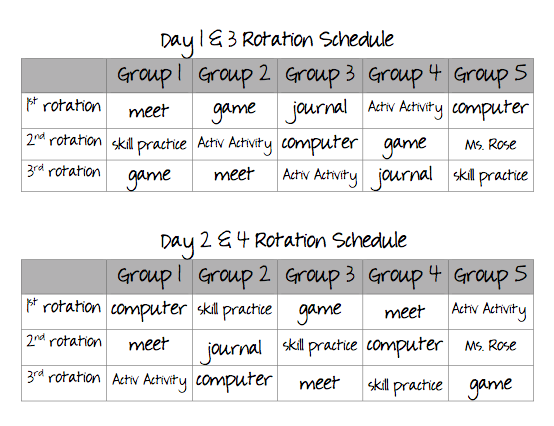
Well, hearing how great it was working in some other classrooms around my school (and especially in my neighbor Pam’s 5th grade next door!), I decided to try it. So now, at least during math, we have a schedule. It’s built on a 4 day cycle of rotations, with days 1 & 3 and days 2 & 4 being the same (thanks again to Pam –this was not my idea. She TOTALLY created it and shared with me. Gotta give major credit where it’s due. 🙂 ) The schedule looks like this:
Now, I am lucky enough to have another teacher push-in to my room for math support during the second half hour of our math time, so she takes one group and meets with them, and I spend time with the others. We get to do double duty and it works really well.
Every 15 minutes, kiddos rotate through stations and work on something math related (I know, duh, right?):
COMPUTER:
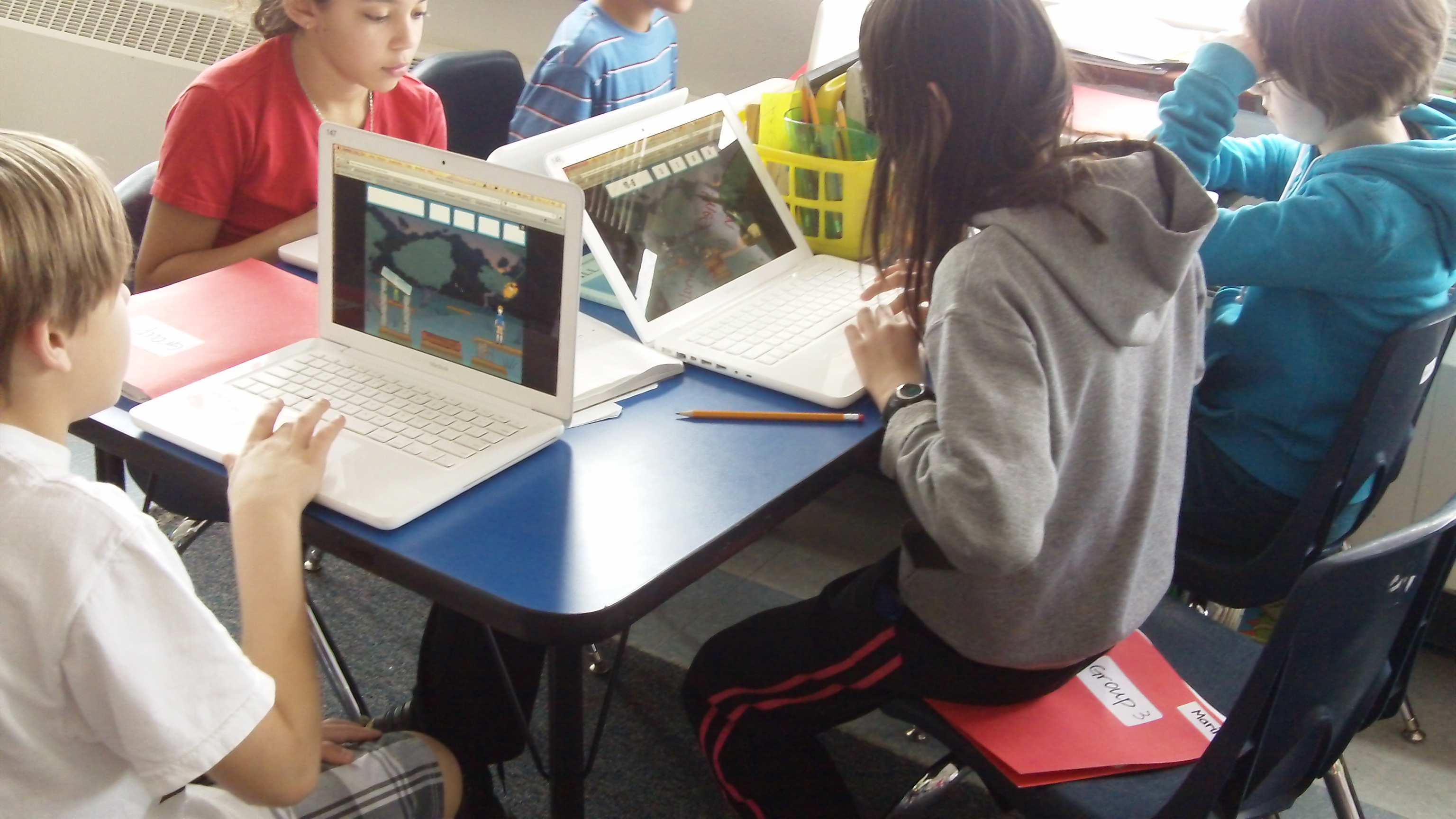
We have a laptop cart that is shared by my teammates and I, so we grab 5 and set them up in a mini-lab situation during math. Most days we play games on www.sumdog.com, which my kids are absolutely in love with (again, a find by my ubersmart friend Pam). I love that I can set up which skills they work on. Each kid has their own username and password, and it keeps track of how they do. I get periodic emails about what’s happening there, so I can keep up on what’s going on when they’re in that station. Double nice for all of us.
ACTIV ACTIVITY:
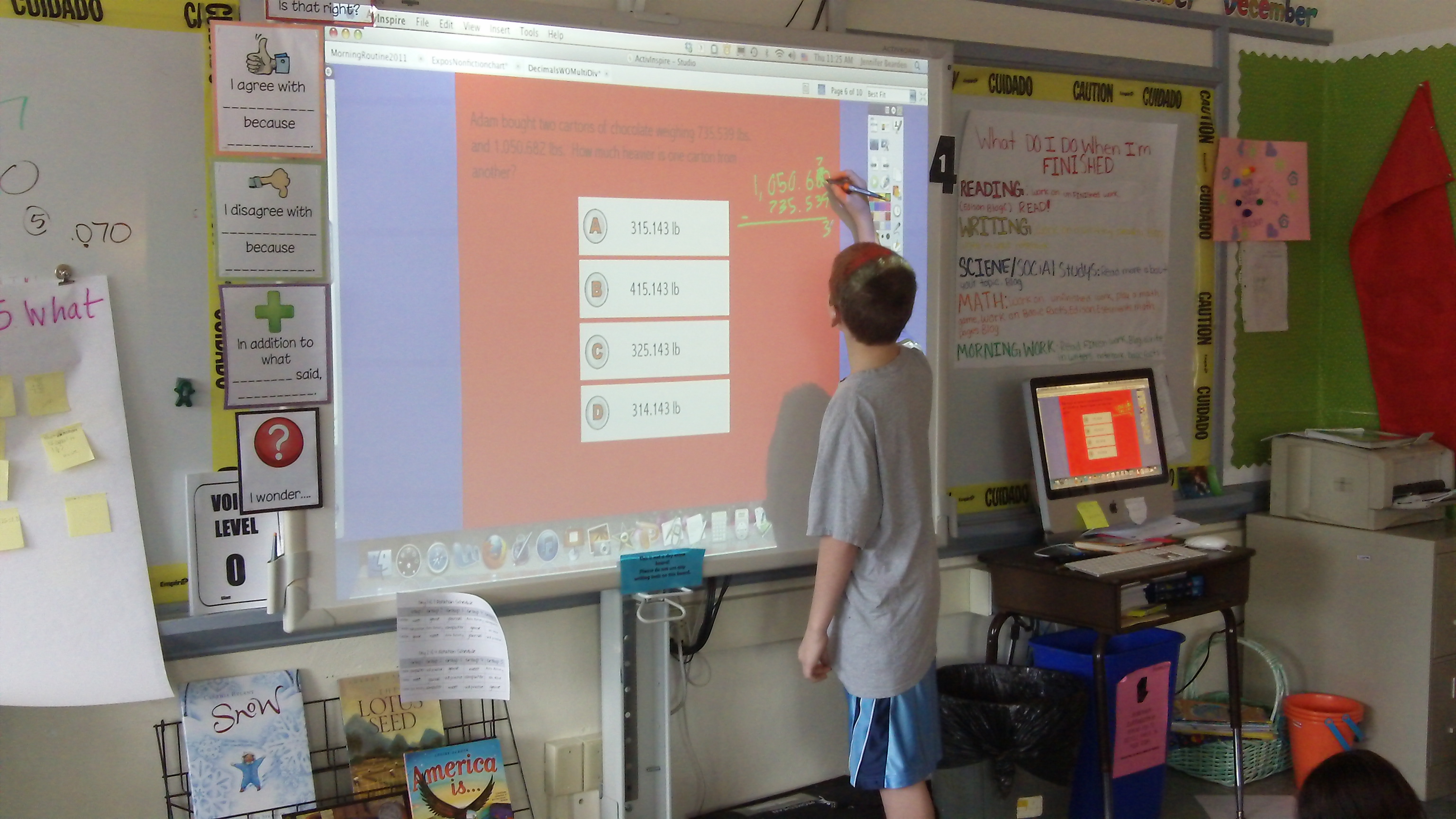
I’m pretty sure that it’s meant to be called Active, like with an E on the end, but since our interactive whiteboards are ActivBoards, I thought that name was catchy. I know, it’s weird, but that’s what I do. So, at this station, students work on something I’ve got ready for them on the ActivBoard, and it usually related to the unit we’re studying. The one they’re doing in these pictures is one I found from Promethean Planet, and has word problems about decimals. I just made a flipchart for next week, however, that has sudoku puzzles. I’m excited to share that one. The take turns in their group working at the board–“sharing the pen”–and then work out the problems on their own when it’s not their turn. Of all of our rotations, this is the one that seems the hardest for us for some reason. We’re working on making it go more smoothly.
GAME:
This is a basic math game station. When kiddos come here, they play a game with their partners that is about a concept we’ve already learned about. Usually it’s from the last unit we just completed, or is related to basic facts or operations that most everyone needs practice with, like multiplication and division. Usually I tell them which game to play, but everyone in a while they have a “free” day where they can play a game of their choice.
JOURNALS:
I don’t have a picture of this one–probably because it would just look like a bunch of kids writing in a notebook. During this rotation, kids work on problems that might require writing, or that are an “extra” thing we’re not directly doing in our math unit. They are usually higher level, and are meant to stretch them a bit. One group was working on problems related to whether or not the Harry Potter franchise was successful at the box office (this one was a big treat for some MAJOR HP fans in my class!), one group solved problems about conversation hearts, and then there was one related to volume of chocolate Valentine’s candy. These were all found on yummymath.com.
MEET WITH TEACHER:
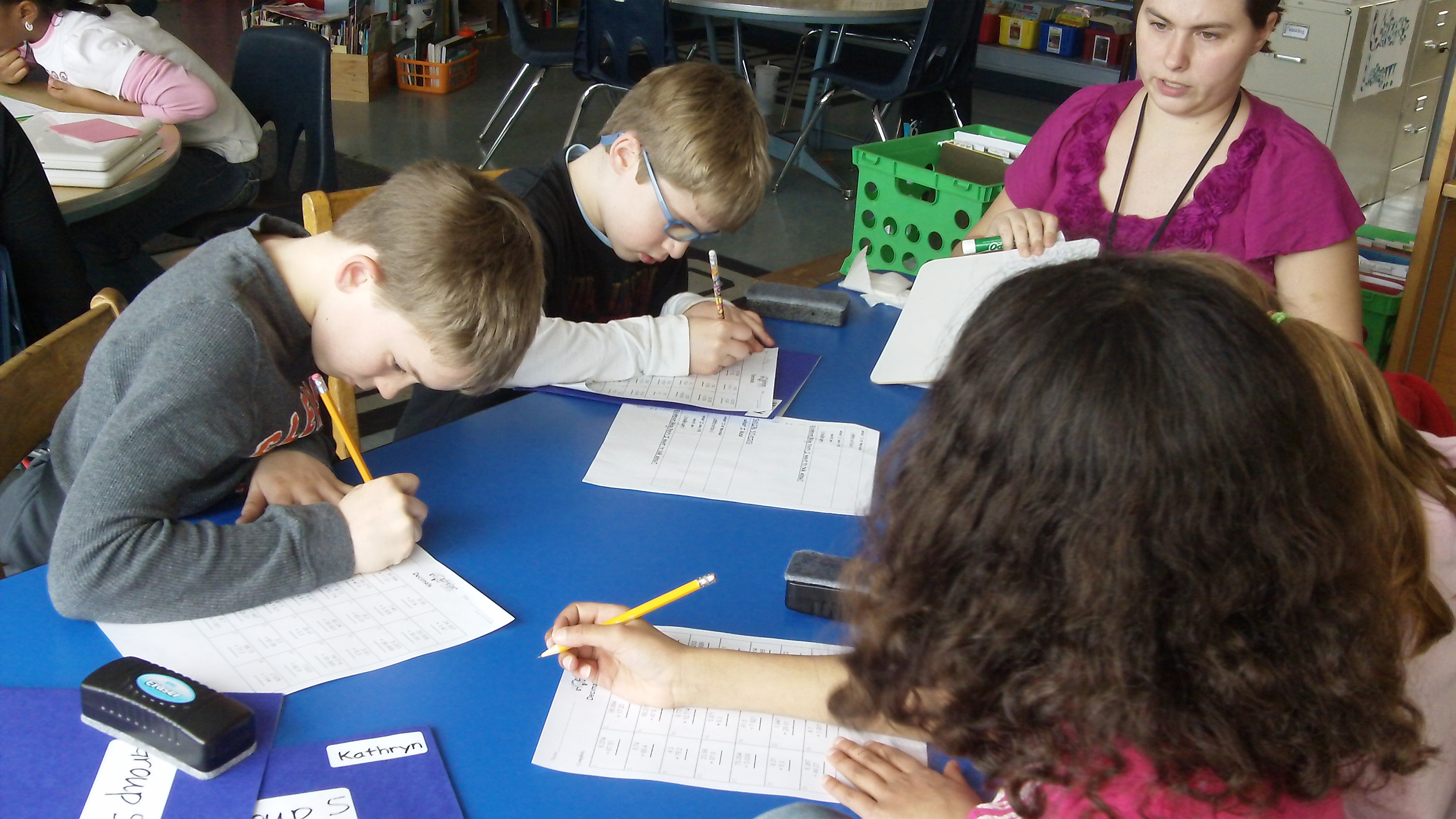
So since I was taking the pictures, you get a glimpse of my teaching partner, Ms. Rose. She’s pretty great, and this is the group she works with on most days. Whether they are meeting with her or with me, these times are used to meet the specific needs of the group, based on info from a pretest (in the beginning stages) and the work we do together (which I use to know where we should go and how fast).
SKILL PRACTICE:
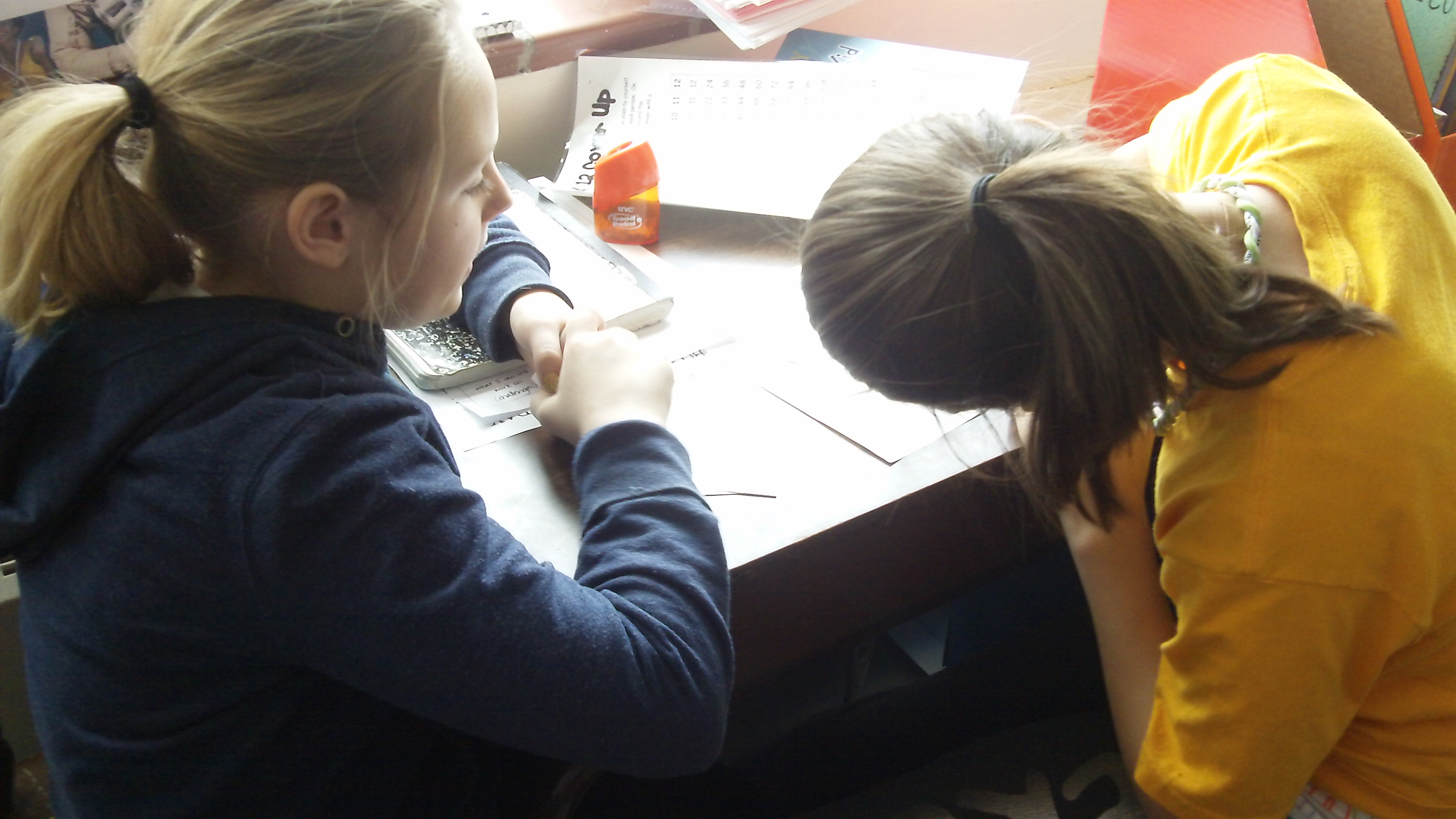
Sorry. Again a pretty boring picture, but it’s of kids practicing. Makes sense, right? This is a station they go to after we’ve learned something together. The work they do here helps me know where to go the next time our group meets together.
We are in week 4 of this whole Guided Math math rotations thing and I think it’s going pretty well. Check out what my kids had to say about it the other day by reading what they wrote about it on their blogs. Their words speak volumes to how beneficial it seems to already be for them as learners. Can’t wait to see where it goes!
***MAJOR SHOUT OUT: I’ve mentioned all over this post that these ideas are not mine. They are not original to me, and come from some really hard work shared with me by my colleague and teammate Pam LeSeure. She found the whole Guided Math framework to begin with and then ran with it! I have been lucky enough to benefit from her blood, sweat and tears as she figured it all out. She’s been an amazing support to me! Thanks again, Pam. 🙂 ***












 20somethingkids and 1kookyteacher