Global Read Aloud 2015

If you’ve been here for any length of time, you’ve probably figured out my love of all things online–collaborating with other classes through things like Mystery Skype, Edmodo, Twitter, World Read Aloud Day, Dot Day, blogs, etc.  I hope that you’ve also seen how I am willing to try new things, not necessarily knowing how they will work out in the end.  I consider myself to be a risk-taker with technology and with new learning ideas.  I guess I trust that worst that will happen is that whatever it is won’t work and then we’ll try somethign else. 🙂

So, when my friend Tam Scharf, from Yr5sK in Queensland, Australia, invited me to join the Global Read Aloud this year, I knew I had to do it!  I have read about it for a couple years (during my time on Twitter!), but wasn’t really sure what to do to get involved.  Well it’s really pretty simple and has already proven to be a great opportunity for Rm. 202 kiddos!

The basic idea is that our class is reading a chapter book along with many other classes and there have been activities planned by a small group of teachers on our team that each class is trying out and then posting to our blog, or to Padlet, or other online venues.  Some classes are tweeting, and there will be Skype sessions planned, as well.

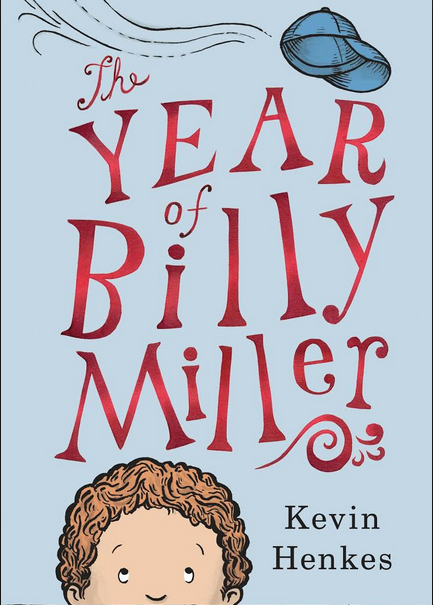
Our class chose to read a great book by a familiar author, Kevin Henkes, called The Year of Billy Miller.  The best part is that I had heard about it and was interested in reading it anyway.  So then when I found out it was a text choice for this project, it seemed like a perfect match.  And it’s about a 2nd grader.  Win/win/win. 🙂
Screenshot 2015-10-15 20.48.04Each week we are reading a different part of the book (it’s broken up into 4 parts that focus on a different relationship), and we do the coordinating activity.

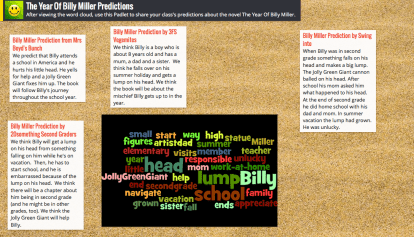
The first week we studied a word cloud about Billy Miller and brainstormed what we thought the book would be about.  We posted our predictions (along with other GRA friends) on a Padlet set up for that activity.

Screenshot 2015-10-15 20.51.41Here’s what we thought about the book:

Screenshot 2015-10-15 20.52.37

It was great to read what other kids thought about the story, and we even revised some of our thinking based on what they shared.  Already a great start and we hadn’t even started reading!

Last week we read the first section (called Teacher) and met Billy and the other main characters in the book.  We are using this book as our study in Readers’ Workshop and it’s matching up perfectly with our work with story elements.  We learned how to use a story map, and recorded the characters, setting adn problem/setting so far in the story.  We’ll keep modifying this organizer as we go on, as well as completing the other planned activities.

We’re excited to join in for this week’s work: a Popplet about what we think about Billy as a character.  We’re not done yet but are excited to share our thinking once we get there.

This story is so fun and kids can easily relate to it; the project is a great motivator for us as readers and citizens of the world!  We found out the other day that there are over 500,000 kiddos signed up doing the same thing as us–WOW!!

I’ll update you with more as we get further into this great collaboration!

Getting Started in Second Grade

Wahoo!  We’re finally getting started!  I spent some time getting ready, and it was fun to stop getting ready and finally get started!  And since we’re looping, it has definitely been fun doing just that.  I was looking back at the beginning of the year from last year to see what I had written about, and MAN–our kiddos were BABIES!!  You should take a look and see how much all those munchkins have grown since last fall.

As is usual fashion for me here on 20somethingkids, I have TONS of stories to tell you!  I am making a list of it all here, partly to help me make sure I get it all in, but also just in case you want a place to land to find it all.  Once I add the post, I’ll link to it on this page and you can easily find it again.  Ok, here we go!!

Over the last few weeks, we have done so many things!:

Marshmallow Challenge: Second Grade Style
Getting Started with Reading: Reading museum
Getting Started with Writing: Tiny Notebooks

Tiny Notebooks: Sharing

Self-Portraits
Appleletters
Reflection with plusses and deltas
2nd Day of 2nd Grade Selfies
Getting Started with Math: How Much is Your Name Worth?
Weak side/Strong side
Anchors of Learning
Math Warm-ups 8-18 to 8-2

…yet

I Hope You Make Mistakes

I know there were many things crammed into those first days together, but when I see it all in a list, I’m still amazed.  Let’s get into it!

Pictures of the Day–April 23, 2015

What a great day back with my friends in Rm. 202!  Besides being a BEAUTIFUL Thursday, we also enjoyed another Walker’s Club day, as well as A.C.E.S. Day, which is a Robinson favorite every Spring.  A.C.E.S. stands for All Children Exercising Simultaneously, and I found out today it’s a 15 year tradition at our school (which is actually almost as long as I’ve been teaching there–I hadn’t realized it started at the same time!).  Here’s a pic from our fun today:

IMG_4471

Ok, so to be fair, it’s not actually from our festivities, but is inspired by them. Sara got to participate in Mrs. Clark’s A.C.E.S. Day routine to the song “Jump” and got some pretty great glasses as a result. Awesome, right? 🙂

For more on how Robinson can shake their booties, have a lot of fun and be healthy, check out teh link to our Facebook page here.  There’s a video and a TON of pictures to enjoy!  I was too busy moving and grooving I didn’t get ANYTHING to share.  Unbelieveable, right?  Luckily pretty much EVERYONE else had a phone or a camera. 🙂

I have one more picture, and I guess actually it’s more a number than a picture, but it’s this:

Screen Shot 2015-04-23 at 9.01.50 PM

That’s our new Walker’s Club total for the April Competition.  I’m amazed and impressed with our steady work towards a goal of winning recess and popsicles (plus having fun and getting healthy!)!  Keep it up, Rm. 202 kids!

Chapter Book Previews: First Try in First Grade

The first year I taught 5th grade, I came upon a great idea for previewing chapter books with readers–the idea being that you teach them how to do it together with a whole class read aloud and then they’d hopefully begin to transfer the process to independent reading.  Well, I can’t say that that ever happened, and I don’t even teach 5th anymore to try again, but what I do know is that the process worked well enough that I decided to revive it for a try in first grade.

I believe that our newest chapter book is the 21st we’ve shared together this year.  Yes, I said 21st!  That’s amazing, no?  We agree. 🙂  Well, if you’ve been following our read aloud timeline progress and updates, then you know we enjoy short books with funny characters, interesting pictures and exciting adventures, and that we’ve become fans of Kate DiCamillo (we’ve read 7 of her books!).  Once along the way, we tried something a little longer and more complex, and started reading The Lemonade War (I have read the series and also heard once of a whole school doing this as a RA and thought I’d try it with my crew), but quickly abandoned it when it seemed like we weren’t ready for something with such little support for readers (well, listeners in this case).

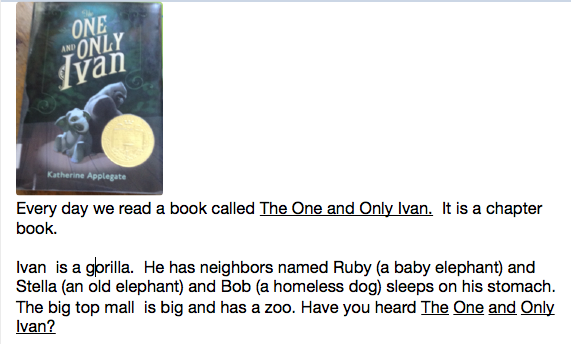
Well, recently it was my turn to choose the title (since they’d had control of the previous 15!) and I introduced them to the amazing world of The One and Only Ivan.  They did great with that one, even without pictures and even though it was super long.

Well…it was my turn again, and with the help of my friend Millicent (to whom I should really give the credit for choosing the book with her mom), and the choice was the classic The Wizard of Oz.   I was willing to try it with this crew both because I think we’re more ready that earlier in the year, and because I wanted to try it with my own first grader last year (when it was suggested on a list by NPR for their Backseat Book Club).

As we were getting started, though, I wondered if there was something I should do this time around to help support my kiddos, since the story is much more complicated that others we’ve read.  That’s when I thought of how I’ve brought so many other things from my 5th grade days to 1st grade and they’ve gone really well.  I knew I had just the thing to try, and it was our Read Aloud Preview Packets.

With 5th graders, each kid actually had their own paper copy of the packet, on which they’d write questions, inferences, noticings and whatever else they needed to help them digest the story.  I figured that this time, since it was our first time, we’d try it together and then maybe I’d give them a go at it on their own.

Tuesday, then, we sat down together and I opened our class copy in Word on the ActivBoard.  Here’s how our conversation went:

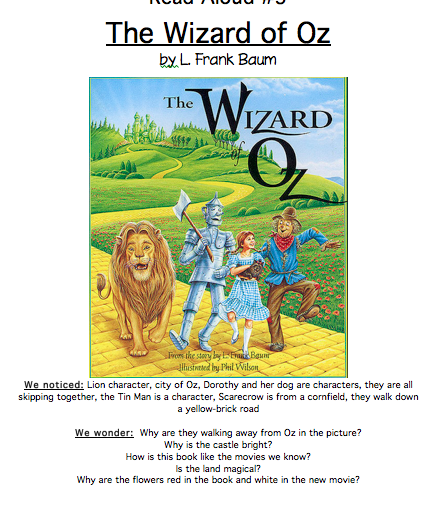
Screen Shot 2015-04-09 at 2.59.55 PMStarting with the front cover, we studied and analyzed, pulling up all the schema we had as well as recording wonderings we had based on the picture.  This one was different than the actual cover of our book (which is a beautifully bound green leather copy), so I grabbed one that I thought would create a good conversation.

Then we were on to the back cover.  Again, our actual cover was just green, so I found one that we could talk about:

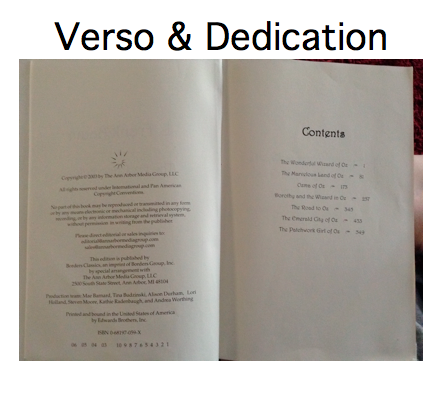
Screen Shot 2015-04-09 at 3.00.05 PMNext was the Verso and Dedication.  Well, this one didn’t have a dedication, but we talked about what that word meant, and what it might say if there was one.  This next part was really also just an explanation of what a verso is and what you can learn from studying it.

Screen Shot 2015-04-09 at 3.00.15 PMMoving on, we looked at a special feature of this book: a map!  We had read another book with a map (Who Is Stealing the 12 Days of Christmas?) and so connected to that knowledge as we thought of how this one would help us as we go through the story.

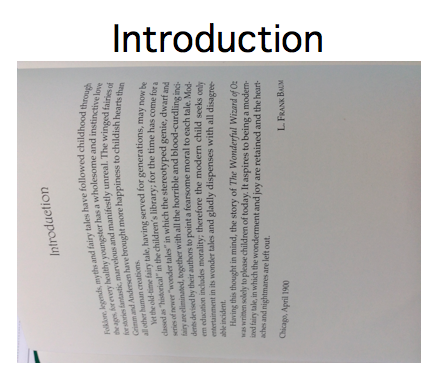
Screen Shot 2015-04-09 at 3.00.20 PMThe next (and last) part in the preview is usually just the first page, but this book also had an introduction, so we did that one, too.  The goal of this step was to  help kiddos get their minds set to dig into the story.  Baum wrote his introduction to explain his purpose and intentions with the story, and so it was a great conversation about how he wanted his Wizard to be different than previous fairy tales known to readers.

Screen Shot 2015-04-09 at 3.00.39 PMWe didn’t actually read the first page, because kids were done (and I knew that we’d be reading it the first day anyway), but finished our conversation with mention of how many of them were coming into this book with experience seeing TWOO movie (two different versions, actually).  We talked briefly about how different books and movies usually are because they’re made by different people, and how we could keep track of these similarities and differences as we read.

Whew!  I’m so glad we did that!  I wasn’t quite sure how it would go, but Rm. 202 kids seemed really into it, and they had lots to say during our discussion.  We’re only about 6 pages in, but it seems like they’re already mesmerized by a great classic story and I am, too–I’ve never read it, either!  Here’s to another GREAT read aloud!!

First Grade Read Aloud Timeline–UPDATE

I am SUPER excited about how the Read Aloud Timeline has taken off with this class!  I have written about how I’ve brought many “big kid” things with me to first grade, and how my firstie friends have taken them and run!  So as I was putting yet another timeline image on our wall, I realized it was way past time for an update.

I believe that when I first wrote about our 1st grade version of the timeline we had finished around 9 or 10 books.  As of late last week, we filled up the whole wall!  We have (at least as of today–and the number changes very quickly around Rm. 202) 20 books completed!

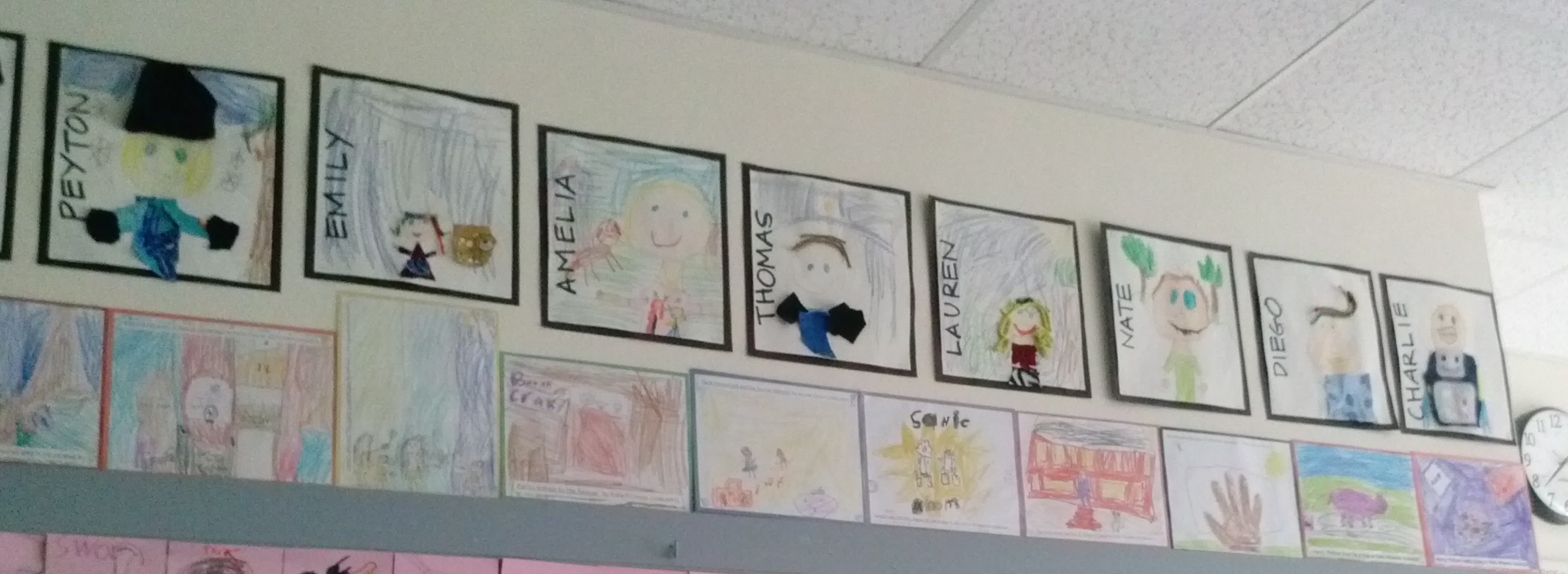
CAM01884This chunk has been completed just since January:

CAM01885I know you can’t tell the titles because the writing is too small in the picture, but we’ve become big fans of both Baby Mouse and the Lunch Lady, as well as enjoying amazing “big kid” titles like The One and Only Ivan by Katherine Applegate and The Miraculous Journey of Edward Tulane by Kate DiCamillo.  Oh, and then there are the 5 Mercy Watson books we’ve roared through in the last month or so, too!  Yep, obviously we’ve come to trust Kate DiCamillo as an author and are now sure that we can read ANYTHING by her and it will be great. 🙂

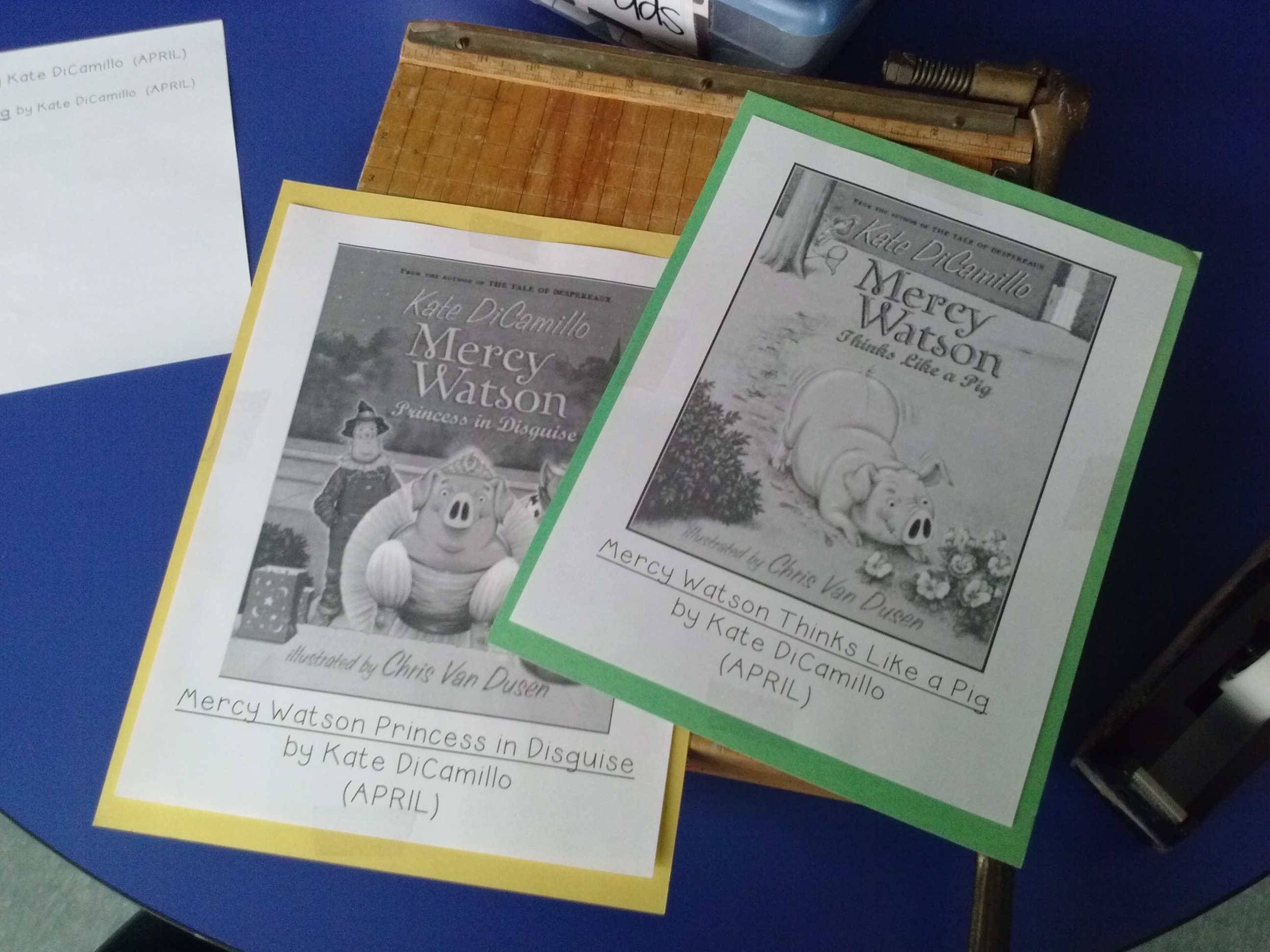
Because we are such speedy readers in Rm. 202, sometimes we end up with class books and wall pictures that are not yet put together or hung in the right place.  This is just such the case right now: the last two Mercy books are waiting to be laminated and bound.

CAM01886Well, since this is the case, and I’ve got a couple of days til they’ll be ready to hang anyway, I’m asking for your help in solving a little bit of a problem.  And yes, I stress the little part of that problem–it’s really just a decision we have to make.

The trouble is that we’ve filled up the whole wall (and actually all of the space on the 3 walls I have the timeline attached to!), but since the year is not yet over, we’re not finished creating timeline images that need a home.  So we have a couple of options and need some help deciding what to do with our next images.

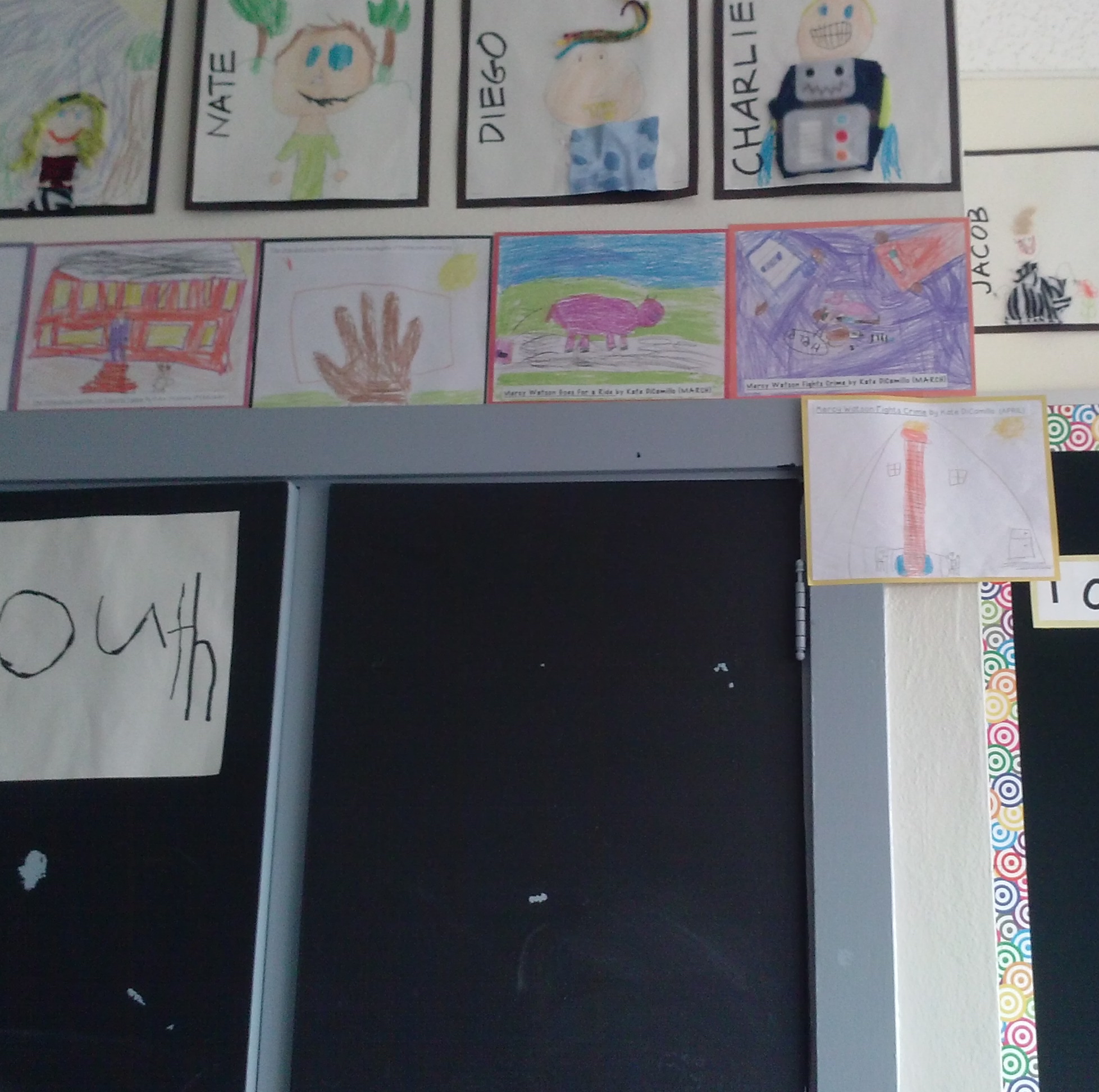
One option we have is to go down the wall (or sliver of wall) next to the closet, like this:

CAM01887Now, this is a totally viable option, giving us plenty of room to finish out the year filling up that vertical space.  You know what bothers me, though?  The pictures don’t line up with the ones on the wall, and as long as they continue to be horizontal (which the next two are), there is that big piece that isn’t attached to the wall.  Somehow I’m sure someone’s arm will run into it accidentally (or dare I say it, on purpose!) and crinkle it or pull it off the wall.  But–it would totally give us the space we need.

The second option (at least that we can see) is to turn the corner and keep the timeline going along the wall by that bulletin board, like this:

CAM01890Look at all that wall space!  But….it’s practically the ONLY wall in the room that can’t be seen unless you’re standing right there in that very spot by the sink.  And that only happens if you’re washing your hands or getting something from the art center (and you know what’s funny?  See how I didn’t hang self portraits in that spot?  It’s because no one would be able to see them!).  So, again–lots of space, but a downfall.

I know, I know….this is really a small deal in the scheme of the world and not really a big problem (#firstworldproblems for sure!).  But, to a teacher who both appreciates the aesthetic of things and who wants to create the best environment for the learners I spend my days with, it’s teeny things like this that I agonize over.  Silly, I know, but hey–it’s me. 🙂

So will you help me?  In the end it would probably be just as effective to flip a coin or just vote with my class, but I thought I’d ask other (perhaps like-minded) professionals who could help me make the decision based on how they’d solve the same dilemma in their own spaces.  Please?  Pretty please?  🙂  Thanks in advance!

Losing Yourself

CAM01739While this has always been an important part of my job, it seems like I have much more of an influence and responsibility to start my first grade kiddos off on the right foot.  Many of them begin their life-long reading journey in earnest with me, and I want to help EVERY ONE OF THEM feel what it’s like to be lost in a book.  This is the main reason why read aloud (and good books in general!) are non-negotiables in Rm. 202.   🙂

In what book were you last lost?   Tell us about it! 🙂

A Book Binding Machine?

I shared a couple of days ago about the class books we make that go along with our Read Aloud Timeline.   Well, today it was time to put together the books from our last 2 read alouds and so we took a little field trip to learn about this machine:

CAM01420Have you ever seen one of those?  It’s funny how excited they were to learn about how it works.  This was partly (I’m sure) because it is housed in a teacher workroom where kids aren’t allowed to go (but that we sneaked into for a few minutes!) but also because it’s just pretty cool.  And old.  I’m pretty sure it’s the same machine that’s been in that workroom for the last 20 years.  And I made books on it the last time I taught 1st grade 10 years ago.  But hey–even in this age of technology and digital learning–sometimes you just need to do things the “old school” way.  That totally works in this case. 🙂

Read Aloud Timeline: How-To!

I realized today that while I’ve written about our Read Aloud timeline many times, I haven’t ever really explained how we do it.  I had someone ask me about it and thought I’d write it here, in case you wanted to try it for yourself!  I am sure there are many ways to make it happen, but this is what I’ve found works for us.  Please let me know if you try it and how it works for your readers! 1. Read Ok, I probably should have started after that, but it’s the first step, so there it is. 🙂  In both 5th grade and 1st grade, read aloud is one of the most important (and enjoyable) times of the day! It is a sacred event that happens every day, no matter what.  It is (as I mentioned here) not about laying down and relaxing after recess time (in fact, our RA isn’t even after recess!).  it is a time for a family of learners to enjoy text together–to laugh, to talk about language, to make predictions, to ask questions, to just share a positive literacy experience.  And especially for emerging readers, it’s a time to hear what good reading sounds like and to hear texts that they may not yet be ready to read for themselves. 2. Create timeline images I’ve done this step of the process in many ways, and is probably the step most open to interpretation and variation depending on your community.  In the beginning–for any grade level–I have them choose a part of the story that they like.  For most kids, this means something that was funny or surprising.  After we’ve gone through our first 2 or 3 books, then, the focus of the image might change a little bit.  I might have them choose the most important part.  If we’re studying inferring or predicting (or some other specific comprehension strategy), I’d have them choose an image that shows where they used that strategy to make sense.  For our purposes in 1st grade, we’re still just choosing whatever image we want; our next step is to choose an important part of the story. I usually have my students draw their images on a regular 8 1/2 X 11 piece of paper (because they fit nicely on the wall and are still a good size to see the picture from far away), with colored pencils or crayons.  Bright colors are preferred, just because the contrast is easier to see across the room, and all of the white space must be filled in (well except of course in the last few books we’ve read–they were graphic novels and kids could give me a good reason for why they left the white space there: “It was like that in the book, so my image looked like that, too!”).  On the back of the picture friends have to write what the image shows, as well as why they chose it.  The mechanics of the writing have to be correct, both because it’s good writing, but also because in the next step someone else will have to be able to understand what their image is all about.  This step usually takes place right after we finish a book, and at this point we can finish our images in about 30 minutes.  If we don’t, they usually finish them at choice time, take them home, or we have them out for morning work the next week so we can vote the next day.

3. Vote In our class we have small groups of 4 that we use for the purpose of choosing read aloud images, as well as anything that I need to quickly break up the class to accomplish.  The groups stay the same all year, and get to know each other really well.  Depending on the year they have different names: when I taught 4th grade they were called “districts” to relate to our study of state government, the year we had a construction theme they were called “zones,” the year I had an animal print theme (I know–that sounds really lame now….) they were called “tribes” and this year they’re just generally called our Room Teams.  Some years the groups are numbered and some years the teams make names for themselves.  How you do this part really doesn’t matter, except that for me it’s the easiest way to narrow down our 20 pictures to a manageable 4. Depending on the grade, the groups might vote for both the image on the wall and the image on the front of our class book.  I found out VERY QUICKLY that with 1st graders it’s easier just to focus on the wall.  I also found out VERY QUICKLY that it’s much easier for them to choose their favorite image when they are not considering their own picture.  The first time we voted this year we got NOWHERE because everyone kept choosing their own picture.  Looking back now it makes perfect sense, considering where first graders are developmentally, but at the time it was just frustrating!  So as I shared my frustration with my team, my super smart friend Rochelle suggested I have them go through the process with random pictures.  It seemed like it was worth a try, and so the next time we did it I passed out the pictures so that they didn’t have their own picture in their hand or in their group at all.  They had to explain the part of the story on the sheet they were given and then choose the one that best represented the story from those choices.   I was AMAZED at how different and how EASY it was that way.  Thanks, Ro, for your great suggestion! Another thing i learned really quickly was that doing the whole raise-your-hand-for-the-one-you-want-to-vote-for process doesn’t work well with first graders either.  Even with only 4 choices (after we narrowed it down in our groups), it seemed like someone didn’t vote, someone else voted more than once, or they kept changing their minds based on what everyone else was voting for.  I couldn’t keep a clear count and had to figure out some other way. So, as both a more clear way to tell who’s voting for what, and as a way to make the process more interactive (which is good because they need to move!), we put pictures in 4 different places around the room and kids line up in front of the picture they are choosing.  It’s really fast and also allows us with great opportunities for counting, grouping and talking about efficient strategies for figuring out how many votes there are for each picture.  It’s a win-win!

4. Make a class book As I mentioned recently, the rest of the images go into a class book–1 for each book that we finish.  These live in our class library for kids to read and enjoy all year (well they do once the teacher takes time to bind them into books!).  So far we’re up to 14, and I figure we’ll have at least 20 at this rate (hopefully even more!!). 5. Repeat steps 1-4 This is the process we’ve gone through 14 times now.  It’s the process I’ve gone through with other classes close to 50 other times over the past 5 years as well.  And if you’ve seen the pictures I’ve posted, ALL of those images are hanging in my room right now!  There is something really special about being surrounded by all of those pictures, celebrating great books, great discussions and fun times with friends.  It’s fun to watch the timeline grow, and for classes to ask about old pictures.  I also love when past students come back to visit and we can connect again as we talk about those timeline images, too!

IMG350

This is an idea of what the timeline looks like wrapped around the walls of Rm. 202. I actually had to take it down and move it further over to make more room at the beginning of this year. And I am not sure what I will do next year–I will have officially wrapped all the way around and run out of room! What a great problem to have! The timeline started in August 2009 and is still going in January of 2015. I am not sure I envisioned that when I started doing this back then!

This shows a more current version of this year's section.  I think there are still 3 or 4 missing from this picture.  We're reading so fast I can't keep up!

This shows a more current version of this year’s section. I think there are still 3 or 4 missing from this picture. We’re reading so fast I can’t keep up!

6. End-of-the-year Book After you are finished with your last read aloud (which for me runs right up to the last day of school–yep, sometimes we’re finishing our images, voting and laminating in the last hours of our time together!), something special happens.  All of the books that your class has been enjoying all year will become a special end-of-the-year memory for each kiddo.  The last thing I do is take all the books apart, and reorganize the pictures by kiddo (which is pretty easy because every image has both the child’s name and their class number on it so they can be easily put in orderly piles), and create a NEW book for each and every one.  I include a cover that lists all of the titles, authors and time frames for when we read each one.  Sometimes I include a note about how much I’ve enjoyed the reading journey, or maybe a quote from one of our favorites.  I haven’t ever had kids vote on their very favorite from the year, but if I did, this might be the cover of this individual book (who knows, maybe I’ll try it this year!). Whew!  Wow–that is really a more involved process than I thought when I sat down to write this.  But it’s TOTALLY worth every minute we spend on it!  I am not sure if I’ve mentioned it before, but this is not an original idea of mine (I saw the timeline created in a classroom in Columbia, MO when I was there for a training many years ago), but the process for how I do it has been tweaked to fit my purposes over the years.  It’s definitely one of those things that someone way smarter than me thought of, but that I have made my own through trials and errors to fit what works for me and my kiddos.  I’d love to hear what works for you and YOUR students! Happy reading!! 🙂

First Grade Read Aloud Timeline: CLASS BOOKS!

One of the foundational elements of my classroom is the read aloud timeline that was started many years ago (2009 is the first year that hangs on the wall!).  When I moved to first grade, I knew I wanted to at least try to keep the tradition going, but I wasn’t quite sure how that would happen.  Luckily, the class I have took very quickly to the idea of how it worked, and now this year’s addition to the timeline is already 12 books long!

One of the added features of the timeline images (which is decided by a class vote after everyone creates their favorite picture from the story) is a class book that includes all of the rest of the images.  Pretty great, right?  Everyone is involved!  Well, yes, it’s great….as long as the teacher remembers to take all of the pictures out of the turn-in drawer and make them into a book.  Which hadn’t happened yet this year until just the other day (nothing like the pressure of conferences coming up and wanting to have something ready to share with parents, huh?).  And in true first grade form, their excitement over the new bucket of books that THEY HAD CREATED was amazing.  And yes, as a blogging teacher, I had to take pictures of it!

FINALLY have all of our class books put together.  And of course, as soon as I get caught up with something, things change and I'm behind again--we have finished two books since I made these and we're ready to add in two more to our collection! We are READING MACHINES in Rm. 202!

FINALLY have all of our class books put together. And of course, as soon as I get caught up with something, things change and I’m behind again–we have finished two books since I made these and we’re ready to add in two more to our collection! We are READING MACHINES in Rm. 202!

This slideshow requires JavaScript.

So like I said, the INSTANT I put the pile of new books out, they were all taken and kiddos were digging in!  It was a great combination of enjoying old favorites we’d read together, and of kids reflecting on how their work has changed since we finished our first book in August.  There’s a lot of growth that happens in almost 6 months of first grade!

What does read aloud look like for you?  Have you ever tried a timeline to document your reading journey?  We’d love to hear from you!