Second Grade Math Warm-Ups: Week of February 22-26, 2016

I have three warm-ups to share this week.  We had a surprise snow day (which was a little funny because where I live there was no snow!) on Wednesday, so no warm-up that day!  We are in the middle between our money unit and addition/subtraction up to 1000, so the problems reflect that.

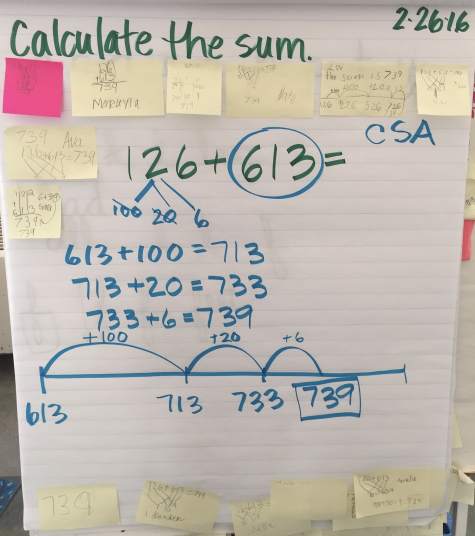
Monday

IMG_0741-min

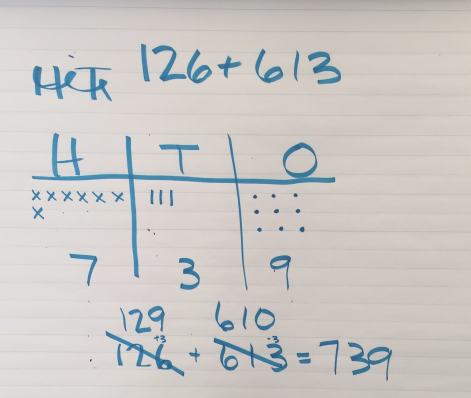
As we discussed this problem, we tried a similar one:

IMG_0739-min

Tuesday

IMG_0740-min

Friday

IMG_0738-min

IMG_0737-minWe modeled the solution to this one in three different ways (which we related to the ways we had done 2-digit addition earlier this year).

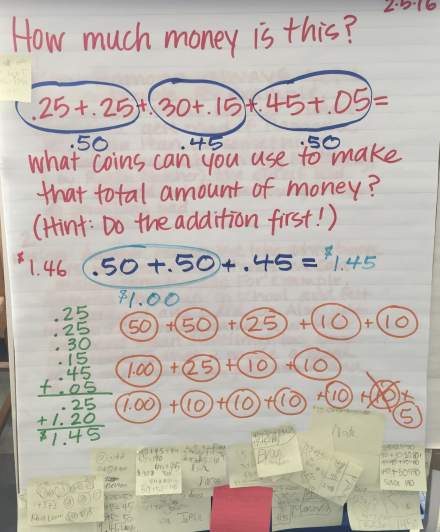
Ok, now for a confession…I was surprised when my kids made some of the connections they did this week between money and 3-digit addition.  I know, right?  Probably shouldn’t happen that way, but it was honestly something I hadn’t really noticed, or at least thought about it as specifically as they did.  I think it was nicely pictured in the problem from Tuesday, where we solved each problem in red–they made connections between how you can add whole dollars just like the hundreds in the 2nd problem (and that’s just like 100 cents, making the amount with pennies); the tens were dimes and then the ones were pennies.  Ok, so that part is not surprising to me–obviously I have this knowledge as an adult–but I honestly didn’t expect kiddos to use this to help them solve the 3-digit addition.

It went even farther yesterday when I had a kiddo working on a pre-assessment for this next unit and was doing the problem 451-238.  He told me he needed the money bag so he could use coins to help him.  Since I always allow kiddos to use whatever manipulatives or strategies they need to figure things out I said “ok,” but I honestly was thinking this would hinder him more than help him, or that he’d end up more confused.  When we first looked it he seemed confused with how he’d subtract 8 from 1 (which told me he wasn’t really solid with regrouping yet).  He started by making $4.51 with half dollars, dollar coin, dimes and a penny, and seemed a little unsure about it as this point, too, asking me about names and values as he made his amount.  But once he got his $4.51, he could easily take about the $2 from $2.38, as well as the $.30, which he did with 3 dimes (and I wonder if he made that $.50 that way on purpose since he could think ahead to having to break it apart later on).  Then he sat with only 1 penny, and the need to subtract 8 cents.  And so yes, here’s where the money came in handy–the concrete nature of being able to think about trading a dime for 10 pennies (which is what he is doing abstractly when regrouping) helped him see the constant value and how he could then actually take about the 8 pennies (8 ones) from what was there.  He then counted the money he had left and told me it was $2.19.  We then talked about what that would be if we were just talking about hundreds/tens/ones instead of money and by drawing it in a chart he eventually saw it as 219.

I’m excited to see how this connection to money plays out for some of my friends who need to actually hold/touch/feel the addition and subtraction.  Yes, it’s something we’ve done with other kinds of math tools and strategies, but I wonder if this might even be the best connection, yet, since it’s all based on place value anyway.  Oh yeah, and maybe that’s why this unit was placed after this one in the sequence….

The conversation around this problem the other day was the kind of thing that reminds me that I don’t know everything.  Obviously I know this, but it’s refreshing when kiddos remind me that they are figuring out things I hadn’t thought of.  I love sharing with them those moments, too.  It reiterates the fact that I am not the only teacher in the room, and that I have things to learn as well as they do.  And I hope it’s a lesson that all of us will remember–and use–for days to come.

Second Grade Math Warm-Ups: Week of February 8-11, 2016

This was another of those weird weeks in the Winter where we have less than a full week of school.  Oh, yeah, and we celebrated Valentine’s Day today which made for a funny schedule.  AND then you add in ridiculous Missouri weather and an accident (oh, no, not mine–just one that added an hour to my commute!) and this week has already been the longest in ages.  What? It’s only Thursday? Well here’s to a professional development day tomorrow, then. 🙂
So…a short week and a crazy day today means I have only three warm-ups to share.  I think they’re pretty good ones, though.  Made for great conversations.  Enjoy!  Oh, yeah, they’re all about money again.

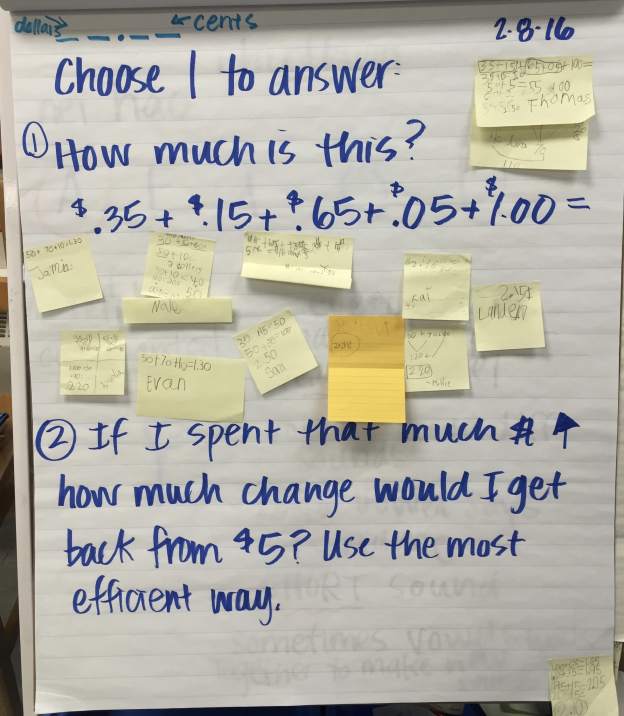
Monday

This was the first time I’d asked a money question written in equation form.  Many were confused by seeing cents written as dollars (they kept saying “Why did you put a dollar sign there?”), and so we had to clarify that during our debrief.

IMG_0548-min

Tuesday

This was a challenge to think of amounts in more than one way.  They did pretty well with it, though.

IMG_0471-min


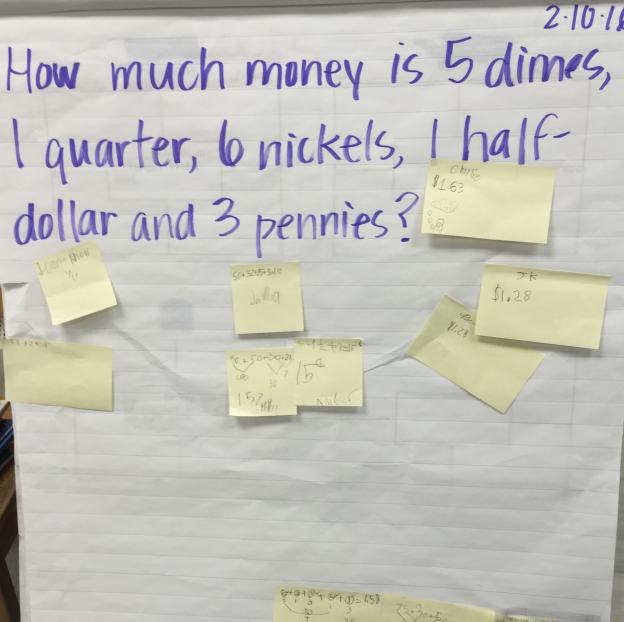
Wednesday

When we talked about this one, we had some great conversations about efficiency when counting coins, and how making piles of dollars (starting with the biggest coins) is a quick way to figure out the total.  We also practiced making $.25 in multiple ways (not just a quarter).  We called it “Mickey Mouse” when we found 2 dimes and a nickel, so 2 Mickeys and a 2 quarters makes a dollar, as does 2 Mickeys and a half dollar.  Just so you know. 🙂

IMG_0549-min

Second Grade Math Warm-Ups: Week of February 1-5, 2016

This was finally a semi-normal week: we had 5 school days and no “extra” stuff to mess with the schedule.  It was also the first week in a long time that we had a math warm-up every morning, which means I have lots of problems to share! I even found a couple of odd ones from last week–which was NOT a normal week because of the 100th Day and a 1/2 day on Friday.

These last few weeks we’ve been working on money, so all of these relate to that topic.  They are progressive, from Monday to Friday, and speak to the new skill/concept I was planning to cover that day; some kiddos really had no idea how to do this when i asked them to think about it in the morning and so had to give-it-a-go, or work with a partner. These were definitely questions where I saw many post-its that said, “I’m not sure yet but what I think is…”  (The extra two I’m sharing this week are related to our muffin challenge from the 100th Day.  Be sure to check out that post for more info!).

Last Week Muffin Problems


This week’s money problems:

Monday

IMG_0317-min

 Tuesday

IMG_0348-min

Thursday

IMG_0380-min

Friday

IMG_0382-min

Second Grade Math Warm-Ups: Catching Up

If you’ve been around here for a while (thanks!), then you know that one of the “regular” posts I do is to share our math warm-ups each week.  For many reasons that hasn’t happened for the last few months.  So this post is to catch up on some of the best ones from recently. 🙂

Measurement

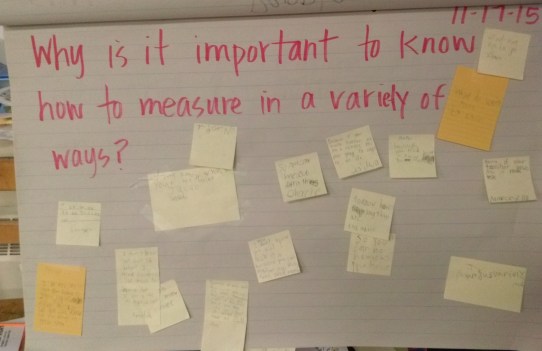
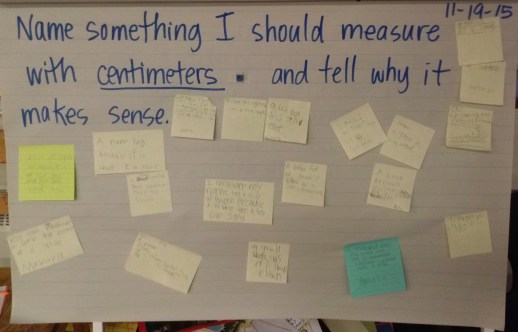
Before the holidays we were working on measurement (mostly length) and had some questions at the beginning to get minds thinking about how and why we should know how to measure.  The last one also addresses being able to visualize the size of a unit (centimeters) and apply it to appropriate situations.  In between and after all of these, we did lots and lots of measuring with different units, tools and objects.

Measurement (Time)

I only ended up with one picture (sorry!) of this round of warm ups, but after we came back from Winter Break we were still working on measuring, only with time!  There were several days of questions related to where the hands would fall on the clock, how many minutes would have passed if the minute hand were on a certain number, as well as one where the had to tell all the ways to describe a certain time (4:30, half past 4, etc.).

IMG_0062-min

Measurement (Money)

Now we’re on to money, and so we’re working on some foundational questions that get kiddos thinking about the numbers behind it first.  Then we’ll work more specifically on counting amounts, giving change, etc.

IMG_0116-min

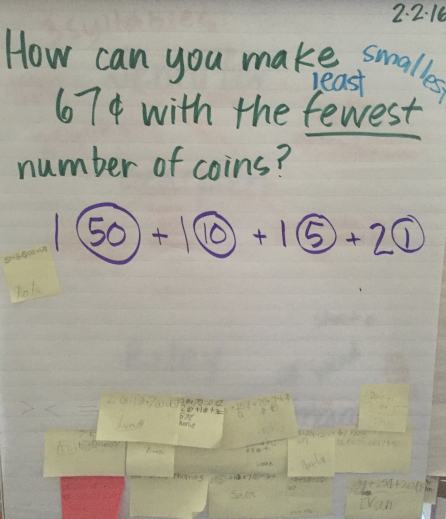
This first one was just to get kids thinking about groups.  What was great (and what happens often when we discuss the problem later in the day) is that while I never mentioned anything about money, someone used that model to help them figure out the answers and then once we made that connection, it made sense to other friends, too.  Then we could explicitly connect the numbers to coins and amounts we knew (or needed to learn!).

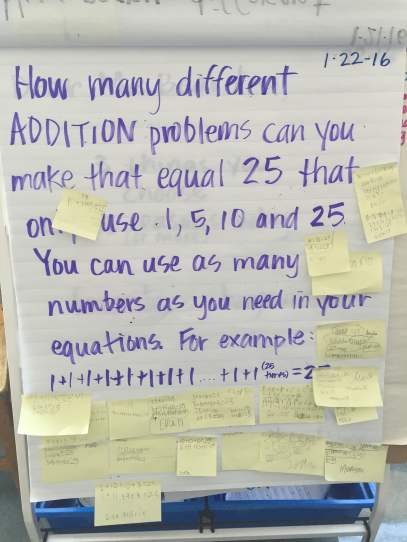
This one got kiddos thinking about combinations that make 25 (which I knew meant a quarter, but wasn’t saying that yet)…

…and then the next day I asked that same question with new parameters (which again I knew was connected to money) to connect to that previous thinking:

IMG_0118-min

As with most everything else I throw at them, kiddos are doing great things with making connections to previous knowledge and incorporating new concepts.  It’s great to watch them think like teachers and figure out the method to my math warm-up madness–often kids will say “Hey, you asked this question because….”  Good stuff!

If you’re doing math warm-ups, do you have any to share about measuring length, time or money?  We’d love to try them!

Second Grade Math Warm-Ups: Week of November 16-20, 2015

I apologize for the fact that it’s been nearly THREE WEEKS since I last wrote on this blog.  I’m not even sure what happened.  Oh wait, I do.  Life happened.  And I was tired.  It was one of those times in life when you have to do really cool things and take pictures of really cool things, but not write about it, you know?  Oh well, here’s to trying to fix that.  Starting now.  So onward we go!

Monday

We were starting a new unit in math this past week, so the warm-ups were no longer addition and subtraction.  This one is connected to some essential questions we will be chewing on throughout the unit, as well as serving as a way for me to know with what background knowledge everyone is starting.

CAM02480-min

Tuesday

Another essential question from our unit…

CAM02482-min

Wednesday

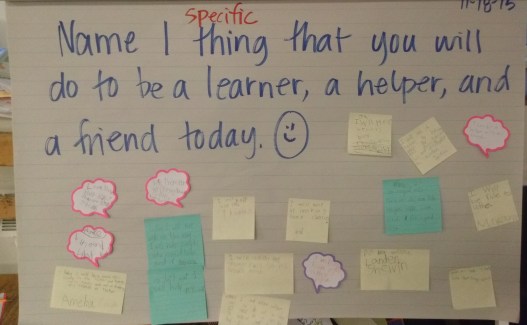
This pic is obviously NOT a math warm-up but is instead a view of where we were on this particular morning.  I sometimes use our warm-up routine as a way to make plans for our day, or to highlight a goal that we will all be working on together.  This was related to the work we were doing last week with remembering to focus on caring for others rather than just ourselves first.

CAM02484-minThursday

Back on track with measurement.  🙂

CAM02485-min

This last one isn’t a math warm-up, nor do I remember what day it’s from, but it was a great example of how math happens all the time in our room!  Oh, and it used skills we had just learned in our last unit, so it was great practice.  We were starting a new chapter book (Thanksgiving on Thursday by Mary Pope Osborne–a Magic Treehouse book), and were interested in knowing when the first Thanksgiving took place.  We figured out we could subtract or count up to figure it out.  We decided to use the Circle, Split, Subtract with a Number line strategy that we had learned.  It worked! 🙂 And….Thanksgiving started a long time ago. 🙂

CAM02481-min

Whew!  It feels good to be back in the blogging game again. 🙂  Thanks for coming back to read!

Second Grade Math Warm-Ups: Week of October 12-16, 2015

This week we began a new unit on adding and subtracting within 100 (which is actually a unit we had last year, as well, so should be something that we remember.  Should…time will tell if that’s true. LOL 🙂 ).

This time around we’re focusing more on making sure mathematicians are flexible and can show their thinking in more than one way.  As with last time, we’ll also make sure they can choose a strategy appropriately based on the numbers (rather than just which strategy the like best or is easiest for them), and we’ll also continue to work on being clear with our communicating our mathematical thinking.

Here we go!

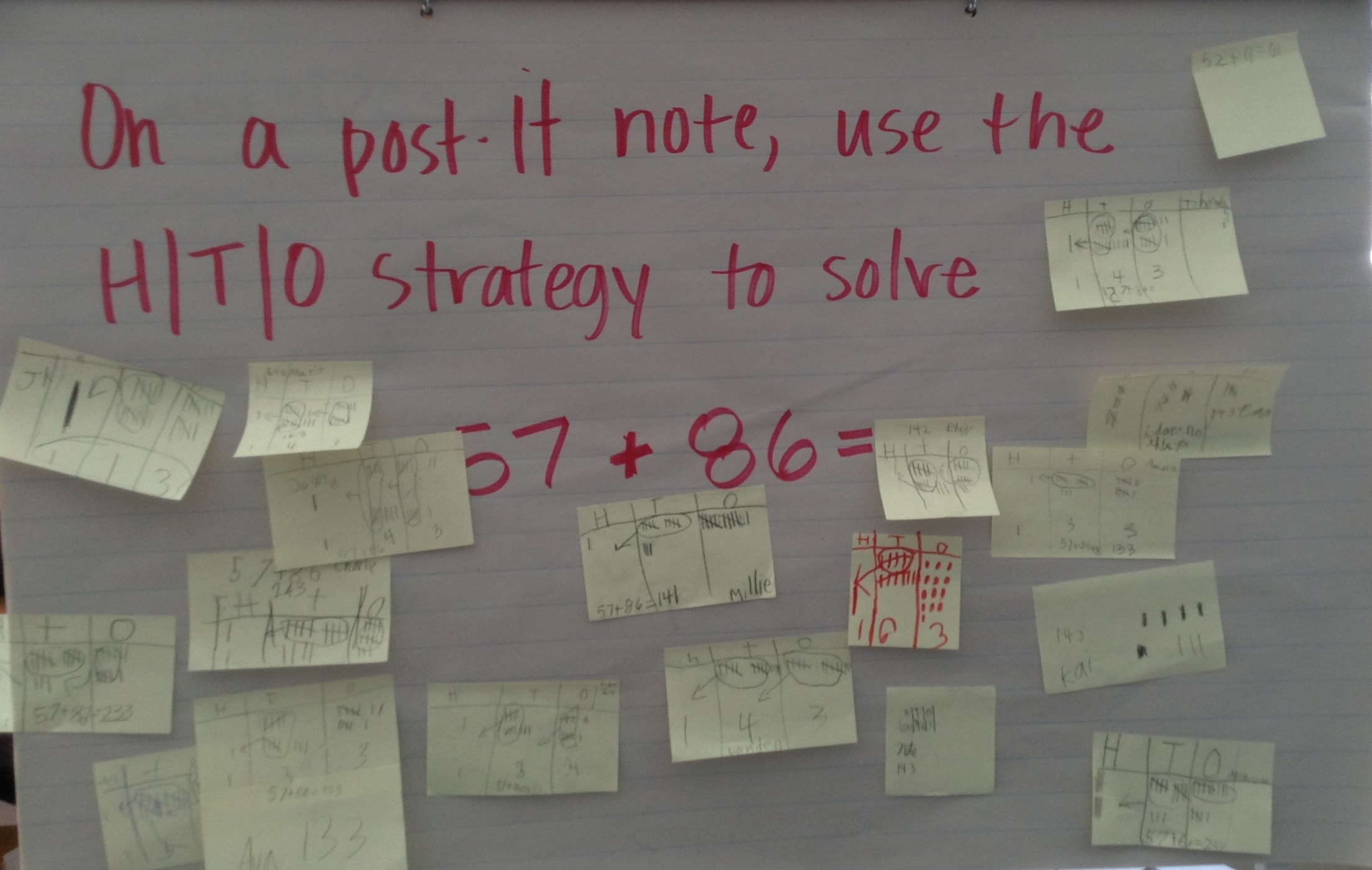
The first strategy we worked on for this unit is called HTO, or hundreds/tens/ones.  Yeah, it’s kind of an obvious name for what they are doing, so I guess it works. 🙂

IMG_5508-minEach kiddo has a workbook where we’re showing our thinking, and I had to share what Emily’s looked like after I taught this strategy.  She kind of liked it. 🙂

 Here’s more about how that strategy works:

HTO_strategy-min

First you mark the first number on the chart (98) and then add on tallies to show the second number (31). Then look to see if you can find any tens or ones you need to move over to the next column. Finally, add down the columns to find your answer.

Ok, so this post is a little misleading, because that was the only warm-up I have to share.  The rest is more from what we did in our conversations in math.  Hope that’s ok. 🙂

On Friday, we started another strategy that is Adding on the Numberline (and actually using another strategy called Circle/Split/Add):

We still have a strategy or two to teach, and then we’ll just practice them until they’re solid.  The thing I have to keep reminding kiddos (especially those that are focused on being RIGHT and being FAST) is that this unit is as much as communicating and being flexible as it is about finding the right answer (although, OF COURSE that’s also expected. 🙂 ).

The Writing Process–in Math??

Yep, you read correctly.  We’ve been learning the writing process–mainly in regards to our work in Writers’ Workshop–but also in math!

A few years ago, when our school started working with Cathy Fosnot and Mathematics in the City, I learned about how many parallels there are between communicating in mathematics and communicating in most any other setting.  At the time it was kind of mind-blowing to think about how mathematicians revise and edit their work just like authors.  After hearing more, and thinking it through, and then trying it with kids, it made sense.

So…as with many other things I learned about with older kids, and protocols that I know work well with any age, we’re talking about the writing process in mathematics again.  In 2nd grade. 🙂

The first unit we worked through this year was about place value, and was related in many ways to money; this made sense to kiddos and helped them think through how to “trade” 1s for 10s, 10s for 100s and just how to make groups in different ways to “make” a number.

One day they were challenged to consider this story:

Screenshot 2015-10-08 20.37.03-minWith their elbow partner they were supposed to figure our the answer to that question: If Jerry has $1000 to share, with how many people could he share a $10 bill?

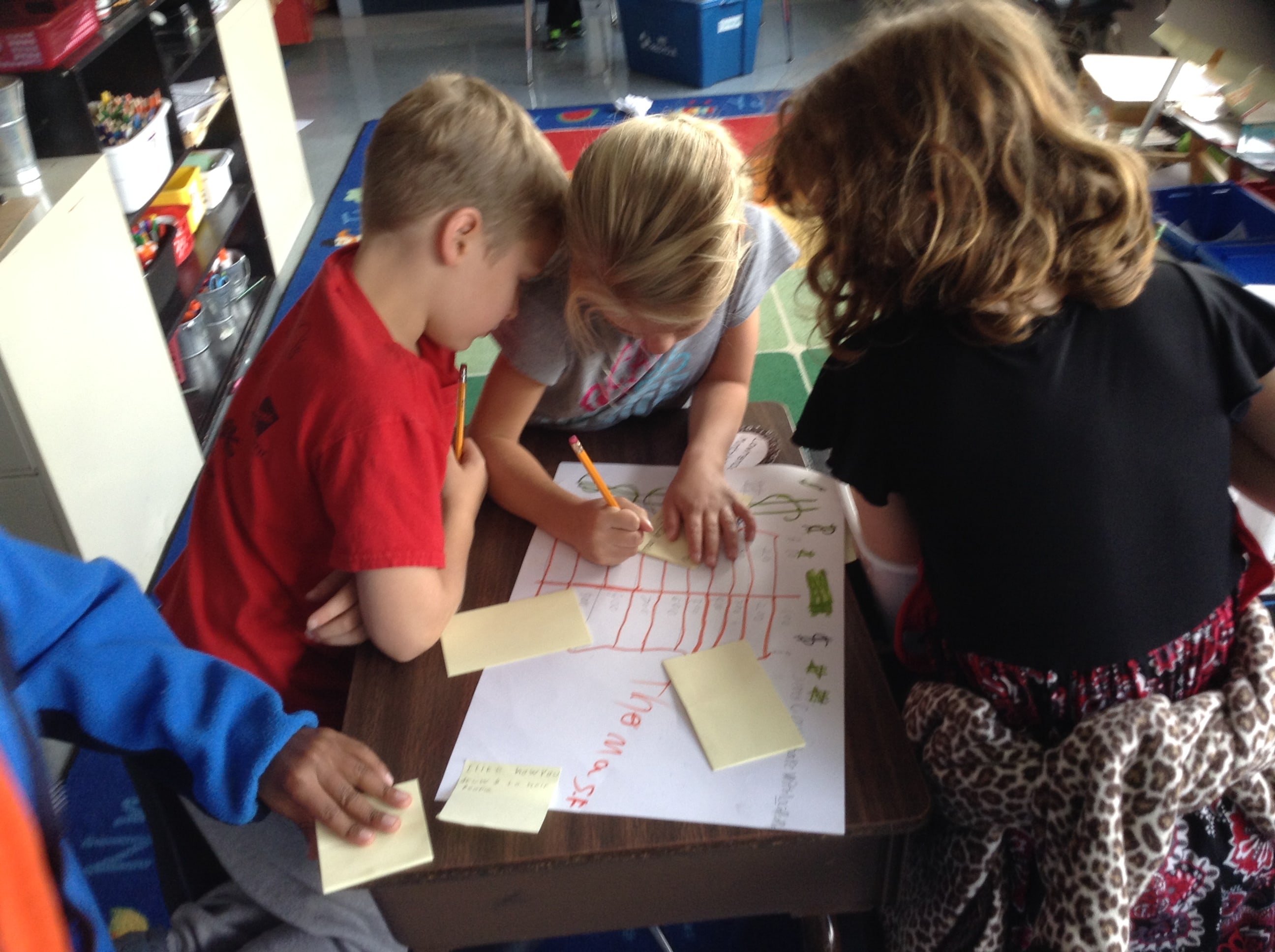
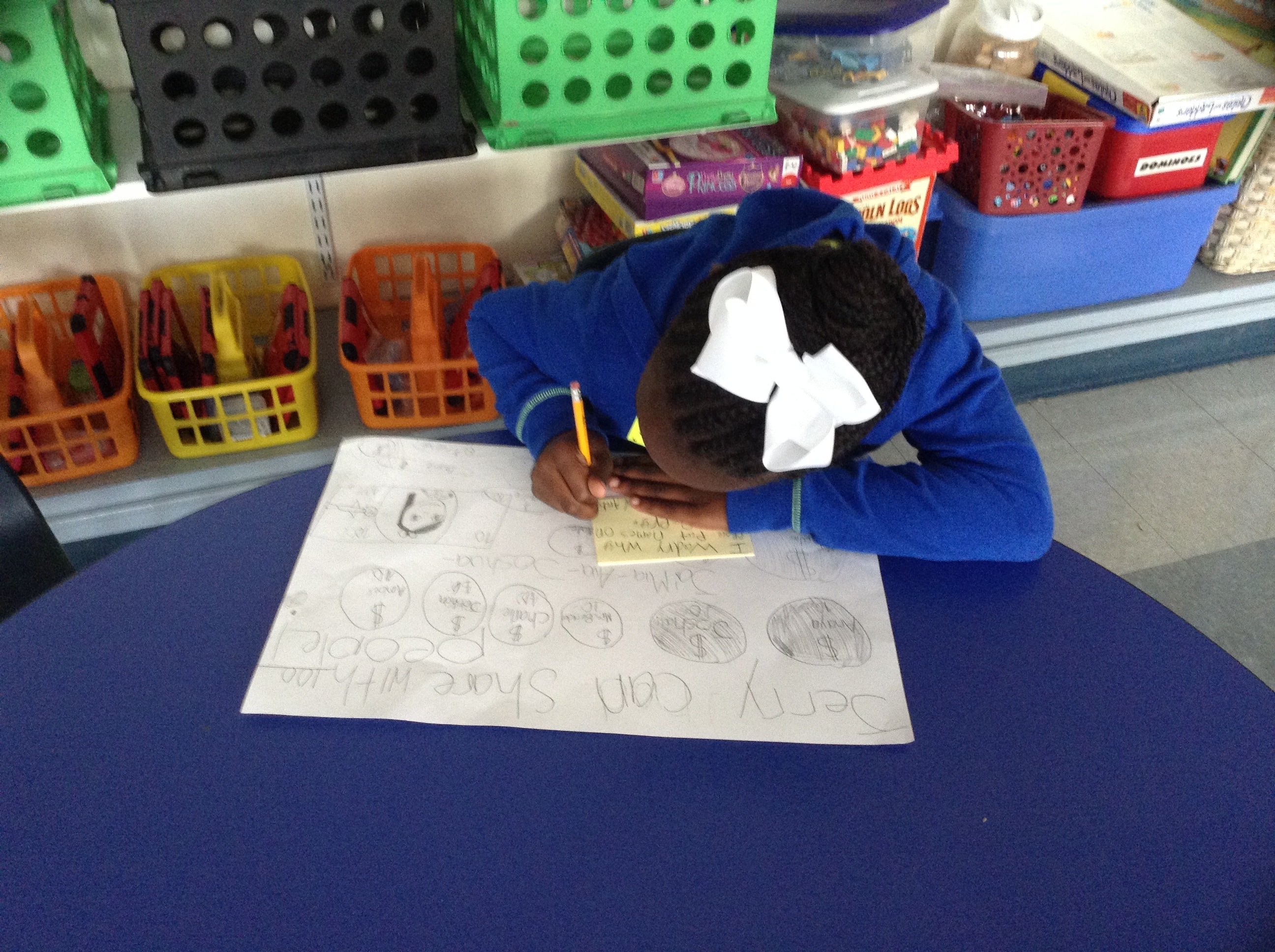
Kiddos worked for almost 2 math periods to figure out their answer (which was really the answer to the question of how many 10s are in 1000) and clearly share their thinking on a poster.  For many, the answer of how many people was easy, the way to share their ideas not so much.

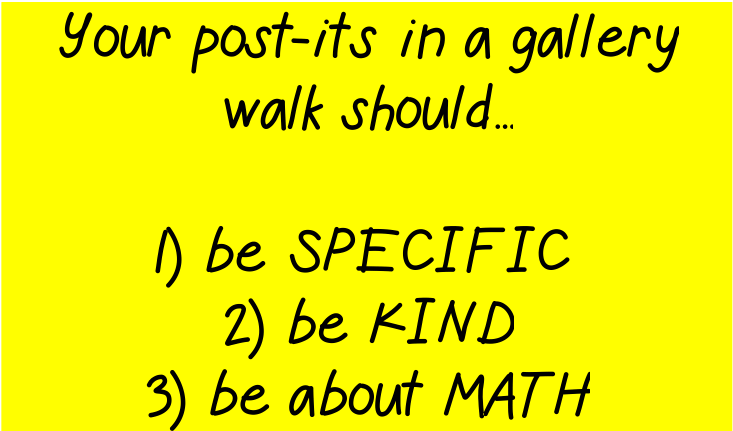
As a means of helping them know when they were “finished,” we discussed these parameters for their work:

Screenshot 2015-10-08 18.51.45-minAfter we had our posters finished, we were ready for our gallery walk.  During a Gallery Walk, students put their posters out for other mathematicians to read and comment upon–with the goal of helping deepen mathematical thinking and help create more meaningful representations.  It works much like a writing celebration, which is a great connection because all of our kiddos know how to do that. 🙂

Before we were ready to start commenting on others’ work, we needed a review of how to make effective, meaningful notes on our friends’ work.  We sat for a quick refresher using this flipchart:

Screenshot 2015-10-08 18.51.56-minThen we practiced recognizing helpful comments that followed the guidelines.  I gave examples and non-examples, and then we modified the ones we have given a thumbs-down (which mean they were not specific, kind or math-related).

After that, we were off to work in our gallery walk.

IMG_5395-min IMG_5396-min IMG_5397-min IMG_5398-min

We did pretty great with our first walk of the year, and I’m sure kiddos brought their kindergarten and first grade knowledge with them to help as they shared their thoughts with other groups.  I was impressed with how questions were used and kids were specific with what parts didn’t make sense or that they thought others could improve upon.

After adding comments, partners were given a few minutes to review what others had shared.  In order to debrief and think about how to use this to help us next time, partners had to share out with the larger group one thing they would do to revise their poster to make it better (and ideally we’d have taken time to actually revise them, but we ran out of time!).  Next time we are ready for a math congress and gallery walk, we’ll definitely come back to this moment and remember what we learned. 🙂

Second Grade Math Warm-Ups: Week of 9-14 to 9-18, 2015

We are in the middle of a unit on place value in second grade.  The warm-ups this week took on a little bit of a different spin, as a couple of times kiddos were expected to finish up work from the previous day’s Math Workshop.  That then became how we started math groups later in the day (I hope that last sentence wasn’t confusing…).

Monday

On this day, we were working on modeling numbers in bundles of 100s, 10s and 1s, like we had done during our place value challenge the week before.

IMG_5360

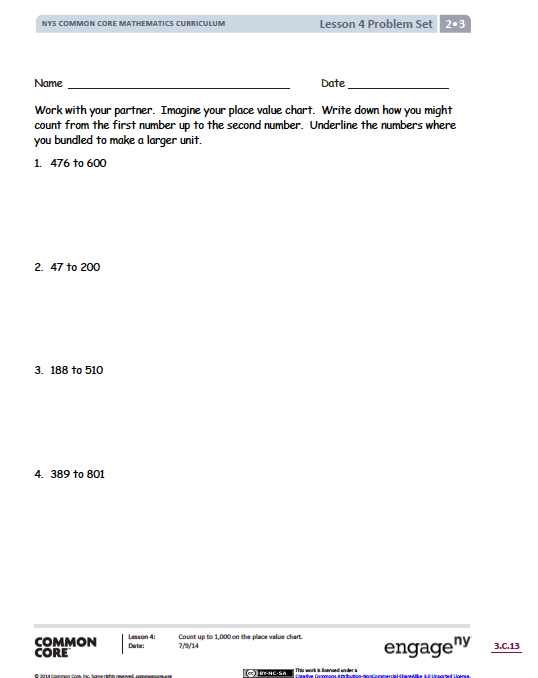
Lesson 2 Problem Set:

Tuesday

Pretty exciting question, huh?  See the example of what this page looked like below the picture.

IMG_5361

Screen Shot 2015-09-20 at 9.32.42 AM

Thursday

On Tuesday during math we had been focusing on representing a number in many ways, so I gave them a quick one to remind them of word form and expanded form.

IMG_5362

Friday

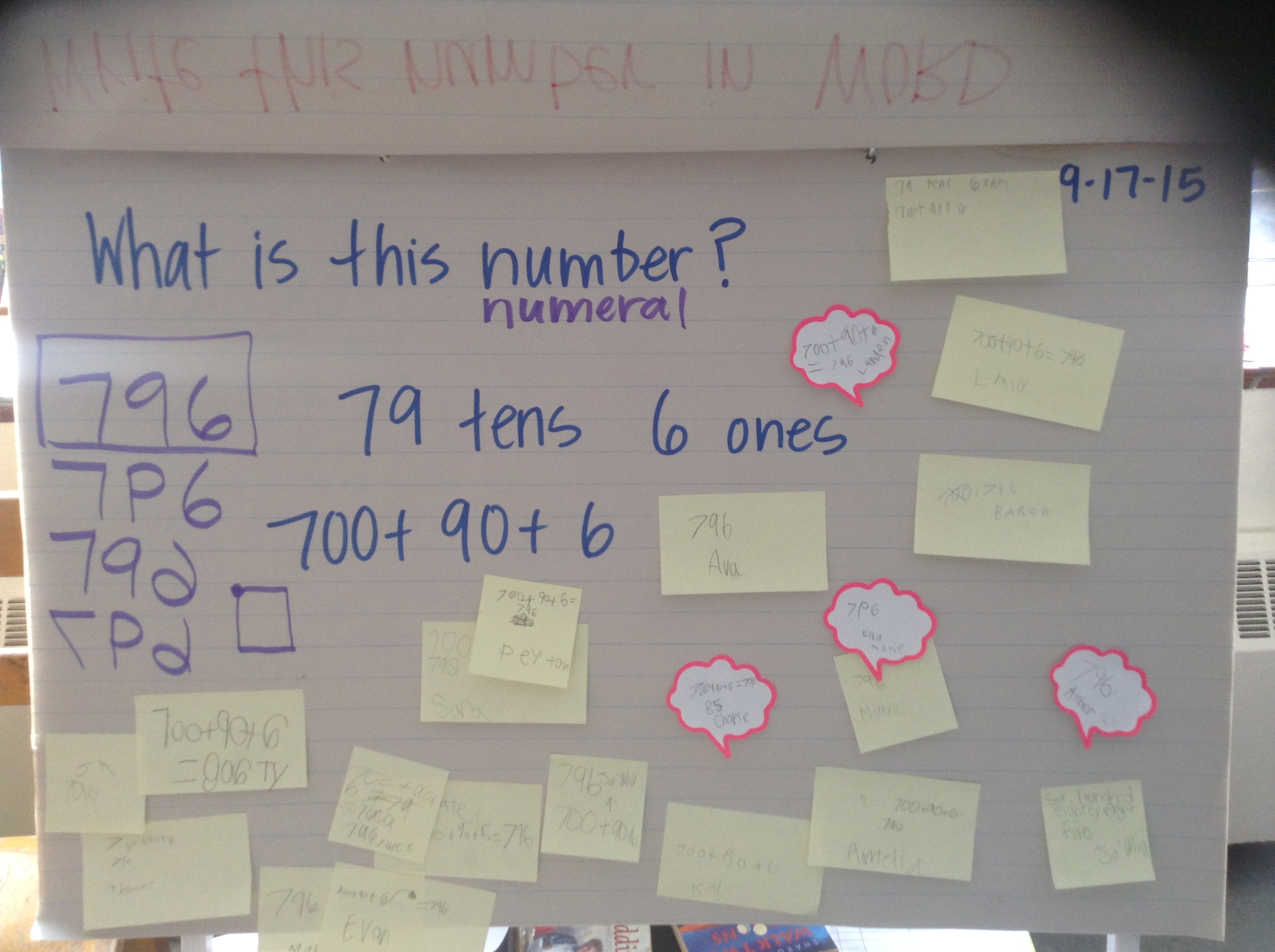
Another one….we also practiced the word numeral for number form, as well as focusing on making sure our numbers go the right way (as we still have some friends who forget. 🙂 ).

IMG_5363

Math Place Value Challenge

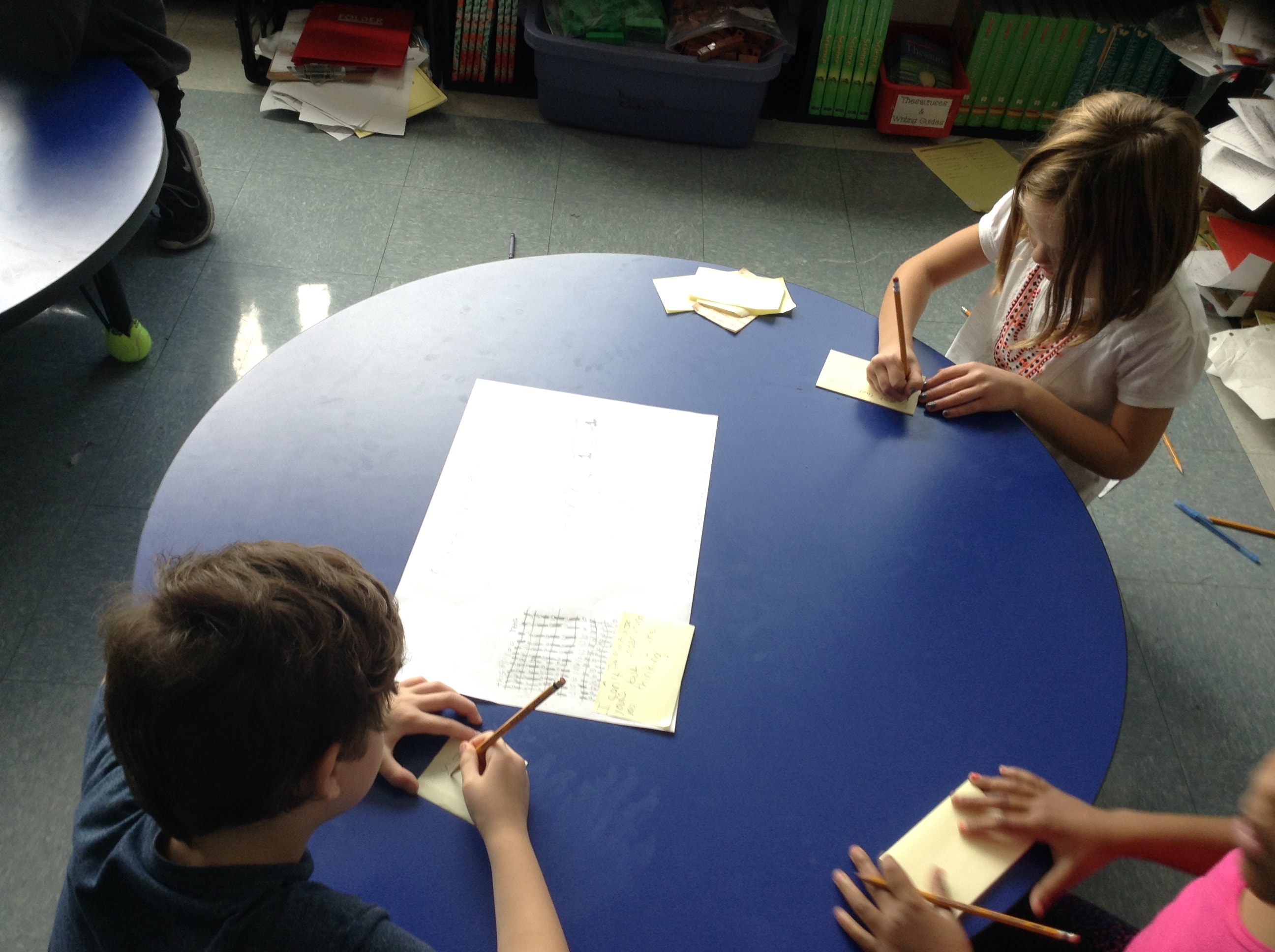
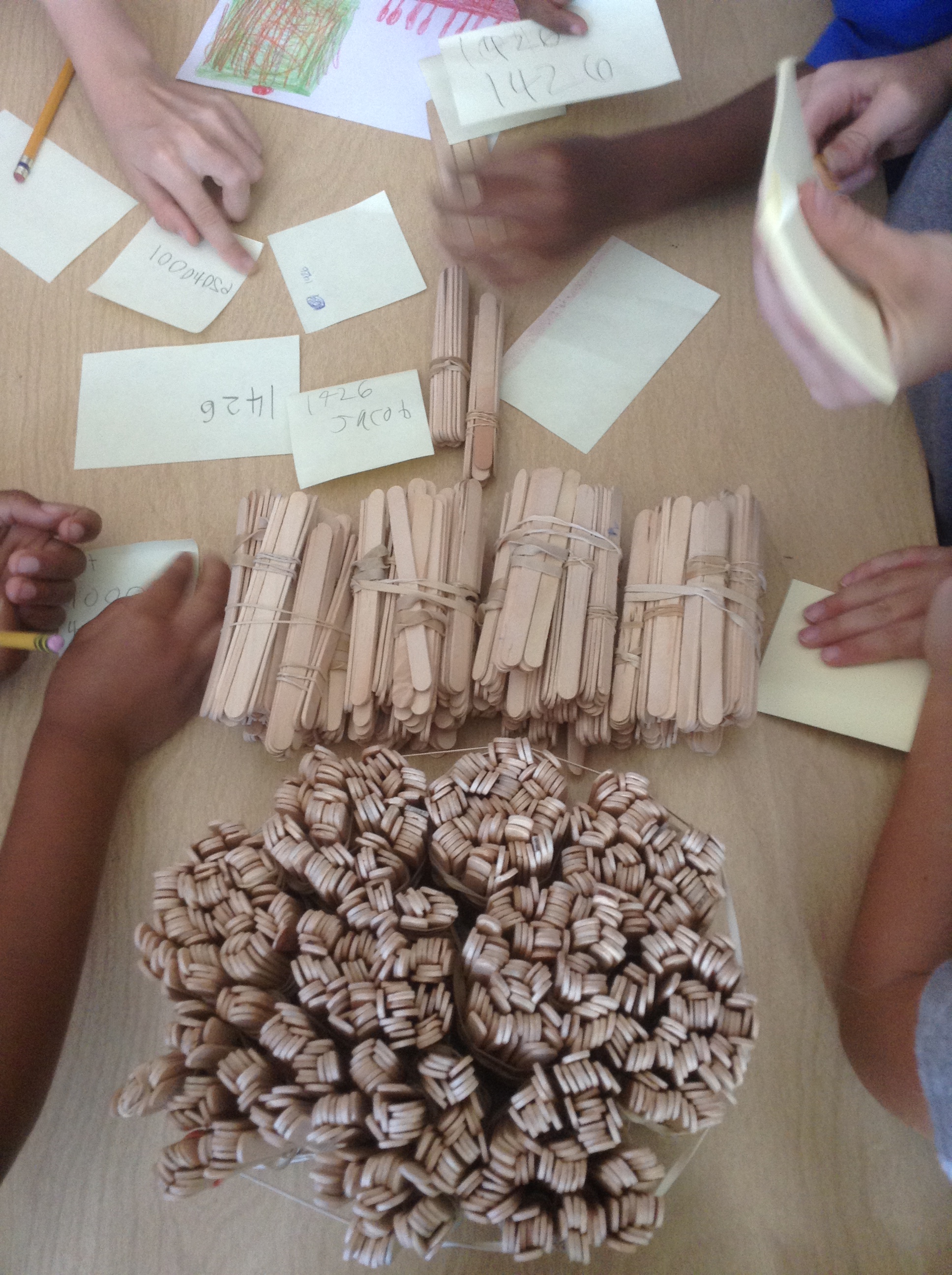
I mentioned on the math warm-ups post that we had been working on place value, and that mathematicians had a challenge to figure out how many sticks were in a big ‘ole pile.  They were given a small group (their partner plus another partnership) and two questions: How many sticks do you have? How can you count them in a way that will be easy to show someone else what you’re doing?

Each group was given a pile of popsicle sticks and they got busy!

As I went around to each group, I asked how they had decided what to do, and how they were determining how many sticks they had.  Most were bundling in 10s (yay!) and I nudged them to make an even easier way to see how much is in a big pile.  Could they continue to bundle and make a bigger group?

In the end, most groups ended up with bundles of 100, some 10s and–if their pile had any–some leftover 1s.  They put their collections back in the tubs, and marked how many they had with a post-it note.

Then we worked for a bit on how to model the numbers we had made.

IMG_5304The next step was to figure out how many we had altogether.  Many suggested that we could put our bundles together, but weren’t (at first) sure how to do that.  We talked about how they had made their 100s bundles–with 10 10s–and then guessed that we might be able to make some more 100s from the loose 10s in everyone’s tubs.

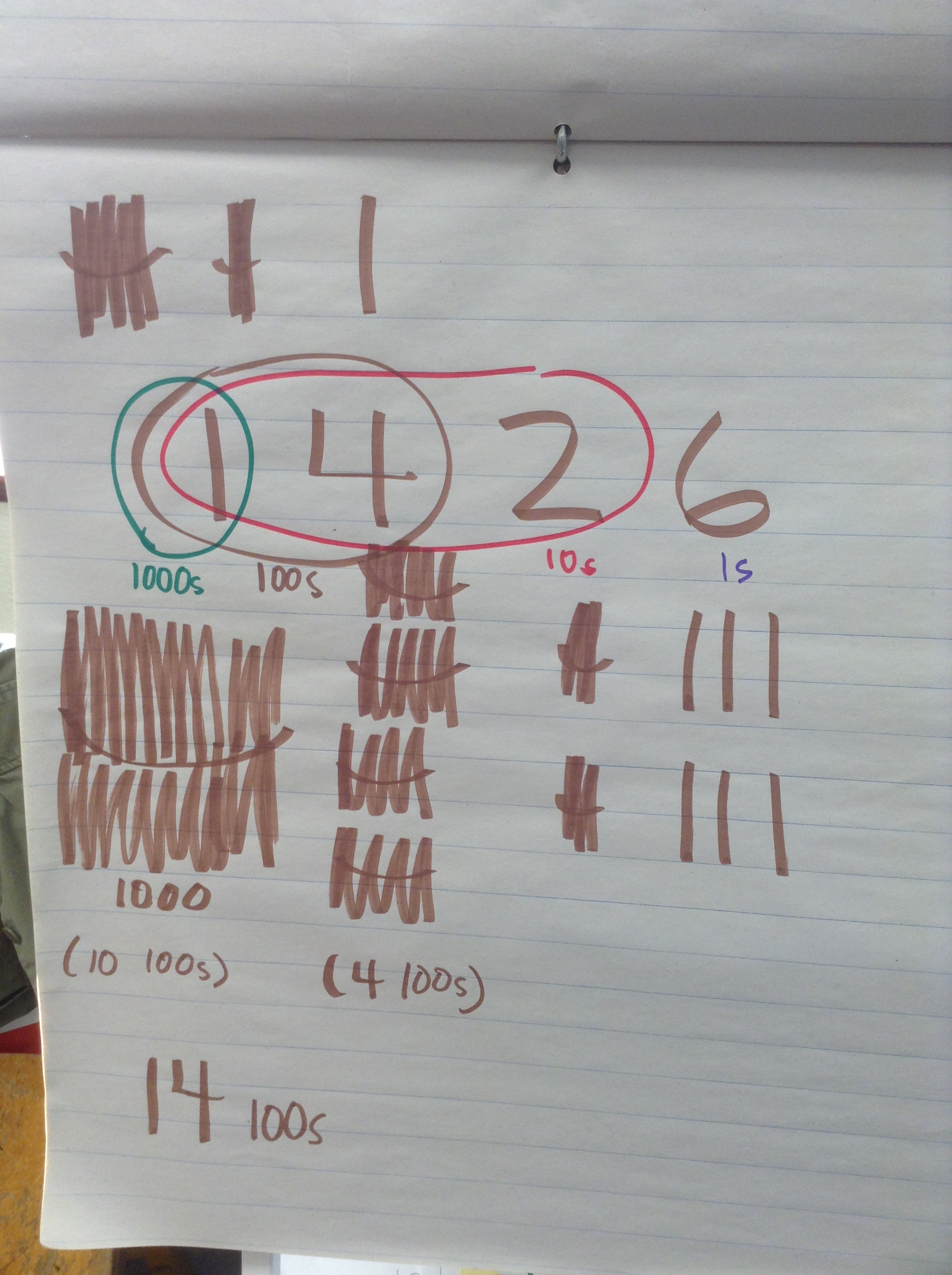
Left with a massive pile of 100s, that eventually led us to thinking there must be a better way to show how much that pile had in it.  I asked if they thought we could bundle any bigger numbers and honestly most of them thought I was crazy!  I just began collecting 100s in my arms and counting: 100, 200, 300, 400….and they got the idea.  They going until they got to…10 100s!  That was a great conversation next about what number we had just made.  10 100?  We figured out that it was a 1000, and that when we said “10 100” that helped us know about how many bundles were inside, but that it wasn’t the right way to say the number.  We stretched a big ‘ole rubber band and made a 1000 bundle!!  We counted the whole thing and agreed that we had one-thousand, four-hundred twenty-six sticks!

IMG_5288But how in the world do you WRITE the number one-thousand, four-hundred, twenty-six?  We gave it a go.  Many of us remembered that when we went from 2-digits to 3-digits it was a 100s number, and since we had 4 groups of sticks, maybe that meant our number had 4-digits…

IMG_5287 Our model of this number–1,426–looked like this:

IMG_5306Many minds were blown as we figured out how many 100s and 10s were inside that big number.  We figured out that it was actually than just what the digit said, because of all of the groups inside of groups.  I loved how many kiddos kept saying, “Wow, this is fun!” and “Man, we’re learning so much today!”  Definitely lots of great mathematical thinking happening here!

UPDATE:  I got this email after the first posting of this story.  Love this stuff!  Thanks for sharing, Shannon. 🙂

Hi Jennifer!  
You had so many math posts on the blog this weekend, that I wanted to share a story with you.  We have a Curious George story CD in the car that we listen to a LOT and in one of the stories George gets 10 dozen doughnuts.  The other day when this story was on, Millie asked me if 10 dozen was 120!  I was so surprised!  I said that it was and asked her how she knew that.  She told me “5 2’s are 10, and then another 5 2’s makes 20 and 10 10’s is 100 so, 120”.  It took me more than a minute to follow the math just because it wasn’t how I was used to thinking of problems, but she was totally right and I saw this “new” math stuff in action :).  It was kinda cool!  She was doing multiplication and didn’t even know it.  Thanks for teaching her such great foundational skills that allow her to do these kinds of problems in her head!