First Grade Math Warm-Ups: Week of March 9-13, 2015

Sorry, I’m a few days (ok, weeks!) late with these warm-ups.  Spring Break happened and I had forgotten to snap pictures of them before I left for my vacation.  Oops.  But alas, they were still there when I got back today, and so here they are for you.  And man, are they worth the wait. Hee hee. 🙂

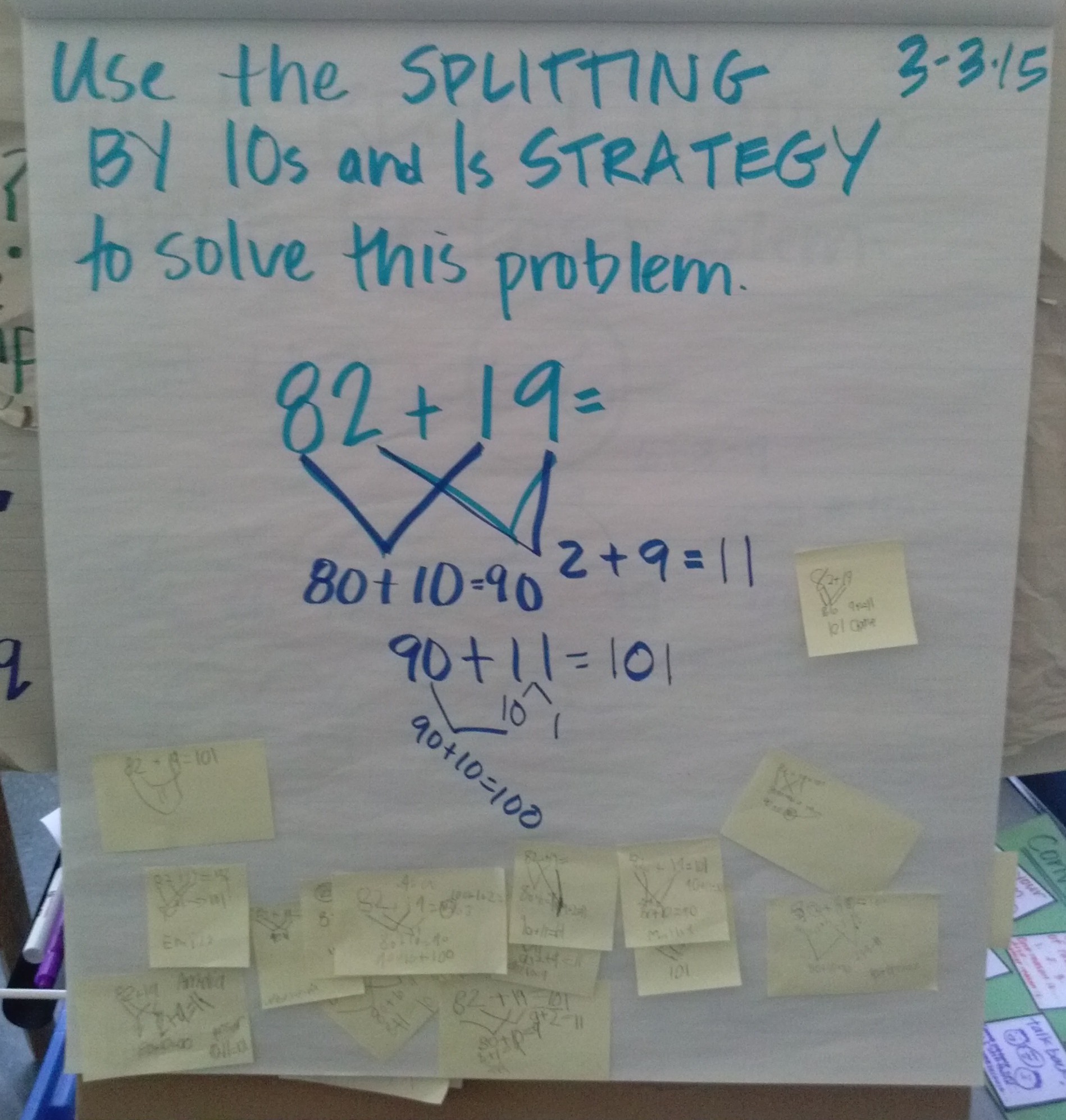
Monday

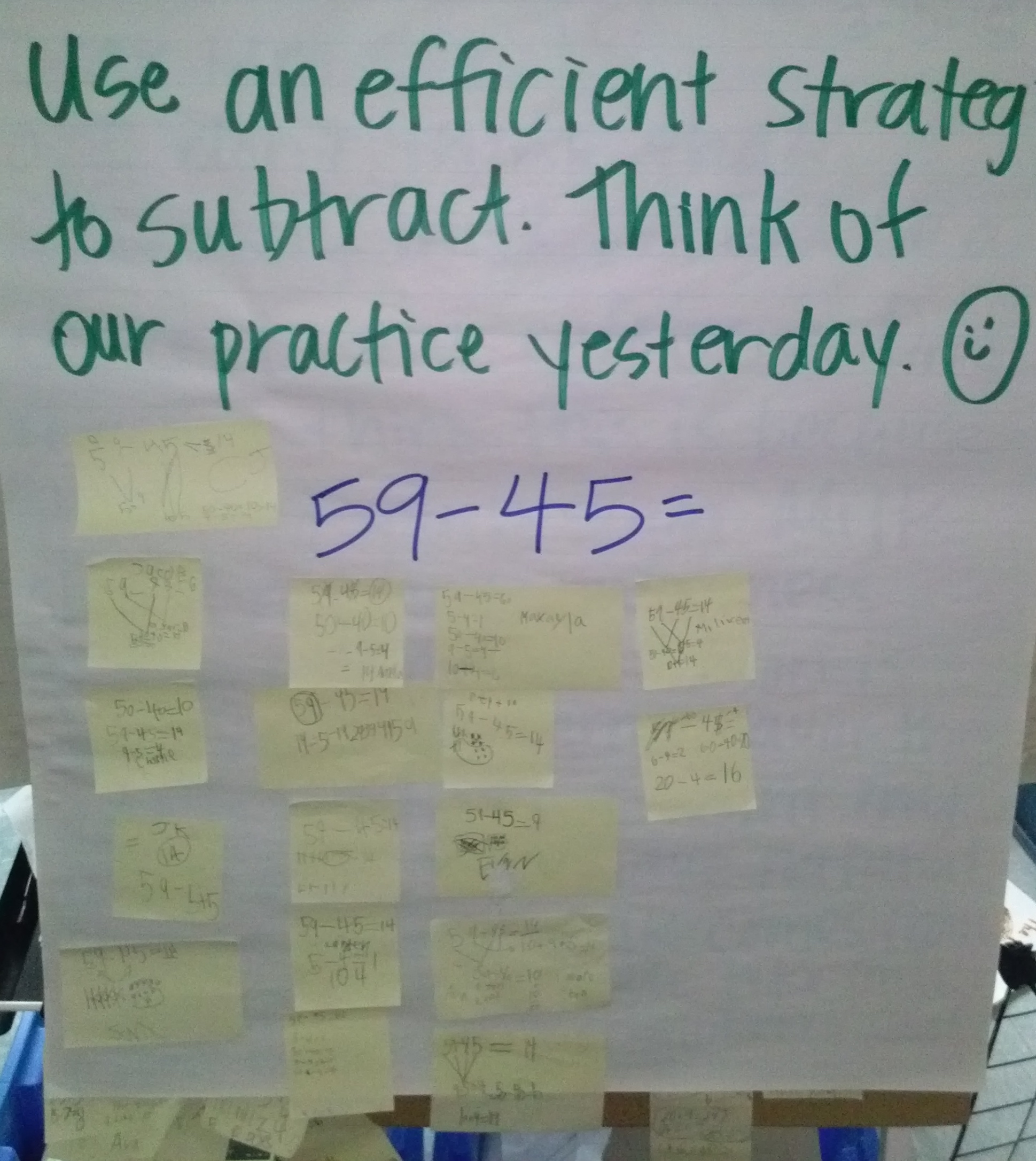
This week was the last week before the end of our quarter, and so we were wrapping up our work with addition and subtraction.  There were a couple of things that I wanted to highlight with our problems–the connections between adding and subtracting strategies, and using mental math for quick facts up to 20.  This one again helped lead them to see how what they know about addition can help them with efficient subtraction. More about all of those strategies listed there later…

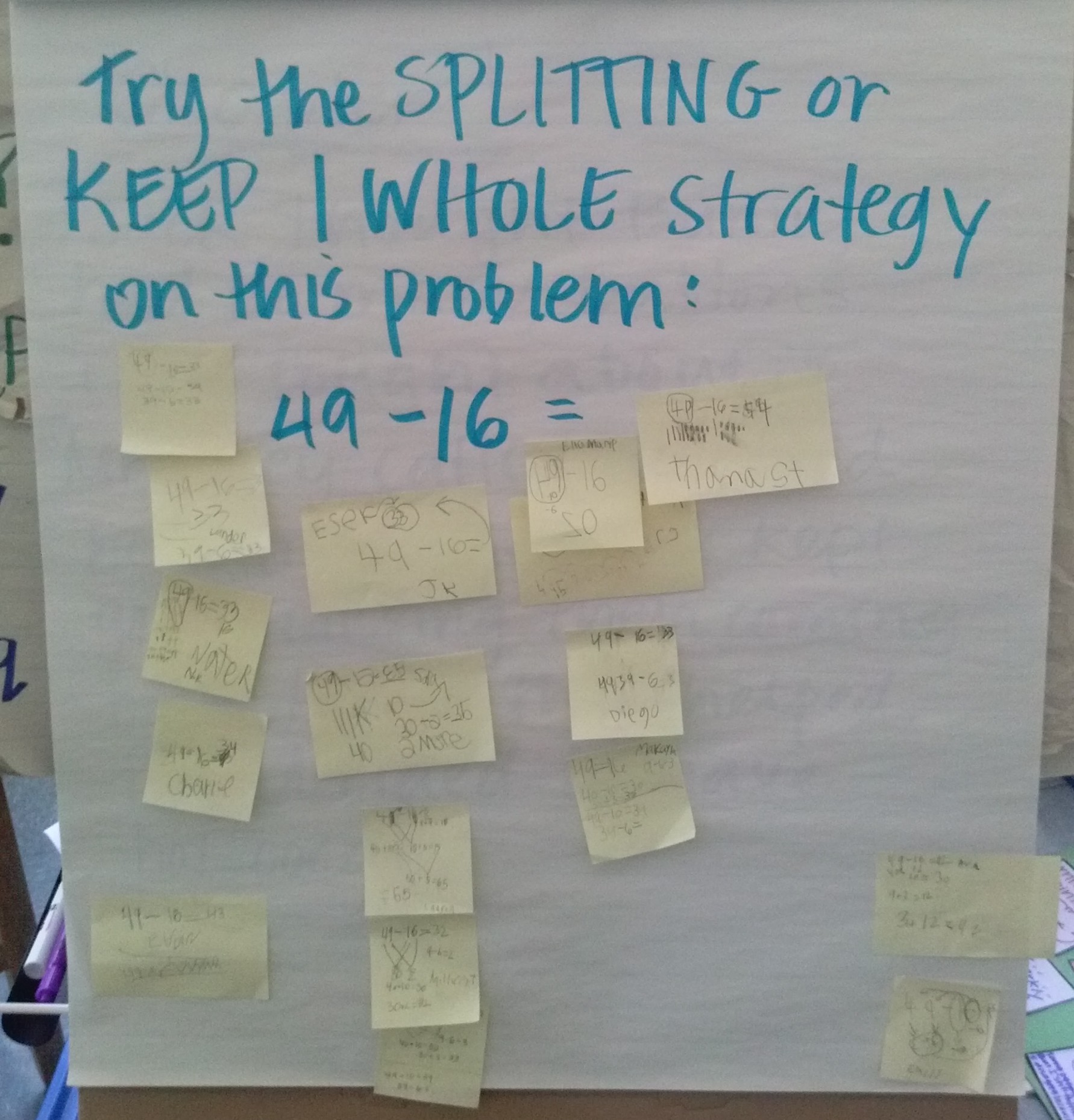
CAM01767Tuesday

Yeah, somehow I didn’t get that “y” on the end of strategy in the picture (I promise I wrote it there correctly!)…again, more on that practice we did later…it involves some pretty great explanation videos.  Worth the wait (but isn’t everything I write on this blog?! Kidding, just kidding!).
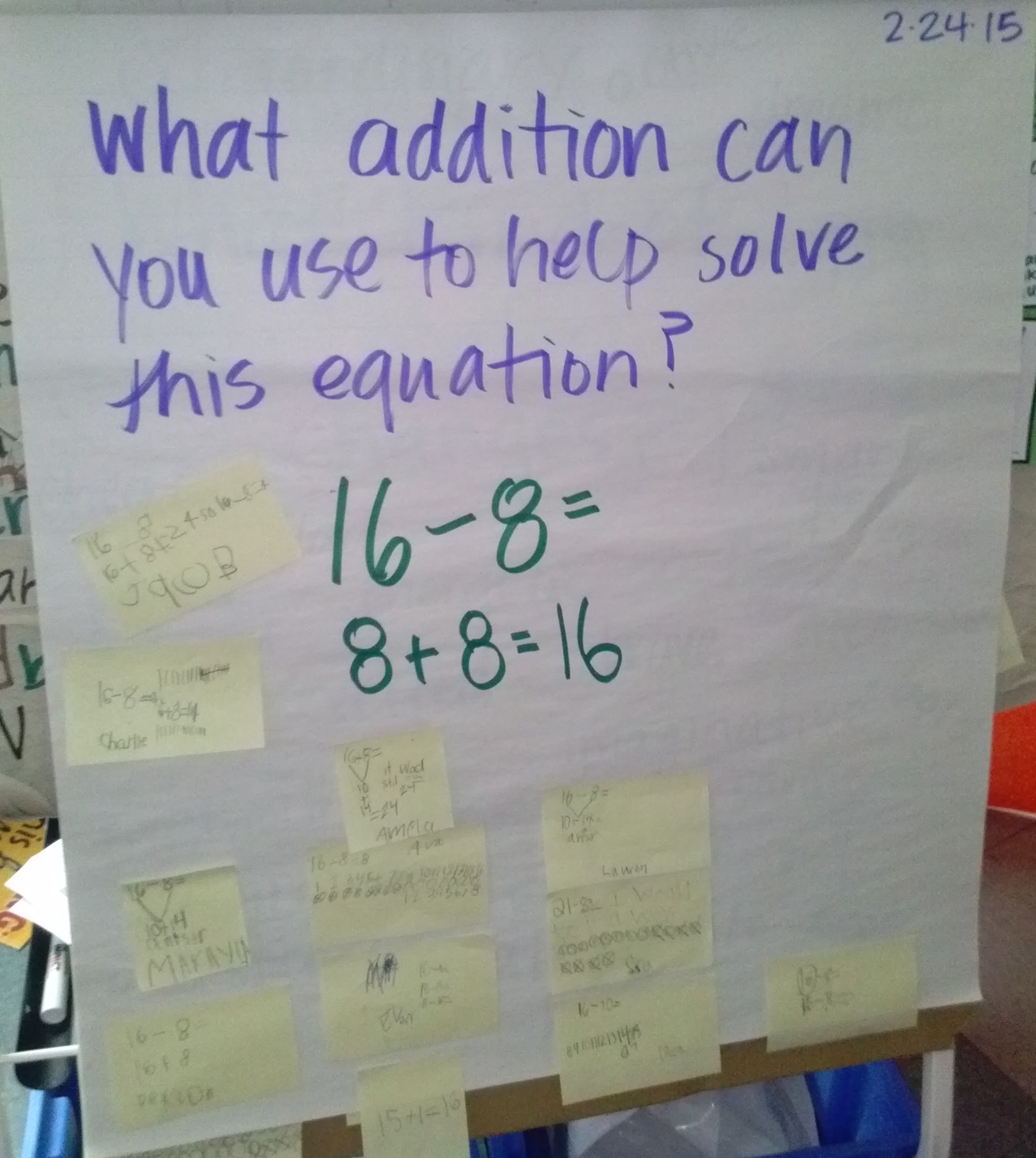
CAM01761Wednesday

Again, with our focus on strategies, I wanted to point out that good mathematicians know when to use a strategy as well as why to use it in that situation.  This one didn’t really have a “right” answer (many strategies make sense with these numbers), but it was important for kiddos to explain their reasoning for which strategy they chose to use.

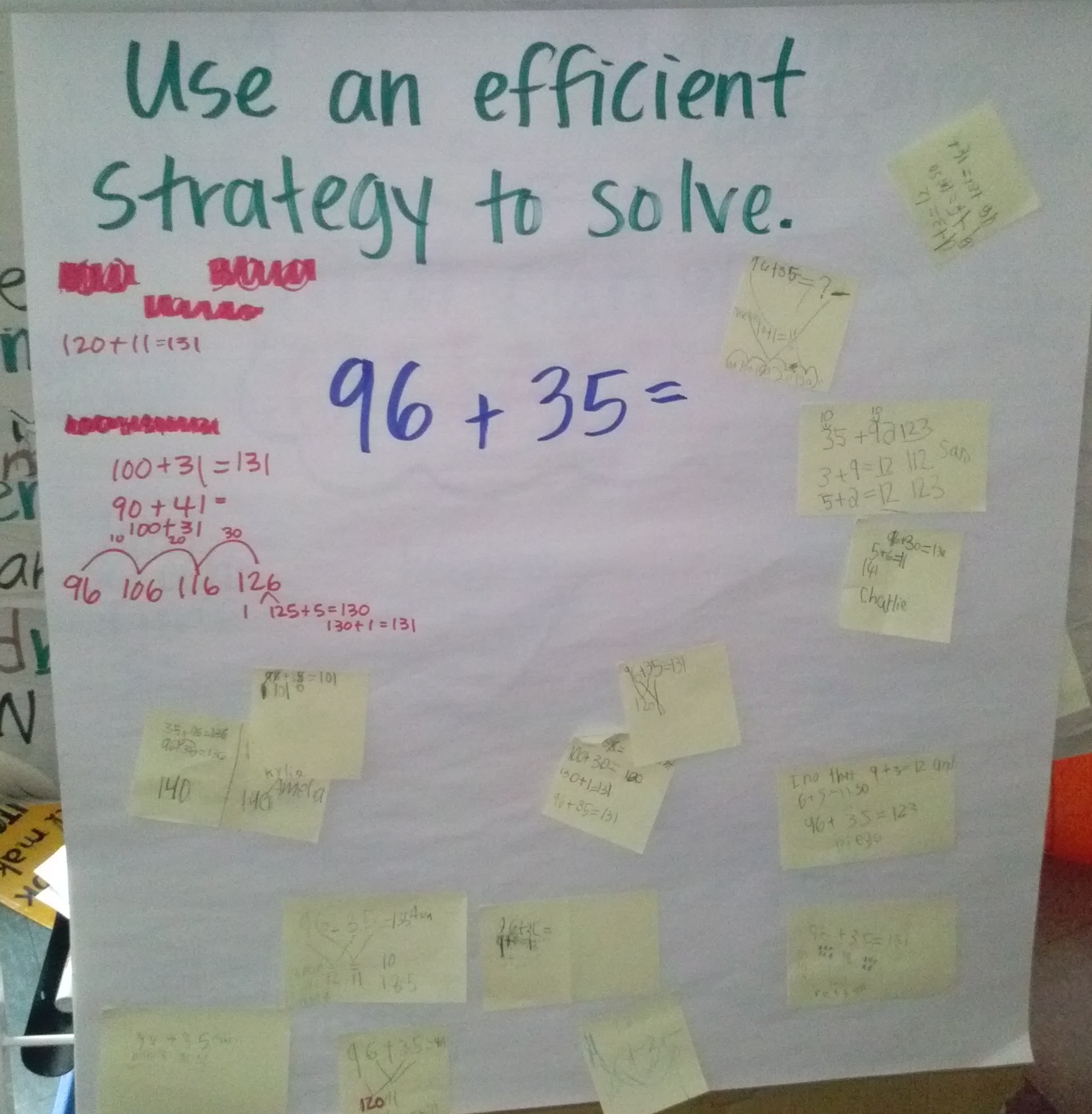
CAM01764Thursday

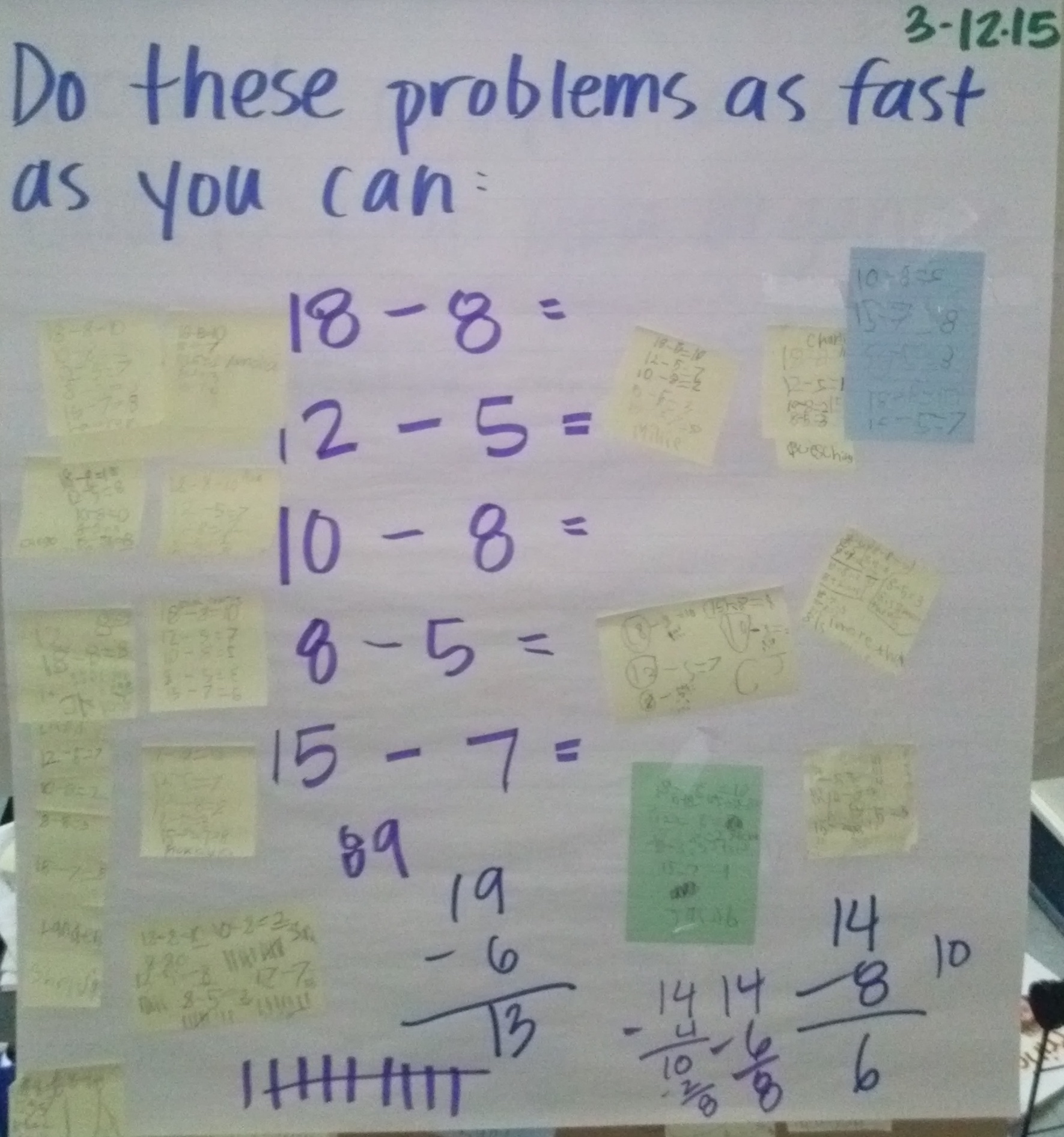
Wanted to get a quick temperature read on kiddos and their ability to do these facts quickly.  Most could do them quick and painlessly, using what they know about other problems to help (like tens and doubles), which is exactly what I was looking for!
CAM01765Friday

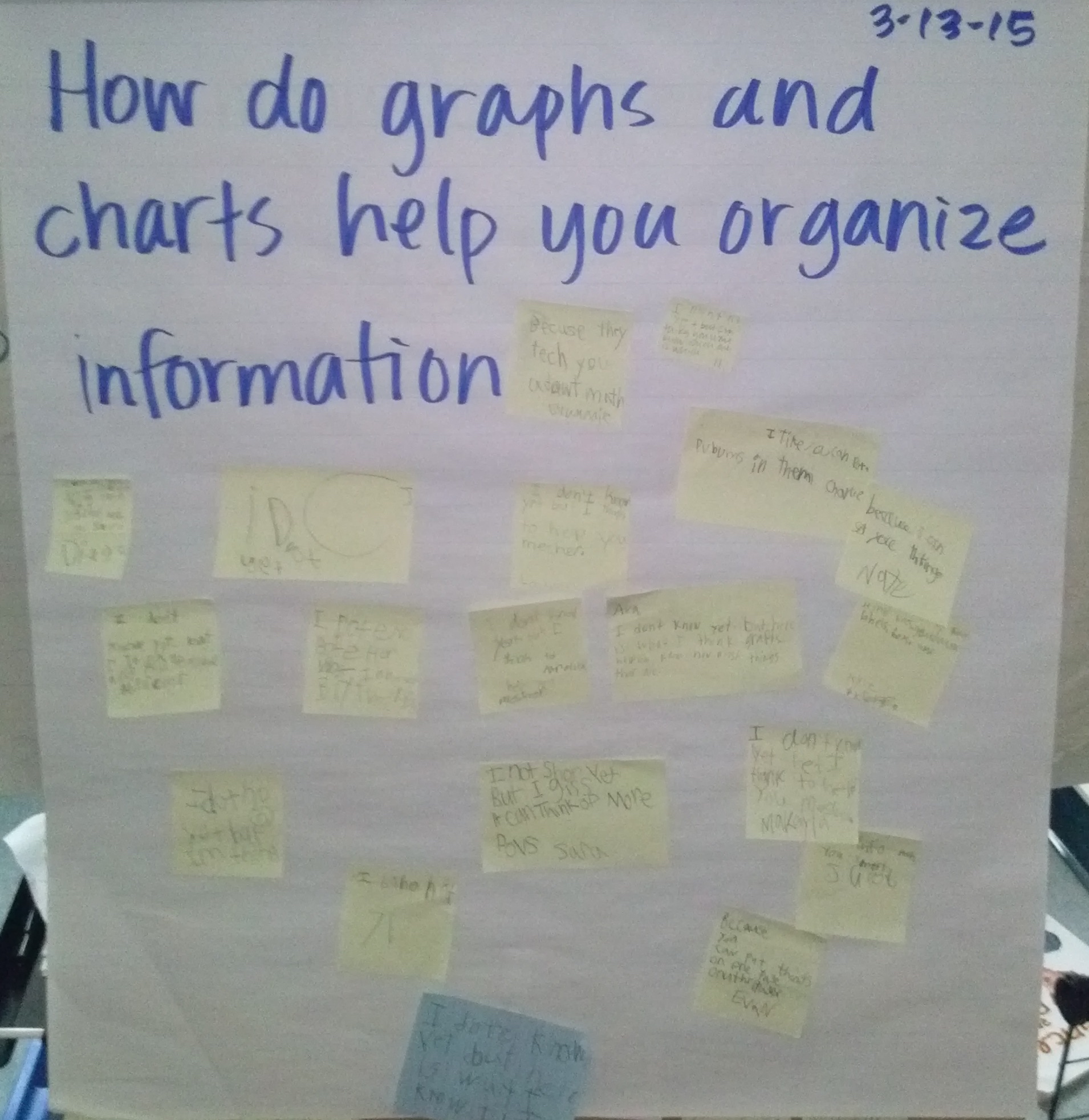
This last warm-up before the end of our quarter (and what I considered a well-deserved break for everyone!) gave a sneak peek to next quarter’s work with graphs, charts and measurement.  Needless to say, since it was a preview, not many kiddos knew what to say to this one…
CAM01766You know, seeing all of these charts reminds me of the suggestion I got from a reader once about using Padlet to do this electronically.  Does anybody have any personal experience they can share?  I’d love to hear about how it’s working (or I guess not working would be helpful, too!) for you.  Appreciate the help and advice, friends! 🙂

First Grade Math Warm-Ups: Week of March 2-6, 2015

This week there are 4 warm-ups; we had a special parent visit on Friday morning and so didn’t get to one that day.  We’re still working on addition/subtraction and using efficient strategies.

Monday

The hope with the numbers in this problem was that kiddos would recognize the most efficient strategy was to use compensation (and so make the easier problem of 30+61 that they could answer in their heads), but any strategy was fine as long as they could pick one and explain it.

CAM01699Tuesday

The other day, we discussed all the strategies we know how to use and tried them on the same problem.  We also talked about what we could call them so that everyone knows what we’re talking about (this was in response to a question I asked last week with our warm-ups).  So I decided that we’d try a specific strategy on a series of problems this week (but it should be noted that, as with the last problem, compensation is the BEST strategy for the numbers as you can create 81+20 and quickly answer using mental math).

CAM01701Wednesday

Besides talking about how to accurately use the strategy, we had a discussion about the difference between how you solve the problem (the strategy) and how you SHOW how you solved it (the model–in this case an open number line).

CAM01702Thursday

The thinking behind this problem is helping kiddos connect strategies they know for ADDITION with SUBTRACTION.  Many first graders need to be explicitly shown that what works for one works for the other.  Practicing using these known strategies can help stretch some past the draw-all-then-mark-off or counting backwards strategies.

CAM01703

These warm-ups got kiddos’ brains really moving this week!  Hope they work well for yours, too! Please leave a note and tell us about how you’re using them in your classroom, or how you’re sharing them with others. 🙂

First Grade Math Warm-Ups: Week of February 23-28, 2015

More addition this week, friends!  We’re still working on choosing efficient strategies (which actually makes me think of a blog post I need to write about the strategies we’re focusing on!–stay tuned!), so these will look similar to warm-ups we’ve had lately.

Monday

The benchmark for subtraction this quarter is the same as last (within 20),  only we’re hoping for kiddos to have some more solid strategies for how to do that subtraction effectively and efficiently.  Using strategies they already have been using for adding (like counting on by 10s or splitting 10s and 1s) can be helpful as they work more on subtracting.  Helping kiddos see the connection between addition and subtraction is also a goal here.   CAM01673Tuesday

CAM01674

Wednesday

One strategy some kiddos have been working on is compensation (in short, it’s moving numbers around to make an easier problem that can be done with very few steps or even in your head).  Even though some kiddos aren’t yet “there” as far as using it independently or correctly, it’s good for all to see/hear the possibilities for putting numbers together.

CAM01676

Friday

We have been working with “bare” problems for a bit now, and I wanted to throw another story at them.  I know, this one’s easy. 🙂

CAM01678

Ok, friends, as I finish up, I have a math question that my team and some others have been chewing on this week: is it important that kiddos know the names of the strategies they are using, or just that they understand how those strategies work?  And if the strategies are to be named, does it matter if all kiddos (like in a grade level, for instance) use the same names?  I’d love to hear your thoughts! 🙂


First Grade Math Warm-Ups: Week of February 17-20, 2015

I feel like I keep saying how short the weeks are lately, but hey, I’ll say it again–this week was another short one, where I only have a few warm-ups to share.  They were particularly good ones (in my opinion, of course!) because they really got my kiddos thinking about strategies.  We’re still working on addition, but the focus has now shifted a bit to choosing the strategy most appropriate to the numbers–not just the strategy that is your favorite one.  Compensation was a particular one we worked on over the last few days.

Tuesday

CAM01613Ok, so I misspoke a little bit–we’re mainly focusing on addition, but continuing to tie our work to subtraction, so that kiddos can see the connections.  This one was also meant to introduce them to the word DIFFERENCE (we did SUM last week).

Wednesday

CAM01642We’ve been working on flexibility, too, although for most kiddos, one strategy is as far as they’ve gotten so far.

Thursday

CAM01643While they only have to add within 100, there are many who are ready to apply their strategies to bigger numbers.  This one gave them the chance to try it out!

Friday

CAM01653

I mentioned choosing the strategy for the numbers, and this one was made for using compensation (making one number a “friendly” one–like a 10–so that it’s easier to answer.  Usually you can use mental math.)!  And can you tell I got a new box of markers in the mail this week?  🙂

Also, I’ve been toying the idea of finally moving my warm-ups to Padlet, as we all have iPads now.   I’ve always valued the way we can save the post-its and charts by doing it this way, and refer to the problems again if we need to, but I might be rethinking my previous choice.  With 1st graders, I wonder if less “stuff” around might be a better way to go.  We could still refer, and it might be easier to share with others.  Any ideas, friendly blog readers? 🙂

First Grade Math Warm-Ups: Week of February 9-12, 2015

Is there ever a week in January or February when we have all 5 days?  This was another short one (and one filled with a party), so there are only 3 warm-ups this week.  As I’ve mentioned previously, we’re continuing to work on addition within 100, grouping around place value and making sense with our explanations.  Enjoy!

Monday

CAM01615

Tuesday

CAM01614

Wednesday

CAM01601

First Grade Math-Warm Ups: Week of February 2-6, 2015

Seems like I am always giving a reason for why our week was crazy.  This week was the same way!  Wednesday we participated in Global School Play Day, so didn’t have math, and yesterday my 3-times-longer-than-usual commute (because of snow and ice on the road) meant that I didn’t get to school in time to write one, and then add in our first day with our iPad Minis yesterday as well and VOILA, you’ve got crazy!  See what I mean?  But hey, there were 3 warm-ups this week, so here we go!

Monday

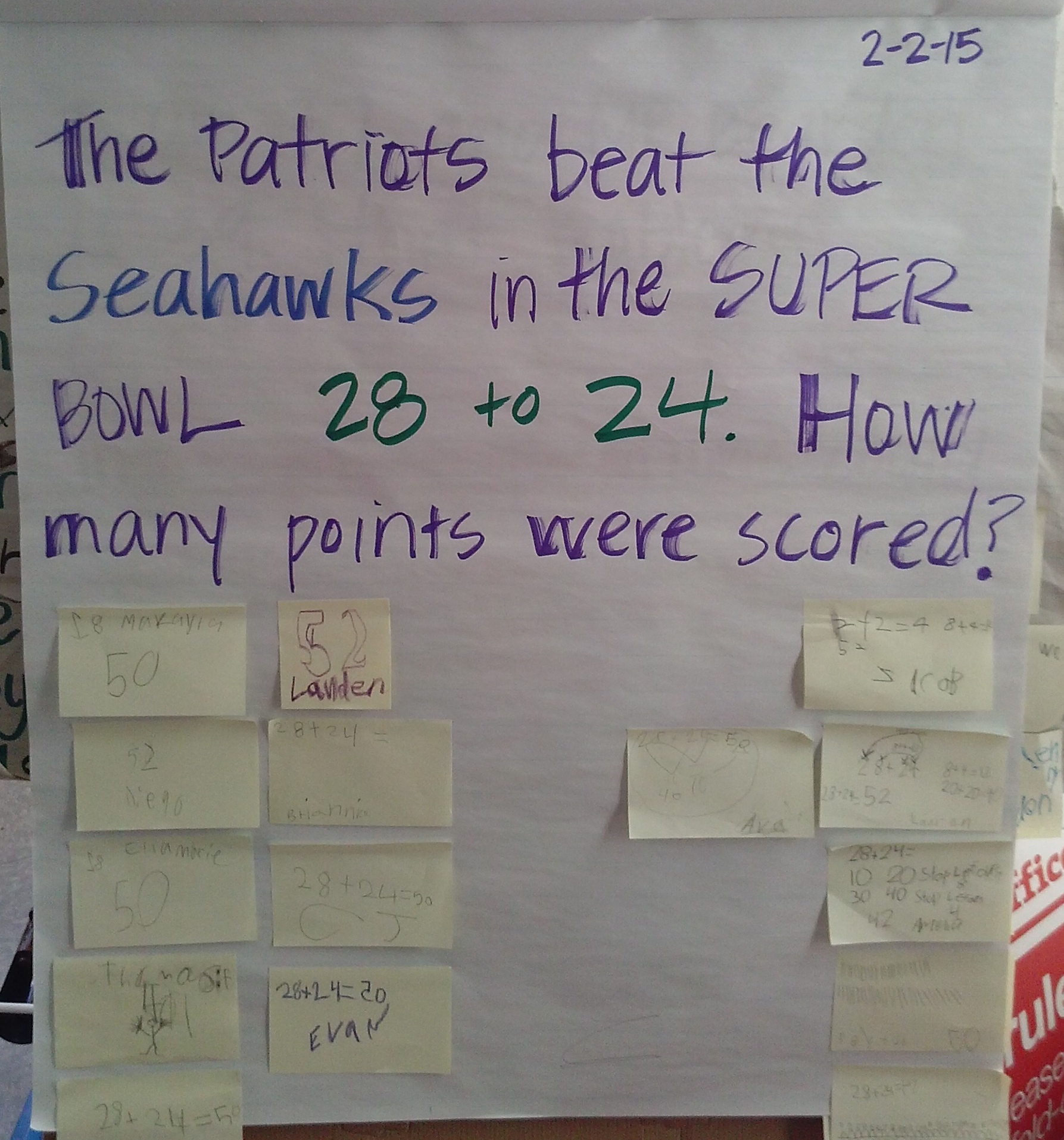
It only seemed right to have a Super Bowl themed warm-up the morning after the big game!  Still working on adding 2-digit numbers efficiently with this one. 🙂

CAM01522

Tuesday

The problem yesterday actually brought up a great (but unexpected question) as a friend only read the first sentence and then assumed she knew what it was asking.  She thought that it was asking her to SUBTRACT the numbers because she figured the last part asked by how many points the Patriots had won.  We were able to talk about how important reading the whole problem was, as well as how different bits of information can produce many different kinds of problems depending on the questions you ask.  They’re not quite ready to think this way yet, but I gave them a challenging warm-up on Tuesday asking them to think about the questions they could ask (oh, and thanks for not commenting on the ages mentioned in this problem–thankfully no one said anything about how OLD Mrs. Bearden is!!).

CAM01521Friday

You’ll notice that this one doesn’t have any post-its on it.  I was actually home with a sick little girl on Friday, but snapped a picture as I put it up to leave for the sub to talk through with my friends.  This one was based on both our 2-digit addition work and a conversation we were having the other day about how many 1st graders there are.  How would you solve it?  What model would you use to record your thinking?

CAM01520

First Grade Math Warm-Ups: Week of January 26-30, 2015

This week was CRAZY busy, so only 4 warm-ups–you know how you have those weeks where NOTHING happens and those where EVERYTHING happens at once?  This was one of the latter.  🙂

Monday

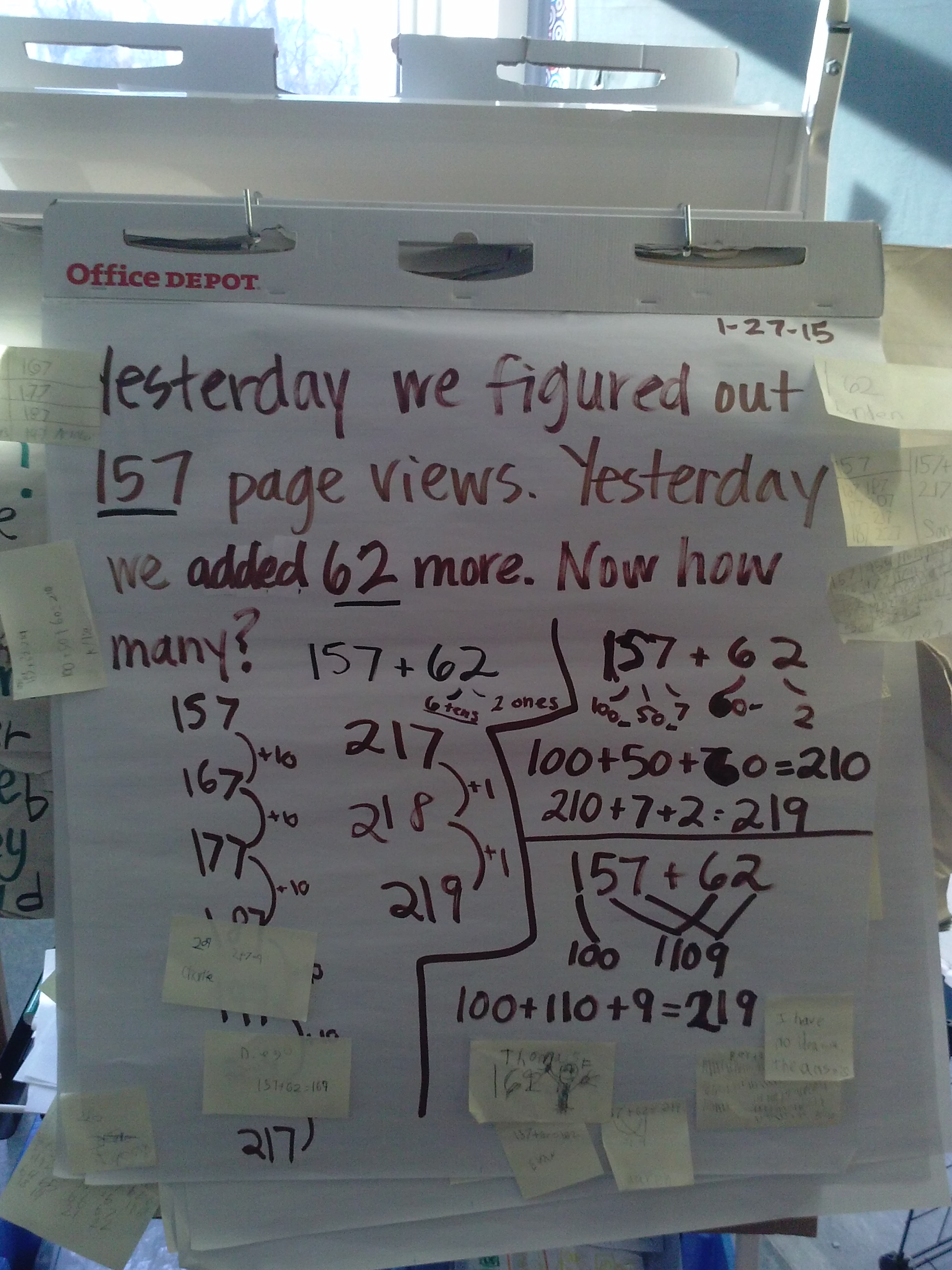
This past weekend, so many people checked out our blog, and it got me thinking about how I could use the scenario in our warm-ups.  The numbers were bigger than in the problem, but I knew I could tweak them to get my kids working with adding 2-digit numbers.  The idea of adding 3 of them is beyond the benchmark for what they’re asked to do this quarter, but I was pretty sure most of them could do it anyway (and it would be a motivating challenge for those that weren’t quite there yet!).  Most of them quickly saw the way they could break the numbers apart by place value and combine those parts back together to find the answer.

CAM01463Tuesday

This warm-up is related to the day before, and planned so that kids might see the ability to use the counting on strategy to solve it.  We’ve been practicing counting on by 10s, and many used that idea to help get to the solution of 219.  We recently started looking at the pattern of how the numbers work when you go past 100, so this one asks them to do that.

CAM01462Wednesday

Happy 100th Day!  This one probably explains itself….

CAM01423Friday

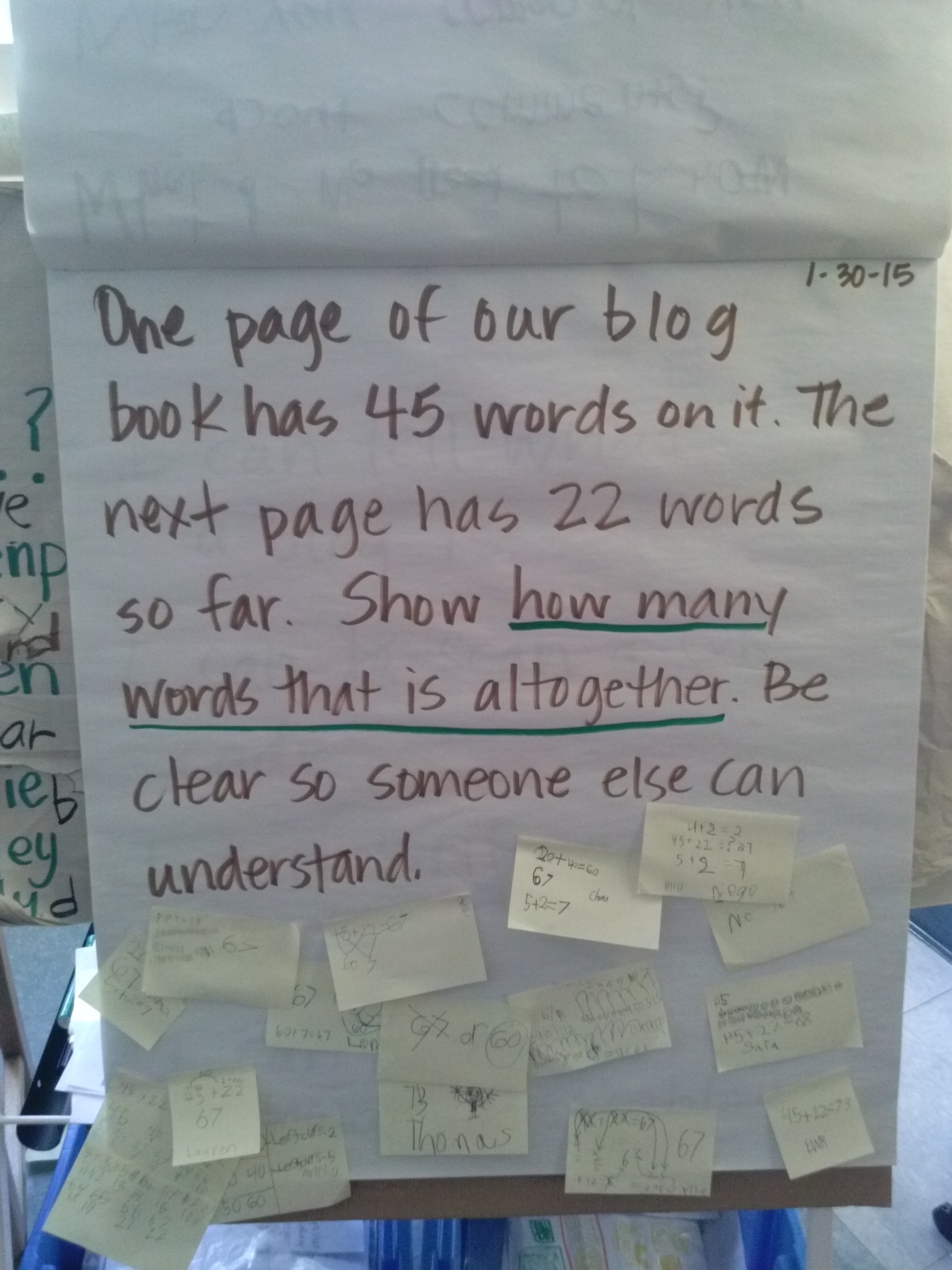
We actually didn’t get to talk about the warm-up from Wednesday until the next day because our 100th Day Blog Challenge kept us so busy!  So Thursday had no new warm-up, but here’s the problem from Friday morning.   The numbers are easier than the ones from earlier in the week, but the focus with this one was to get kids to think about HOW they were showing their thinking so others could understand.

CAM01465Happy problem solving!  Please let us know how it goes if you try some of these in your class! 🙂

First Grade Math Warm-Ups: Week of January 20-23, 2015

Another short week of warm-ups because of MLK, Jr. Day on Monday, but the ones we had this week are goodies!  Read on and happy calculating!  Please let me know how/if you use these in your classroom!  Feel free to add your own warm-ups in the comments, too! 🙂

Tuesday

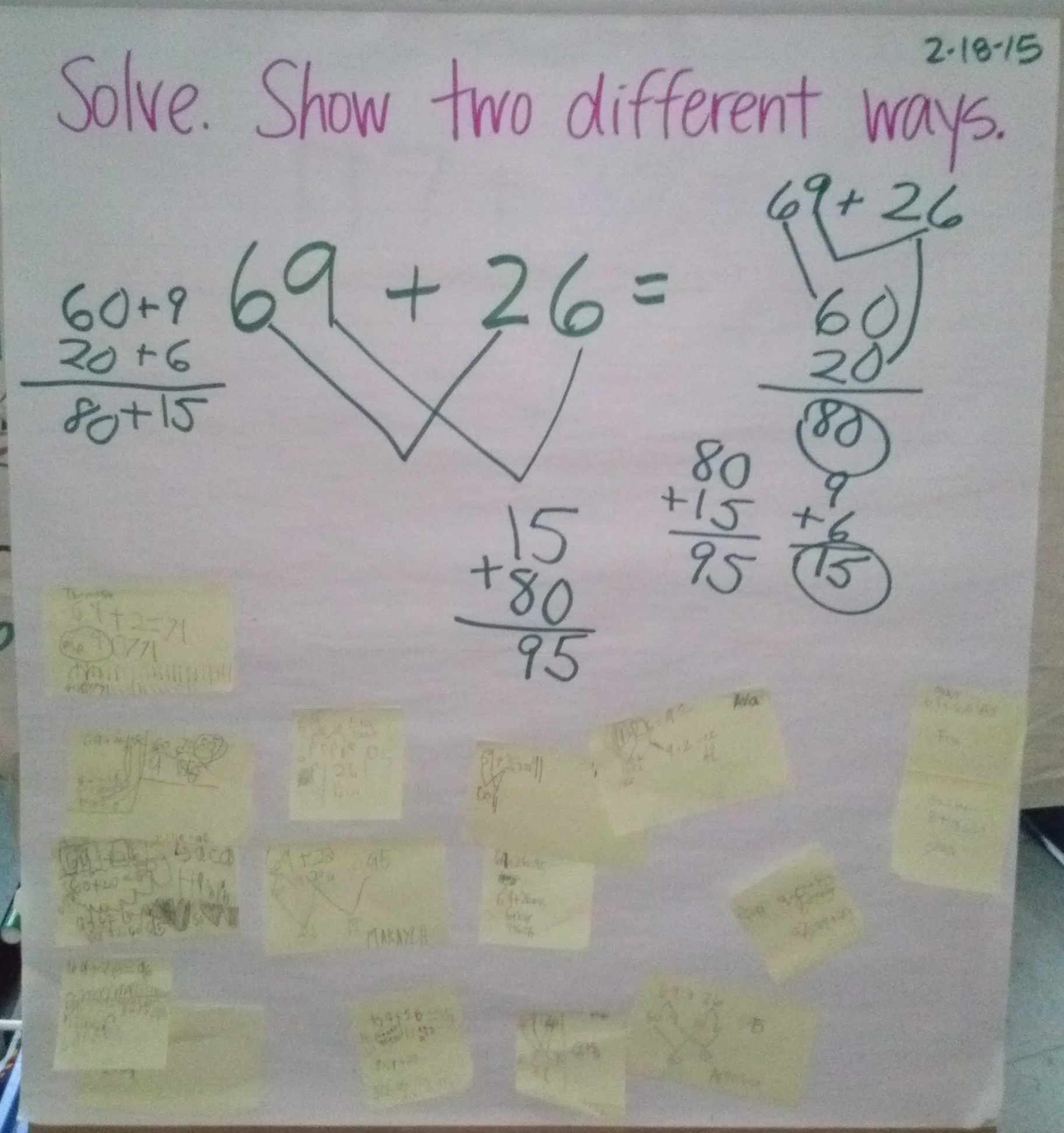
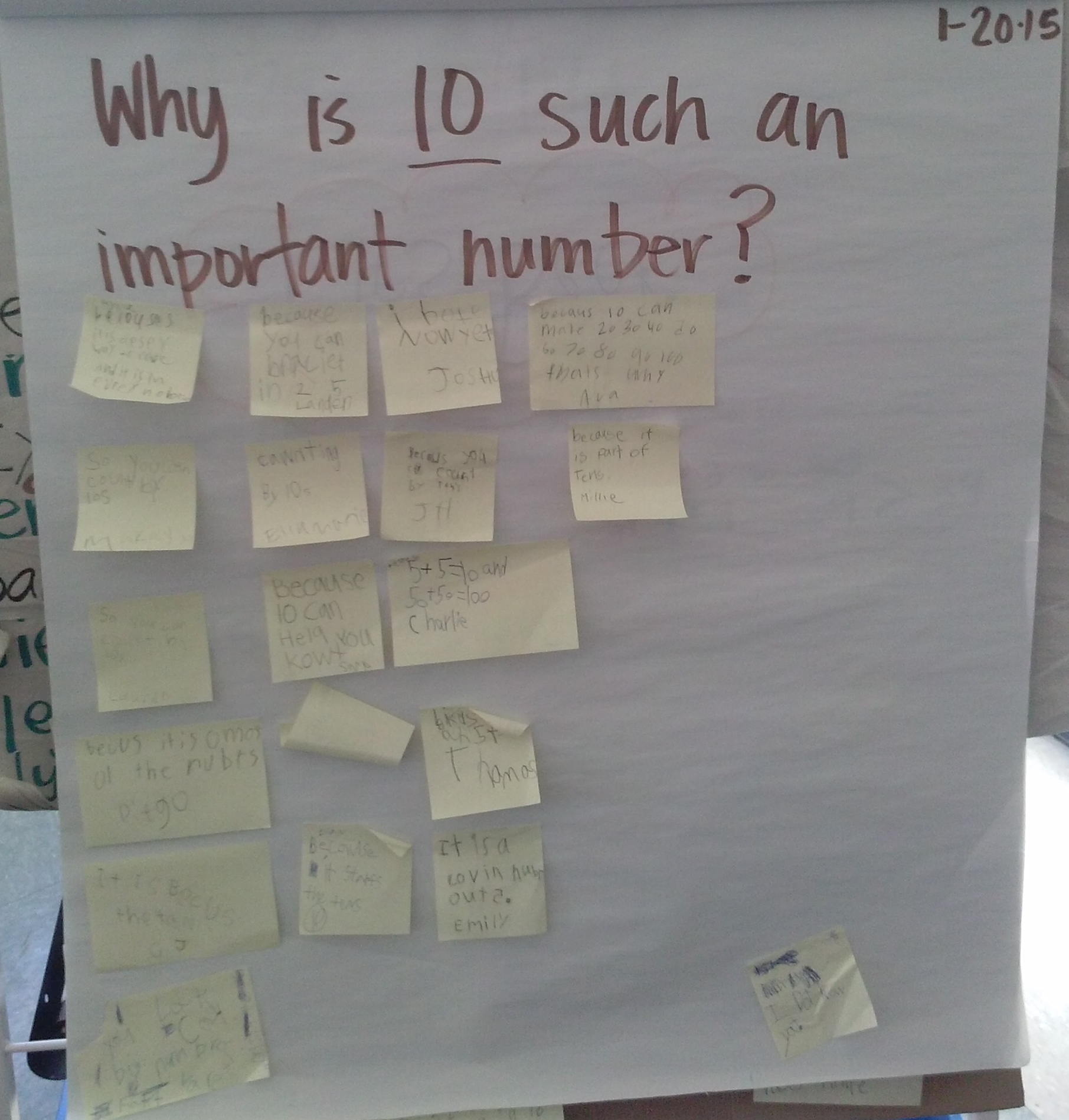
CAM01397The unit we’re in right now is math is focusing on adding numbers within 100, and on using place value to do so in an efficient manner. My focus then, this week has been on how to create opportunities to think about tens in a meaningful way determine which strategies and models make sense in each situation.  This one was just a great place to start our conversation for the week because it has so many answers.

Wednesday

CAM01396

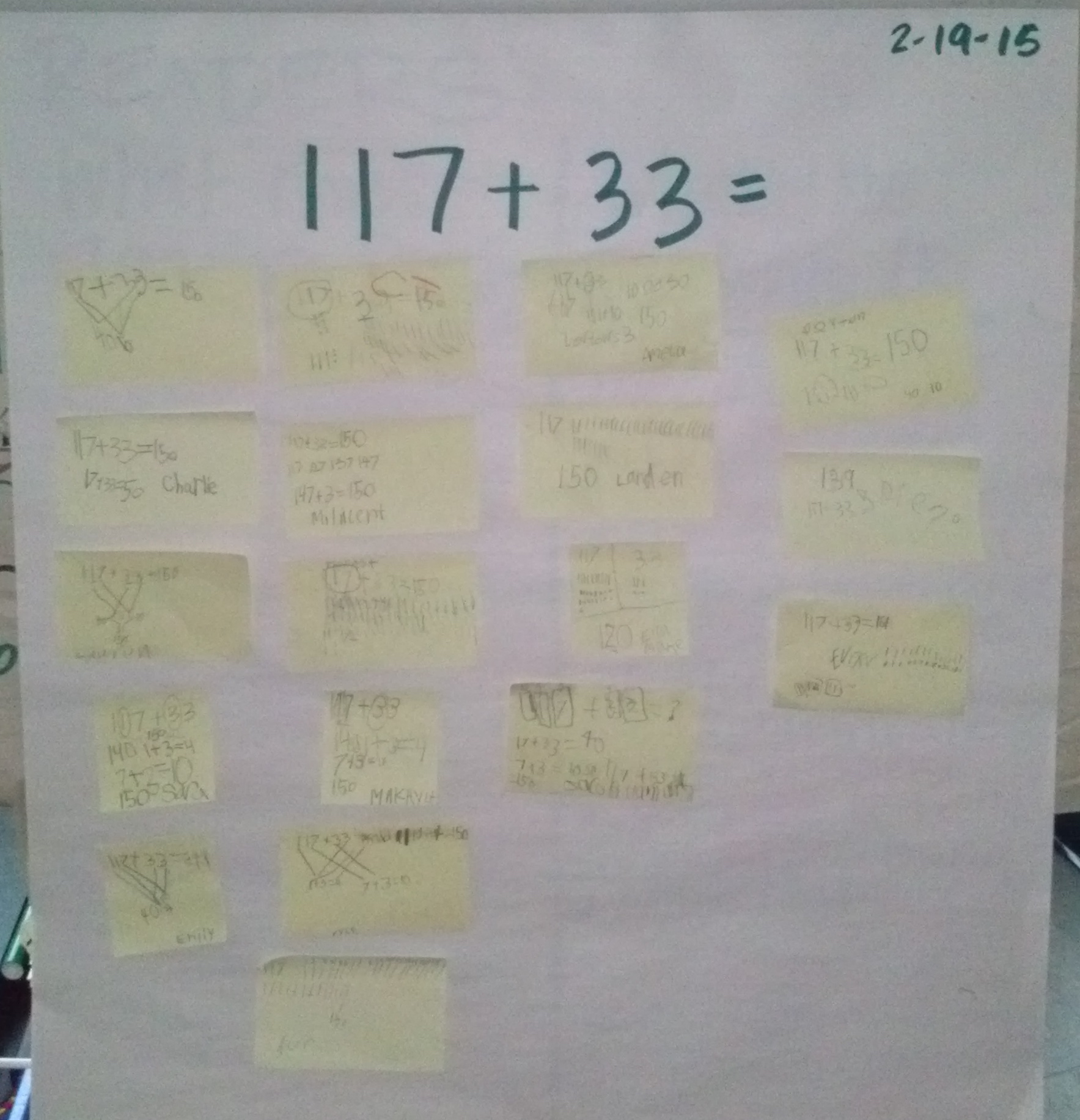
We’ve been doing many problems around scenarios, and I wanted to see what they could do with straight numbers–especially related to place value.  This was a great one to see what they know both about tens/ones, and what they know how to do with them.  You can see that there are already many known strategies and models floating around that we can build from as we go forward.  YAY!

Thursday

CAM01395We’ve been playing the 100s Game this week as we practice counting to 100 by different numbers.  We’ve had lots of practice with counting to 100 by 5s and then 10s (really fast!), but then we practiced counting by 10s and NOT starting at 0.  We used a deck of cards to decide what was our first number, then we went around and stopped at the number that was closest to 100 (for example, if we started with 6, then we’d say 6, 16, 26, 36, 46, 56, 66, 76, 86, 96).  This warm up was similar to the game we’d been playing, only I wanted to see if they knew what to do when they went over 100, so asked them to go as high as they could.  HA!  Man…were those numbers high!  One friend went all the way to 867 (and I think he only stopped because he ran out of time!), and many went to the 600s or so.  As we discussed the problem and did it together, I quickly found out that they did indeed know the pattern of how it works when you get into the 100s.  This will be so handy as we keep going, and many will modify their counting on strategy from numbers within 20 to counting on by 10s with numbers within 100.

Friday

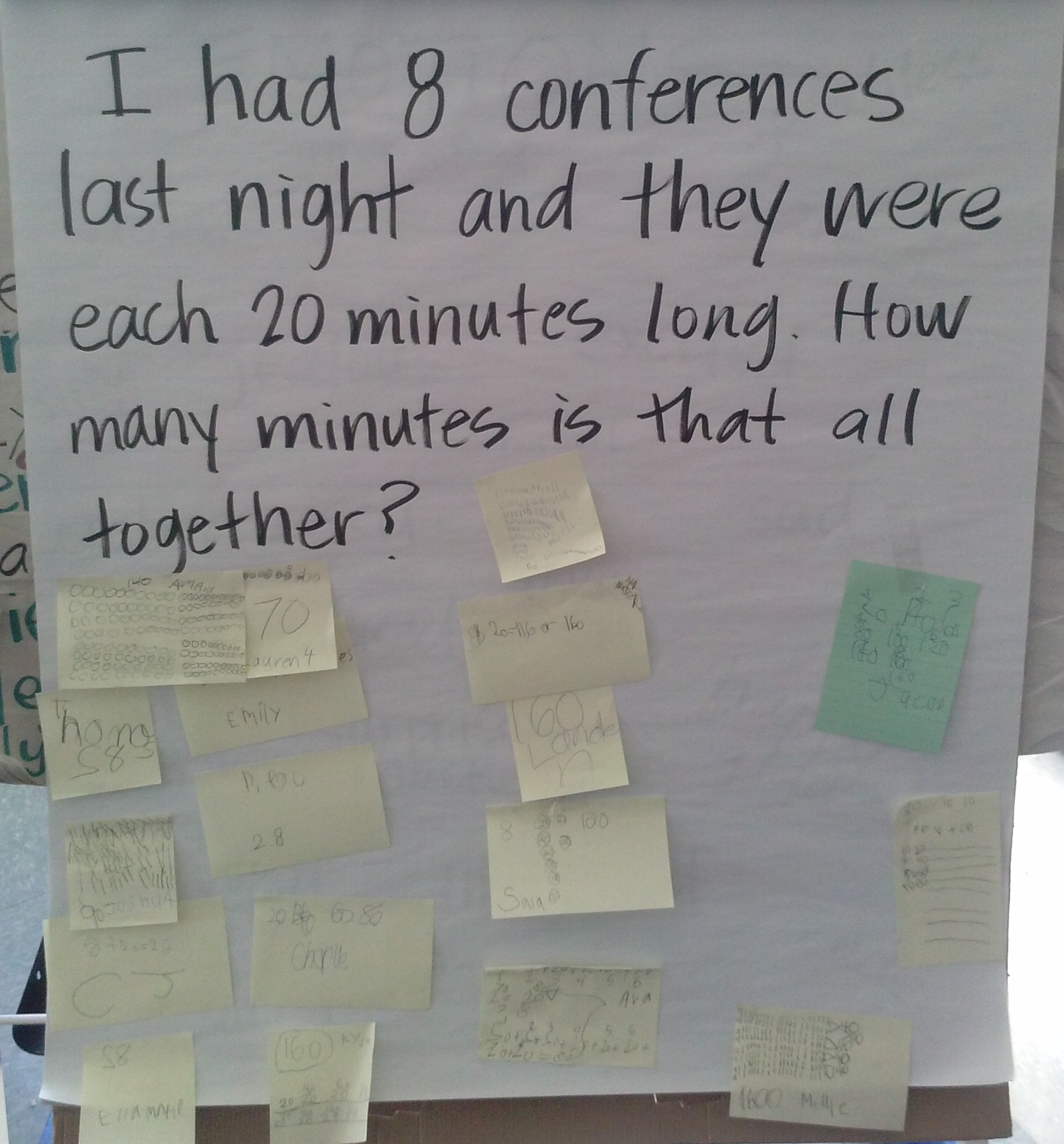
CAM01393This one was a true story about how I spent my evening last night!  While it is really a problem to see what they can do with tens, it’s also the beginning of multiplicative thinking, as it’s also 8 X 20 or 20 X 8; either way, i want them to recognize that it’s 8 groups of 20, not 8 PLUS 20.  Most did a SUPER job of this and had great thinking about how to figure it out.  Several connected the 20 to counting by 2s, and some saw the 2 10s inside 20 and counted by 10s to get to 160.  The best part was that NO ONE sat and did nothing.  Everyone tried a strategy, and were willing even if they weren’t quite sure about the answer.  I LOVE how gritty these kiddos are!

Our record of how to use 2s to figure out the answer.  We made sure to highlight how those 2s can mean 2 10s and so 16 10s is 160.  Then, just for fun, we figured out how many hours those minutes would be equal to: 2 hours and 40 minutes!

Our record of how to use 2s to figure out the answer. We made sure to highlight how those 2s can mean 2 10s and so 16 10s is 160. Then, just for fun, we figured out how many hours those minutes would be equal to: 2 hours and 40 minutes!

First Grade Math Warm-Ups: Week of January 12-15, 2015

This week we only ended up with 2 warm-ups because it’s all we had time to talk about!  Enjoy! I’d love to hear how you’re using them in your classroom, or with your kiddos at home!

Monday

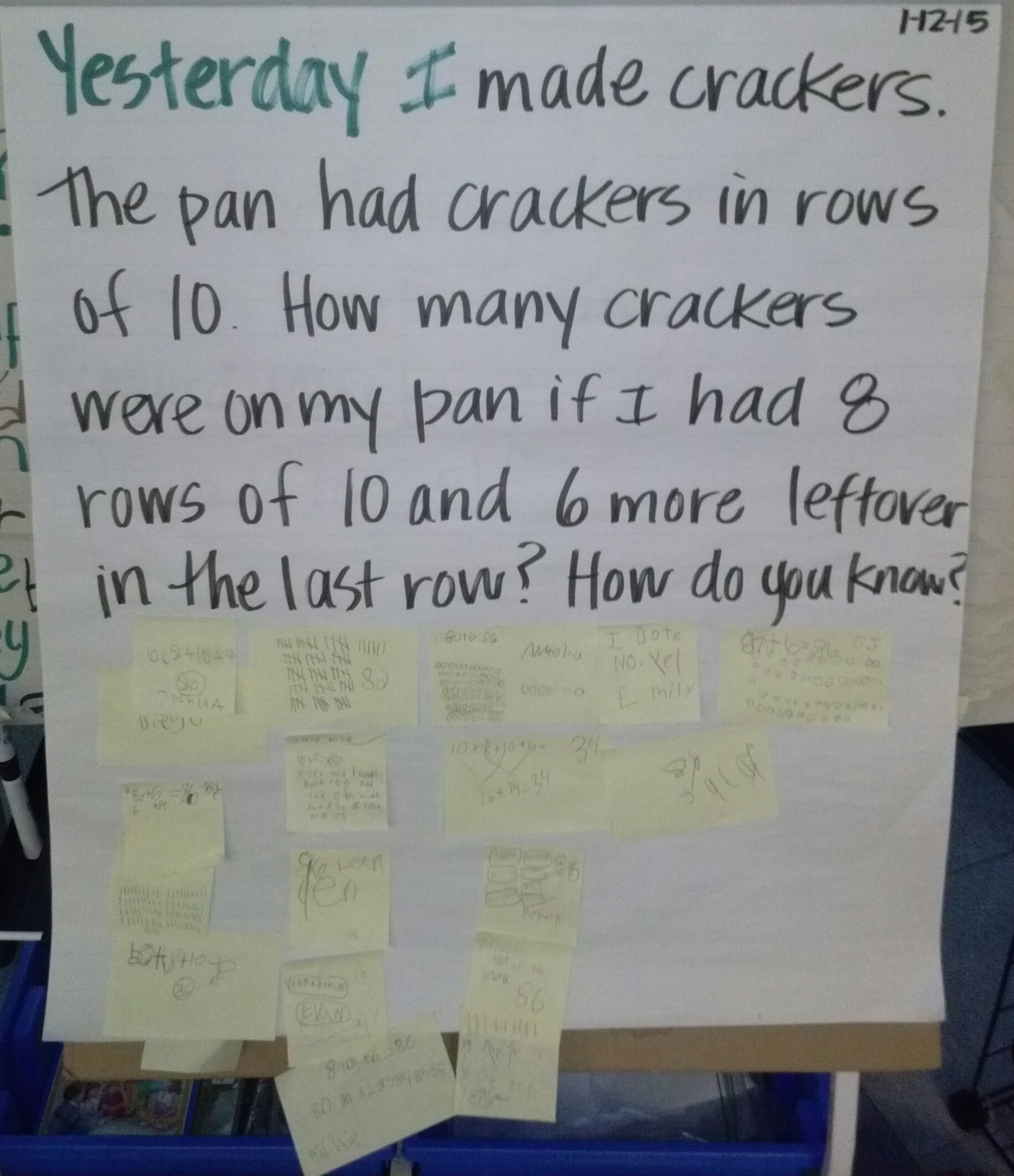
Please ignore the fact that my green markers are never juicy and always make our charts look old. 🙂  Thanks to the fact that my Master’s program is now over, I have at least a little bit of free time, and for me that means baking!  Here’s a grouping problem with 10s that’s about some cinnamon honey wheat crackers I made for my kiddos!

CAM01337-1Wednesday

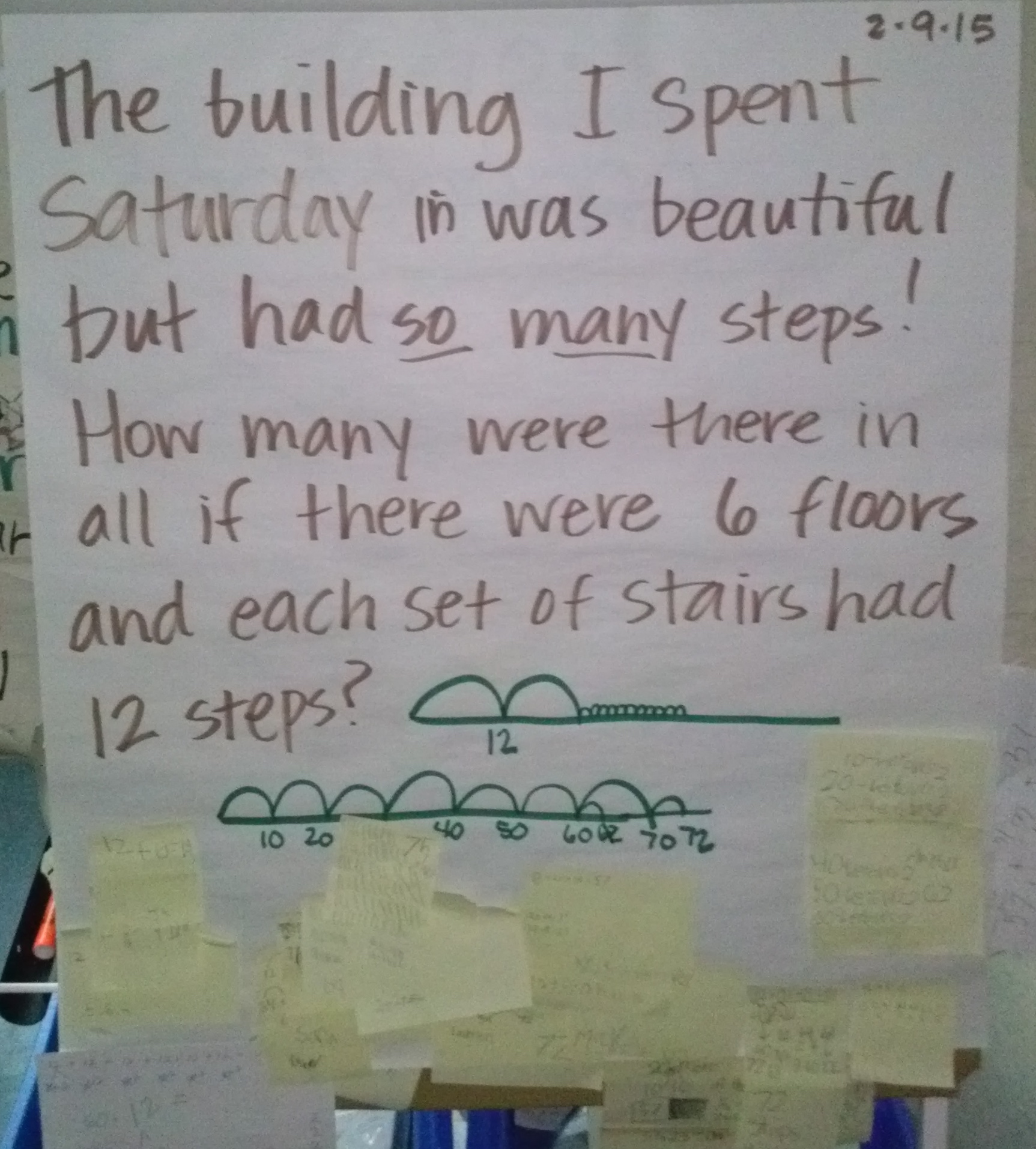
Again, all the best math scenarios come from real life, right?  This problem is a less-than-true story about my CRAZY drive home on Tuesday evening!  The actual time in the car (because of SIX ACCIDENTS on the highway between school and my house, as well as forgetting a pile of papers I needed on my table at school and having to drive all. the. way. back. to. school. again.) was MUCH longer.  My littles just weren’t ready for numbers that big yet.  Maybe next quarter. 🙂

CAM01338-1Happy calculating!  Hope you’re having a great week!  Stay tuned for this week’s warm-ups soon! 🙂

First Grade Math Warm-Ups: Week of January 5-9, 2015

Welcome back to school!  I don’t know what the weather is like where you are (well unless you’re where I am!), but here it has hardly gotten out of the teens and my bones are chilled!  It was nice to be able to be warm and cozy in Rm. 202 with my first grade buddies this week!  Here’s what we studied:

Monday

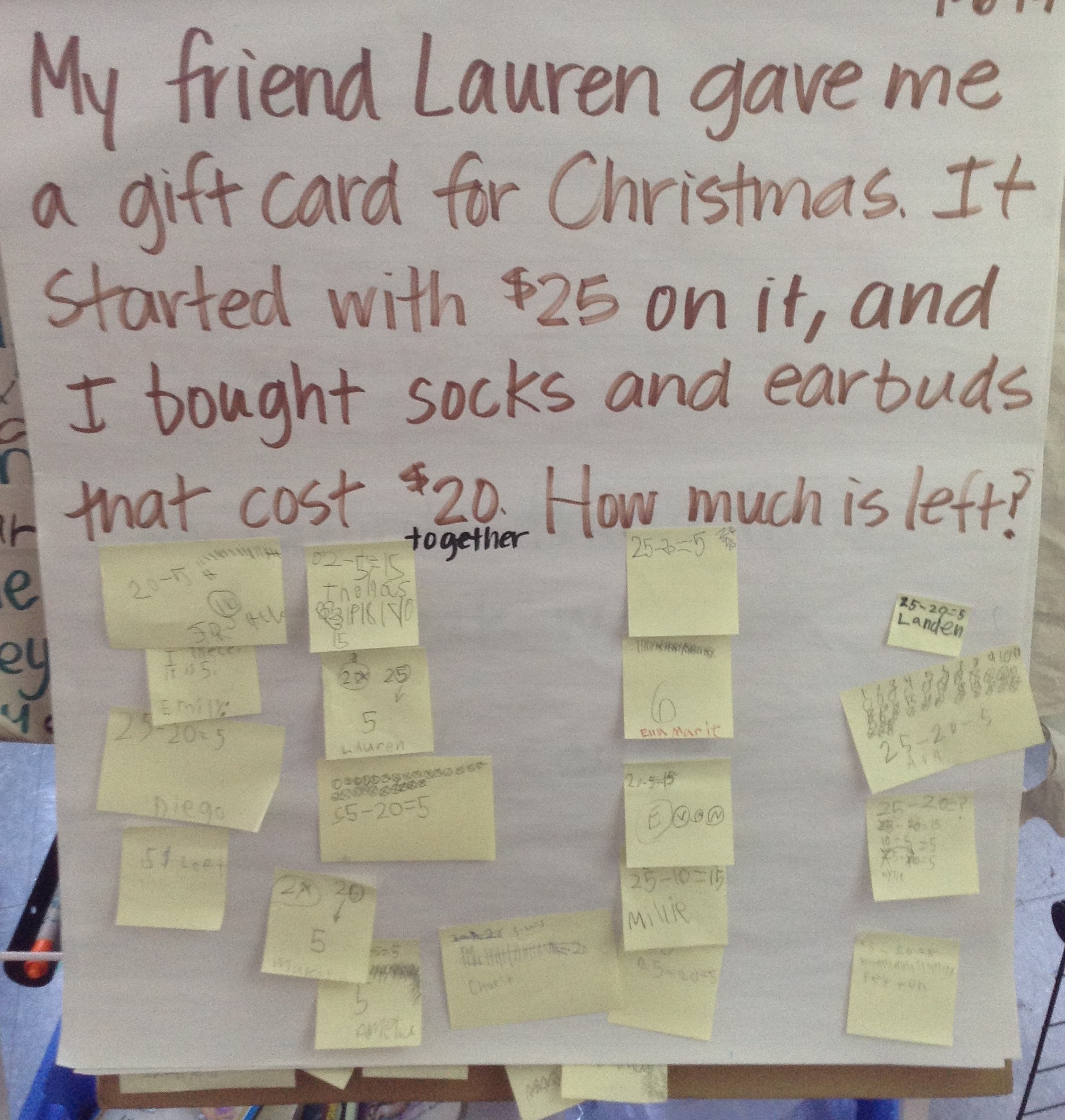
Again, true story from my life used for our warm-ups.  It really makes them interested in solving the problem when they care about the context!

IMG_4093

Tuesday

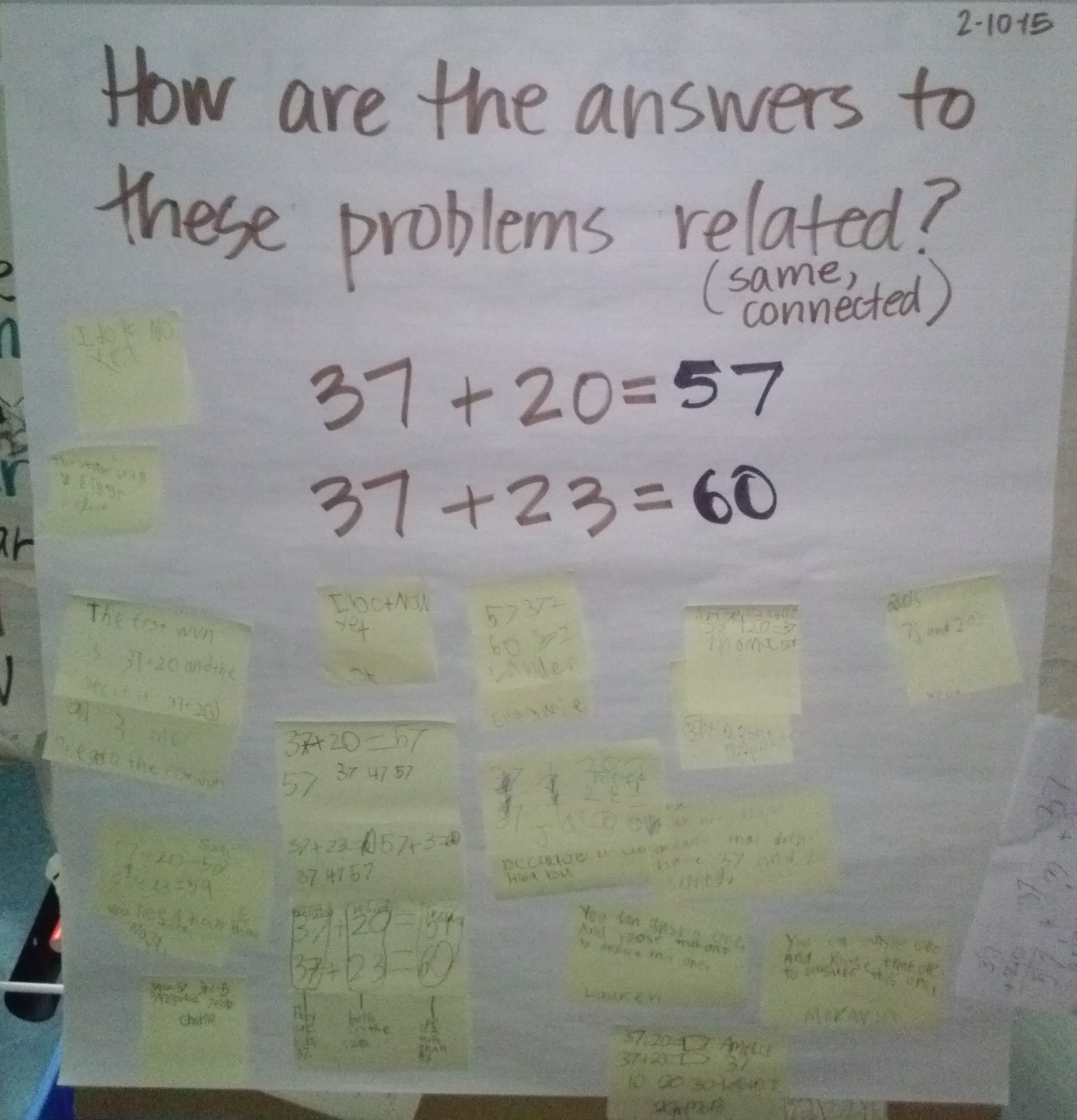
This week we’ve been continuing to work on knowing if we should add or subtract.  When we discuss the problems, the question I ask them is not “What answer did you get?” but instead they turn to their partner to tell them what operation they used how they knew what to do.  I am listening for explanations related to the context and what is actually happening, rather than specific clue words.  Just knowing clue words (like “left,” “in all,” or “how much more”) doesn’t always work; depending on how they are used in a problem, they can sometimes mean addition or subtraction.  Or, you can add TO subtract (as in the strategy of counting up), so it becomes even more confusing.

IMG_4094

Wednesday

IMG_4095

Thursday

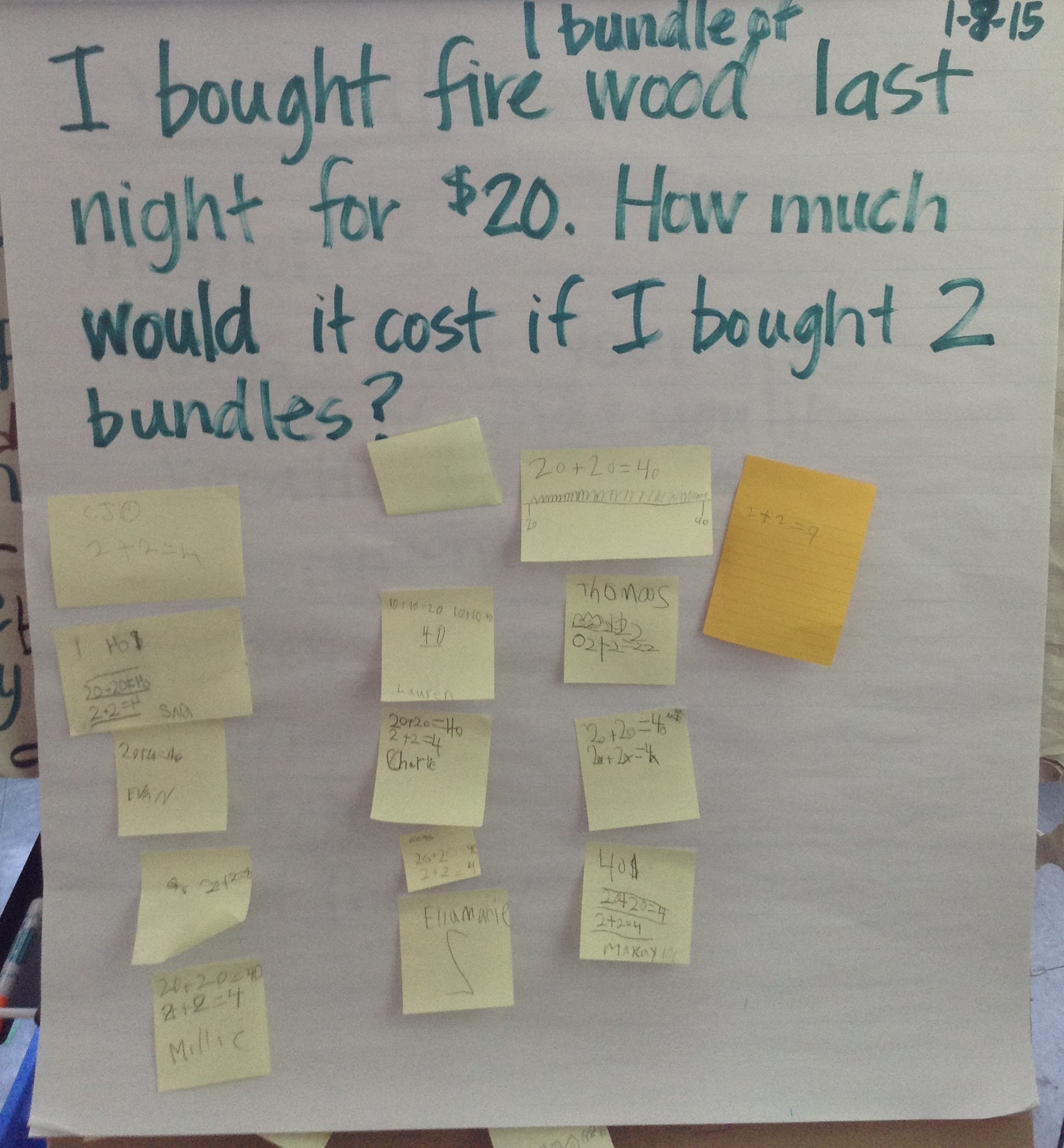
This problem is an addition problem, but also gets kiddos thinking about multiplication without really knowing it.  They have to really be thinking about the situation–I bought 2 bundles that each cost $20–or they will use the 2 and 20 and just add or subtract them.  It was great to see how many kiddos understood the way the problem worked.

IMG_4096

Friday

The focus with the numbers in this problem was to help mathematicians use known combinations to efficiently figure out unknowns.  Ideally they would see make 5s to make 10 or see a 6 and a 4 to also equal 10.  This idea of grouping connects to our future (well, really continuing) study of place value and addition numbers within 100.

IMG_4099