Mystery Skype–INSIDE of Robinson?

On of my favorite finds in recent years is Mystery Skype.  I’ve tried it with several classes in several states, and even did a Mystery Skype with my friend Ms. Turken while she was teaching overseas in Ecuador!

As I have written about previously this year, there are many things I have brought from 5th grade with me that I’ve been excited to try with my firsties, and Mystery Skype is one I finally pulled out of the bag this week (mainly because of an invitation from a friend on Twitter to schedule one soon!).

The idea of Mystery Skype is really simple (try to figure out where the other class is located by asking yes/no questions), but it can take some time and practice to get good at it.  I knew I needed to practice with my kiddos before our first “real” MS, so I called on my friend Ms. Turken for help again.  She was totally game.

I asked her to help us by letting us Skype with her class, and at first I was just going to work out the kinks of having kids come up to the camera, making sure we talked loud enough, etc.  Then I thought it could be cool to try to actually do a Mystery Skype…INSIDE of our school!  So I asked Ms. Turken to take her kids to a secret place in our building and we would try to figure out where they were located by asking good questions!

Before they called us, we spent some time working out the logistics of how you would even begin to narrow down someone’s location in this big, wide world of ours.  Using Google Maps and a map of our school, we had some up-front teaching about continents, countries, states, cities and how to narrow down a location by eliminating the possibilities.  We talked about directions and how just asking north, south, east, west can cut out a HUGE part of the world that they are considering.  We also talked about landmarks (both natural and man-made), and how these can be helpful in determining a location, as well.  When we looked at our Robinson maps, we connected these ideas to the floor our friends might be on, as well as our school “landmarks” they might be near, like the gym, cafeteria, library, elevator or bathrooms.  They caught on really quickly, and were excited to get started!

Our friends called us and kiddos got busy!  Rm. 202 kids were paired up with a friend, and they worked together to study the map, consider the clues they got from our friends’ answers, and then decide on our next question.  Pairs took turns coming up to the computer to ask their question and get the answer.

Our questions went like this:

1. Are you in the basement?–NO

2. Are you on the first floor?–NO

3. Are you on the 2nd floor?–YES  (at this point they all knew they could just focus on the sheet that had the 2nd floor on it!)

4. Are you in the NORTH part of the building?–NO (this is the end where we are)

5. Are you in the EAST part of the building?–YES (this part had 5 classrooms in it, so again we narrowed our focus!)

6. Are you near MRS. FRY’S CLASSROOM?–YES

7. Are you in MRS. HONG’S CLASSROOM?–NO (she is next door to Mrs. Fry)

8. Are you in MRS. FRY’S CLASSROOM?–YES!!!  YAY!! WE FOUND THEM!!

After a bit of cheering and a few high-fives, we debriefed on how the experience went, as well as what we’d do for the “real” Mystery Skype session in a few weeks.  We used the protocol of “plusses” (things we’d do again) and “deltas” (things we’d change).  I’d say they had some pretty great insights!
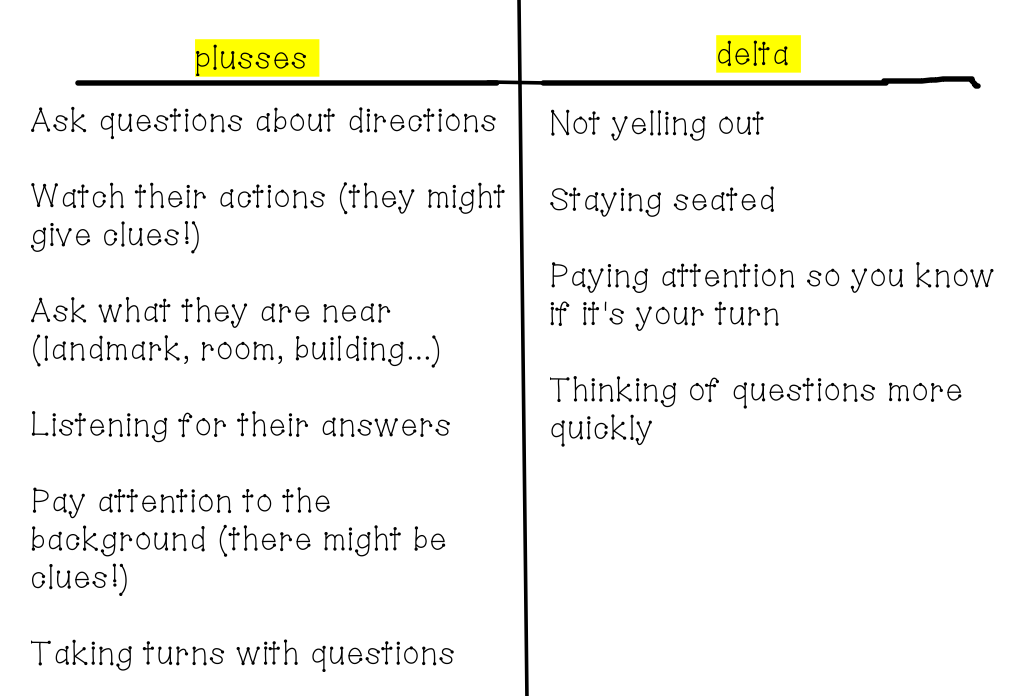
Screen Shot 2015-02-28 at 4.31.44 PMI especially thought the one “watch their actions” was a good idea.  It came because of the question we asked about our friends being “near Mrs. Fry’s room.”  Millie noticed that Ms. Turkens’ friends were snickering and covering their mouths when they answered, which told her that they were probably IN her room.  We agreed that often watching how someone reacts can give clues.

I was beyond impressed with how well both classes of firsties did, and am continually amazed at how well “little” kids do with “big” kid things like blogging, Twitter and Mystery Skype.  I’d say it’s proof that you should never underestimate someone because of their size!  WAY TO GO, RM. 202 KIDDOS!

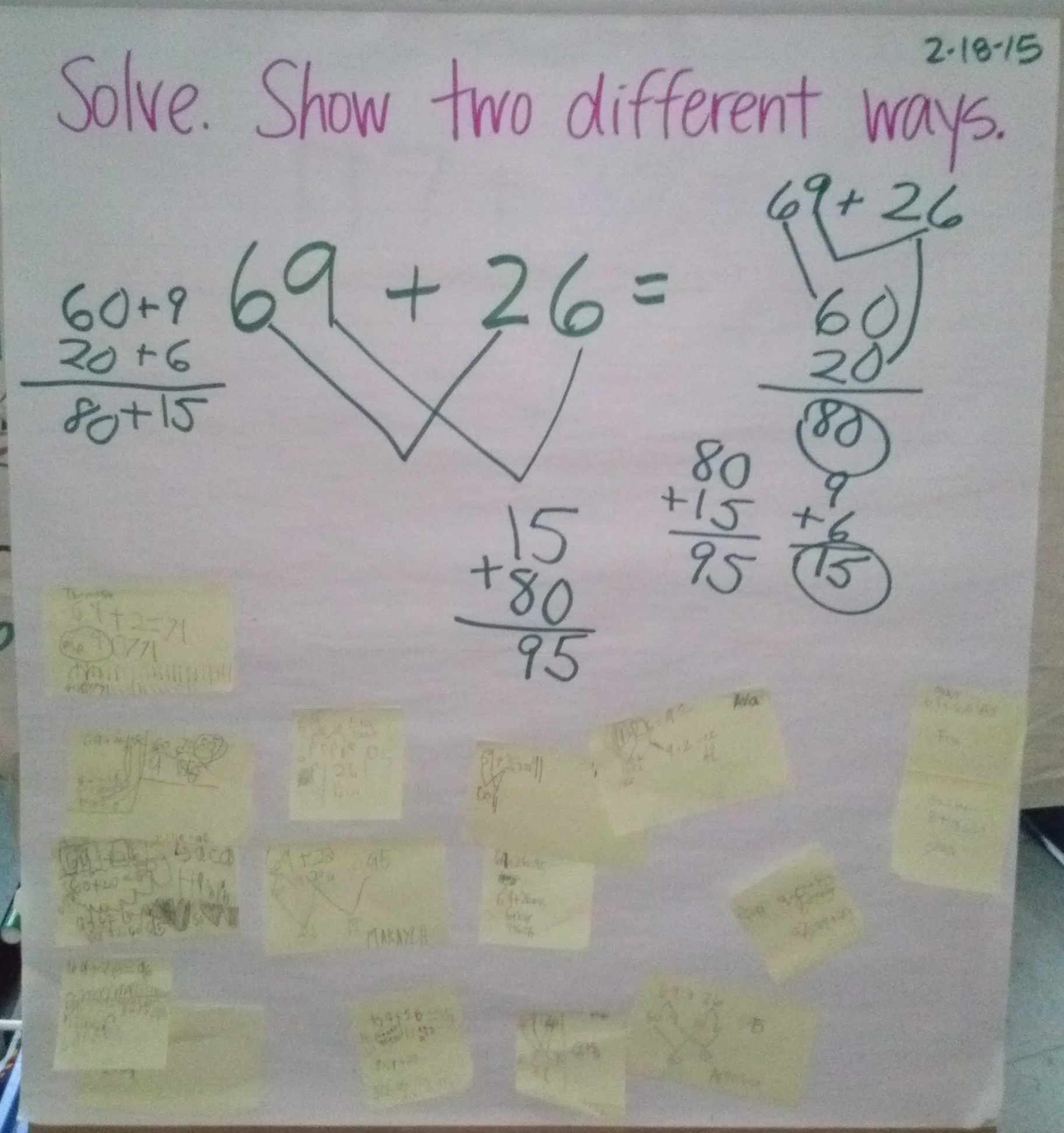
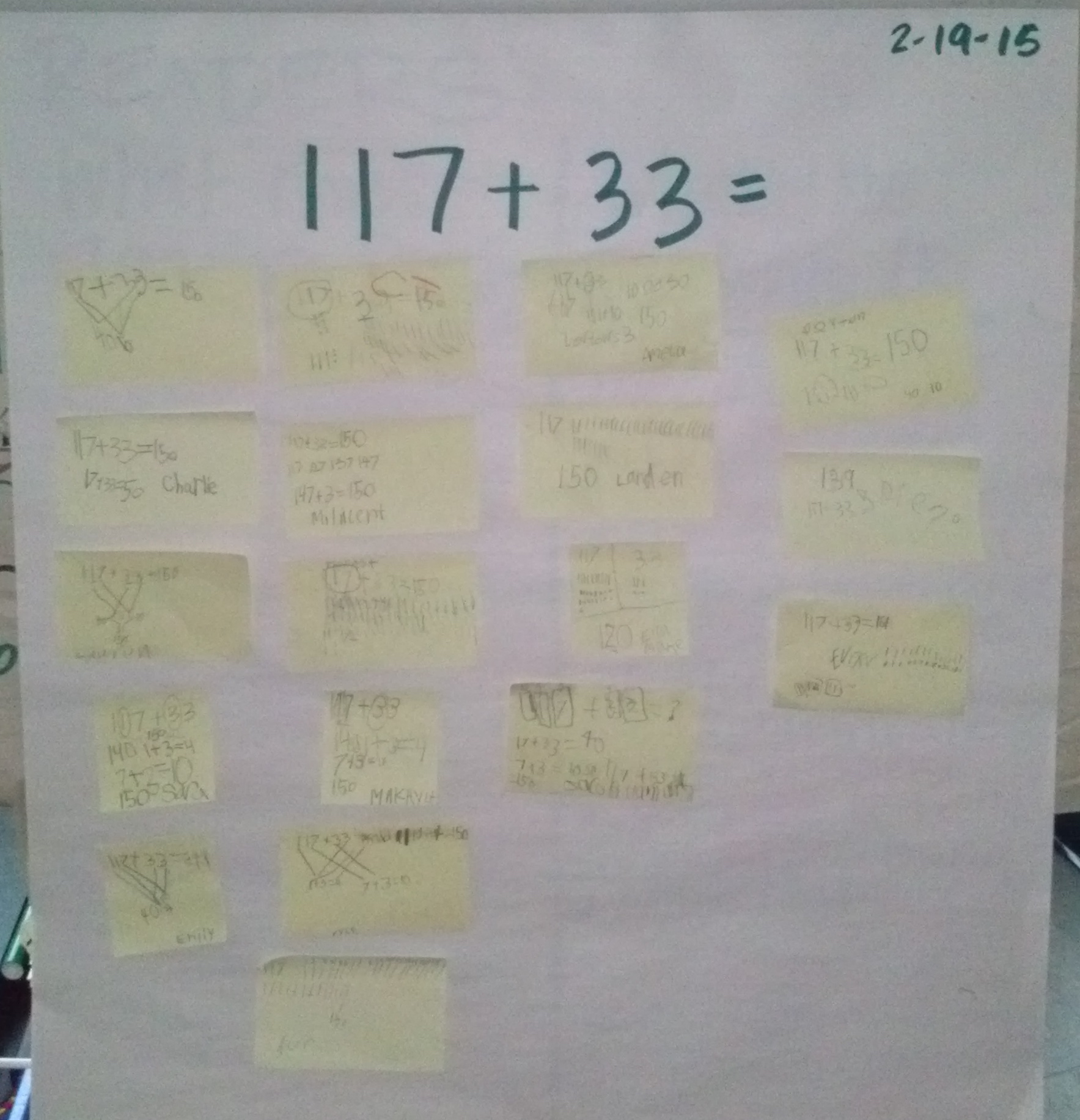
First Grade Math Warm-Ups: Week of February 17-20, 2015

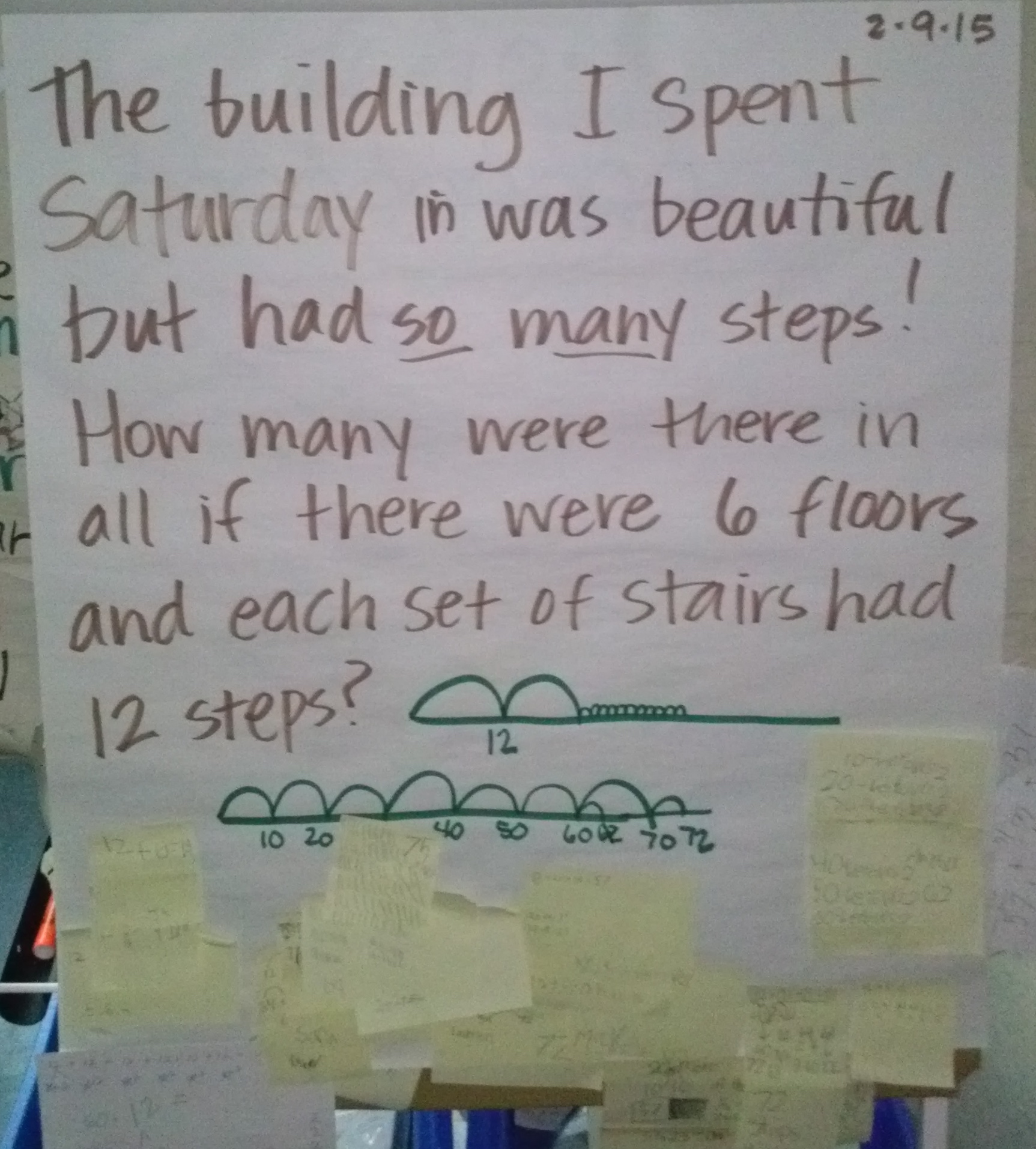
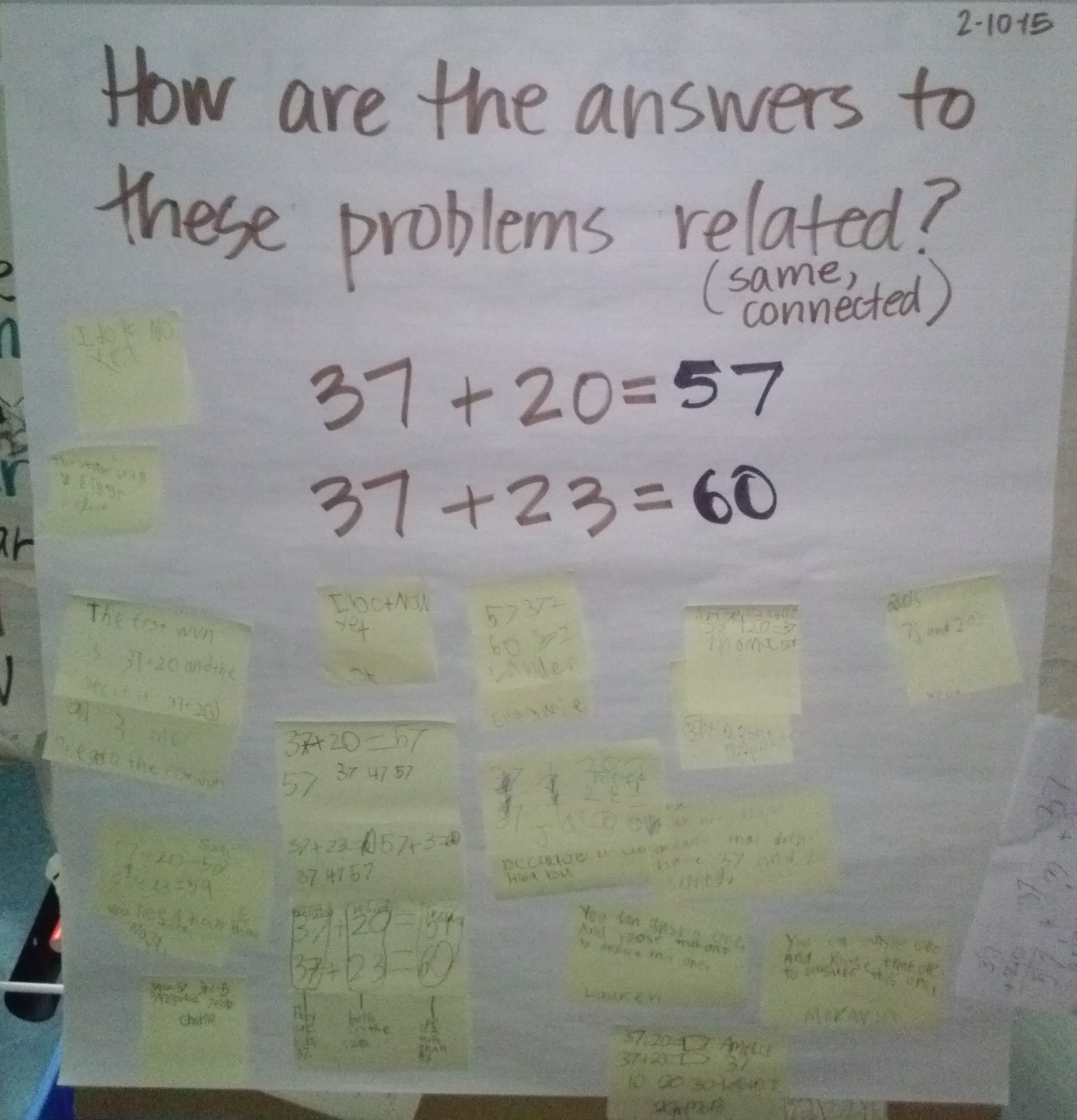
I feel like I keep saying how short the weeks are lately, but hey, I’ll say it again–this week was another short one, where I only have a few warm-ups to share.  They were particularly good ones (in my opinion, of course!) because they really got my kiddos thinking about strategies.  We’re still working on addition, but the focus has now shifted a bit to choosing the strategy most appropriate to the numbers–not just the strategy that is your favorite one.  Compensation was a particular one we worked on over the last few days.

Tuesday

CAM01613Ok, so I misspoke a little bit–we’re mainly focusing on addition, but continuing to tie our work to subtraction, so that kiddos can see the connections.  This one was also meant to introduce them to the word DIFFERENCE (we did SUM last week).

Wednesday

CAM01642We’ve been working on flexibility, too, although for most kiddos, one strategy is as far as they’ve gotten so far.

Thursday

CAM01643While they only have to add within 100, there are many who are ready to apply their strategies to bigger numbers.  This one gave them the chance to try it out!

Friday

CAM01653

I mentioned choosing the strategy for the numbers, and this one was made for using compensation (making one number a “friendly” one–like a 10–so that it’s easier to answer.  Usually you can use mental math.)!  And can you tell I got a new box of markers in the mail this week?  🙂

Also, I’ve been toying the idea of finally moving my warm-ups to Padlet, as we all have iPads now.   I’ve always valued the way we can save the post-its and charts by doing it this way, and refer to the problems again if we need to, but I might be rethinking my previous choice.  With 1st graders, I wonder if less “stuff” around might be a better way to go.  We could still refer, and it might be easier to share with others.  Any ideas, friendly blog readers? 🙂

First Grade Bloggers!: Part 5–Teaching the BIG kids!

Alright….one more time…here are the links to the first four parts of the story.  And this one is probably the biggest and best: this part of the story is about how 20 super smart first grade bloggers taught their FIFTH GRADE BUDDIES about how to blog.  Yup–you heard me right: the little kids taught the BIG KIDS something.  Before I even tell you what happened, I feel like I should start with my some of my kiddos’ words about how it felt.  Wait—maybe that will tell the story better than anything else I could say. 🙂

Evan—“It felt spectacular. I felt good teaching a 5th and I’m only a 1st grader. It was hard. He kept on asking me questions and I wasn’t sure how to answer.”

Peyton—”It made me feel happy. It filled up my bucket to be a good teacher to a 5th grader.”

Lauren—“I felt happy because I got to see my buddy and there were words that were popping up that were funny.” (I think this is about the auto-correct feature on their iPads 🙂 ).

Ella Marie—“It felt awesome. I got to make blogs and I like blogs! I saw something new and I told my buddy about it.”

Sara—“I felt happy because we could make a blog together.”

Charlie—“I felt like I was the most important teacher in the world! I like that my buddies are funny!”

Diego—“I felt so happy because usually big kids but usually little kids were the teachers!” (Doesn’t this one just say it all?!)

Kylie—“I felt good because we got to experience new things that I didn’t know about, then I figured out I did know about it.”

Emily—”It felt good because I felt like a teacher and also it felt good to teach a 5th grader!! Little kids usually get taught by bigger ones.” (Again–what an authentic audience!)

Thomas—“I was really excited because it was my first time writing with a 5th grader. It opened up my grit.”

Amelia—“I felt really happy because I didn’t know how to spell a word, and my LB helped me. It filled up my bucket!”

The assessment we used to tell us we did a SUPER JOB of explaining blogs to our buddies?  Their questions to their teacher as they left our room: “Dr. Grayson, can we have our own blogs, too?”  What more could we ask for??  🙂

First Grade Bloggers!: Part 4–GOING LIVE!

Yep, there were three parts before this one that gave more details of this exciting journey into the blogosphere!  (Part 1  Part 2  Part 3)

After we had done days and days of prerequisite work (including teaching our friends in Rm. 203 about how to comment on blogs and having them join us for a day of practice), we were ready to give it a try (plus, we had to be ready for when we’d teach our 5th grade buddies all we knew about blogging–more on that later!).  Needless to say, the excitement in the room was CRAZY!!

This slideshow requires JavaScript.

These pics are from our share session with our neighbors, but they really could show what it looked like as we started our blogs, too.  I mean, I guess there’s no real way to show the process of writing a new blog except maybe to share the blogs with you!  As you read our new Kid Blogs, imagine the big smiles on our faces as we made them!  Being a blogger is SERIOUS BUSINESS when you’re 6!  Check it out! 

First Grade Bloggers!: Part 3

If you haven’t read part 1 and part 2 of our blogging journey yet, you can check them out here and here. 🙂

After we had a chance to try out commenting for ourselves on our friends’ paper blogs, it was time to get down to the REAL business of REAL commenting on REAL blogs with REAL people!  This was one of those places where I added in some extra lessons to the version of Blogging 101 I have done with 5th graders.  I just felt like my little bloggers needed more opportunities to practice before they graduated to their own blogspace.

With many things we are learning and practicing for the first time, turn-and-talk or partner conversations are a good way to work through concepts with a friend.  This allows for each to teach and learn (based on what they know), and also to help ensure that everyone is on the same (or at least a similar) page before we move on to doing things independently.

As we gathered for Writers’ Workshop, I had kiddos sit with their elbow partners and explained that I was going to give them a “blog” to read and that they were then supposed to turn-and-talk with their partner about how they would respond to that “post.”  I made sure to write examples that they could relate to, and encouraged them to remember to include what they had learned about how to leave a good comment:  respond to the writing, say more to give details or reasons, and to ask a question to keep the conversation going.  Together with their partners, everyone had a chance to role-play with at least 5 or 6 of these scenarios:

Screen Shot 2015-02-18 at 7.49.04 PM Screen Shot 2015-02-18 at 7.48.54 PM Screen Shot 2015-02-18 at 7.48.47 PM Screen Shot 2015-02-18 at 7.48.13 PM Screen Shot 2015-02-18 at 7.48.03 PM Screen Shot 2015-02-18 at 7.47.53 PM Screen Shot 2015-02-18 at 7.47.42 PM Screen Shot 2015-02-18 at 7.47.32 PM Screen Shot 2015-02-18 at 7.47.22 PM Screen Shot 2015-02-18 at 7.47.13 PM

I tried to write posts that seemed real and relevant to first graders (like ones that they might read on others’ blogs and that they would eventually write on their own!), as well as ones that had examples of the parts of a blog post that we would talk about soon after this.

As a check-in to assess how kiddos had been doing, and to give those that might need more support some ideas, we went through each “post” and shared out some examples of responses.  Together we “graded” the responses by giving thumbs-up if all of the components were there.  Like I said before, this was a new step to my blogging process, but I’m really pleased with how it went and how excited they were about learning it!

The next day I gave them their first go at trying these newly acquired skills on someone else’s blogs.  Together with their partner (the same one as the previous day), they read blog posts and commented.  This day also add a separated but related lesson of its own: QR codes!  Since I knew that this would be a quick and easy way to get websites and other links to my kiddos, but since I also knew they hadn’t heard of them before, I introduced the concept as the way to get to the blogs we would be visiting.  Yep, a two-birds-one-stone situation. 🙂  They learned how to use the QR reader, how to find the site they were looking for and then also how to manipulate the interface of KidBlog.org itself (which would soon come into play as they saw their own KidBlog site!).

They had a great time and did a great job practicing their new commenting skills.  The downside?  The only links I could find to 1st Grade KidBlogs (at the time) were archived ones from classes that were not able to respond to the comments we left. 😦  Oh well, we got to practice on our end anyway, right?  🙂

First Grade Math Warm-Ups: Week of February 9-12, 2015

Is there ever a week in January or February when we have all 5 days?  This was another short one (and one filled with a party), so there are only 3 warm-ups this week.  As I’ve mentioned previously, we’re continuing to work on addition within 100, grouping around place value and making sense with our explanations.  Enjoy!

Monday

CAM01615

Tuesday

CAM01614

Wednesday

CAM01601

Valentines’ Day Makerspace

I mentioned last time about how amazed I was by the Makerspace I saw at GCAA during EdCampSTL.  Well, as I have done in years’ past (mostly because of the timing), we took advantage of the need to create Valentines’ boxes and did so Makerspace style in Rm. 202!

First I had kiddos plan what they wanted their box (or container, since many where NOT shaped like boxes!) to look like.  Then they wrote down a list of materials they’d need (somethings came from home and many were materials we already had in our classroom).  We collected items for a couple of days, and then we were busy building!

It was fun, but BOY WAS IT MESSY!  But hey, learning is messy, right? Check it out!

This slideshow requires JavaScript.

After built our creations, we spent some time on Thursday writing about some details about them.  Together we decided that our readers would need to know: 1) what is it (and what it’s called if it has a name), 2) how you thought of it, 3) how it works, 4) materials you used to make it, and 5) how you made it.  Kiddos used the Notability app on our iPads to work on their paragraphs, and uploaded a picture of their creation to add to their words.  We were able to use our chart from our punctuation study, as well as other writing pieces we’ve made together that are hanging around the room, to make sure we’d gotten our punctuation added correctly so our readers could understand our message.  Like with other things we do as first grade readers and writers, we used each other (as well as the word wall) as spelling resources, and reread our words often to make sure it sounded right.  Once kiddos were finished, they learned how to take a screen shot, then uploaded their paragraph to their blog to share with our blog readers.  Such hard, focused work happened in Rm. 202 on Thursday, friends!

We’re not all finished yet, but we’d love to have you visit our blogs to check out our final products! Leave a comment if you can. 🙂  You can find some Valentines’ Day posts here.  Thank you!

Punctuation Study–First Grade Version

If you’ve been around here for a while, you have read about the punctuation studies I have done in 4th and 5th grades.   And if you’ve read much this year on this blog, then you know that one of my goals (or hopes at least!) for this year was to bring some of the things I did in 5th grade with me and try them in a first grade version.  So far, these kiddos are ROCKING it, and really impressing me with how quickly they catch on and then run with things I show them.  The punctuation study was another protocol that I brought with me and another one that they took and ran with!  Let me tell you more. 🙂

As with other classes, we started with a conversation about how punctuation carries MEANING, and is not just a bunch of rules that you follow (as a reader or writer) because someone tells you to.  This was pretty easy for them to start thinking about because they could tell you what the meaning of a period, question mark and exclamation marks are already.  Then, as with other years, their job was to find as many other punctuation marks as they could and figure out what they mean.  So with a partner and a pile of books, kiddos went to work investigating the work of other authors.  They filled in a chart together where they recorded the mark, an example and their thoughts about what it means for a writer to use it (and a reader to read it!).

After a day or two of gathering info and doing some thinking, we started recording our findings together on a class chart:

IMG_4236

Our chart started like this when it was empty, similar to the sheets they filled out with their partners.

Now, what happened after that was super cool.  No really–check out what the first part of our chart looked like when they started putting their smart first grade punctuation thinking on it:

I was a little surprised that they didn't start with periods.  Instead, they started to tell me about what they knew about exclamation points.

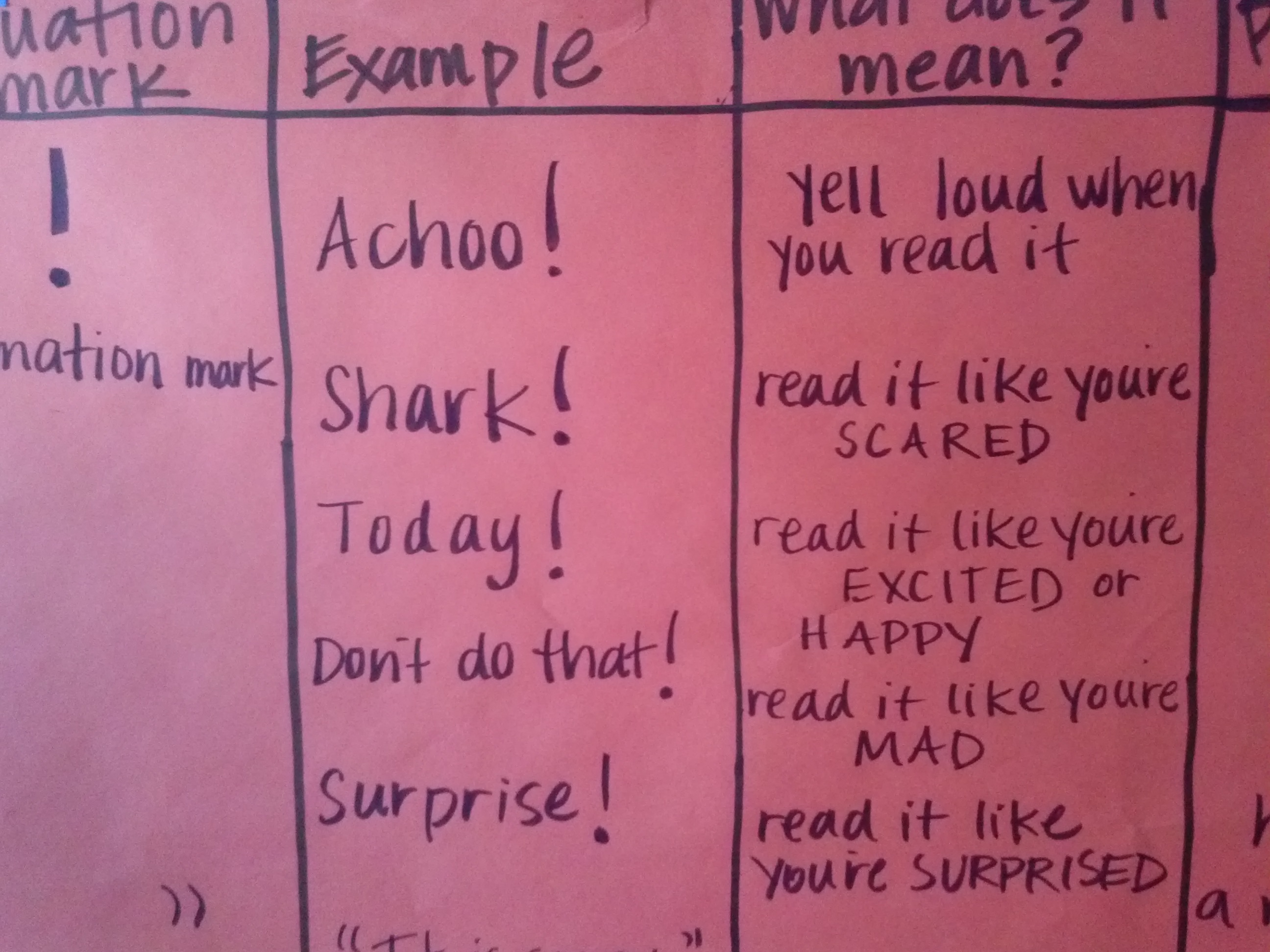
I was a little surprised that they didn’t start with periods. Instead, they started to tell me about what they knew about exclamation points.  But then look, instead of just finding one way to use an exclamation point (like 5th graders usually do), these super smart writers found 5 WAYS to use one. AMAZING!

We kept going, adding quotation marks, an ellipsis (which is always a fun one to learn the name for!) and parentheses (I mean come on–are these really first graders??).

CAM01485

Eventually we did get to talking about periods, but even with that one they were able to find 3 different meanings, including how sometimes people use them exaggerate how a. maz. ing. something is! 🙂  Then they blew my mind again and added a hashtag (do you sense a theme here?).  Now I don’t know if it’s just because we’d been talking about Twitter lately, or what the reason was, but my “big” kids never put a hashtag on their charts.  First graders love it when you tell them that, too, by the way. 🙂

CAM01487We had a little big of paper left (although I have a whole new blank one waiting for us to fill up!) and so we started talking about “that little mark that is a line.”  Now, what I knew (but they didn’t yet) is that they could have been either talking about a hyphen or a dash, and that those are actually not little marks at all.  So we did some more work to dig into the meaning.  We started with a hyphen (although at that point they still didn’t have a name for what the mark was).

Since we had just gotten our iPads, instead of writing down our examples, we got to work collecting some examples simply using the camera app.  Their directions were to look JUST for that little mark and to take a picture of any examples they find.  Then we would reflect those pictures on our ActivBoard to discuss together what they are used for.   What we quickly found were many examples of how hyphens are word-connectors.  They can be used to put two usually unrelated words together to make new words that describe other things (like full-fledged, top-rate and ex-princesses) or to break up a word when you don’t have enough space to finish the word on the line you’re writing.  They also found this part being used in a dedication page, as well as when I was making a list of our hyphenated words (and I did this without even knowing it–they were definitely paying attention!).   We aren’t even done yet, but our chart is filled up and now looks like this (SUPER sorry for the hard-to-read, end-of-the-day photo):
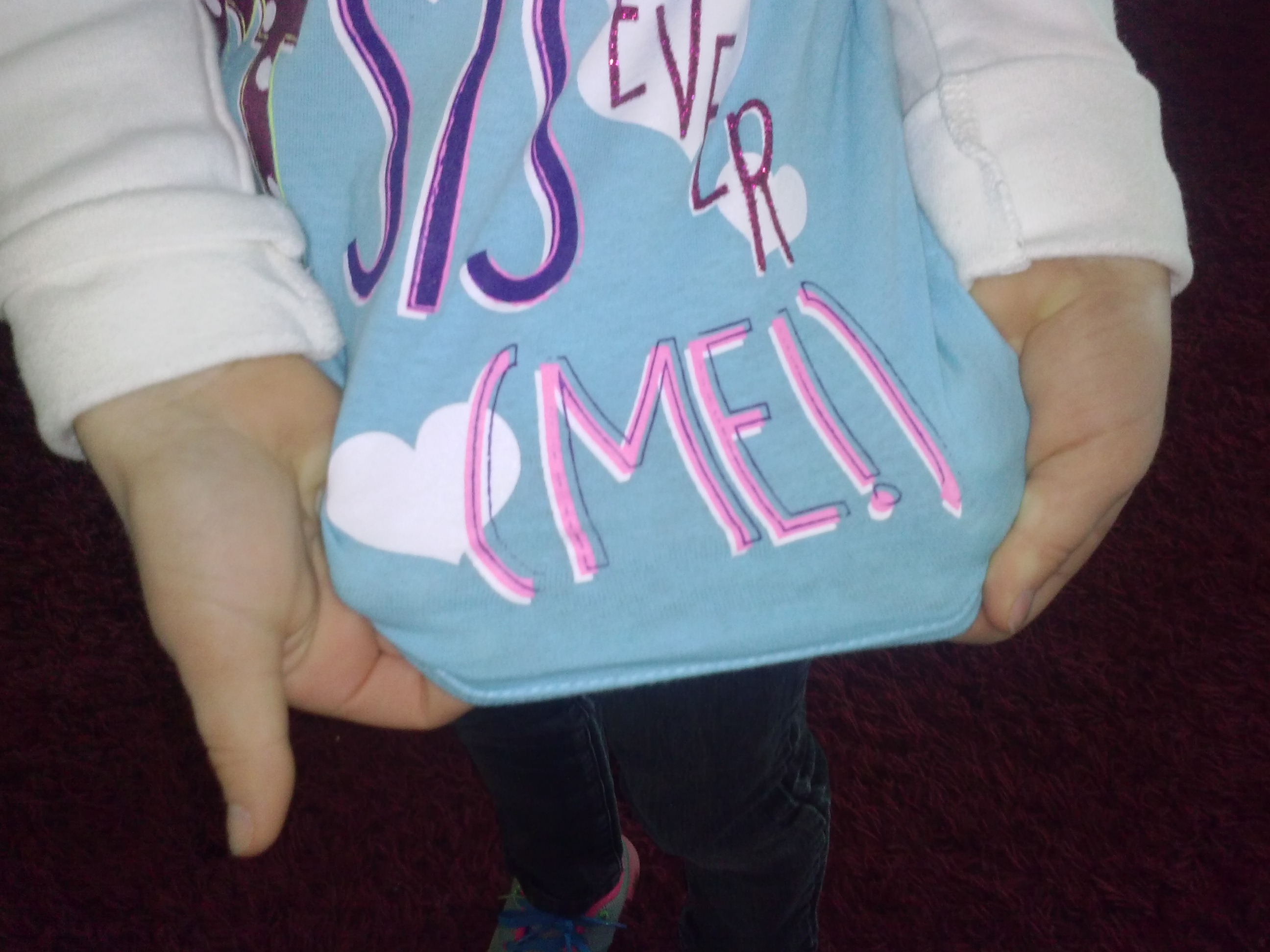
CAM01602The best part of this study is that our minds are now always thinking about (and noticing) who writers are using punctuation.  We even found it on our friends’ clothes!!

CAM01547  CAM01491

And just as I sat down to write this blog post, I got an email from Charlie’s mom about how he had found a hyphen in the book he was reading.

IMG_0599

Can you spot the hyphen? Do you see the dash, too? 🙂

Apparently he stopped in his tracks, made her take a picture and said, “I’m supposed to send this to my teacher!”  I. Love. This.  I mean, what more could I ask for?   Great job, Rm. 202 kiddos!   I’m impressed. 🙂

UPDATE!!:  We added more today…they are tickled that they have so many ways to use a comma, AND that they put a caret (which is yet another thing that 5th graders haven’t mentioned before but 1st graders did!)

CAM01612

#edcampstl (2015)

This past Saturday I attended my 4th EdCamp.  It was, as expected, a great day of personalized, “me-led” learning.  I’ve written about EdCamp before, and this year was a similar experience.  The highlight for me this time around was getting to see the Makerspace that is present (and very well used!) in Grand Center Arts Academy.  At past Edcamps (last year even, I think), I learned more about how a Makerspace can be a great place for kids to problem-solve, challenge themselves and work on design thinking.  I have even tried it a little bit in my own classroom.  I took lots of pictures of the way GCAA used their space, as well as of the signage they have around their room.  Boring, I know, but this is a way for me to document their learning so that I can find a way to do the same in Rm. 202 (or maybe even some other place in Robinson School!).

I wish there was a way to explain EdCamp in writing.  I am sure there probably is, but for me the best way for you to learn about it is to see for yourself.  The day is what you make of it: the sessions you present, the sessions you participate in, the people you talk to, the connections you make.  And if you’re lucky like me, you can do it all with people you love:

Smile!  This is my amazing brother, Chuck Baker, who is a math teacher extraordinaire and now helps plan EdCampSTL, and my awesome hubby, Grant, who teaches 5th grade and encourages me to do new things with kids.  EdCamp is great, but it's even better with friends!

Smile! This is my amazing brother, Chuck Baker, who is a math teacher extraordinaire and now helps plan EdCampSTL, and my awesome hubby, Grant, who teaches 5th grade and encourages me to do new things with kids. EdCamp is great, but it’s even better with friends!

Global School Play Day 2015

A couple of weeks ago, I saw a tweet about Global School Play Day.  Being one who truly believes in play as an important learning tool for kids (and adults!), and being one who likes to jump in with both feet when I see something that looks like fun (like I did with World Read Aloud Day, for instance), I knew that this was something I wanted to try.  And honestly, we have choice time and recess every day anyway, so it wasn’t that far out of our norm.

Screen Shot 2015-02-09 at 8.11.07 PMBefore the special day, I told kids to bring something they could play with during our time, but the rules were it couldn’t be electronic or have batteries.  There were a couple of “whys?” but really it wasn’t any big deal to them.  I wish I had taken a picture of all of their toys in the bucket when they brought them in, but what I thought was funny was that most everyone brought something stuffed–My Little Ponies, dogs, cats, and all other sorts of animals.  There were some cars, a couple of American Girls and 2 Barbies who attended our GSPD as well. 🙂

We reserved the afternoon for our official time, as we had some exciting and necessary work to do in the morning with our current studies in reading and math.  Before we got started with our fun, we had a little chat about why we were even doing it.  They had great ideas, like for them to learn to take care of their things, as well as how to solve problems and how to play together.  All were right, and I had some additional ideas of my own:

1. Negotiation: By participating in free play, children get to learn how and practice what it is like to initiate play with someone else, as well as negotiate with that playmate about what to do, where to do it and how to do it.  They get to learn give-and-take, as well as how to work with others in a positive way (because unfortunately, if you choose NOT to do it positively, your friend may not want to play with you anymore!).

2. Problem Solving: Much like negotiation with friends, kiddos learn and practice problem solving in many ways when they play.  From what to do when the Legos don’t go together they way you want or you don’t have enough big blocks to build your castle, or even where to put the pieces of the puzzle you’re working on, problem solving is a crucial part of play.  Even choosing what to play at any given moment is a kind of problem solving in itself.  Letting kids figure these things out for themselves helps build and encourage grit and perseverance.

3. Winning (and losing!) Graciously: Child-directed play (including playing games) allows kiddos to learn how to win–and also to lose–graciously.  We all know an adult who didn’t get the chance to learn this when they were younger, and now has such a hard time knowing what to do when things don’t go their way.  That same adult might have a really hard time not being overly proud or boastful when things do.  Allowing (or even planning for) situations where students DON’T win are crucial!  Life is not fair, things don’t always go as planned and sometimes someone else does better than you.  How great that kiddos have a chance to learn to deal with these disappointments when the stakes are low, so that when they are higher, they’ll know the appropriate choices to make.  And yes, winning is a good thing that can happen occasionally, too (and how great that kids can learn how to deal with their happiness without sacrificing the feelings of others).

4. Creativity: A big pile of paper, blocks, Legos, cars or any other open-ended toys allows for such a great development of creativity in kids!  Being able to figure out what that pile of “stuff” can become is a great practice in trial-and-error, trying new things or even working with a friend to put two great ideas together to make an even better one.  This practice of creativity in free play can easily be transferred to learning, then, when a kiddo is given open-ended opportunities for both gaining information and showing what they’ve learned.  When they’ve had a chance to try out new things and take risks in a safe, play environment, many students will be more willing to take the same creative risks with their learning.

5. Beating Boredom: I guess this one is another idea that’s related to some others on this list, but being given free time to play is a great way to figure out how to entertain yourself (either alone or with a friend) and keep a kiddo from being “bored.”  Knowing what to do when there’s [seemingly] nothing to do is a life skill, really.

6. Respect, kindness and including others: Play is a great opportunity for kiddos to practice skills they’re learning about showing others respect, using kind words and helping make sure everyone is included.  Helping kids pay attention to who doesn’t have a playmate is a lesson in empathy and is definitely a bucket-filler for a friend who longs to be involved but is perhaps unable to initiate themselves.  Knowing how to speak to others kindly is a skill that can never be mastered and can always be improved upon.

7. Fun!: Um, how have I not mentioned that playing is TOTALLY FUN!?  Yep.  Should have mentioned that one first. 🙂

8. Organization and Care: Emily was the first to mention it, and I hadn’t really thought of it until she said it, but yes, I think that kiddos can learn about and practice putting things away, organizing and caring for property (theirs and others’) when they’re playing.  Great idea, kiddo!

Ok, so enough of my rambling…I know what you really came to see were the pictures of Rm. 202 kiddos PLAYING!!  Here you go!!

This slideshow requires JavaScript.