More on Spelling Investigations: Kids at Work

I was excited and inspired by the conversation I had last week with my teammate about spelling.  To share with each other this week as we’ve put the investigations into practice has been even better.  Similarly to the punctuation studies I’ve done over the years, kiddos figure out all sorts of amazing things when you get out of the way and let them discover!

We began with a story about names.  As I had talked with Mitzi, my teammate, she started telling me about how they had decided to spelled her new grandson’s name, explaining the rationale behind the combination of letters and connections between his first/last name.  It made me remember doing the same thing when we chose how to spell my daughter, Allison’s name (Allison, Alison, Allyson; should it be Allie, Ally, Ali for a nickname–it was hard work!), and it became clear that this would be how we could introduce the investigation to our kiddos, too.

After I told Allison’s story, I showed them that thinking with my name…
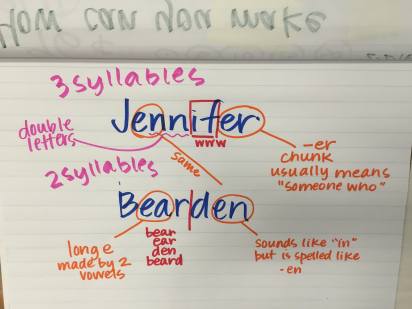
IMG_0335-min

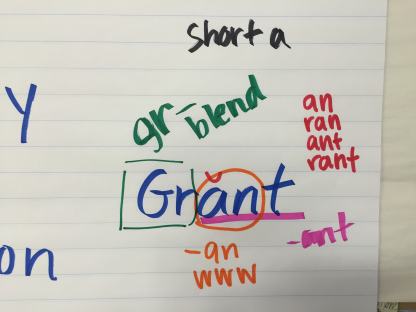
…and then we tried it together with Grant’s:
IMG_0336-min

By this point I think they knew what I was going to say was next (and they were excited to do so), and so I gave them the invitation to try their own name.  We talked about how it was easy to see the different sounds/chunks/letters when we did it in different colors, and we talked about the kind of paper to use, but beyond that, they had free reign to find whatever they could.  Before releasing them, though, I made sure to help them see our purpose as I asked this question:  How does knowing about our names help us become better readers and writers? Some kids worked alone, and some talked to their friends while they worked.  Whatever they chose to do, everyone investigated their names. 🙂

The room was abuzz with conversation and electricity as they worked, asking questions, making suggestions and trying things out with their names or their friends’.  By the end of the first day, everyone had found some pretty interesting things about how their names work.

On Day 2, we went a little deeper, and our job was to take the chunks/sounds/letter combinations we’d found the day before and do something with them.  I showed them an example with the -er in my name:

IMG_0354-min

Together we made a list of as many words as we could think of (or find) that had that -er chunk.  Along the way a couple of suggestions were made that I knew had /er/ spelled with -ir, -ur and -or, and we saved those for later (that’s more for Days 3 and 4!).

After this inspiration, kiddos did the same thing with whatever part of their name they wanted to work on.  Again, some worked alone and some worked with partners, some just wrote words they knew, and some used other resources.  It was great to watch how differently each kiddo approached the challenge.  As I looked around the room, I saw iPads, dictionaries, and kiddos using classroom text (including the word wall!) to find words that matched their patterns.  Students had even more energy and excitement about this job today and spent more time digging in and investigating.

As with our punctuation studies, the focus is not on the activity itself, but on how the learning that comes from it will help us in future situations.  Even though we’re only 2 days into this official investigation, there are already glimpses of how kiddos are using this knowledge in other places.  In almost every reading group I worked with this week, someone’s name was used to help us figure out other words.  We kept adding to a big ‘ole list of words where the letter a sounds like a u (like almost half of kiddos in our class!).

I’m excited to see what happens this week as we continue to use our names to connect to new things!

Jumbled Thoughts

One of the things that happens to over-thinkers thinkers like me is that there are often loads and loads of jumbled thoughts all up there in my head at the same time.  I find it a very rare occurrence that I am only thinking about or planning thing at a time (is this called multi-tasking or just crazy?!).  Today is one of those days when there are many things filling the space between my ears, and so as a means to think some of it through, I’m writing about it.

This weekend means that yes, I’m “off” because it’s not a school day, but when you’re a teacher you’re never really not not thinking about school or how to make your classroom a better place for the learners you spend every day with. Today this thinking was magnified as I was attending #edcampStl (Ed Camp St. Louis), learning and growing with other fabulous educators.

As with every EdCamp experience, I left with my head spinning because of all of the inspiring conversations.  Along with the general planning I’m thinking about for next week and the coming month, I’ve got some other things on my mind after today:

  1. Teaching Artistic Behaviors–100% Choice Learning:  Today I went to a really great EdCamp session with Kelly Lee (@yogagirly).  I wasn’t really sure what I was in for (but thought maybe it was how to add more art/design into regular subjects), and then I found out it was by an art teacher and I was really more unsure (I have a good record of picking badly by the title of the session…).  It ended up being something really inspirational, and now I’m trying ot figure out how to use her ideas in my own classroom with 2nd grade.  The basic premise is that in her art class, Ms. Lee has her room broken into “studios” based on mediums (collage, drawing, fiber, digital and painting).  Each day, artists listen to SHORT lesson or inspiration (based on a concept, artist, etc.) and then choose which studio in which to work for the day.  In their plan book, students make a goal and plan for the class time, and then spend time in that studio working to achieve their personal goal.  At the end of the class time, 5 minutes is provided for reflection on the day’s work.  As I sat and listened, I tried to imagine how I could tweak this idea to include all the subjects I teach, perhaps with just 5 studios (or decks since we’re working on being pirates!) that would work for everything we do.  Right now I’m trying to decide if something based around the multiple intelligences would work….
  2. Biography as Narrative Non-Fiction:  I am not sure if I’ve mentioned here before that my team does a really cool thing with planning, and each person (there are 5 of us) is responsible for creating the plan for everyone for one subject.  I’m in charge of writing, and so I’ve had the opportunity to share some exciting things with my teammates (and therefore their students!) this year, like blogging, a new way to think about Writer’s Notebooks, and a punctuation study.  Right now we’re about to start a new unit–biography per the curriculum calendar–and I’m having a hard time getting started.  I remember teaching that unit with 4th and 5th graders and it was BRUTAL!  I’m really not so excited about 1) trying to write that genre with little kids, and 2) planning a non-fiction unit right after we did one (we’re all working on creating picture books about the cultures we’re researching in Social Studies).  So…I’ve been on the search for some fresh ideas of how to teach biography to young writers and help them be able to successfully write about inspirational characters–most of whom are probably from long ago and hard to understand.  I know that I want to include lessons on important vs. interesting information, as well as investigations into the elements of a biography as well as the definition of a paragraph, but beyond that I am dreading the whole thing! I ran across a unit online the other day, though, that explains how to write biography as a form of narrative non-fiction, rather than expository or descriptive non-fiction (which is what we’ve been doing anyway).  I like the idea of trying something new, as well as thinking about how this could be a good transition between NF writing and the narrative fiction that we’re doing next.  This could be the bridge.  Most of the texts we share with students are written in this genre anyway, so it might not be as hard as maybe I first thought…..
  3. Valentine’s Day Questions (yep, I question a lot of things….): ‘Tis the season to celebrate.  Two weeks ago it was the 100th Day of School–which I think we ended up with a great plan for–and now this week has Valentines’ Day (ok, well, V Day is not until Sunday, but we will celebrate it on Thursday).  Again, I feel pulled to do a litany of “cute” things that kids will enjoy, full of glitter and glue and hearts and fun (here’s how we decided to spend the day last year).  I’m not at all opposed to having fun (we’ve talked before about how we have fun every day in Rm. 202!), but to put aside our learning to….wow–even as I just typed that I had an epiphany….(weird, right?)…

Let me show you a picture to explain the thought I just had:

IMG_0294

This wrapper was funny to me because it came from a friend the day after my coach and friend, Amy, had reminded me of this question when we were talking about 100th Day Questions.  Just now as I was in the middle of saying how I didn’t think it was the right thing to do to just abandon our work and PLAY, I was reminded of what I say I’m about; play and fun and laughter are important parts of the learning we do together.  So….see why the thoughts are all jumbled?  Who knew teaching 2nd grade would be so hard!?  It’s the parties and fun parts that make me crazy, not the curriculum!  (Maybe it’s me who’s the crazy one…).

Have any suggestions?  I’d love to hear your thoughts on any of my jumbled thinking. 🙂  Remember, it takes a village!


Second Grade Math Warm-Ups: Week of February 1-5, 2016

This was finally a semi-normal week: we had 5 school days and no “extra” stuff to mess with the schedule.  It was also the first week in a long time that we had a math warm-up every morning, which means I have lots of problems to share! I even found a couple of odd ones from last week–which was NOT a normal week because of the 100th Day and a 1/2 day on Friday.

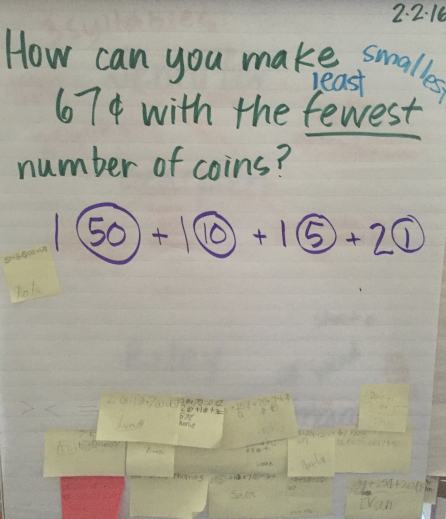
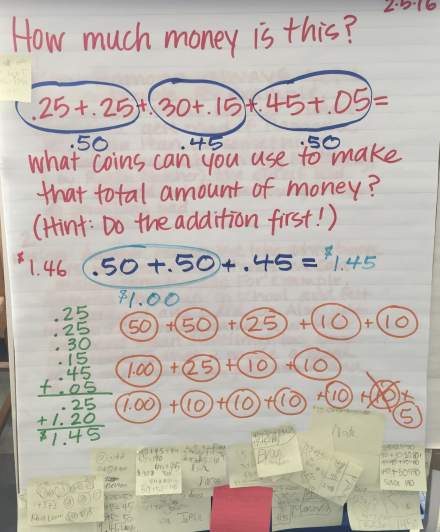
These last few weeks we’ve been working on money, so all of these relate to that topic.  They are progressive, from Monday to Friday, and speak to the new skill/concept I was planning to cover that day; some kiddos really had no idea how to do this when i asked them to think about it in the morning and so had to give-it-a-go, or work with a partner. These were definitely questions where I saw many post-its that said, “I’m not sure yet but what I think is…”  (The extra two I’m sharing this week are related to our muffin challenge from the 100th Day.  Be sure to check out that post for more info!).

Last Week Muffin Problems


This week’s money problems:

Monday

IMG_0317-min

 Tuesday

IMG_0348-min

Thursday

IMG_0380-min

Friday

IMG_0382-min

Spelling Investigations

I have been doing spelling differently than others for while.  Even when I used to do spelling tests every week, the way the words were chosen was a little different than what is typical (personalized to each kiddo, often from their writing or frequently misspelled words that mattered to them).  We even used an actual week–not a school week–and kiddos studied from Wednesday to Tuesday.  I never quite felt, though, that what we did was effective; either kids were great spellers and they stayed that way, or they had struggles and those remained as well.  Even when they did well on tests, they didn’t do such a great job of bringing that expertise into their work.  Eventually, the last year I taught 5th grade, I abandoned spelling tests altogether.  No one seemed to notice…

When I moved to 1st grade last year, it was an easy decision to tackle spelling inside of all of the other things we were doing with reading and writing, especially during interactive writing and word work during guided reading groups. My kiddos took to this kind of thinking quickly, and used their new skills interchangeably between subjects, which is a true sign of transfer of knowledge.

So, fast forward to thoughts about 2nd grade.  This one was a little bit tricky; all of the other classes in our grade do spelling in a traditional sense of the word–lists of words each week that follow a pattern, with a test on Friday.  I was pretty sure that I was going to opt out of that choice (but for a long time wasn’t sure how to explain why without sounding like I was right and others were wrong.   I’m actually working on how to do that in many areas; my objective is NEVER to judge or sound like a know-it-all–unfortunately my passion often super cedes and that happens–but instead my goal is to share info I have, offer concerns or questions that arise, or bring up other considerations on the topic that might not have been mentioned.  Believe me, I am FAR from knowing it all!).

I found my “out” when I thought more about interactive writing this summer with my previous 1st grade team and Mrs. Ford, our Director of Professional Learning (and my longtime friend!).  As the rest of the table planned how they’d begin the structure with their 1st graders in the fall, I considered how I might build on the foundation we’d set last year and continue the same kind of thinking, pushed to a new level.  When my friend, Katie, suggested the idea of spelling investigations, I knew they were a good fit with my learners.

Much like we are already in the habit of doing with math, investigations would be centered around conjectures that students brought up about words/letters/sounds/patterns that they notice.  Kiddos were already familiar with this idea as mathematicians, and so it seemed like a natural connection.  We had worked through our first one last year as 1st graders, anyway, and it is a permanent (and well-utilized–we even used it today during a reading group!) fixture on our word wall:

IMG_0352-min

So far in 2nd grade (before we started this study), we’ve added a could of other ideas to our investigations.  They are still in an informal form, as we add to them frequently:

Sometimes small groups investigate them specifically, sometimes we talk about them as a whole group when we’re reading together, and sometimes kiddos just notice things about them as they are reading in their own independent work.

So why am I writing about this now, you ask?  Well, last Friday I was at a staff in-service with the rest of my district 2nd grade cohort.  We broke into smaller groups to discuss a topic we’d been working on throughout the year, and my teammate and I realized we were the only ones there!  So much for a district cohort. LOL  It worked out really great, though, because despite the fact that we work together on a regular basis, we don’t often have time to sit for a long period of time discussing one specific topic.  This day, of course,  it was spelling. ❤

As we talked about what we were doing in spelling (which is completely different for her than it is for me), questions came up about how, why and what results we were looking for, how we knew if what we were doing was working.  We agreed transfer was the goal.

I shared details about the way we had tackled spelling through our word study and investigations, and she began to wonder about how she could try something like that with her learners.  She came up with the idea of doing an investigation with students’ names.  She had experience with a similar procedure from 1st grade, but had yet to get her kiddos thinking about words/names/sounds/ that way as 2nd graders.

She put together a plan for how to start–with kiddos looking for patterns/sounds that they’ve studied (during their traditional spelling work and tests) that occur in their names.  They’d move on to making more words with those patterns/chunks, try to figure out how/why those sounds work that way, and also try to brainstorm other ways their names could be spelled using what they know about sounds.  For me, the best part of the conversation wasn’t even the plan or the ideas we shared, it was how excited she was about trying it!  There was a new energy in her related to spelling, which would of course be spread to her students when they started their own investigations.

Well, as I was also inspired by both her energy and the noticings I had made about our own classroom names, I resolved to do the same studies in my classroom as she would be doing.  We agreed to check in along the way to see what each group of students was doing; my class had already had experienced with this kind of thinking, so we hypothesized that there would be differences in what we noticed and discovered.

More on the details of Rm. 202 spelling investigations soon! (Yep, this post has gotten way too long to keep going! hee hee).  Please check back and see what we’re doing with spelling and words and what we’re discovering about sounds that can help us be better readers and writers. 🙂


Goodbye, Mr. Lacy! 

One thing I mentioned that made our 100th Day both fun and busy was that we celebrated our custodian of 9 years, Mr. Lacy. He has been such a happy addition to our school, and it’s already weird to not see him pushing his tennis-ball-stick down the hall fixing the smudges off the tiles.

Since he was such an important fixture in our school, we had to figure out a meaningful way to send him off in style (I know I say “we” like I had something to do with it–I did not; my amazing students and their specials teachers did all the work and I just went to enjoy the assembly).

Ok, wait, I guess I did do something, but it was teeny–like suggest to my students what we should do as our part of the goodbye scrapbook. Then they got busy and did all the creative stuff with making their body and a speech bubble with wishes for him for retirement. Apparently it’s no secret that he used to be a boxer; many kiddos wished him time to do that again. 😊  Sorry–didn’t end up with a picture of the final product.  Oops.  Forgot to take one until after it was delivered.  Imagine pages and pages of those cute little 2nd grade bodies.

Aside from that part, Mrs. Kesler worked with everyone in music to learn a song to sing to him.

The staff collected to treat him with something to do, too–a big ole smoker along with the supplies you need to make a barbecue feast. The PTO gave him a gift of a certificate for meat from his favorite butcher; he will be happy and well fed!

It’s funny how big a difference little things like a kind smile, a jolly laugh and a clean school can make.  Lacy definitely showed he loved us in everything he did, and we will miss him!

Series Reading Groups

We have been working with series of books in Readers’ Workshop lately.  Our newest unit, which has a focus on patterns, characters and changes, is asking students to look at a series of books (one per group) to find similarities and differences.  Each kiddo in the group is reading a different book (which is something I’ve never done before) and when they meet, the team is responsible for talking about what they’ve each found in their books individually.

We’ve worked on looking at what is always the same (patterns in the series), what we can learn about characters, asking ourselves why certain things are important, marking the text with post-its so we don’t forget what we’ve noticed, talking “long and strong” about our post-it notes, making sure we understand what our partners are saying by asking clarifying questions, and using a Venn diagram to model what we notice between the books in our groups.

We’ve chosen books series that match each level of reader in my classroom: Horrible Harry, Roscoe Riley Rules, Berenstain Bears, Clifford, Mercy Watson and Little House on the Prairie.

It’s been really exciting to see what they’ve been able to do with this study.  For many it’s the first time they have really read a chapter book.  While each group has different conversations based on the members and the books, each works with diligence and purpose as they discuss what they are learning about their texts.  They are really thinking deeply about their books, having fun with literacy and their reading conversations are leaking over into other parts of our day.  The other thing I’ve seen is that many have been positively pressured to higher levels of thinking and participating because of what they see their friends doing.  Love that kind of friendly competition!

I know this kind of thing would be best explained with videos, but all I have is pictures.  Imagine that you can hear quiet murmurs of engaging conversations around books that kids love and it would sound just about right!

What series do you enjoy reading?  We’d love some recommendations for our next choices! 🙂


The Greatest Star on Earth: Kate Klise

I love introducing kiddos to authors.  Whether it’s via Twitter, a new book or an actual author visit, helping students connect with the “real” people who write the stories or information they love is a great treat.  Perhaps the best part is how special and important they feel when we send a question or comment to a writer and they answer.  Ralph Fletcher is particularly special to my class as we have read both Marshfield Dreams and Fig Pudding by him this year (and he responds to all of our tweets!), but my students have also personally connected with Lisa Campbell Ernst, Maribeth Boelts, Marla Frazee (who I just realized illustrated Clementine!), Mary Casanova, Betty Birney, and also Kate Klise (who was just at our school this week!).  The way they feel so special and important when an adult responds to their words is pretty priceless and immeasurably motivating. The way these writers have both encouraged and inspired my students to some of their best work is pretty amazing. 🙂

So when I heard that we were having an author visit shortly after Winter Break I was really excited….but then I heard the name of the author and thought how completely strange it was that I had never heard of her; I pride myself on being up on books, writers, reading and things of that nature (by the way, Twitter has been HUGE in helping me with this–you should totally check it out!).  Luckily this was not a problem, because our amazing librarian, Mrs. Meihaus, works hard to introduce us to the writer and their books so that when they do come, we’ll be ready. 🙂

Our class read just a couple of her picture books (and since then I’ve found out she has written over 25 others!), and found that we really enjoyed her writing voice, as well as Sarah Klise’s (her sister is her illustrator) pictures.  We tried out Shall I Knit You a Hat? and Little Rabbit and the Meanest Mother of Earth, and when she was here she read us Grammy Lamby and the Secret Handshake.

Once she got here, we were all abuzz, excited to hear what she would tell us about herself and teach us about writing.  A couple of friends took their Writers’ Notebooks to be sure to catch Ms. Klise’s smart words.

Basically, her presentation was a workshop where she taught us (2nd and 3rd grades) the necessary elements for writing a good story.  She told funny stories, made us laugh, and most importantly got us involved in the show.  We hung on her every word!

This slideshow requires JavaScript.

And, because authors are rockstars in our world, we had to take a minute for a photo opp!  Thanks SO MUCH, Kate Klise, for taking time out to spend the morning with 2nd graders who are working to grow as writers and share their stories with the world!

IMG_0206-min


It’s the 100th Day–HOORAY!

In case you’ve missed our 100th Day journey, be sure to catch up on our previous conversations here.  And then stay tuned to read about what actually happened–spoiler alert: it was AMAZING!!

We began the day much like we normally do, with our regular routine of washing our hands and then working on the math apps we use every day: Front Row and Dreambox.  I got together some supplies, Tyrin took our pizza orders for lunch, and then we all got together to start our 100th Day of School.

We had narrowed down our choices to the ones that most closely matched our purpose for the day (reflecting upon or thinking about learning), but still we would not have been able to do all of those things in just the time we’re together on a normal school day, so I had to whittle it down even further.  Also, since we had come up with the SUPER list from our Little Red Riding Hood book as well, we actually had a new (and pretty big) job that we had added.

And since I can’t leave well enough alone, I gave them one more reminder about how this wasn’t truly our “100th” day, so we did a little bit of math: 176 + 176 + 100=452, meaning we were actually celebrating the 452nd day we had been in school!  WOW!  Too bad we couldn’t have had a whole list of activities related to that number!

First, I gave them a framework for book that we had decided to write together about our 100 days of 2nd grade and how much we had learned.  There were stems on each page that kiddos were supposed to fill in, and since we were doing it on our iPads, they could use pictures from their camera roll, drawings (that would then be added by taking a picture), typing or writing on the pages.  We use a Learning Management System called eBackpack to give and receive work, so they were to work on their pages (each kiddo was given 5) and then send them back to me.

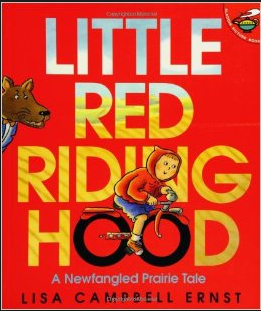
Once they got started working, I began to call small groups over to start making muffins (based on our super smart ideas from Little Red Riding Hood: A Newfangled Prairie Tale by Lisa Campbell Ernst) to share with our 2nd grade friends.  There are conveniently (if you’re connecting to the number 100) 101 kiddos in our grade, so we had a lot of baking to do; we had figured out through some HARD work the day before that we needed to make 9 batches in order to have enough.  Wow.

Well, thankfully, my friend (who typically comes to help us during Math on Thursdays anyway) was free in the morning today, because looking back now there is NO WAY we could have made 100 muffins with 21 kiddos with just me.  Thanks, Mary Beth!  She took one table and I manned another one and we measured and poured, stirred and scooped and ultimately took all of our muffin tins to the Robinson kitchen to be baked.  Again, if not for Ms. Denise in the kitchen who took charge of the ovens, we wouldn’t have had any muffins.  She was a lifesaver today.

This slideshow requires JavaScript.

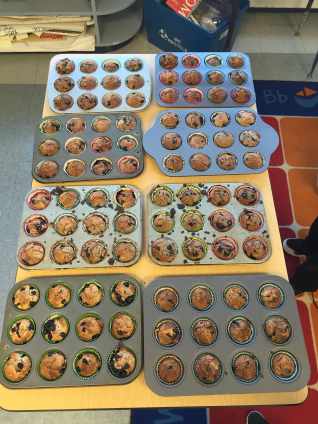
Although I would have love to add pictures of the many trips we took to the kitchen and back, and share a picture of Ms. Denise, as well as how beautiful our muffins were while they were baking, I was carrying muffin tins and opening doors and having to be a teacher (hee hee), so you’ll just have to imagine that part.  I also wish there was smell-o-vision so I could share how wonderful our muffins smelled while they were baking (believe me, I was told my multiple people that they could smell them all over the school!), but alas, not this time.  Just imagine the most amazing aroma ever and that’s what it was like. 🙂  Ultimately we only ended up making 8 dozen (not sure what happened there), so we had to do some quick math about our shortage (which was a great lesson in scarcity!) and figure out how we could best share with our friends as well as have some muffins for ourselves.

After we figured out how many muffins we had:

IMG_0254-min

we made some plans for how we’d get them to our friends.  We agreed (ok, well they did after I convinced them) that it was the right thing to do to give muffins to the other 2nd graders before we served ourselves and so we go together in groups and created little pitches to share with them about what we did and how we wanted to give so to them.

We had a little bit of time after both muffins and our book (but more about that in another post–we have some revising and editing to do there before we’re ready to share), so kiddos had a choice of a board game, reading, or writing.  I always love to see what they do when they are in charge:

Because our day was filled with two other special events (roller skating in PE and a farewell assembly for a beloved custodian), we only had time for one more thing, and we decided it should be puzzles.  After that conversation the other day and the question from Ja’Mia, we knew it would be fun, hard work and would definitely allow us to use all of the grit, patience and teamwork we’ve been building lately.  Look at what we were able to do!

For all the thought (perhaps OVER-thought) that I put into this day, I am pleased with what happened.  It was all that we wanted it to be (which was to focus on learning and growing) and we had fun along the way.  I think that they things we chose to participate in match up with what we are about everyday (engagement, choice, thinking, teamwork).  I enjoyed the day, and I’m pretty sure they did, too.  The last thing I heard before we left for the day was “This was the best 100th Day EVER!”  I agree, friend, I agree! 🙂


LRRH–Inspiring Sharing and Caring

I started the story recently about our culture/geography/literature study of Little Red Riding Hood.  We’ve done many things along the way with stories and maps and learning about regions (which I promise to share later!), but today there’s another story to tell.

Today we read Little Red Riding Hood: A Newfangled Prairie Tale by Lisa Campbell Ernst.  The connection was to the Midwest region (at least as far as our SS unit was concerned), but my kiddos made many others kinds of important to connections in addition!

Screenshot 2016-01-20 13.44.55

The Little Red story here is very different than most others (and I won’t spoil the ending for you), and so gave us some new things to think about and respond to as readers and thinkers.  Before I was even finished, the suggestions came spilling over and kiddos could not contain themselves.  Many of them were related to this picture, which is on the last page:

FullSizeRender 21-min

Like I mentioned, the muffin-related ideas came quick and fast and I grabbed a marker and started recording so we wouldn’t forget the conversation:FullSizeRender 22-min

There are many layers to this list, and they’re not all related to the 100th Day, but that was a catchy title that Tyrin suggested.  We did decide, though, that we wanted to make these as part of our 100th Day festivities and share them with our 2nd grade friends–and there happen to be about 100 of them.  Seems like a match made in heaven. 🙂

We hope to address some of the others (and I’m sure add many more!) in the days to come.  Many of them could relate to a service-learning project and all will touch the hearts (and stomachs!) of our community.  As I keep saying, I can’t wait to continue to share this story!


Revised Pirate Code Ideas

Today we were finally able to revisit our initial list of ideas for our own Rm. 202 Pirate Code.

We used a protocol called Walk, Stop, Turn and Talk (which I saw on Twitter this weekend but sadly can’t remember who to credit for the idea) to talk about our thoughts on the first try.  Kiddos walked around until I called “stop,” in which case they turned to the closest friend and talked about which options on the list they thought should be kept.  They were supposed to give reasons based on how that addition would help us learn like pirates (based on our answers to that question which we had recorded the other day).  It looked and sounded like this:

Here’s our revisions, and then a “prettier” copy of the changes:

Pretty good, huh?  Oh, and that red part is that we decided that Learn or Walk the Plank! should be our Class Motto.  Verdict’s still out on that one. 🙂