Tiny Notebooks: Why Do We Write?

I shared the very beginning of our 2nd grade writing journey here.  Since that first day, we’ve done many amazing things as 2nd grade writers.  Let me share them with you. 🙂

For this first unit of writing in 2nd grade, we’ve been working to establish our writing community, helping every writer to see their part in it.  YES, you are a writer!  YES, you have important ideas to share with us (and the world)!  YES, I want you to like it (but it’s ok if you don’t yet)!

The first big, essential question that we’ve been chewing on and answering (over and over again!) is:

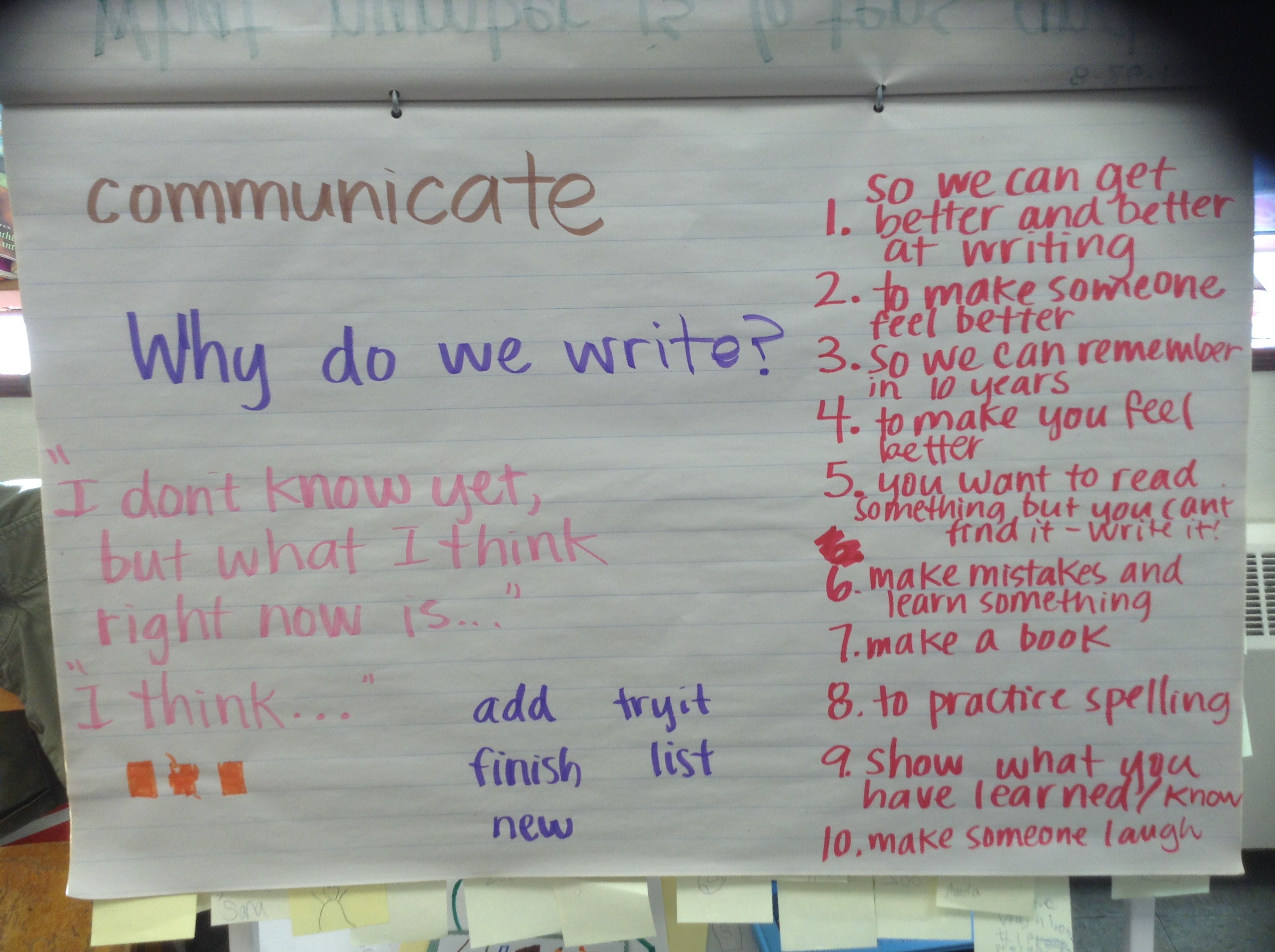
Screen Shot 2015-09-20 at 6.14.00 PMSimple question, right?  I’d say not really.  It’s kind of easy to make a list of the kinds of writing we do, or to tie our reasons to things we want to do with our writing (i.e. make a shopping list), but to really dig down to the REASON for writing is a little harder to do initially.  So when Rm. 202 writers came up with these ideas on our first try, I was super impressed:

IMG_5296

Please apologize for the “ugliness” of this chart. It has not been beautified as an anchor chart for our wall yet, and so it a work in progress. We can up with so many great answers, and then tied them all to the idea that we write to communicate. The pink parts are sentence starters they could use with their partners when they discussed the question for the first time.

We had a great conversation about the communication idea, too, when I suggested that it is how I would answer the question.  Someone said, “So that’s the RIGHT answer?”  Someone else said, “No, there is no RIGHT answer!”  We talked a lot about how there is not ONE right answer, that there are MANY right answers, and that I DO NOT have all of those answers.  Love those kinds of chats. 🙂

So as a means of tackling this question, we began to look at how writers use their Writer’s Notebooks to collect stories.  As I mentioned in the first post, I connected their Tiny Notebooks to the idea of a scrapbook; they would begin filling it up with things they wanted to remember in 10 years (which just happens to be when they go to college!).  It was lucky that my first notebook is 10 years old, and so the time span only made sense. 🙂

For the next part of the Tiny Notebook story, check this out.

What’s On the Agenda?

The beginning of the year brings with it many things: new faces, new clothes, new experiences, new books to read, and assessments.  Lots of assessments.  Luckily for me, I know many of my students really well already, since we were together last year, but even still I need to learn the “2nd grade version” of them.

One particular assessment that I have a love-hate relationship with is the F&P (that’s just what we call it because it’s from Fountas and Pinnell; it’s a reading assessment).  I love it because of the deep, rich information it gives me about my kiddos as readers and how it helps me tailor my instruction to just what they need.  I kind of hate it, though, because it takes FOREVER to administer.  It involves a student reading a book to you aloud and then answering the comprehension questions to demonstrate their understanding of the text (there are both fiction and non-fiction titles included).

Sounds easy, right?  Well it is relatively easy to administer, but when you add in the fact that there are 21 students in my class and sometimes you have to read 2 or 3 stories until you find the student’s instructional level, you can quickly add up to a lot of time necessary to finish the job.

So, that’s where the idea of the agenda comes in.  It’s my attempt at having my students working on meaningful, important learning activities independently so that I can spend time 1-on-1 with students to finish my assessments.  Win-win, right?

We did this kind of thing on a smaller scale last year a couple of times, which gave me the courage to try it again now that we are 2nd graders.  The difference this go-round was that the time frame was longer (two school days instead of a morning) and that the assignments were on a little bit bigger scale (last time it was mostly finish-up work).

Now, before I gave it to my students I ran it by one of my most important helpers–my son, Riley, who was a 2nd grader last year.  Even at 8, he’s really good at looking at things I’m considering and thinking about them in terms of what other students would say.  And he did have some thoughts.  He suggested that there was TOO MUCH on the page and that many kiddos (him included) would be overwhelmed by the number of things they had to do.  I appreciated this insight, and actually had a plan, then, for how to modify the list for those that might need more support.

Wednesday morning came and it was time to share my crazy-cool plan with my students.  I was SUPER excited with how enthusiastic they were about the whole thing.  They were blown away with how they could make so many important choices, with how they got to decide when they would do each thing (meaning we’d have all different subjects and projects happening at the same time!), and with how fun the opportunities sounded!

So here’s what the agenda looked like:

Students could choose to do them in any order and spend as much time as they needed to on each one, with the goal of being done by the end of the second day.  We had a conversation before we got started about different ways to tackle such a big list, as well as how we would have to work responsibly and respectfully so that everyone could complete the challenge.  At several points throughout the days we stopped for check-ins, to have students share insights they were having, ask questions about things they may have been confused about, or make suggestions for how to make the work more manageable.

Overall, I was SUPER impressed with how things went!  I would have to say that the way they were able to manage their time and materials was even beyond what I expected.  Before we started, we made a big deal about how the important part was that they were able to work independently, freeing me up to finish my reading interviews with everyone.  It was great to hear how they problem-solved together, sometimes asking multiple classmates until they found their answer.  I do have to mention on conversation I overhead that I thought was particularly funny (and helpful!).  Someone was asking what they were supposed to do on a certain assignment, and a friend’s matter-of-fact response was “Well did you read the directions yet?  That’s why she wrote all that on there for you–so you’d know what to do!”  Hee hee.  Yes, I giggled a little at her answer.  But she was right. 🙂  And yes, she did offer help when the kiddo came back because he had a question about those directions. 🙂  Many times I heard friends reminding each other not to bother me or even asking “How can I help you?” when they knew their friend needed something.  Nice!

Having done this once, and getting really positive reviews on it from my students, I will definitely be doing it more regularly this year.  Ideally, I’d have some version of this happening all the time, with me having time to pull small groups and do 1-on-1 teaching as often as I could to help meet individual needs.  I feel like there are structures in place already in our classroom that allow for that focused attention, but anytime I can add more student choice into the mix, I’d say that’s a good thing.

So as I go into it a second time, I’m considering these questions:

  1. Were there too many things on the list?  What students may have been overwhelmed by the sheer length of the list? How can I better modify the agenda to meet the needs of every student?
  2. Were the activities the “right” ones?  What else could we have done (with content or with product) to push thinking and challenge kids to dig deep with their learning?
  3. Is it necessary for students to complete everything on the list?  Would a “must-do” and “can-do” type list be more ideal?  Is there a way for students to be more in charge of what was on the list?  Could they be given a learning target or essential question to investigate and then plan the activity they’d do to address that focus?

Regardless of what we decide to do next time, I’m excited for how this first attempt went.  Kids were focused, they had fun, they got things done, they made decisions, they solved problems, and I got some assessments completed.  And I even had a couple of teachers visiting from another school who happened to pop in while we were doing this and they said it was working.  Gotta love outside eyes to help you make sure it’s not all in your head!  Way to go, Rm. 202 kiddos!!

Tiny Notebooks: Sharing

That last post got a little long (and probably all my entries get a little too long!), so I figured I’d share the last part in another story.

On Day 3, after we had gotten back into our notebooks, I found a way to easily share our writing with a random partner.  When I made our tiny notebooks (by cutting regular spiral notebooks in half), I was looking at the halves and thinking about how they could be put back together…

So kiddos found their sharing partner by finding the writer who had the other half of their notebook.  So quick and so cool!

Screen Shot 2015-08-23 at 9.56.59 AMThey shared their entry with their halfsies partner and had some great conversations!

Next time they are supposed to find their other halfsies partner (because there are 2 notebooks of each color), and we could match up in a couple of other ways.  SO glad this happy accident happened.  So simple but very useful. 🙂

Getting Started with Writing: Tiny Notebooks

Ok…do I need to start by explaining my love for the teaching of writing?  Or just my love of writing itself?  Probably not.  You’ve read those stories before, right? 🙂

We got started with writing in 2nd grade on our second day.  I started by reading two books:

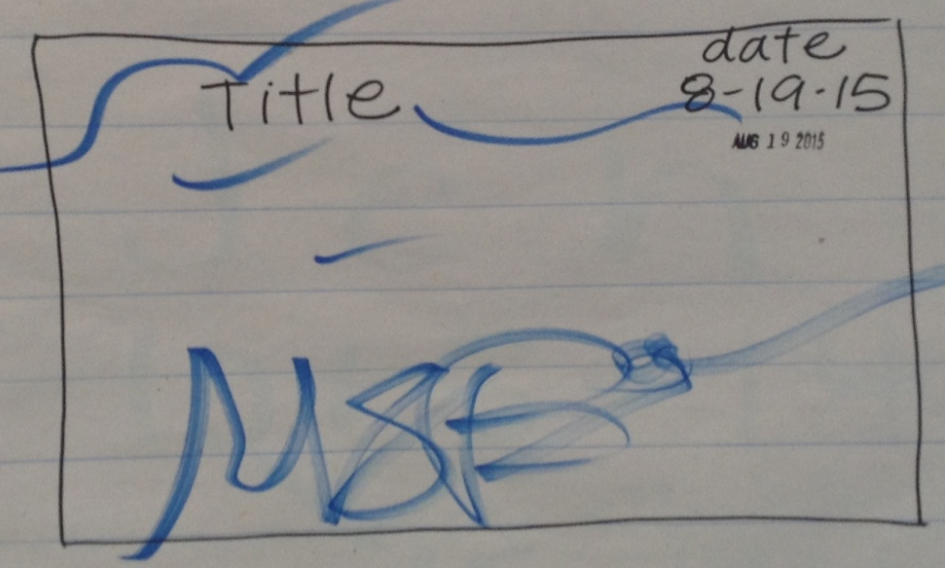
I chose them partly to be funny (The Incredible teacher one was because their notebooks used to be full-sized and are now only half-sized notebooks like I used here.  By the way, they didn’t think this was funny. LOL), and also to give us an idea for somewhere to get started (an entry about something they had done over the summer).  Before they left we had a quick reminder of how to label each entry, as well as a reteach of how to use the date stamp (yes, there is a lesson for this!).

Ignore that big blue scribble...it was from another conversation we were having about how authors sometimes sign their books....

Ignore that big blue scribble…it was from another conversation we were having about how authors sometimes sign their books….

After our lesson, most kiddos got to their spots and got started quickly.  Some took a little extra long with the date stamp, and some did a lot of thinking.  I’d say most of us got something on the paper, but I did hear some of those dreaded words: “I don’t have anything to write about!” Ugh.  But then I remembered they were second graders AND it was the second day of school, so they may have been a little rusty.  I worked with one friend to put an ideas list in the back of his notebook (like we had done last year but he had probably forgotten), and had multiple conversations with friends about how to find an idea (like talking to another friend about their writing, thinking about their day, showing them an example in my Writer’s Notebooks or using a book for inspiration).  We had a quick share at the end of our writing time and got ready to move on.   I LOVED it when the next question was, “Can I take this journal home and finish my writing for homework?”  Well, of course, dear friend, you can do that! 🙂  I LOVE this not because I wanted my little friends to have homework, but because it shows me that they are already getting the idea that writing can happen anywhere, and that their stories are important enough to them that they want to finish sharing them.  And yes, those notebooks came back the next day. 🙂

This whole “I don’t know what to write about” thing had me thinking about what to do the next day.  I needed to get them thinking again about how ANYTHING could be an idea for writing, not just great big events or monumental occurrences.  Ideas come from watching the world in a new way and expecting to see stories.  Those can happen on the way to school, while you’re eating breakfast or at recess.  And probably when you’re least expecting them.

This made me think about how to connect this idea to something they could understand.  I thought about we could explore the idea of a scrapbook and how your Writer’s Notebook is a place to collect things you don’t want to forget.  I pulled out my very first notebook (which I started in the summer of 2005, 10 years ago), and read a couple of entries (I wish now I’d brought that notebook home so I could show you those entries–boo. :().  I talked about how the moments I wrote about were not “BIG” deals, and I wouldn’t remember them now if I hadn’t written them down.  We connected this to how in Inside Out the memories turn gray in long-term memory and are sucked away forever (good thing I’m up on pop culture, huh? Never know where a connection will come from!).  We don’t want this to happen to our memories, and it doesn’t have to if we collect them!  For them, 10 years from now is when they go to college–how cool for them to be able to think about things they want to remember at that point in their lives.  Totally didn’t mean for that connection to happen, but was SUPER glad it did!

Then we read a book (as another way to help them visualize the possibilities) and made a chart of the small stories in there that we could write about:

This got many kids thinking and they shared new sparks they had: one friend said he could put in the necklace he wore this summer on the airplane when he flew by himself, and another friend wanted to bring pictures of his dogs–because they will probably be dead in 10 years and he doesn’t want to forget them.  Cute, right?  That same friend wanted a picture of me so he could remember me in college, too.  He wrote this entry with that picture:
Screen Shot 2015-08-23 at 9.36.11 AMWhile of course I love this entry because it’s about me (ha!), but also because it is the definition of how I want them to be thinking about their notebooks as a way to collect and curate their thoughts.  Plus I think it’s just cool how deep and wide 2nd graders can think when we give them an invitation and opportunity to do so. 🙂

Getting Started in Second Grade

Wahoo!  We’re finally getting started!  I spent some time getting ready, and it was fun to stop getting ready and finally get started!  And since we’re looping, it has definitely been fun doing just that.  I was looking back at the beginning of the year from last year to see what I had written about, and MAN–our kiddos were BABIES!!  You should take a look and see how much all those munchkins have grown since last fall.

As is usual fashion for me here on 20somethingkids, I have TONS of stories to tell you!  I am making a list of it all here, partly to help me make sure I get it all in, but also just in case you want a place to land to find it all.  Once I add the post, I’ll link to it on this page and you can easily find it again.  Ok, here we go!!

Over the last few weeks, we have done so many things!:

Marshmallow Challenge: Second Grade Style
Getting Started with Reading: Reading museum
Getting Started with Writing: Tiny Notebooks

Tiny Notebooks: Sharing

Self-Portraits
Appleletters
Reflection with plusses and deltas
2nd Day of 2nd Grade Selfies
Getting Started with Math: How Much is Your Name Worth?
Weak side/Strong side
Anchors of Learning
Math Warm-ups 8-18 to 8-2

…yet

I Hope You Make Mistakes

I know there were many things crammed into those first days together, but when I see it all in a list, I’m still amazed.  Let’s get into it!

Pictures of the Day: May 19, 2015

I REALLY want to show you the WHOLE thing about this project, but instead I’ll just show you two pictures as a tease for a later story.  They’re the pictures of the day for today, but they’ve been in the works since last week at this time.  And you know, I think I’m just going to let you wonder.  To let the pictures speak for themselves and see what happens….:)


Pictures of the Day: May 13, 2015

This one is in honor of our friend Diego. 🙂

  Check out the really difficult task we’ve been working on with completing our series of books.  This is BIG first grade work, but they’re definitely up to the task.  This was what our morning looked like today:


And this one’s just because I know you were wondering what my shoes looked like today. 🙂  Right? 🙂 #dontforgetthekookyteacher       

First Grade Blogs about Kindness

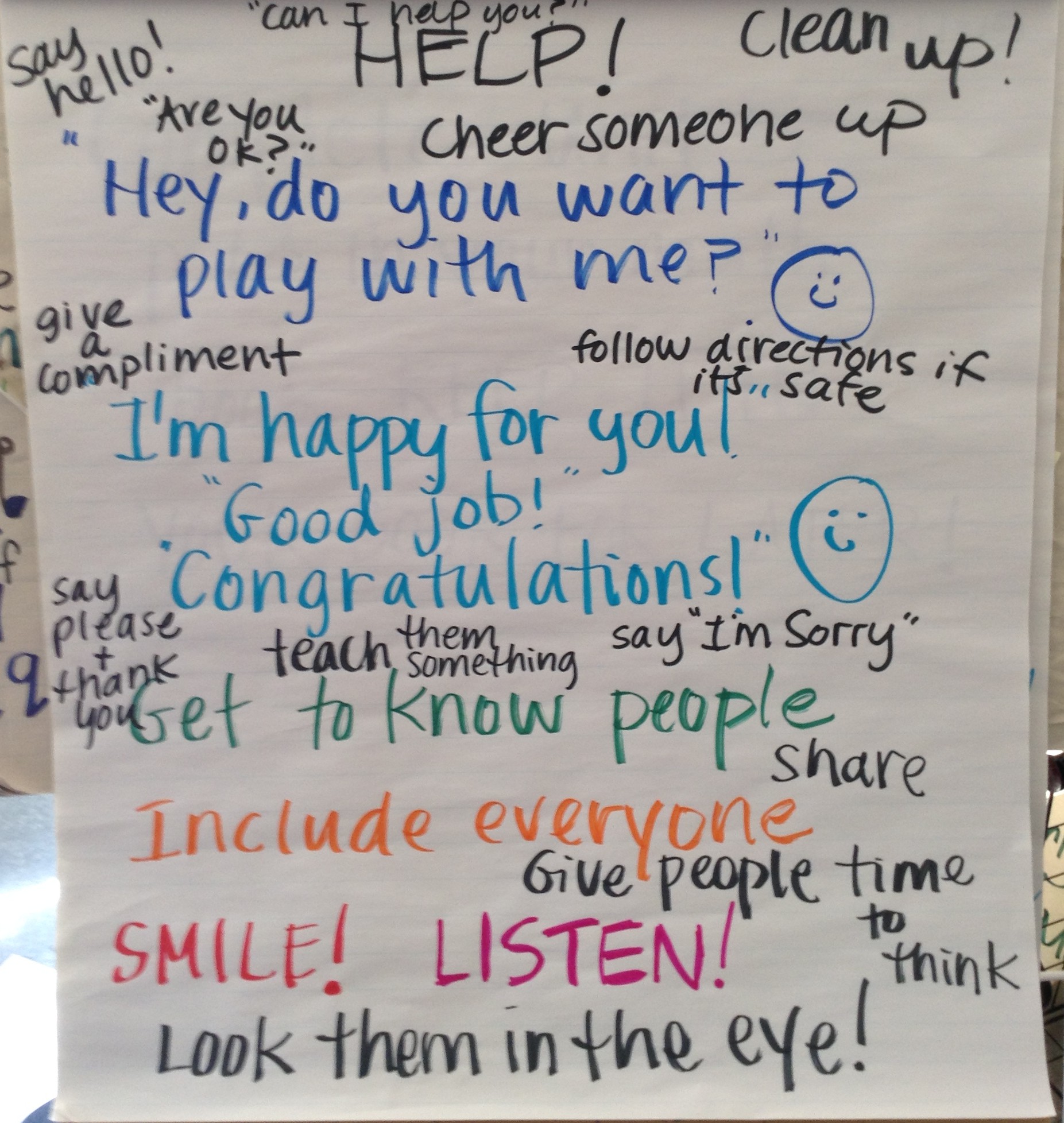
Did you know that sometimes at the end of the school year, kids FORGET that they’re supposed to be nice to each other and follow the rules at their school? That happened to us.  So, we sat down and made a chart of #nicethingstodoandsay to help us remember how to show that we care about each other.

Here’s a picture of what it looks like:

IMG_4662

We figured that if we could use this chart to help us, then you could, too!  So we decided to share it–with our Robinson friends, and even people outside of our school.  With kids AND with grown-ups!  Anyone can read it and use it to help them show someone they care about them.

We know we are going to use this list. What about you? How will YOU show that someone else matters? What #nicethingstodoandsay will you choose?  Leave us a comment, or tweet to us at @jbeardensclass to tell us how it’s working out for you!

And the Winner Is…

When we came back from Spring Break, we were in the middle of our opinion letter writing unit (I know, I still have not finished the story, but here’s the beginning again if you missed it!).  One of our first writing assignments was an opportunity to both tell me about their Spring Break AND test out their newly learned skills.  Double win, right? 🙂

Here are the directions I gave them:

Kiddos then spent several days planning and writing a letter that showed me their mad letter writing and convincing skills, and that included the most fun parts of their time away.  Unfortunately it took me a little while to get around to choosing a winner, but yesterday we finally sat down to crown the winner.  And the winner is….

It was SUPER hard to decide on the winner (there were two that it came down to and they were SO close!), but in the end, Millie’s letter had all the things we had be learning about: greeting, a stated opinion, 3 or more reasons, transitional words (like one reason is, another reason is, finally, closing, correct spelling and punctuation).  When I read it out loud, it was great to see (and hear) the reaction of the class–they could tell just by listening that it had all those parts.

And since it was a writing challenge, the prize was something to help make her writing even more spectacular–mini gel pens!

IMG_4412  I don’t use competition all the time, but sometimes it works to raise the level of excitement, engagement or even production.  And in this case it just made sense.  Way to go Millie, and other friends of Rm. 202 who wrote some great Spring Break letters!

Science Meets Writing Meets Popplet

We were in a little bit of an “in-between” time in writing last week and so I took advantage by doing something new.  I can thank my friend and neighbor in Rm. 201, Mrs. Appelbaum (isn’t the the BEST name for a first grade teacher??), for the idea for how to connect our writing with science.

Ok, a little background…we have just started a unit on animals in science, and so were eager to do some reading and learning.  I got a big ‘ole pile books from the library about all kinds of interesting animals and we got to work.  First we just read, but then we got to thinking about how we could record the things we were finding out as we read.  We had already done some work with Popplet (remember how Diego so ingeniously figured out how to make the camera work?), so I thought they could easily transfer that thinking to new info on animals.  Well, it didn’t go quite that easily, and I decided we needed to do backtrack a little bit.  That meant (by suggestion of Mrs. Appelbaum) that we do some webs on paper (together first, then on their own) first.  So that’s just what we did.

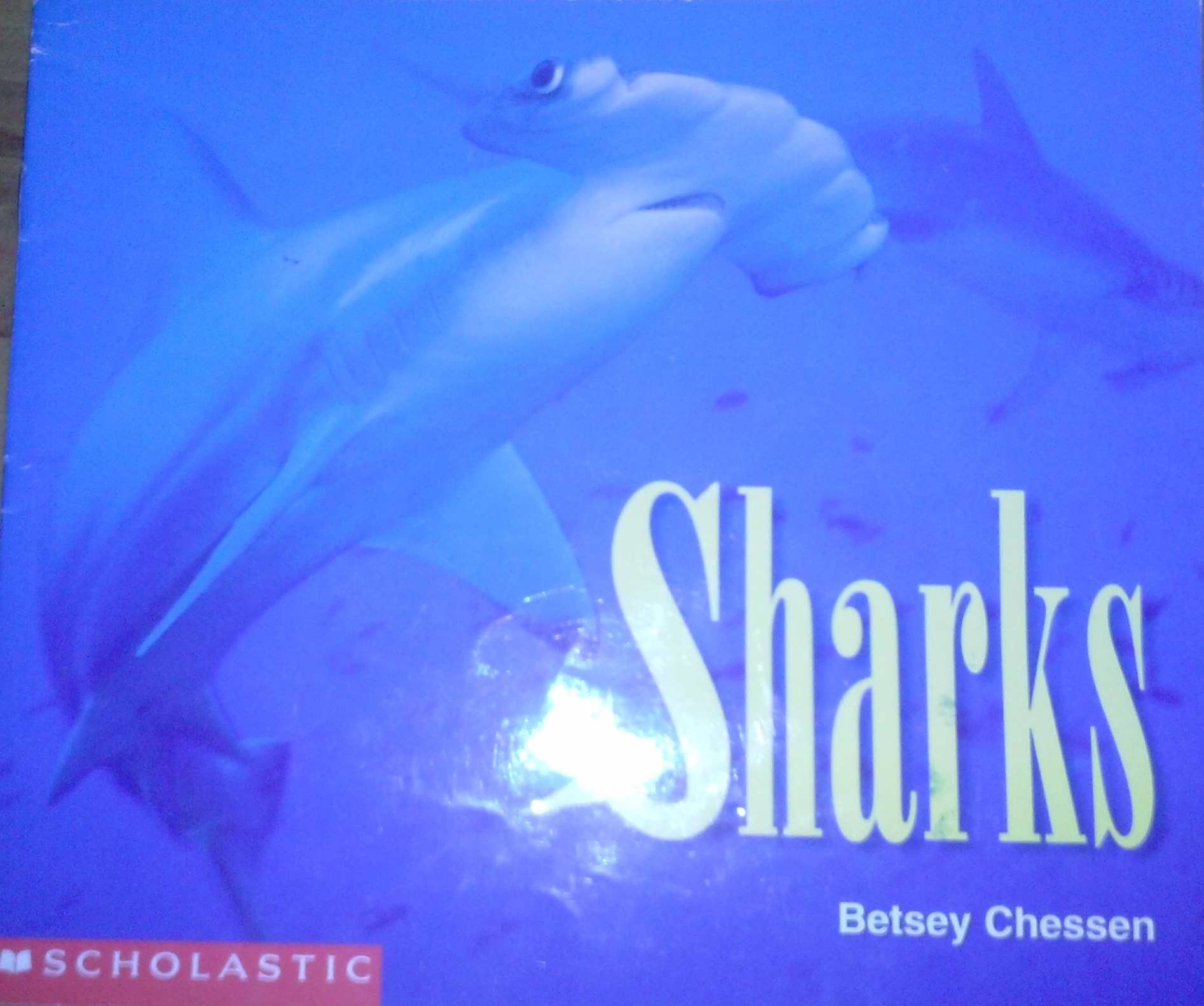
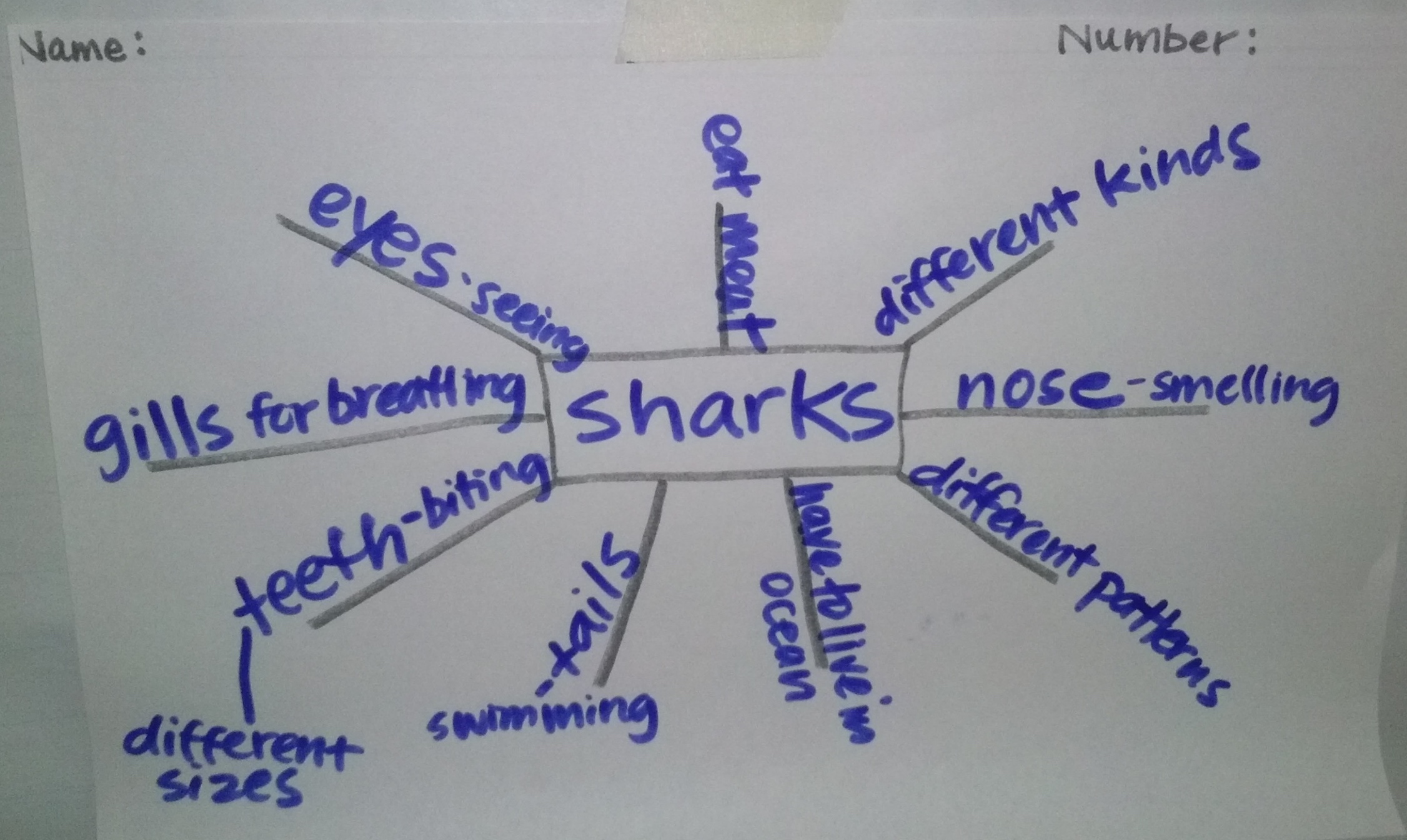
We started with a text about sharks:

CAM01856and then we worked together to write things we learned in our book about sharks:

CAM01849We talked about how to write just blurbs or words, not whole sentences, as well as how to add details.  After I was pretty sure they understood what to do, I set them free to try it out for themselves.  It was our first try, but still, I’d say they did a pretty great job!

CAM01805

Sara uses her smart reading strategies to learn about ladybugs.

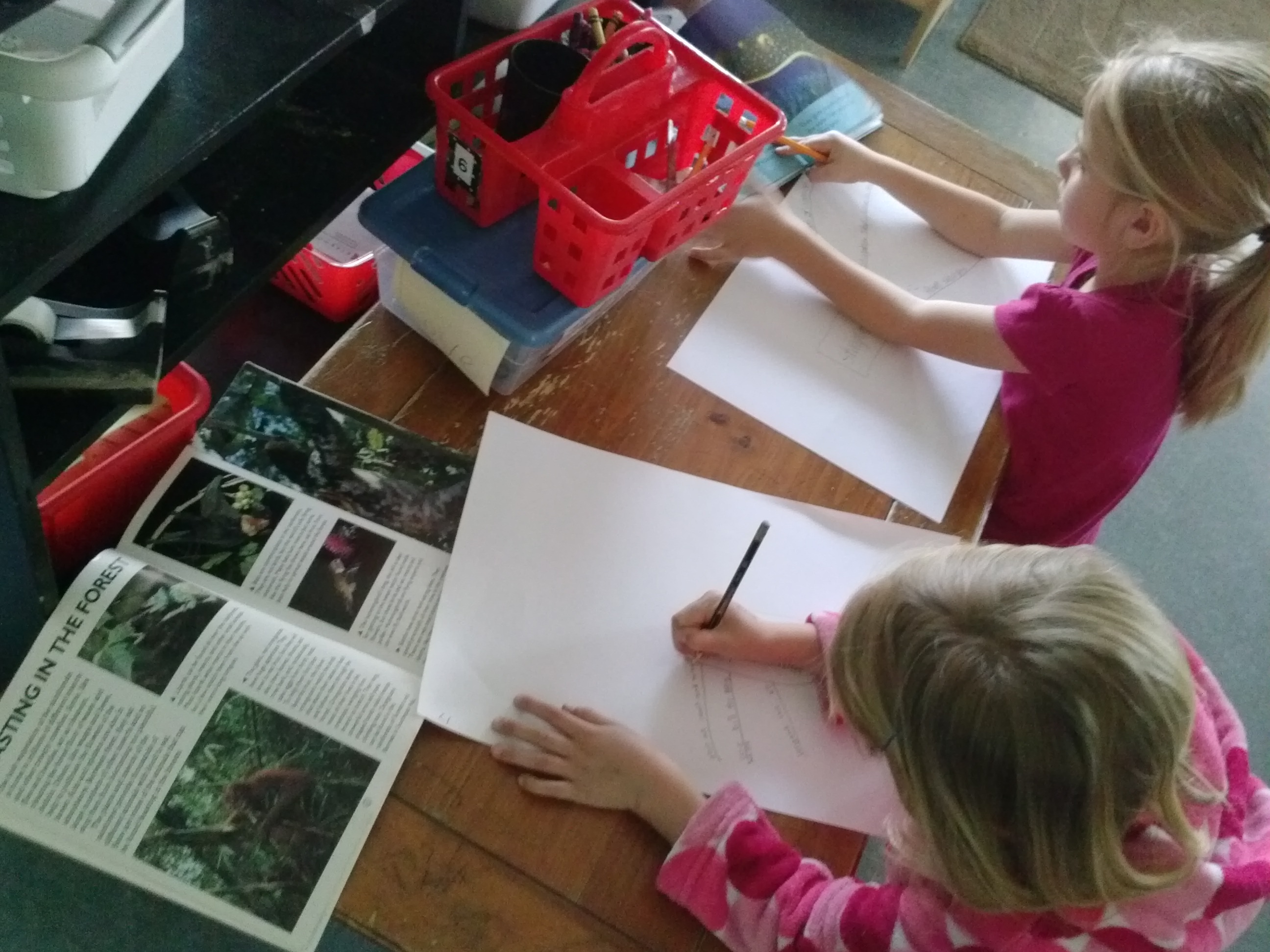
CAM01806

Makayla, Kylie and Lauren all hard at work on their animal webs.

CAM01807

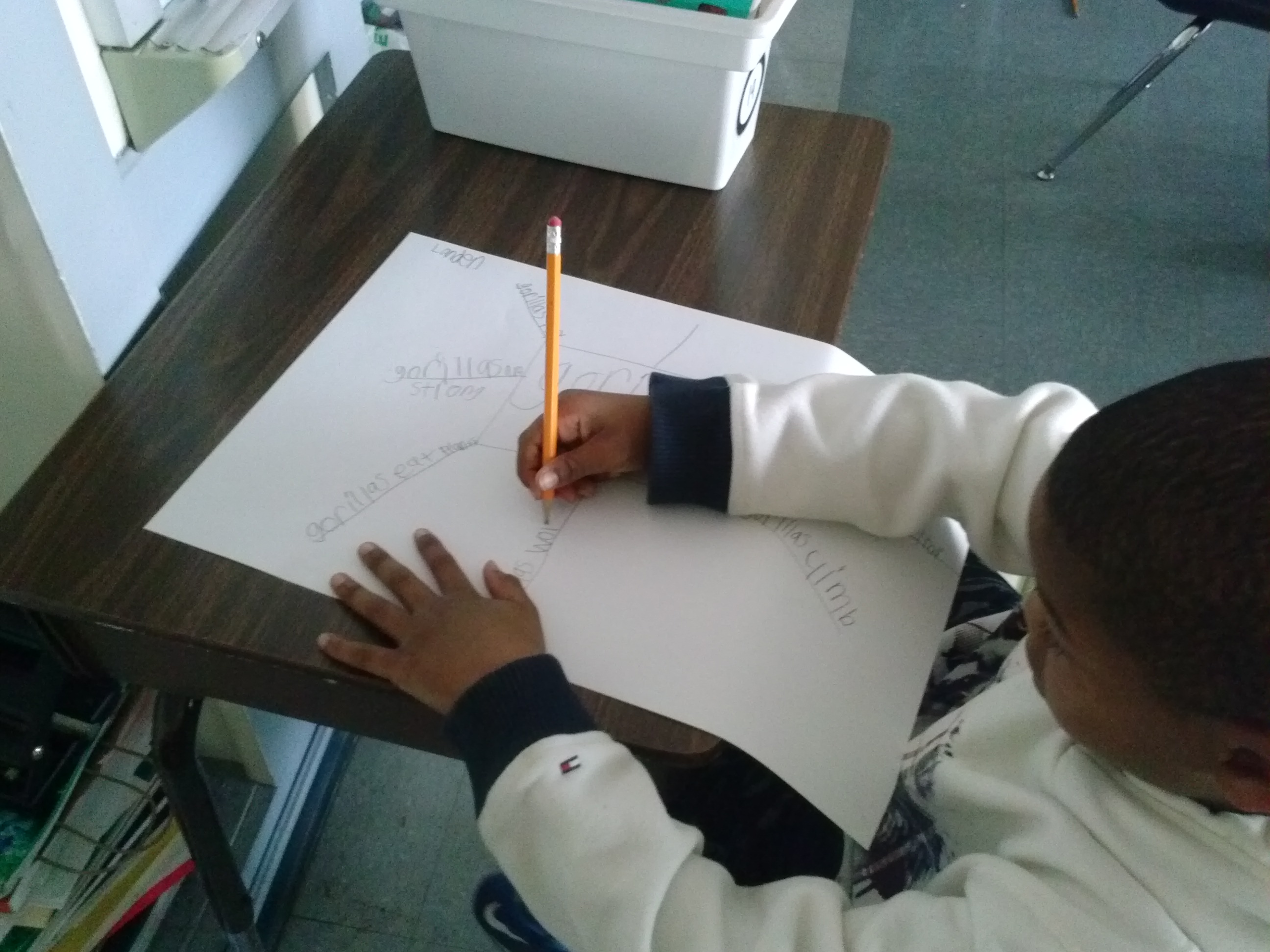
Landen made a web about gorillas, and even used more than one book on the topic to collect his information. Then, he turned his paper over and did another web about moths. 🙂

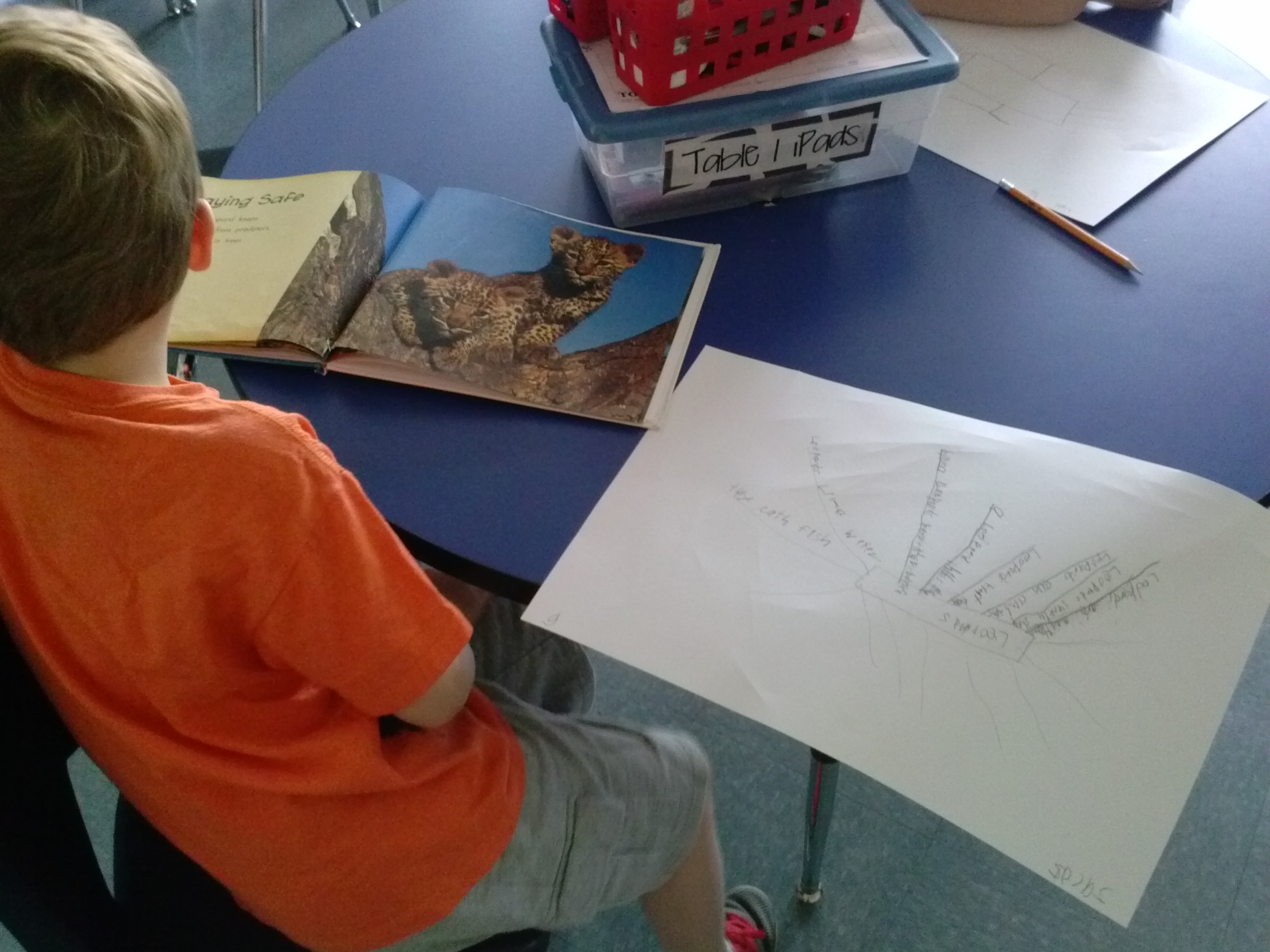
CAM01808

Jacob read about leopards. His web ended up filling up almost the whole page!

CAM01809

Amelia and Millie working hard on their webs. Millie, who learned about hummingbirds, ended up reading at least 4 different books about her topic and adding loads and loads of facts. Amelia was researching stingrays.

CAM01810

Nate is getting ready to add his topic to the middle of his web.

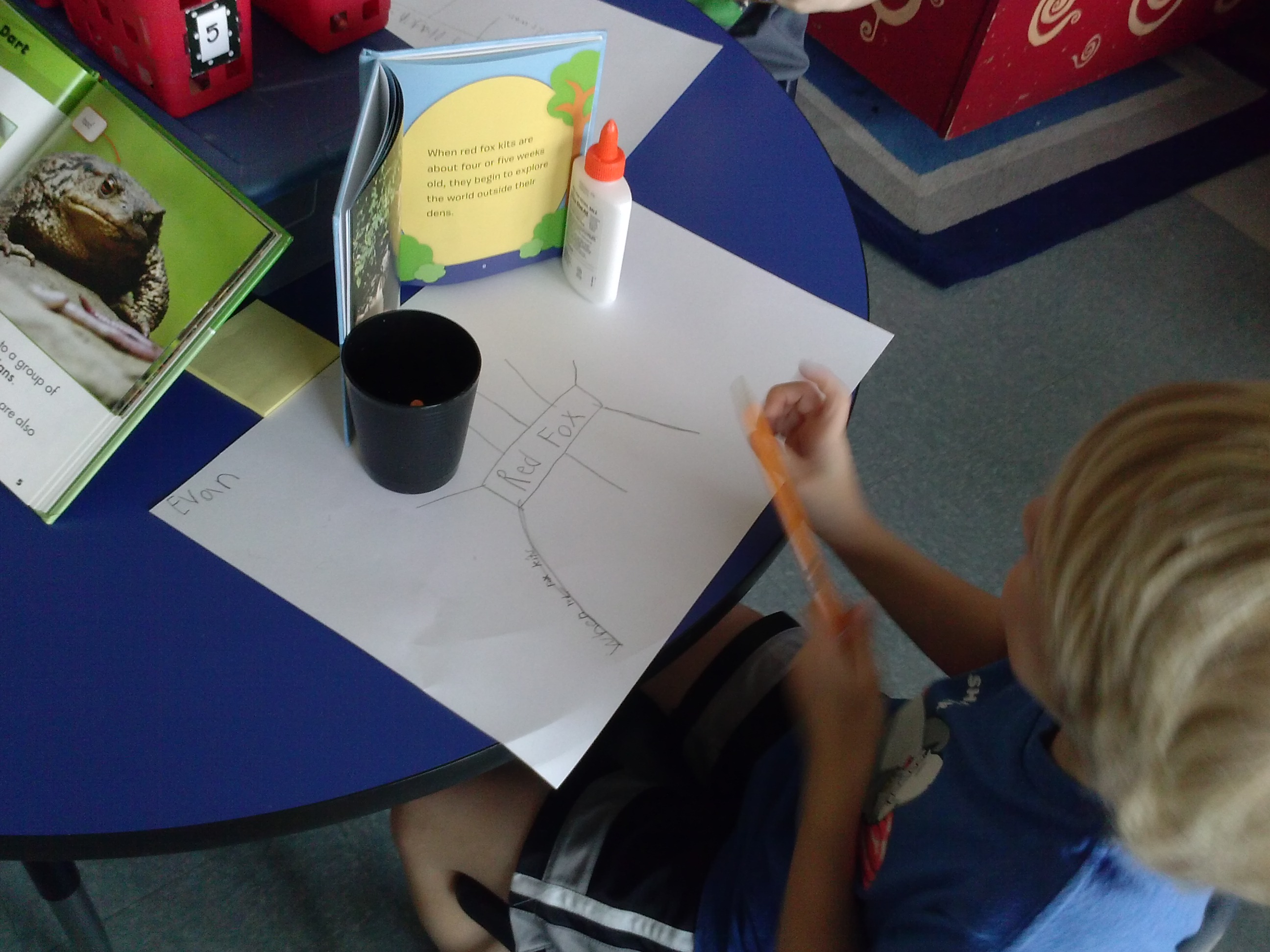
CAM01811

Evan recorded facts about red foxes.

CAM01812

Ella Marie was super excited about learning more about bees!

CAM01813

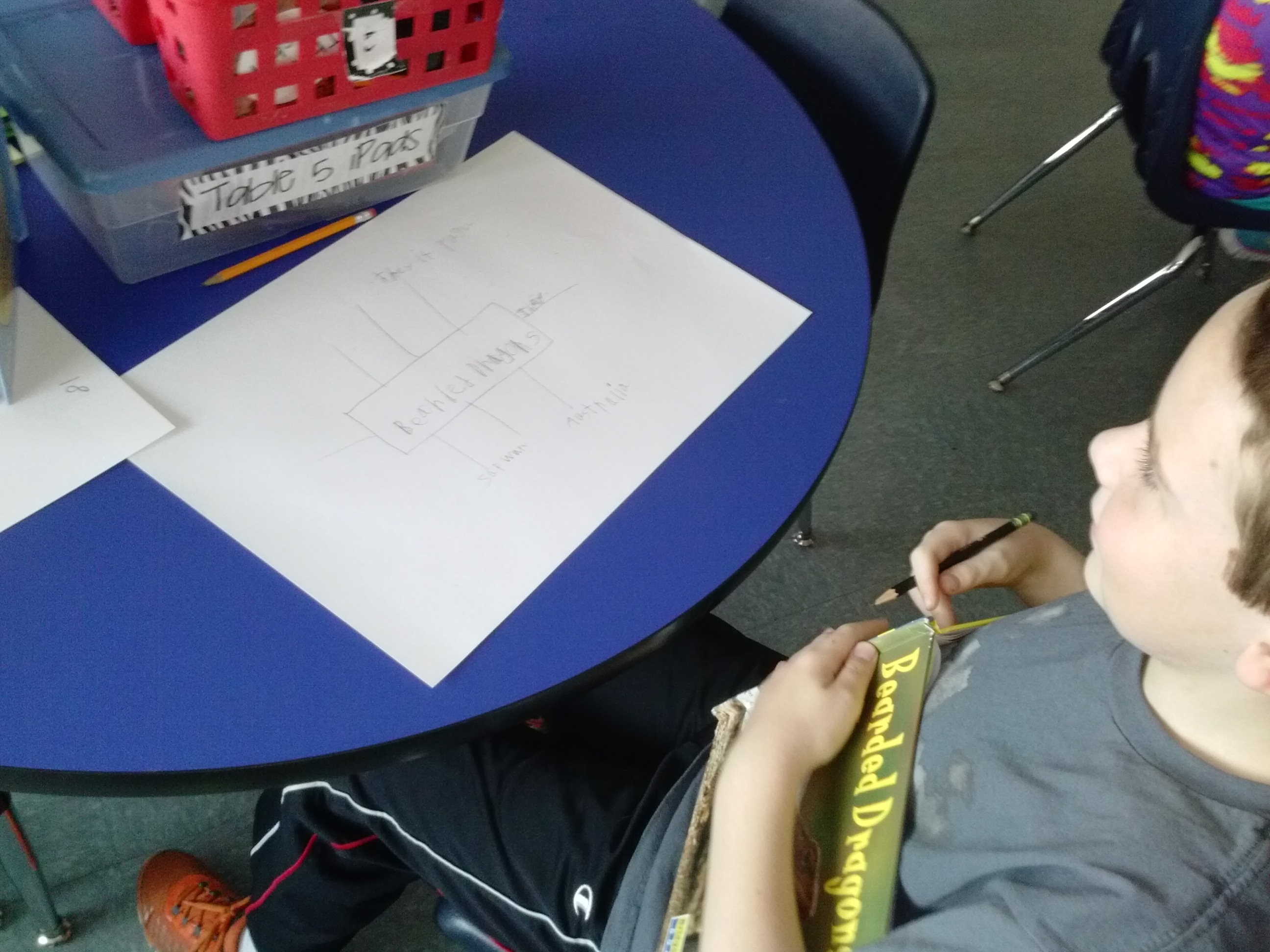
Thomas found a book about bearded dragons for his work.

CAM01814

Ava found a book on frogs to use for her web.

CAM01815

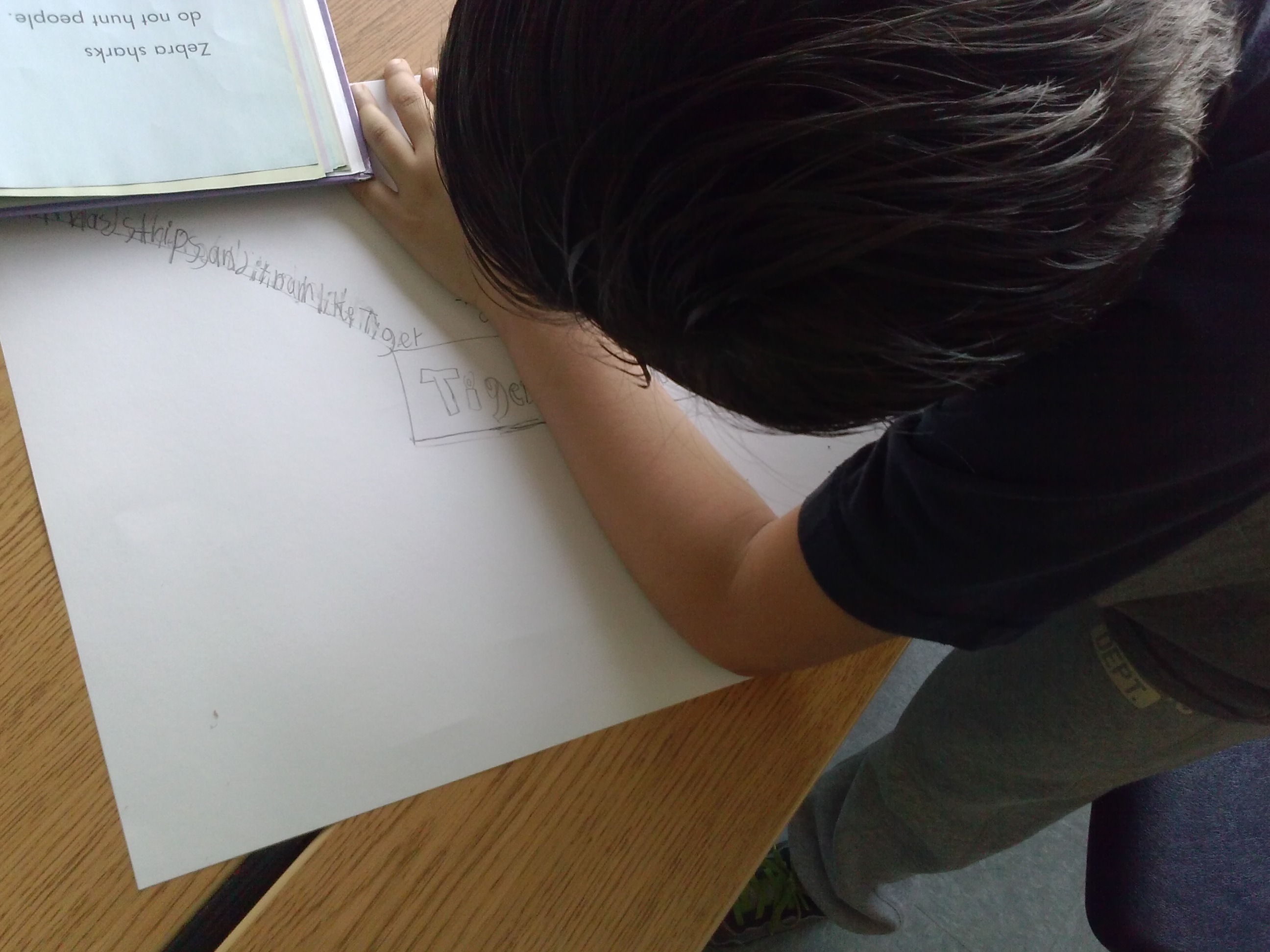
Charlie was checking out a book on zebra sharks.

CAM01816

Diego’s learning about tiger sharks!

CAM01817

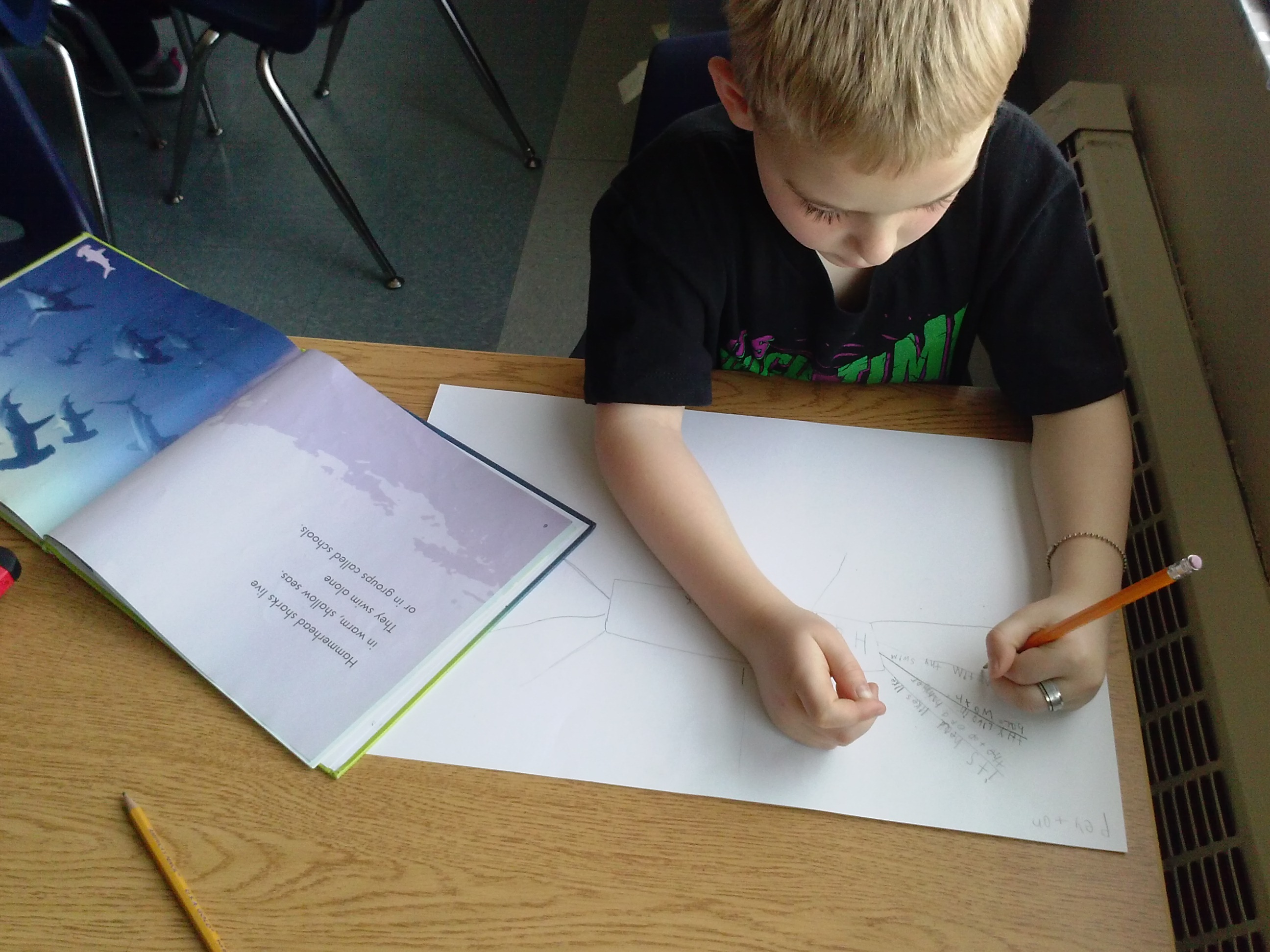
Peyton’s web showed many things he’d learned about hammerhead sharks! We had many different kinds of shark books on this day and they were all very popular (everyone at his table had a different shark book to read!)!

Oh, and the part about Popplet in the title?  The next day, many kiddos took the information from this draft of their webs and transferred it to Popplets on their iPads.  Some started brand new Popplets using the same process that they’d practiced here.  The best part is that this is something they’ll be able to repeat again and again as they research new topics and organize the information they learn!  SWEET!

Ok, finally, a slideshow of our work from this day:

This slideshow requires JavaScript.