I Hope You Make Mistakes

I start almost every day in Rm. 202 by saying something to my students that still had some of them very confused:

Screen Shot 2015-09-20 at 5.19.11 PMI remember the first time I said it.  No kidding, some of their eyes were as big as saucers and they thought I was kidding.  “You mean you want me to mess up?”  “You want me to fail?”  Well….yes, actually I do.  Not because I want you to feel badly, or because I want anything negative for you, but because I want you to learn something.  When we make mistakes, we learn what NOT to do, or we learn how to do things differently, which helps us next time.  If we’re always comfortable, and everything is easy, then we’re coasting and not learning.  And THAT is not ok with me.

We have been talking a lot about our brains and how they work, and a couple of these videos have helped some of my friends look at me a little less crazily when I mention mistakes:

All of this fits in perfectly with our YET talk, and helps us all get on the same page as we learn and grow together.  Not everyone is there yet, but I know that as we continue to understand how being perfect is not the goal, but learning new things is, more will get on board.  Their new successes will help spur them to WANT to make mistakes, for that is when they LEARN something new. 🙂

Second Grade Read Around–Part 2

I recently posted about how Mrs. Meihaus made Read Around super for second grade.  That wasn’t the whole story….:)

Perhaps one of my favorite parts of the Read Around came after the Read Around, and it looked like this:

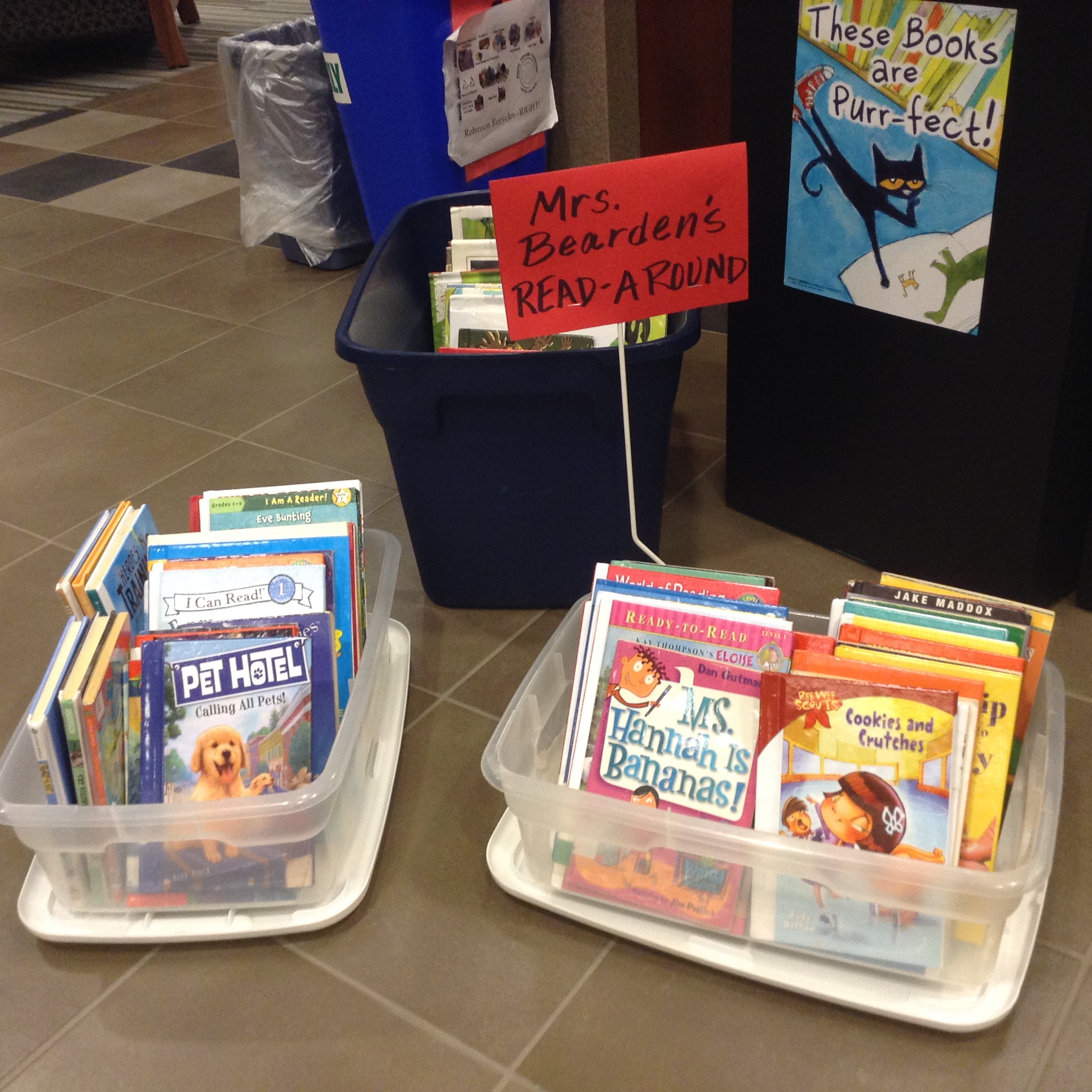
IMG_5248

Isn’t that great? She saved all of our favorites from our Read Around for us until we could come back and check them out. It felt a little special that this display was right in front of the circulation desk.

Just a few more pictures that show our library fabulousness.  It’s one of our favorite places to be, and I LOVE that that’s the case.  Readers are made here. 🙂

Ok, one more.  These are new this year and can be seen all over the library (no, they’re not all pictures of me–every teacher took one LOL).

IMG_5254

And in true Mrs. Bearden form, I was told to choose my favorite and I couldn’t do it! There are just too many great books to choose just one! Thanks Mrs. Meihaus for letting me choose 3. 🙂

Second Grade Read Around

The Read Around is a procedure that our librarian learned about several years ago, and I have used a couple of times with my classes (in all grade levels).  This year was no different. 🙂

The big idea for the read around is that readers get a short time to preview (we use the word “peruse!”) a book, so that they can then see what they might be interested in checking out (ha ha, library pun) later.  The best part is that as long as you match the books to the readers, you can do this with anyone of any age!

So….Mrs. Meihaus set it all up and helped us get started by reminding us of the directions:

We spent the next 30 minutes or so (this part varies depending on how many “rounds” you do and how long you spend at each spot) perusing new books that might be interesting to us now that we’re 2nd graders.

Check out some of our favorites.  Mrs. Meihaus had each table choose their top 3 and place them in the middle of the table.  Then, when kiddos traded tables, that was the first place many of them started looking.

Second Grade Math Warm-Ups: Week of 9-14 to 9-18, 2015

We are in the middle of a unit on place value in second grade.  The warm-ups this week took on a little bit of a different spin, as a couple of times kiddos were expected to finish up work from the previous day’s Math Workshop.  That then became how we started math groups later in the day (I hope that last sentence wasn’t confusing…).

Monday

On this day, we were working on modeling numbers in bundles of 100s, 10s and 1s, like we had done during our place value challenge the week before.

IMG_5360

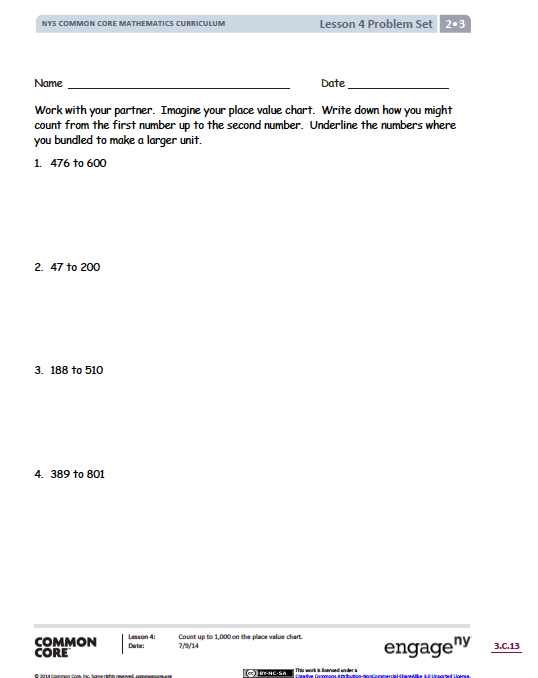
Lesson 2 Problem Set:

Tuesday

Pretty exciting question, huh?  See the example of what this page looked like below the picture.

IMG_5361

Screen Shot 2015-09-20 at 9.32.42 AM

Thursday

On Tuesday during math we had been focusing on representing a number in many ways, so I gave them a quick one to remind them of word form and expanded form.

IMG_5362

Friday

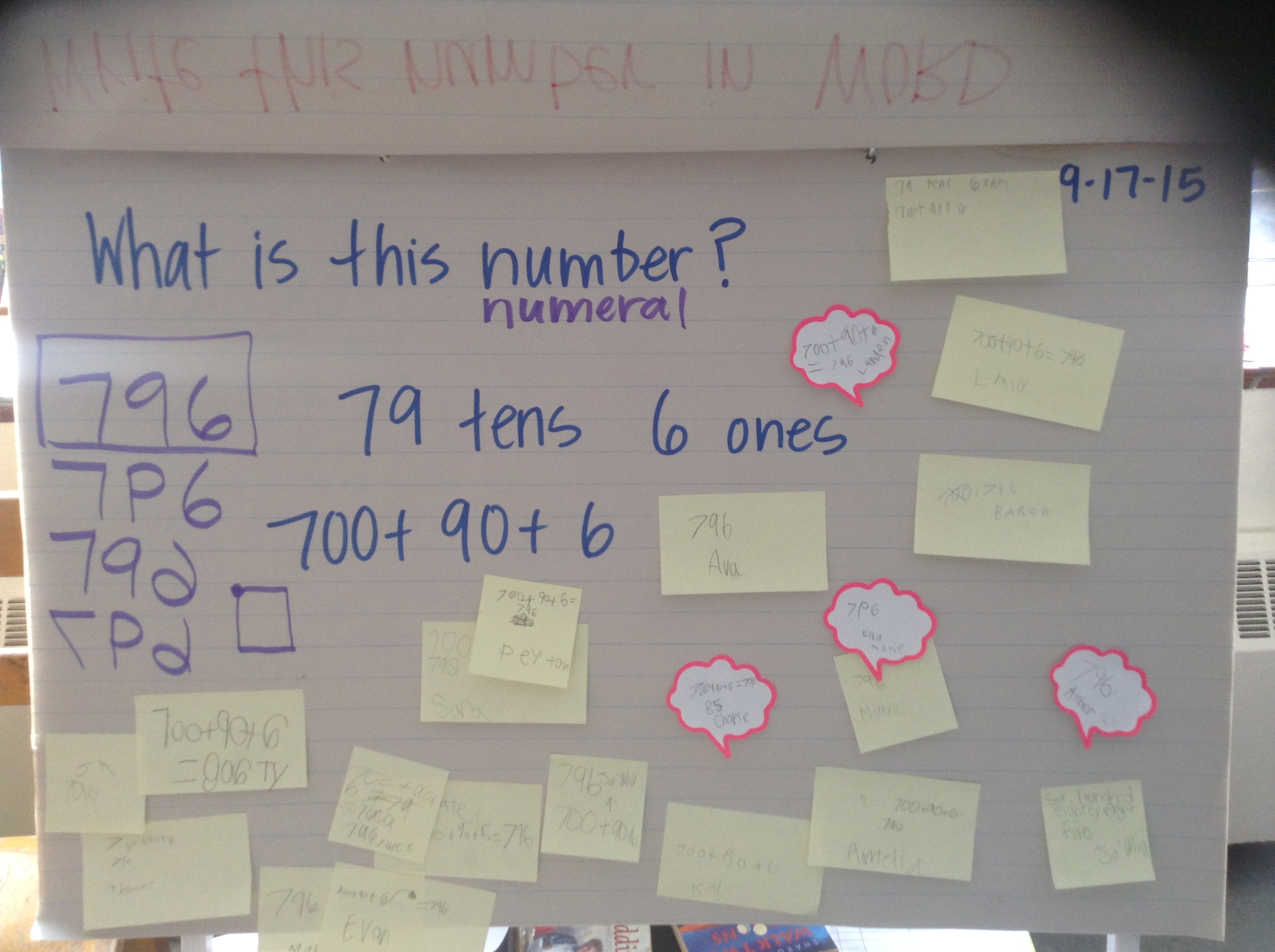
Another one….we also practiced the word numeral for number form, as well as focusing on making sure our numbers go the right way (as we still have some friends who forget. 🙂 ).

IMG_5363

What’s On the Agenda?

The beginning of the year brings with it many things: new faces, new clothes, new experiences, new books to read, and assessments.  Lots of assessments.  Luckily for me, I know many of my students really well already, since we were together last year, but even still I need to learn the “2nd grade version” of them.

One particular assessment that I have a love-hate relationship with is the F&P (that’s just what we call it because it’s from Fountas and Pinnell; it’s a reading assessment).  I love it because of the deep, rich information it gives me about my kiddos as readers and how it helps me tailor my instruction to just what they need.  I kind of hate it, though, because it takes FOREVER to administer.  It involves a student reading a book to you aloud and then answering the comprehension questions to demonstrate their understanding of the text (there are both fiction and non-fiction titles included).

Sounds easy, right?  Well it is relatively easy to administer, but when you add in the fact that there are 21 students in my class and sometimes you have to read 2 or 3 stories until you find the student’s instructional level, you can quickly add up to a lot of time necessary to finish the job.

So, that’s where the idea of the agenda comes in.  It’s my attempt at having my students working on meaningful, important learning activities independently so that I can spend time 1-on-1 with students to finish my assessments.  Win-win, right?

We did this kind of thing on a smaller scale last year a couple of times, which gave me the courage to try it again now that we are 2nd graders.  The difference this go-round was that the time frame was longer (two school days instead of a morning) and that the assignments were on a little bit bigger scale (last time it was mostly finish-up work).

Now, before I gave it to my students I ran it by one of my most important helpers–my son, Riley, who was a 2nd grader last year.  Even at 8, he’s really good at looking at things I’m considering and thinking about them in terms of what other students would say.  And he did have some thoughts.  He suggested that there was TOO MUCH on the page and that many kiddos (him included) would be overwhelmed by the number of things they had to do.  I appreciated this insight, and actually had a plan, then, for how to modify the list for those that might need more support.

Wednesday morning came and it was time to share my crazy-cool plan with my students.  I was SUPER excited with how enthusiastic they were about the whole thing.  They were blown away with how they could make so many important choices, with how they got to decide when they would do each thing (meaning we’d have all different subjects and projects happening at the same time!), and with how fun the opportunities sounded!

So here’s what the agenda looked like:

Students could choose to do them in any order and spend as much time as they needed to on each one, with the goal of being done by the end of the second day.  We had a conversation before we got started about different ways to tackle such a big list, as well as how we would have to work responsibly and respectfully so that everyone could complete the challenge.  At several points throughout the days we stopped for check-ins, to have students share insights they were having, ask questions about things they may have been confused about, or make suggestions for how to make the work more manageable.

Overall, I was SUPER impressed with how things went!  I would have to say that the way they were able to manage their time and materials was even beyond what I expected.  Before we started, we made a big deal about how the important part was that they were able to work independently, freeing me up to finish my reading interviews with everyone.  It was great to hear how they problem-solved together, sometimes asking multiple classmates until they found their answer.  I do have to mention on conversation I overhead that I thought was particularly funny (and helpful!).  Someone was asking what they were supposed to do on a certain assignment, and a friend’s matter-of-fact response was “Well did you read the directions yet?  That’s why she wrote all that on there for you–so you’d know what to do!”  Hee hee.  Yes, I giggled a little at her answer.  But she was right. 🙂  And yes, she did offer help when the kiddo came back because he had a question about those directions. 🙂  Many times I heard friends reminding each other not to bother me or even asking “How can I help you?” when they knew their friend needed something.  Nice!

Having done this once, and getting really positive reviews on it from my students, I will definitely be doing it more regularly this year.  Ideally, I’d have some version of this happening all the time, with me having time to pull small groups and do 1-on-1 teaching as often as I could to help meet individual needs.  I feel like there are structures in place already in our classroom that allow for that focused attention, but anytime I can add more student choice into the mix, I’d say that’s a good thing.

So as I go into it a second time, I’m considering these questions:

  1. Were there too many things on the list?  What students may have been overwhelmed by the sheer length of the list? How can I better modify the agenda to meet the needs of every student?
  2. Were the activities the “right” ones?  What else could we have done (with content or with product) to push thinking and challenge kids to dig deep with their learning?
  3. Is it necessary for students to complete everything on the list?  Would a “must-do” and “can-do” type list be more ideal?  Is there a way for students to be more in charge of what was on the list?  Could they be given a learning target or essential question to investigate and then plan the activity they’d do to address that focus?

Regardless of what we decide to do next time, I’m excited for how this first attempt went.  Kids were focused, they had fun, they got things done, they made decisions, they solved problems, and I got some assessments completed.  And I even had a couple of teachers visiting from another school who happened to pop in while we were doing this and they said it was working.  Gotta love outside eyes to help you make sure it’s not all in your head!  Way to go, Rm. 202 kiddos!!

Artists in Residence–All the Way from RWANDA!!

We are lucky at Robinson.  While I could go on with lists and lists of reasons why that’s true, the biggest reason right now is because Pacifique and Tresor are here.  All the way from Rwanda!

Through work and love and more work (and fundraising!), we (I mean Mrs. Berger) were able to secure some AMAZING artists to spend the next two weeks with us. We are SUPER excited to have them here, and it’s funny how much our kiddos treat them like celebrities.  It’s so fun to hear, “I saw Tresor in the car rider line!” “Did you see Pacifique outside?  I did!”

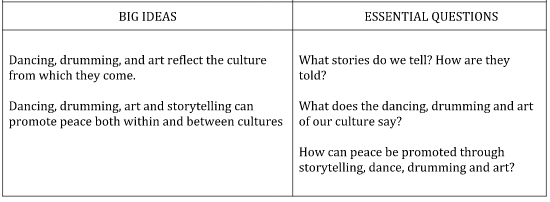
I think my favorite part of this once-in-a-lifetime experience is the way it was planned, and how it’s about so much more than just learning how to dance, how to play a drum or looking at beautiful paintings (although those are FABULOUS things in themselves, for sure!).  Like with most everything else we do, the focus was on bigger ideas, and on how this could change our kids in big ways for their future lives.

This residence asks our kiddos to chew on these big ideas and essential questions:

Screen Shot 2015-09-08 at 6.38.01 PM

And while I am certain that there will be more stories to tell, dances to dance, drums to bang and art to share at the end of their time here, for now I can share some pictures and videos from their first day here with us.  We had an assembly to welcome them, and to get the party started.  As you can see, the energy is contagious (and so are their smiles!)!

It was hard to decide which videos to share, but I’ll start with these:

We are excited for the weeks to come, and for all the things we will learn! 🙂

Math Place Value Challenge

I mentioned on the math warm-ups post that we had been working on place value, and that mathematicians had a challenge to figure out how many sticks were in a big ‘ole pile.  They were given a small group (their partner plus another partnership) and two questions: How many sticks do you have? How can you count them in a way that will be easy to show someone else what you’re doing?

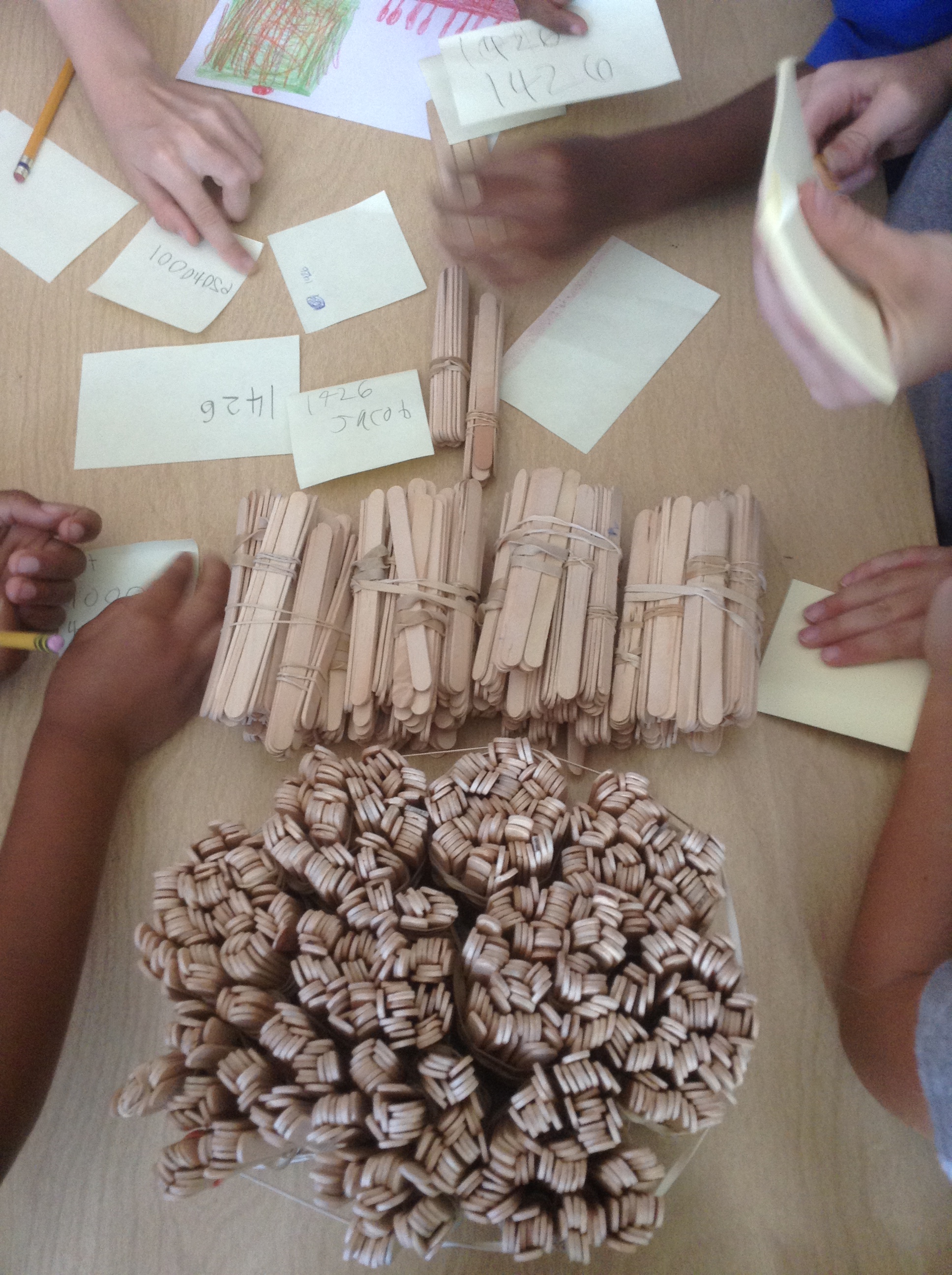
Each group was given a pile of popsicle sticks and they got busy!

As I went around to each group, I asked how they had decided what to do, and how they were determining how many sticks they had.  Most were bundling in 10s (yay!) and I nudged them to make an even easier way to see how much is in a big pile.  Could they continue to bundle and make a bigger group?

In the end, most groups ended up with bundles of 100, some 10s and–if their pile had any–some leftover 1s.  They put their collections back in the tubs, and marked how many they had with a post-it note.

Then we worked for a bit on how to model the numbers we had made.

IMG_5304The next step was to figure out how many we had altogether.  Many suggested that we could put our bundles together, but weren’t (at first) sure how to do that.  We talked about how they had made their 100s bundles–with 10 10s–and then guessed that we might be able to make some more 100s from the loose 10s in everyone’s tubs.

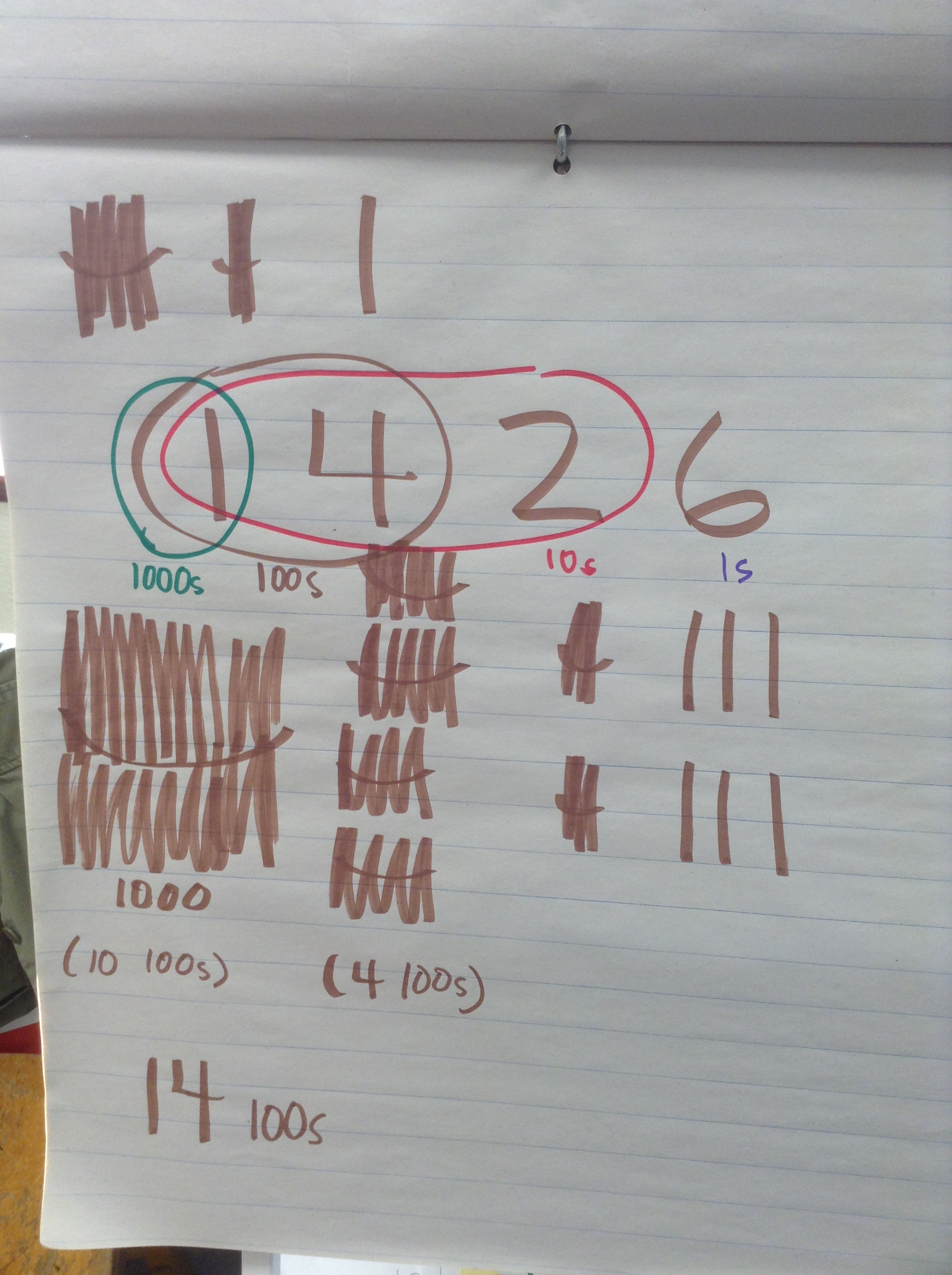
Left with a massive pile of 100s, that eventually led us to thinking there must be a better way to show how much that pile had in it.  I asked if they thought we could bundle any bigger numbers and honestly most of them thought I was crazy!  I just began collecting 100s in my arms and counting: 100, 200, 300, 400….and they got the idea.  They going until they got to…10 100s!  That was a great conversation next about what number we had just made.  10 100?  We figured out that it was a 1000, and that when we said “10 100” that helped us know about how many bundles were inside, but that it wasn’t the right way to say the number.  We stretched a big ‘ole rubber band and made a 1000 bundle!!  We counted the whole thing and agreed that we had one-thousand, four-hundred twenty-six sticks!

IMG_5288But how in the world do you WRITE the number one-thousand, four-hundred, twenty-six?  We gave it a go.  Many of us remembered that when we went from 2-digits to 3-digits it was a 100s number, and since we had 4 groups of sticks, maybe that meant our number had 4-digits…

IMG_5287 Our model of this number–1,426–looked like this:

IMG_5306Many minds were blown as we figured out how many 100s and 10s were inside that big number.  We figured out that it was actually than just what the digit said, because of all of the groups inside of groups.  I loved how many kiddos kept saying, “Wow, this is fun!” and “Man, we’re learning so much today!”  Definitely lots of great mathematical thinking happening here!

UPDATE:  I got this email after the first posting of this story.  Love this stuff!  Thanks for sharing, Shannon. 🙂

Hi Jennifer!  
You had so many math posts on the blog this weekend, that I wanted to share a story with you.  We have a Curious George story CD in the car that we listen to a LOT and in one of the stories George gets 10 dozen doughnuts.  The other day when this story was on, Millie asked me if 10 dozen was 120!  I was so surprised!  I said that it was and asked her how she knew that.  She told me “5 2’s are 10, and then another 5 2’s makes 20 and 10 10’s is 100 so, 120”.  It took me more than a minute to follow the math just because it wasn’t how I was used to thinking of problems, but she was totally right and I saw this “new” math stuff in action :).  It was kinda cool!  She was doing multiplication and didn’t even know it.  Thanks for teaching her such great foundational skills that allow her to do these kinds of problems in her head!

Second Grade Math Warm-Ups: 8-24 to 9-4 (2 weeks worth!)

We’re in the swing of some things in 2nd grade.  Math warm-ups are one of those things–just I’m not yet in the swing of writing about them!  Here are last few warm-ups we’ve been working on:

Monday

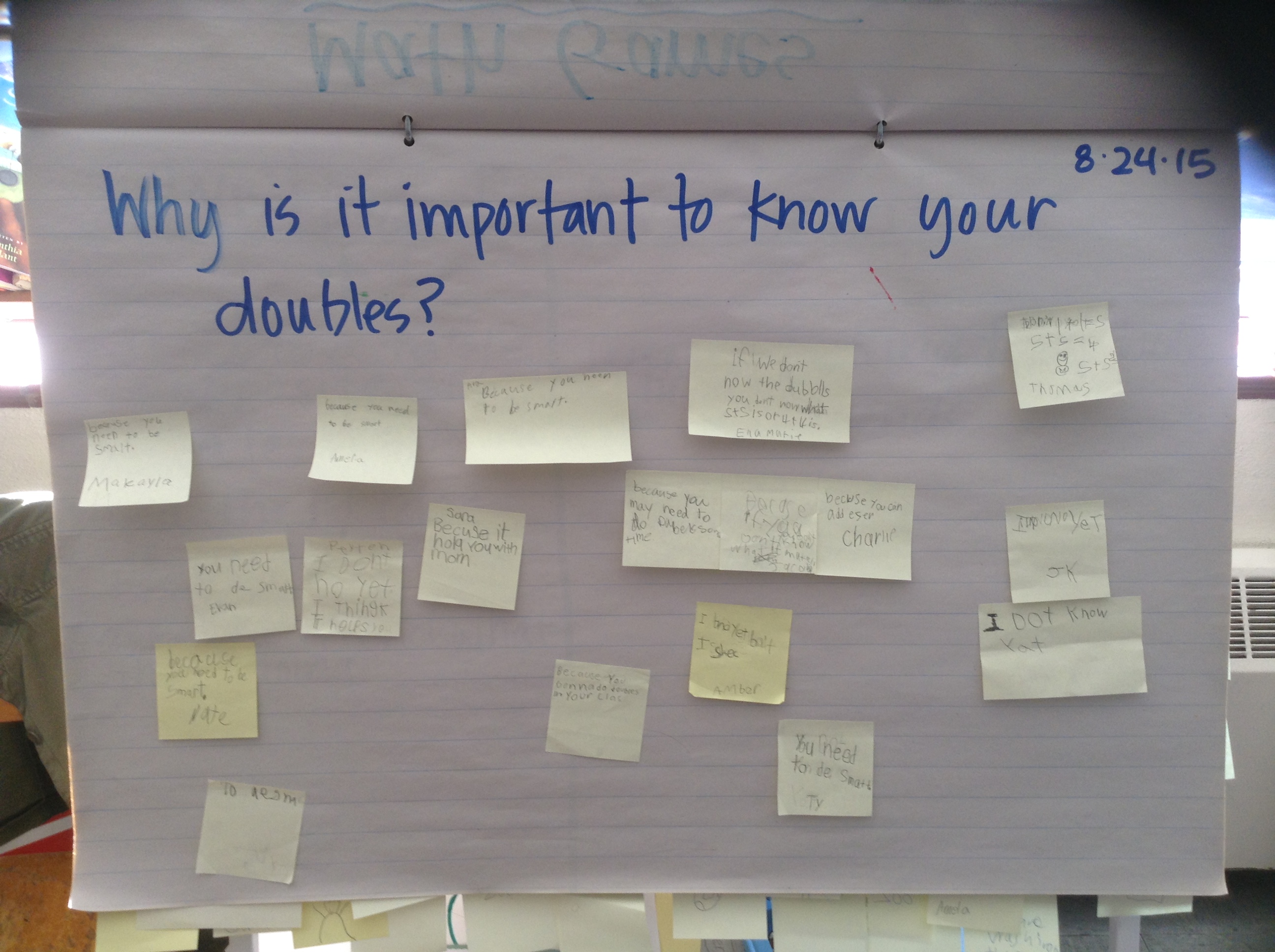
Even though we worked on this last year, many kiddos had a hard time with the answer to this question.  We’ve since been doing many things (games, two-pen tests, conversations) to help us remember (or learn!) our doubles, near doubles and combos of 10.  They all form the basis for the bigger things we’ll do with numbers later on.

IMG_5294Tuesday

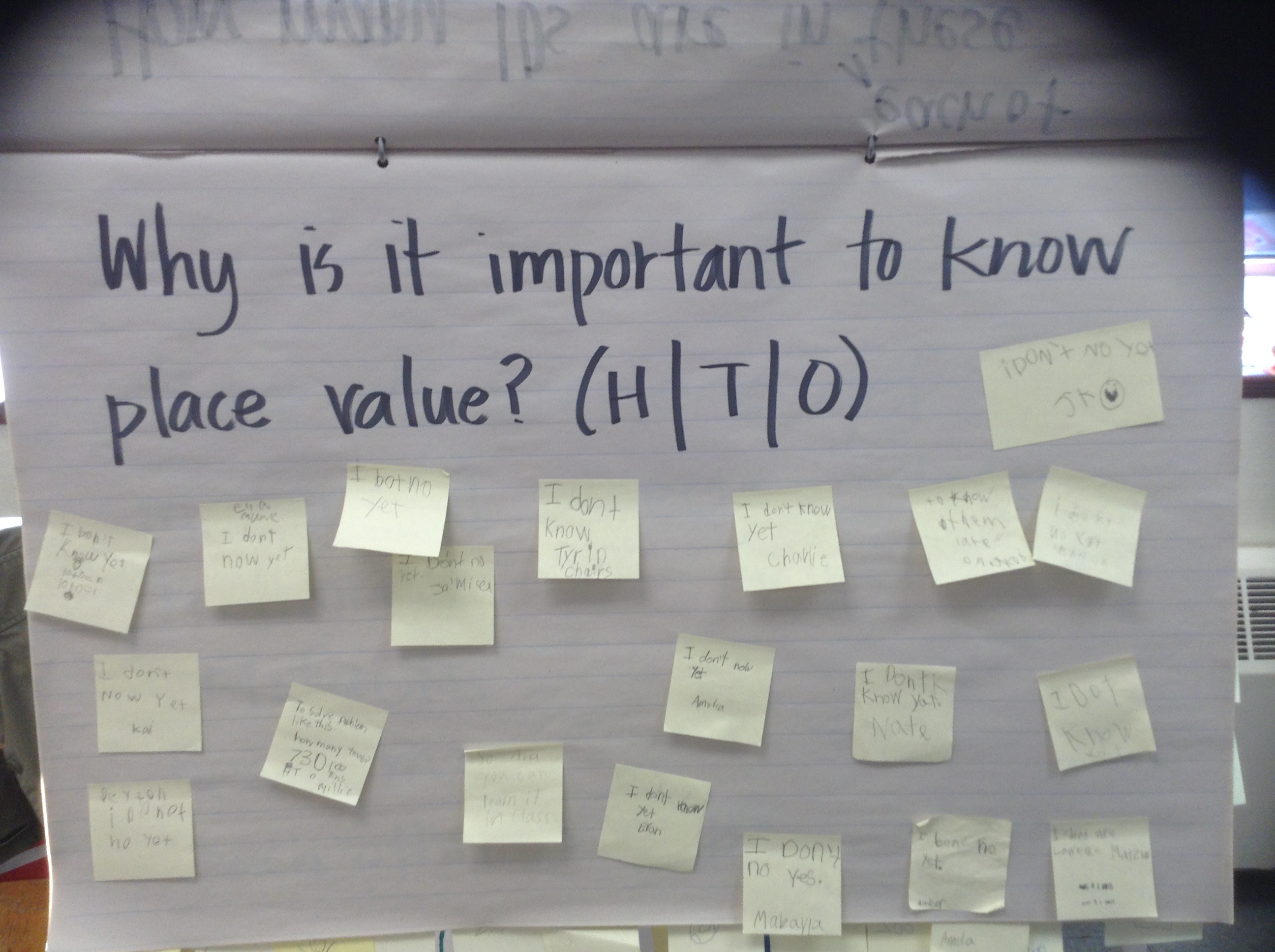
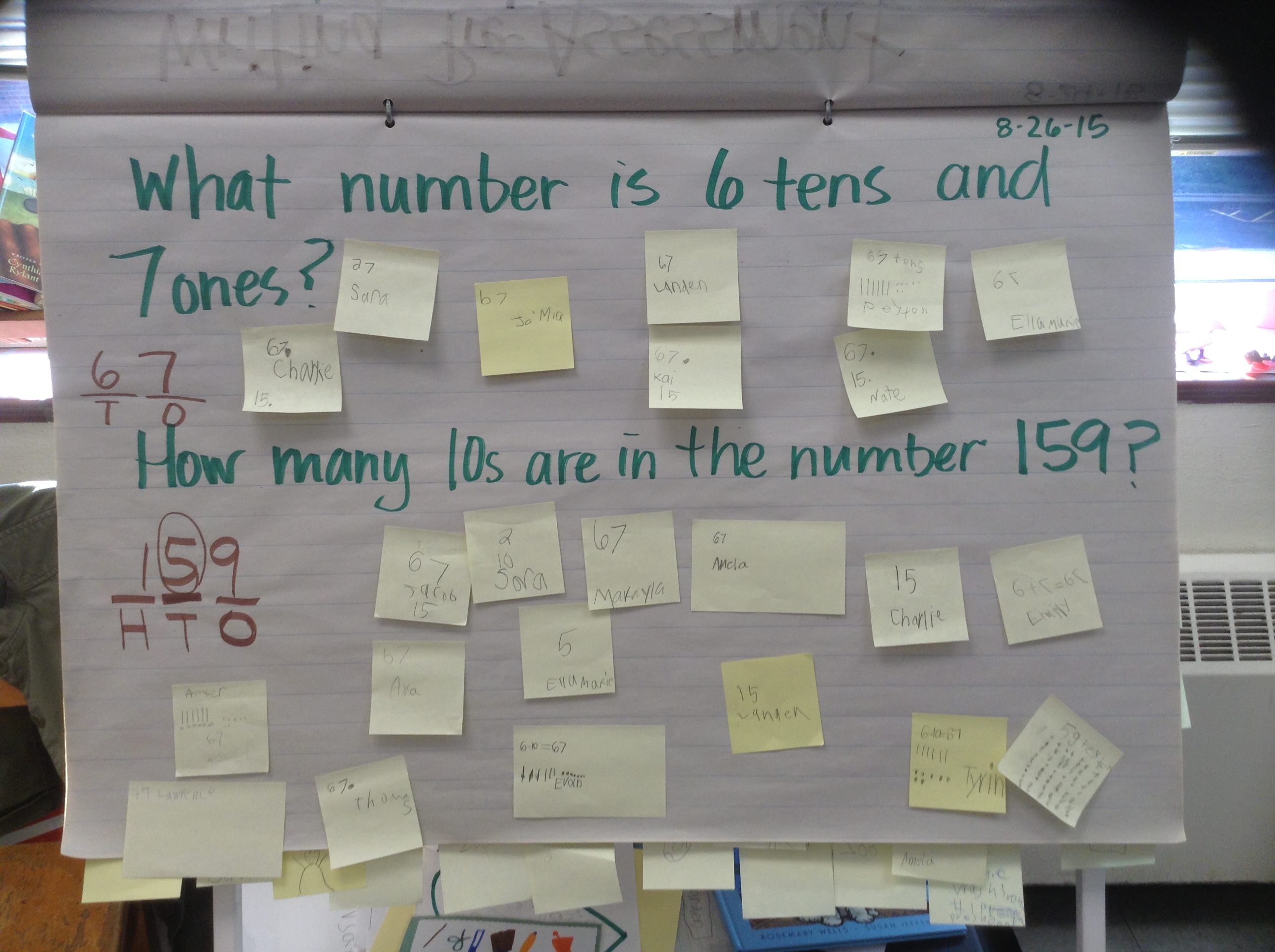
While I’m not entirely sure about the order of these next few warm-ups, the concept that is highlighted in them all is certain–the importance of place value.  Here was another that many had a hard time with.  Most of their answers were “I don’t know yet...”

IMG_5298

Wednesday

IMG_5295

Thursday

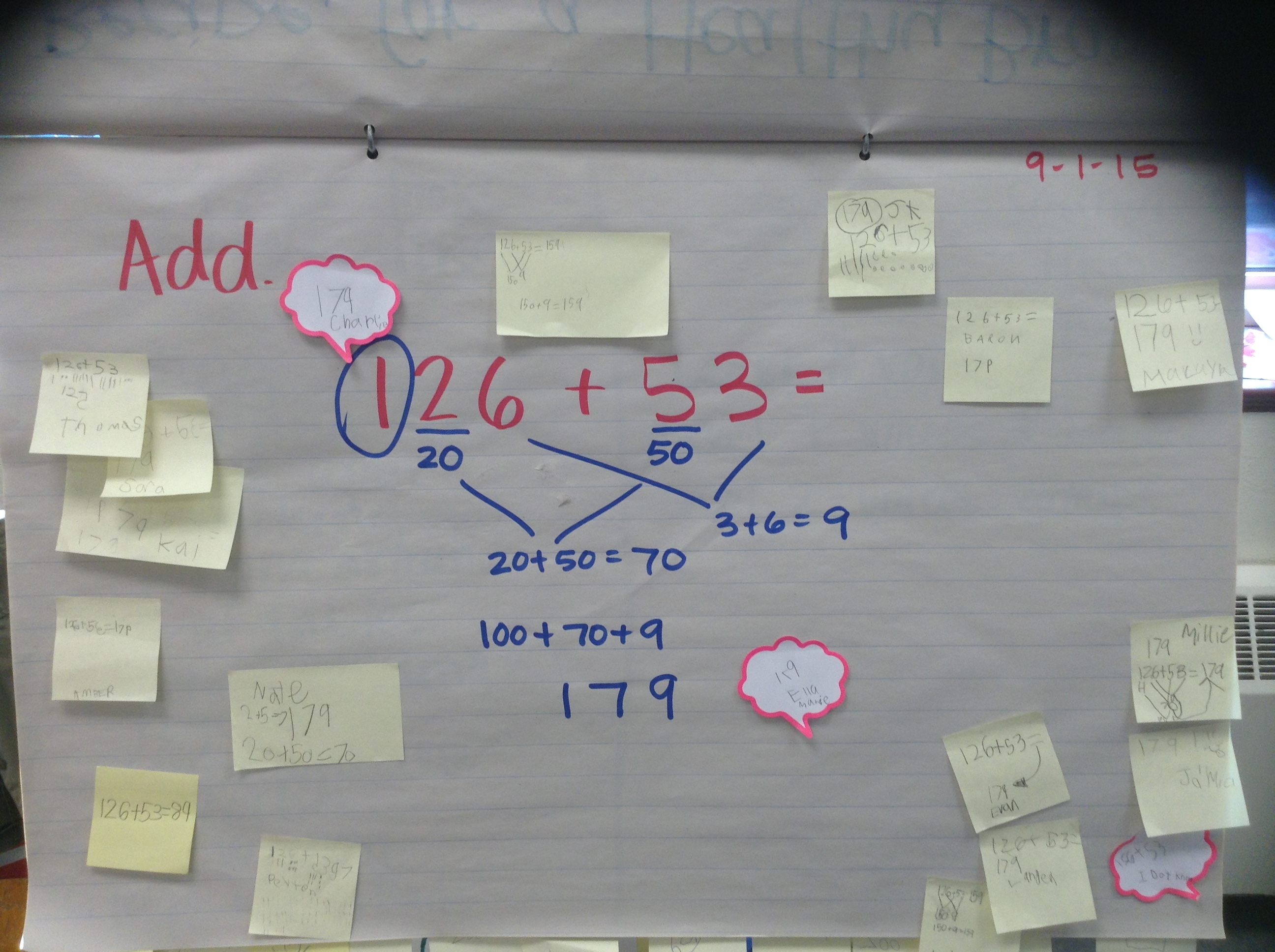
IMG_5297Tuesday, 9-1

This one was an easy connection to the essential question (EQ) I had asked earlier.  They had to think about place value to answer this one, knowing which numbers to add to each other.

IMG_5300Wednesday

Although not related to place value, this warm-up was related to a conversation we had had in math workshop the day before, and is definitely something all 2nd graders need to know how to do–tell time!  Often I will spiral older concepts into math warm-ups to keep them on the front of our minds!

IMG_5302

Thursday

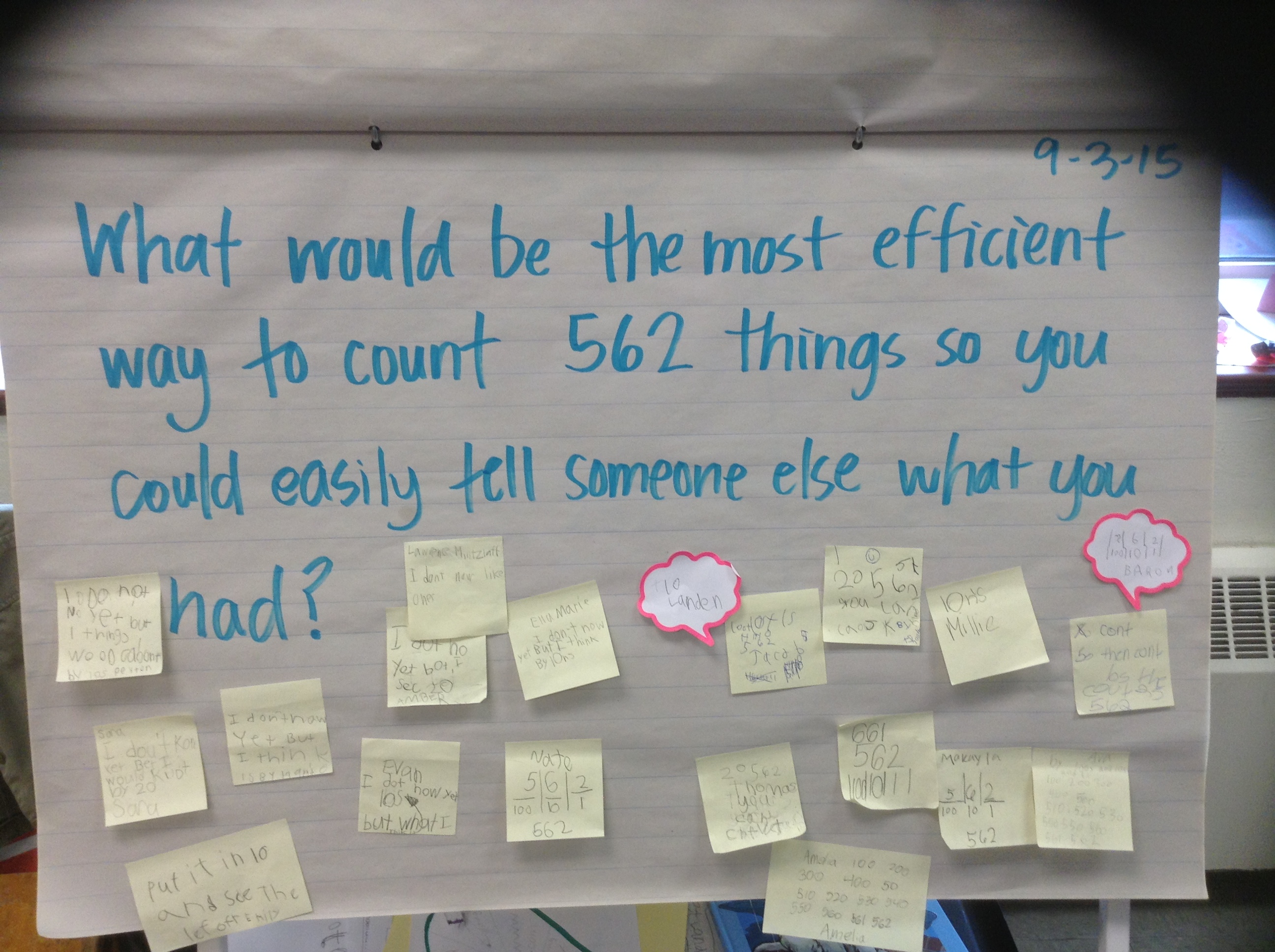
This warm-up, although badly worded, gave kiddos a little peek into a task I would have them do later that day in math workshop.  The question was really about the most efficient way to count a big ‘ole stack of something, which they’d have to do with a pile of popsicle sticks in a group that afternoon. I was happy to see how many of them were already thinking about bundling into 10s and 20s (rather than counting them all by 1s).

IMG_5303Friday

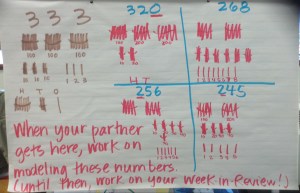
The warm-up on Friday was actually the end of the lesson from Thursday, and mathematicians completed their thinking with their learning partner in their math journal, which is different from how they MWU normally works.  I love how we can adapt this structure to work for our needs!  Since many of us have been doing this for a whole year now, it was easy to make that little tweak and still have them know what to do.  In this warm-up, kiddos were asked to model the counting we had done together the day before.

IMG_5304

…yet

Last fall, when I was doing my final project for grad school, I came across the idea of “the power of yet,” which goes nicely with all of the work of growth mindset we’ve been introduced to by Carol Dweck.  We began using that word all the time, and I helped my friends learn to add it to the end of many sentences they spoke to me and to each other: “I can’t do this yet...”; “I don’t know yet, but what I think right now is…”; “I’m not sure yet, but I’m going to keep trying!”  At first it was just me, but slowly and surely, I started to hear kids saying it to each other when they’d hear their friends discouraged about something that was challenging them.

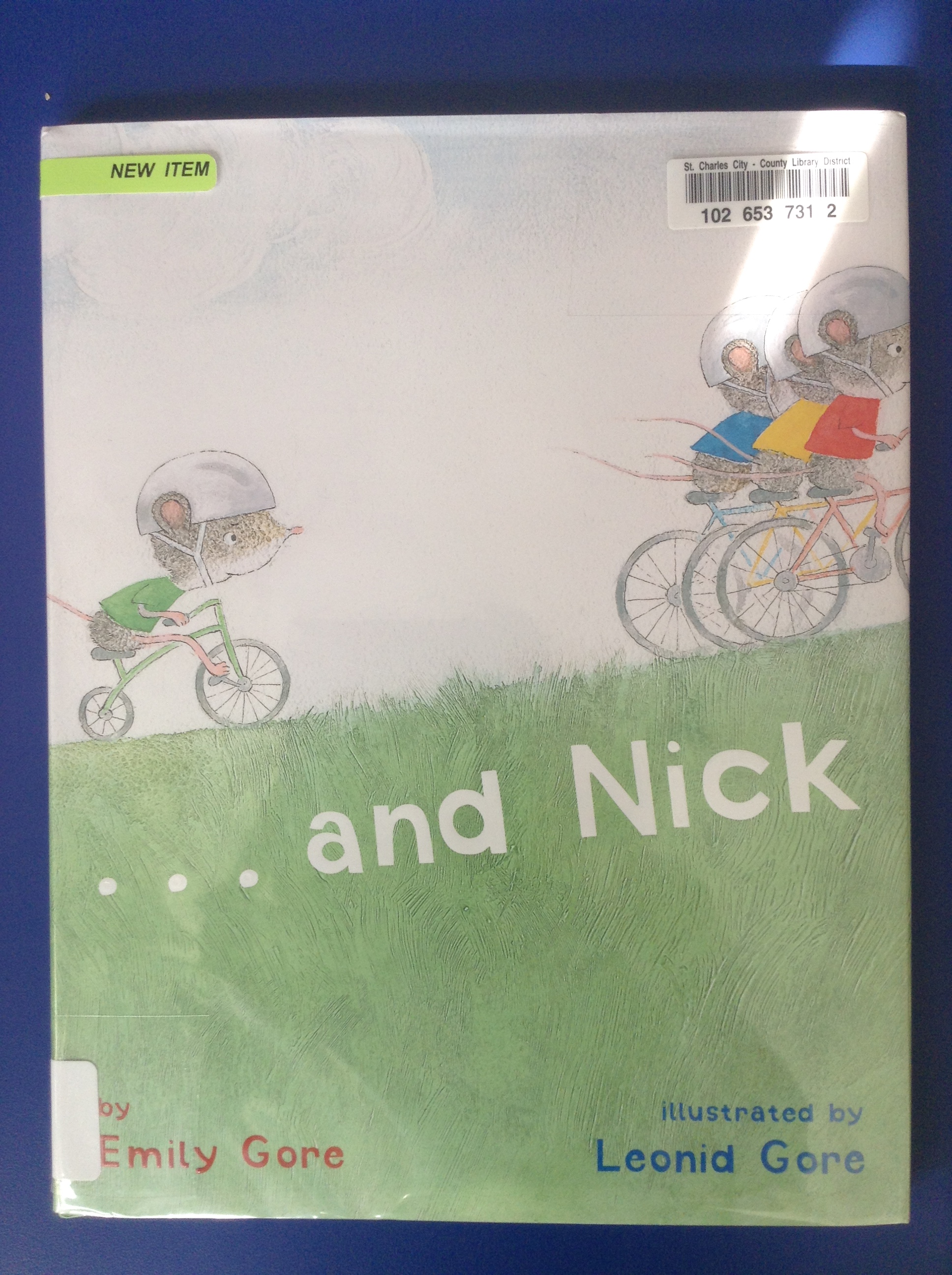
I knew it was something that I would incorporate again (and continue, really, since most of us remember it from our 1st grade together), but wasn’t quite sure how I’d bring it up again.  And then I found this book:

IMG_5072I was first intrigued by the use of the ellipsis, since I knew it was something I thought I kids would remember learning about last year.  Ok, and I have to stop and give a shoutout to JK right here for TOTALLY remembering what we talked about.  Before we started reading, we were discussing the title and cover and trying to figure out what we could learn about the story–as well as why the author would choose to use that particular punctuation mark like that.  Well, JK totally whipped out–all casual-like, “Well, that’s an ellipsis, and an ellipsis means that you’re waiting for something, and the mice are always waiting for Nick.  So …and Nick means there’s suspense and you’re trying to figure out what happens next.”  I was TOTALLY impressed, and TOTALLY proud.  And yes, other kids knew it, too.  YAY for first grade punctuation studies!!

Well, while the part about the ellipsis was exciting, it wasn’t all I had up my sleeve with this activity.

My team had copied these blank butterflies for me, with the idea of using tissue paper to decorate them and then make a goal for 2nd grade, and I found them to be a great place to apply this “yet” idea for us this year.  Instead of tissue paper, though, I decided to get out the watercolors.  (On a side note–can you believe we’ve never painted together before?  NEVER.  We got all the way through 1st grade paint-free.  And now we’re going to change that.  Big time.  So paint it was for our butterflies!).

Ok, back to the paint for a second: the thing I noticed when I put a paintbrush in some of my friends’ hands is that I saw work I’d NEVER seen before.  The creativity, the focus and the engagement was beautiful.  Don’t get me wrong–I’ve seen it in other ways, but this was eye-opening for me in many ways.
So after they painted their masterpieces, they were to think of something they don’t know how to do. Yet.  And then they wrote that as a sentence: “I don’t know how to __________yet.”  This was put on a label, and stuck to the front of their butterflies.  These are now flying high on our walls where we are 1) reminded of …yet by the title, 2) encouraged by how if we work hard we’ll be able to do those things, and 3) given something beautiful and colorful to look at.  Fly beautiful butterflies, fly!

And then today, I found a video, that I will incorporate to our yet conversation.  It’s a song and it’s catchy, so I’m sure we’ll be singing it for many days to come!

Weak side/Strong side

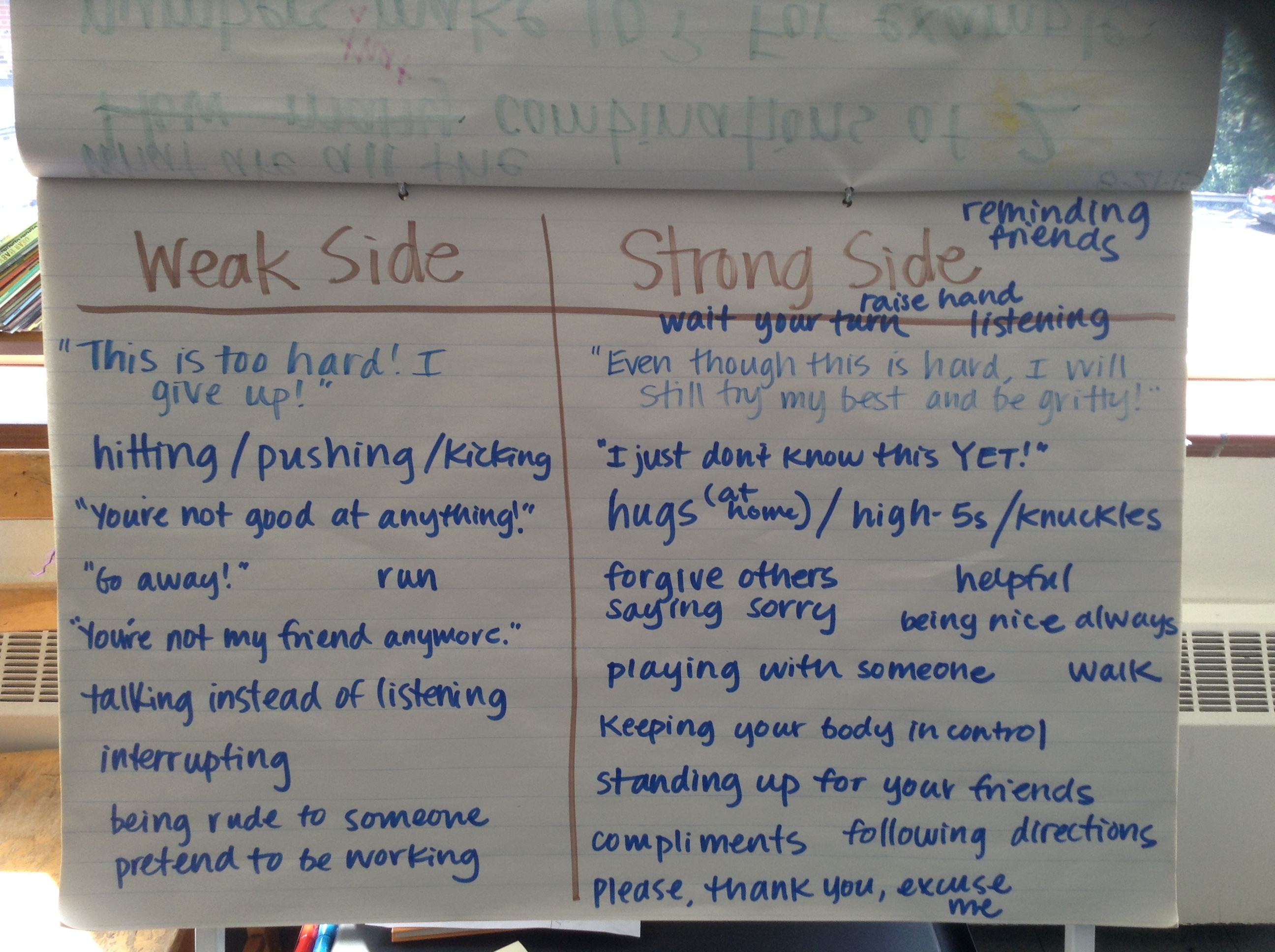
Much of the first days of school is spent learning routines and procedures for how to make the classroom run smoothly, and learning how to be a good learner is part of that.  In second grade, we use the idea of weak side/strong side to illustrate how kids can (and should) make good choices that benefit both themselves and their classmates.

As with many lessons, we began with a book.  We read Stand Tall, Molly Lou Melon.

IMG_5074I explained the idea of weak side/strong side by talking about how everyone has two voices in their head.  You know, that one that encourages you to do your best, think happy thoughts, follow the rules–the shoulder angel.  There’s also that other one that whispers and tells you how great of an idea it is to pinch your sister or blow bubbles in your milk or slide down the banister on the stairs–the shoulder devil.

In order to make the concept a little more concrete, and move visual, we created a class chart (which I will later make a little neater and hang on our anchor chart wall) with our ideas of things we could do or say that would fit under each side.  Students started with partner thinking–where many of them recorded thoughts using a t-chart–then we put our ideas together.  As of today, our chart looks like this (but it is ever-changing–I think we’ve added to it every day!):

IMG_5057It’s definitely sinking in, too, because I am hearing kids use the language of their chart when they speak to each other.  🙂  We’re by no means working perfectly all the time, but we’re on our way!