#FDOFG2017: Ten Black Dots

Remember when we read The Line and did drawing starts with Mrs. Berger?  It was a great experience for Rm. 111 kiddo and an opportunity to use our creativity and grit.  Well…we went back last Friday and did it again!  Not the drawing start part, but the creativity and grit part. 🙂

During our second visit to Mrs. Berger’s room, she shared Ten Black Dots by Donald Crews with us.  Many of us had heard it before, but maybe as a math book instead of an invitation to think in a new and different way.

We read and discussed the book and looked at the many ways Crews imagined what those ten dots could become.  And then, just as she had done with drawing starts, Mrs. Berger asked me to give it a try (and somehow even though she does this every year, I was totally surprised.  LOL).  So…I stared at the big white paper, trying to see something besides big black circles

IMG_0911-min

To be honest, I could have made the caterpillar I have done most every other time (boo–I know that’s not very creative!), but I figured I should try a little harder.  So I kept thinking and started moving those dots around on the blank page.

After the dots, I added some details and then stood back to see if they could figure out what my dots had become.

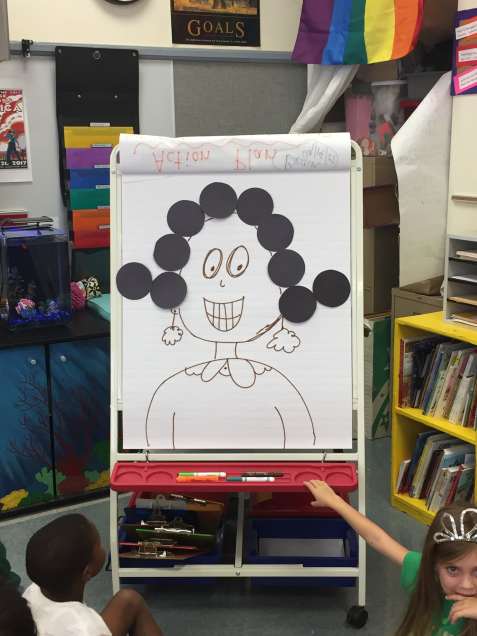
So…my ten black dots became:
IMG_0932-min

A fancy lady’s hair!

The funniest part to me is that most kiddos thought it was a self-portait!  Ha!

So after my beautiful example, kiddos were give a pile of dots (ours were red and yellow) from which they had to count out ten and then create something marvelous.   Kiddos went to their personal “offices” and got busy.  They were given about 20 minutes to work, and friends were challenged and then encouraged to work the whole time, adding more details if they thought they were finished before time was up.  The sound of quietly working kiddos and the creations that emerged as fabulous!

And so in the end, our ten black dots became…so many great things!  Check out our thinking:

This slideshow requires JavaScript.

Again, first grade grit and greatness shined through and we ROCKED this challenge!!  Can’t wait for the next one! Wonder what it will be! 🙂

#FDOFG2017: Drawing Starts

At Robinson we are blessed with loads of gifted and talented teachers, including one who works with all kinds of gifted and talented Robinson kids, Mrs. Berger.  During the beginning weeks of first grade, every first grader goes through a series of lessons (I think there are 5) that helps us identify and highlight creativity and critical thinking of each individual kiddo.  The lessons are a variety of things that help students think and share in different ways.

The first time we visited Mrs. Berger she shared a great book with us called The Line.

FullSizeRender 8

In the story, you watch as the little girl follows a line, which becomes all kinds of things, like a monster, a bear, a wave.  It reminded me of the kind of thinking that we did during our box challenge, where an ordinary item became countless other things just based on kiddos’ imaginations.

In our first invitation, kiddos were given a set of lines–drawing starts–where they had to take the squiggle or shape and create something completely new.

Before kiddos get started, however, Mrs. Berger always invites ME to do this activity.  I have to be honest that even after years of being asked to do that, it doesn’t really get easier!  I am always a little anxious, especially when I feel pressure to do it “right,” –with an audience! Each time, though, I step back and remember how much modeling the difficulty and working through it helps the learners who are watching.  They know that if I can do it, then can, too.  In many ways, because I was willing to do the same thing they were being asked to do, they were able to trust me when I told them they could do it.  They knew that I understood what it felt like to look at that squiggle or swish and not have an idea right away.  🙂 Together we use our grit and persistence to get through, and Rm. 111 learners did a great job!  Check out some of their creations!

This slideshow requires JavaScript.

My favorite thing about when kiddos do drawing starts is how many of them are certain that they CAN’T do it, but then, when pushed a little (because NOT doing it is not an option) they settle in and come up with some amazing ideas.  Each child’s thinking is different, and each idea is “right.”  It’s a foundation for much of what we do later on in the year, as we focus on sticking it out, pushing through, using our positive self talk and believing in our abilities.  Way to go, Rm. 111 kiddos!  Oh, and I know you’re dying to see my drawing start, too.

(Hopefully you see a girl jump roping in that picture! LOL)

Can’t wait for our next visit!  There’s sure to be another interesting invitation to be creative and gritty!

LEGO Lessons: Leading and Following

I have been a LEGO lover for a long time…yeah, probably my whole life in some form or another.  Those forms have been many: as a kid building houses with my brother; admiring whole LEGO towns that a friend had built in his basement; watching my kids start to play and build with them (in a much more sophisticated and creative way than me, I might add.  I could only build houses.  Because those are rectangles and that’s what you dod with LEGOS is build rectangles, right?  I kid, but that’s how my brain used to work); learning how to best organize them based on how a 6 year old plays with them (it’s not by color, by the way, as many Pinterest boards will suggest); and then as a teacher learning to incorporate building, creativity and play into my classroom.  I have had opportunities over the years to try new things and learn from other LEGO-loving educators and so have been learning how to better use LEGOS as a learning tool (in addition to them just being a super fun toy during choice time and inside recess!).

So far we have used them “officially” to build our names (pics later!) as well as on Friday in a LEGO lesson on leading and following that was SUPER!  Let me tell you all about it…:)

We started our day with an easel question that looked like this:


In case you missed it on those post-its, kiddo shared FABULOUS ideas about leaders:

  • the help people
  • they are teachers
  • they have followers
  • they are the person in charge
  • they are the boss

We talked about what it was like to be the leader, and times in their lives when they have the opportunity to be the leader, or to be in charge.  Some were at home and some were at school.  They also shared times when they had to be the follower, and how sometimes you don’t have a choice about what your leader asks (or tells!) you to do, and that sometimes you might not like it.  We also talked about how sometimes there are situations where you have to be BOTH a leader and a follower: a specific place this happens at school is when you are in line.

After we talked about this idea and had a pretty good idea about what it all meant, we went outside to practice.  We played follow the leader and wound ourselves all around our Robinson playground.  It was fun, but was also a little tricky, because often someone would not be paying attention and their follower would then not know were to go, or would go a different way than the rest of the line!

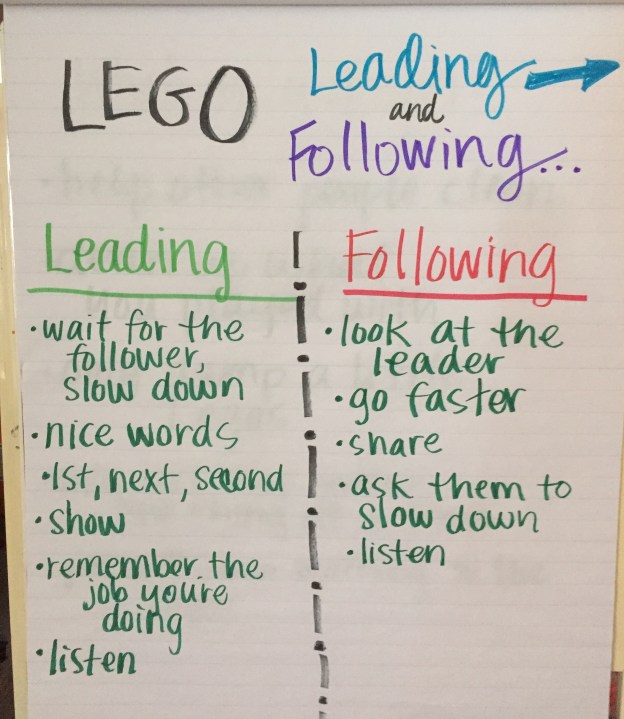
Once we got back inside we pulled out LEGO learning tools and tried another activity I learned from a SUPER smart colleague of mine, Mrs. Marks.  Kiddos worked with their carpet partners (a friend with whom they sit on the rug for our learning times, use when we do turn-and-talk, and someone they pair up with for a variety of learning situations) to build a LEGO structure.  One person was the leader, and had to lead their partner (the follower) to build the same structure that they built.  Man–this is harder than it seems and requires both partners to pull from a specific skill set.  It’s also a little tricky because they can only use the pile of LEGOS they are given, and so much be careful with their block choices, ensuring that there are TWO of everything so their partner can copy their work.  After a certain amount of time, partners switched and got to try the other role.

For the most part, things went swimmingly and pairs figured out how to work successfully in the role they were given.  Learners knew they had succeeded if at the end they had two identical structures.  Their smiles are proof of their pride. 🙂

As is routine in our class, we had a debrief when we were finished (because the process of an activity is as important–if not more-than the product!).  Kiddos shared what they had to do to be successful in each role, and compared how these were often different depending on which one they were in.

FullSizeRender 13

As with many most of the lessons we do early on in first grade, we will come back to this experience time and time again.  There are so many nuggets of wisdom in that chart that will help us be successful in the future, the first grade future and beyond!

#FDOFG2017–David’s Drawings

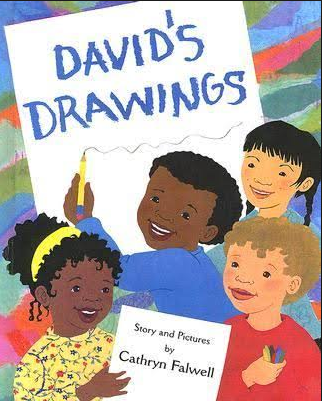
A few years ago, my friend and colleague, Mrs. Appelbaum showed me an idea for incorporating collaboration and creativity into a beginning-of-the-year activity.  We tried it that year, and the results were fabulous.   I don’t think I tried it last year (or at least if I did, I didn’t write about it!?), but I knew I needed to pull it out and try it again with this group.  We’ve been focusing on community building these last few weeks, and creativity is a big deal both in my classroom and in our school.  I love this book–the story is great and the conversations you can have around how kind and considerately the classmates treat each other are helpful during the foundation-building days early in the year.

We began by reading and talking about the book itself, and I told about how much I love that the author, Cathryn Falwell commented on our work the last time we did it.  We’ve been talking alot about authors and how we can talk to them “in real life” lately and they were super excited that a book’s author might see their hard work! (No pressure, Ms. Falwell! hee hee).

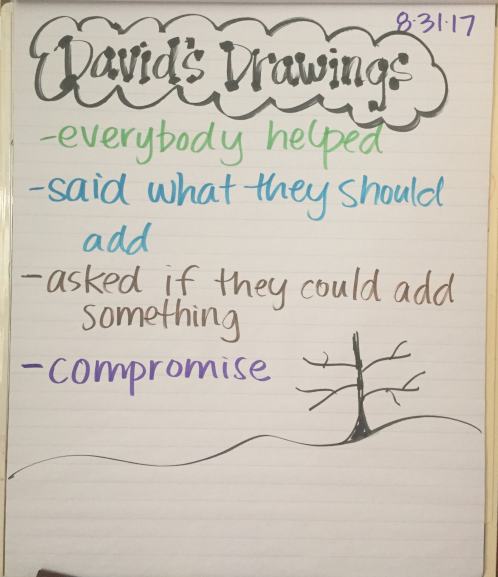
Screenshot 2017-09-08 09.06.02

After we read, we reviewed the way David developed his drawing in the story: he started with an idea, but then his friends were able to add in details that they thought were important, resulting in a masterpiece that involved numerous perspectives and ideas.  Aside from just a beautiful picture, however, the kids in the story also display such care and respect as they are sure to ask their friend if they can help BEFORE they start to work.  David is kind to oblige and the collaboration begins.  What results is something even better than what was originally imagined; the end would not have been a possibility without everyone’s input.

Once I was sure we understood both the story itself and the concept of what I wanted them to do, we broke up into small groups (which we call “crews” in our room) and artists got to work.

The drawings we ended up with were super creative, colorful and full of everyone’s ideas!  We did a great job and were excited to hang them up on another spot of blank wall (we have LOTS of it!!)!

Perhaps the best part was the debrief on our work when we were finished.  They had such great ideas to the question of what they did as they worked that made our creations so successful.  These kiddos have such great ideas–before, during and even after their work!!

FullSizeRender 3-min

The hope (and encouragement) is that these behaviors will be repeated over and over in different settings to help make success and cooperation continue for many days to come!


#FDOFG2017–Nature Hunt!

During our first days together, we do many things that allow us to work together, get to know each other, learn and practice routines and procedures, and also just have fun.  One thing we did that was a big hit was a nature scavenger hunt!  We are lucky to have an amazing naturescape in our backyard (which was recently made over to allow us even more natural places to play and learn!), and so it was the perfect place to go!

Kiddos were put in small groups of 4, and then we gave them a job to do and a bag in which to collect their finds.

Screenshot 2017-09-07 21.04.48

We were blessed to have 4 adults with us during this time, and so we had lots of eyes on each group as we explored.  It was pretty much up to each team where they went and they could fulfill the categories of the hunt in whatever way they chose.  It was fun to see how many different leaves they found, how many “circles” there were in the woods and also what teams considered “treasures!”

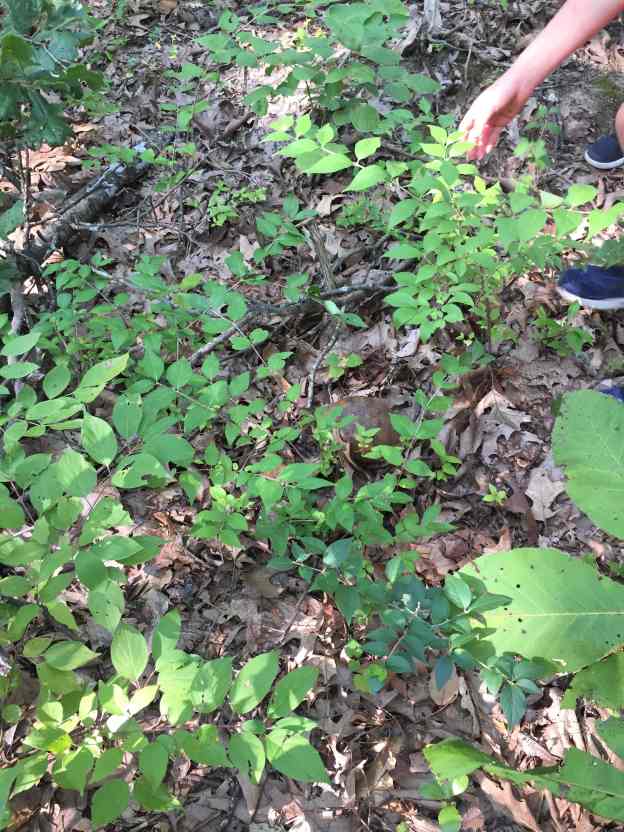
Perhaps the  best part of the hunt, though, was when we found something we weren’t even looking for:

IMG_0675-minCan you see it?  There’s a friend in there….

Here, look again.  With some help from some first grade fingers:

Yes!  We found a turtle!  He was walking right there across the path, and thanks to the eagle eyes of Jeremiah we got to see him!  It was really hard not to touch and prod and want to pick him up (we didn’t–we left him in his home there), but we did the right thing and just watched as he walked and enjoyed the surprise visit! 🙂

What a fantastic morning outside!

#FDOFG2017–Math in First Grade: Take 2

We started in first grade math with an investigation into how mathematicians use tools and what kind of thinking they do.  Next, we worked through a guided discovery of two more tools: unifix cubes and multilink cubes.  On the surface these look very similar (basically they are just plastic squares in all different colors), but if you dig a little deeper you can find many different ways to use them.  And that was the job first graders were given, by asking the questions “What can you do with these math tools?  What can they help you better understand?”

Kiddos were given some time to explore with each kind of cube, in two small groups. Most kiddos made long sticks or tall towers, comparing how tall they were in relation to other towers or to kiddos.  The ones playing with the multilink cubes, which have circles on all sides of the cubes and can therefore connect in a variety of ways.

After each kiddo had a chance to spend time with each manipulative, we debriefed on what we had discovered.  We figured out that the cubes could be used for many of the same purposes: measuring, counting and making patterns.  BUT–the multi-link cubes could also be used to build 3D things or models.

Screenshot 2017-09-05 20.35.49

For now, these are just for fun, but very soon mathematicians will be using these tools for very important work!  Stay tuned to see more about it! 🙂

#FDOFG2017–Math in First Grade

We are readers in Rm. 111, but we are also mathematicians!  Early in the year, we got started talking about math, as well as working and thinking like mathematicians.

One of our first experiences was a guided discovery of some math manipulatives.  Ms. Turken and I decided to start with Power Polygons and pattern blocks, because most kiddos have some experience with these tools from kindergarten.  It seems, too, that introducing math in a fun, non-threatening way (like playing and exploring) is accessible to everyone–even those who already have an “I hate math” mentality (and yes, there are some of those friends, even this early. 😦 ).

We did have a quick little conversation about what it meant to “think like a mathematician”, since that was what I was asking them to do.  We charted our ideas, and then left the poster up while we worked.  (**Sidenote–nothing on our chart had anything to do with the manipulatives we worked with, but it was great to begin to see/hear their mathematical thinking already…)

fullsizeoutput_1e80

After we found them in our classroom, I gave kiddos a choice of which ones they wanted to start with, and then set them loose.  The only “rule” was that they had to think like a mathematician and figure out how we might use that tool.  Additionally, we reviewed the “right” way to work with a math tool and kiddos were to pay attention to how well it went (because we would debrief at the end).

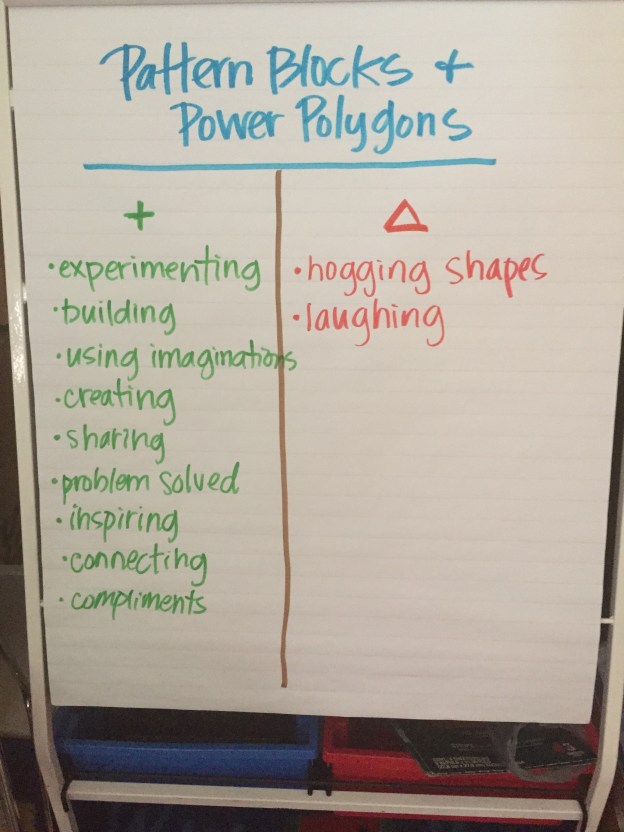
After we finished the guided discovery, we met together to talk about how it went.  We worked through a chart to record “plusses” and “deltas”, discussing what went well and what we needed to change.

IMG_0173

For the most part, they did really well, and it was exciting to watch them work.  Stay tuned for more stories of how we’re getting started with math in first grade! 🙂

#FDOFG2017–Readers Gonna Read (Part 1)

Oh goodness.  Reading.  It’s one of the most important (and one of my favorite!) things that happens in first grade. Ok, well, in any grade, but the beginning of the life long journey often starts in first grade, and I want to make sure it starts out in a positive way. 🙂

We do that in a number of ways, and one of those is by starting the #classroombookaday challenge.  Listening to, talking about and enjoying LOADS OF BOOKS is such an important piece of the literacy puzzle.  Reading (and lots of choice inside that reading) is another one.  And so we begin to read, read, read early in the year, and provide many positive experiences around books.

Almost on the first day of school, we have a conversation about how our classroom library is organized, and what they notice about how it looks, as well as how we will use it.  We talk about the kinds of things we like to read, and begin to fill our book boxes early on.  I always enjoy putting the library together when I’m setting up the room…

…but there’s nothing better than when there are actually READERS in it!

Besides being able to read during choice time and actual reader’s workshop, we’ve also begun our year with some necessary “quiet time” after lunch and recess.  During this time, kiddos can make a choice to read/write/draw or rest quietly.  Really it’s a chance for kids to be alone (which is hard but also necessary for many–me included!), as well as wind down a little after a busy morning.  It’s a time of day that many kiddos have a chance to finish up work or a project (usually of their choice) that they started earlier in the day.  Eventually this time will fade away, as we get more into our “real” schedule, but for now it’s a nice brain break before we get into hard thinking again with math.

One more exciting place first grade readers got to visit was the ROBINSON LIBRARY!!  We have library in our specials rotation now, so it took until we got to an “E” day before it was our turn.  Kiddos only go for 25 minutes and normally wouldn’t have been able to check out until the 2nd visit, but GOODNESS that would not have been fair so we stayed a little later so we get our hands on some new books!!  Kiddos got to meet our new Library Media Specialist, Mrs. Davis, and also hear a good story.  Before we went, I also read a library themed book. 🙂

It was SUPER fun to watch the kiddos work their way through the library and see what treasures they would find.  Finding out what kids like to read is just one more way of building community and getting to know them as readers and as little people. 🙂

Looking forward to TONS more fun and learning happening in the library this year!

#FDOFG2017–Box Challenge

We read a book lately that perfectly went along with our focus on play, grit and creativity (wow, that’s quite a first grade trifecta!):

FullSizeRender 22

It’s favorite that I found last year (and was so good that I started the whole year with it!), and as Ms. Turken and I planned our first days, we knew it HAD to make an appearance again this year.

The preparation for this project started weeks before we started, with the collection of boxes.  Lots and lots of boxes of all shapes and sizes.

As we read the book together, we noticed what was happening in the child’s imagination and were thinking about how we’d answer the question: “What would you do with a box?” Which by the way, is NOT the title of the box, but is somehow the way I read it EVERY SINGLE time I look at the front of it.  Weird.  Maybe I just want it to be an invitation instead of a direction. 🙂

So after we read, kiddos made plans for which box they’re use and how they’d use it.  This was not a typical design challenge in the fact that they could use whatever they wanted as far as materials, and the only real constraint was time.  And wow–there was creativity all over the room!  Check it out!

This slideshow requires JavaScript.

Now, as with many of the things we do in the beginning of the year are dual-purposed.  We are learning how first grade works at the same time as we’re using our creativity and having fun.  What usually happens is that we have a debrief about how each activity went, and we chart plusses (what went well) and deltas (things we should change for next time).  This helps us become (and hopefully stay!) aware of how to manage our behavior.  We had done this a couple of times, but with this project, Ms. Turken and I decided to tweak the wording just a bit.

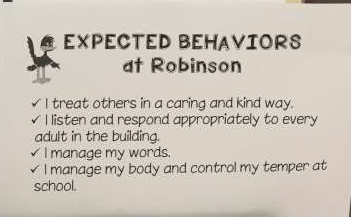
We’ve been talking alot at Robinson this year about expected (and therefore unexpected behaviors), as a means of helping students to better understand how to “be a Roadrunner and show it all the time” as our mindset suggests they should do.

Screenshot 2017-09-01 23.31.33

We added in specific behaviors to focus on and so these are what we analyzed during our debrief.  We were noticing that some of our friends are using the words “good” and “bad” when speaking of their choices and we wanted to help connect all of our behavior expectations together.  You’ll notice on this chart that there was some AMAZING stuff happening during this project and kids were ROCKING those expected behaviors!

FullSizeRender-min

I’ve been really impressed since this discussion as I’ve both seen many more expected behaviors, as well as hearing kiddos using the language with their peers and as we talk about our day and how we can be our best learning selves.  Whew!  Who knew there was so much to learn with a BOX?!

#FDOFG2017–Choice Time!

There are many things that are important in first grade: reading, writing, listening, speaking, using grit, working hard, being a good friend….but perhaps the MOST important thing (at least in my opinion) is PLAY.  Play is a child’s work, and is how they learn.  And when things are fun, you want to keep doing them!  When you keep doing them, you usually get better at them and then you want to do them more and more.  This works so well when you want kids to be curious and hardworking.  I also think play is an important part of learning since it is through play (and problems) that kiddos begin to work things out for themselves and can take ownership for their learning.

So…there is lots of play in Rm. 111, both structured (in our “regular” subject choices and projects) and also lots of time for unstructured play during choice time.  As I put the room together this year, I was afforded lots of space for play things as well as lots of places to play.  I was able to find a kitchen, bugs, puppets and Little People figures to add to the mix, and I of course brought along my big blocks, games and Legos from Rm. 202.  We start our day with choice time, and kiddos are able to play in our room, or with a friend in our team room next door.  It’s so fun to watch what happens during this time, as well as to see who plays together and how they interact.  There is much learning going on during time time–both by the kids and the teachers!

The first days of first grade are FUN, but believe me, there is MUCH more to come and I hope you’ll hang around to read more bout how we learn through play as we go on down the road this year. 🙂