New Caddies for a New Year!

We had a work day at the end of Winter Break, and I went into school for a few hours to prepare for my kiddos coming on the next Monday.  I could have (or maybe I should have) stayed the whole day cleaning out and organizing, but I only had one thing on my list that HAD to be done: cleaning out supply caddies!  There is just something about having fresh new pencils, brand new pens, and the rest of the supplies in the right place that makes everything better.  You know what they say: A clutter room makes for a cluttered mind.  Cluttered table caddies do the same thing!  Here’s to a new, organized year!

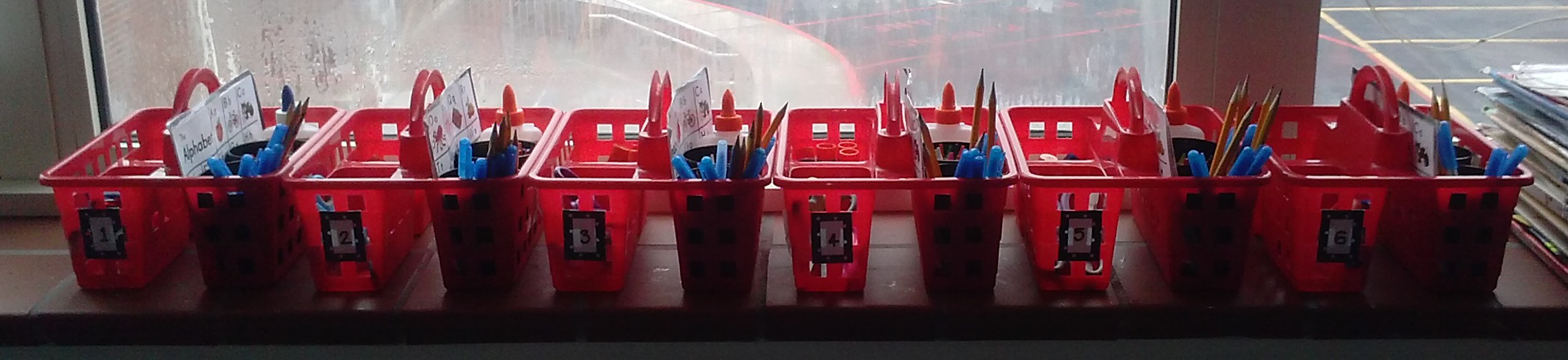
Beautiful, isn't it?  I took this picture so that kiddos would remember what goes where.  Now I just have to remember to print some to go IN the caddies so they can be used....:)

Beautiful, isn’t it? I took this picture so that kiddos would remember what goes where. Now I just have to remember to print some to go IN the caddies so they can be used….:)

CAM01260

I’m not sure which is better–clean caddies on the tables or clean caddies all in a row on the windowsill waiting for first graders to start the new year!

HAPPY NEW YEAR FROM RM. 202!

I Know an Old Lady, Do You?

During 2nd quarter, one of our big ideas during Reader’s Workshop was comparing various versions of the same text.  An easy one–as well as a favorite–was I Know an Old Lady Who Swallowed a Fly.  We found 3 versions initially and read them (and then found a couple more!), creating a chart to represent all the parts of the story.

1416417952741

I Know an Old Lady retold by G. Brian Karas: Somehow I managed to only have a picture of our “lady” without her labels! We spent much time labeling all of those things in her belly!

There Was an Old Lady Who Swallowed Some Leaves by Lucile Colandro: This one shows our super work at labels using interactive writing.  Plus, this old lady is super stylish with a belt, some glasses and a bow in her hair. :)

There Was an Old Lady Who Swallowed Some Leaves by Lucille Colandro: This one shows our super work at labels using interactive writing. Plus, this old lady is super stylish with a belt, some glasses and a bow in her hair. 🙂

I Know an Old Lady Who Swallowed Some Pie by Alison Jackson: This may be my favorite lady yet! Check out that 10-layer cake in her stomach!

I Know an Old Lady Who Swallowed Some Pie by Alison Jackson: This may be my favorite lady yet! Check out that 10-layer cake in her stomach!

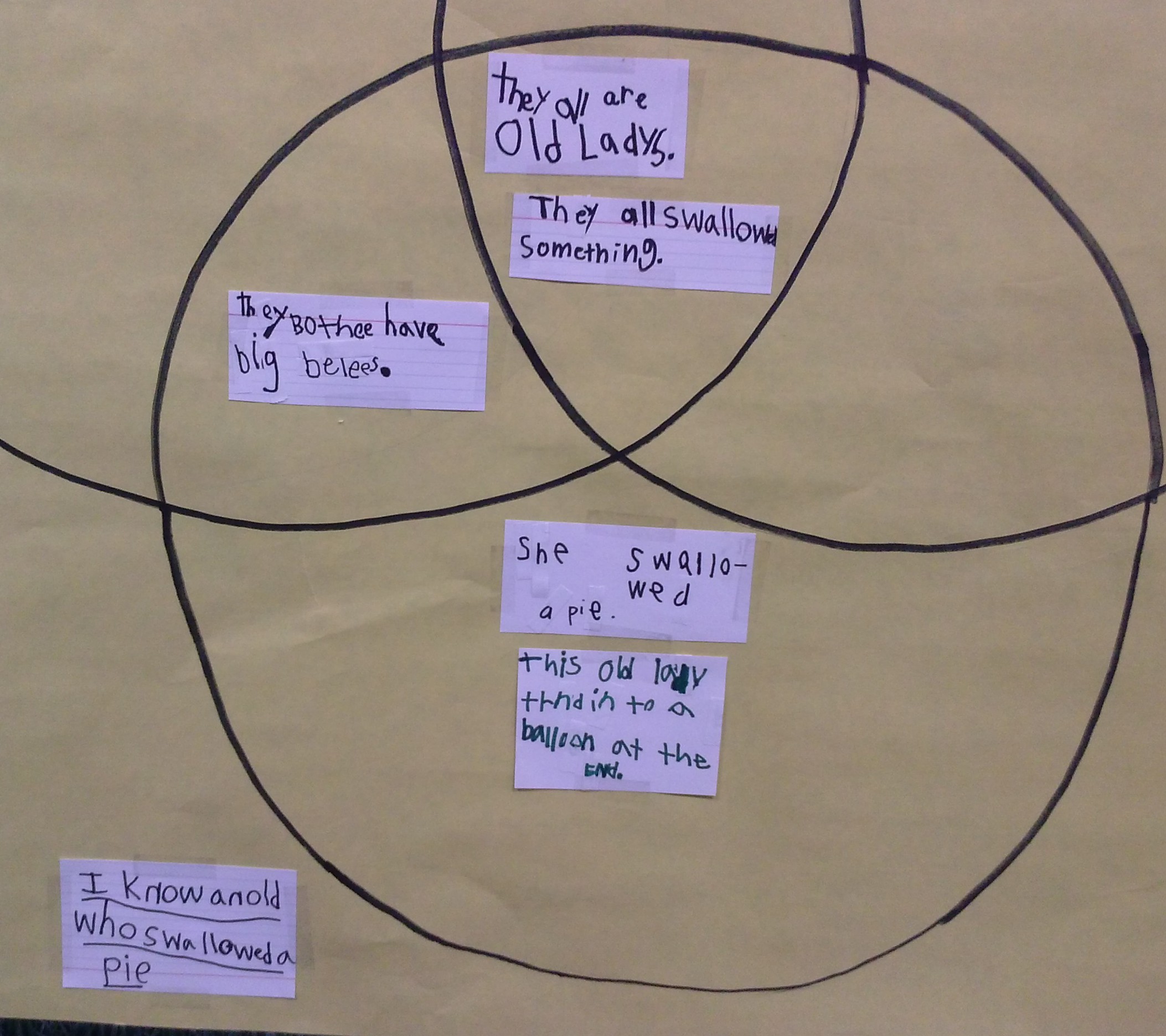
After we had read our stories, we dug in to start comparing and contrasting the stories.  We talked about how to do this in an organized way, and so kiddos were introduced to the Venn Diagram.  Well, reintroduced to the idea, but the name and the was new.  We had a 1st draft that ended up too messy to use, but it worked for us to understand how the diagram worked.

CAM01131

Once we knew how to put the pieces together, kiddos worked in pairs to write the parts that were the same and different.  Again, what we had learned during many interactive writing lessons lately paid off!

CAM01171

Another great example of interactive writing as well as great ideas for how the stories were the same and different! Super smart first grade thinking!

CAM01172

Close up of I Know an Old Lady

CAM01173

Close up of There Was an Old Lady Who Swallowed Some Leaves

CAM01174

Close up of I Know an Old Lady Who Swallowed Some Pie and the “same” sections of the diagram

Of which stories have you read different versions?  Share some suggestions with us! 🙂

Marshmallows or Whipped Cream?

CAM01198

This post is just one picture and a quick link.  As 2nd quarter ended and Winter Break neared, we were enjoying the chapter book Who’s Stealing the 12 Days of Christmas? by Martha Freeman (like I have in previous years with 4th-5th graders).  There’s a part of the book where we just HAVE to enjoy some hot cocoa along with the characters, so we did on the Wednesday of our last week.  I just LOVE this picture of Briannia with her hot chocolate!  And for the record, she chose BOTH marshmallows and whipped cream!  YUM!  Isn’t she the cutest? 🙂

Check out the original post about this fun activity from a couple of years ago here and learn more about what we did. 🙂

List-Group-Label: MAPS

Or “This protocol worked really well with 5th graders and I was dying to see how it would work with my first graders.”  The answer?  Read to find out! 🙂

When I taught 5th grade, I read about a protocol called List-Group-Label for organizing ideas and learning new vocabulary.  Originally the structure was applied to geometry vocab, but I’ve used it with topics in Science and now Social Studies, as well.

First, we needed to explore.  So I gave them some maps.  And if you have known me for longer than 5 minutes you could probably guess the kinds of maps they were given.  Any guesses?  See if you can figure it out in the pictures…

(Can you see?  It’s the Happiest Place on Earth!)

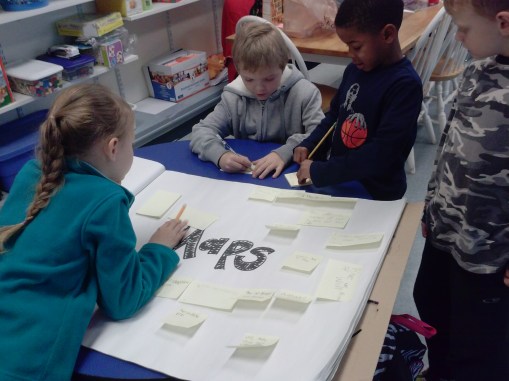
After they had a chance to explore their maps–well 4 different ones actually–they came to a blank chart like this one and were supposed to add their ideas about what all of the maps had in common:
CAM01101

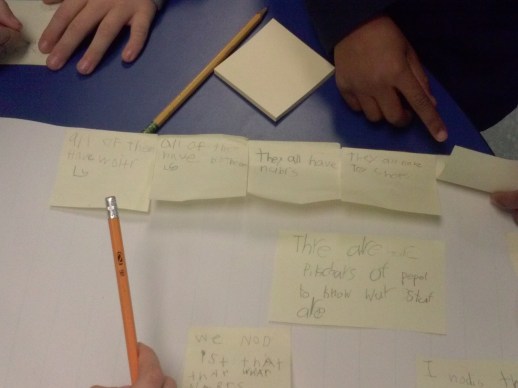
After they had worked for a little bit…
CAM01103

It looked more like this:

CAM01102

That’s the LIST part of list-group-label.  Now, normally with big kids, I have them group the post-its by how they are similar, but for many reasons, I led this next step with my kiddos.  After I grouped them, the chart looked like this:

CAM01104

See how they’re in groups now?  It was great to see how many similar ideas kiddos came up with!  They were spot on with their noticings!

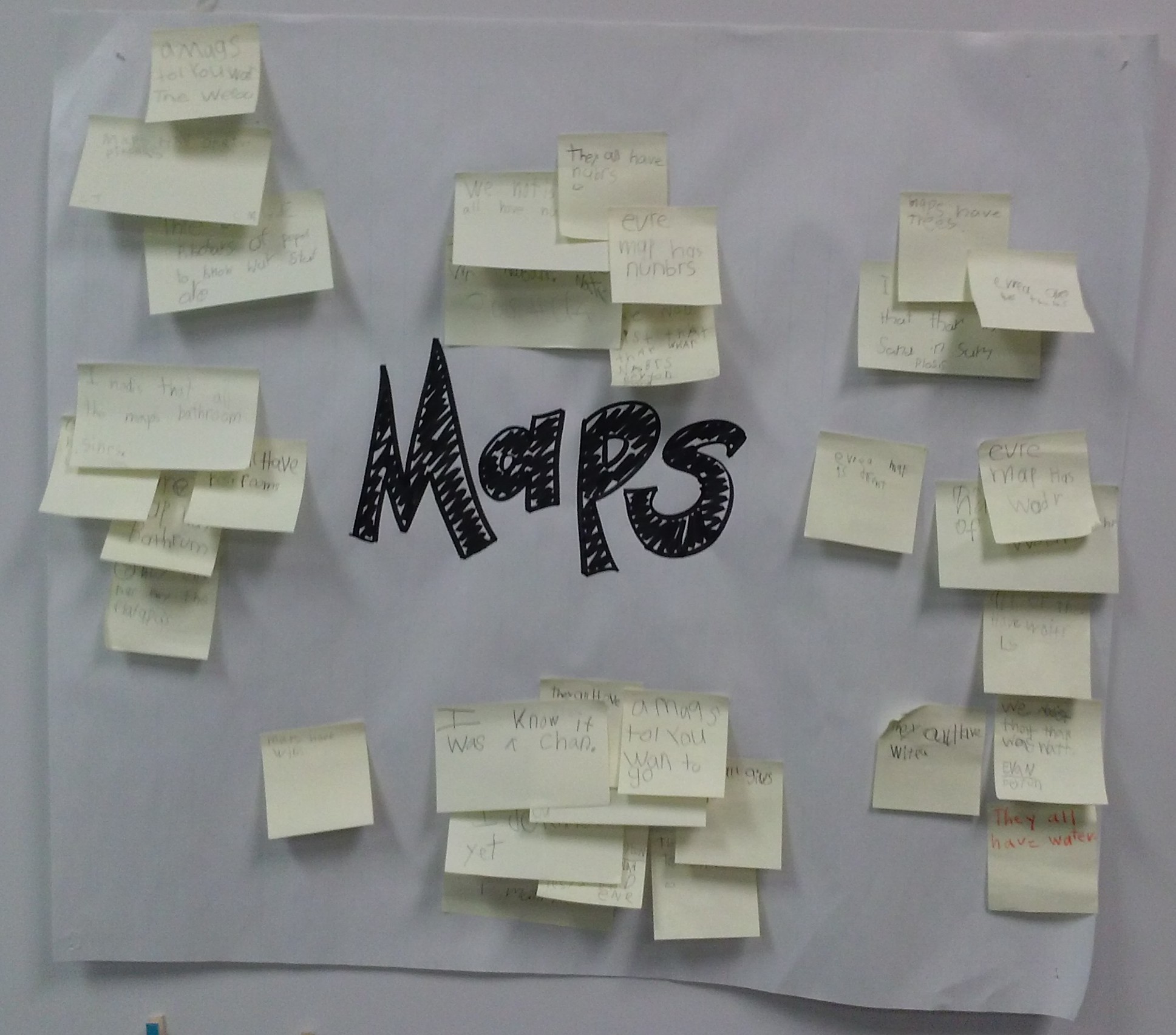
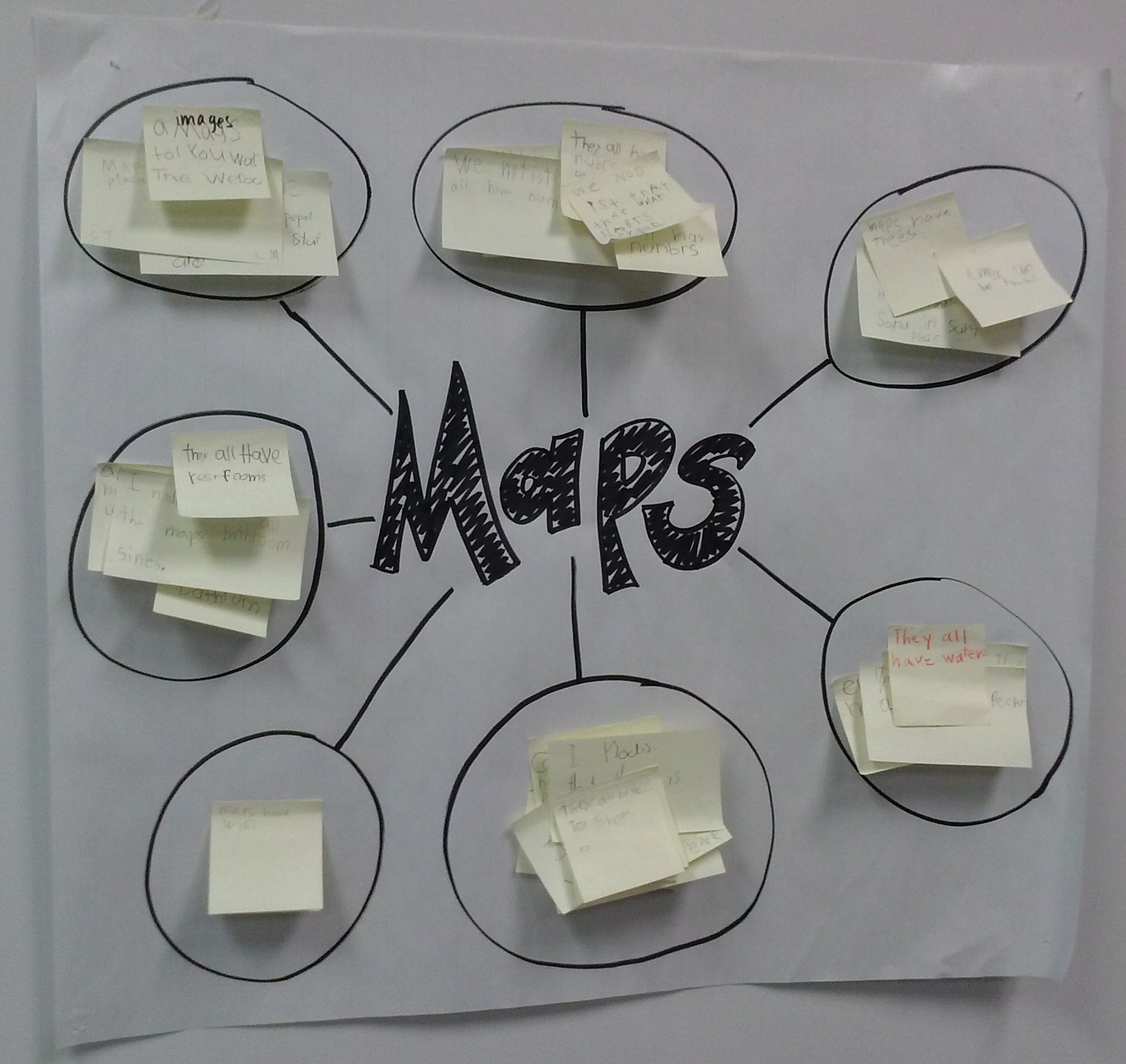
Next came the LABEL step, so I made the post-its into a web so we could see the groups as well as write the labels:

CAM01105

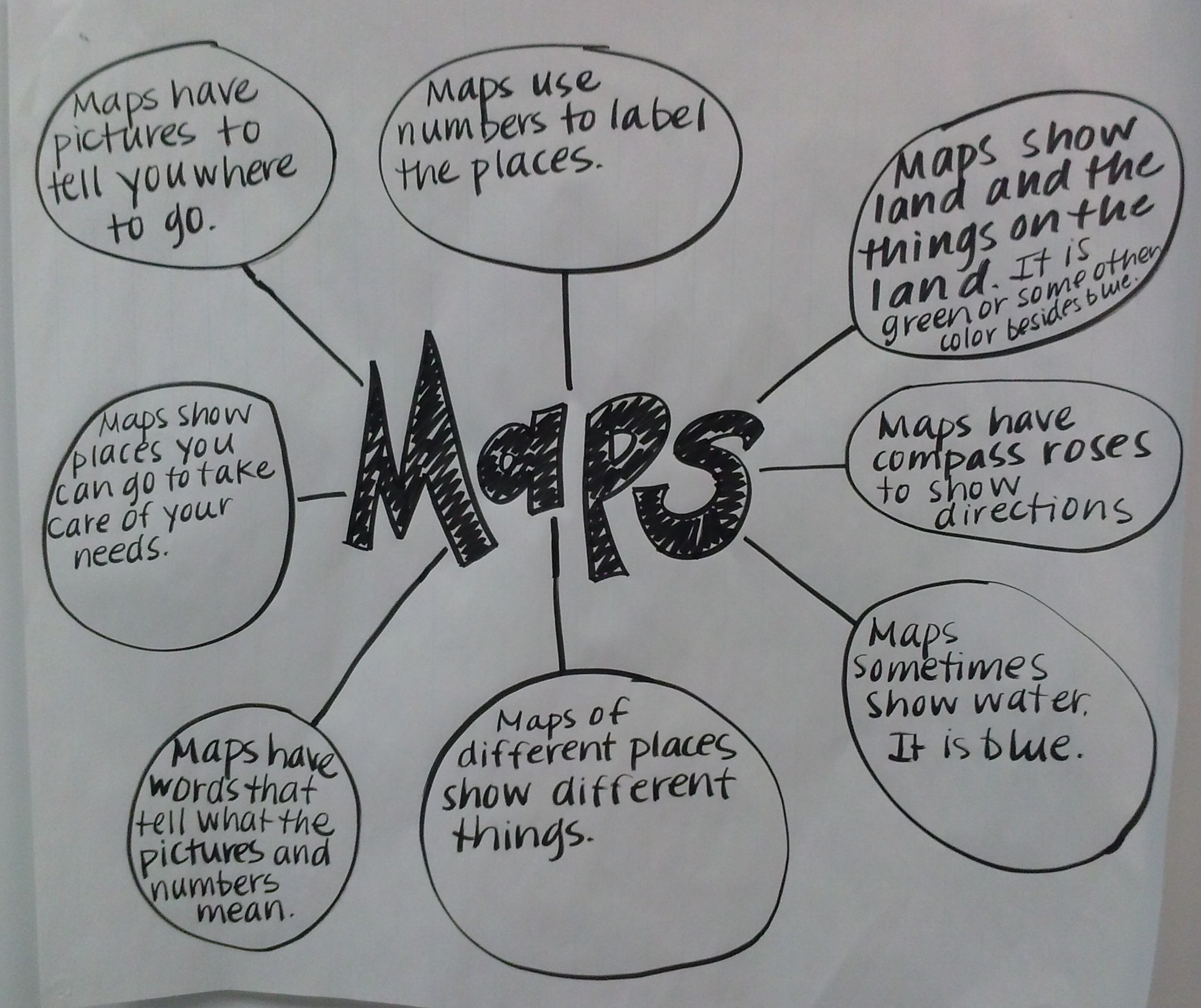
Working together as a class, we decided what each group had in common, and what statement we could make about maps and how they work based on the information.  I was IMPRESSED!! These kids had loads of background knowledge about maps and their features, which made our use and study of them easier.  This is one reason I LOVE this protocol–it quickly gives me a good idea of the class’ schema on a topic, which helps me know where to go next.  They are doing the work and making the connections, which is meaningful work, and they are having fun!  Win, win, win for everyone!

CAM01110

Our finished web about maps! Pretty comprehensive, wouldn’t you say? 🙂

Now, I have to focus in on one bubble of this web for a second.  Look at this one:

CAM01111

This particular bubble has a great story.  One of our friends was gone on the day that we first studied our maps, but returned on the day we were reviewing the web we had made.  She said, “Wait, there’s something else you should add!”  She proceeded to describe “that thing that’s on there that tells you which way you’re going.  You know, like ‘Never Eat Soggy Waffles!’ ”  “Of course!” we all thought, and we added a bubble about compass roses.  The best part?  The chart originally had a big empty space here, so it was like it was waiting for this super-smart addition!

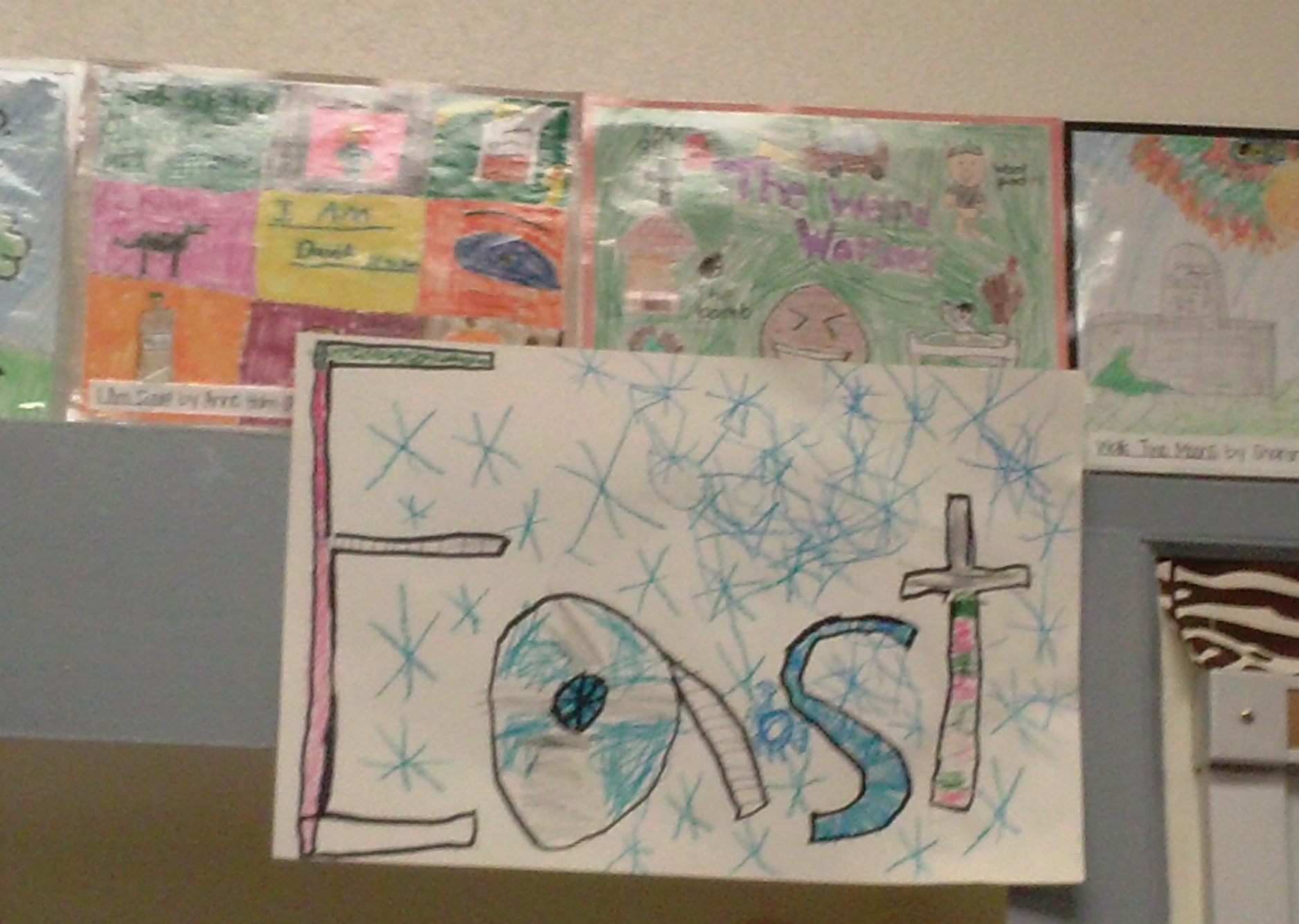
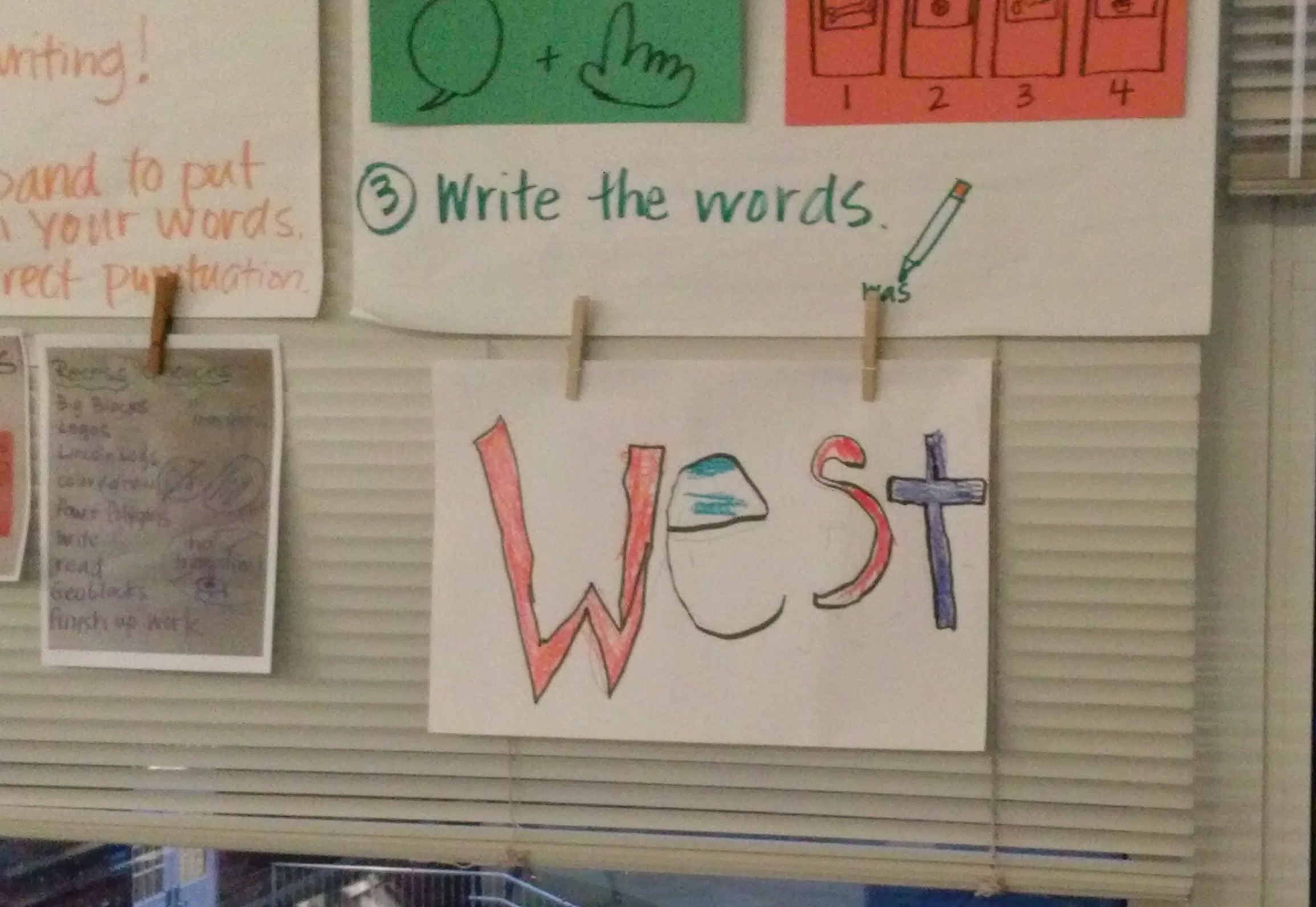
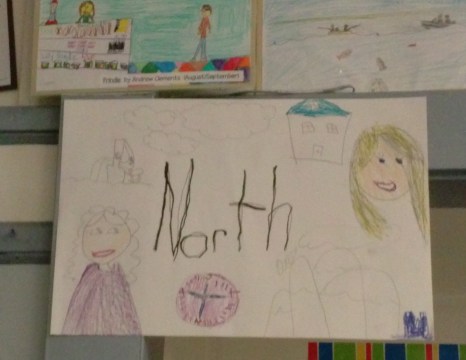
Well, as is always the case in our room, this conversation sparked a great idea for the next step: we needed signs in our room that told us which way was which way.  Kiddos quickly got to work in small groups creating direction signs for our walls. Another “best part” of this project?  Every single sound in the words NORTH, SOUTH, EAST, and WEST can be figured out by first graders using word wall words, resources in the room or knowledge about sound chunks.  ANOTHER win-win as we could connect literacy to our social studies work! 🙂
CAM01113

CAM01117

CAM01114

CAM01112

What smart suggestions for ways to improve our room and give us new resources to help us learn!  I LOVE what they look like, too, and how they add to the “kid” feel of our room.  KID WORK everywhere! 🙂  Great work, Rm. 202 friends!

The Actual #10 Tooth

So I made a boo boo when I posted Charlie’s picture the other day, thinking I was more behind with tooth updates than I actually was. 🙂  He was indeed the owner of lost tooth #9 and yesterday Emily told me about the actual #10 tooth.  Not sure if it “counts,” because she lost it at home, but it’s a lost tooth nonetheless. 🙂  Congrats, Em!

CAM01135

First Grade Math Warm-Ups: Week of 12-8 to 12-12

So excited how these are working out, and how they lead to such great conversations during our math time.  So easy to get math brains thinking early in the day and then letting it simmer all day.  By the time we come back to it at 2:00 it somehow makes even more sense.  LOVE!

Monday

CAM01132

We’ve been working on doubles a lot lately, during conversations, in groups and by playing games.  The hope is that my mathematicians can then transfer that knowledge to solving problems.  This one let them give it a try.  And since you’re here, let me show you the doubles games we’ve been playing–I think we might have to make a new version of these for every season:

Continue reading

Interactive Writing Explained

**Disclaimer–I am SO excited to share this post and have been thinking about the right way to write it for a LONG time!  My kiddos worked SO hard on the writing in this story and are rockstars in my book.  THANKS FOR READING!!**

If you have been here for a while then you know that this year is my first year in first grade in a LONG, LONG time!  I got my start there more than a decade ago, then moved on to work with “big” kids for a while and am back to my roots.  Much has changed, but I’m finding that many things have stayed the same–some things are just good teaching.  Best practice.  Good stuff for kids.  Interactive writing is one of those things.  I learned how to do it back then and am being reminded of it’s importance and power with kids today.  Let me explain. 🙂

First of all a definition: interactive writing is a writing experience (often whole group) where teacher and students “share the pen” to create meaningful text together.  The teacher, using what she knows about students and their current understandings about letters, sounds, words, etc., purposefully chooses kids to add certain parts to the composition, building on their knowledge and helping them make connections to new skills and concepts.  This is not done haphazardly, and is best done with planning ahead of time–although I have had some amazing experiences with IW that happens “on the fly.”  Ideally, the texts you compose together because touchstones for future learning; revising and revisiting are part of the process. Continue reading

Happy Thanksgiving!

The week of Thanksgiving we had a great chance to get together with our Learning Buddies.  We love them!  This time we got to go to their classroom–which was a big deal.  We talked about Thanksgiving and what we’re thankful for, and then made turkeys together.  What a great morning!

I don’t have everyone’s turkey hanging up, but here are a few.  They’re all great–just some kids didn’t want me to take it because they were so excited about giving it to their families. 🙂

Check it out. 🙂

This slideshow requires JavaScript.

Math Warm-Ups: First Grade Version–Week of 12-1 to 12-5

For years in 5th grade I posted about Math Warm-Ups and how we used them to get our brains ready for flexible math thinking every morning.  Last year I didn’t use them much–for one reason or another–and this year they didn’t make sense until just recently.  So here we go–join us to see how Math Warm-Ups work with young mathematicians and how we use them to stretch our brains!

Week of December 12-1 to 12-5

Monday

Wait–Monday we didn’t have a Math Warm-Up.  Partly because it was the first day after a really long weekend and also because we had some unexpected freezing rain during the morning rush and it took me 2 1/2 hours to get to school that day!  I did anything but rush to school.  Here’s a picture of how fast we were going at one point.  And believe me, I was being really safe while I took this pic:


See that?  I think it says 2 miles an hour.  On the highway.  Seriously.

See that? I think it says 2 miles an hour. On the highway. Seriously.

Tuesday

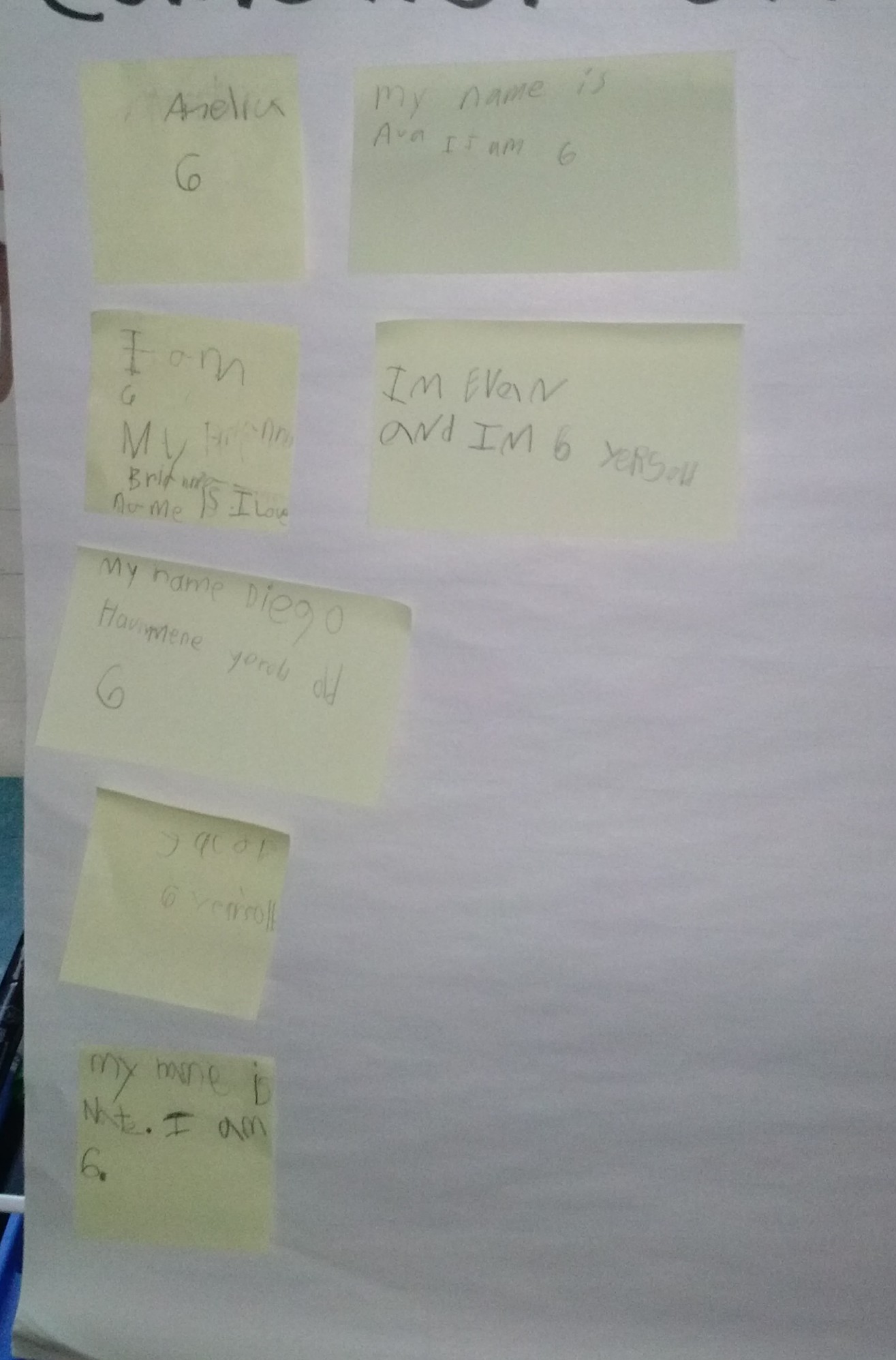
This was the first day of Math Warm-Ups so I asked a question that I knew everyone could answer easily, as the point was to teach the purpose and procedure more than focus on a math concept.  Still, we were able to pull in many things we’d been working on in math during our conversation about this warm-up.

CAM01121

Now that I look at that picture, I wish I would have taken one right after we put all the post-its on it, because it was much messier, and that’s actually part of the conversation we had about what we could do with the data we had collected: someone suggested that it needed to be more organized.  I also asked them what question we could answer with the information we had up on the easel.  There were several good ideas, one of which was “Do we have more 6YOs or 7YOs in our class?,” hence why we ended up with two columns of notes.

           CAM01086    CAM01085

It was great to watch and listen when we started to analyze the notes and figure out how many of each age there were: they used what we’ve been learning about grouping objects to count, and recognized that I put them into the same shape as the 10 frames we’ve been looking at lately.  They were similar to what our math racks look like, too, and they quickly and easily saw that there were 7 6YOs on this day and 10 7YOs.  We talked about other questions we could answer, and also talked briefly about how this data could change based on the day (we had 3 friends absent).

Wednesday

CAM01120

Another one I knew most could answer easily, but a little harder than yesterday.  The focus today was on making sure we followed all the directions of the warm-up: answering the WHOLE question and putting our name on our post-it.  There were still some who did not, so we made sure to talk about that when we reviewed this question during math.  The words LESS and GREATER were also a focus, as was writing the number the way it should actually look–with digits in the right places AND going the right direction (which is still tricky for some friends at this point in 1st grade!).

Thursday

CAM01119

We’ve been working on flexibility with combinations up to 20, as well as most recently practicing doubles and doubles +1.  This was interesting, then when most kids put 10+9 as their answer (which is probably the easiest combination to figure out).  I noticed many who wrote combos that DIDN’T equal 19, so the conversation was around accuracy as well as how they figured out their answer.  It also told me that as a whole, we need some more practice on this skill!

Friday

CAM01118

This question was just one to see where we were with fractions, as we’re about to finish up that unit.  The benchmark is just that kids understand 1/2s and 1/4s, but the “extending” on our rubric is 1/3s and I was pretty sure most kids could tackle that as well.  And boy was I right!  Now…I am not entirely sure if kiddos answered these on their own (like they’re supposed to) or if they worked together, so there’s more work to be done, but for the most part you can see that most of those rectangles (which is also part of this unit) are divided into 3 equal pieces!  Even the way I worded the question gave me some information–info that I didn’t expect–when someone said, “I can’t just draw 1 line and make thirds.  Can I draw more than 1?”  Obviously that friend knew what was going on!  I hadn’t done that on purpose, and so made the change on the chart for the rest of the friends who completed it.

This is our first try with warm-ups this year and I am excited to see where they go!  Great job, Rm. 202 friends!  You did an AWESOME job!

Teachers–What kinds of math warm-ups have you done with your class?  Have you tried them with 1st graders?  How did it go? We’d love to hear about what’s going on in your class!  Parents–did you hear about Math Warm-Ups from your kiddo?  What were they saying? 🙂