An Uncertain Future

I met with my team today–the fabulous Mrs. Hong and Ms. Turken–to talk about how to integrate reading, writing and sci/ss, as well as to update our curriculum calendar.  We only had 2 hours blocked out on the calendar, and so in some ways those were really big plans.  And we started 45 minutes late.  🙂

So, as we sat down and tried to tackle reworking the curriculum calendar (based on new Common Core standards, district resources and just things we wanted to change), we realized we had lots of work to do BEFORE we could address that problem.  You know how it goes, before you can do the job you actually sat down to do, you have to do this and before that you have to do this….we were in that boat.

We are wanting to reorganize our thinking and our schedule to allow for more integration, working Social Studies and Science topics into everything rather than having things so compartmentalized and isolated from each other.  But we had plans to UbDize (yep, just made up that word) our SS curriculum and organize our units around common EQs for each quarter.  But like I said before, it’s easier said than done.

And then there’s my crazy brain that isn’t just quite ready to think about these things.  For one thing, I have to have my space all done before I can planning for what we will do in that space.  Since it’s not even August, I do not have my classroom put together yet.  Granted, I do have all of my furniture where it will go and have big ideas for where things will go and what it will look like, but it’s not done yet.  And I have plans for how I want to redo parts of my classroom library.  And I haven’t met my class yet.

That last part is really the biggest piece of the puzzle that makes it hard for me to complete the calendar.  So in the mean time, I feel like I am facing an
Screen Shot 2013-07-31 at 1.09.33 PM

I know–you’re thinking, “Well, duh, Mrs. Bearden.  Isn’t the beginning of the year always uncertain?  You never really know what the school year will bring or what every detail of every day will look like.”  And no, I don’t have a crystal ball or any tarot cards, and so I guess in a way I always face an uncertain future at this point in the year.

But the reason why it so affects me is because I have such a hard time making decisions about things I’ll do and ways to go without actually knowing my students.  So much of where we go and how we get there depends on what my students need, and where they are when we start.  I have information and data about these things on paperwork (transition reports, testing scores, Lexile levels, etc.) from previous teachers, but until I really see what it looks like for actual kids in my actual space, I can’t really get a feel for it.  (My family has always said that I don’t have much of an imagination–maybe this is proof of that! 🙂 )

But obviously I can’t just not make plans.  I can’t not work with my team.  I can’t not try to figure it out now, because I owe it to these new students of mine to have at least an idea of where we will go, and how we might get there.  If not, then we’ll never get there.  And that’s definitely not an option.

Along the way I’ll tweak the plans–adjusting and reworking based on personalities, learning styles, academic and social needs, interests–and I’ll be totally ok with that.  And then, at the end of the year, I’ll look back at the plans we made around the table today in the summer and laugh, because of how different they are.  But I gotta start somewhere.

How does your “summer brain” work?  In what order do you do your work–space first or plans first? How does your team work before school starts to map our curriculum/unit plans?  I’d love your thoughts and/or advice! 🙂

Book Trailers

We watched our first book trailer together when we read The One and Only Ivan earlier this year.   We were mesmerized by how it drew us in and made us want to read the book–even more than we already did!  Then we went 1:1 with iPads, and I knew that this would be something we’d have to do for ourselves, especially since we had some iMovie experts in our midsts (yes, I’m talking about you, Anna K., Aiden and Jack!).

Then, it was time to start thinking about service learning projects, too, and suddenly it all seemed to fall into place….

I was having a conversation with our librarian, Mrs. Meihaus, about my idea for wanting to learn about  book trailers (and at that point I didn’t really have a direction I wanted to go in, or anything more than a desire to do it), and she told me about an idea she’d just learned about from our Scholastic rep–just the day before!  Talk about good timing.  This idea she’d found out about involved creating cards on the shelves that link QR codes to book talks, to help readers as they make decisions in the library.  Seemed like a perfect fit!

So we just dove right in and started making movies the next day, right? Nope.

We had a TON of work to do first.  And what was great was that my kids knew what that work was without me even telling them.  I just asked the question “What do we need to know before we can start our book trailer project?” and this is what they said:

It's messy because we used it as our checklist to make sure we had done all of the prep work before we go to our movies.  What a great example of kids creating a project--they led us where we needed to go!

It’s messy because we used it as our checklist to make sure we had done all of the prep work before we go to our movies. What a great example of kids creating a project–they led us where we needed to go!

We spent many days together reading book reviews, and learning what was supposed to be included in one.  We read examples of them, and practiced writing our own on books we’d read together and individually.  We watched several examples (both good and bad) of book trailers and kept notes about what made them successful, i.e. which ones made us actually want to read the featured book and why.

About that same time, I came upon a Twitter chat where the topic was book trailers and several teachers were sharing ideas for how they make these productive with their students.  I LOVED the idea that Jenn Fountain (@jennann516) was sharing about how she managed student made book trailers.  The way she used storyboards to help students thoughtfully plan the pictures and the text they wanted to include was the missing piece of the puzzle, and seemed to be just what we needed!

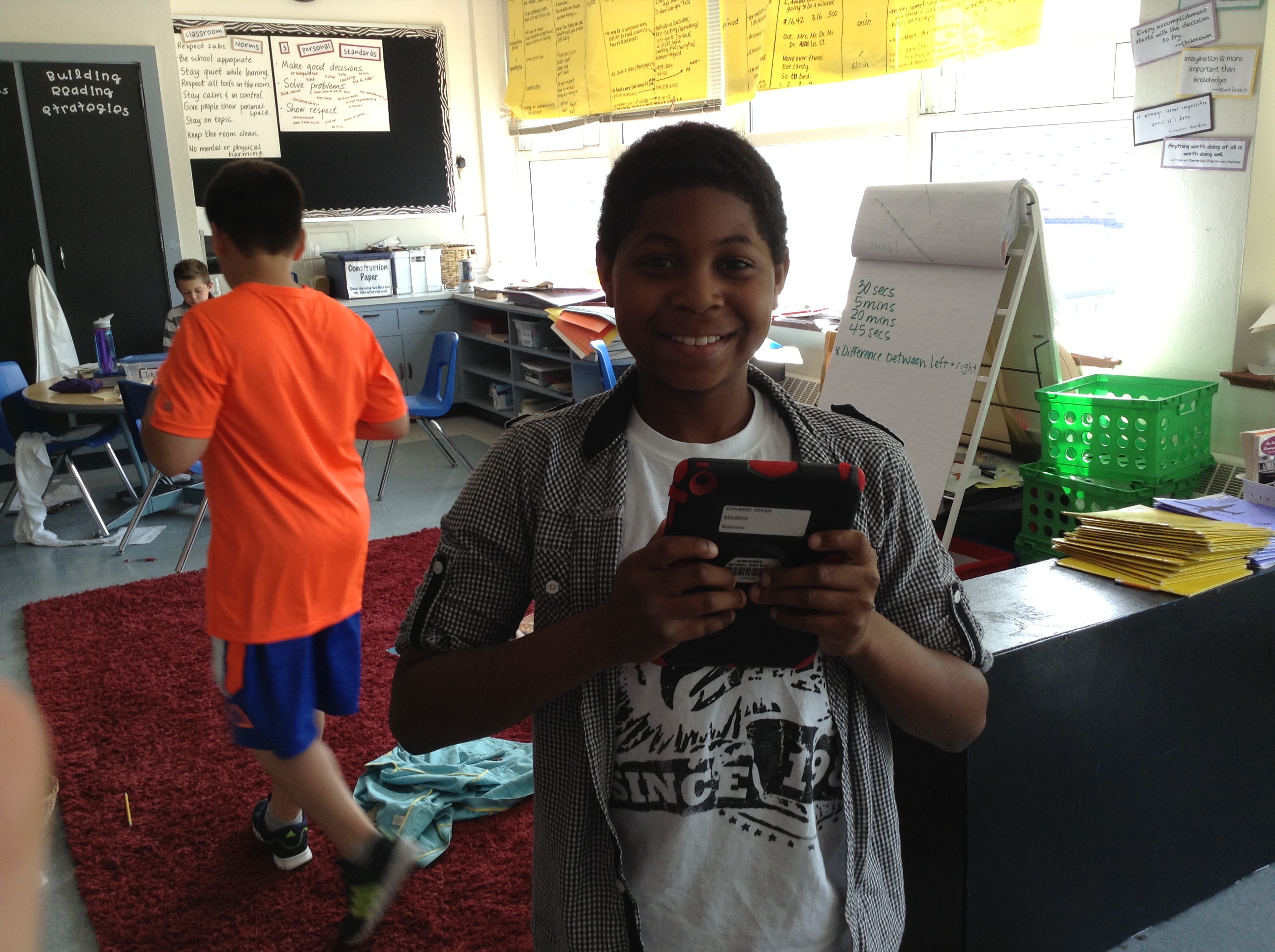
IMG_0849

Devan loved this project!

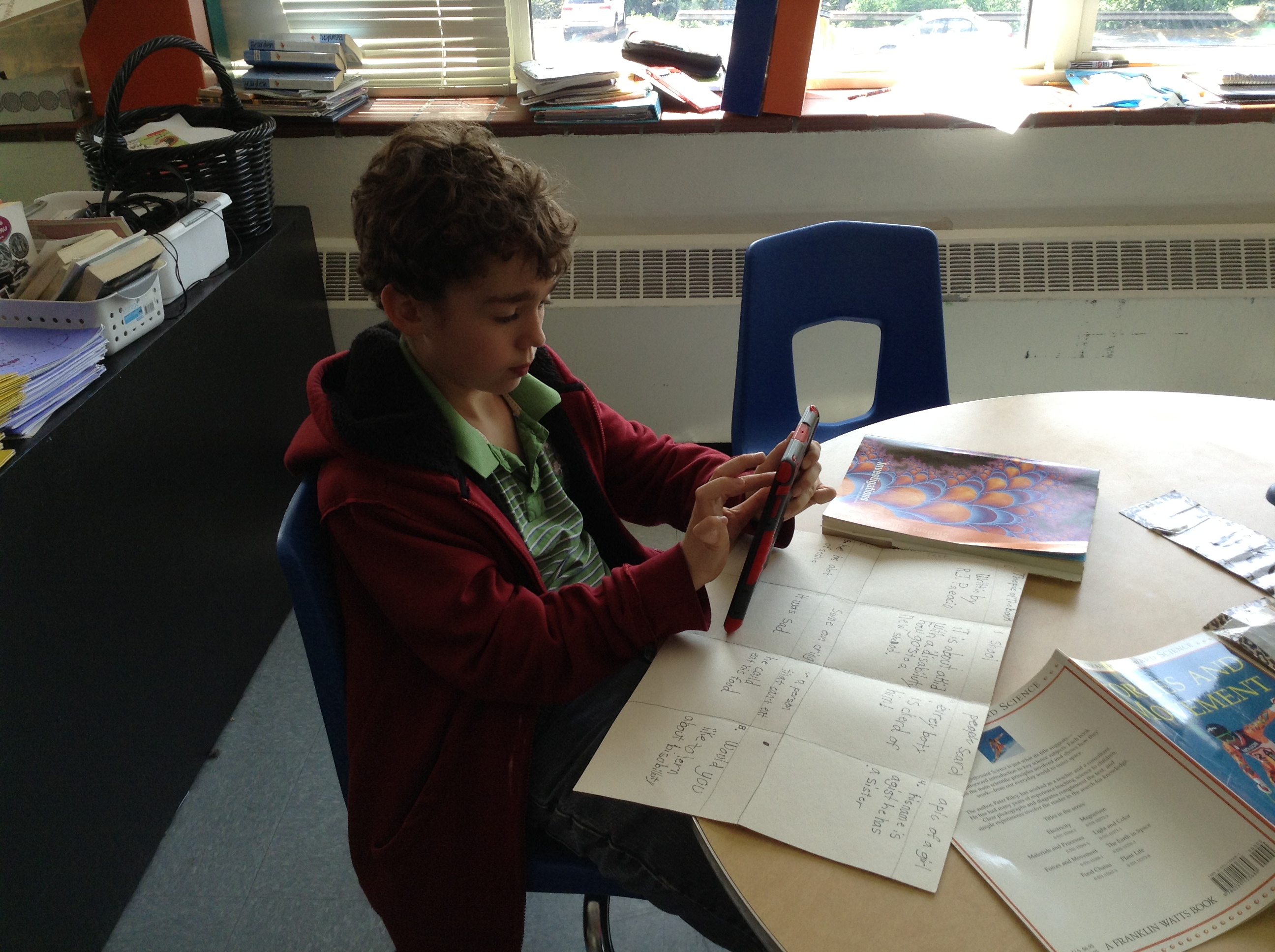
IMG_0850

Remember Jack, the iMovie expert? He’s hard at work on his storyboard and book trailer about the book Wonder by R.J. Palacio–a class favorite this year!

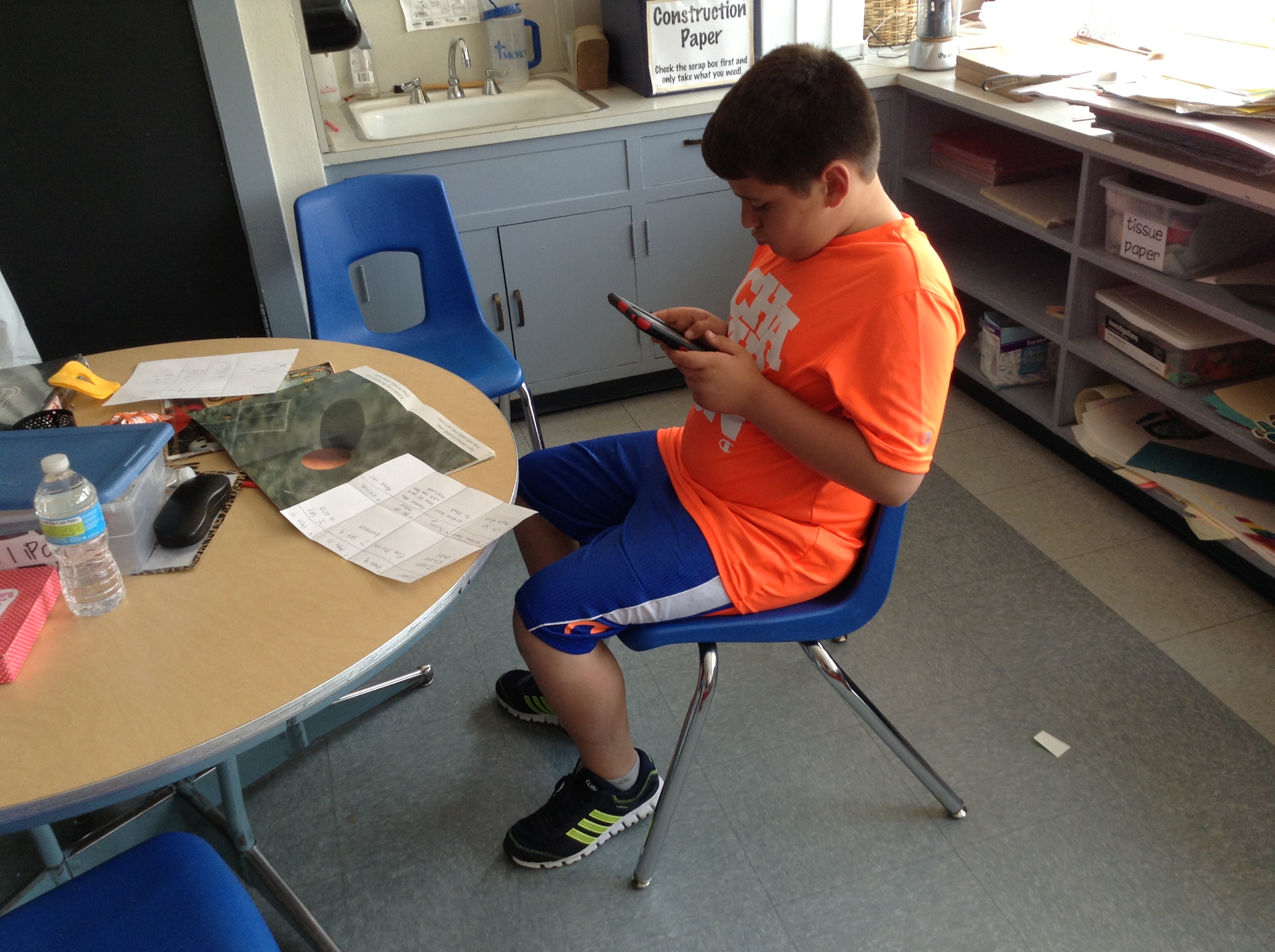
IMG_0851

Aiden (another in house expert) decides which pictures from The Kissing Hand to include in his video.

IMG_0852

Damonte is hard at work on his book trailer for a text about Lamborghinis. Another place we got ideas for books was from Ms. Dale, one of our kindergarten teachers. We made several for some favorites that we knew some of our newest friends at Robinson would want to read in the fall!

IMG_0853

Don’s using his storyboard as he creates each scene of his iMovie.

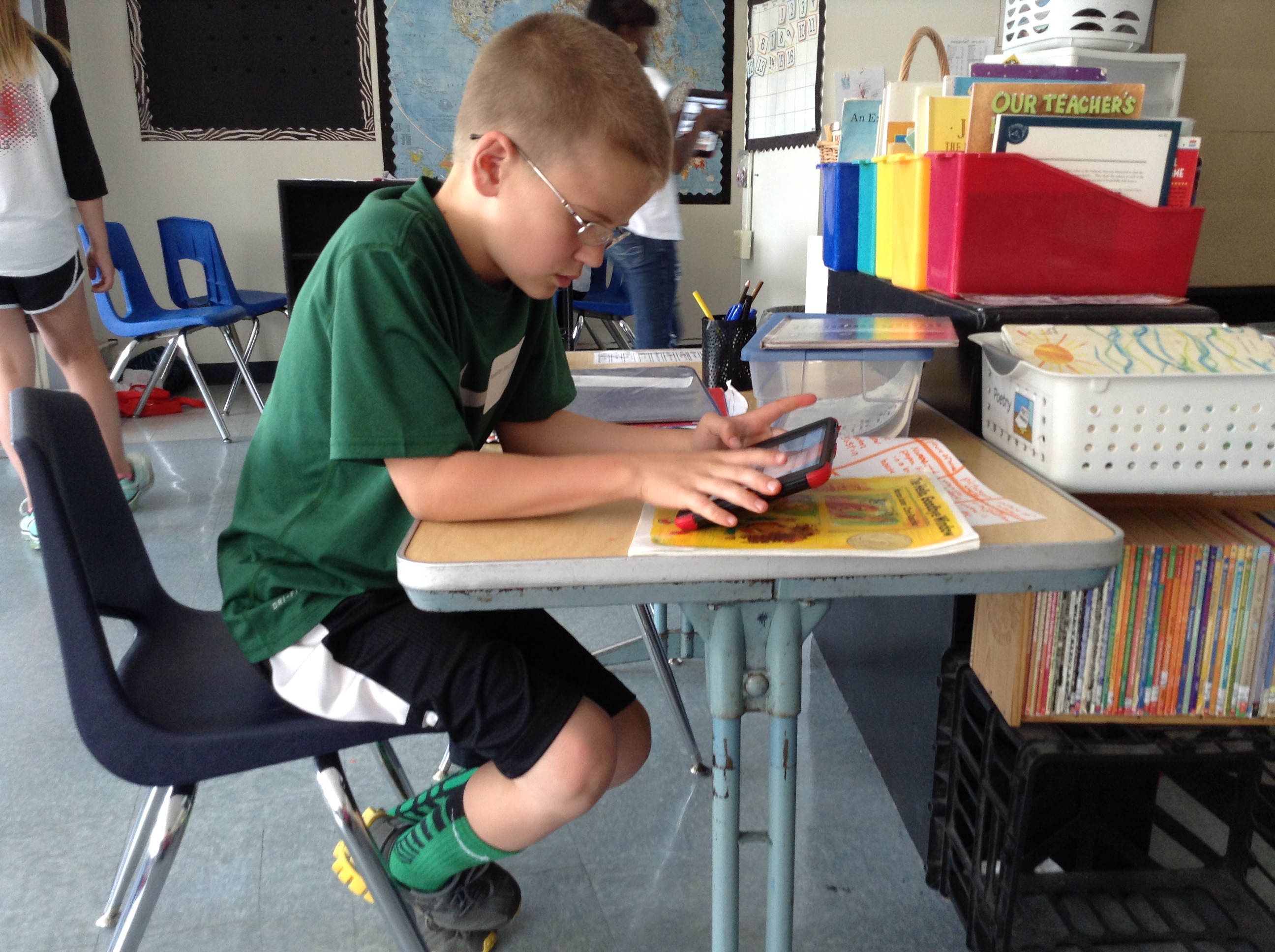
IMG_0854

One of Keelan’s videos was from that kindergarten pile–The Hello, Goodbye Window.

IMG_0855

Anna K. (on the left) was a wiz at iMovie! I love how kids taught other kids how to do things and answered questions when we needed to troubleshoot why something wasn’t working. Here she helped Sammy figure out how to fix a problem she was having with a picture.

IMG_0857

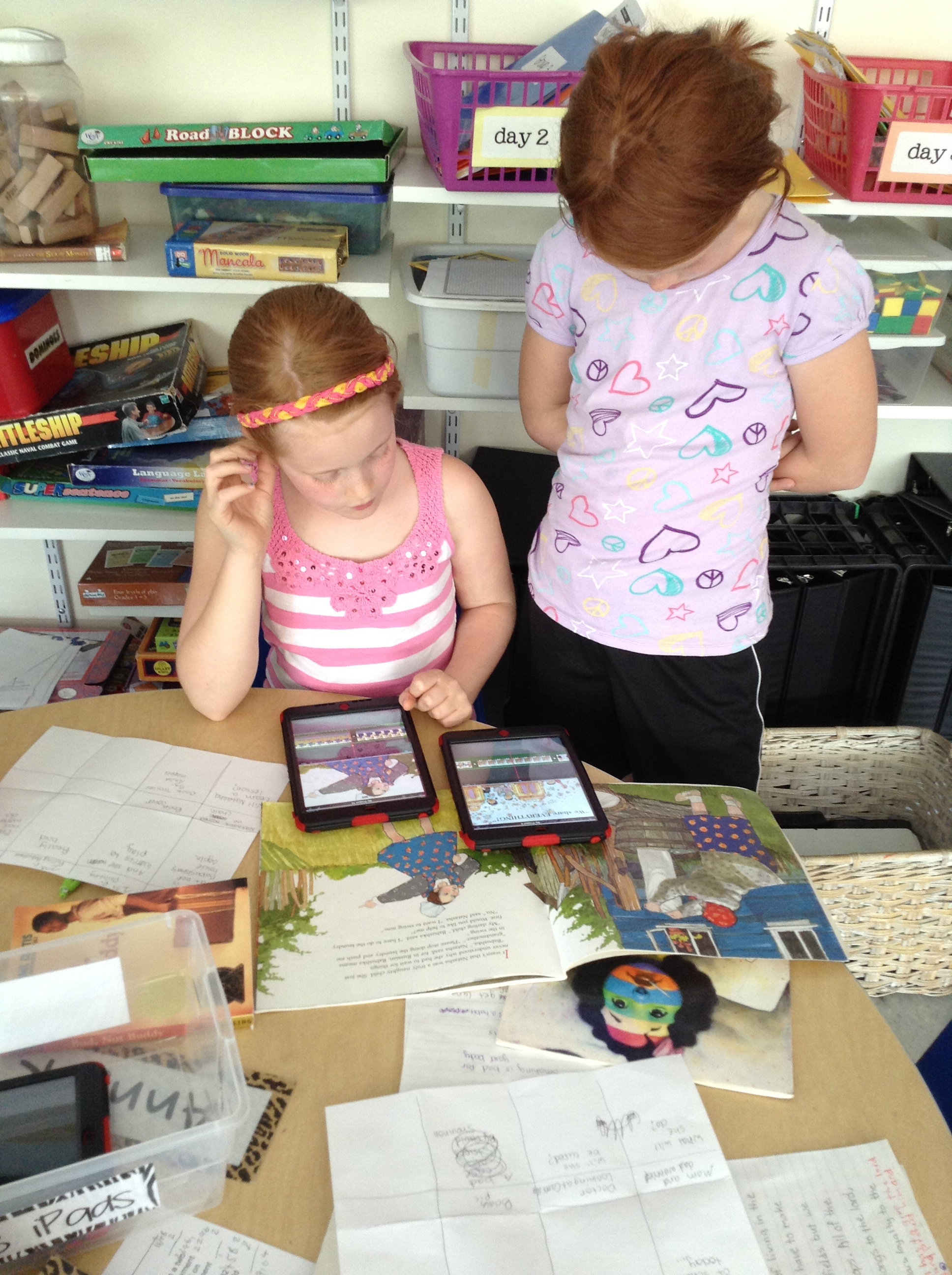
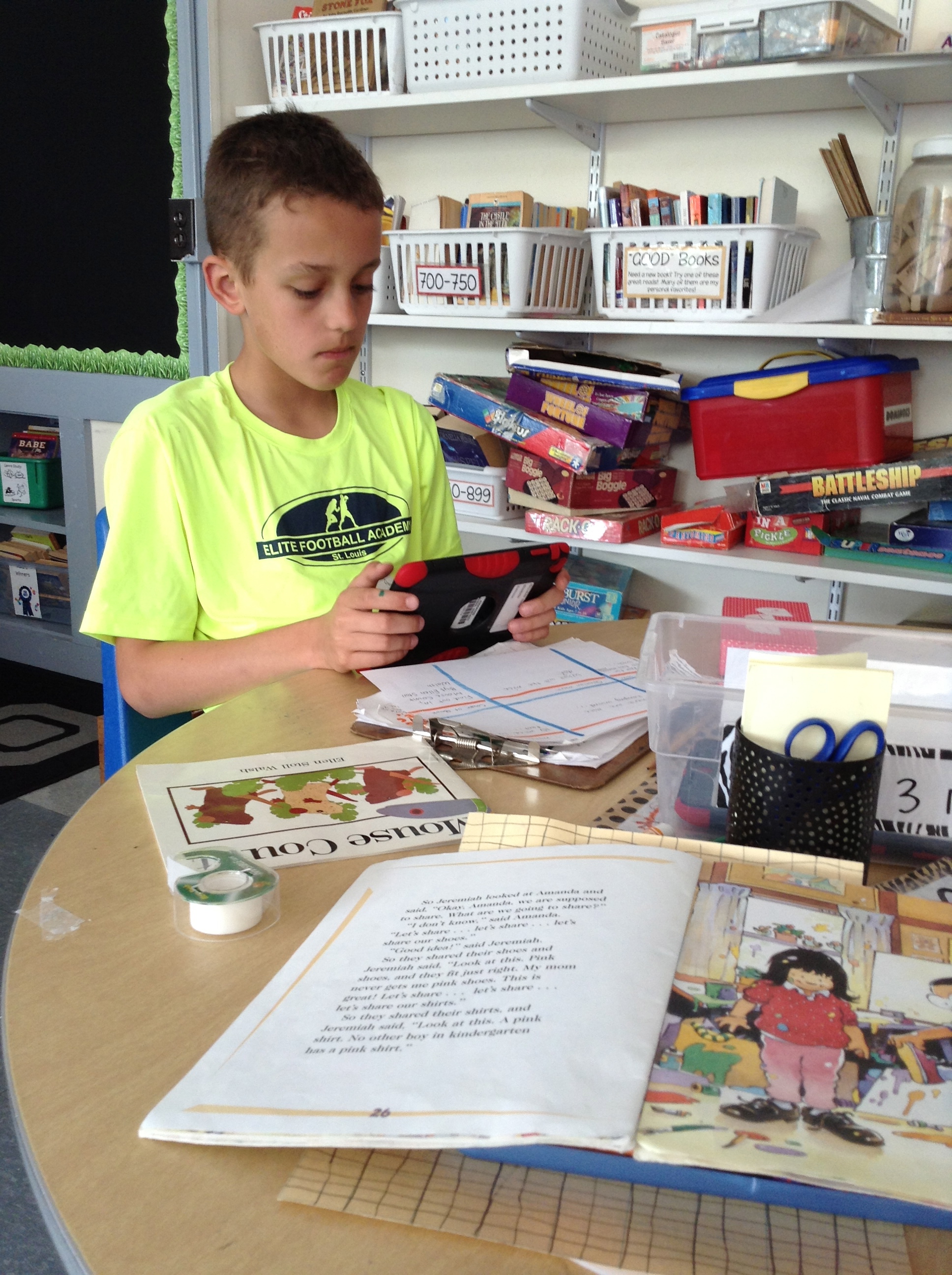
Owen working on a book trailer for Mouse Counts.

IMG_0859

Sophia and Jernandra worked together, too. Jernandra’s book trailer was about Super Fudge.

IMG_0860

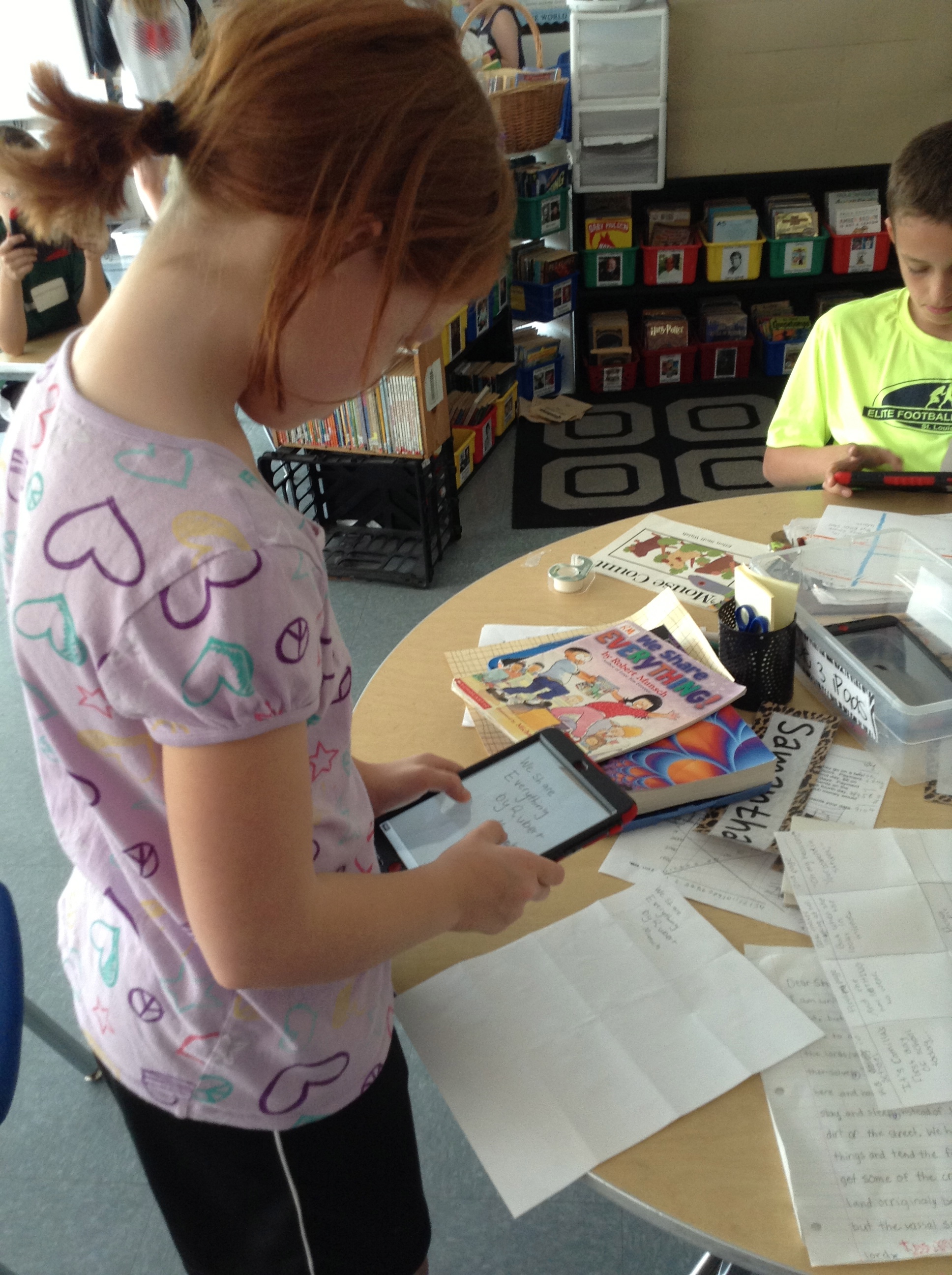
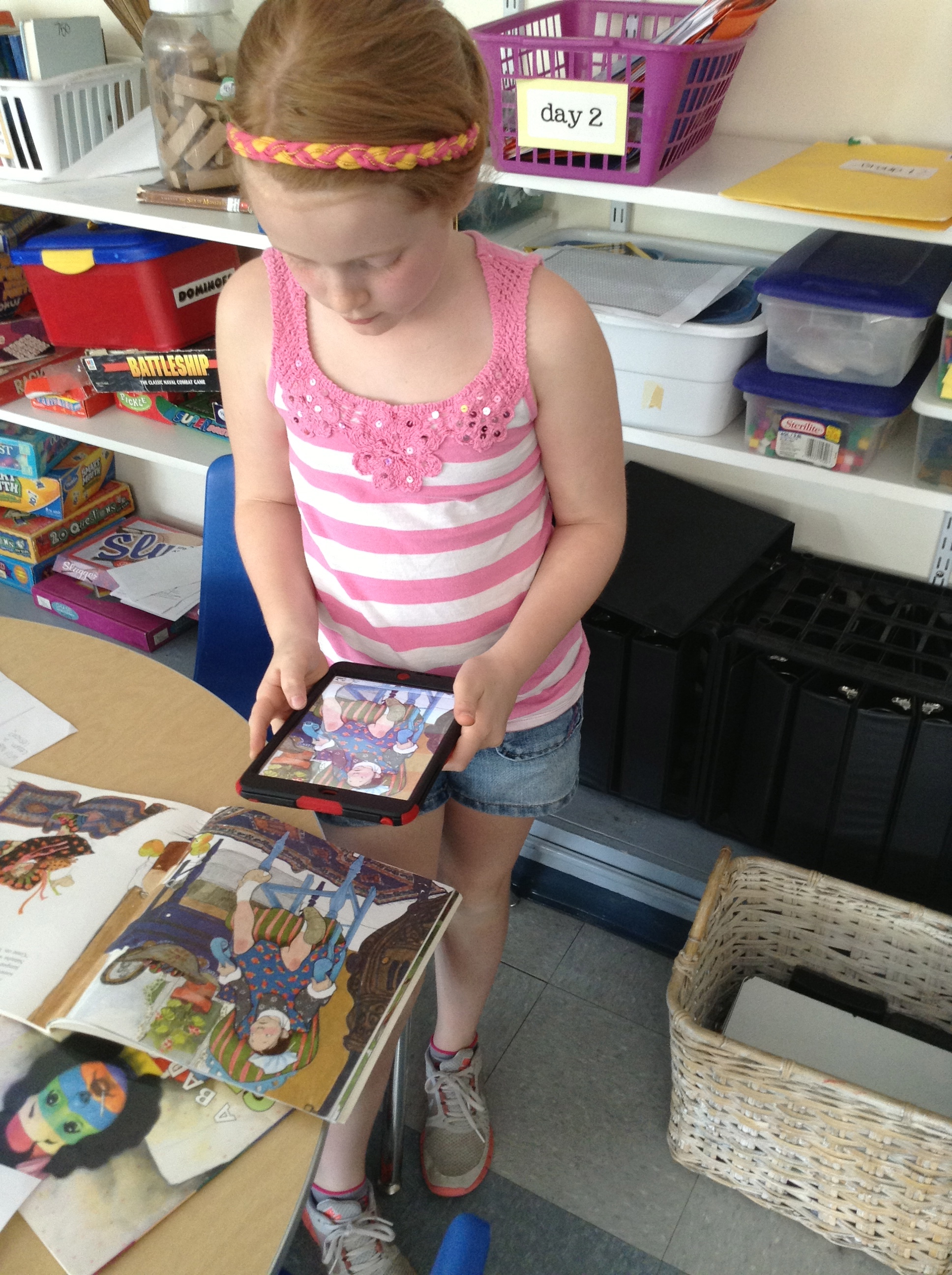
Sometimes the pictures we added were from the internet, and sometimes they were ones we took ourselves.  IMG_0863 IMG_0865See?

So, kids chose books (we started with our favorites, but also brainstormed other ways of choosing like book award lists for the upcoming year, book award lists from previous years, books that are frequently checked out from our library, etc.) and began to create our storyboards.  Once they had an approved storyboard, they went to work in iMovie, which we worked together to figure out—remember those experts I mentioned in the beginning?  They helped lead small groups to coach kids on what to do–and Jack even taught me how to do it!  What a great app, by the way, and on the iPad it’s SUPER SIMPLE to use.  I highly recommend using it if you aren’t already.

But just because our book trailers were finished, that didn’t mean our project was done.  We wanted to then link all of those trailers to QR codes that kiddos in our Robinson library can scan and learn more about the book as they are shopping for books to check out.  That meant we had to answer the “where do we put them when we’re finished making them” question from our original chart.  Many suggested we put them on our blogs, and we already a class YouTube channel, but we had to make sure it was some place that would be able to get through our internet filters at school (so kids could actually watch the videos we were creating!), that would be able to hold a large amount of data, AND that would be online (otherwise we wouldn’t end up with a QR code!).  I decided that SchoolTube was probably our best bet.

It was really great when we finally got to the end of the project and we were working in the library to finally attach all of our QR codes.  (Even this part of the project was kid-led, too, as someone suggested it would be a better idea to attach the code to the actual book, rather than the shelf.  Genius!)  We were super excited to be able to call in Mrs. Sisul, our principal, who supports all of the crazy and fabulous things we want to try with technology, and show her how they work.

Don and Owen showing Mrs. Sisul how to scan our QR codes to get to our videos on School Tube.  She was so excited for us!

Don and Owen showing Mrs. Sisul how to scan our QR codes to get to our videos on School Tube. She was so excited for us!

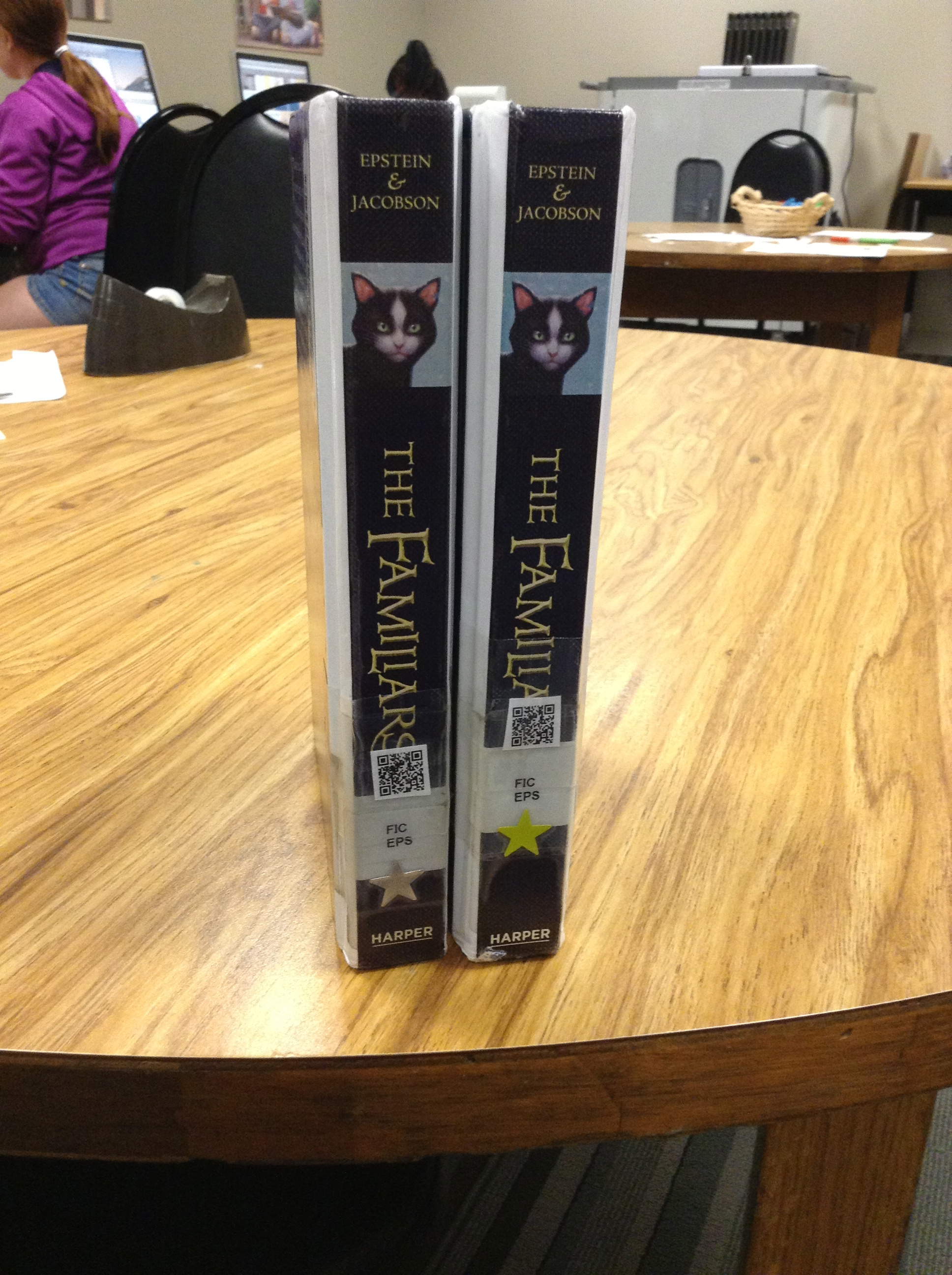
So at the end of it all, we ended up with over 50 TITLES that now have book trailers, and each copy of each book in our library has a QR code attached to the spine or the cover (depending on where it would fit)!

IMG_0872 IMG_0871

I wish that I would have had time to do the last reflection piece after this project, to have my kiddos tell you all that they’d learned throughout the process, but alas, we worked right up to the very last minute–and then it was summer!  So I ask now, to all of my 5th grade friends who worked on this big service-learning project with me: What did you learn from this experience?  What do you know now that you didn’t know when we started? What was your favorite thing?

And now it’s your turn to check out all of our fabulous work!  While I’d love to individually post every trailer here for you to watch, it makes more sense to direct you to our Robinson School Tube channel so you can check them out there! Happy watching and thanks for leaving us your comments about what you think!  We worked so hard and are so proud of what we accomplished!


Another (Writing) Celebration!

I’ve written before about how we use the Writing Cycle in our classroom, and how important celebrating our work is once we’re all finished.

Recently we had another one–this time with Expository Nonfiction Writing that we had done!

Our nonfiction pieces were all based on the structure of introduction, 3 paragraphs on specific topics, and conclusion.  They were written in many different forms, but all followed that same structure.

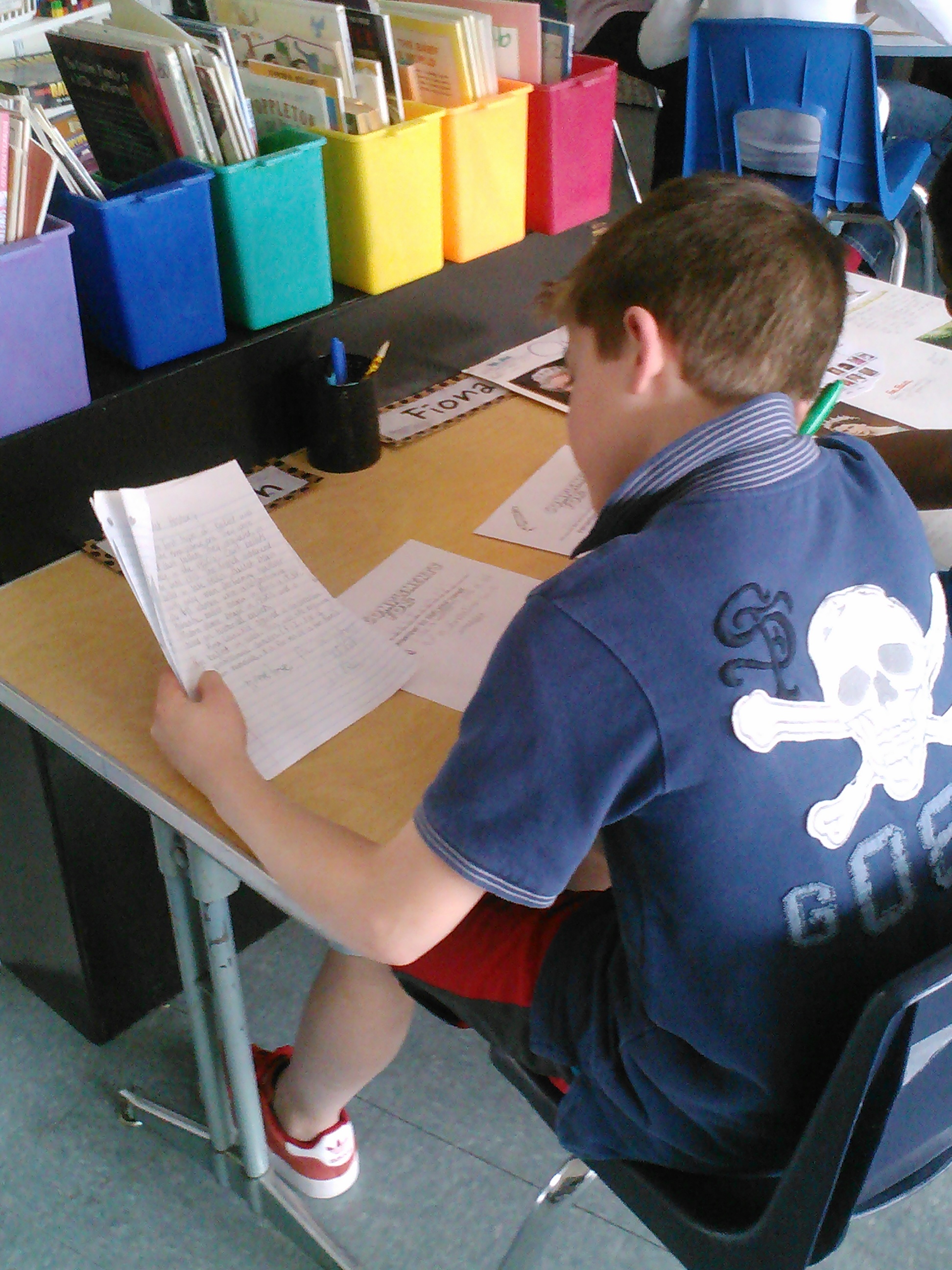
Our nonfiction pieces were all based on the structure of introduction, 3 paragraphs on specific topics, and conclusion. They were written in many different forms, but all followed that same structure.  Rebekah’s final piece was handwritten on paper.

Many students wrote their essays as feature articles using Pages templates.  All they had to do was replace what was there with their info and voila!

Many students wrote their essays as feature articles using Pages templates. All they had to do was replace what was there with their info and voila! I was impressed with the variety of topics: Sophia wrote about Artemis, Anna C. wrote a piece about tennis player Althea Gibson, ZB202 wrote about poodles and Natalie wrote about the evolution of the telephone.

IMG144

Some essays were made with a flier template, and Keelan wrote his as a brochure.

IMG146

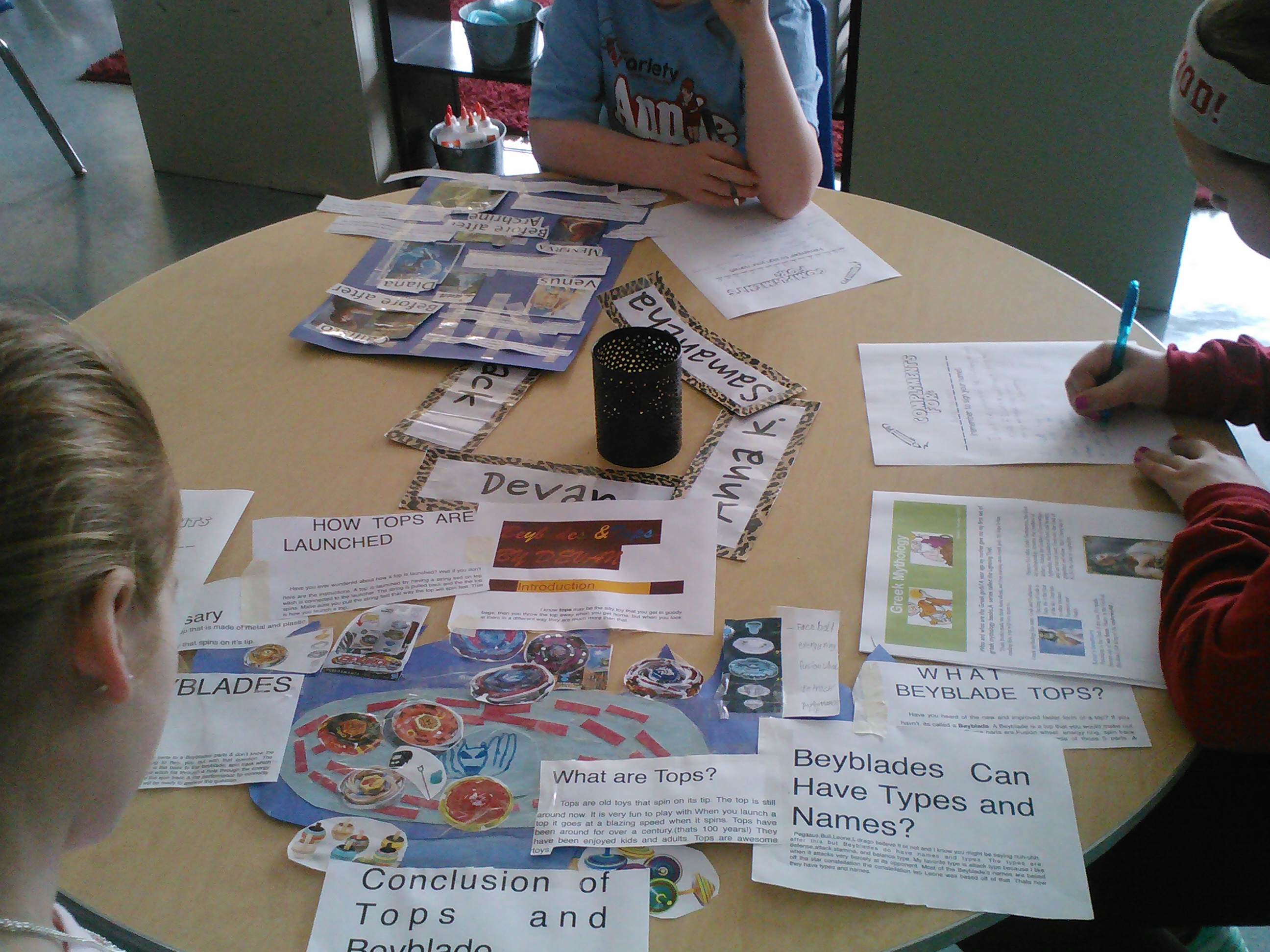
Here’s a great picture of the different end products: Anna K. used Pages to write about Greek Mythology, Devan made a poster that was SHAPED like his topic of tops, and Sammy made a poster about mythology, too.

Some posters were small, like Jernandra's about lions...

Some posters were small, like Jernandra’s about lions, Don’s about bulldogs,

IMG143

and Aiden’s about diamonds…

...and some were big, like Seamus' about Paul Revere,

…and some were big, like Seamus’ about Paul Revere,

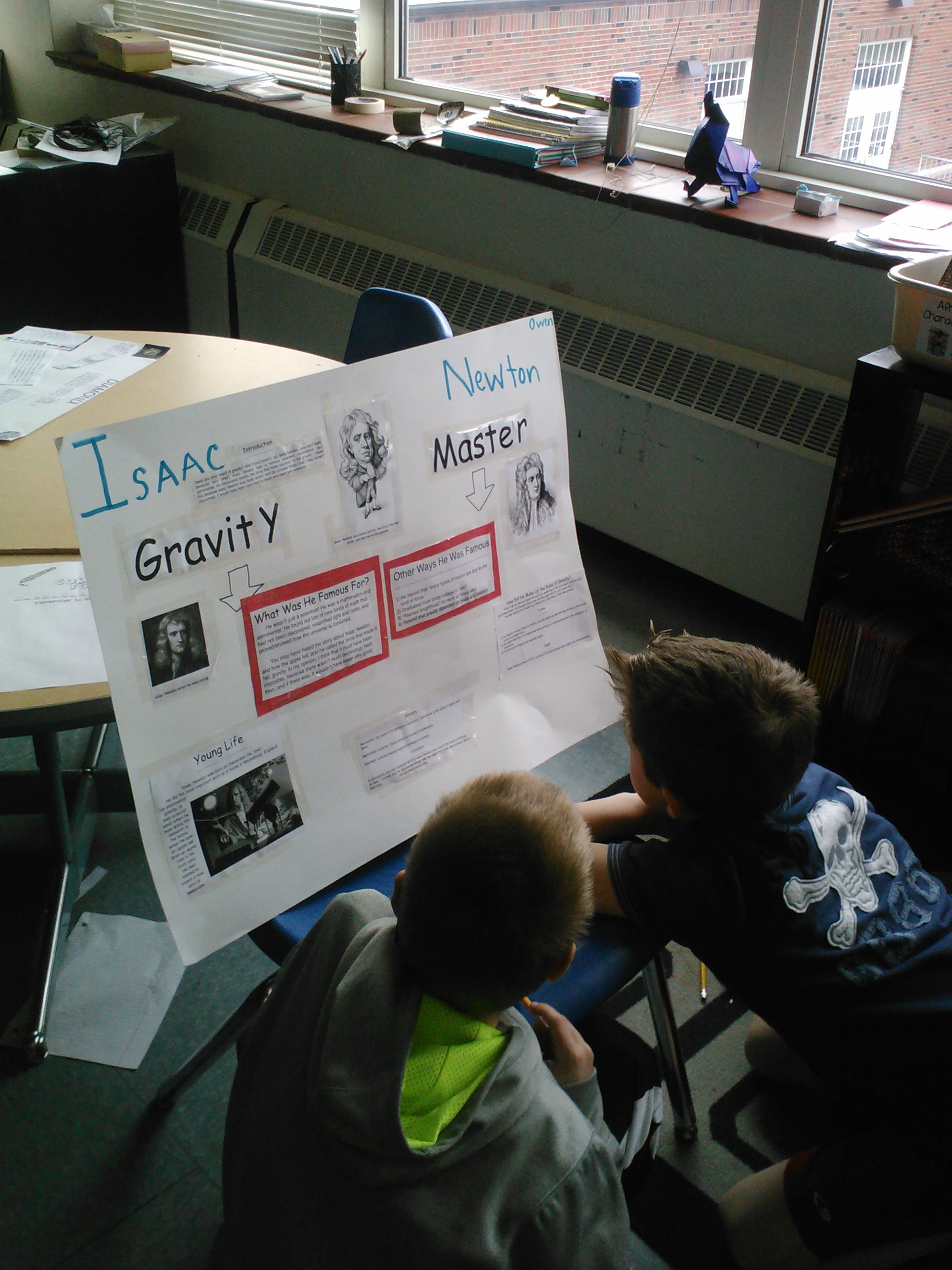
Owen's about Gravity Master Isaac Newton,

Owen’s about Gravity Master Isaac Newton,

and Fiona's about Queen Elizabeth II.

and Fiona’s about Queen Elizabeth II.

IMG149

And thee were even some Keynotes created about nonfiction topics, like Ames’ slide show about fossils,

IMG145

and Peter’s about Ray Lewis. What a great example of how we can all accomplish the same thing in whatever way makes sense to us!

What do you do to celebrate your writing?  How do you “send your writing out into the world?” Tell us what you think!


World Read Aloud Day!

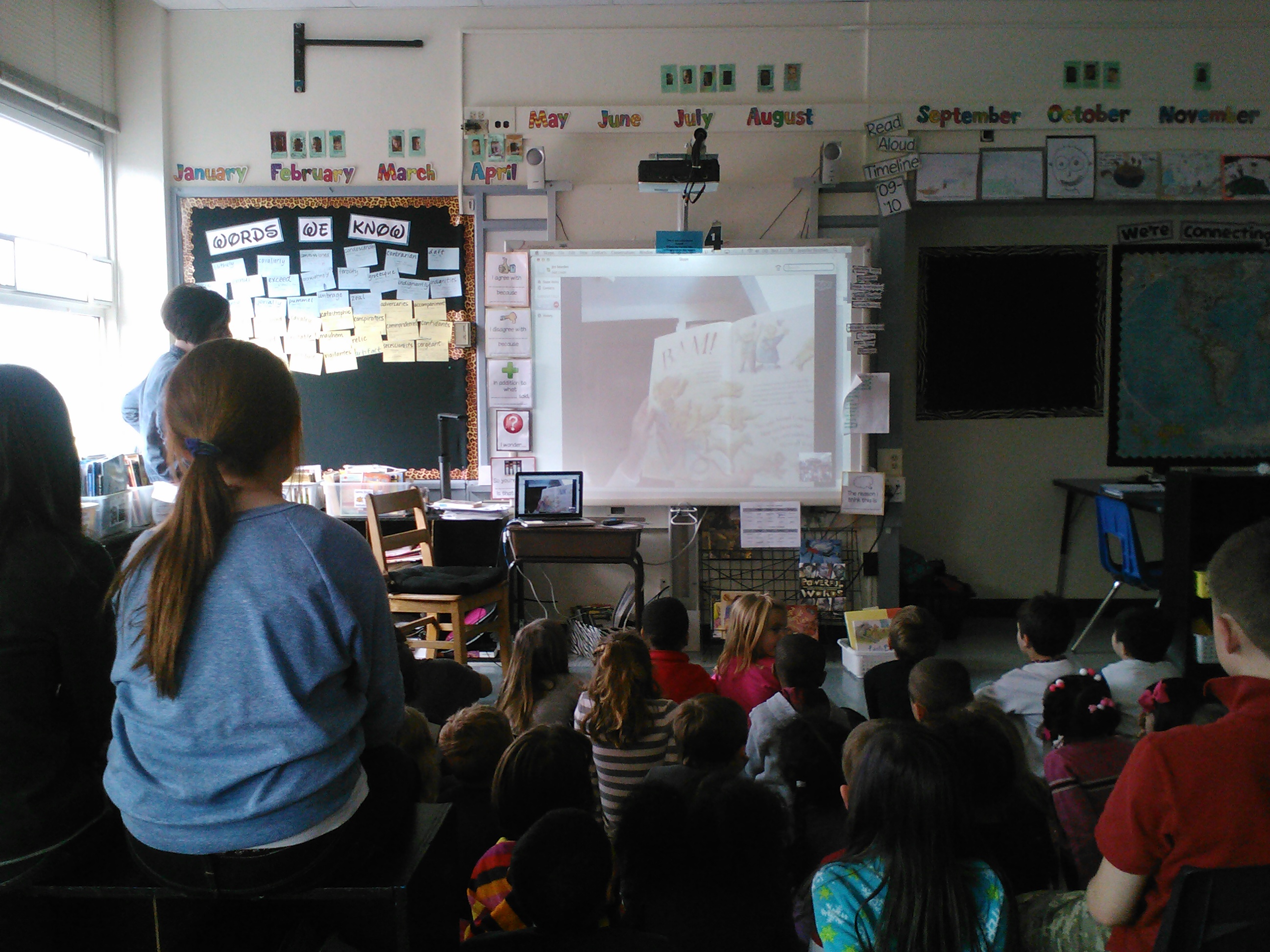
Last week were AMAZED as Lisa Campbell Ernst came to share her writing life with us.  But on Wednesday we were DOUBLE AMAZED when she agreed to Skype with us to celebrate World Read-Aloud Day 2013.  We’re kind of spoiled around here. 🙂

As I mentioned in my original post, I was trying not to be a groupie, but was forward enough to ask her to help with us with our WRAD plans.  Surprisingly, she said yes, and so I began thinking about what we could do together.

I knew my friends were dying to ask her many more things about her writing life, and specifically to see more of what her writing studio looked like.  And because it was read aloud day, we hoped she would read to us, too!

When she was here, she had told us all about the process of writing The Gingerbread Girl.  She also told us about how she got the idea for the sequel to it: The Gingerbread Girl Goes Animal Crackers.  As I remembered this detail, I knew that was the book I wanted her to read!

So we settled in for our Skype call with her, and has 40 or so kindergarteners join us for the experience!  I invited my son, Riley’s, class to come up and hear the story (partly because I knew they’d love the book, but selfishly because I knew HE would love it–we are always talking about books and authors at home!).  Then Ms. Weidinger shared it with Ms. Heifner and they came along, too!  WOW–what a great bunch of kiddos gathered to share such a great day!

Look at all those kiddos!

Look at all those kiddos!  It’s really cool that little kids and big kids alike can share an experience like this one!

First she read to us.  Here’s a little snippet (although now I’m a little sad I didn’t record the whole story!):

Man, it must be crazy cool (and a little bit weird) to be able to read a REAL book that YOU wrote to other people.  I’m a little jealous.

After we enjoyed her sharing her story with us (which is a MUST READ in our opinion!), our little friends left and we settled in to chat with our new best author friend!  We had some great questions left over from our time with her last week: Will you ever write an autobiography?  Do you like writing fiction or nonfiction better? Can we see more of your office?

Then Peter asked how she made up the little rhymes she used in her Gingerbread Girl books.  Her answer, which made sense, was that a lot of it was just trial and error.  But she also shared with us a handy-dandy tool that we now know no writer should be without:

What an amazing visit with an amazing lady!  I, for one, was inspired to get myself published, and I know my students were inspired as well!  What a treat!  THANK YOU LISA!

How did you celebrate World Read Aloud Day?  Who is your favorite author?  Have you every Skyped with an author?  If so, who? Tell us about it!

Paragraph?

Today, with your group, you’re going to do a little digging.  You’re going to dig into the paragraph examples here and here:

Screen Shot 2013-01-21 at 8.17.07 PM Screen Shot 2013-01-21 at 8.17.20 PM Screen Shot 2013-01-21 at 8.17.35 PM Screen Shot 2013-01-21 at 8.17.49 PM

Next your job is to figure out what makes them all paragraphs.  What do they have in common?  What are the “rules” for writing a paragraph?  After you’ve figured out the answer, post your thoughts in the comments (along with your group members’ names) and we’ll discuss together.  Happy digging!  Can’t wait to see what you uncover!

Fiction Frenzy!

We have been busy over the last week collecting new ideas in our notebooks as we start a fiction writing unit.  As with every unit I teach, there are specific strategies that I teach about how to collect for that genre; the idea is that these can then be used over and over again once you know how they work.

Together throughout the week we read several books together, then looked at an idea we could pull out of that book to use in our writing.  First we read The Wreck of the Zephyr by Chris Van Allsburg and talked about how to meld real and imaginary events into the same story.  Then we read Nothing Ever Happens on 90th Street by Roni Schotter, and talked about how to collect “interesting people” to use as characters.  We also tried a strategy that Eva, the girl in the story, uses when she asks “What if?” and then twists the story in an interesting way.  On Thursday we read Moira’s Birthday by Robert Munsch, and brainstormed “messy situations” that we could use in our stories to add interest, conflict and fun.  Lastly, we tried something that I knew my writers had probably never done, and that I knew they’d love.  And they did.  🙂

Let me tell you about it.

The big idea was that kiddos were given pictures from which to get inspiration for a story.  The strategy was a lot like something we did at the beginning when we first started our Writer’s Notebooks.  The first time around, though, the pictures were from magazines, and this time they were from my iPhoto albums.  Yep,  pictures of my kiddos–I knew my school kiddos would be excited about this one and give it their all.  They really love anything related to my family, which I love, too.

We rotated pictures around the room, two at a time, and kids brainstormed ideas for stories that they could write.  Each time they got a new picture, they could then start a new idea, or add on to the one they were already writing.  Here are the pictures we used for inspiration:

OLYMPUS DIGITAL CAMERAOLYMPUS DIGITAL CAMERAOLYMPUS DIGITAL CAMERAOLYMPUS DIGITAL CAMERAOLYMPUS DIGITAL CAMERAOLYMPUS DIGITAL CAMERAOLYMPUS DIGITAL CAMERAOLYMPUS DIGITAL CAMERAOLYMPUS DIGITAL CAMERAOLYMPUS DIGITAL CAMERA

The activity was really fun, and I am pretty sure that many of these ideas will become the seeds they’ll choose to publish.  Be sure also see the posts about it on our blogs.  Maybe you could even try it yourself.  What stories would you come up with from these pictures? Comment and tell us about it!  We’d love to use your stories as inspiration, too! 🙂

No One Died Today!

But boy, I’m sure some of them were worried about it.

Yes, of course, I’m kidding!  Let me tell you about what I mean. 🙂
I wrote yesterday about the writing cycle and our recent celebration.  Well, if you remember the way the cycle works, after you celebrate, you start over again with a new project.  In this case, we’re working on Personal Narratives.  We spent a couple of weeks collecting memories and other stories in our Writer’s Notebooks and then picked a seed and nurtured it with some help from our writing partners, and then today we were ready to draft.

Here’s the basic directions about drafting in our classroom:

Now, the first time through the cycle we didn’t do it exactly this way, and maybe I even let them just use the version that was collected in their notebooks.  But this time I made them do it “right.”  At least my right way.  And that’s when they thought they would all die….

I started our mini-lesson with a reminder about how I wanted them to draft, and then showed them how to do it with the seed I had chosen.  It was based on this entry from one of my Writer’s Notebooks:

So, as they watched and listened, I read, then reread my piece to get the big idea of how I’d written it in my head.  The second time I also paid attention to the parts I really liked and knew I wanted to include in my draft.  We talked about how those were parts that we read and said to ourselves: “Man, that’s good…”  Those are the highlighted parts.  Then I read it again, and had most of what I wanted to say ready to write down.

And that’s when it got scary.  Now, I’ve told my kids that I wouldn’t ask them to do anything I haven’t done or wouldn’t be willing to do myself.  And writing is an especially good example of this idea.  I always go through the cycles with them; we write together and make mistakes together and grow together.  So today, that meant that we would draft together.

We sat in front of our ActivBoard, and I was ready to write my story using the document camera so they could see it.  And I’m not kidding when I say that I TOTALLY understood the feeling that kids get when you ask them to do things like this for the first time.  I really didn’t know what I was going to write and I had an audience waiting for me to write something fabulous!  Luckily, my kids understand how to be gracious and go-with-the-flow with me, and so they supported me through this struggle.

After what seemed like forever, I had a rough-draft version of my piece.  And just like I told them might happen, I think I liked most of the new version better:

And so after we reviewed the steps: read, reread and highlight the “Man, that’s good…” parts, reread and then start writing, I sent them off.  DON’T EXPECT THIS TO BE PERFECT, I tell them, because we’re going to work on revising it anyway.  Give yourself a break and just write your story. 🙂  But still, there were so many frightened faces in the bunch; I really did think someone was going to throw up over these directions I had just given them.

I think, though, because they trust me and they trust the process–no matter how different or crazy it seems at first–they did what I asked.  The next thing I saw were kiddos all over the room drafting in a way they never had before, and not dying.  They really were able to do it, and it wasn’t as hard as they thought it would be.  But even it if was, that was ok.  “Hard is good!” is another saying I have, because, as we have also talked about many times before, “hard” is an opportunity to learn and to do things that amaze you.

Maybe the two best things that came out of today were this:  one friend came to me and told me that even though this was hard, she was glad that she’d done it–the version she wrote today was even better than what she thought she could do; and another friend–who usually has trouble finishing a draft quickly, and who was a little unsure about this process when we got started today–finished his whole rough draft, and was able to do it in a fabulous way! I even got chills when I read a line from his piece because it was that good!

Today was another example of many that I hope I teach my friends this year: just because something is hard doesn’t mean it’s not worth it.  Hard is good, and many times when you persevere through something you first think is a challenge, you are amazed at what you’re able to do.  And that amazement motivates you to keep going and do something amazing again! 🙂

What have you done recently that amazed you?  How have you persevered through something hard? Do you have a writing story to share with us?  We’d love for you to share your thoughts!

Dot, Dash, Slash, Comma (And All That Other Stuff, Too…)

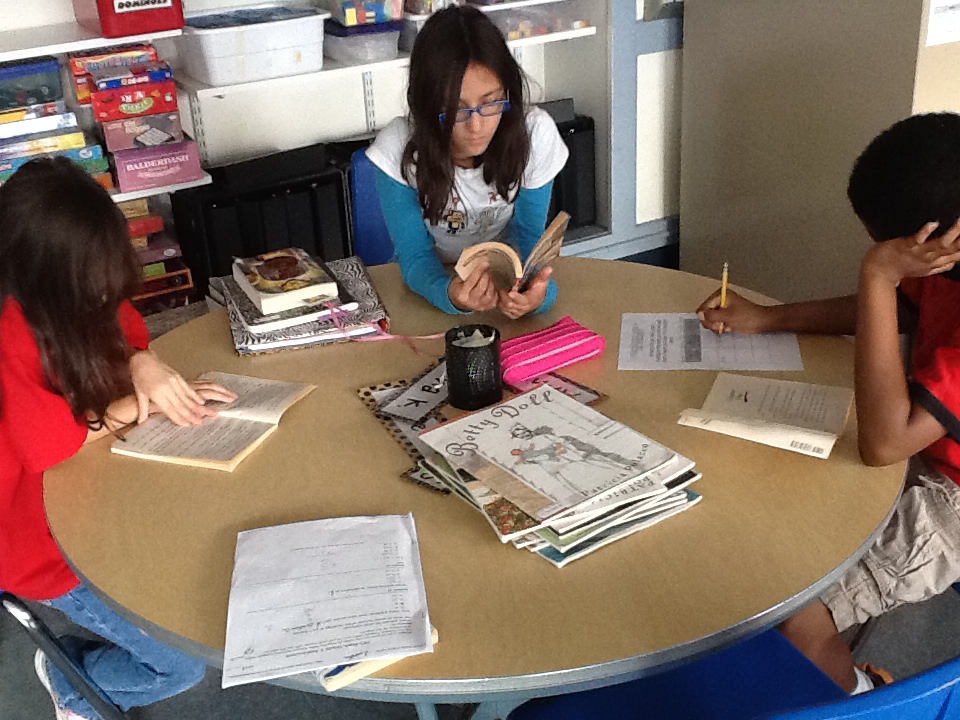
We have been on a journey these last few weeks.  It’s a journey many of my students have never been on before.  And it’s related to these piles of books:

Can you see it?  All the punctuation goodness on that table?  No?  Well my kiddos can now.   Let me tell you about it. 🙂

Punctuation is a funny thing.  No?  You never thought of it that way?  Well, it’s one of those things that has gotten a bad wrap for a long time, and without good cause–in my opinion.  Many people (including most kids!) think of punctuation as a bad word.  It’s just a you-have-to-go-back-and-add-it-in-the-right-place-at-the-end-because-your-teacher-told-you-too kind of a thing.  Not a this-really-matters-and-helps-me-as-a-writer kind of thing.  And that’s too bad.  Punctuation is a powerful tool for a writer, and I want my kiddos to know that.  But it’s only a powerful tool if you know how to use it, and most of my kids don’t.  At least not yet.  With this goal, we started 2nd quarter Writer’s Workshop.

After spending a bit of time on what they already knew (or thought they knew) about punctuation, I asked them to tell me if they’d ever thought about what it meant.  Most said no.  Some even groaned a little bit at the beginning of this conversation when I said the word.  It was obvious that they’d never had a positive experience with this topic, and that made me a little sad.    As a means to hook them in, and get them to understand my goal for this study, we visited a section of a book we have read together and all love: Because of Mr. Terupt by Rob Buyea.  I found a place in the book I knew we could all chew on together; the paragraph right before the big action in the book was a great place to dig in.  I asked them to talk to a partner next to them about why the highlighted sentence was written the way it was, and how it would be different if it had been written without the given punctuation.  We discovered that the punctuation (which was mainly a series of commas) was there to force us as the readers to slow down.  The part just before was fast-paced, crazy and choatic; the commas made us slow down and pay attention to what was happening next.  And what happened next was the climax of the story–without it, the rest of the book wouldn’t have happened.

So remember that pile up there?  After we set the table, and got them feeling a little more love for this idea of punctuation, I put them into study groups.  They had one goal (ok, I guess it was really two): find examples of punctuation in the texts they were given, and figure out what it means when authors use it.  They had a chart to fill out with their partners and a big chunk of time to search.

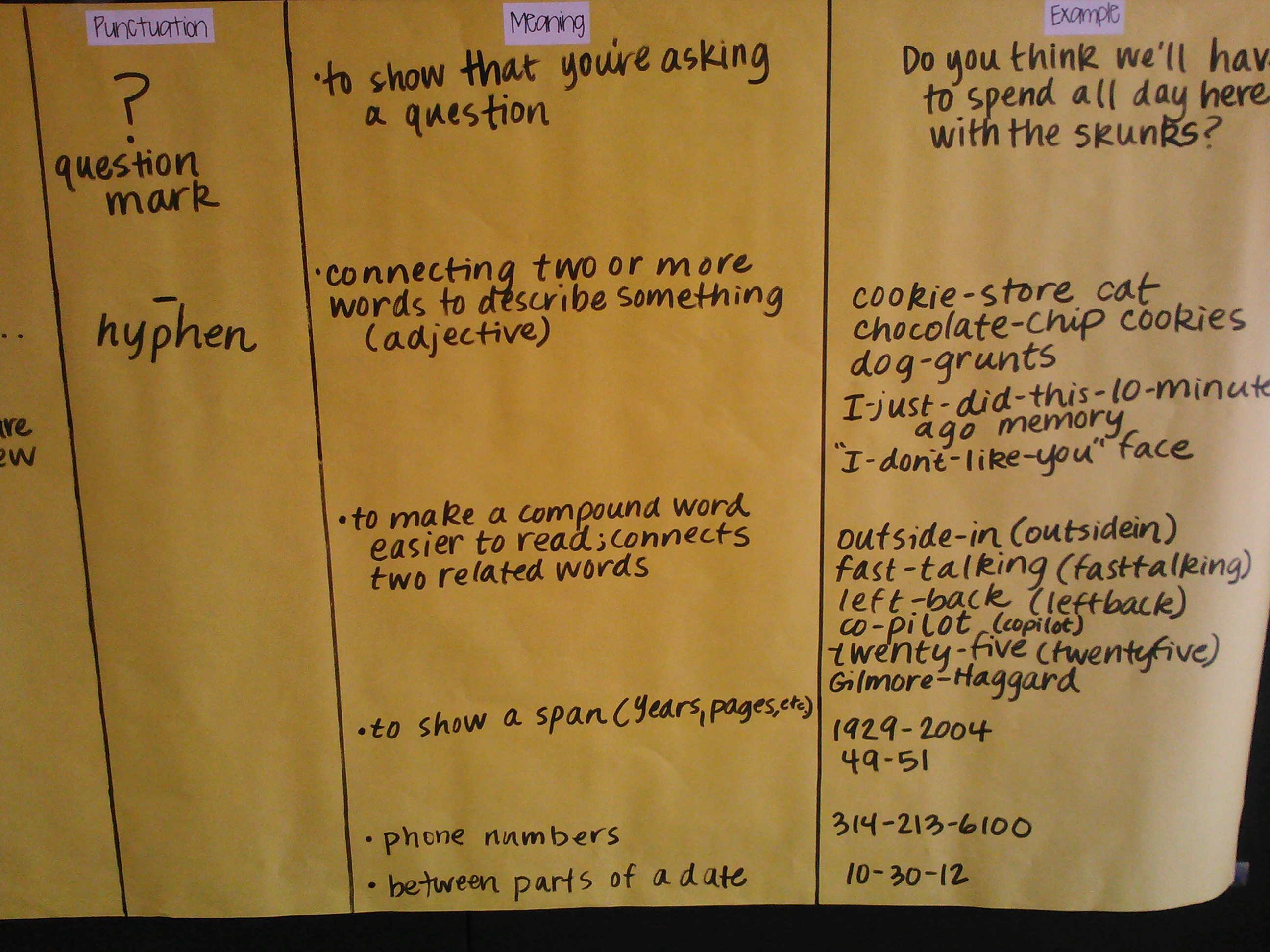
After the groups had a couple of days to study (yep, you heard right–they worked diligently on this treasure hunt for 2 days!), we gathered to collect our thinking on a big class chart.  They took turned sharing the marks they found and telling the rest of us what they thought it meant. For some this was hard thinking, since they hadn’t done it before.  By the end of the first day we had this:

Ok, that’s not exactly true.  We had all but the hyphen part, but hey–good stuff, right?  They were amazed that they had figured all this out, and that they did it all without me telling them what it was.

The second day we added some thinking about hyphens:

I wish I would have recorded this conversation, because it was so great!  It started with the discovery that a hyphen (-) and a dash (–) are actually two completely different punctuation marks, which mean (and are used in) completely different ways! (Did you know that?) This totally blew some kiddos’ minds and so we had to dig in a little deeper to figure out what each meant.  And hyphens were first.  The first two meanings were hard to explain, but once we started to find examples in the texts we were reading that fit each one, it became more clear.

Since then, we’ve come back every day to add a little more smart thinking.  So far (and we’re only a little past halfway done), we have another whole chart the size of this one, plus we’ve started a third.  The things they are discovering are amazing.  The most amazing–and meaningful–part is that they’re doing it all for themselves.  I’m not pouring the information into their heads, or having them spend time correcting sentences in an isolated exercise for morning work; we’re learning together and really focusing in on what these marks mean.  They’re beginning to care, and they’re beginning to notice these marks more and more–in their reading and now in their own writing!  They are aiming to use them in new ways, and can even tell you how a paragraph is punctuated as I read it aloud to them.  Often I’ll stop after we’ve read something in our chapter book and ask “What do you think that looks like?” and they can tell me exactly what kind of punctuation is there!

Teaching about punctuation is not hard.  But it is time-consuming, and it does require me to know more than I may have first considered about the topic, as well.  But the time that is definitely well spent.  These friends are walking away from each conversation we have with a new understanding of how to they can use punctuation just like word choice, organization, paragraphing, and voice to create a more meaningful experience for the reader.   Pretty cool, right? 🙂

Now the first section hangs on our windows, where it will be there for us to use for the rest of the year!  The goal (and I think they will make it!) is to make their punctuation chart “6 windows” long.  So far we’re at 4 or 5, and still going!  SO MUCH LEARNING!!

What are your feelings about punctuation?  How did you learn about it when you were in school?  How do you teach punctuation in your class?  If you’re a parent, what are you noticing (or hearing) about punctuation with  your student?  Please comment and let us know what you’re thinking! 🙂

I Told You We Were Blogging, Right? :)

Really they’ve been blogging all year.  Only it’s been on our class blog.  A few short weeks ago now, though, our 5th graders got their own blogs!

There is a long story behind how I started down the road toward kid-blogging, and I posted about it here.  We did much of the same process this time, and it went equally as well with these kiddos as it did the first time around.  Only I have a little bit of  hunch that this year’s class will go even farther with their blogs.  Partly because we started earlier and so they’ll simply have more time, but also just because this class just seems to dig into their work with such eagerness and enthusiasm.  I think they’ve already written more posts on their own at this point.  They really think in terms of what is “blog worthy” as they go through their normal lives.  I love it when I go home and there are posts waiting for me in the inbox that tell the tales of all the great things that happened during the learning day.  And not because I told them to write about them, but because they wanted to write about them!  It’s great.

But I digress…

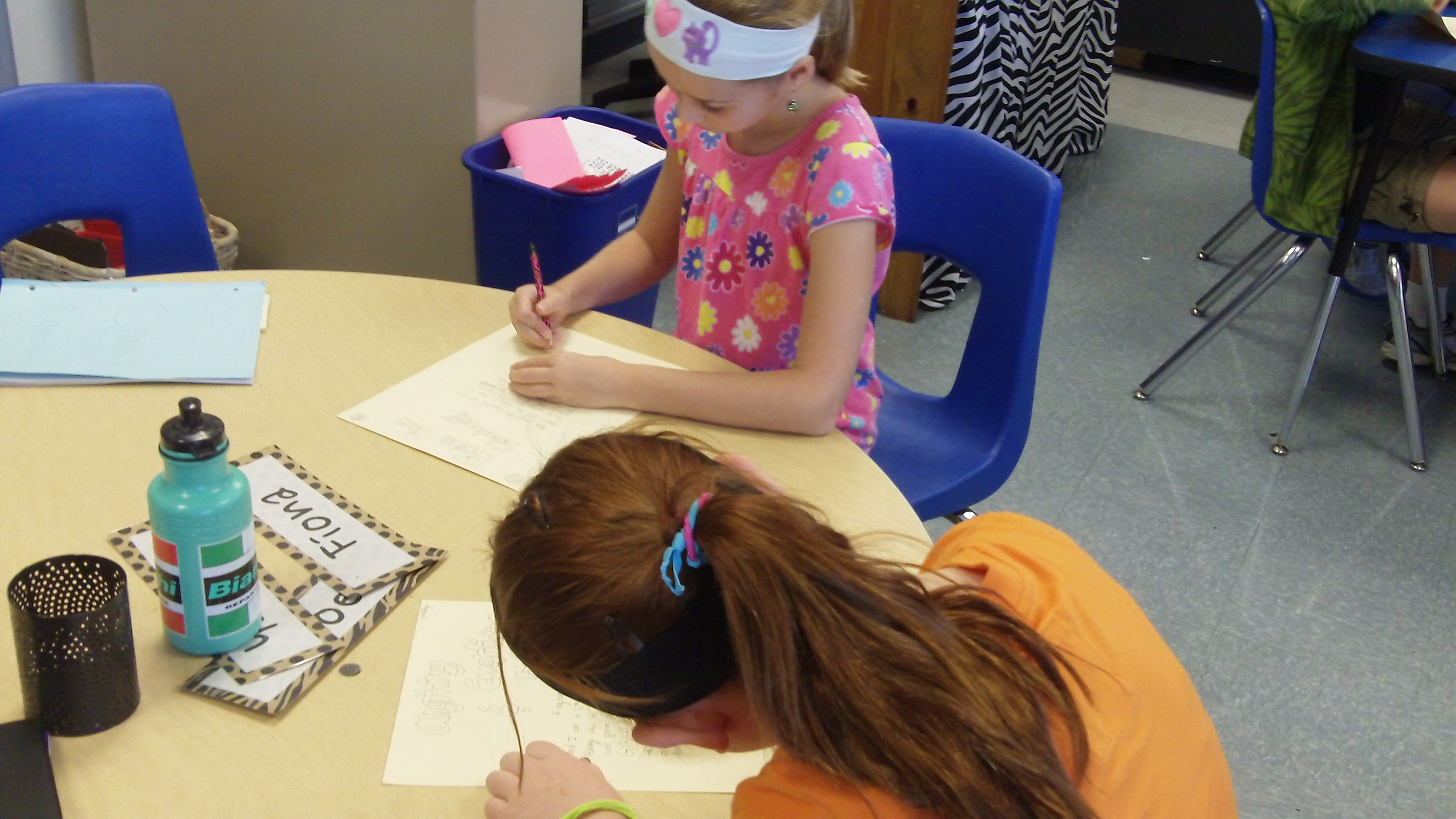
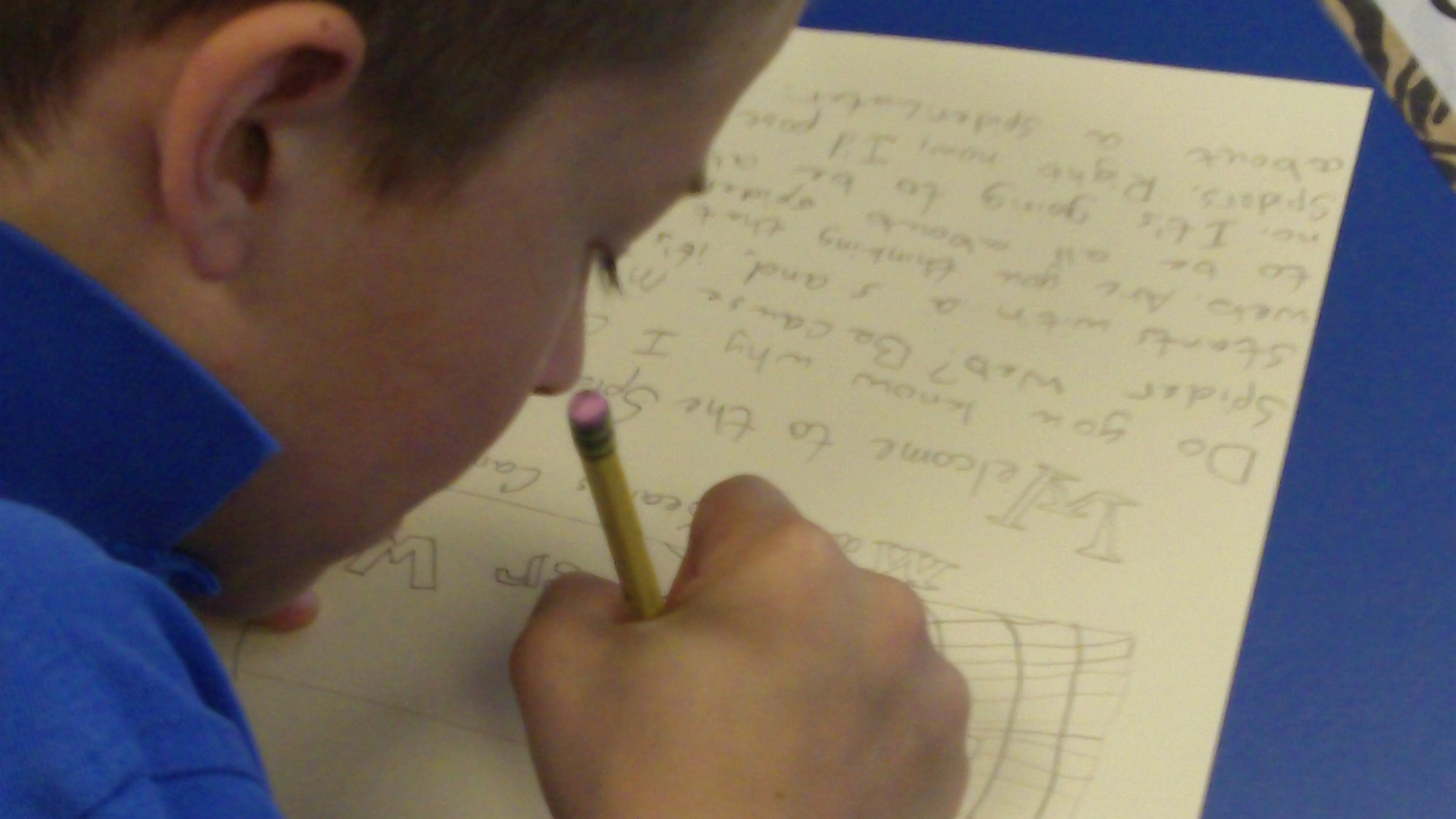
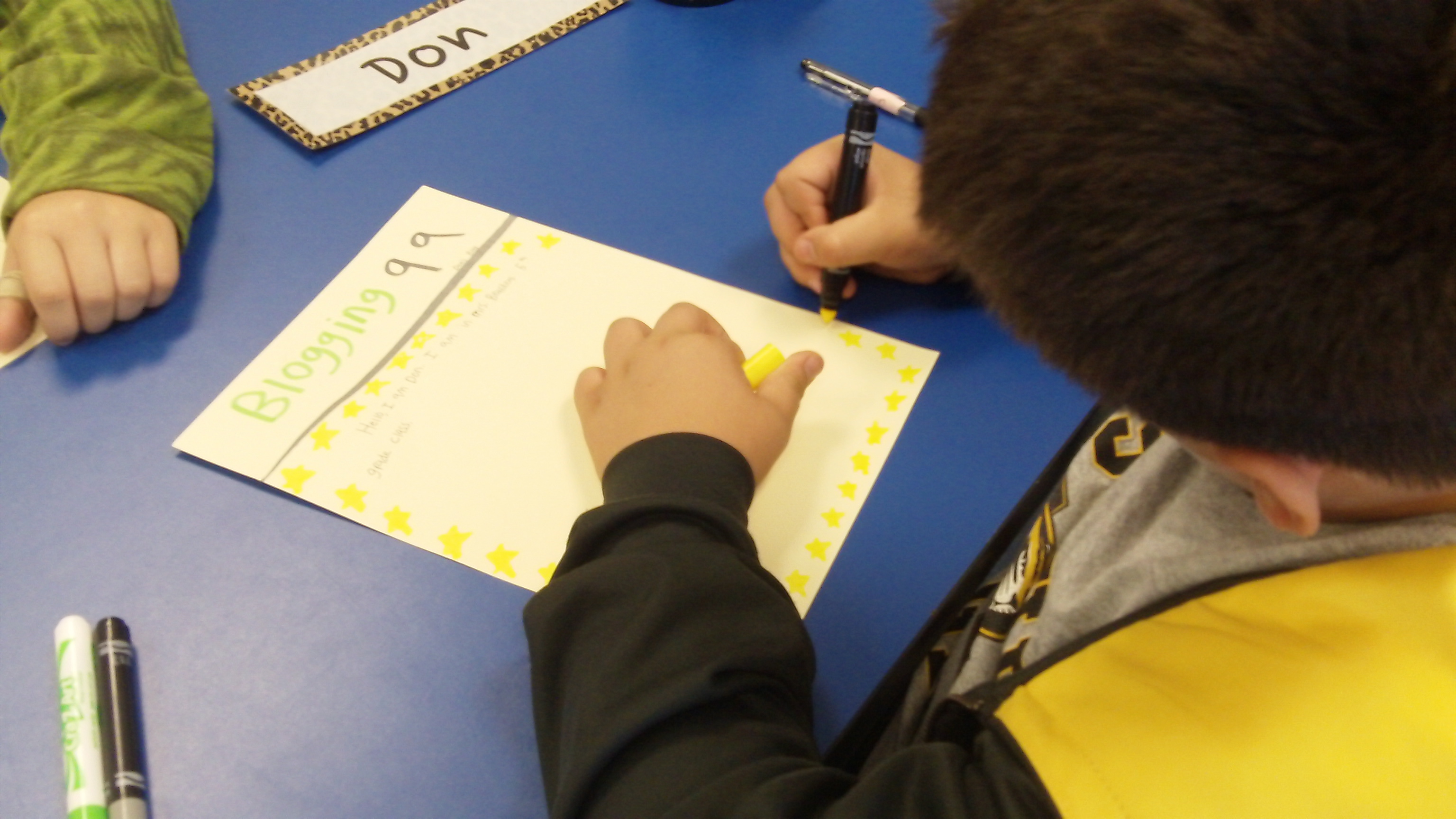
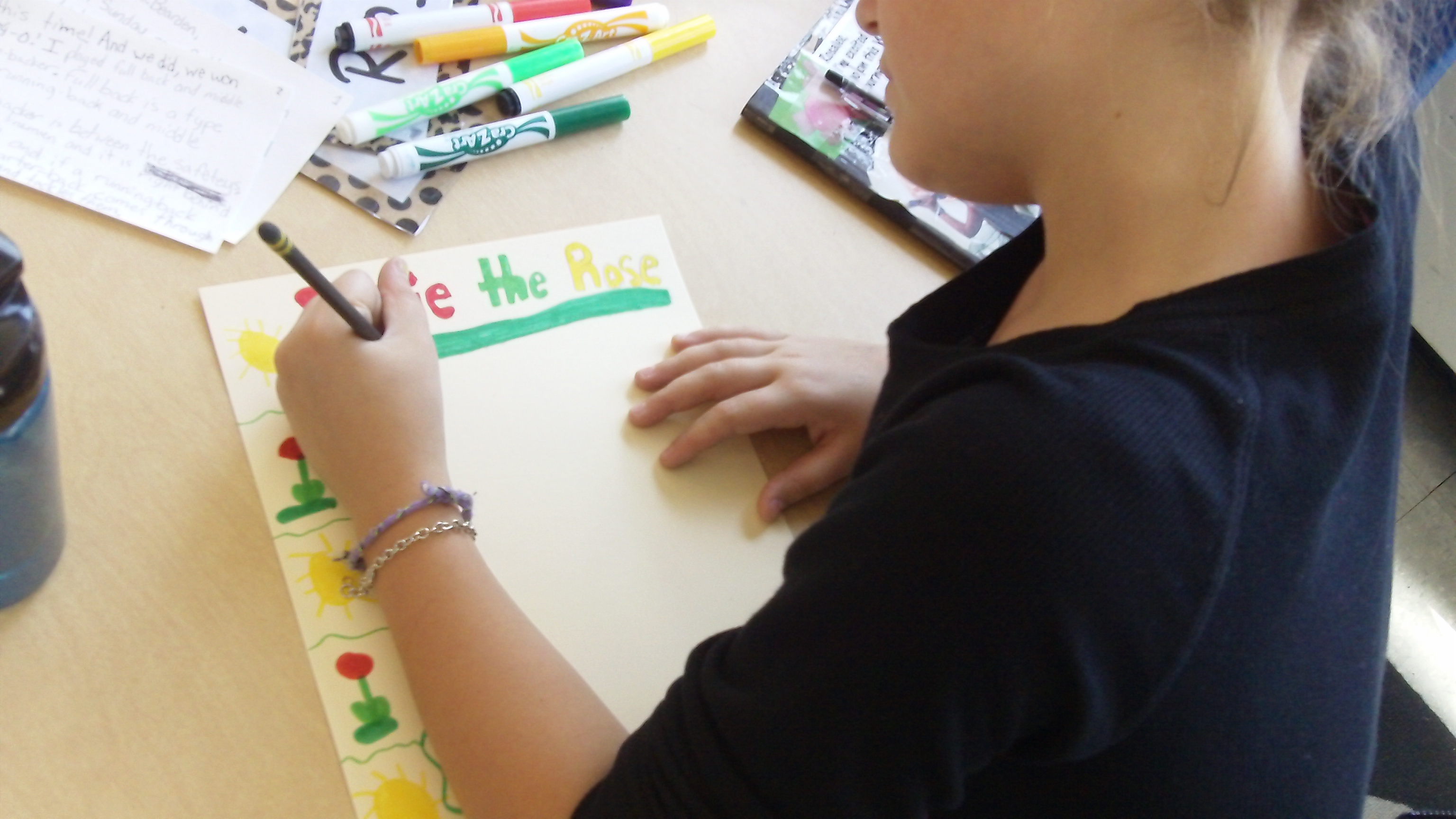
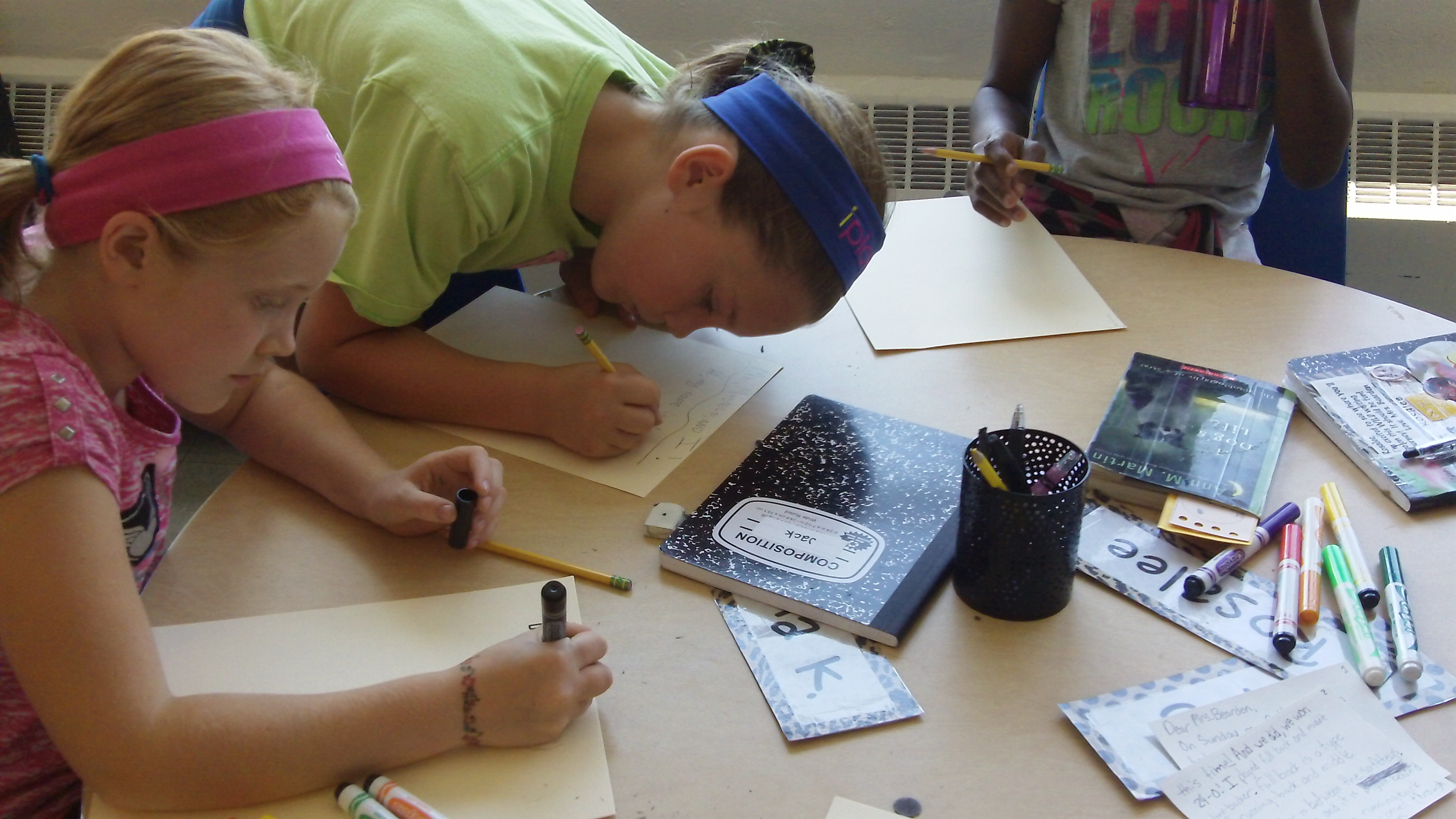
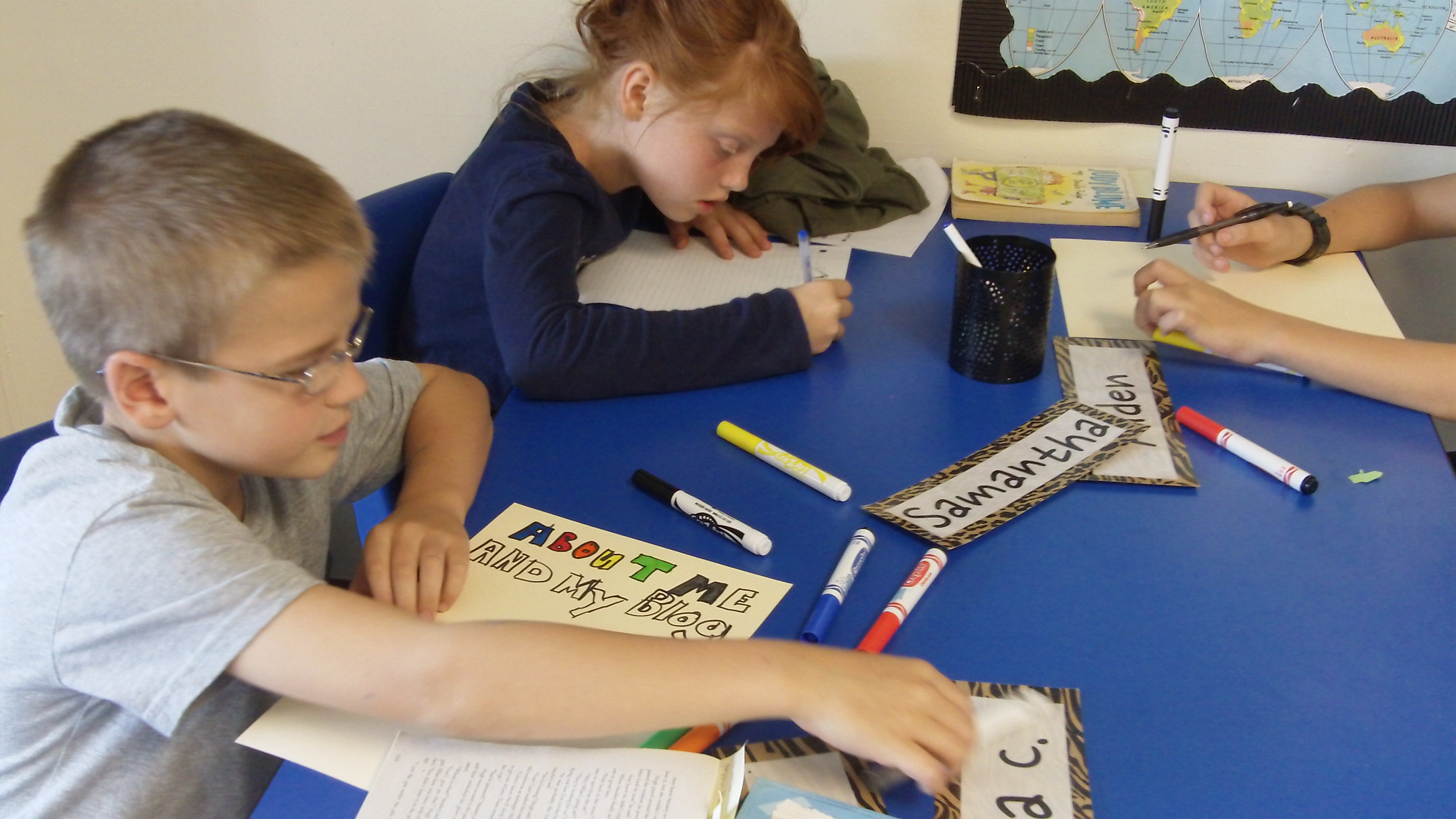
Here are some pictures of our first days on the blogging journey, which started with creating our paper blogs:

Some kiddos got inspiration by checking out last year’s blogs before they got started on their own.

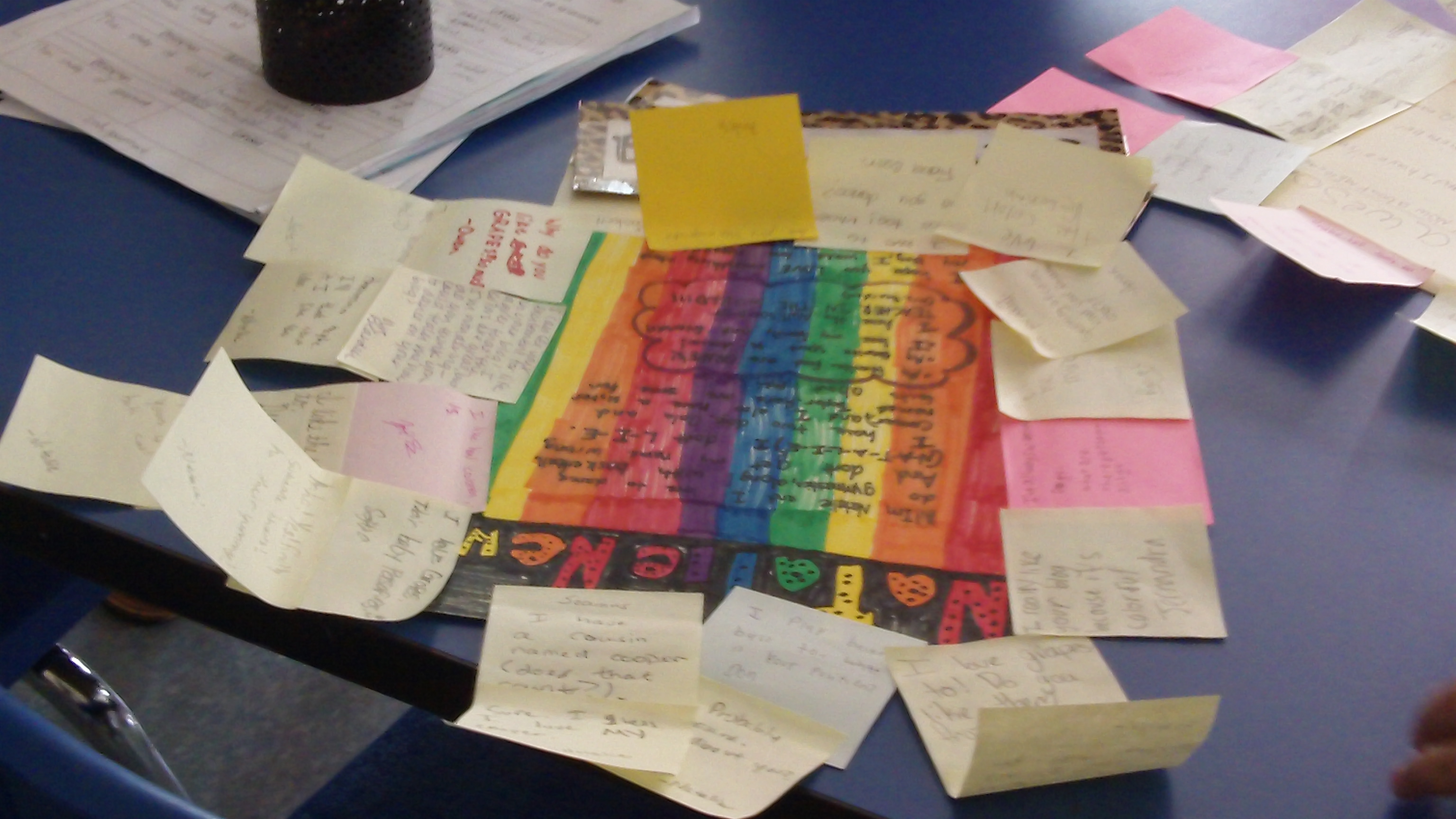
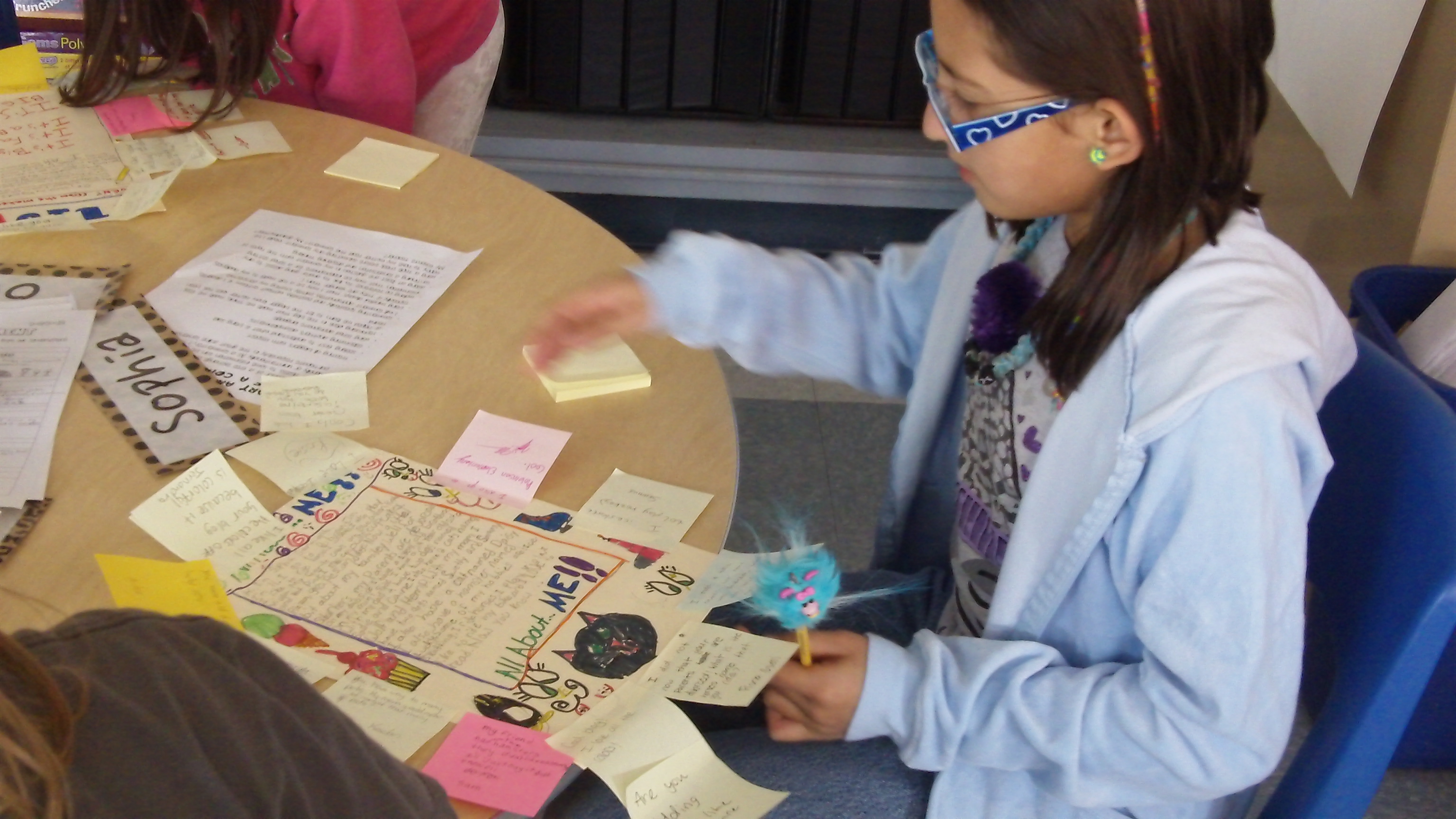
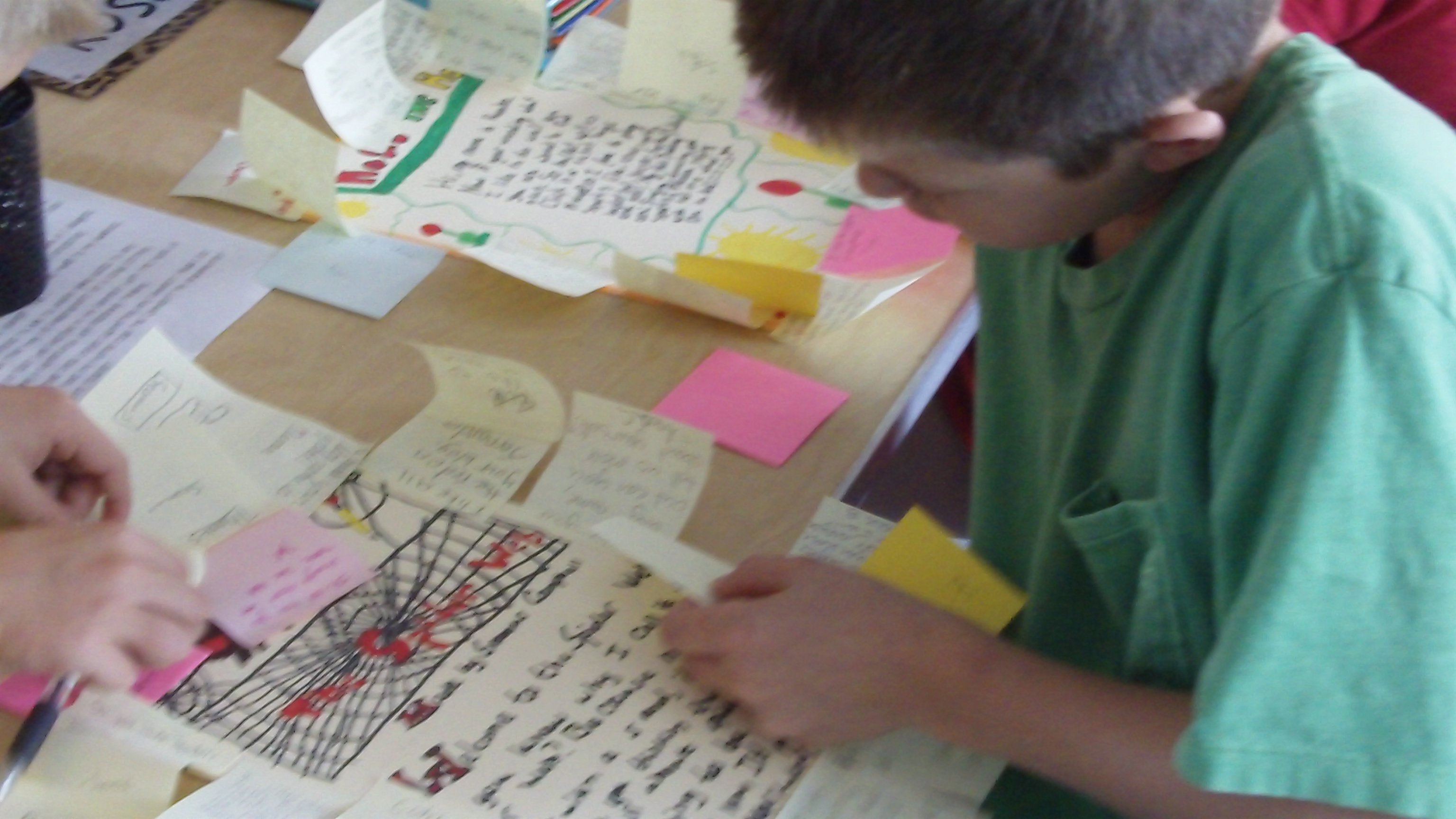
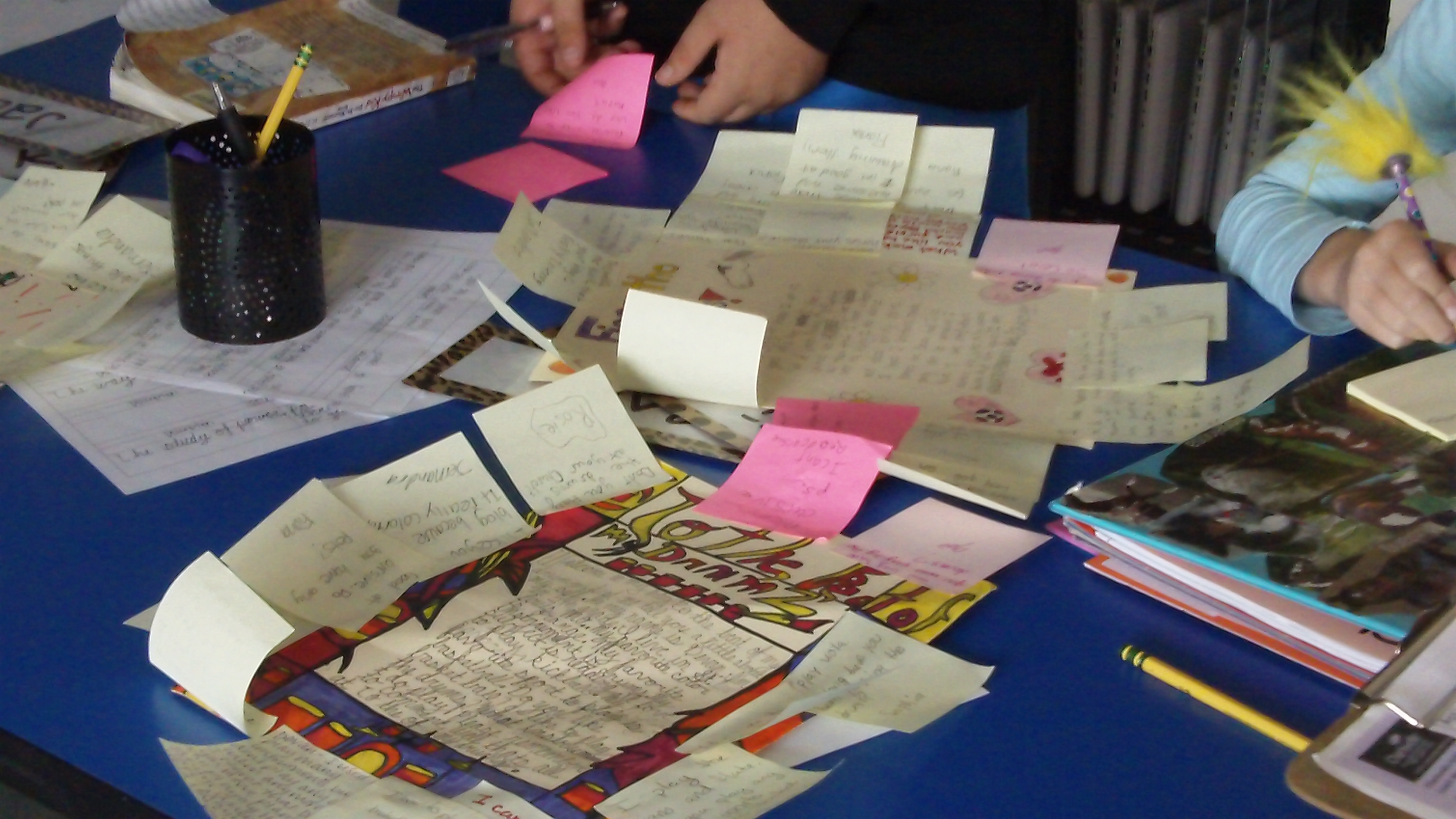
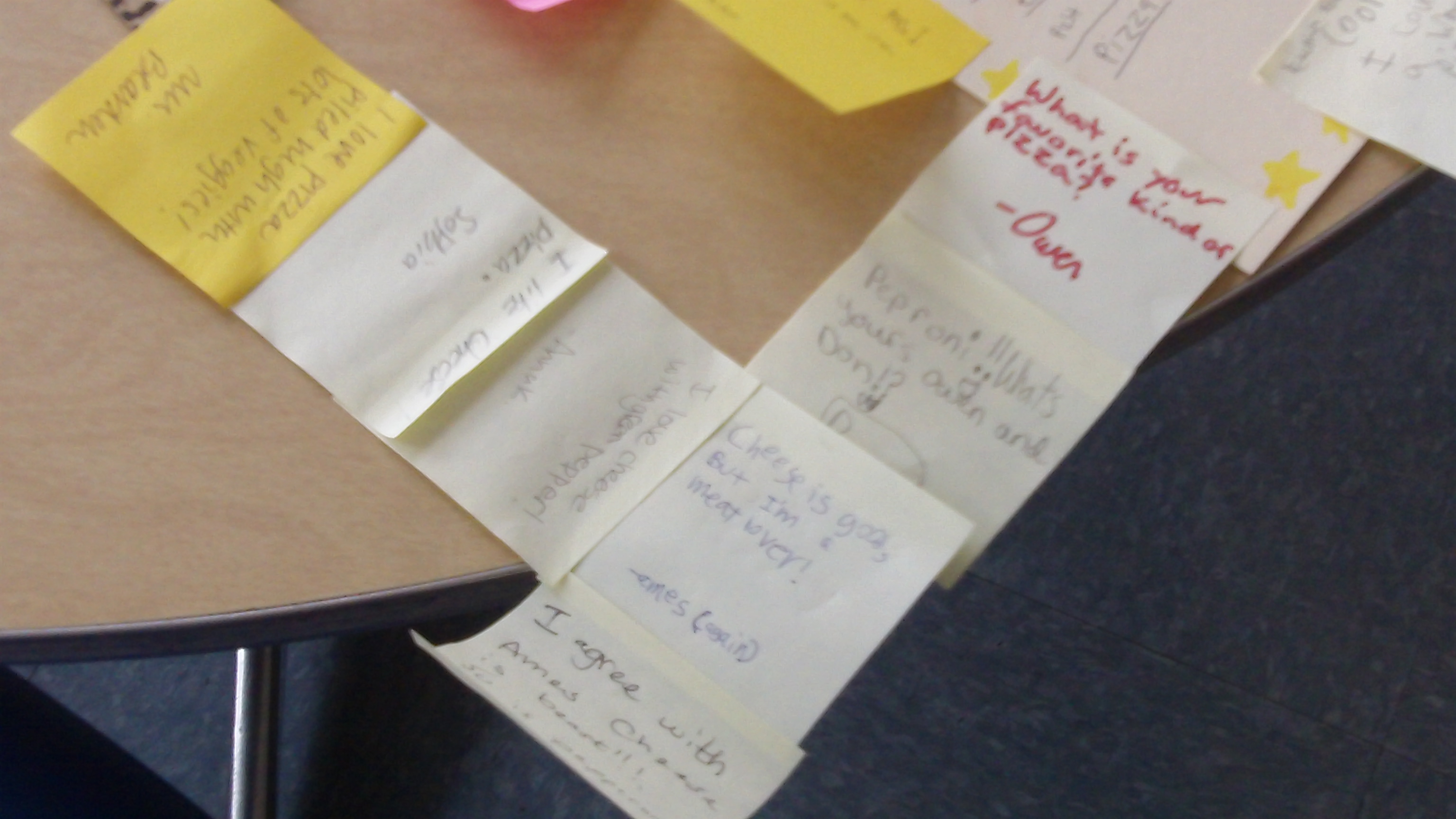
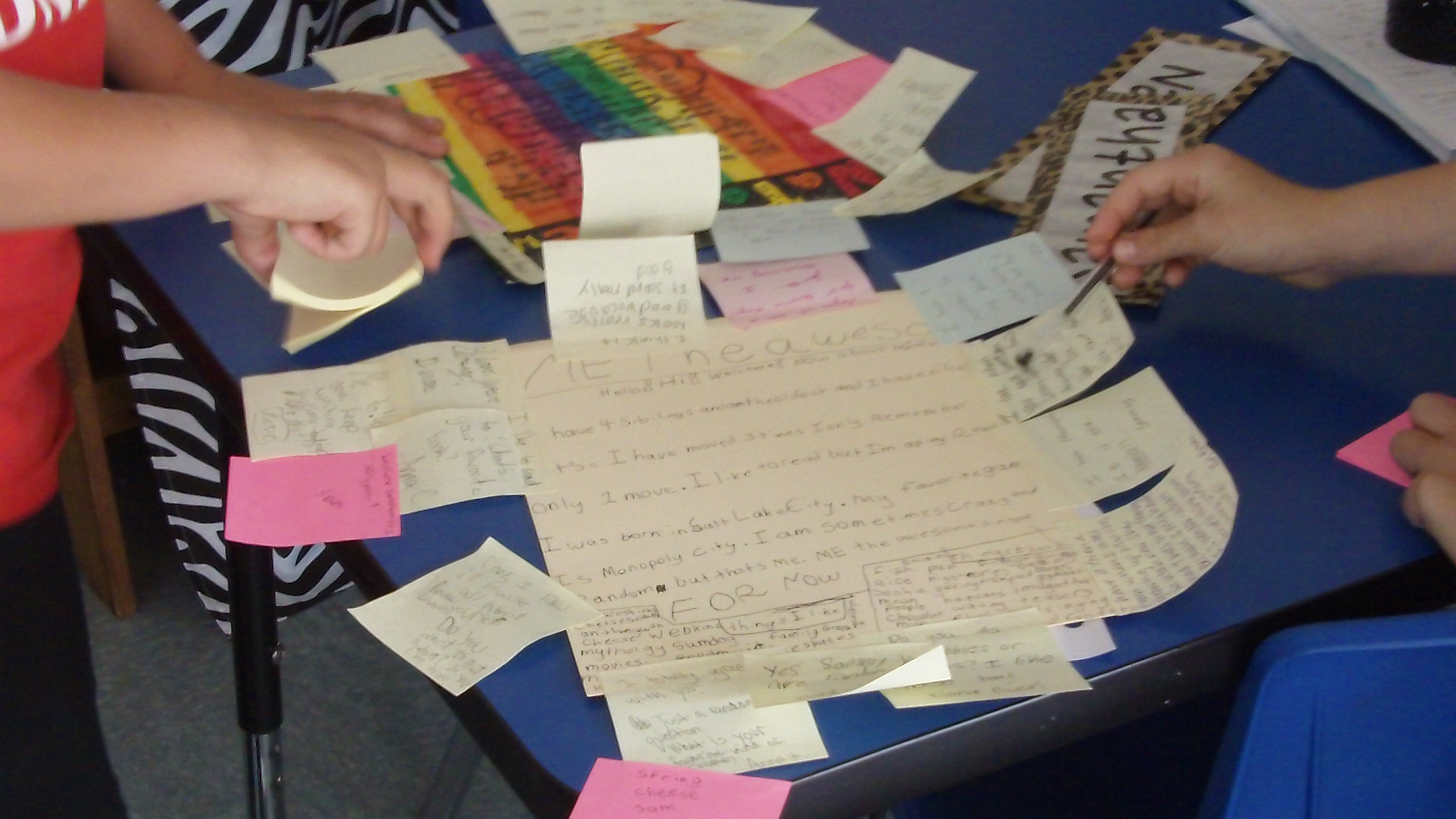
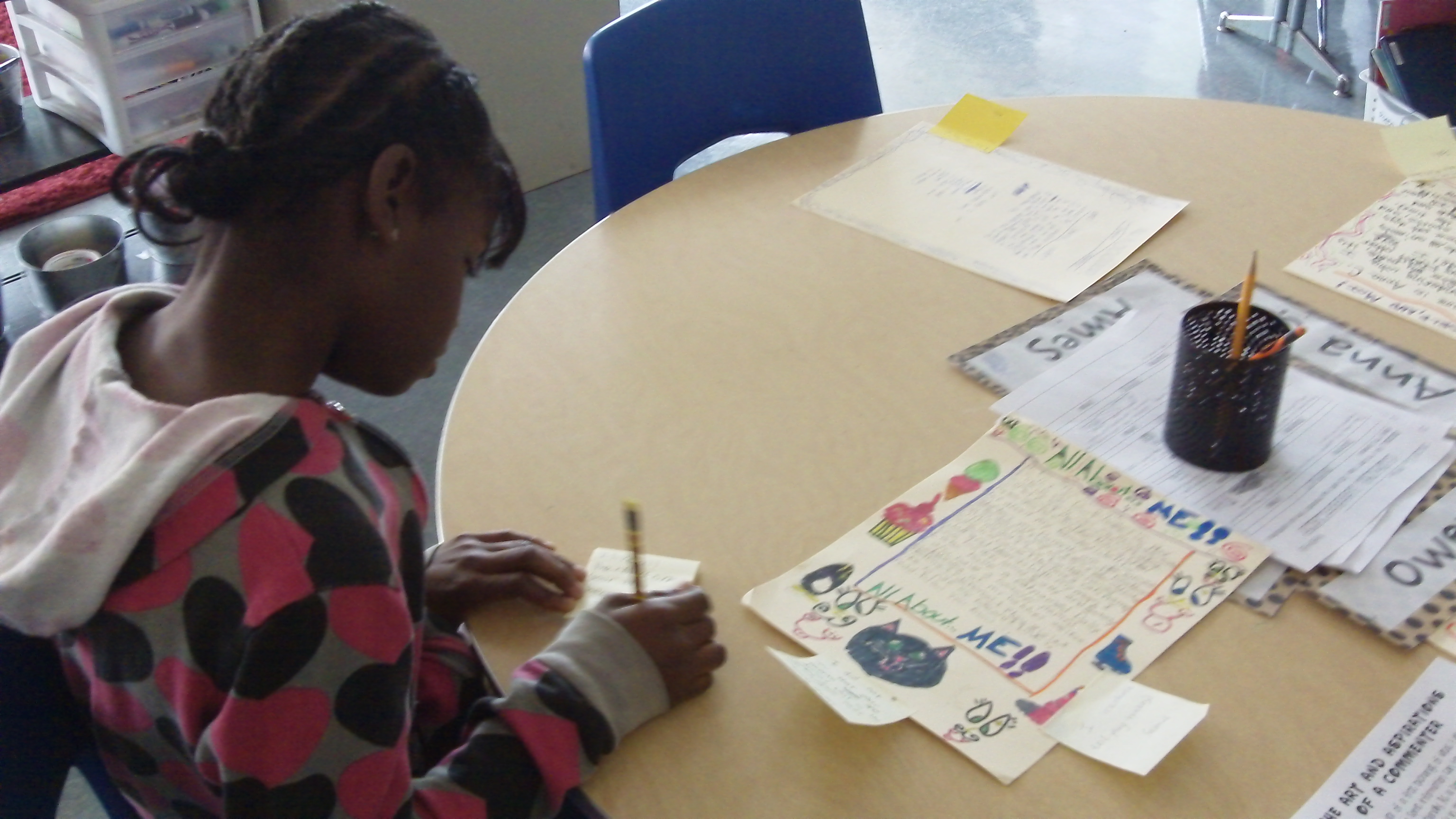
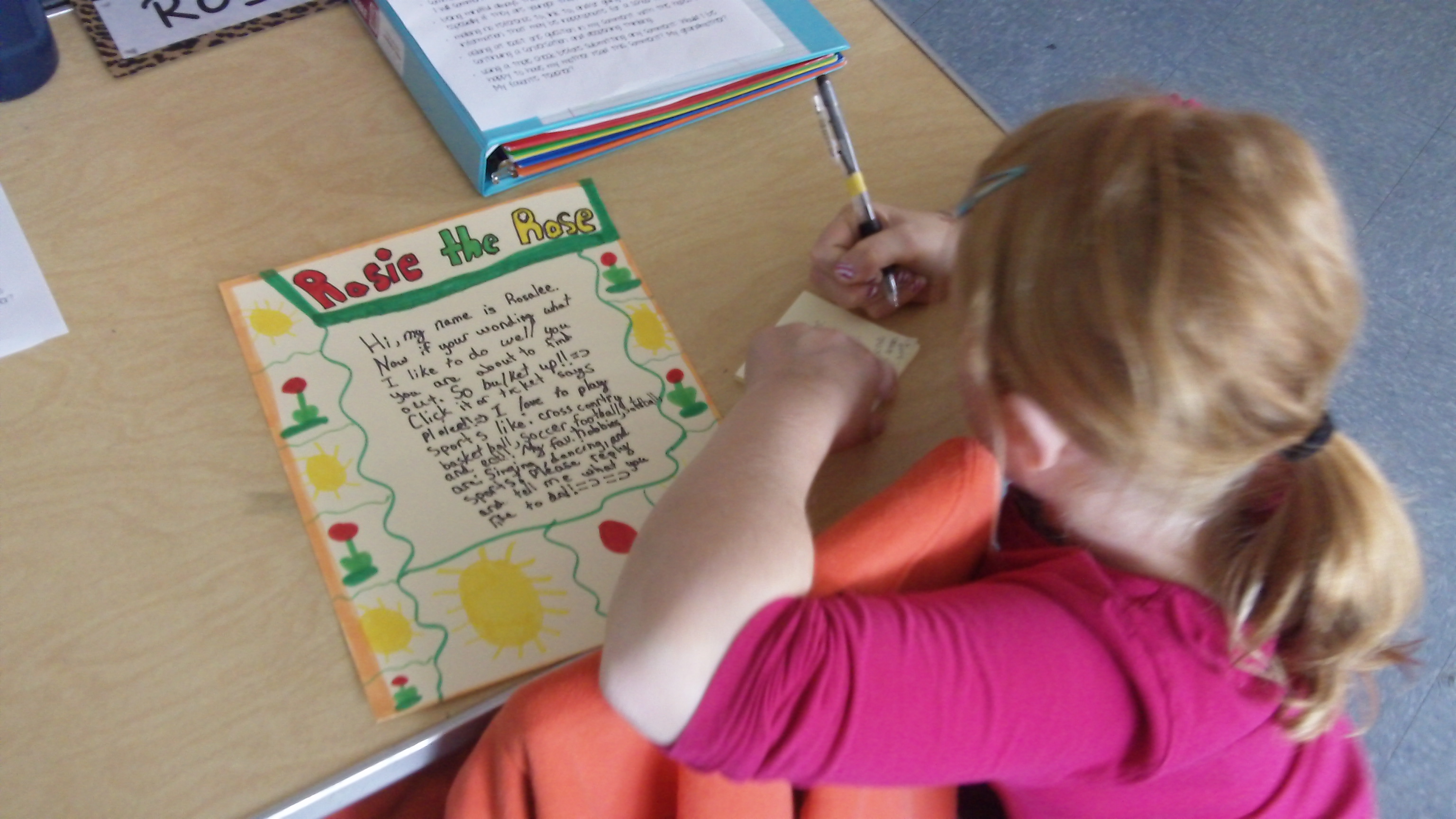
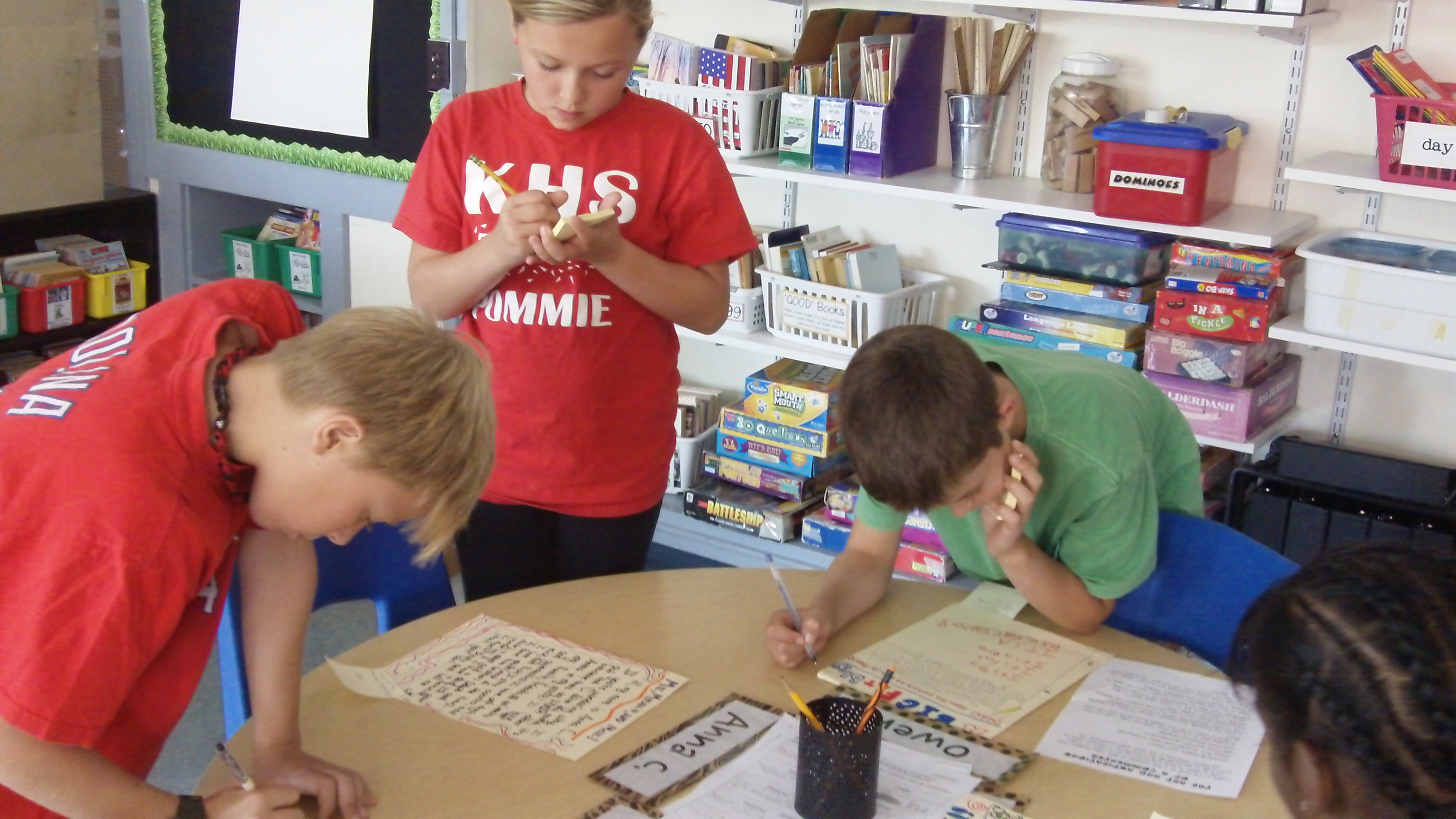
After we had our blogs created, we learned how to comment.  And got to work practicing on post-its before we went into the “real” world.  I have to say how proud I am with how great they did, remembering to be positive, tell something they liked about the blog post, as well as ending with a question to keep the conversation going.


So needless to say, they are totally rocking this blogging thing!  If you haven’t had a chance to check us out, visit our student blogs to see what it looks like live! We would LOVE it if you left us a comment to tell us what you think!