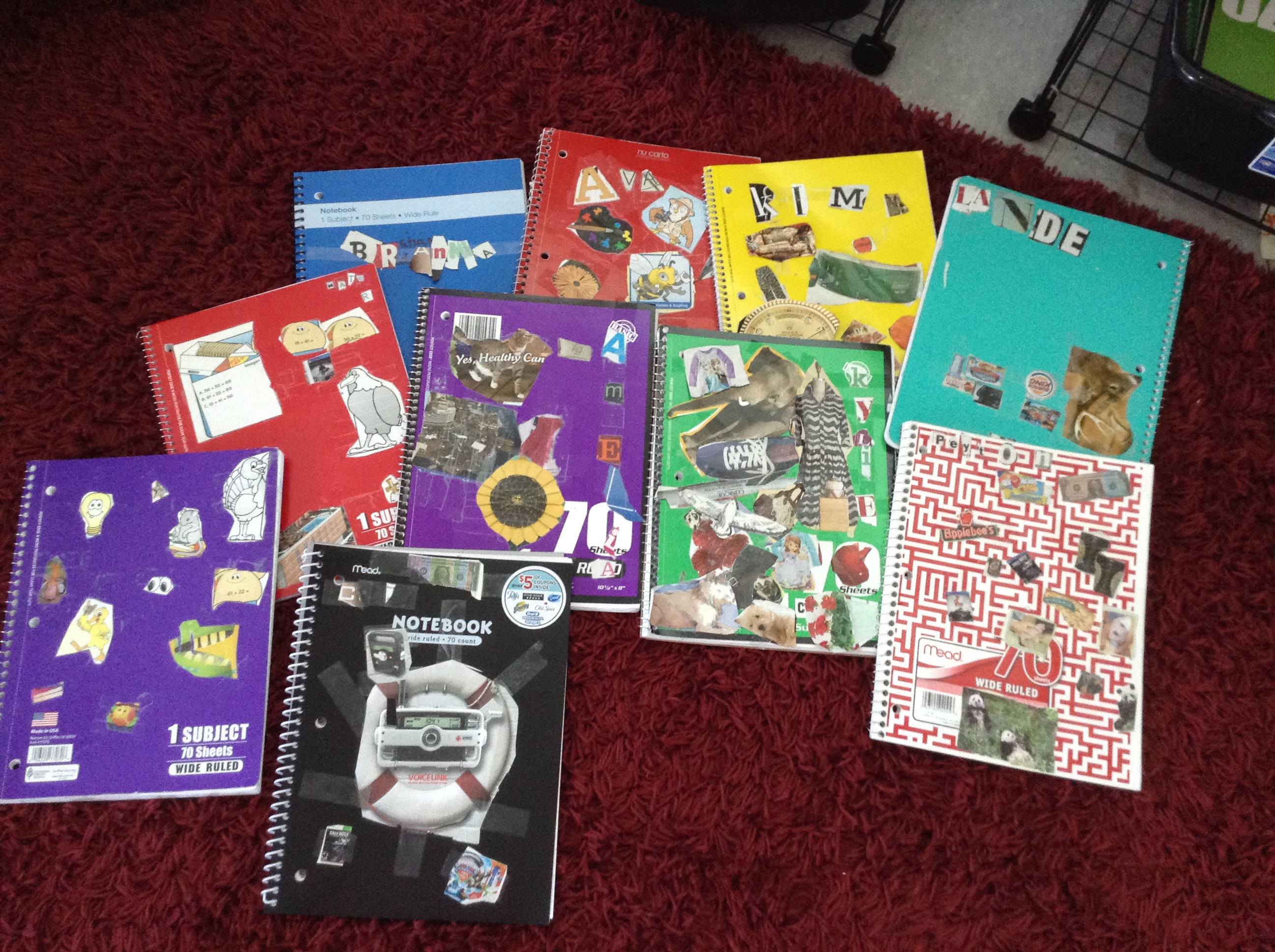
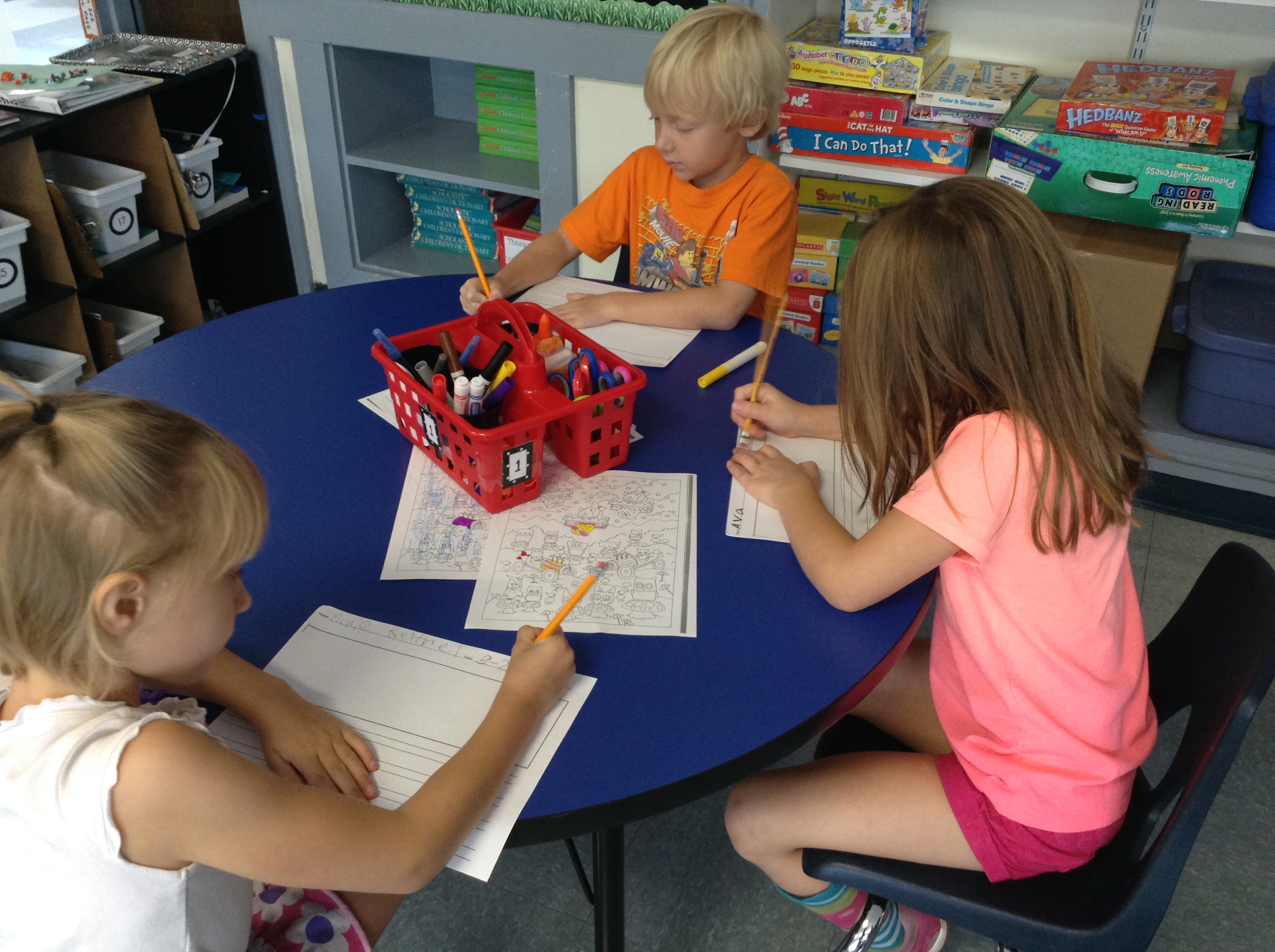
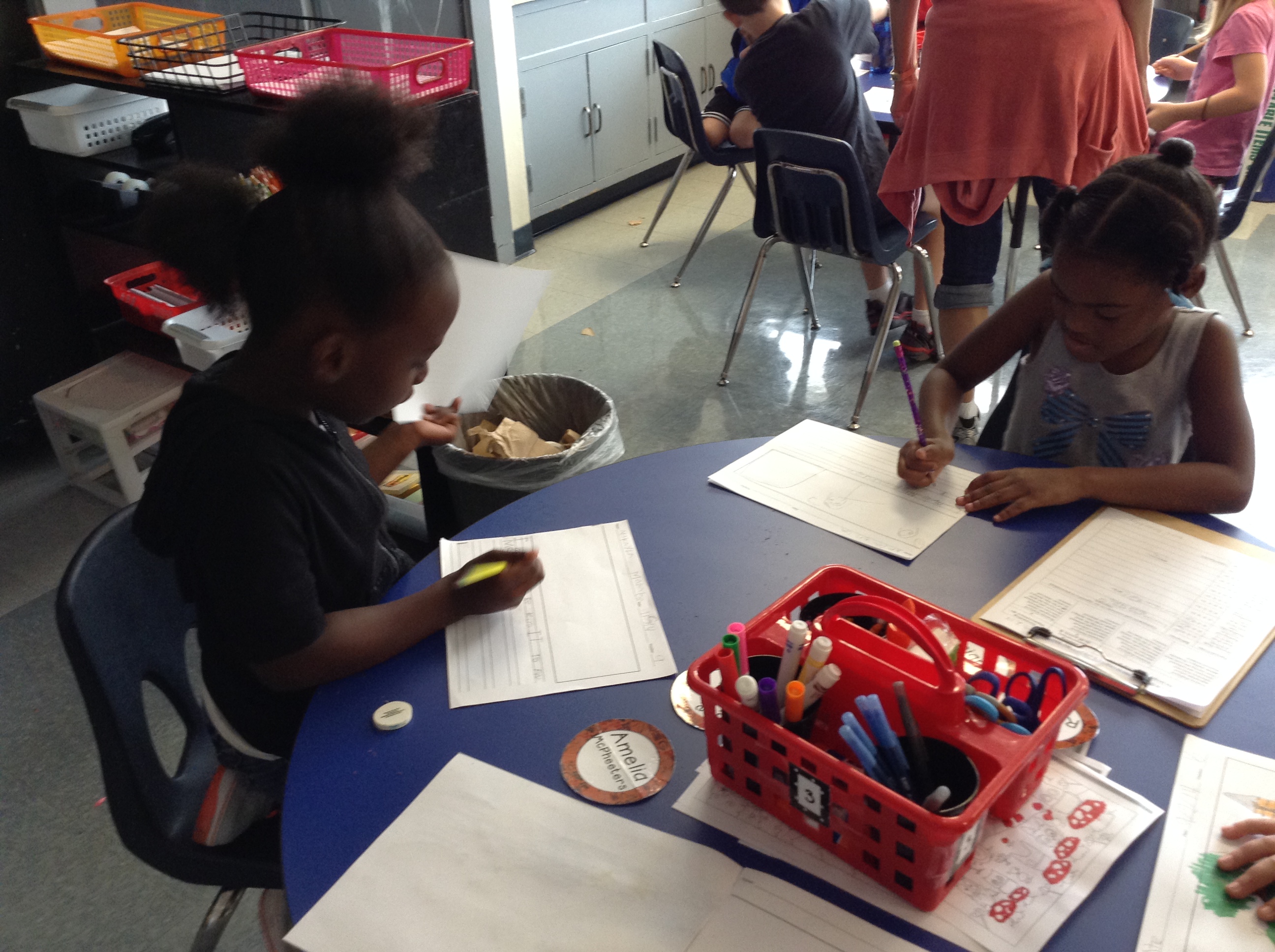
Tiny Notebooks: Why Do We Write?

I shared the very beginning of our 2nd grade writing journey here.  Since that first day, we’ve done many amazing things as 2nd grade writers.  Let me share them with you. 🙂

For this first unit of writing in 2nd grade, we’ve been working to establish our writing community, helping every writer to see their part in it.  YES, you are a writer!  YES, you have important ideas to share with us (and the world)!  YES, I want you to like it (but it’s ok if you don’t yet)!

The first big, essential question that we’ve been chewing on and answering (over and over again!) is:

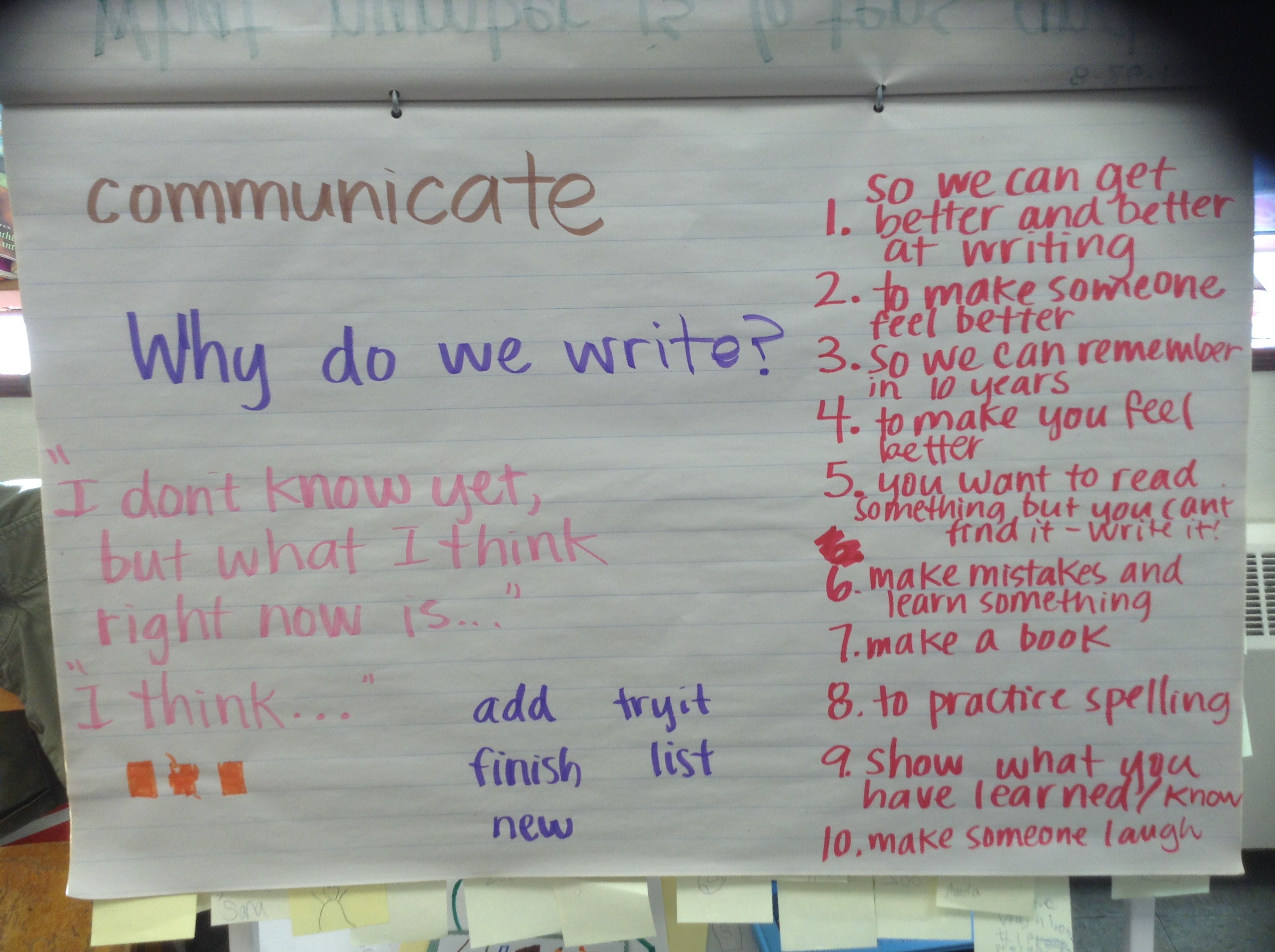
Screen Shot 2015-09-20 at 6.14.00 PMSimple question, right?  I’d say not really.  It’s kind of easy to make a list of the kinds of writing we do, or to tie our reasons to things we want to do with our writing (i.e. make a shopping list), but to really dig down to the REASON for writing is a little harder to do initially.  So when Rm. 202 writers came up with these ideas on our first try, I was super impressed:
IMG_5296

Please apologize for the “ugliness” of this chart. It has not been beautified as an anchor chart for our wall yet, and so it a work in progress. We can up with so many great answers, and then tied them all to the idea that we write to communicate. The pink parts are sentence starters they could use with their partners when they discussed the question for the first time.

We had a great conversation about the communication idea, too, when I suggested that it is how I would answer the question.  Someone said, “So that’s the RIGHT answer?”  Someone else said, “No, there is no RIGHT answer!”  We talked a lot about how there is not ONE right answer, that there are MANY right answers, and that I DO NOT have all of those answers.  Love those kinds of chats. 🙂

So as a means of tackling this question, we began to look at how writers use their Writer’s Notebooks to collect stories.  As I mentioned in the first post, I connected their Tiny Notebooks to the idea of a scrapbook; they would begin filling it up with things they wanted to remember in 10 years (which just happens to be when they go to college!).  It was lucky that my first notebook is 10 years old, and so the time span only made sense. 🙂

For the next part of the Tiny Notebook story, check this out.

Getting Started with Writing: Tiny Notebooks

Ok…do I need to start by explaining my love for the teaching of writing?  Or just my love of writing itself?  Probably not.  You’ve read those stories before, right? 🙂

We got started with writing in 2nd grade on our second day.  I started by reading two books:

I chose them partly to be funny (The Incredible teacher one was because their notebooks used to be full-sized and are now only half-sized notebooks like I used here.  By the way, they didn’t think this was funny. LOL), and also to give us an idea for somewhere to get started (an entry about something they had done over the summer).  Before they left we had a quick reminder of how to label each entry, as well as a reteach of how to use the date stamp (yes, there is a lesson for this!).

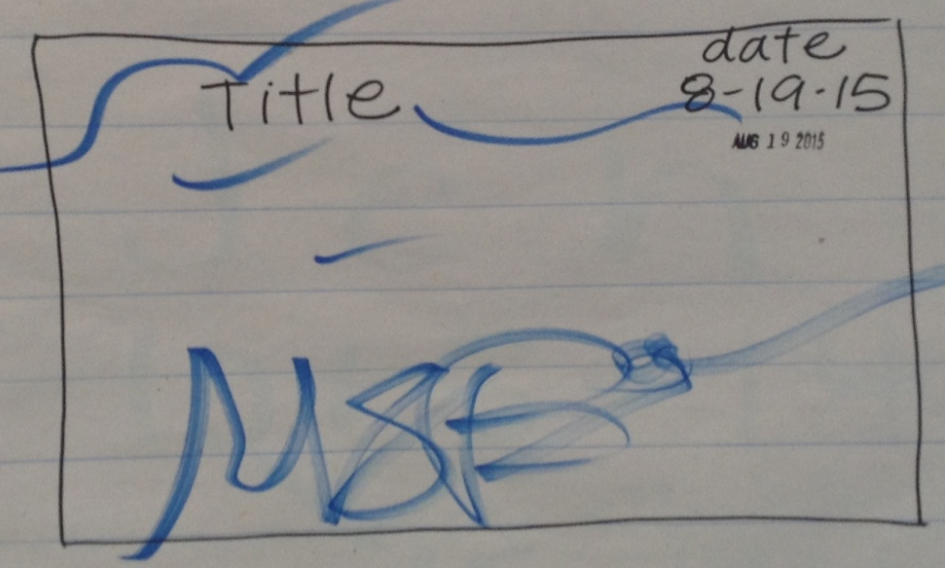
Ignore that big blue scribble...it was from another conversation we were having about how authors sometimes sign their books....

Ignore that big blue scribble…it was from another conversation we were having about how authors sometimes sign their books….

After our lesson, most kiddos got to their spots and got started quickly.  Some took a little extra long with the date stamp, and some did a lot of thinking.  I’d say most of us got something on the paper, but I did hear some of those dreaded words: “I don’t have anything to write about!” Ugh.  But then I remembered they were second graders AND it was the second day of school, so they may have been a little rusty.  I worked with one friend to put an ideas list in the back of his notebook (like we had done last year but he had probably forgotten), and had multiple conversations with friends about how to find an idea (like talking to another friend about their writing, thinking about their day, showing them an example in my Writer’s Notebooks or using a book for inspiration).  We had a quick share at the end of our writing time and got ready to move on.   I LOVED it when the next question was, “Can I take this journal home and finish my writing for homework?”  Well, of course, dear friend, you can do that! 🙂  I LOVE this not because I wanted my little friends to have homework, but because it shows me that they are already getting the idea that writing can happen anywhere, and that their stories are important enough to them that they want to finish sharing them.  And yes, those notebooks came back the next day. 🙂

This whole “I don’t know what to write about” thing had me thinking about what to do the next day.  I needed to get them thinking again about how ANYTHING could be an idea for writing, not just great big events or monumental occurrences.  Ideas come from watching the world in a new way and expecting to see stories.  Those can happen on the way to school, while you’re eating breakfast or at recess.  And probably when you’re least expecting them.

This made me think about how to connect this idea to something they could understand.  I thought about we could explore the idea of a scrapbook and how your Writer’s Notebook is a place to collect things you don’t want to forget.  I pulled out my very first notebook (which I started in the summer of 2005, 10 years ago), and read a couple of entries (I wish now I’d brought that notebook home so I could show you those entries–boo. :().  I talked about how the moments I wrote about were not “BIG” deals, and I wouldn’t remember them now if I hadn’t written them down.  We connected this to how in Inside Out the memories turn gray in long-term memory and are sucked away forever (good thing I’m up on pop culture, huh? Never know where a connection will come from!).  We don’t want this to happen to our memories, and it doesn’t have to if we collect them!  For them, 10 years from now is when they go to college–how cool for them to be able to think about things they want to remember at that point in their lives.  Totally didn’t mean for that connection to happen, but was SUPER glad it did!

Then we read a book (as another way to help them visualize the possibilities) and made a chart of the small stories in there that we could write about:

This got many kids thinking and they shared new sparks they had: one friend said he could put in the necklace he wore this summer on the airplane when he flew by himself, and another friend wanted to bring pictures of his dogs–because they will probably be dead in 10 years and he doesn’t want to forget them.  Cute, right?  That same friend wanted a picture of me so he could remember me in college, too.  He wrote this entry with that picture:

Screen Shot 2015-08-23 at 9.36.11 AMWhile of course I love this entry because it’s about me (ha!), but also because it is the definition of how I want them to be thinking about their notebooks as a way to collect and curate their thoughts.  Plus I think it’s just cool how deep and wide 2nd graders can think when we give them an invitation and opportunity to do so. 🙂

Pictures of the Day: May 13, 2015

This one is in honor of our friend Diego. 🙂

  Check out the really difficult task we’ve been working on with completing our series of books.  This is BIG first grade work, but they’re definitely up to the task.  This was what our morning looked like today:


And this one’s just because I know you were wondering what my shoes looked like today. 🙂  Right? 🙂 #dontforgetthekookyteacher       

And the Winner Is…

When we came back from Spring Break, we were in the middle of our opinion letter writing unit (I know, I still have not finished the story, but here’s the beginning again if you missed it!).  One of our first writing assignments was an opportunity to both tell me about their Spring Break AND test out their newly learned skills.  Double win, right? 🙂

Here are the directions I gave them:

Kiddos then spent several days planning and writing a letter that showed me their mad letter writing and convincing skills, and that included the most fun parts of their time away.  Unfortunately it took me a little while to get around to choosing a winner, but yesterday we finally sat down to crown the winner.  And the winner is….

It was SUPER hard to decide on the winner (there were two that it came down to and they were SO close!), but in the end, Millie’s letter had all the things we had be learning about: greeting, a stated opinion, 3 or more reasons, transitional words (like one reason is, another reason is, finally, closing, correct spelling and punctuation).  When I read it out loud, it was great to see (and hear) the reaction of the class–they could tell just by listening that it had all those parts.

And since it was a writing challenge, the prize was something to help make her writing even more spectacular–mini gel pens!

IMG_4412  I don’t use competition all the time, but sometimes it works to raise the level of excitement, engagement or even production.  And in this case it just made sense.  Way to go Millie, and other friends of Rm. 202 who wrote some great Spring Break letters!

Mary Casanova–An Utterly AWESOME Author Visit!

I really couldn’t decide if I should use that title or Mary Casanova–She’s SOME Author, but either way, we were super lucky to have some time with author Mary Casanova last week.

Screen Shot 2015-04-01 at 9.31.16 PM(picture from http://www.marycasanova.com)

I don’t know how I hadn’t heard of her before recently, she’s written over 30 books, and have been nominated for many awards–including Show-Me Reader Awards right here in MO!  Some of our favorites of hers that you might know (and that inspired the post titles) are:

We’ve had many other awesome authors and poets visit Robinson over the 15 years I’ve been here, like Lisa Campbell Ernst (she’s actually been here twice in my tenure!), Douglas Florian, Kristen O’Connell George, John Reynolds Gardiner and Eric Kimmel to name a few.  There really is nothing better than listening to a real, published author talk about what they do and how they feed their soul (and their writer’s notebooks!) so they have things to write about.  If you’ve been around here for even a little bit, it’s no secret that I would love to be included in that list of names someday.

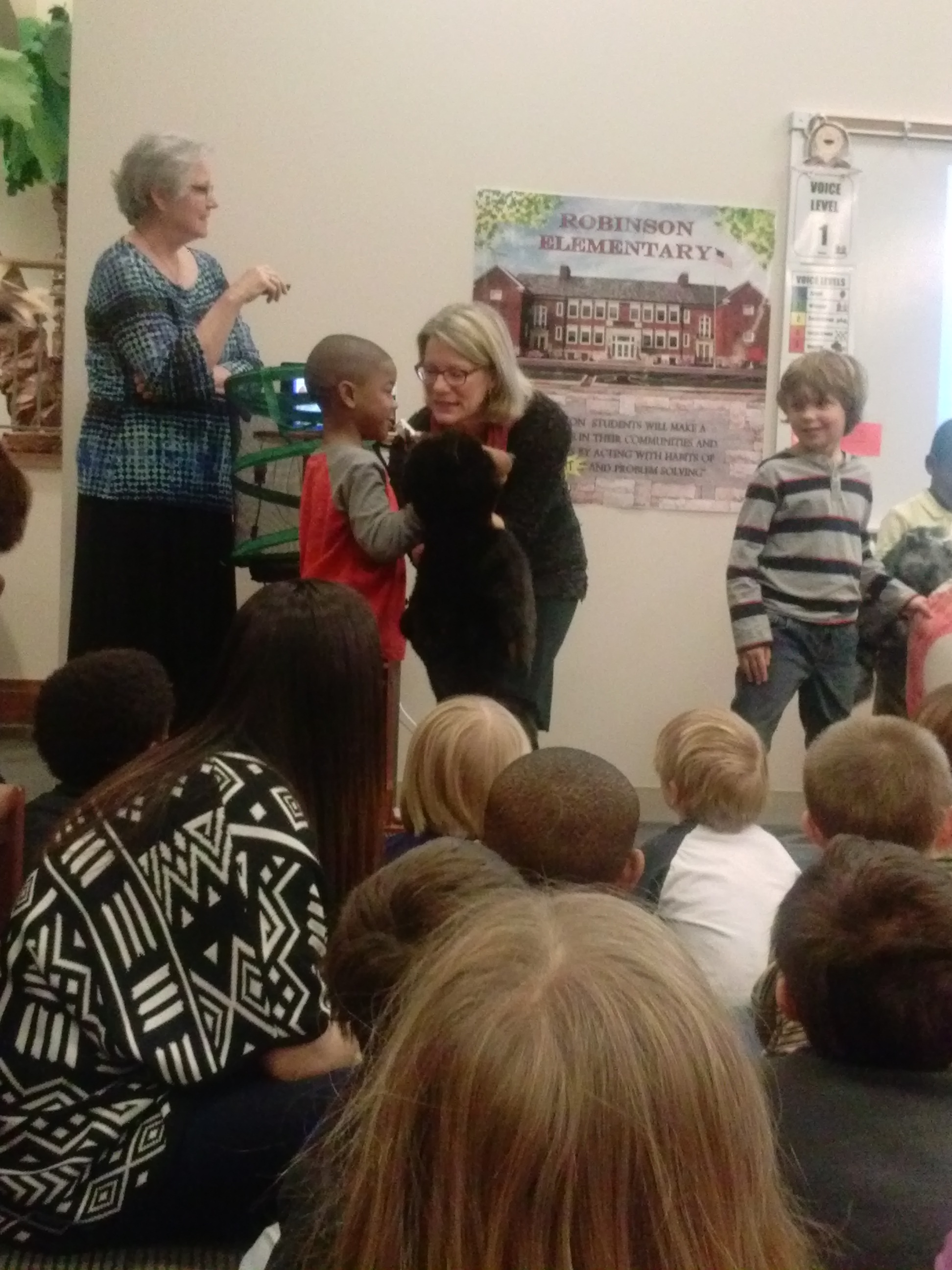
Before she came, our fabulous librarian helped us share her books with our kiddos, and she did a little author study about Mary’s life and home in Minnesota.  They even made a bulletin board to welcome her, with a canoe filled with at least a hundred animals you would find living near her home in the North:

CAM01708When she came, she did such a GREAT job of keeping our kids engaged and learning, including them in her presentation by having them do voices and parts of the books she read to us.  As she read a favorite, Some Dog, to us, the boys played George (loyal basset hound), and the girls played the part of Zippity (energetic new addition to the family):

You could definitely tell that Ms. Casanova has experience speaking with young audiences by the level of engagement in the room.  I had to take a picture at one point that probably says it all.  She had them on the edge of their seats (er..carpet spots):

CAM01771Besides reading some of her books, she told us about where she lives in Minnesota, and gave lots of great advice about being a writer.  She said something that I’ve heard most every author say, but that is super hard to get kids to believe sometimes: the best ideas for stories come from your life and what’s going on around you.  She told us about how most of her stories were based on things that had happened to her, people (or animals) that she knows, experiences she’s had, things she’d wondered or thought about.  Somehow, though, I find myself trying to convince a roomful of kid writers every year that the stories you share don’t have to be epic, grand or splashy–they just have to matter to you.  What you ate for breakfast, the scene you saw outside your bus window on the way to school or something funny that your brother did to you last night can all be the basis for a great piece of writing.  Someday they’ll believe me, right?  Help me continue to spread the message, will you?  Oh, and help me remind them that the way to be a better writer is to write. 🙂

This slideshow requires JavaScript.

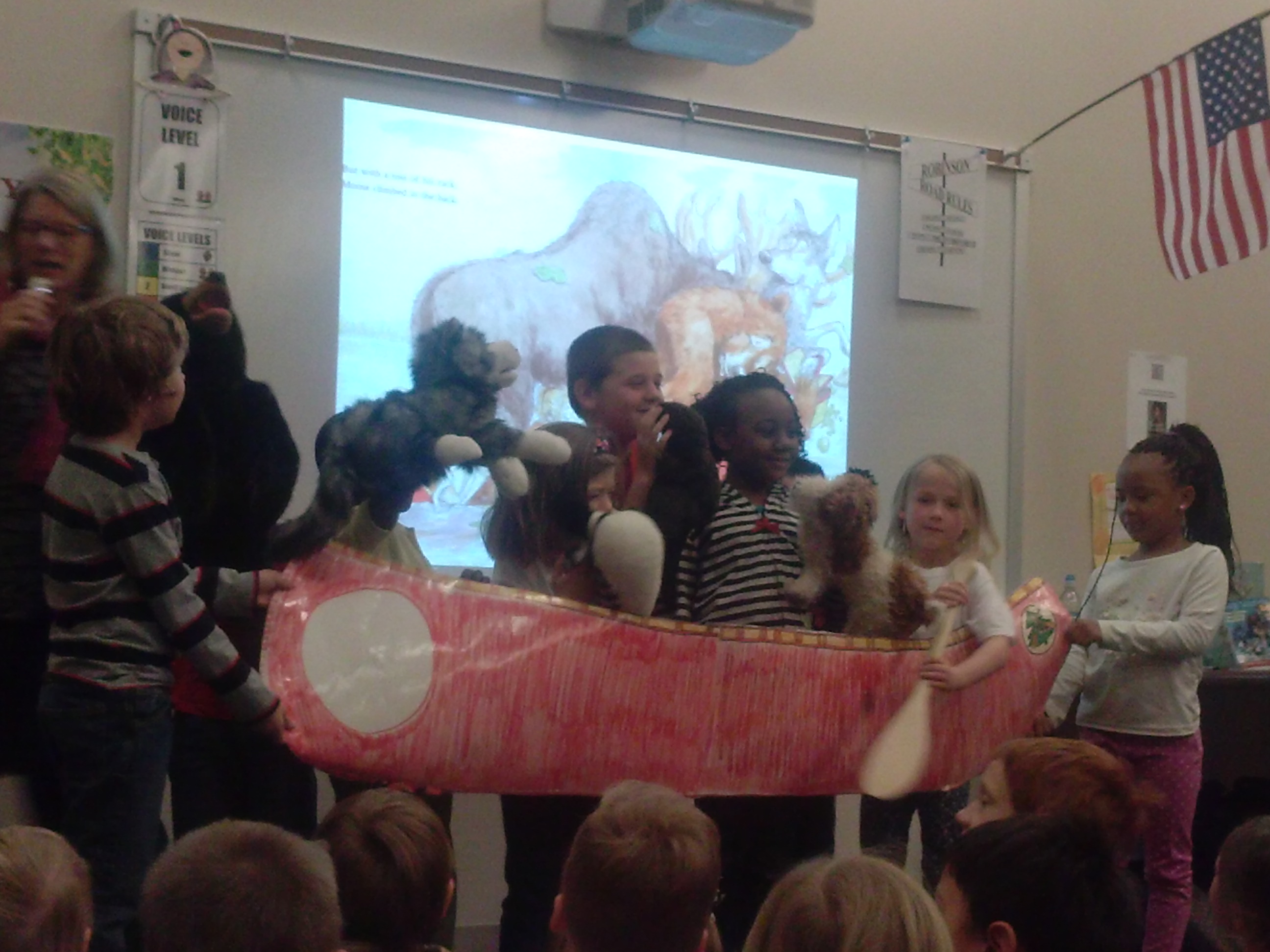
Then lastly, as if she hadn’t already been great enough, she had one more piece of amazingness up her sleeve: she let us act out One-Dog Canoe with puppets, an oar and a giant canoe she had brought with her!  What fun!  The best part?  Our friend Landen got to play the bear!  He rocked it, let me tell ya. 🙂
CAM01776 CAM01778   CAM01781 CAM01782Wow!  What a great way to spend a Thursday morning–entertained and inspired by a REAL LIVE WRITER!  Thanks, Mary Casanova for taking time with us.  Rm. 202 friends LOVED IT!! 🙂

Best in Show!

We recently finished a pretty great unit on opinion writing.  I just realized (which happens more than I’d like to admit) that I’ve been collecting lots of photos and teaching moments, but not sharing any of them!  And now what has happened is that there is NO way I could write the whole story in one sitting, and NO way you’d want to read it all in one post!  So I’ll just share bits of it at a time.  That’s ok, right?  Thanks for understanding. 🙂

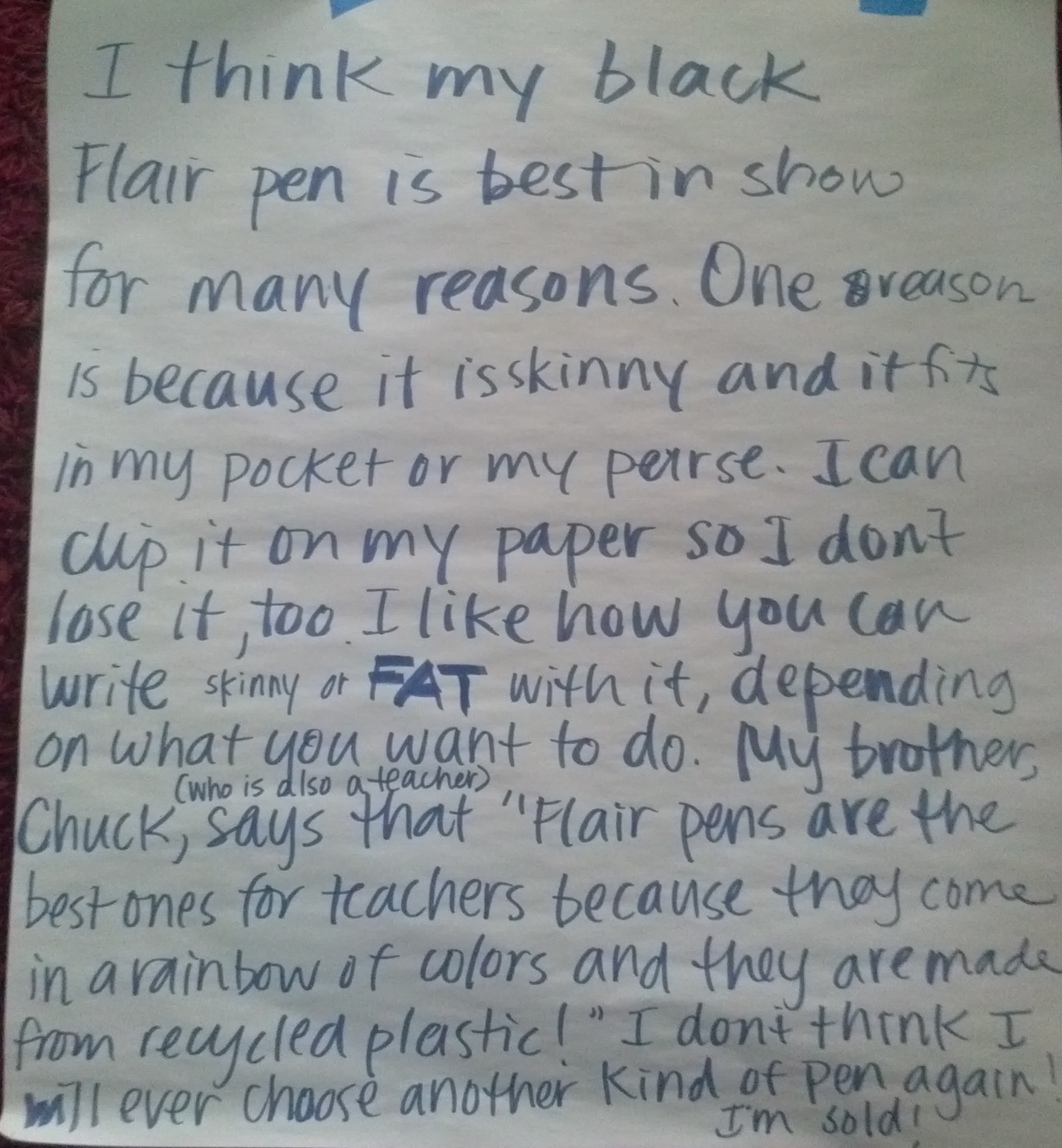
Ok, so our unit (which was taken from Lucy Calkin’s Units of Study), began with an experience related to dog shows.  Well lots of kinds of shows.  Dinosaur shows, bouncy ball shows, army men shows, writing utensil shows.  Our unit began with kids practicing what it looks (and feels) like to choose the best of something, and give sound reasons as to why that was their choice.  I LOVE how even from day 1, kiddos were doing some of the same thinking and writing they’d be expected to do (on a much deeper level) at the end of the unit.  We had jumped into the deep end with both feet!

Kids were asked to bring in a collection of something beloved from home.  We talked about dog shows and made sure everyone understood the idea of “best in show” and how that works.  We talked about how to judge fairly, and I modeled my very own “best in show.”  I was the one who had a writing utensil show.  I know you’re surprised. 🙂

CAM01634

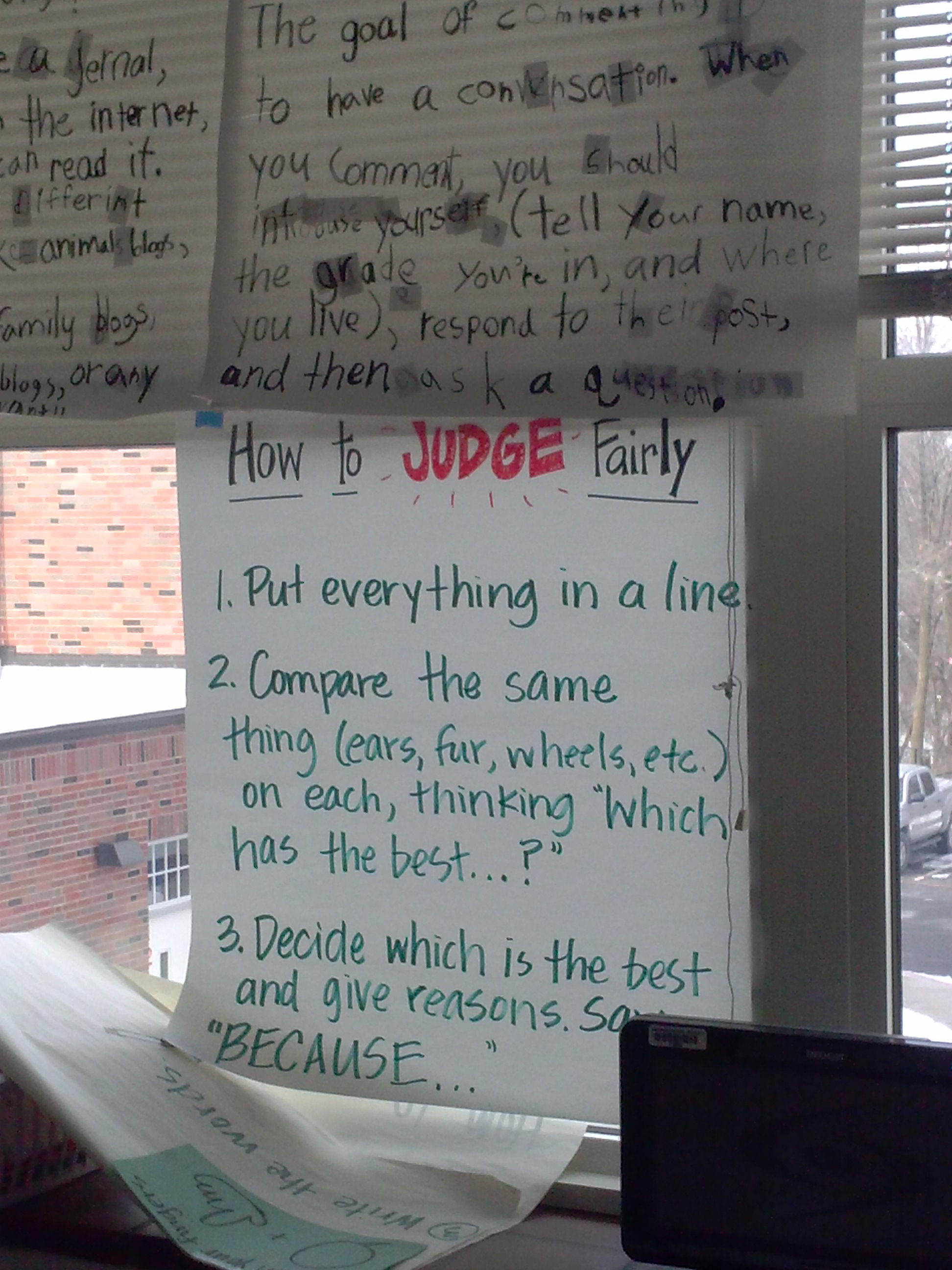
This is the process we used to choose our Best in Show.

1424274911526

My writing utensil collection. 🙂 I used the “How to Judge Fairly” chart to determine which one was the best. It’s the black Flair pen, by the way. 🙂

CAM01846

You’re convinced, right?

After some modeling, practicing aloud with a partner (with my collection, trying to tell their partner which of my items was the best and why), writers tried out the process on their own collections.  Isn’t it fun how many different kinds of collections we ended up with in our room?:

This slideshow requires JavaScript.

As the closure for this first day of opinions, kiddos shared their Best in Show thinking with an elbow partner.

CAM01633 CAM01632

I have to tell you, I was SUPER impressed with how well they did at their very first try!  I think it was a peek into the great work that was to come.  And I’ll share more of that great work in bits and pieces over the next few days.  You’ll come back, right? 🙂

First Grade Bloggers!: Part 4–GOING LIVE!

Yep, there were three parts before this one that gave more details of this exciting journey into the blogosphere!  (Part 1  Part 2  Part 3)

After we had done days and days of prerequisite work (including teaching our friends in Rm. 203 about how to comment on blogs and having them join us for a day of practice), we were ready to give it a try (plus, we had to be ready for when we’d teach our 5th grade buddies all we knew about blogging–more on that later!).  Needless to say, the excitement in the room was CRAZY!!

This slideshow requires JavaScript.

These pics are from our share session with our neighbors, but they really could show what it looked like as we started our blogs, too.  I mean, I guess there’s no real way to show the process of writing a new blog except maybe to share the blogs with you!  As you read our new Kid Blogs, imagine the big smiles on our faces as we made them!  Being a blogger is SERIOUS BUSINESS when you’re 6!  Check it out! 

First Grade Bloggers!: Part 3

If you haven’t read part 1 and part 2 of our blogging journey yet, you can check them out here and here. 🙂

After we had a chance to try out commenting for ourselves on our friends’ paper blogs, it was time to get down to the REAL business of REAL commenting on REAL blogs with REAL people!  This was one of those places where I added in some extra lessons to the version of Blogging 101 I have done with 5th graders.  I just felt like my little bloggers needed more opportunities to practice before they graduated to their own blogspace.

With many things we are learning and practicing for the first time, turn-and-talk or partner conversations are a good way to work through concepts with a friend.  This allows for each to teach and learn (based on what they know), and also to help ensure that everyone is on the same (or at least a similar) page before we move on to doing things independently.

As we gathered for Writers’ Workshop, I had kiddos sit with their elbow partners and explained that I was going to give them a “blog” to read and that they were then supposed to turn-and-talk with their partner about how they would respond to that “post.”  I made sure to write examples that they could relate to, and encouraged them to remember to include what they had learned about how to leave a good comment:  respond to the writing, say more to give details or reasons, and to ask a question to keep the conversation going.  Together with their partners, everyone had a chance to role-play with at least 5 or 6 of these scenarios:

Screen Shot 2015-02-18 at 7.49.04 PM Screen Shot 2015-02-18 at 7.48.54 PM Screen Shot 2015-02-18 at 7.48.47 PM Screen Shot 2015-02-18 at 7.48.13 PM Screen Shot 2015-02-18 at 7.48.03 PM Screen Shot 2015-02-18 at 7.47.53 PM Screen Shot 2015-02-18 at 7.47.42 PM Screen Shot 2015-02-18 at 7.47.32 PM Screen Shot 2015-02-18 at 7.47.22 PM Screen Shot 2015-02-18 at 7.47.13 PM

I tried to write posts that seemed real and relevant to first graders (like ones that they might read on others’ blogs and that they would eventually write on their own!), as well as ones that had examples of the parts of a blog post that we would talk about soon after this.

As a check-in to assess how kiddos had been doing, and to give those that might need more support some ideas, we went through each “post” and shared out some examples of responses.  Together we “graded” the responses by giving thumbs-up if all of the components were there.  Like I said before, this was a new step to my blogging process, but I’m really pleased with how it went and how excited they were about learning it!

The next day I gave them their first go at trying these newly acquired skills on someone else’s blogs.  Together with their partner (the same one as the previous day), they read blog posts and commented.  This day also add a separated but related lesson of its own: QR codes!  Since I knew that this would be a quick and easy way to get websites and other links to my kiddos, but since I also knew they hadn’t heard of them before, I introduced the concept as the way to get to the blogs we would be visiting.  Yep, a two-birds-one-stone situation. 🙂  They learned how to use the QR reader, how to find the site they were looking for and then also how to manipulate the interface of KidBlog.org itself (which would soon come into play as they saw their own KidBlog site!).

They had a great time and did a great job practicing their new commenting skills.  The downside?  The only links I could find to 1st Grade KidBlogs (at the time) were archived ones from classes that were not able to respond to the comments we left. 😦  Oh well, we got to practice on our end anyway, right?  🙂

New and Improved in 2015: Journals!

IMG305

My Writers Notebooks! The first one dates back to August, 2005! If I counted right, I think I’m working on #13 or #14 right now….:)

One of my VERY favorite thing to do with 5th graders (ok, anyone!) is teach them how to write.  It starts from the very first time I show them my own notebooks and talk about my writing journey, and continues through when they get their own (which is a very special occasion, indeed!), and then on through everything else they do (which for the last 4 classes has included blogging, too!).  I have a passion for the written word (well, and the spoken one, too; I talk WAY too much!), and want my students to see the power they have to change the world with their words!

So…as you probably know, I’ve done many of the same kinds of things with my first graders that I did with my 5th graders (the list-group-label, for instance, that I wrote about last week), and in writing, this continues to be true.  So…since one of the biggest things I miss with younger writers is the whole Writers’ Notebook thing, I had to figure out a way to do something similar (both for them and for me!).

When we came back after Winter Break, it was time to start some new things.  This is my FAVORITE time of year because of the fresh feeling there is all around–it’s cold outside, the year has just started, your kiddos are more than half-way to the next grade (so they’ve grown up a ton since Day 1!), and there’s a renewed energy because of the well-deserved rest you’ve just had.  One of the first “new and improved” things for 2015 for my kiddos was journals.

Ok, now the idea of a journal wasn’t new–they had them in kindergarten.  But they hadn’t yet had a journal with ME and learned MY definition of how to use them (which I was hoping would take on some first-grade version of the Writers’ Notebooks I love!).  I let them get really excited on our first day by reminding them of that big ‘ole zebra-print box of my notebooks.  We looked at them and read through some entries, and admired all the pictures that tell about my life over the years.  And just as I heard them say how much they wanted to have a notebook like that–VOILA!–I gave them their very own 1st grade version!  Now they knew (because I explained) that they’d be using these in a little bit different way then when they were in WNBs in future years, but they were excited nonetheless.  It was theirs, it was new and it was…ready to be decorated!  Check out what our journals look like now, all spiffied up!

IMG_4102

IMG_4101

After the cover was taken care of, we talked about what should go inside.  Like with many new adventures, I asked them what they thought writers put in their journals.  We talked about why people keep journals.  We brainstormed a list of possibilities.  I have to admit–I was impressed!  They had many of the things I’d hoped they’d say, or that I was thinking of teaching them about, and heck–they mentioned many of the things 5th GRADERS put in their notebooks. Geniuses, I tell ya!

IMG_4097

Our brainstorming list of ideas for how we could use our journals. This is a GREAT list already, and we’re just getting started!

Before they left to officially write on their first page, I modeled what an entry would like, with the date and their thinking.  Then they were off!

IMG_4098

My hope in sharing this particular story was that, even at 6-7YO, they’d see how “journal-worthy” things happen to them all the time. A story doesn’t have to be spectacular, or big, or even special to be remembered. Even a trip to Target can give you material for your writing!

They have had a chance to write in them many times over the last couple of weeks and I LOVE how enthusiastic they are about filling them up with their thoughts!  There are times when we have official “journal writing” time, but often kiddos will get them out during a break or at choice time, which I love!  The best part was when a friend asked me the other day if he could take it home to write in it there!  He didn’t know how BIG of a deal it is to learn that writing takes place EVERYWHERE–not just at school–nor did he know how he’ll be the subject of a lesson soon when yes, indeed, they are allowed to take these babies home to work on their writing lives outside our classroom!

SO PROUD OF YOU, RM. 202 FRIENDS!

Small Moments

We have been moving and grooving in first grade–in more ways than one.  We’ve been moving our bodies, but also moving our minds as we are learning about what good writers do.

In our district, and at our school, we use a wealth of knowledge and resources to teach our content.  Right now we are utilizing a FABULOUS unit of study from Lucy Calkins, all about personal narratives–which she calls Small Moments.

So far, we’ve set the stage for our Writer’s Workshop, by learning the procedures, as well as important things like where we keep the paper and other supplies in our writing center.  We are just a few days in and have already talked about:

  • how writers remember the story by telling it out loud first, thinking about the beginning, middle and end
  • how writers remember the story by touching and telling the story across the pages of their booklet, sketching the pictures first, then writing the words
  • how writers can go back and add in details they forgot the first time, using carats to add words, or just writing more to the end
  • how writers can tell the difference between a WATERMELON story or the SEEDS inside it  (which are the small moments we are focusing on)
  • how writers stretch out words they don’t know how to spell, and use the words around the room and the word wall to help them
  • how writers need each other–writers worked with a partner to add details by answering questions their partners were wondering about (like who, when, where, why, etc..)

It’s been really amazing to see the progress both in writers’ ability and their willingness to try new things in just the short days we’ve been working together.

IMG_3179

Evan, Millie and Ava are hard at work on their writing. Don’t forget your name and number on the top! We’re working on learning the date, too. 🙂

IMG_3180

Charlie’s getting started by sketching his picture first, then adding the words to the beginning of his story.

IMG_3181

Check out how Landen’s being a super-smart first grade writer and using the alphabet chart to figure out the sounds in his words!

IMG_3182

C.J. uses the alphabet chart, too, as he adds words to his pictures. Jacob is hard at work getting his ideas down, too!

IMG_3183

See Thomas using his rubber band to stretch out a word? Peyton checks out the chart, and Lauren is busy working on a story about a princess. 🙂

IMG_3184

During our Writer’s Workshop, writers can work wherever they think they can do their best work. Ella Marie found a studio spot all by herself at the kitchen table.

IMG_3185

Makayla and Briannia are working on their Small Moments at Table 3.

Millie shows off her word wall skills as she writes Joshua's name.  There are rings with the word wall words that hang under the regular words that kiddos can take to their tables to use and return.

Millie shows off her word wall skills as she writes Joshua’s name. There are rings with the word wall words that hang under the regular words that kiddos can take to their tables.

We have an anchor chart to help us remember the steps to writing a story.  We have been adding steps to it along the way.

We have an anchor chart to help us remember the steps to writing a story. We have been adding steps to it along the way.

Our writing folders help keep us organized: the green means it's a story that we're still working on and the red is for stories we're finished with for now.

Our writing folders help keep us organized: the green means it’s a story that we’re still working on and the red is for stories we’re finished with for now.  The file folder in there will come later, but will be for the project kiddos are working on right now.