And the Winner Is…

When we came back from Spring Break, we were in the middle of our opinion letter writing unit (I know, I still have not finished the story, but here’s the beginning again if you missed it!).  One of our first writing assignments was an opportunity to both tell me about their Spring Break AND test out their newly learned skills.  Double win, right? 🙂

Here are the directions I gave them:

Kiddos then spent several days planning and writing a letter that showed me their mad letter writing and convincing skills, and that included the most fun parts of their time away.  Unfortunately it took me a little while to get around to choosing a winner, but yesterday we finally sat down to crown the winner.  And the winner is….

It was SUPER hard to decide on the winner (there were two that it came down to and they were SO close!), but in the end, Millie’s letter had all the things we had be learning about: greeting, a stated opinion, 3 or more reasons, transitional words (like one reason is, another reason is, finally, closing, correct spelling and punctuation).  When I read it out loud, it was great to see (and hear) the reaction of the class–they could tell just by listening that it had all those parts.

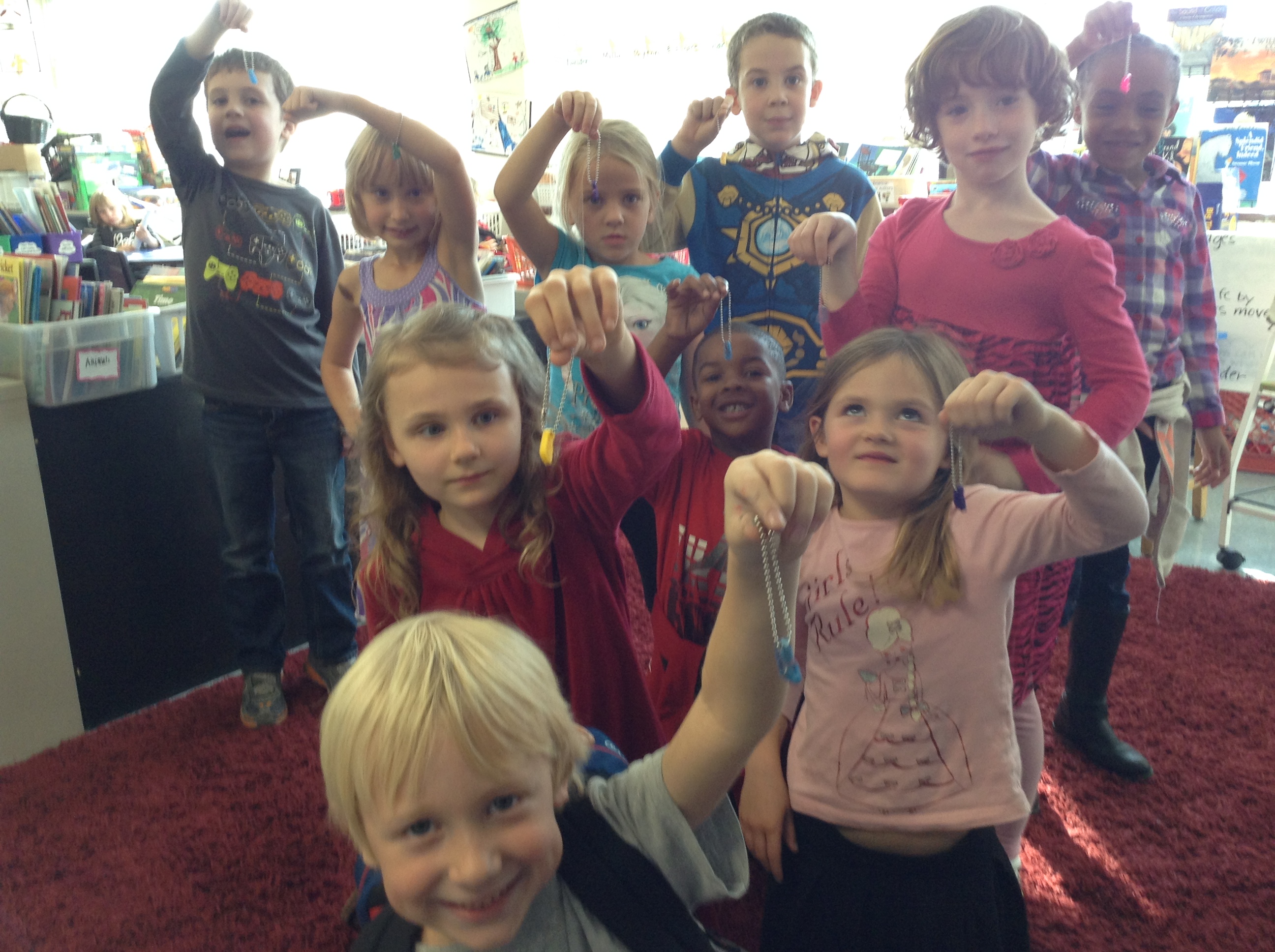
And since it was a writing challenge, the prize was something to help make her writing even more spectacular–mini gel pens!

IMG_4412  I don’t use competition all the time, but sometimes it works to raise the level of excitement, engagement or even production.  And in this case it just made sense.  Way to go Millie, and other friends of Rm. 202 who wrote some great Spring Break letters!

SPECIAL EDITION–First Grade Math Warm-Ups: Data Collection Focus

So I missed posting last week’s math warm-ups because my phone has decided not to talk to my computer (which, I believe is a ruse to make me finally give in and get an iPhone–everything else I use is Apple anyway, so I guess it only makes sense…) so I can’t show you the pictures I took.

Well, it seems that wasn’t so big of a deal anyway, because there have been lots of math activities (not just warm-ups) that have been related to data collection, and this way I can connect them all.  Bonus. 🙂

We began several weeks ago, as I knew we’d be launching into a unit on data collection and analysis, to try our hand at some easy surveys in our math warm-ups.  We talked with the very first one about the idea that we’ll be collecting, organizing and analyzing data (and what all of those things mean).   Then we spent many days answering survey questions, and doing just those things:

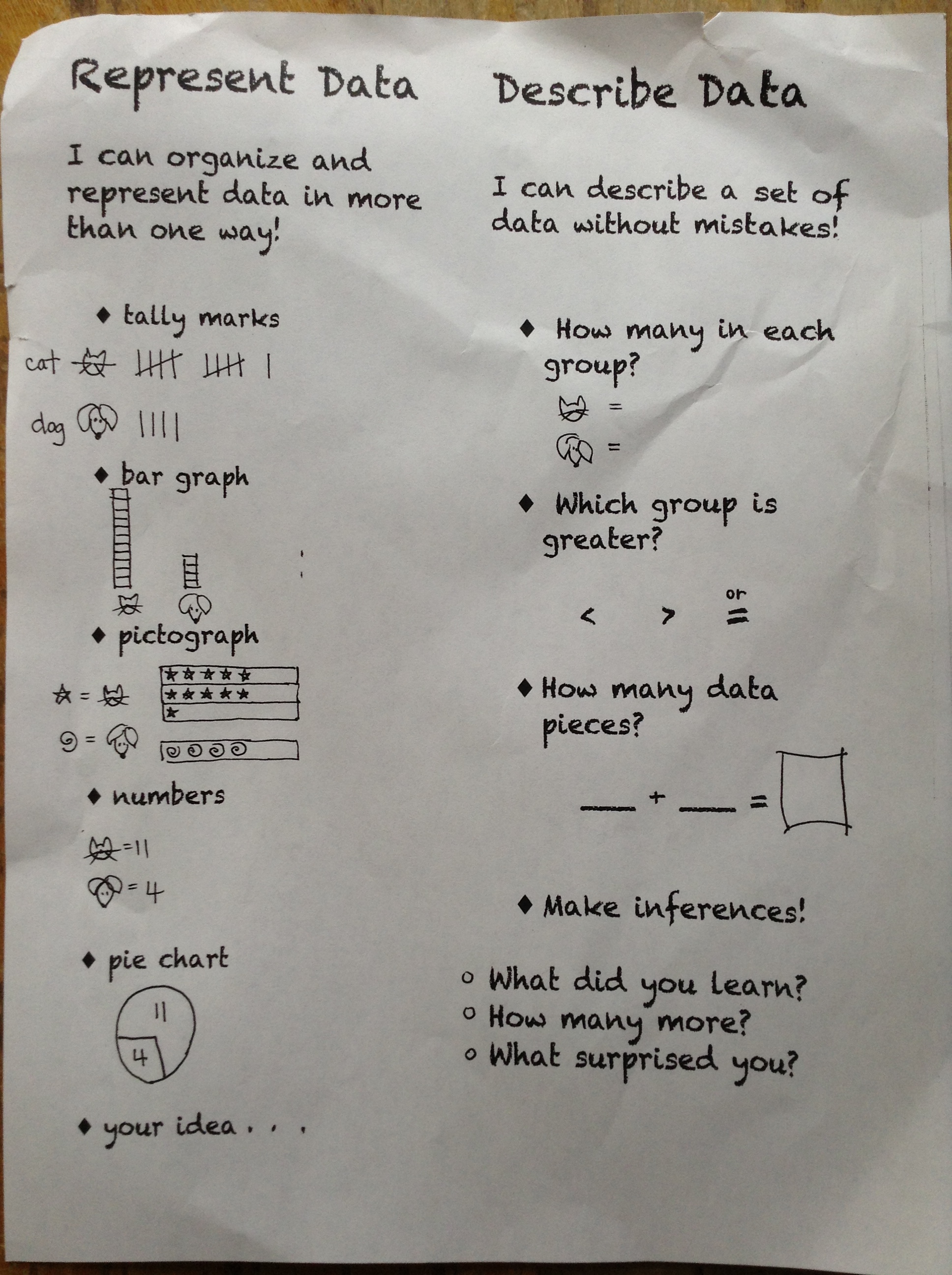
After we’d had some practice with the actual answering the question and orally analyzing the information, we started working on how to represent that information.  Thanks to my friend Mrs. Appelbaum (remember her, with the AWESOME name and the great idea for webs in writing/science?), I had a really good visual to show my kids the expectations for what they should be able to do with both describing and representing data by the end of this unit:

IMG_4345

I think the best part about this checklist is that a kiddo in her class asked her to make it so he’d remember what to do.

This checklist was the next step for us and with it we began to look at how to SHOW what the answers were, especially to people who weren’t there in our class when we took the survey (this meant that they would have to be clear and concise).

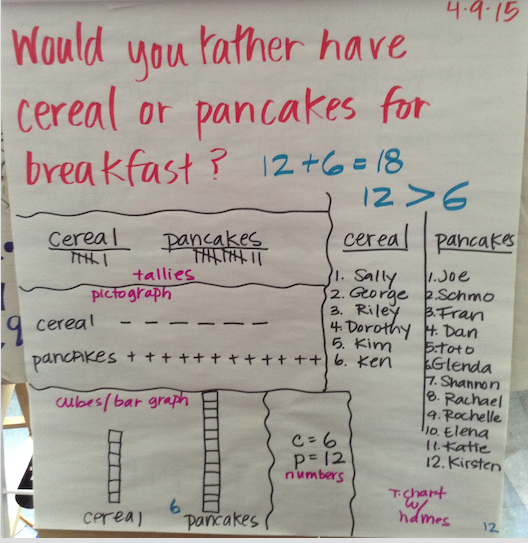
We had a go at the idea with that question about cereal and pancakes, trying it ourselves and then coming back together and trying many different ways that were on Mrs. Appelbaum’s sheet.  WOW–look at all of those ways to say the same thing:

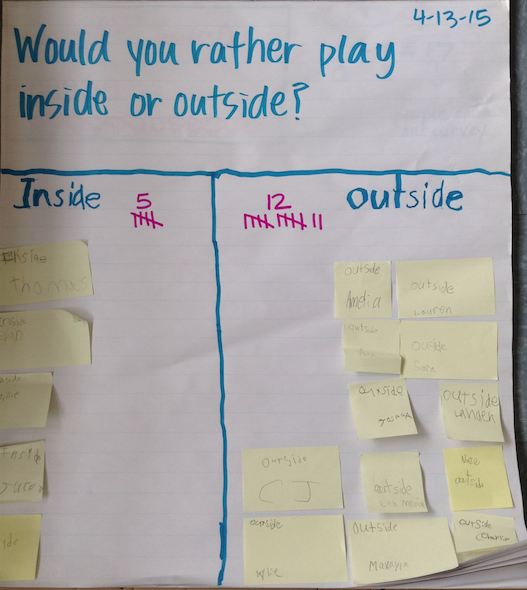
Screen Shot 2015-04-13 at 7.57.08 PMToday’s work was really cool as 3 friends decided to start organizing it AS we were collecting it.  Jacob, Lauren and Amelia made the paper into a t-chart and even put labels so kiddos would know where to put their answer:

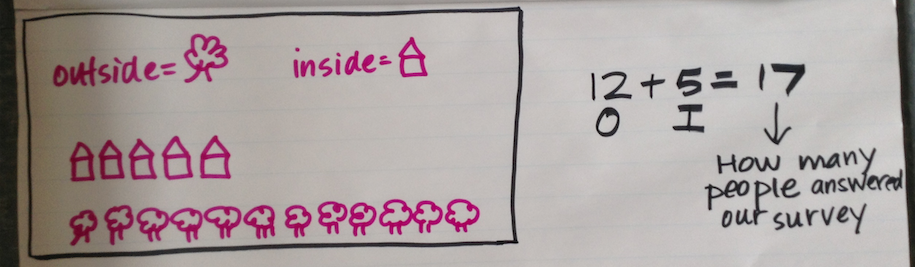
Screen Shot 2015-04-13 at 8.17.44 PMWe showed the total with both tallies and numbers, and then also tried a pictograph:

Screen Shot 2015-04-13 at 8.19.53 PMWe also talked about the part of the checklist where we make sure to show how many people took the survey, which we did by adding the totals of both columns.

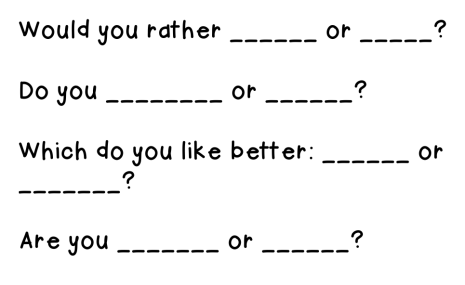
Today we took a fun and important step and began to do surveys on our own!  We reviewed the steps and then worked with a partner to plan the question we’d be asking, using these ideas for stems:

Screen Shot 2015-04-13 at 8.22.46 PMTomorrow we ask the question of our friends and start collecting data!  Stay tuned for the fun! 🙂

Chapter Book Previews: First Try in First Grade

The first year I taught 5th grade, I came upon a great idea for previewing chapter books with readers–the idea being that you teach them how to do it together with a whole class read aloud and then they’d hopefully begin to transfer the process to independent reading.  Well, I can’t say that that ever happened, and I don’t even teach 5th anymore to try again, but what I do know is that the process worked well enough that I decided to revive it for a try in first grade.

I believe that our newest chapter book is the 21st we’ve shared together this year.  Yes, I said 21st!  That’s amazing, no?  We agree. 🙂  Well, if you’ve been following our read aloud timeline progress and updates, then you know we enjoy short books with funny characters, interesting pictures and exciting adventures, and that we’ve become fans of Kate DiCamillo (we’ve read 7 of her books!).  Once along the way, we tried something a little longer and more complex, and started reading The Lemonade War (I have read the series and also heard once of a whole school doing this as a RA and thought I’d try it with my crew), but quickly abandoned it when it seemed like we weren’t ready for something with such little support for readers (well, listeners in this case).

Well, recently it was my turn to choose the title (since they’d had control of the previous 15!) and I introduced them to the amazing world of The One and Only Ivan.  They did great with that one, even without pictures and even though it was super long.

Well…it was my turn again, and with the help of my friend Millicent (to whom I should really give the credit for choosing the book with her mom), and the choice was the classic The Wizard of Oz.   I was willing to try it with this crew both because I think we’re more ready that earlier in the year, and because I wanted to try it with my own first grader last year (when it was suggested on a list by NPR for their Backseat Book Club).

As we were getting started, though, I wondered if there was something I should do this time around to help support my kiddos, since the story is much more complicated that others we’ve read.  That’s when I thought of how I’ve brought so many other things from my 5th grade days to 1st grade and they’ve gone really well.  I knew I had just the thing to try, and it was our Read Aloud Preview Packets.

With 5th graders, each kid actually had their own paper copy of the packet, on which they’d write questions, inferences, noticings and whatever else they needed to help them digest the story.  I figured that this time, since it was our first time, we’d try it together and then maybe I’d give them a go at it on their own.

Tuesday, then, we sat down together and I opened our class copy in Word on the ActivBoard.  Here’s how our conversation went:
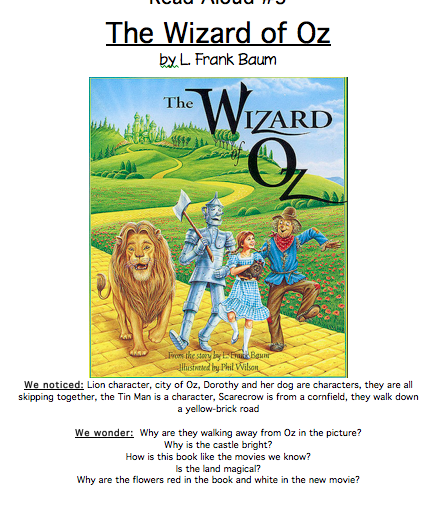
Screen Shot 2015-04-09 at 2.59.55 PMStarting with the front cover, we studied and analyzed, pulling up all the schema we had as well as recording wonderings we had based on the picture.  This one was different than the actual cover of our book (which is a beautifully bound green leather copy), so I grabbed one that I thought would create a good conversation.

Then we were on to the back cover.  Again, our actual cover was just green, so I found one that we could talk about:
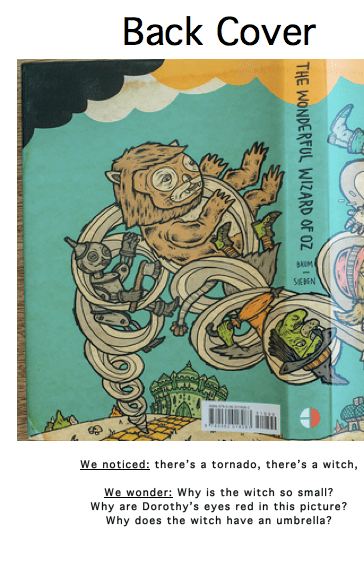
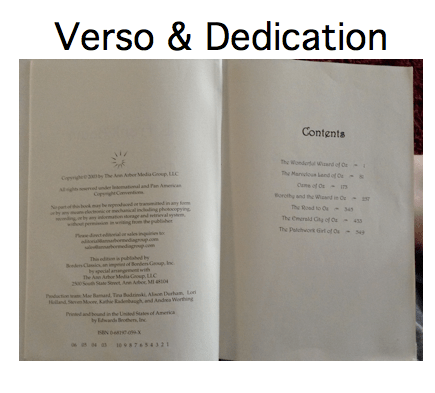
Screen Shot 2015-04-09 at 3.00.05 PMNext was the Verso and Dedication.  Well, this one didn’t have a dedication, but we talked about what that word meant, and what it might say if there was one.  This next part was really also just an explanation of what a verso is and what you can learn from studying it.
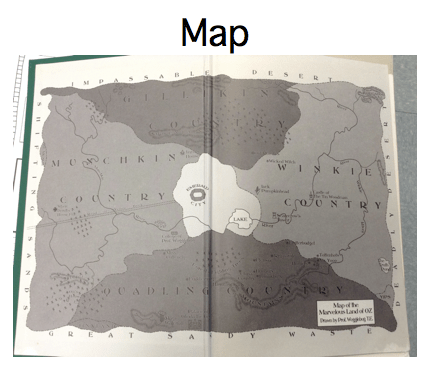
Screen Shot 2015-04-09 at 3.00.15 PMMoving on, we looked at a special feature of this book: a map!  We had read another book with a map (Who Is Stealing the 12 Days of Christmas?) and so connected to that knowledge as we thought of how this one would help us as we go through the story.
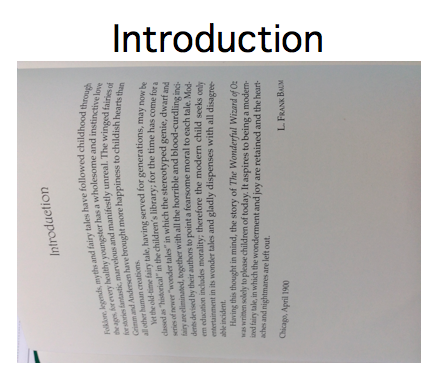
Screen Shot 2015-04-09 at 3.00.20 PMThe next (and last) part in the preview is usually just the first page, but this book also had an introduction, so we did that one, too.  The goal of this step was to  help kiddos get their minds set to dig into the story.  Baum wrote his introduction to explain his purpose and intentions with the story, and so it was a great conversation about how he wanted his Wizard to be different than previous fairy tales known to readers.
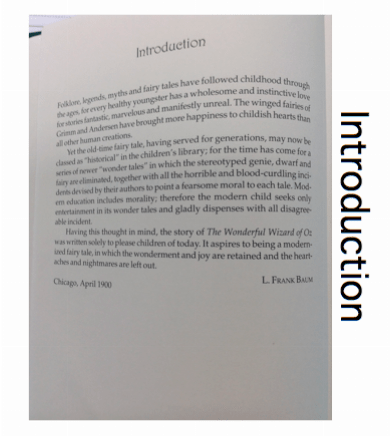
Screen Shot 2015-04-09 at 3.00.39 PMWe didn’t actually read the first page, because kids were done (and I knew that we’d be reading it the first day anyway), but finished our conversation with mention of how many of them were coming into this book with experience seeing TWOO movie (two different versions, actually).  We talked briefly about how different books and movies usually are because they’re made by different people, and how we could keep track of these similarities and differences as we read.

Whew!  I’m so glad we did that!  I wasn’t quite sure how it would go, but Rm. 202 kids seemed really into it, and they had lots to say during our discussion.  We’re only about 6 pages in, but it seems like they’re already mesmerized by a great classic story and I am, too–I’ve never read it, either!  Here’s to another GREAT read aloud!!

First Grade Read Aloud Timeline–UPDATE

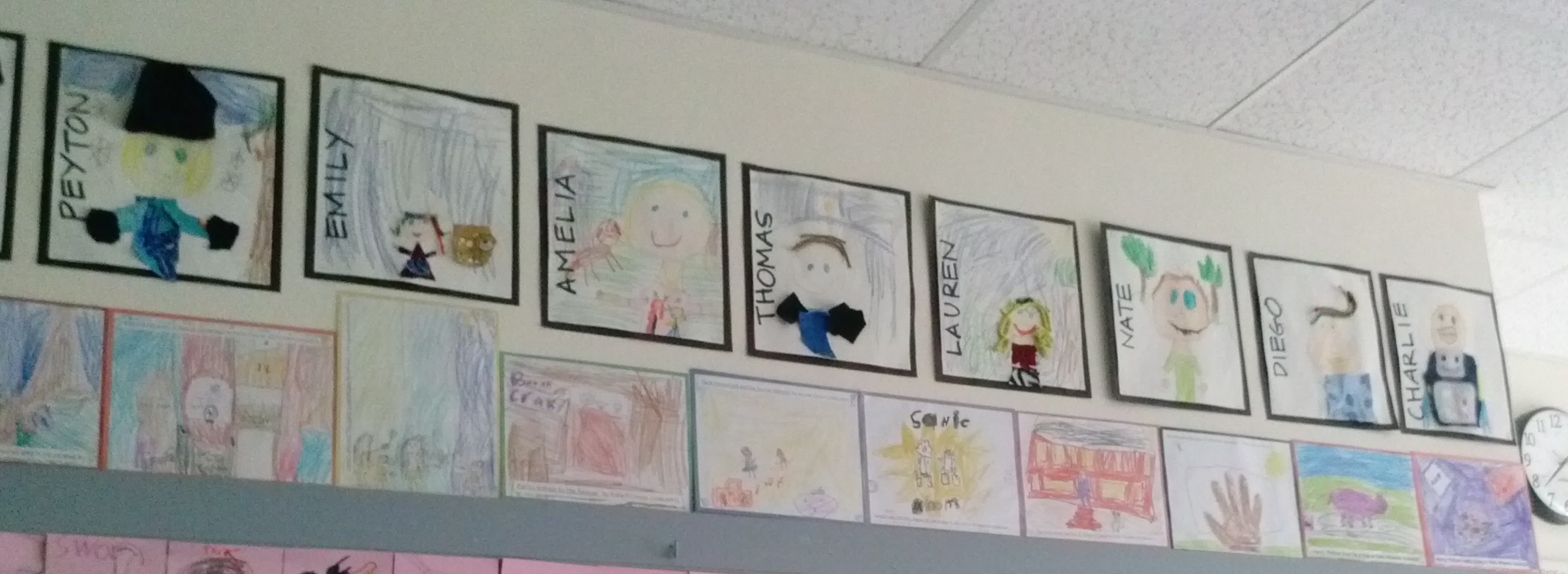
I am SUPER excited about how the Read Aloud Timeline has taken off with this class!  I have written about how I’ve brought many “big kid” things with me to first grade, and how my firstie friends have taken them and run!  So as I was putting yet another timeline image on our wall, I realized it was way past time for an update.

I believe that when I first wrote about our 1st grade version of the timeline we had finished around 9 or 10 books.  As of late last week, we filled up the whole wall!  We have (at least as of today–and the number changes very quickly around Rm. 202) 20 books completed!

CAM01884This chunk has been completed just since January:

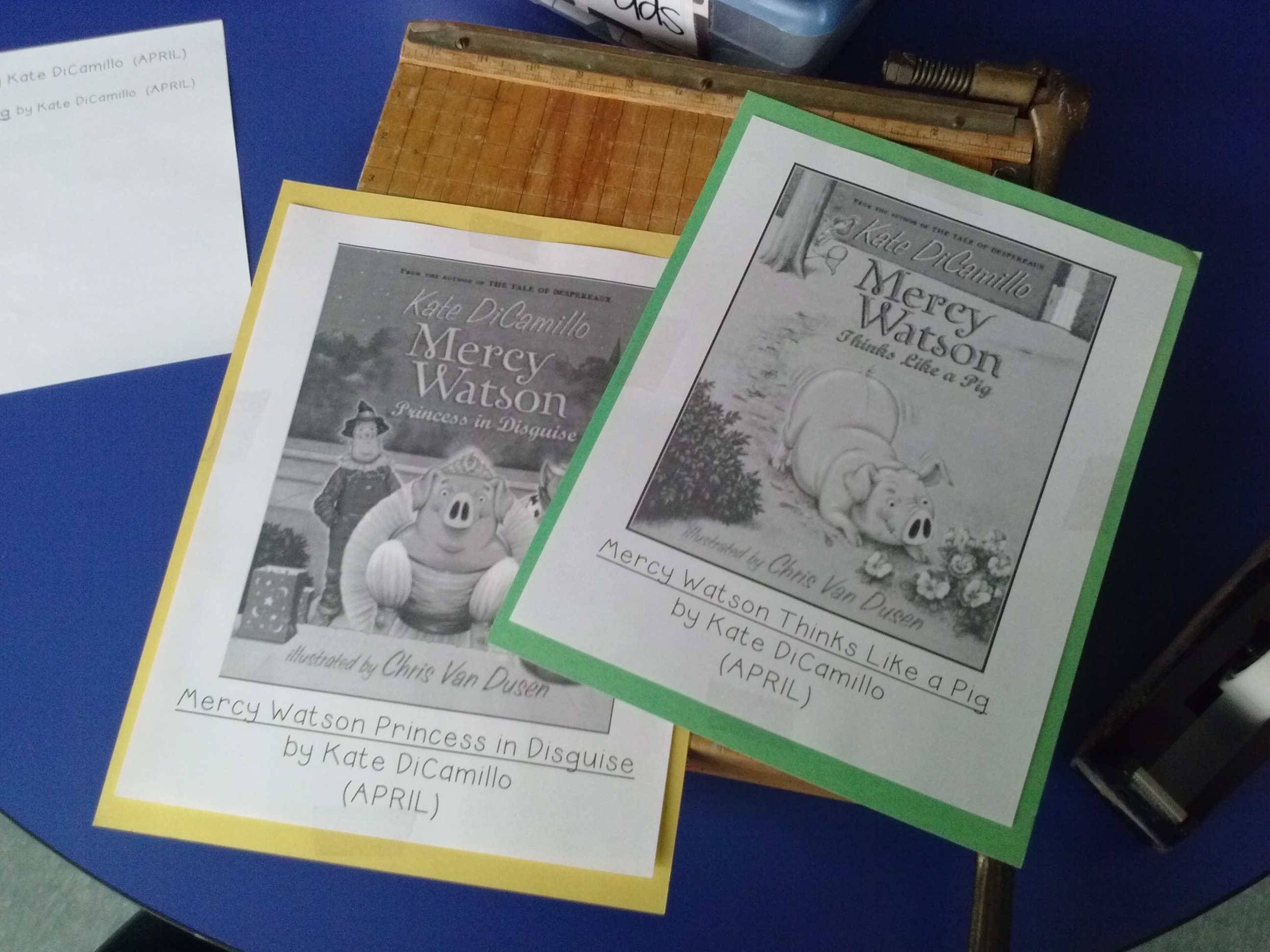
CAM01885I know you can’t tell the titles because the writing is too small in the picture, but we’ve become big fans of both Baby Mouse and the Lunch Lady, as well as enjoying amazing “big kid” titles like The One and Only Ivan by Katherine Applegate and The Miraculous Journey of Edward Tulane by Kate DiCamillo.  Oh, and then there are the 5 Mercy Watson books we’ve roared through in the last month or so, too!  Yep, obviously we’ve come to trust Kate DiCamillo as an author and are now sure that we can read ANYTHING by her and it will be great. 🙂

Because we are such speedy readers in Rm. 202, sometimes we end up with class books and wall pictures that are not yet put together or hung in the right place.  This is just such the case right now: the last two Mercy books are waiting to be laminated and bound.

CAM01886Well, since this is the case, and I’ve got a couple of days til they’ll be ready to hang anyway, I’m asking for your help in solving a little bit of a problem.  And yes, I stress the little part of that problem–it’s really just a decision we have to make.

The trouble is that we’ve filled up the whole wall (and actually all of the space on the 3 walls I have the timeline attached to!), but since the year is not yet over, we’re not finished creating timeline images that need a home.  So we have a couple of options and need some help deciding what to do with our next images.

One option we have is to go down the wall (or sliver of wall) next to the closet, like this:

CAM01887Now, this is a totally viable option, giving us plenty of room to finish out the year filling up that vertical space.  You know what bothers me, though?  The pictures don’t line up with the ones on the wall, and as long as they continue to be horizontal (which the next two are), there is that big piece that isn’t attached to the wall.  Somehow I’m sure someone’s arm will run into it accidentally (or dare I say it, on purpose!) and crinkle it or pull it off the wall.  But–it would totally give us the space we need.

The second option (at least that we can see) is to turn the corner and keep the timeline going along the wall by that bulletin board, like this:

CAM01890Look at all that wall space!  But….it’s practically the ONLY wall in the room that can’t be seen unless you’re standing right there in that very spot by the sink.  And that only happens if you’re washing your hands or getting something from the art center (and you know what’s funny?  See how I didn’t hang self portraits in that spot?  It’s because no one would be able to see them!).  So, again–lots of space, but a downfall.

I know, I know….this is really a small deal in the scheme of the world and not really a big problem (#firstworldproblems for sure!).  But, to a teacher who both appreciates the aesthetic of things and who wants to create the best environment for the learners I spend my days with, it’s teeny things like this that I agonize over.  Silly, I know, but hey–it’s me. 🙂

So will you help me?  In the end it would probably be just as effective to flip a coin or just vote with my class, but I thought I’d ask other (perhaps like-minded) professionals who could help me make the decision based on how they’d solve the same dilemma in their own spaces.  Please?  Pretty please?  🙂  Thanks in advance!

Fiction, For Real!

We started a new writing unit today (no, I didn’t forget to finish telling you about the last one!–just haven’t yet).  The focus will be realistic fiction, and I wanted (as suggested by the Units of Study from Lucy Calkins) to see what they already know how to do, so we participated in an on-demand writing situation this morning.  Usually I make these very scripted and time-specific (generally they are supposed to be 45 minutes), but today the directions were a little looser: show me what you know about writing by creating a story.  Oh, and it has to be something that could really happen.

For some this was SUPER exciting, as they’ve been asking to write stories all year (and have even added many to their writing journals that we use in our room).  For others the idea of a REAL story was a bit daunting and even a little confusing–they weren’t sure yet (since we haven’t studied it) how this was different from their personal narrative (small moment) stories we wrote at the beginning of the year.  Oh, and to try to debate “real” topics with 6-7 YOs. Man!  Aliens, the Easter Bunny, the Tooth Fairy, digging through the Earth to China–these all came up today in conversations about whether they could be included.  Tough questions being asked here!

I then gave them as long as they could (and would) write to finish their composition.  I’m happy to say that we lasted almost an hour, and some could probably have worked even longer!  Man–talk about some writing grit and stamina!  I was impressed!  Many great things were demonstrated already today, and we haven’t even started learning about this genre yet!

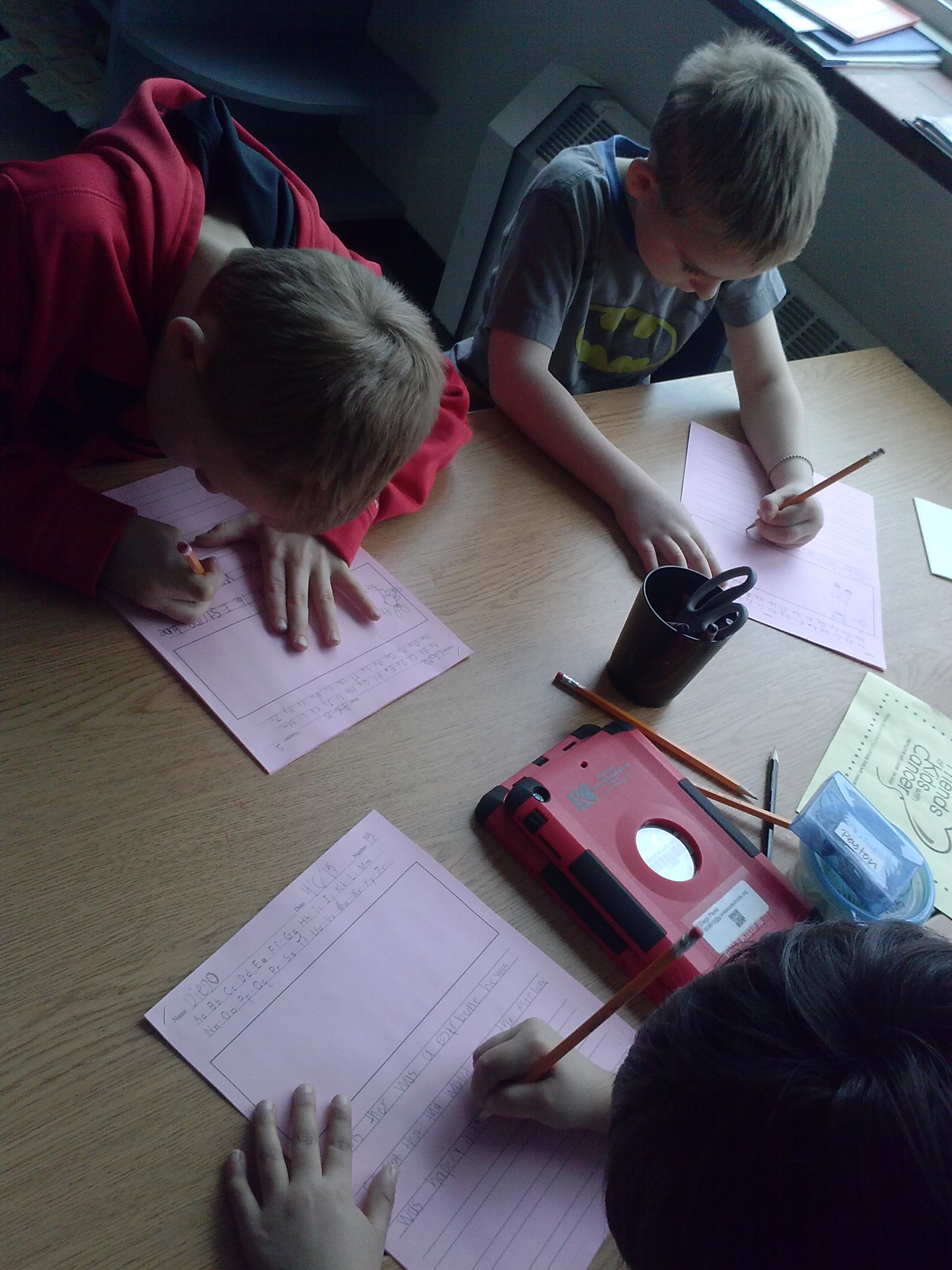
Ok, a couple of pics of our Monday morning amazingness! 🙂

CAM01880

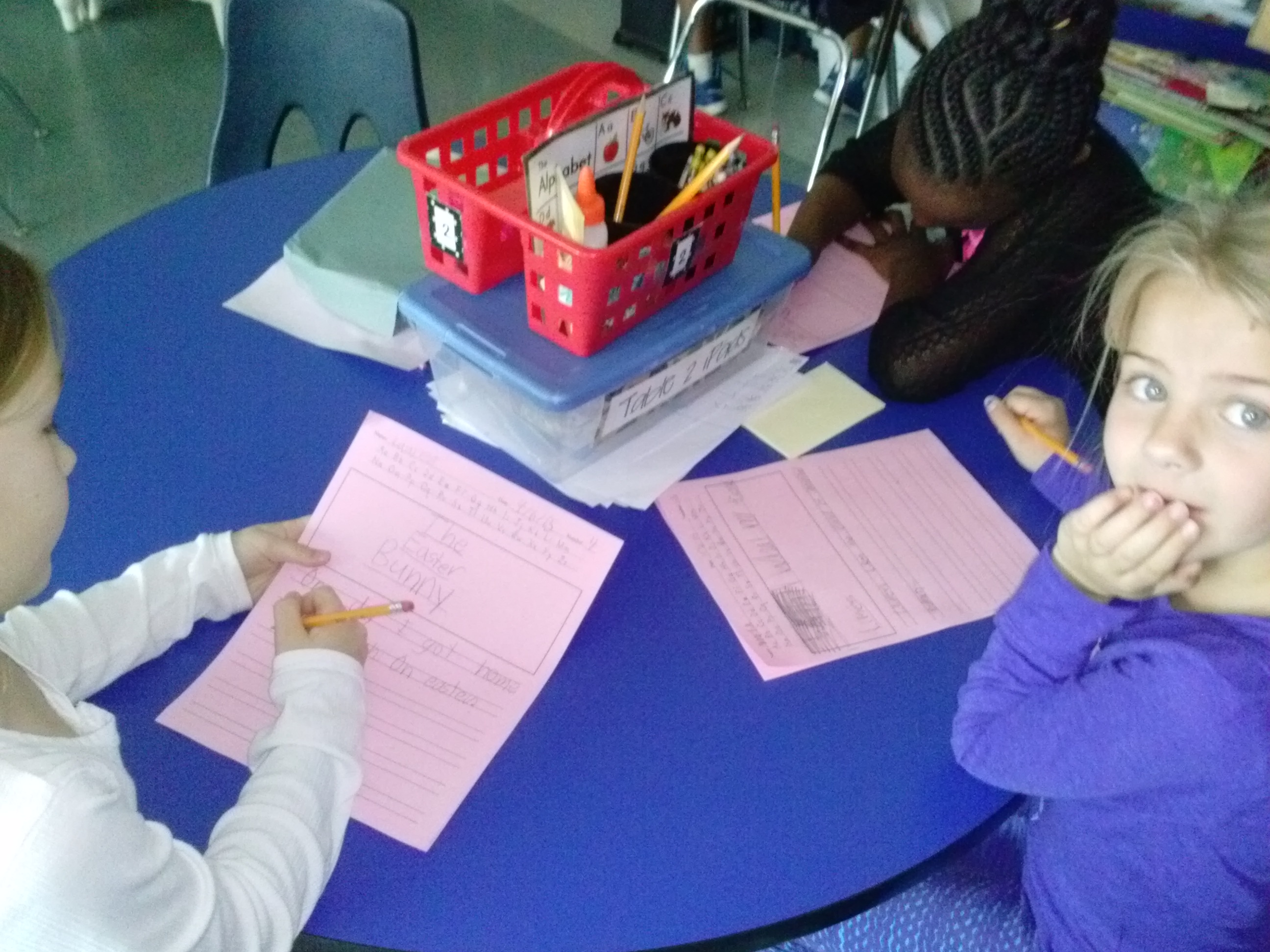
We used pink paper booklets today for our pre-assessment. The unit will be writing on white, and then we’ll use purple for the post-assessment. Easy way to keep it all organized!

CAM01881

You’d think after this long they’d stop being surprised when I take their pictures! Say cheese, Amelia! 🙂

CAM01882

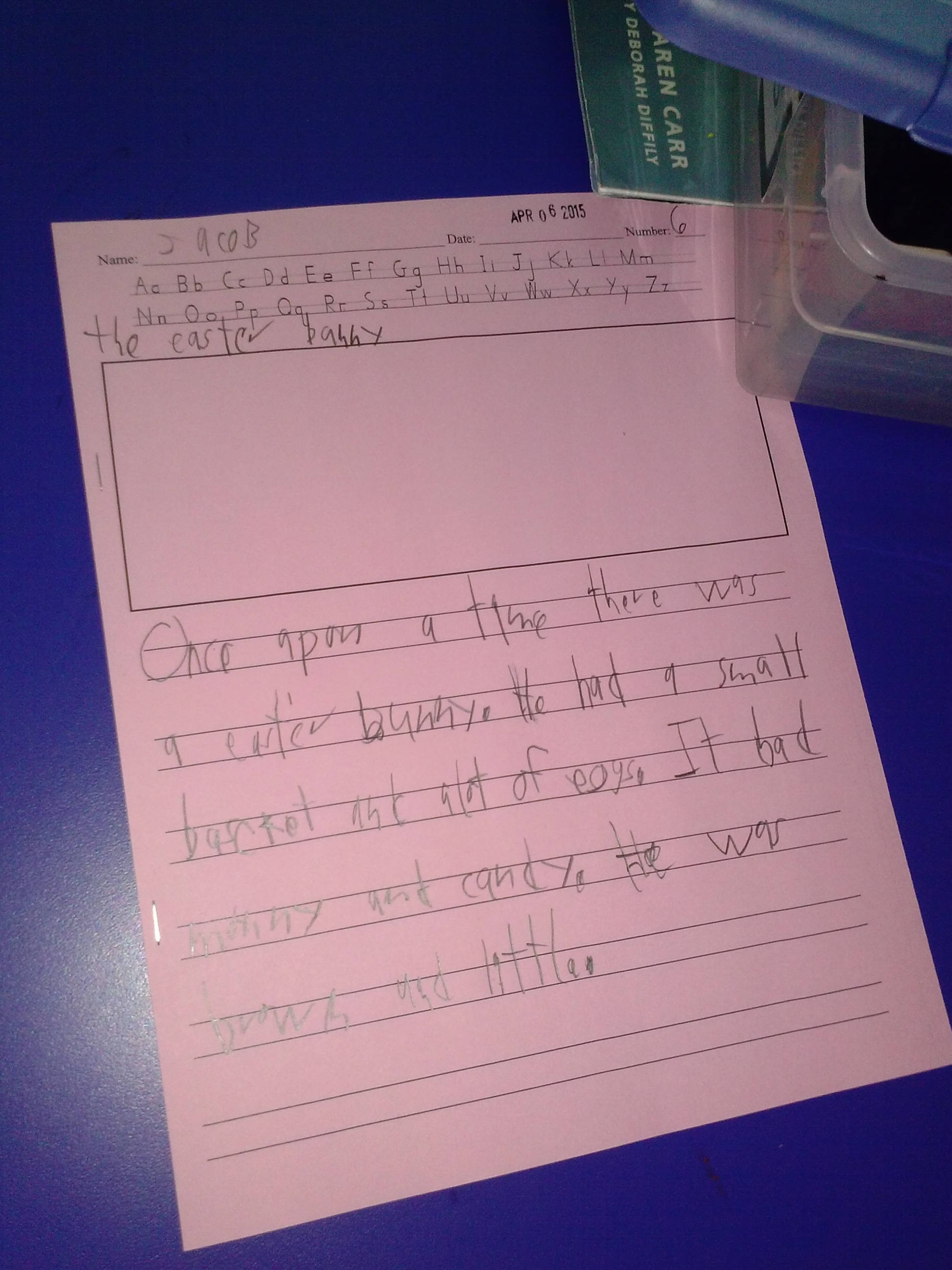
Well, I did tell them I saw the Easter bunny out my window yesterday. So that’s real, right? Yep, he was small and brown, just like Jacob says–and he jumped away when I opened the blinds so my kids wouldn’t see him. Who’s to say if that could or couldn’t happen? LOL

I’m excited to continue to share the journey of this unit.  And yes, I will finish our opinion writing posts someday soon. 🙂

First Grade Math Warm-Ups: Week of March 30-April 3, 2015–WALKER’S CLUB EDITION

Our math warm-ups are almost always related to what we’re working on in math.  Sometimes it’s the beginning of the unit, and so kiddos don’t have much schema yet and aren’t really sure what to do.  Later then, the warm-ups become practice of the strategies they’ve learned and are working on perfecting (or at least using more efficiently).  This week, they were even the same topic: Walker’s Club.

Let me explain…

In a nutshell, this year we started a program to help our Robinson kids stay healthy and active, as well as have productive fun at recess.  We call it Walker’s Club, and on Tuesdays and Thursdays, everyone walks laps around our playground at recess.  Every kiddo (and now even teachers!) has a card to keep track of laps that is punched each time they come around.  Parents, principals, teachers and even a group of kids volunteers to be punchers, and there’s always a big buzz about how many laps kiddos have at any given time.  There are prizes called Toe Tokens that kiddos earn at certain increments along the way.  So fun!

IMG_3705

This picture seems like it’s from so long ago! Don’t know how I didn’t share it earlier–they seem so little, don’t they?? 🙂

Well, to make it even better, and to celebrate National Walkers’ Day (which happened on April 1), Mrs. Wilson decided to make a competition for the month of April to see who can walk the most laps.  Each grade level will have a winner, and that class will earn an extra 20 minute recess + POPSICLES!!  Needless to say, it. was. on.

Math this week, then, naturally began to revolve around Walker’s Club laps: setting goals (first it was a conversation on how to set goals) how many laps other classes were walking, how many we could walk in a day, and how many we actually walked in one day.  Oh, and strategies for how to add up long strings of numbers so we could answer each of those previous questions.

Check out what we’ve been working on this week!

CAM01851

As we started out our goal-setting, we decided (ok, so I suggested) that we should figure out how many we laps we usually walk on a Walker’s Club day. We could use this number (along with some other data we collected) to set a goal for how much each kiddo would walk/run every WC day.

CAM01852

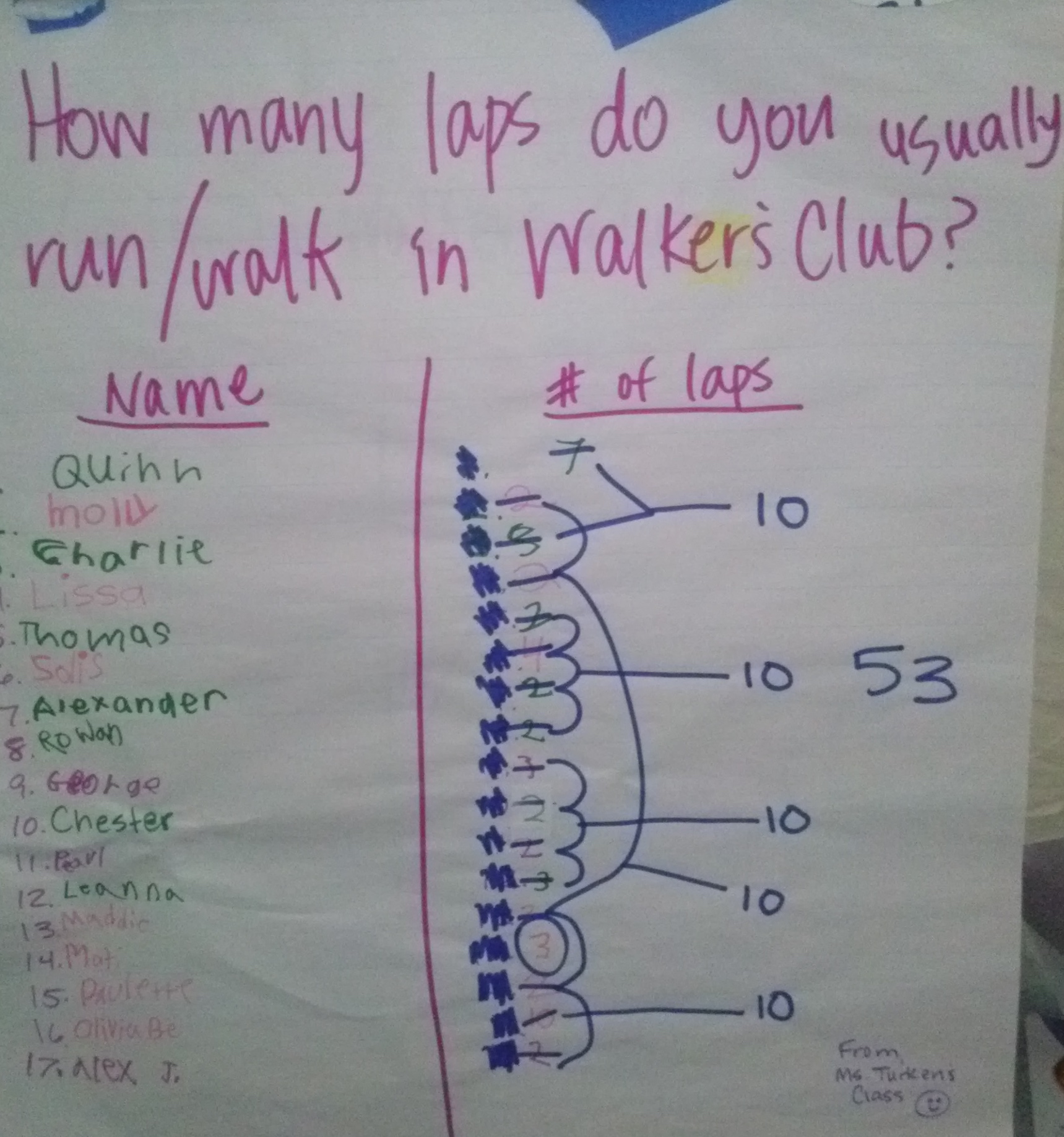
After we knew how many laps was our usual, we decided to ask our first grade friends the same question. Since they were the ones we’d be competing against, we also needed to know their usual number so we could adjust ours and make a goal that would matter.  This one’s from Ms. Turken’s class.  We got some data back from other classes, too, but haven’t yet analyzed it.

I need to insert a little note here: the first time we sat down together to add up that big string of numbers, we didn’t really know what to do.

Screen Shot 2015-04-03 at 9.23.00 PM

See this?  These are all of the answers we got when we went to work with our partners to add up the data.  WOW!  All the way from 10 to 122!  We needed some practice with an efficient and ACCURATE way to put lots of numbers together.  This gave me some ideas for future work in warm-ups.

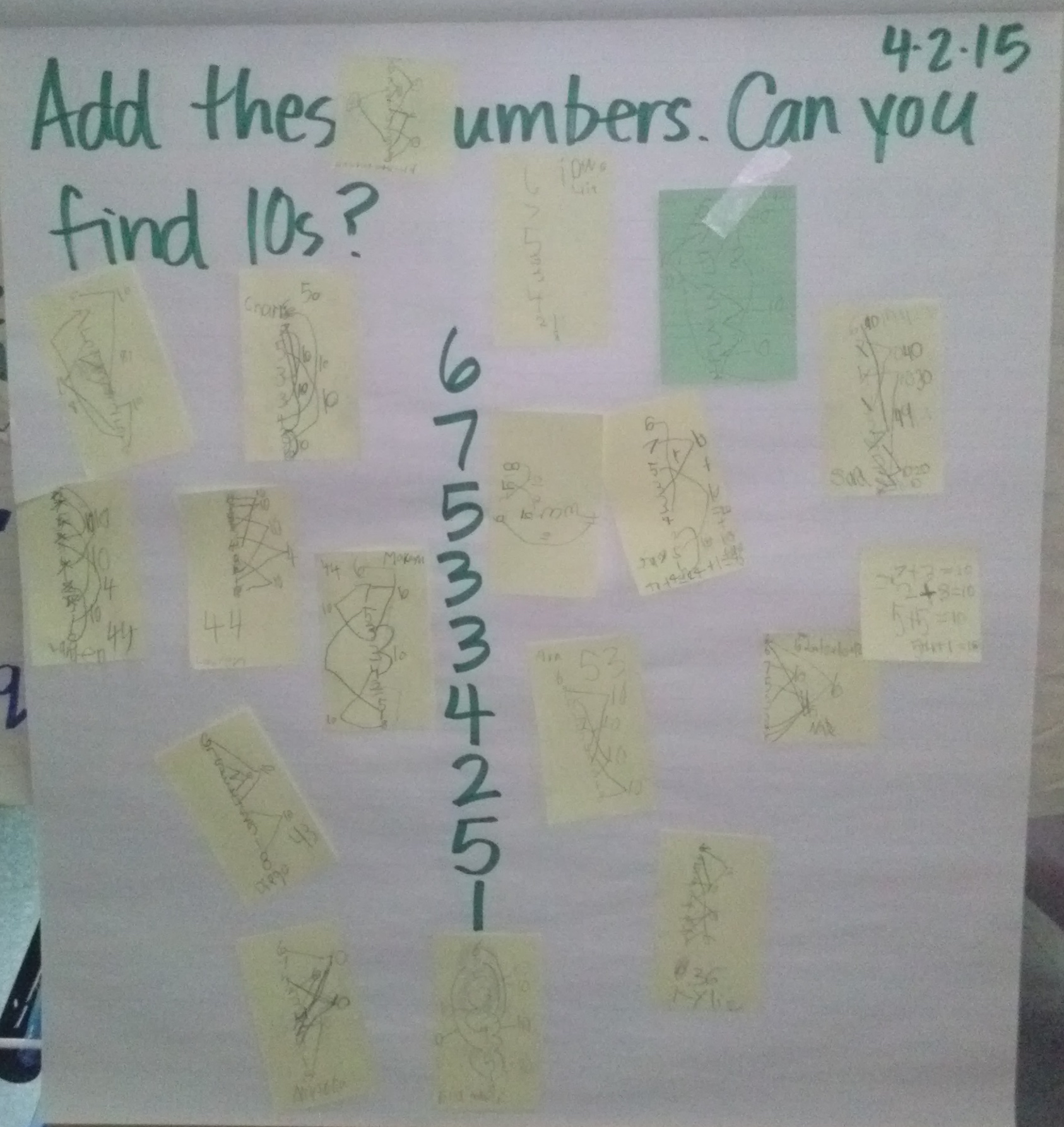
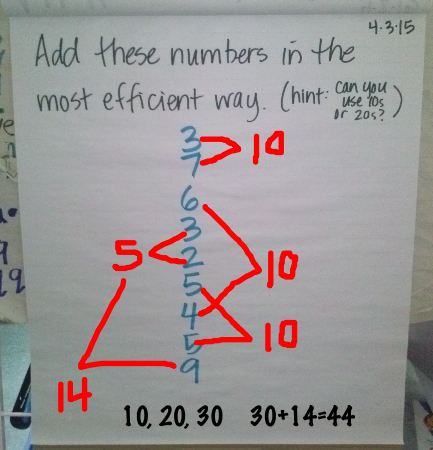
So next came the idea of finding 10s as a quick (and organized) way to put lots of numbers together.   We then added (and readded) all of our data together from our chart and Ms. Turken’s chart.  We also tried it with other random lists throughout the week (so that when we came up on Walker’s Club data again, we’d be better at using that 10s strategy):

This one was a practice problem from the morning, but we didn't quite get time to review it later in the day.

This one was a practice problem from the morning, but we didn’t quite get time to review it later in the day.

This one was actually the warm-up from Friday (when I was out of the classroom), and I showed the sub how to record the combinations of 10s.

This one was actually the warm-up from Friday (when I was out of the classroom), and I showed the sub how to record the combinations of 10s.

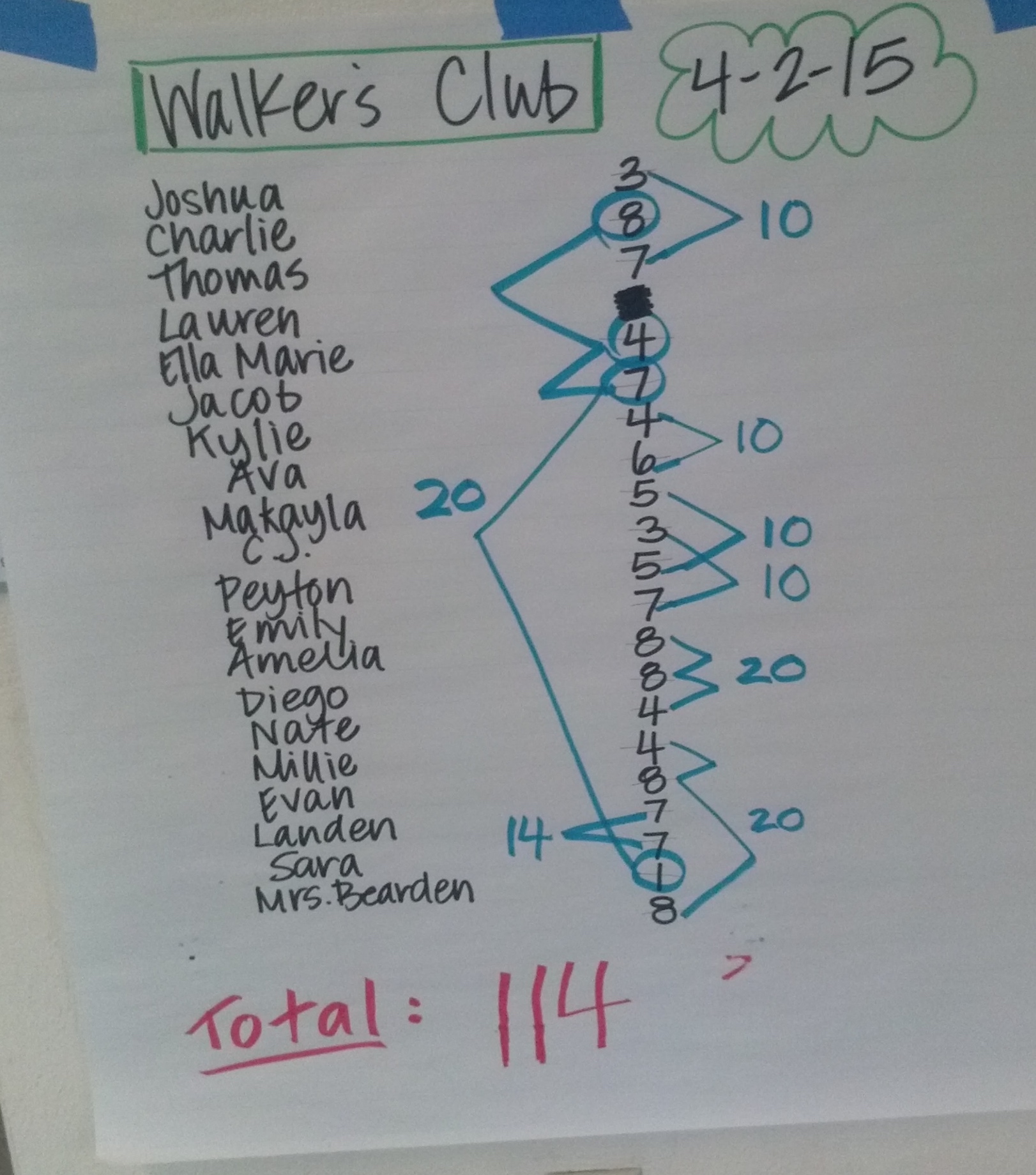
This practice did help us, and when we added together our first OFFICIAL Walker’s Club list of laps, we knew what to do.  The problem (which was a good one to have) was that our list included lots of numbers that we couldn’t put together to make 10s.  That’s totally cool, though, because Evan had just been working on how to put numbers together to make 20s and 30s (and other multiples of 10) on Dreambox, so he helped us figure out what to do with all of those 8s:

CAM01855

When I wrote my lap number up there, I felt a little bit funny since it was so much less than my Rm. 202 friends. I was SUPER glad to know it helped us out, though, as we could use it to go with some other numbers to make a combination of 20. Whew!

Check that out: on our first day we walked (and ran) 114 laps!!  This made us feel like we were off to a tremendous start (especially since we knew Ms. Turken’s class had only done 75 on their first day) and helped us set at least a preliminary goal for ourselves: we need to walk/run at least the number we did today to stay ahead of our friends.  We’ll talk more about how many that will be in all when we come back next week, and we’ll adjust that goal as we go forward and begin to hear what the other 3 classes are doing.  And hey, no matter who wins this April competition, we ALL WIN because we’ve got new strategies in our toolbox! Plus we will all have had lots of fun and lots of fresh air and exercise!  How can anyone complain about that!?

We’ll keep you updated on our progress as we go through the month! 🙂

Jokes of the Day: Week of March 30-April 3, 2015

This is another week full of kid’s jokes!  3 out of the 4 of them came from Rm. 202 friends!  Here you go.  Happy joking and I hope they make you smile. 🙂

Monday

What kind of makeup is a ghost’s favorite?

Mas-SCARE-a!

Thanks, Lauren–that’s a funny one!

Wednesday

This one’s from Kylie:

What did one stump say to the other stump?

Nothing, he was stumped!

Hee, hee! 🙂

Thursday

Knock, knock.

Who’s there?

No bell.

No bell who?

No bell? Guess I’ll knock. 🙂

We love knock-knock jokes!  Thanks, Ava.  We smiled at this one for sure!

Friday

Why did the man throw the clock out the window?

Because he wanted to see time fly!

I shared this oldie-but-goodie joke because we’ll be starting a study on time very soon.  🙂

Hope you giggled a little and that you have a SUPER weekend!  See you next week!

Best in Show!

We recently finished a pretty great unit on opinion writing.  I just realized (which happens more than I’d like to admit) that I’ve been collecting lots of photos and teaching moments, but not sharing any of them!  And now what has happened is that there is NO way I could write the whole story in one sitting, and NO way you’d want to read it all in one post!  So I’ll just share bits of it at a time.  That’s ok, right?  Thanks for understanding. 🙂

Ok, so our unit (which was taken from Lucy Calkin’s Units of Study), began with an experience related to dog shows.  Well lots of kinds of shows.  Dinosaur shows, bouncy ball shows, army men shows, writing utensil shows.  Our unit began with kids practicing what it looks (and feels) like to choose the best of something, and give sound reasons as to why that was their choice.  I LOVE how even from day 1, kiddos were doing some of the same thinking and writing they’d be expected to do (on a much deeper level) at the end of the unit.  We had jumped into the deep end with both feet!

Kids were asked to bring in a collection of something beloved from home.  We talked about dog shows and made sure everyone understood the idea of “best in show” and how that works.  We talked about how to judge fairly, and I modeled my very own “best in show.”  I was the one who had a writing utensil show.  I know you’re surprised. 🙂

CAM01634

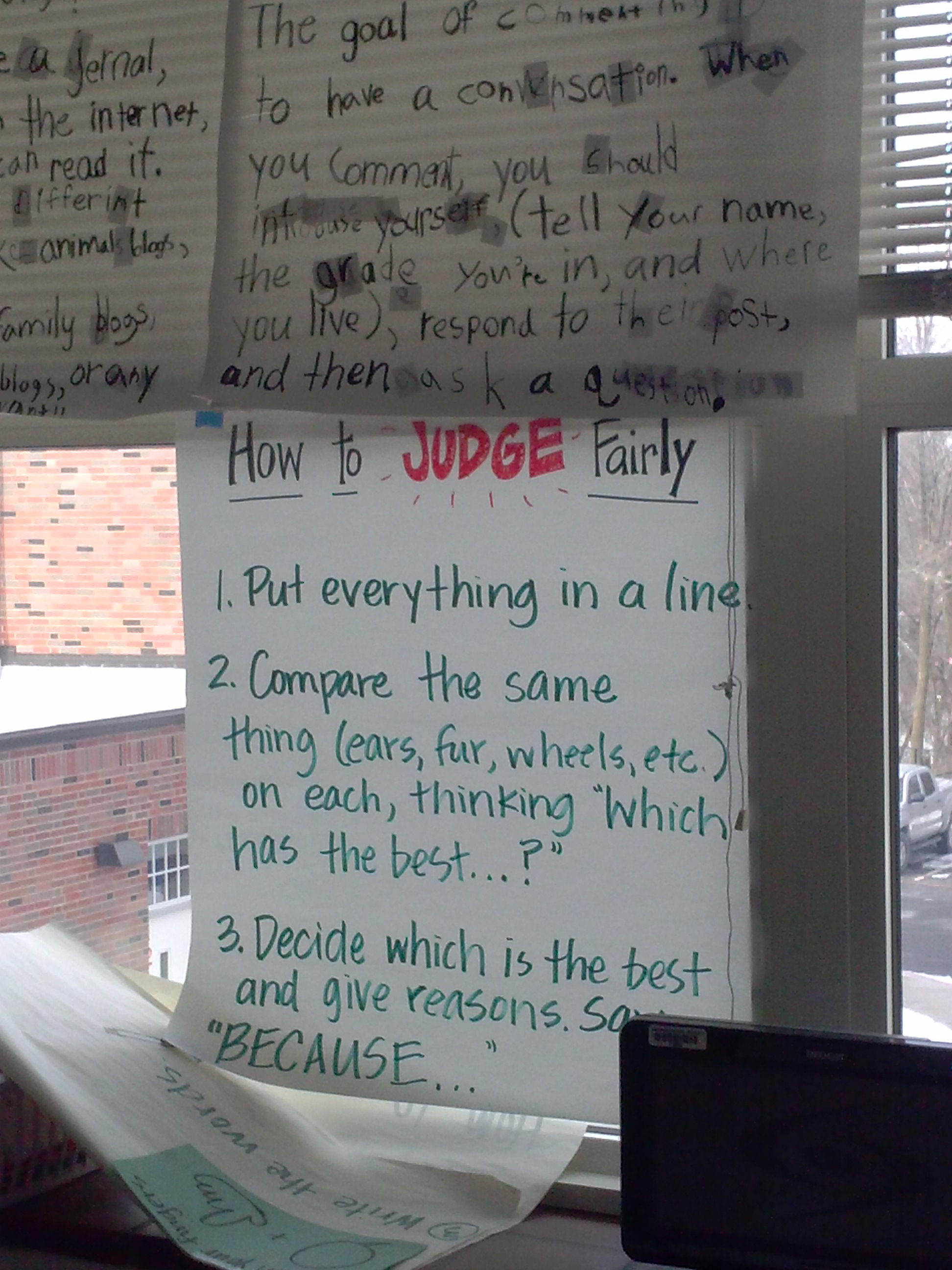
This is the process we used to choose our Best in Show.

1424274911526

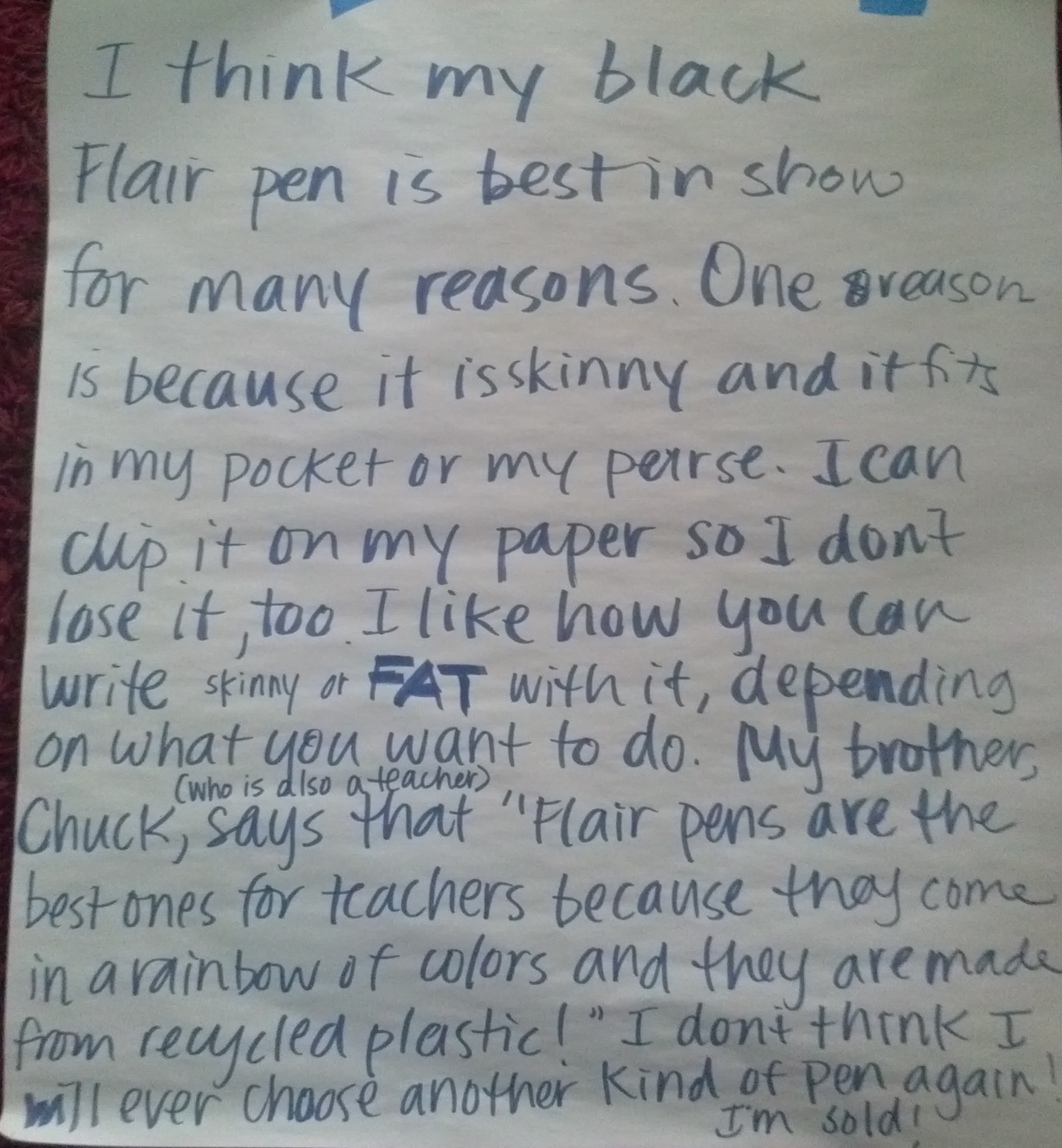
My writing utensil collection. 🙂 I used the “How to Judge Fairly” chart to determine which one was the best. It’s the black Flair pen, by the way. 🙂

CAM01846

You’re convinced, right?

After some modeling, practicing aloud with a partner (with my collection, trying to tell their partner which of my items was the best and why), writers tried out the process on their own collections.  Isn’t it fun how many different kinds of collections we ended up with in our room?:

This slideshow requires JavaScript.

As the closure for this first day of opinions, kiddos shared their Best in Show thinking with an elbow partner.

CAM01633 CAM01632

I have to tell you, I was SUPER impressed with how well they did at their very first try!  I think it was a peek into the great work that was to come.  And I’ll share more of that great work in bits and pieces over the next few days.  You’ll come back, right? 🙂

First Grade Math Warm-Ups: Week of March 24-27, 2015

I think I mentioned last time that we had been gone for our Spring Break for a while, and this week we were back in the full swing of things!  Vacations are great, but being “home” again in Rm. 202 is also a nice thing. 🙂

This week started on Tuesday, and one afternoon we didn’t get to review the warm-up, so there are only 3 (instead of 5).  Since we’re in a new quarter, we’re also working on a new topic: right now it’s data collection and analysis.  Here we go!

Tuesday

OK, so as soon as I said it, I guess I found a warm-up that didn’t fit–this one was a leftover from last quarter, reviewing how to use groups to add and solve problems.

CAM01799

Wednesday

I probably should have taken a before and after of this chart.  It started out like most of the other warm-ups: a big jumbled mess of post-its.  This was the first survey question of the quarter, and because it was the first, the conversation around it was a little longer than most.  We talked about the definition of the word “survey,” as well as the steps and focus of data–we collect, then organize, analyze and answer questions about the data.  From this day on, we’ll go back to this focus with each set of data we discuss.

CAM01800Thursday

This one seemed like an easy question.  Then I realized that I asked it in a confusing way, and many kids didn’t understand what it meant.  I guess I could have just asked “When is your birthday?” instead.  This one was organized going horizontally instead of vertically because we had to many options.

CAM01802What survey questions would you give your kiddos for math warm-ups?  What things do you focus on when talking about data collection and analysis with your students?  Leave us a comment–we’d love to hear about math warm-ups in your class! 🙂

W