Can We Persuade You?

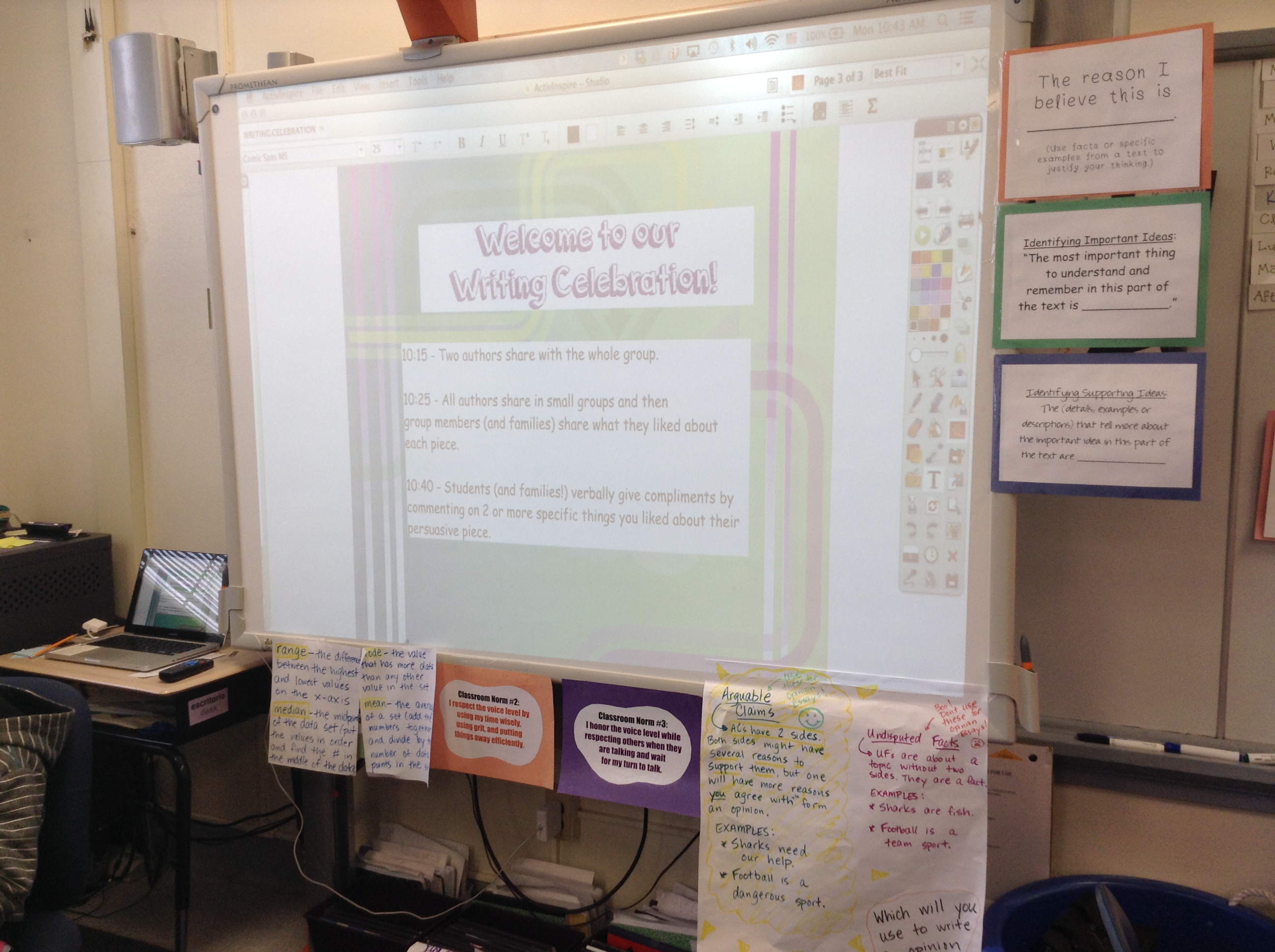
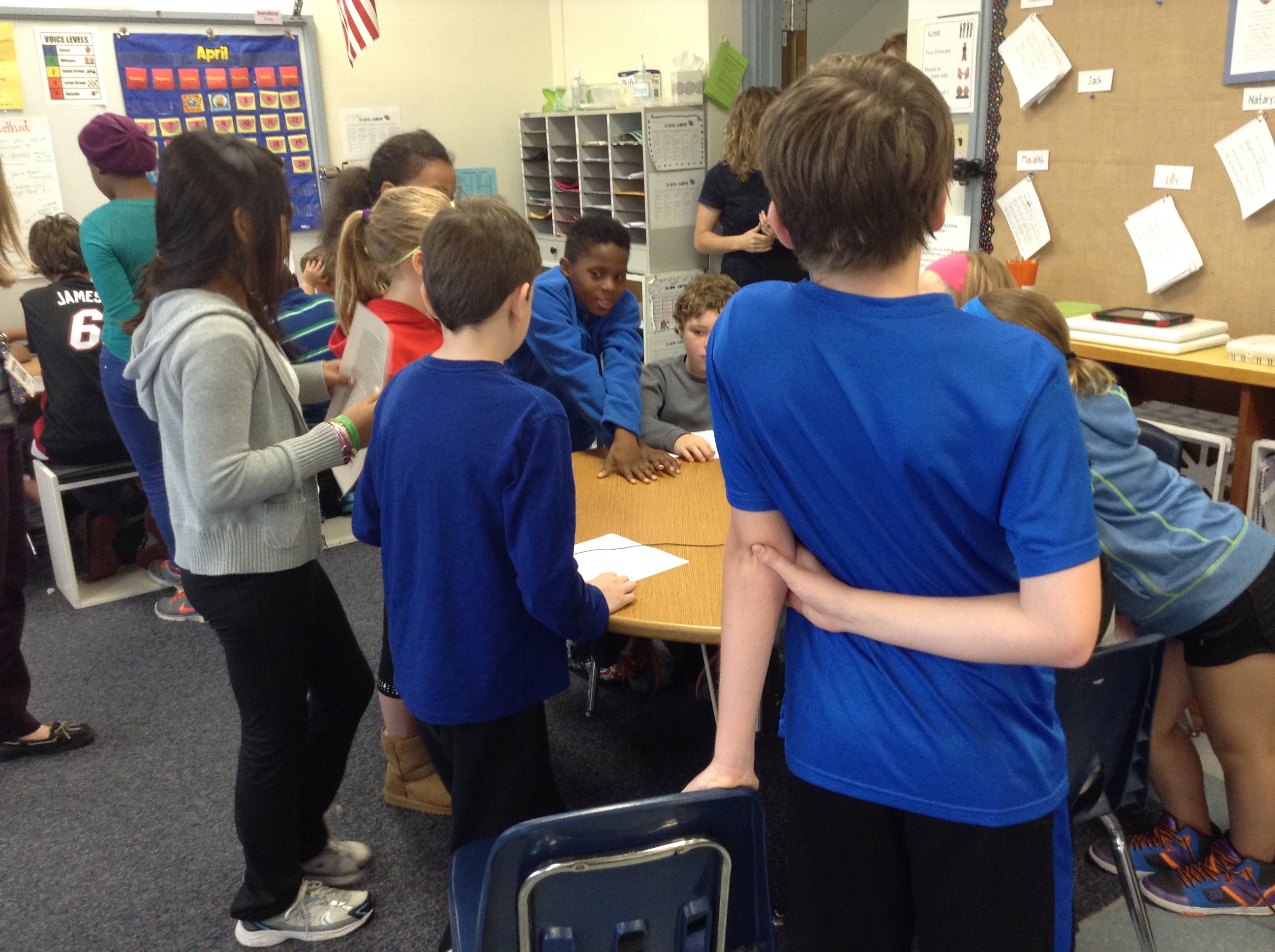
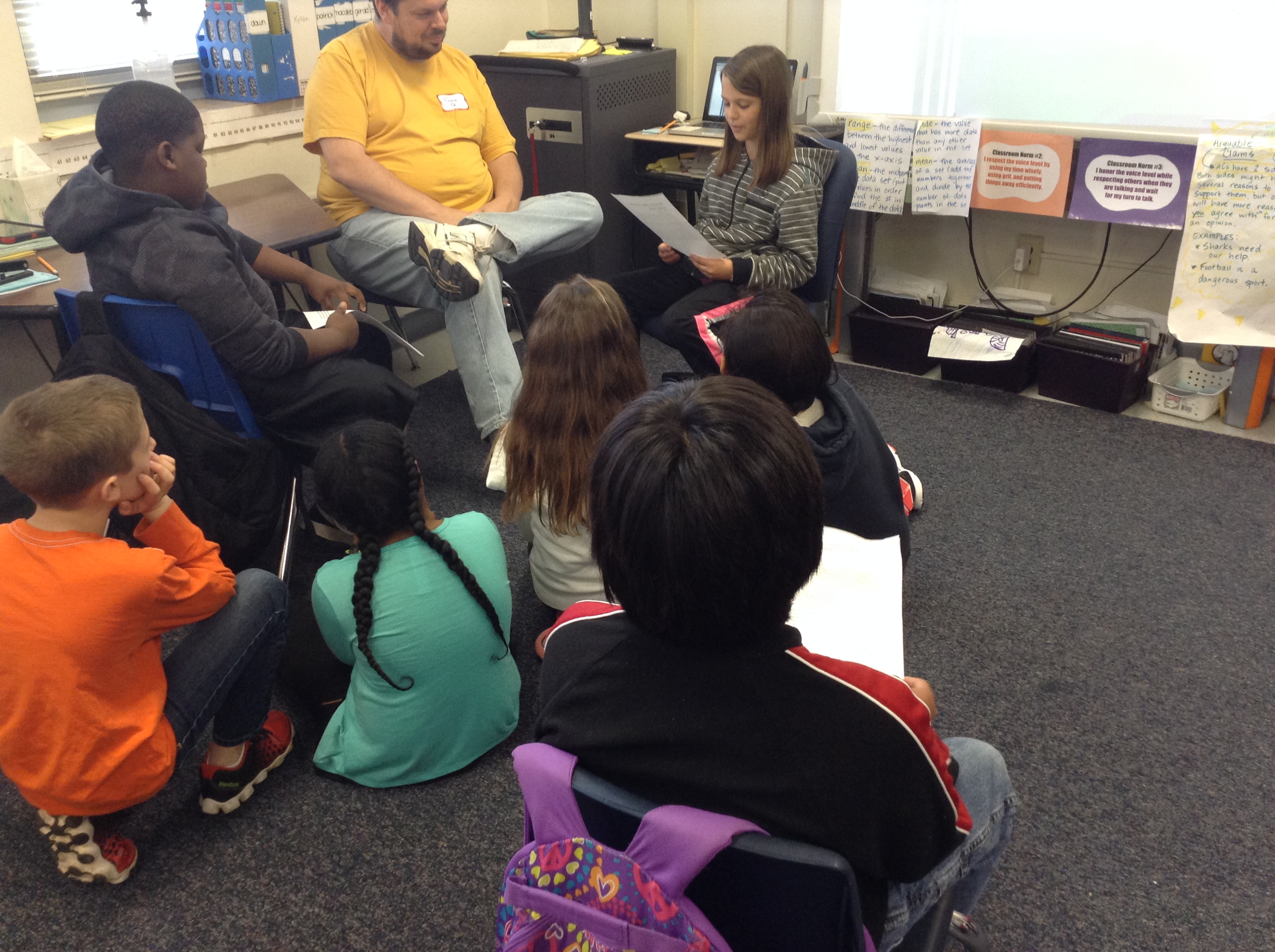
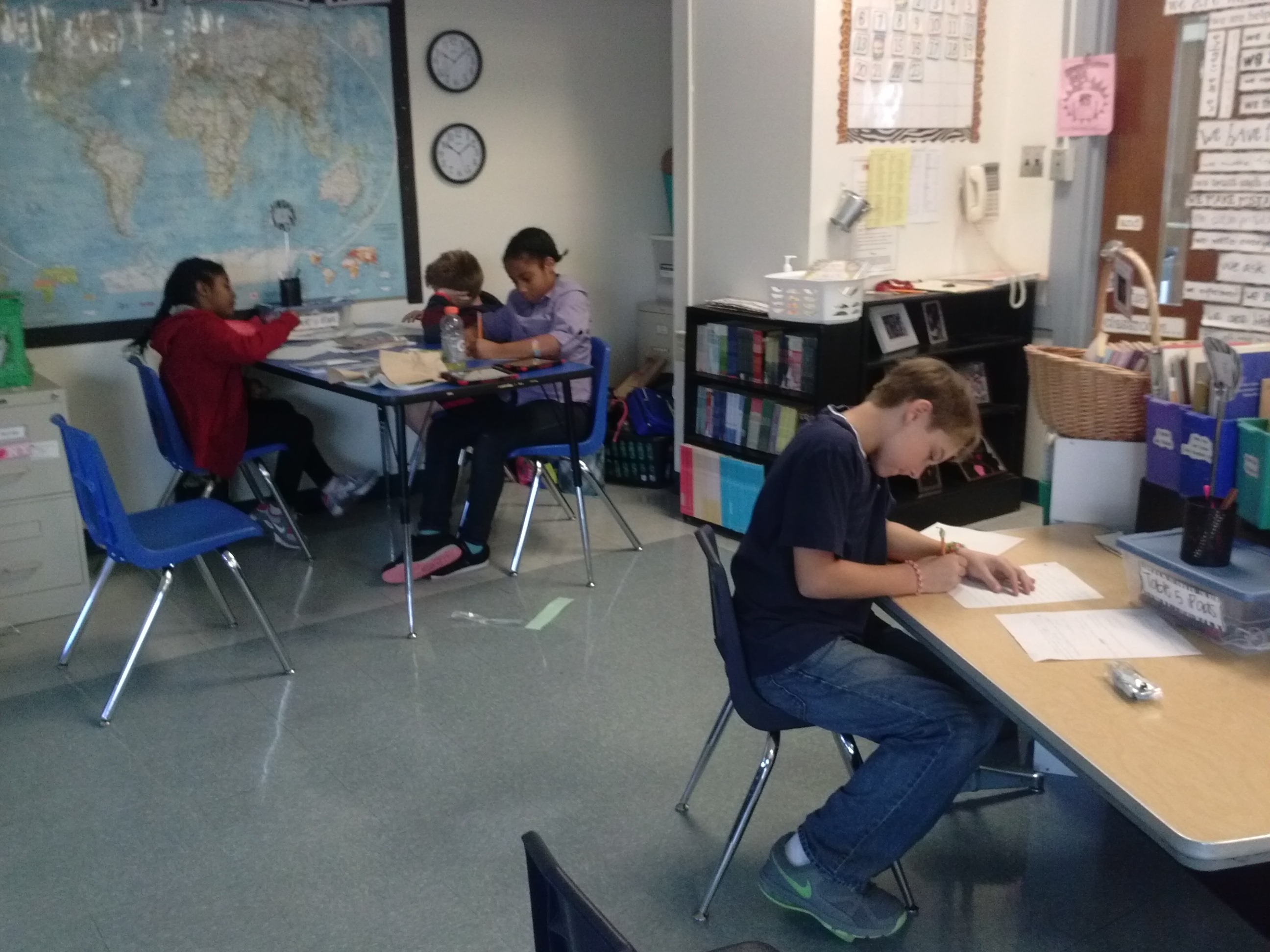
A couple of weeks ago we were invited to attend a very special writing celebration.  Our next-door-neighbors (Ms. Turken’s class) had been working on writing persuasive arguments and wanted to share them with us!

IMG_2449

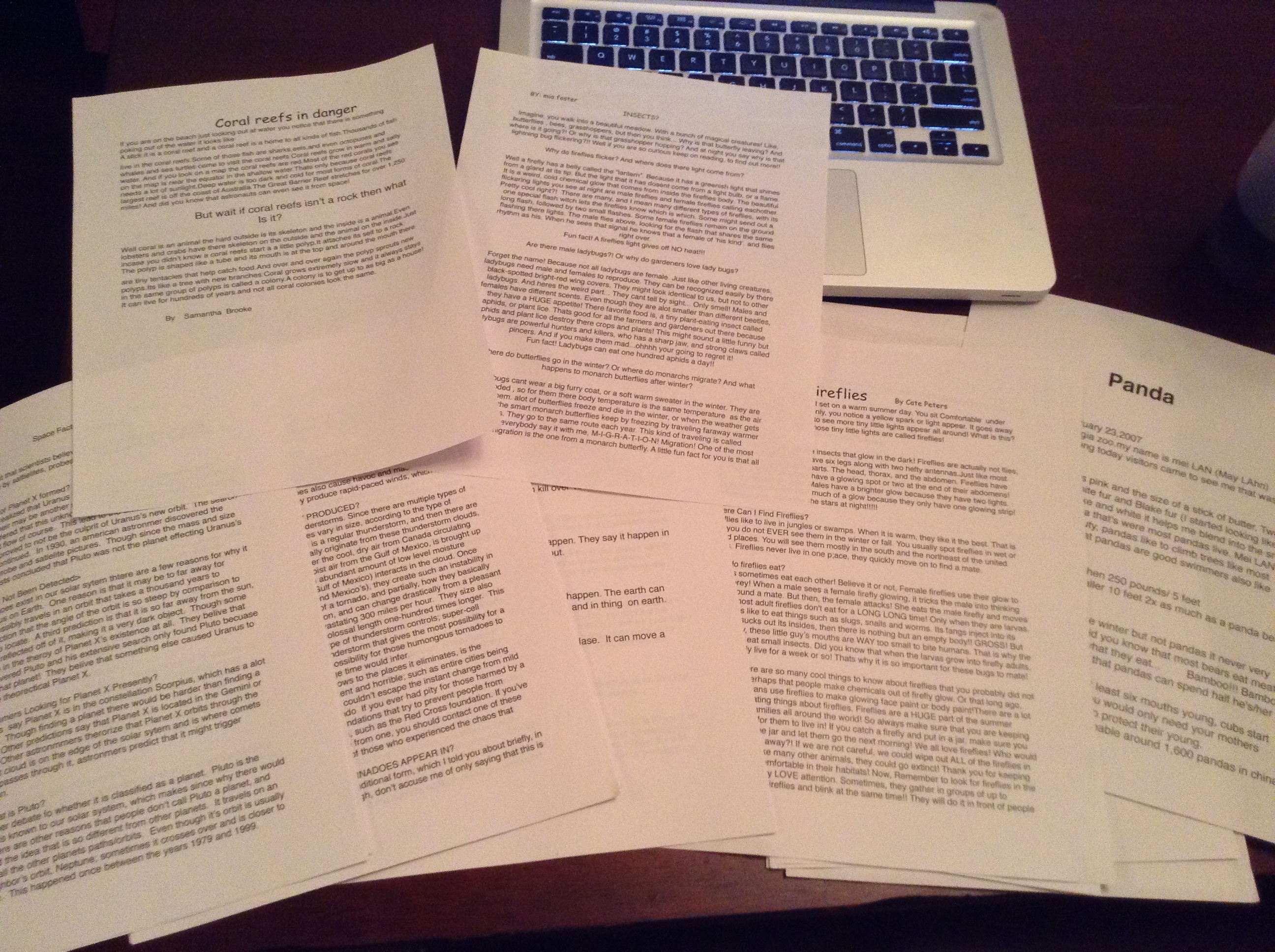
She had kiddos divided into small groups, and everyone went around the circle and read aloud their essays.  Their writing was great!  We heard about a variety of topics, from girls being able to play traditionally “boy” sports, wearing helmets while skateboarding and bike riding, wearing seat belts and many more.  We were definitely treated to many great essays, and are thinking differently about these topics because of the evidence they shared with their opinions.  It was also helpful because we were getting ready to start this unit in our own Writer’s Workshop next!  It has been great to be able to use this day as a touchstone in our own persuasive work.  Great job, Ms. Turken’s class!

Check out a few more pics from this super learning opportunity:

IMG_2443 IMG_2444 IMG_2445 IMG_2446 IMG_2447 IMG_2448

What do you know about persuasive writing?  What topic would you choose to write about if you had an opportunity to write an opinion essay?  We’d love to hear your ideas–we’re just  about ready to choose the ones we’ll write about! 🙂

Are You Smarter Than a 2nd Grader?

I know, you expected to see a different grade up there.  But in this case, it’s the 2nd grade that my 5th graders can learn from.


I’ve been meaning to share this picture for a couple of months now, because it’s such a great reminder of how to use punctuation correctly.

IMG_1950

This poster hangs outside Mrs. Driscoll’s second grade class. I know Mrs. Dix has a similar one that’s called “No More Weird Capitals!”

We walk by this everyday on our way back from our specials and lunch, and I keep thinking we need one in our classroom, too.  I know that kiddos learn these things early on, but have such a hard time remembering to show that in their writing!!

So maybe I need to ask my 5th graders that question when they are editing, did you show that you’re smarter than a 2nd grader? 🙂

How Did I Not Tell You?

I just realized I’ve keeping something from you….so yep, I’ll spill the beans.

My kids are bloggers!  I am not sure what I’ve been doing the last month or so, but I’ve neglected to tell you that my kiddos (and some of yours, too!) have begun a fabulous new blogging journey, and we’d love you to join us on it. 🙂

I started blogging with this group of kiddos the same way that I have the past two years, which I wrote about here.  It has been a great thing for us as learners already, and I am so impressed with how so many kiddos have taken the ball and RUN!!

We’d love it if you could jump over to our blogs and have a look–and more importantly LEAVE A COMMENT or two to help continue the conversations we’ve started over there.

Check us out at www.kidblog.org/mrsbeardensclass2013 and join in on the fun!  See you there! 🙂

On-Demand? Give Yourselves a Hand!

I know, I’ve been talking about on-demand writing a lot lately, haven’t I?  Well, we did it again today, as the pre-assessment for our new unit of informational writing.

The directions were pretty much the same as the last time, but I threw in a couple of wrenches.  Instead of handwriting their piece, they were expected to use technology–either their iPad or a laptop.  Instead of writing about something they knew a lot about, they were to do some research–well as least look for some facts in a book from our classroom.

I also laid down the expectation from this rubric from our writing curriculum:

Screen Shot 2013-12-11 at 9.21.20 PMThe part about having to type a “minimum of 2 pages in a single setting” is new for us, and was a BIG STRESSOR for some of my friends.  We agreed that today was a try-it–that we would focus on trying to do our best and recognize that there were a lot of things to do (figure out the technology, think of what to write, find the information we’d use in our resources, editing, revising, publishing) and that we’d just give it our best shot.  So we chose our topic by deciding what book we’d use from our classroom library:

I put many options of science books (animals, weather, force and motion, etc.) out on the rug and we dug in!

I put many options of science books (animals, weather, force and motion, etc.) out on the rug and we dug in!

Kiddos also chose from a variety of other nonfiction texts in our room to use as resources for their writing piece.

Kiddos also chose from a variety of other nonfiction texts in our room to use as resources for their writing piece.

After we had chosen a seed, decided if they would us an iPad or laptop, we got busy.  And it was great!  I love how the pictures speak to what was happening–lots of multitasking and hard working kiddos!

This slideshow requires JavaScript.

And when we were finished, we breathed a huge sigh of relief and stepped back to see what we had done.

Look at all those words!  Do you see all that we accomplished?  I'm totally impressed! :)

Look at all those words! Do you see all that we accomplished? I’m totally impressed! 🙂

Here are some thoughts on the day:

And like the video suggested, give yourselves a hand, friends for a JOB WELL DONE!  YOU ROCK!!  I’m so proud and you should be, too!

Informational Writing Lessons

Remember when I wrote about what had been going on with Narrative Writing Lessons a little while ago? That post was actually one that I used in my class with my kids (an idea I stumbled upon last year in a grad class I was taking), and this one is instead a roundup-and-reflection type post that I do a lot around here after we try some new things.

We started our informational unit in a similar way that we ended our Narrative unit: with an on-demand writing piece:

2013-11-08 12.00.23

We began by looking at lots of nonfiction texts, recording what we noticed about them:

IMG_1929

Then we began a very exciting and learning-filled journey into the genre of informational text, focusing on how writers organize their writing, write for their intended audience and use text features meaningfully.  I’ll tell the rest of the story in pictures.  Be sure to check out the captions! (This is all about text features, after all!)

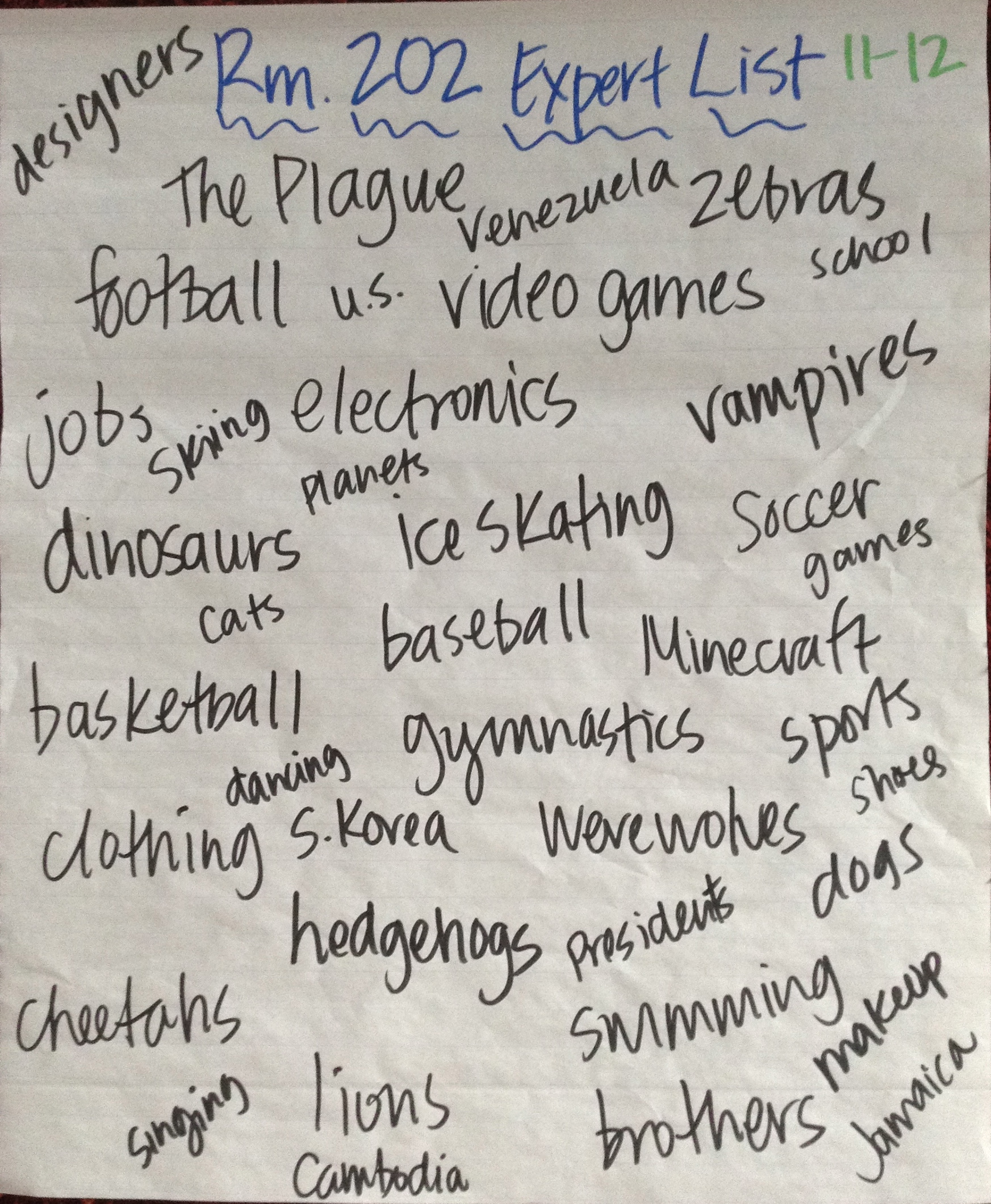
This was the first of two informational text units we're doing, and we focused on just things we knew alot about--that we were "experts" on.  Here is our Rm. 202 Expert List, compiled from everyone's individual lists.

This was the first of two informational text units we’re doing, and we focused on just things we knew a lot about–that we were “experts” on. Here is our Rm. 202 Expert List, compiled from everyone’s individual lists.

After we built our expert lists, we spent some time working with some ideas on those lists to see which ones we liked best.  We worked on deciding what our reader would be interested in knowing more about.  This chart shows how we focused on questions that we could answer, as well as creating trees or webs to organize subtopics.

After we built our expert lists, we spent some time working with some ideas on those lists to see which ones we liked best. We worked on deciding what our reader would be interested in knowing more about. This chart shows how we focused on questions that we could answer, as well as creating trees or webs to organize subtopics.

This was one of my favorite (and impromptu!) lessons from this unit.  As we considered what info the reader would be interested in knowing about, we had to think about who our AUDIENCE really was supposed to be.  This chart shows a strategy we tried: we picked two completely different audiences and recorded how the subtopics/questions would be different based on the reader.  Check out the difference between how you'd write about shoes for a fashion designer and a kid. :)  They had some pretty great ideas, huh?

This was one of my favorite (and impromptu!) lessons from this unit. As we considered what info the reader would be interested in knowing about, we had to think about who our AUDIENCE really was supposed to be. This chart shows a strategy we tried: we picked two completely different audiences and recorded how the subtopics/questions would be different based on the reader. Check out the difference between how you’d write about shoes for a fashion designer and a kid. 🙂 They had some pretty great ideas, huh?

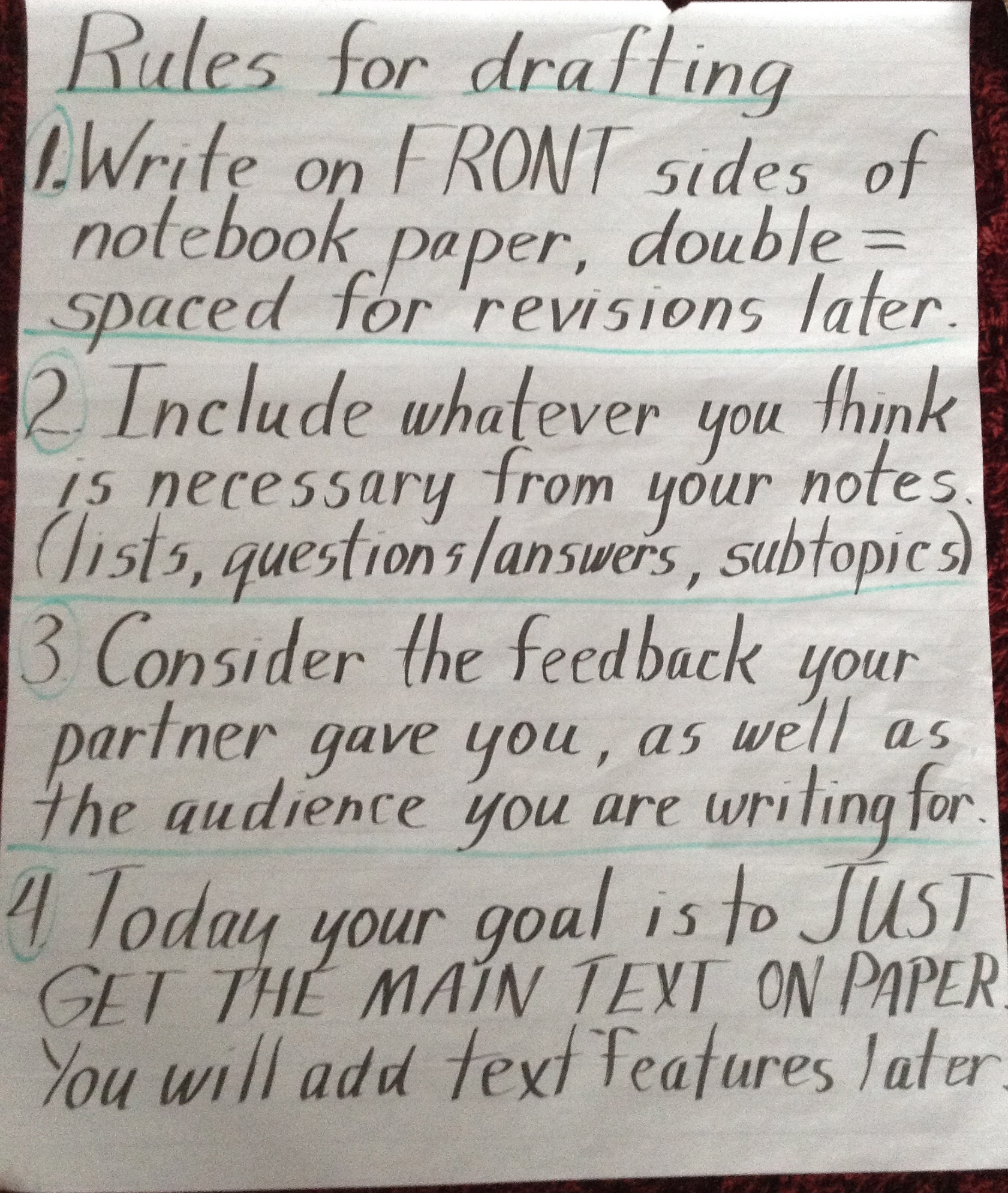
After we spent a couple of days trying out seed ideas and strategies for nuturing htem, we were ready to pick a seed, plan around it and then draft!  Drafting was a quick process, and meant to just get the ideas initially down on paper.  We would begin the work of cleaning up the messy parts as the next step!  (and just in case you're wondering, I was out of the classroom this day and my sub made this chart instead of me. :) )

After we spent a couple of days trying out seed ideas and strategies for nurturing them, we were ready to pick a seed, plan around it and then draft! Drafting was a quick process, and meant to just get the ideas initially down on paper. We would begin the work of cleaning up the messy parts as the next step! (and just in case you’re wondering, I was out of the classroom this day and my sub made this chart instead of me. 🙂 )


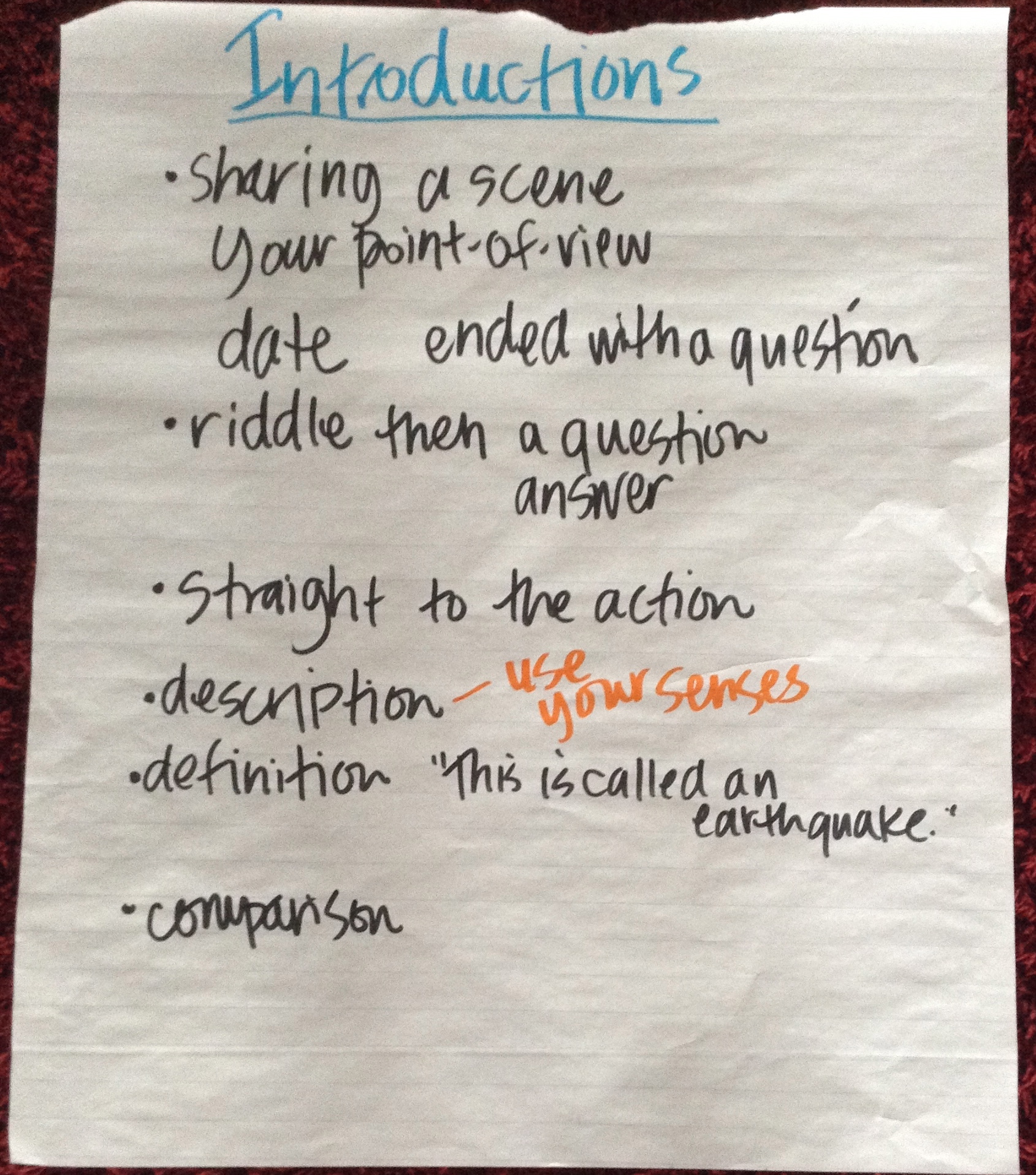
After we had flash drafted our initial ideas, we worked on creating interesting leads...

After we had flash drafted our initial ideas, we worked on creating interesting leads…

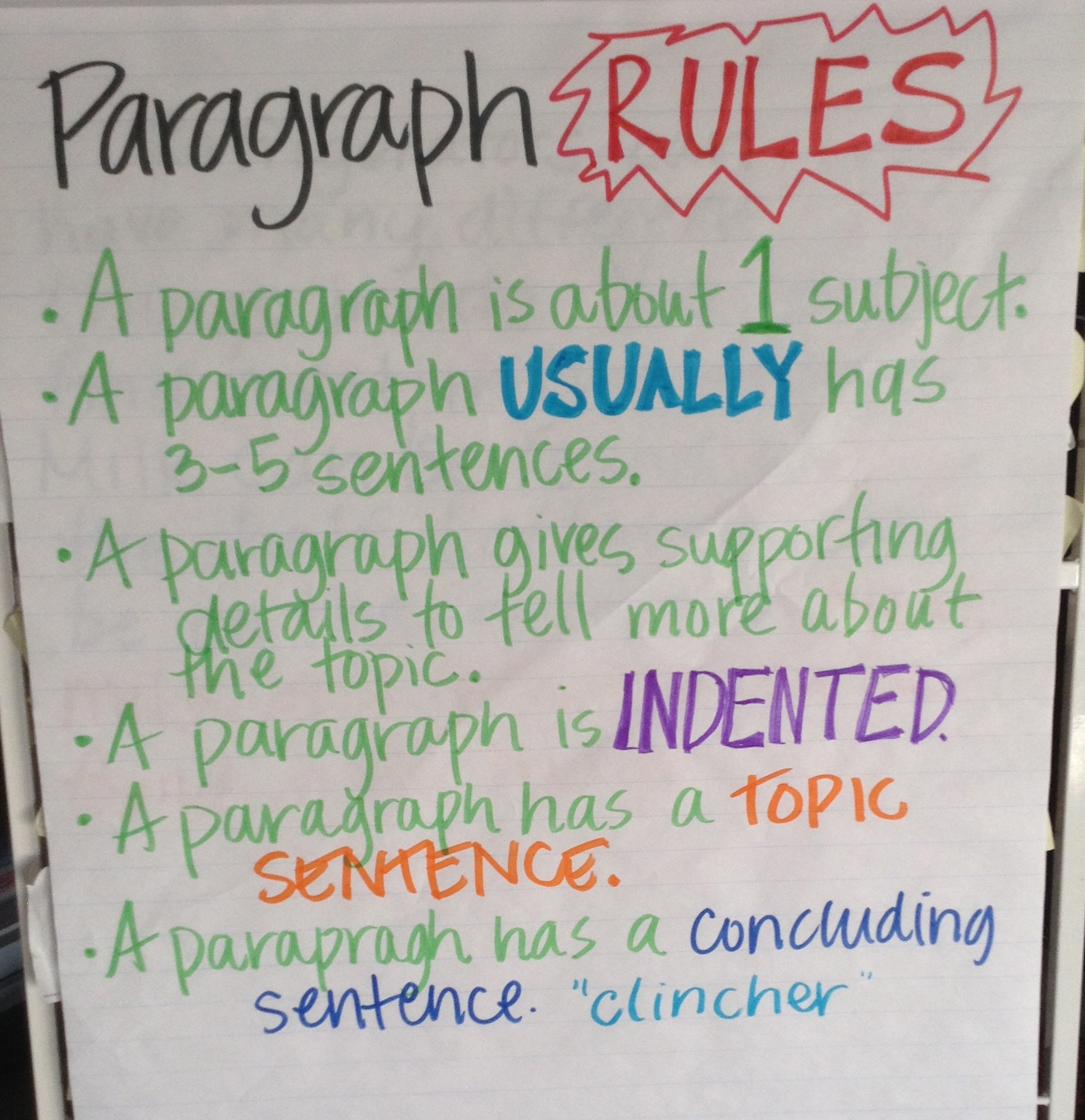
...and then focused in on writing paragraphs to organize our subtopics into chunks that made sense to our readers.  We did this over several days because it was hard, confusing work for many of us.

…and then focused in on writing paragraphs to organize our subtopics into chunks that made sense to our readers. We did this over several days because it was hard, confusing work for many of us.

First try at a paragraph with topic sentence, 3 details and a conclusion.  We wrote this one together.

First try at a paragraph with topic sentence, 3 details and a conclusion. We wrote this one together.

Another paragraph.  This one is colored coded to try to help writers see each part (although I wish I had written the topic sentence in green since it's how you GO...too late now, I guess.)

Another paragraph. This one is colored coded to try to help writers see each part (although I wish I had written the topic sentence in green since it’s how you GO…too late now, I guess.)

One more paragraph.  This one was written several days later as another example to hang for kids to reference.

One more paragraph. This one was written several days later as another example to hang for kids to reference.

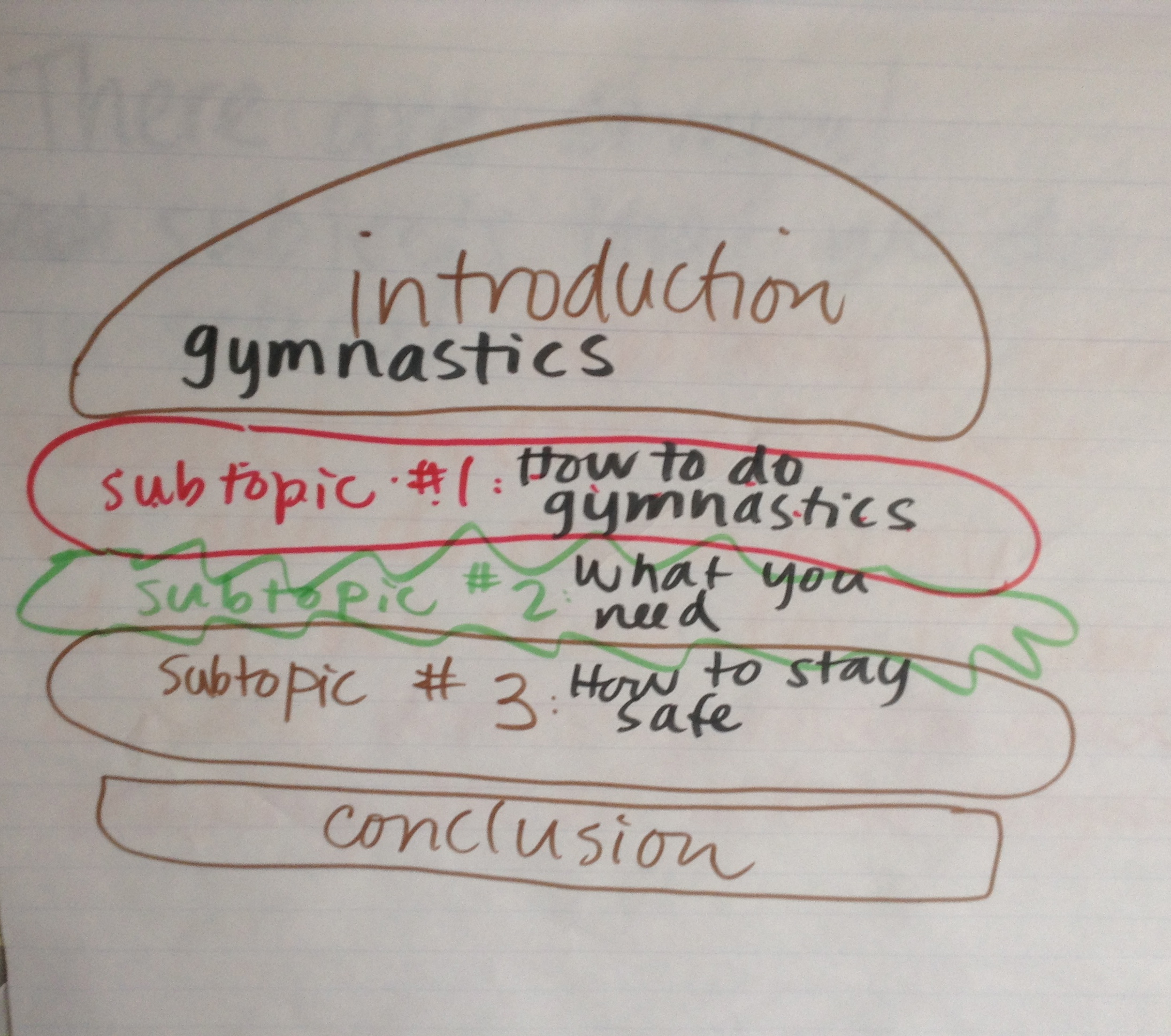
While there are lots of ways to describe the structure of a 5-paragraph essay (informational report, poster, etc.), the one I go to is always a sandwich or a hamburger.  Excuse my really bad attempt at art.  It did the job. :)

While there are lots of ways to describe the structure of a 5-paragraph essay (informational report, poster, etc.), the one I go to is always a sandwich or a hamburger. Excuse my really bad attempt at art. It did the job. 🙂

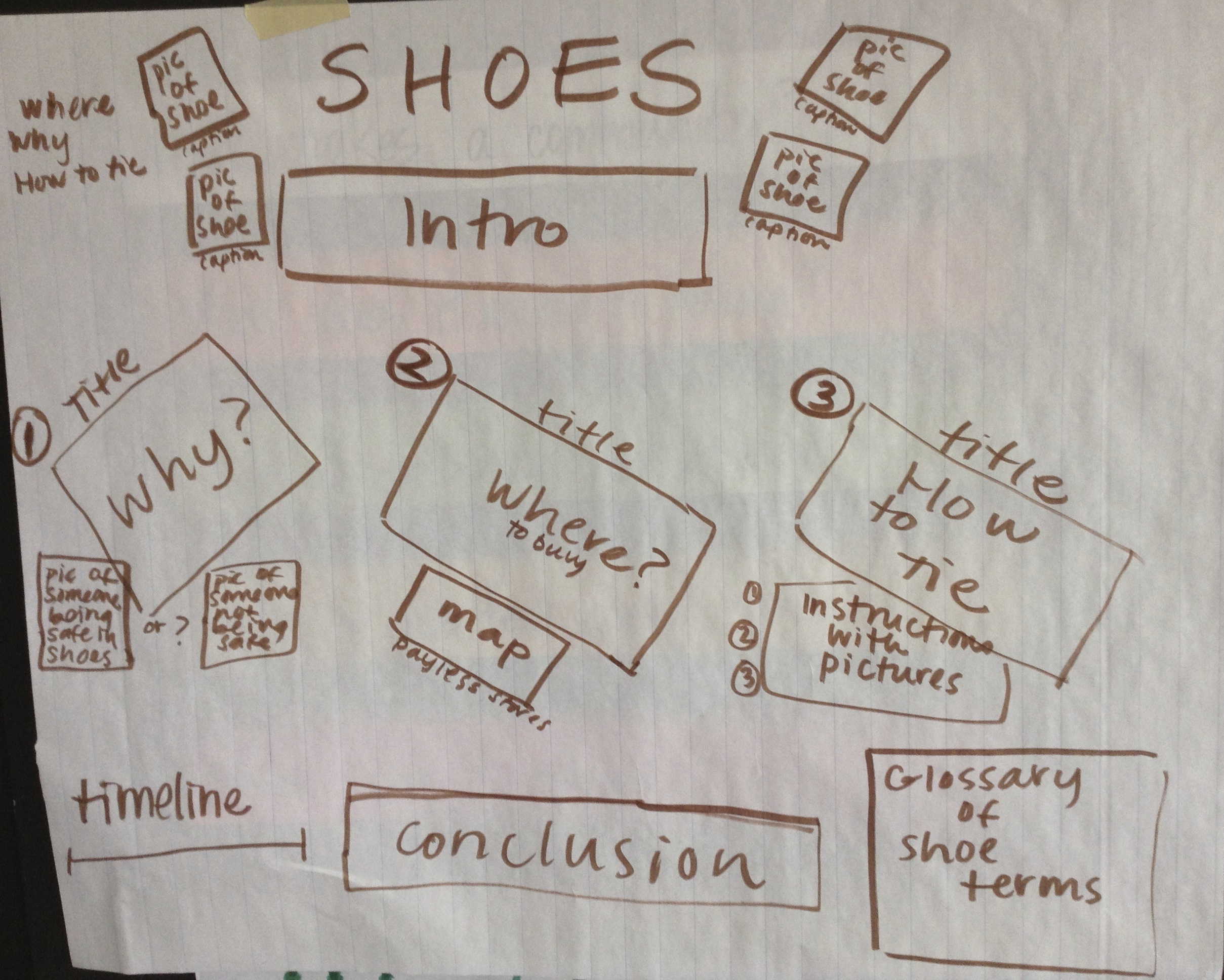
Before we published, we planned out what our posters (which they made under my suggestion) would look like.  They each created a "map" of where each paragraph and text feature would go.

Before we published, we planned out what our posters (which they made under my suggestion) would look like. They each created a “map” of where each paragraph and text feature would go.

One last step before we published was to edit (which we had a chart for, too, but I didn’t have a picture of just now).  We focused on how editing is a COURTESY TO THE READER so that they both read and understand our intended message.  Final posters were made and then we had a 5th grade writing celebration to showcase our hard work!

But wait–that wasn’t it.  Yesterday, after our celebration was finished, we sat down to do a post assessment version of the on-demand writing assignment.  It was AMAZING to see how their writing changed from the beginning to the end.  That led them to the post here,  where writers were reflecting on those changes.


Info Text Writing Reflections

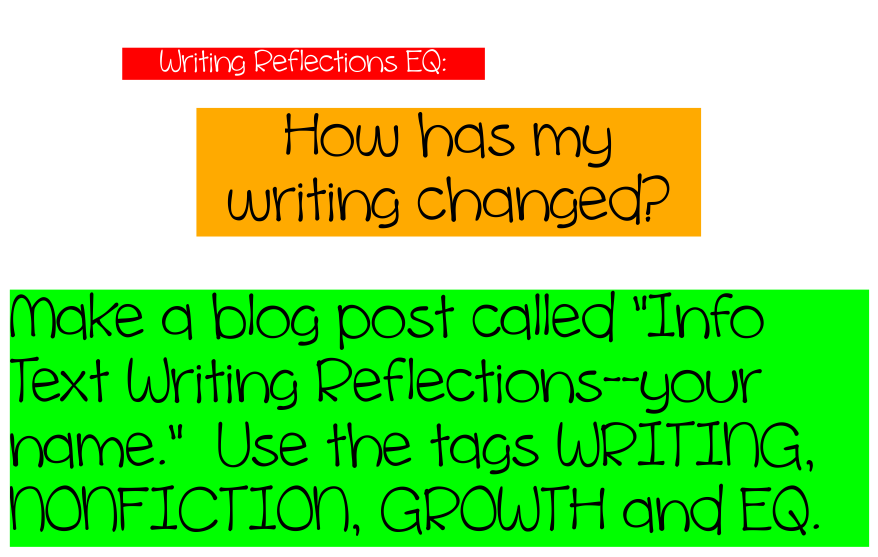
Ok, friends–here’s the post you needed to work on your blog reflections tonight!  Remember, this is the EQ we talked about in class:

Screen Shot 2013-12-10 at 3.12.12 PM

Your job is to explain the whole on-demand writing thing (because not everyone that reads your post will know what we’ve been doing!), as well as find as many ways that your writing is different as you can–using evidence from your writing to explain.  I hope to finish writing a post all about all the things we’ve learned, but here’s a quick list of things you might mention in your post:

  • paragraphs
  • length
  • use of interesting language or domain-specific vocabulary
  • how you added subtopics of more information than the first time around
  • how you used text features (more of them, more thoughtful, how you decided what to use)
  • if the writing experience was easier/harder for the post assessment than the pre assessment
  • anything else you notice about how your writing is different!

When I get the other post done, I’ll link to it here, to check back soon! Oh, and if you need a link to your blog, here’s one. 🙂

Can’t wait to see what you figure out!  Happy reflecting!

Mrs. Bearden

On-Demand

Writing is a subject that is important to students–to everyone, really–and the teaching and assessing of it are ever-changing.  I LOVE the topic of writing (wait–you knew that already didn’t you?): I love doing it, reading about it, teaching about it, everything.  And above all, one of my favorite things about writing is helping kiddos get to love it, too.

So…this year our district is implementing a new writing curriculum, one that I have had the privilege of spending the last year rewriting to better match the Common Core State Standards and better help every student become college and career ready.

In some ways, writing in our school district was already aligned with CCSS, and we have always had really high standards for what students should be able to do.  But there are also some things that have (and will) changed in response to the new standards:

  • Students will now be required to learn about and then demonstrate their knowledge of argumentive writing.  This is much different than the opinion pieces we’ve done for years–the heart of the argument is staking a claim, anticipating counterarguments (and answering them) and using valid evidence to support the claim.
  • The ability to write in every content area, while included for years, is more highly expected now.  Writing is expected to be thought of as something you do every day, in many ways and in many places.  It is not just something you do at school for an hour a day.  Students should be writing in reading, writing in math, writing in science and writing in social studies.
  • New listening and speaking standards have been introduced, and are emphasized in all areas of student learning, not just in writing.
  • Students are expected to be writing for a larger audience and making global connections via the internet.  Thank you KidBlog for your help with this one!  Luckily I started this one years ago. 🙂
  • Students are expected to be able to produce an entire piece of writing in one sitting.  Yep, go all the way through the cycle in 45 minutes. 🙂

And so that’s why this post is called On-Demand (glad I finally got to that explanation, huh?).  We did our second on-demand writing piece today.  And boy is there a story to tell. 🙂

This year, as a part of our new curriculum, we have access to Lucy Calkins’ Units of Study.  The newest version of them is aligned with CCSS expectations, and gives teachers many ideas of how to help kiddos achieve these more rigorous standards.  Included in each unit is an on-demand writing assessment (well actually there are two–one as a pretest and one at the end of the unit).

We just finished up a narrative unit, and today was the day we sat to do our on-demand piece, in 45 minutes.  Here were the directions I gave:

2013-10-23 11.12.14

Now, we have done this before.  Only once, though, at the beginning of the year before we started this unit.  I wish I had pictures of their faces when I first told them what we were going to do and how long they had to do it.  I don’t.  Boo. 😦

But I do have pictures of what it looked like today.

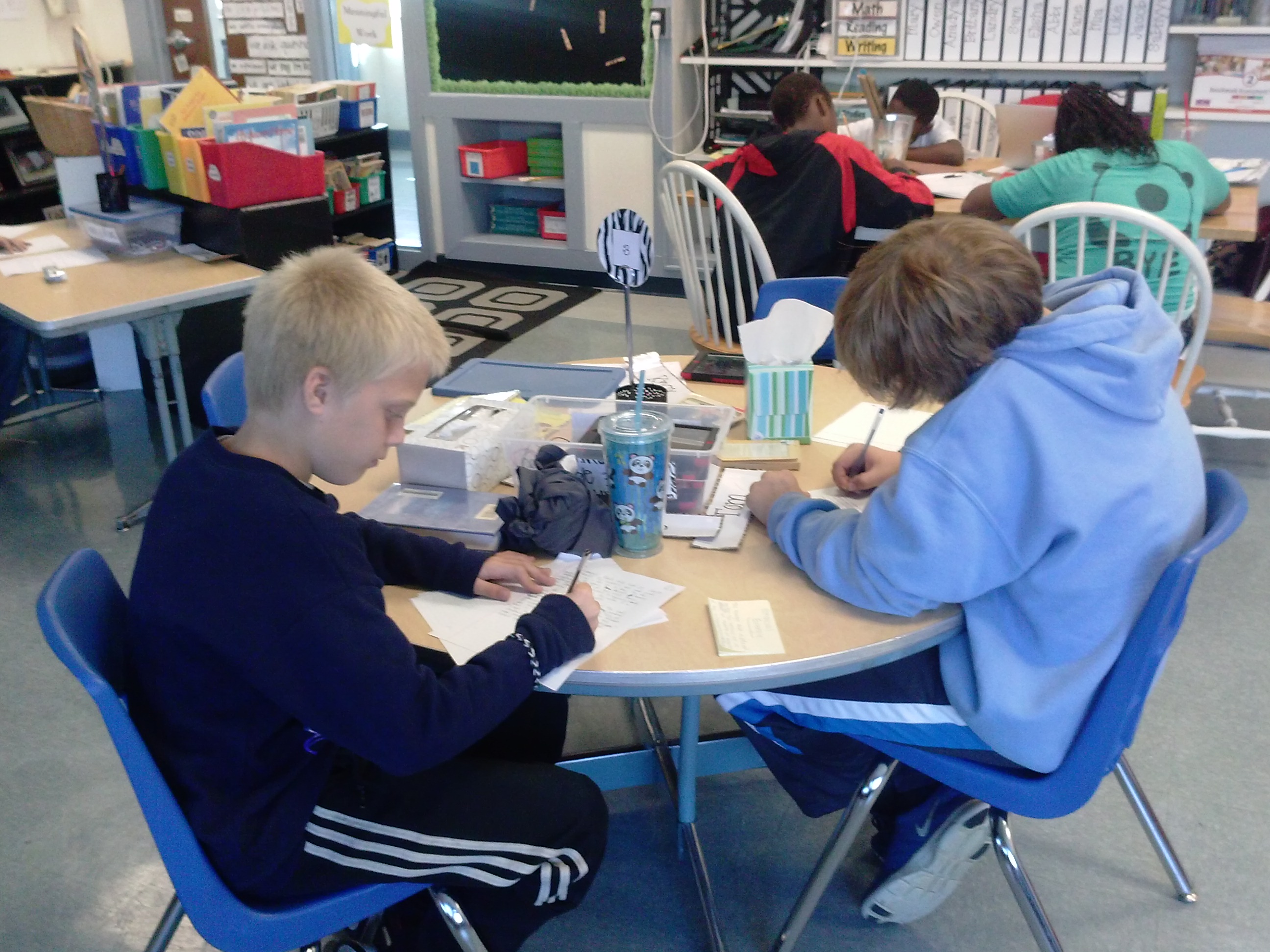
Some friends sat with me at my table to work on their pieces.

Some friends sat with me at my table to work on their pieces.

Max needed to stretch out on the floor to get the juices flowing.  Totally how it rolls in our room!  Love how he looks like he's really thinking!

Max needed to stretch out on the floor to get the juices flowing. Totally how it rolls in our room! Love how he looks like he’s really thinking!

2013-10-23 11.12.33

There are definitely many friends with their heads in their hands for at least part of the session.  Again--lots of deep thinking happening here!

There are definitely many friends with their heads in their hands for at least part of the session. Again–lots of deep thinking happening here!

2013-10-23 11.12.49 2013-10-23 11.12.55

I set a timer for friends who needed to monitor how much more time they had.  Although, not surprisingly, this really stressed some people out more than it helped them. :(

I set a timer for friends who needed to monitor how much more time they had. Although, not surprisingly, this really stressed some people out more than it helped them. 😦

For as hard as it was, though, I was so glad that in a very short time, everyone was busy and writing.  Everyone got a piece written and everyone turned something in!  It was very cool to see what they are now able to accomplish in such a short amount of time!  I think they’re amazed, too.  And the best part is that the more we do this, the easier it will get!

Narrative Writing Lessons

Happy Tuesday, friends!  It’s our first it’s-so-dark-and-rainy-we-had-to-turn-on-the-lights days of the fall.  Kind of gloomy, but also one of my favorite things about this time of year!  Weird, huh?

So..today we’re going to do some thinking together about writing RIGHT HERE ON THE BLOG!  I’m going to give you your job and then you will leave a comment on this post to share your thoughts with me and with the other writers in our room.  Ready?  Ok, here we go!

Below are two of the anchor charts we’ve been using during our study of narrative writing.  Reread them to yourself.

                       CAM00089              CAM00090

Now I want you to think about something from these charts that you know you have tried during this unit, either in your Writer’s  Notebook or your story.  Tell me about how you have used it in your comment below.   You could start your sentence with something like: “During our study of narratives, I learned…and I tried it in my writing by…”  Your words might sound different than that, but use the starter if you need it!  I can’t wait to hear about your smart thinking!  The pieces you are writing are pretty great, Rm. 202, and I’m excited to see where we continue to go as writers this year!

Notebook Day! (a.k.a. SepChristmas)

We had a special day on Monday!  It was Notebook Day!  I wish I would have taken a pic of the big ‘ole pile of wrapped up notebooks, but I was so excited to give them out that I forgot. Boo. 😦

But just like last year (and for many years, actually) my friends got a special gift wrapped up all special, with an even more special note attached.  Here’s this year’s note:

Screen Shot 2013-09-18 at 8.36.28 PMThe paper they were wrapped in was covered in moustaches!  (On a side note, what is it with kids loving everything moustache lately?!)

Then it was time to pass them out.  So each kiddo, one at a time, came up to sign the pledge (which I’ll share soon–it’s at school. 😦 ), get their secret package AND a new pen!  The smiles on faces where SO GREAT!!  Here’s a little bit of how our “signing ceremony” went:

Yeah…somehow I got cut off there at the end, sorry.  🙂

I love that DeShala was the one who coined this special day SepChristmas, since it was like Christmas in September!  Yep, love it.

So once everyone pledged that they were going to do their best to grow and learn as writers this year, it was time.  And so on the count of 3…

Here’s to a great writing journey this year, friends of Rm. 202!  Let’s get this party started!

An Uncertain Future

I met with my team today–the fabulous Mrs. Hong and Ms. Turken–to talk about how to integrate reading, writing and sci/ss, as well as to update our curriculum calendar.  We only had 2 hours blocked out on the calendar, and so in some ways those were really big plans.  And we started 45 minutes late.  🙂

So, as we sat down and tried to tackle reworking the curriculum calendar (based on new Common Core standards, district resources and just things we wanted to change), we realized we had lots of work to do BEFORE we could address that problem.  You know how it goes, before you can do the job you actually sat down to do, you have to do this and before that you have to do this….we were in that boat.

We are wanting to reorganize our thinking and our schedule to allow for more integration, working Social Studies and Science topics into everything rather than having things so compartmentalized and isolated from each other.  But we had plans to UbDize (yep, just made up that word) our SS curriculum and organize our units around common EQs for each quarter.  But like I said before, it’s easier said than done.

And then there’s my crazy brain that isn’t just quite ready to think about these things.  For one thing, I have to have my space all done before I can planning for what we will do in that space.  Since it’s not even August, I do not have my classroom put together yet.  Granted, I do have all of my furniture where it will go and have big ideas for where things will go and what it will look like, but it’s not done yet.  And I have plans for how I want to redo parts of my classroom library.  And I haven’t met my class yet.

That last part is really the biggest piece of the puzzle that makes it hard for me to complete the calendar.  So in the mean time, I feel like I am facing an

Screen Shot 2013-07-31 at 1.09.33 PM

I know–you’re thinking, “Well, duh, Mrs. Bearden.  Isn’t the beginning of the year always uncertain?  You never really know what the school year will bring or what every detail of every day will look like.”  And no, I don’t have a crystal ball or any tarot cards, and so I guess in a way I always face an uncertain future at this point in the year.

But the reason why it so affects me is because I have such a hard time making decisions about things I’ll do and ways to go without actually knowing my students.  So much of where we go and how we get there depends on what my students need, and where they are when we start.  I have information and data about these things on paperwork (transition reports, testing scores, Lexile levels, etc.) from previous teachers, but until I really see what it looks like for actual kids in my actual space, I can’t really get a feel for it.  (My family has always said that I don’t have much of an imagination–maybe this is proof of that! 🙂 )

But obviously I can’t just not make plans.  I can’t not work with my team.  I can’t not try to figure it out now, because I owe it to these new students of mine to have at least an idea of where we will go, and how we might get there.  If not, then we’ll never get there.  And that’s definitely not an option.

Along the way I’ll tweak the plans–adjusting and reworking based on personalities, learning styles, academic and social needs, interests–and I’ll be totally ok with that.  And then, at the end of the year, I’ll look back at the plans we made around the table today in the summer and laugh, because of how different they are.  But I gotta start somewhere.

How does your “summer brain” work?  In what order do you do your work–space first or plans first? How does your team work before school starts to map our curriculum/unit plans?  I’d love your thoughts and/or advice! 🙂