Are You Hungry?

If you’re anything like me, then you love to eat.  And you really like to eat out.  My family loves to find new restaurants around town and try them out; “chain” restaurant is kind of a bad word in my house.  So, if you’ve ever eaten out, then you know the idea behind a menu–you are offered a variety of choices of yummy things to eat.  Most times you will choose a main course, side dishes and dessert.  Maybe if you’re really hungry, or if something looks really interesting, you might add an appetizer to your meal.

Ok, so what?  This is a blog about school, about education.  Why all the restaurant talk?  Well, if you’ve spent any time in our classroom lately, or if you’ve seen a 5th grade homework sheet this year at school, then you’re familiar with the idea of a menu.  But why, you ask, would you use a menu in school?

Let me tell you. 🙂

The big idea that makes a restaurant menu work, that makes it desirable, is the idea of choice.  When you sit down to eat, no one tells you “Eat this.  Chew it 25 times.  Swallow it.”  You’re not forced to eat things you don’t want to (well, unless maybe you’re a kid!), and there are many ways to achieve your goal of filling your empty stomach.

That’s what we’re trying to do with menus in school.  We have a goal–based on subject and unit–and then students are given a choice of ways to show their knowledge and learning related to that subject.  The idea is not new, really; I’ve been doing a variation of it for years.  Long ago we called them “invitations” or had a list of “must-dos and can-dos”, but the idea behind it is the same: children are going to have more ownership over their work and probably ‘dig in’ and little deeper when they have choice in what they do and what the final product looks like.

Here are some examples of menus we’ve used this year so far:
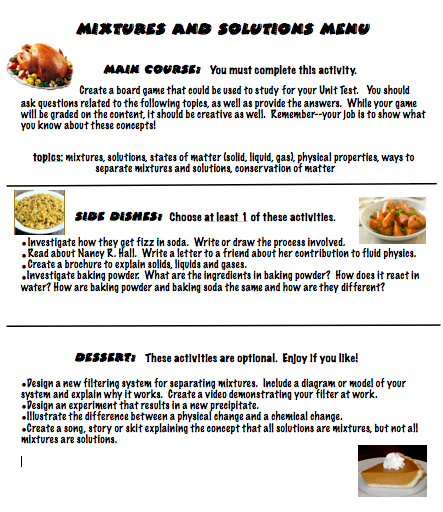
 

I must add, though, that besides giving students a say in what their work looks like, menus are an important tool in differentiation.  The categories are tiered, so that every learner can be engaged wherever they are in their understanding of the concept; the main course is something that everyone can do (still at their own level with their own creativity), side dishes are a little deeper, and then desserts are activities and projects that allow and enable students to stretch themselves and think in a deeper way.  Everyone in my classroom has their needs met regardless of what they are, and everyone has activities that are appropriate for them.

So, are you hungry for learning? Menus are for you. 🙂


Family Meeting?

So as our last conversation of the day, I threw out a suggestion I had been thinking about over the weekend to my class:  What do you think would happen if we called our class meetings “family meetings” instead?  Would anything be different?   I didn’t say anything else about my thoughts related to it; I just wanted to hear what they were thinking.

Here’s what they said:

–I think it’s a good idea because in a family meeting you’re supposed to solve problems.  We usually spend alot of our time talking about the problem instead of a solution.  Calling it a family meeting would help us.

I think family meetings are a good idea because in a family you always have to tell the truth and work together.  You’re supposed to be honest and tell what you’re thinking.  I’m not sure if we’re ready for this yet, though, because alot of people don’t say anything during our meetings.

How can we have a family meeting if we’re not a family?  None of us are related.  (This led to a discussion–albeit a short one–about the definition of a family.)

I asked one more question and then we tabled the conversation until after Thanksgiving, so give everyone a chance to chew on it: If we want to be more like a family, and work together and care about each other as we do so, would calling our meetings “family meetings” help us do that?  Would it help remind us of our focus as we talk?

What do you think?  Is there a difference between class meetings and family meetings?  Does the name matter?  Add your comment and tell us your thoughts. 🙂


Thinking Ahead

This will seem so random, since it’s something for January and this is the day before Thanksgiving, but I wanted to give you a little peek into something we are going to be doing.

I have tried for many years to do Student Led Conferences in the Winter/Spring, and I ran across a really great blog post that I thought you’d enjoy reading. It explained 10 reasons why they were a good thing, and I liked the comments that were added by both students and parents.

Just a look ahead at what’s to come.  I’m excited to see how it goes with our kids!

Learning Is Messy


Today was our last day of school before Thanksgiving break.  And so traditionally, that means that we do things that are a little bit nontraditional in our schedule.  For math, that meant that I put the kiddos to work.

Here’s what I mean…

For many years, my husband and I have taught together.  Well not really together, like in the same school or anything, but we’ve always taught the same grade or the one just behind.  So since that’s the case, we’ve been known to do some of the same things in our classrooms.  One such thing is the Thanksgiving Dinner project in math that comes during these last two days of school.

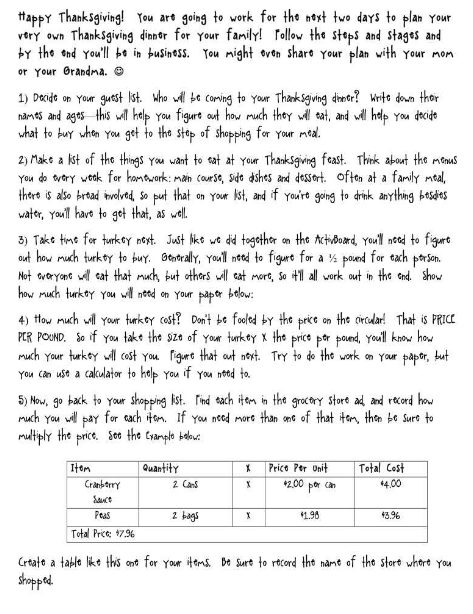
The idea is pretty simple–plan and shop for the Thanksgiving meal for your family.  The directions for my class this year looked like this:

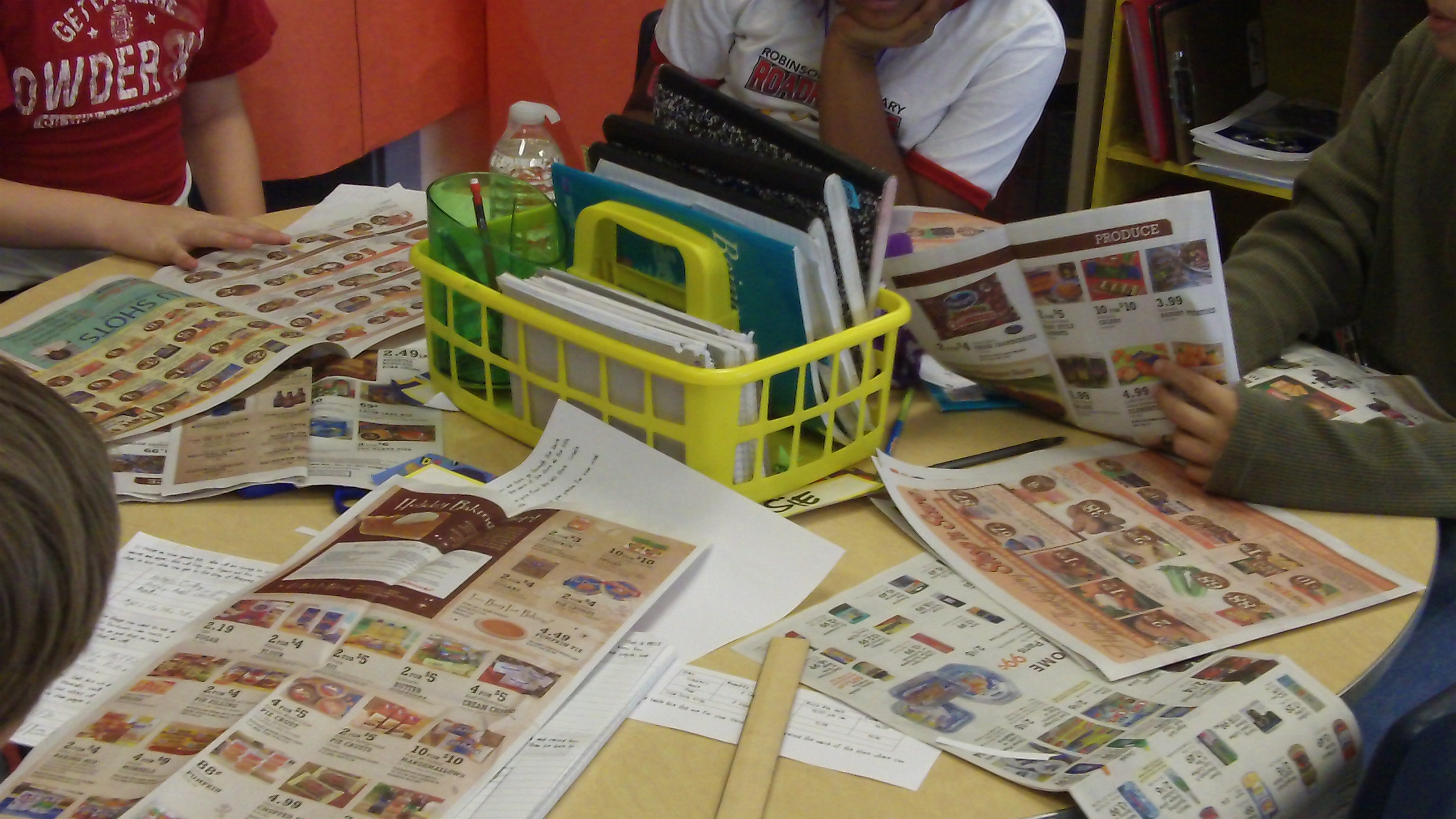
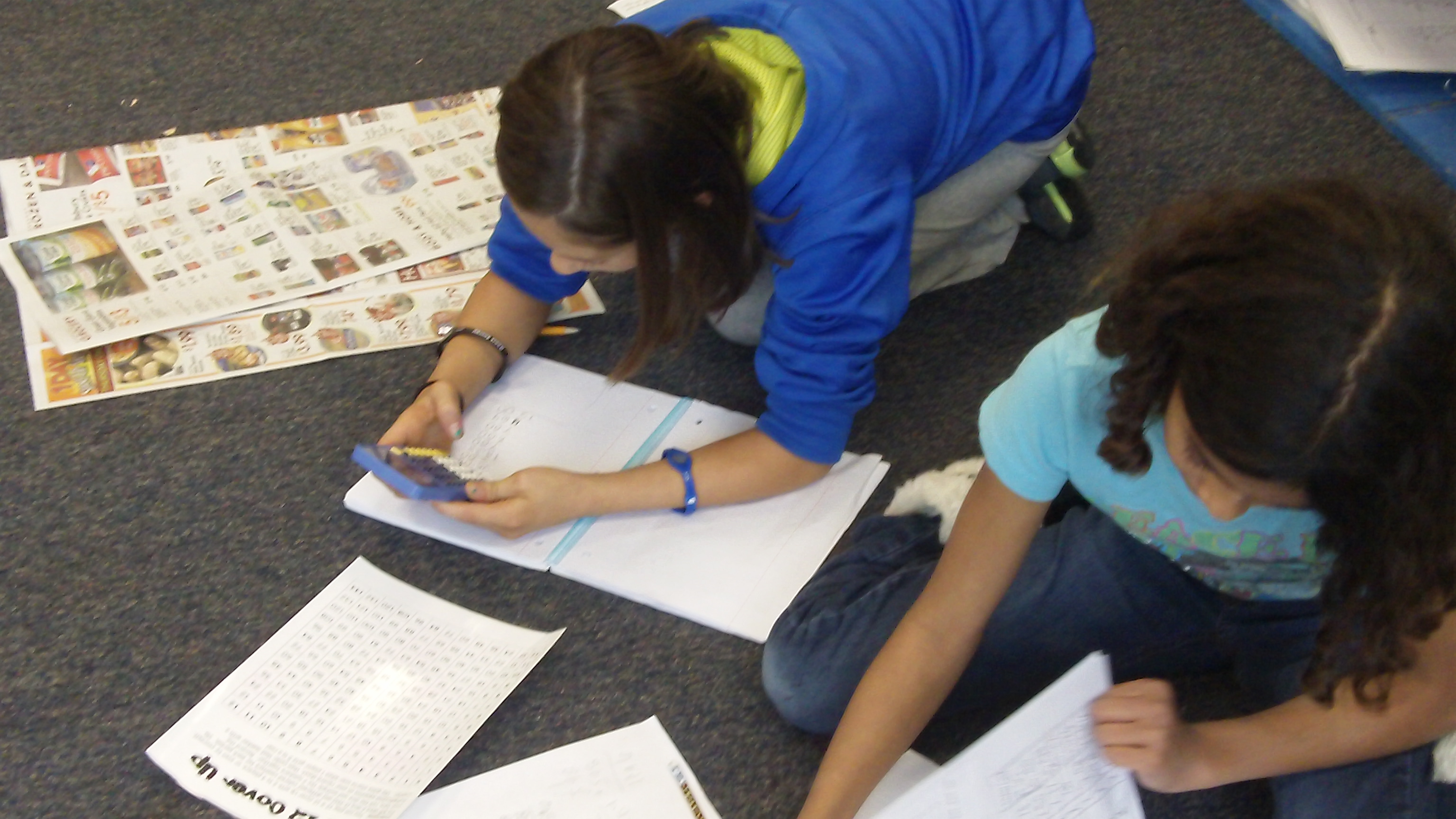
What’s cool is what happens after you give all the directions and answer all the questions and set them all loose to figure it out for themselves.  Check it out.  Like I said, learning can get a little messy.  But it’s a really good kind of messy. 🙂

Z was so focused on his meal, searching diligently through each circular to find just the right foods!


Love how my friend M is so into the paper in this one!  Can you see her behind there?


The other cool thing, besides a messy classroom and lots of kids saying things like “this is really fun!” or my friend D asking me to copy his plan so he could share it with his mom (love that!), was the togetherness that this project brought as they worked with each other.  Truly a family feel in Rm. 201 today!


Happy Thanksgiving, friends!


Subs, Family and Diet Dr. Pepper

So I could have entitled this post “Things I am Thankful For,” but decided I’d use a sampling for what I’m going to write on my list instead.  Got your attention, too, right?

Being that Thanksgiving is this week, and also because it’s probably been a bit too long since I’ve done so, I’m going to take a few minutes to make a list of things I am lucky to have, things I am thankful for, things with which I have been blessed.  So please indulge me for a few minutes, especially if this post veers away from the “classroom” theme for a while.  I promise I’ll come back eventually. 🙂

So here we go (in no particular order–well except for #1!):

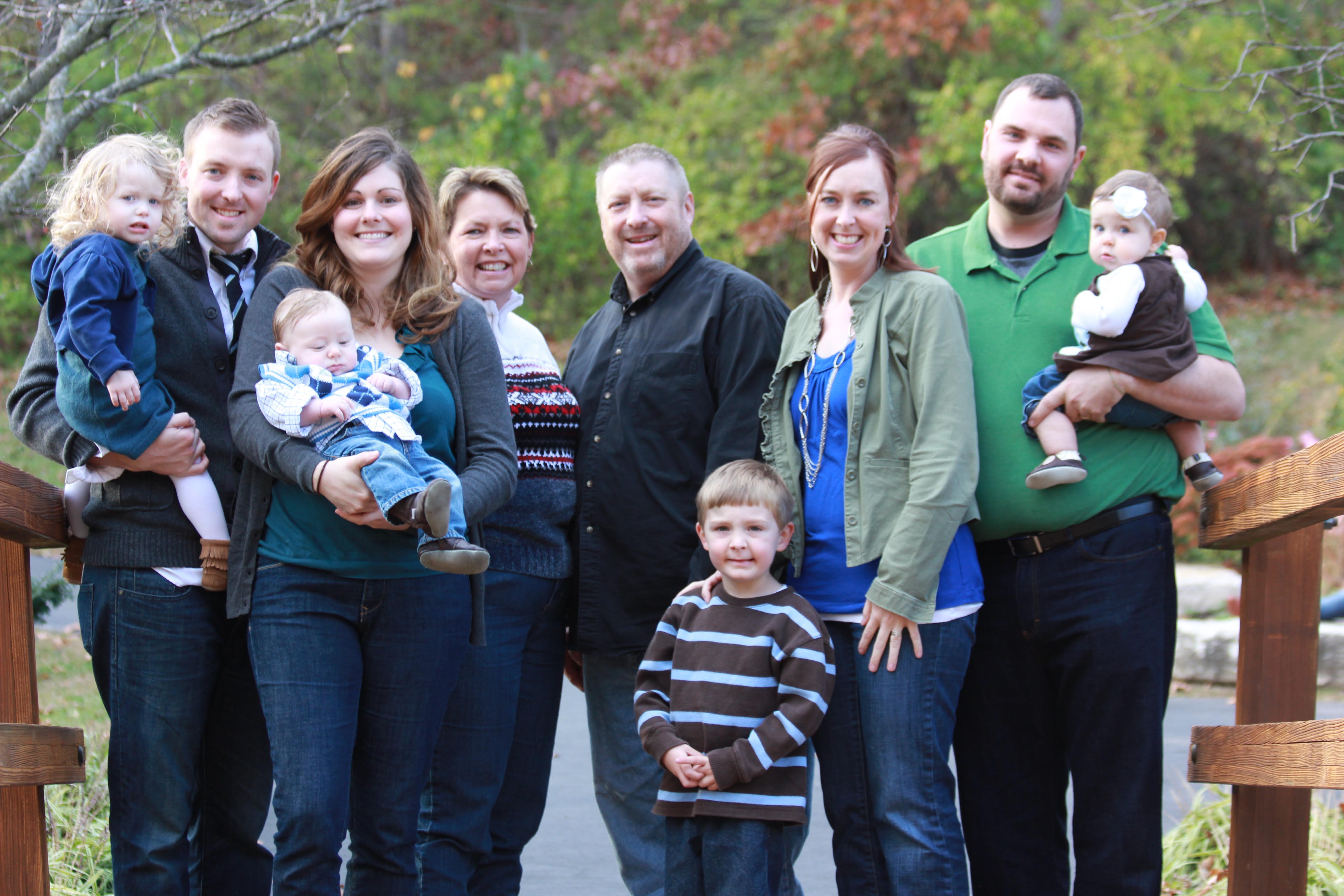
1. Family–It’s probably cliche’ to start with this, but it’s definitely the truth: without my family–the one I was born into and the one I’ve created myself–I would not be who I am.  From the earliest moment I remember with my parents and my brother, to the memories I just made this weekend with my hubby in Chicago, the experiences I have shared with the people I love helped to create this version of me.  I am so lucky to have such amazing parents who live in town and get to love on my kids as much (and as often) as they like.  My brother’s family is here, too, which I love.  Then there’s my own little family.  I may very well be the luckiest lady around.  I have the most amazing husband and kids that I could ever hope for.  I may just have to take some time in another post soon to tell you all of the reasons why!  For now, I’ll share a picture of all of those lovely people from a recent photo shoot.  Thanks LeSeure Photography for taking care of us!

2. Subs–Like as in substitute teachers, not sub sandwiches. 🙂  Last week I was out 3 days–2 totally unexpected because I was sick, and 1 planned as a personal day.  Regardless of the reason, though, I wouldn’t have be able to be gone were it not for the countless substitute teachers that are available to take over for me.  I would not have been able to spend an amazing 10 weeks with my new baby last winter were it not for amazing subs like Linda Spina whom I could trust to handle the reins while I was gone.  And believe me, if you think teaching is hard, substitute teaching is 10, no 100, times harder!  I did it.  4 times.  4 half days.  And that’s all I could stand.  It takes an amazing person to be able to step into someone else’s shoes for the day, and I’m so glad that they are there to do it for me.

3. Diet Dr. Pepper–All the goodness of Dr. Pepper with no calories and no sugar!  Need I say more?

4. Mistakes–I have this crazy expectation of myself that I am going to do everything perfectly the first time I try, but obviously that’s not how it works.  I mess up.  Often.  And sometimes in a really big way.  But what I love about those mess-ups is that I always learn something from them.  And the best mistakes, in my opinion, happen in my classroom.  If you ask any of my students, they will tell you that I don’t know everything.  *GASP!* I know, it’s unbelievable, but it’s true.  And they know that because I make sure to tell them.  I try to make sure that if I don’t know something, that I’m honest and I say so.  And sometimes, on really great occasions, a kid in my class does know about that something, and they teach me about it (just ask Colby: he taught us about how the number 1 is a special number that is not prime or square).  Or we’ll learn about it together.  It’s the mistakes I make that help me grow and learn and how I become more confident in my abilities.  The same is true with kids.  The important part–and the part I work really hard to make sure is in place–is that they have a safe place to make those mistakes; a place where they know that it’s ok, that we’re all in it together.

5. Laughter–I love to laugh.  I love it when I am having a really crummy day and someone says something at just the right time and I can’t help but crack up.  And then I can’t be cranky anymore because I’m smiling so big.  I love how laughter brings us together.  In our classroom, as well as in my own home, we laugh alot.  And at weird things.  It just makes those places more fun to spend time in.  Got a good joke to share?  I’ll tell you one that I got while I was trick-or-treating with my kids last month:

My neighbor asked me if I wanted to hear a joke.  I said, yes, and then she said, “The Texas Rangers.”  HA!  I did laugh at loud at that one.  (Do you get it?  The Rangers?  They’re a joke?  Get it?  Ok, not the best written joke ever, but funny nonetheless. 🙂

6. Fall, Rain and November–Check out this post from earlier this month to see my thoughts on this time of year at school.  I LOVE IT!!

I should probably keep going and going and going, because I’m sure to leave something important off the list and inadvertently offend someone, but I guess that’s all for now.

And now it’s your turn:  what are you thankful for?  Leave a comment and tell us!

Lessons from a 4-year-old

Kids say the darndest things.  And if we really listen to what they say, we can usually learn something from them.  This was the case the other night when I was having a conversation at dinner with my son, Riley, who is 4-years-old.  He announced very matter-of-factly that “If you wanna have a friend, you gotta be a friend.”  I asked him to tell me more about that, and he told me “That’s what Ms. Liz says.” Now I know that she probably says that to the class as a whole, but I also know that she probably needs to say that specifically to my son more often then I’d like.  We continued the conversation with more about what that saying meant, and how he knew if he was being a friend.  I was glad to hear his thoughts and could tell that he’d really been working on how to do just those things.

We talked about this phrase on Friday in our own classroom.  I shared it with a small group of friends who were trying to work out how to really care about each other and work together as a team.  We decided that as simple as that phrase is–a 4YO can understand it, afterall, on some level–that is is really more involved that you might first think.  We discussed at length what it might look like to a 5th grader.  And then we put a plan in place to start living it out.

And then even as I’ve gone through this weekend, I’ve realized that there are implications for me, too, as an adult.  I’m learning the same lesson that my son and my students are, just on a different level.

So it’s true what they say: “If you wanna have a friend, you gotta be a friend.”

What does that mean to you?  Feel free to add your thoughts and comment!

1/8 is 12 1/2%

At our school we use Investigations for math.  One thing I love about the program is that it usually digs into the why of each math concept instead of just the how.   It encourages students to create their own strategies for solving problems, emphasizing that there is not just one way to come to a solution. In the case of our fraction/decimal unit that we’re in now, we are doing more than just learning the rote definition of a fraction and coloring in fractional parts of pictures or just adding or subtracting them using the method I directly taught them–like I know I did in 5th grade.  Instead, we are investigating and creating and figuring out and–most importantly in my opinion–using what we already know to discover something we don’t.

Here’s an example of what I’m talking about:

We are at the beginning of a unit called What’s the Portion?, which includes experiences with fractions, decimals and percents. Yesterday and Thursday we were working on figuring out the percent that is equivalent to a fraction.  We started by making drawings on a 10X10 grid (which helped us “see” what was going on) since we know that percent means “out of a 100.”

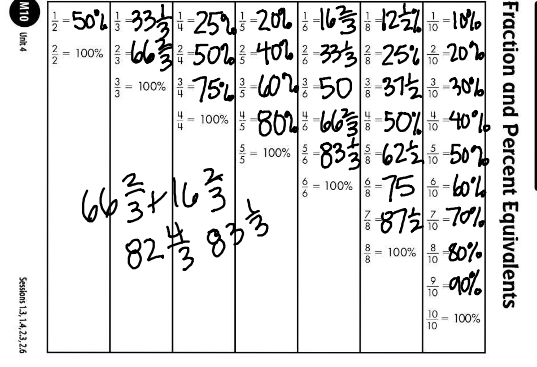
We used this visual, and what we knew about fractions and percents already to figure out that 1/8 is equivalent to 12 1/2%, because 1/4 is 25% and an eighth is half of a fourth. Our music teacher, Mrs. Kesler, will be tickled to know that I even had one kiddo make the connection between this and what he knows about music notes to help him figure it out.

So after the initial idea of fraction and percent equivalents was presented, they were to dig in a little deeper.  I gave them a chart to fill in, that had lots of other fractions to work with.  I told them to fill in all that they could with the directions to NOT do thirds and sixths, that we’d do them the next day.  But what they did instead, was make it their goal TO DO the thirds and sixths.  In this case I didn’t really care that they did the opposite of what I said, because it meant that they were going to try something that might be a challenge, might stretch them a little, might give them questions to ask when we worked on it together.

And for the most part, they all totally rocked it.  They made it look really easy.  Like they’d been figuring out fraction and percent equivalents for years. (Ok, 5th grade readers—which character from one of our favorite read-alouds did that sound like?  Comment on this post with your answer if you know!!)

Here’s what our chart looked like when we were done:

The thing that I think is really remarkable about the thinking behind this is that they are already getting comfortable with going back and forth between fractions and percentages, and can tell you how that relates to a group of things, like how getting 10 out of 20 of your spelling words right is 50% or that 3/4 of a class of 24 is 18.  There is understanding being created that goes far beyond just memorizing definitions.  I like that.  And they like it, too.

The Excitement is Building

I have been sharing our blog with my kiddos over the last few days.  Thought they should know what amazing things people were saying about them!  They were so proud that readers all over the internet were finding out about the really cool things they are doing in school.

So as we left today, I figured I’d ask them what they thought I should write about tonight.  My last question as we were dismissing was, “What happened today that was ‘blog-worthy’?”  I loved their answers; they thought of things I hadn’t even considered.  So the next few blog posts are their answers to today’s question.

I love that they are as excited as me about this!  Hopefully your excitement is growing, too, as you follow along with us!

Read-Aloud Timeline

One of the most important learning times in our classroom is read-aloud (chapter book).  I use this time to introduce kids to authors and books they may not know, as well as working on strategies that good readers use and practicing how to talk about books.

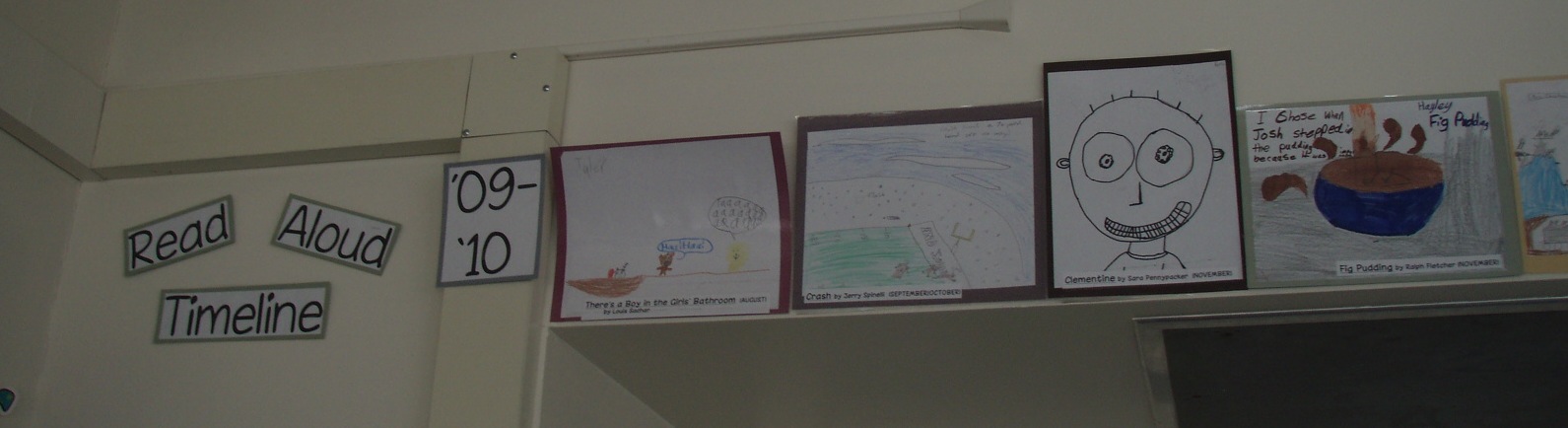
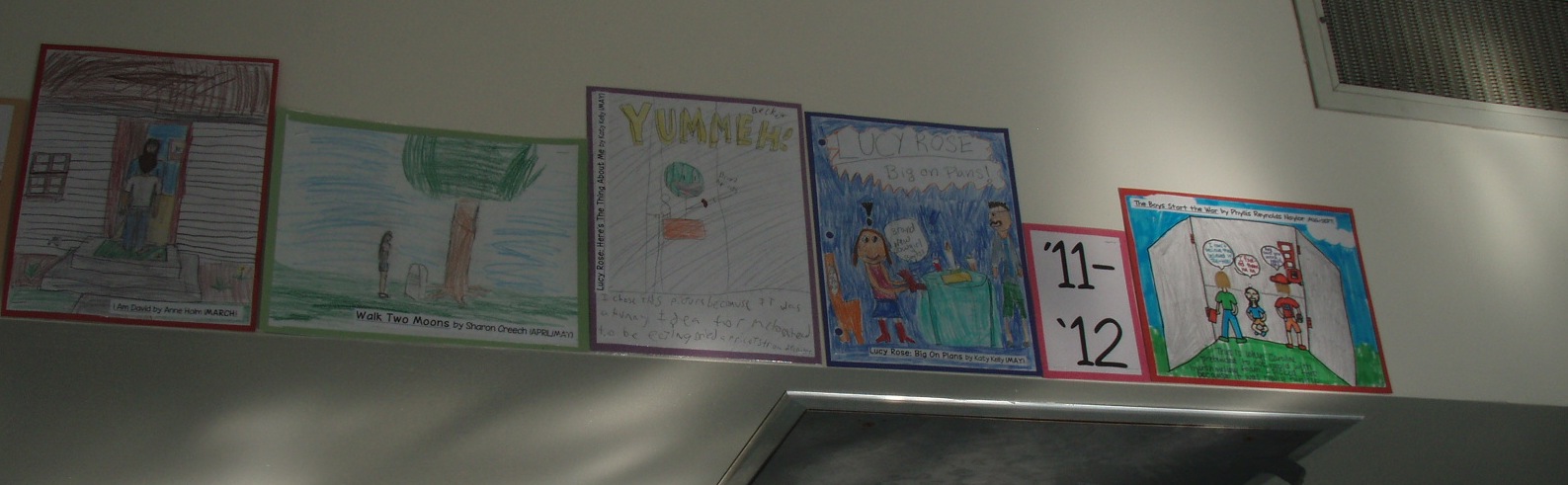
We recently finished The Boys Start the War, by Phyllis Reynolds Naylor.  I’m sure you heard how funny and interesting it was, and how there are at least 12 or 13 other books with these characters that we could read next.  Well, once we were finished, I introduced a structure that we will use after every chapter book we read: the read-aloud timeline.

Here are some pictures of what it looks like in our room:

I know the pictures don’t really do it justice, so make sure you stop by to see the real thing!  It’s been really great to incorporate a good reader strategy (creating images) with remembering what we’ve read.  At the end of the year, each kiddo will get a book of all of their images together, for their own timeline of our reading year.  So glad I’ve started this in our classroom!  Ask your kiddo to tell you what they love about it.  And stay tuned for an update–we just finished Crash yesterday, so it’ll go up this week. 🙂