LRRH–Inspiring Sharing and Caring

I started the story recently about our culture/geography/literature study of Little Red Riding Hood.  We’ve done many things along the way with stories and maps and learning about regions (which I promise to share later!), but today there’s another story to tell.

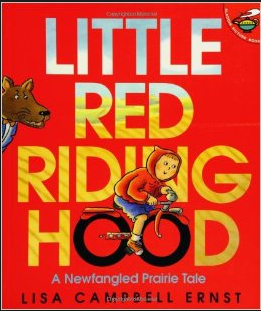
Today we read Little Red Riding Hood: A Newfangled Prairie Tale by Lisa Campbell Ernst.  The connection was to the Midwest region (at least as far as our SS unit was concerned), but my kiddos made many others kinds of important to connections in addition!

Screenshot 2016-01-20 13.44.55

The Little Red story here is very different than most others (and I won’t spoil the ending for you), and so gave us some new things to think about and respond to as readers and thinkers.  Before I was even finished, the suggestions came spilling over and kiddos could not contain themselves.  Many of them were related to this picture, which is on the last page:

FullSizeRender 21-min

Like I mentioned, the muffin-related ideas came quick and fast and I grabbed a marker and started recording so we wouldn’t forget the conversation:FullSizeRender 22-min

There are many layers to this list, and they’re not all related to the 100th Day, but that was a catchy title that Tyrin suggested.  We did decide, though, that we wanted to make these as part of our 100th Day festivities and share them with our 2nd grade friends–and there happen to be about 100 of them.  Seems like a match made in heaven. 🙂

We hope to address some of the others (and I’m sure add many more!) in the days to come.  Many of them could relate to a service-learning project and all will touch the hearts (and stomachs!) of our community.  As I keep saying, I can’t wait to continue to share this story!


Revised Pirate Code Ideas

Today we were finally able to revisit our initial list of ideas for our own Rm. 202 Pirate Code.

We used a protocol called Walk, Stop, Turn and Talk (which I saw on Twitter this weekend but sadly can’t remember who to credit for the idea) to talk about our thoughts on the first try.  Kiddos walked around until I called “stop,” in which case they turned to the closest friend and talked about which options on the list they thought should be kept.  They were supposed to give reasons based on how that addition would help us learn like pirates (based on our answers to that question which we had recorded the other day).  It looked and sounded like this:

Here’s our revisions, and then a “prettier” copy of the changes:

Pretty good, huh?  Oh, and that red part is that we decided that Learn or Walk the Plank! should be our Class Motto.  Verdict’s still out on that one. 🙂


Rethinking the 100th Day: Rm. 202 Weighs In

This whole 100th Day of School thing has got my head spinning.  Last year I thought I had answered the question (at least the 1st grade version of it), but then it came to rear it’s ugly head again this year as last week people starting talking about it and planning again for the “holiday” that falls on Thursday, January 28 in our school.  So I started thinking again.  And you, kind blog readers and Twitter friends, helped my thinking along by asking some really good questions.

For instance, @avivaloca, who was part of the reason I started this whole thing last year, had this simple inquiry:  

Now here’s where I got a little uncomfortable, because I realized my answer wasn’t as nearly as strong as I thought. Well actually, I didn’t even have an answer at that point, because I was asking a different question altogether!

I don’t remember my exact answer (although if you’re curious you can go back to that post and read my response to her comment), but basically it was “Uh….because everybody else is doing it?” “Because I don’t have a really good reason not to?” “Well I don’t know, but let me tell what we’re doing on that day to celebrate! They’re really good ideas…”

Um, yeah. Not my best day. ESPECIALLY as a teacher who likes to pride herself on not just doing things because everyone else is or because they always have been done that way.

So as the title suggests, I did just what I told Aviva I was going to do, and asked my class to weigh in on the whole deal. (By the way, as I was telling them this story and was about to say what our next step was, Makayla said that she knew I was going to ask them about it. Love that they know my moves!).

My first question to the to get our conversation going was “What do you know about WHY we celebrate the 100th Day of School? What’s it all about anyway?” Here’s what they said after having a chance to chat it over with a partner first): 

So what I heard them saying was that it wasn’t really about the number 100 at all, but that it was about stopping to reflect on how far we’d come together, how much we’d learned together and where we were going. My next question was “Well that could happen any time, right? Why the 100th day?”

They had some really good ideas, most of which had to do with the fact that that day is nicely right in the middle of the year; long enough in to have something to look back on and be proud of. Sara made a good point: “It couldn’t be on the 1st or 2nd day of school because we wouldn’t have learned anything yet!” I guess you’re right. ❤

We went on to talk about the origin of the 100th day celebration (which I believe is in kindergarten when kids have actually been in school for 100 days, right?), and I wasted Aviva’s question: “Why do we celebrate this day in 2nd grade? Is 100 really a big deal to us now?” They agreed that no, it’s not.  We’re working on time, money, we’re going to be adding to the 1000s, and we can count WAY higher than 100 already.  It WAS a big deal a couple of years ago, but that number is not such a landmark for us anymore.  We decided that our focus would be on looking back at our learning and reflecting on the many things we know how to do now.

With that in mind, we went back to our list to revise; we would only keep things on it that had to do with reflection, not the parts that were just about 100.  Basically the things that were related to the number 100 were crossed off, although we realized that we had a pretty good list of reflection activities already.

FullSizeRender 15-min As we revisited our ideas, we crossed off ones that were “number based,” as well as the blog posts and reading 100 books because those were things we did last year.  We decided 100 math problems was something we always do anyway, and that 100 facts about places was just what we were doing in Social Studies and so we’d wait on that, too.  The writing and notebook entries were also typical to our daily schedule.  The 100 post cards was crossed off because we’ve been working on letters in Writers’ Workshop and that would make more sense that post cards.  Pretty valid support, I’d say.

We did have a question come up related to puzzles.  Ja’Mia wanted to take that off the list, because at first it seemed to be just about the number.  She asked the class “What do puzzles have to do with learning?” (I was glad she was brave enough to bring this up to everyone, and was eager to hear their answers!)

Here’s the (long) list of what kiddos said about how they fit into our theme:

  • You have to work together.
  • You have to use problem-solving to figure it out.
  • You have to be patient.
  • You have to have self-control and keep it together if you get frustrated.
  • You have to use grit.
  • It’s a challenge (especially if there’s a lot of pieces!).
  • It takes a long time so you have to be willing to work hard.

After hearing what others had to say, she was ok with it.  “Well, if you’re working in a group to do it, I guess it makes sense.”  Good girl.  🙂 (By the way, we applied the same logic to board games, including Millie’s point that games like that help us learn how to win and lose graciously.)

So armed with our new list and some renewed excitement and understanding about the reasons behind this day, we’re getting geared up to have a great day of learning, reflection and fun on Thursday.  Can’t wait to share it with you!


Writing Lately

Elementary school is an interesting thing.  Because of the way that school has been structured for years and years, we teach and learn all the subjects together in one day, yet each one is compartmentalized into it’s only little spot in the schedule.  Well that’s how it’s traditionally done, but I try my hardest to help my kiddos see that “writing” is not just something we do from 10:30 to 11:15 every day, just like “reading” doesn’t only happen from 9:00-10:30.  These are just things that we do as learners and they are ways we learn and show our learning.

That being said…we do have specific things that we do as writers on most school days.  One of those is write.  During Writers’ Workshop.  (I know, I told you it was interesting).  I wanted to share two things that we’ve done lately that help show our growth as writers over time.

First of all was a writing challenge.  I love how when I told my kiddos that we were going to have a writing challenge they pretty much all cheered.  I don’t know if it was the “writing” part or the “challenge” part, but either way I was pleased.  The challenge was to take a piece of writing they had done at the being of our last writing cycle (Small Moments) and work to improve it to show the things they had learned over the last few weeks that they didn’t know before.  They would revise and edit their piece and then publish a final draft.  They worked with a writing partner (which is also something we typically do as writers in our room) to help make sure they didn’t miss anything.  They sure worked hard and their final pieces turned out pretty great!

Secondly, remember how I shared that everybody has their “big” notebook now?  It means I finally got to share the lesson about how to take all those super smart entries they wrote while they were learning about Writers’ Notebooks and save some of them. Basically they had to ask reread the entries in their tiny notebooks, and then ask themselves if they were: 1) important, 2) something that showed what they can do as a writer, 3) something they could use in the future, or 4) something they wanted to remember.  If the answer was YES to any or all of those, then they taped it into their big notebook to save for later.  It was great to see their reflecting and thinking as they evaluated their writing over the last few months.  Great stuff happening there, too!

Rm. 202 Pirate Update

I wrote the other day about how we’re undergone a little bit of a mutiny in Rm. 202.  Don’t worry–it’s all good. 🙂

I realized on Friday that I have a couple of additions I need to share!

I mentioned the first conversation we had about their initial answers to the question “What does it mean to learn like a pirate?” and since then, as we finished our read aloud (Pirates Past Noon), we put some other things on our list that I thought were exceptionally “pirate-like”:

IMG_0111-min

I was impressed by those last two additions, as they are really two of the things that are really at the heart of what I was hoping for when I brought forth this whole Learn Like a Pirate idea in the first place.  The fact that they also identify that working together is a big deal was a big deal to me.  The explanation that went along with that suggestion was that if we don’t work as a crew, then our ship will sink and that will not be a good thing (we even talked about maybe naming our room like you would a boat–guess we’ll see!).  The last one–share our treasure–was both a good idea and a poetic addition as it could mean os many things; “treasure” has so many definitions, both tangible and abstract.  We could apply it in so many ways. ❤

I don’t remember if I mentioned it in my first post, but what came next was a natural progression (but again something I was hoping would come up!).  Baron and Khalani were reading a pirate book and found a place where it talked about a Pirate Code that should be followed.  They came to be, flabbergasted, as they read things on the list like: Never be kind to mermaids.  Never be kind to anyone. Always carry a cutlass. Always look fierce. Then at the bottom the motto was listed: Rob or rot!  My friends were concerned because they knew that these were definitely NOT things that go along with what we’re about at Robinson.  They shared the code with the class, and a great discussion ensued.

Then, just as if I’d paid them to say it, someone suggested that we write our own pirate code to follow that had the positive aspects (like the ones we had put on our learning like a pirate list).  What? Our own pirate code?  That’s a fabulous idea, 2nd grade! What?  You think that it would be like the Road Rules? Another great idea, Rm. 202 friends! 🙂

We got as far as making an initial list and will work over the next few days to whittle it down to the final points we think are most important.  We’ve got a pretty great list to start with, I’d say:

IMG_0117-min

Can’t wait to share the final draft someday soon!  Come back and read it, will you? 🙂


100th Day Questions (Again)

Last year I made a jump down to primary after teaching “big” kids for the previous 9 years.  When I last taught 1st graders there was no such thing as celebrating the 100th Day of School.  So when that day came near, I began to consider (like I do with everything else that fits into the “it’s-what-we-do” or “it’s-the-way-it’s-always-been-done” category) what we should (or shouldn’t) do on this day in Rm. 202.  I asked many of my own questions, as well as having conversations with others who were asking the same things.

We ended up deciding on taking on a pretty big challenge in our classroom to write 100 blog posts, and secondly to try to read 100 books.  It was a great day of fun, learning, stretching our brains, working together, solving problems and really figuring out just how big 100 is!  It took us all day, but we made our goal of all of those blog posts and boy, were we proud!

So…as we near the 100th day again (next Thursday!), I’m asking 100th Day questions again.  If I have certain thoughts and feelings about it in regards to 1st graders, how do those apply when I’m now teaching those friends as 2nd graders?  Unlike last year, I decided to take that question to my kiddos.

I explained my thinking, and we talked about what we should do; probably our challenge should be bigger than the one we took as 1st graders, right?  We decided to brainstorm all of our smart ideas (thanks Landen for volunteering to be our recorder!) and then whittle them down from there.

Here’s our list:

IMG_0114-min

While it’s true that there are no “bad” ideas when you’re brainstorming, we did agree to only add things that we thought would truly be challenges for us, and not just things that were “fun” or “cute.”  I’d say that they did a pretty good job of coming up with some fun and meaningful choices.  But how would we decide which of those were the ones we end up doing?

We are currently in an opinion writing unit and I took this as a great opportunity to continue to hone our skills of sharing our thoughts, giving strong reasons and relevant evidence.  So, kiddos were asked to write me a letter (which we’ve also been practicing) to tell me their top 3 choices, along with 3 good reasons why they want to do those things on our 100th day.  What a meaningful and engaging way to put all of our new skills to work!

We haven’t made any final decisions for our big day, but the front runners right now seem to be puzzles, the 100 dot design challenge (building), playing the 100 game (which is something we do regularly in math), and playing board games.  Can’t wait to see what we end up choosing, and then documenting what actually happens–stay tuned!

I’d love to hear about your 100th day questions and thoughts!  Leave me a comment and let’s chat about it!

Second Grade Math Warm-Ups: Catching Up

If you’ve been around here for a while (thanks!), then you know that one of the “regular” posts I do is to share our math warm-ups each week.  For many reasons that hasn’t happened for the last few months.  So this post is to catch up on some of the best ones from recently. 🙂

Measurement

Before the holidays we were working on measurement (mostly length) and had some questions at the beginning to get minds thinking about how and why we should know how to measure.  The last one also addresses being able to visualize the size of a unit (centimeters) and apply it to appropriate situations.  In between and after all of these, we did lots and lots of measuring with different units, tools and objects.

Measurement (Time)

I only ended up with one picture (sorry!) of this round of warm ups, but after we came back from Winter Break we were still working on measuring, only with time!  There were several days of questions related to where the hands would fall on the clock, how many minutes would have passed if the minute hand were on a certain number, as well as one where the had to tell all the ways to describe a certain time (4:30, half past 4, etc.).

IMG_0062-min

Measurement (Money)

Now we’re on to money, and so we’re working on some foundational questions that get kiddos thinking about the numbers behind it first.  Then we’ll work more specifically on counting amounts, giving change, etc.

IMG_0116-min

This first one was just to get kids thinking about groups.  What was great (and what happens often when we discuss the problem later in the day) is that while I never mentioned anything about money, someone used that model to help them figure out the answers and then once we made that connection, it made sense to other friends, too.  Then we could explicitly connect the numbers to coins and amounts we knew (or needed to learn!).

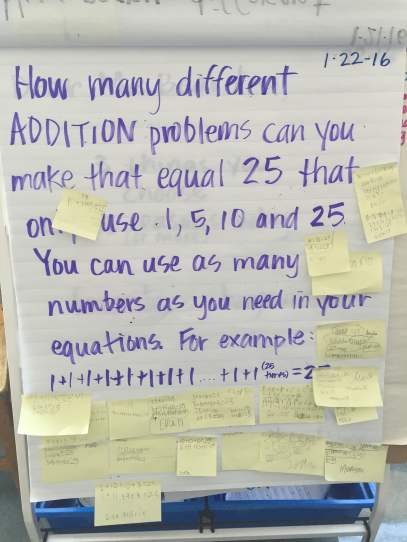
This one got kiddos thinking about combinations that make 25 (which I knew meant a quarter, but wasn’t saying that yet)…

…and then the next day I asked that same question with new parameters (which again I knew was connected to money) to connect to that previous thinking:

IMG_0118-min

As with most everything else I throw at them, kiddos are doing great things with making connections to previous knowledge and incorporating new concepts.  It’s great to watch them think like teachers and figure out the method to my math warm-up madness–often kids will say “Hey, you asked this question because….”  Good stuff!

If you’re doing math warm-ups, do you have any to share about measuring length, time or money?  We’d love to try them!

Who’s in YOUR Village?

I don’t even remember when I first heard that saying “It takes a village…,” but goodness knows I live it and breathe it in so many ways at this point in my life.  Whether that means my personal life at home with kids or my professional life at school with my other kids (which is what this post is about), I could definitely not do it all alone.

So when I read someone else’s post a few months ago, it got me asking and answering that question “Who’s in YOUR village?” for myself.  And this is my answer.  At least for this season of life. 🙂

And so a few words for the few that help make my school life bearable and even fun!

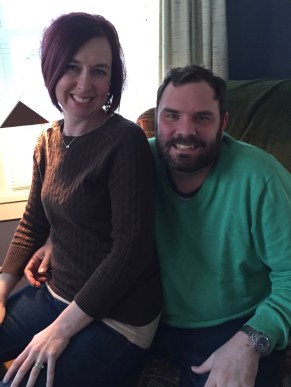
1.) My hubby

IMG_0005

Ok, so there’s about a thousand things I could say about why I love this guy and how he helps make my life possible, but two of the biggest reasons are that he gets me and he gets my job. We’ve been together (between dating and being married) for 23 years and it’s been super amazing how we’ve both grown over the years into new and different people, but have grown in the same direction.  I love that he gets my weird moods and what that “thinking face” I make means, and how he knows just when I need him to bring me a Diet Dr. Pepper (and he does this without being asked–love it!).  Also, he’s a teacher, so while there’s WAY too much shop talk at our house, he can TOTALLY relate to lesson plans, report cards, parent conferences (from both sides now!), how the school week really starts (and the weekend really ends! :() on Sunday about 5 when we have to start getting ready for school again, and that some times I just need to either 1) talk to NO ONE for a while when I get home or 2) talk to an ADULT and have a conversation with someone other than an 8YO.  Anyhow, he’s kind of a catch and I’m really lucky that he’s on my team. 🙂 Love you, Grant!

2.) My friends

It’s always to hard when you start to write a list, because two things usually happen: you leave someone/something off because you mean to, or you leave someone/something off inadvertently.  I’m not really sure which is worse, because especially when you’re listing friends (which, ok, doesn’t usually happen after high school) it seems harsh.  And now I’m going to write a list.  And hope that it doesn’t make anybody upset. Oh, and it’s in no specific order. 🙂

IMG_0143 2.JPGShannon–What can I say except God put her in my life at just the right time and the friendship that has blossomed in the last two years has been nothing short of amazing.  Besides being an amazing teacher, she’s kind, loving, understanding, funny and challenges me in a respectful way.  Shannon cares about me as a person as much as an educator and takes such interest in my life, regardless of the topic.  What’s important to me is important to her, too.  She understands that I might do things in a different way than everyone else (and she would sometimes, too!), that I have to think (often for a llloooonnnggg time) before I can answer with my opinion or ideas, and she accepts and love me for those things.  She has the most intense belief in her students as learners and works to make them better people when they leave her classroom (and I know this firsthand–she was my son’s teacher and he blossomed in her care!).  She inspires me to be a better teacher just by doing what she naturally does. It makes TOTAL sense that her last name is Appelbaum, because she truly does plant seeds and grow children.

Rachael–IMG_3020Yeah, I know that’s a picture of a dog.  It’s Rosie, actually, but it’s the only picture Rae would let me post of her.  Aside from that silliness, Rachael is a pretty fabulous person. 🙂  She also came into my life at a perfect time; after being an acquaintance for a very long time, our paths finally crossed on a teaching team.  We quickly found out we have much in common (and much that we don’t because she’s so much nicer, calmer, and more considerate than me, LOL), and that we get along really well.  One of my favorite things about her is how she loves on my kids; Allie and Riley love her bunches and love to spend time with her as much as I do.  She asks thoughtful questions, encourages at just the right time in the right way, and has probably the biggest heart of anyone I know.  She has a way of seeing such good and potential in people (little people, too!) and inspires me to be a better version of me.  It’s true when she says she’s for students.

3.) My team

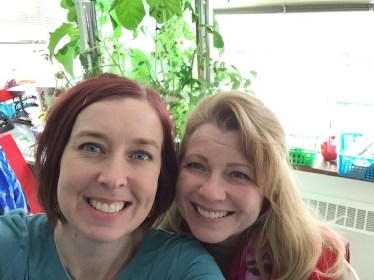
1443305819373I still laugh about the story behind this picture.  It literally happened because as we were starting the day one morning someone said, “Hey, this is the first time we’ve all been in the same place together in a long time!” (Guess it had been a busy week!).  I said, “Well then grab a camera!” and of course, a selfie followed.  No, it’s not the best picture of any of us, but it speaks to a moment in time and for sure shows the joy that’s on our faces each day when we’re at school. No, every day is not perfect, but for sure we work through those rocky parts together.  This is my first year on this team, and it was well established before I came into it.  In many ways this scared me, as I am probably not what you’d call an “established” person; I tend to fly by the seat of my pants, make plans and change them, respond to the moment and see what happens–well at least at school I do. LOL  Instead of being scary, though, the organization, structure and flow of the way our team works has added so much to the way I teach and learn.  We each bring something different to the table (including unit plans for each subject that each one of us is responsible for creating and then sharing with everyone else), and there is always laughter when we’re together.  We’re different in many ways and that works so well.  I love Team Tuesday lunches, even though it took me until January to remember to have lunch there that day so I could join in; I love that someone else sends copies for me to the copy center because I don’t usually think that far ahead; I love that these ladies think so fondly of everyone at our school and send holiday cards to ALL of the support staff (I never knew 2nd grade did this!); I love that they understand and respect how I might not always be the first to follow the crowd.  I will get there eventually–usually–but might also put my own twist or spin on something and that is ok.  We care about each other, talk about many things other than school, and have each others’ backs.  That’s good for the soul. 🙂

1442419441428

 4.) My kiddos (and their families!)

These are the friends I’m here for, after all, right?  These kiddos are perhaps some of the best little people I’ve met in a long time!  This is my first (well, and second since we’ve been together for 2 years) class of primary students for almost 10 years and they’ve been a breath of fresh air.  I had forgotten how eager young minds can be to learn new things, how they come into pretty much everything with zest and anticipation and I love how these learners are willing to try each new and kooky thing I suggest we do.  Even better than that, they have some super ideas of their own that I think they know and trust that I will in turn be willing to let them try.  We are truly a big, happy family (who sometimes bicker like siblings LOL), and we’re in this together.  And I can’t mention these amazing students without of course mentioning their families.  The support and love I get from them is unmatchable, and the way they help and support their kiddos is inspiring.  I am lucky.

5.) Robinson

As much as I have these few close people on my team to hold me up, I can truly do what I do because of WHERE I do it.  My school (because of our principal and the rest of the staff) is truly a magical place to work and play everyday.  It’s been my home for the last 16 years, and I can’t imagine being anywhere else.  While the teachers have changed over the time I’ve been teaching there, the culture and “feel” of our school remains the same because our mission remains constant: we’re here for our kids and we are willing to do whatever it takes to help each and every one learn.  We care about kids–all of them and the whole child–and it shows.  There is always mention of how welcoming and warm our building is, and it’s definitely not because of the 1930s era heating system (I kid).  You can feel the warmth and love that resonates from all the people who work and learn inside the walls of 803 S. Couch.

So…who’s in YOUR village?

Arrrgh! The Pirates of Rm. 202

Arrgh!  How rrrrrr you?  Well…in Rm. 202 we rrrrrr great, but we have been taken over by pirates!  No worries, though, it’s a good thing. Let me tell you about it. 🙂

A couple of weeks ago, about the same time that we started our Little Red study, I also brought in a big pile of books about pirates and just left them laying around.  Kids noticed them and started reading them but didn’t really say anything.  Then, as my next pick for read aloud, I chose Pirates Past Noon (a Magic Tree House book) and the questions started flying. “Is this that pirate thing you were talking about?”  “Are we going to start talking like pirates?”  “Arrghh?” “What are all these pirate books about, Mrs. Bearden?”

Gotcha.  That’s exactly what I wanted. 🙂

It goes back to a little after Thanksgiving when I finally got my hands on the book Teach Like a Pirate by Dave Burgess.


The book has been around for a few years now, and wasn’t new to me (I mean, come on, I am on Twitter after all LOL), I just hadn’t had a chance to read it yet. I liked the whole premise of the book, and much of it resounded with me. I also was exited because I felt like I do much of it already (and no, I don’t mean I have it all figured out–that will NEVER happen!).

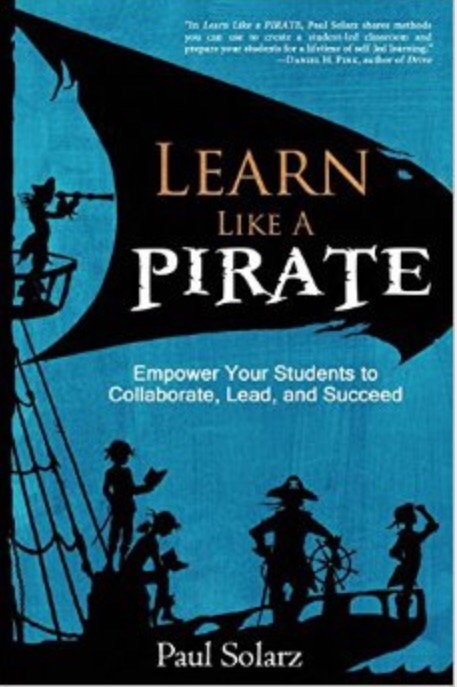
Around the same time I learned about this pirate book, I saw that there was also a student version, likely named Learn Like a Pirate by Paul Solarz.

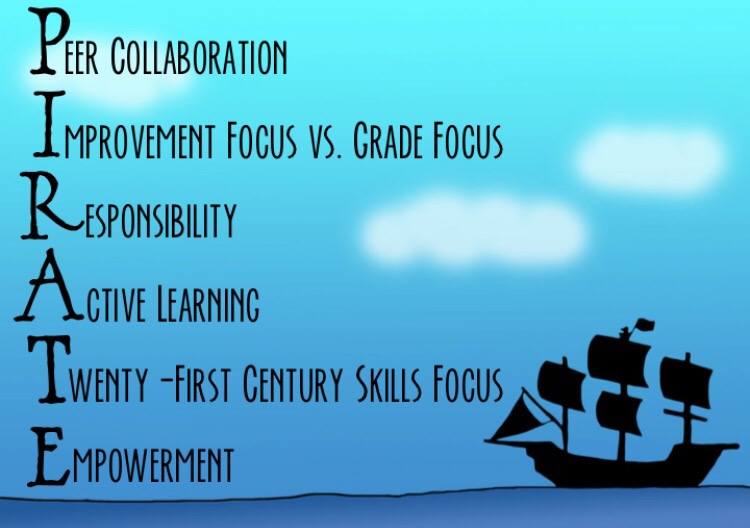
This one was more up my alley. It’s the piece I have wanted to tackle but hadn’t yet figured out to do. Reading it was so fun and really got my juices flowing about how to take the structures and ideas he used in his class (which was 5th grade) and adapt them for our community of 2nd grade learners. The suggestions he gives in his book are centered around the acronym PIRATE like this:

He told amazing stories about how self-sufficient his class is with the day-to-day running of the room.  His students are in charge of EVERYTHING, including transitions, lunch count, attendance, signing up and bringing down the laptop cart, even teaching mini-lessons!  They work towards a Silent Day in the Spring when Mr. Solarz isn’t allowed to speak for the entire day.  What a testament to the way the class works together that that is possible!  Obviously, this scenario is not exactly replicable in our room (for many reasons), but we are surely capable of implementing many of the big ideas to help encourage and engage us as a learning community.

As with many other things, we based our conversations around books, have discussions along with our read aloud.

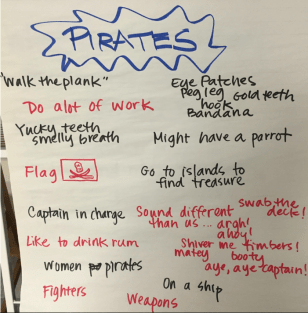
We started with our schema about pirates.  Not surprisingly, kiddos had many ideas to share about what they already knew:
Screenshot 2016-01-20 21.01.19

It was a pretty good list, I’d say.  We agreed, though, that many of the things on the list could be seen as negative traits/descriptors and perhaps not things we wanted to model ourselves after (which was something I had explained at this point we were going to do–be like pirates!).

I asked them another question:  If the things we know about pirates are mostly negative, then what might it mean to LEARN LIKE A PIRATE?  They talked with their partners first (which is typical in our class), and then shared out their first thoughts.  We agreed that this “chewy” question was one that we’d come back to again and again, as we learned and discovered more:

Screenshot 2016-01-20 21.01.03

It was really great to hear the explanations behind how they had spun the bad into some good, something admirable that we would want to emulate.  I’m excited to share this list once it’s finally finished (whatever “finished” means!?).

As I reflected on the book and considered our first steps, I quickly knew what we’d try first: an attention-getting protocol Mr. Solarz’s class calls “Give Me 5.”  In 5th grade, students have learned (by trial and error, as well as encouragement and modeling) how to stop the class, get their attention by saying, “Give Me 5!” and then asking or telling what they need.  We already have a universal attention signal at Robinson that our kiddos know (“May I have your attention, please?”), so it made sense to use this one instead of creating something new.

I introduced the idea slowly, more individually than corporately.  When a situation came up where a kiddo was asking a question that perhaps would be answered more quickly or more easily if it was asked to everyone rather than one person at a time, I’d encourage that friend to use our classroom mike to ask it out loud.  Sometimes kiddos figure things out while we’re working (on our iPads, a writing piece, in a game, etc.) and it seems like something that could benefit everyone–I encourage them to share their new discovery with the classroom by getting everyone’s attention.  It’s been really great to watch how kiddos have stepped up and started to use this new structure to solve problems, figure things out and help each other.  I haven’t really had to do much coaching past the initial suggestions, as they’ve figured out how to use this protocol for really meaningful reasons.  My favorite thing, I’d say, is that they’ve started using the attention signal to request that the class work more quietly when our voices get too loud during partner or group work.  It’s amazing how much more meaningful and effective this is when it comes from a classmate instead of me!  I think the kiddos have truly internalized many of our expectations and rules, too, as they can better monitor their following of them on their own, without input from me.  This is a life skill.  Started here in 2nd grade.

Even small things have been “taken over” by kiddos recently, too.  For instance, I don’t have to change the calendar anymore.  When we came back in January, our calendar (which has Velcro numbers that we add the new day to each morning) still said December.  Very early on, someone pointed it out to me and said, “We need to change the calendar.  It’s still last year!”  Instead of giving that friend the job, or doing it myself, I simply asked, “What do you think we should do about that?”  I think I remember this friend just shrugging and going on with his morning, not really addressing the issue at that moment.  But eventually, when 3 or 4 days had passed and I had asked the same question, or on very much like it, I noticed that that same kiddo was changing the calendar!  I guess he figured out it was a task that he could take care of, and that it wasn’t my job to do it.  Since then (which I think has been at least 2 1/2 weeks) our calendar has been correct–with no input from me. 🙂  Lunch count happened that way, too.  I think I did originally ask a friend if he could take care of it for me, but then he automatically came in the next day and recorded everyone’s orders again.  Voila! It’s no longer up to me to do it.  Beautiful.   It’s funny how much time that frees up for me in the morning to spend with students instead!

Ok, loyal blog readers, I know you know how hard it is for me to step away from this story and leave it unfinished, but I look forward to updating you on another pirate celebration soon.  Thanks for continuing to embrace the messy with me!

By the way, if you read this and you’ve tried to Learn Like a Pirate with your kiddos, could you leave me a note and tell me how it’s going for you?  What had you tried?  How have your kiddos amazed you?  What suggestions do you have for us on our own journey of learning? 🙂


Over the River and Through the Woods

Little Red, Pretty Salma, Petite Rouge, Little Roja, Lon Po Po. The list goes on and on.  And it’s a pretty good list, eh?  Rm. 202 thinks so!  (Do you know what it’s a list of?) We have just begun a study much like one (only better!) that we did last year.  And you know how I told you about this thing I have the other day?  Yeah…well I am afraid that because of that thing I didn’t tell you about that awesome study last year.  UGH!  Luckily things have changed, though, and I’m starting this story much earlier. 🙂

This quarter we’re studying culture, and because of the unit I found last year (I used a variation of this Cinderella unit from First Grade Wow.  It went SMASHINGLY and was a great combination of literature, non-fiction text, culture AND geography.  It was also tons of fun to boot, which increased the engagement with a topic that is already generally interesting for first graders.  Win, win, win all around!

So this year when we came to this culture/geography time of year again (which in our curriculum usually happens in January), I knew I wanted to try something similar to what we had done last year.  The big idea of the unit is that folktales and fairytale can tell you something about culture.  When talking about culture, it is also important to understand the geography related to that culture; where the people live and why they might do the things they do there is essential to the puzzle.  Makes sense then, that all of those things would be connected–integrating subjects gives students multiple ways to make new information fit in with old knowledge and therefore make for stronger pathways to memory and understanding.  And honestly, making the unit include multiple subjects and topics helps time-wise.  Fitting it all in is always a concern for teachers, and this helps me get it all in.

Starting with framework from last year, I collected books.  The Cinderella theme worked so well and I knew I had to find another fairy tale or folktale that both had multiple versions, as well as a story that would interest my students.  There were obviously many choices, but I went with Little Red Riding Hood.  This story was familiar enough (like Cinderella), but also had many variations, and had interesting characters we could study, as well.

Our focus is to be using the fairy tales and folktales to analyze story structure, characters and main idea, as well as compare and contrast different versions.  Eventually we’ll probably write about our favorite version, trying to convince our readers why it’s the best with strong evidence from the text.  We will also study geographical concepts like continents, countries (and how they’re different from states and cities, as well as what our country is), bodies of water and regions–this one is new this year.  Besides just studying cultures of other places (which was our main focus last year), we’re incorporating the idea of regions of our own country this time; there are stories from both different countries and US regions in this unit.  We’ll analyze maps, talk about how they work and what information they give us, put stars on the places from where our stories come, color and label maps and talk about the places we know about (as well as places we wonder about).  Eventually then, students will choose one culture to learn more about, and research it.  This will incorporate with our next writing unit, and then will still touch reading and social studies skills and concepts, too.

And here’s the part where the “messy” of writing about this starts.  Previously, I would have waited until the very end of the study, hoping to include all the details and pictures, including fabulous videos of us presenting our final products.  Like I mentioned earlier, that often meant that I then didn’t even get around to writing about ANY of it–usually because I either forgot the details, ran out of steam or just didn’t have time.  And yeah, it makes me sad that it’s missing on the blog.  So here we go.  You might want to wear gloves.  Or a poncho.  Maybe goggles or a raincoat?

First let me share our booklist. I compiled it from a variety of places online, as well as just by standing forever in front of the fairytale section of my library with a crooked neck reading books spines.  I know–I’m a glutton for punishment.  It’s really not so easy, either, by the way, because they’re organized not just by story, but by author and by country.  Oh, and then they’re the ones that aren’t so obvious because they don’t have ‘Little Red Riding Hood’ in the title.  Anyhow…

We are using stories from Germany (the original), China (we have two from this culture, actually), Ghana, Spain, as well as from at least 4 regions in the US (and maybe another one that I’ve forgotten.  Told you this was messy!!!).

  1. Little Red Cap by the Brothers Grimm and Little Red Riding Hood by Sam McBratney
  2. Lon PoPo by Ed Young and Auntie Tiger by Laurence Yep
  3. Pretty Salma by Niki Daly
  4. Little Roja Riding Hood by Susan Middleton Elya
  5. Petite Rouge: A Cajun Red Riding Hood by Mike Artell
  6. Little Red Riding Hood: A Newfangled Prairie Tale by Lisa Campbell Ernst
  7. Little Red Cowboy Hat by Susan Lowell

 While those are the “official” titles, we are also going to enjoy some others that will be specifically for the reading part of the study, where we can study version, point-of-view and character.  Those include (at least for now!):

  1. Ninja Red Riding Hood by Corey Rosen Schwartz
  2. The Wolf’s Story: What Really Happened to Little Red Riding Hood by Toby Forward
  3. Very Little Red Riding Hood by Teresa Heapy

  4. Red Riding and the Sweet Little Wolf by Rachael Mortimer
  5. Honestly, Red Riding Hood Was Rotten!: The Story of Little Red Riding Hood as Told by the Wolf (The Other Side of the Story) by Trisha Speed Shaskan

  6. Super Red Riding Hood by Claudia Da′vila

I’m excited to share more pages to our story as we go along! 🙂