An Uncertain Future

I met with my team today–the fabulous Mrs. Hong and Ms. Turken–to talk about how to integrate reading, writing and sci/ss, as well as to update our curriculum calendar.  We only had 2 hours blocked out on the calendar, and so in some ways those were really big plans.  And we started 45 minutes late.  🙂

So, as we sat down and tried to tackle reworking the curriculum calendar (based on new Common Core standards, district resources and just things we wanted to change), we realized we had lots of work to do BEFORE we could address that problem.  You know how it goes, before you can do the job you actually sat down to do, you have to do this and before that you have to do this….we were in that boat.

We are wanting to reorganize our thinking and our schedule to allow for more integration, working Social Studies and Science topics into everything rather than having things so compartmentalized and isolated from each other.  But we had plans to UbDize (yep, just made up that word) our SS curriculum and organize our units around common EQs for each quarter.  But like I said before, it’s easier said than done.

And then there’s my crazy brain that isn’t just quite ready to think about these things.  For one thing, I have to have my space all done before I can planning for what we will do in that space.  Since it’s not even August, I do not have my classroom put together yet.  Granted, I do have all of my furniture where it will go and have big ideas for where things will go and what it will look like, but it’s not done yet.  And I have plans for how I want to redo parts of my classroom library.  And I haven’t met my class yet.

That last part is really the biggest piece of the puzzle that makes it hard for me to complete the calendar.  So in the mean time, I feel like I am facing an

Screen Shot 2013-07-31 at 1.09.33 PM

I know–you’re thinking, “Well, duh, Mrs. Bearden.  Isn’t the beginning of the year always uncertain?  You never really know what the school year will bring or what every detail of every day will look like.”  And no, I don’t have a crystal ball or any tarot cards, and so I guess in a way I always face an uncertain future at this point in the year.

But the reason why it so affects me is because I have such a hard time making decisions about things I’ll do and ways to go without actually knowing my students.  So much of where we go and how we get there depends on what my students need, and where they are when we start.  I have information and data about these things on paperwork (transition reports, testing scores, Lexile levels, etc.) from previous teachers, but until I really see what it looks like for actual kids in my actual space, I can’t really get a feel for it.  (My family has always said that I don’t have much of an imagination–maybe this is proof of that! 🙂 )

But obviously I can’t just not make plans.  I can’t not work with my team.  I can’t not try to figure it out now, because I owe it to these new students of mine to have at least an idea of where we will go, and how we might get there.  If not, then we’ll never get there.  And that’s definitely not an option.

Along the way I’ll tweak the plans–adjusting and reworking based on personalities, learning styles, academic and social needs, interests–and I’ll be totally ok with that.  And then, at the end of the year, I’ll look back at the plans we made around the table today in the summer and laugh, because of how different they are.  But I gotta start somewhere.

How does your “summer brain” work?  In what order do you do your work–space first or plans first? How does your team work before school starts to map our curriculum/unit plans?  I’d love your thoughts and/or advice! 🙂

Dichotomous Keys, WebQuests and the Zoo–Part 1

We have been busy scientists lately in Rm. 202.  Let me tell you about it! (And also let me apologize for not writing about Science very often.  This may be one of the first posts I’ve ever included about our lives as scientists…boo. 😦 )

During 3rd quarter we were busy learning about many things.  The latest science unit we ventured through was one on Living Systems, specifically animal classification.

One thing we focused on was dichotomous keys.  What?  You’ve never heard of them?  Well before I started teaching about them in 4th grade several years ago, I hadn’t either!  Well at least I didn’t know that’s what they were called.  Let me show you what I mean:

Dichotomous key to determine Silly Scientist names of common items

Dichotomous key to determine Silly Scientist names of common items

The goal is for students to be able to use keys like this to identify animals, but we started somewhere else.  With shoes.  We worked first to CREATE a dichotomous key, so we’d know how it works, and then we practiced using it.

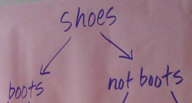
We began by putting everyone’s shoes in a big pile on the floor.  Then, we had to decide two groups that we could classify all those shoes into (see, the dichotomy part–two groups).  Here’s how we started:

Screen Shot 2013-03-24 at 4.32.20 PM

Shoes were put into one of two groups: boots or not boots.

Then, with two groups, we tackled the “boots” pile first.  Again, we asked ourselves what two groups we could make.  This was pretty easy, and so we decided on:

Screen Shot 2013-03-24 at 5.10.32 PM

Only two choices with this one! There were two boots, one was brown and the other was not. We could quickly label those as Natalie and ZB202’s shoes.

Next we had a big ‘ole pile of everyone else’ shoes to classify.  We started like this:

Screen Shot 2013-03-24 at 4.36.59 PM

We looked at shoelaces on all those “not boots.” They all happened to be tennis shoes, by the way.

Screen Shot 2013-03-24 at 4.40.24 PM

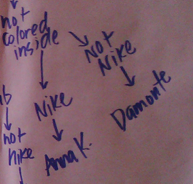
Two more: this time looking at the inside of the shoes

Screen Shot 2013-03-24 at 4.43.15 PM

The last step here was pretty easy: only two shoes left, one was a Nike and the other was not. So we could then label one of them as Anna’s and the other as Damonte’s.

Screen Shot 2013-03-24 at 5.04.23 PM

The other side (colored insides) was a little bigger, so needed more groups: tab/no tab, then Nike/not Nike, and pink/not pink and blue/not blue.

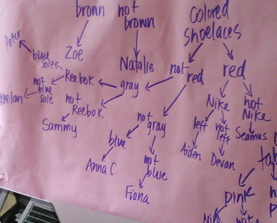
After that pile was classified and labeled, we could tackle the other side of the “not boots” bunch, which was colored shoelaces.

Screen Shot 2013-03-24 at 5.14.38 PM

You can see that we had many more small categories in this group, but went through the same process: what two groups could we break the larger one into?

And so once we were finished, our key looked like a beautiful tree, and ended with everyone’s names.  We could now use that key to determine whose shoe was whose.

IMG275

Devan uses our dichotomous key to identify Sophia’s shoe.

Here is Natalie in action, proving how she knows who shoe she has in her hand:

After we had practiced with this dichotomous key that we built, kiddos had a go at the one from the top up there, where they had to identify the silly scientific names of these common items:

1. a die

2. a small paperclip

3. a large paperclip

4. a piece of chalk

5. a popsicle stick

6. a colored marble

7. a white marble

8. a sharpened pencil

9. an unsharpened pencil

10. an eraser

Could you do it?  Use this dichotomous key and tell us what you think the names of each of these items are.  Good luck!

Screen Shot 2013-03-24 at 4.20.51 PM

EDUC 573: Week 7–WebQuests, BYOD and Educational Equity

Yes, all those things have something in common.  Mainly that I learned about all of them this week. 🙂

One of the big projects for this class I’m taking is a WebQuest.  While the idea of a WebQuest is not a new one (the concept was created by Bernie Dodge in 1995), it’s a new one to me.  Somehow, I’ve gotten through all of my education thus far–including the teaching part–without having done one, using one or creating one.

One thing I wanted to make sure of was that I made a WebQuest that was actually applicable to my classroom and my students; this is hopefully true of all assignments in grad school, after all!   Eventually I landed on making it applicable to a science unit on animals we were about to begin, since it could be self-paced and open-ended like most of the other projects I assign in science.

Outside of the content piece of the project, there was also the process of using Google Sites to create the website housing the actual WebQuest.  The funny part to me while I was working was how much I had ragged on Google last week, and then how the usefulness of so many Google Apps became clear; if only my students had their Google Drives up and running so that they could download and save their papers to use later, or how they could better collaborate if they could use a Google Doc to record their research–at school or at home.  The whole hangup I had with it last week was that I couldn’t see the necessity of it or how it would work with elementary and all it took was one project where I needed it for it to all make sense!  That was the connection I was looking for, right there in front of me.

Another topic this week was the article Left to Their Own Devices by Jeff Weinstock (2010).  While the article was all about the rationale for BYOD, as well as the difficulties districts face in trying to figure it all out, I was touched by a completely different topic than that of the technology involved.  Rather than focusing on the money, time, or infrastructure involved in having students bring their own devices, I zeroed in on the educational equity piece of it all.

The article began:

At Empire High School in Vail, AZ, every student has a laptop, a fully loaded MacBook supplied free of
charge—to the student, at least—courtesy of the Vail School District. “We provide the entire experience,” says
Vail CIO Matt Federoff.
The 1-to-1 program is a cornerstone of Vail’s Beyond Textbooks
initiative, whose goal is an all-digital curriculum. So facing the decision on whether to expand the program to
another of its high schools, Cienega, the district made the obvious choice: No way.

Maybe I’m reading it wrong, but to me it seems that one school got the whole package of a 1:1 roll out and the other got nothing. While I completely agree that the definition of fair is not “same,” the scenario seems a little unfair to me.  What if I can’t bring my own device to school?  What if I don’t have one?  What if my phone only makes phone calls and isn’t “smart?”   Should I not be allowed to access the curriculum?

I agree that the whole topic of technology in schools and BYOD and 1:1 is not that simple, it’s not a black/white thing with easy answers.  Perhaps the school district was making a good decision in going 1:1 in one place and not another, there could be more to the story that I don’t know.  But isn’t one reason for going 1:1 in the first place to level the playing field?  To give all students an equal chance?

Ok, now I’m rambling….so I’ll ask you: what connection to you see between BYOD, 1:1 initiatives and educational equity?  Tell me your stories and share your thoughts. 🙂

Our Own Bill Nye

We love Bill Nye!  You know, the Science Guy?


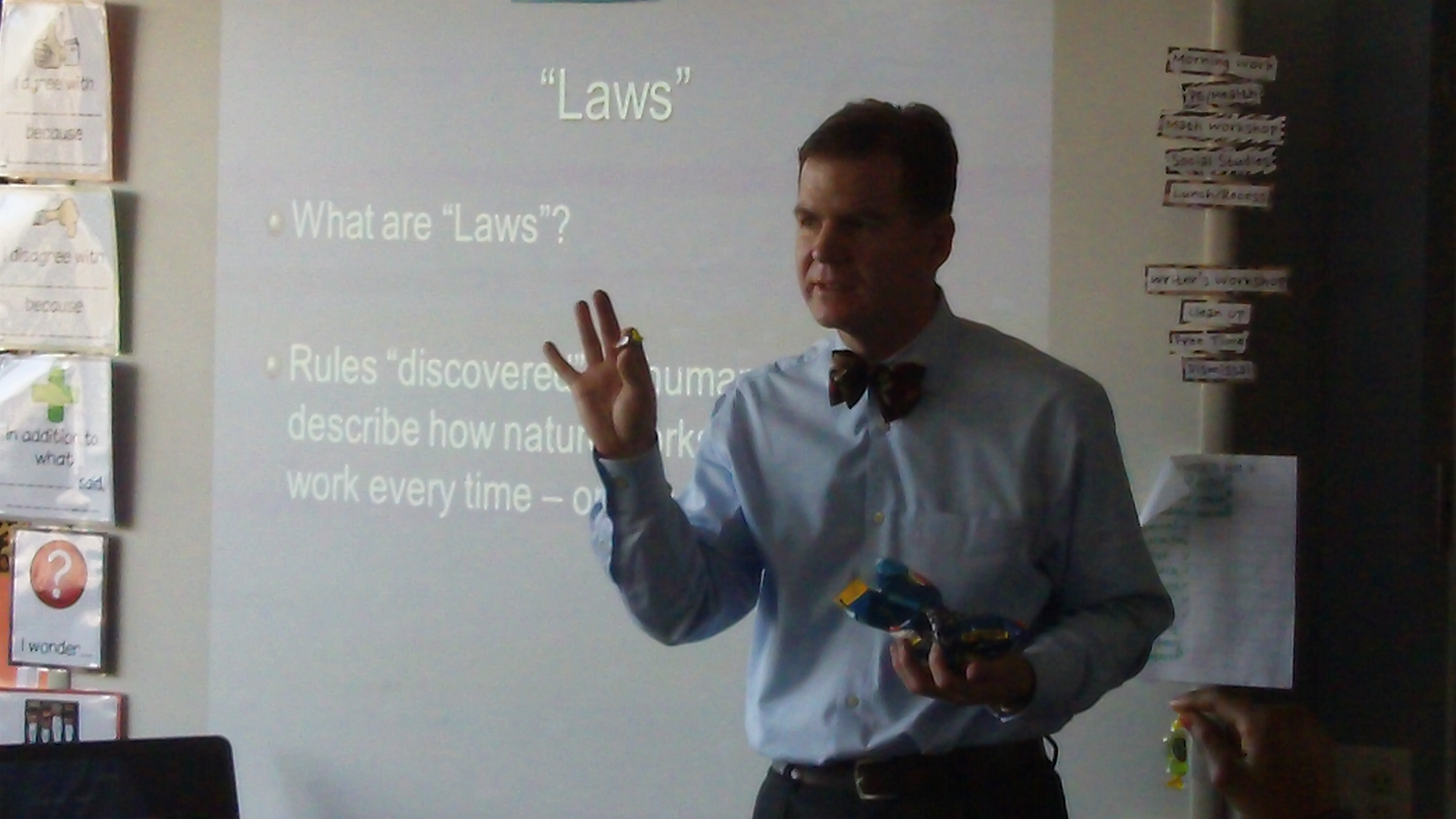
Well, we had a visit from our very own Bill Nye, who’s real name is Mr. Browning.  He LOVES physics and LOVES to talk about it, and we LOVE to learn, so it was a match made in heaven.  He came today to teach us about Newton’s Laws of Motion.


109_0049

One of the things we loved about Mr. Browning was his enthusiasm.  He was really excited about this, and that made us excited, too.  Plus he had props.  Lots of props.  Props that he used to guide us through activities that modeled what we were talking about.  He also shared some really interesting videos from the ESA that showed Newton’s Laws in the gravity-free environment of the International Space Station.  What a great day!


Newton’s First Law

An object at rest stays at rest and an object in motion stays in motion with the same speed and in the same direction unless acted upon by an unbalanced force.

Mr. Browning in action:

ESA video:


Newton’s Second Law

The acceleration of an object as produced by a net force is directly proportional to the magnitude of the net force, in the same direction as the net force, and inversely proportional to the mass of the object.

Mr. Browning (with Rosalee and Rebekah) in action:

ESA video:


Newton’s Third Law

For every action, there is an equal and opposite reaction.

Mr. Browning in action:

ESA video:


FOR SURE we will remember this day and Newton’s laws for a long time to come!  THANK YOU, Mr. Browning, for making science fun and exciting. 🙂

Now it’s your turn: what did you learn about Newton’s Laws of Motion? What else can you teach us about Newton?  What’s your favorite thing about science?  We’d love to hear from you!

List-Group-Label: Science Work with Weather Words

I wrote about this topic last year here.  And like last year, I started my weather unit today with the same activity.  But that doesn’t mean that our experience was the same.  I have a different group of kiddos, with different knowledge and understanding, and I gave a different set of directions of how this protocol would work.  So yes, it’s similar, as many things are year-to-year, but it’s not nearly the same.
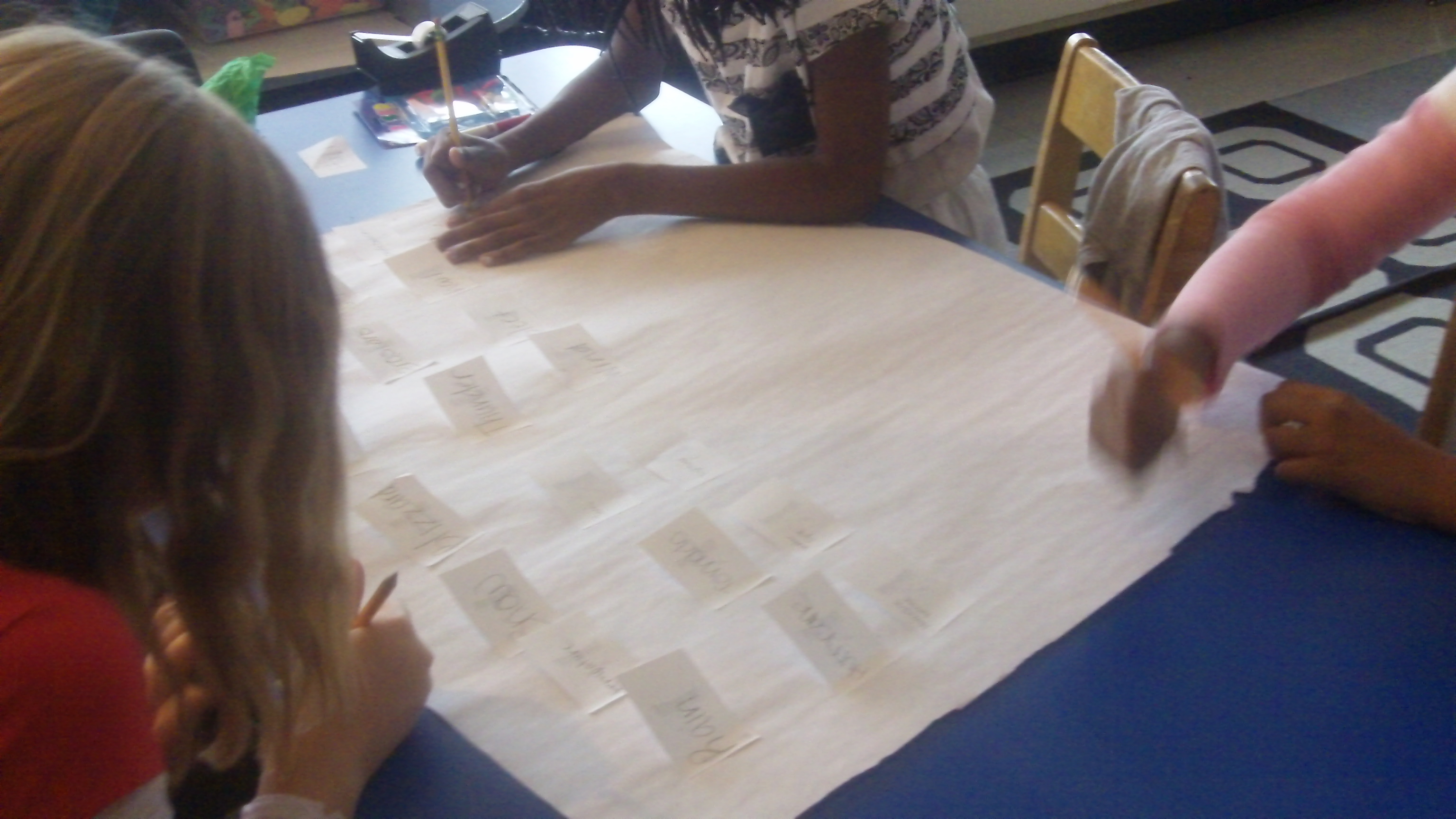
As with most every unit we begin, we start with vocabulary words that students will need to know.  Today we used the protocol List-Group-Label to do this introduction.  Here’s the big idea of how it works:

So, like I mentioned before, I had a couple of added directions this time around that helped further thinking.   When tribes got to the GROUPing part, rather than tell them how to make their poster look, we talked about how they needed to make a decision about the best kind of graphic organizer to use for their information.  I also took this opportunity to introduce the phrase “You gotta build the house before you decorate it.”  We talked about how you could “fancy” up your poster if you had some time at the end, but that the most important thing was to get your thinking down first, to show what you know about weather in an organized way.

We spent about 10 minutes on the list-group-label part, then took a short gallery walk to each tribe’s poster.  As they visited other posters, they were to notice what words others used, how they organized their thinking, and if there were any ideas they could “steal” to add to their own sheet once they returned.  After spending about 30 seconds at each poster, they had two minutes to tweak their own work before we were finished.

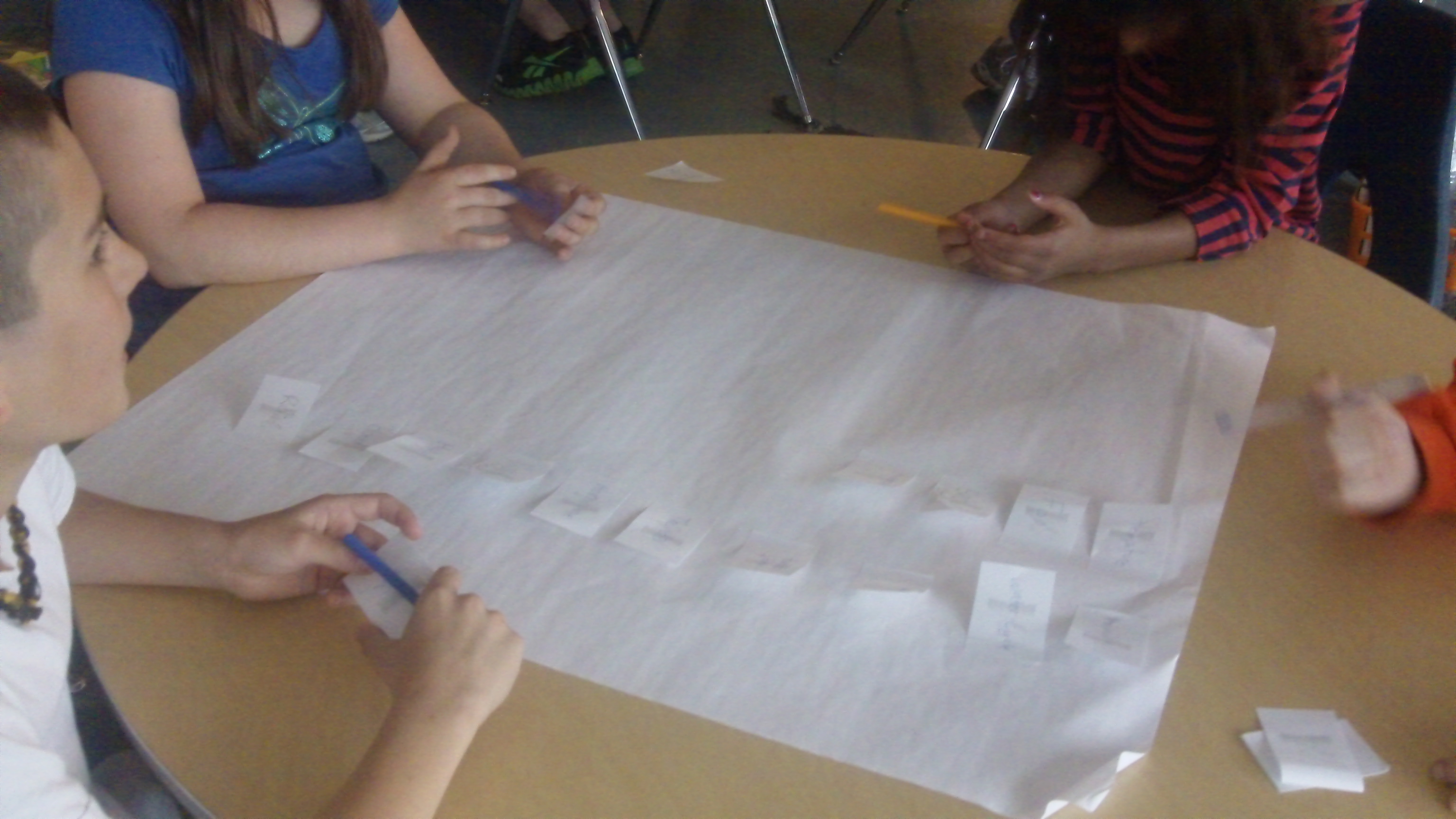
It was great to hear them work together in their groups to put words together, and think about how they could label each category.  Look at it in progress:


And then here is what we ended up with after our work time:

The Legendary 4

The Crazy Dragons (they even signed their work with their tribe name!)

The SBF

The J.A.A.Zicles

The Wild Spirits

Please leave us a comment and let us know what you think.  We’d love to continue to learn with you.   What other words would you suggest we put on our lists?


Skype!

Remember how I told you about how lucky we were to be able to Adopt-a-Pilot?

Well, since that first visit, he’s come back two other times, teaching us all sorts of awesome things about geography and flight, as well as life-lessons related to doing our best and working to achieve our goals.

During this second-to-last visit with Mr. Smith, we got to Skype with him while he was out-of-town!  We got to guess “Where in the USA was Mr. Smith?” using clues he gave us.  We used our big map to mark where we thought he might be:

Molli guessed on the FIRST CLUE that it was Birmingham!  Way to go, kiddo!

Check out a clip of our Skype session:

This was only the second time I’d ever Skype’d (and the first was the end of Adopt-a-Pilot last year!), and it was so great!  I know lots of teachers use it in really creative ways in their classrooms for mystery read-alouds, conversations with authors and for class-to-class chats.  I can’t wait to see what else is out there that I might try next year!

How do you use Skype? I’d love to hear about it! 🙂

List-Group-Label with Weather Words

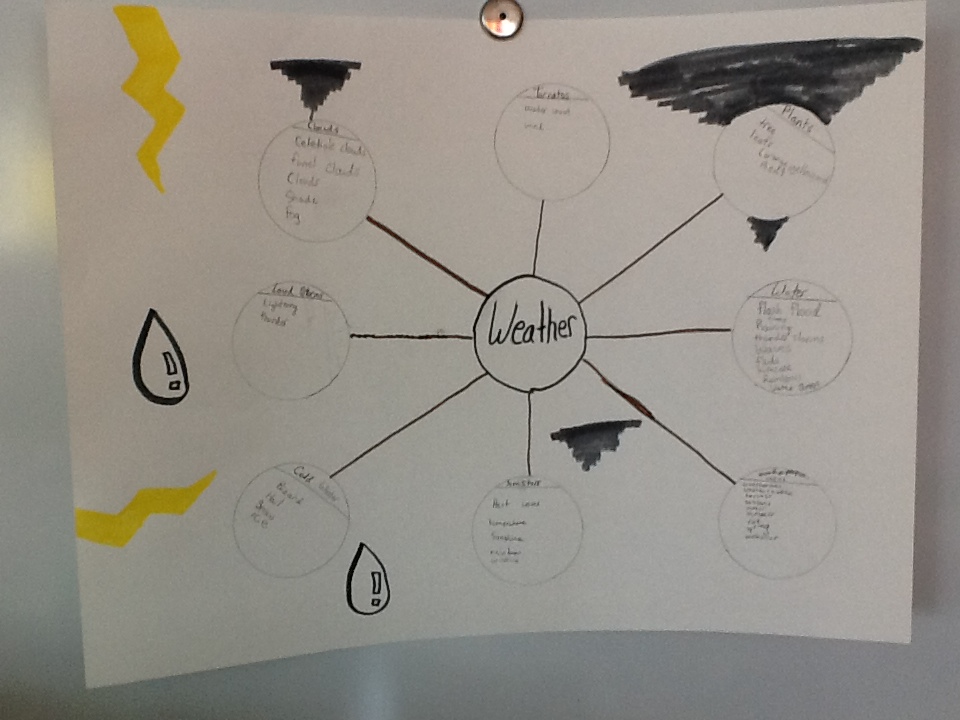
We just started a new unit in science this week.  It’s an Earth Systems unit on Weather.  So just like at the beginning of all of our units, we started with talking about vocabulary.  Check out how we did it in our geometry unit.

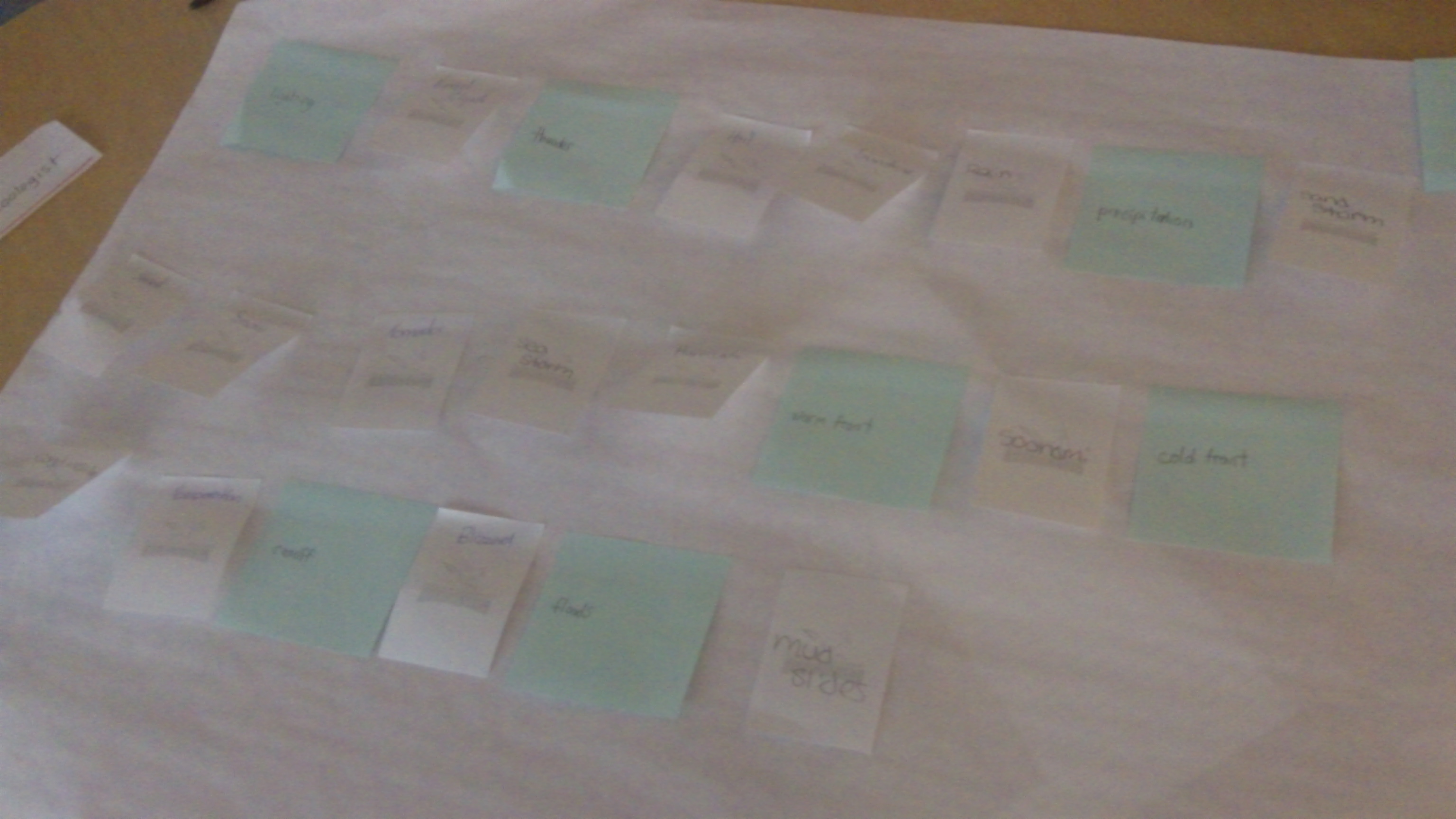
So just like last time, we started writing as many words are we could think of that were related to weather on post-its:


Notice how the first time around they’re not in any real order.  The directions during the “list” portion are just to write down words you think are related to the topic.  The grouping and labeling part came next (the next day, actually).  And ok, I’ll apologize ahead of time for the quality of the video–I’m still working on learning how to edit!  Hope it doesn’t make you dizzy….

I’m excited to see where this takes us.  I have a group of deep thinkers who will for sure continue to ask questions and make connections that will help us all learn more about weather!  Stay tuned to find out more about what we’re doing. 🙂


We’re Adopting!

Hey–now that I have your attention, let me take a minute to tell you all about something new and great that started in our room today:


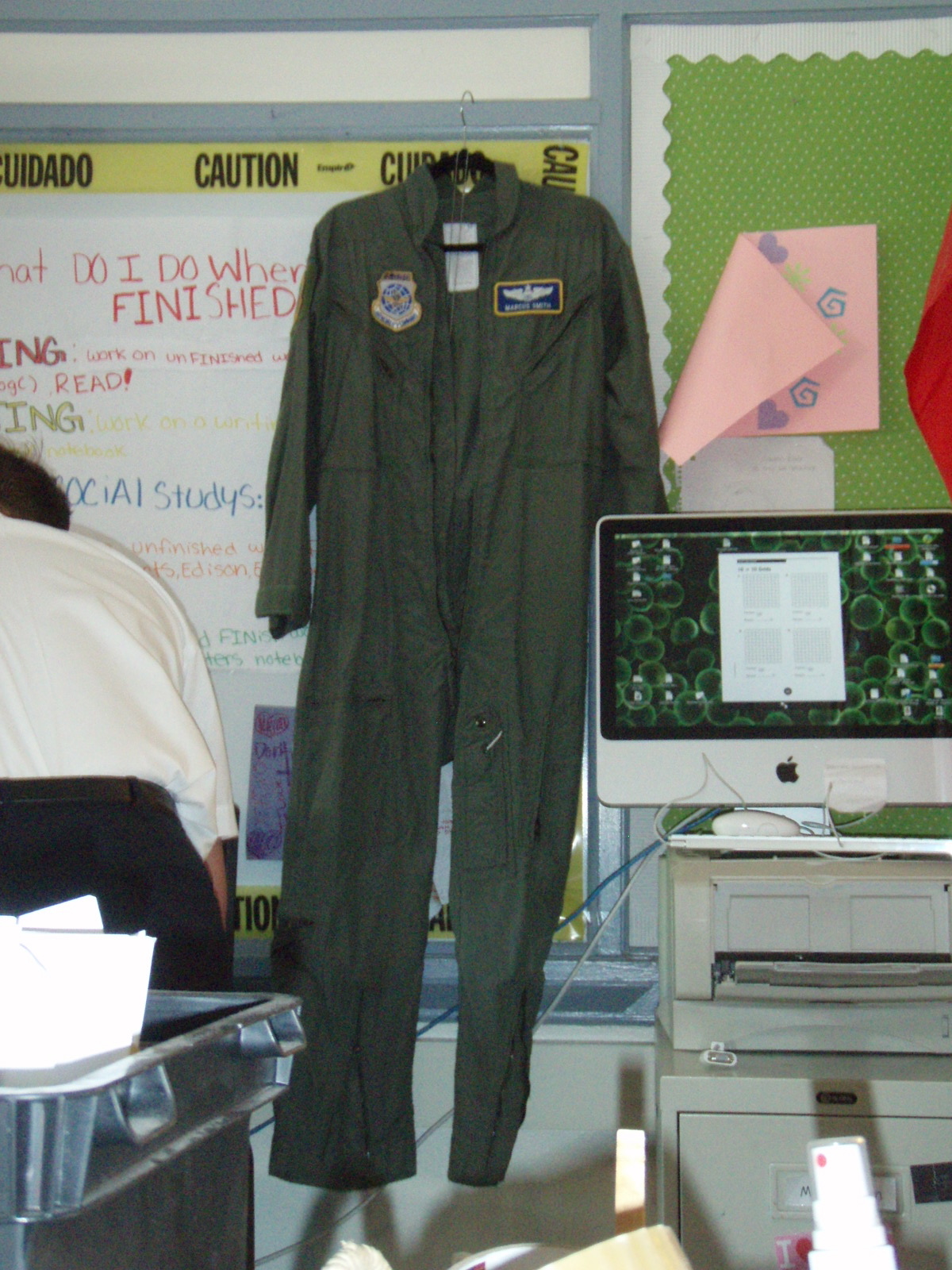
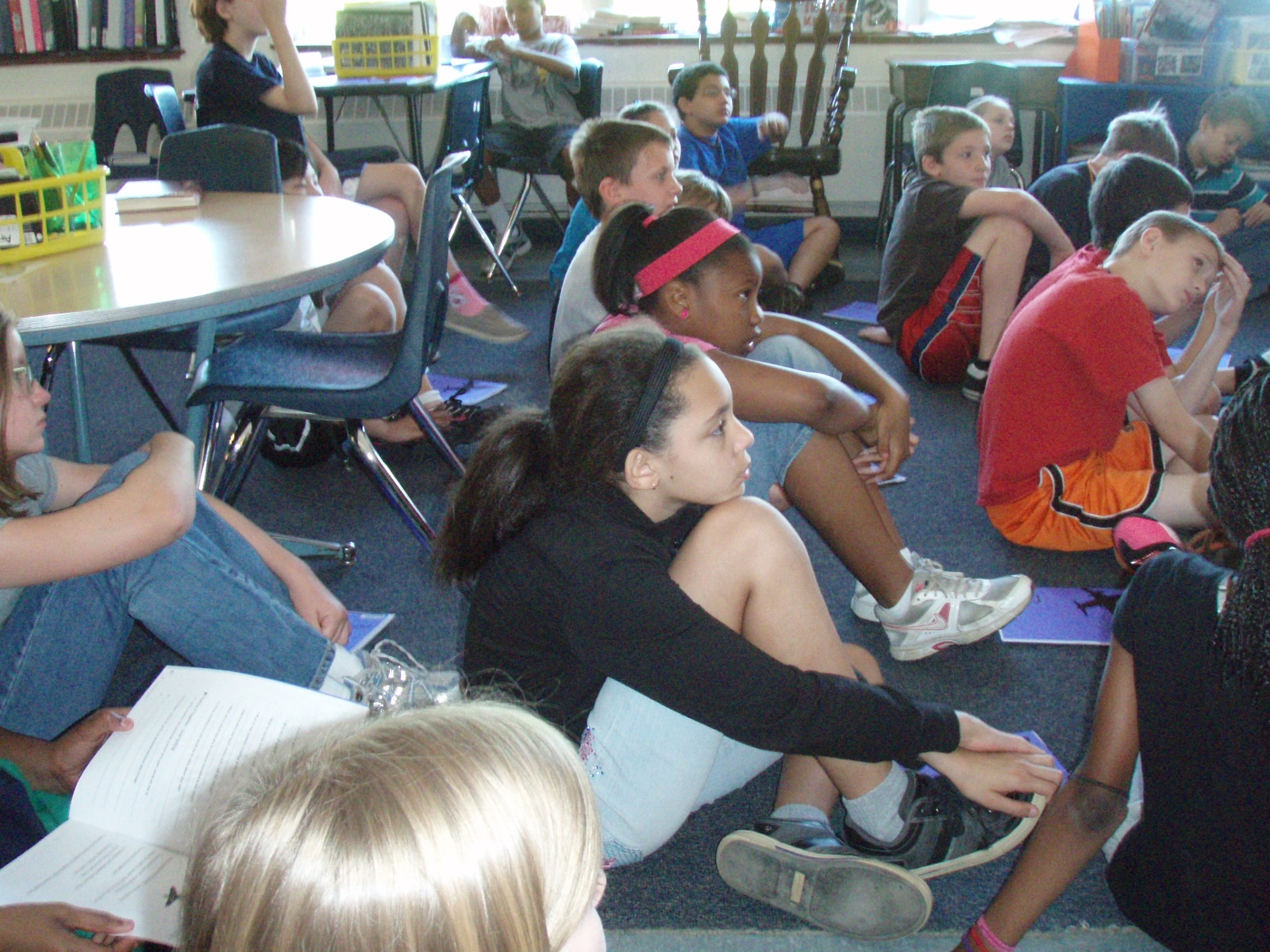
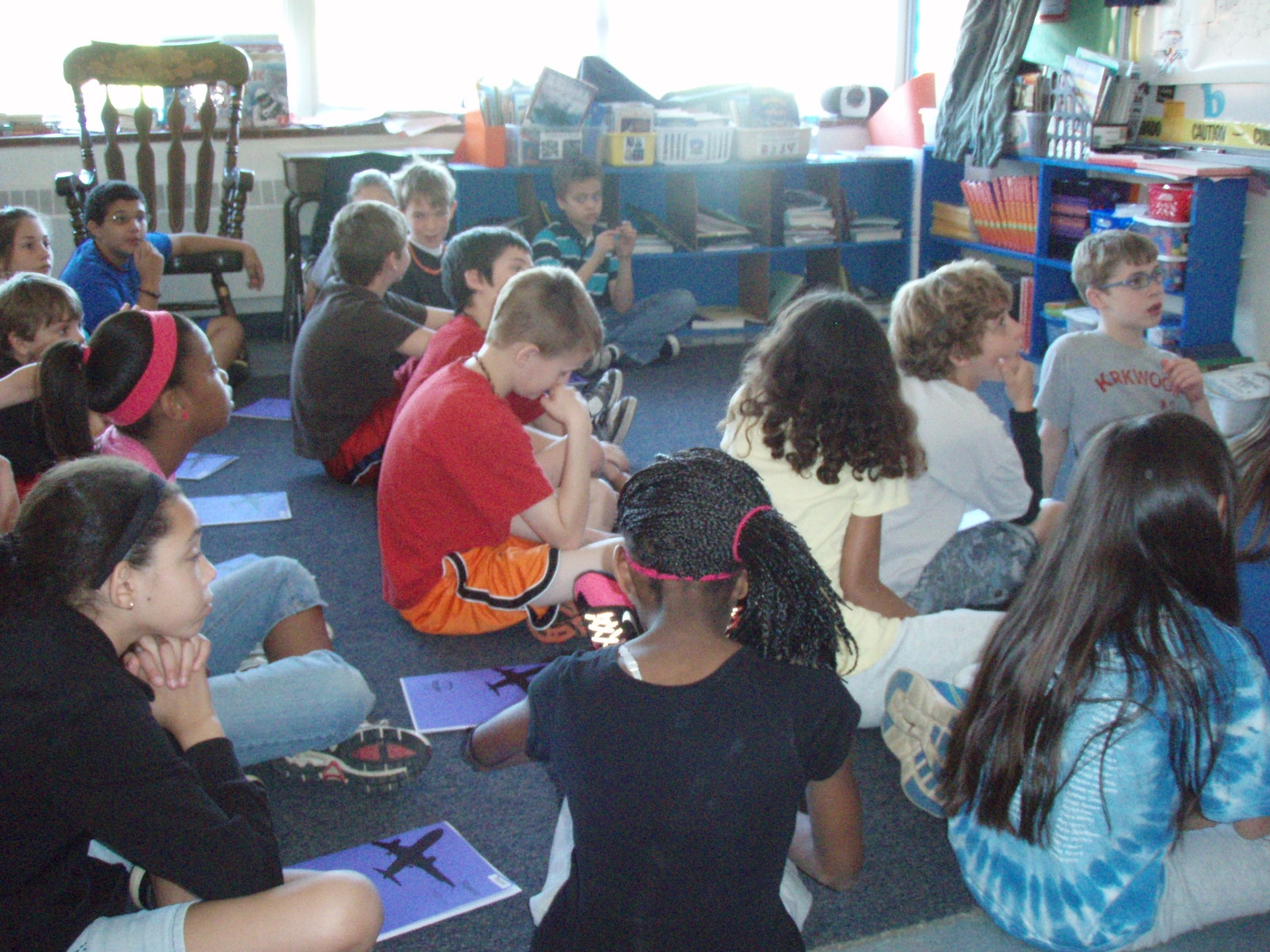
We are now officially a part of Southwest Airline’s Adopt-a-Pilot program!  Marcus Smith, a pilot and a 5th grade parent, came to visit us for the first time today.  Over the next few weeks, he is going to work with us, both in person and via Skype as we learn about all sorts of topics related to math, science, and communication arts.

The purpose of today’s visit was really just for us to meet him and build a foundation for the program.  First up, meet Mr. Smith:


He told us about his journey to his current job, and we found out about how he had wanted to fly since he was in high school.  He told us about his time in the military, and even showed us some uniforms he’s worn in his past “lives.”

After the introduction, he asked us a question: “What do you want to be when you grow up?”  We went around the room and told our names and the answer to that question.  I heard answers ranging from teacher and veterinarian to dermatologist and architect.  Stay tuned this week for more on this topic–I hope to share videos or blog posts later!

Throughout the rest of the lesson, we watched a video or two about flight (he was a pilot, after all!) and talked about goal setting.  He shared a great acronym with us to remember as we work toward those goals.  It’s based on the word FLIGHT (which makes sense, right?):

As we go through this program (and beyond that, I hope), we’ll keep coming back to these qualities.


We really enjoyed today and are looking forward to next week when he comes back to teach us more!  A few more pics before I’m done:

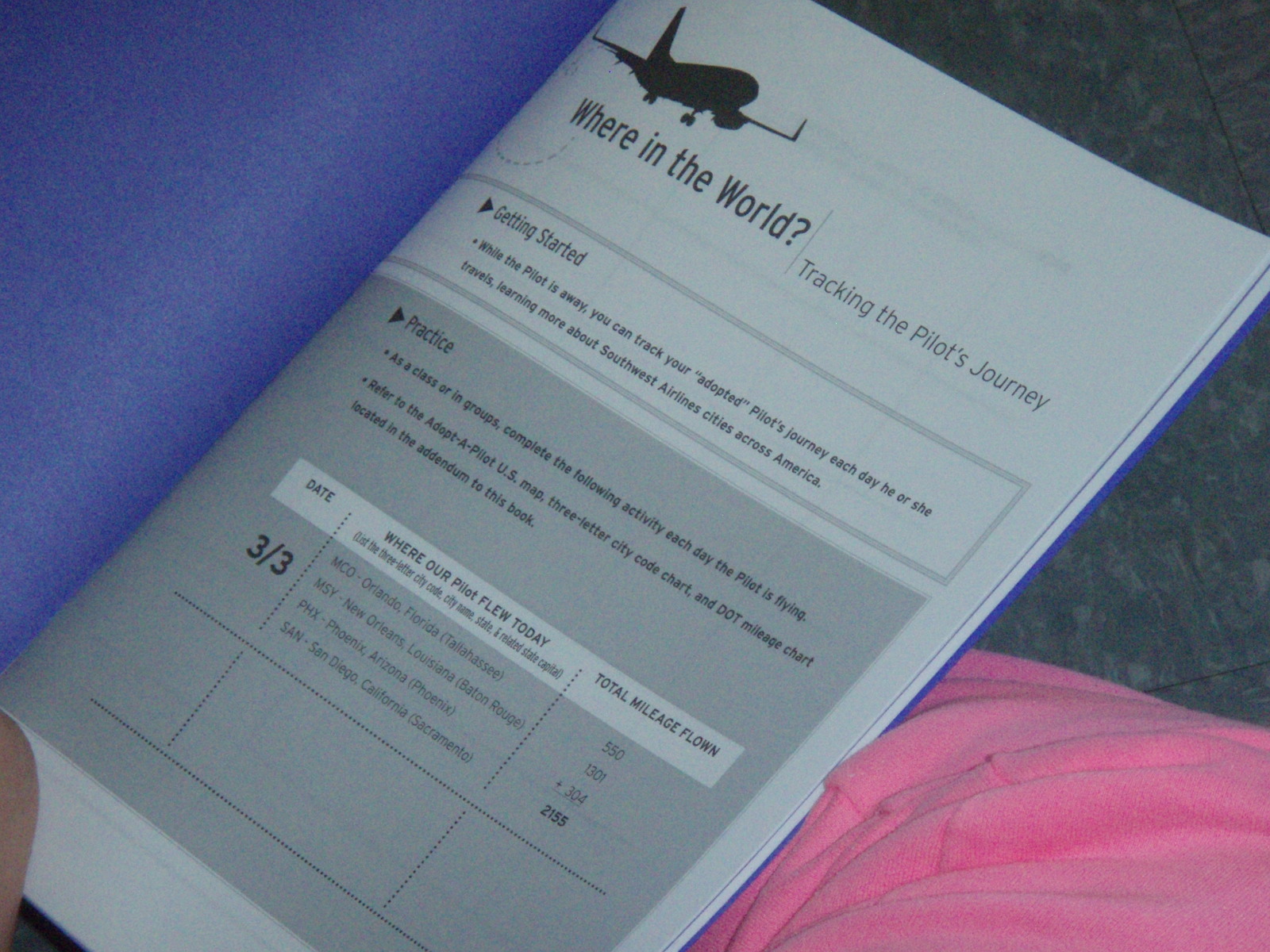
One of the things we’ll do each week in between visits is figure out how many miles he’s flying.  We’re hoping to find out if he can fly the equivalent of the distance around the world before we’re done with our program–that’s almost 25,000 miles!

We’re excited to see what’s to come! 🙂