Finishing Strong

Every year the last weeks of school come and life starts going CRAZY FAST!!  It seems that I have time to take pictures of things, but not to write about the things I take pictures of (wait, do I say that at the end of every year?  I should go back and look….)!

So…since I hate to leave things all messy and untied, I’ll end the year the way I began it–with a highlights reel.  Here’s to the last few BUSY weeks of 5th grade with some of the BEST kids around.  Have a great summer, friends of Rm. 202!

Check it out. 🙂

MATH OUTSIDE

In April we had a whole school Outdoor Learning Day, with the focus being on how to get kids outside more often.  I had to take Ms. Turken’s lead and  try math outside.  On this particular day, we were working on division problems with a little bit of a “scavenger hunt” around the playground.  Funny how just a change of environment can make for so much less whining about long division!!

ACES DAY

1399472839870

Ok, so granted, this picture TOTALLY doesn’t do this day justice, but imagine our whole school with All Children Exercising Simultaneously to some really great music, with really cool routines created by our 5th graders, and that’s ACES Day.  Always a fun one!

ADOPT-A-PILOT

This year, as with the previous few years, our class (along with the other 5th grades) adopted a pilot through a program with Southwest Airlines.  He is our own First Commander Marcus Smith, whose kiddos go to Robinson and who is a beloved Kirkwood resident.  Here are some pics from our culminating activity–a paper airplane flying contest!!

This slideshow requires JavaScript.


ROBINSON NIGHT AT THE BALLPARK

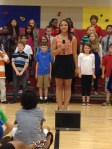
Ok, so I admit it, these are not The 20somethingkids that you were expecting to see, but they are pics of my kids nonetheless!  This was a great night of fun at the Cards game, where our Honor Choir–along with the choir from Tillman–got to sing the National Anthem!  SO fun to see Cardinal and Kirkwood red everywhere you look!  Go Cards!

SPRING SING

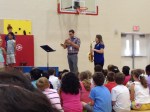
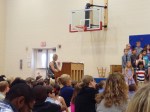
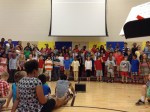
This year Mrs. Kesler helped every grade level get something ready for our first ever Robinson Spring Sing!  While I expected greatness because of what I know about both Mrs. Kesler and our Robinson kiddos, I was BLOWN AWAY by how amazing it was!  (And like the ACES Day section, I feel REALLY bad about not posting a video, but I couldn’t get a good quality one!!  I know, bummer….don’t be mad, ok? 🙂 )  Can’t wait for Spring Sing Take 2 next year!

FIFTH GRADE CELEBRATION

CAM00520 CAM00521 CAM00522 CAM00523 CAM00524 CAM00525

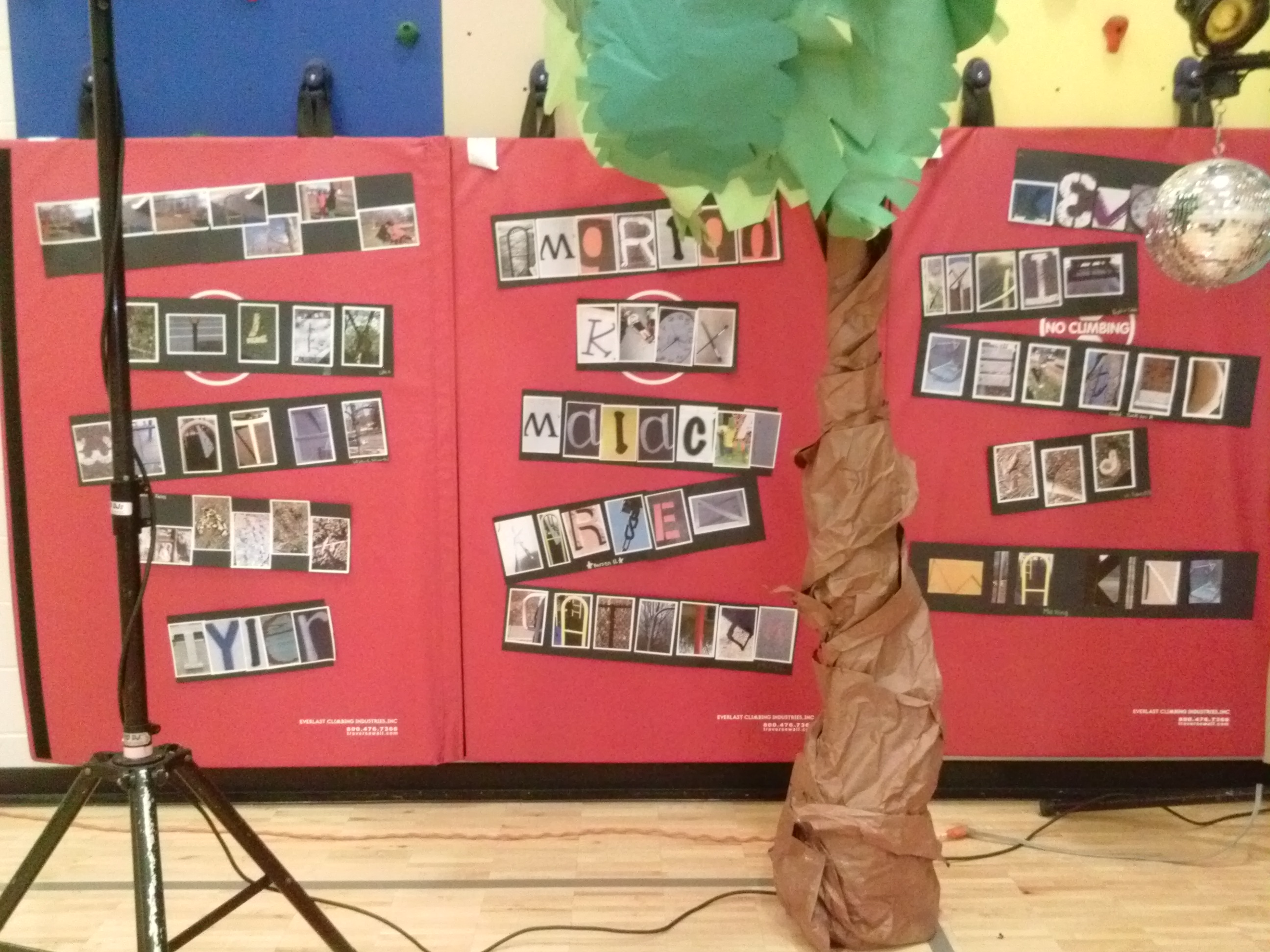
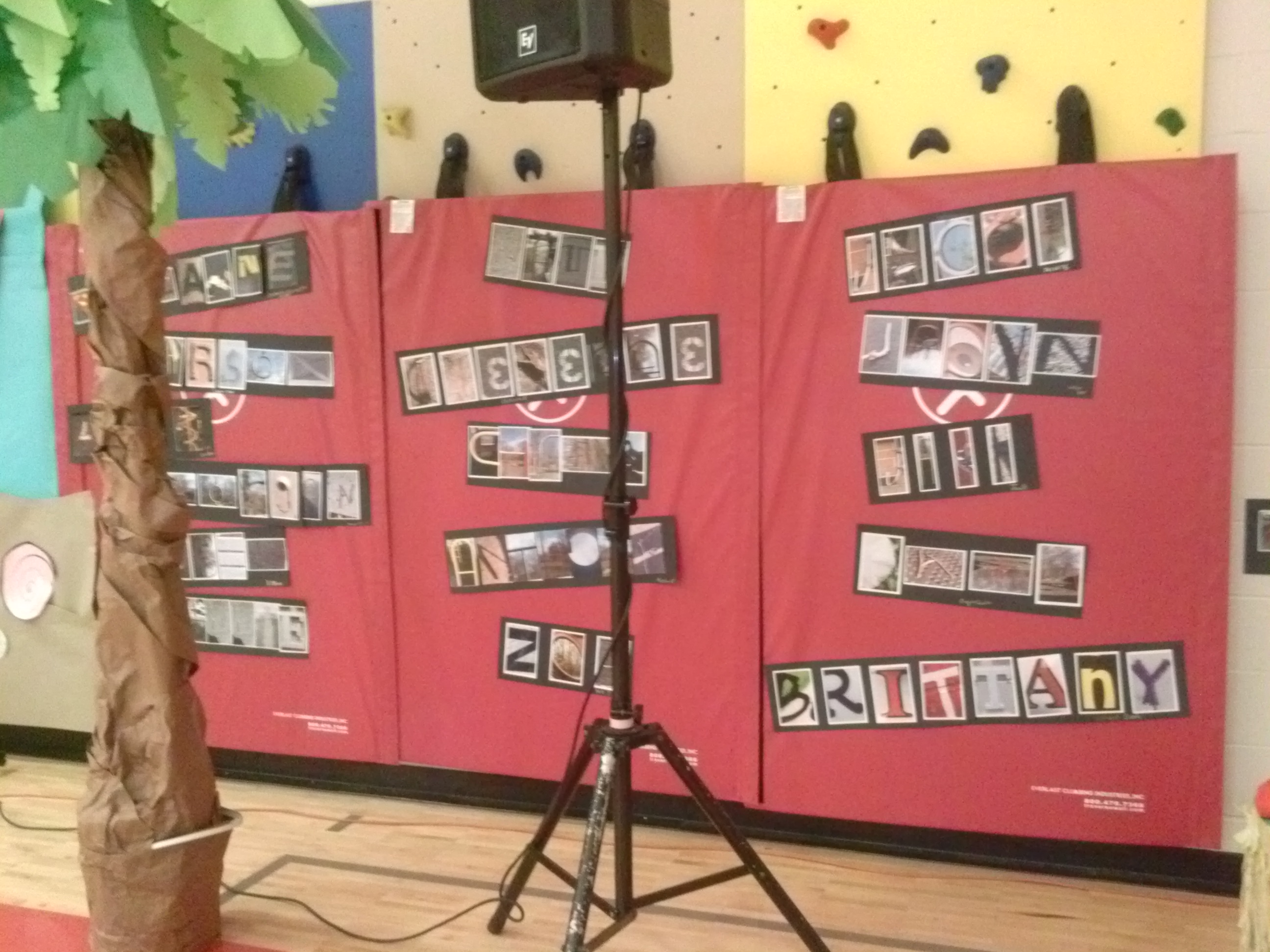
Thank you, thank you, thank you to all the parents who made this night of food, friends and fun possible for us!  What a touching way to say Goodbye to 5th Grade!  Those shirts are perhaps the best part–we can take our memories with us!  And they looked really great when we all wore them on our last-day field trip!

20% TIME PROJECTS

One thing I hadn’t yet tried, but was SO EXCITED to do this year was 20% time.  Some schools call it Genius Hour, and it’s not really equated to 20% of our time, but you hopefully get the idea that it’s a project that kiddos could do that was completely of their interest.  Some friends had some extra time in the last few weeks to investigate something of their choosing, and MAN WERE THEY EXCITED!!  We had so many fabulous projects, and spent our afternoon after Field Day presenting our new learning.  It is so cool how interested they all were in the new expertise their friends had to share!

Ok, so apparently the theme of this post is “I don’t have pictures or videos of everything I want to tell you about”–and somehow that happened here, too.  I wish I could show you the smoothies that Owen made for us, the posters that Max made about radio waves and how they transmit music, the dance that Cate and Mia choreographed and then taught the class, the Keynote the Grace created to show how she learned to do makeup (including a before and after picture of how she tried it out on her sister!) or the demonstration Tom did about the most effective jump shot in basketball, but I don’t have them.  Just know that THIS IS ONE TALENTED GROUP OF KIDDOS WHO DIDN’T DISAPPOINT WITH WHAT THEY SHARED WITH US!!

Well, as they say in the movies (or at least Looney Tunes, right?)–that’s all folks!  It’s been a wild ride since our first Fifth Grade and Fearless post, and I wouldn’t have changed a minute!  Here’s to a great year in middle school and MANY more years of changing the world after that!  Remember your GRIT and all that you learned about respecting yourself and others at Robinson and GO GET ‘EM!  I MISS YOU ALREADY!!

Geometry Creations with Power Polygons


We were recently working on geometry in Rm. 202, learning some pretty great things about polygons, angles, area and perimeter.  While I have many things I could share (and probably will!), this post is about an art project we made using some pretty cool manipulatives called Power Polygons.  They are similar to pattern blocks, but kind of on steroids.  Each one is labeled with a letter, that makes then easy to identify and talk about with other mathematicians.


IMG_2428

We spent a couple of weeks learning about angles and polygons, triangles and quadrilaterals.  After we’d gained some new geometry knowledge, I had them put it to use in a Polygon Picture Project:

Screen Shot 2014-05-09 at 8.21.06 PM

It would be GREAT if I had pictures of the final products, wouldn’t it?  Yep, you guessed it, I don’t.  But I do have some pictures of Rm. 202 mathematicians hard at work creating their fabulous pictures!

This slideshow requires JavaScript.


Knowing the Standards

It’s probably a pretty obvious statement, but knowing what’s expected of you helps you make sure you do that expected thing, right?  Sure, of course.  So why don’t I spend more time chewing on rubrics with my students?  Why do they sometimes feel like the expectation for the end of the unit is a surprise to them? Well, the simple answer is that we should spend more time looking at rubrics.  Together.  Often.  Before, during and after learning happens.  And it’s my goal (but not my resolution!) to make that happen more this semester.

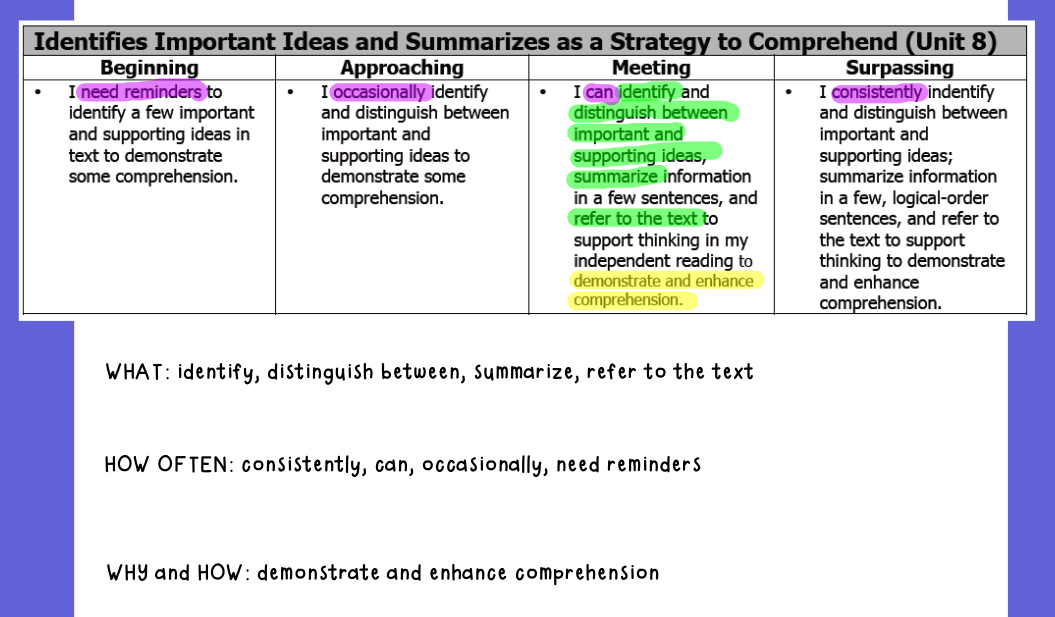
So fast forward to last week and the beginning of our focus on summarizing and main idea in Readers’ Workshop.  We started by checking out the rubric together.  I gave kiddos a copy of the rubric to chew on in pairs.  Along with the expectations, I also asked some questions, and had them look for certain things in the standards that would help them make sure they were doing what was expected.  Together we read, discussed and highlighted.  Our board (and their papers) looked like this when we were finished:

Screen Shot 2014-01-21 at 11.27.12 AM

I think it was important work that happened here.  I kept asking the what and why questions as we chatted.  I had them repeat the verbs.  We talked about the fact that these are understandings they need to demonstrate more than once.  And we focused on the reason behind why you need to know how to do this: to help you better comprehend your text, not because your teacher says you should.

Now we talk about this almost every day.  Before we begin anything reading, we review the words in this rubric.  We use the words.  We reflect on whether we’re identifying, distinguishing, supporting, referring and demonstrating.  And this image will hang in our room to help us remember what to do–and for a visual person like me, that’s an important step.  So many times things are out of sight, out of mind.  This way they will not be.

And so after this work in reading, we did the same thing in math with the beginning of our decimal unit.  And during that conversation I had another (saddening) aha moment.  As I handed each kiddo at my table the rubric book that is usually reserved for parents and teachers, I wondered why I didn’t give one to each STUDENT to have.  To read.  To digest. To reference and keep at the front of their minds (and binders!).  Why had it never occurred to me–in all of these years of teaching–that my STUDENTS are probably the ones that most need that book??  They are the ones, after all, that are responsible for making those things happen, right?  Man.  Humbling thought right there.

Moving forward I pledge to do more to make my students aware of their learning.  Don’t get me wrong–we talk about these things and I believe I am making them aware of our goals, but there is much I can do to make it more visible for them, so that they can take more of an initiative in their own learning.  Nothing here should be a mystery, and the outcome should not be a surprise.  And I’m vowing to take steps to unveil some of these things for my kiddos.  I only wish I would have done it a long time ago…

What do you do in your classroom to make your students aware of standards and expectations?  How do you involve them in the process?  What “aha”s have you had regarding these things? I’d love to hear from you!

Fractions with Fosnot and Flex Time

Remember last year when I told you all about Feast Week?  Well, it’s that time of year again, for fractions at least, but not–it seems–for Feast Week.  Instead, we’ve begun using some AMAZING new resources from Cathy Fosnot, that have helped our mathematicians think of fraction parts in a whole new way.

My favorite part of math right now is the addition of Fraction Flex Time (man, it seems like we need to add a cute name to every thing fraction related…).  After we finished the investigations in our Fosnot unit (which included figuring out the Best Buys, Oatmeal Problems and Gas Tank problems), our team sat down to figure out how to divvy up our kiddos between the 7 teachers we have (Yes, I said SEVEN!! Isn’t that FABULOUS!! ??), based on the information we’d gathered during our first few weeks of study.  We made the groups small and intentional, and we planned for intense teaching and practice.

Although the pacing and strategies are a little different based on the groups’ need, the goal is the same (based on our district rubric):

Screen Shot 2013-11-19 at 9.03.25 PMJust like I shared in my post about our visit from Kara Imm from Mathematics in the City, number strings have become our new best friend.  I mean, honestly, before this year I really didn’t spend much time on them, but now I am not sure I can go a day in math without one–they just have such HUGE bang for their buck.  Just the other day we spent 45 minutes doing a number string together.  It sounds like a long time, maybe, but in that 45 minutes (during which my small group of friends was TOTALLY ENGAGED!), we were able to touch on the clock model, common denominators, reducing fractions, equivalent fractions, improper fractions and mixed numbers.  So cool!

I have heard such positive feedback from my class since we’ve been doing flex time. Most mention that they love the small numbers, the focused nature of the lessons and the time they get to spend with the teacher.  I agree, friends, I’m loving all those things, too!

My favorite thing from our lessons lately  is all of the “lightbulb moments” that I can actually see happen.  It’s so great to see that look of AHA! on a kiddo’s face, and how often these moments even have a sound.  All of the “ahs” I’ve heard lately have definitely made my days.

What do you think about fractions?  How do you think you would react to Fraction Flex Time?  Do you think you’d like it?  Please leave your feedback. 🙂


Mathematics in the City (in Kirkwood)

Mathematics in the City is an organization I learned about this summer when the fabulous Kara Imm came to Robinson to teach us about how to better teach addition/subtraction and multiplication/division of fractions using new units from Cathy Fosnot (another amazing math mind!).

Fast-forward to now: yesterday we (several 5th and 6th grade teachers and math specialists) were lucky to have Kara back again to continue to learn from her (and each other!) as we taught one of those units in our own classrooms!  We spent the morning planning our lesson, digging into the mathematics, talking about how we’d introduce the scenario, anticipating what kiddos would do and say, and brainstorming questions we’d ask our mathematicians to help “lift their thinking.”  Then our group (oh, did I mention there were like 15 teachers??) watched as Mrs. Hong taught the lesson in her room with her friends.  We got to “kid-watch” and take notes on what thinking they used, how they explained their work and also practice what we’d planned during our earlier session.

At lunch we debriefed on how the morning had gone, planning for how we’d change things based on the information we gathered.  Then it was time to plan for what would happen in my classroom later that day.

We decided that Kara would lead a number string with my students, focusing on fractions, but using the context of money.  Her string looked like this:

photo-27

See the red parts?  Those are the problems she gave students to solve (remember when we did number strings together at our Curriculum Night?  Same idea, only with a different concept).  The black is documenting kiddos’ thinking, and the blue is how she was modelling their thinking.  The story she told here (that gave kiddos an entry point and helped them make connections to what they know) was about how she’d found some money as she walked along this morning.  What a great way to talk about fractions huh?  TOTALLY made it less scary, and who doesn’t know at least SOMETHING about money?  The thinking they were able to share was fabulous, and the kiddos who felt confident to share their thinking was great, too; some kids who don’t normally share during number strings were more than willing to do so with this one!


I know that pictures of this totally don’t do the fabulous thinking justice, but here are some shots I captured during our work yesterday.  Check them out!

This slideshow requires JavaScript.

What a fabulous (man, I say that alot, but it’s true!) opportunity to learn with such great minds!  Can’t wait to see how this helps our math thinking progress as we begin a new investigation and more number strings!

If you’re a parent, be sure to share what your kiddos said about this experience.  If you’re a teacher, have you used number strings in your room?  Do you know Kara or Mathematics in the City?  Do you use Cathy Fosnot units with your learners?  What do you think of them??  I’D LOVE TO HEAR ABOUT IT!!


Rethinking Multiplication Strategies

First of all, I know.  It’s been forever.  Man, I’ve been saying that a lot lately.  All I can do is apologize, though, and ask that you’ll kindly keep reading.   Life is nuts these days. 🙂

So…we are just about at the end of a study of multiplication and this year I’m asking my friends to think in a different way about the word efficient when it comes to multiplying.

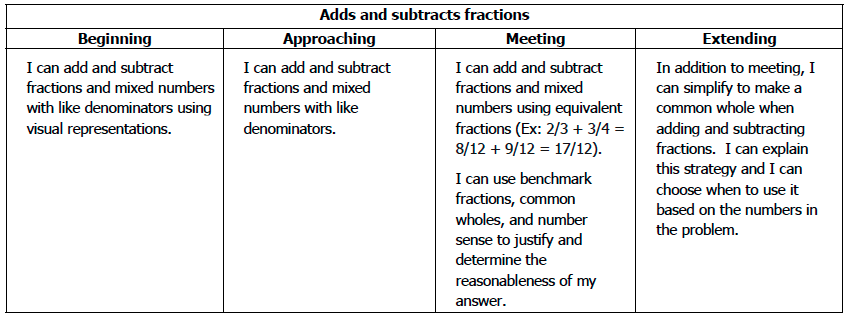
Based on our district rubrics, which have recently been rewritten based on work related to Common Core and an updated curriculum, the standard for 5th grade has changed.  Instead of just being able to use the traditional algorithm, students are expected to be able to fluently use a variety of strategies.  But get this: the strategy they choose to use should be based on the numbers in the problem, rather than personal preference or the strategy they know best.  WHAT??!! I seriously have some friends whose heads might explode.

But it’s not really their fault, I guess, because for years the algorithm was the goal.  And once they learned how to use it, that’s what they stuck with and used every time.  For years, we (or they) saw the other strategies as lower-level–ones used by friends who didn’t yet “get” how the algorithm worked.

District Math Rubric for Multiplication

District Math Rubric for Multiplication

Now we’re thinking more about how mathematicians should be able to be flexible with their thinking, to use place value correctly and to explain their reasoning based on what they know about numbers.  This doesn’t mean that the algorithm isn’t something kids should know how to do, but that it’s not the only thing they should know how to do.  I mean think about it in the real world: there are times when you have to be able to do math in your head, in an efficient way–without paper.  The algorithm doesn’t really fit into that model.

So what does this look like in our room?

First of all, here’s an anchor chart that now hangs in our room (made based on our knowledge of how to solve multiplication problems):

Classroom anchor chart for multiplication strategies

Classroom anchor chart for multiplication strategies

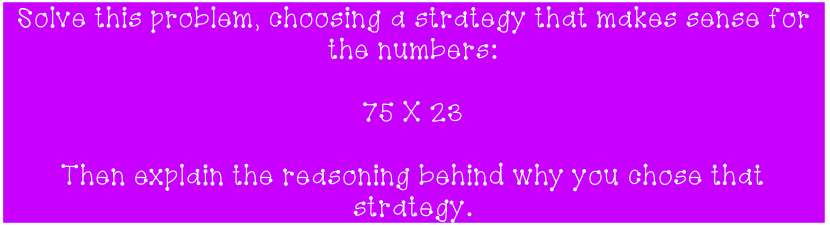
While I don’t have any pictures of the math warm-ups we’re doing right now, this is where many of our opportunities come to try out this thinking.  The problem today, for example looked like this:

Math Warm-Up for October 14

Math Warm-Up for October 14

There are obviously (based on the chart) multiple ways to do this problem.  But based on the numbers (which were chosen on purpose), the strategy that makes the most sense is to either use splitting or a close 10 to solve the problem.  That way, you can solve 75 X 20 and 75 X 3 and then add them together, which can easily be done in your head–without paper.  If you chose to use the algorithm (which most would do–even most adults!) you’d have to do 5 X 3, then 70 X 3, 5 X 2 and then 70 X 2 and add it all together–many more steps than the other strategy.

So while this is still a little tricky for some friends, it will get easier with time.   We just need some more practice. 🙂

What strategy would you have used to solve 75 X 23?  Do you know more than one strategy to multiply?  Is the traditional algorithm your “go to” strategy?  I know my 5th grade mathematicians would love to hear your answers!


Ever Wondered….

…what teachers do on their plan time? If you’re a teacher then probably not (unless you wondered what other teachers do on their plan times), but if you’re a student or a parent–I’m about to let you in on a little secret.  Ready?  We plan things.  Ok, that’s not fair (and it’s a little snarky.  Sorry. 🙂 ).  But really, we do.  And often (as with my fabulous team this year!) we do it together.

Sometimes we get the luxury of double plan-times (which is really just a fancy way of saying we have a big 2-hour chunk to work with instead of just 50 minutes), and it’s during those that BIG things happen.  Like just last week when we were doing this together:

IMG_1179 IMG_1180

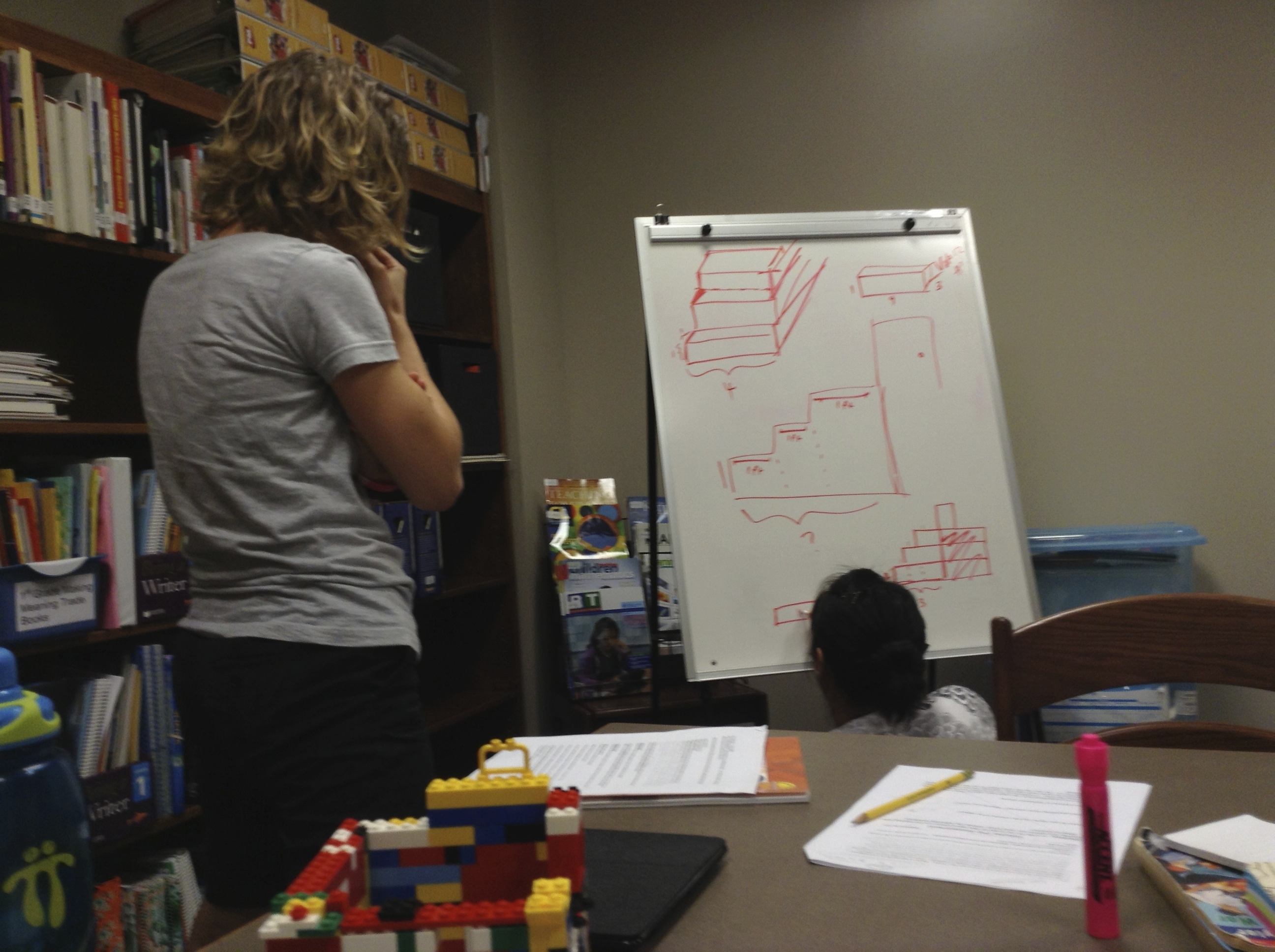
See the work there?  Can you figure out what we were doing?  Those pictures, my friends, are our notes from time spent chewing on a volume pre-assessment.  We were trying to create something that was engaging, real-life and challenging all in one.  We even had the idea of creating two separate scenarios to interest different kiddos (one was Legos and the other was related to cupcakes).  I LOVED how well we worked together in this session, how we each brought something different to the table (and to the whiteboard!), and how we ended up with a great pre-assessment to use that is equal parts us and equal part awesome.

Have I mentioned before that MY TEAM ROCKS?  If you haven’t been to their blogs lately to see what’s going on in Rm. 201 and Rm. 203, do it! Now. 🙂 Please? 🙂

First Day of Fifth Grade!

Wow–how is it already the first day of school?  Seems like it was just the last day of school. 🙂

I only have enough energy to share a couple of things from our day–tells you how busy we were!  I need an early bedtime!

First of all, here’s how I introduced myself to my kiddos today:

I was so excited to read about this idea when my friend Michelle shared it with me from here.  I took a little bit of a different twist on the content, but really enjoyed making it!

While we did not really follow our “official” schedule today, since it was just Day 1, we did try to fit our community building and routine learning activities somewhere near the time they would actually happen.  We read aloud some of my favorites–I Want My Hat Back and This is Not My Hat by Jon Klassen, as well as First Day Jitters by Julie Danneberg.  We did a 5th Grade pursuit (the old “find someone who” game where you sign each others’ papers), found a new book for each kiddo to read, started investigating ways we are smart (more with this tomorrow!), did our first Math Warm-Up of the year, introduced Writer’s Workshop and wrote postcards home about the first day of school.  Like I said, we were busy!

But even with all that fun and excitement, I’m pretty sure that the only thing my new kiddos will tell their families when they get home is that

Screen Shot 2013-08-20 at 8.56.15 PM

Yep.  Definitely gonna be needing some snacks this year. 🙂

So all-in-all it was a great day! Can’t wait to get back in there and do it all over again tomorrow.

But before I go, I have one thing to say to all of new my friends–new to me and new to Kirkwood: WELCOME! You belong here. 🙂

An Authentic Australian Audience

First of all, to my friends in 5SK, I’m SO sorry you’ve been waiting so long for this post!  We ended up needing another day to get our presentations “just so” before we shared them.

And so for those of you who are not from 5Sk (a Year 5 class in Queensland, Australia), let me fill you in on what’s going on.

I have been talking to Ms. Scharf for a little while, and received an email from her the other day with a request.  She also posted it on her blog:

The challenge from Mrs. Scharf for her 5SK friends.

The challenge from Ms. Scharf for her 5SK friends.

I was beyond excited about this question because 1) I knew my friends could answer it and help their Aussie friends, and 2) this was a REAL, AUTHENTIC audience with a REAL problem that we needed to solve–talk about motivating!

So after talking through what we needed to do first (which was research the Australian money system so we knew what connections to make and so we’d have some background knowledge), as well as all the things we needed to include in our responses.

And so, after two days of working, here’s what we came up with for our friends:

And last, but not least, one group made a poster to explain their answer:

Fiona, Anna K., Sammy and

Fiona, Anna K., Sammy and Rebekah chose to explain their thinking in a poster.

So what do you think?  5SK friends–did we help you?  Please write and tell us what you think.  We’d also love to hear how your Pocket Money Challenge went today! 🙂

I Speak Greek When I Teach Math–PART 3

Hopefully you’ve caught the first two parts of this story already.  If not, they are here and here.  🙂

After we had our cooking lesson, we got back into our groups to do a re-try of our posters.  Another thing that my friend Pam mentioned to me when we were talking about what could have gone wrong was that maybe the paper they were using was too big.  What?!  Something that simple?  It’s funny, because I hadn’t really considered that before she said it, but as soon as she did, it made perfect sense.  They only had a certain amount of information to share with other mathematicians, and many groups ended up with lots of white space they didn’t know what to do with.  Maybe it wasn’t a factor in our troubles, but it was worth taking a look at.  So as we started again, we used smaller posters. 🙂

We tried something else with this investigation, too–we invited another class (who didn’t know anything about our problem) to do our gallery walk with us.  This, we thought (ok, well I thought) would give us an even better idea of how we could revise our first drafts, since it was a “cold read” for them–they could only use the information we gave them to make sense of our mathematical ideas, rather than the context of the problem or background knowledge of the process.  So we invited Mrs. Hong’s class to work with us.  This was a PERFECT situation, because they had just finished a big problem, too, and needed someone to help them revise, too.  Match made in heaven, right?

This slideshow requires JavaScript.

I mentioned in my last post that I’ve been thinking about incorporating more with cooking into math next year, and this whole trade-classrooms-and-do-a-gallery-walk thing is another idea my team is considering doing more of.  We want to be more purposeful in how we create real-life, meaningful scenarios for our kiddos to solve, then use the knowledge and ideas of each other to help make the work even better.  Seeing another version of a problem you’ve also solved is very different than looking at a poster that is completely new. The mathematician has a much bigger job to do for these new viewers; every word, number and symbol they write is a clue to help them figure out the puzzle.

So what have you done with posters, gallery walks or real-life problem solving in your class?  What advice do you have for us as we work to continue these ideas with our mathematicians for next year?  We’d love to hear your thoughts. 🙂