10-11-12

Today was a great day.   It was Thursday, which for some reason is my favorite school day of the week.  It was sunny and crisp outside, which is perfect for fall.  I didn’t have any meetings scheduled during the day or after (come on, you know that’s nice!).  And the date was 10-11-12.  How cool is that?  And really–we won’t see that again for another whole year when it’s 11-12-13.  So let’s celebrate it, right?

I just have to add that another thing that made today great was that we got to celebrate the birthday of a very special friend in our class.  But again, besides it just being her birthday, it was her GOLDEN birthday, so she turned 11 on 10-11-12.  A. Maz. Ing.  I’m jealous.  No really, I am.  My birthday is in November and has no hope of ever having any cool all-the-numbers-in-a-row things.  Oh, well, at least I have one, right?  Anyway, Happy Birthday, ZB!

How did you celebrate 10-11-12?  Was it your birthday today, too?  If so, Happy Birthday to you!

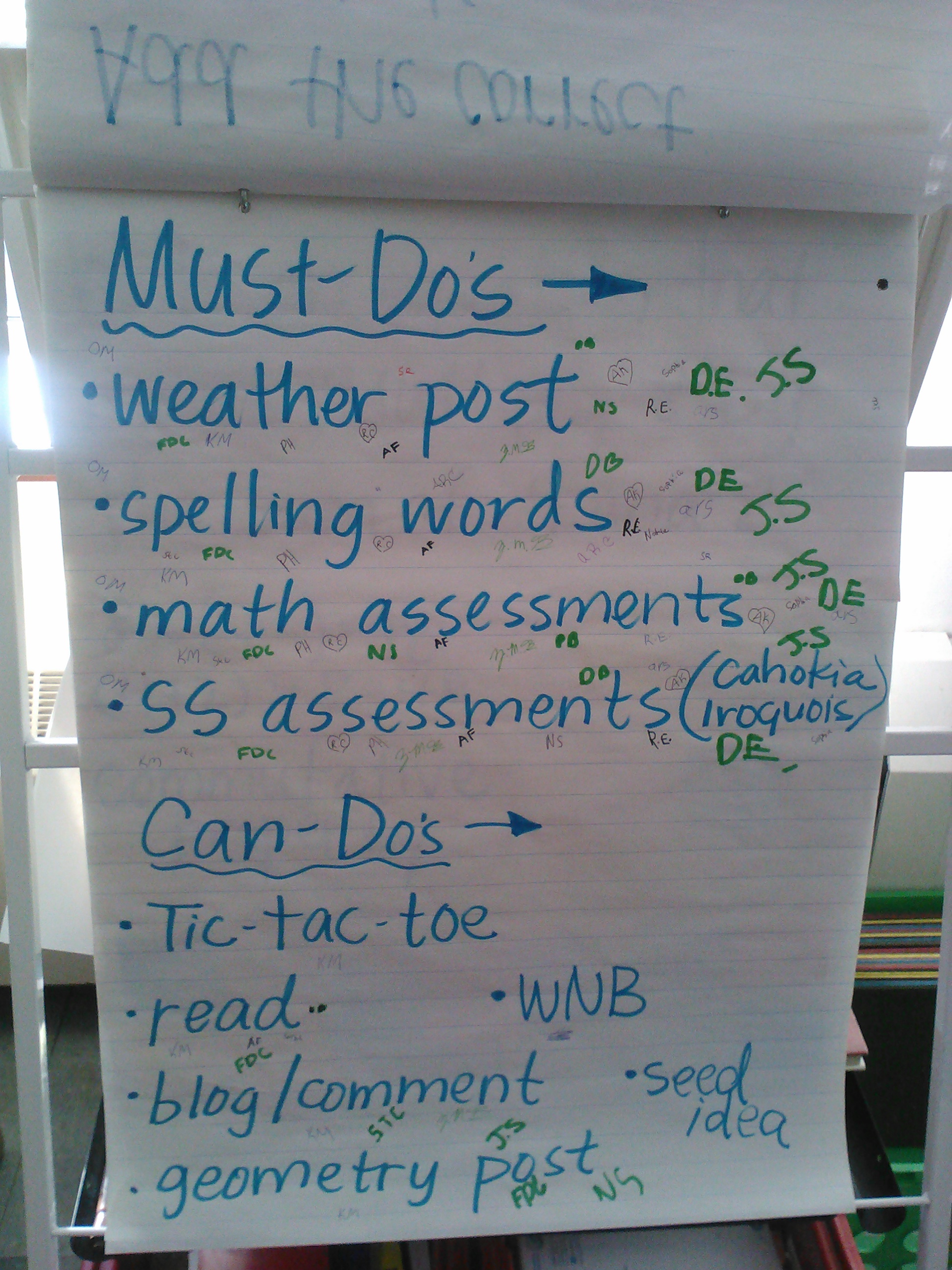
Must Dos, Can Dos

There are many, many days where at the end of the day we stop and just have to sigh because we’re so tired.  We have done so much in so little time that we just did to sit and rest.  Really–we are going nonstop from the very beginning of the day all the way to the end.

I love, too, that that “busy” can be so many things.  It might be a group project or a math investigation, reading a great book or writing, but we are always doing something.  What I love about my class is that they are so into whatever we do.  They dig in deeply and give their all.  They are also pretty good at managing their time and getting things done within a certain time frame.
And so on some afternoons, rather than chunk our activities into the regular “subjects,” I take a large amount of time and just give them a list of things to do, at their own pace.  The only “rule” is that it all has to get done.


So there are Must Dos and Can Dos:

Now, this doesn’t happen all the time, just every few weeks.  Obviously on most afternoons there is something specific I need to teach them for each subject and therefore we all follow the same schedule together.  But some days, often Fridays or when we’re towards the end of a unit, I may just say “you need to get these things done.”  I give the list and the time constraints and they get to work.  When they have finished an assignment they initial that step.  When they are done with the Must Dos, then they choose a Can Do.  Ok, so I guess that’s a rule:  you have to be doing something.  So really the Can Dos are Must Dos, too, just not everyone will get to them.  Does that make sense?

Anyhow, this class does superbly on days when I whip out charts like this. They love it actually.  And I love it, too, because I think it values that we all move at different paces and we might need different things to get to the end.  I take these times to have conferences, catch up on other assessments I may need to do with kids, or meet with small groups.  I often will rotate around the room just checking in, too, in a more informal way as they work.

Tomorrow’s Friday again, and I’m still not sure if we’ll be doing a Must Do Can Do chart.  But if we do, I know I’ll have a classroom-full of engaged 5th graders working hard, finishing their assignments to their best ability.  And I know that because that’s what they always do!

I Told You We Were Blogging, Right? :)

Really they’ve been blogging all year.  Only it’s been on our class blog.  A few short weeks ago now, though, our 5th graders got their own blogs!

There is a long story behind how I started down the road toward kid-blogging, and I posted about it here.  We did much of the same process this time, and it went equally as well with these kiddos as it did the first time around.  Only I have a little bit of  hunch that this year’s class will go even farther with their blogs.  Partly because we started earlier and so they’ll simply have more time, but also just because this class just seems to dig into their work with such eagerness and enthusiasm.  I think they’ve already written more posts on their own at this point.  They really think in terms of what is “blog worthy” as they go through their normal lives.  I love it when I go home and there are posts waiting for me in the inbox that tell the tales of all the great things that happened during the learning day.  And not because I told them to write about them, but because they wanted to write about them!  It’s great.

But I digress…

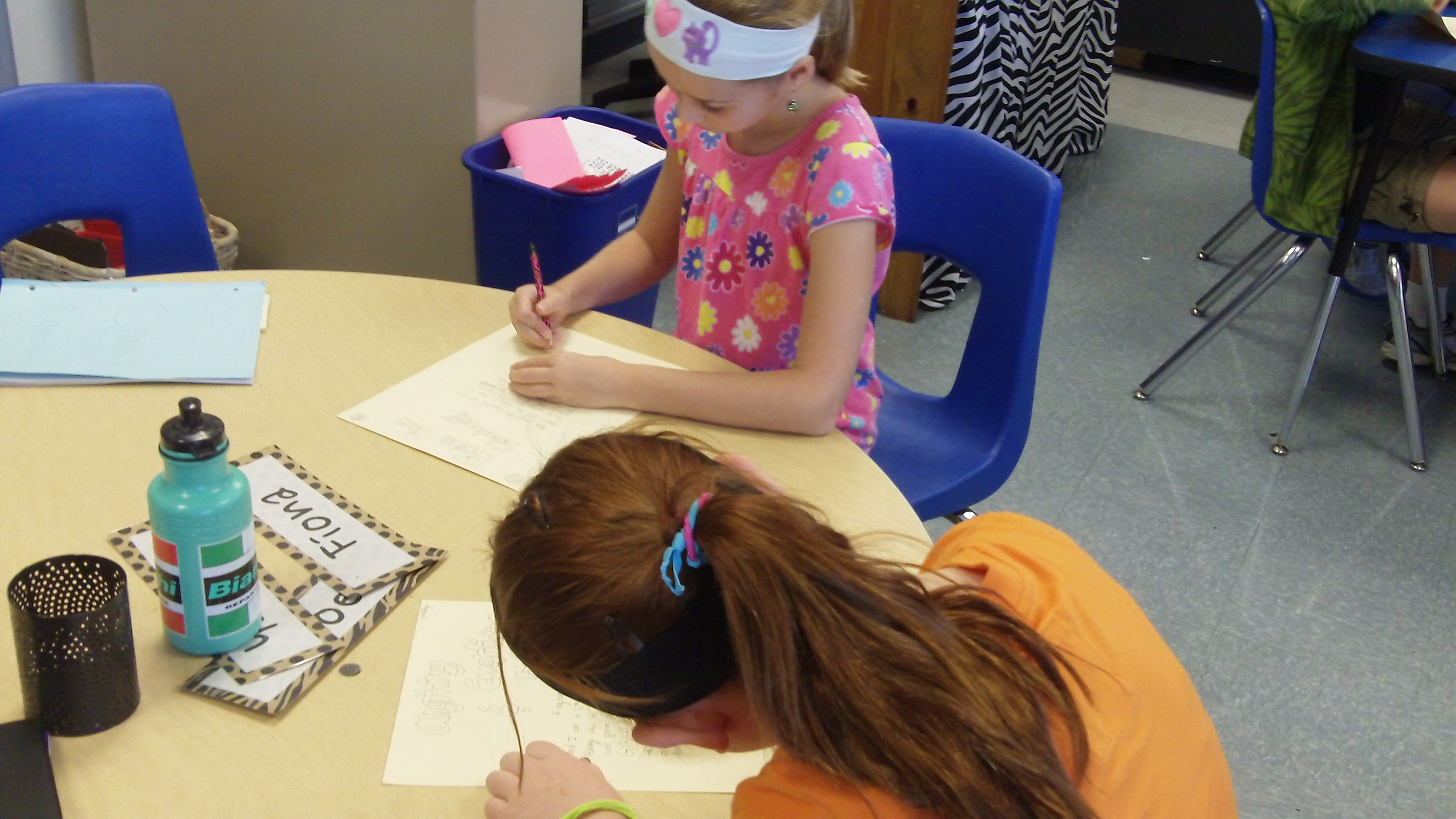
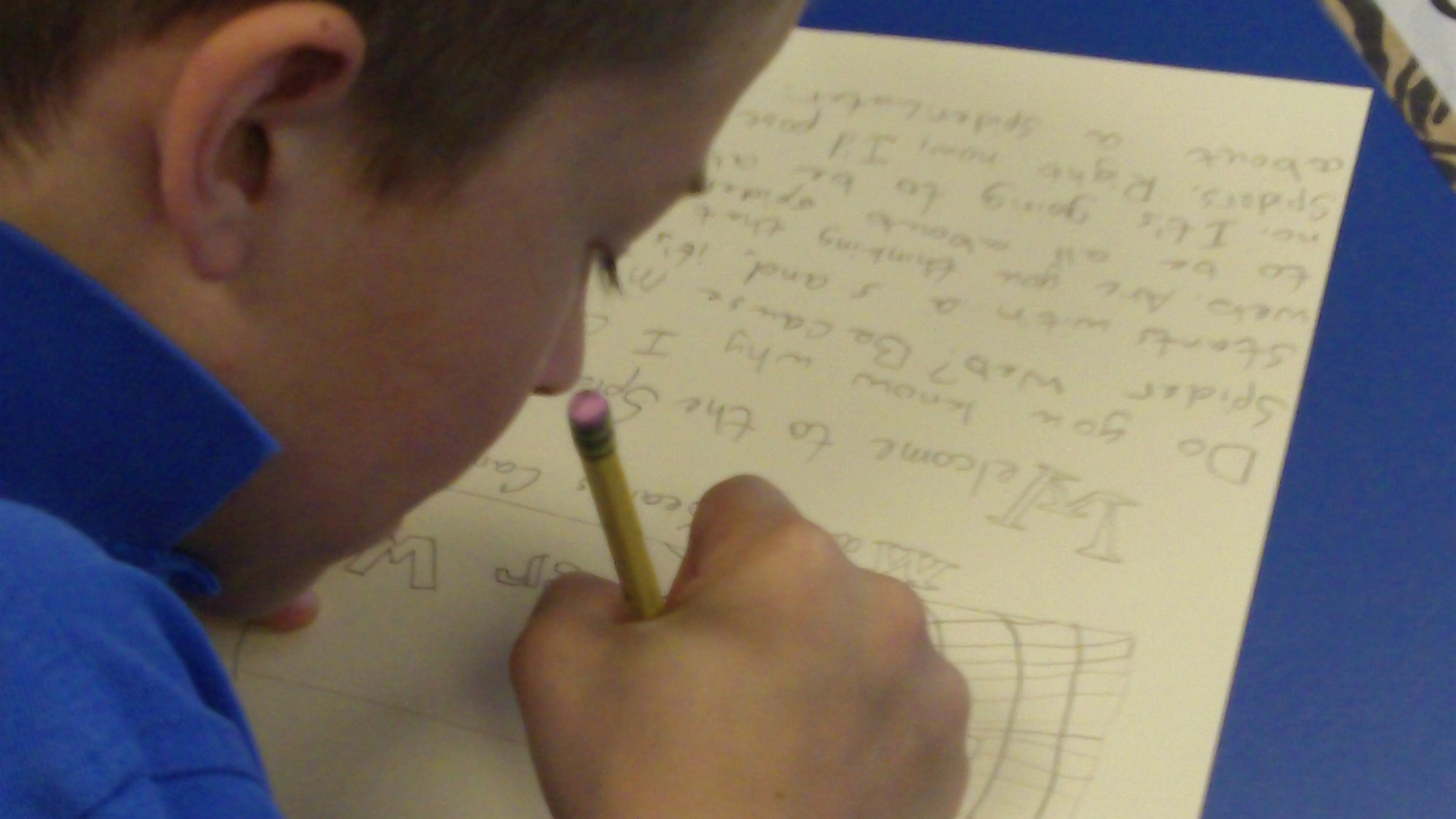
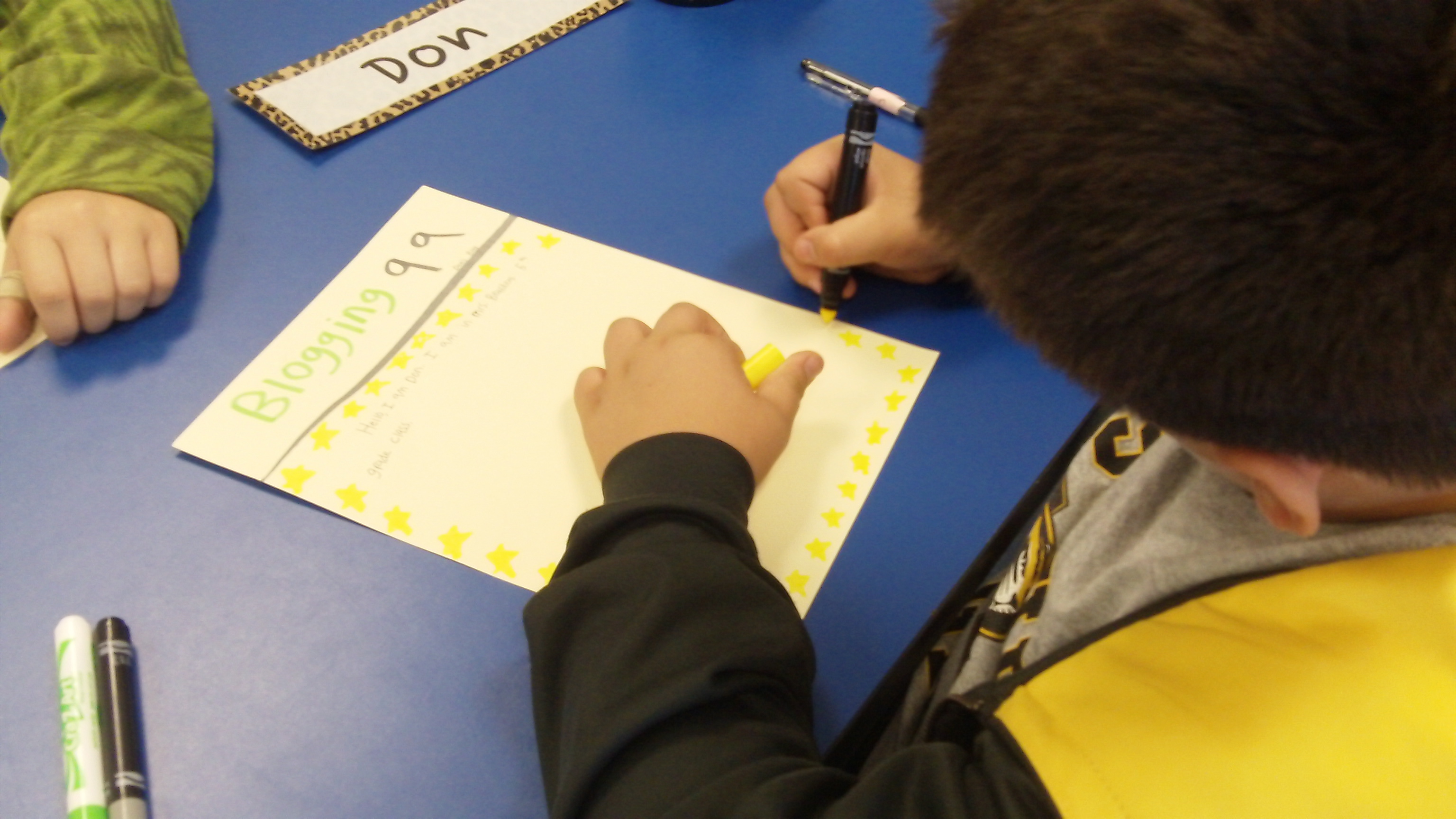
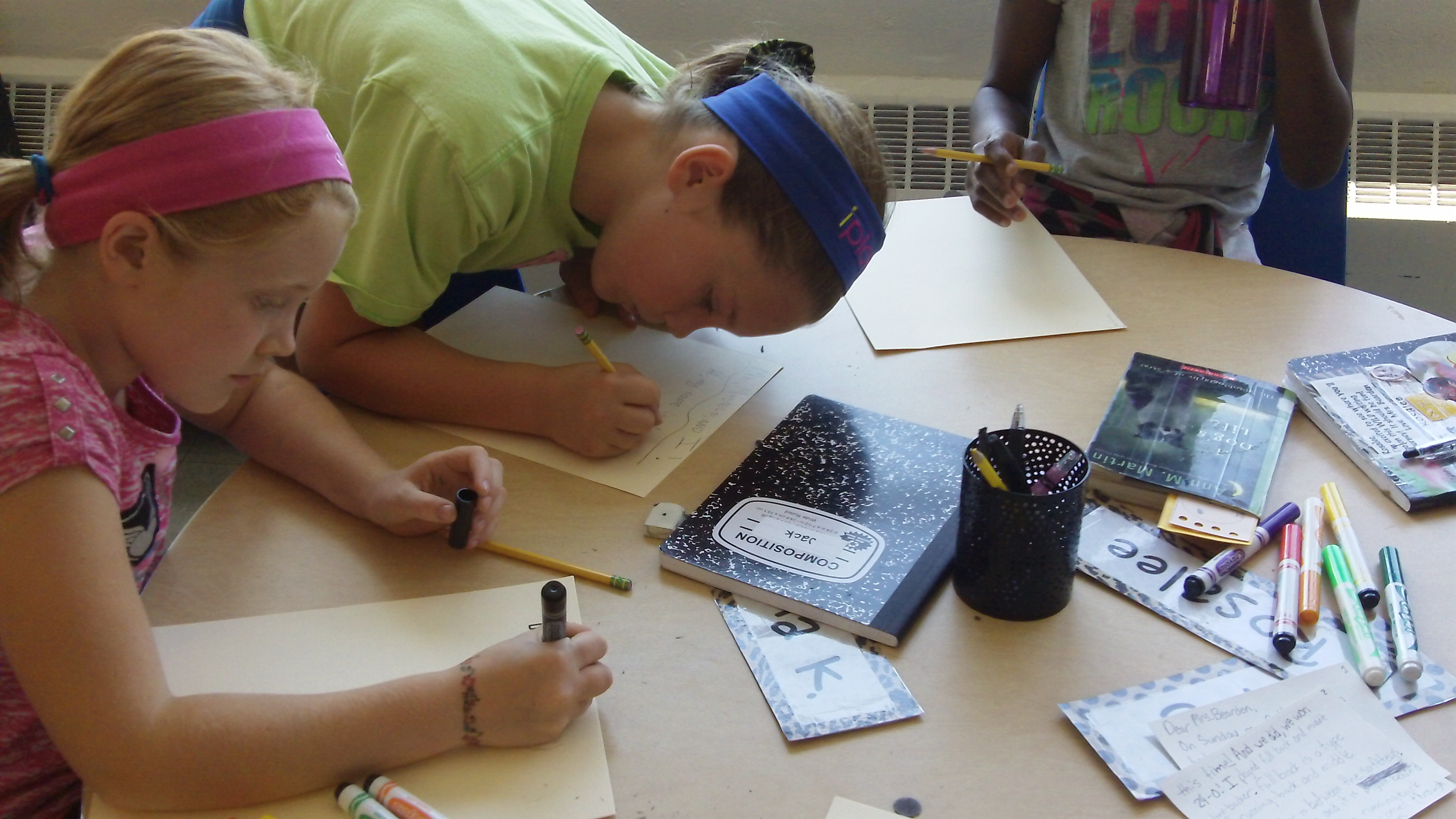
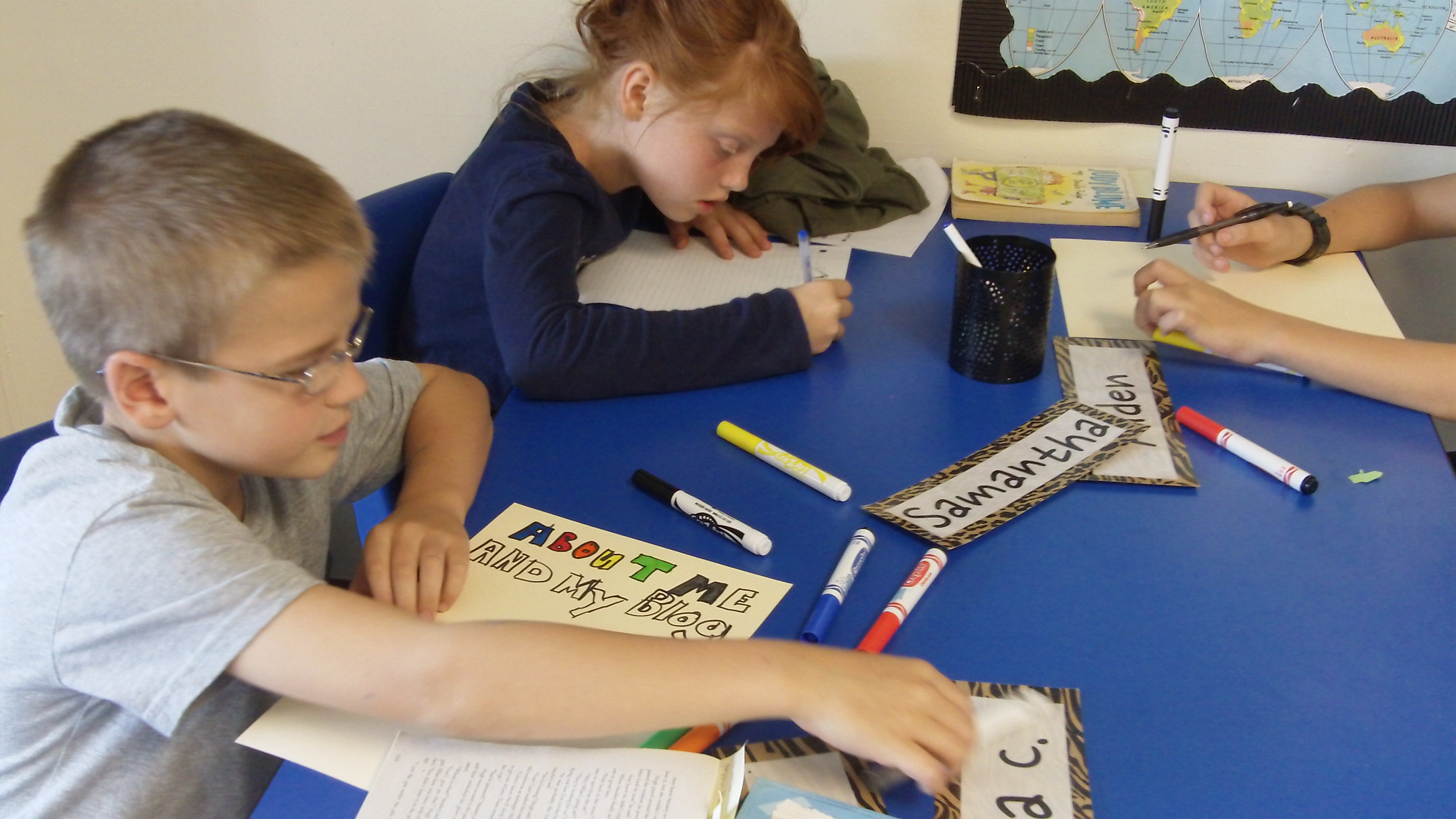
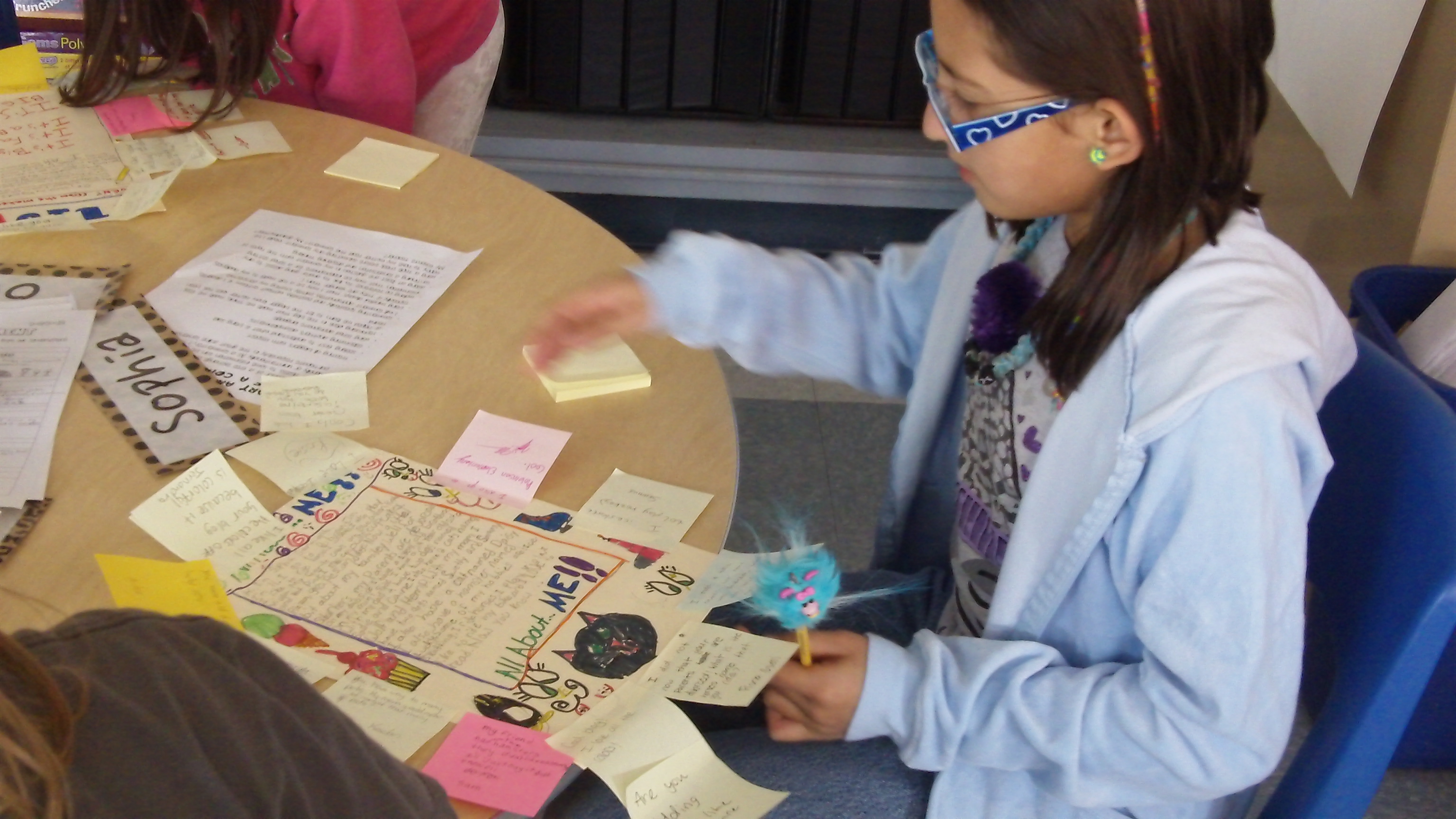
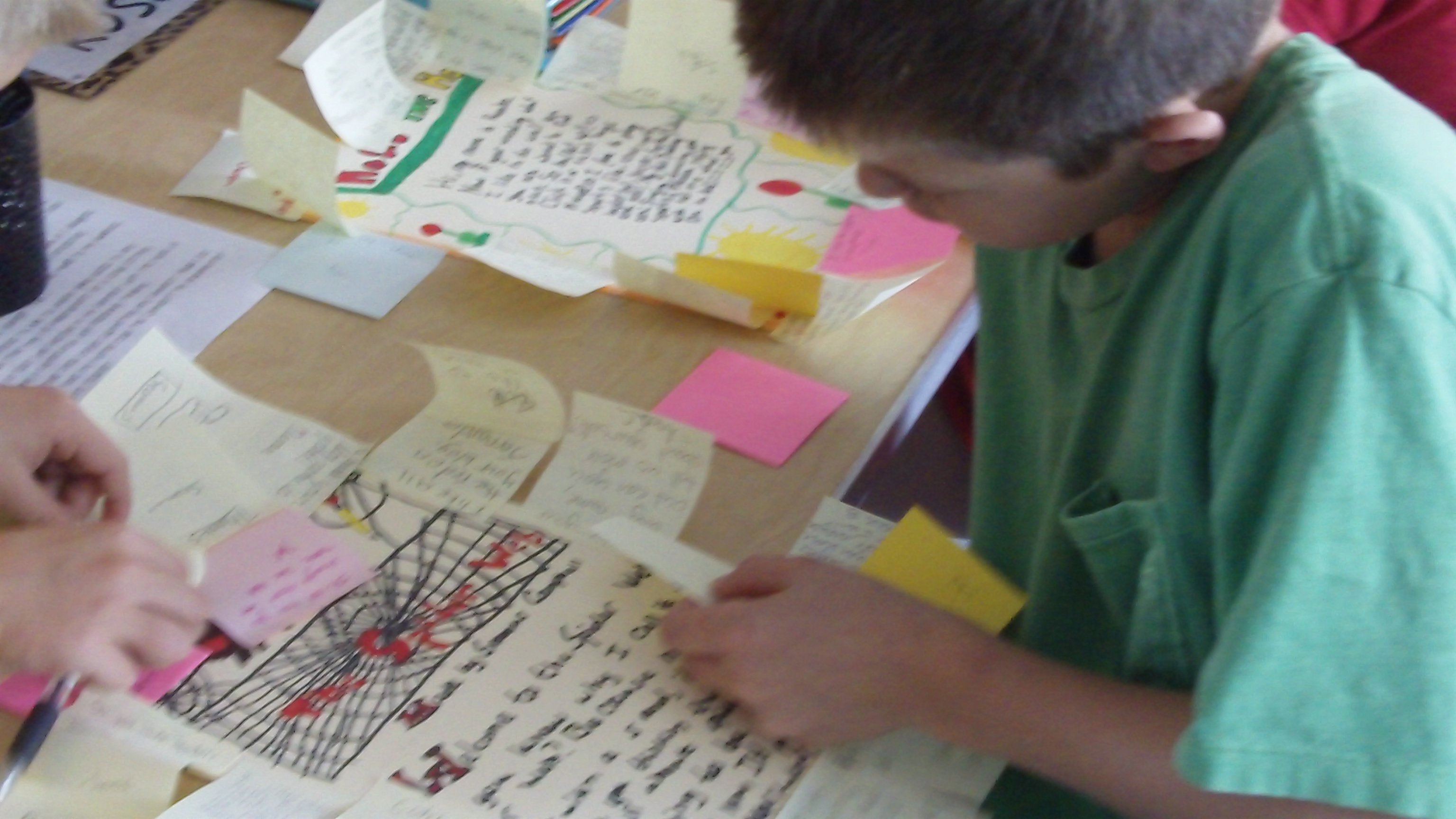
Here are some pictures of our first days on the blogging journey, which started with creating our paper blogs:

Some kiddos got inspiration by checking out last year’s blogs before they got started on their own.

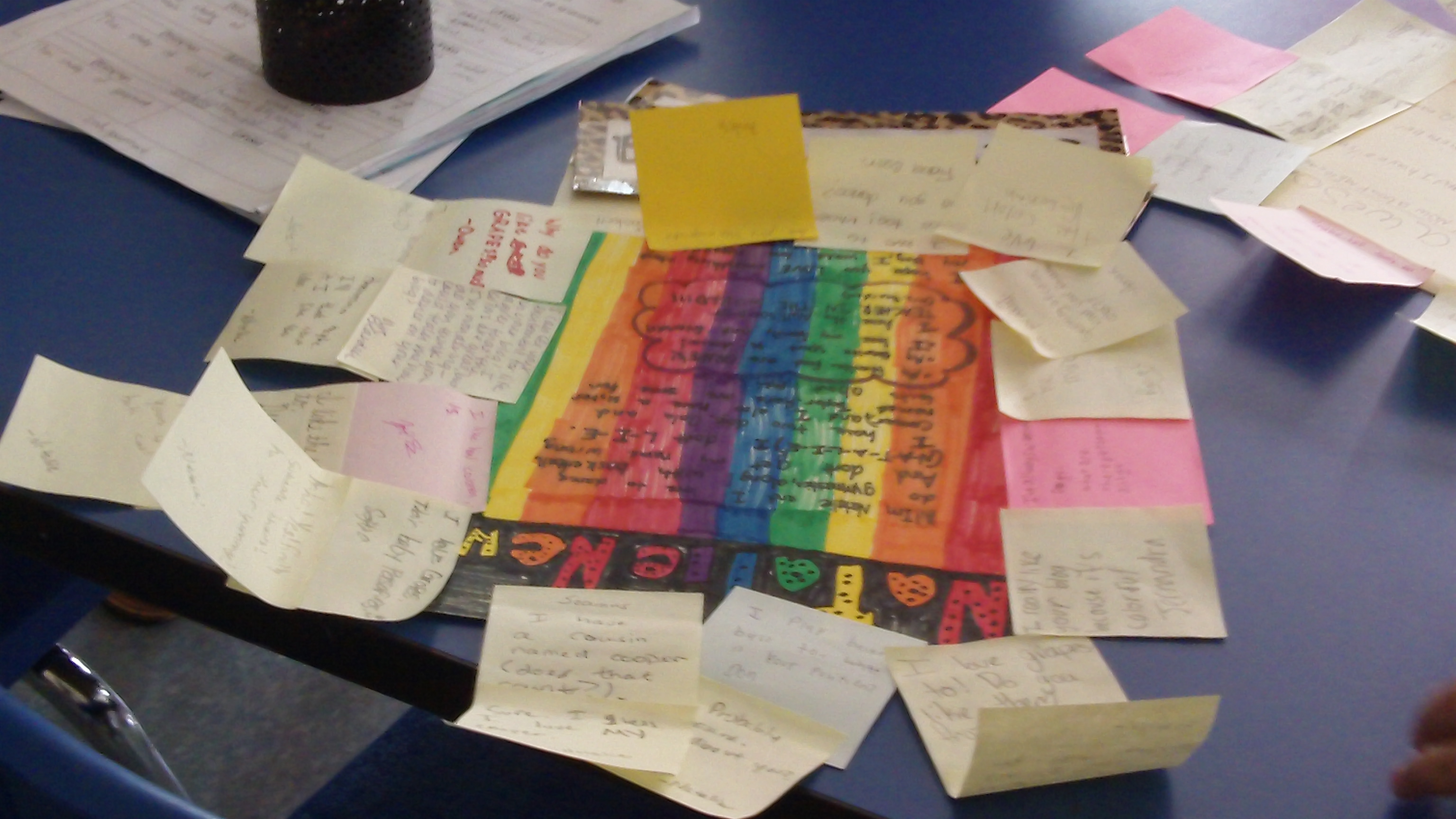
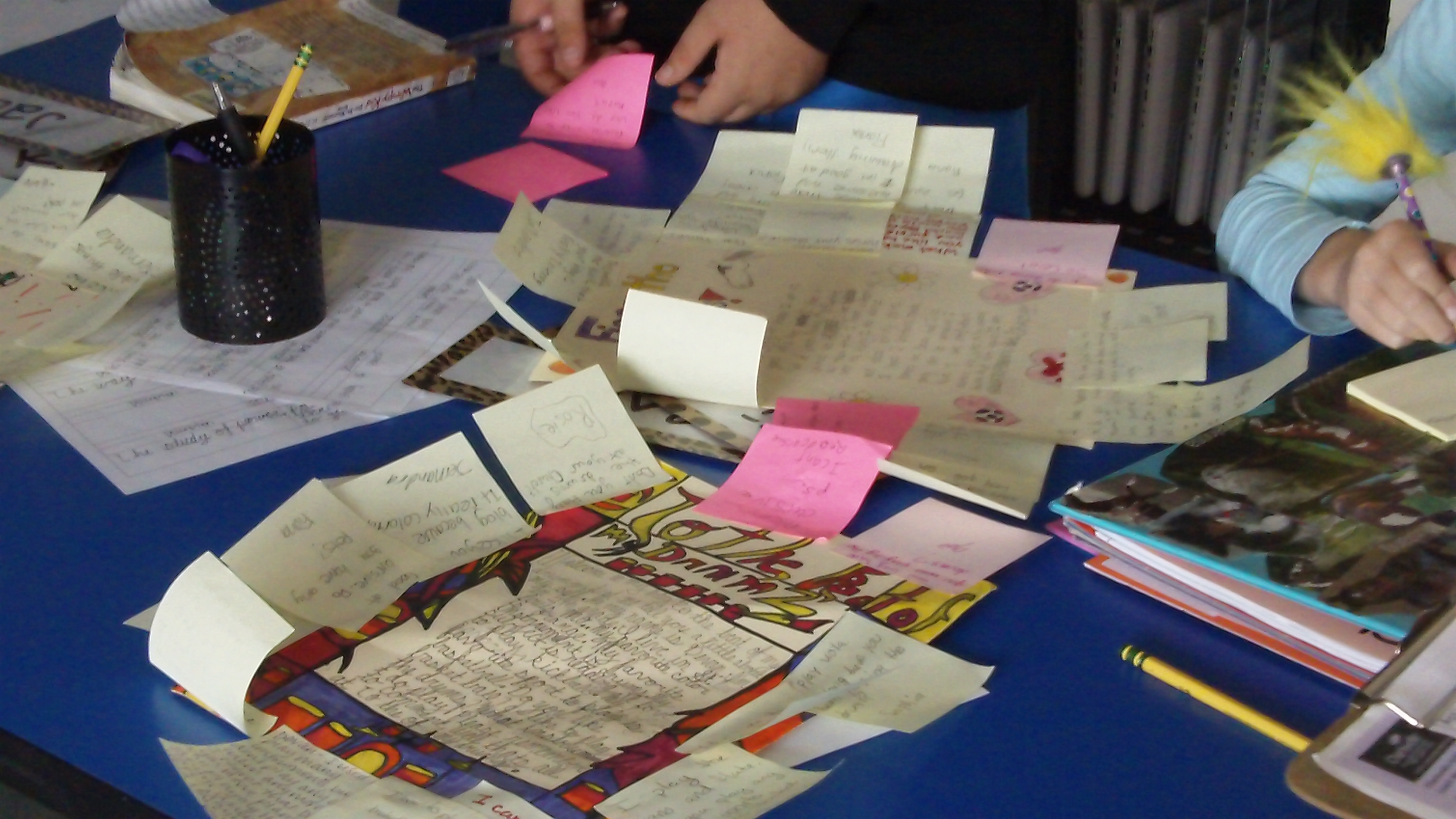
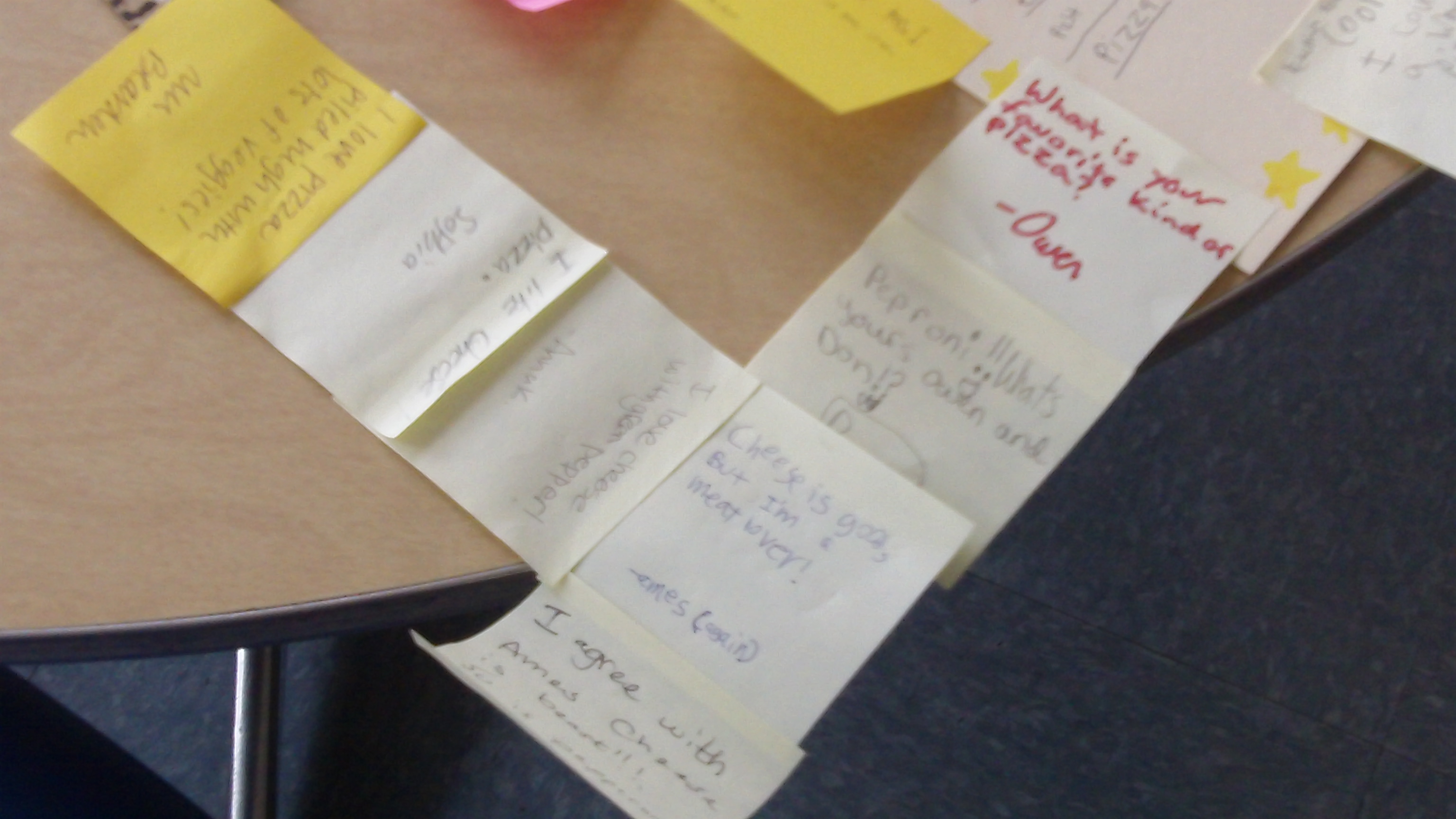
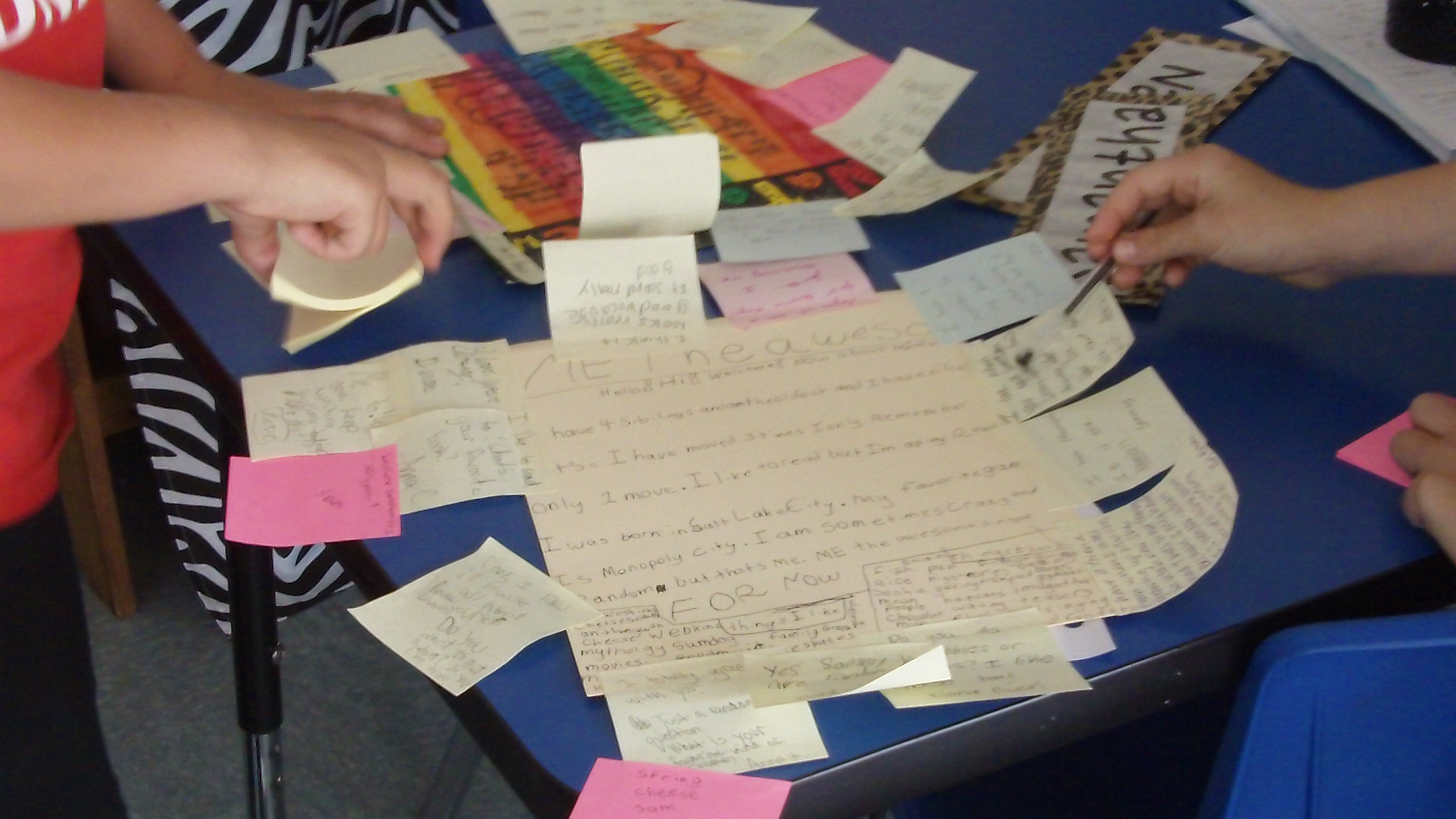
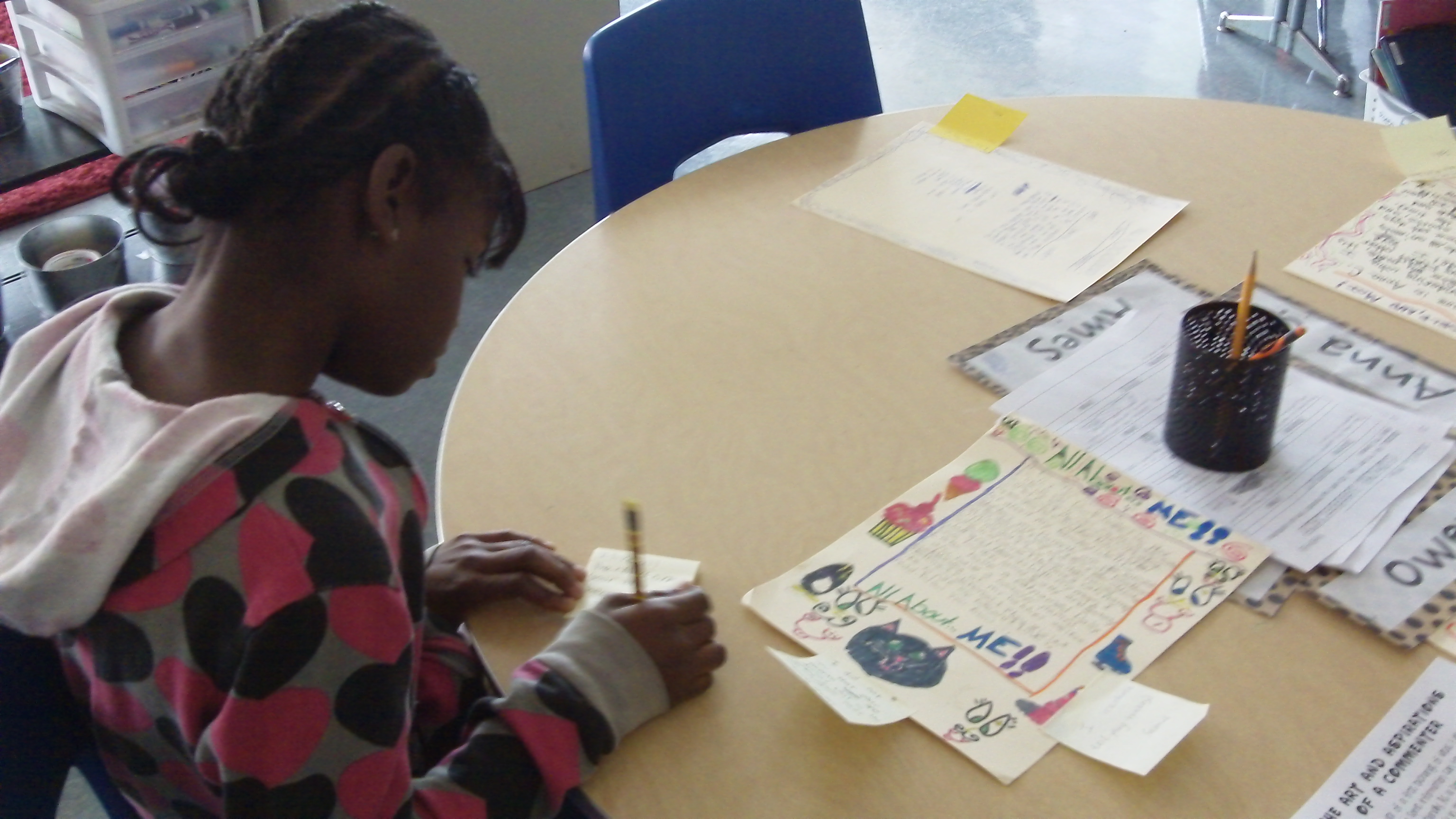
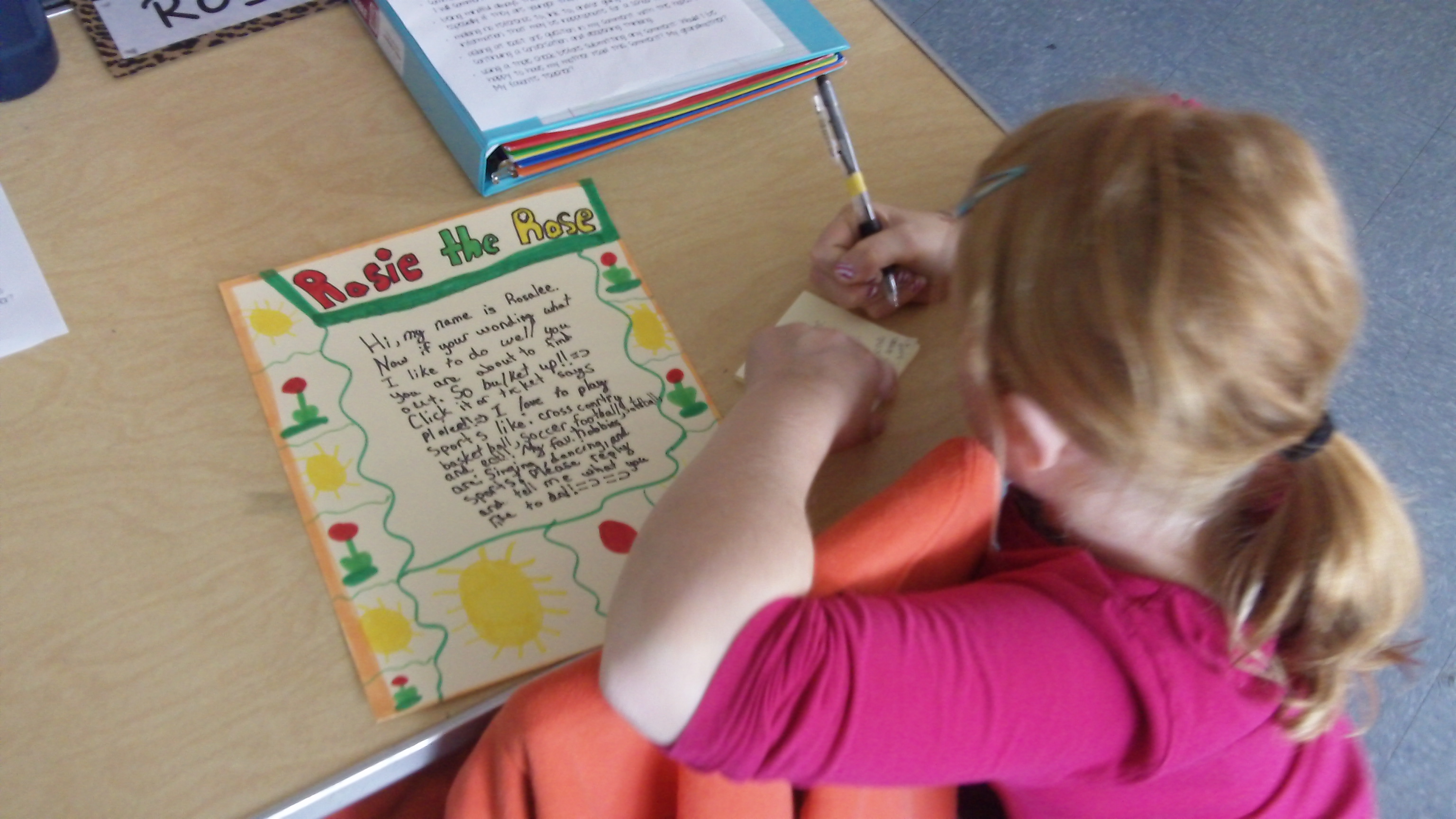
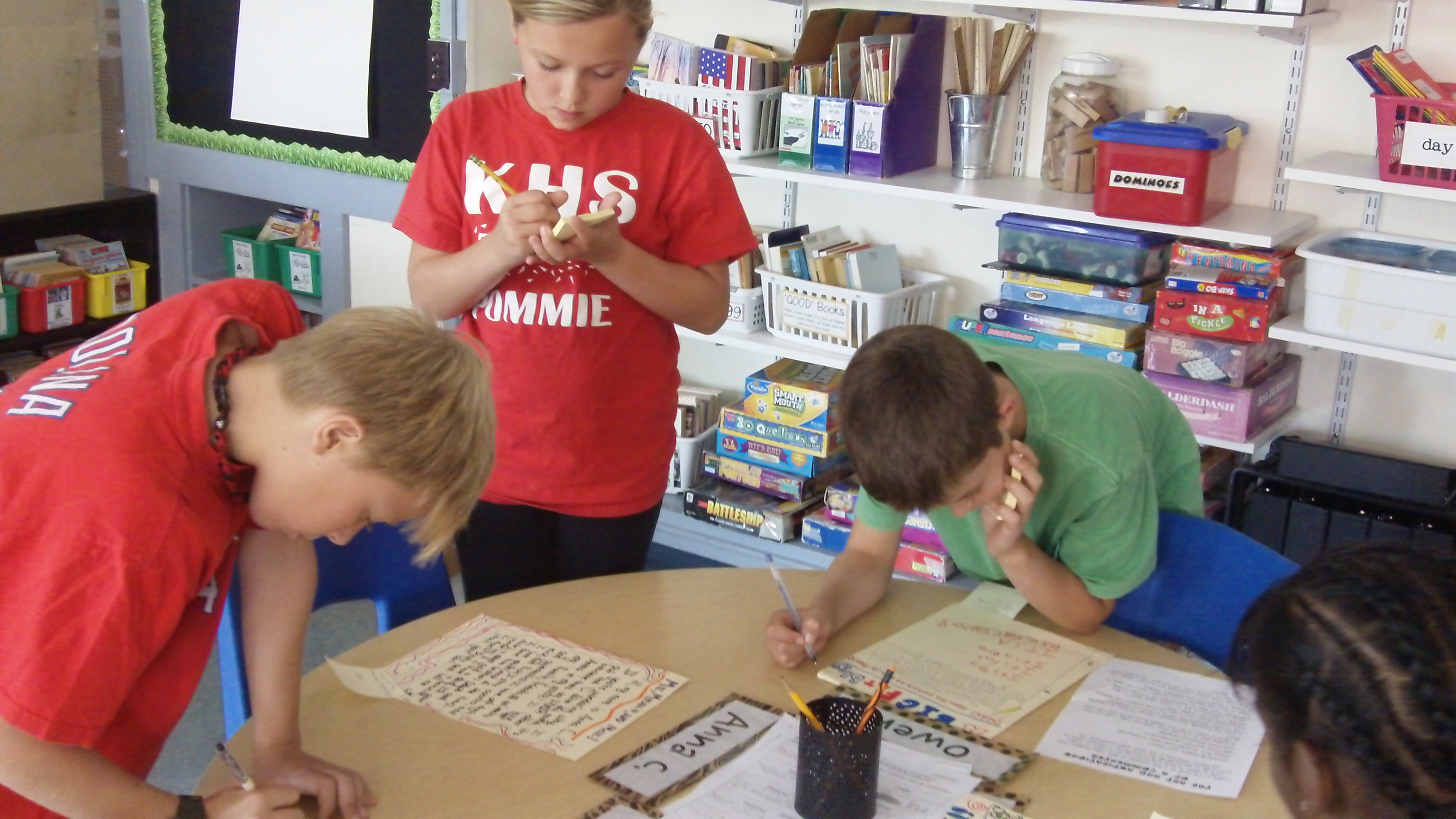
After we had our blogs created, we learned how to comment.  And got to work practicing on post-its before we went into the “real” world.  I have to say how proud I am with how great they did, remembering to be positive, tell something they liked about the blog post, as well as ending with a question to keep the conversation going.


So needless to say, they are totally rocking this blogging thing!  If you haven’t had a chance to check us out, visit our student blogs to see what it looks like live! We would LOVE it if you left us a comment to tell us what you think!

Holy Redheads, Batman!

Ok, so I have to apologize in advance for the indulgence factor of this post.  It fits into the “just-a-slice-of-5th-grade-life” category.

First let me share a picture that we took today:

See the meaning of the title, now?  We’ve talked all year so far about how many red-headed girls we have in our class.  I mean, really, if you have red hair and are in 5th grade you’re in Rm. 202.  Which I think is great!  Look at those beautiful girls. 🙂

And don’t be sad if you’re not in this picture, friends!  Don’t worry–I’ll try to find ways to include everyone in this way.  Maybe the next picture I post will be of someone make silly faces or doing something random in the classroom.

Oh, and I just have one more question:  can you tell which one of us is NOT a natural redhead?  Hee hee. 🙂

Sneak Peek!

I simply cannot wait to tell you about a project we are just about to finish.  It’s from reading and involves text features, iPads and videos!  There’s a lot of deep thinking here, and I know my kiddos are excited to share it with you!  I’m hoping that they will even be able to upload their videos to their own blogs in the next few days.  I hate that that’s all I can tell you, but believe me–there are exciting things coming soon!

Read Aloud = Another Learning Time

Read aloud is kind of a big deal in my room.  I wrote about it briefly here last year.  Hopefully here’s more to the story. 🙂

I think that reading is important.  Reading is making meaning, understanding both what the words say and what they mean.  Understanding text as you hear it is an important skill, in addition to being able to comprehend the text you read for yourself.   Time is also important, and the time we have during our school day is precious.  So being able to get extra bang for your learning buck is really great.

Read aloud–or “chapter book” time–is that time for me.  I use this time to expose my students to great literature, books that they may not otherwise have heard of, as well as to discuss topics that we need to delve into (bullies, families, respect, etc.) and introduce and then practice reading strategies that I want students to use in their independent reading.

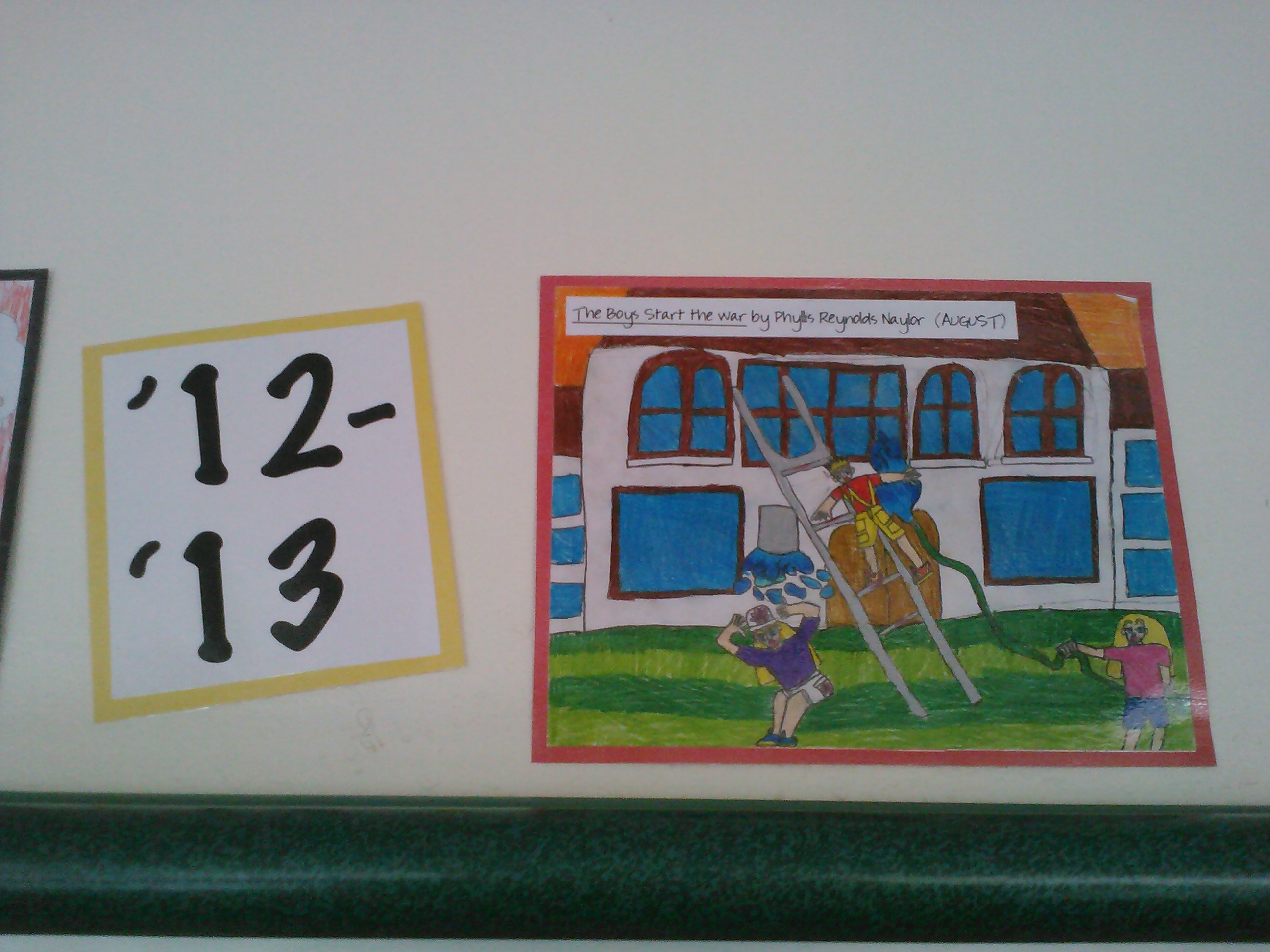
The first RA of the year is also a fun, easy one, that everyone can easily relate to and begin to make connections around.  This year (as well as last), I started with The Boys Start the War by Phyllis Reynolds Naylor.  It’s a great story about kids who play practical jokes on each other, who come from interesting families and who just do typical “kid stuff” as they go through their days.  This fun, joyful story gets my students in the mood for fun as readers, and helps me set the stage for harder work I’ll have them do as the year goes on.  During this first book is also when I introduce the partner and thinking structures we’ll use throughout our time in RA.  The first one is called “say something,” and is really just what it sounds like: I stop at certain points in the story–where there is probably something that the students can react or relate to–and have them “say something” to their partner.  In the beginning there are no rules for these conversations, but eventually we structure the conversations to include thinking that good readers do, like making connections, making predictions, inferring something, reacting to something funny, telling a part that they really liked, summarizing, etc.    At the end of the first chapter book, we begin our Read Aloud Timeline.  Well, actually we start the current year’s section of the timeline, which dates back a few years with past classes.  It hangs on the wall around our room like this:

Hopefully you can see it up there–up near the ceiling.  Images taken from each book we read during our year together, chosen by the class as a whole.

The beginning of this year’s section looked like this:

Devan’s image of a water fight that breaks out while the characters are supposed to be washing the windows was chosen to grace our wall as the first picture this year!

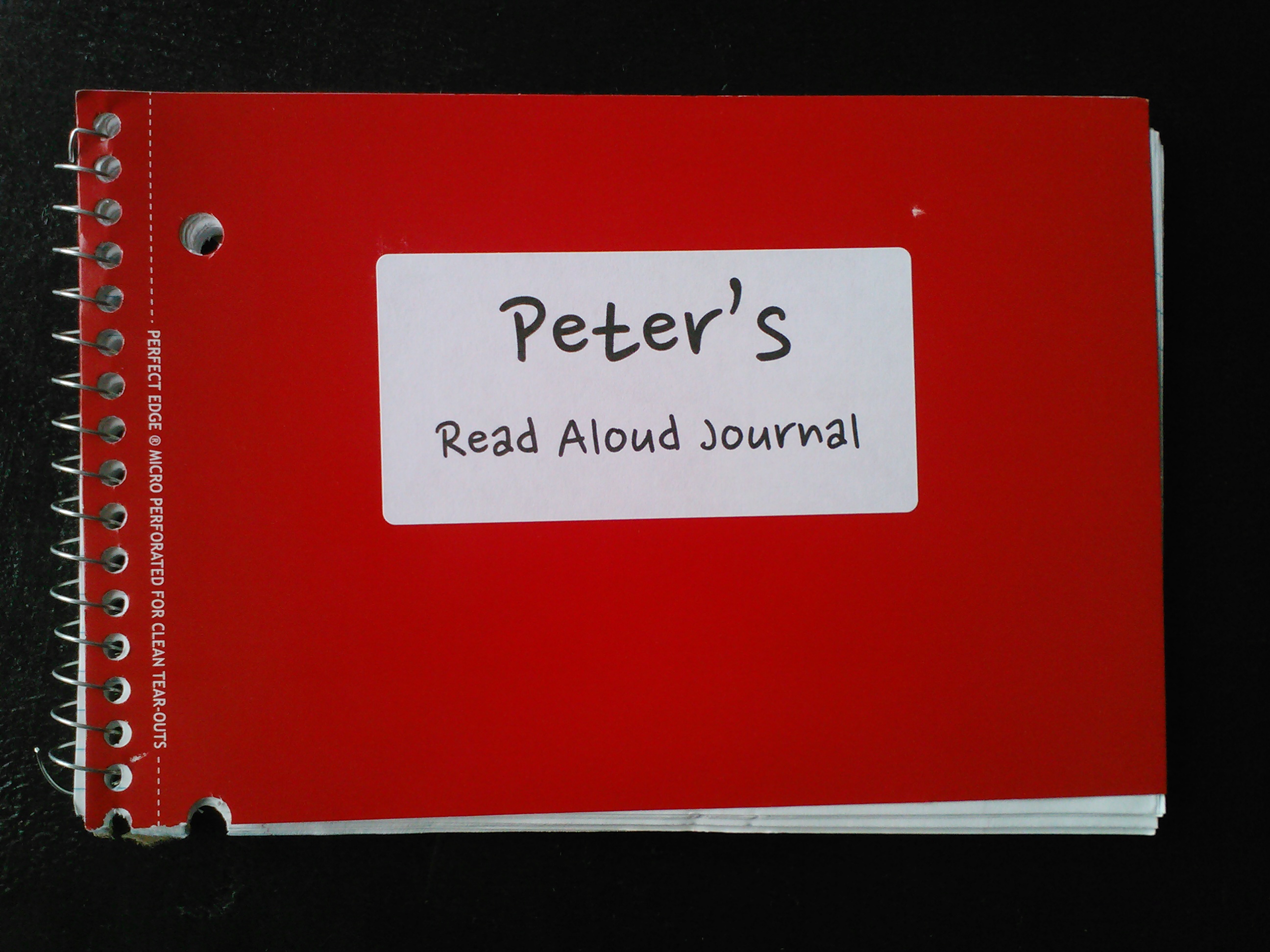
Our second book this year was Because of Mr. Terupt by Rob Buyea.  This one is nominated for the Mark Twain Award, which we choose for the state of Missouri.   I usually read at least one or two nominated books from the published list, so that my kiddos have more of chance of having read (or had read to them) the minimum of 4 that they need in order to vote.  This one was a little more intense than the first one, and is a story of a 5th grade class and their fabulous teacher.  Because of some decisions along the way (which many deem as bad ones), an accident occurs and they are without their beloved teacher for most of the year.  I’m happy to say that the ending is a happy one, but it’s not easy going along the way.  The topics in this story allow my students to continue to connect and relate, but also helps them to reach outside themselves and think about what they’d do in difficult situations; these decisions can be made, however, within the safety of a good story.  During this second book, I add to their RA toolbox, and turn “say something” into “write something.”  Again, it’s just like it sounds–at certain times we stop and write something about the story.  This also allows me to introduce the place where they will collect this thinking.  Everyone is given a Read Aloud Journal:

What?  It looks like our cubs?  You betcha!  Those half-sized notebooks get a work out in our class.  I don’t remember who first gave me the idea of hacking a spiral notebook in half, but I love them!  You should try it!

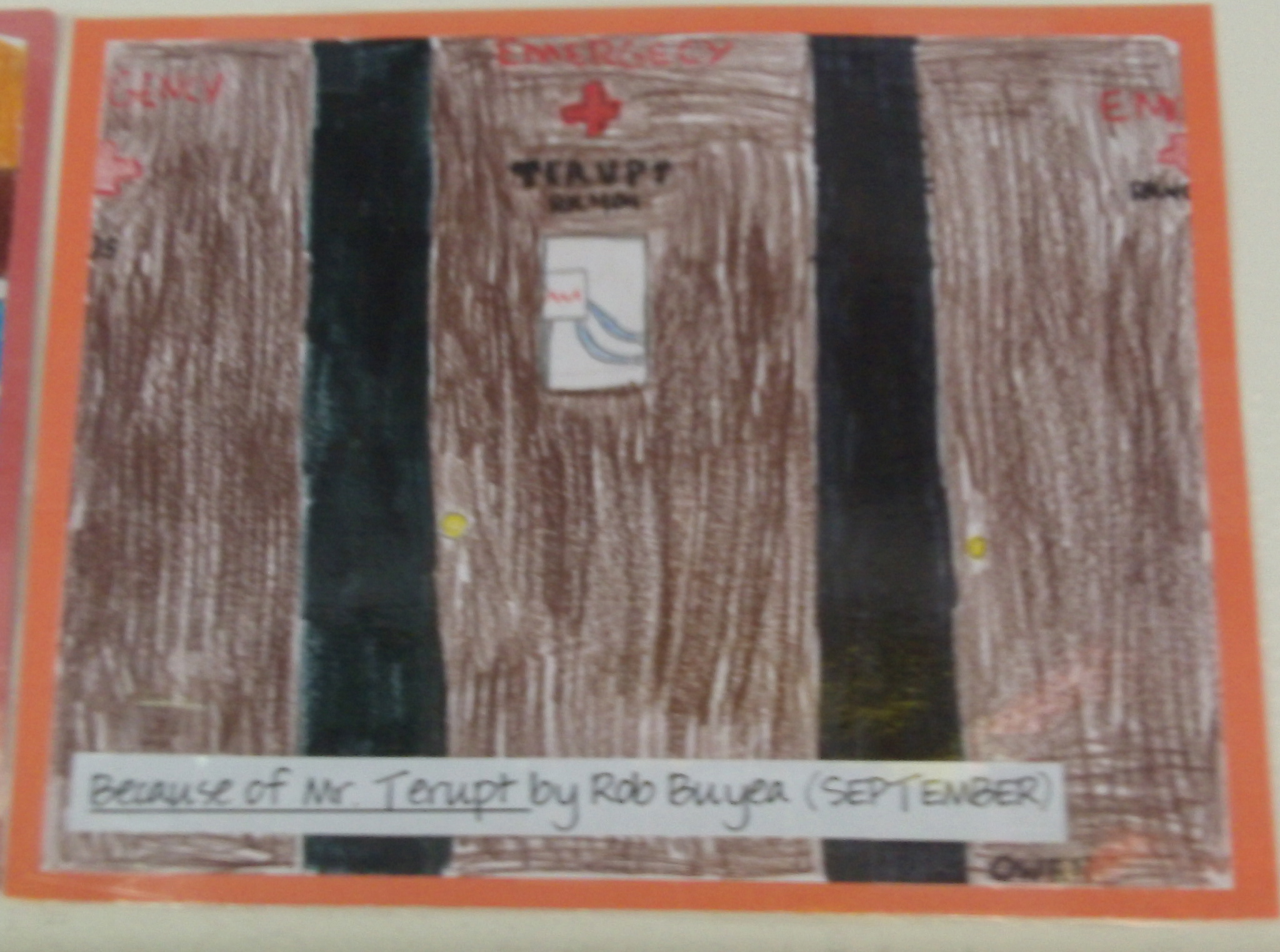
The image for BOMT on our wall was drawn by Owen.  It looks like this:

Sorry–I have a curse of blurry pictures I think–but hopefully you can see that it’s a picture of the hospital room where Mr. Terupt spends much of the story and plays a big role in the book.

In our RA Journals, we’ll collect our thoughts about books we share together this year.  Some of it they share with others in our class, and some entries I use for assessment, as well.  See? More bang for our learning buck. 🙂

Right now we’re in the middle of another FABULOUS book called Wonder by R. J. Palacio.  I found it this summer and was beyond amazed at how great it was.  A whole movement has been started around this story to help children learn to “choose kind” rather than bully or mistreat others.  This one has the same setting (5th grade in a school), the same structure as the other two (chapters and sections that alternate between different characters to show varying points-of-view) as well as themes of respect and valuing people for who they are rather than what they look like.    During this book we started another strategy for showing our thinking: a behavior-over-time graph.  With this organizer, students can show what they’ve discovered about how the characters are feeling throughout the story, using evidence from the text to support their thinking.  It’s a Systems Thinking strategy that you can learn more about here.   As with the other strategies we use in RA, this is one I hope students add to the independent reading arsenal, as well.

So, as you can see, Read Aloud is work time in our room.  It’s no rest-and-quiet-down-after-recess-time in Room 202.  Read aloud = another learning time in our world.  And we learn alot here!

What suggestions do you have for read alouds?  Have you read any of the books we’ve shared so far this year?  Leave us a comment and tell us what you’re thinking. 🙂


Class Pet Petitions

I don’t know how long you’ve been reading, or how far back you’ve gone through the post archives, so I’m wondering if I’ve told you about class meetings yet?  I wrote about the big idea behind them here, and the story was pretty great.  This class is doing an amazing job with class meetings, too.  Each week, though, when we sit down together to reflect upon the week and talk over things we want to improve upon, there aren’t really any problems to solve.  Oh, come on.  No way, right?  No really–we had to change the last question on our meeting protocol to “What do you want to talk about?” rather than “What do we need to improve upon?” because of how well these kids work together, learn together and just generally follow the rules and procedures of our school.  Don’t get me wrong, they’re not perfect.  We do work things out together.  This week was an example of two kinds of issues to discuss.

 
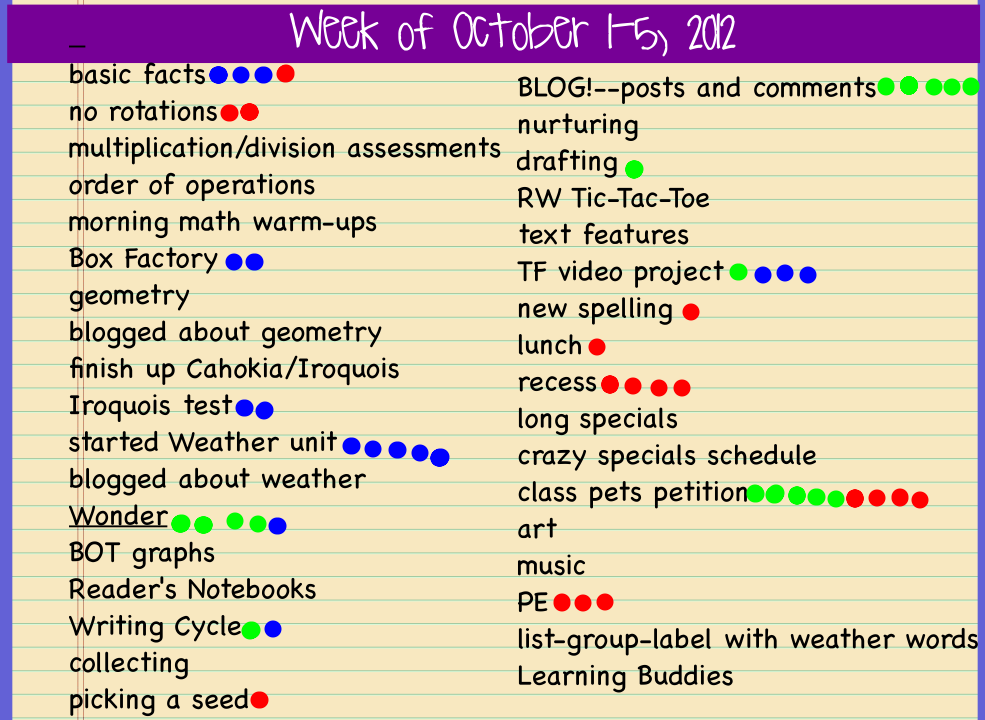
Like class pet petitions, for instance.  Here is what the flipchart from this week’s class meeting:

So, see all those dots after “class pets petition?”  It meant that several people wanted to talk about that topic.  But again, it wasn’t because it was a problem.  They just wanted to talk about it.  They needed to decide whether or not it was a good idea for Ames to make us an origami class pet, and if so, what type of animal we’d want to have.  We decided that Ames (as the origami master of our class) would narrow the list down to four of his best creatures, and we’d vote on the one we liked best out of those four.  Then we’ll chat about it again next week.

Ok, so there did end up being a concern they did want to try to work out, and it was related to recess.  A question was posed about what to do when you try to play with people and they tell you you can’t.  We had a great conversation about strategies to try, words we could use and how it felt when someone told you you couldn’t be a part of the group.  The idea of “popular” kids was brought up, and the concern was raised that there are some people in our grade who won’t play with certain kids because they’re friends with certain other people who are considered weird or different.  It hurt my heart as I heard them talk about what was going on outside on the playground, and we decided that it might mean we needed a grander conversation.  We agreed that we would do what we could to support each other outside–like paying attention to when people are alone and inviting them to play, or standing up for our classmates if we see or hear something mean being done to them–but we agreed that this might be a topic that would be better discussed with our whole grade level.  So I have “homework” to coordinate a 5th grade recess conversation in the next few days.  This was definitely a problem worth tackling, and one that we want to see solved.


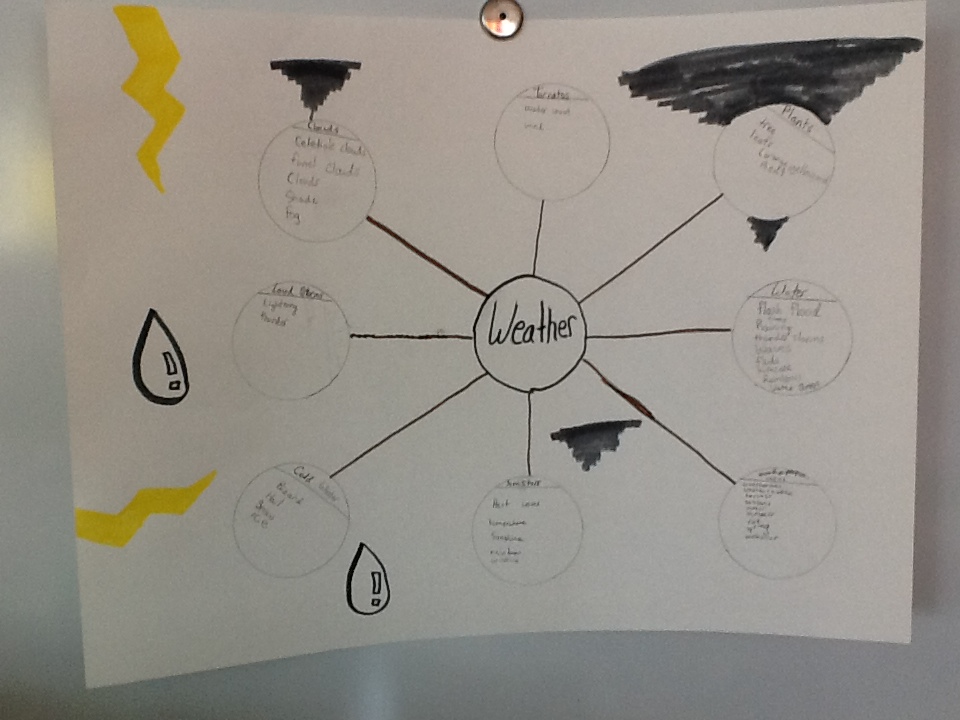
List-Group-Label: Science Work with Weather Words

I wrote about this topic last year here.  And like last year, I started my weather unit today with the same activity.  But that doesn’t mean that our experience was the same.  I have a different group of kiddos, with different knowledge and understanding, and I gave a different set of directions of how this protocol would work.  So yes, it’s similar, as many things are year-to-year, but it’s not nearly the same.
As with most every unit we begin, we start with vocabulary words that students will need to know.  Today we used the protocol List-Group-Label to do this introduction.  Here’s the big idea of how it works:

So, like I mentioned before, I had a couple of added directions this time around that helped further thinking.   When tribes got to the GROUPing part, rather than tell them how to make their poster look, we talked about how they needed to make a decision about the best kind of graphic organizer to use for their information.  I also took this opportunity to introduce the phrase “You gotta build the house before you decorate it.”  We talked about how you could “fancy” up your poster if you had some time at the end, but that the most important thing was to get your thinking down first, to show what you know about weather in an organized way.

We spent about 10 minutes on the list-group-label part, then took a short gallery walk to each tribe’s poster.  As they visited other posters, they were to notice what words others used, how they organized their thinking, and if there were any ideas they could “steal” to add to their own sheet once they returned.  After spending about 30 seconds at each poster, they had two minutes to tweak their own work before we were finished.

It was great to hear them work together in their groups to put words together, and think about how they could label each category.  Look at it in progress:


And then here is what we ended up with after our work time:

The Legendary 4

The Crazy Dragons (they even signed their work with their tribe name!)

The SBF

The J.A.A.Zicles

The Wild Spirits

Please leave us a comment and let us know what you think.  We’d love to continue to learn with you.   What other words would you suggest we put on our lists?


Mental Models and The Mississipians at Cahokia

Our first Social Studies unit of the year (well, the first “official” one after we set up our classroom community) was a doozey (is that how you spell that??).  Let me back up.  The theme for 5th grade SS is Three Worlds Meet, and so we study the Native Americans, Ancient West Africa and Medieval Europe, then look at how all of those cultures merged and became the Colonies.  The first unit, while being about Native Americans–specifically the Mississippians at Cahokia and the Iroquois–was also about bigger things related to mental models.

What are mental models, you ask?  Check out this example that we use to help explain them to kiddos (taken from the text we use during this unit):
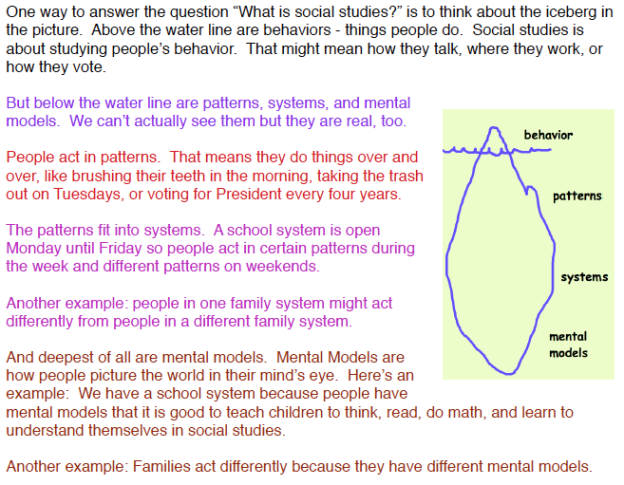
We begin by looking at the mental models that many kids have about Native Americans.  Many of these are things like that they live in tepees, they wear buffalo skin or feather headdresses, they are savage hunters and that they danced and chanted.  None of these mental models are wrong, so to speak, but as we go through the unit, we hope that by learning new things about specific groups of Native Americans, their mental models will be challenged.  And maybe changed because of their new knowledge.

We specifically study the Mississippians at Cahokia, or just Cahokians, because they are from an area very close to where we live in Missouri.  Cahokia, Illinois is just a hop, skip and a jump across the Mississippi River from the area that these kiddos know so well. For that reason, they are more easily able to make connections and inferences about how the Cahokians may have lived–and they realize that in many ways these people are more similar to them than they are different.

I mentioned before that there is a text we use, which is broken down into the five disciplines of Social Studies (history, economics, geography, culture and civics) and these disciplines provide the framework for all of the conversations and activities that we do during this unit.  First we learn what each of those are generally, then are able to zoom in on them more specifically to Cahokia (and later to the Iroquois, but I’ll tell about that in a later post).

Before we jump into our text, however, we have a lesson about figuring out the difference between important and interesting when you’re reading, so you know which parts to pay most attention to as a reader and learner.  We discovered that it all looks important, until we look more closely at the purpose of why we’re reading.  For example, if we are reading to find the answer to a certain question, then the only important things are the ones related to answering that question–all the rest is just interesting for now.  If we are reading just to find out about economics, then only the ideas related to economics (not history, culture or any of the other groups) are important for now.  As we also discovered, what’s important changes based on your goal.

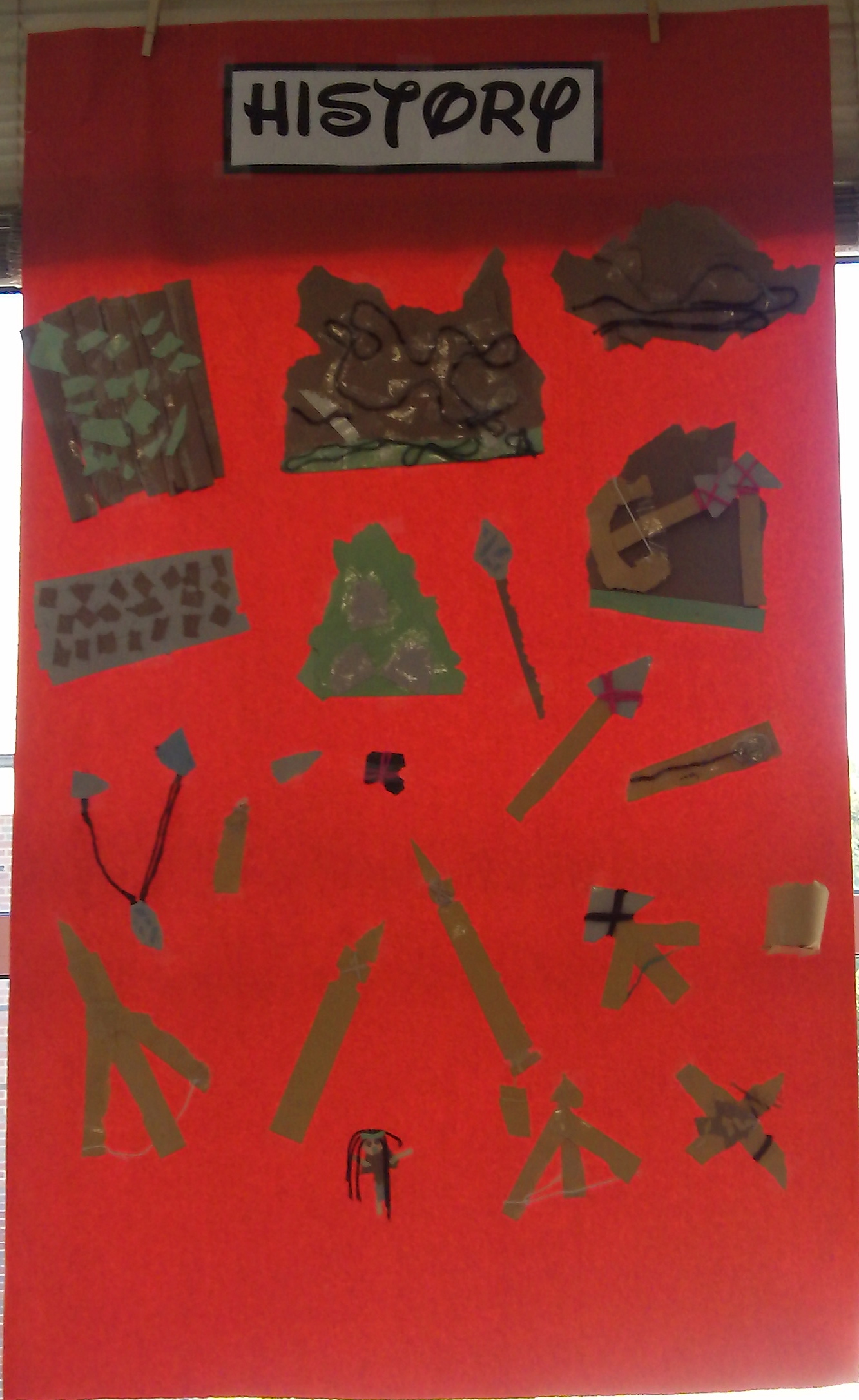
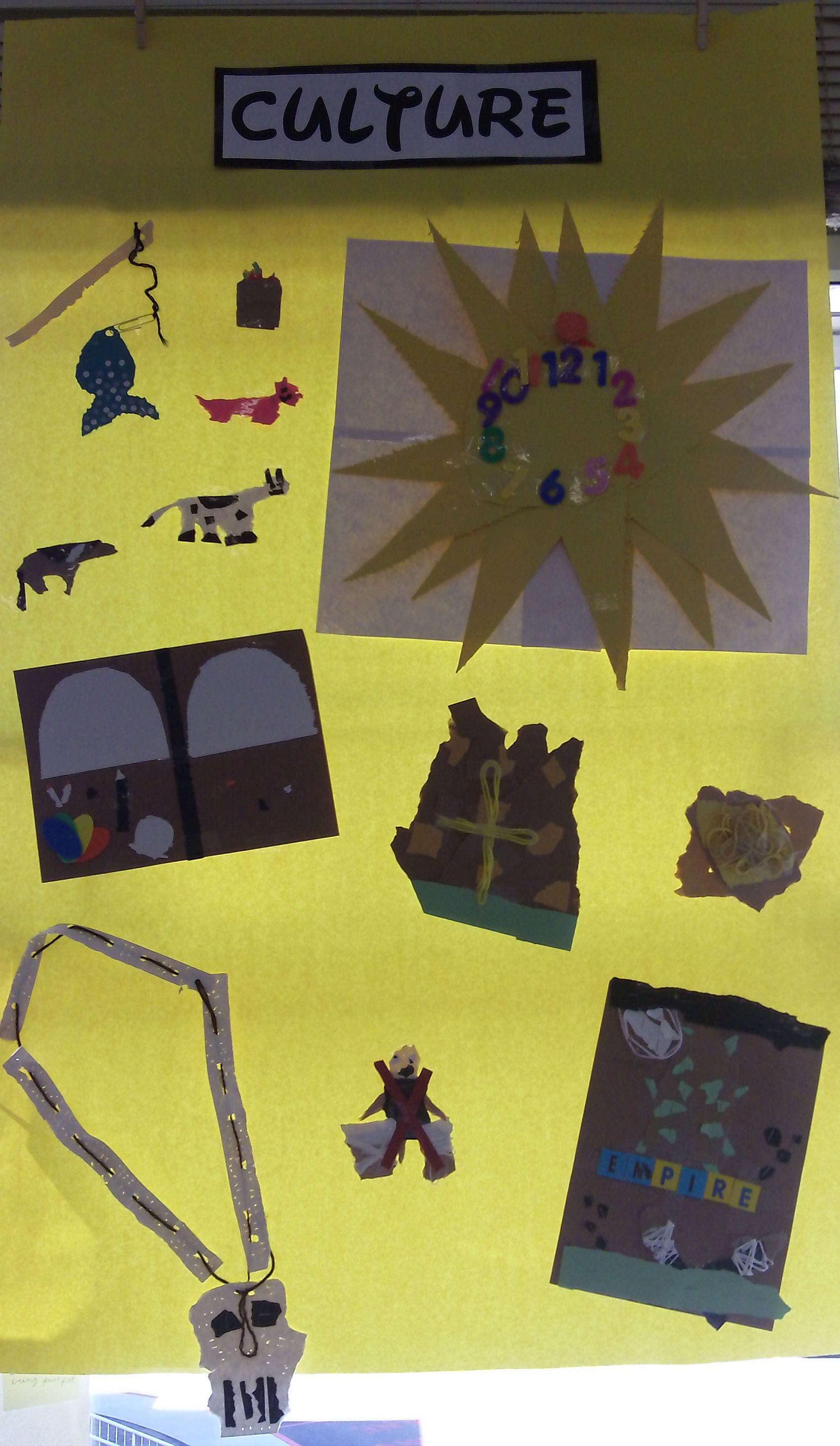
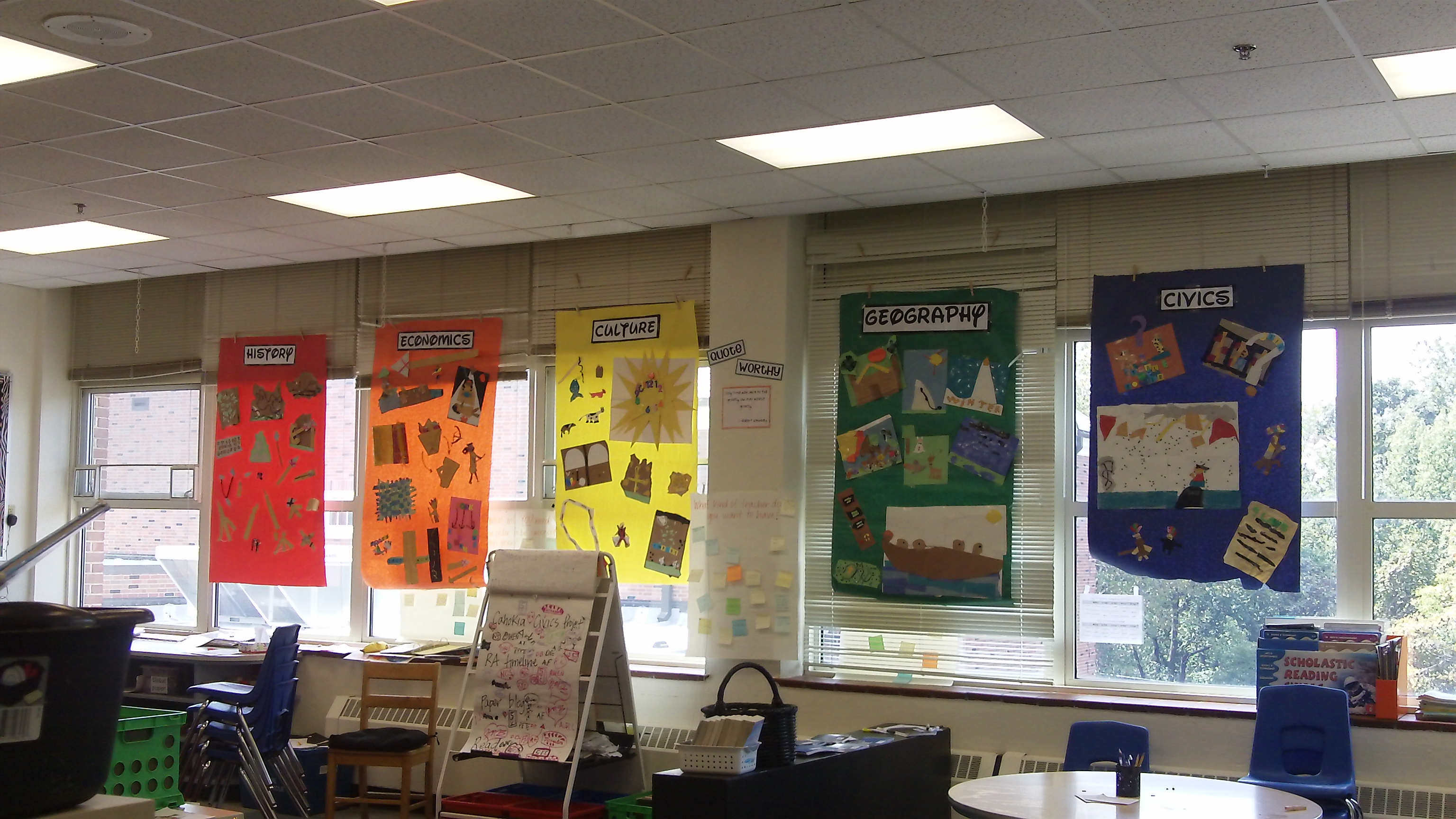
Ok, now that we know how to pick out the parts we need to remember, we got busy into the real work of this unit.  In short, for every discipline, we read a section of the text and underlined what was important, then made a class list of those key ideas.  After that, we created big window-sized posters with representations we made to show each of the big ideas.

Nice, right?  An art project to help us remember what we read about.  Fun, too.  Yes, but it’s not that simple.  There are very specific rules about how you are to go about creating your representation:

1. You may use paper and anything that holds paper together (i.e. paper clips, tape, glue, glue sticks, etc.).

2. You may not use scissors.

3. You may not use any writing utensils.

What was once just a simple show-me-what-you-remember-from-what-you-just-read type activity is now a challenge to think outside the box, to be creative, to solve problems.  So I was all the more impressed with what they came up with, the quality of their images, and the creative ways that they figured out to get their job done–like using the edge of a ruler or a paper clip to score paper so you can tear it neatly in the shape you want it, rather than cutting.  Or using the punched-out pieces from a hole punch together to create a picture.  Amazing, really.

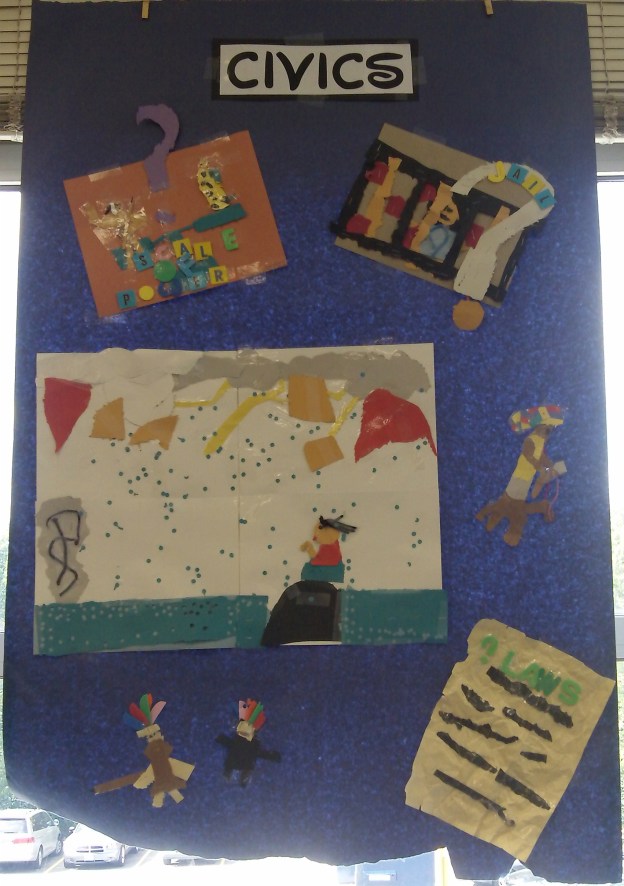
Here’s what our posters look like once we were finished–which really took us about 6-7 school days to accomplish:
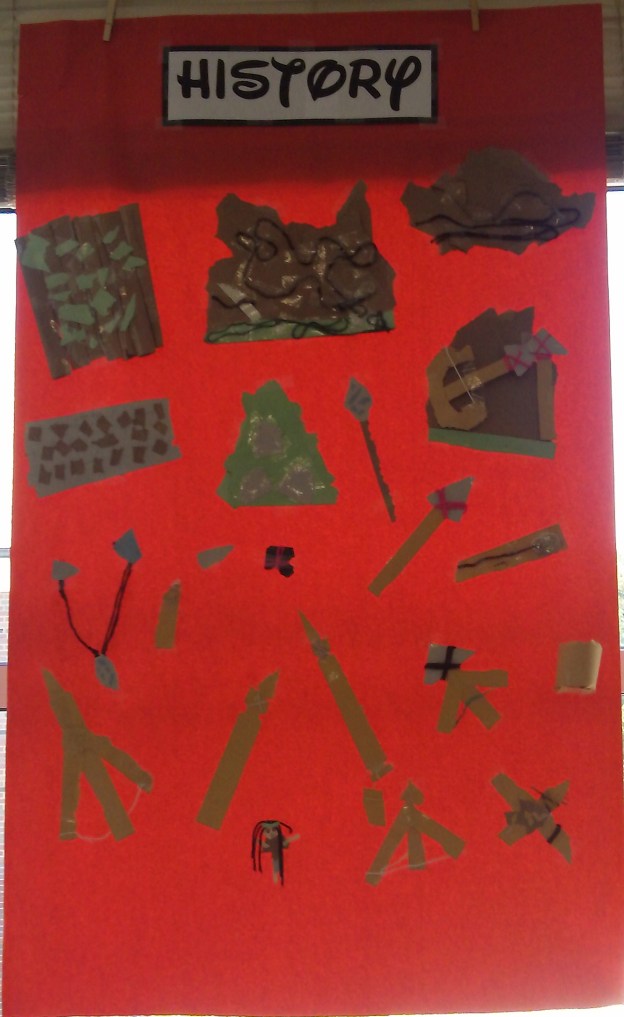


Besides the fact that these hold a lot of information and show what we’ve learned about what’s important about the Cahokians, I love how they look hanging on the windows:

As we were working on these projects, it was so great to see the group/partner work that was taking place, the problems that were being solved as they created their pieces, and the smiles on their faces as they worked.  I was so glad at how many kiddos voiced to me how much they loved doing this because it was “so different from anything I’ve ever done before.”  They told me how the rule of not using scissors and pencils “made their brains think in a new way and challenged me in a new way.”  Gotta love it when kiddos say those things out loud!  It’s exactly what I had hoped was happening.

On a side note, these posters hung in our room throughout the whole Cahokia unit, and we came back to them time after time, as we made connections between different aspects of Cahokia, our own lives, and then as we moved into learning about the Iroquois.  I’m actually going to be sad later this week when they have to come down to make room for other things. 😦

 

Math Warm-Ups Sept. 17-21, 2012

I think I said it in my last post, but golly–being sick is hard!  Someone around my house has had a cough for at least a month now, and I’ve had one for at least 2 weeks!  Hence my absence from blog-world for that long.  All I could stand to do was fall into my bed and sleep when I got home.  Luckily, though, I’ve been to the doctor and gotten some medicine and am on the mend.  So here I am. 🙂

The horrible thing about not writing for two weeks is that I have a million and one things to post about that have happened, but I’m not really sure how and when I will get them all done–because new things keep getting added everyday!  So I guess I’ll start here and see where it takes me.

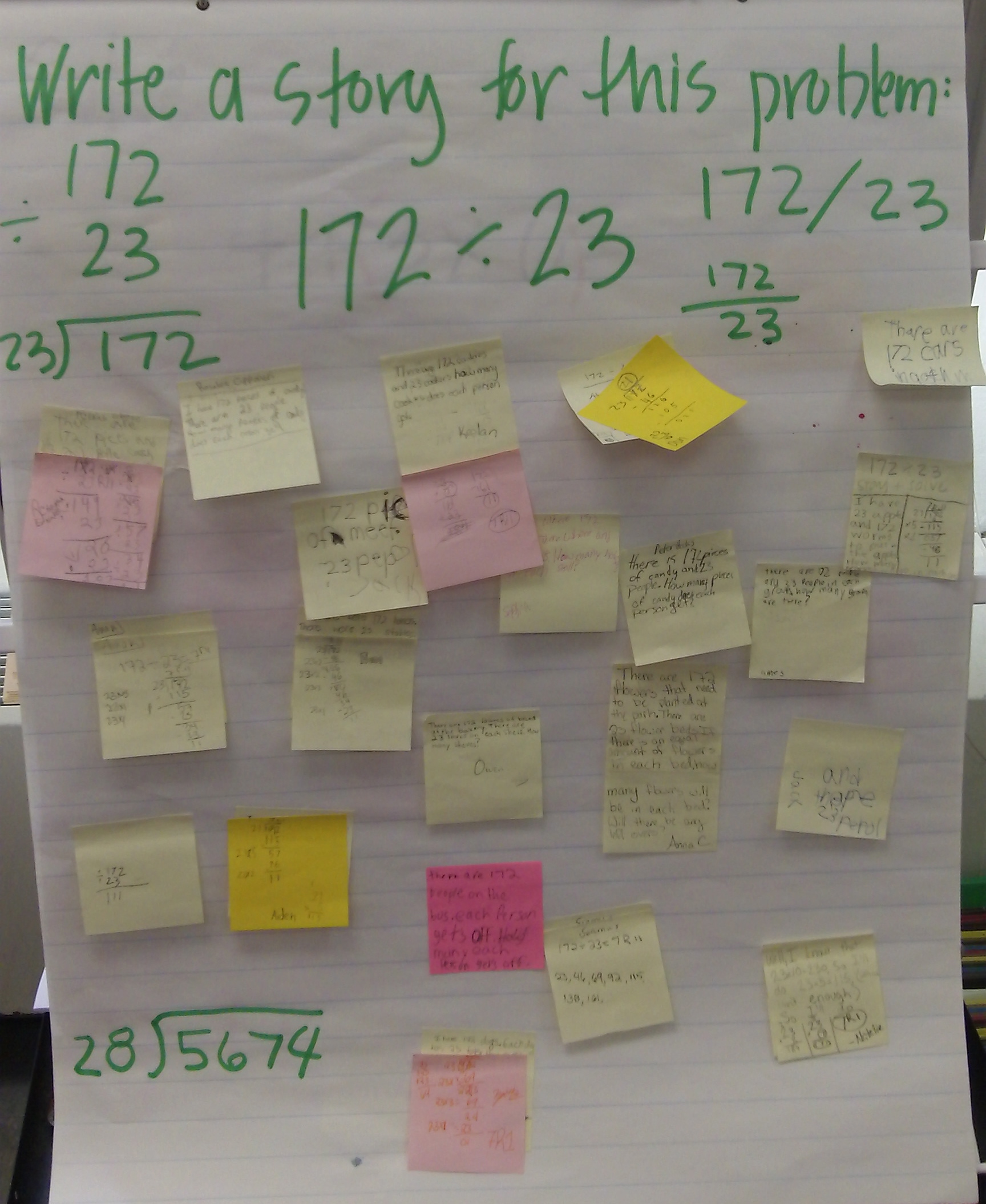
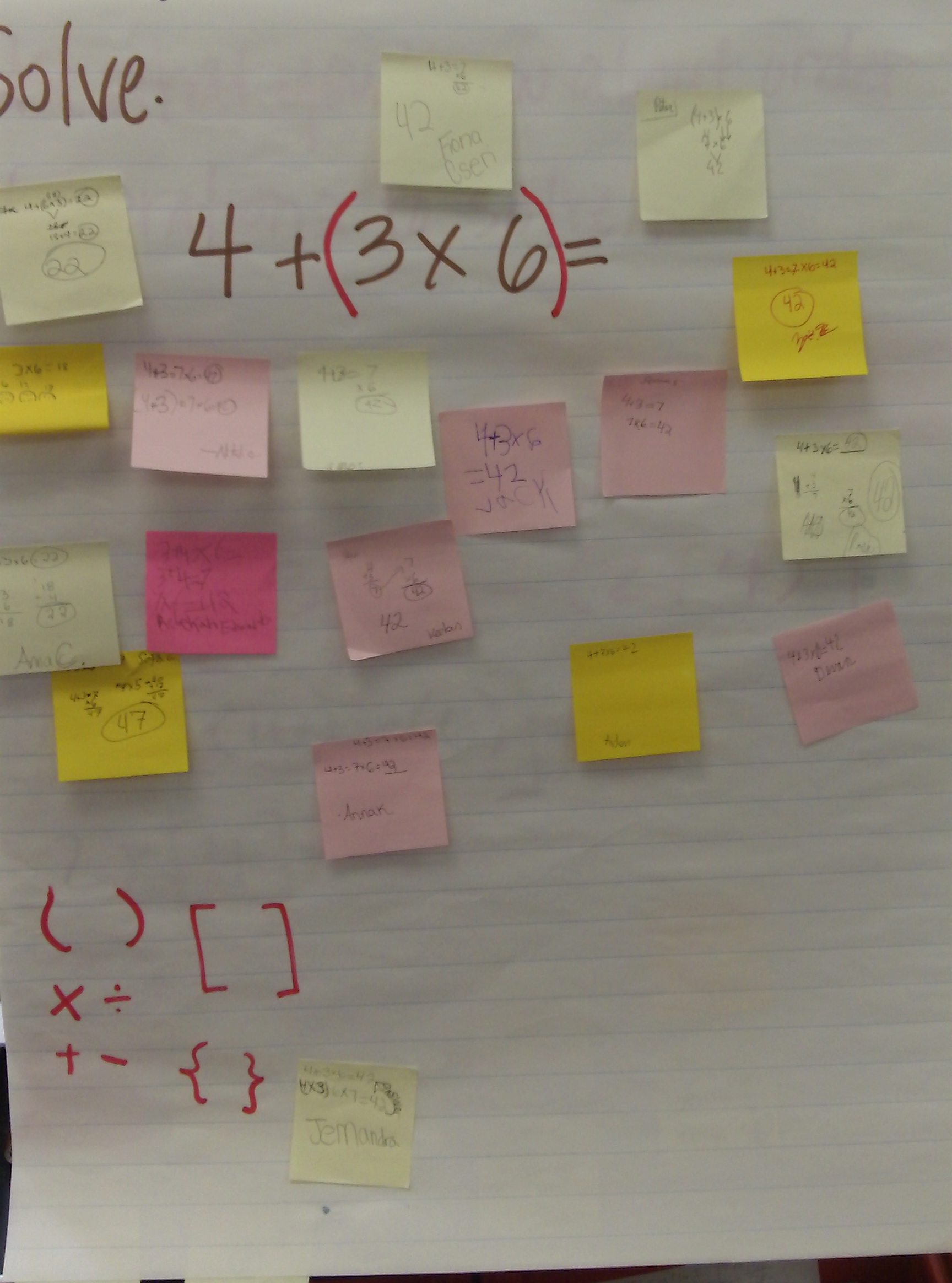
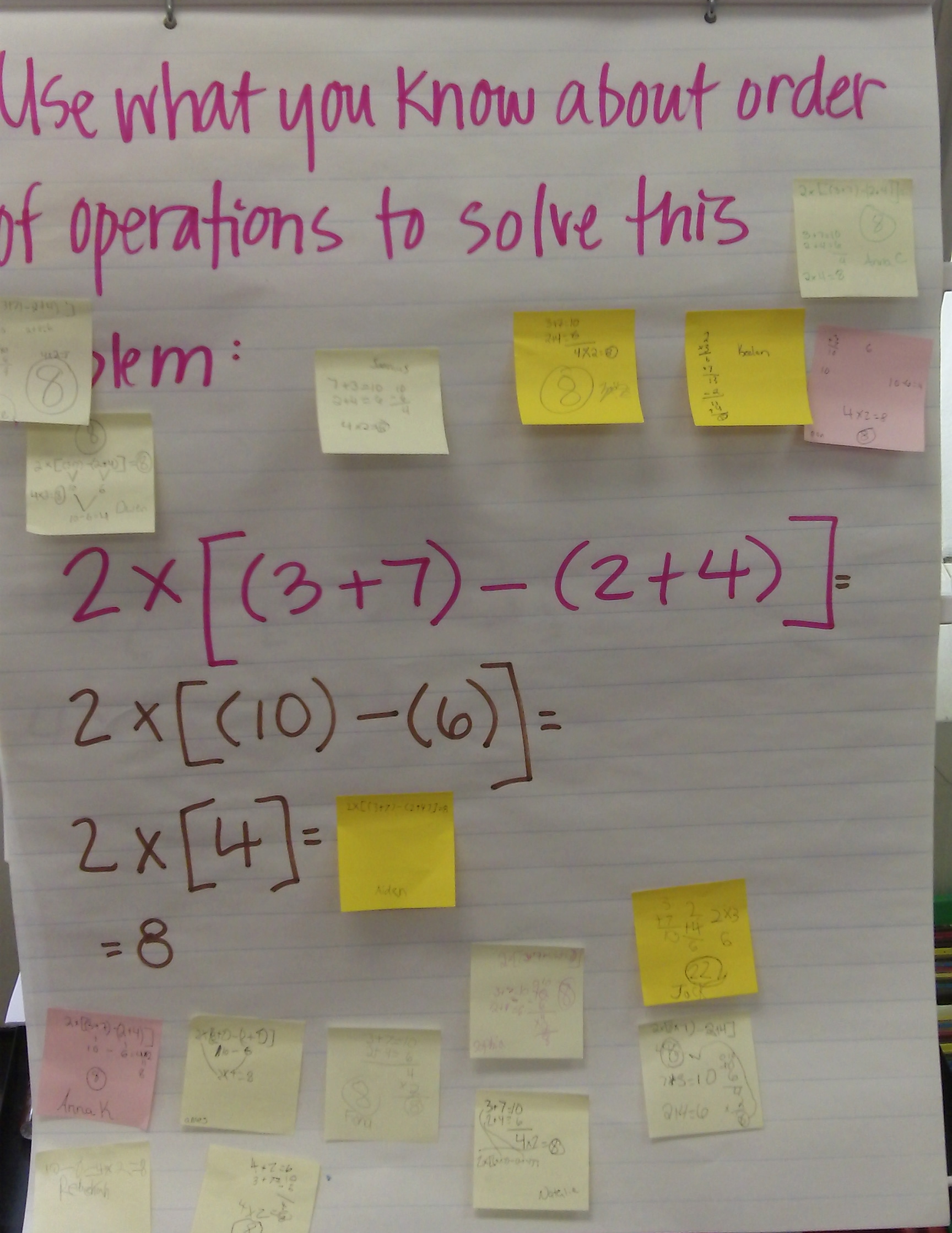
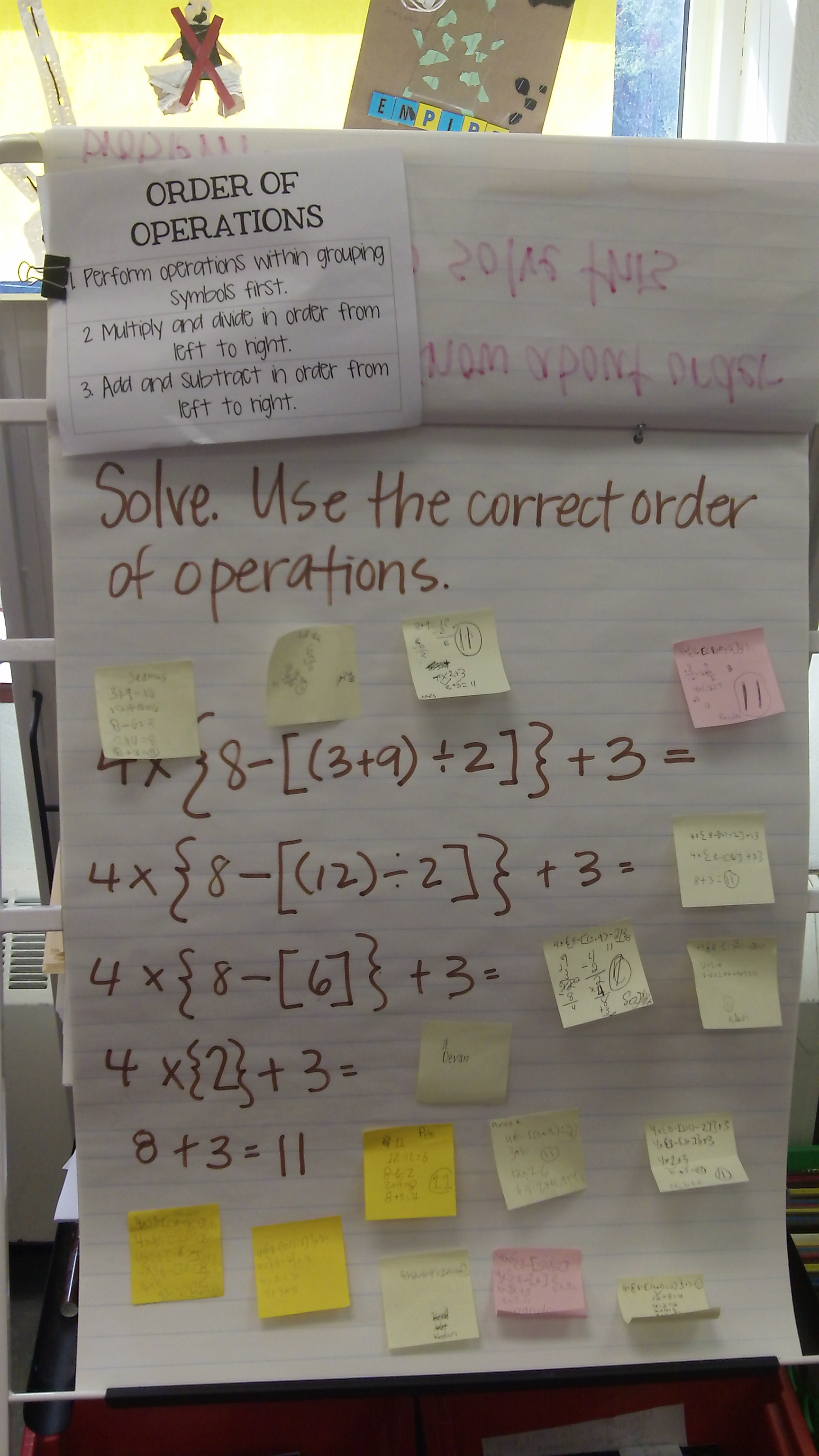
Last week we were working on division in math, but then added in some practice (an introduction really) with order of operations.  Here’s what our warm-ups looked like:

Monday

Tuesday

I was gone and so don’t have a pic of this one, but they solved the problem that they wrote the story for on Monday, using an efficient strategy.

Wednesday

When we started, the red parentheses were not there, and so many were not sure which part to do first.  This was the introduction to using order of operations.

Thursday

The original problem is what’s written in pink, and the brown is our work after we talked about how to tackle it.

Friday

I love how complicated this one is!  This one tricked many friends, but we’re getting a hang of it now that we’ve done it several days in a row.  This was a brand new concept to most mathematicians in my room.

How did you answer our math warm ups?  What can you tell us about using Order of Operations to solve problems?  Any advice you can give us?  Thanks for leaving your comments to help continue our learning. 🙂