Painting, Twister and a Song, Oh My!: Dot Day 2016

I have been a fan of Dot Day for a few years, and tried with my last couple of classes.  Last year was the first year I seemed to get it on the blog, though, sharing our dot paintings and writing pieces that graced our hallway all year.  They really were amazing.  But as I went into this year’s Dot Day, I wanted to see what else there was out there to connect to the day and to the book it’s created from: The Dot by Peter Reynolds.

screenshot-2016-09-13-21-43-44

Because of my participation in most things Twitter, I found out about some great resources to use for Dot Day activities, and even had a place to share our Dot Day fun!  I was geared up for an even better Dot Day than last year, and when the day came, kiddos were as excited as me!

We started the day by reviewing our plans and then, of course, reading the story!  And who better to share the story of The Dot than the author himself?  Yep! We had Peter Reynolds read to us from this video on YouTube:

After that, I actually reread to Rm. 202 kiddos again, to make sure they “got” the story and so we could discuss what was actually happening and also how this story perfectly connects to our Robinson Mindset:

img_4330

We used some discussion questions that had been shared with me from my Twitter friend Ms. Hachen, and these really helped us understand Vashti’s problem, how she solved it and then how she made her mark on someone else in the same situation.

Then we enjoyed a song.  Two or three times because it was so great. 🙂

And then after we got the point of the day and our minds were focused on dots and making our mark, we got busy actually DOING it!

I had put together a flipchart to give kiddos a visual of their art options:
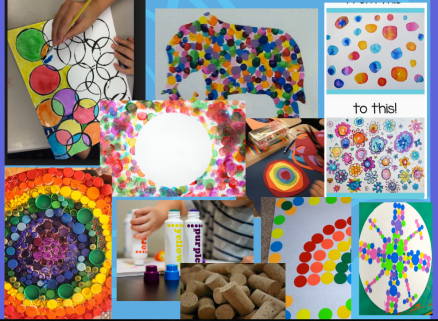
screenshot-2016-09-17-21-42-36 and basically anything that was round, or could make a dot was fair game.  And once they got busy creating, we were AMAZED at what we could do!  We made dots and watched them splatter. 🙂  And thanks again to the AMAZING Ms. Mimlitz who was our photographer and took some great action shots of our work!

This slideshow requires JavaScript.

The final products are not quite ready to share (since I want to wait until they’re all hanging up and our writing is finished!) but you’ll get the idea as you check out our creative process. 🙂

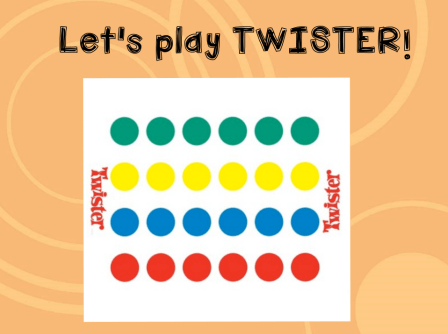
Later on, it was time to have some more active Dot Day fun…
screenshot-2016-09-17-21-59-38

This was both Dot Day-related, as well as a great opportunity for us to continue to practice managing our bodies and using self-control as we work together!

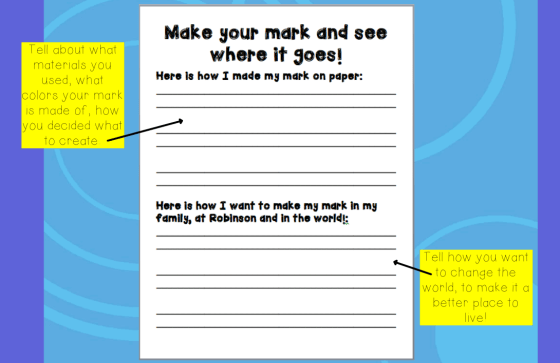
After we had made our physical marks, thought about how we were like Vashti and could make a mark on the world, we did some reflecting through writing using this sheet:
screenshot-2016-09-17-22-09-14

We have done first drafts on these sheets, and will revisit and revise them next week so they can hang along with our paintings.  I can’t wait to share them!

We had had a day full of DOT fun, and we had to end it with one more run through of the Dot Day Song.  Just because it was so great!  And we’ve all been singing it since then. 🙂

And to be honest, this wasn’t the end of the fun.  Come back for the second half of our Dot Day extravaganza soon!  There’s  Skype and another art project to share!

Digital Recording: Counting Strategies

I shared the story of how we have been counting EVERYTHING in our room this week, but there’s a quick story that actually come just before that, as we started our initial journey into practicing counting and recording our strategies.

Kiddos were given a partner and a “mystery bag,” which was full of between 10-35 of something (bags were differentiated for different counters), and asked to figure out how many things were in it.  They were to use an efficient strategy and somehow capture an image to demonstrate how they counted their item(s).  Partners worked together to determine the most efficient way to count their items, took pictures together, talked about their work and added explanations to their pictures via the Notability app on their iPads.

Through the information I received from seeing their images, as well as through observations and conversations conducted during their work time, I was able to more effectively create pairings for later in the investigation.  Partnerships were formed to best challenge and support mathematicians in their continued learning.

Mathematical strategies and digital tools for the win!


Read With Your Roadrunner!

At Robinson we have a great tradition called Read With Your Roadrunner, where kiddos get to start their day reading with special people in their lives.  Today was the first RWYR for this year. 🙂

We had lots of fun with our visitors today and we’re SO GLAD they came to start the day with us!

#classroombookaday UPDATE: Week 4

I cannot believe how much fun we’re having with #classroombookaday, nor how many books we’ve already read!  For all I know, we usually read this many books in 1st grade together (I’ve never officially kept track), but regardless it’s SO GREAT to watch the pictures get added and begin to fill up the door!

This week I think we added almost 20 books and I’m not sure we can pick a favorite!

img_4023

I do have to give a huge shoutout to Keira’s mom (loyal blog reader!) who left us some GREAT suggestions when she was at school for Read With Your Roadrunner today that she thought we would love.  And BOY was she right! I had never seen Red: A Crayon’s Story or Clancy the Courageous Cow before today but they will definitely be added to my classroom collection!  Both fit in perfectly (like she said they would!) with our conversations about valuing everyone for their uniqueness and celebrating how everyone can do something really well (even if that thing ends up being a surprise!).  Thanks for the suggestions!  Feel free to share your books with us anytime you want!  (That request goes for anyone, by the way!) 🙂

Gotta Count ‘Em All!

We’ve been working on a beginning counting and place value unit in math lately, and the premise behind the investigation is that we need to organize and do inventory on things in our classroom (this came after we read a story about a messy family called the Masloppys and how their son Nicholas does just that in their house so they can find things!).  We’ve been counting everything in our room. And I do mean everything.  If it’s not attached to the floor (or too heavy to pick up), someone has put their mathematician fingers on it!

Kiddos worked in pairs to catalog a collection of classroom items (and then many more as they finished), focusing on using efficient and accurate ways to count the group.  Students were charged to find a way to easily share their thinking with others; counting by groups or keeping track made it easier to tell someone else what they had done.   Callahan and Jesse were especially proud to share the learning they had brought with them from kindergarten (“Mr. Peacock taught us to make groups of 10!”), and they made bunches of 10 crayons into a bundle of 100!

We have had many conversations sharing kid strategies, tips and suggestions for how to count large groups of things, and then we started to look at the numbers of totals.  We wanted to know how many bundles of 10 we would have in each amount (if we counted like Callahan and Jesse!).  Our chart began together with some class numbers, and then kiddos got in on the fun (work!) as they continued to count EVERYTHING in our room:

fullsizerender-4

(As a side note, I am always excited with how many possibilities there are for ELA in math–here for example as I could conference with kiddos as they wrote on the chart and helped them work through sounds in words!)

It was funny as kiddos kept running up to me asking “Can I count this?”  The more they counted, too, the smarter they got at using efficient groups–notice all the rubber bands, cups and baggies in our pictures?

We counted so many things we needed to record that Rachel asked for a new sheet.  Love it!

fullsizerender-3-min

The next phase is moving into further connections with 10s, as we think about how many we’d have to had to have whole groups of 10 for each item.  We’re playing math games to make combinations of 10 in a variety of ways , and will continue this thinking as we move into addition and subtraction.  Place value discussions throughout the year will go back to these beginning inventory experiences. 🙂


Name Game (and a Couple of New Books!)

We have been working on names in Rm. 202, both as a way to build community as well as to use a resources for our reading and writing.  We have read lots of books, built our names with Legos and inch tiles, as well as learned about the stories of our names and painted based on that inspiration.

And then we played games.

I moved our word wall this year, making it more accessible to kiddos and groups, and hopefully allowing us a place to gather to talk about words and how they work.  The first thing we learned to do with our word wall is play a guessing game based on our names.  A kiddo sat on the stool, and I gave 3 clues to a name, and they had to guess which one it was.

The first one had these three clues:

  • It’s a short name.
  • It has double letters.
  • The last letter doesn’t sound how you’d expect it to sound.

Kiddos guessed that it could be these options:

Pretty good guesses, right?  We had a great conversation about how the “ie” in Allie and Robbie work together to make the long e sound, and they agreed that that fit the “doesn’t sound like you’d expect it to sound” clue.  Peter’s name was suggested because it has double e in it, so I made sure they understood that the double letters had to be together.  That left ELLA as the chosen name, and we found lots of other words that also fit that rule, including the A that sounds like a U.  This will be a feature we’ll come back to many times as we read and write together this year.

Our second name had these clues:

  • It has 5 letters.
  • The vowel sound is a LONG one.
  • There is a silent letter.

The guesses this time were:


Pretty great thinking again, huh?  Two of those names were ones I hadn’t even considered.  Yeah, I know–pay attention, Mrs. Bearden!  The one I was thinking of was CHASE, and we talked about silent e and long vowels.

This game was a great first start with our word wall, and it will become a game kiddos play again on their own, during word work in our Daily 5 or even as a part of our word work in guided reading or just for fun at choice time!  Great work, Rm. 202 kiddos!

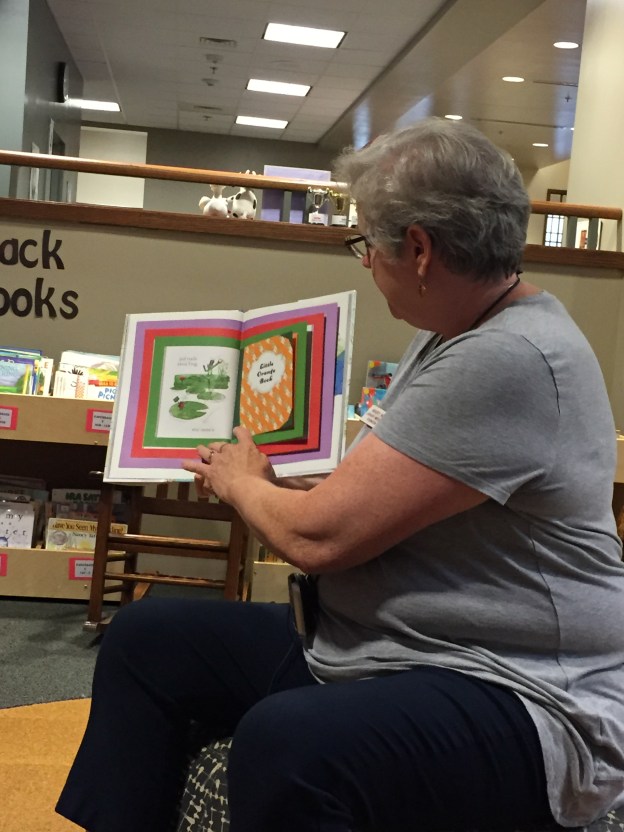
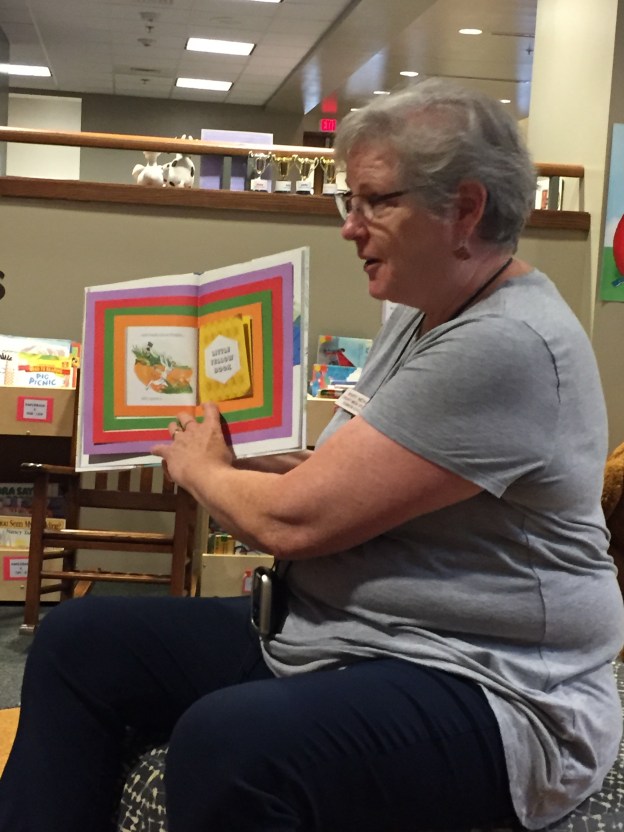
Oh, and I promised in the title I’d share a new book!  Mrs. Meihaus has a habit of reading to our class when we come to the library for our checkout each week, and this last week she did not let us down.

She shared :        screenshot-2016-09-01-12-46-51

which included several little surprises inside:

img_3720img_3721img_3722 Can you see how the pages get smaller and smaller in there?  It goes all the way down to a teeny tiny red book and then all the way back out again as you read through to the end.  Who had ever seen such an amazing text like that before?  WE LOVED IT!

Ok, one more.  We heard the sweet, friendly story of:

screenshot-2016-09-01-12-46-11 Heartfelt and wonderful.  Must read it again. 🙂

And learn to play the piano. 🙂

#FDOFG: Guided Discoveries–Math Manipulatives

I realize this post is a little bit after the true “first days of first grade,” but I’d say it still applies, and the actual learning actually took place then anyway, so that counts, right?

One of the things we do a lot of in the beginning of our time together in first grade is explore.  These guided discoveries take on many forms, and have been done with colored pencils, pattern blocks and play-doh before (among other things that are done less formally).  In the beginning days of math workshop, guided discoveries of math tools are an important learning activity.

Rotating through 6 stations–dominoes, power polygons, multilink cubes, Geoblocks, square inch tiles and Cuisenaire Rods–students were posed two simple questions to consider while they worked: “What could a mathematician use this tool to learn more about?  What are the possibilities?”  Then, in small groups, they explored the tools, for only about 7 or 8 minutes each:

Dominoes

Most kids built things to knock over. LOL

Power Polygons

Many kids put these together in piles and looked through them–they’re made of pretty colors. 🙂 (And yes, we’ll talk about more mathematical ways to use them later–right now it’s just work to figure them out and try things!)


Multi-Link Cubes

These tool may be the interesting just because it’s one of the most versatile.  Lots of different kinds of exploration happened in this station.

 Geoblocks

Inch Tiles

Also a versatile tool, kiddos stacked and counted, sorted and created with these little squares!

Cuisenaire Rods

While these blocks have many place value uses, many kids use them as building blocks, and many sorted them by size or color.

The last step was to chart some thoughts on our answers to those questions I posed at the beginning.

It was just the beginning, but definitely got us off on a good foot to some smart mathematical thinking this year!

I Pledge Allegiance to the Flag

We’re first graders, and Civics is a big part of our fall Social Studies learning.  We’ve been working on building community since day 1, which is a HUGE part of first grade Civics and learning to work together, but this week we moved into more “official” territory–starting with the flag.

Luckily, most kiddos come into first grade with at least some knowledge of US Symbols (like the flag, the eagle, money, the Liberty Bell, etc.), so we have a foundation on which to build.

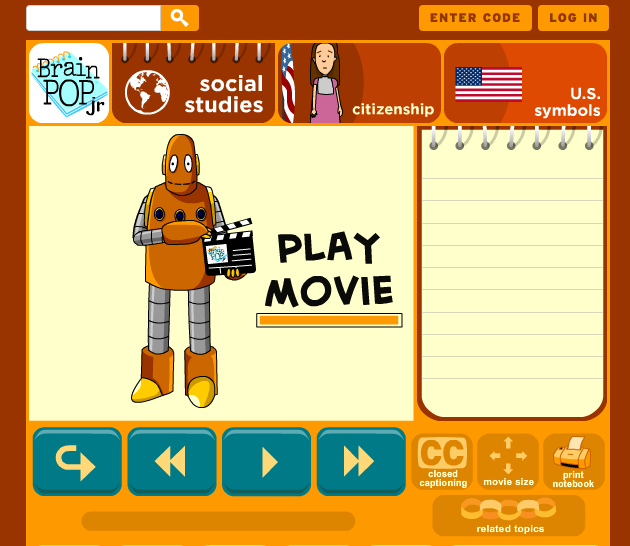
We started with a great place: Annie and Moby from BrainPop Jr. :

screenshot-2016-09-13-20-02-23

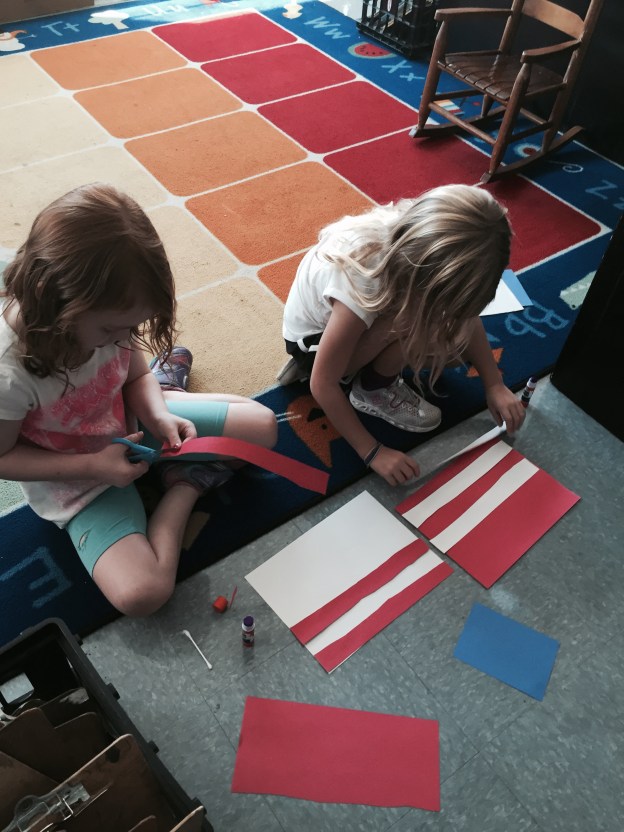
After we watched the video and gained some new info on US Symbols, we focused in specifically on the flag, and then worked to create our own.  Partly as a challenge, partly as a fabulous art piece, ad then also as a physical piece that they can use to remember our conversation and connect with as they remember the parts of and meanings of the flag.

We talked about the features of the flag, as well as the importance of each part, like how there are 13 stripes (7 red and 6 white) that stand for valour, hardiness and purity, as well as the 13 original colonies; there are 50 stars that represent the 50 states; and the blue part of the flag is called the Chief and is blue to represent justice.

Next I gave them three pieces of paper: one red, one white and one smaller blue piece.  Then they were to make a piece that represents a flag, however they wanted to, using whatever other tools they might need (like scissors, glue, tape, etc.).

Much like many other things we do, this activity was bigger than the actual idea of making a flag.  Like other requests I make of my friends, students have an opportunity to apply the Robinson Mindset all around them.  And in this case, it came when friends got stuck.  Along with remembering to “try one more time” like in the book that Mrs. Sisul read us, we could remind each other to use a growth mindset and work hard, as well as focus our minds on our work.  The ability to apply this in almost every struggle we encounter is a blessing.  And it worked.  The smiles on the faces of these two friends when they had pushed through a hard part was priceless:

Another thing that came out of this project was how everyone tackled the assignment in such a different way.  I gave them the paper but they really didn’t have any “right” way they were supposed to use it.  As I looked at it, and thought of how the pieces would go together, I imagined that they would cut the red piece and attach it to the white–many did exactly the opposite!   I love that picture of Rachel and Taylor working exactly the mirror images of each other.

fullsizerender-4

I love that the flags are all reminiscent of flags, and you can tell what they are, but they are each a little different based on the historian artist who made them.  Great work again, Rm. 202 friends!

Check out our patriotic work!

This slideshow requires JavaScript.

As I see them down the hall, I am again reminded how glad I am I hung this display space right there!

img_3912-min


Mr. Schu in the Lou!

Sometimes I write in order, partly so the stories make sense, but also so I don’t forget anything.  Sometimes, though, things happen that you just have to tell about.  Today was one of those days!

Yeah, did you hear?  Mr. Schu was in the Lou!!  Oh, come on.  Lou, like St. Louis!  YES–HE WAS IN ST. LOUIS, AND HE WAS IN OUR SCHOOL! AND HE READ TO US!

Ok, sorry, I’ll stop yelling.  I just LOVE that librarians and teachers and authors can be celebrities.  And he is definitely a celebrity to me Mrs. Sisul our principalour fabulous librarian, Mrs. Meihaus;our fabulous librarian, Mrs. Meihaus; and lots of teachers who know him from Scholastic (Mrs. Scanlon!) and Twitter (loads more wonderful people I don’t want to mention so I don’t forget anyone. 🙂 ).

Mr. Schumacher (which is his real name), was in town for something with Scholastic (I am guessing…he’s the Ambassador for Libraries so he’s all around talking to kids about books.  Yeah, I’m kind of jealous of that job!), and was kind enough to take an invitation from many Kirkwood Schools (along with many other places from the way everyone’s talking about him, too!).  We were one of the grade levels that was lucky enough to meet him.  Our turn was this afternoon, and we visited with our friends Ms. Lewis’ class.

Much of Mr. Schu’s job includes sharing book talks as a means of getting books in kids’ hands, and that’s what I expected him to do; I knew our class would lean LOADS of new titles we wanted to read.  But then he stopped telling us about a good book and started READING a good book to us.  Amazing.

The book he shared with us was this one (which none of us had ever heard of before):

screenshot-2016-09-13-15-19-19

This book is much like our favorite Pete the Cat books, and we loved how it had reading and SINGING!  Oh, and we added in dancing, too!

I didn’t catch the whole thing, but here’s a highlight of the awesome Mr. Schu with some even more awesome first grade listeners:

And then, what do you do when you meet a celebrity, but take a picture with them??  We had to, of course. 🙂

img_6029

And then take a silly one, just for fun. 🙂

img_6028

We love you and the books you share, Mr. Schu!  Thanks for coming to St. Louis!!  Come again soon?  If not, we’ll have to schedule a Skype call! 🙂

Morning (Mostly Math) Warm-Ups: First Grade 2016

If you have been around 20somethingkids for more than this year, you’ve probably seen my math warm-up posts, and then the start of our writing warm-ups that went really well in 2nd grade last year.

This year I started morning warm-ups pretty soon after school began, to get kiddos into the habit of reading the easel, thinking about their answer, and adding their post-it.  The ones in the beginning, though, were not yet math (or writing), but were other things instead that were related to what was going on in the classroom.

Our first warm ups of 2016 looked like this:


Then, once we had the hang of it, we started into more traditional math warm-ups, which are related to what we will be talking about that day (or what we did the day before):

Kiddos are on a roll with this Rm. 202 routine!