Mystery Skype!

What a great opportunity we had today–we did our first Mystery Skype!

Because of the connections I’ve made on Twitter, I’ve been exposed to many new things that seem right up our alley, and Mystery Skype was one of them.  The basic idea is that you Skype with another class–somewhere in the world–only you don’t know where they are (ok, well I knew where they were, but the kiddos did not)!  You ask each other yes or no questions that help you narrow in on the location of the other class.

We waited patiently until 10:35 when they called–Ms. Venosdale’s 6th grade class.  We answered the call, with nervous but excited feelings in our stomachs.  I had already set it up so that they would lead, since we’d never done it before, and so they asked the first question.  They asked, “Are you near a major body of water?”  Our answer, of course, was yes–the Mississippi river is just a hop, skip and a jump to our east.  Our first question was (we hoped) a good one, too–“It’s 10:35 here, is it the same time where you are?”  We had been having a conversation about time zones just before we answered the call, and so they thought this one would help narrow down (and so eliminate) much of the world  if their answer was yes.  And it was!

I wish I had grabbed the list of all the questions, because we kept one, and I wish that we had a picture to share–but we didn’t take one.  We had coordinated “jobs” before we got started: some were charge of the map, some were in charge of writing down what we learned from our new friends, some were in charge of writing down the questions we each asked (so that we could look at them for ideas for the next time), someone was in charge of asking the questions and the rest of us worked to synthesize the clues and figure out what to ask next.  It was really cool how a room full of about 20 people could all be involved in the same conversation in such different ways.

In the end, we found out that our new found friends were actually calling us from very close by in Missouri!  Hillsboro, actually.  That was surprising to them, too, because they’re used to chatting with people from much farther away!

All in all, we had a great time, met some new “friends” and figured out that we need to brush up on our Missouri geography a bit.  🙂  We already have our next Mystery Skype on the calendar for next Friday and are VERY EXCITED for it!  I’m interested to see the way their questions change and improve each time, and for what it will be like when we talk to someone from a place where we’ve never been.  It’ll be very cool to learn what life is like in that other next of the woods!

Until then–have you every been a part of Mystery Skype?  Who did you “meet?”  What suggestions do you have for us as we try again with another class?  Tell us your story–we’d love to hear from you!

The Story of How Alphabox Changed My Life

I love learning.  It’s part of the reason I became a teacher in the first place.  And as my kids will tell you, we’re all teachers in our room, so I’m learning every day!
Aside from learning my students, however, I learn many things from my colleagues, as well!  That’s part of what makes me a better teacher–finding out about new strategies and techniques that are working for others and trying them with my students.  And this is how I found out about the Alphabox.  Credit here needs to go to my friend and 5th grade teammate, Genie Hong.  She introduced me to this strategy the other day and it quickly changed my life forever.  Really it did.  Keep reading. 🙂

Really it’s pretty simple: and Alphabox is a sheet of paper with boxes that each have a different letter of the alphabet in them:

But then the  magic happens.

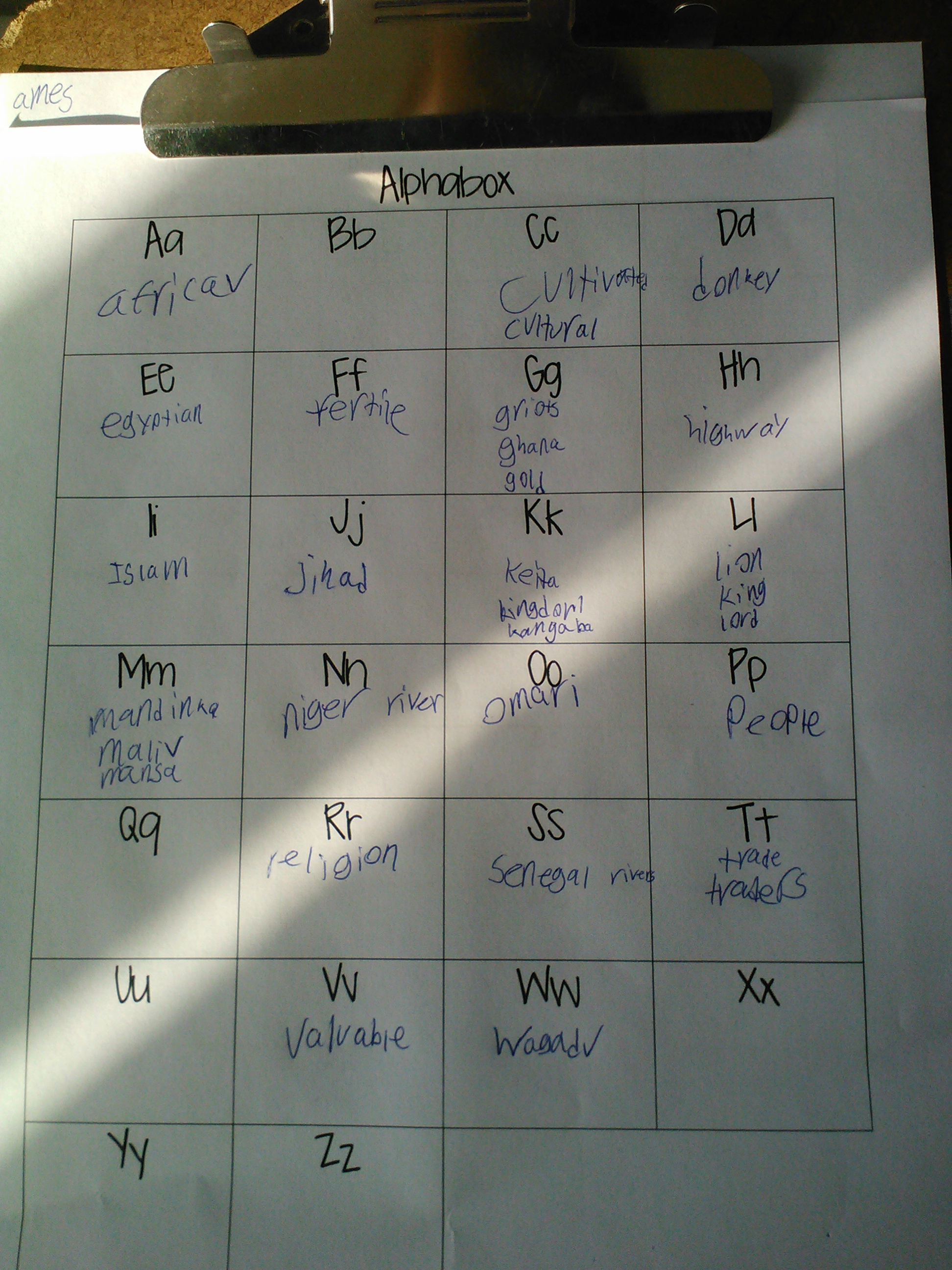
The Alphabox is an organizer that is aimed at helping students summarize information, by choosing the most important word from a text that they’ve read that starts with each letter of the alphabet.  It can be used with anything, really, but we started with some information we needed to read and digest in our Ancient West Africa unit.

A filled-out Alphabox looks like this:


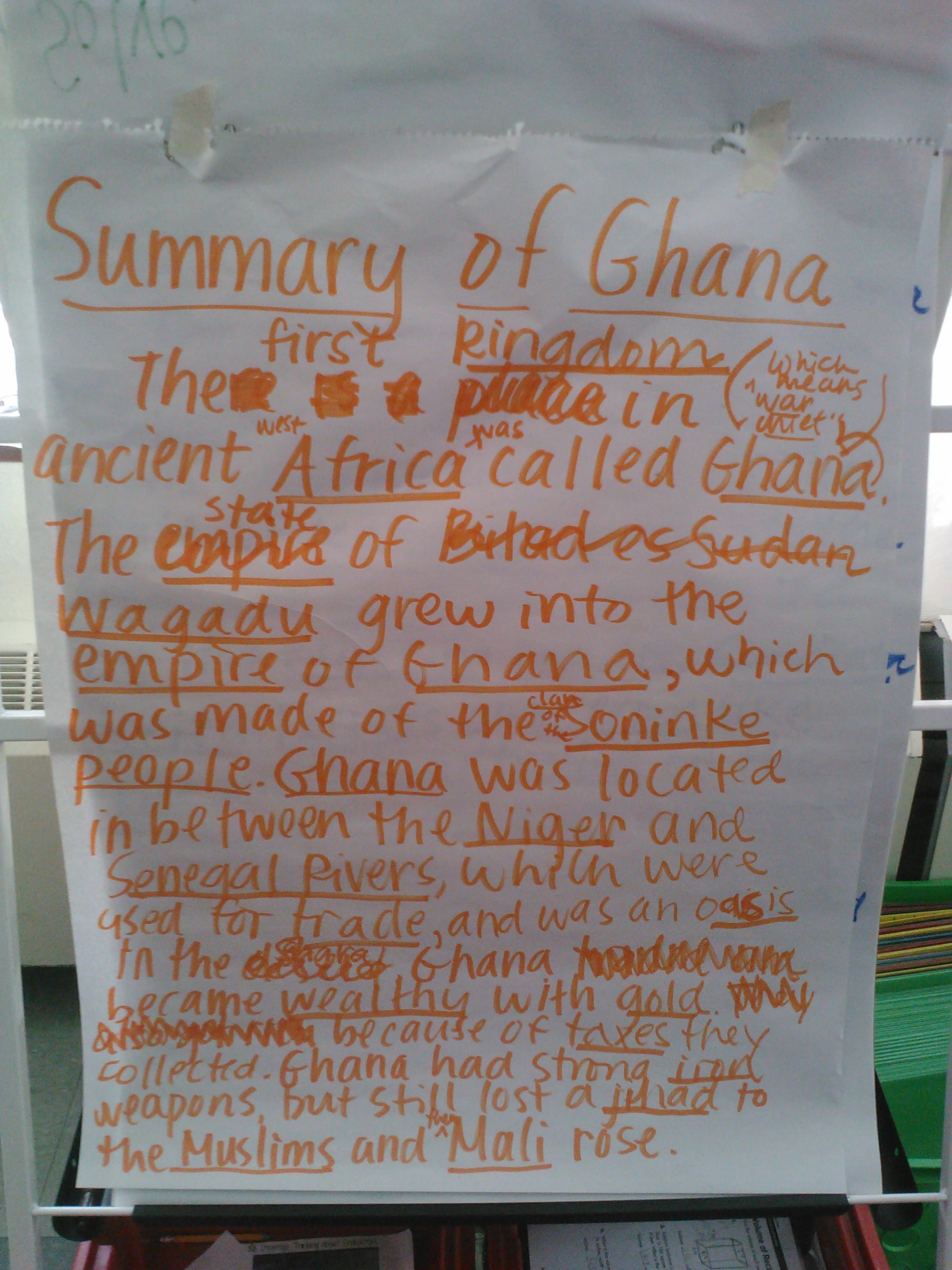
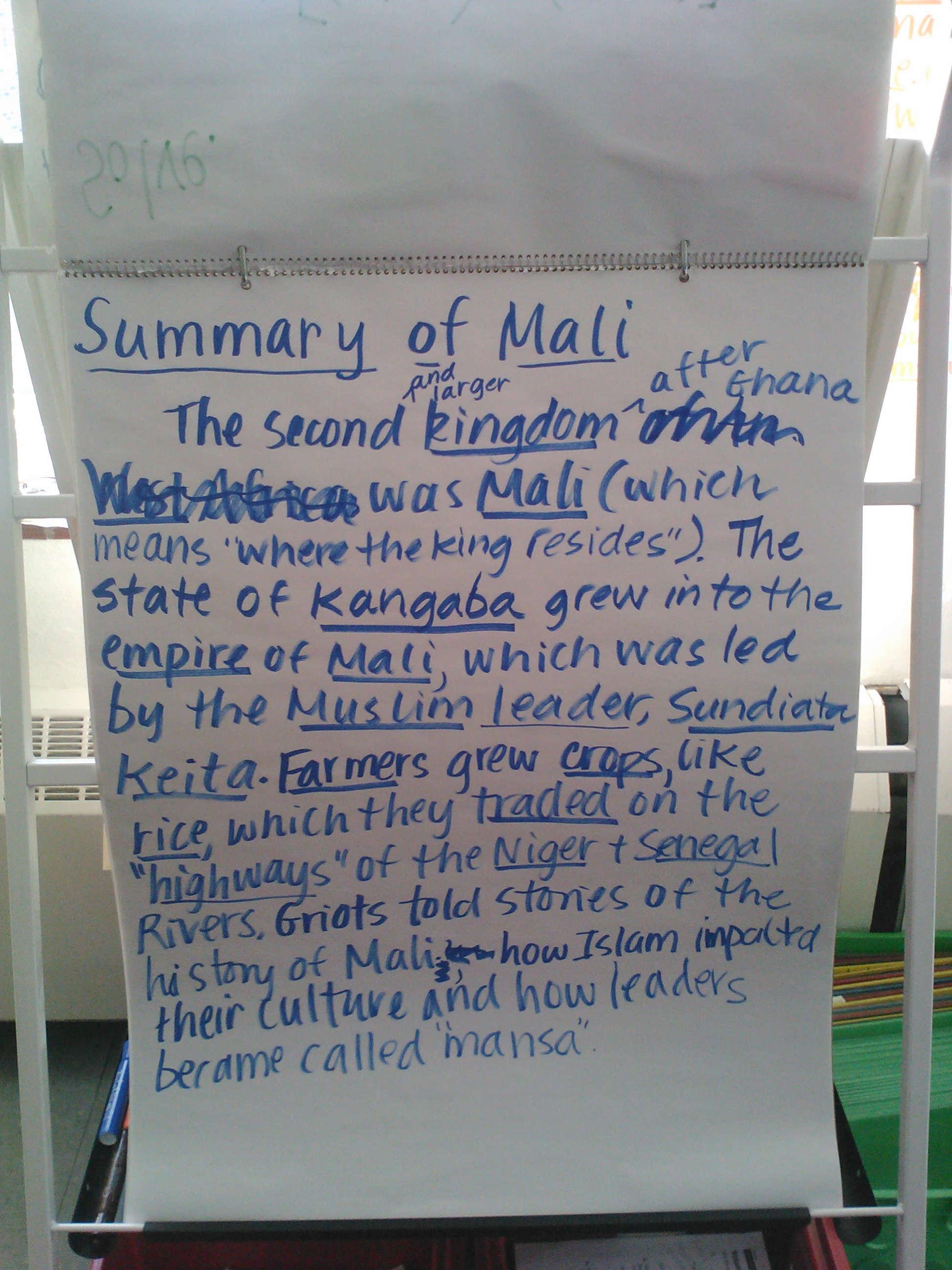
The next step is to put down the book, pick up your paper and try to summarize the part you just read using only the words on your Alphabox!  The first time around this was a bit tricky (some would even say hard!), but once we got into it, we go the hang of it, and really started to enjoy it, actually.  I’ve had several kids mention that they like how this organizer helps them really focus on the important ideas and it sticks in their brains better than things we’ve done before.  I would agree.

Here are some paragraphs we wrote together with our alphaboxes (and sorry for the fact that they have mistakes–I only got pictures of the rough drafts.  I recopied them before I hung them up, I promise!):

I love it when you learn something new and it totally rocks your world! I wonder what I did all those years before I knew about the Alphabox.  It’s so simple, but so powerful.  You should totally try it.  We’re using it all the time now. 🙂

Have you ever used an Alphabox to organize your important ideas?  Tell us what you think. 🙂

Mental Models and The Mississipians at Cahokia

Our first Social Studies unit of the year (well, the first “official” one after we set up our classroom community) was a doozey (is that how you spell that??).  Let me back up.  The theme for 5th grade SS is Three Worlds Meet, and so we study the Native Americans, Ancient West Africa and Medieval Europe, then look at how all of those cultures merged and became the Colonies.  The first unit, while being about Native Americans–specifically the Mississippians at Cahokia and the Iroquois–was also about bigger things related to mental models.

What are mental models, you ask?  Check out this example that we use to help explain them to kiddos (taken from the text we use during this unit):

We begin by looking at the mental models that many kids have about Native Americans.  Many of these are things like that they live in tepees, they wear buffalo skin or feather headdresses, they are savage hunters and that they danced and chanted.  None of these mental models are wrong, so to speak, but as we go through the unit, we hope that by learning new things about specific groups of Native Americans, their mental models will be challenged.  And maybe changed because of their new knowledge.

We specifically study the Mississippians at Cahokia, or just Cahokians, because they are from an area very close to where we live in Missouri.  Cahokia, Illinois is just a hop, skip and a jump across the Mississippi River from the area that these kiddos know so well. For that reason, they are more easily able to make connections and inferences about how the Cahokians may have lived–and they realize that in many ways these people are more similar to them than they are different.

I mentioned before that there is a text we use, which is broken down into the five disciplines of Social Studies (history, economics, geography, culture and civics) and these disciplines provide the framework for all of the conversations and activities that we do during this unit.  First we learn what each of those are generally, then are able to zoom in on them more specifically to Cahokia (and later to the Iroquois, but I’ll tell about that in a later post).

Before we jump into our text, however, we have a lesson about figuring out the difference between important and interesting when you’re reading, so you know which parts to pay most attention to as a reader and learner.  We discovered that it all looks important, until we look more closely at the purpose of why we’re reading.  For example, if we are reading to find the answer to a certain question, then the only important things are the ones related to answering that question–all the rest is just interesting for now.  If we are reading just to find out about economics, then only the ideas related to economics (not history, culture or any of the other groups) are important for now.  As we also discovered, what’s important changes based on your goal.

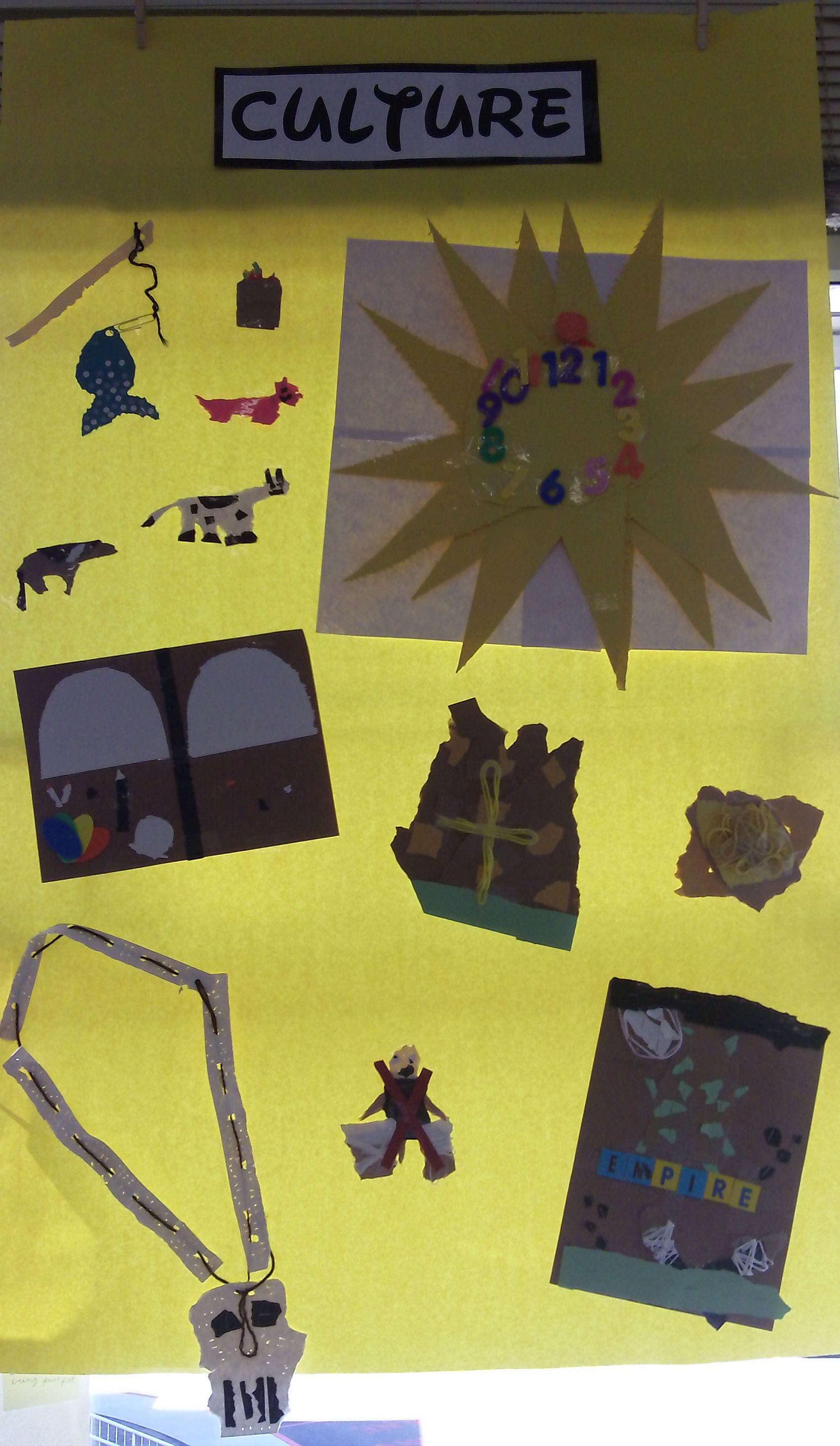
Ok, now that we know how to pick out the parts we need to remember, we got busy into the real work of this unit.  In short, for every discipline, we read a section of the text and underlined what was important, then made a class list of those key ideas.  After that, we created big window-sized posters with representations we made to show each of the big ideas.

Nice, right?  An art project to help us remember what we read about.  Fun, too.  Yes, but it’s not that simple.  There are very specific rules about how you are to go about creating your representation:

1. You may use paper and anything that holds paper together (i.e. paper clips, tape, glue, glue sticks, etc.).

2. You may not use scissors.

3. You may not use any writing utensils.

What was once just a simple show-me-what-you-remember-from-what-you-just-read type activity is now a challenge to think outside the box, to be creative, to solve problems.  So I was all the more impressed with what they came up with, the quality of their images, and the creative ways that they figured out to get their job done–like using the edge of a ruler or a paper clip to score paper so you can tear it neatly in the shape you want it, rather than cutting.  Or using the punched-out pieces from a hole punch together to create a picture.  Amazing, really.

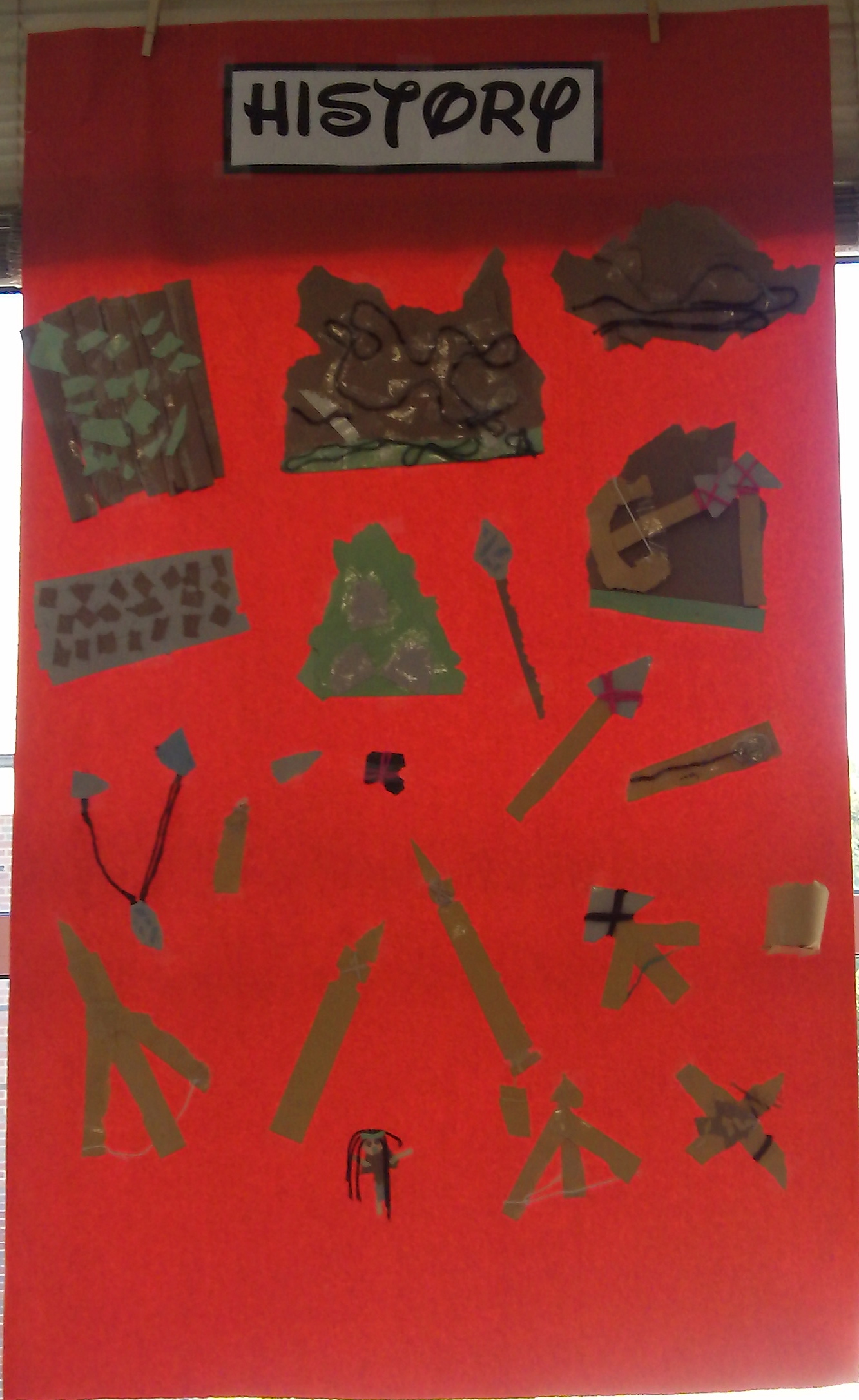
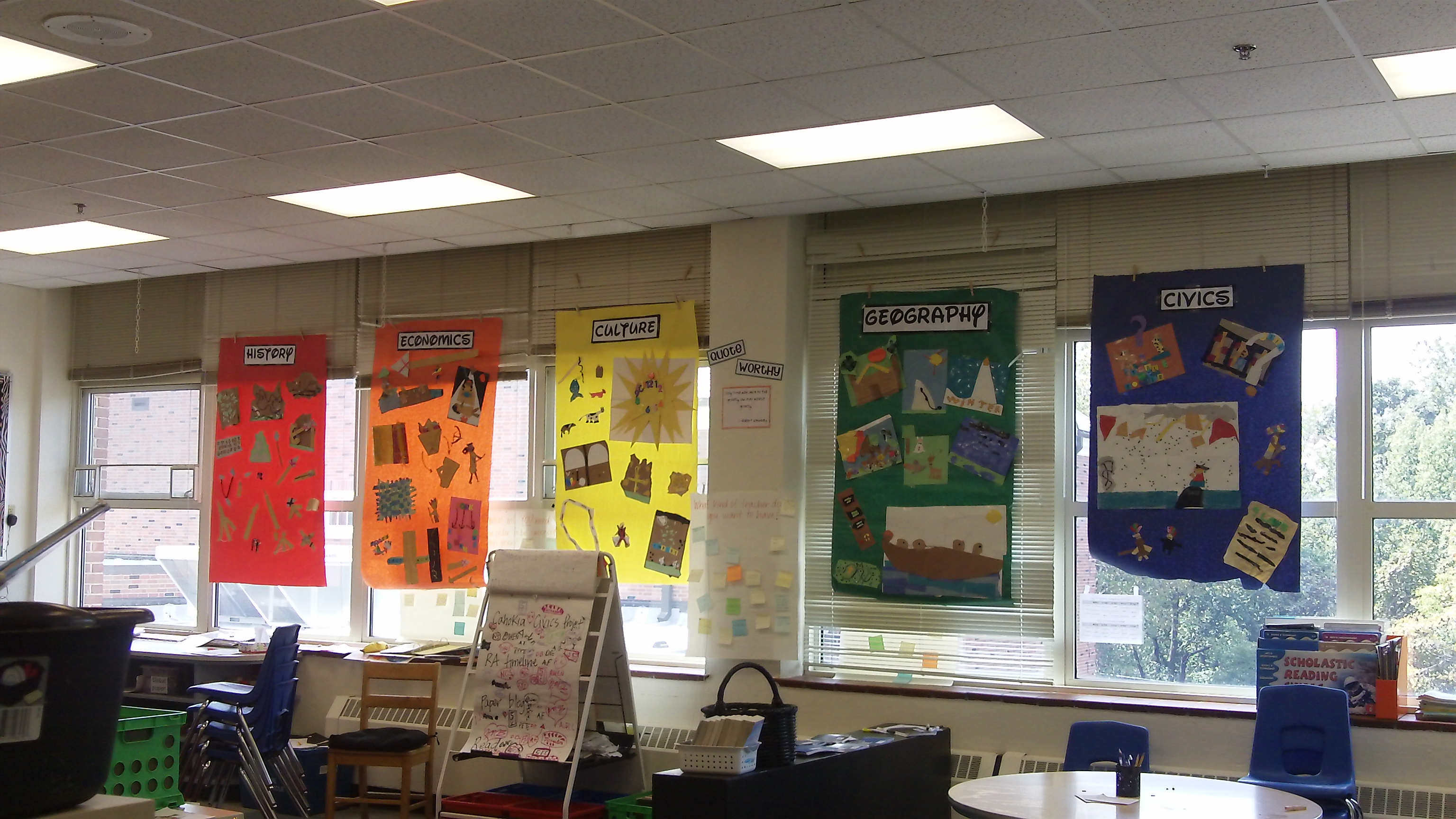
Here’s what our posters look like once we were finished–which really took us about 6-7 school days to accomplish:


Besides the fact that these hold a lot of information and show what we’ve learned about what’s important about the Cahokians, I love how they look hanging on the windows:

As we were working on these projects, it was so great to see the group/partner work that was taking place, the problems that were being solved as they created their pieces, and the smiles on their faces as they worked.  I was so glad at how many kiddos voiced to me how much they loved doing this because it was “so different from anything I’ve ever done before.”  They told me how the rule of not using scissors and pencils “made their brains think in a new way and challenged me in a new way.”  Gotta love it when kiddos say those things out loud!  It’s exactly what I had hoped was happening.

On a side note, these posters hung in our room throughout the whole Cahokia unit, and we came back to them time after time, as we made connections between different aspects of Cahokia, our own lives, and then as we moved into learning about the Iroquois.  I’m actually going to be sad later this week when they have to come down to make room for other things. 😦


Geocaching!

Today our class went geocaching!

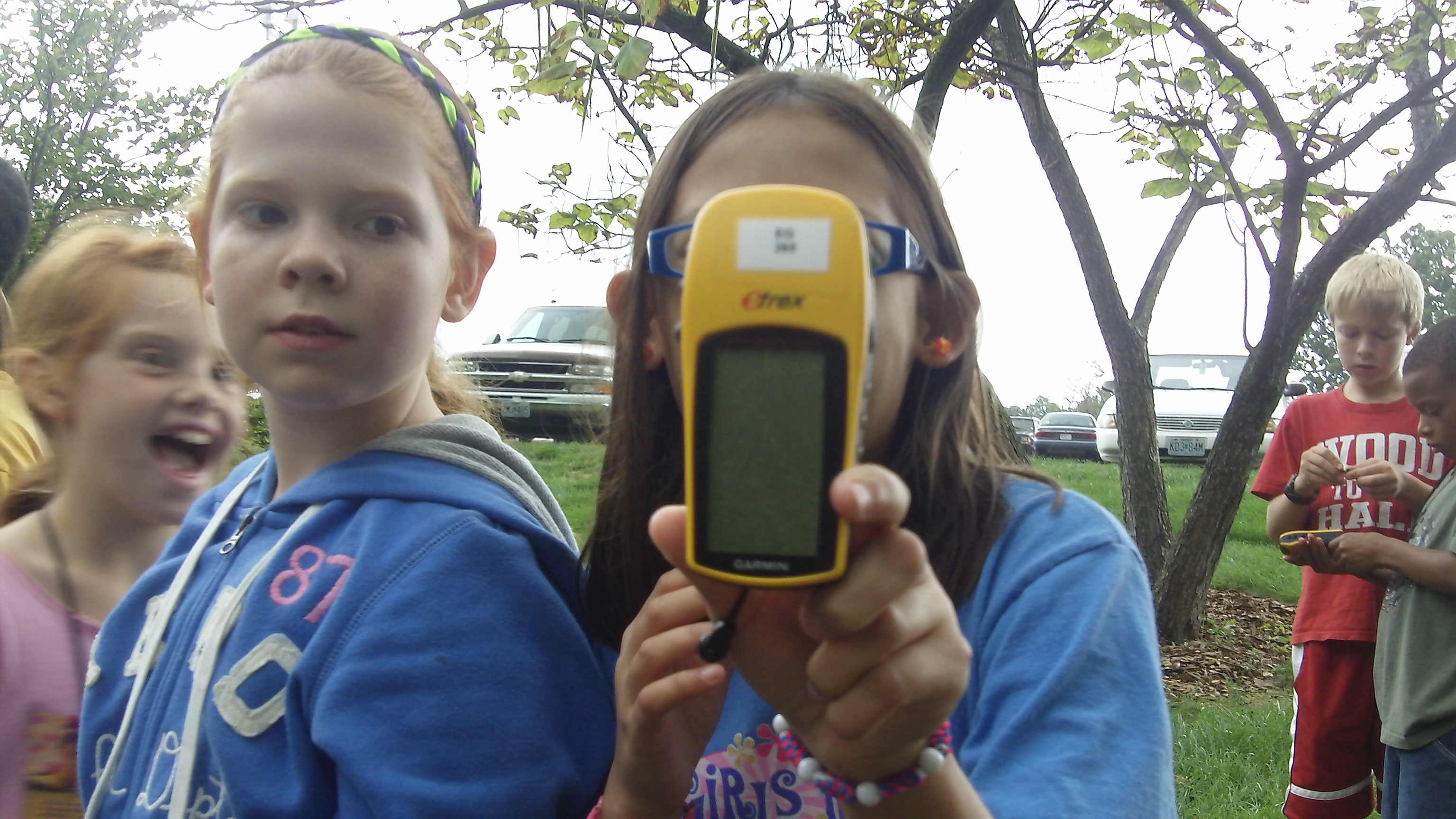
First we had a reminder lesson about latitude and longitude, and a how-to with the GPS devices.  Oh, and we talked about what GPS was, too. 🙂  We needed our plan and our GPS devices:


Then we were off!  And how lucky we were they today’s weather broke just before we were scheduled to go outside on our hunt.  We’d been watching it rain all morning out our windows, but it was reasonably dry by 1:00.  Yay!


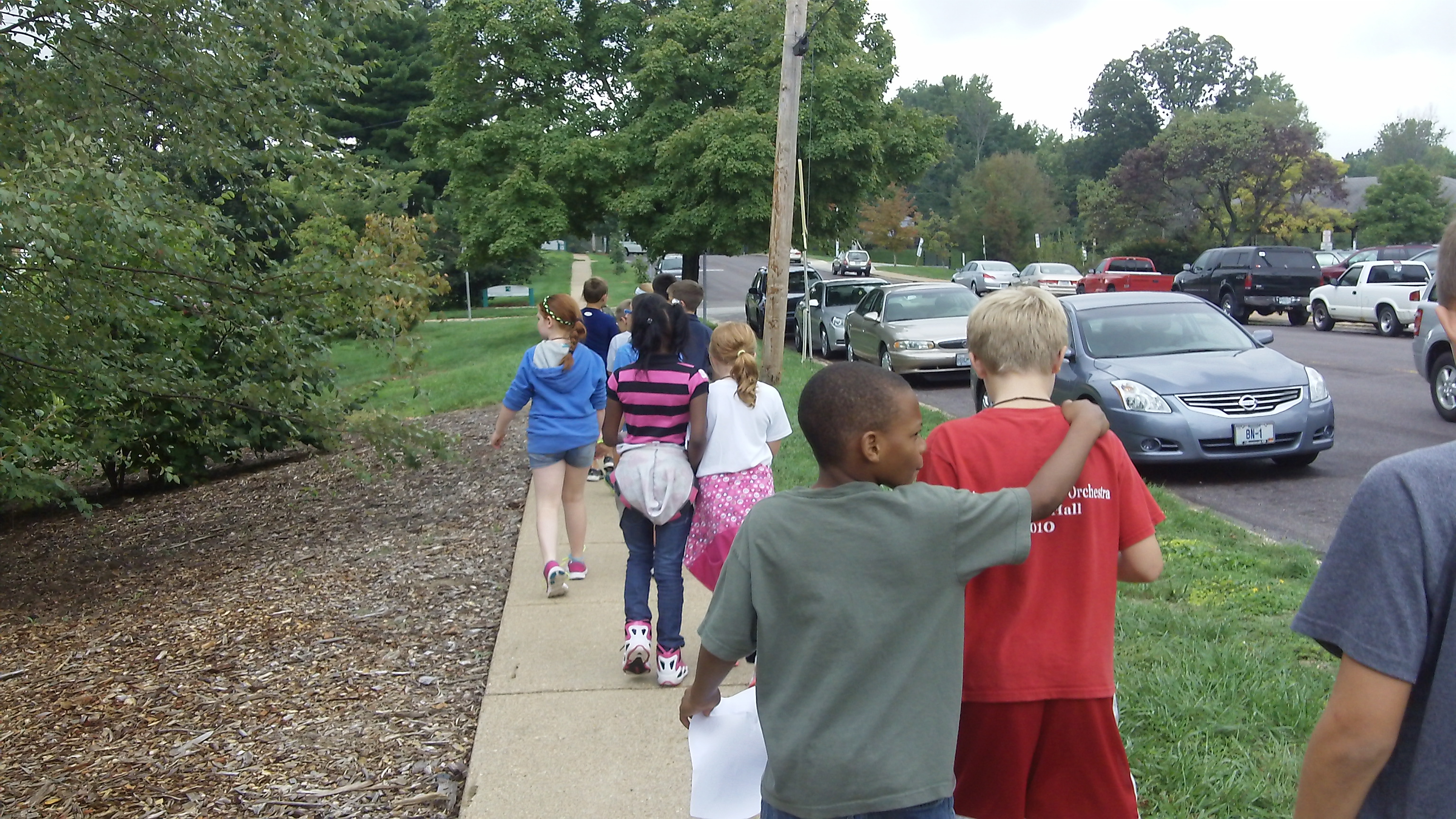
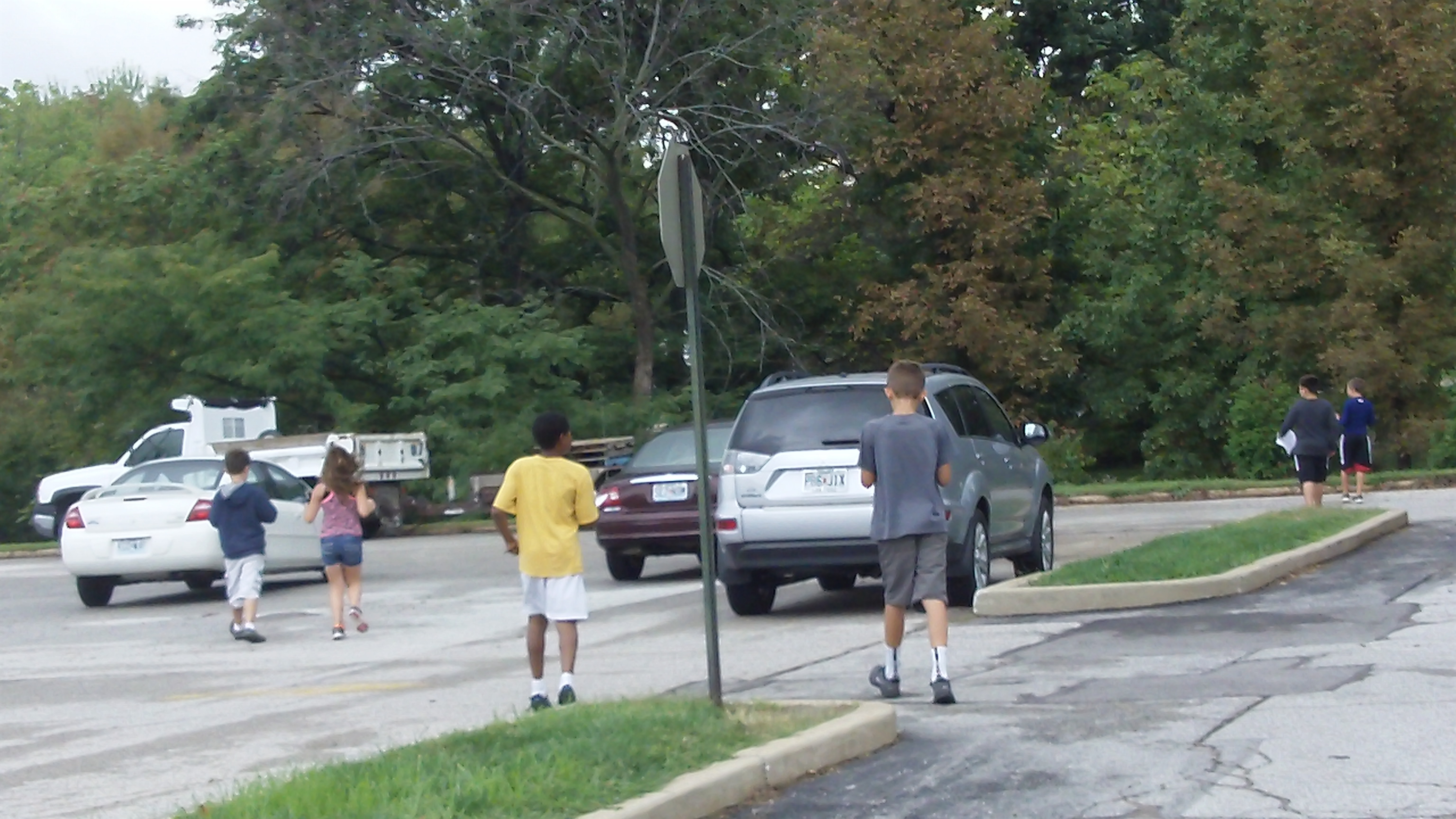
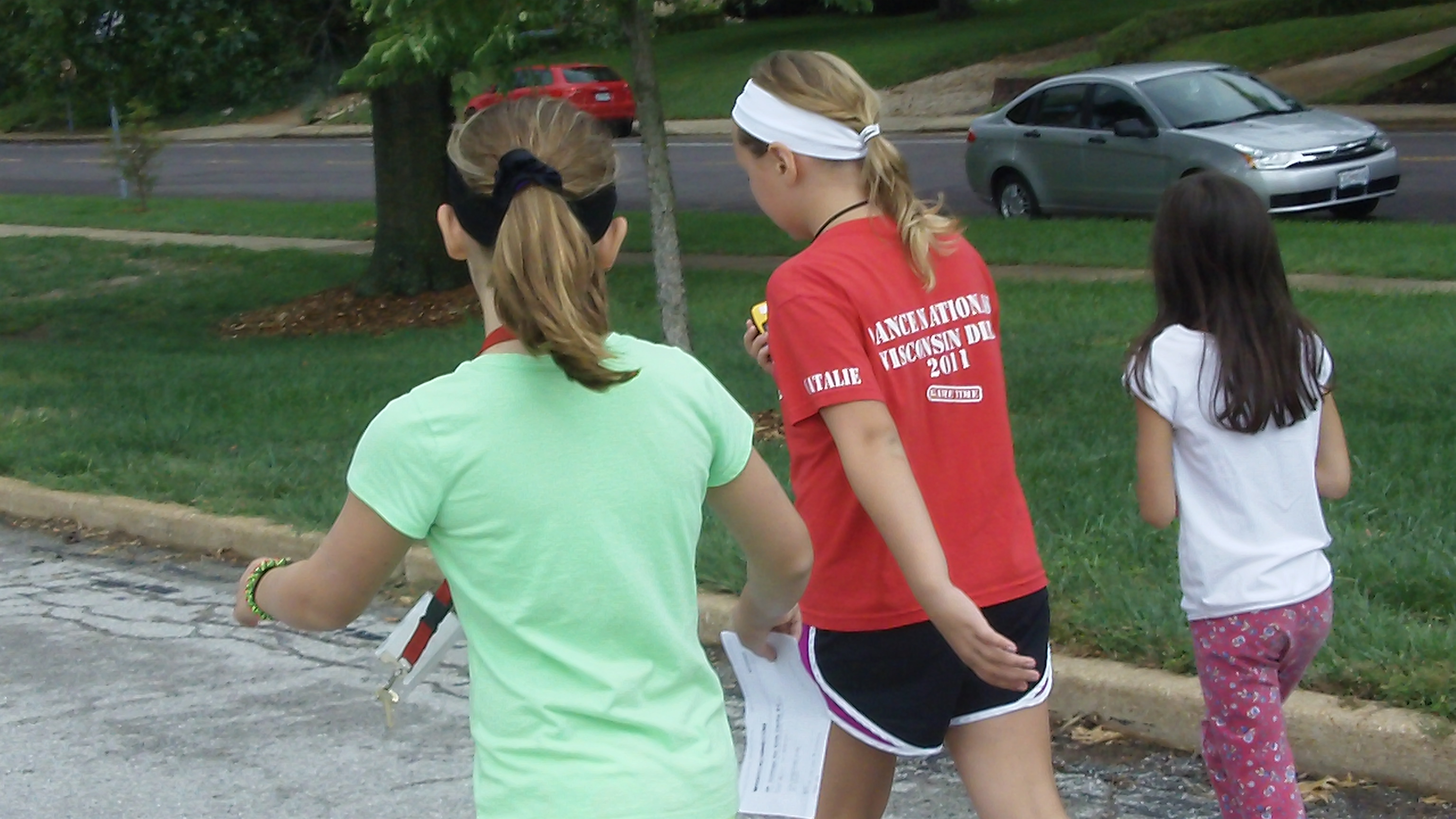
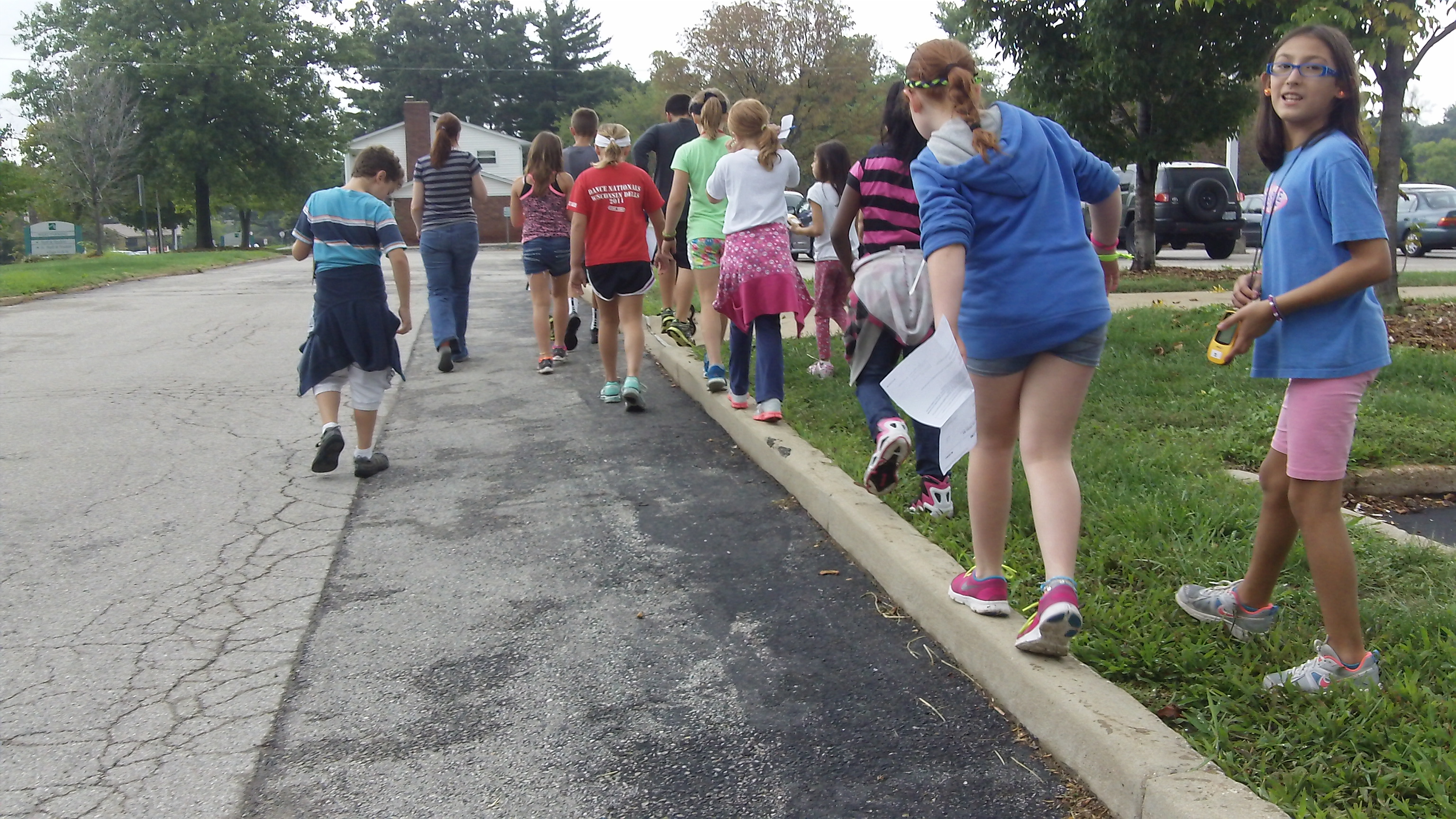
The cache we were looking for was hidden across the street from our school at Meramec Community College and was put there by a College for Kids class that learned about geocaching a couple of years ago.  We went walking in that direction, checking our GPS’s as we went.


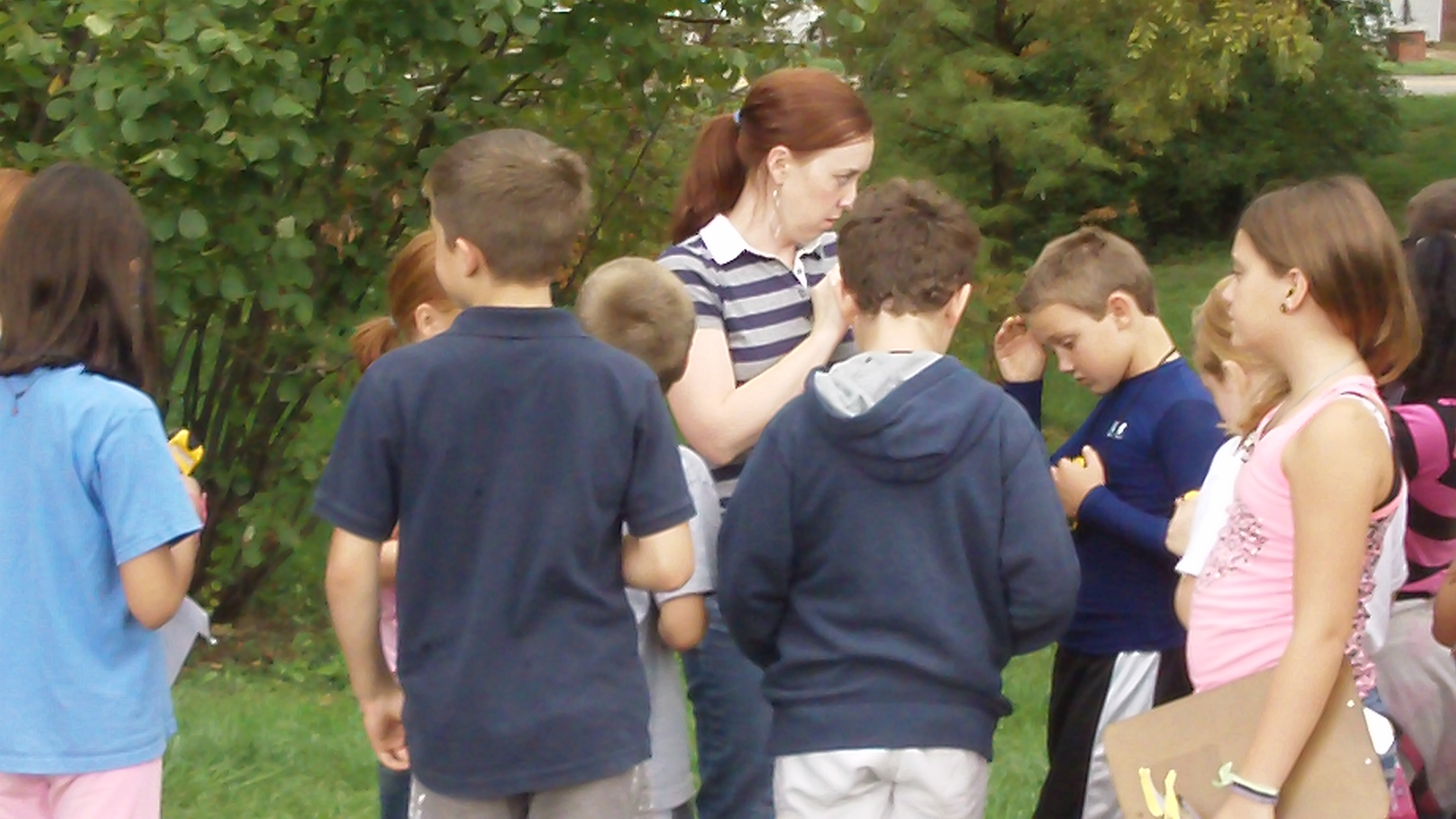
Then we new we were getting close when lots of kiddos started to gather around this tree.  Their directions were to just stand there if they thought they found it–rather than yelling and screaming and spoiling it for everyone else.


Then…

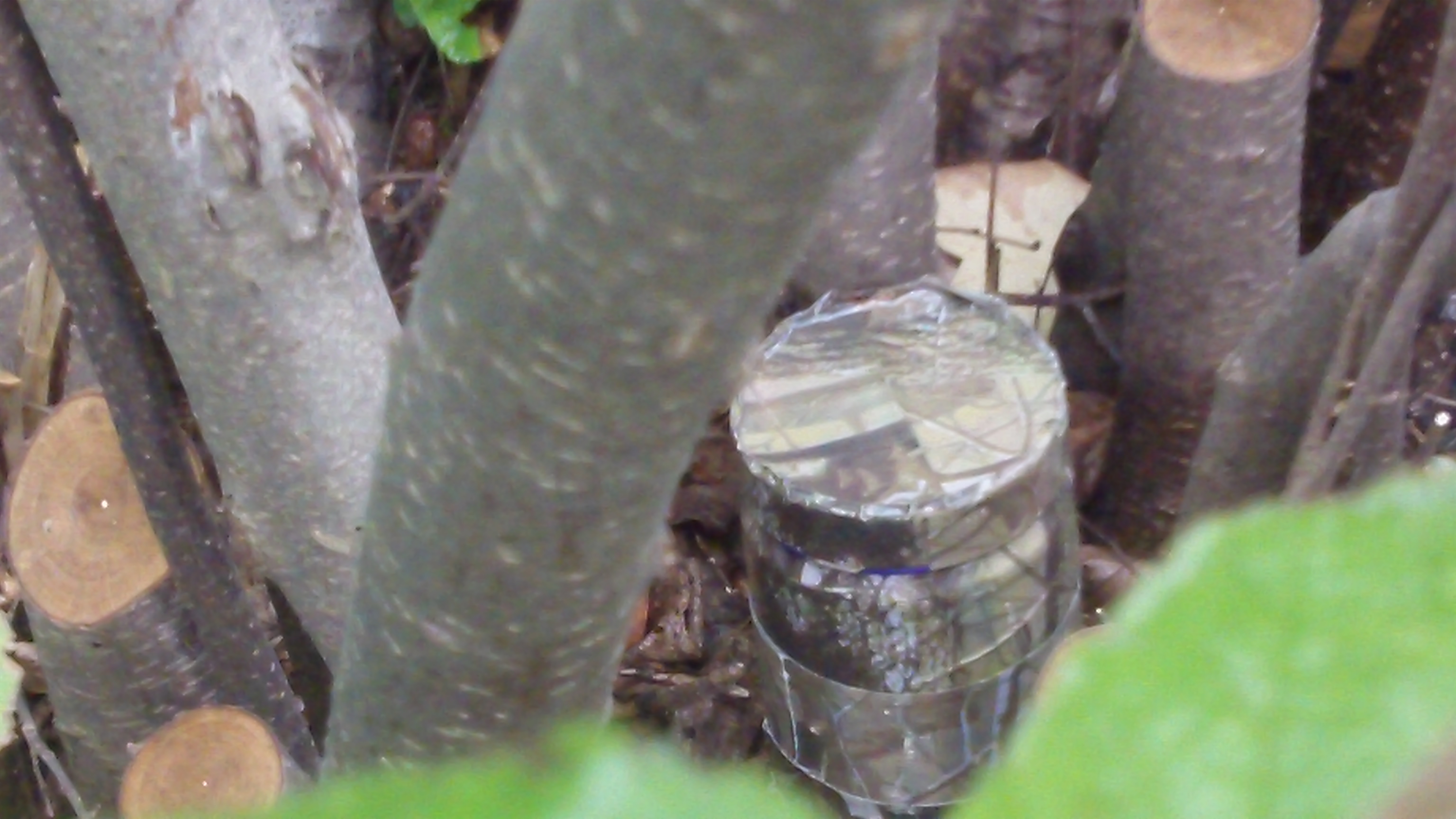
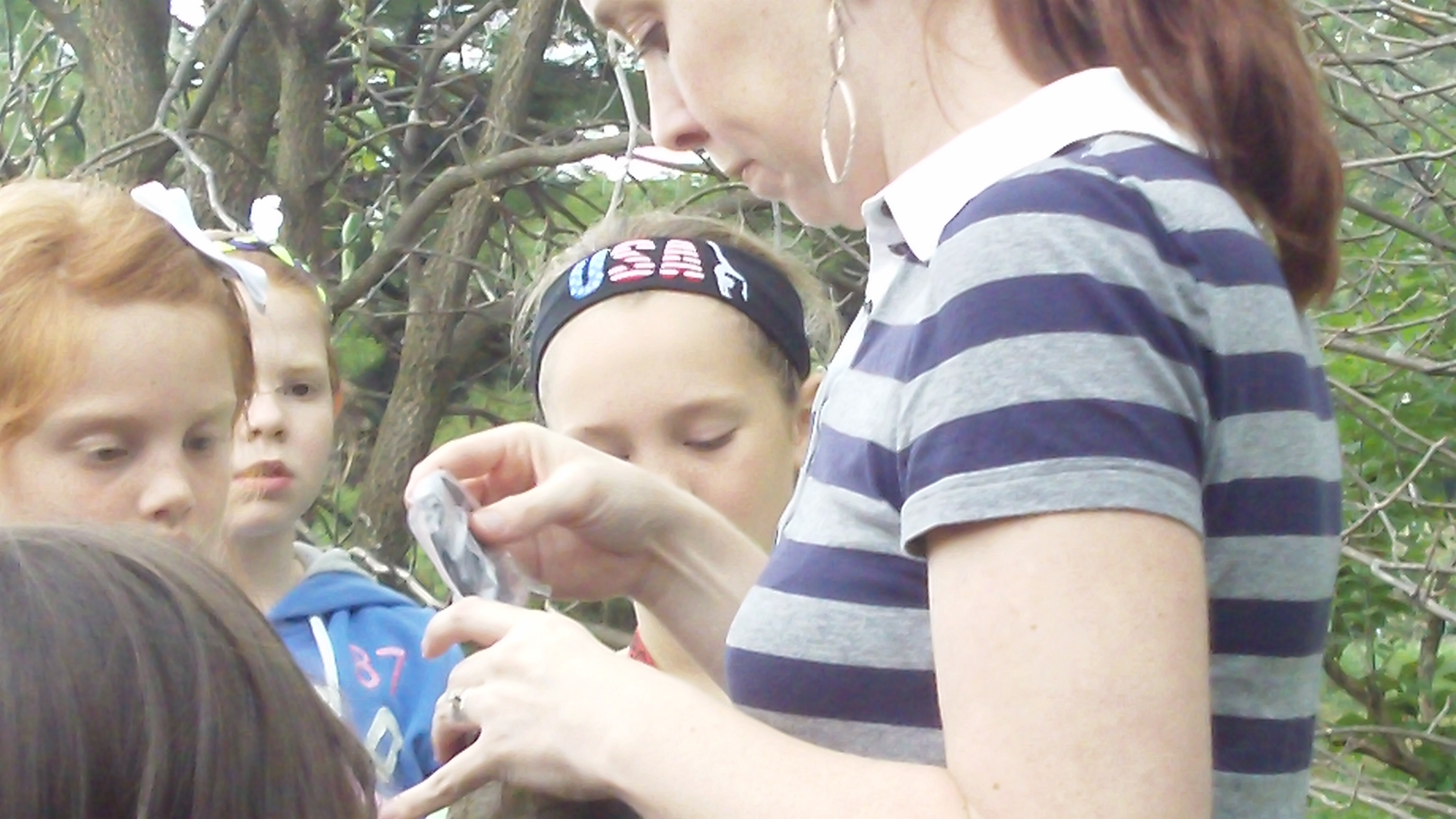
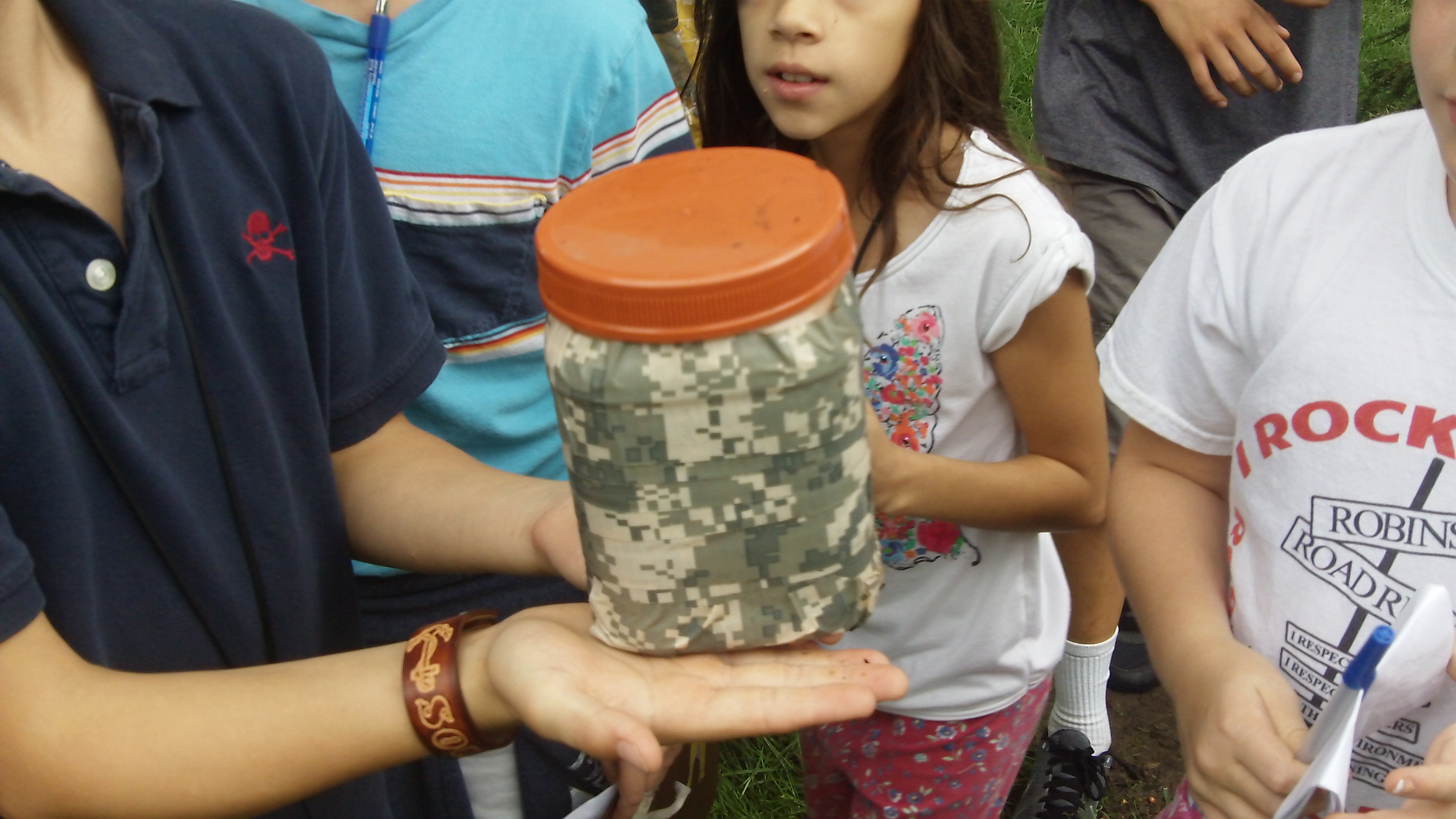
We found it!!  Can you see it there?  Even though we didn’t need it, there was a clue on the directions to help if you got stuck.  The clue was: the container is a camouflaged plastic jar.


Now, to open it!

Yeah, I know–horrible picture! But inside we found a log book, directions and an explanation, and lots of little trinkets that other geocachers had left before us.  We signed the log book, and I showed them all the other goodies that were inside.


We logged in: 9/17/12 Robinson 5th Grade 2012.  We saw that lots of other people had been there since the cache made in 2010.  One entry was from the  Trailblazers group at our school on June 29, 2011, and one was even Anna’s family!  I took a picture of the log book to prove it, but alas, it was blurry, too.  Believe me, her dad signed it with song lyrics! 🙂

I know–corny pic, right?  This one was a card that the person made solely for the purpose of using it to geocache.  He was San Diego, CA!  All the way to that geocache in Missouri.  Very cool.
So after we found this one, Keelan and I took the class to the geocache that Trailblazers (a science/technology club that our librarian, Mrs. Meihaus, and I let the last two years) had created and placed.  We were originally going to hunt for that cache, but we couldn’t find it when we searched for it online. BUMMER!  We took them there and found another huge bummer.

Looked great on the outside, but the bummer was what we found on the inside of our cache:

Half of the things we put in there were gone, and it was all wet and moldy!  YUCK!  This will definitely take some tender-loving-care to get back to the state it was in when we hid it last year.  Boo. 😦


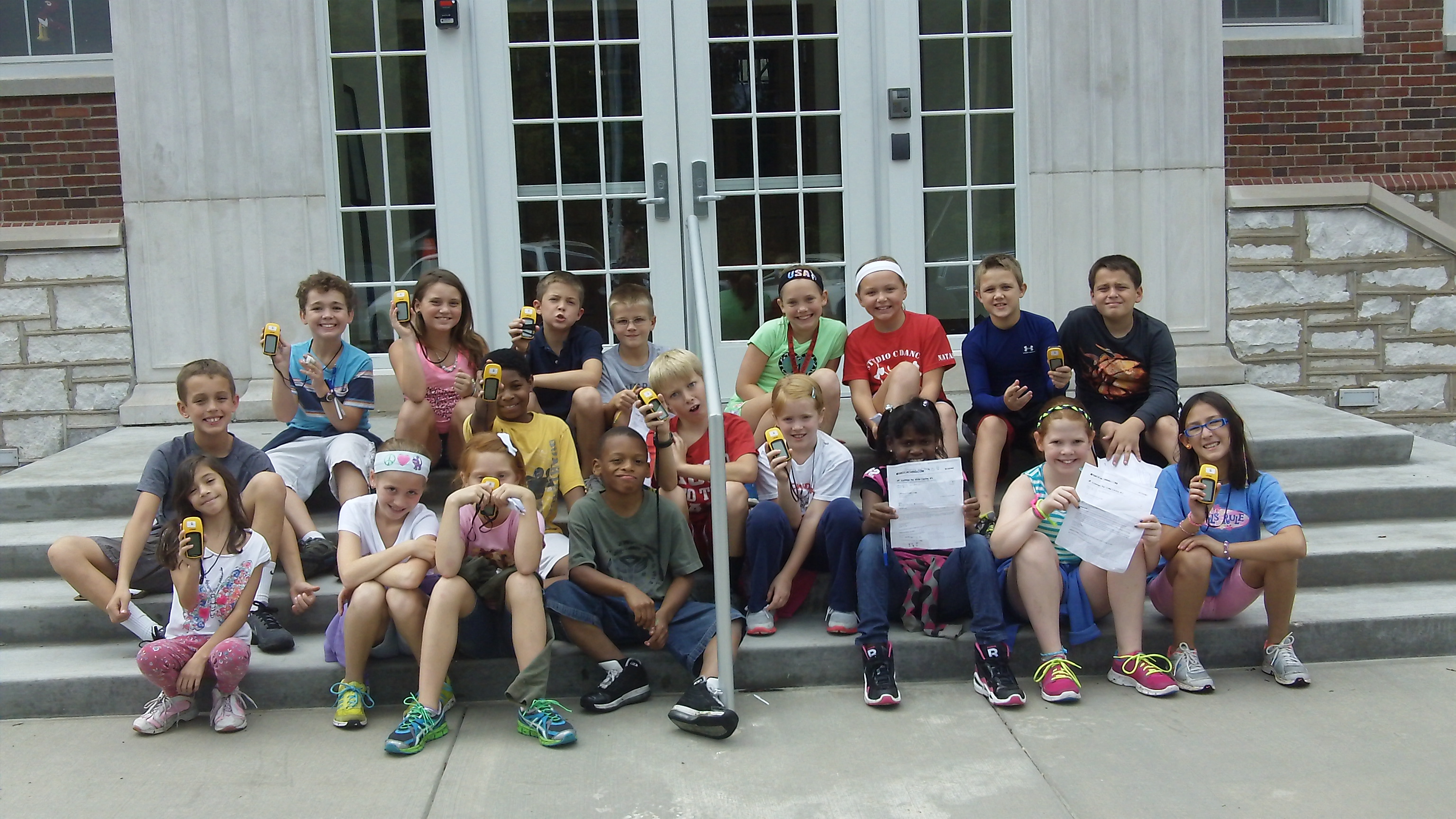
Ok, now a few more fun pics that were taken when I gave Fiona the camera, and a group shot.

Say cheese!


What a great afternoon of geocaching fun with friends! I know I wish I learned about geography like this when I was a kid. 🙂

Have you ever been geocaching before?  Do you have any suggestions for any good caches we could find? Tell us your stories!

Our New “Norm”al

I work at the most amazing school ever.  No really, I do!   But it didn’t get that way by accident.  Our school culture is one built on respect and acceptance, and these things are expected and encouraged by all the adults that work here.  Our school has Road Rules that help our students (and teachers) know how they are to act, and our staff then has another specific set of norms that we follow in our interactions with each other.  My team, then, has also agreed upon norms for our collaboration.

So the next step would be my own classroom, right?  This year, instead of focusing on class “rules,” I had a conversation around norms with my students.  We discussed how norms help us know how to talk to each other, how to act in a group, how we want our room to function.

We started by reviewing the Road Rules, since they are the universals for our school, and everything we do in our room should relate to them.  In our tribes, we brainstormed ideas.  Then we shared out and began the big job of weeding through all the suggestions.  We looked at any norms that were similar or even the same as others, or ones that maybe just were not our best thinking.  Here’s what we ended up with:


And then since we needed a fresh copy that we could easily read (and that matched our theme!), I made the final copy that now hangs next to our meeting space:


These norms help us work together smoothly and productively, and since they were everyone’s ideas, no one can really argue with them!  They’re helping us do great things already!

What norms do you follow in your school or your classroom?  Parents: do you have norms for your house? How are they working for you?

Skype!

Remember how I told you about how lucky we were to be able to Adopt-a-Pilot?

Well, since that first visit, he’s come back two other times, teaching us all sorts of awesome things about geography and flight, as well as life-lessons related to doing our best and working to achieve our goals.

During this second-to-last visit with Mr. Smith, we got to Skype with him while he was out-of-town!  We got to guess “Where in the USA was Mr. Smith?” using clues he gave us.  We used our big map to mark where we thought he might be:

Molli guessed on the FIRST CLUE that it was Birmingham!  Way to go, kiddo!

Check out a clip of our Skype session:

This was only the second time I’d ever Skype’d (and the first was the end of Adopt-a-Pilot last year!), and it was so great!  I know lots of teachers use it in really creative ways in their classrooms for mystery read-alouds, conversations with authors and for class-to-class chats.  I can’t wait to see what else is out there that I might try next year!

How do you use Skype? I’d love to hear about it! 🙂

The Cat’s Away

So I’m home with a sick baby again today.  I HATE to be gone, but sometimes I just have to be a mom, you know?

So today’s absence reminded me of an idea I learned about recently.  I was out a couple of weeks ago, and I used a great idea from a couple of teachers I met when I attended an EdCamp St. Louis conference earlier this month.  They both teach middle school, and are out of the classroom periodically for activities with their school, and so need to leave plans for a substitute.  Rather than just leaving written ones, they record videos to leave for their classes, often teaching the lesson from their couch and giving directions for what they want their students to do.

Last time I was out, I knew ahead of time, since her fever popped up in teh evening.  So with my MacBook, my plans and my couch, I set to work putting together what I hoped would be a great day of learning for my kiddos, even in my absence.  Here’s what I left as a welcome to the day, along with our normal morning routine screen on the ActivBoard:

After they went off to specials, it was time for Writer’s Workshop in our room:

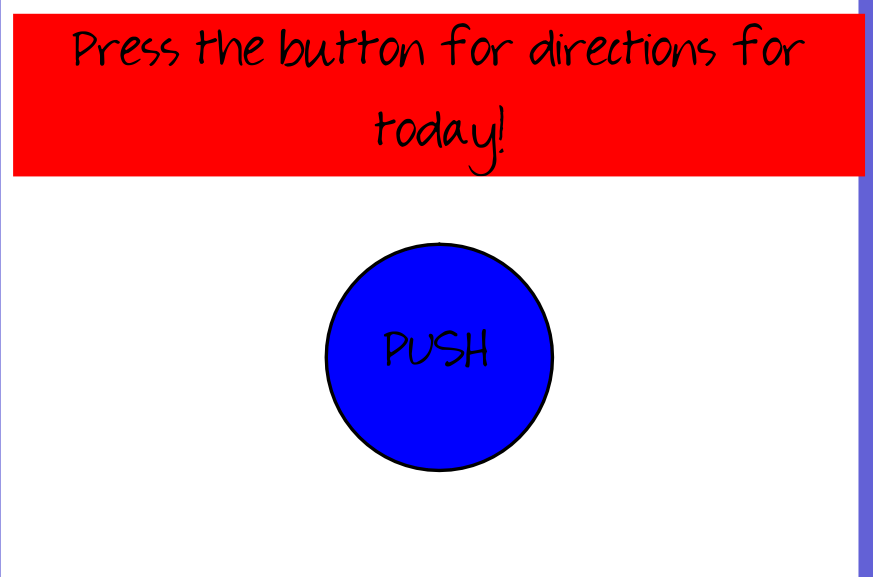
That big blue button sent them here to this video:

Next in our day was Math Workshop.  This video was a little different, but hopefully just as helpful.

Off to lunch and recess they went, and then back into the room for Read Aloud and then Reader’s Workshop.  Again, a flipchart welcomed them with directions:

Ok, well at least it had a place to send them for directions.  Those were here:

And here:

Social Studies followed Reader’s Workshop, as it normally does, and the lesson that they worked on that day was about the Natural Features of Europe:

Unfortunately this was the last day of the week, since we had a Professional Development Day the following day on Friday. We were also going to be out on Monday, too, since it was President’s Day! That meant I wouldn’t see them for what seemed like FOREVER, so I sent them off to their long weekend with this Goodbye and Good Weekend video:

Ok, so if you’re a frequent visitor to our blog, you know that I can’t write anything without ending with my thoughts and reflections.  And of course the topic of this post means that those thoughts and reflections are definitely doosies! (Is that how you spell that?  There was no choice for it in the dictionary. 🙂 )

(Now would be a great time to take a break and grab a snack if you want one!  I know I didn’t warn you that last part would take so long.  Sorry.  It’s ok, I’ll wait for you.)

Thoughts and reflections from using video sub plans:

Ease: The only reason I tried this whole thing originally is because I knew at around 6:00 the night before that I would be gone.  Since that was the case, I had lots of prep time to get it all ready.  This would not have been possible had I woken up and been surprised with an absence (like today, for example!).  Also, this was for an absence for a sick kid, not a sick teacher.  Had I been the one that was ill, this would have been almost an impossibility.  I hope, though, that since I’ve done it once now, and figured out all the logistics, the next time it won’t take me quite so long to put it all together.  And no, I don’t really want to admit how long it took me.  Ask your kiddo if you want.  I told them. 🙂  The other idea I had just now, though, is to prepare a generic “sub plan video” that could be used at any time if I had to suddenly be out.  It could then be added to my normal sub folder or uploaded to the portal that we use online to secure our subs.  Who knows, maybe I’ll start working on that one.

Logistics: I know this is partly related to the “ease” subject I just mentioned, but what I mean with this one is that there are a lot of logistical things on the school end that have to happen in order for my video plans to work like I had hoped they would.  The substitute has to know how to use the ActivBoard flipcharts I made, they have to know how to log on to my YouTube channel so the videos all play, and they have to be willing to follow the directions I gave in my videos.   So, in a perfect world, this would have been a great way for me to be at school with my students even though I wasn’t able to be there in person.

Impact: While the original reason I decided to try it was because it sounded like a great idea, incorporated technology and was something I hadn’t done before (which is often very motivating for me), I decided as I went through my planning, that maybe just seeing my face would be a subconscious reminder to follow the rules.  You know, unfortunately some kiddos tend to move into a different state of mind when they see a substitute at the front of the room instead of their normal teacher. I was also hoping that having me “teach” the normal lesson they were going to have for that day would help as they tried to keep the learning day as predictable and productive as possible.  I wanted to get the most bang for my buck.  I know that the day is never the same without me as when I’m there, but this was my way of trying to do what I could to help make it as normal as possible.

What experience do you have with using video sub plans?  What suggestions do you have for me? If you’re a parent, what do you think?  If you’re a substitute, have you used video sub plans in a classroom you’ve been in?  I’d love to know your thoughts!  Leave a comment for me. 🙂

Kids Have the Best Ideas

Remember this? We started this map a little bit ago and have been so excited to watch the pins get added to mark all the connections we’re making!

Friday was class meeting day, and so the thing that everyone wanted to talk about was our Making Connections Map.  I thought that was odd at first, because I didn’t know what there was to talk about with it.  But that’s what’s really cool about how our class meetings work (if you haven’t read about them yet, check it out here): they’re in charge of what they want to talk about, and usually their ideas are WAY better than what I would have suggested anyway. It’s there classroom, too, after all, and they know what issues are bugging them as well as I do (sometimes better!).

So it ended up that they wanted to talk about the process of putting the pins on the map.  And they wanted to talk about how I shouldn’t have to do it all by myself.  Somebody even said, “Come on, guys, Mrs. Bearden was nice enough to not give us any homework, and so we should be nice to her and take care of this ourselves.”  Love it, right?  Then they decided that since the Manager’s job (maybe I should post about our classroom jobs some day soon) to check in homework, and they don’t have that responsibility anymore, then the Manager should be the one who is in charge of adding new pins to the map each week.  Which actually makes perfect sense, since we want the map to be interactive and usually I am the only one interacting with it!  Loved the idea of how it meant they could each get their paws on it, and be responsible to find the places for the pins.  I actually though, “Duh, Mrs. Bearden.  You probably should have thought of that initially–it’s kind of the point of the whole project.”  But now it’s even better because it was my 5th grade friends who reminded me of this fact.  Thank you, friends.

Another decision they made–which I agreed with again–was that our map was entirely too small!  We had so many pins already and they were all on top of each other.  Just St. Louis alone had about 6 or 7 because we marked them as each individual town.  So we found a bigger map and hung it up and we LOVE IT!  Check it out:

They decided to move it to the other side of the room to that big wall by the door.  It’s easier to get to, and it’s somewhere we’re always walking by, so we could look at it and talk about it really easily, too.

Most of our pins right now are in the US and Canada, and our new map makes them much easier to see.

It might look like we have a lot of blog followers in the middle of the Pacific Ocean (or like my map friends don’t know where Missouri is!), but those are actually linked to a pin that’s on St. Louis.  We had a really interesting conversation about how we could label our own hometown in all of those ways.  So far we have blog commenters from St. Peters, Florissant, Fenton, Webster Groves, Crestwood, Kirkwood, and Bel Ridge–all part of the metropolitan St. Louis area.

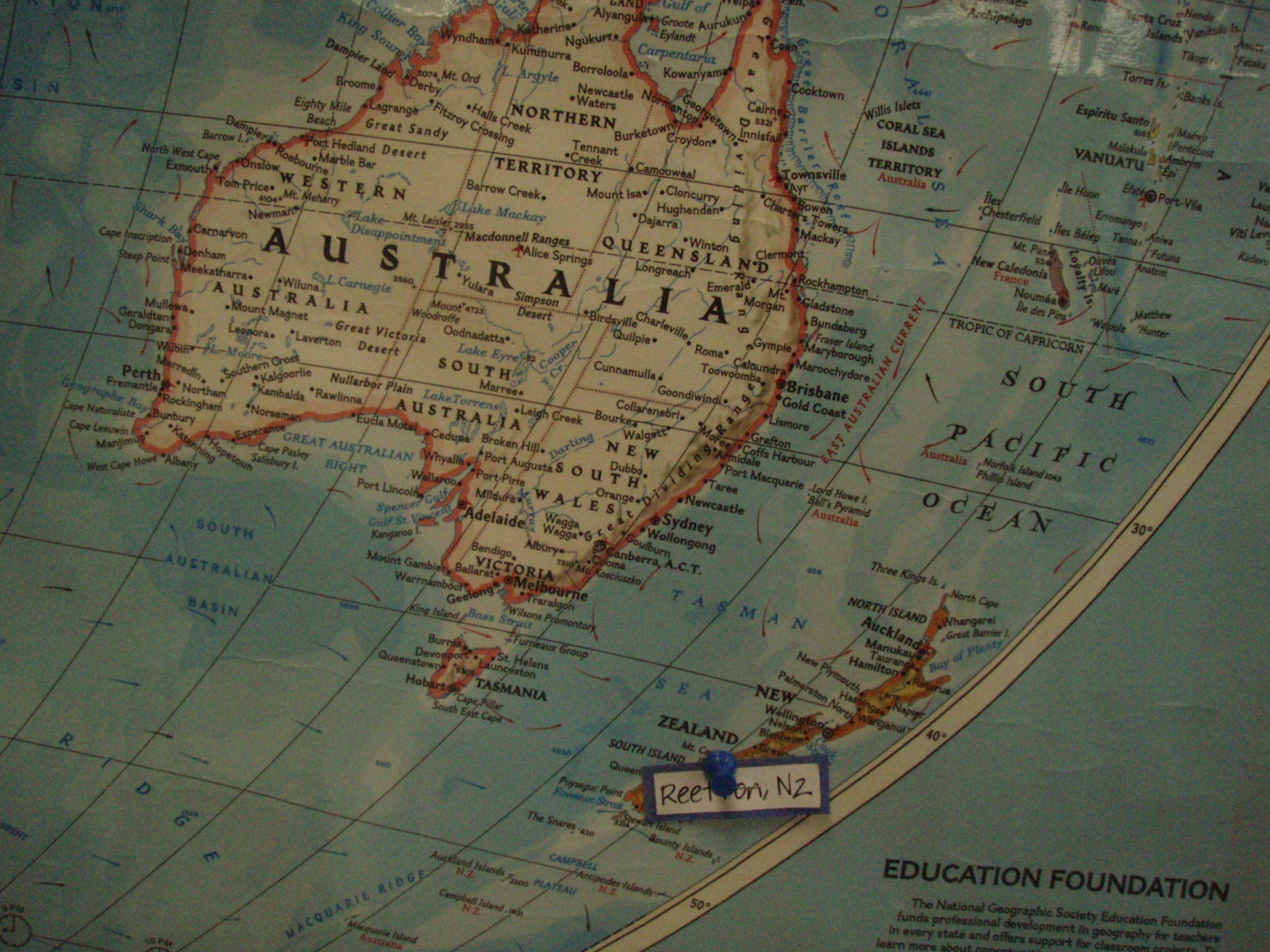
But this still might be my favorite pin.  Courtesy of Judy McKenzie in New Zealand.  Check out her class blog here. 🙂

Are you connected?

Today I was at school all by myself.  Ok, not all by myself, but without any students there.  It was a work day for teachers before students return tomorrow.  And it’s definitely a nice way to ease back into the school routine slowly.

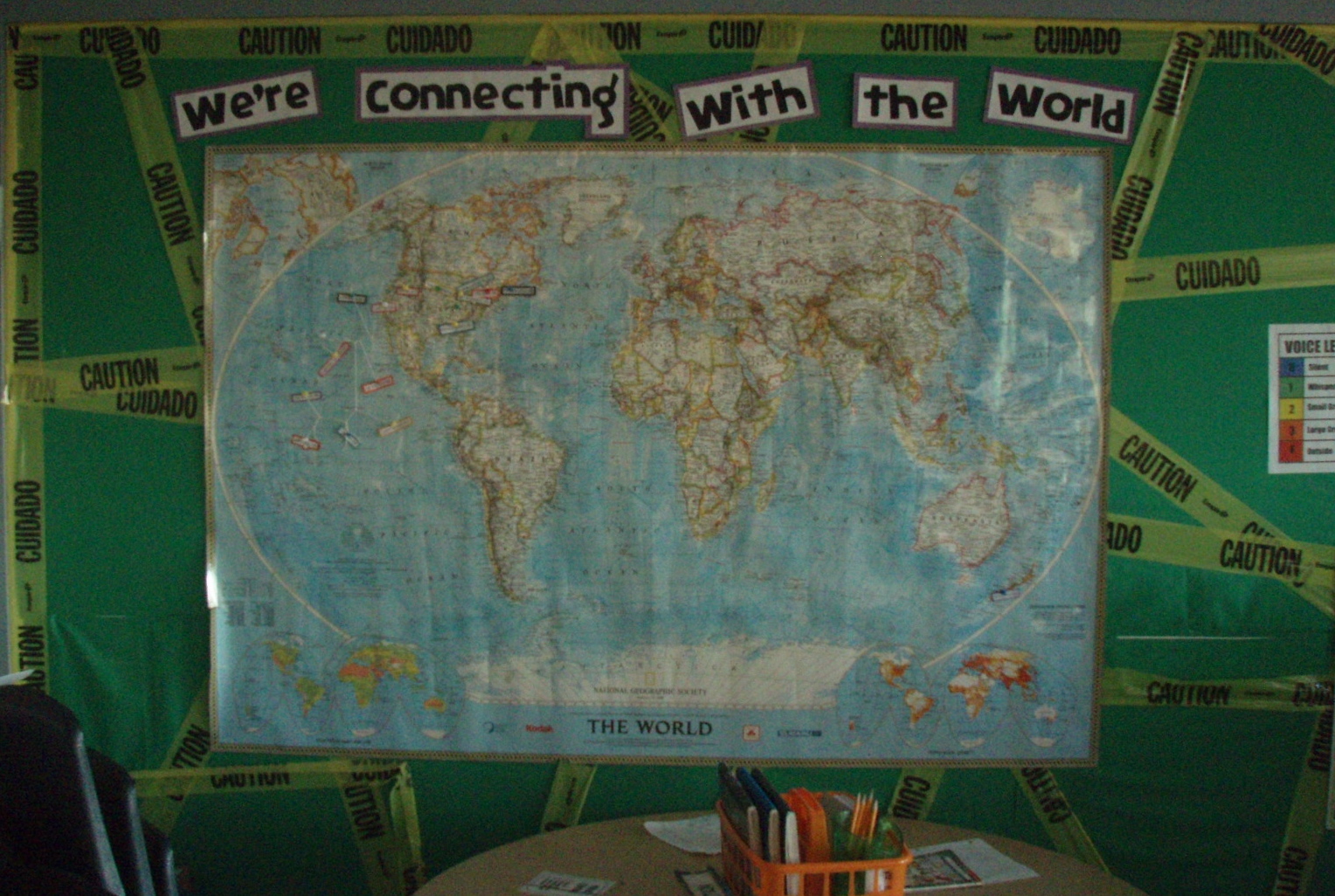
I had a couple of goals today, one of them being this new bulletin board:

It’s right at the front of the room, behind the rocking chair I sit in for read aloud and much of our carpet time.  I hope it becomes a place where we can have daily conversations about the world, specifically about the people and places we’re connecting with via our blogs.  The plan is to mark the places where visitors (and those who leave comments) to our site are from.  I anticipate some really rich conversations around culture and geography will spark from this map–thanks to you, our readers.  Can’t wait to see how full the board becomes as the year goes on.

Will you help us?  We’d love to set the goal of getting as many different pins as possible on our map! Be sure to leave us a comment after you read and tell us a little about your town and yourself.  My kids would love it if you did the same on their blogs, as well, which can be found at www.kidblog.org/MrsBeardensClass2.

Can’t wait to see who we will meet this year!