Lisa Campbell Ernst Visits Robinson!

Remember how I told you that this last week was CRAZY BUSY and full of great opportunities?!  Here’s another: we had an amazing author (who is from MO, which we love!) visit us on Wednesday–Lisa Campbell Ernst!

This was extra exciting for me, because she was the featured author the first year I was at Robinson.  As a new teacher, I was unfamiliar with her work, but because of that visit (and since then), I’ve become a big fan! She’s had a special author box in our class library for years now, too.  She’s one of my favorites. 🙂

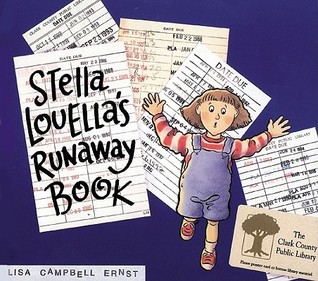
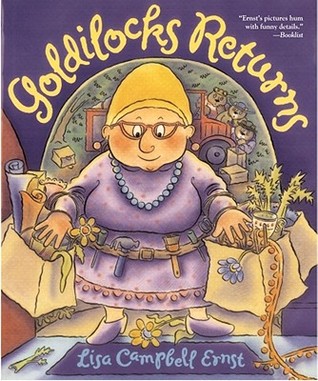
So when I heard she was coming, I was over the moon!  My kids hadn’t really heard of her yet, so Mrs. Meihaus (our FABULOUS librarian) helped us get to know her a little better with a short bio lesson, and by finding us piles and piles of her books to read (she’s published over 30!).  We particularly enjoyed:

We loved this twist on the original!

We loved this twist on the original!

This is the first L.C.E. book I ever heard and is now one of my all-time favorite books!  5th graders love it, too!

This is the first L.C.E. book I ever heard and is now one of my all-time favorite books! 5th graders love it, too!

Another twist on a beloved fairytale: what would happen if Goldilocks came back to the scene of the crime, 50 years later?

Another twist on a beloved fairytale: what would happen if Goldilocks came back to the scene of the crime, 50 years later?

4325471-1

This one is nominated for the MO Show-Me Reader Award (which primary students vote for), but big kids love it, too! While they weren't intentional, we saw many connections to Disney's Up.

This one is nominated for the MO Show-Me Reader Award (which primary students vote for), but big kids love it, too! While they weren’t intentional, we saw many connections to Disney’s Up.

We were ready for her, and February 27th was the big day–the big day that almost didn’t happen because of a blizzard in Kansas City the day before.  Luckily she made it here and was ready to present to us!

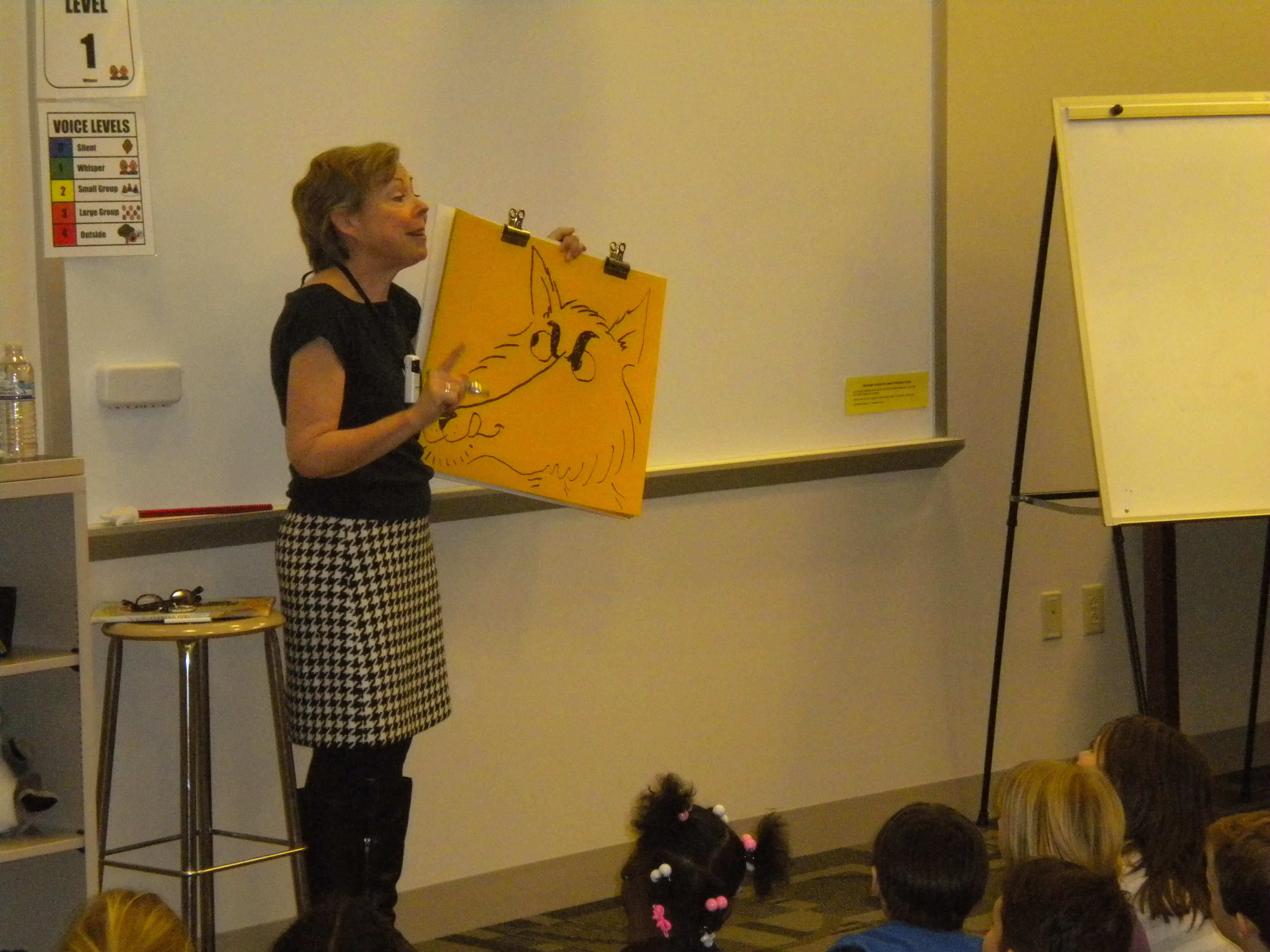
DSCN1754

See that fox? It’s the villain from The Gingerbread Girl and she was showing us how to draw him! She even made one for our school to keep! It’s on display by the library now. 🙂

Some of the best parts were the stories she told about how she decides on the ideas for her books.

Some of the best parts were the stories she told about how she decides on the ideas for her books.

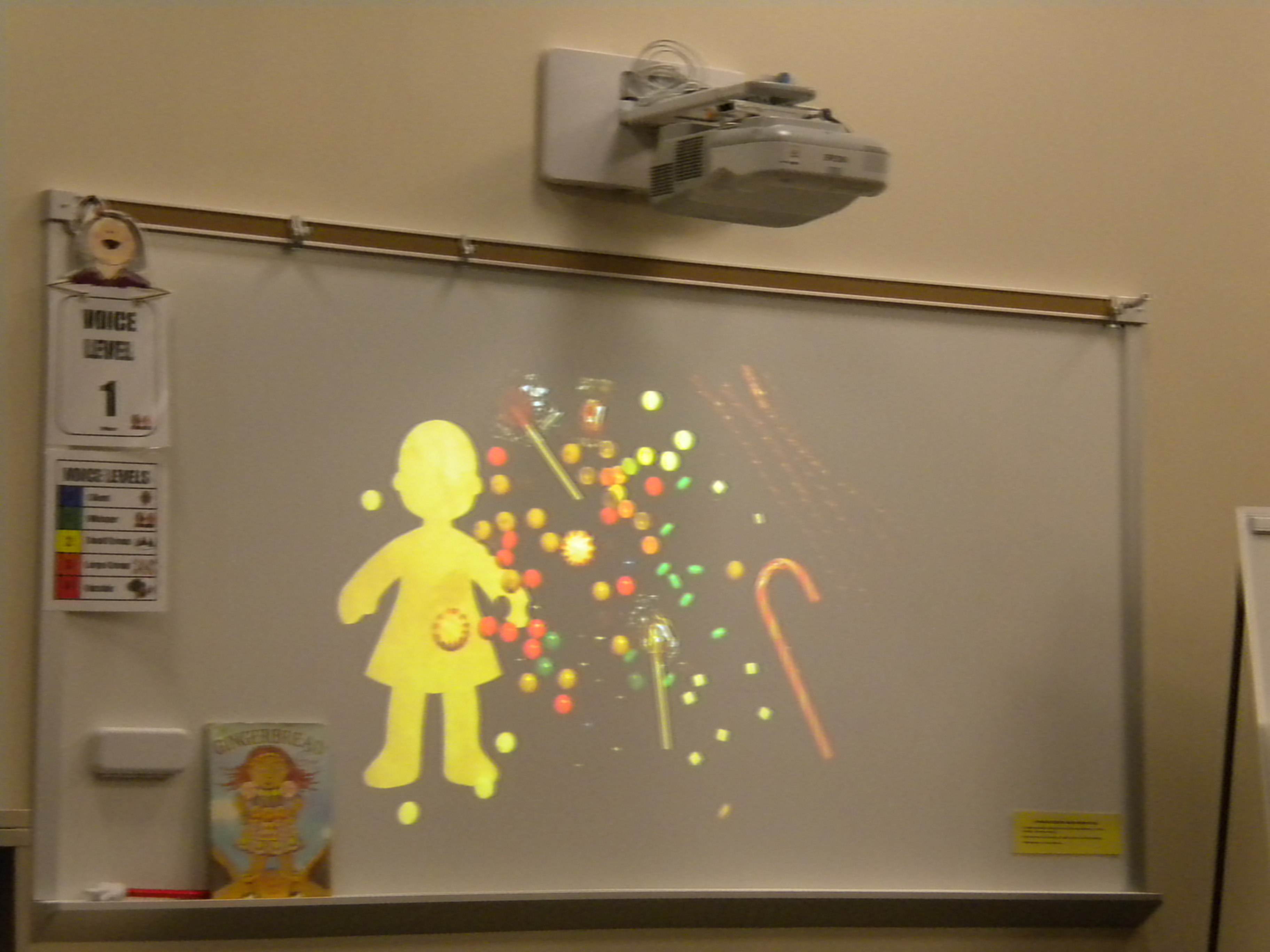
Pictures of actual candy to help with drawing the Gingerbread Girl's candy body

Pictures of actual candy to help with drawing the Gingerbread Girl’s candy body

DSCN1779

And drawing a Gingerbread Girl is harder than you think!

We really enjoyed listening to hear talk about her process as a writer.  She showed pictures of her studio, too, which was also loved (and wanted to actually see the inside of in person!).  There was a lot of time left at the end for questions, and many of ours were answered.  Most wanted to know where she gets her ideas, how long it takes to write a book and how she got started as an author (and answer is that she used to be a graphic designer, which led her to illustrations, which led her to writing–something she’d loved doing since she was a little girl!).

Once the presentation was over, and everyone else left, we found ourselves the last ones in the library and could not pass up a photo opportunity!

Say cheese!

Say cheese!


And I couldn’t either, when we ate lunch together later that day:

Gotta love being in the same room with a mentor author that you love! What great a conversation I got to share!  It's amazing how much you can learn in 20 minutes!

Gotta love being in the same room with a mentor author that you love! What great a conversation I got to share! It’s amazing how much you can learn in 20 minutes!

Oh, and one more thing I couldn’t pass up was asking Lisa if she’d be willing to Skype with us for World Read Aloud Day tomorrow–which she was willing to do!  We’re excited to continue our conversation tomorrow afternoon.  I’ll be sure to share soon!

These Are a Few of My Favorite Things (To Read To My Students!)

Remember how I told you about EdCampStl?  One of the great people I met (or was actually reintroduced to) was Ms. Ferguson, who had done some work in my school several years ago.  We found out we both teach 5th grade and are both named Jen, which was a funny coincidence.

Well, since we are both 5th grade teachers, the conversations we shared were mostly around comparing what we do and how.  So when she asked about my favorite read-alouds, I figured that both for her and for me (and for you!), I’d write a whole post about it! Here are a few of my favorite things to read to my students!

I have written about read aloud before here and here, and you can probably tell it’s a big deal in our classroom.  I am so excited to share a good book with a group of kids who have never heard of it before, and even more excited when they love it as much as me!  Let me tell you about some of my go-to reads:

1. There’s a Boy in the Girls’ Bathroom by Louis Sachar (When I taught 4th grade, I always started our year together with this one.)

2. Crash by Jerry Spinelli (One of my all-time favorites that I read EVERY YEAR! Well except this one, because they heard it last year.  😦 )

3. Clementine by Sara Pennypacker (Even big kids love the antics of Clementine!   It’s a great end-of-the-year fast read, too.)

4. Fig Pudding by Ralph Fletcher (See that note about Crash?  DITTO on this one.  Read it EVERY YEAR and it’s a classic, for sure!)

5. Who’s Stealing the 12 Days of Christmas? by Marsha Freeman

6. Who’s Stealing Halloween? by Marsha Freeman (These are great, easy mysteries that my kiddos always love.)

7. The Trumpet of the Swan by E.B. White (As a child, I have fond memories of my 3rd grade teacher reading this one aloud to me, and so I had to return the favor to my students!)

8. The City of Ember by Jeanne DuPrau (I did this one totally backwards and saw the movie first, but once I read the book, I was really sold!)

9. Pleasing the Ghost by Sharon Creech

10. Granny Torrelli Makes Soup by Sharon Creech

11. Walk Two Moons by Sharon Creech (This is another one of my EVERY YEAR reads.  Oh, and can you tell I’m a Sharon Creech fan?)

12. Frindle by Andrew Clements (I’m not usually an Andrew Clements fan (I know–gasp!!), but this is a great first book because it’s fun and easy for everyone to dig into.)

13. Go Big or Go Home by Will Hobbs (I found this book because it was nominated for the Mark Twain award a couple of years ago and it’s on my “good” list now.)

14. Found by Margaret Peterson Haddix (Also a Mark Twain nominee–what a twisty story!  We were on the edge of our seats the whole time with this one.)

15. I Am David by Anne Holm (This was another saw-the-movie-first one, but I am now so in love with David’s story that this is an EVERY YEAR book now!)

16. The Boys Start the War by Phyllis Reynolds Naylor (Great beginning of the year read aloud–everyone loves it!)

17. Chasing Lincoln’s Killer by James L. Swanson (I found this one last year after a recommendation from my husband, who is also a teacher.  It’s a little graphic, but is an interesting non-fiction read aloud that kept my students riveted!)

18. Marshfield Dreams by Ralph Fletcher (Also a recommendation from my husband, this is Ralph Fletcher’s memoir and is the PERFECT companion to read with Fig Pudding.  Perfect picture of how your writer’s notebook informs your writing!)

19. Because of Mr. Terupt by Rob Buyea (This is a brand new one, but will become an EVERY YEAR book next year when I read it again!  What a great beginning-of-the-year read to set the tone for the year.  We learned a lot about how to treat each other well with this one!)

20. Wonder by R.J. Palacio (WE LOVE AUGGIE! This is one of the most heartfelt, meaningful reads I’ve come across in a long time.  Another EVERY YEAR read!)

21. Theodore Boone: Kid Lawyer by John Grisham

22. The Miraculous Journey of Edward Tulane by Kate DiCamillo (Yet another recommendation from my hubby–man does he know good books!–that will become an EVERY YEAR read for me.  Great, moving story with amazing vocabulary.)

23. The One and Only Ivan by Katherine Applegate (Just started this one with my class, but I KNOW they’re going to LOVE it!  This one just won the Newbery, which confirms that it’s a great book, but I as already in love.  Moving and life changing.)

Whew!  That’s a lot longer list than I thought it’d be!  There are just so many good ones!

What are your favorite read alouds?  Are any the same as mine?  Share your favorites here–maybe I’ll have to add them to my list! 🙂


Happy Literature Circle Day!

Aren’t you excited?  It’s the first day of your new Literature Circles!  I’m excited to see where this journey will take you, and to hear all the FABULOUS conversations that will result from your close reading of your book.

I would love you to share your first thoughts with the world, so today’s response will be on your blog, not on Edmodo.  After your group has met, please compose a post that includes these things:

1. What is the book that you are reading and discussing (include the author and UNDERLINE the title!)

2. How would you describe the conversation?  Pick only ONE WORD and be sure to tell why you chose it.  For example, you might say it was LIVELY because everyone was really excited to share (and no, you can’t use that word.  It’s mine. 🙂 ).

3. What was something you did to contribute positively to the group?  On the other side of the coin, what is something you could do differently next time to make your conversation even better?

4. What are you looking forward to in your next meeting?

As always, be sure to show what you know about what good writers do (use correct mechanics, choose appropriate words, write in paragraphs, think about the audience, etc.)!  I should see proof of what you know in your writing, as well as see the answers to my questions!  Oh, and use the tags literature circles, reading and fun for your post (plus any others you want to add!).

Can’t wait to hear how it went! 🙂

Literature Circles–Book Trailers!

Today is an exciting day for you.  Today you will get to choose the book you’ll read and then discuss with your new Literature Circle!  I hope that this is a great experience for you, both as you make your book choice, and then even more as you learn and grow with your group.  So, now you’ll begin your journey as I give you a sneak peek of the books from which you’ll have to choose.  Please watch the trailers and read the reviews here, and then give me your first, second and third choice for which book you’d like to read.  You’ll write your choices on an INDEX CARD, NOT in the comments here, because I want them to be private.  In your note, please include how you know it’s just right for you and why you’d like to read it. I’ll let you know which group you’re in by Monday, January 28.  Happy book shopping!

1. The Watsons Go to Birmingham by Christopher Paul Curtis   LEXILE: 1000

Book Trailer: The Watsons Go To Birmingham – 1963 from Carolyn Martin on Vimeo.


2. A Friendship for Today by Patricia McKissack


3. Ghost Dog Secrets by Peg Kehret  LEXILE: 730


4. Captain Nobody by Dean Pitchford  LEXILE: 750


5. Out of My Mind by Sharon Draper  LEXILE: 700

Close Reading

We’ve been working on close reading lately in Rm. 202.

I know–before this past summer I wouldn’t have known what that was, either.  If you haven’t heard about Common Core yet either, it’s another thing that is on the forefront of every educator’s mind right now, too.  And while reading closely isn’t a new thing, necessarily, the importance of it is perhaps emphasized now, more than ever.

I found a great post about close reading when I was doing some research on it the other day.   I was looking for directions for exactly how to present to my 5th graders.  What I love about this one, is that the way it was described had pieces that I knew my readers would already be familiar with because of the S.H.A.D.O. strategies we had learned earlier this year in Reader’s Workshop.

I love how Dr. Douglas Fisher describes it in a recent video:

A close reading is a careful and purposeful reading. Well actually, it’s rereading. It’s a careful and purposeful rereading of a text. It’s an encounter with the text where students really focus on what the author had to say, what the author’s purpose was, what the words mean, and what the structure of the text tells us.

So I made this chart to help my friends remember what to do:

IMG621So like I said, it’s not really anything new (at least not to me and probably not to you, because we’ve been reading for a while now), but to my 5th graders, it does equal something new in how deeply they are expected to look at text.

While I’d love to say that I’ve always taught students to read and reread and reread again, I’d be lying if I did.  Yes, we talk about rereading as a fix-up strategy for monitoring comprehension, I’ve never emphasized it as something that good readers do on a regular basis.  And I know I’ve never talked about it this in-depth.  It’s never before been an expectation for how my readers will dig into a text to really get at the what and why, the “meat” of a text.  And it’s never had a name.

I think the big thing I’m trying to get at, really, is that I haven’t ever emphasized it this specifically with my students.  I haven’t asked them to pay such close attention to when they’re rereading and how they’re rereading.  Reading and rereading have now become one.  Now the expectation is that they will always reread, more than twice, as a means of better understanding the text at hand. The big idea of reading now, forever and always, will be to dig deep into a text, to really get to know it well, like a good friend.  Regardless of what that text is, I want them to make it their friend–knowing it so well and closely that I could ask them anything and they’d be able to tell me more.  And yes, ideally, I’d like them to want to do it because they desire to be a better reader, not because their teacher said so.

And so that brings up an interesting conversation we had today during Reader’s Workshop.  We were reviewing some questions we’d answered on a monthly benchmark assessment from the other day; we’d practice closely reading on the text and so were expected to have really understood what it was trying to say.  As we discussed our answers and gave evidence from the text to support our thinking, I could tell that most had done a reasonably good job of getting the main idea of the text; most of our answers were correct also.  As we were moving on, and most of us had agreed that reading more closely had helped, a question was raised:  But do we always have to do a close reading?  I don’t really want to.  It takes too long.

AHHHHH!! Just when I thought I had them, there it was.  A friend who needed convincing.   And what I loved was that many other students jumped in to answer the question for me.  That’s key, I think, actually–often times things mean so much more when they come from peers rather than adults.

What came next, though, instead of a real answer was another question, and this came from me.  It was related to purpose: So yes, you should do a close reading every time you encounter a new text, but why?  Why should you want to?

Their answers were interesting and got me thinking about how we define reading.  Many of their answers were related to “getting good grades” or getting the “right answer.”  So I kept digging: Ok, well let’s back up.  What is reading?  How do you read?

Again, answers were all over the place, none of which really getting at the main purpose: Reading is making meaning.  It’s understanding what the words on the page mean, and how they work together to help you understand the message of the author.  And as a reader, you should want to understand.  You should not be happy with not “getting it.”

At the very least, this conversation today got me thinking about how I proceed.  And how I start next time.  Perhaps we should have talked about close reading way earlier than now; had I named this strategy in August and set it as the expectation from Day 1, it wouldn’t be so scary now.  But I’m also intrigued by what we’re teaching our readers (and writers and scientists, etc.) about why we do what we do.  Somewhere they’ve still gotten the idea that they’re supposed to do something for the grade, the right answer, or because their teacher told them they were supposed to do it.  That their motivation should be something extrinsic, not just the mere enjoyment and satisfaction of learning something, understanding what an author is trying to say to them.  I hope to begin to grow a group of readers (learners, really) who know that they have a toolbox of strategies that they can use–that they should know how to use and when–and that use them at their discretion to solve problems, to understand and to learn.

But alas, this is not something I’m going to change today.  Or tomorrow, even.  But I can start.  I’m hoping that I have started this already with my “forever and always” thinking we talk about so often.  This fits into that beautifully: I want them to learn to closely read a text so that they will “forever and always” be able to understand any text they encounter, not just to get the answers right on their monthly Edison benchmark assessments in 5th grade.   I just have to keep pushing to convince them that this matters.

So I have a question or two (or four) for you:

1.  How have you presented close reading with your students? I’d love to hear what you’d add, or suggestions you have.

2. How would you define reading?

3. What reasons do you give for why we should want to understand text we read?

4. What other thoughts do you have?


The Story of How Alphabox Changed My Life

I love learning.  It’s part of the reason I became a teacher in the first place.  And as my kids will tell you, we’re all teachers in our room, so I’m learning every day!

Aside from learning my students, however, I learn many things from my colleagues, as well!  That’s part of what makes me a better teacher–finding out about new strategies and techniques that are working for others and trying them with my students.  And this is how I found out about the Alphabox.  Credit here needs to go to my friend and 5th grade teammate, Genie Hong.  She introduced me to this strategy the other day and it quickly changed my life forever.  Really it did.  Keep reading. 🙂

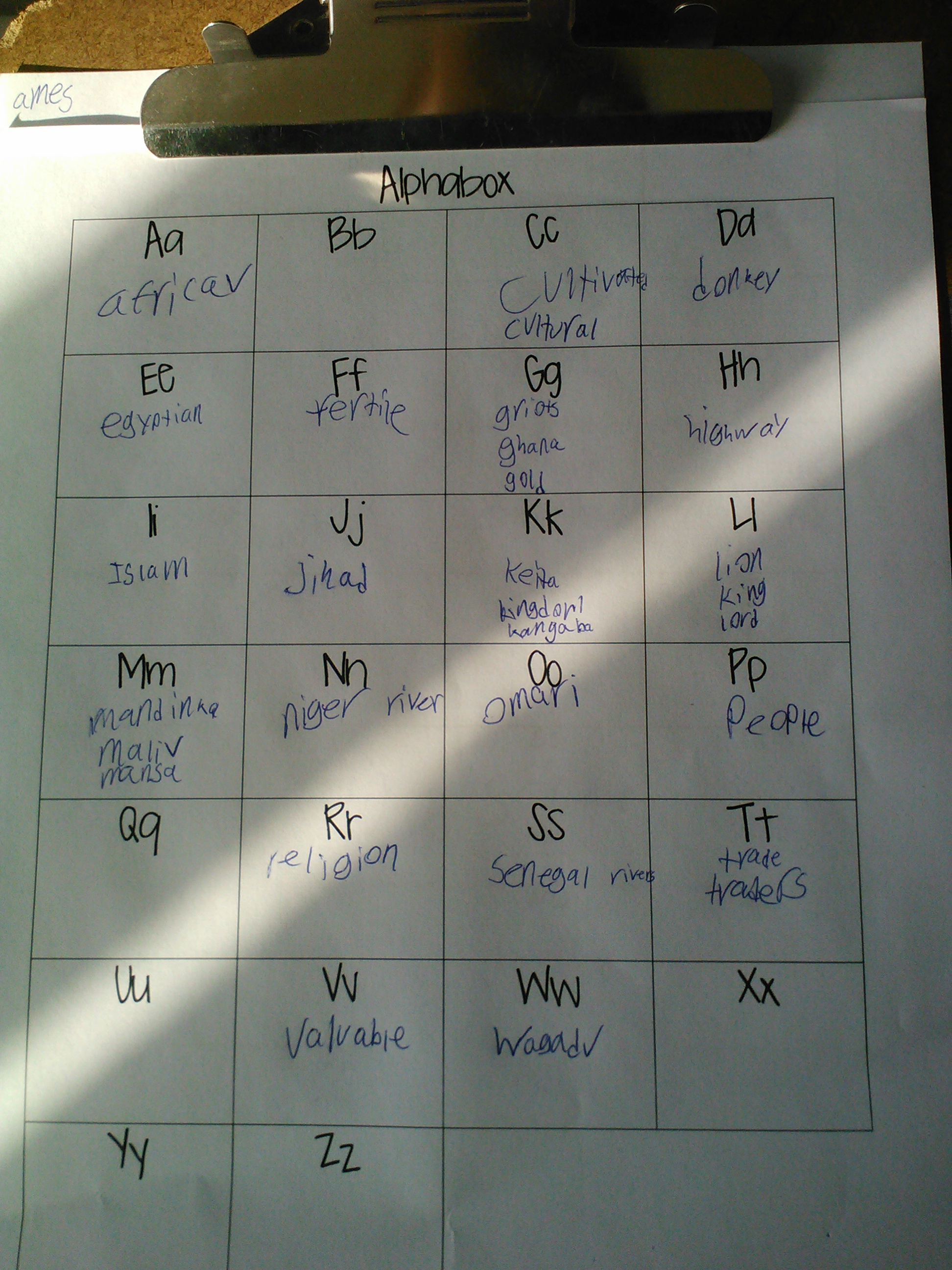
Really it’s pretty simple: and Alphabox is a sheet of paper with boxes that each have a different letter of the alphabet in them:

But then the  magic happens.

The Alphabox is an organizer that is aimed at helping students summarize information, by choosing the most important word from a text that they’ve read that starts with each letter of the alphabet.  It can be used with anything, really, but we started with some information we needed to read and digest in our Ancient West Africa unit.

A filled-out Alphabox looks like this:


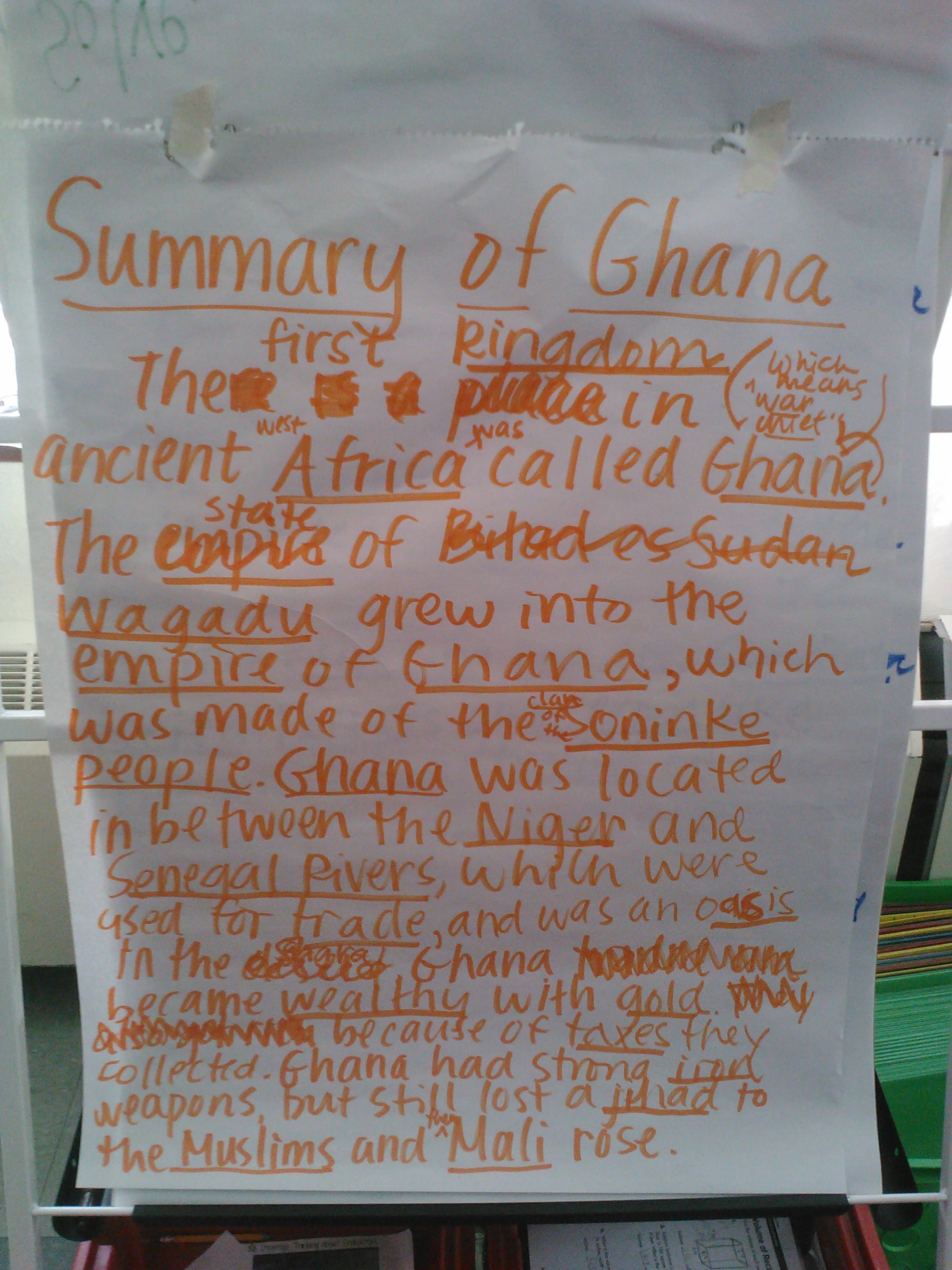
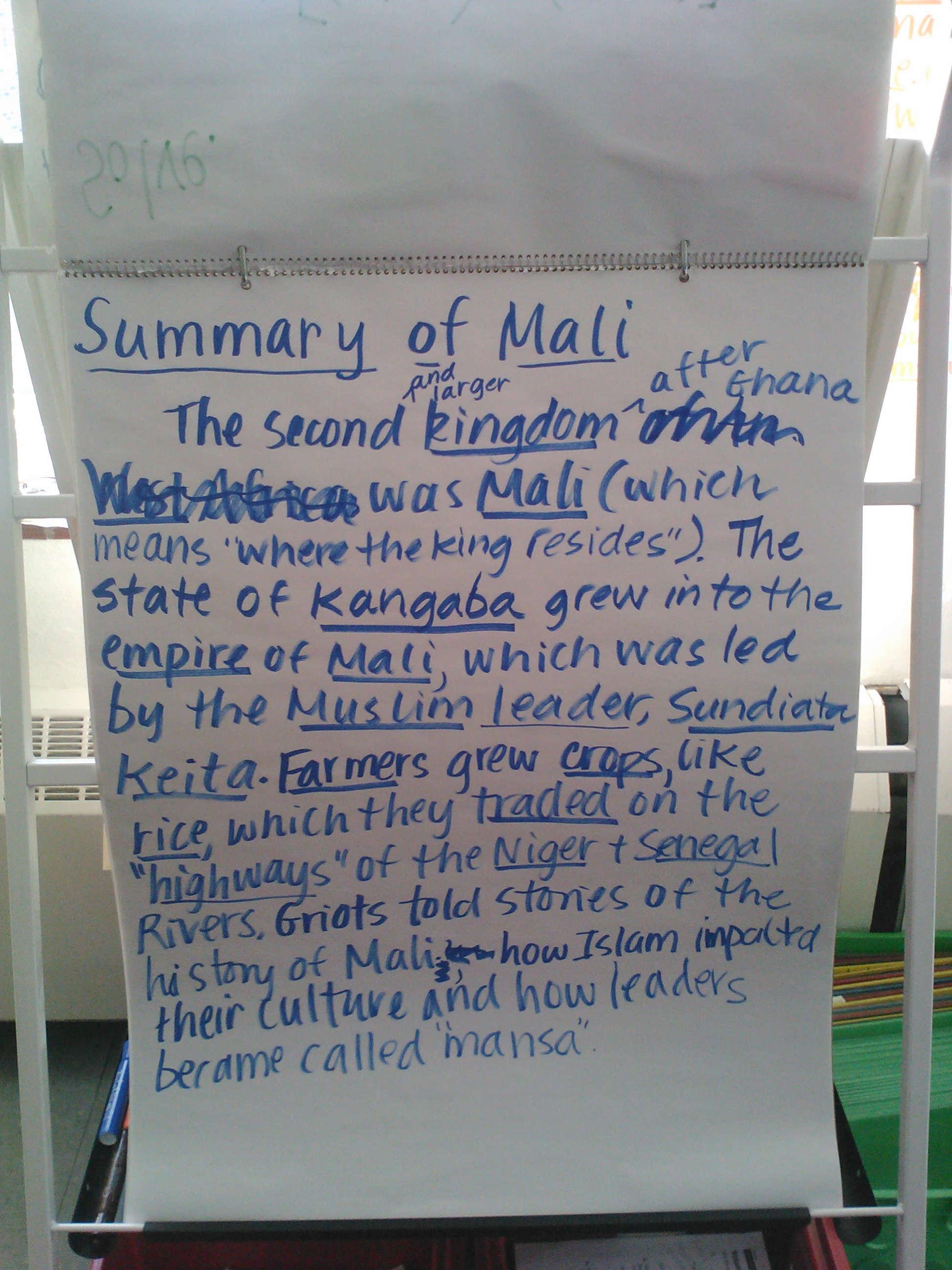
The next step is to put down the book, pick up your paper and try to summarize the part you just read using only the words on your Alphabox!  The first time around this was a bit tricky (some would even say hard!), but once we got into it, we go the hang of it, and really started to enjoy it, actually.  I’ve had several kids mention that they like how this organizer helps them really focus on the important ideas and it sticks in their brains better than things we’ve done before.  I would agree.

Here are some paragraphs we wrote together with our alphaboxes (and sorry for the fact that they have mistakes–I only got pictures of the rough drafts.  I recopied them before I hung them up, I promise!):

I love it when you learn something new and it totally rocks your world! I wonder what I did all those years before I knew about the Alphabox.  It’s so simple, but so powerful.  You should totally try it.  We’re using it all the time now. 🙂

Have you ever used an Alphabox to organize your important ideas?  Tell us what you think. 🙂

Classroom Library Tour

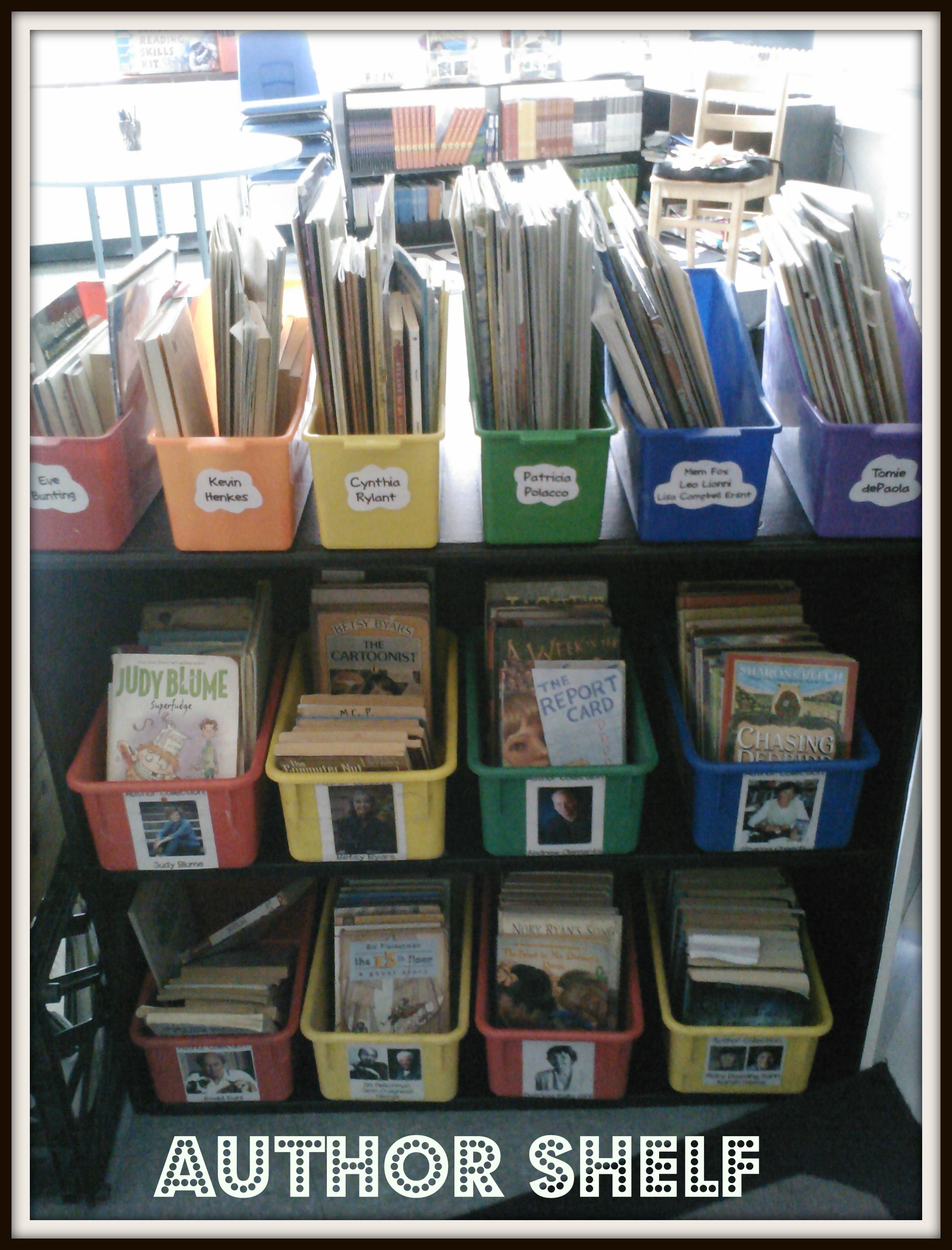
Don’t you love this picture?  I do because I love our library, but also because I just used picmonkey.com to edit it.  For free.  COOL!  But I digress…

For some reason I have never put any pictures of our library on here.  Which is funny because I love our library, but also because it’s one of my favorite things to check out on other people’s blogs.  So here it is–finally!

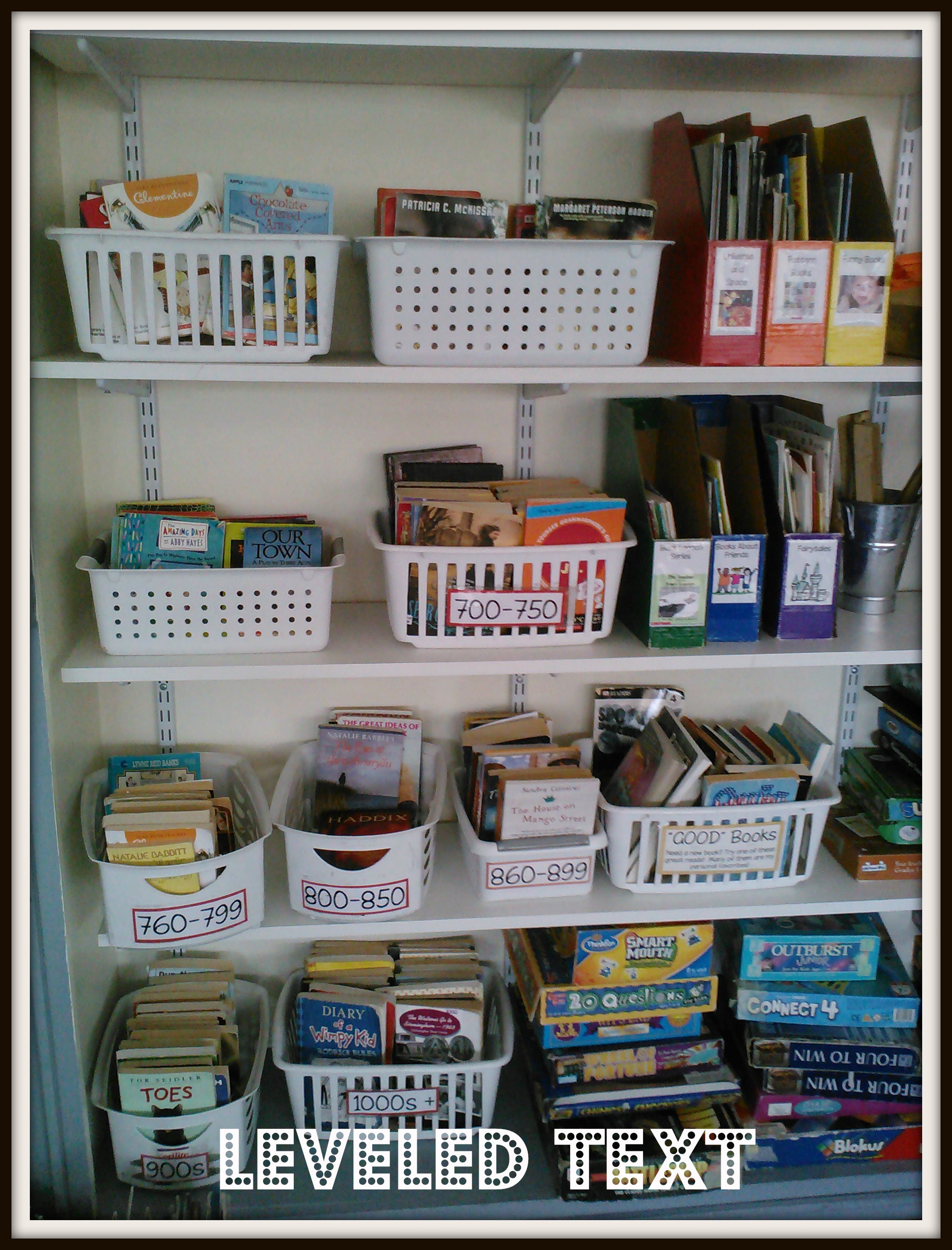
Several years ago I went through and made labels with pictures and authors’ names, after seeing the idea in someone else’s classroom!  This is one of my favorite places in our room.  Not sure if it’s because is has some of my favorite books, or if it’s because it’s pretty.  The rainbow boxes look so good in that black shelf, and are so organized (well at least I think so)!

Here you will find the end of the alphabetized author boxes, along with series like The Babysitter’s Club, Harry Potter, Magic Tree House and some genre boxes for fantasy and mystery.  There are other genres on an opposite wall–just didn’t have a pretty picture of them. 🙂

And yes, I know those 400, 500, and 600 boxes are missing labels!  I just keep forgetting to come back and do that.  😦

The box labeled “Good Books” has been around for a couple of years and has some of my favorites.  I lead kiddos there when they are just looking for a “good” book to read.

I love the label I put on this box.  So many “big” kids think they’ve outgrown picture books, but most of them were actually written at reading levels for older kids to work on independently anyway.  I encourage my “big kids” to try these every so often.  And usually they do. 🙂

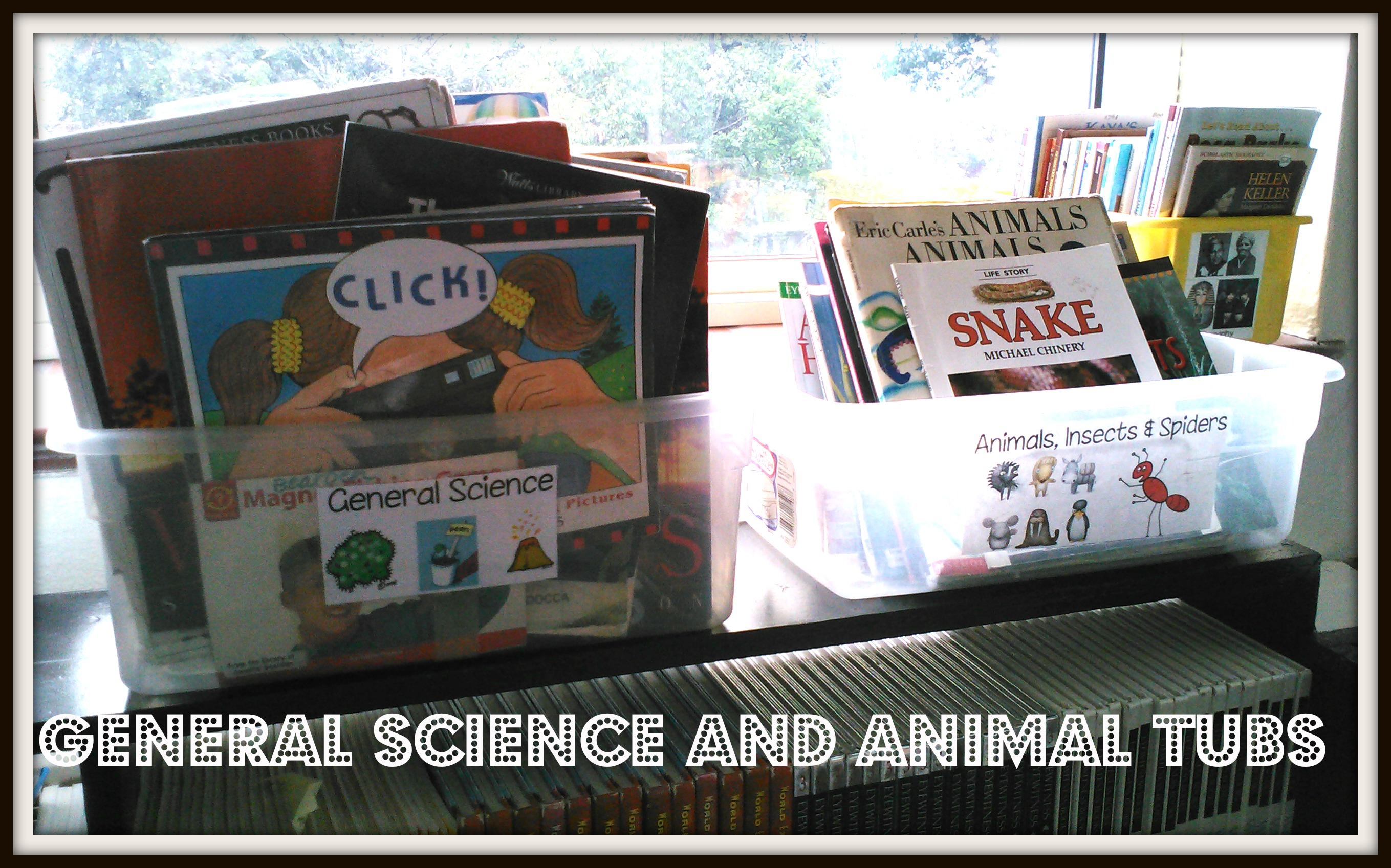
While our main library is on the other side of the room, it’s mostly fiction and filled with chapter books.  Over here, next to our ActivBoard meeting space, are nonfiction collections.

Thanks for taking a tour of our library!  Glad you stopped by and love to hear what you thought. 🙂

Reading Museum

All during the first week of school, we spent our time in activities to get to know each other better.  During our second week, we continued, but with the focus of getting to know each other better as learners.

So on Friday during Reader’s Workshop, we held a Reading Museum.

The idea was simple, really.  Each reader in our room–including me!–set up an “exhibit” that told something about themselves as readers.  Then we went around to each exhibit (after having a quick conversation about expectations–you have to act a certain way in a museum, after all) to see what each person laid out.  We made connections to other readers’ books and asked questions we had, too.

Once we were finished, we debriefed on what we had learned during this activity and how it would help us in the future.   What a fun way to spend a Friday afternoon!

Check out some pictures from our museum:

This slideshow requires JavaScript.

Have you ever been a part of a Reading Museum?  What books would you put in your exhibit?  We chose books that we liked, that we’ve read over and over, that someone read to us when we were little, etc.  We’d love to hear about your selections!  Leave us a comment, please! 🙂

I Love Jerry Spinelli!

…but don’t worry, my husband’s totally ok with it. 🙂

Remember when I told you about me as a reader?  And as a writer?  Well, as #10 on both lists (which is a strange coincidence!), I mentioned that Jerry Spinelli is one of my favorite mentor authors.

I was introduced to Jerry Spinelli’s work via my good friend Michelle Simmons, and her love of his book Crash.  We taught together many years ago, and she introduced me to it as one of the first read-alouds of the year.  But not only did we read it to enjoy it as readers, we incorporated it into our writing unit on Reading Like a Writer.  We’d reread parts of the text that we’d already heard, this time digging for nuggets and craft moves we could use in our own writing, teaching our students to do the same things.  You can find amazing things in that book if you pay attention.  And because Crash is such an amazing book on so many levels, it is a must-read every year in my class now.

The reason I write about this today, though, comes from inspiration of another colleague of mine.  I have a new teammate, Bridget, who shares my love for Spinelli and his many great stories.  We were talking about some of our favorites, and I had to sheepishly admit that while I was aware of, and even own most of his books, I have only ever actually read Crash.  I know–that’s just silly.  So they became the majority of my to-be-read pile this last month.  Only makes sense, right?  On so many levels.

First I read Eggs–one I’d actually started at the time I first bought it, but never finished.  Just today I finished Maniac Magee.  I know–how could I have never read that one?  It’s a classic.  And it won the Newberry Medal.  Sorry!  I’m lame.  But I’ve made up for that now, right?

I have Loser and Wringer here in my pile, still waiting for their turn.  I hope to get to them soon, as well.  And while now my list of Spinellis-I’ve-read is only 3, my initial opinion on his writing holds true.

I know–you wonder, “What is it that love so much about his writing?”  It’s many things, really.  I love the way his writing sounds.  I know that’s hard to explain, but I’ve heard it many more times out loud than in my head, since I read it to my students, and every word just has such a great ring to it.  Like he chooses each and every one specifically to be there together.  I like that he seems to break every established rule of grammar and mechanics and still ends up with an amazing story that makes sense.  He writes sentences that have only one word, chapters and paragraphs with only one sentence.  But because he does it on purpose, it works.   I like how the characters in his stories have real conversations.  They actually sound the way that kind of person would sound in real-life–not some sweet, idealized, sugar-coated way because they’re in a book for kids. Raw and real.  Sometimes saying things that shock you, because that makes sense for the character.  I like that he writes about things that matter, things that both kids and adults can relate to.  Bullies. Friends. Racism. Families. Things that aren’t so pretty.

So like I said when I started, I love Jerry Spinelli!  I learn from him every time I pick up a book he’s written, and he’s a mentor even though I’ve never met him.  That’s pretty cool, I think.

How ’bout you?  Who are your favorite authors?  Who do you have as mentors for your writing?  What books are your favorite to read? Share with me. 🙂

Summer Homework?

Yes, I’m giving you homework.  What??  Summer homework?  You hardly gave during-the-school-year-homework, Mrs. Bearden!  I know, but now you have lots more time, right?  And don’t worry–it’s easy and fun.

Read.  Your homework is to read.  Read whatever you want–the sports page, the back of the cereal box, or…a Truman Award nominee.  Remember how we read some Mark Twain nominees this year?  Faith, Hope and Ivy June and The Secret of Zoom were nominated for this Missouri award, and I know several of you also read some of the others, like The Potato Chip Puzzles and Love, Aubrey.

Well, lucky you, now that you’re in 6th grade (well almost!), you get to vote for another MO award–the Truman Award.  This one is for 6th-8th graders, and the rules are the same: read at least 4 of them and you can be one of the many other MO middle schoolers who choose the lucky book to win this award! Find the list for 2012-2013 here. And I must be honest here: I was going to insert all of this information in this post for you, but the post I linked to is really well done, so I chose that one instead. 🙂

Now for my summer homework….it’s reading, too.  But not Truman Award nominees.  I’m reading new Mark Twain nominees to decide which to read to my new class of 5th graders coming this fall.  I think technically this award is chosen by 4th-6th graders, so maybe you’re just double lucky and can vote for both of them!  I’d also love to hear what you, my friends, think about what my new kiddos would like.  Read some of the new nominees and then tell me what you think!

This is my short list right now:

Because of Mr. Terupt by Rob Buyea (thinking about this one for the beginning of the year)

Theodore Boone: Kid Lawyer by John Grisham (I love his writing as an adult, and I had another 5th grade friend who LOVED this series a couple of years ago.  This should be a good one. )

Ghost Dog Secrets by Peg Kehret (you know my thoughts on Peg Kehret’s books, but kids LOVE her, so I need to try this one, too.  Crossing my fingers…)

Half Upon a Time by James Riley (this is a crazy twist on familiar fairytales and looks pretty funny)

I am also going to try When You Reach Me by Rebecca Stead.  My friend Archie gave it to me as an end-of-the-year present, and Mr. Bearden recommends it, too.

But the best part about all of these reading plans is that I just got this big stack of books from Barnes and Noble, and it WAS ALL FREE!!  Ok, I think I may have spent $5 or something, but I bought the rest with a gift card (big thanks to Dr. Wheelehan!!).

Alright friends, you have your summer mission.  Let me know how it goes, and I will hopefully update you on how it’s going for me on here, too.  Happy Summer Reading!

What other suggestions do you have for summer reading or for 5th grade read alouds?  I’d love to hear your thoughts!