Book Trailers

We watched our first book trailer together when we read The One and Only Ivan earlier this year.   We were mesmerized by how it drew us in and made us want to read the book–even more than we already did!  Then we went 1:1 with iPads, and I knew that this would be something we’d have to do for ourselves, especially since we had some iMovie experts in our midsts (yes, I’m talking about you, Anna K., Aiden and Jack!).

Then, it was time to start thinking about service learning projects, too, and suddenly it all seemed to fall into place….

I was having a conversation with our librarian, Mrs. Meihaus, about my idea for wanting to learn about  book trailers (and at that point I didn’t really have a direction I wanted to go in, or anything more than a desire to do it), and she told me about an idea she’d just learned about from our Scholastic rep–just the day before!  Talk about good timing.  This idea she’d found out about involved creating cards on the shelves that link QR codes to book talks, to help readers as they make decisions in the library.  Seemed like a perfect fit!

So we just dove right in and started making movies the next day, right? Nope.

We had a TON of work to do first.  And what was great was that my kids knew what that work was without me even telling them.  I just asked the question “What do we need to know before we can start our book trailer project?” and this is what they said:

It's messy because we used it as our checklist to make sure we had done all of the prep work before we go to our movies.  What a great example of kids creating a project--they led us where we needed to go!

It’s messy because we used it as our checklist to make sure we had done all of the prep work before we go to our movies. What a great example of kids creating a project–they led us where we needed to go!

We spent many days together reading book reviews, and learning what was supposed to be included in one.  We read examples of them, and practiced writing our own on books we’d read together and individually.  We watched several examples (both good and bad) of book trailers and kept notes about what made them successful, i.e. which ones made us actually want to read the featured book and why.

About that same time, I came upon a Twitter chat where the topic was book trailers and several teachers were sharing ideas for how they make these productive with their students.  I LOVED the idea that Jenn Fountain (@jennann516) was sharing about how she managed student made book trailers.  The way she used storyboards to help students thoughtfully plan the pictures and the text they wanted to include was the missing piece of the puzzle, and seemed to be just what we needed!
IMG_0849

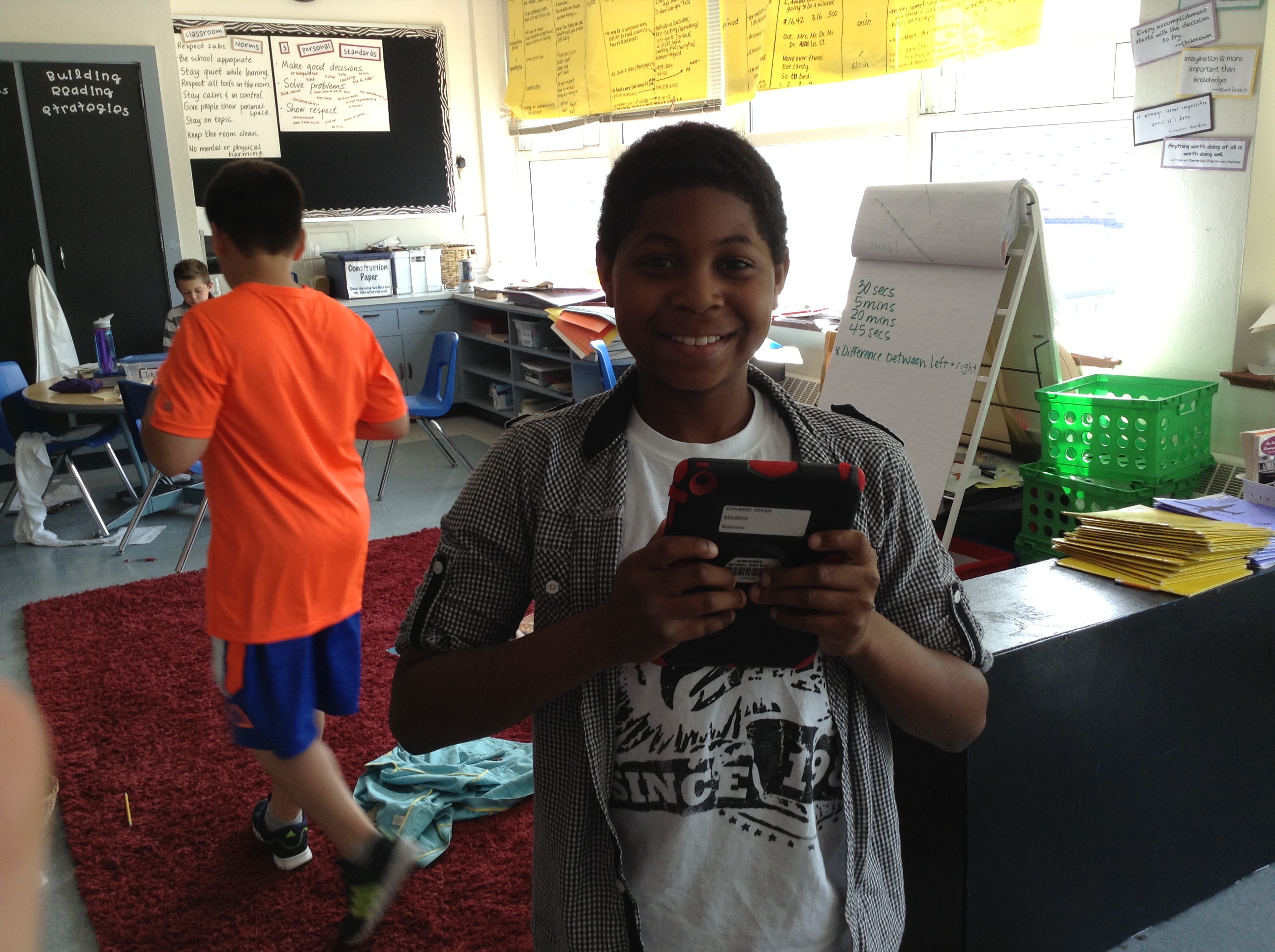
Devan loved this project!

IMG_0850

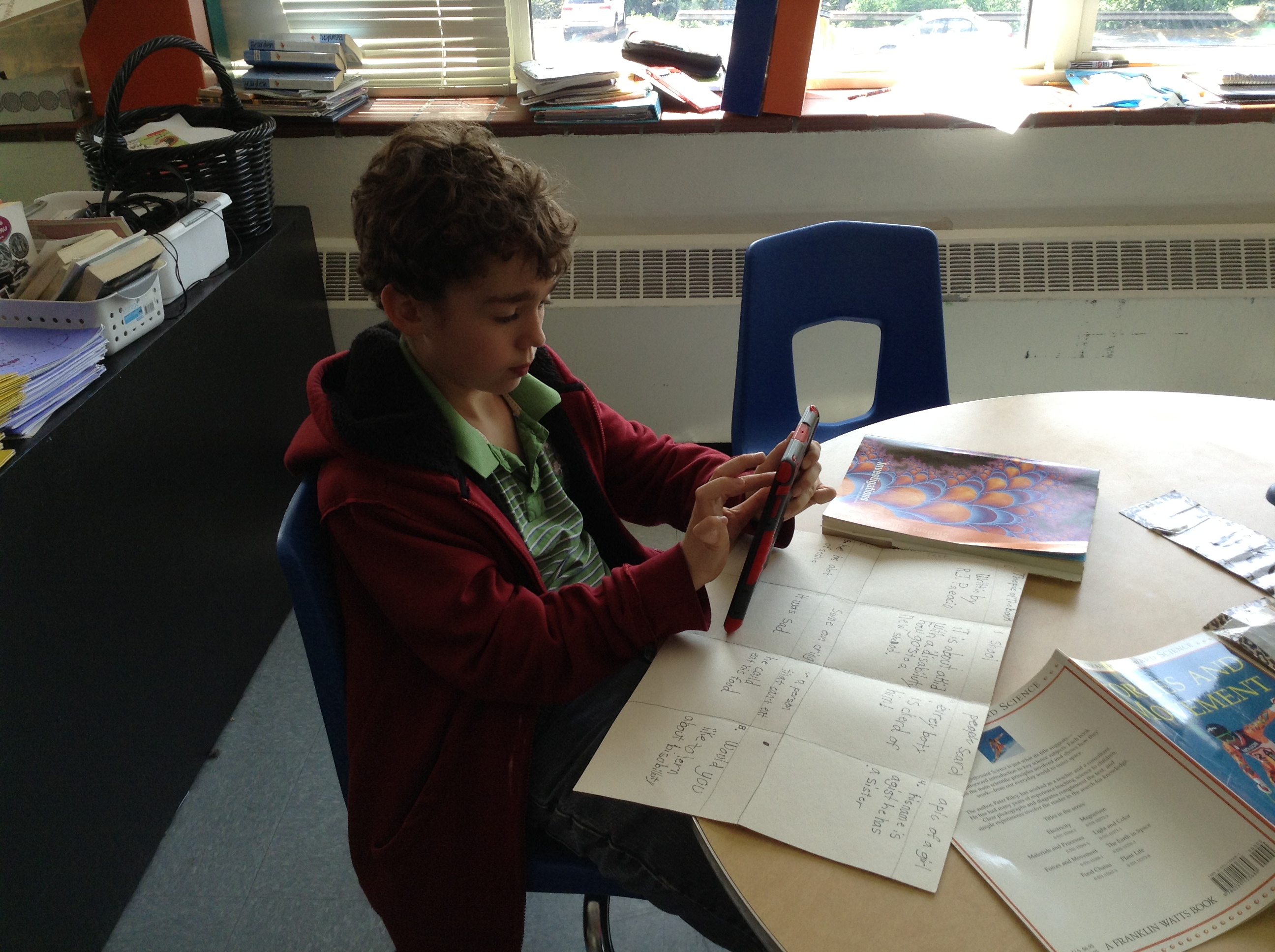
Remember Jack, the iMovie expert? He’s hard at work on his storyboard and book trailer about the book Wonder by R.J. Palacio–a class favorite this year!

IMG_0851

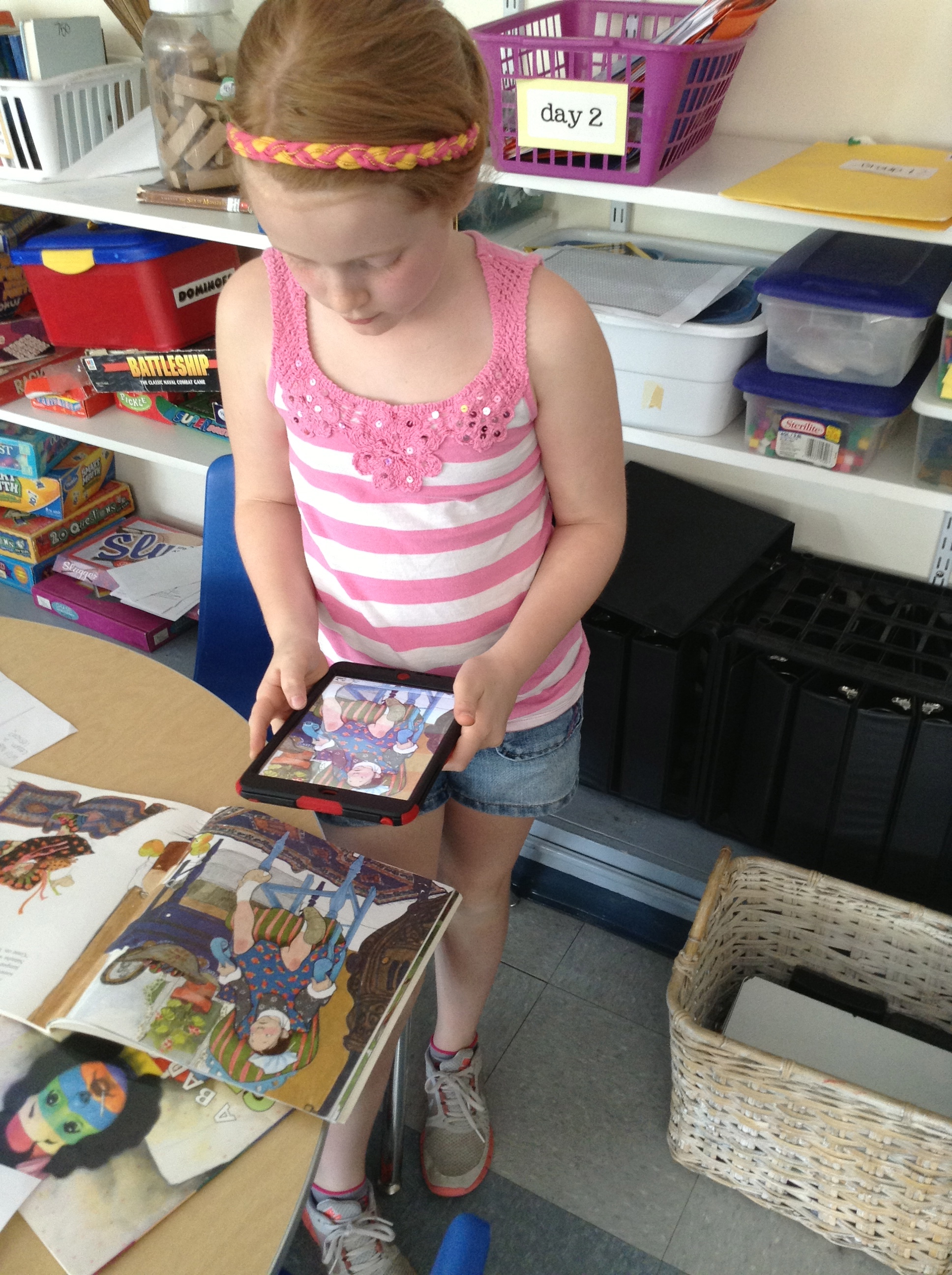
Aiden (another in house expert) decides which pictures from The Kissing Hand to include in his video.

IMG_0852

Damonte is hard at work on his book trailer for a text about Lamborghinis. Another place we got ideas for books was from Ms. Dale, one of our kindergarten teachers. We made several for some favorites that we knew some of our newest friends at Robinson would want to read in the fall!
IMG_0853

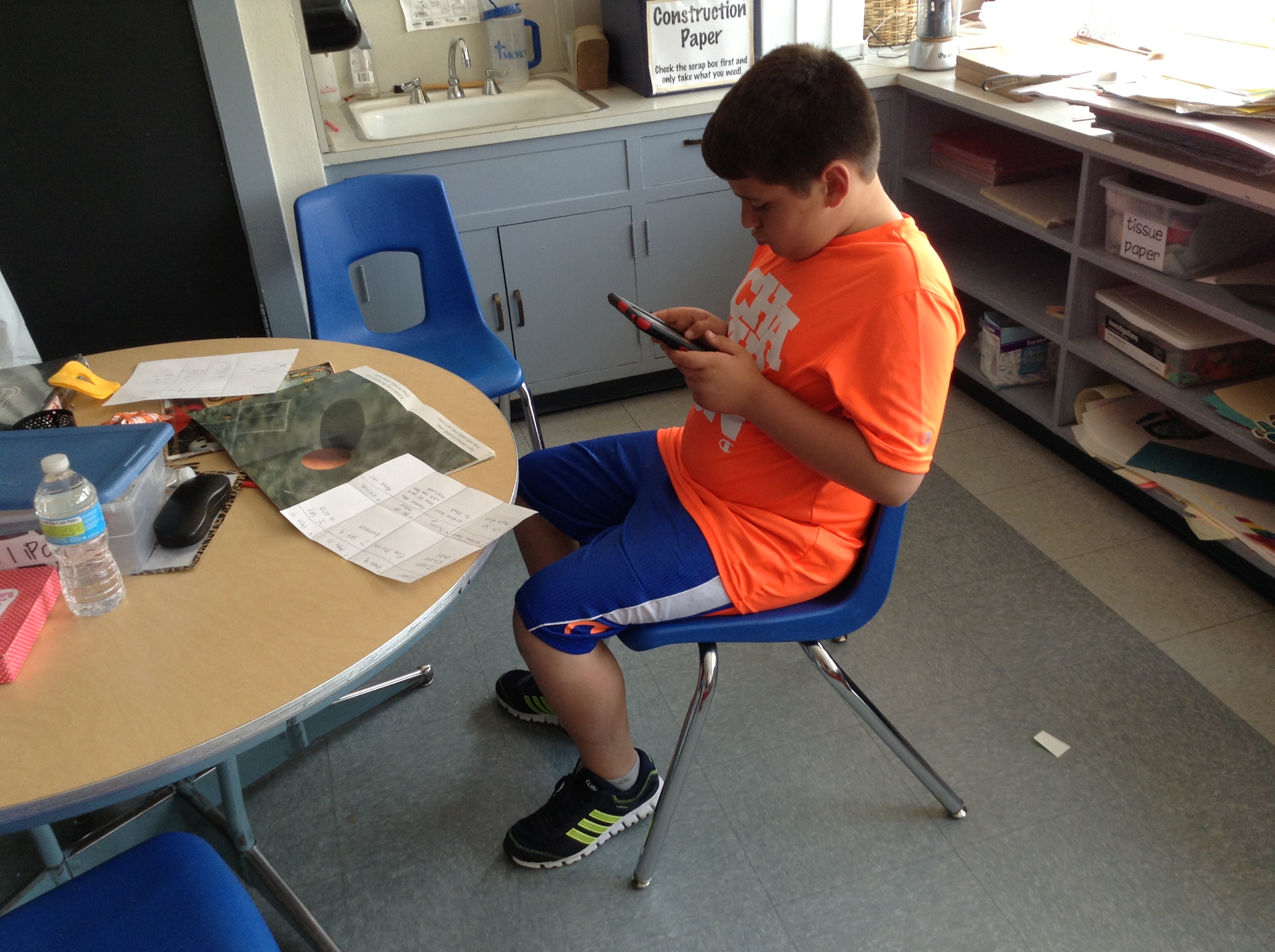
Don’s using his storyboard as he creates each scene of his iMovie.
IMG_0854

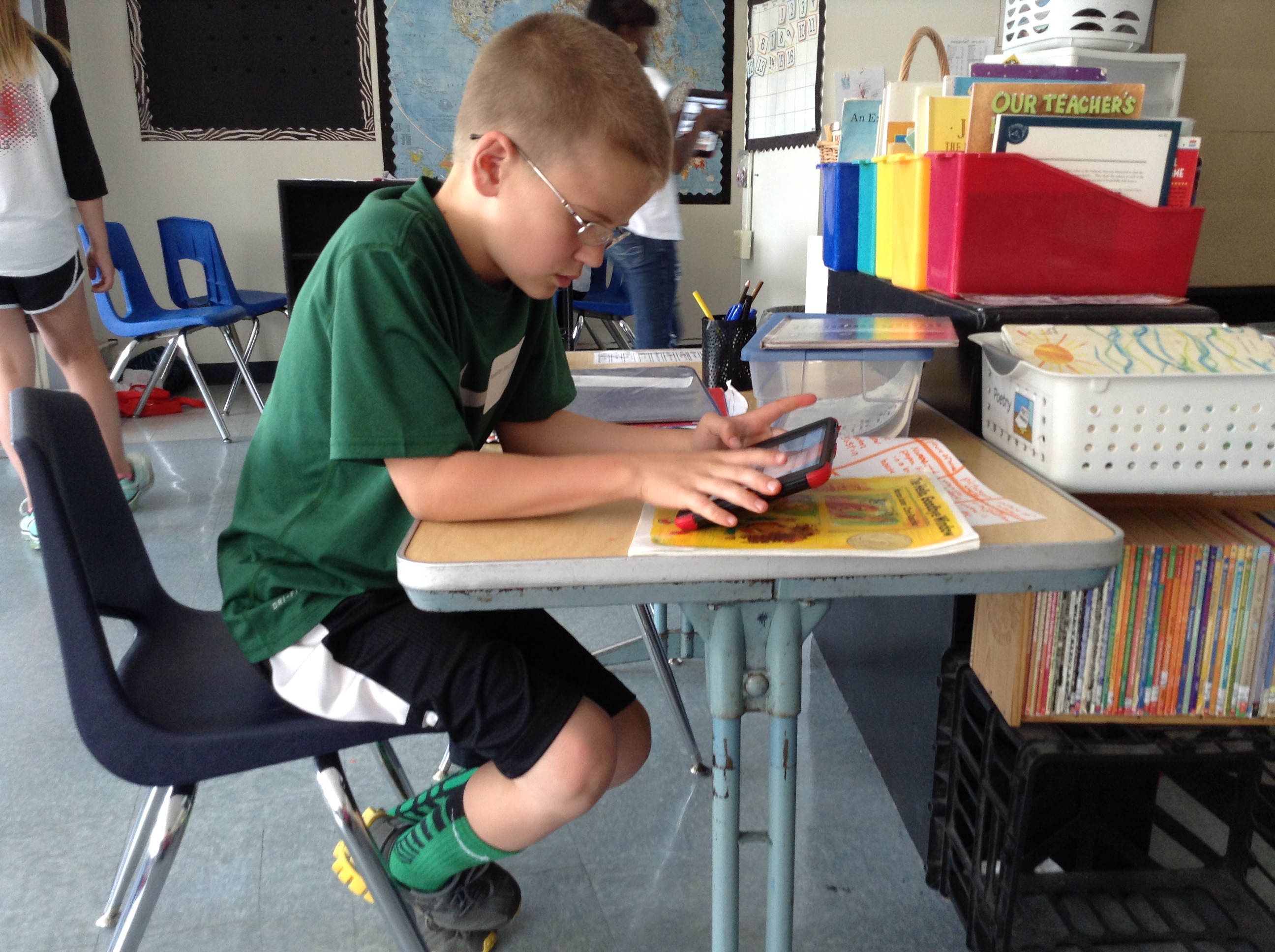
One of Keelan’s videos was from that kindergarten pile–The Hello, Goodbye Window.
IMG_0855

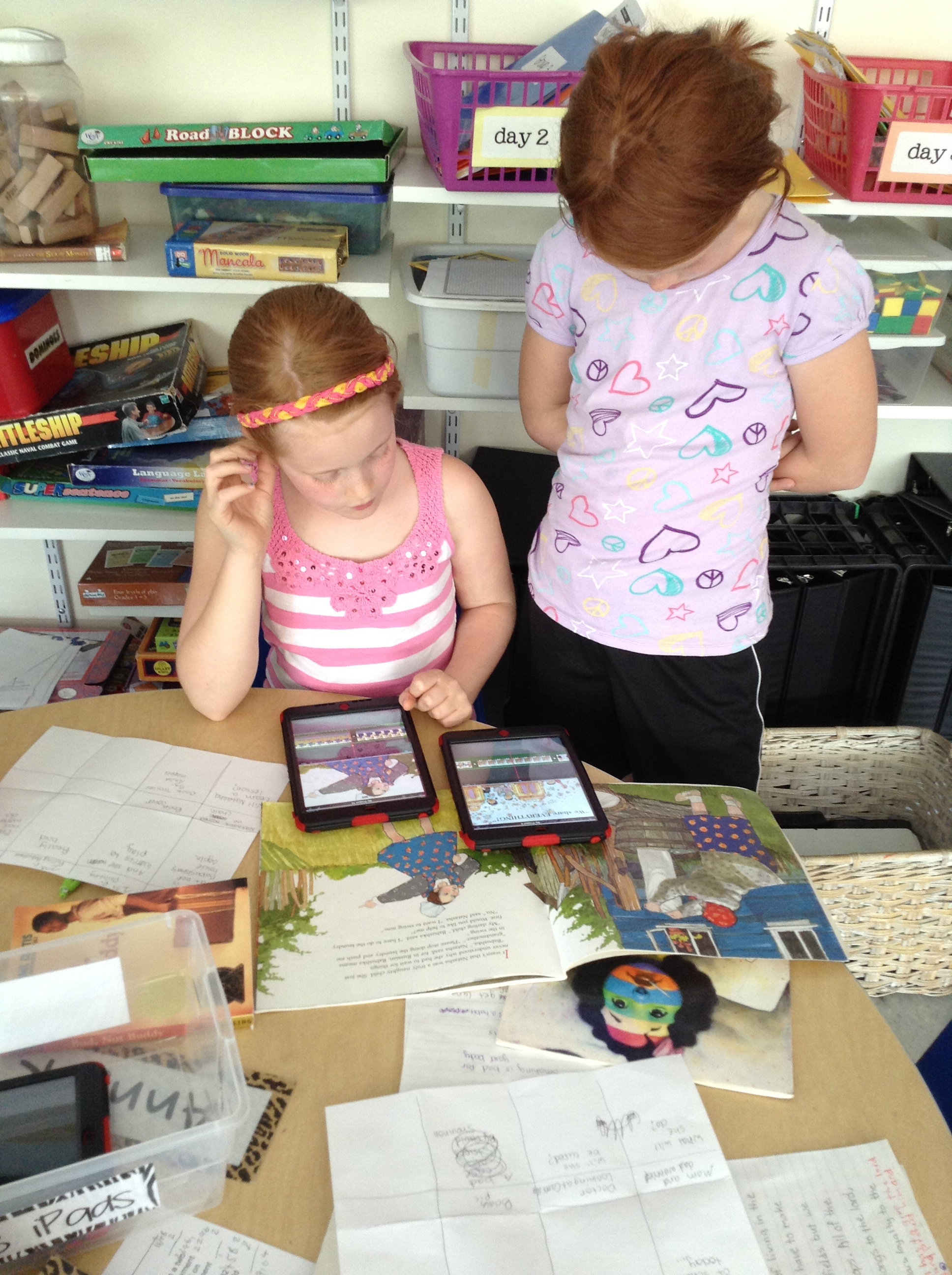
Anna K. (on the left) was a wiz at iMovie! I love how kids taught other kids how to do things and answered questions when we needed to troubleshoot why something wasn’t working. Here she helped Sammy figure out how to fix a problem she was having with a picture.
IMG_0857

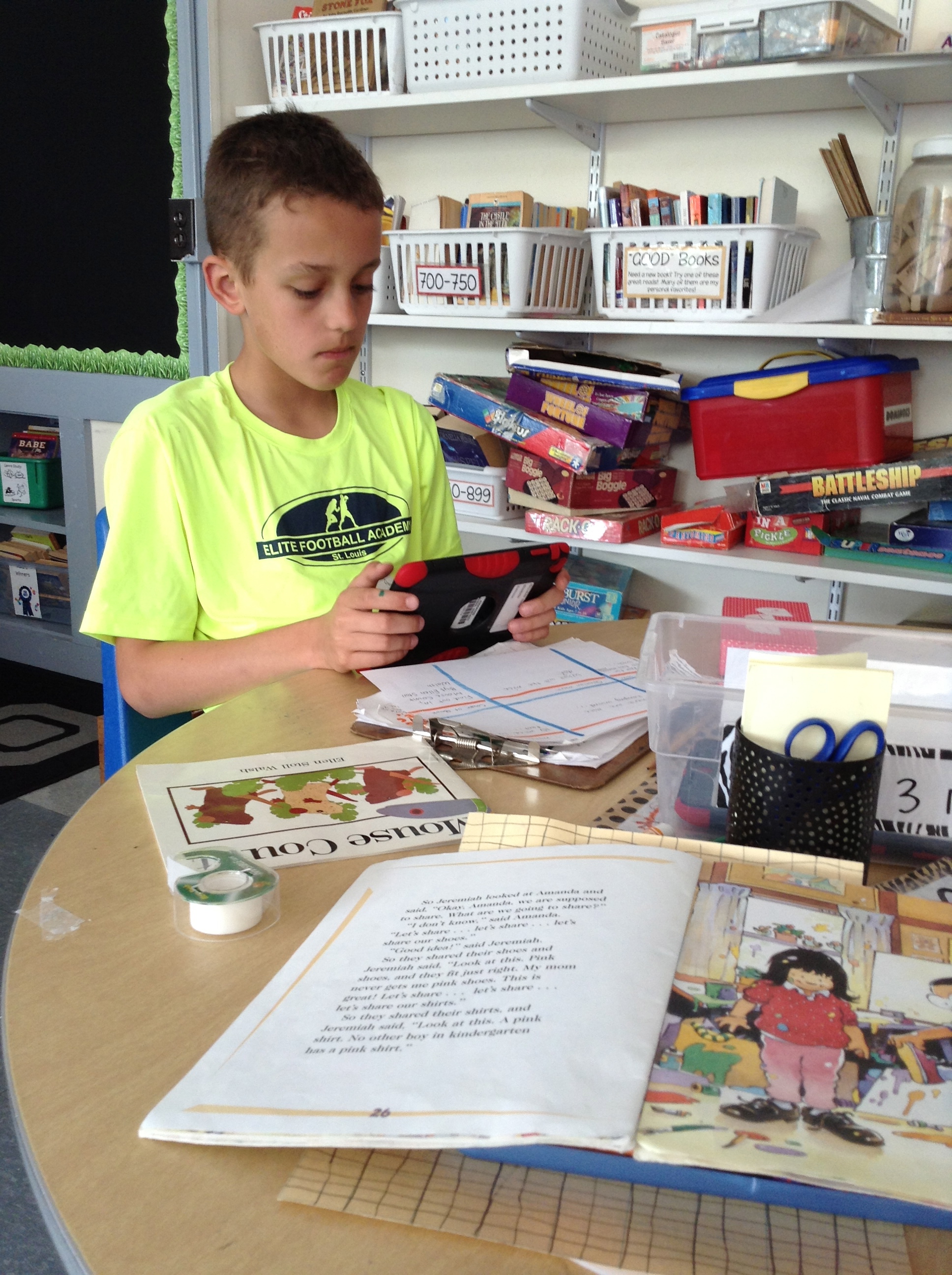
Owen working on a book trailer for Mouse Counts.

IMG_0859

Sophia and Jernandra worked together, too. Jernandra’s book trailer was about Super Fudge.
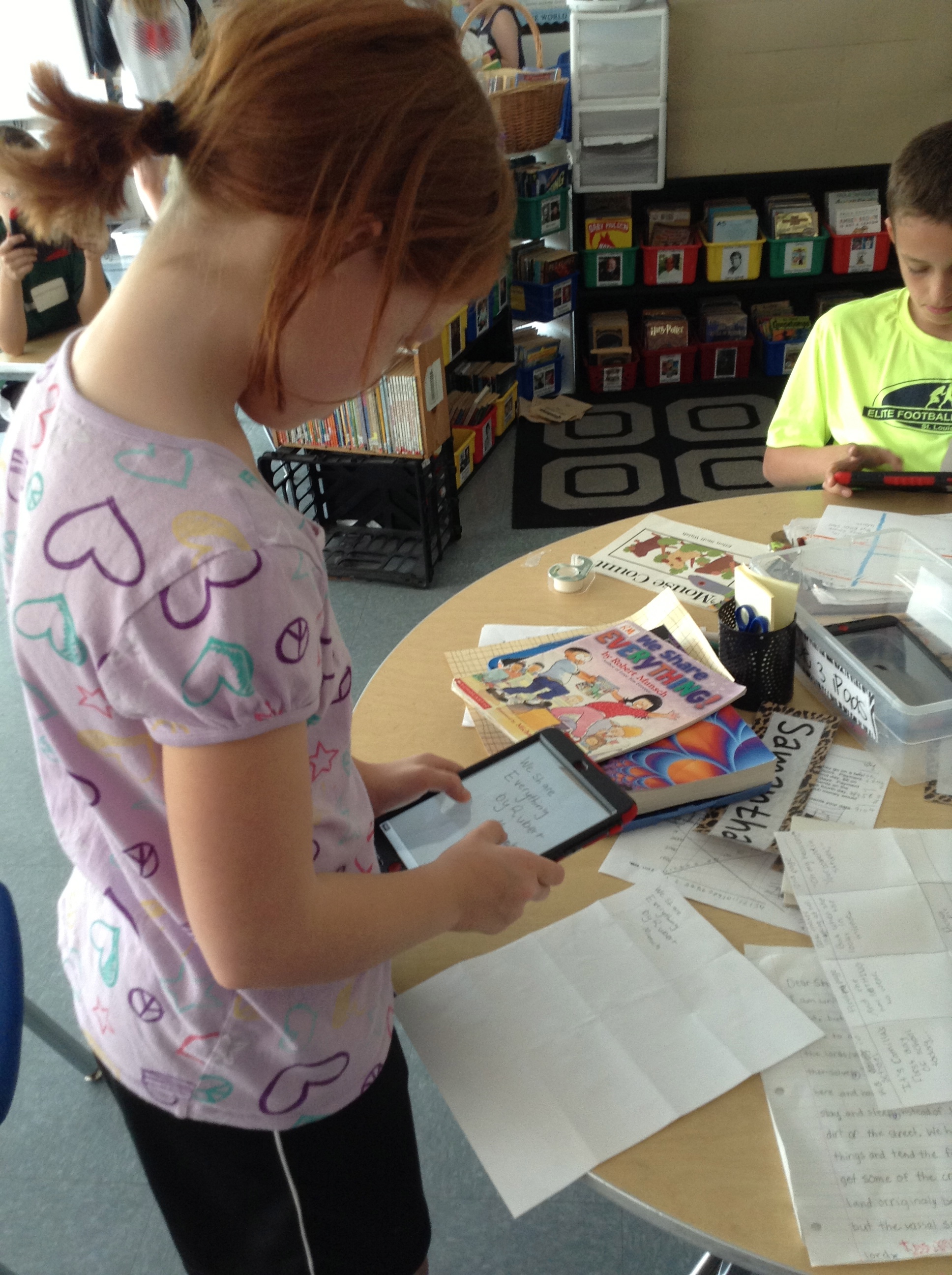
IMG_0860

Sometimes the pictures we added were from the internet, and sometimes they were ones we took ourselves.  IMG_0863 IMG_0865See?

So, kids chose books (we started with our favorites, but also brainstormed other ways of choosing like book award lists for the upcoming year, book award lists from previous years, books that are frequently checked out from our library, etc.) and began to create our storyboards.  Once they had an approved storyboard, they went to work in iMovie, which we worked together to figure out—remember those experts I mentioned in the beginning?  They helped lead small groups to coach kids on what to do–and Jack even taught me how to do it!  What a great app, by the way, and on the iPad it’s SUPER SIMPLE to use.  I highly recommend using it if you aren’t already.

But just because our book trailers were finished, that didn’t mean our project was done.  We wanted to then link all of those trailers to QR codes that kiddos in our Robinson library can scan and learn more about the book as they are shopping for books to check out.  That meant we had to answer the “where do we put them when we’re finished making them” question from our original chart.  Many suggested we put them on our blogs, and we already a class YouTube channel, but we had to make sure it was some place that would be able to get through our internet filters at school (so kids could actually watch the videos we were creating!), that would be able to hold a large amount of data, AND that would be online (otherwise we wouldn’t end up with a QR code!).  I decided that SchoolTube was probably our best bet.

It was really great when we finally got to the end of the project and we were working in the library to finally attach all of our QR codes.  (Even this part of the project was kid-led, too, as someone suggested it would be a better idea to attach the code to the actual book, rather than the shelf.  Genius!)  We were super excited to be able to call in Mrs. Sisul, our principal, who supports all of the crazy and fabulous things we want to try with technology, and show her how they work.

Don and Owen showing Mrs. Sisul how to scan our QR codes to get to our videos on School Tube.  She was so excited for us!

Don and Owen showing Mrs. Sisul how to scan our QR codes to get to our videos on School Tube. She was so excited for us!

So at the end of it all, we ended up with over 50 TITLES that now have book trailers, and each copy of each book in our library has a QR code attached to the spine or the cover (depending on where it would fit)!

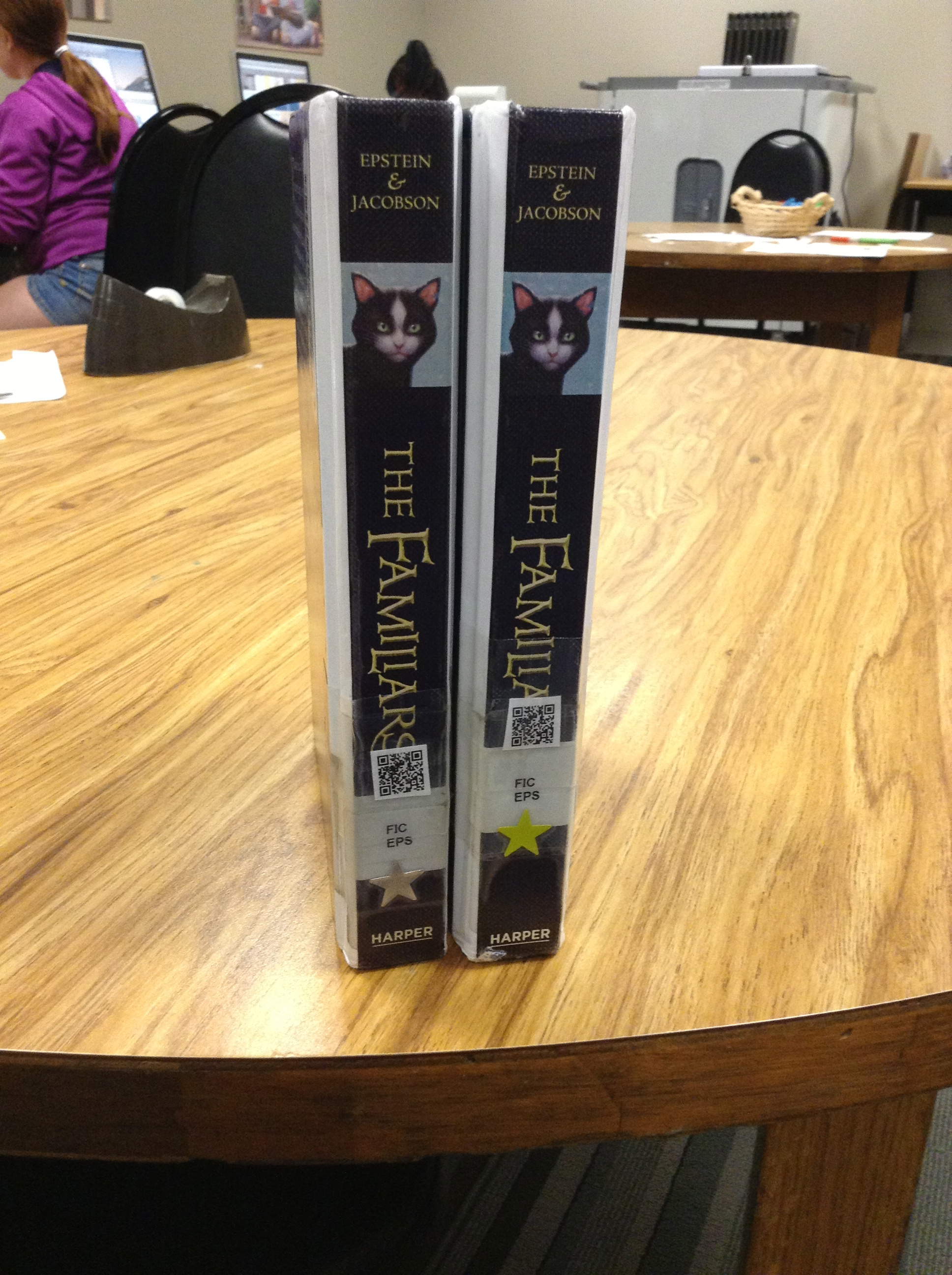
IMG_0872 IMG_0871

I wish that I would have had time to do the last reflection piece after this project, to have my kiddos tell you all that they’d learned throughout the process, but alas, we worked right up to the very last minute–and then it was summer!  So I ask now, to all of my 5th grade friends who worked on this big service-learning project with me: What did you learn from this experience?  What do you know now that you didn’t know when we started? What was your favorite thing?

And now it’s your turn to check out all of our fabulous work!  While I’d love to individually post every trailer here for you to watch, it makes more sense to direct you to our Robinson School Tube channel so you can check them out there! Happy watching and thanks for leaving us your comments about what you think!  We worked so hard and are so proud of what we accomplished!


Read Around Revisited

I wrote about the Read Around strategy yesterday, and how it was a great way to get new books into the hands of my kiddos.

This week at our staff meeting, our principal (Jennifer Sisul, @grrprincipal, and a FABULOUS leader) took us through the same activity with our library’s professional library.  Let me tell ya, the great ideas are always flowing around our school!  And what great timing–Spring Break is next week and we’ll all have time to read.

So, just like our kiddos did, we took time to peruse some titles (some new, some old) and I found some great ones.  While I didn’t get a chance to get to everything, here are some interesting reads I’ve added to my list:

Neurodiversity in the Classroom (Armstrong); Guy Write (Fletcher); Underresourced Learners (Payne); Rigor is Not a 4-letter-word (Blackburn); 7 Habits of Happy Kids (Covey); Checking for Understanding (Fisher/Frey)

Neurodiversity in the Classroom (Armstrong); Guy Write (Fletcher); Underresourced Learners (Payne); Rigor is Not a 4-letter-word (Blackburn); 7 Habits of Happy Kids (Covey); Checking for Understanding (Fisher/Frey)

I also have at least a nightstand-full of kid novels I still want to read, too!  Hopefully my children will let me have some time for that next week!

Your turn: What’s on your to-be-read list?  How do you find time to read when you’re a busy, working parent?


Read Around

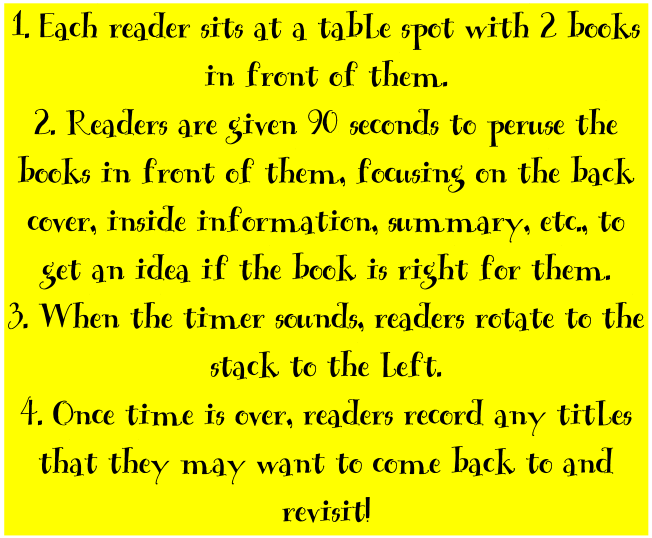
A few months ago, our librarian shared a phenomenal strategy with us for exposing readers to new (and sometimes old!) books–a Read Around.   The directions were pretty basic:

Screen Shot 2013-03-11 at 9.39.43 PM

Mrs. Meihaus’ purpose was to (re)introduce older readers to books they may have missed (or overlooked because they have old covers) and encourage them to try some new things.  In the 40 minutes we spent in the activity, we were able to peruse (which was a word she taught us the meaning of and how to do) over 40 new (or old!) titles that we were previously not on our 5th grade radars!  What a gift!  It was great to hear how many kiddos found some fabulous new try-its–even the ones who only read certain titles or series.  Impressive, really.

Well…I liked the strategy so much, that I knew I had to do it in my own classroom library.  Just like in Mrs. Meihaus’ library downstairs, I have books that are FABULOUS stories, but may be a few years old, or have a worn cover.  Classics, really, that need a second chance.

So we tried it for ourselves.

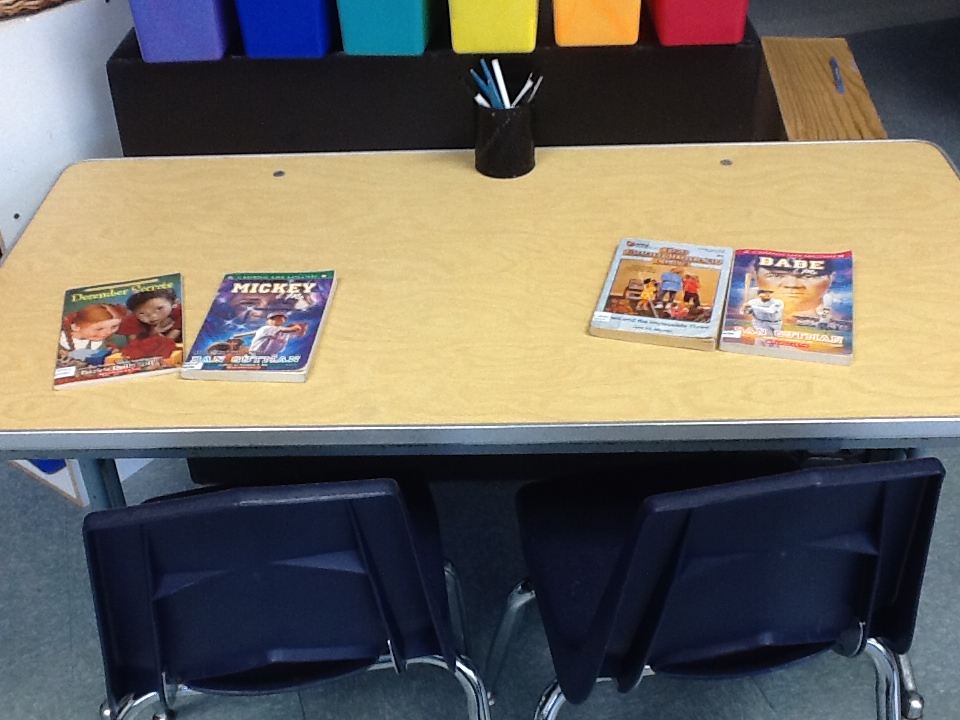
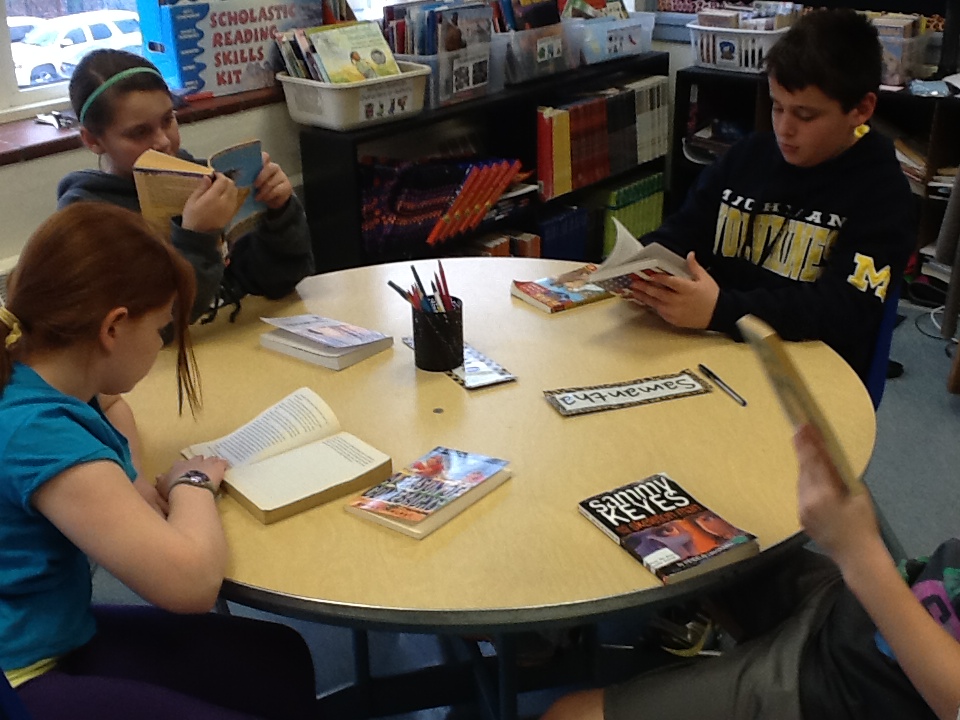
Tables started out like this, with two books at each seat.

Tables started out like this, with two books at each seat.

IMG_0678

Learning how to peruse is a useful new skill!

IMG_0677

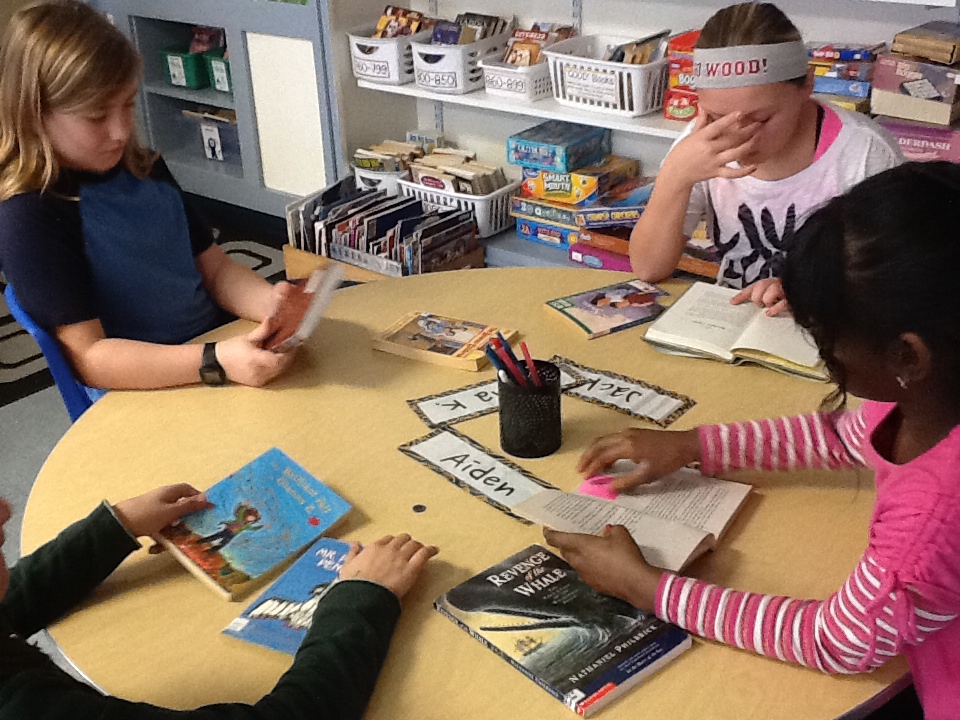
One part of perusing that many kiddos tried was reading the first few pages.

IMG_0676

I pulled out many unread (old and new) books for readers to try.

IMG_0675

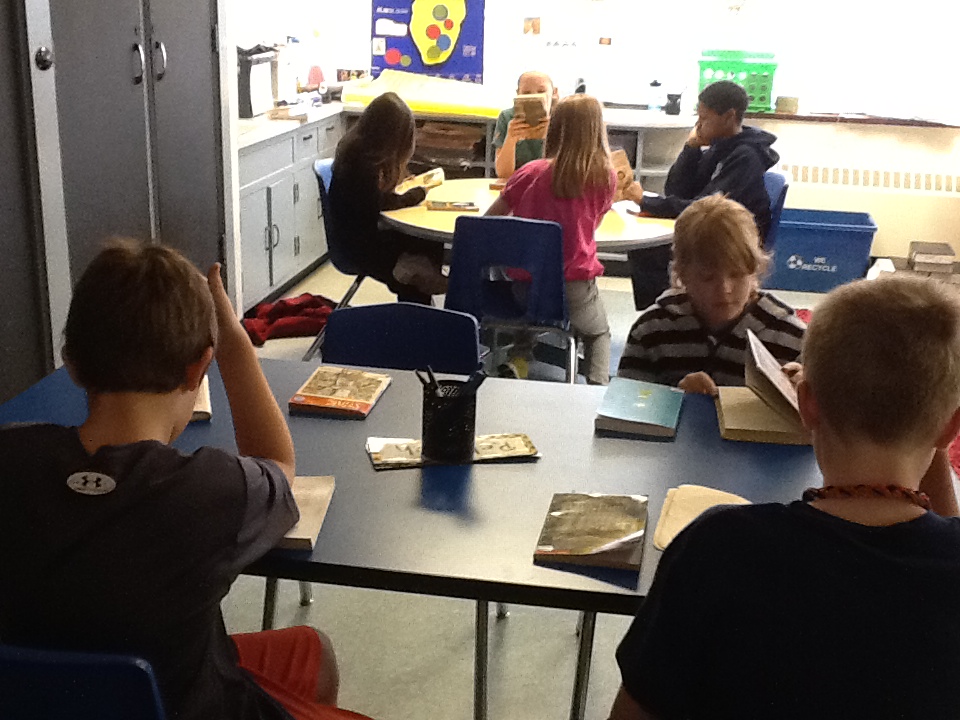
I love how serious and diligent my readers are during things like this–they really dig in deep and learn well. 🙂

Have you ever done a Read Around?  How did it go?  Did you find a new book you didn’t think you’d read?  Tell us about it!

These Are a Few of My Favorite Things (To Read To My Students!)

Remember how I told you about EdCampStl?  One of the great people I met (or was actually reintroduced to) was Ms. Ferguson, who had done some work in my school several years ago.  We found out we both teach 5th grade and are both named Jen, which was a funny coincidence.

Well, since we are both 5th grade teachers, the conversations we shared were mostly around comparing what we do and how.  So when she asked about my favorite read-alouds, I figured that both for her and for me (and for you!), I’d write a whole post about it! Here are a few of my favorite things to read to my students!

I have written about read aloud before here and here, and you can probably tell it’s a big deal in our classroom.  I am so excited to share a good book with a group of kids who have never heard of it before, and even more excited when they love it as much as me!  Let me tell you about some of my go-to reads:

1. There’s a Boy in the Girls’ Bathroom by Louis Sachar (When I taught 4th grade, I always started our year together with this one.)

2. Crash by Jerry Spinelli (One of my all-time favorites that I read EVERY YEAR! Well except this one, because they heard it last year.  😦 )

3. Clementine by Sara Pennypacker (Even big kids love the antics of Clementine!   It’s a great end-of-the-year fast read, too.)

4. Fig Pudding by Ralph Fletcher (See that note about Crash?  DITTO on this one.  Read it EVERY YEAR and it’s a classic, for sure!)

5. Who’s Stealing the 12 Days of Christmas? by Marsha Freeman

6. Who’s Stealing Halloween? by Marsha Freeman (These are great, easy mysteries that my kiddos always love.)

7. The Trumpet of the Swan by E.B. White (As a child, I have fond memories of my 3rd grade teacher reading this one aloud to me, and so I had to return the favor to my students!)

8. The City of Ember by Jeanne DuPrau (I did this one totally backwards and saw the movie first, but once I read the book, I was really sold!)

9. Pleasing the Ghost by Sharon Creech

10. Granny Torrelli Makes Soup by Sharon Creech

11. Walk Two Moons by Sharon Creech (This is another one of my EVERY YEAR reads.  Oh, and can you tell I’m a Sharon Creech fan?)

12. Frindle by Andrew Clements (I’m not usually an Andrew Clements fan (I know–gasp!!), but this is a great first book because it’s fun and easy for everyone to dig into.)

13. Go Big or Go Home by Will Hobbs (I found this book because it was nominated for the Mark Twain award a couple of years ago and it’s on my “good” list now.)

14. Found by Margaret Peterson Haddix (Also a Mark Twain nominee–what a twisty story!  We were on the edge of our seats the whole time with this one.)

15. I Am David by Anne Holm (This was another saw-the-movie-first one, but I am now so in love with David’s story that this is an EVERY YEAR book now!)

16. The Boys Start the War by Phyllis Reynolds Naylor (Great beginning of the year read aloud–everyone loves it!)

17. Chasing Lincoln’s Killer by James L. Swanson (I found this one last year after a recommendation from my husband, who is also a teacher.  It’s a little graphic, but is an interesting non-fiction read aloud that kept my students riveted!)

18. Marshfield Dreams by Ralph Fletcher (Also a recommendation from my husband, this is Ralph Fletcher’s memoir and is the PERFECT companion to read with Fig Pudding.  Perfect picture of how your writer’s notebook informs your writing!)

19. Because of Mr. Terupt by Rob Buyea (This is a brand new one, but will become an EVERY YEAR book next year when I read it again!  What a great beginning-of-the-year read to set the tone for the year.  We learned a lot about how to treat each other well with this one!)

20. Wonder by R.J. Palacio (WE LOVE AUGGIE! This is one of the most heartfelt, meaningful reads I’ve come across in a long time.  Another EVERY YEAR read!)

21. Theodore Boone: Kid Lawyer by John Grisham

22. The Miraculous Journey of Edward Tulane by Kate DiCamillo (Yet another recommendation from my hubby–man does he know good books!–that will become an EVERY YEAR read for me.  Great, moving story with amazing vocabulary.)

23. The One and Only Ivan by Katherine Applegate (Just started this one with my class, but I KNOW they’re going to LOVE it!  This one just won the Newbery, which confirms that it’s a great book, but I as already in love.  Moving and life changing.)

Whew!  That’s a lot longer list than I thought it’d be!  There are just so many good ones!

What are your favorite read alouds?  Are any the same as mine?  Share your favorites here–maybe I’ll have to add them to my list! 🙂


Happy Literature Circle Day!

Aren’t you excited?  It’s the first day of your new Literature Circles!  I’m excited to see where this journey will take you, and to hear all the FABULOUS conversations that will result from your close reading of your book.

I would love you to share your first thoughts with the world, so today’s response will be on your blog, not on Edmodo.  After your group has met, please compose a post that includes these things:

1. What is the book that you are reading and discussing (include the author and UNDERLINE the title!)

2. How would you describe the conversation?  Pick only ONE WORD and be sure to tell why you chose it.  For example, you might say it was LIVELY because everyone was really excited to share (and no, you can’t use that word.  It’s mine. 🙂 ).

3. What was something you did to contribute positively to the group?  On the other side of the coin, what is something you could do differently next time to make your conversation even better?

4. What are you looking forward to in your next meeting?

As always, be sure to show what you know about what good writers do (use correct mechanics, choose appropriate words, write in paragraphs, think about the audience, etc.)!  I should see proof of what you know in your writing, as well as see the answers to my questions!  Oh, and use the tags literature circles, reading and fun for your post (plus any others you want to add!).

Can’t wait to hear how it went! 🙂

Literature Circles–Book Trailers!

Today is an exciting day for you.  Today you will get to choose the book you’ll read and then discuss with your new Literature Circle!  I hope that this is a great experience for you, both as you make your book choice, and then even more as you learn and grow with your group.  So, now you’ll begin your journey as I give you a sneak peek of the books from which you’ll have to choose.  Please watch the trailers and read the reviews here, and then give me your first, second and third choice for which book you’d like to read.  You’ll write your choices on an INDEX CARD, NOT in the comments here, because I want them to be private.  In your note, please include how you know it’s just right for you and why you’d like to read it. I’ll let you know which group you’re in by Monday, January 28.  Happy book shopping!

1. The Watsons Go to Birmingham by Christopher Paul Curtis   LEXILE: 1000

Book Trailer: The Watsons Go To Birmingham – 1963 from Carolyn Martin on Vimeo.


2. A Friendship for Today by Patricia McKissack


3. Ghost Dog Secrets by Peg Kehret  LEXILE: 730


4. Captain Nobody by Dean Pitchford  LEXILE: 750


5. Out of My Mind by Sharon Draper  LEXILE: 700

Close Reading

We’ve been working on close reading lately in Rm. 202.

I know–before this past summer I wouldn’t have known what that was, either.  If you haven’t heard about Common Core yet either, it’s another thing that is on the forefront of every educator’s mind right now, too.  And while reading closely isn’t a new thing, necessarily, the importance of it is perhaps emphasized now, more than ever.

I found a great post about close reading when I was doing some research on it the other day.   I was looking for directions for exactly how to present to my 5th graders.  What I love about this one, is that the way it was described had pieces that I knew my readers would already be familiar with because of the S.H.A.D.O. strategies we had learned earlier this year in Reader’s Workshop.

I love how Dr. Douglas Fisher describes it in a recent video:

A close reading is a careful and purposeful reading. Well actually, it’s rereading. It’s a careful and purposeful rereading of a text. It’s an encounter with the text where students really focus on what the author had to say, what the author’s purpose was, what the words mean, and what the structure of the text tells us.

So I made this chart to help my friends remember what to do:

IMG621So like I said, it’s not really anything new (at least not to me and probably not to you, because we’ve been reading for a while now), but to my 5th graders, it does equal something new in how deeply they are expected to look at text.

While I’d love to say that I’ve always taught students to read and reread and reread again, I’d be lying if I did.  Yes, we talk about rereading as a fix-up strategy for monitoring comprehension, I’ve never emphasized it as something that good readers do on a regular basis.  And I know I’ve never talked about it this in-depth.  It’s never before been an expectation for how my readers will dig into a text to really get at the what and why, the “meat” of a text.  And it’s never had a name.

I think the big thing I’m trying to get at, really, is that I haven’t ever emphasized it this specifically with my students.  I haven’t asked them to pay such close attention to when they’re rereading and how they’re rereading.  Reading and rereading have now become one.  Now the expectation is that they will always reread, more than twice, as a means of better understanding the text at hand. The big idea of reading now, forever and always, will be to dig deep into a text, to really get to know it well, like a good friend.  Regardless of what that text is, I want them to make it their friend–knowing it so well and closely that I could ask them anything and they’d be able to tell me more.  And yes, ideally, I’d like them to want to do it because they desire to be a better reader, not because their teacher said so.

And so that brings up an interesting conversation we had today during Reader’s Workshop.  We were reviewing some questions we’d answered on a monthly benchmark assessment from the other day; we’d practice closely reading on the text and so were expected to have really understood what it was trying to say.  As we discussed our answers and gave evidence from the text to support our thinking, I could tell that most had done a reasonably good job of getting the main idea of the text; most of our answers were correct also.  As we were moving on, and most of us had agreed that reading more closely had helped, a question was raised:  But do we always have to do a close reading?  I don’t really want to.  It takes too long.

AHHHHH!! Just when I thought I had them, there it was.  A friend who needed convincing.   And what I loved was that many other students jumped in to answer the question for me.  That’s key, I think, actually–often times things mean so much more when they come from peers rather than adults.

What came next, though, instead of a real answer was another question, and this came from me.  It was related to purpose: So yes, you should do a close reading every time you encounter a new text, but why?  Why should you want to?

Their answers were interesting and got me thinking about how we define reading.  Many of their answers were related to “getting good grades” or getting the “right answer.”  So I kept digging: Ok, well let’s back up.  What is reading?  How do you read?

Again, answers were all over the place, none of which really getting at the main purpose: Reading is making meaning.  It’s understanding what the words on the page mean, and how they work together to help you understand the message of the author.  And as a reader, you should want to understand.  You should not be happy with not “getting it.”

At the very least, this conversation today got me thinking about how I proceed.  And how I start next time.  Perhaps we should have talked about close reading way earlier than now; had I named this strategy in August and set it as the expectation from Day 1, it wouldn’t be so scary now.  But I’m also intrigued by what we’re teaching our readers (and writers and scientists, etc.) about why we do what we do.  Somewhere they’ve still gotten the idea that they’re supposed to do something for the grade, the right answer, or because their teacher told them they were supposed to do it.  That their motivation should be something extrinsic, not just the mere enjoyment and satisfaction of learning something, understanding what an author is trying to say to them.  I hope to begin to grow a group of readers (learners, really) who know that they have a toolbox of strategies that they can use–that they should know how to use and when–and that use them at their discretion to solve problems, to understand and to learn.

But alas, this is not something I’m going to change today.  Or tomorrow, even.  But I can start.  I’m hoping that I have started this already with my “forever and always” thinking we talk about so often.  This fits into that beautifully: I want them to learn to closely read a text so that they will “forever and always” be able to understand any text they encounter, not just to get the answers right on their monthly Edison benchmark assessments in 5th grade.   I just have to keep pushing to convince them that this matters.

So I have a question or two (or four) for you:

1.  How have you presented close reading with your students? I’d love to hear what you’d add, or suggestions you have.

2. How would you define reading?

3. What reasons do you give for why we should want to understand text we read?

4. What other thoughts do you have?