These Are a Few of My Favorite Things (To Read To My Students!)

Remember how I told you about EdCampStl?  One of the great people I met (or was actually reintroduced to) was Ms. Ferguson, who had done some work in my school several years ago.  We found out we both teach 5th grade and are both named Jen, which was a funny coincidence.

Well, since we are both 5th grade teachers, the conversations we shared were mostly around comparing what we do and how.  So when she asked about my favorite read-alouds, I figured that both for her and for me (and for you!), I’d write a whole post about it! Here are a few of my favorite things to read to my students!

I have written about read aloud before here and here, and you can probably tell it’s a big deal in our classroom.  I am so excited to share a good book with a group of kids who have never heard of it before, and even more excited when they love it as much as me!  Let me tell you about some of my go-to reads:

1. There’s a Boy in the Girls’ Bathroom by Louis Sachar (When I taught 4th grade, I always started our year together with this one.)

2. Crash by Jerry Spinelli (One of my all-time favorites that I read EVERY YEAR! Well except this one, because they heard it last year.  😦 )

3. Clementine by Sara Pennypacker (Even big kids love the antics of Clementine!   It’s a great end-of-the-year fast read, too.)

4. Fig Pudding by Ralph Fletcher (See that note about Crash?  DITTO on this one.  Read it EVERY YEAR and it’s a classic, for sure!)

5. Who’s Stealing the 12 Days of Christmas? by Marsha Freeman

6. Who’s Stealing Halloween? by Marsha Freeman (These are great, easy mysteries that my kiddos always love.)

7. The Trumpet of the Swan by E.B. White (As a child, I have fond memories of my 3rd grade teacher reading this one aloud to me, and so I had to return the favor to my students!)

8. The City of Ember by Jeanne DuPrau (I did this one totally backwards and saw the movie first, but once I read the book, I was really sold!)

9. Pleasing the Ghost by Sharon Creech

10. Granny Torrelli Makes Soup by Sharon Creech

11. Walk Two Moons by Sharon Creech (This is another one of my EVERY YEAR reads.  Oh, and can you tell I’m a Sharon Creech fan?)

12. Frindle by Andrew Clements (I’m not usually an Andrew Clements fan (I know–gasp!!), but this is a great first book because it’s fun and easy for everyone to dig into.)

13. Go Big or Go Home by Will Hobbs (I found this book because it was nominated for the Mark Twain award a couple of years ago and it’s on my “good” list now.)

14. Found by Margaret Peterson Haddix (Also a Mark Twain nominee–what a twisty story!  We were on the edge of our seats the whole time with this one.)

15. I Am David by Anne Holm (This was another saw-the-movie-first one, but I am now so in love with David’s story that this is an EVERY YEAR book now!)

16. The Boys Start the War by Phyllis Reynolds Naylor (Great beginning of the year read aloud–everyone loves it!)

17. Chasing Lincoln’s Killer by James L. Swanson (I found this one last year after a recommendation from my husband, who is also a teacher.  It’s a little graphic, but is an interesting non-fiction read aloud that kept my students riveted!)

18. Marshfield Dreams by Ralph Fletcher (Also a recommendation from my husband, this is Ralph Fletcher’s memoir and is the PERFECT companion to read with Fig Pudding.  Perfect picture of how your writer’s notebook informs your writing!)

19. Because of Mr. Terupt by Rob Buyea (This is a brand new one, but will become an EVERY YEAR book next year when I read it again!  What a great beginning-of-the-year read to set the tone for the year.  We learned a lot about how to treat each other well with this one!)

20. Wonder by R.J. Palacio (WE LOVE AUGGIE! This is one of the most heartfelt, meaningful reads I’ve come across in a long time.  Another EVERY YEAR read!)

21. Theodore Boone: Kid Lawyer by John Grisham

22. The Miraculous Journey of Edward Tulane by Kate DiCamillo (Yet another recommendation from my hubby–man does he know good books!–that will become an EVERY YEAR read for me.  Great, moving story with amazing vocabulary.)

23. The One and Only Ivan by Katherine Applegate (Just started this one with my class, but I KNOW they’re going to LOVE it!  This one just won the Newbery, which confirms that it’s a great book, but I as already in love.  Moving and life changing.)

Whew!  That’s a lot longer list than I thought it’d be!  There are just so many good ones!

What are your favorite read alouds?  Are any the same as mine?  Share your favorites here–maybe I’ll have to add them to my list! 🙂


Read Aloud = Another Learning Time

Read aloud is kind of a big deal in my room.  I wrote about it briefly here last year.  Hopefully here’s more to the story. 🙂

I think that reading is important.  Reading is making meaning, understanding both what the words say and what they mean.  Understanding text as you hear it is an important skill, in addition to being able to comprehend the text you read for yourself.   Time is also important, and the time we have during our school day is precious.  So being able to get extra bang for your learning buck is really great.

Read aloud–or “chapter book” time–is that time for me.  I use this time to expose my students to great literature, books that they may not otherwise have heard of, as well as to discuss topics that we need to delve into (bullies, families, respect, etc.) and introduce and then practice reading strategies that I want students to use in their independent reading.

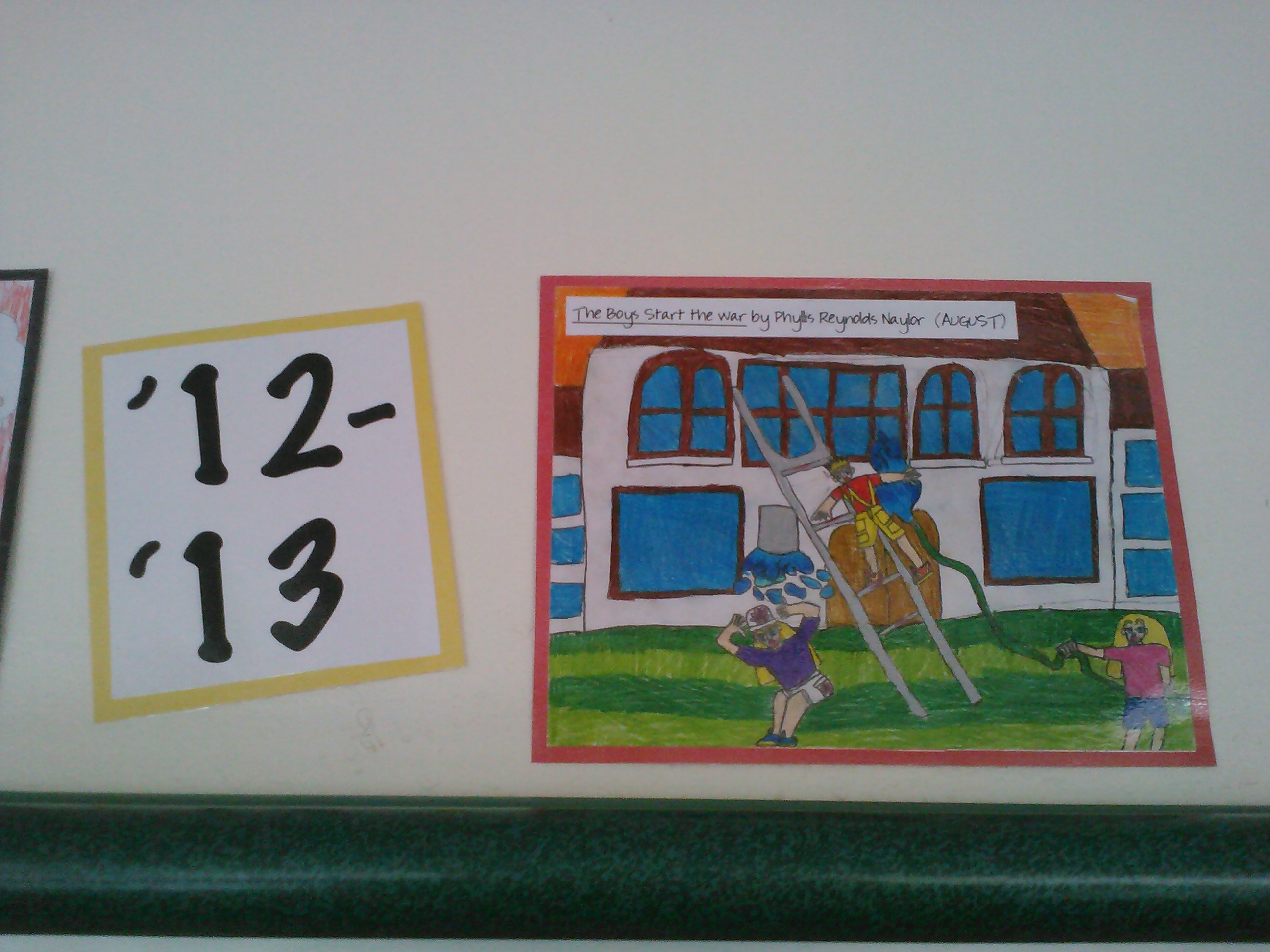
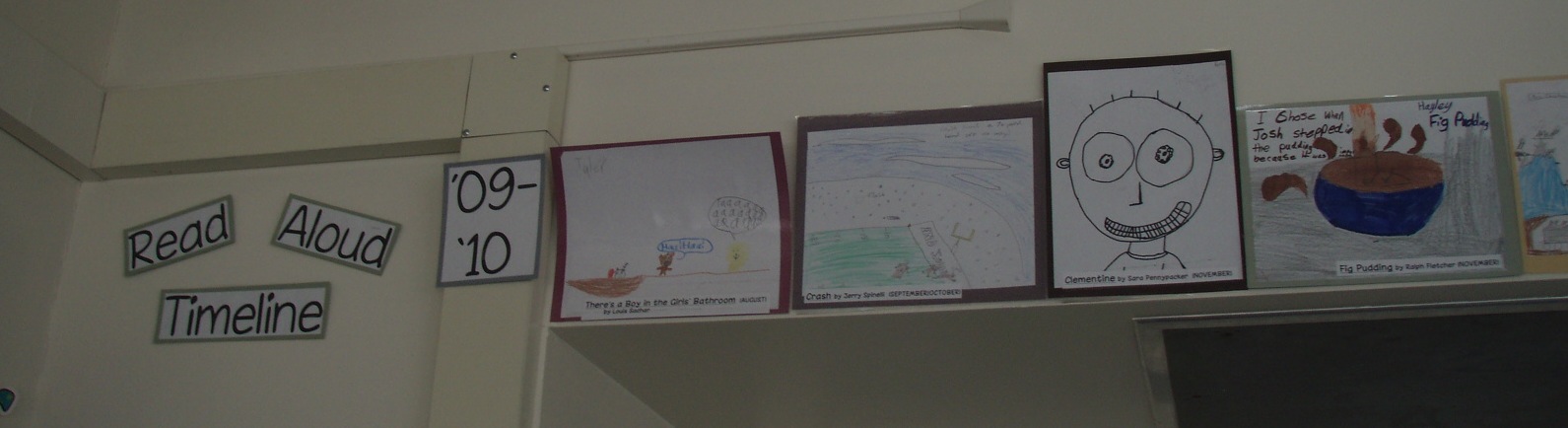
The first RA of the year is also a fun, easy one, that everyone can easily relate to and begin to make connections around.  This year (as well as last), I started with The Boys Start the War by Phyllis Reynolds Naylor.  It’s a great story about kids who play practical jokes on each other, who come from interesting families and who just do typical “kid stuff” as they go through their days.  This fun, joyful story gets my students in the mood for fun as readers, and helps me set the stage for harder work I’ll have them do as the year goes on.  During this first book is also when I introduce the partner and thinking structures we’ll use throughout our time in RA.  The first one is called “say something,” and is really just what it sounds like: I stop at certain points in the story–where there is probably something that the students can react or relate to–and have them “say something” to their partner.  In the beginning there are no rules for these conversations, but eventually we structure the conversations to include thinking that good readers do, like making connections, making predictions, inferring something, reacting to something funny, telling a part that they really liked, summarizing, etc.    At the end of the first chapter book, we begin our Read Aloud Timeline.  Well, actually we start the current year’s section of the timeline, which dates back a few years with past classes.  It hangs on the wall around our room like this:

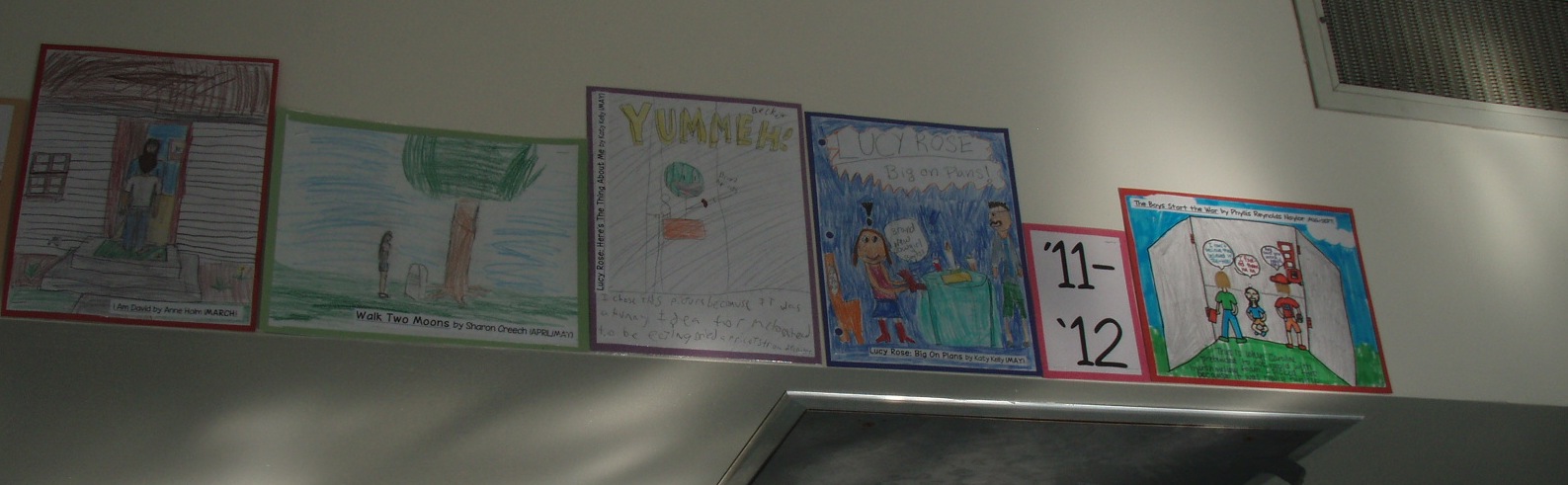
Hopefully you can see it up there–up near the ceiling.  Images taken from each book we read during our year together, chosen by the class as a whole.

The beginning of this year’s section looked like this:

Devan’s image of a water fight that breaks out while the characters are supposed to be washing the windows was chosen to grace our wall as the first picture this year!

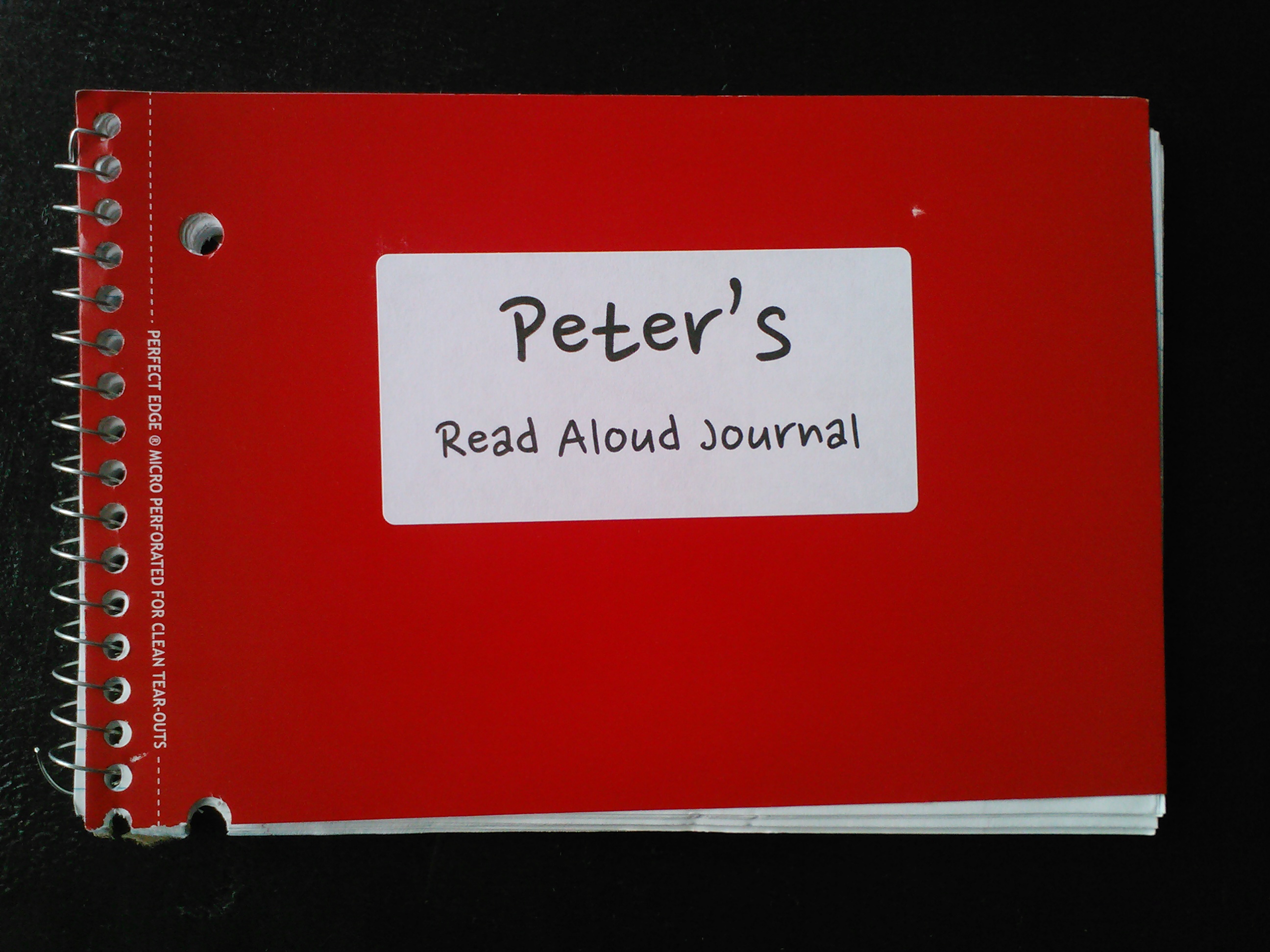
Our second book this year was Because of Mr. Terupt by Rob Buyea.  This one is nominated for the Mark Twain Award, which we choose for the state of Missouri.   I usually read at least one or two nominated books from the published list, so that my kiddos have more of chance of having read (or had read to them) the minimum of 4 that they need in order to vote.  This one was a little more intense than the first one, and is a story of a 5th grade class and their fabulous teacher.  Because of some decisions along the way (which many deem as bad ones), an accident occurs and they are without their beloved teacher for most of the year.  I’m happy to say that the ending is a happy one, but it’s not easy going along the way.  The topics in this story allow my students to continue to connect and relate, but also helps them to reach outside themselves and think about what they’d do in difficult situations; these decisions can be made, however, within the safety of a good story.  During this second book, I add to their RA toolbox, and turn “say something” into “write something.”  Again, it’s just like it sounds–at certain times we stop and write something about the story.  This also allows me to introduce the place where they will collect this thinking.  Everyone is given a Read Aloud Journal:

What?  It looks like our cubs?  You betcha!  Those half-sized notebooks get a work out in our class.  I don’t remember who first gave me the idea of hacking a spiral notebook in half, but I love them!  You should try it!

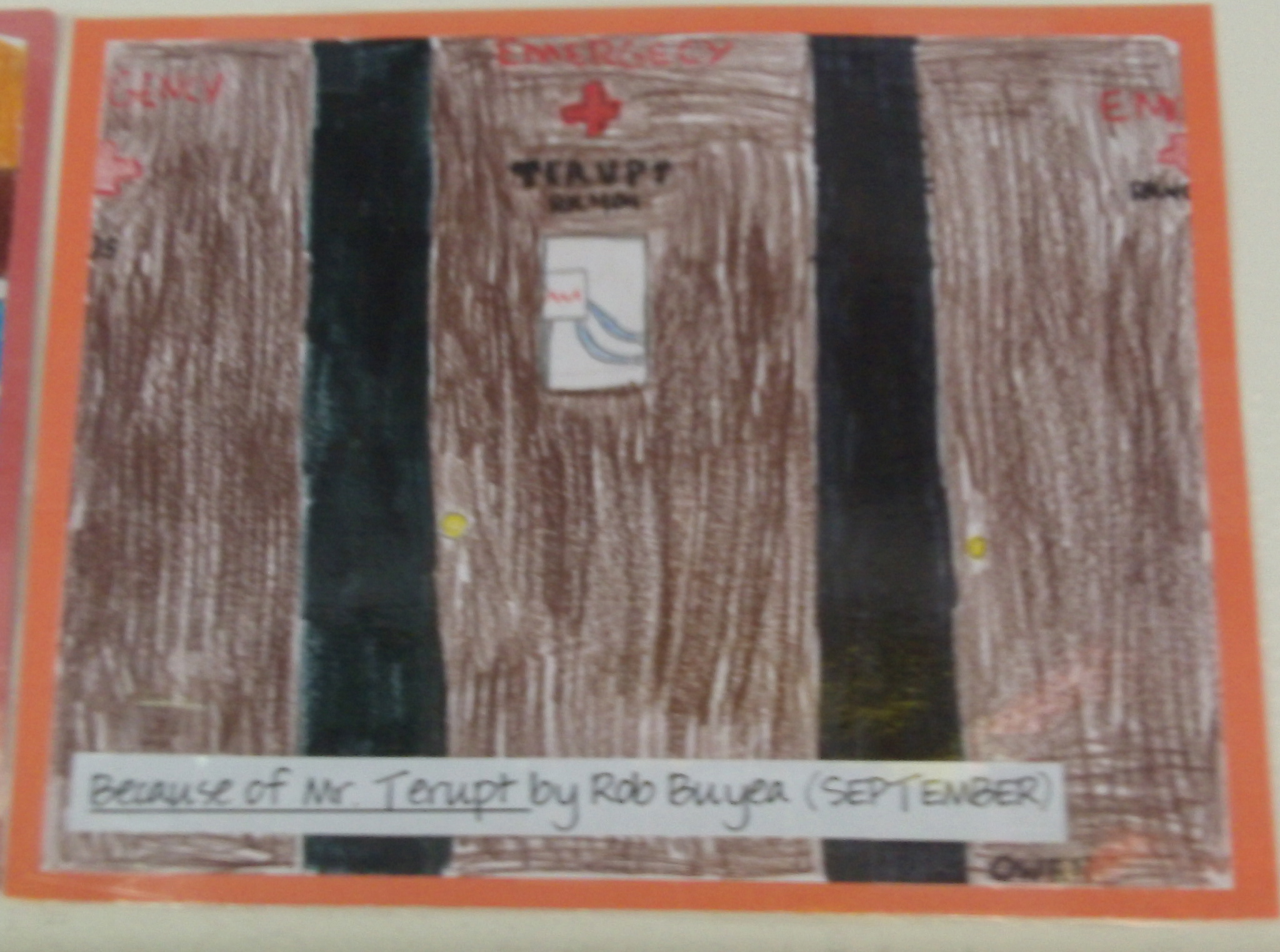
The image for BOMT on our wall was drawn by Owen.  It looks like this:

Sorry–I have a curse of blurry pictures I think–but hopefully you can see that it’s a picture of the hospital room where Mr. Terupt spends much of the story and plays a big role in the book.

In our RA Journals, we’ll collect our thoughts about books we share together this year.  Some of it they share with others in our class, and some entries I use for assessment, as well.  See? More bang for our learning buck. 🙂

Right now we’re in the middle of another FABULOUS book called Wonder by R. J. Palacio.  I found it this summer and was beyond amazed at how great it was.  A whole movement has been started around this story to help children learn to “choose kind” rather than bully or mistreat others.  This one has the same setting (5th grade in a school), the same structure as the other two (chapters and sections that alternate between different characters to show varying points-of-view) as well as themes of respect and valuing people for who they are rather than what they look like.    During this book we started another strategy for showing our thinking: a behavior-over-time graph.  With this organizer, students can show what they’ve discovered about how the characters are feeling throughout the story, using evidence from the text to support their thinking.  It’s a Systems Thinking strategy that you can learn more about here.   As with the other strategies we use in RA, this is one I hope students add to the independent reading arsenal, as well.

So, as you can see, Read Aloud is work time in our room.  It’s no rest-and-quiet-down-after-recess-time in Room 202.  Read aloud = another learning time in our world.  And we learn alot here!

What suggestions do you have for read alouds?  Have you read any of the books we’ve shared so far this year?  Leave us a comment and tell us what you’re thinking. 🙂


The Cat’s Away

So I’m home with a sick baby again today.  I HATE to be gone, but sometimes I just have to be a mom, you know?

So today’s absence reminded me of an idea I learned about recently.  I was out a couple of weeks ago, and I used a great idea from a couple of teachers I met when I attended an EdCamp St. Louis conference earlier this month.  They both teach middle school, and are out of the classroom periodically for activities with their school, and so need to leave plans for a substitute.  Rather than just leaving written ones, they record videos to leave for their classes, often teaching the lesson from their couch and giving directions for what they want their students to do.

Last time I was out, I knew ahead of time, since her fever popped up in teh evening.  So with my MacBook, my plans and my couch, I set to work putting together what I hoped would be a great day of learning for my kiddos, even in my absence.  Here’s what I left as a welcome to the day, along with our normal morning routine screen on the ActivBoard:

After they went off to specials, it was time for Writer’s Workshop in our room:

That big blue button sent them here to this video:

Next in our day was Math Workshop.  This video was a little different, but hopefully just as helpful.

Off to lunch and recess they went, and then back into the room for Read Aloud and then Reader’s Workshop.  Again, a flipchart welcomed them with directions:

Ok, well at least it had a place to send them for directions.  Those were here:

And here:

Social Studies followed Reader’s Workshop, as it normally does, and the lesson that they worked on that day was about the Natural Features of Europe:

Unfortunately this was the last day of the week, since we had a Professional Development Day the following day on Friday. We were also going to be out on Monday, too, since it was President’s Day! That meant I wouldn’t see them for what seemed like FOREVER, so I sent them off to their long weekend with this Goodbye and Good Weekend video:

Ok, so if you’re a frequent visitor to our blog, you know that I can’t write anything without ending with my thoughts and reflections.  And of course the topic of this post means that those thoughts and reflections are definitely doosies! (Is that how you spell that?  There was no choice for it in the dictionary. 🙂 )

(Now would be a great time to take a break and grab a snack if you want one!  I know I didn’t warn you that last part would take so long.  Sorry.  It’s ok, I’ll wait for you.)

Thoughts and reflections from using video sub plans:

Ease: The only reason I tried this whole thing originally is because I knew at around 6:00 the night before that I would be gone.  Since that was the case, I had lots of prep time to get it all ready.  This would not have been possible had I woken up and been surprised with an absence (like today, for example!).  Also, this was for an absence for a sick kid, not a sick teacher.  Had I been the one that was ill, this would have been almost an impossibility.  I hope, though, that since I’ve done it once now, and figured out all the logistics, the next time it won’t take me quite so long to put it all together.  And no, I don’t really want to admit how long it took me.  Ask your kiddo if you want.  I told them. 🙂  The other idea I had just now, though, is to prepare a generic “sub plan video” that could be used at any time if I had to suddenly be out.  It could then be added to my normal sub folder or uploaded to the portal that we use online to secure our subs.  Who knows, maybe I’ll start working on that one.

Logistics: I know this is partly related to the “ease” subject I just mentioned, but what I mean with this one is that there are a lot of logistical things on the school end that have to happen in order for my video plans to work like I had hoped they would.  The substitute has to know how to use the ActivBoard flipcharts I made, they have to know how to log on to my YouTube channel so the videos all play, and they have to be willing to follow the directions I gave in my videos.   So, in a perfect world, this would have been a great way for me to be at school with my students even though I wasn’t able to be there in person.

Impact: While the original reason I decided to try it was because it sounded like a great idea, incorporated technology and was something I hadn’t done before (which is often very motivating for me), I decided as I went through my planning, that maybe just seeing my face would be a subconscious reminder to follow the rules.  You know, unfortunately some kiddos tend to move into a different state of mind when they see a substitute at the front of the room instead of their normal teacher. I was also hoping that having me “teach” the normal lesson they were going to have for that day would help as they tried to keep the learning day as predictable and productive as possible.  I wanted to get the most bang for my buck.  I know that the day is never the same without me as when I’m there, but this was my way of trying to do what I could to help make it as normal as possible.

What experience do you have with using video sub plans?  What suggestions do you have for me? If you’re a parent, what do you think?  If you’re a substitute, have you used video sub plans in a classroom you’ve been in?  I’d love to know your thoughts!  Leave a comment for me. 🙂

Light Bulb Moments

In case you haven’t noticed, read-aloud (chapter book) time in our room is a big deal.  This ain’t no lay-on-the-floor-and-rest-after-recess-time.  My kids will tell you that read-aloud is one of the most important times of the day–we use the chapter book to connect to reading, writing, vocabulary and many other things.

Right now we are deep in the middle of The Secret of Zoom by Lynne Jonell.  In Reader’s Workshop, we’re working on inferring in fiction text.  So today as we read our chapter book, we focused on noticing and recording inferences we were making about the story.  We reviewed the meaning of inferring (which we defined as background knowledge + text=inference), and then got started.  There were a couple of parts when I paused in my reading to say “You might be able to infer something here,” but for the most part I just left them to their listening and thinking.  Then I read a sentence and K, who was sitting right in front of me made a rather loud noise, somewhere in between a gasp and a screech.   She covered her mouth, grinned, and then scribbled something in her notebook.  And I knew exactly what she was thinking.  She had figured out something in the story–she had made an inference.

Now, every time you infer something in a story, you don’t make a big deal like that; it’s not always so obvious.  But this was a really great illustration for us.  Some kids in my class have a hard time knowing when they are inferring; they know what to do, but they don’t always attend to when they’re doing it.  But I’ll but from today on, they will know that when you have a “light bulb moment”, when you say “Ahh! Now I get it!” or when you think “aha!”, you’re probably inferring.  It was cool to watch several others do the very same thing–most without the screech–as we continued to read.  And I’ll bet we’ll notice more of it tomorrow.  I love how the thing that really made it visible, too, is something I couldn’t have planned for (the best learning moments happen like that!).  It came very naturally, and was really powerful for them.  Next time you think “aha!” or have a “light bulb moment”, pay attention –you might be inferring something, too. 🙂

Exciting Things Coming!

The end of October brings with it an exciting feeling for me.  November and December are two of the best months in school, in my opinion.  We have multiple units that are my favorites to teach, I share some of the best read alouds of the year (again, my person opinion), and the excitement of the fall/winter holidays is everywhere.  Because of all of this, I get a needed 2nd-quarter energy boost.  So join me as we dive into fractions/decimals, fiction stories, The Secret of Zoom, Fig Pudding, Ancient West Africa and inferring in poetry!  Along the way we’ll ride on a magic carpet with Alladin (thanks to the Nipher musical next week); take a few days off for Thanksgiving; talk about the science fair and make plans for the projects to start in January; drink some cocoa together on cold days and then eventually celebrate the season at our Winter Party at the end of the quarter.  I don’t know about you, but I am ready!  Happy Fall!

Getting back into it…reading

I feel like I apologize alot.  Especially about how long it’s been since I’ve posted on here.  But hey, here I am doing it again.  Sorry–that’s just the way it is.  I do have a full-time job, after all.  🙂

So I’m thinking I’m just going to give a quick overview of what’s been going on for the last month, and then I can hopefully come back more often and fill in the gaps.  Hopefully.

Reading:  For most of the month of October, we were working on text features in nonfiction and asking questions that help us better comprehend what we’re reading.  I loved the text features project we did, where the kids were given a plain text (about the Iroquois, which we were studying in Social Studies) and asked to add text features to it that would help their reader better understand what was being presented.  It was a great way to see how much they really understood about how pictures, diagrams, captions, headings, subtitles, etc., impact the reader.  These turned out great, and most kiddos really got into it!  We also practiced a strategy called Stop and Ask Questions, which is a mainstay in Making Meaning.  As we read (picture books during Reader’s Workshop, chapter book during Read Aloud and independently in their own reading), we stopped at several points in the story to record what we were wondering.  The goal was to focus our thoughts in on specific details in the story, then pay attention for when the question was answered.  Like I say often: The other part of a good question is a good answer.   Last week, then, we moved on to a new unit on story elements.  We’ve been looking at how analyzing characters, setting, plot, problem/solution, etc., can help us better understand that story.  Today we read the first half of Star of Fear, Star of Hope and will continue with this text tomorrow.  Stay tuned for more in reading soon!

Read-Aloud Timeline

One of the most important learning times in our classroom is read-aloud (chapter book).  I use this time to introduce kids to authors and books they may not know, as well as working on strategies that good readers use and practicing how to talk about books.

We recently finished The Boys Start the War, by Phyllis Reynolds Naylor.  I’m sure you heard how funny and interesting it was, and how there are at least 12 or 13 other books with these characters that we could read next.  Well, once we were finished, I introduced a structure that we will use after every chapter book we read: the read-aloud timeline.

Here are some pictures of what it looks like in our room:

I know the pictures don’t really do it justice, so make sure you stop by to see the real thing!  It’s been really great to incorporate a good reader strategy (creating images) with remembering what we’ve read.  At the end of the year, each kiddo will get a book of all of their images together, for their own timeline of our reading year.  So glad I’ve started this in our classroom!  Ask your kiddo to tell you what they love about it.  And stay tuned for an update–we just finished Crash yesterday, so it’ll go up this week. 🙂

Highlights: The 1st two weeks of 5th grade

I have had good intentions.  Intentions that included adding new blog posts every day of school.  And obviously those intentions did not end up resulting in new blog posts yet.  But here’s a new one.  And I’ll make it worth your while.  I promise. 🙂

So since it’s called “highlights”, I’m going to give you the big ideas of what we’ve been doing so far, and hopefully your 5th grader can fill in the details.  Hopefully.  There are at school every day, afterall.

Ok, so let’s get started:

Reading: Reader’s Workshop has officially begun in Rm. 201!  We have made reading posters to share our likes/dislikes as readers, taken a reading survey, read The Lotus Seed, Something to Remember Me By and Everybody Cooks Rice together, had our first check-out from the Robinson library, gone on a scavenger hunt in our classroom library, took our first SRI assessment on the computer, read Hansel and Gretel and discussed how to trail our thinking as we read and then–you guessed it–we read!  I love how excited this class is to dig into books!  Next week we’ll start to focus on strategies that good readers use to make sense of text.

Writing:  We have already begun so much work as 5th grade writers!  From day one, your writer was busy thinking about ideas for stories, putting thoughts on paper.  We have gotten our Writer’s Notebooks, and spent sometime making them our own.  We talked about how our WNBs should be a snapshot of who we are; we should be able to tell whose notebook it is without even checking the name, but just by looking at what’s on the cover.  This week we started Being a Writer, which is the program that will support our writing work this year.  So far we’ve read The True Story of the Three Little Pigs by Jon Scieszka (which we learned is pronounced CHESS-ka), as well as The Frog Prince Continued, then talked about how to retell familiar fairy tales in a new way.   As a community-building activity, we played a game called “2 Truths and a Lie”, then lifted a line from what we had written to expand our thinking.  We will dig in further to the Writing Life next week as we continue our journey as writers together.  I cannot say enough how excited I am about sharing my writing life with your kiddos!  I loved this quote from someone today as I was writing in my own notebook: “Wow.  You have a Writer’s Notebook?  I’ve never seen a teacher write in their  notebook during the school day before.”  I’m hoping that there’s already a connection forming there–we are growing as writers together this year!

Math: The mathematicians in Rm. 201 have already been very busy!  We started the year by playing a few math games (Dice Duel and Contig), as well as learning how to correctly roll dice in 5th grade. (Really.  Ask your kiddo to tell you all about how I hate the sound of dice on the tables! 🙂 )  We took a math survey, and then dug right into our first unit in 5th Grade Investigations: Finding Factors and Prime Numbers.  So far we’ve learned (or reviewed) vocabulary related to multiplication–factor, product, multiple, prime number, square number, composite number, array, dimensions–and started working on finding factors of a variety of numbers.  We worked number puzzles, and started an activity called Quick Images for ten-minute-math.  This subject has soo much to tell–be sure to have a conversation with your kiddo about all that’s been going on.  Feel free to use this to help them get started talking about what’s been going on.

Community:  An crucial part of the beginning of our year is beginning to grow our classroom community.  We do this by working together to create things, learn procedures and routines that will be used in our room and throughout Robinson, and learn more about each other so we can celebrate our differences and build on our similarities.  We’ll continue to revisit this idea all throughout the year, to keep our connections strong.

Read- Aloud: Read aloud (chapter book) is a integral part of our classroom.  While it is fun, it is also an important time when we think and talk about books.  The choices I make for books during Read Aloud are often Mark Twain award nominees, or have topics related to the curriculum in our class.  The first book this year is called The Boys Start the War, and is a big hit already!  Have your reader tell you about how we use the strategy of “say something” to share with our partners, and have them introduce you to BOT graphs.

I am sure that there’s probably something I’ve missed.  I’m amazed at how quickly time flies when we’re so busy and having so much fun!

Stay tuned for more updates on the fun and learning in Rm. 201.  Maybe next time there’ll be pictures. 🙂