Walker’s Club UPDATE–Using 10s to Add Laps

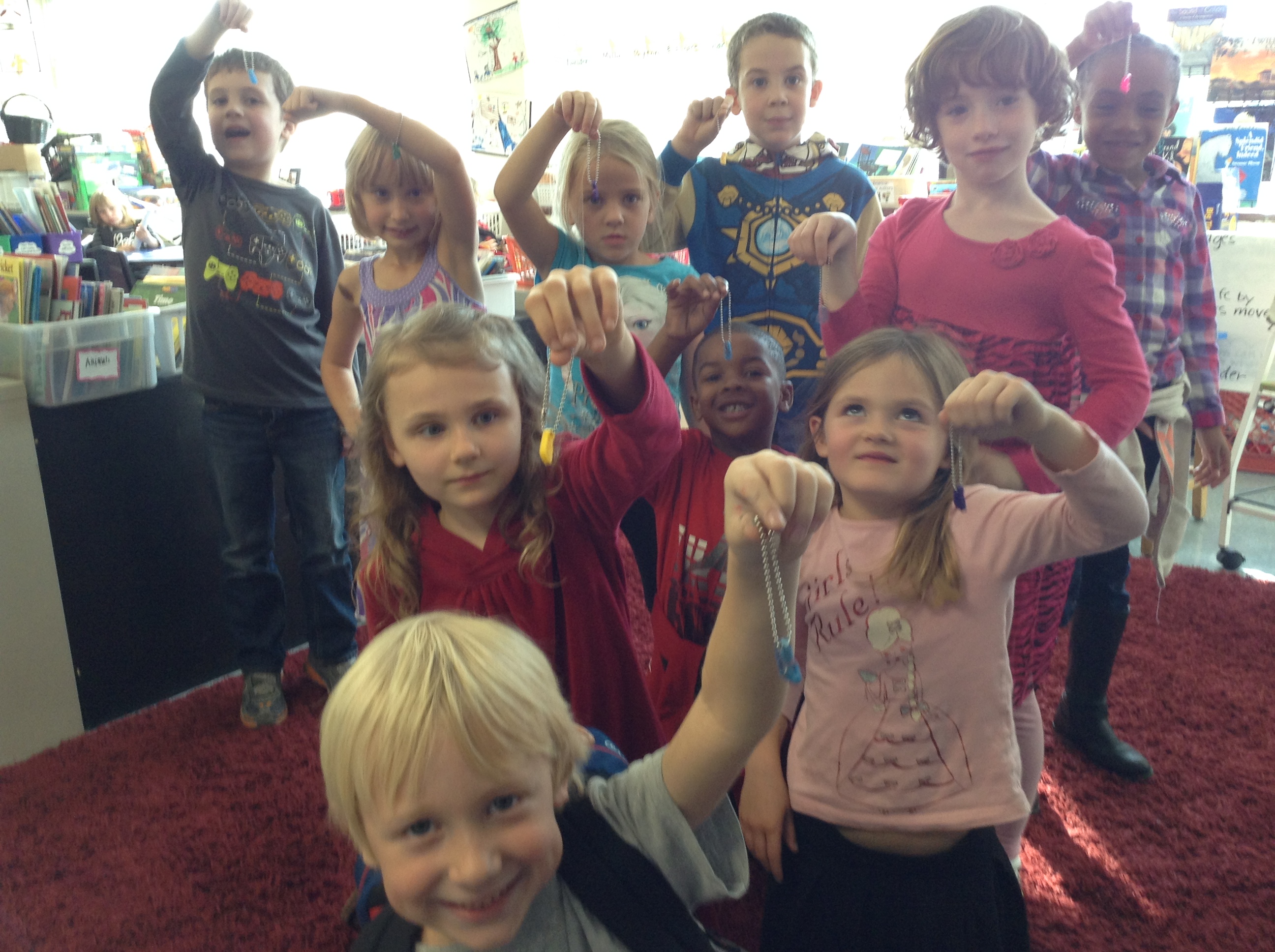
I’m sure you know about our Walker’s Club competition that is happening at Robinson for April.  Well, I’m SUPER excited to say that two weeks strong our class is in the LEAD!!!  We have done both amazing walking AND amazing adding as we figured out our totals.

This week (well really the week ends tomorrow), we used a strategy that I stole learned from my neighbor Ms. Turken to add our laps.  Instead of using the strings to make combinations of 10 (like we had many times previously), we each wrote our lap total on an index card and used these cards to create combos.  It was a great way to be able to manipulate the numbers in an easier way, and actually SEE the 10s–they made piles, after all.

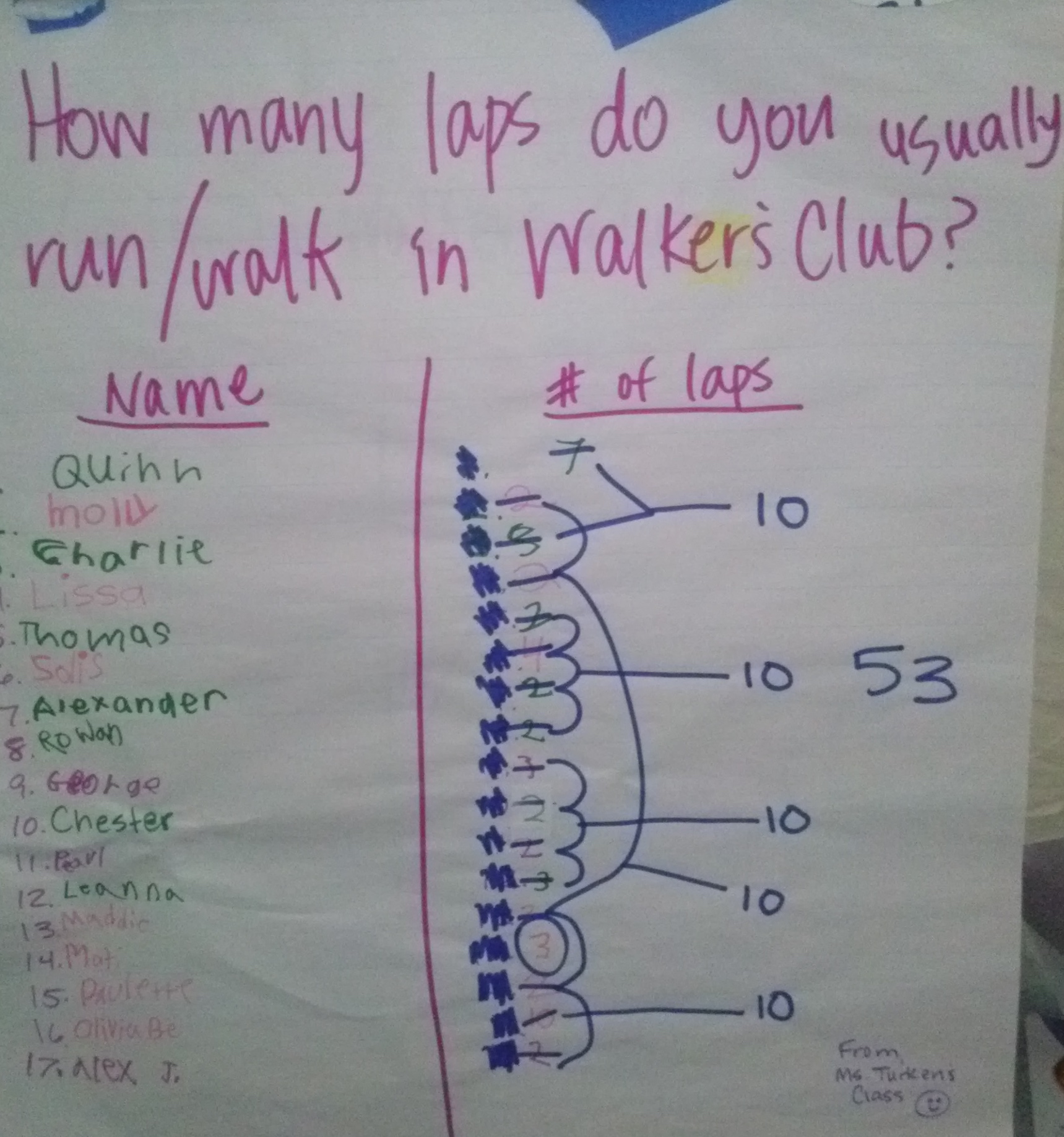
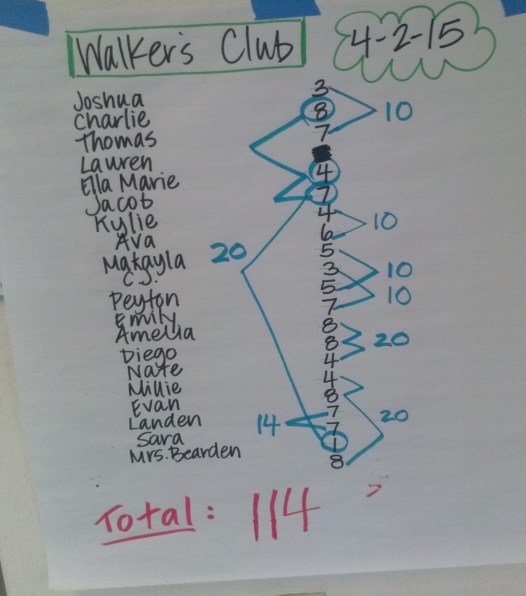
Thomas and C.J. worked hard this morning to add up our mid-week total for Week 3 of the competition.  Their work looked like this (they did the card work, and I put it on the chart):

Way to go Rm. 202 kids–for walking and adding in an amazing way!! 🙂

SPECIAL EDITION–First Grade Math Warm-Ups: Data Collection Focus

So I missed posting last week’s math warm-ups because my phone has decided not to talk to my computer (which, I believe is a ruse to make me finally give in and get an iPhone–everything else I use is Apple anyway, so I guess it only makes sense…) so I can’t show you the pictures I took.

Well, it seems that wasn’t so big of a deal anyway, because there have been lots of math activities (not just warm-ups) that have been related to data collection, and this way I can connect them all.  Bonus. 🙂

We began several weeks ago, as I knew we’d be launching into a unit on data collection and analysis, to try our hand at some easy surveys in our math warm-ups.  We talked with the very first one about the idea that we’ll be collecting, organizing and analyzing data (and what all of those things mean).   Then we spent many days answering survey questions, and doing just those things:

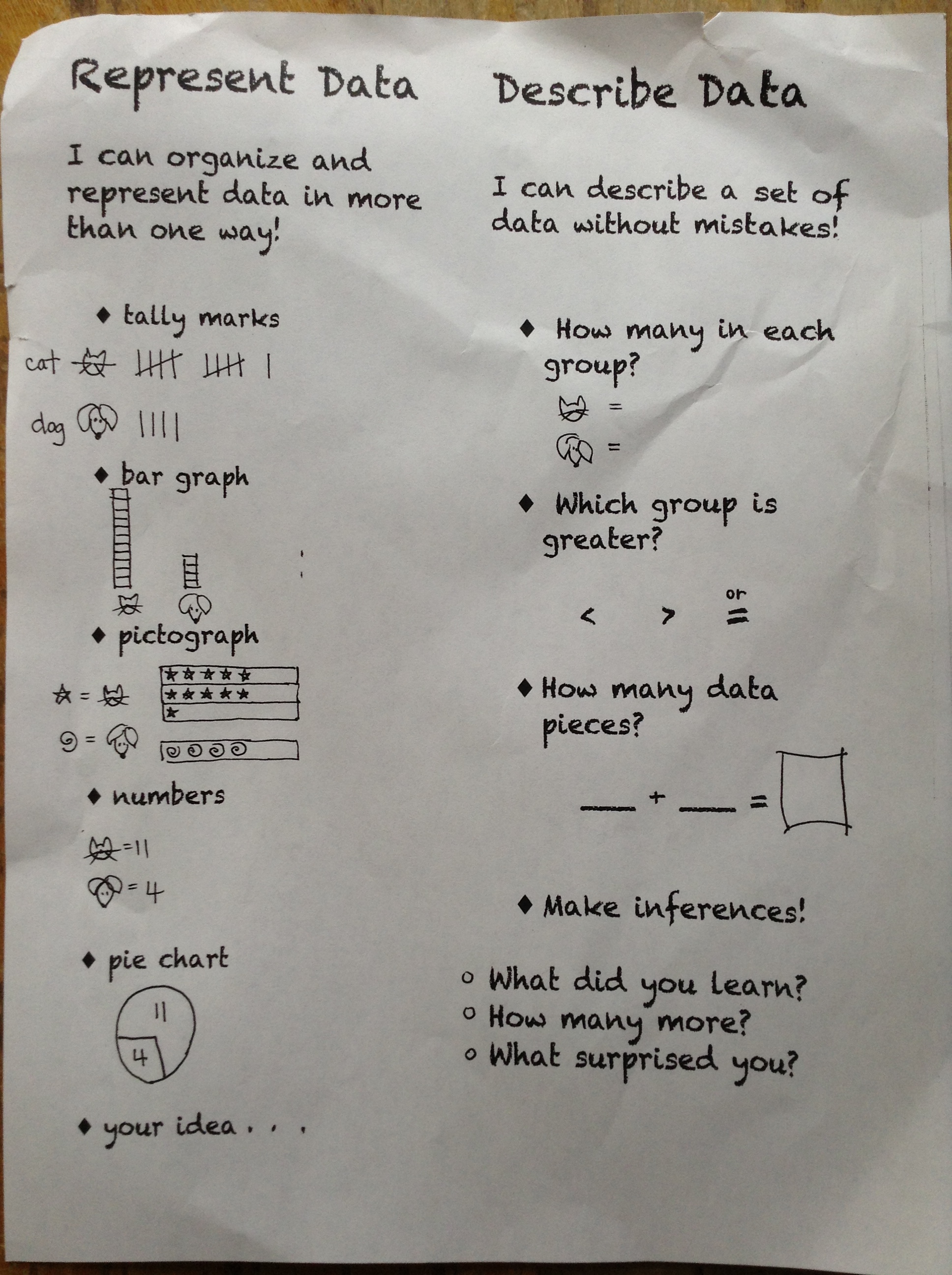
After we’d had some practice with the actual answering the question and orally analyzing the information, we started working on how to represent that information.  Thanks to my friend Mrs. Appelbaum (remember her, with the AWESOME name and the great idea for webs in writing/science?), I had a really good visual to show my kids the expectations for what they should be able to do with both describing and representing data by the end of this unit:

IMG_4345

I think the best part about this checklist is that a kiddo in her class asked her to make it so he’d remember what to do.

This checklist was the next step for us and with it we began to look at how to SHOW what the answers were, especially to people who weren’t there in our class when we took the survey (this meant that they would have to be clear and concise).

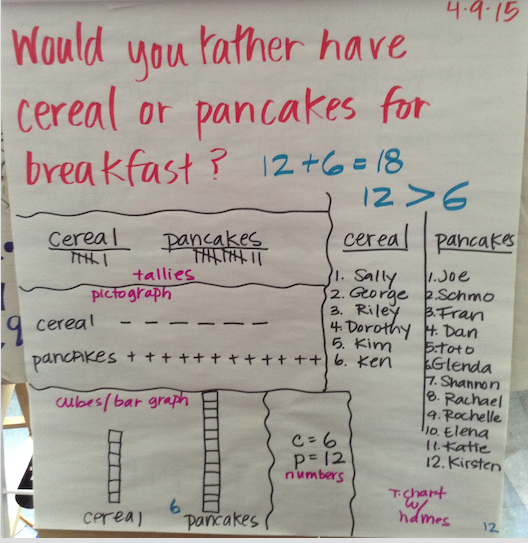
We had a go at the idea with that question about cereal and pancakes, trying it ourselves and then coming back together and trying many different ways that were on Mrs. Appelbaum’s sheet.  WOW–look at all of those ways to say the same thing:

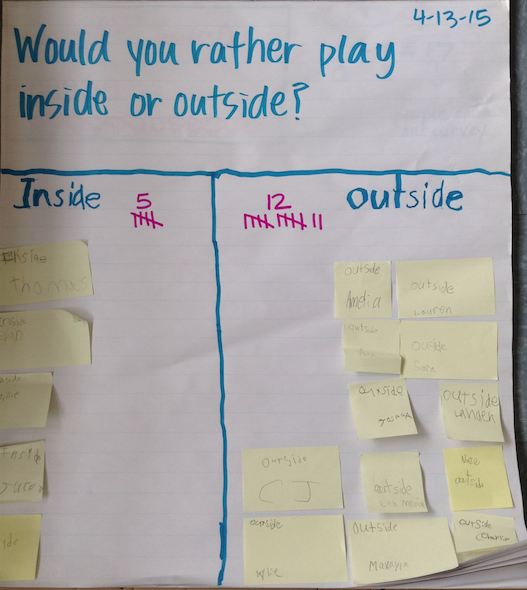
Screen Shot 2015-04-13 at 7.57.08 PMToday’s work was really cool as 3 friends decided to start organizing it AS we were collecting it.  Jacob, Lauren and Amelia made the paper into a t-chart and even put labels so kiddos would know where to put their answer:

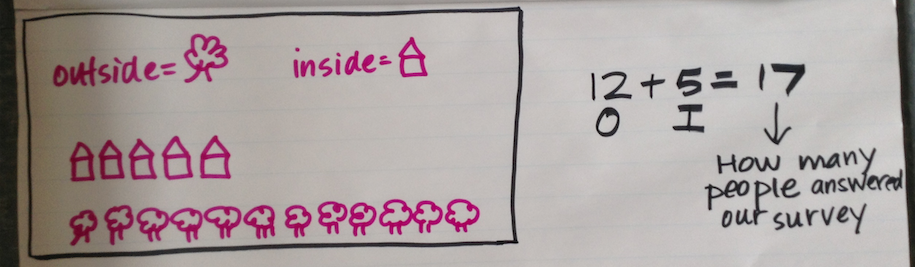
Screen Shot 2015-04-13 at 8.17.44 PMWe showed the total with both tallies and numbers, and then also tried a pictograph:

Screen Shot 2015-04-13 at 8.19.53 PMWe also talked about the part of the checklist where we make sure to show how many people took the survey, which we did by adding the totals of both columns.

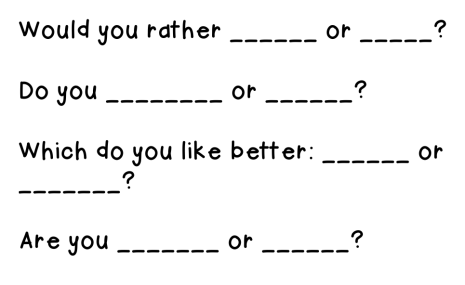
Today we took a fun and important step and began to do surveys on our own!  We reviewed the steps and then worked with a partner to plan the question we’d be asking, using these ideas for stems:

Screen Shot 2015-04-13 at 8.22.46 PMTomorrow we ask the question of our friends and start collecting data!  Stay tuned for the fun! 🙂

First Grade Math Warm-Ups: Week of March 30-April 3, 2015–WALKER’S CLUB EDITION

Our math warm-ups are almost always related to what we’re working on in math.  Sometimes it’s the beginning of the unit, and so kiddos don’t have much schema yet and aren’t really sure what to do.  Later then, the warm-ups become practice of the strategies they’ve learned and are working on perfecting (or at least using more efficiently).  This week, they were even the same topic: Walker’s Club.

Let me explain…

In a nutshell, this year we started a program to help our Robinson kids stay healthy and active, as well as have productive fun at recess.  We call it Walker’s Club, and on Tuesdays and Thursdays, everyone walks laps around our playground at recess.  Every kiddo (and now even teachers!) has a card to keep track of laps that is punched each time they come around.  Parents, principals, teachers and even a group of kids volunteers to be punchers, and there’s always a big buzz about how many laps kiddos have at any given time.  There are prizes called Toe Tokens that kiddos earn at certain increments along the way.  So fun!
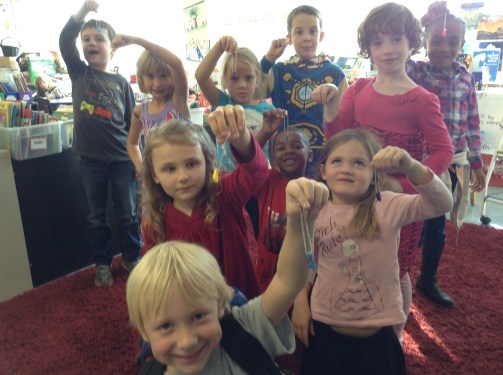
IMG_3705

This picture seems like it’s from so long ago! Don’t know how I didn’t share it earlier–they seem so little, don’t they?? 🙂

Well, to make it even better, and to celebrate National Walkers’ Day (which happened on April 1), Mrs. Wilson decided to make a competition for the month of April to see who can walk the most laps.  Each grade level will have a winner, and that class will earn an extra 20 minute recess + POPSICLES!!  Needless to say, it. was. on.

Math this week, then, naturally began to revolve around Walker’s Club laps: setting goals (first it was a conversation on how to set goals) how many laps other classes were walking, how many we could walk in a day, and how many we actually walked in one day.  Oh, and strategies for how to add up long strings of numbers so we could answer each of those previous questions.

Check out what we’ve been working on this week!

CAM01851

As we started out our goal-setting, we decided (ok, so I suggested) that we should figure out how many we laps we usually walk on a Walker’s Club day. We could use this number (along with some other data we collected) to set a goal for how much each kiddo would walk/run every WC day.

CAM01852

After we knew how many laps was our usual, we decided to ask our first grade friends the same question. Since they were the ones we’d be competing against, we also needed to know their usual number so we could adjust ours and make a goal that would matter.  This one’s from Ms. Turken’s class.  We got some data back from other classes, too, but haven’t yet analyzed it.

I need to insert a little note here: the first time we sat down together to add up that big string of numbers, we didn’t really know what to do.

Screen Shot 2015-04-03 at 9.23.00 PM

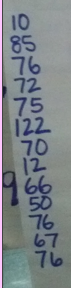
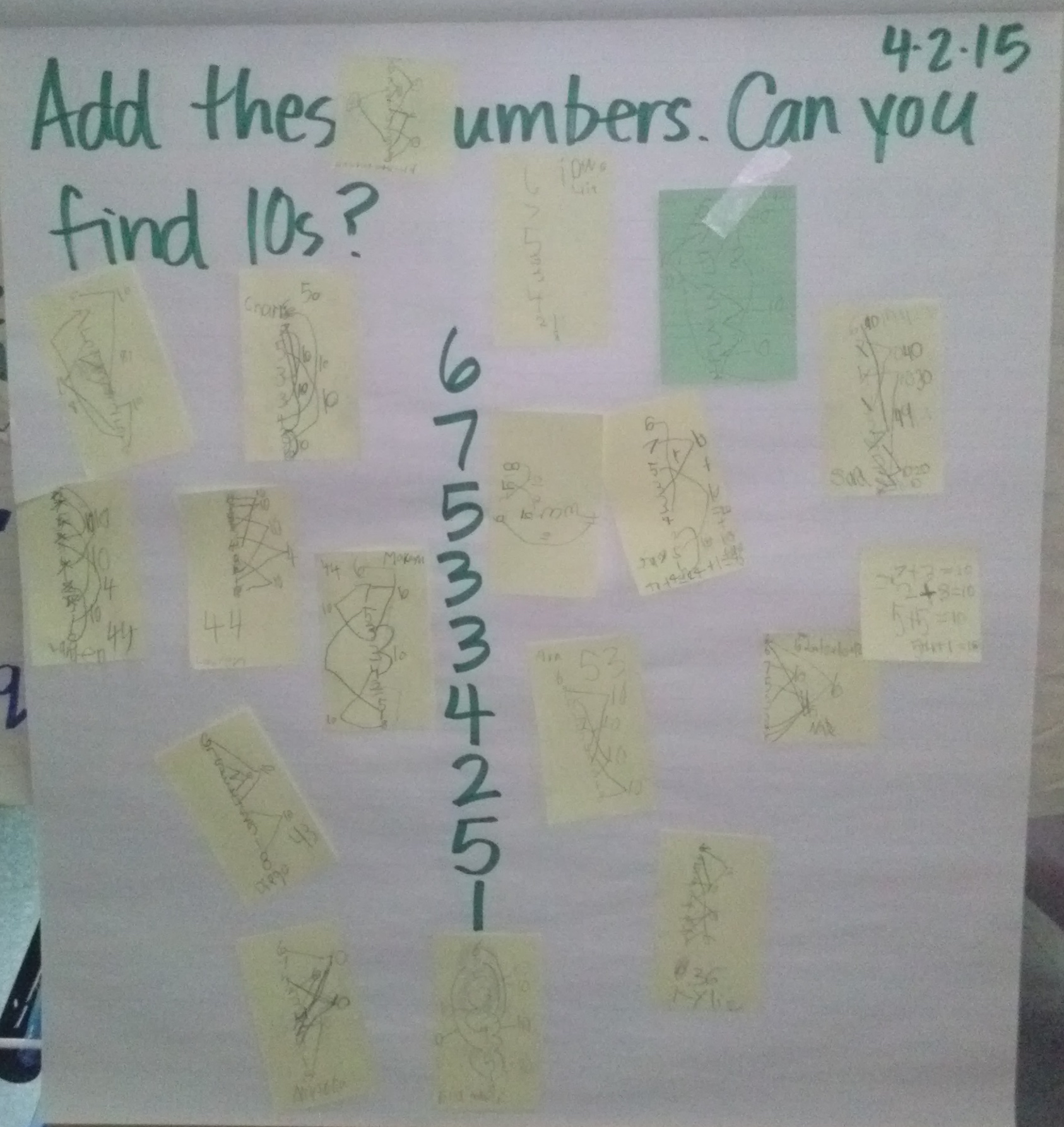
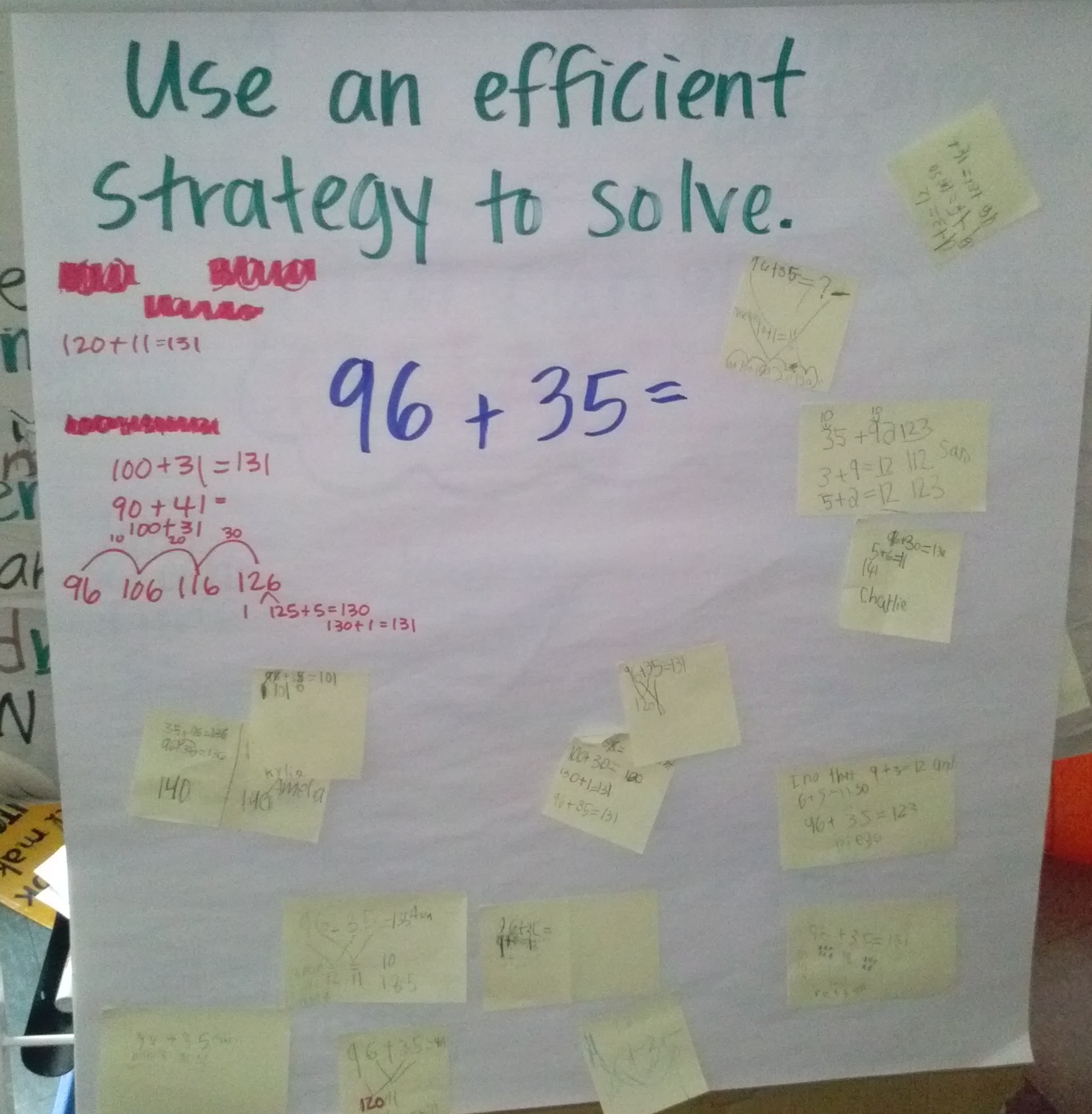
See this?  These are all of the answers we got when we went to work with our partners to add up the data.  WOW!  All the way from 10 to 122!  We needed some practice with an efficient and ACCURATE way to put lots of numbers together.  This gave me some ideas for future work in warm-ups.

So next came the idea of finding 10s as a quick (and organized) way to put lots of numbers together.   We then added (and readded) all of our data together from our chart and Ms. Turken’s chart.  We also tried it with other random lists throughout the week (so that when we came up on Walker’s Club data again, we’d be better at using that 10s strategy):
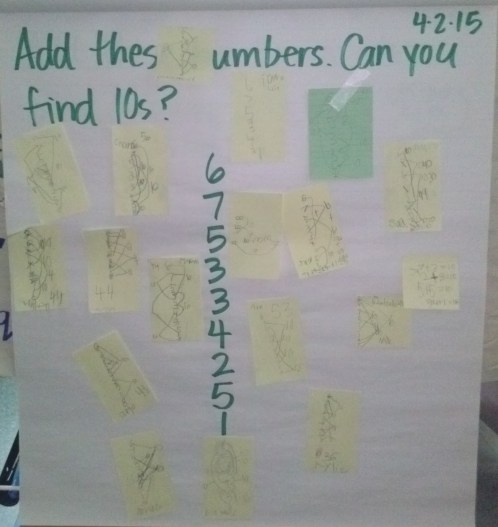
This one was a practice problem from the morning, but we didn't quite get time to review it later in the day.

This one was a practice problem from the morning, but we didn’t quite get time to review it later in the day.
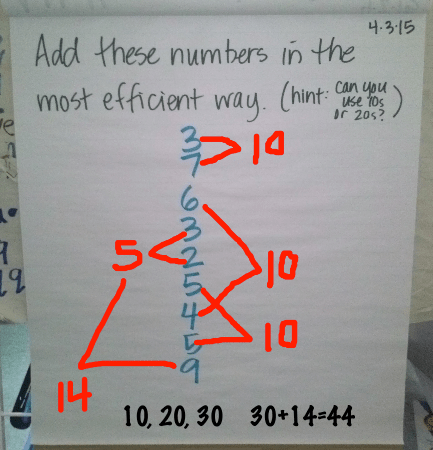
This one was actually the warm-up from Friday (when I was out of the classroom), and I showed the sub how to record the combinations of 10s.

This one was actually the warm-up from Friday (when I was out of the classroom), and I showed the sub how to record the combinations of 10s.

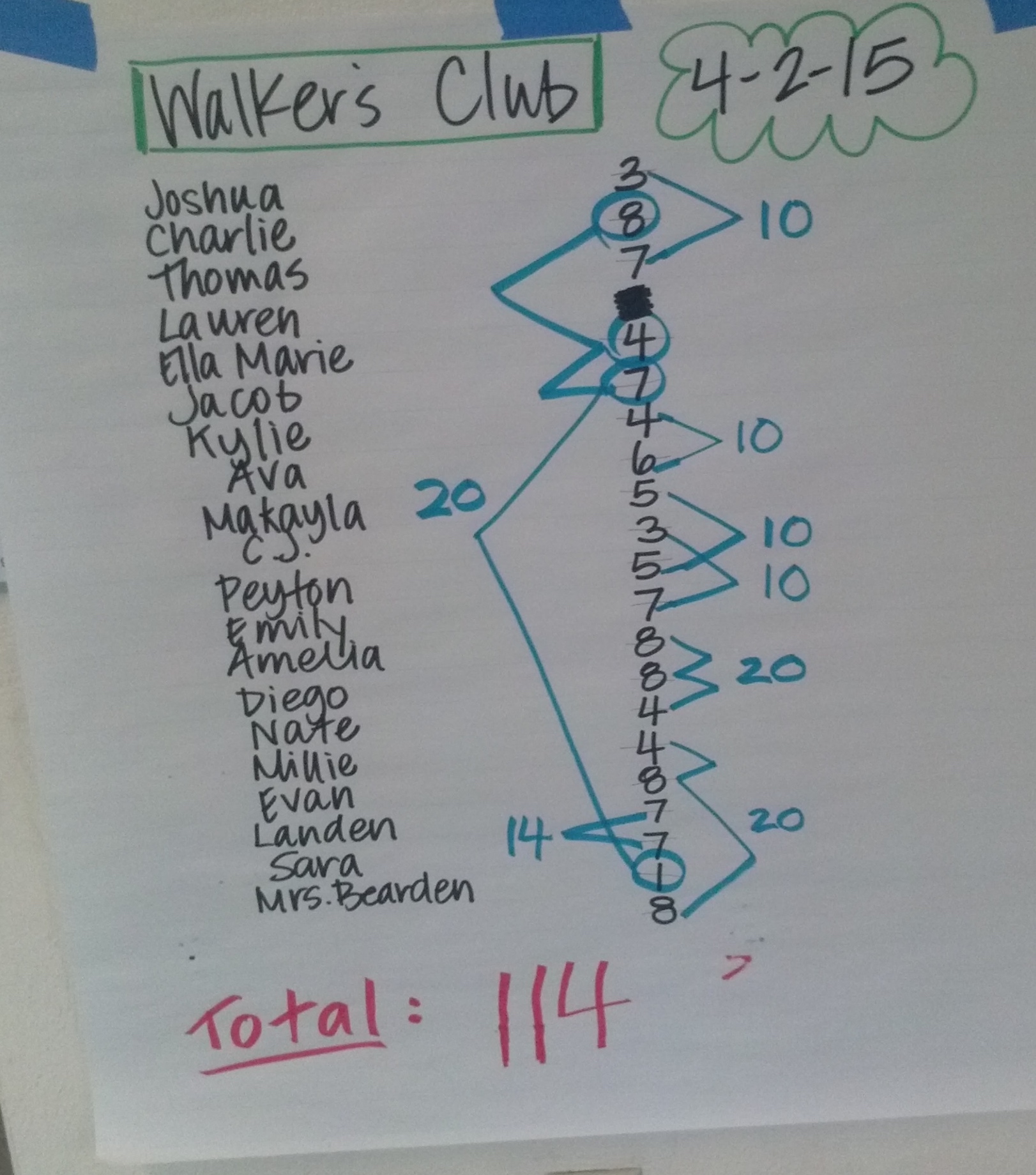
This practice did help us, and when we added together our first OFFICIAL Walker’s Club list of laps, we knew what to do.  The problem (which was a good one to have) was that our list included lots of numbers that we couldn’t put together to make 10s.  That’s totally cool, though, because Evan had just been working on how to put numbers together to make 20s and 30s (and other multiples of 10) on Dreambox, so he helped us figure out what to do with all of those 8s:
CAM01855

When I wrote my lap number up there, I felt a little bit funny since it was so much less than my Rm. 202 friends. I was SUPER glad to know it helped us out, though, as we could use it to go with some other numbers to make a combination of 20. Whew!

Check that out: on our first day we walked (and ran) 114 laps!!  This made us feel like we were off to a tremendous start (especially since we knew Ms. Turken’s class had only done 75 on their first day) and helped us set at least a preliminary goal for ourselves: we need to walk/run at least the number we did today to stay ahead of our friends.  We’ll talk more about how many that will be in all when we come back next week, and we’ll adjust that goal as we go forward and begin to hear what the other 3 classes are doing.  And hey, no matter who wins this April competition, we ALL WIN because we’ve got new strategies in our toolbox! Plus we will all have had lots of fun and lots of fresh air and exercise!  How can anyone complain about that!?

We’ll keep you updated on our progress as we go through the month! 🙂

First Grade Math Warm-Ups: Week of March 24-27, 2015

I think I mentioned last time that we had been gone for our Spring Break for a while, and this week we were back in the full swing of things!  Vacations are great, but being “home” again in Rm. 202 is also a nice thing. 🙂

This week started on Tuesday, and one afternoon we didn’t get to review the warm-up, so there are only 3 (instead of 5).  Since we’re in a new quarter, we’re also working on a new topic: right now it’s data collection and analysis.  Here we go!

Tuesday

OK, so as soon as I said it, I guess I found a warm-up that didn’t fit–this one was a leftover from last quarter, reviewing how to use groups to add and solve problems.

CAM01799

Wednesday

I probably should have taken a before and after of this chart.  It started out like most of the other warm-ups: a big jumbled mess of post-its.  This was the first survey question of the quarter, and because it was the first, the conversation around it was a little longer than most.  We talked about the definition of the word “survey,” as well as the steps and focus of data–we collect, then organize, analyze and answer questions about the data.  From this day on, we’ll go back to this focus with each set of data we discuss.

CAM01800Thursday

This one seemed like an easy question.  Then I realized that I asked it in a confusing way, and many kids didn’t understand what it meant.  I guess I could have just asked “When is your birthday?” instead.  This one was organized going horizontally instead of vertically because we had to many options.

CAM01802What survey questions would you give your kiddos for math warm-ups?  What things do you focus on when talking about data collection and analysis with your students?  Leave us a comment–we’d love to hear about math warm-ups in your class! 🙂

W

Sticks and Dots, Compensation and more!

Yesterday I posted last week’s (or at least the LAST week that we were in school’s) math warm-ups.  I mentioned that there’d be more about the strategies on which we’ve been focusing.  Well, that time is now.  Hope this makes sense and gives some insight into the work we’ve been doing for the last few months.  Well all quarter, really…but I digress.  Here we go. 🙂

Screen Shot 2015-03-25 at 8.46.12 PMOne thing I wanted to do was to be able to SHOW how these strategies work, and even better, have KIDDOS involved in that work.  So, just before we left for our break, many of them volunteered to help me with a project.   I have a Tweep (that’s a friend you know from Twitter, for those who might not know) named Shannon in Alabama who was interested, too, so this is for you and your friends, lady! 🙂

Ok…so here are some videos of our Rm. 202 kiddos explaining more about how to add 2-digit numbers using place value strategies!  (I will mention, though, that they are a little rough, so ignore the bumpy parts and see the big ideas, ok? THANK YOU!! 🙂 )

Sticks and Dots

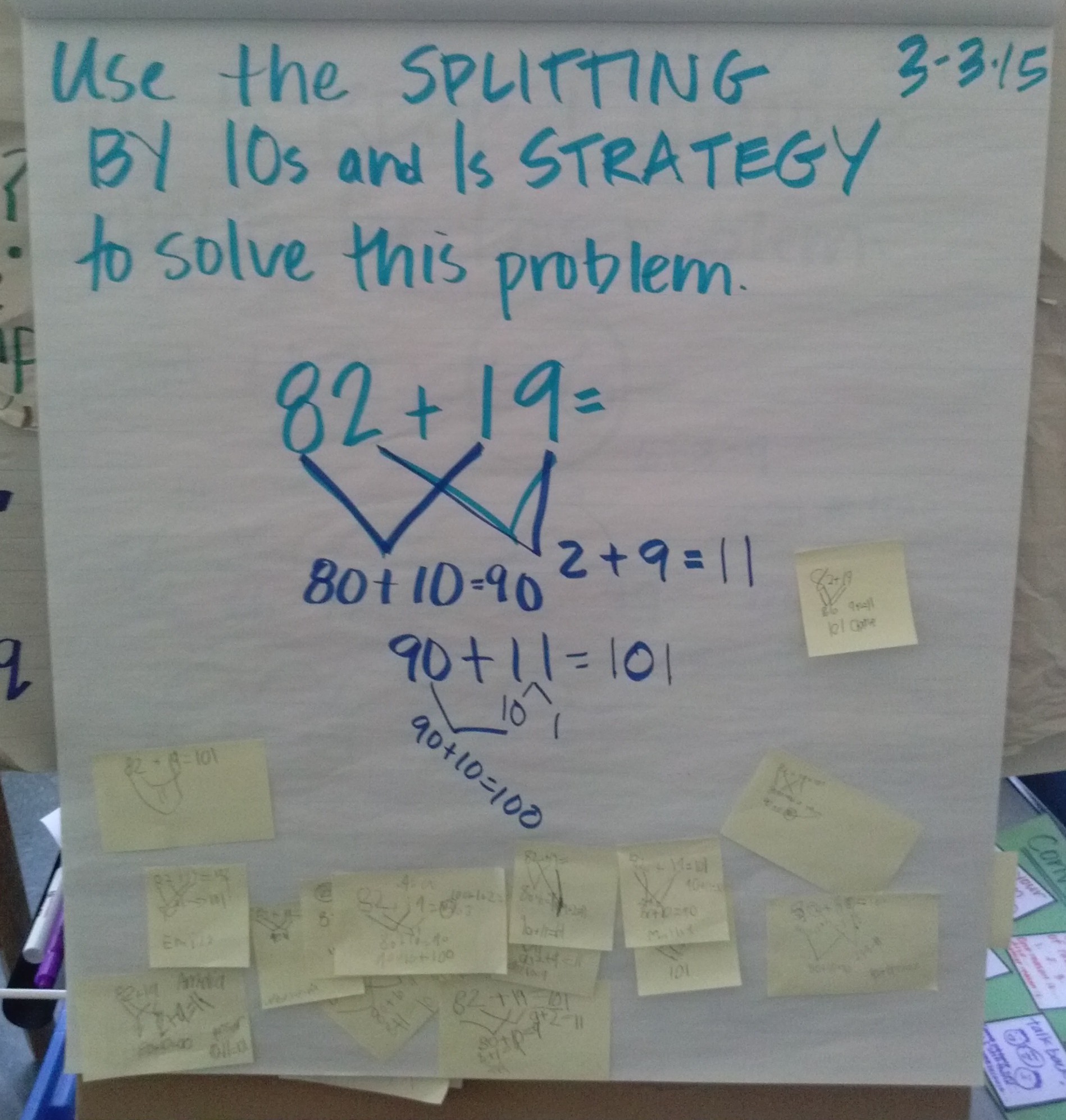
Splitting 10s/1s

https://www.educreations.com/lesson/view/splitting-strategy/29975225/?ref=link&s=9kPtgk

Keeping 1 Number Whole

(This one’s a little long, and shows more than 1 strategy, so be prepared for that!)

Compensation

Hope this helps–and WAY TO GO, RM. 202 KIDDOS!!  You are ROCKING mathematicians!! 🙂

First Grade Math Warm-Ups: Week of March 9-13, 2015

Sorry, I’m a few days (ok, weeks!) late with these warm-ups.  Spring Break happened and I had forgotten to snap pictures of them before I left for my vacation.  Oops.  But alas, they were still there when I got back today, and so here they are for you.  And man, are they worth the wait. Hee hee. 🙂

Monday

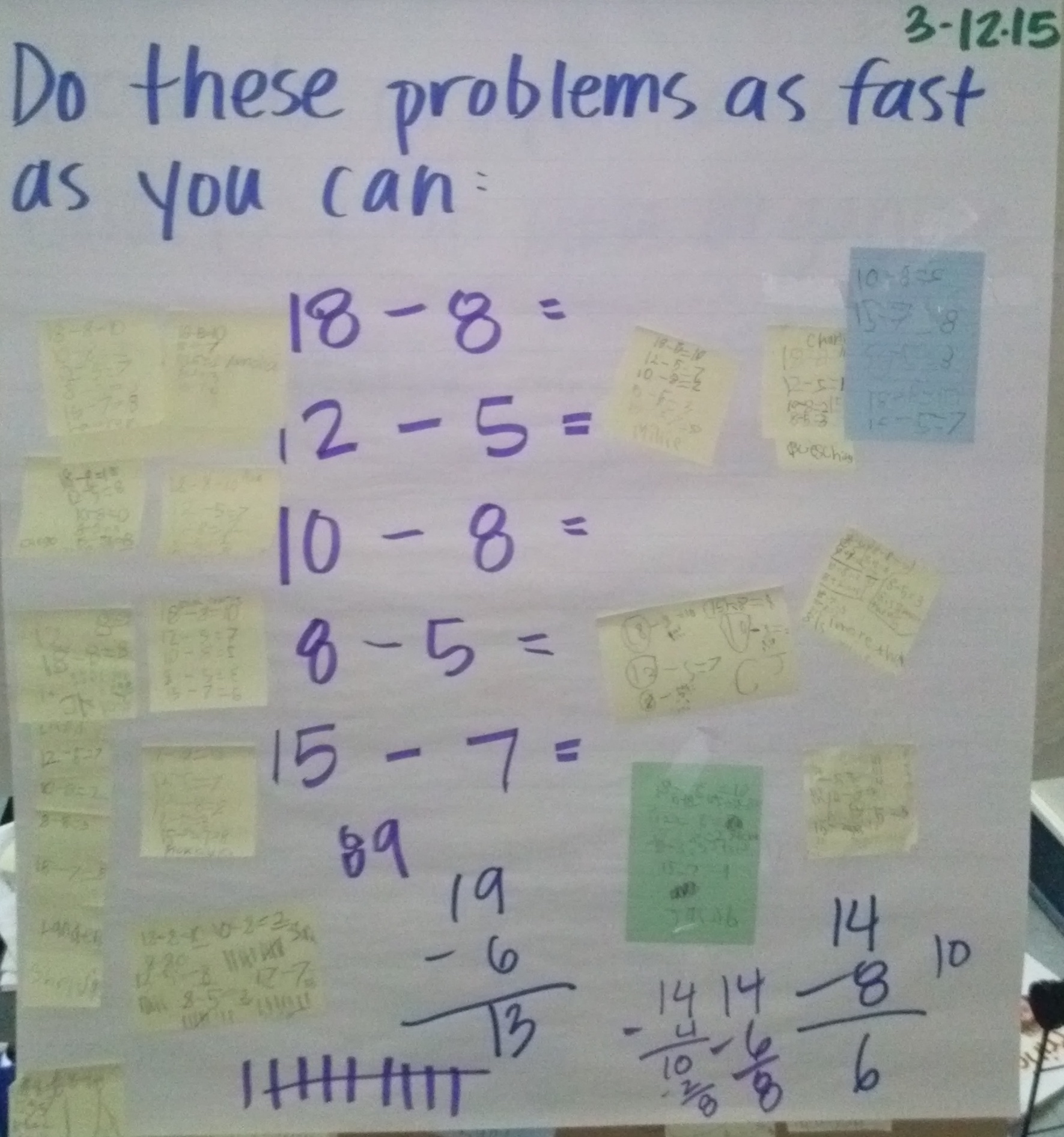
This week was the last week before the end of our quarter, and so we were wrapping up our work with addition and subtraction.  There were a couple of things that I wanted to highlight with our problems–the connections between adding and subtracting strategies, and using mental math for quick facts up to 20.  This one again helped lead them to see how what they know about addition can help them with efficient subtraction. More about all of those strategies listed there later…

CAM01767Tuesday

Yeah, somehow I didn’t get that “y” on the end of strategy in the picture (I promise I wrote it there correctly!)…again, more on that practice we did later…it involves some pretty great explanation videos.  Worth the wait (but isn’t everything I write on this blog?! Kidding, just kidding!).

CAM01761Wednesday

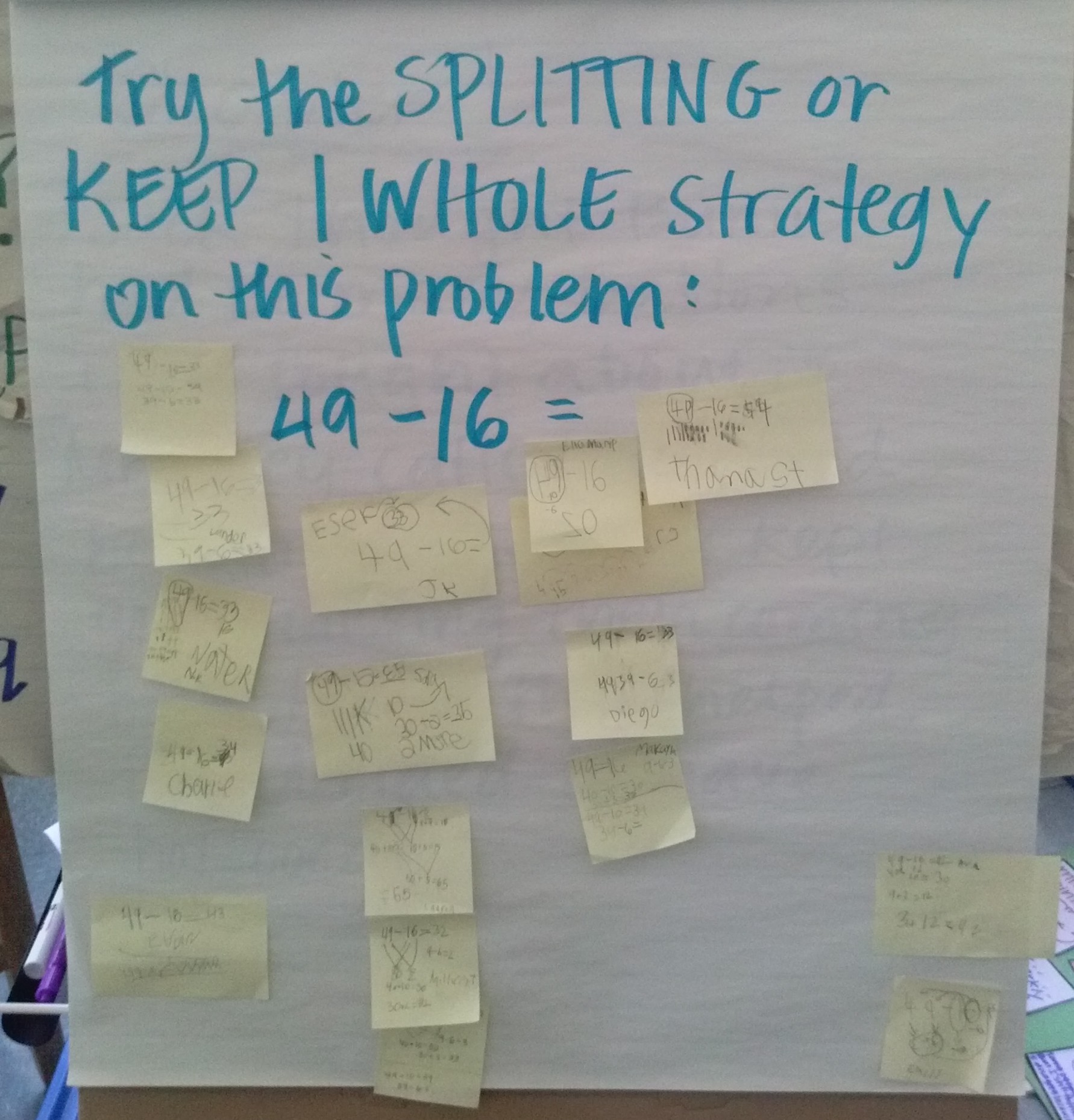
Again, with our focus on strategies, I wanted to point out that good mathematicians know when to use a strategy as well as why to use it in that situation.  This one didn’t really have a “right” answer (many strategies make sense with these numbers), but it was important for kiddos to explain their reasoning for which strategy they chose to use.

CAM01764Thursday

Wanted to get a quick temperature read on kiddos and their ability to do these facts quickly.  Most could do them quick and painlessly, using what they know about other problems to help (like tens and doubles), which is exactly what I was looking for!

CAM01765Friday

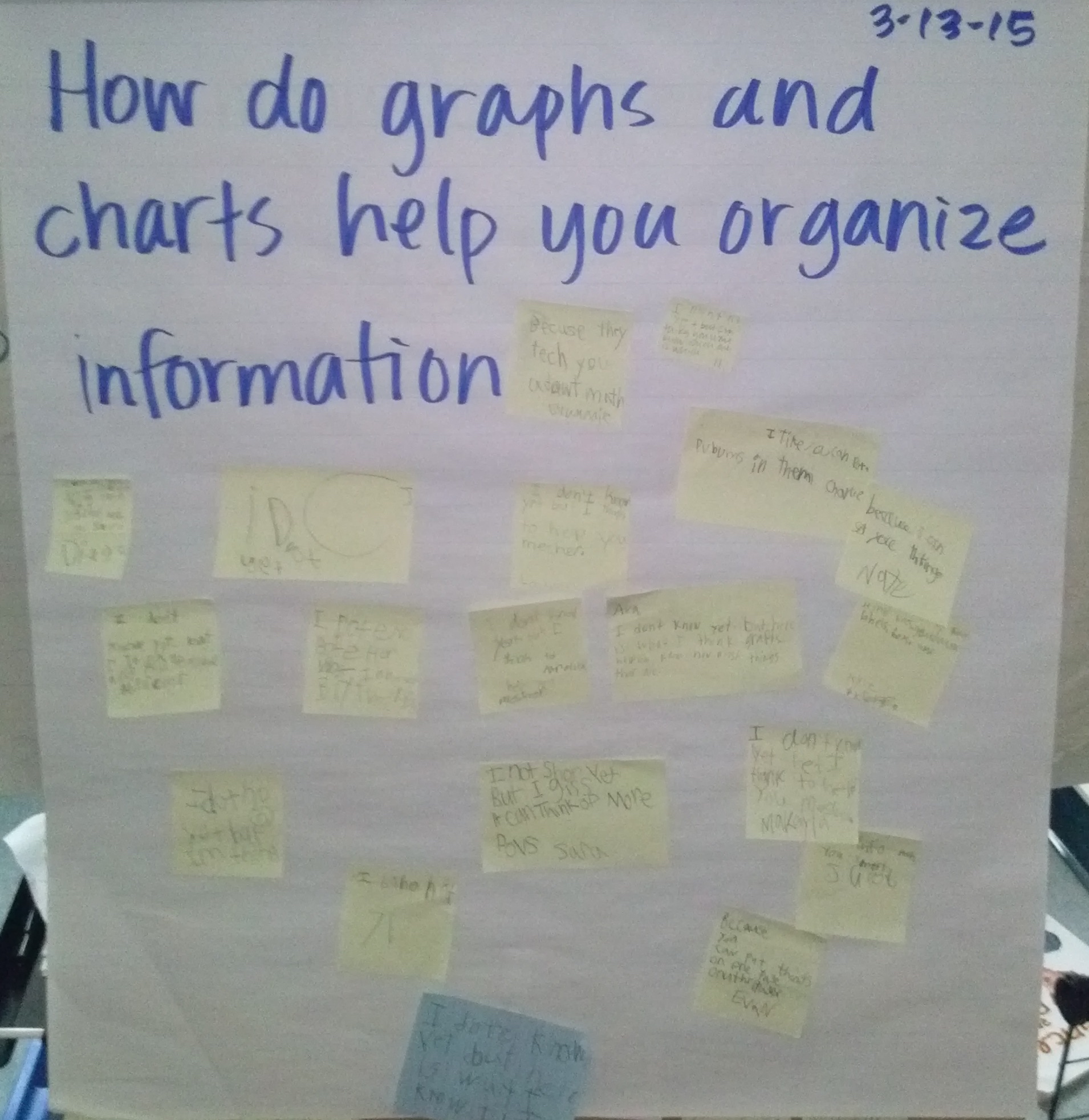
This last warm-up before the end of our quarter (and what I considered a well-deserved break for everyone!) gave a sneak peek to next quarter’s work with graphs, charts and measurement.  Needless to say, since it was a preview, not many kiddos knew what to say to this one…

CAM01766You know, seeing all of these charts reminds me of the suggestion I got from a reader once about using Padlet to do this electronically.  Does anybody have any personal experience they can share?  I’d love to hear about how it’s working (or I guess not working would be helpful, too!) for you.  Appreciate the help and advice, friends! 🙂

First Grade Math Warm-Ups: Week of March 2-6, 2015

This week there are 4 warm-ups; we had a special parent visit on Friday morning and so didn’t get to one that day.  We’re still working on addition/subtraction and using efficient strategies.

Monday

The hope with the numbers in this problem was that kiddos would recognize the most efficient strategy was to use compensation (and so make the easier problem of 30+61 that they could answer in their heads), but any strategy was fine as long as they could pick one and explain it.

CAM01699Tuesday

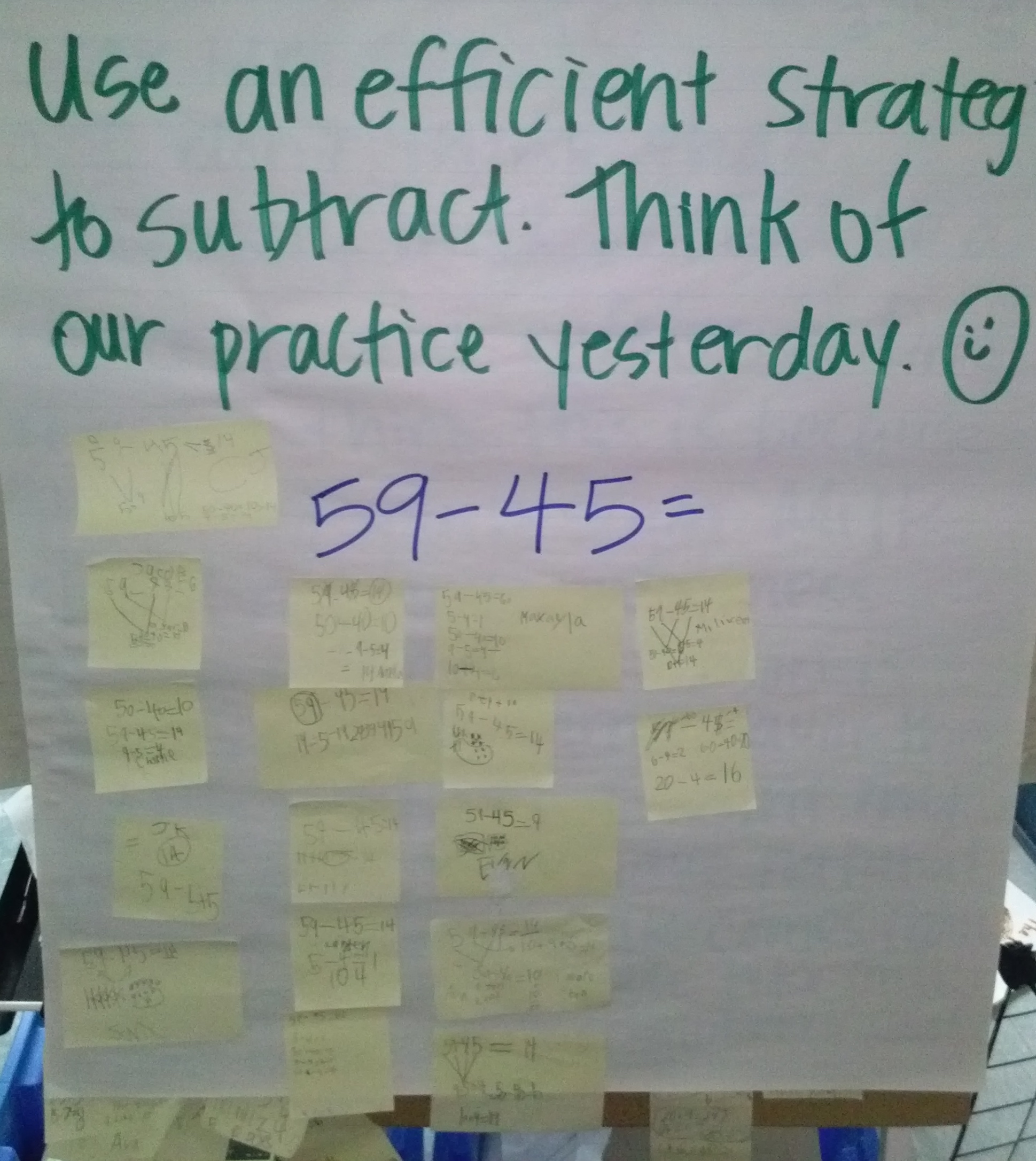
The other day, we discussed all the strategies we know how to use and tried them on the same problem.  We also talked about what we could call them so that everyone knows what we’re talking about (this was in response to a question I asked last week with our warm-ups).  So I decided that we’d try a specific strategy on a series of problems this week (but it should be noted that, as with the last problem, compensation is the BEST strategy for the numbers as you can create 81+20 and quickly answer using mental math).

CAM01701Wednesday

Besides talking about how to accurately use the strategy, we had a discussion about the difference between how you solve the problem (the strategy) and how you SHOW how you solved it (the model–in this case an open number line).

CAM01702Thursday

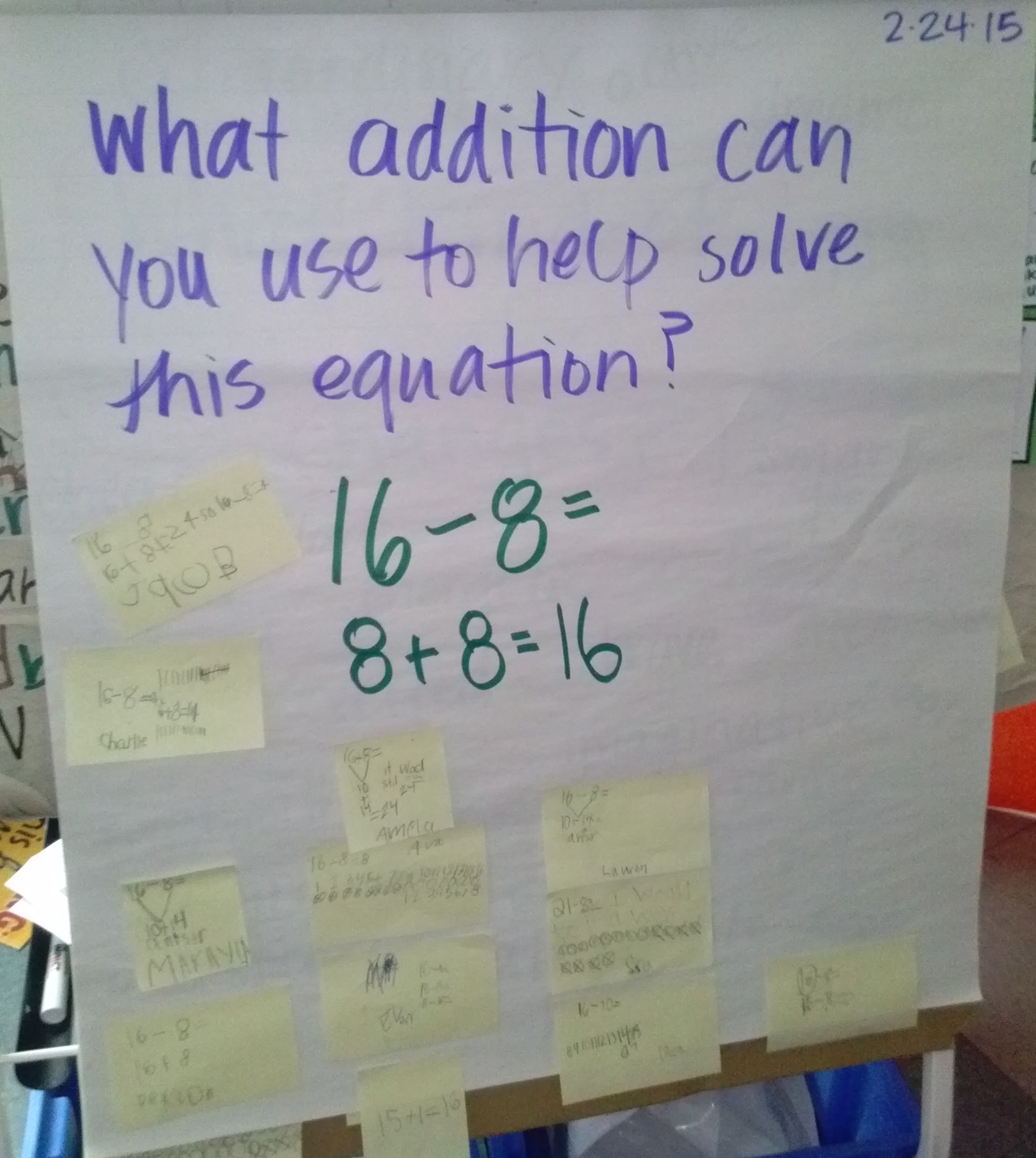
The thinking behind this problem is helping kiddos connect strategies they know for ADDITION with SUBTRACTION.  Many first graders need to be explicitly shown that what works for one works for the other.  Practicing using these known strategies can help stretch some past the draw-all-then-mark-off or counting backwards strategies.

CAM01703

These warm-ups got kiddos’ brains really moving this week!  Hope they work well for yours, too! Please leave a note and tell us about how you’re using them in your classroom, or how you’re sharing them with others. 🙂

First Grade Math Warm-Ups: Week of February 23-28, 2015

More addition this week, friends!  We’re still working on choosing efficient strategies (which actually makes me think of a blog post I need to write about the strategies we’re focusing on!–stay tuned!), so these will look similar to warm-ups we’ve had lately.

Monday

The benchmark for subtraction this quarter is the same as last (within 20),  only we’re hoping for kiddos to have some more solid strategies for how to do that subtraction effectively and efficiently.  Using strategies they already have been using for adding (like counting on by 10s or splitting 10s and 1s) can be helpful as they work more on subtracting.  Helping kiddos see the connection between addition and subtraction is also a goal here.   CAM01673Tuesday

CAM01674

Wednesday

One strategy some kiddos have been working on is compensation (in short, it’s moving numbers around to make an easier problem that can be done with very few steps or even in your head).  Even though some kiddos aren’t yet “there” as far as using it independently or correctly, it’s good for all to see/hear the possibilities for putting numbers together.

CAM01676

Friday

We have been working with “bare” problems for a bit now, and I wanted to throw another story at them.  I know, this one’s easy. 🙂

CAM01678

Ok, friends, as I finish up, I have a math question that my team and some others have been chewing on this week: is it important that kiddos know the names of the strategies they are using, or just that they understand how those strategies work?  And if the strategies are to be named, does it matter if all kiddos (like in a grade level, for instance) use the same names?  I’d love to hear your thoughts! 🙂