Dance! Dance, I Say!

So hopefully by now you’ve read my Welcome to Rm. 202 post from the beginning of the year.  If not, you totally should.  Really.  Right now is even ok. 🙂

Well, I have many kiddos in my class who did, and the reason I know is that they sent me this:


And this:


And in case you still didn’t read it, there was a part at the end that challenged my new friends to send me a victory dance that they did once they got done reading the post.  All 2049 words of it.  Gotta love it! 🙂

What does your victory dance look like? 

Put Your Cub in the Den

If you’ve visited our schedule page, if you’ve been here a while, or if you know me, then you know that writing is a big deal in my classroom.   So getting into Writer’s Workshop is also a big deal.  There is a very special way that I introduce Writer’s Notebooks, a special way I share myself as a writer, and so then writing becomes a very special thing to my students, too.   It works out really nicely.  🙂

So…a couple of years into teaching 4th grade, I came up with what I thought was a great idea.  At that point, Steno notebooks were EVERYWHERE, and I found a new way to use them.  Rather than having my kiddos jump right into their Writer’s Notebooks, I gave them a “practice” notebook where I would teach them my way of using the notebook, a place to give it a try and make mistakes.  Then, once they had proved to me that they were ready, they got to “move in” to their real notebook.  Back then my class came up with the name of “training wheels” for that starter notebook, because of how you go through that learning stage before you ride a real bike.

This year, I knew I wanted to get back to this whole starter notebook idea (I hadn’t done it with my 5th graders yet), so I got to work.  Instead of using Stenos, though, which are strangely hard to find now, I decided to use a half-sized notebook.  Just a few quick slices of the paper cutter and you have a class set like this:

I liked how they are pint-sized, so are therefore portable, but have big enough pages that you can finish most thoughts on one page.

I told my class the story of the training wheels, and set goals for how I wanted them to use these notebooks over the next few weeks.  Then I asked them if they wanted to stick with the old name, or create a new one that was just for us.  And so the idea of the “cub” was born.  Instead of having  training wheels that led them to a bike, they decided that they would instead have a cub that grew up into a bear!  Then, they even renamed our cubbies (the places where they store their stuff) DENS, so they could put their BEAR in the DEN.  Get it?  Like Bearden?  That’s actually how I tell people how to spell my name: like a bear in a den.  HA!  And so the cub was born.  And very soon everyone’s cubs will become bears.  🙂

But what do we put in our cubs?  What am I teaching them to put in their notebooks?

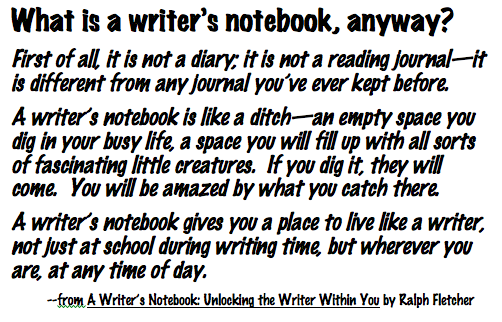
It all started with a definition, courtesy of Ralph Fletcher:


A container.  A ditch.  A place to live like a writer.  I want my writers to think of this little notebook as a place to collect ideas, to save secrets, to start stories.  It’s a place they will visit each day, writing in a variety of different ways, collecting entries that they will come back to over and over again in their future–for sure in their 5th grade futures, but hopefully (if I do my job right!) their farther futures, too.  I am up to my 11th WNB, the first of which dates back to 2005, and I still use them everyday!

So far, we’ve learned these strategies for our writing toolboxes:

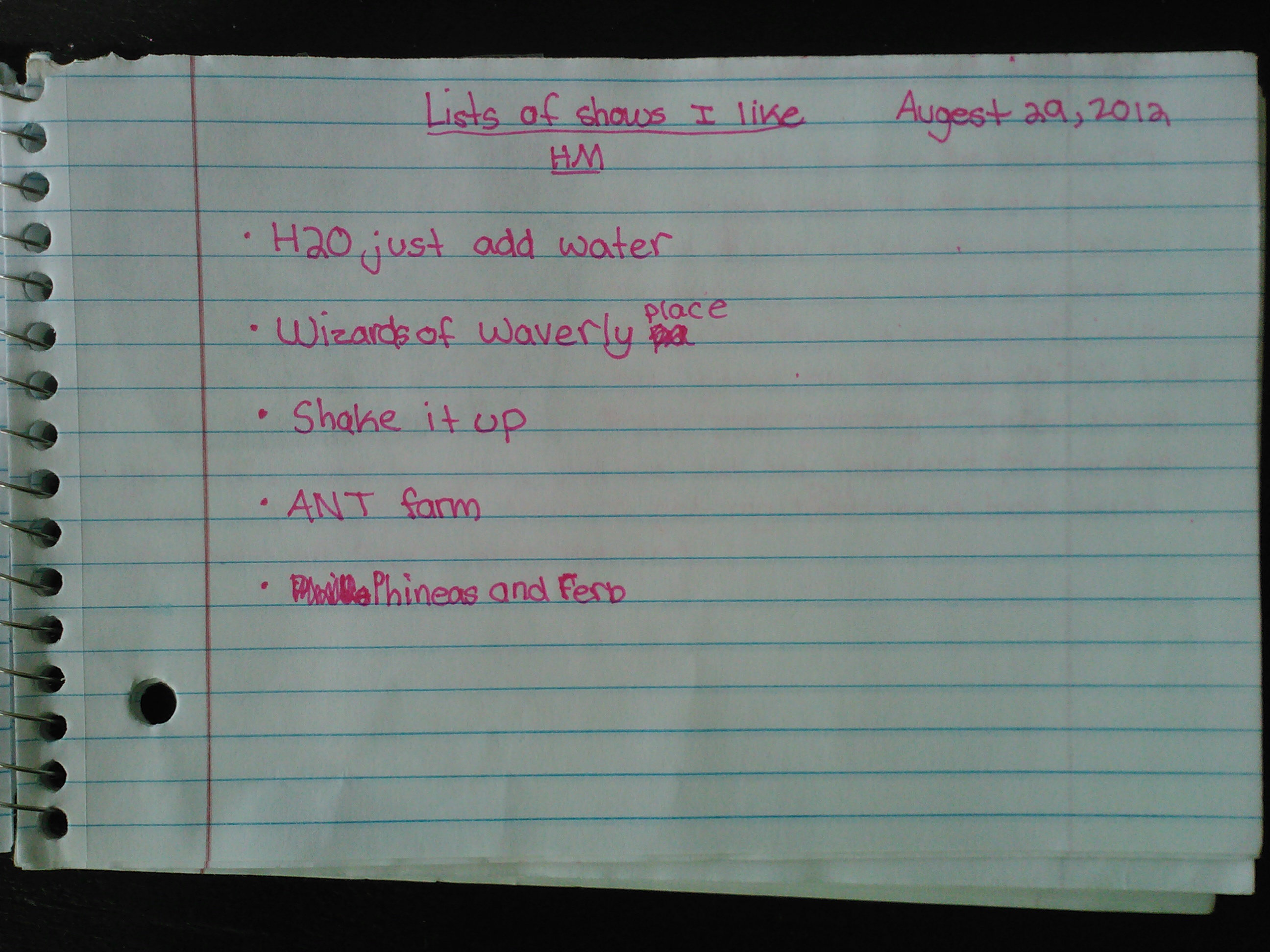
1. Lists: you can use this strategy for anything!  A list of favorite things, least favorite things, names, places, foods, story ideas–ANYTHING!  Like this, for example:


2. Memories:  I define a memory as anything that has happened to you in your past (and remember–5 minutes ago is the past!) that you want to remember.  It doesn’t have to be huge or monumental or “special,”  just memorable.  And important to you.  We’re learning that almost anything in our lives is “worthy” to be kept in our notebooks, and that we can write about these ordinary events in an extraordinary way.

A 5th grade memory or two:


3. Artifacts:These are really an extension of memories, and involves the “stuff” you put in your notebook that triggers memories–photographs, newspaper clippings, ticket stubs, candy wrappers, flower petals, cards, notes.  You name it!  Someone even taped a quarter into his notebook the other day because it sparked a story he’d heard before.  For us, it’s been mostly magazines lately.  I give them very specific directions about how the WRITING and THINKING is more important than the picture, and that they should not just cut out any old picture and write “I like…”  They are totally rocking at finding the deeper stories behind plain pictures they find in our classroom magazine bin.

For example:


4. Questions: We call these “fierce wonderings” (again per Ralph Fletcher’s smart thinking!).   We talked about how we wanted the focus to be on big questions that may not have an answer–at least not one that we can find easily or at this point in our lives.  We discovered that often fierce wonderings start with “why.”

5. Observations/Descriptions:  We added these to our strategy list today, and I can’t wait to share them with you soon!

I love the stories I keep hearing from families about how excited their students are to be writing!  They are already doing an AMAZING job with this!  But hey, that’s because they’re AMAZING kiddos!

What do you write about?  Have you ever tried any of these strategies in your own writing?  What can you add to our list of entry suggestions?  Leave a comment and share your thoughts! We LOVE to read comments!


Reading Museum

All during the first week of school, we spent our time in activities to get to know each other better.  During our second week, we continued, but with the focus of getting to know each other better as learners.

So on Friday during Reader’s Workshop, we held a Reading Museum.

The idea was simple, really.  Each reader in our room–including me!–set up an “exhibit” that told something about themselves as readers.  Then we went around to each exhibit (after having a quick conversation about expectations–you have to act a certain way in a museum, after all) to see what each person laid out.  We made connections to other readers’ books and asked questions we had, too.

Once we were finished, we debriefed on what we had learned during this activity and how it would help us in the future.   What a fun way to spend a Friday afternoon!

Check out some pictures from our museum:

This slideshow requires JavaScript.

Have you ever been a part of a Reading Museum?  What books would you put in your exhibit?  We chose books that we liked, that we’ve read over and over, that someone read to us when we were little, etc.  We’d love to hear about your selections!  Leave us a comment, please! 🙂

Our New “Norm”al

I work at the most amazing school ever.  No really, I do!   But it didn’t get that way by accident.  Our school culture is one built on respect and acceptance, and these things are expected and encouraged by all the adults that work here.  Our school has Road Rules that help our students (and teachers) know how they are to act, and our staff then has another specific set of norms that we follow in our interactions with each other.  My team, then, has also agreed upon norms for our collaboration.

So the next step would be my own classroom, right?  This year, instead of focusing on class “rules,” I had a conversation around norms with my students.  We discussed how norms help us know how to talk to each other, how to act in a group, how we want our room to function.

We started by reviewing the Road Rules, since they are the universals for our school, and everything we do in our room should relate to them.  In our tribes, we brainstormed ideas.  Then we shared out and began the big job of weeding through all the suggestions.  We looked at any norms that were similar or even the same as others, or ones that maybe just were not our best thinking.  Here’s what we ended up with:


And then since we needed a fresh copy that we could easily read (and that matched our theme!), I made the final copy that now hangs next to our meeting space:


These norms help us work together smoothly and productively, and since they were everyone’s ideas, no one can really argue with them!  They’re helping us do great things already!

What norms do you follow in your school or your classroom?  Parents: do you have norms for your house? How are they working for you?

Bananagrams

Have you ever played Bananagrams?  Well, honestly, I haven’t either.   I know that it’s a little like Scrabble, and is a banana-bag filled with letter tiles.  At our “opening day” staff meeting, my fabulous principal, Mrs. Sisul, did this version of Bananagrams with our staff.  I thought it would be really great to try it with my 5th graders.  Here’s how we used it in our room on Thursday.

Every kiddo was given a letter tile out of the banana, and then were given these directions:

1. Find as many different other letters as you can and make a word.

2. No talking.

3. Sit down after you have a word.

4. If you can’t use your letter to make a word, wait by the easel.

 
During our first round, we made the words NUN, PEARS (which later became SPEAR), BOW (which became BROW when we added someone who needed a group), I (it’s a real word, right?), and RIO.  They did great, and followed all of the rules I gave them.  I was a little surprised with how easy it was to do the “not talking” part–that’s usually the rule that gets broken first.  Not these kids, though. 🙂

This slideshow requires JavaScript.


We did another round where we added the rule that they had to make words that were 4 or more letters.  They LOVED this game, and have requested it multiple times since we played it.  I’m excited to come back to it often, with different rules each time.  The possibilities are endless, really.  I’m excited to try it for spelling.  Our program is based around a different “generalization” each week, and so they’d have to make words that follow that pattern, i.e. short vowels, “r”-controlled words, long vowels, etc.  I know they’ll be up for the challenge!

Have you played Bananagrams?  Have you used it in your classroom?  Do you have a suggestion for us for a rule we could add to our game?  We’d love to hear your thoughts!

Marshmallow Challenge!

Welcome back to school!  We have been very busy already this year–hence the reason why I haven’t updated in a while–and are getting into a groove.  Forgive me if the next few posts are out of order (at least the order in which they happened); I still need pictures of certain things before I post about them.
Anyhow…we have spent much of the last 6 days getting to know each other better as learners (and people in general, really), as well as focusing on how to work well with a group.  One thing that our tribes did together early on was to take the Marshmallow Challenge.  What a great idea shared with me by my new friend and teammate Mrs. Hong! When you’re done here, you should definitely check out her class blog. 🙂

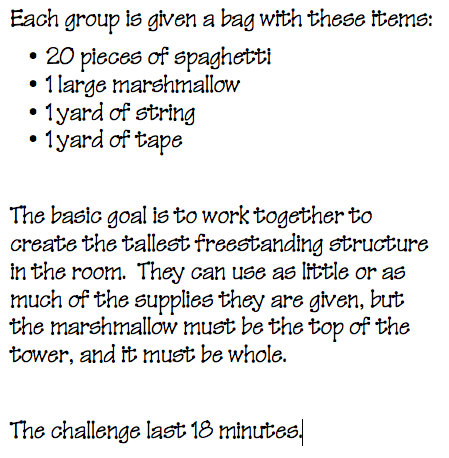
Alright, so here’s the basic idea:


We got ready, and I set the timer.  They built and taped and created, and at the end of the challenge we stepped away from our structures and….Every. Tower. Fell. Over. 😦

For a few minutes my friends wanted to claim “FAIL” on this activity and say it didn’t work.  But instead, I led them to reflect on what went right.  After a conversation, we figured out that many groups had the right idea of focusing on building a strong foundation, many had made a plan first, each group had a common goal and all groups worked well together to create a spaghetti structure.  Even if they fell over, we were successful in a lot of ways.  And so that day, we planned to do the challenge again, knowing that the next time there would  be many things we’d change–but many things we’d try again. 🙂

And so today was that day.  We planned and prepared before we went to lunch, knowing that when we returned we’d get down to business.  It was so great to watch the tribes busy, talking together about what to do this time around.  Many had plans drawn on paper, and most mentioned specific things they wanted to do differently.  Many groups decided that instead of trying to make their tower really TALL, really FAST, they’d focus instead on making it STRONG.

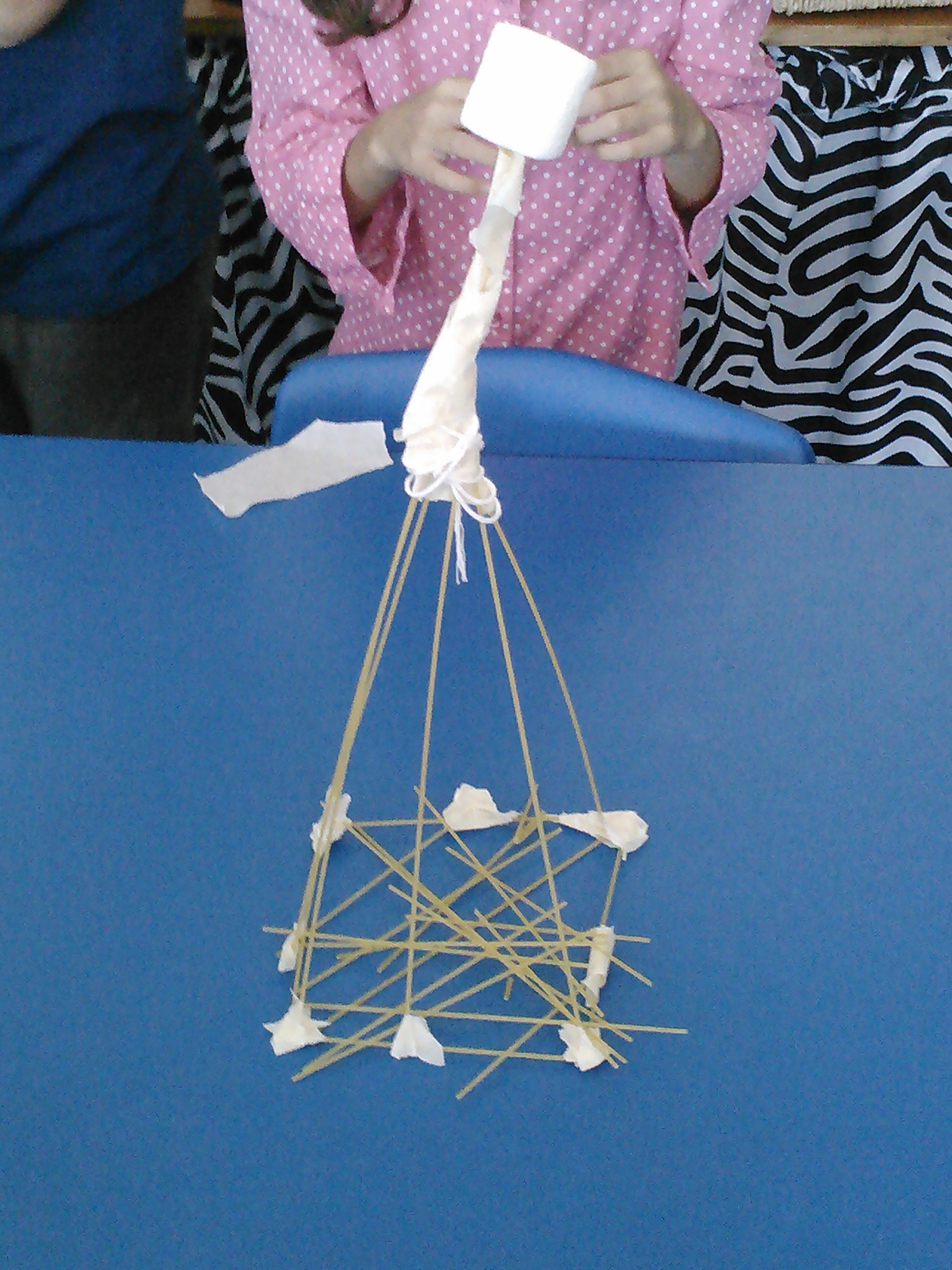
We got ready, and I set the timer.  They built and taped and created, and at the end of the challenge we stepped away from our structures.  This time, this happened:

WAY BETTER, RIGHT?! I was so proud of them!  And yes, granted, two of them still fell over, but sadly it was right at the last minute!  Those last two were upright and fine until the timer buzzed.  Bummer!

Like I said, we focused on what we can learn from this situation.  It wasn’t about the tallest tower, or whether or not it fell over.  It was about the team, the working together, the learning about our strengths and building on them.  And they totally rocked all of those things!  I can’t wait to see the other amazing things they are going to accomplish together this year!

TRIBES!

We have a new theme in the room this year–WILD about learning.  I will add pics to show it later on, but just picture lots of animal print.  Believe me–it’s FABULOUS!

So one thing that I always do at the beginning of the year is create a set of groups that we use all year for a variety of activities.  These groups don’t change, unlike many others in our class.  I always have a name for the groups, which is usually based on our theme.  They originally started back when I taught 4th grade and needed to have groups to vote on laws that we made for our class state.  They were legislatures, in effect.  Back then they were called Districts, and then last year (during a construction theme) they were Zones.

As I thought about this year, I latched on to the “wild” part of our theme, and that lead me to thinking about tribes.  That tribe idea lead me to Survivor.  You know, the show on CBS?

Originally I was just going to use the idea so that I had something clever to call our groups, but then I realized that there was actually more of a connection to that show than I had realized.  We made a link to the purpose of the tribe on Survivor–to help each member of the group “make it,” to focus on the strengths that each member brings to the situation, and to work together to solve problems.  Then I remembered how on the show, each tribe gives themselves a name–a name that tells something about the group as a whole.

So a new tradition was born.  One of our first activities together was to create tribe names and explain what that name meant about the group.

May I introduce to you, the 5 tribes of Rm. 202:


I’m going to save the explanations for another time, but I wonder: do you think you can figure out what they may mean?  And if your kiddo is in one of those tribes, can you figure out which one?  Teachers: do you have groups like these in your classroom?  Tell us about them!

Welcome to Rm. 202!

Welcome to Rm. 202!

I am so excited you’re here!

Please proceed with caution, and read carefully….

The following letter contains 2049 words that will begin to shape your fifth grade year. Be sure you have time to read them all carefully. You may like to have your parents sit and read with you so you can all be excited about fifth grade together.You should also have dancing shoes on (true story) and a video camera handy (extra credit).

Ready? Of course you are! Because you are about to become…

Fifth Grade and Fearless!

I am excited for the year ahead – but first, I need your help in knowing what next year is going to look like.


Yes, your help!

What next year holds, is, in large part up to you. I have my plans, my ideas, my goals….what about you?

I know some of you may have sneaked a peek at the letter I sent your parents, or may already know me, so this next part may be a bit of a review.  Too bad.  Keep reading anyway. 🙂  I have been teaching for 12 years and every one of them has been at Robinson!  I even did my student-teaching there long ago, so Robinson is definitely my home-away-from-home.  In my real home–which is in St. Peters–I have a fabulous family that I love dearly.  My husband, Grant, is a teacher, too, in Wentzville.  He is starting in 3rd grade this year, but has taught 4th and 5th grade like me, too.  Fun, right?  We have a 5YO, Riley, who will be at Robinson, too.  I am sure you’ll get to know him really well as we got through the year together.  We also have a little girl named Allison–we call her Allie–who is 19-mo-old.  We LOVE (yep, love) Disney World, and travel there often.  We also just like to hang out together at home (or anywhere, really) and spend time with each other.  So that’s me.  What about you? Can’t wait to learn more about YOUR family!

Like I said, I have been teaching for 12 years, and every year, I begin the school year as a different person. I decide on that first day and then every day thereafter, who I am as a teacher. What is important to me. What I want to accomplish. What I want my students to see when they come to school. I choose that. I don’t let other people tell me who I will be and I don’t just be who I think other people want me to be. I read, I think, I write and then I decide.

Who Will You Be? (This is a big question – take your time to think about this!) Will you be the kid who has brilliant ideas? The kid who loves math? The kid who looks to help other people? The kid who……? Fresh start. Clean slate. We all get one (that includes you!) and we all get to begin fifth grade as the person we want to be.

What is important to you? (This is another big question and one I am really curious about so I will ask it twice.) What is important to you?

There are lots of things that are important to me: my husband and my kids, sharing ideas, reading, writing, being able to have a conversation, making things, discovering things, sharing what I know, sleeping in, staying up late and knowing when to say sorry.

As a teacher, there are a few more things that are important to me:

* YOU!:   You’re the reason I’m there, after all right?  It is important for me to get to know you, and know you well.  Not just as a learner, but as a kid, too.  I want to know what you like, what you don’t like, what makes you tick.  Who you are.  That’s ok, right? 🙂

* Respect: If you’ve been around Robinson for longer than 5 minutes you know that respect is a HUGE part of our culture.  It’s pretty much what we’re all about.  I expect respect to be a huge thing in our classroom.  I will respect you, and I expect you to respect me, as well as everyone else in our community.  This counts when we agree and even when we don’t.  I have a saying that I learned from my good friend Mrs. Ford years ago, that is really important with this whole respect thing.  It’s this: You are not the sun.  In other words, the world does not revolve around you, and there are lots of other people in our classroom that have needs, wants, likes, dislikes, etc., that we need to take into account.  I love you, but I love everyone else, too!

* Mistakes:  I expect you to make them.  Yep, I said it.  I want things to be hard for you.  I want you to struggle.  If you need more than one try or lots more practice with a concept, you’ll get it.  If you need to show me what you know in a different way, then we’ll figure it out.  If  you need me to repeat something or explain it for you in another way, I’ll do.  If you need a big, fat challenge–watch out, you’ll get one! No, I’m not crazy, I just want you to try things that may be tricky at first.  I want you to learn to work through it when it’s hard and figure out what to do.   I want you to feel the joy and success when you learn something new and it’s because you persevered!  Not everything will be easy here. And that’s ok. We’re in it together and I’ll help you all along the way. 🙂

* Collaboration: I love to share ideas and get ideas and try new things and even when those things fail, I know I am just one step closer to finding what does work. I love to work with other teachers to figure things out and find new solutions to old problems.  But just as much as working with adults, I love to collaborate with students.  I love to hear what you’re thinking, how you’re feeling about things, what you think would be the best way to learn something.  Even when you don’t agree with me, or have a plan that is completely different than mine, I want you to share it!  It’s our classroom, and often your ideas are WAY better than mine.  I know I’ll share lots of examples with you about how that’s happened to me over the years.

Aside from collaborating with me, though, you’ll be collaborating with each other!  You will have lots of opportunities to share with your classmates, to give your ideas, ask questions, prove your reasoning and challenge each other.  I expect that we will work together to help EVERYONE in our class be the best they can be.  Together we’ll achieve much more than we would if we tried to do it on our own. 🙂

* Questions: I found a quote I love by a guy named Tony who loves learning. “No one cares what you know. What the world cares about is what you do with what you know.” Think about that. Chew it over. We can all google and find stuff out – but then what? After we know stuff, what we do with it = inquiry. And that is what the world cares about. Me too. You?

* Time is precious: So are you. I don’t like wasting time and I especially don’t like wasting your time. That means I try to come to school ready, fired up, and prepared to make a ruckus (I like to think that a ‘ruckus’ is the sound your brain makes when it is challenged to be creative, thoughtful, inquisitive and world-changing – it is a beautiful sound).  I hope–and expect–that you will come into our classroom every morning ready to learn, ready to work hard, ready to put your very best foot forward.  We only have so many days together, and we need to make the most of every single one of them.  We’ve got so much to do! 🙂

* Technology : I  love technology because it allows me to connect to new ideas. I like to think about what I want to do and look for tools to help me do it. I want to hear your ideas on technology and what works for you. We will be using technology in many new and exciting ways this year, so get ready!  You’ll be blogging, using iPads and laptops, working on the ActivBoard, making videos of your learning and trying out many new things that we may not even know about yet.  Whatever we do, though, the goal is always learning.  We will use technology in meaningful ways to better create new knowledge.  Excited?  I know I am!

* Community: our class, our families, our school, our neighborhood, our city, our state, our country, our world. There are so many amazing people doing amazing things. I bet you can think of ten amazing people who do amazing things right now. We need to hear those people’s stories. Your mom and dad should be on that list. They are awesome. (Assignment one; email me List of Awesomeness about people in your family* -*family = people you love and are connected to even if they don’t happen to live in your house or share your last name).

* Taking risks: I like to take risks.   I hope you do too. It is scary sometimes and it fails sometimes but sometimes, more often, it is just A-MAZ-ING! Usually when you do something scary you do things you never thought you could.  You surprise yourself.  And then you want to do more! Someone smart once said “Fear and Excitement are shades of the same color”. Cool, huh?

HANG IN THERE….THE END IS NEAR!

OK…if you made it this far and are still with me, congratulations, you are a rockstar. Stop reading right now and do some kind of victory dance.  No really, go ahead.  Dance.  I’ll wait.  Better yet, have someone video tape your dance and send it to me!  I’ll even post it on our blog!

So….what now? How can you best prepare for the extreme awesomeness of fifth grade?

  1. Have a great summer! Be extraordinary.
  2. Read something.  Write something.  Wonder something.  This’ll get your learning muscles warmed up. 🙂
  3. If you have any questions you can always email me. Anytime. No question to big or too small.
  4. Think about what I said about being who you want to be. Most importantly, remember that everyone else in our class is thinking about that too. Be gracious to those who are brave enough to set lofty goals and make the effort to become an even better version of themselves.
  5. Look around your house (or your computer, maybe) for a picture of your family.  I’d love to be able to decorate our room with us–pictures of all the people who help make us who we are and who encourage us to do our best.  If you want to email it to me, that’s great (I’ll add my contact info to the end of this post), or you can print it and bring it to school on the first day.  And if you don’t have one, don’t worry!  We’ll take your picture!

Despite having now used about two thousand words, there are no words to describe how excited I am about working with you next year!

Here’s To Being Fifth Grade and Fearless!

♥ Mrs. Bearden

PS. If you didn’t get up and dance before and are now wishing you did, there is still time to do it. Anytime. Send me that video with your best moves (extra credit).

When you have had a chance to relax, digest this letter (maybe talk about it with your family or friends) and get your fifth grade brain tuned up, I would love for you to write to me to introduce yourself, ask questions, maybe respond to something you read in this letter that made you think.

I look forward to hearing from you before the end of the summer!

Mrs. Bearden: Email–jennifer.bearden@kirkwoodschools.org; Phone–314-213-6100 x4214 (after August 15); Twitter: @jbeardensclass

**Thanks to @terSonya and Mrs. Hong for help with writing this post! Like I said, I love to share ideas!**

Skype!

Remember how I told you about how lucky we were to be able to Adopt-a-Pilot?

Well, since that first visit, he’s come back two other times, teaching us all sorts of awesome things about geography and flight, as well as life-lessons related to doing our best and working to achieve our goals.

During this second-to-last visit with Mr. Smith, we got to Skype with him while he was out-of-town!  We got to guess “Where in the USA was Mr. Smith?” using clues he gave us.  We used our big map to mark where we thought he might be:

Molli guessed on the FIRST CLUE that it was Birmingham!  Way to go, kiddo!

Check out a clip of our Skype session:

This was only the second time I’d ever Skype’d (and the first was the end of Adopt-a-Pilot last year!), and it was so great!  I know lots of teachers use it in really creative ways in their classrooms for mystery read-alouds, conversations with authors and for class-to-class chats.  I can’t wait to see what else is out there that I might try next year!

How do you use Skype? I’d love to hear about it! 🙂