Library Redo

Remember last year when we worked on organizing our classroom library?  You might not, because I couldn’t find it on the blog….:(  Maybe the post I thought I wrote got lost in the “it-has-to-be-finished-and-perfect” list I told you about yesterday.  Well, since my pledge is to tell all the stories, not just the finished ones, I’ll share the parts of this story that we have finished (and that I have pictures of!).

We left at the end of 1st grade with a (mostly) organized library, which we had worked on together little-by-little last year.  We packed it away in that same way, which always helps when I put the classroom back together the next fall.  We figured out, though, that we had never gotten the boxes fully labeled, and so as we started using the books again this year, they got all mixed up.  We decided we should probably just start over; I was the only one who knew what most of the categories were supposed to be.

We started by pairing up, and first going through the boxes we already had established.  I gave each pair a box, and their job was 1) to figure out what their books had in common, 2) decide if they had any that didn’t match that category, 3) and then make a label that matched their newly decided-upon category.  All of the extras got piled up in the middle of the room for later.

The second year together has been a great learning process in many ways.  Of course, for many reasons, we’re doing many things differently, but there are also some things that are the same that they are doing differently.  This is a perfect example.  The understanding they have of genre and the difference between fiction/non-fiction, as well as the ability to see similarities and differences is deeper than when they did the library sort as first graders, so the same activity is even more meaningful than the first time.  Even the way they “get” why we did it, why we did it together (as opposed to just having ME take care of it), and why we should keep it organized is different than last year.


Second Grade Read Around–Part 2

I recently posted about how Mrs. Meihaus made Read Around super for second grade.  That wasn’t the whole story….:)

Perhaps one of my favorite parts of the Read Around came after the Read Around, and it looked like this:

IMG_5248

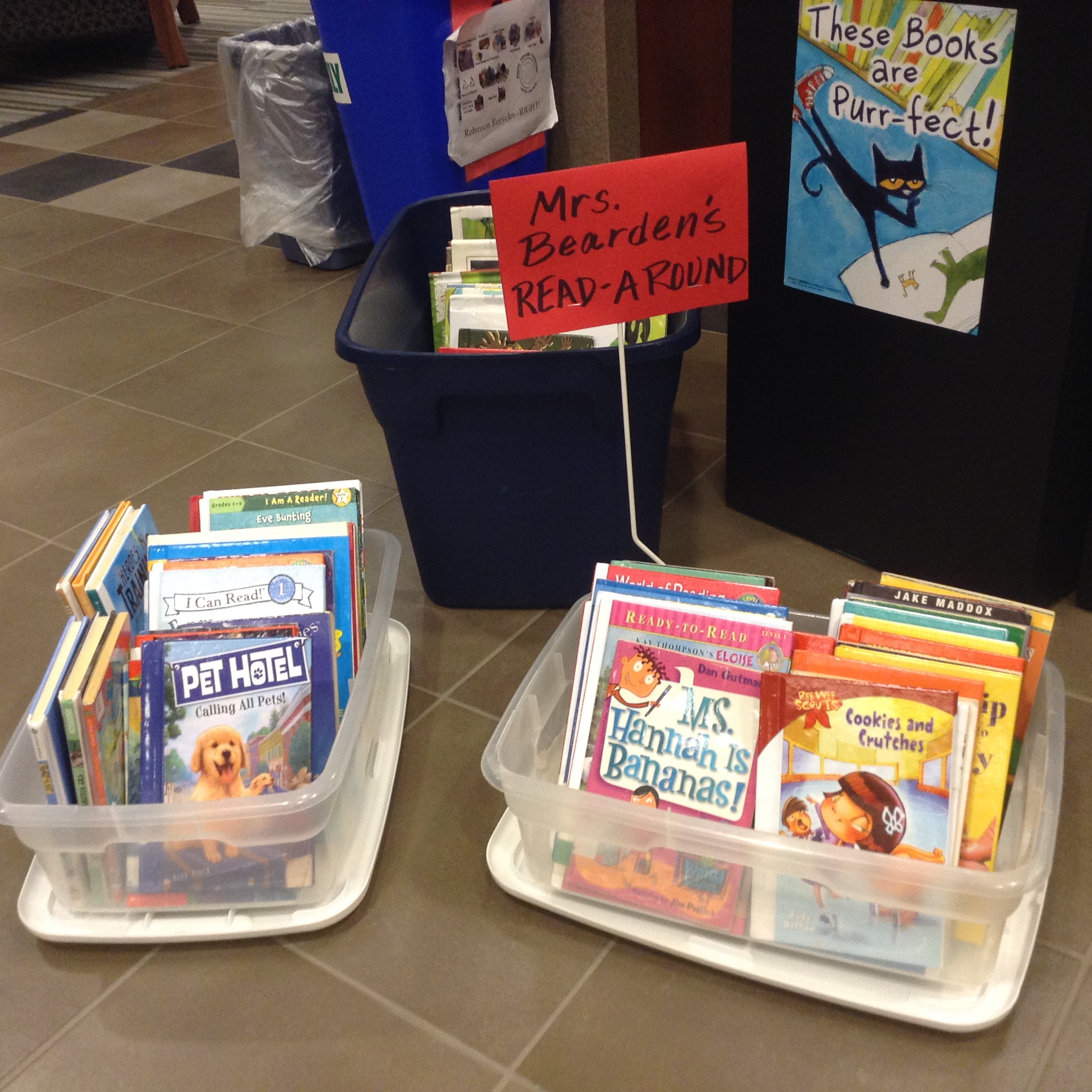
Isn’t that great? She saved all of our favorites from our Read Around for us until we could come back and check them out. It felt a little special that this display was right in front of the circulation desk.

Just a few more pictures that show our library fabulousness.  It’s one of our favorite places to be, and I LOVE that that’s the case.  Readers are made here. 🙂

Ok, one more.  These are new this year and can be seen all over the library (no, they’re not all pictures of me–every teacher took one LOL).

IMG_5254

And in true Mrs. Bearden form, I was told to choose my favorite and I couldn’t do it! There are just too many great books to choose just one! Thanks Mrs. Meihaus for letting me choose 3. 🙂

Getting Started with Reading: Second Grade Reading Museum

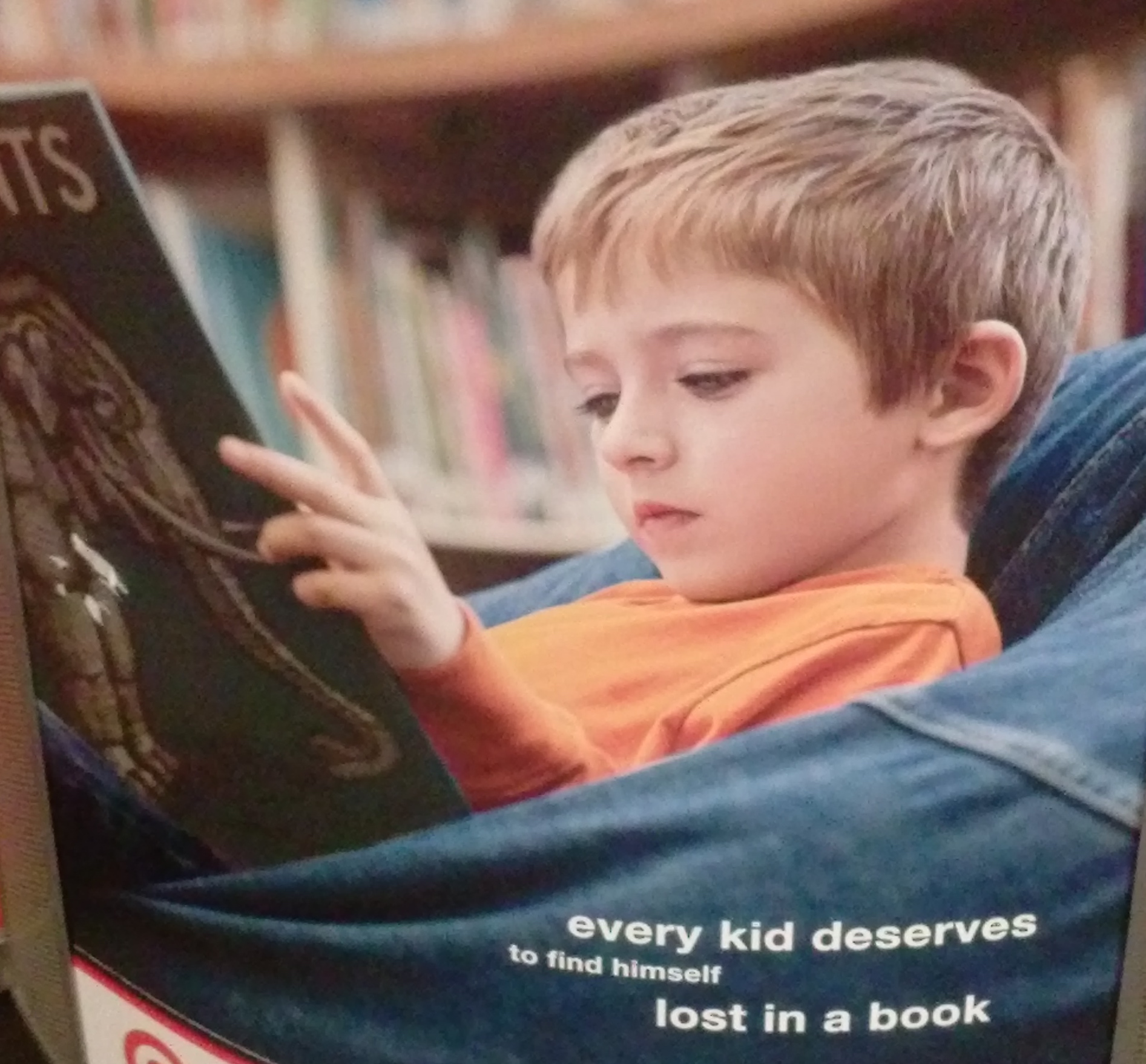
I hope that like writing, it’s no secret that I love reading and books.  And getting great books in the hands (and ears!) of kids so that they can have the feeling of losing themselves in a good book.  One way we do that in 2nd grade (ok, in all my classrooms no matter what grade they are!) is read A LOT, and talk A LOT about books.  This year, since our kiddos are older and wiser, we also added in a Reading Museum, like I’ve written about with bigger kids.

It started out much the same, with this invitation:

Screen Shot 2015-08-18 at 8.41.43 PMI changed the criteria for choosing books a little from when I taught 4th and 5th grade, but really the goal was the same: bring your favorite books to help us learn something about you as a reader.

When Friday finally came, we got ready by setting up our “exhibits” and discussing the etiquette for visiting museums.

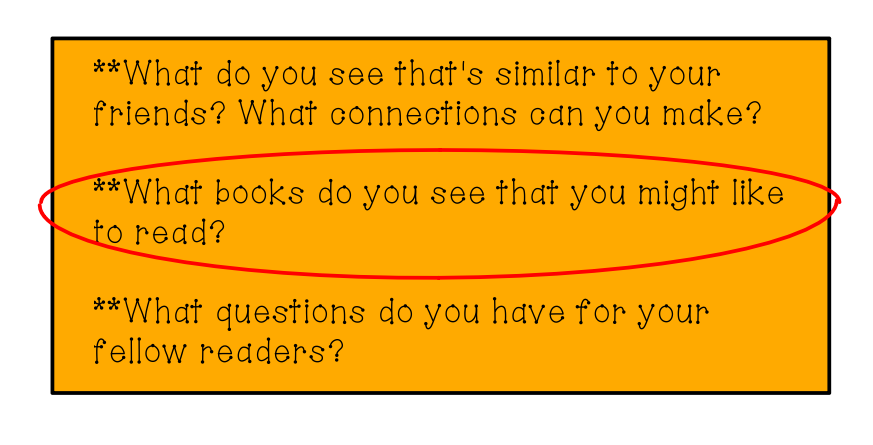
As kiddos circulated through their friends’ exhibits, they were expected to be thinking about these questions:

Screen Shot 2015-08-24 at 9.31.49 PMWe turned on some soft music and got busy with our museum:

I was very impressed with how quietly they were focused on checking out all the books on display.  It became very clear, though, that most kids were not thinking about making connections with friends.  They were instead focusing on just the middle question:
Screen Shot 2015-08-24 at 9.35.49 PMThey were reading new books and finding new favorites, and you know what?  That’s amazing!  The goal of the museum (and in general) is to get kids excited about books and reading and see that it’s for them.  When we shared at the end of our museum time, I was reassured that they actually were paying attention to whose books they were looking at, too, as they shared where they’d seen some of their new favorites.  YAY!

I should have expected that they’d go about it in a little bit different way, and but I shouldn’t have been surprised that they still accomplished the goal I had set out.  These kids are super amazing, after all.  So glad we did this!

Losing Yourself

CAM01739While this has always been an important part of my job, it seems like I have much more of an influence and responsibility to start my first grade kiddos off on the right foot.  Many of them begin their life-long reading journey in earnest with me, and I want to help EVERY ONE OF THEM feel what it’s like to be lost in a book.  This is the main reason why read aloud (and good books in general!) are non-negotiables in Rm. 202.   🙂

In what book were you last lost?   Tell us about it! 🙂

A Book Binding Machine?

I shared a couple of days ago about the class books we make that go along with our Read Aloud Timeline.   Well, today it was time to put together the books from our last 2 read alouds and so we took a little field trip to learn about this machine:

CAM01420Have you ever seen one of those?  It’s funny how excited they were to learn about how it works.  This was partly (I’m sure) because it is housed in a teacher workroom where kids aren’t allowed to go (but that we sneaked into for a few minutes!) but also because it’s just pretty cool.  And old.  I’m pretty sure it’s the same machine that’s been in that workroom for the last 20 years.  And I made books on it the last time I taught 1st grade 10 years ago.  But hey–even in this age of technology and digital learning–sometimes you just need to do things the “old school” way.  That totally works in this case. 🙂

Read Aloud Timeline: How-To!

I realized today that while I’ve written about our Read Aloud timeline many times, I haven’t ever really explained how we do it.  I had someone ask me about it and thought I’d write it here, in case you wanted to try it for yourself!  I am sure there are many ways to make it happen, but this is what I’ve found works for us.  Please let me know if you try it and how it works for your readers! 1. Read Ok, I probably should have started after that, but it’s the first step, so there it is. 🙂  In both 5th grade and 1st grade, read aloud is one of the most important (and enjoyable) times of the day! It is a sacred event that happens every day, no matter what.  It is (as I mentioned here) not about laying down and relaxing after recess time (in fact, our RA isn’t even after recess!).  it is a time for a family of learners to enjoy text together–to laugh, to talk about language, to make predictions, to ask questions, to just share a positive literacy experience.  And especially for emerging readers, it’s a time to hear what good reading sounds like and to hear texts that they may not yet be ready to read for themselves. 2. Create timeline images I’ve done this step of the process in many ways, and is probably the step most open to interpretation and variation depending on your community.  In the beginning–for any grade level–I have them choose a part of the story that they like.  For most kids, this means something that was funny or surprising.  After we’ve gone through our first 2 or 3 books, then, the focus of the image might change a little bit.  I might have them choose the most important part.  If we’re studying inferring or predicting (or some other specific comprehension strategy), I’d have them choose an image that shows where they used that strategy to make sense.  For our purposes in 1st grade, we’re still just choosing whatever image we want; our next step is to choose an important part of the story. I usually have my students draw their images on a regular 8 1/2 X 11 piece of paper (because they fit nicely on the wall and are still a good size to see the picture from far away), with colored pencils or crayons.  Bright colors are preferred, just because the contrast is easier to see across the room, and all of the white space must be filled in (well except of course in the last few books we’ve read–they were graphic novels and kids could give me a good reason for why they left the white space there: “It was like that in the book, so my image looked like that, too!”).  On the back of the picture friends have to write what the image shows, as well as why they chose it.  The mechanics of the writing have to be correct, both because it’s good writing, but also because in the next step someone else will have to be able to understand what their image is all about.  This step usually takes place right after we finish a book, and at this point we can finish our images in about 30 minutes.  If we don’t, they usually finish them at choice time, take them home, or we have them out for morning work the next week so we can vote the next day.

3. Vote In our class we have small groups of 4 that we use for the purpose of choosing read aloud images, as well as anything that I need to quickly break up the class to accomplish.  The groups stay the same all year, and get to know each other really well.  Depending on the year they have different names: when I taught 4th grade they were called “districts” to relate to our study of state government, the year we had a construction theme they were called “zones,” the year I had an animal print theme (I know–that sounds really lame now….) they were called “tribes” and this year they’re just generally called our Room Teams.  Some years the groups are numbered and some years the teams make names for themselves.  How you do this part really doesn’t matter, except that for me it’s the easiest way to narrow down our 20 pictures to a manageable 4. Depending on the grade, the groups might vote for both the image on the wall and the image on the front of our class book.  I found out VERY QUICKLY that with 1st graders it’s easier just to focus on the wall.  I also found out VERY QUICKLY that it’s much easier for them to choose their favorite image when they are not considering their own picture.  The first time we voted this year we got NOWHERE because everyone kept choosing their own picture.  Looking back now it makes perfect sense, considering where first graders are developmentally, but at the time it was just frustrating!  So as I shared my frustration with my team, my super smart friend Rochelle suggested I have them go through the process with random pictures.  It seemed like it was worth a try, and so the next time we did it I passed out the pictures so that they didn’t have their own picture in their hand or in their group at all.  They had to explain the part of the story on the sheet they were given and then choose the one that best represented the story from those choices.   I was AMAZED at how different and how EASY it was that way.  Thanks, Ro, for your great suggestion! Another thing i learned really quickly was that doing the whole raise-your-hand-for-the-one-you-want-to-vote-for process doesn’t work well with first graders either.  Even with only 4 choices (after we narrowed it down in our groups), it seemed like someone didn’t vote, someone else voted more than once, or they kept changing their minds based on what everyone else was voting for.  I couldn’t keep a clear count and had to figure out some other way. So, as both a more clear way to tell who’s voting for what, and as a way to make the process more interactive (which is good because they need to move!), we put pictures in 4 different places around the room and kids line up in front of the picture they are choosing.  It’s really fast and also allows us with great opportunities for counting, grouping and talking about efficient strategies for figuring out how many votes there are for each picture.  It’s a win-win!

4. Make a class book As I mentioned recently, the rest of the images go into a class book–1 for each book that we finish.  These live in our class library for kids to read and enjoy all year (well they do once the teacher takes time to bind them into books!).  So far we’re up to 14, and I figure we’ll have at least 20 at this rate (hopefully even more!!). 5. Repeat steps 1-4 This is the process we’ve gone through 14 times now.  It’s the process I’ve gone through with other classes close to 50 other times over the past 5 years as well.  And if you’ve seen the pictures I’ve posted, ALL of those images are hanging in my room right now!  There is something really special about being surrounded by all of those pictures, celebrating great books, great discussions and fun times with friends.  It’s fun to watch the timeline grow, and for classes to ask about old pictures.  I also love when past students come back to visit and we can connect again as we talk about those timeline images, too!
IMG350

This is an idea of what the timeline looks like wrapped around the walls of Rm. 202. I actually had to take it down and move it further over to make more room at the beginning of this year. And I am not sure what I will do next year–I will have officially wrapped all the way around and run out of room! What a great problem to have! The timeline started in August 2009 and is still going in January of 2015. I am not sure I envisioned that when I started doing this back then!
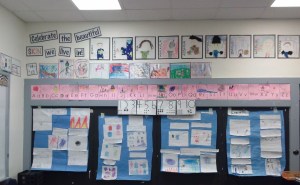
This shows a more current version of this year's section.  I think there are still 3 or 4 missing from this picture.  We're reading so fast I can't keep up!

This shows a more current version of this year’s section. I think there are still 3 or 4 missing from this picture. We’re reading so fast I can’t keep up!

6. End-of-the-year Book After you are finished with your last read aloud (which for me runs right up to the last day of school–yep, sometimes we’re finishing our images, voting and laminating in the last hours of our time together!), something special happens.  All of the books that your class has been enjoying all year will become a special end-of-the-year memory for each kiddo.  The last thing I do is take all the books apart, and reorganize the pictures by kiddo (which is pretty easy because every image has both the child’s name and their class number on it so they can be easily put in orderly piles), and create a NEW book for each and every one.  I include a cover that lists all of the titles, authors and time frames for when we read each one.  Sometimes I include a note about how much I’ve enjoyed the reading journey, or maybe a quote from one of our favorites.  I haven’t ever had kids vote on their very favorite from the year, but if I did, this might be the cover of this individual book (who knows, maybe I’ll try it this year!). Whew!  Wow–that is really a more involved process than I thought when I sat down to write this.  But it’s TOTALLY worth every minute we spend on it!  I am not sure if I’ve mentioned it before, but this is not an original idea of mine (I saw the timeline created in a classroom in Columbia, MO when I was there for a training many years ago), but the process for how I do it has been tweaked to fit my purposes over the years.  It’s definitely one of those things that someone way smarter than me thought of, but that I have made my own through trials and errors to fit what works for me and my kiddos.  I’d love to hear what works for you and YOUR students! Happy reading!! 🙂

40 Book Challenge Revisited

It’s been a while since the excitement of the 4o Book Challenge began.  And I HATE to say that that excitement may have weaned a little bit.  Remember back when I told my class about it, and everyone was really energized by it?  Ready to do it and not at all worried?  And remember how my friend Brittany asked if I would do it, too, and I begrudgingly gladly accepted?  Yes?  Well let me update you on how it’s going.

First of all, I feel like I should share with you what my kiddos are saying about it.  Of course, as with any important thing in our class, it becomes a topic on our blog.  I’m excited to say that the topic has come up multiple times in the “What I liked…” section of their notes for student-led conferences (yes, that is a topic I’m going to add here soon!), and that many have WAY over half of their challenge done already!

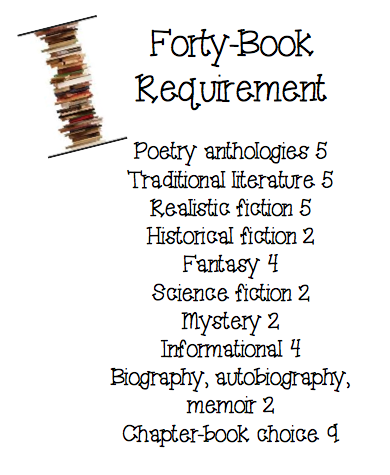
As a reminder, the challenge looked like this:

Screen Shot 2013-09-06 at 8.47.27 PM

Requirements for the 40 Book Challenge, which is inspired by Donalyn Miller’s The Book Whisperer.

Not surprisingly (at least to me), most kiddos started with what they know and what they love: fiction.  Many of them knocked out Realistic Fiction first, then did their chapter book choice, and then tried mystery before they got a little annoyed by my list.  Still, they trudged on, heading towards informational and poetry.  I was noticing, though, that there has been very little traditional literature or biography/autobiography/memoir showing up in the hands of my readers lately (more on that later).

What?  You want to know how I’m doing with the 40 Book Challenge?  Me?  Well….

I’m gonna be really honest with you that I have not been doing my part to keep up with the 40 Book Challenge like I’d hoped and like I’d expected.  I think I am probably at 5 or 6.  I know, right???  YUCK!  I have had very good intentions, and I truly believe in the importance of showing my reading life to my students, but like I mentioned earlier, I’m having a hard time finding  prioritizing time to make it happen.  There always seems to be something else to do, you know?!  But I WANT to make it happen (I really feel like I’m letting my friends down!), and since I don’t make resolutions, I guess it’s time to make a goal and a plan to achieve it.  And I’d love your help!

How do you make time to read inside your busy life?  What do you leave out so that you have that time (there are, after all, only 24 hours in a day!)?  What suggestions do you have for me to achieve my challenge goal by the end of the school year?  Come on, I KNOW a lot of you are readers, and I want to be one, too! 🙂

Everybody Loves Reading!

Or at least they will when I’m done with ’em! HA!

One of the most important goals of the beginning of 5th grade–or any grade–is to help kids get to the place where they love school.  Really love it.  This is the case with the beginning days of my Reader’s Workshop as well.  Unfortunately, I have students that come to me and can honestly say that they don’t read because they want to.  They read because they have to, or they don’t read at all.  Boo. 😦

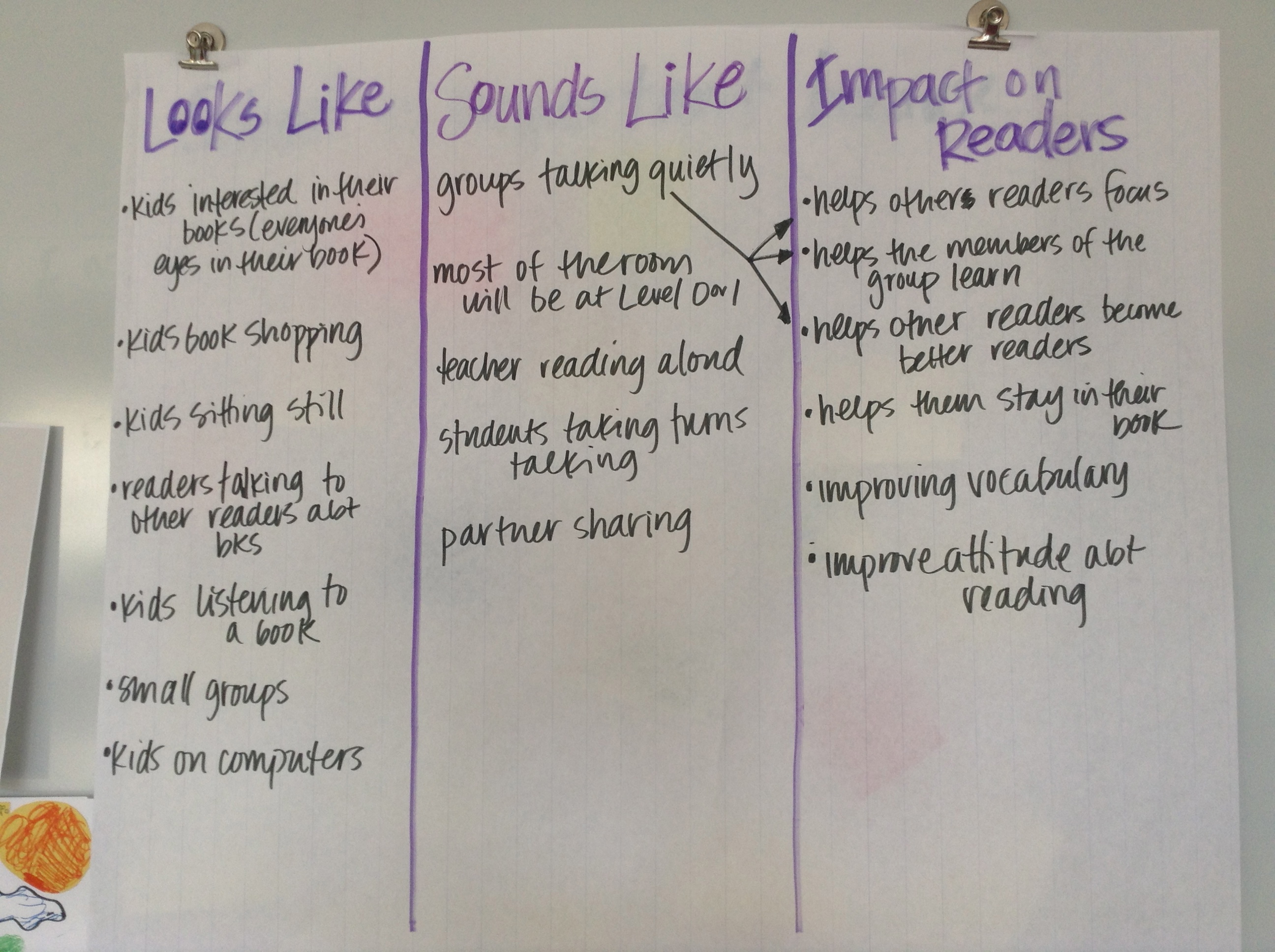
So in addition to conversations about how our Reader’s Workshop will function (like we had as we filled in this chart the other day):

Kids worked in pairs first and then we discussed together our thoughts about what Reader's Workshop looks and sound like, and how that helps us as readers.

Kids worked in pairs first and then we discussed together our thoughts about what Reader’s Workshop looks and sound like, and how that helps us as readers.

we also have lessons that give kids chances to see themselves as readers, and to see what is possible for them–no matter where they are starting.

Today we started with a conversation about mindset (growth vs. fixed) and tied it to this quote:

Screen Shot 2013-09-05 at 8.54.45 PM

We talked about how every reader is on a journey, and those journeys look different for every person.  We talked about how having a growth mindset–believing that we are capable of achieving great things if we keep trying, changing and making mistakes–helps us on our journey.    Then I described one reader’s journey from short, picture books with few words to reading Harry Potter using this pile of books:

IMG_1249

While the scenario was hypothetical (I know…sometimes stories I tell at school are made up.  Don’t sue me. 🙂 ), it is very much like what real readers do, and I wanted my readers to see that there are steps that they can plan to help them get from where they are to where they want to be (which in this case was the desire to read a Harry Potter book–a very real goal for many readers!).

After I told the story of how this reader traveled through their journey and after I piled these books high in Brittany’s arms (who so kindly volunteered to play the role of the reader in my story), I had everyone think about whether they saw themselves somewhere in this pile of books.  Maybe they were already on a similar journey to this one.  Or maybe they were starting in a different place.  Regardless of the answer, their next step was to consider their own personal reading journey and write about it.
I want readers in my room to understand and appreciate that we need to think past the book we’re reading and onto the next book and the next book and so on (I’m working through Reading Ladders to help me help them with this right now).  Everywhere has somewhere they can go!  Here’s to a remarkable reading year in Rm. 202!

I Need Your Help!

The rush to get ready for school is in full swing, and I need your help (you being the parents in my classroom or  friends of mine who want to donate something fabulous to my class or whatever other category you might fit into as a generous person) to finish up a couple of things:

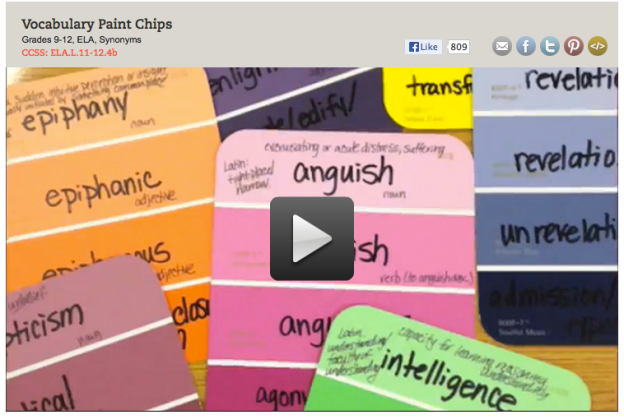
I am going to try a new idea with how to engage with vocabulary this year, similar to our Words We Know board from last year…

As we read books together, we investigate words we don't know, and connect them to what we do know to help make sense of them.

As we read books together, we investigate words we don’t know, and connect them to what we do know to help make sense of them.

…but is even more visually appealing and organized:

Screen Shot 2013-07-31 at 8.22.14 PM(I feel like I should apologize for the fact that this is not actually the video, but instead a link to Teaching Channel where you can find it.  Silly embed code just did not want to work….)

So as I was at Home Depot today, I grabbed 20 or so paint chips, but would LOVE IT if you could help me collect even more!  I figure they would notice less if 10 or 20 people grabbed a small stack then if I filled up my cart!  Any color will do. 🙂

Secondly, as we are working to more deeply engage readers with nonfiction text this year, I am beefing up that section of my classroom library.  I want to put in lots of different kinds of nonfiction text at many different levels.  The upper end is really in need of some attention, and following a great suggestion (from somewhere or someone really smart–I just can’t remember who), I’m adding in college textbooks and technical manuals, as well as travel books and whatever else might be of interest to a kid (and believe me, 10 and 11 year olds are interested in TONS of different topics!).

If you happen to have any books you need to clean out at home or if you’re shopping at Goodwill or a garage sale, and you see anything you think our class would benefit from, could you grab it for us?  I’d love to be able to do an even better job of surrounding my students with rich, complex, challenging text that they can dig into! (Ok, and that being said, ANY other books you’d want to donate would be TOTALLY welcomed as well….we’re easy here in Rm. 202 🙂 ).

You can feel free to leave me a comment here if you can help us, send me a message on Twitter or Facebook or even just drop it off at school in the office with my name on it!  THANK YOU in advance for whatever kind of help you can give! The readers in Rm. 202 GREATLY APPRECIATE you! 🙂