A Writing Celebration!

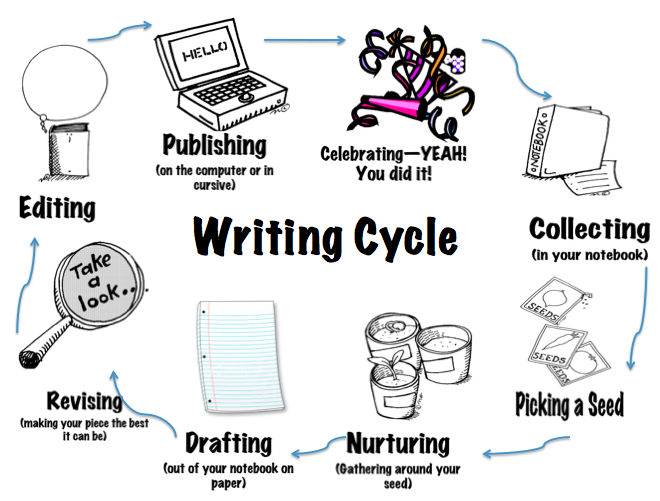
I figure that most people teach the Writing Cycle as a means to publish a piece of writing, right?  Well, I do, and it’s kind of a big deal in our room.  I start at the very beginning of the year (after I’ve set up our Writer’s Workshop routines and introduced Writer’s Notebooks, that is 🙂 ), teaching my writers about the writing cycle–what it is, why writers do it and how it will help them as we go through the year together.
In the back of our Writer’s Notebooks we have a a place where we keep notes related to mini-lessons I’ve taught.  One of the first things that goes in there is this:

We spend the first writing cycle, then, learning about how to do each part, and end up with a fabulous piece of writing that we’ve worked really hard on!  And so what does that mean next?  We celebrate!

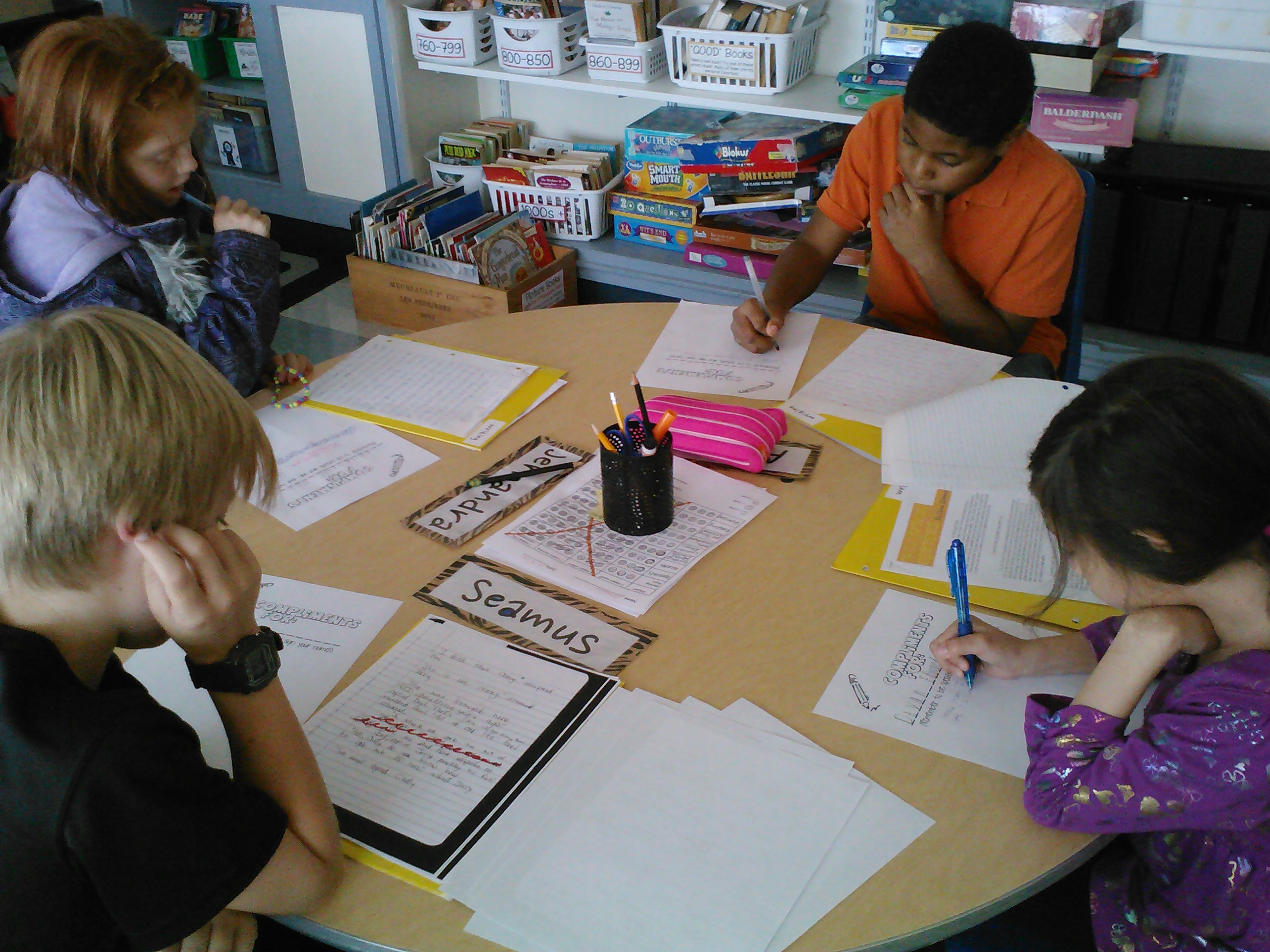
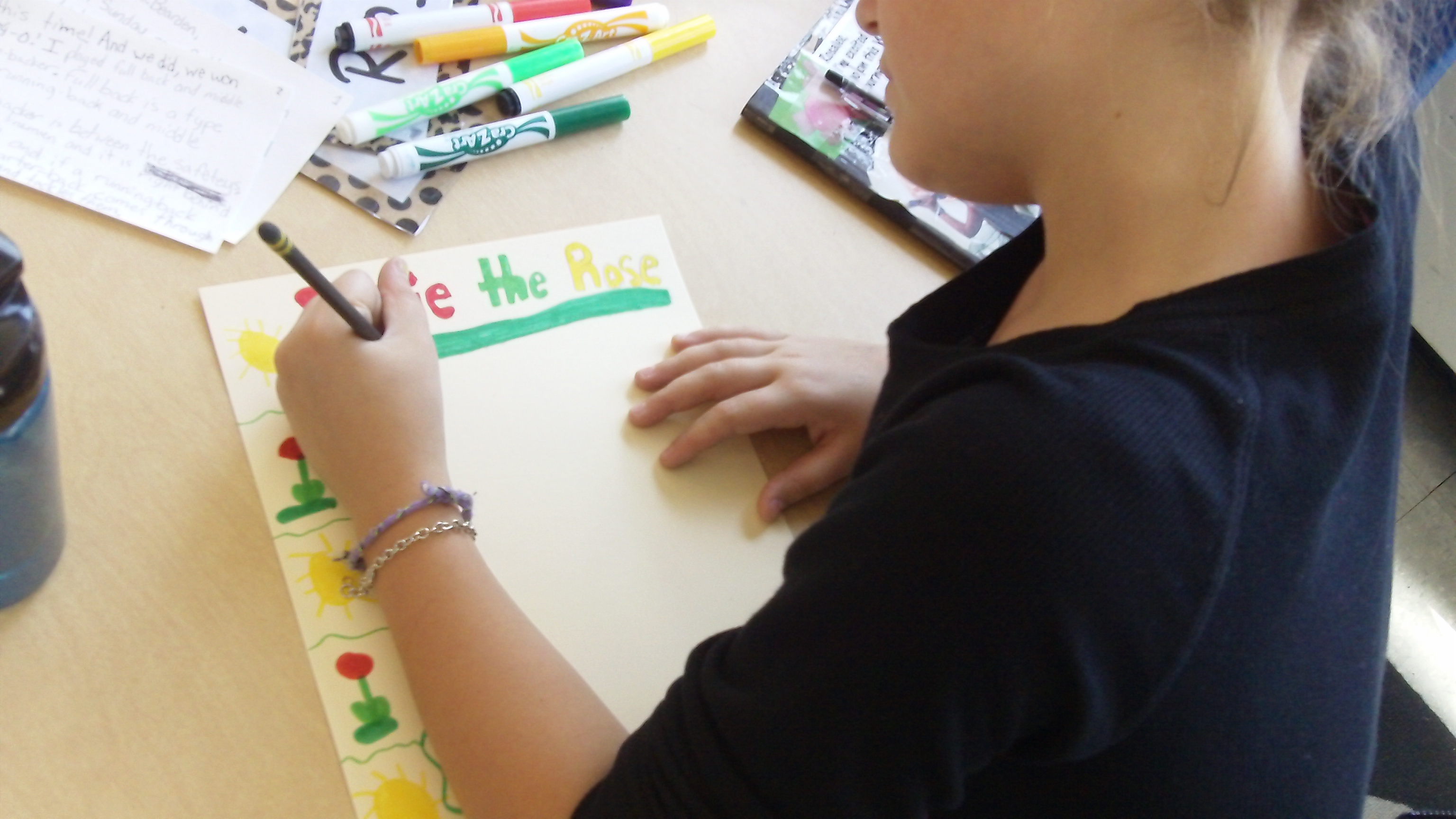
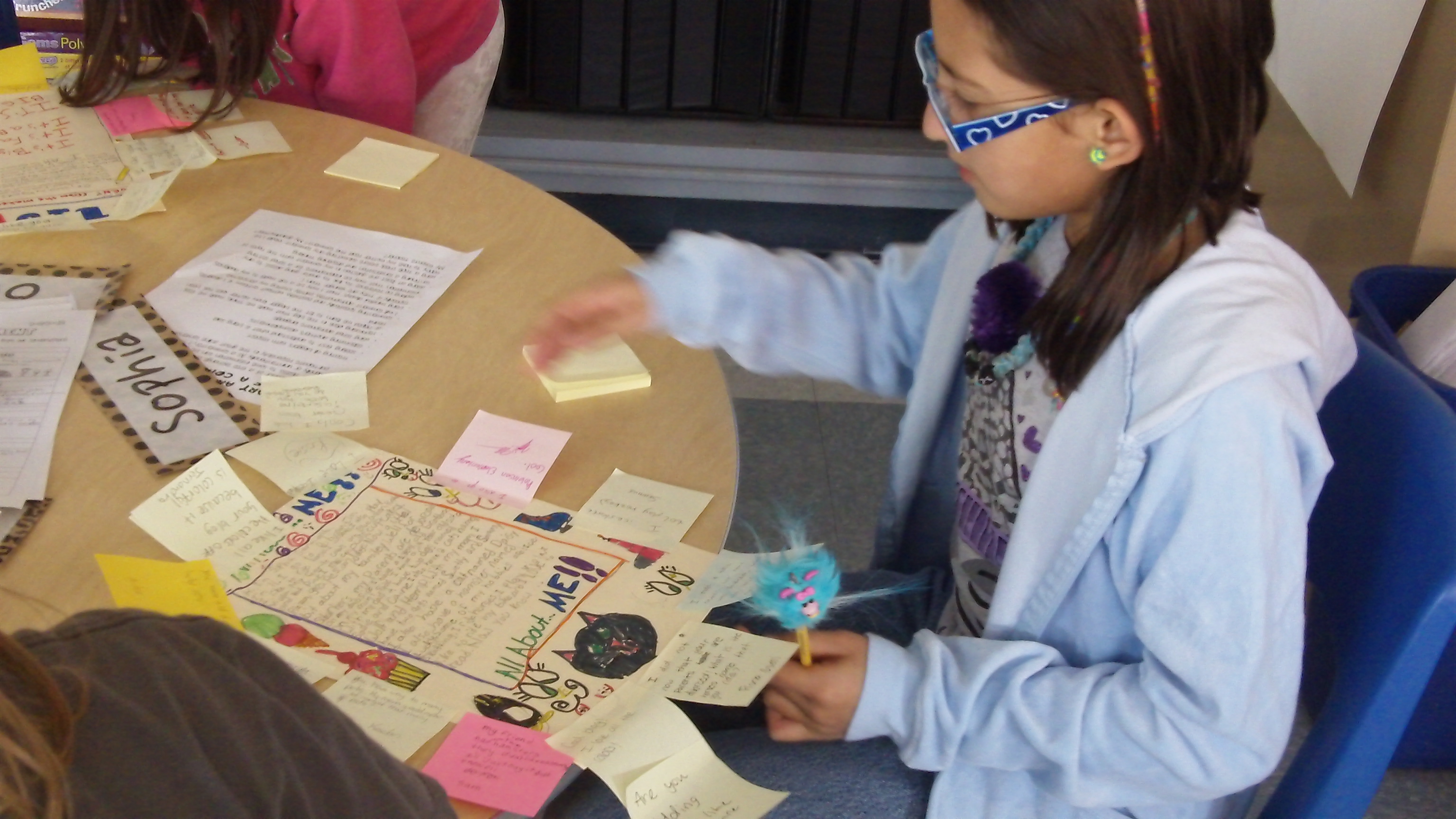
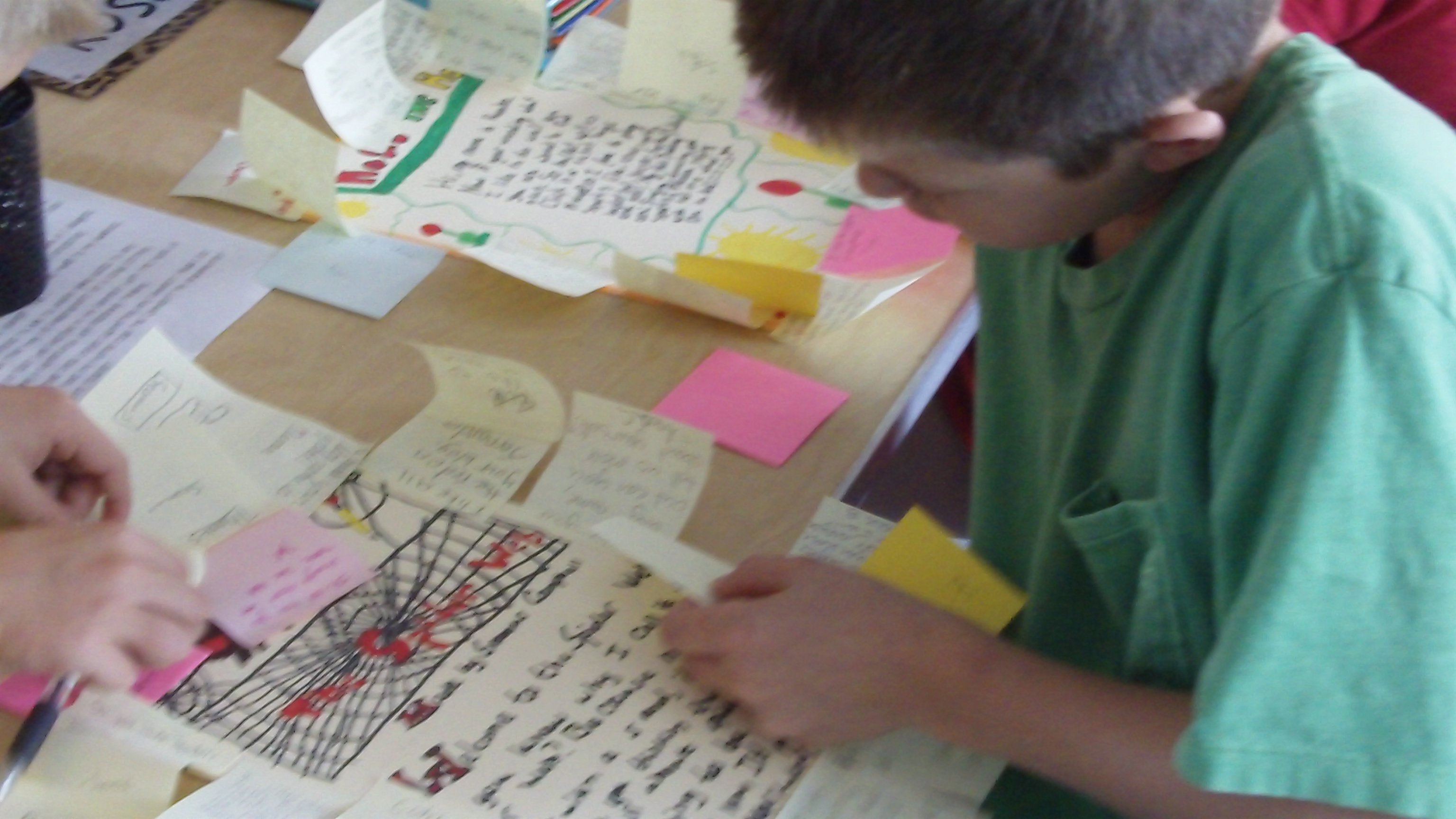
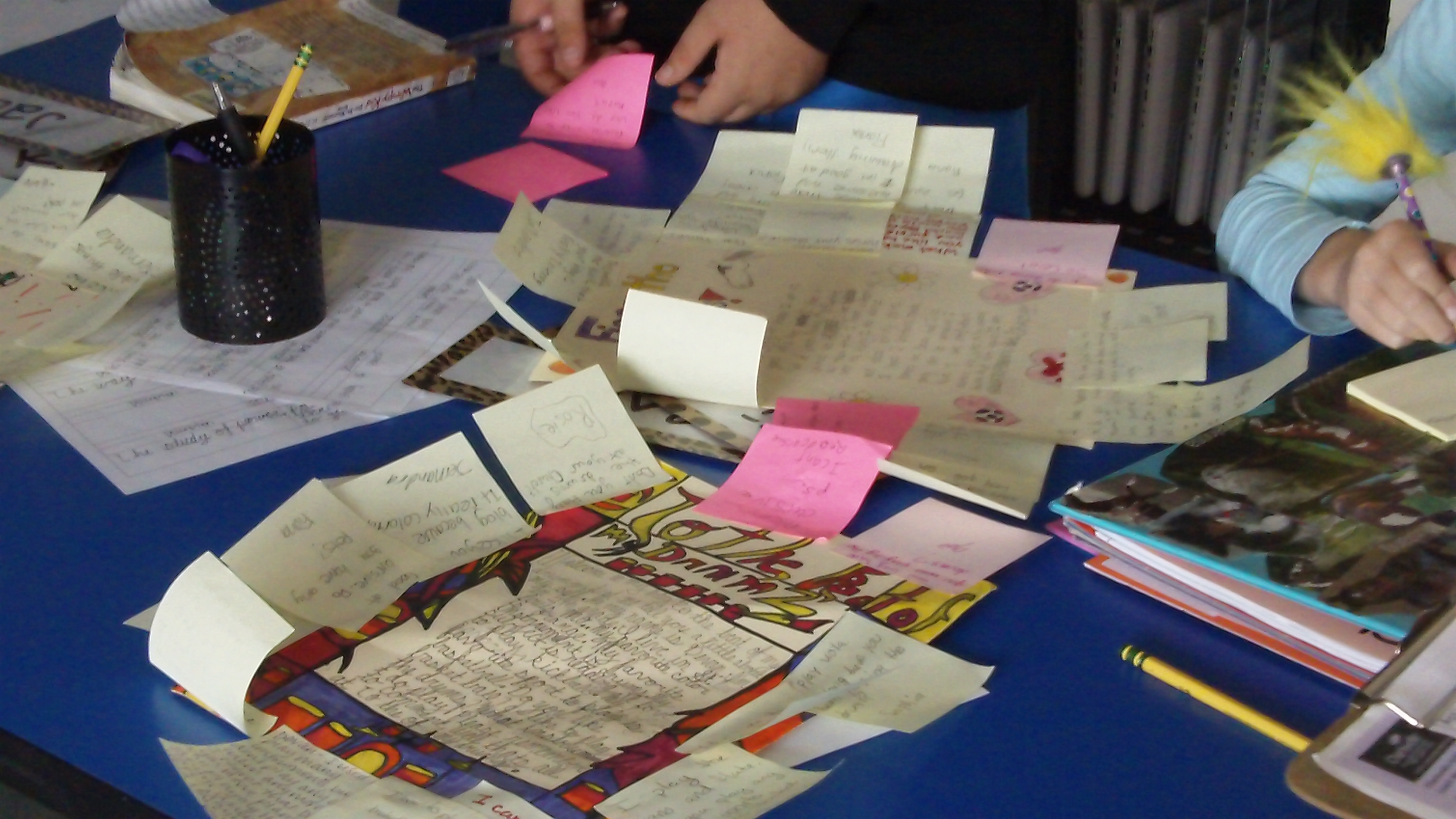
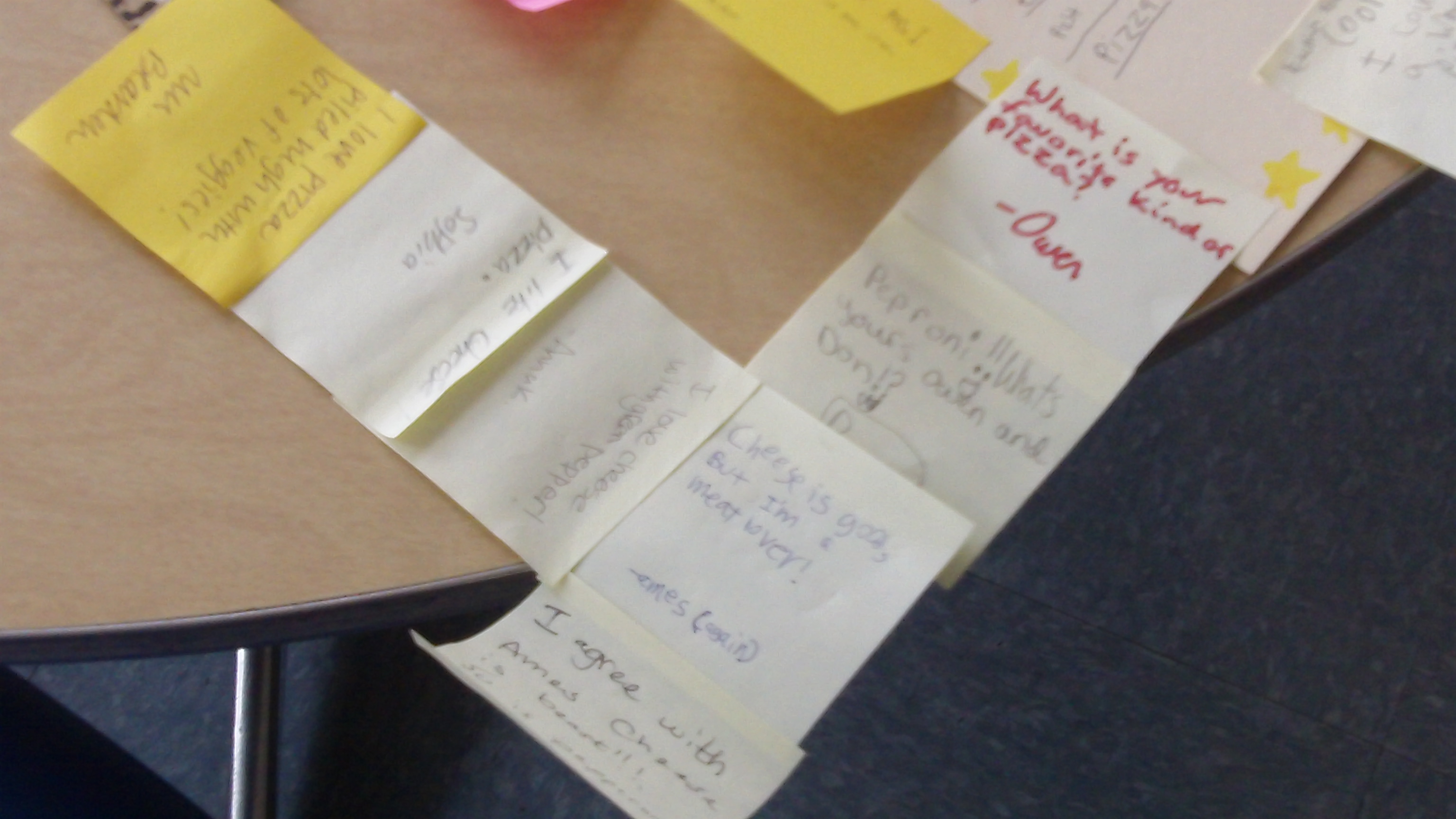
There are many things that our class does to celebrate our writing and “send it out into the world,” but this time, we decided to have a Writing Museum (structured much like our Reading Museum from the beginning of the year) so that we could sample each others’ writing and leave compliments.

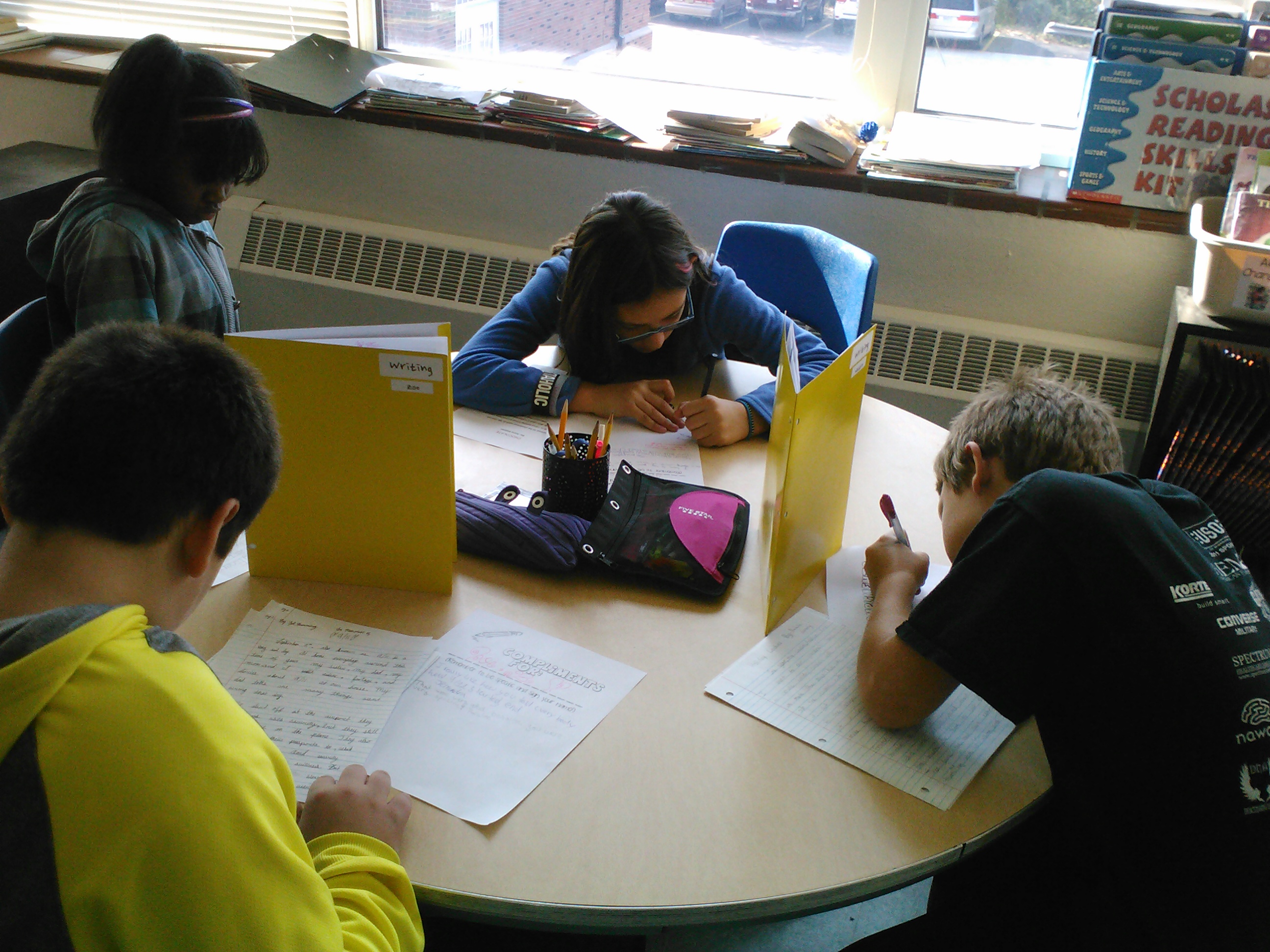
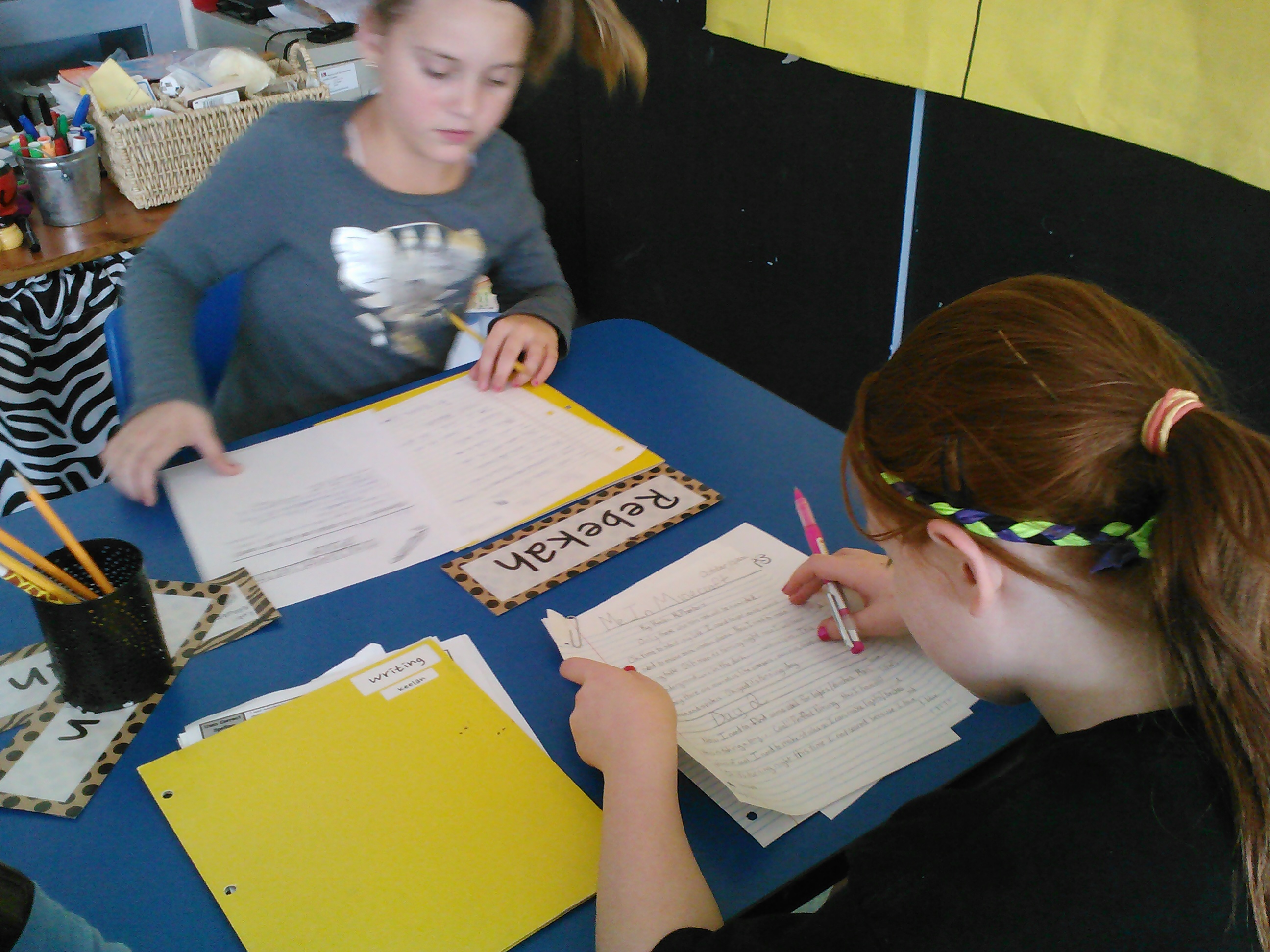
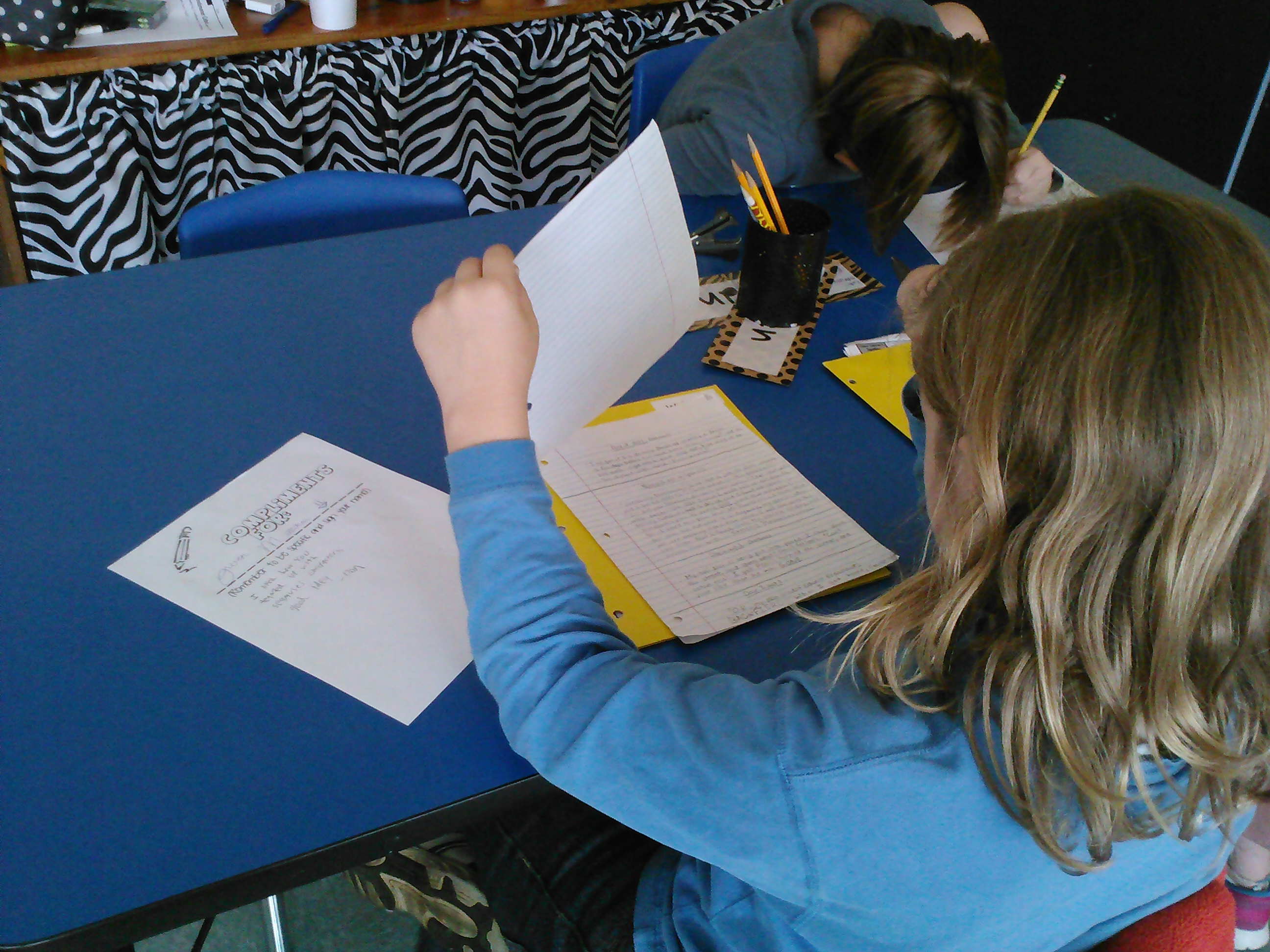
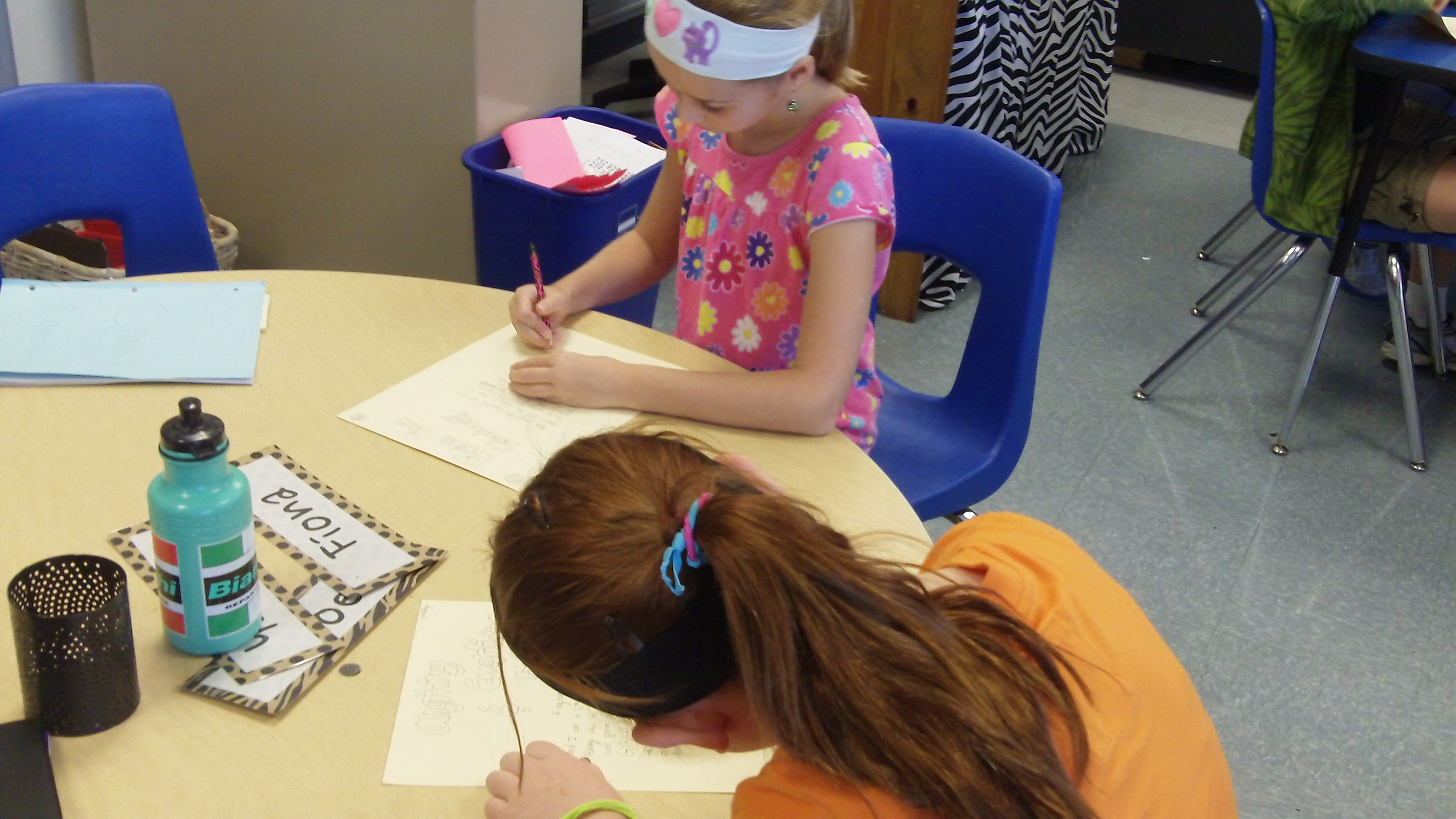
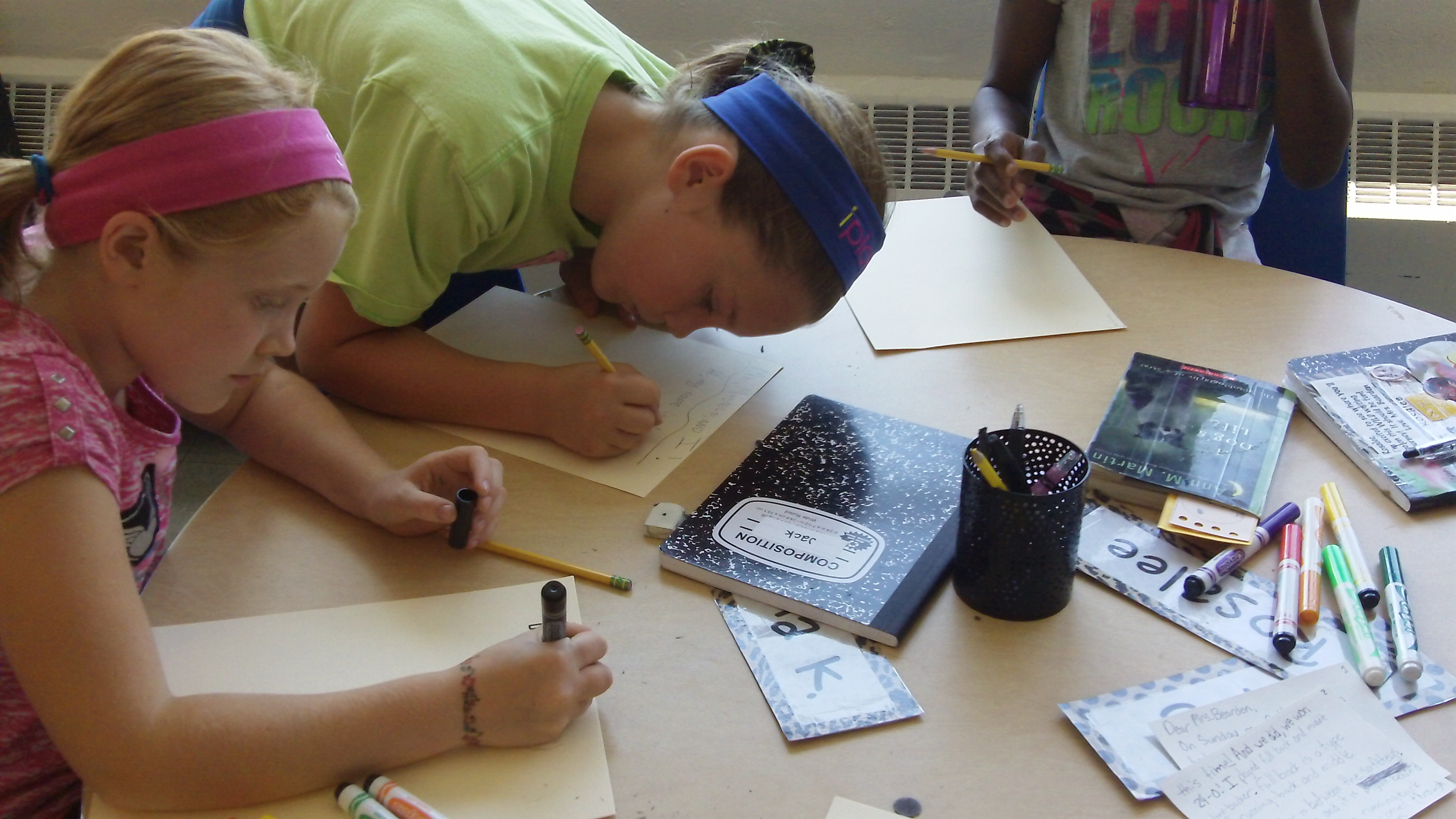
So when the “exhibits” were set up and the music started playing, Rm. 202 writers spent the next bit (well actually it was more like 30 minutes or more!) reading the work of others and leaving kind words for our friends.  If only you could have heard how amazingly quiet it was the room during this time!  Writing is important business in our class, and we took this (as we do most things!) very seriously. 🙂

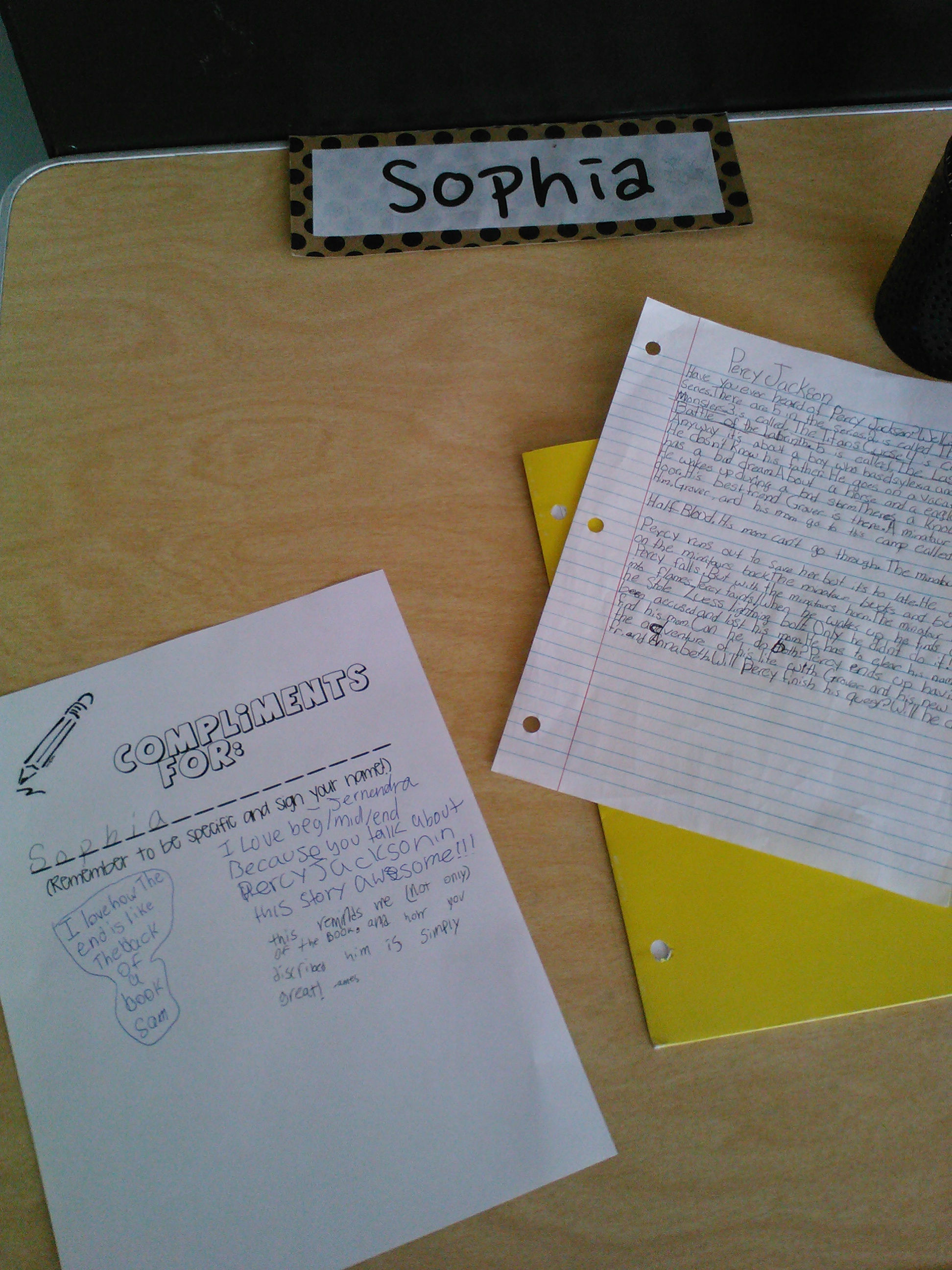
Each person set out their writing piece, along with a compliment sheet for others to write on. 🙂

I love how they’re all sitting with their heads in their hands.  Something about that seems like they’re deep in thought, doing some serious business!

How do you celebrate writing? 🙂

Dot, Dash, Slash, Comma (And All That Other Stuff, Too…)

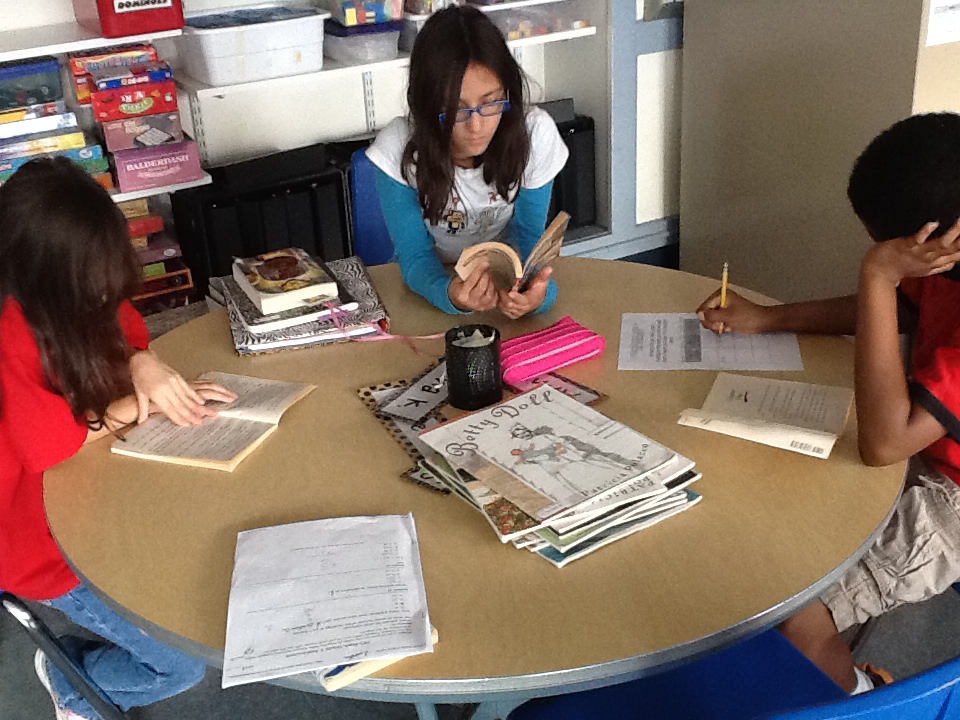
We have been on a journey these last few weeks.  It’s a journey many of my students have never been on before.  And it’s related to these piles of books:

Can you see it?  All the punctuation goodness on that table?  No?  Well my kiddos can now.   Let me tell you about it. 🙂

Punctuation is a funny thing.  No?  You never thought of it that way?  Well, it’s one of those things that has gotten a bad wrap for a long time, and without good cause–in my opinion.  Many people (including most kids!) think of punctuation as a bad word.  It’s just a you-have-to-go-back-and-add-it-in-the-right-place-at-the-end-because-your-teacher-told-you-too kind of a thing.  Not a this-really-matters-and-helps-me-as-a-writer kind of thing.  And that’s too bad.  Punctuation is a powerful tool for a writer, and I want my kiddos to know that.  But it’s only a powerful tool if you know how to use it, and most of my kids don’t.  At least not yet.  With this goal, we started 2nd quarter Writer’s Workshop.

After spending a bit of time on what they already knew (or thought they knew) about punctuation, I asked them to tell me if they’d ever thought about what it meant.  Most said no.  Some even groaned a little bit at the beginning of this conversation when I said the word.  It was obvious that they’d never had a positive experience with this topic, and that made me a little sad.    As a means to hook them in, and get them to understand my goal for this study, we visited a section of a book we have read together and all love: Because of Mr. Terupt by Rob Buyea.  I found a place in the book I knew we could all chew on together; the paragraph right before the big action in the book was a great place to dig in.  I asked them to talk to a partner next to them about why the highlighted sentence was written the way it was, and how it would be different if it had been written without the given punctuation.  We discovered that the punctuation (which was mainly a series of commas) was there to force us as the readers to slow down.  The part just before was fast-paced, crazy and choatic; the commas made us slow down and pay attention to what was happening next.  And what happened next was the climax of the story–without it, the rest of the book wouldn’t have happened.

So remember that pile up there?  After we set the table, and got them feeling a little more love for this idea of punctuation, I put them into study groups.  They had one goal (ok, I guess it was really two): find examples of punctuation in the texts they were given, and figure out what it means when authors use it.  They had a chart to fill out with their partners and a big chunk of time to search.

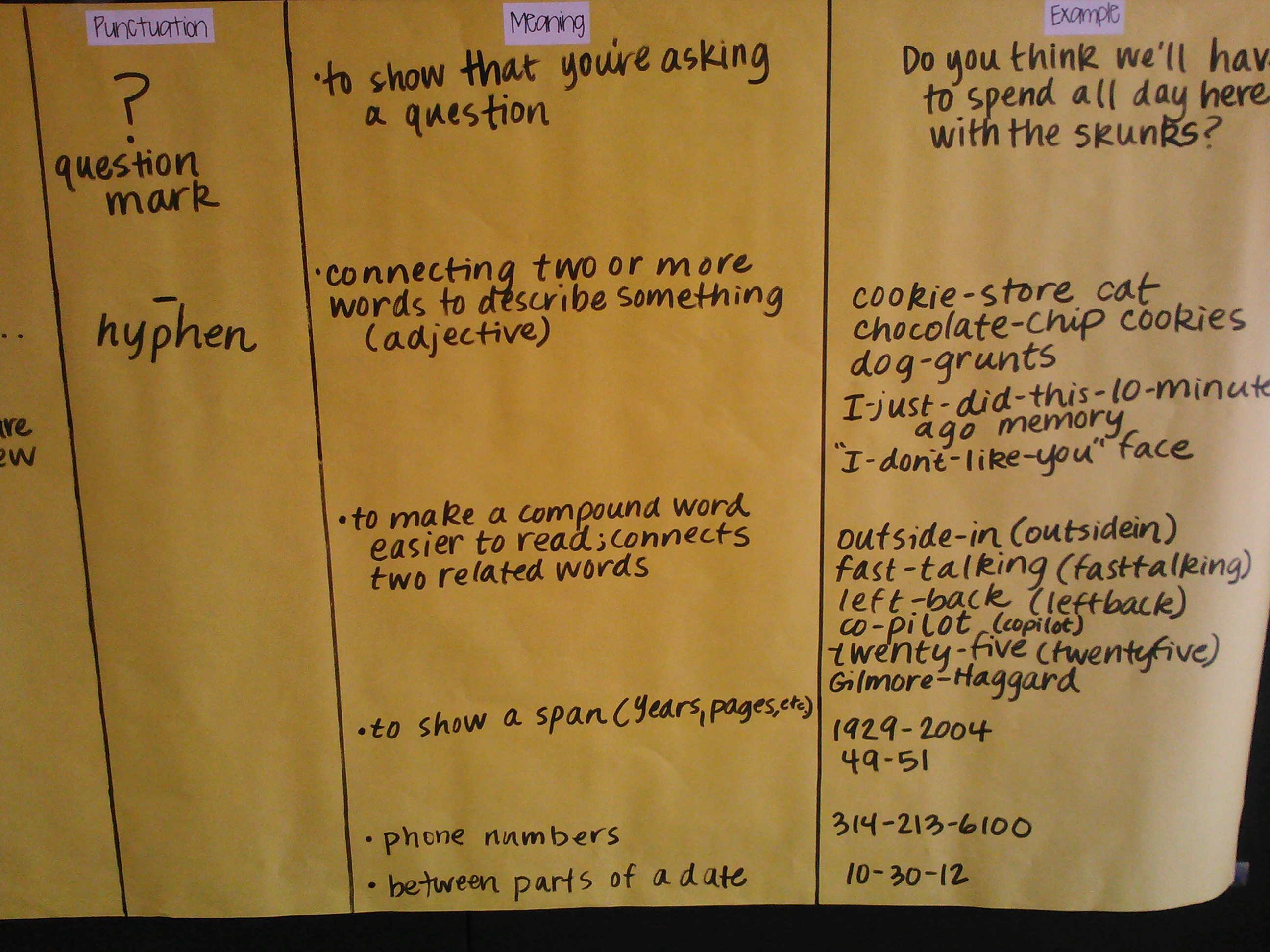
After the groups had a couple of days to study (yep, you heard right–they worked diligently on this treasure hunt for 2 days!), we gathered to collect our thinking on a big class chart.  They took turned sharing the marks they found and telling the rest of us what they thought it meant. For some this was hard thinking, since they hadn’t done it before.  By the end of the first day we had this:

Ok, that’s not exactly true.  We had all but the hyphen part, but hey–good stuff, right?  They were amazed that they had figured all this out, and that they did it all without me telling them what it was.

The second day we added some thinking about hyphens:

I wish I would have recorded this conversation, because it was so great!  It started with the discovery that a hyphen (-) and a dash (–) are actually two completely different punctuation marks, which mean (and are used in) completely different ways! (Did you know that?) This totally blew some kiddos’ minds and so we had to dig in a little deeper to figure out what each meant.  And hyphens were first.  The first two meanings were hard to explain, but once we started to find examples in the texts we were reading that fit each one, it became more clear.

Since then, we’ve come back every day to add a little more smart thinking.  So far (and we’re only a little past halfway done), we have another whole chart the size of this one, plus we’ve started a third.  The things they are discovering are amazing.  The most amazing–and meaningful–part is that they’re doing it all for themselves.  I’m not pouring the information into their heads, or having them spend time correcting sentences in an isolated exercise for morning work; we’re learning together and really focusing in on what these marks mean.  They’re beginning to care, and they’re beginning to notice these marks more and more–in their reading and now in their own writing!  They are aiming to use them in new ways, and can even tell you how a paragraph is punctuated as I read it aloud to them.  Often I’ll stop after we’ve read something in our chapter book and ask “What do you think that looks like?” and they can tell me exactly what kind of punctuation is there!

Teaching about punctuation is not hard.  But it is time-consuming, and it does require me to know more than I may have first considered about the topic, as well.  But the time that is definitely well spent.  These friends are walking away from each conversation we have with a new understanding of how to they can use punctuation just like word choice, organization, paragraphing, and voice to create a more meaningful experience for the reader.   Pretty cool, right? 🙂

Now the first section hangs on our windows, where it will be there for us to use for the rest of the year!  The goal (and I think they will make it!) is to make their punctuation chart “6 windows” long.  So far we’re at 4 or 5, and still going!  SO MUCH LEARNING!!

What are your feelings about punctuation?  How did you learn about it when you were in school?  How do you teach punctuation in your class?  If you’re a parent, what are you noticing (or hearing) about punctuation with  your student?  Please comment and let us know what you’re thinking! 🙂

I Told You We Were Blogging, Right? :)

Really they’ve been blogging all year.  Only it’s been on our class blog.  A few short weeks ago now, though, our 5th graders got their own blogs!

There is a long story behind how I started down the road toward kid-blogging, and I posted about it here.  We did much of the same process this time, and it went equally as well with these kiddos as it did the first time around.  Only I have a little bit of  hunch that this year’s class will go even farther with their blogs.  Partly because we started earlier and so they’ll simply have more time, but also just because this class just seems to dig into their work with such eagerness and enthusiasm.  I think they’ve already written more posts on their own at this point.  They really think in terms of what is “blog worthy” as they go through their normal lives.  I love it when I go home and there are posts waiting for me in the inbox that tell the tales of all the great things that happened during the learning day.  And not because I told them to write about them, but because they wanted to write about them!  It’s great.

But I digress…

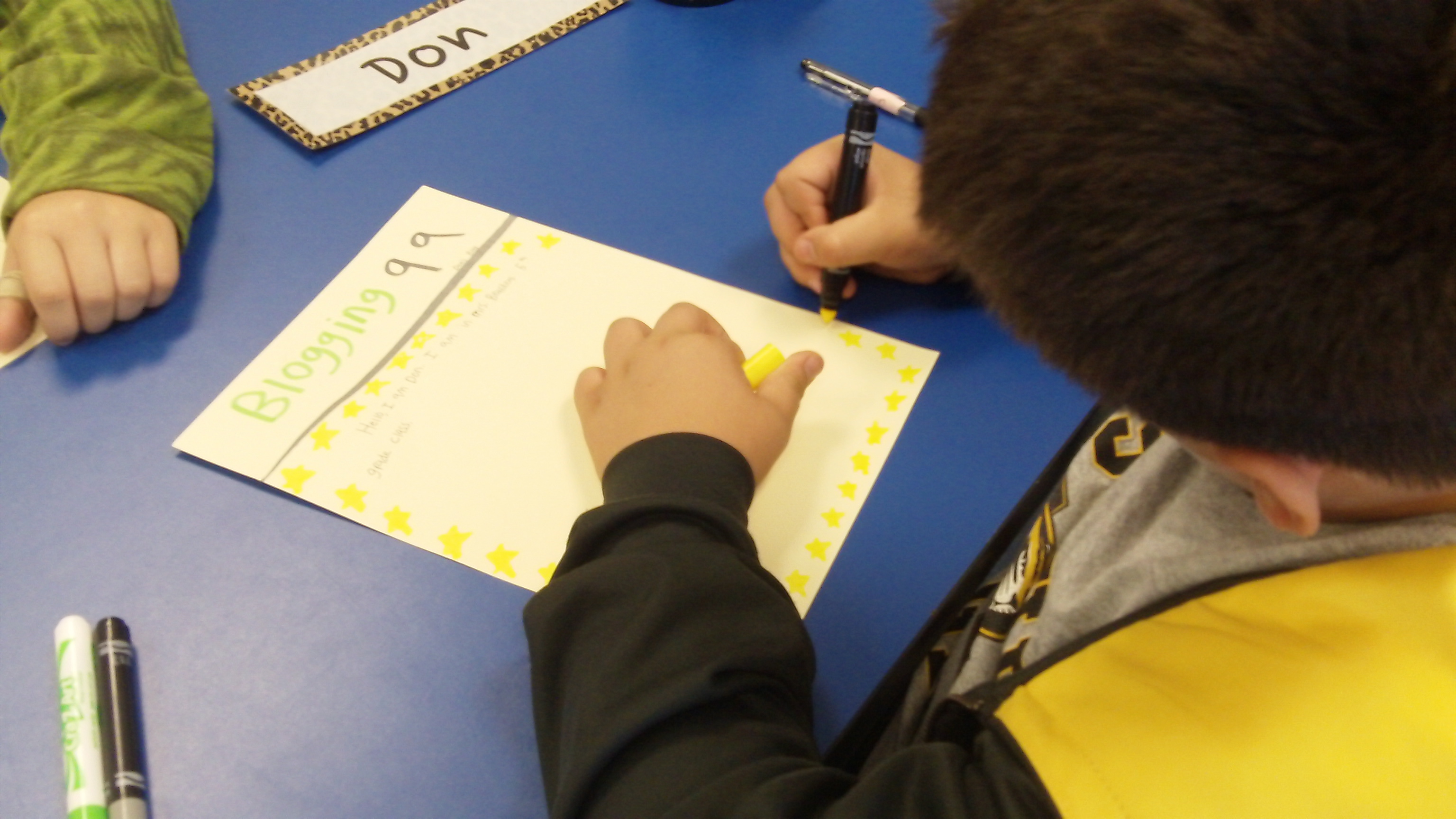
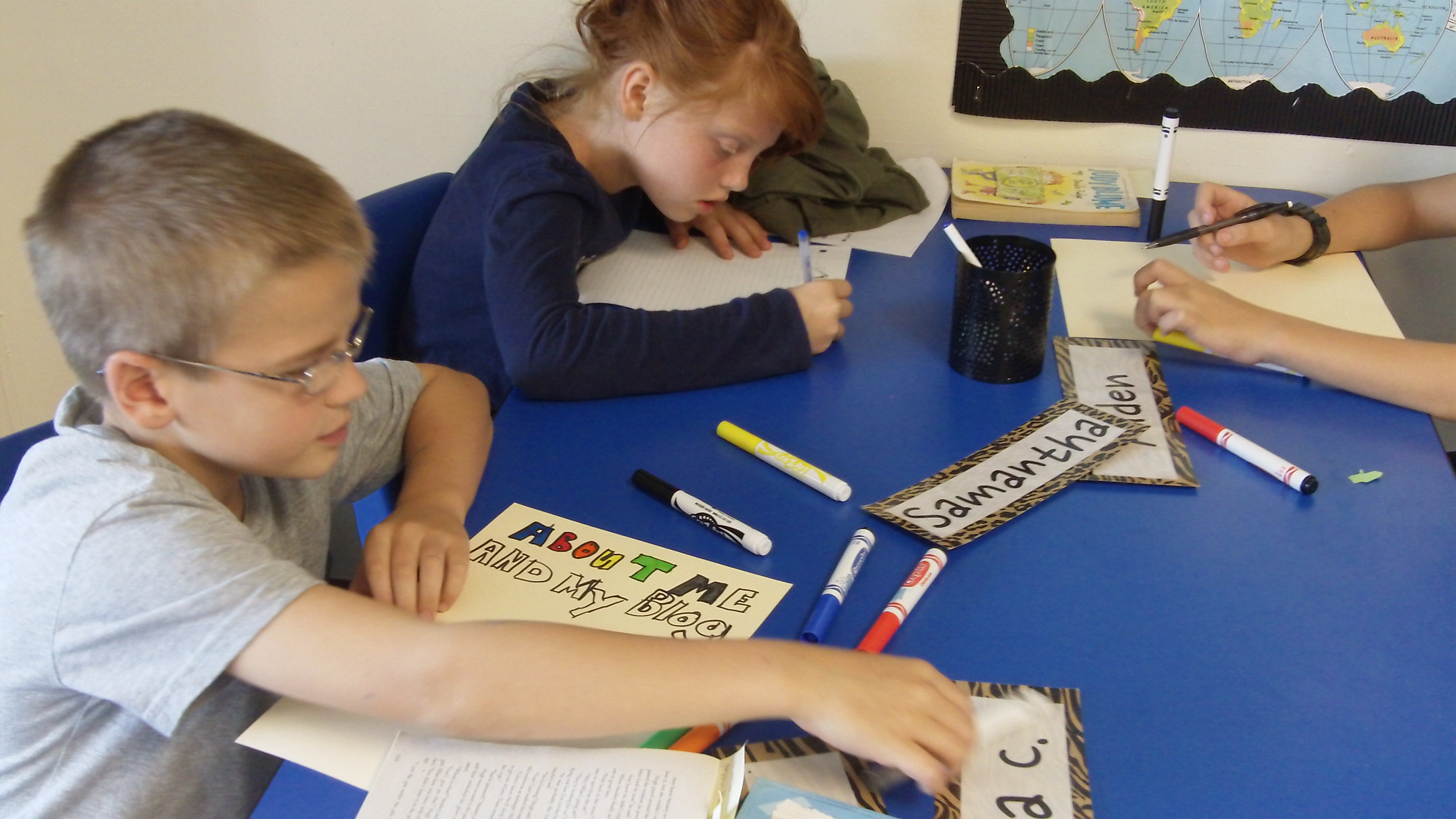
Here are some pictures of our first days on the blogging journey, which started with creating our paper blogs:

Some kiddos got inspiration by checking out last year’s blogs before they got started on their own.

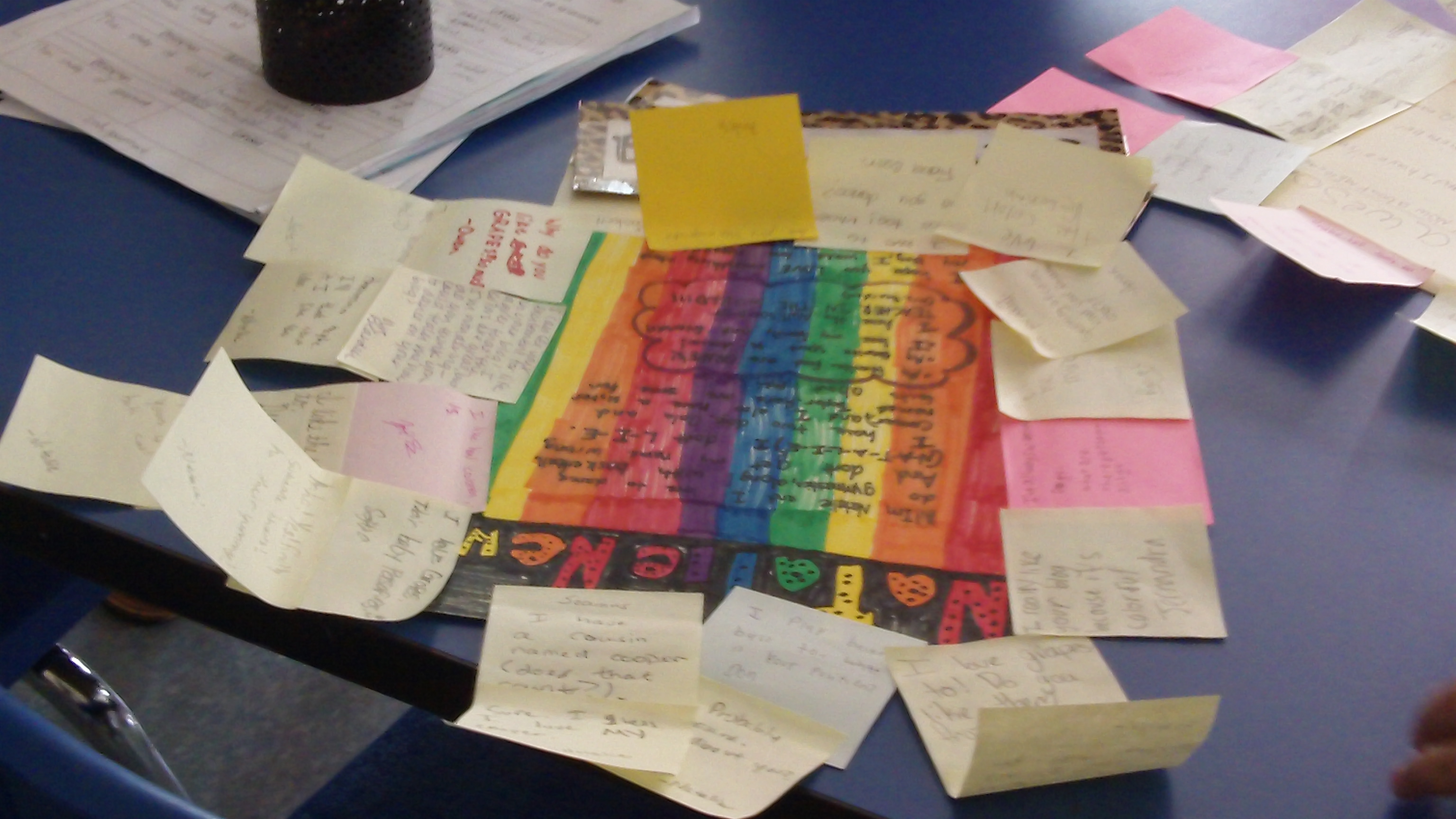
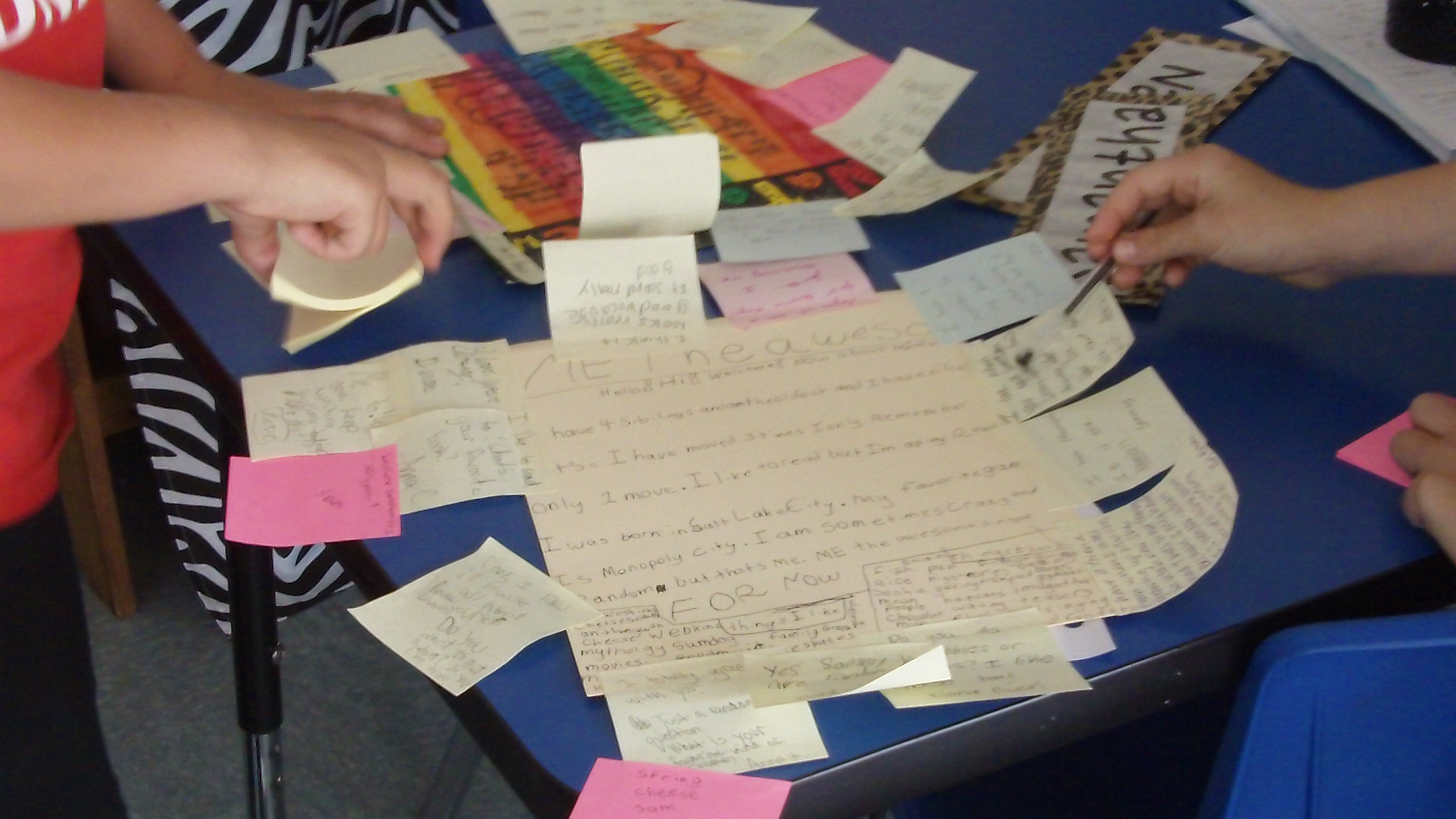
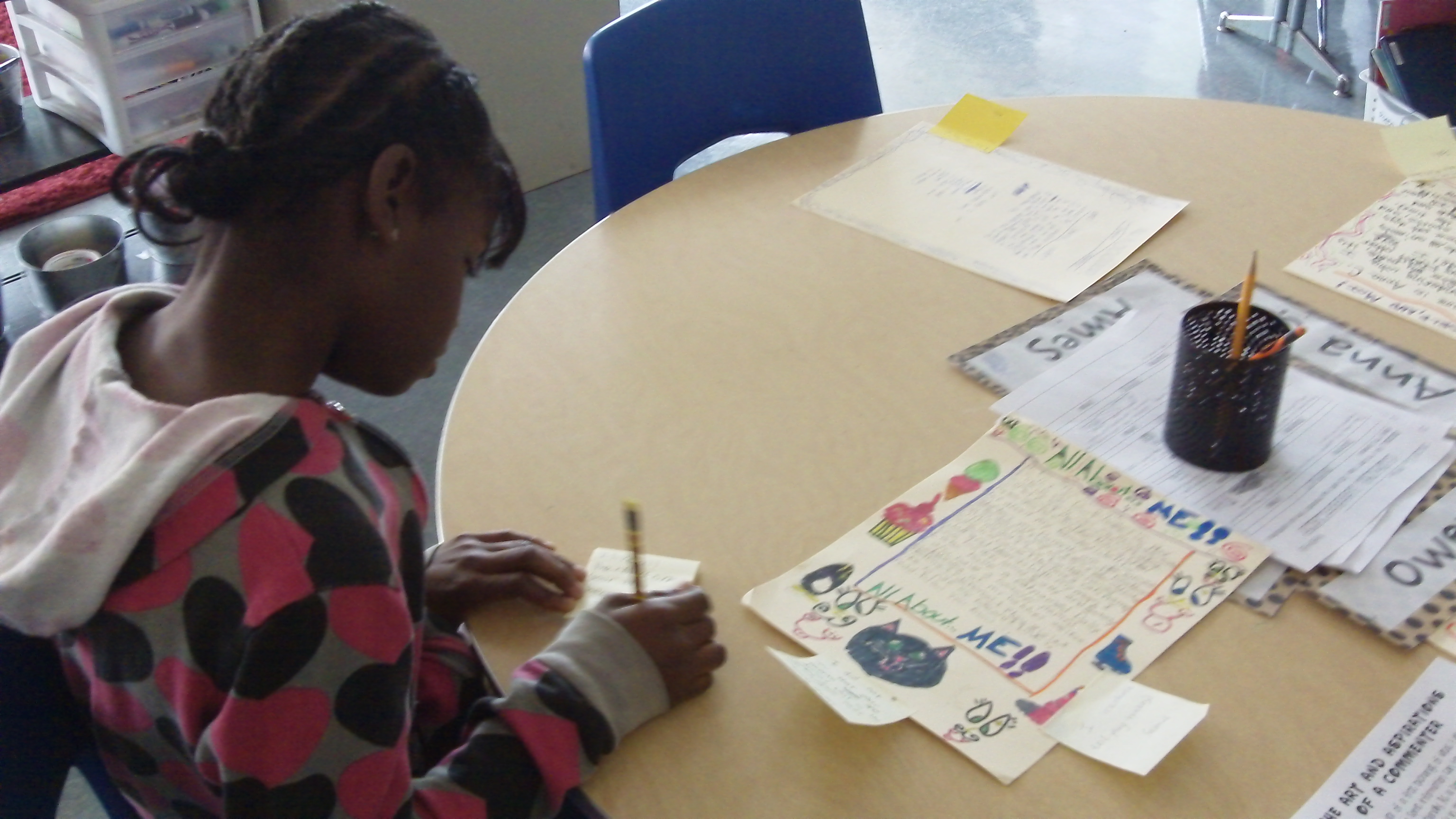
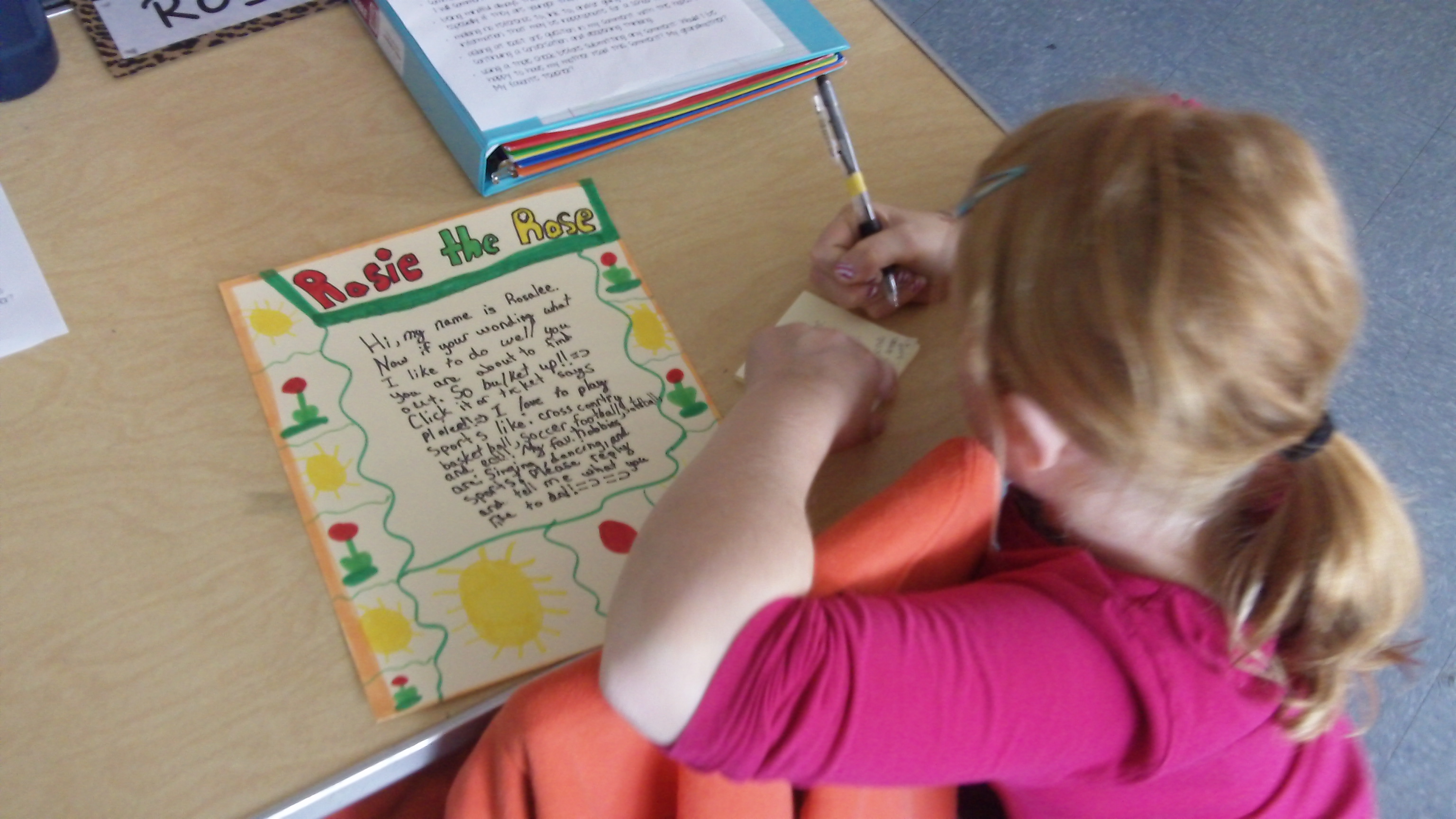
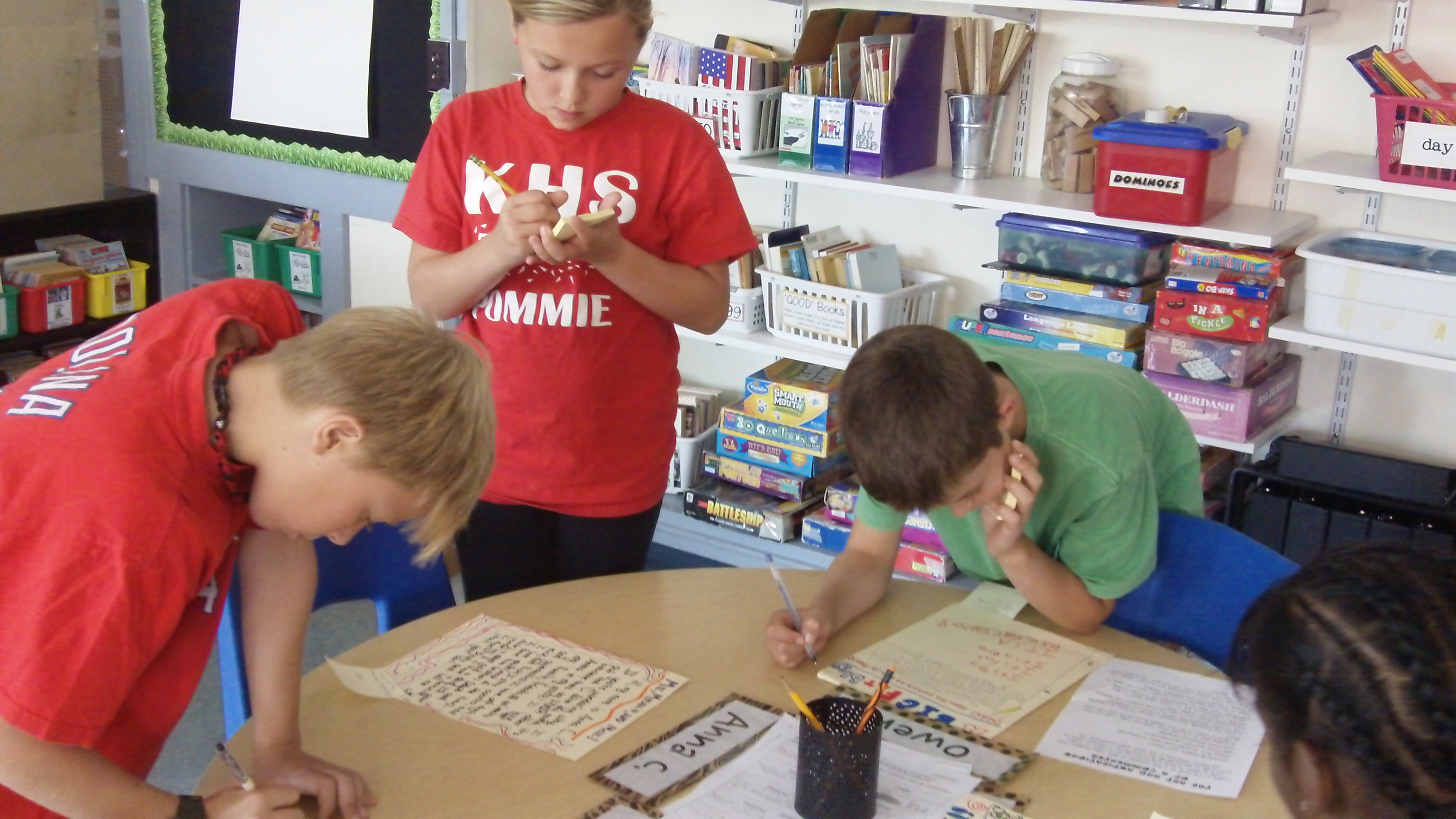
After we had our blogs created, we learned how to comment.  And got to work practicing on post-its before we went into the “real” world.  I have to say how proud I am with how great they did, remembering to be positive, tell something they liked about the blog post, as well as ending with a question to keep the conversation going.


So needless to say, they are totally rocking this blogging thing!  If you haven’t had a chance to check us out, visit our student blogs to see what it looks like live! We would LOVE it if you left us a comment to tell us what you think!

They Grow Up So Fast…

Ok, so in order to understand this post, you probably should have already read this one.  Anyhow…today was one of the most exciting days in our classroom up to now.  Really–I was excited for what I knew would come from that mysterious pile of brown-paper-wrapped rectangles–and my kids didn’t disappoint with their reaction to the whole thing.


So that answer to that question yesterday was this:

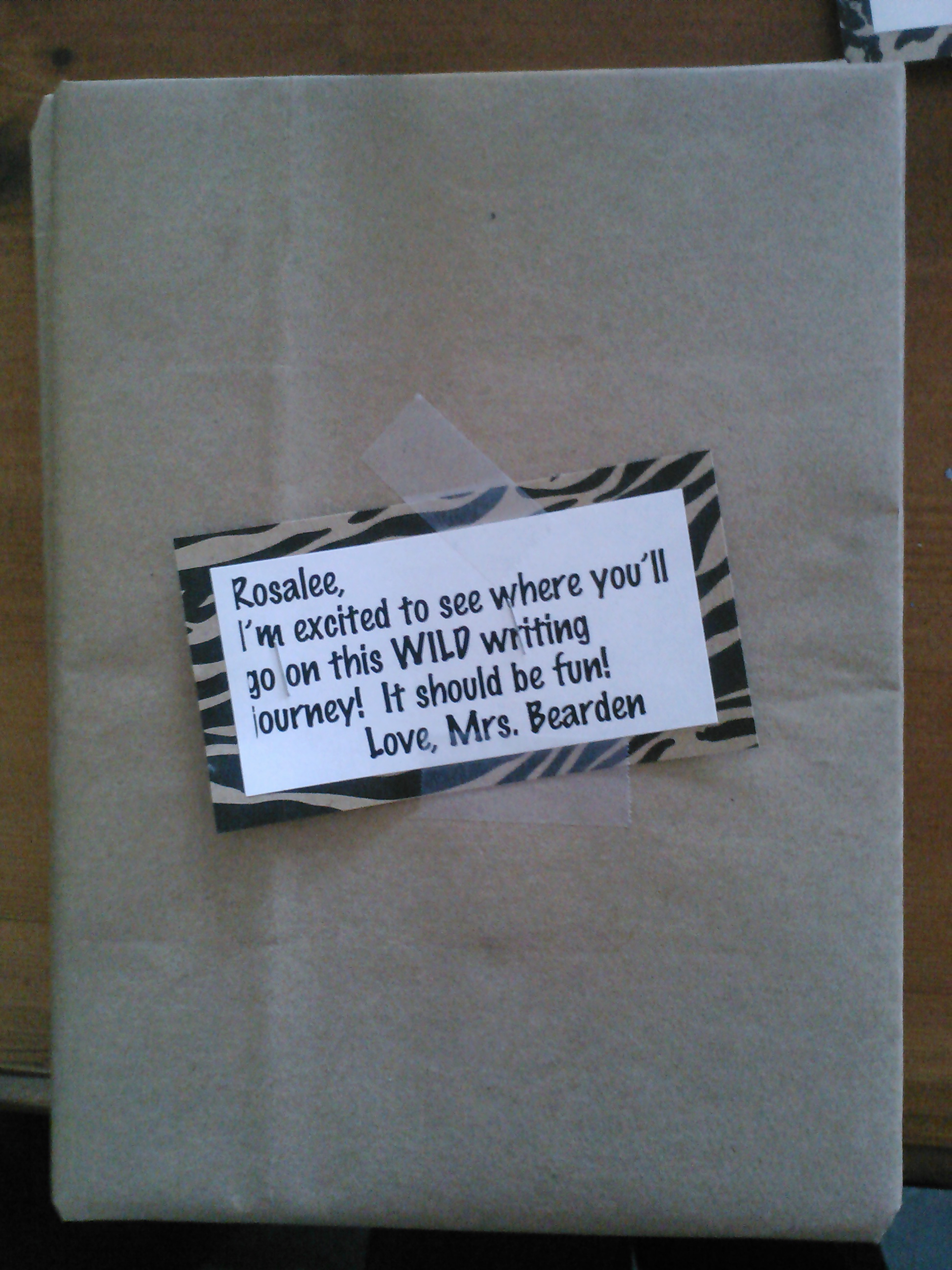
Each kiddo was given their very own, specially wrapped Writer’s Notebook!  I gave them a new pen, too, since we have a “pen only” rule when we write in our notebooks.  And it was the clicky kind of pen, which was extra cool.


Now….before they could be gifted their very own, specially wrapped new Writer’s Notebook—which we fondly refer to as our “bears”–they had to agree to a few specific things and sign our class writing pledge (I’ll show you that tomorrow!).  Then the brown-paper-package was theirs (and yes, I was tempted to tie them up with string!).  Just look at their faces:


The whole class waited with anticipation as each kiddo individually came up to the easel to promise, then sign the pledge, and were given their goodies.  Then once we all had our presents, they got busy unwrapping:


Ok, and so while I know that video is blurry in places (sorry!) and out-of-focus (sorry again!), I KNOW you can see the joy on their faces and hear the excitement in their voices.  And believe me, it’s all real.  They have been waiting for this day for a while (like Devan said today, “It only took 4 weeks!”), knowing that one special day, after they’d learned the right way to use that Writer’s Notebook, they’d have their own.  From the second I walked over to my chair with the pile in my arms, I heard whispers of “today’s the day” and “those are our notebooks!” and lots of suddenly-jumpy 5th graders who were eager–honestly eager–to start the next phase of our writing journey.  AND I LOVE THAT!


So now their “cubs” have grown into “bears” (which I heard Anna exclaim after she’d unwrapped her present) and they’re ready to continue their learning journey as capable, FEARLESS fifth grade writers.

Do you have a Writer’s Notebook?  Does it have a special name?  What does it look like? Our homework tonight was to decorate our notebooks.  🙂

Just Goofing Around

Think of the feeling when you have to wear “church” clothes.  Or maybe for you, it’s easier to think about wearing a formal, like for a wedding or a fancy dinner.  You probably feel all stiff and uncomfortable, maybe itchy and hot.  If you’re in the wedding, you might feel like everyone is watching you, just waiting for you to make a mistake or drop something.  If you’re at that fancy dinner, you might be nervous that you’ll use the wrong fork, or not be able to read the menu because it’s in another language.  I remember that from prom when my date and I went to a really expensive French restaurant.  I couldn’t even have fun because I was so stressed out!

Now I don’t know about you, but at the end of a long day (even a great day like we had today), the first thing I do when I get home is put on my pjs.  I get comfortable–kind of like what you (or a kiddo) might do after that wedding, after you get home from church, after that fancy dinner is over.   From constricted to comfortable, into our “play clothes.”
That first example is how many people–kids and adults alike–feel about writing.  It’s uncomfortable and hard, with a  when-will-this-be-over kind of feeling.  Writer’s Workshop is a hated time, when all the pressure is on, and the teacher is watching your ever move.  Students may feel like they can’t do anything right, and they’re afraid they might make a mistake.

I want my writers to remember instead their play clothes; the way they feel and they freedom they are allowed in them.  When you’re wearing your play clothes you can get messy, run around, fall down and make mistakes.  There are no rules, really.  You feel alive!

So I want it to be in their Writer’s Notebook.  I want the writers I work with to feel energized when they sit down to write, ready to play with words and see what happens.  Their notebooks are allowed to be messy; it’s from the mess that masterpieces may emerge.

And so another notebook strategy was added today: Goof Around Writing.

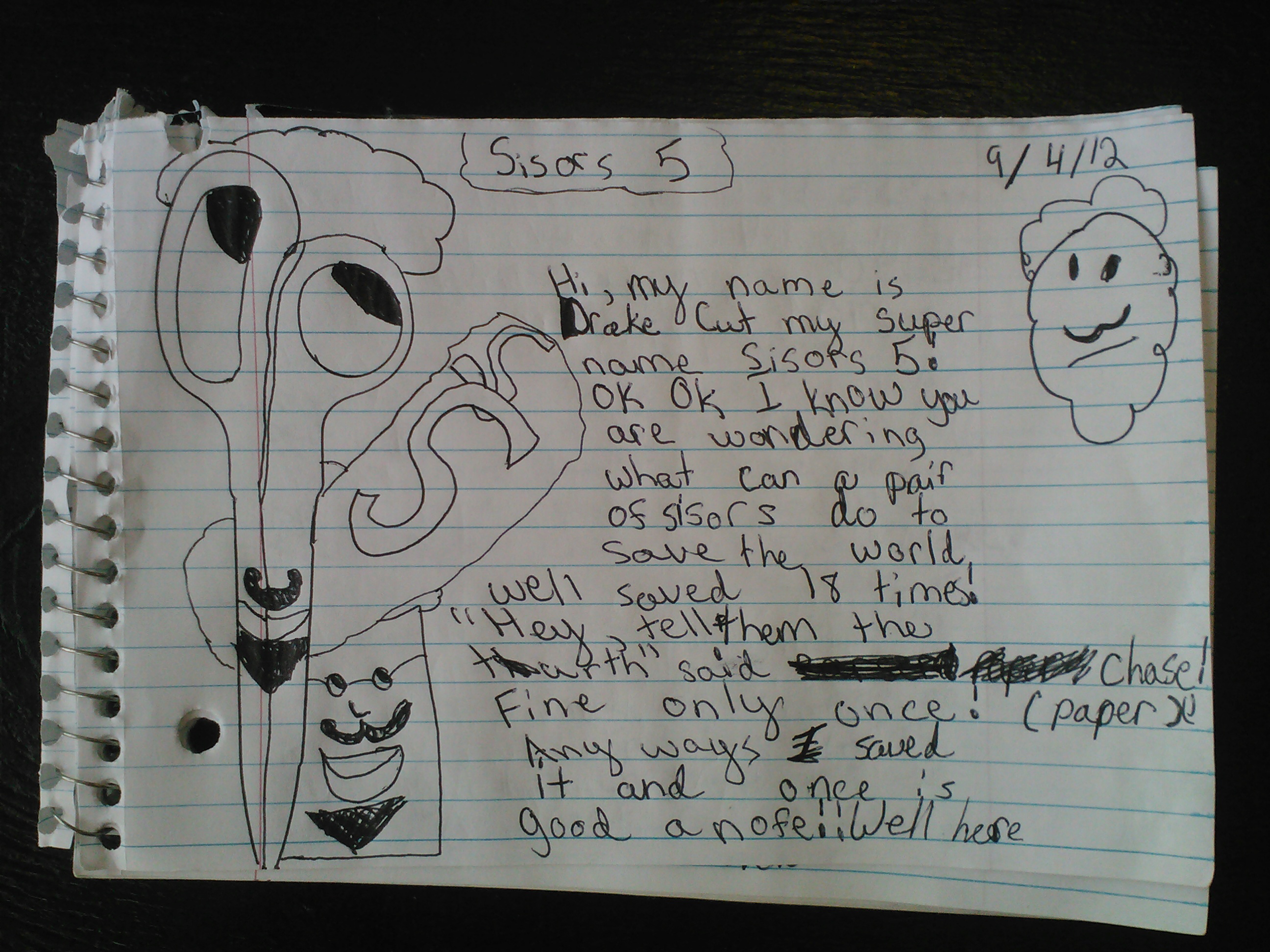
First, I shared two entries from my own Writer’s Notebooks.  One was called “Ode to Mashed Potatoes” and the second was “Oh Sewing Machine, You are my Enemy!”  Each was just for fun, about how mashed potatoes tease me with their goodness but make me “fat, fat, fat” and then about a “fight” I had with my sewing machine last year when it wouldn’t work right.  Both were written in a playful manner, meant to sound silly and make you laugh.  But still, they were both based on my life.
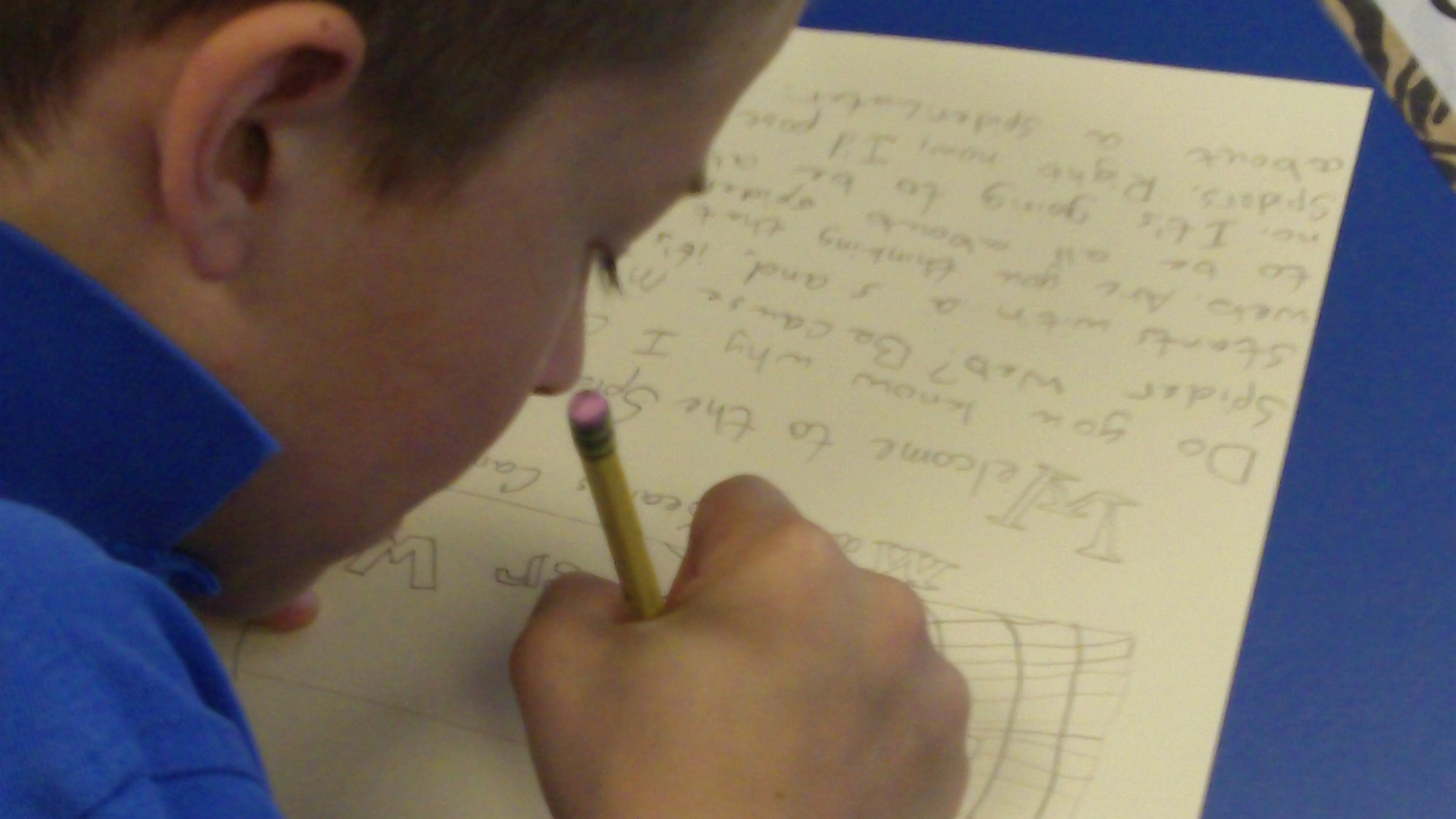
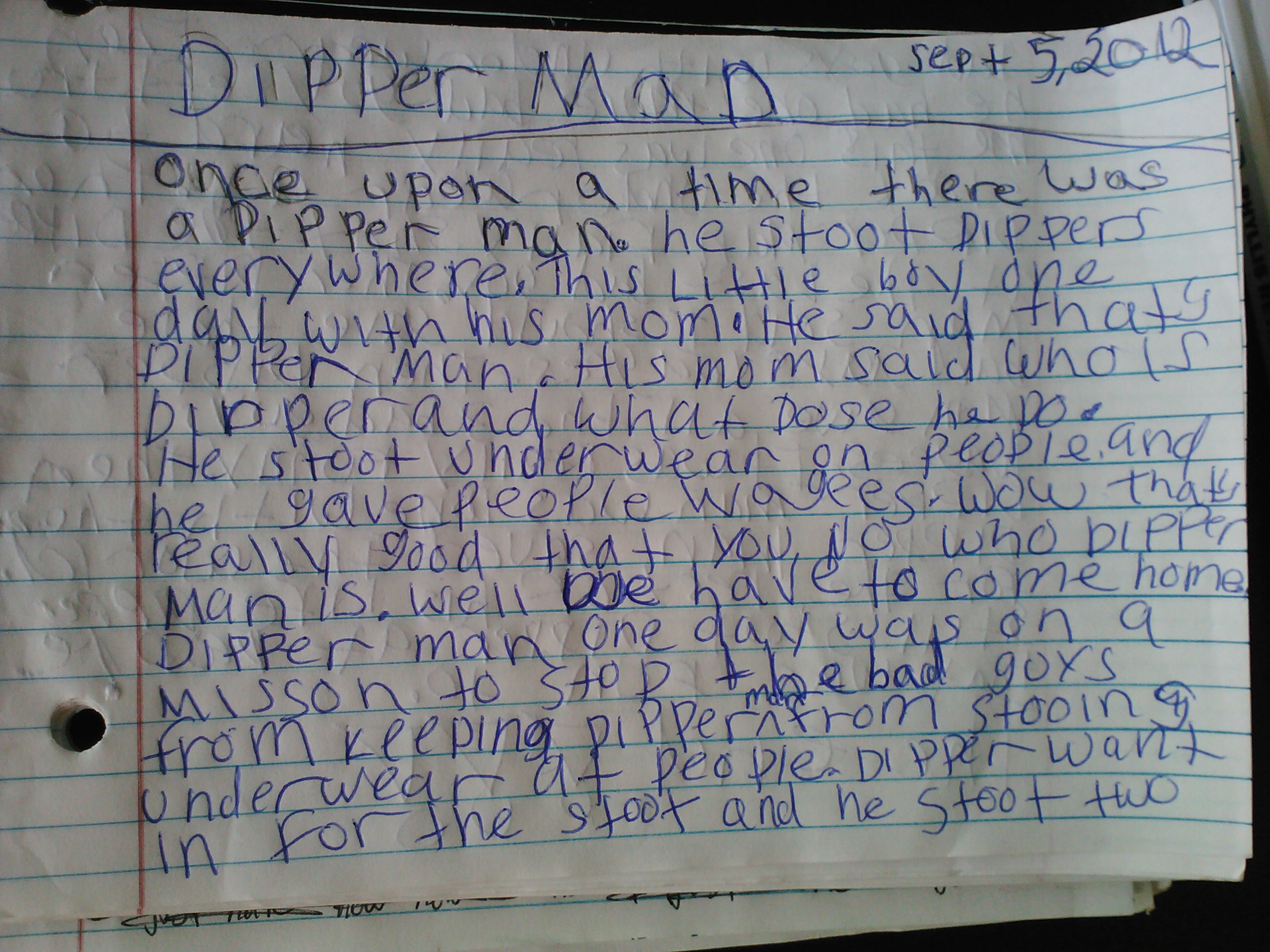
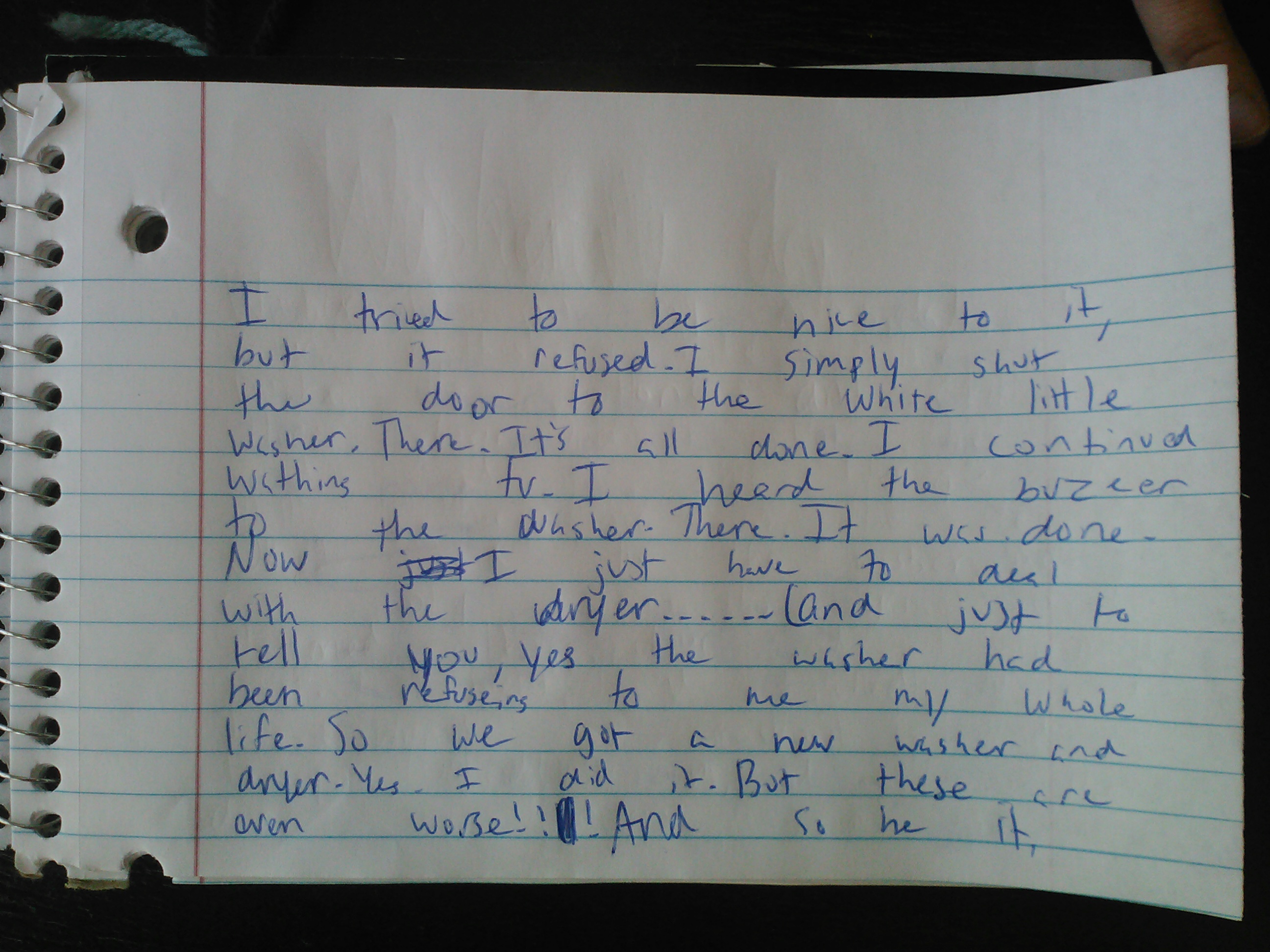
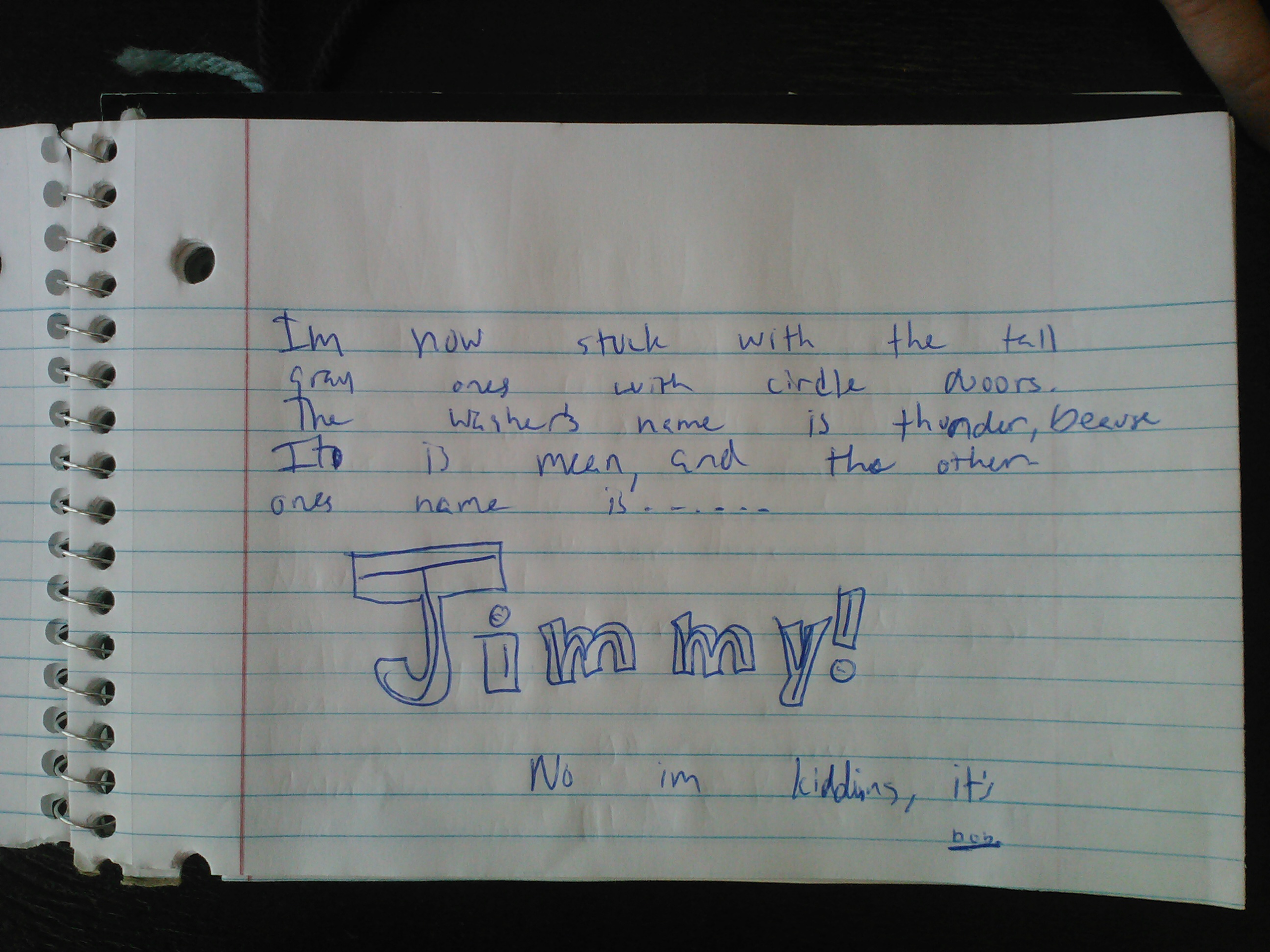
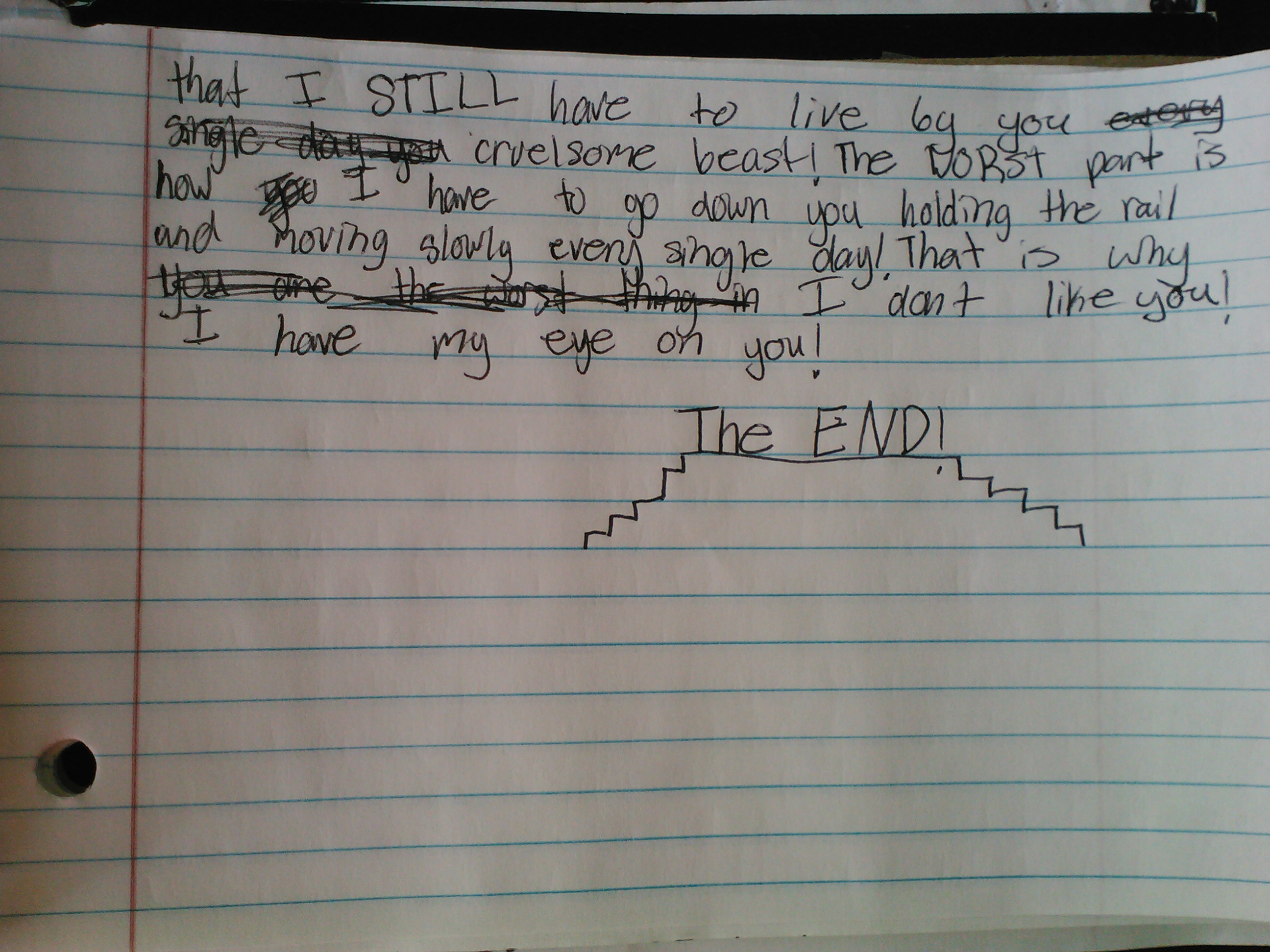
Then my friends had a go.  They LOVED this, and there was much giggling as we shared our entries.  There were MANY kiddos who thought that you, dedicated blog reader, should be able to see what they did.  So here are some examples of what we did in our play clothes when we were just goofing around with our writing:


What do you do when you’re “goofing around” with writing?  What do your play clothes look like?  Please leave us a comment and tell us about it!  We’d love to read your thoughts! 🙂

Put Your Cub in the Den

If you’ve visited our schedule page, if you’ve been here a while, or if you know me, then you know that writing is a big deal in my classroom.   So getting into Writer’s Workshop is also a big deal.  There is a very special way that I introduce Writer’s Notebooks, a special way I share myself as a writer, and so then writing becomes a very special thing to my students, too.   It works out really nicely.  🙂

So…a couple of years into teaching 4th grade, I came up with what I thought was a great idea.  At that point, Steno notebooks were EVERYWHERE, and I found a new way to use them.  Rather than having my kiddos jump right into their Writer’s Notebooks, I gave them a “practice” notebook where I would teach them my way of using the notebook, a place to give it a try and make mistakes.  Then, once they had proved to me that they were ready, they got to “move in” to their real notebook.  Back then my class came up with the name of “training wheels” for that starter notebook, because of how you go through that learning stage before you ride a real bike.

This year, I knew I wanted to get back to this whole starter notebook idea (I hadn’t done it with my 5th graders yet), so I got to work.  Instead of using Stenos, though, which are strangely hard to find now, I decided to use a half-sized notebook.  Just a few quick slices of the paper cutter and you have a class set like this:

I liked how they are pint-sized, so are therefore portable, but have big enough pages that you can finish most thoughts on one page.

I told my class the story of the training wheels, and set goals for how I wanted them to use these notebooks over the next few weeks.  Then I asked them if they wanted to stick with the old name, or create a new one that was just for us.  And so the idea of the “cub” was born.  Instead of having  training wheels that led them to a bike, they decided that they would instead have a cub that grew up into a bear!  Then, they even renamed our cubbies (the places where they store their stuff) DENS, so they could put their BEAR in the DEN.  Get it?  Like Bearden?  That’s actually how I tell people how to spell my name: like a bear in a den.  HA!  And so the cub was born.  And very soon everyone’s cubs will become bears.  🙂

But what do we put in our cubs?  What am I teaching them to put in their notebooks?

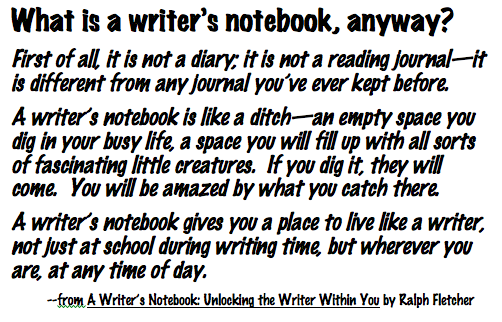
It all started with a definition, courtesy of Ralph Fletcher:


A container.  A ditch.  A place to live like a writer.  I want my writers to think of this little notebook as a place to collect ideas, to save secrets, to start stories.  It’s a place they will visit each day, writing in a variety of different ways, collecting entries that they will come back to over and over again in their future–for sure in their 5th grade futures, but hopefully (if I do my job right!) their farther futures, too.  I am up to my 11th WNB, the first of which dates back to 2005, and I still use them everyday!

So far, we’ve learned these strategies for our writing toolboxes:

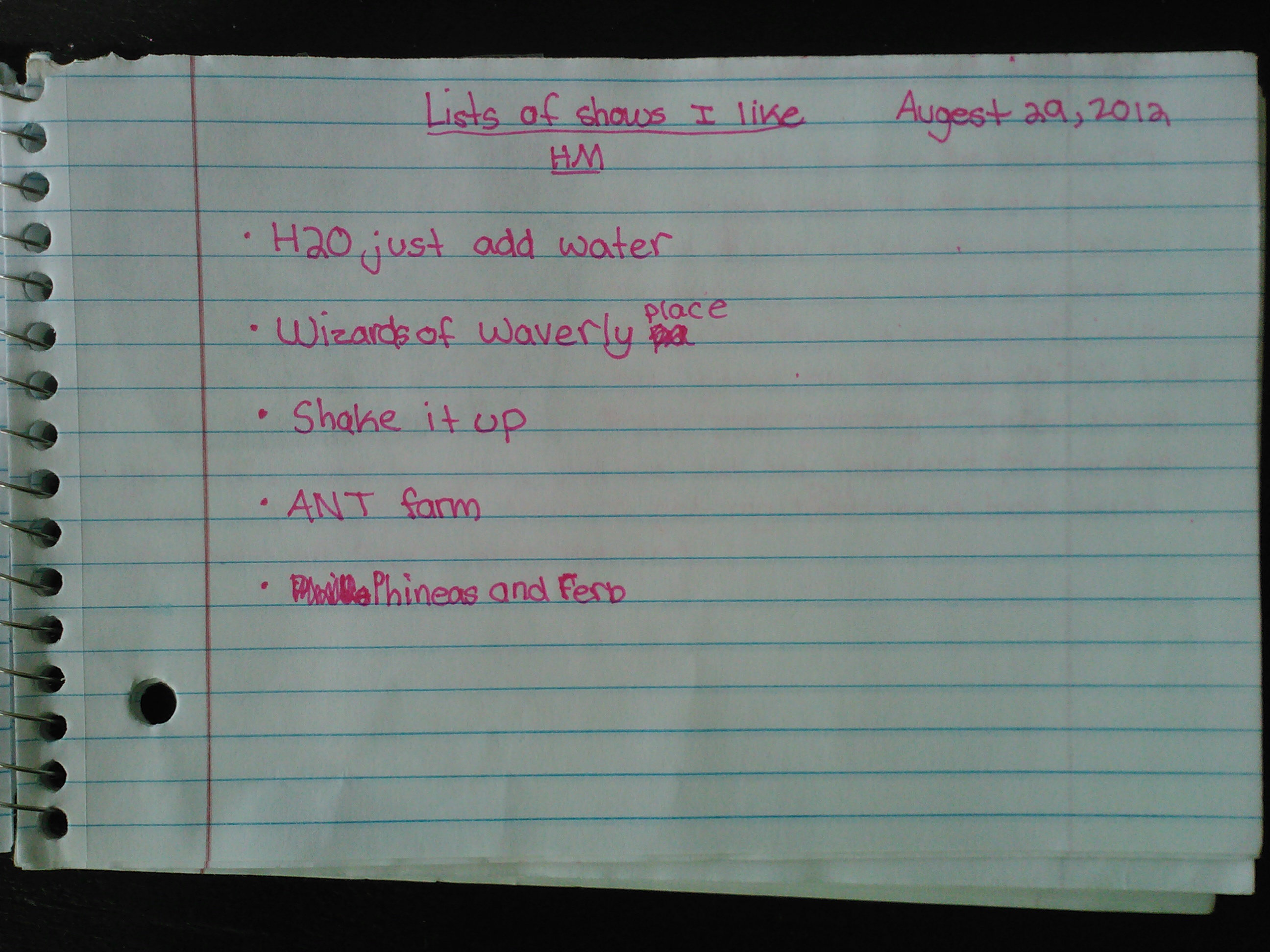
1. Lists: you can use this strategy for anything!  A list of favorite things, least favorite things, names, places, foods, story ideas–ANYTHING!  Like this, for example:
 

2. Memories:  I define a memory as anything that has happened to you in your past (and remember–5 minutes ago is the past!) that you want to remember.  It doesn’t have to be huge or monumental or “special,”  just memorable.  And important to you.  We’re learning that almost anything in our lives is “worthy” to be kept in our notebooks, and that we can write about these ordinary events in an extraordinary way.

A 5th grade memory or two:


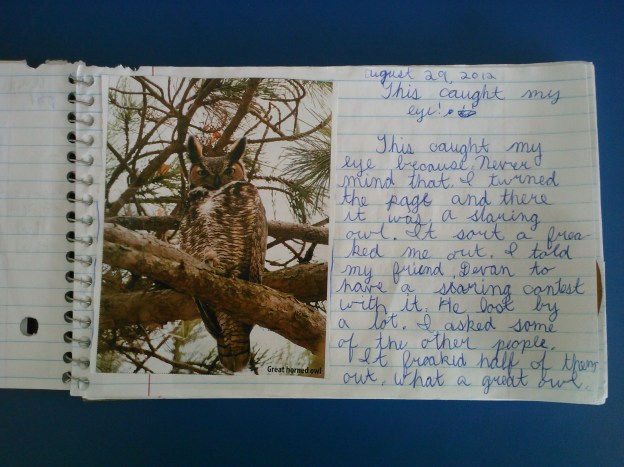
3. Artifacts:These are really an extension of memories, and involves the “stuff” you put in your notebook that triggers memories–photographs, newspaper clippings, ticket stubs, candy wrappers, flower petals, cards, notes.  You name it!  Someone even taped a quarter into his notebook the other day because it sparked a story he’d heard before.  For us, it’s been mostly magazines lately.  I give them very specific directions about how the WRITING and THINKING is more important than the picture, and that they should not just cut out any old picture and write “I like…”  They are totally rocking at finding the deeper stories behind plain pictures they find in our classroom magazine bin.

For example:
 

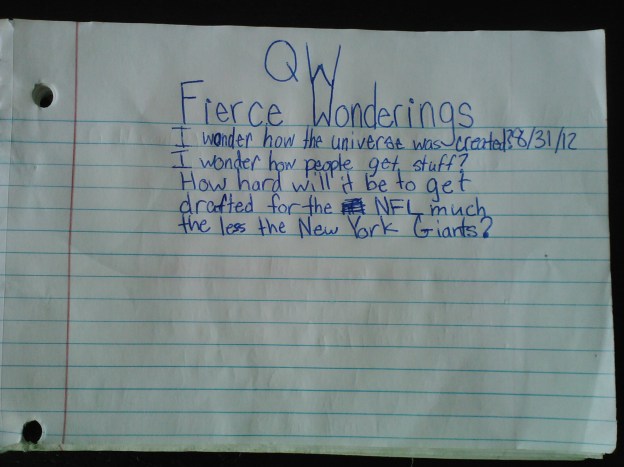
4. Questions: We call these “fierce wonderings” (again per Ralph Fletcher’s smart thinking!).   We talked about how we wanted the focus to be on big questions that may not have an answer–at least not one that we can find easily or at this point in our lives.  We discovered that often fierce wonderings start with “why.”
5. Observations/Descriptions:  We added these to our strategy list today, and I can’t wait to share them with you soon!

I love the stories I keep hearing from families about how excited their students are to be writing!  They are already doing an AMAZING job with this!  But hey, that’s because they’re AMAZING kiddos!

What do you write about?  Have you ever tried any of these strategies in your own writing?  What can you add to our list of entry suggestions?  Leave a comment and share your thoughts! We LOVE to read comments!


I Love Jerry Spinelli!

…but don’t worry, my husband’s totally ok with it. 🙂

Remember when I told you about me as a reader?  And as a writer?  Well, as #10 on both lists (which is a strange coincidence!), I mentioned that Jerry Spinelli is one of my favorite mentor authors.

I was introduced to Jerry Spinelli’s work via my good friend Michelle Simmons, and her love of his book Crash.  We taught together many years ago, and she introduced me to it as one of the first read-alouds of the year.  But not only did we read it to enjoy it as readers, we incorporated it into our writing unit on Reading Like a Writer.  We’d reread parts of the text that we’d already heard, this time digging for nuggets and craft moves we could use in our own writing, teaching our students to do the same things.  You can find amazing things in that book if you pay attention.  And because Crash is such an amazing book on so many levels, it is a must-read every year in my class now.

The reason I write about this today, though, comes from inspiration of another colleague of mine.  I have a new teammate, Bridget, who shares my love for Spinelli and his many great stories.  We were talking about some of our favorites, and I had to sheepishly admit that while I was aware of, and even own most of his books, I have only ever actually read Crash.  I know–that’s just silly.  So they became the majority of my to-be-read pile this last month.  Only makes sense, right?  On so many levels.

First I read Eggs–one I’d actually started at the time I first bought it, but never finished.  Just today I finished Maniac Magee.  I know–how could I have never read that one?  It’s a classic.  And it won the Newberry Medal.  Sorry!  I’m lame.  But I’ve made up for that now, right?

I have Loser and Wringer here in my pile, still waiting for their turn.  I hope to get to them soon, as well.  And while now my list of Spinellis-I’ve-read is only 3, my initial opinion on his writing holds true.

I know–you wonder, “What is it that love so much about his writing?”  It’s many things, really.  I love the way his writing sounds.  I know that’s hard to explain, but I’ve heard it many more times out loud than in my head, since I read it to my students, and every word just has such a great ring to it.  Like he chooses each and every one specifically to be there together.  I like that he seems to break every established rule of grammar and mechanics and still ends up with an amazing story that makes sense.  He writes sentences that have only one word, chapters and paragraphs with only one sentence.  But because he does it on purpose, it works.   I like how the characters in his stories have real conversations.  They actually sound the way that kind of person would sound in real-life–not some sweet, idealized, sugar-coated way because they’re in a book for kids. Raw and real.  Sometimes saying things that shock you, because that makes sense for the character.  I like that he writes about things that matter, things that both kids and adults can relate to.  Bullies. Friends. Racism. Families. Things that aren’t so pretty.

So like I said when I started, I love Jerry Spinelli!  I learn from him every time I pick up a book he’s written, and he’s a mentor even though I’ve never met him.  That’s pretty cool, I think.

How ’bout you?  Who are your favorite authors?  Who do you have as mentors for your writing?  What books are your favorite to read? Share with me. 🙂

100 Things About Me as a Writer

I am a writer.  I wouldn’t say that I am an author, because I haven’t been published, but I definitely write.  And I write a lot.

So here are 100 things about me as a writer:

1. I started my writing journey way back in kindergarten and have loved it ever since.

2.  When I was in elementary school, I wanted to be an author when I grew up.

3. Writing has always been one of my favorite subjects in school.

4. I still have writing pieces from when I was a kid.  I think they’re saved in my mom’s dresser.

5. In junior high, I wrote mostly short stories about girls who were babysitters or who had crushes on boys in their classes.

6. As an adult, I usually write expository text or to tell my opinion/thoughts on a topic.

7. I officially started my Writer’s Notebook in June of 2005.

8. I am now filling up my 10th notebook.  Each one is different and tells something about my life at the time I was writing in it.

9. My favorite authors as a reader are my favorite as a writer.  I like the way their words sound.

10.  Sharon Creech, Ralph Fletcher and Jerry Spinelli as mentors of mine even though I don’t know them.

11.  I write mostly for myself.

12. Sometimes I write so I can share it with my students.  My Writer’s Notebooks and my students’ needs are the main resources I use in my teaching.

13. I’d love to publish a book someday.

14. I write better when I have choices about what it is (i.e. format, length, etc.)

15.  If I have an assignment, I will always write longer than is asked.   It’s probably really annoying to my teachers!

16. I learn a lot from my students when I read their writing.

17. I like feedback, but only if it’s positive.  Hey, we’re being honest here, right? 🙂

18. I read almost everything like a writer, looking for things I can use in my own writing.

19. I love words.  I collect quotes and often write down the things other people say.

20. The outside of my Writer’s Notebooks are covered with things that inspire me.

21. I am a “pen” person.  I could shop for hours for just the right one.  What it looks like when I write is really important.  Well at least to me. I’m kind of obsessed. 🙂

Wow–that was harder than I thought it would be.  Didn’t get as far as I thought I would.  Hopefully I’ll come back to add some more soon.  Check back again, will ya?

What would you say about yourself as a writer?  Could you add anything else to my list?


Confessions

Hopefully you’ve already read about me as a reader.  If not, I’d say it’s worth a few minutes of your time.  Please?  🙂

And so as I sat down to write about myself as a writer, I decided I needed to start with a confession instead.  Remember when I first posted about that really cool summer online writing camp I was doing?  Well, at that point I was really excited about the prospects of learning and writing with amazing teachers/writers/librarians (and I still am) and was anxious to see where the process would take me.  I really had no expectations.

I dug in, and was finally comfortable enough to post the first two things I wrote.  And that’s when it all went downhill.  Somehow the wind came out of my sails, and I have not done a single. assignment. since.

In many ways that bothers me.  I don’t like to not succeed.  I am naturally a perfectionist, and I usually take that to the nth degree when it comes to school/writing/reading/anything professional.  I am an all-or-nothing kind of girl, and so if I can’t do it all and do it right, I don’t want to do it.  But with this, I only did two assignments and then I hit a brick wall.

But after I got over the initial disappointment in myself (annoyance, really), I sat down to reflect on what had happened.  I think part of my problem was that I write mostly for myself.  I write when I need to write–which is usually to process feelings or to collect moments I don’t want to forget.  So when presented with a “job” to do, I had a hard time figuring out how to do that.   Since I write for myself, I had a hard time when the assignments/exercises were related to developing characters or settings, or outlining plans for a story.  I did not go into the camp with the plan of writing or finishing a novel.

Ok, so what matters here?  Does it really matter that I set out to do something and didn’t finish it? Or does it really matter more that I walk away with something that I learned?  I say the latter is more important.

I learned to be okay with not being perfect.  I learned that sharing your writing with strangers is hard.  Especially when you don’t really have a choice or you’re not quite sure what it’s “supposed” to look like.  These are both really important seeing as how I ask that of my student writers every day.  I know I’ll think of those times really differently in the future.  Yes, I’ll still ask them to share, but I’ll obviously have more understanding of how difficult it is.  I learned that sometimes you just need to put yourself out there and not care so much about what people say about your writing.  What’s the worst that could happen? 🙂

Oh, and just for the record, I do have plans of jumping back into Teachers Write! at some point.  The great part is that it’s all archived on the blog and I can do it at my own pace.  So yes, I’d like to say that somehow I will finish what I started, even if it looks a little different than I first thought.
Did you do Teachers Write! this summer?  How is it going for you?