Valentine’s Day

What fun we had at our Valentine’s Day party on Tuesday!  The parents in charge of this party did such an amazing job putting together many great choices for us.  Each classroom had a different activity, and kiddos were allowed to participate in whichever they wanted.  The food was amazing, with the theme of “I’m So FONDUE of You.”  Cute, right?  Here are a few pics of the fun!

This slideshow requires JavaScript.


The End of Literature

Literature Circles, that is. 🙂

We have spent the last few weeks meeting in Literature Circles to read and discuss a book together.  The kids have done an amazing job of thinking deeply and talking openly.

At the beginning of our study, we read several texts together, learning the roles that they would later use in their groups independently.  They learned–and then practiced–the roles of Discussion Director, Character Creator and Literary Luminary.

After we worked together, each student was given the choice of which Literature Circle they’d like to join.  Each kiddo gave their first, second and third choices for which group they’d like to join, then were put into groups of 4-6.  For the next three weeks students read and wrote questions about the book they chose.  Their lit group met three different times, and students had different roles each time.

The themes of the unit were responsibility and choice, as students focused on taking turns, making sure their voices were heard, and using the text to support their thinking.

My students did an amazing job with these groups!  They’re excited to try it again later in the spring with different book choices.  What great experiences we had together.

What experiences have you had with literature circles or book clubs?  Do you have any advice for us for the next time we meet? What book would you choose to read?

Love This Quote

I just had this quote on the side of my WordPress screen and thought it was great:

Writing, to me, is simply thinking through my fingers. — Isaac Asimov

Love what it means about how writing is not just mechanics and conventions.  Yes, those things are important, but more importantly it is thinking.  It is figuring out what you want to say and how you want to say it.  It’s deciding on who your audience is and how to best get your message out to them so that they “get it.”  The mechanics and conventions are then the part you fix, as a courtesy to your reader, so that they can clearly understand what you’re saying.

What do you think?

Rebuilding and Redecorating–Updates!

The other day I shared about how we’re rethinking, rebuilding and redecorating in Rm. 201.  I worked feverishly on Thursday and Friday last week, hoping to have most of our big moves done before the new week started today.  It didn’t happen, because eventually I had to go home :), so I continued working today, using the class’ ideas from the maps/plans they had made.

I’m still working on the last few details–labels on boxes, signs/charts/posters, reorganizing game/math shelf–but I had to share the new version of our room with you.  I know I said it before, but I LOVE LOVE LOVE how all of these ideas came from my kids!  In all of the years I have been teaching, organizing and planning classrooms, I would never had put the furniture this way, but it is hands down my favorite plan ever.  The learners in my class really do know themselves well, and know what their space should look like for them to feel comfortable and relaxed and ready to dig in.

I apologize for some of these, it was late afternoon and there may be some shadows.  But I just couldn’t wait.  Maybe I’ll try again tomorrow in better light.  You’ll get the idea, though: our room looks and feels great!

This slideshow requires JavaScript.

I wish I had taken pictures of the “before” the other day before I started moving stuff, but you can get a pretty good idea of what it used to look like if you go back to the early days of the blog–at least what it looked like when I started.  Maybe you can come see it in person someday.  It’s way better being there anyway, because then you can also see how great it feels!

GREAT JOB, KIDDOS!! KUDOS TO YOU!


New Technology!

Wait–it’s not new to the world, or new to the school, but new to us!

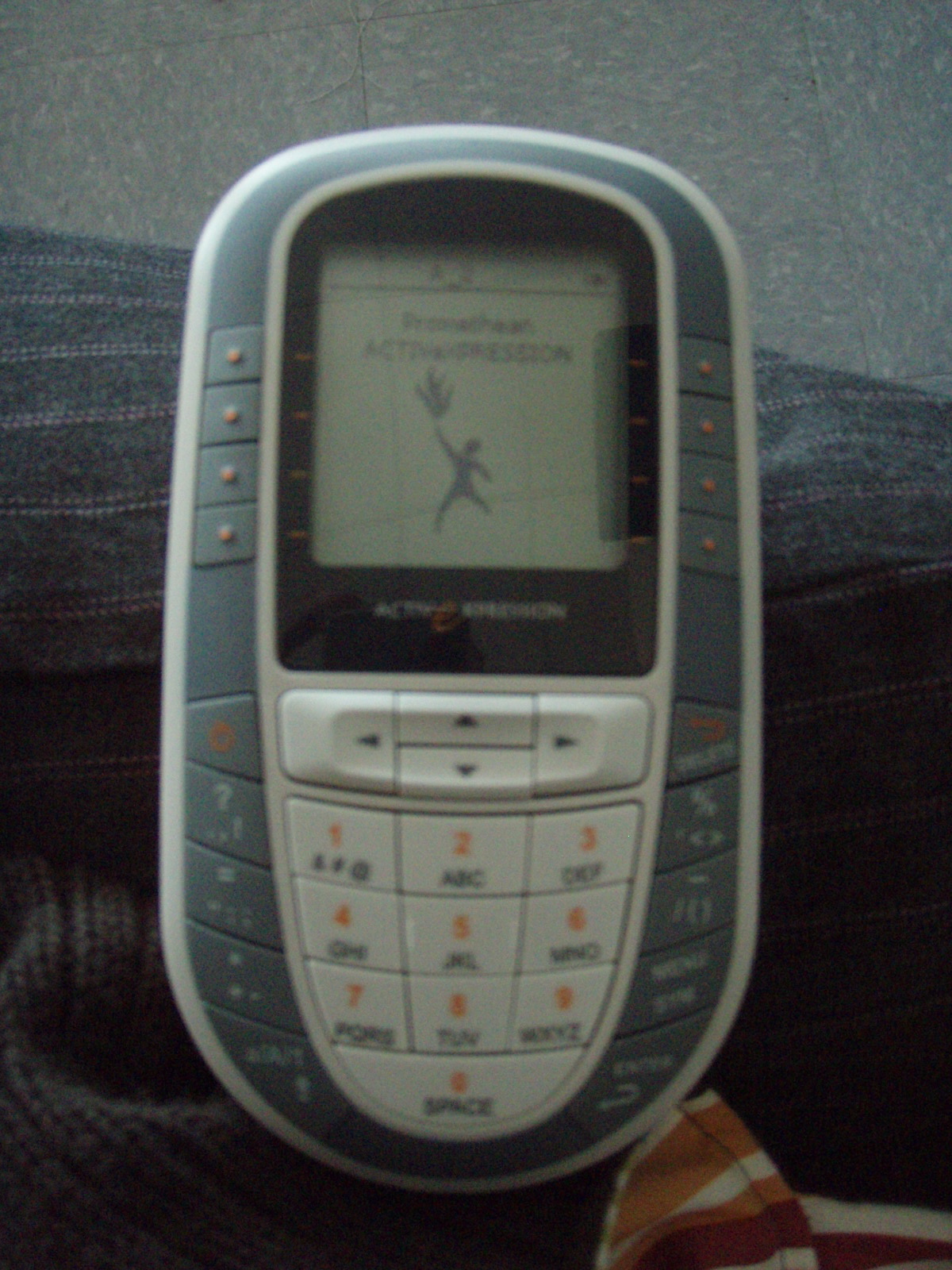
Today we used ActivExpressions for the first time.  Don’t know what I mean?  Check out this picture:

Ok, sorry for the quality of that pic, but hopefully you get the idea.  It looks alot like a cell phone, but is connected to our ActivBoard, and can be used to answer questions (using multiple choice format), or you can even text in your answer to a constructed response question!

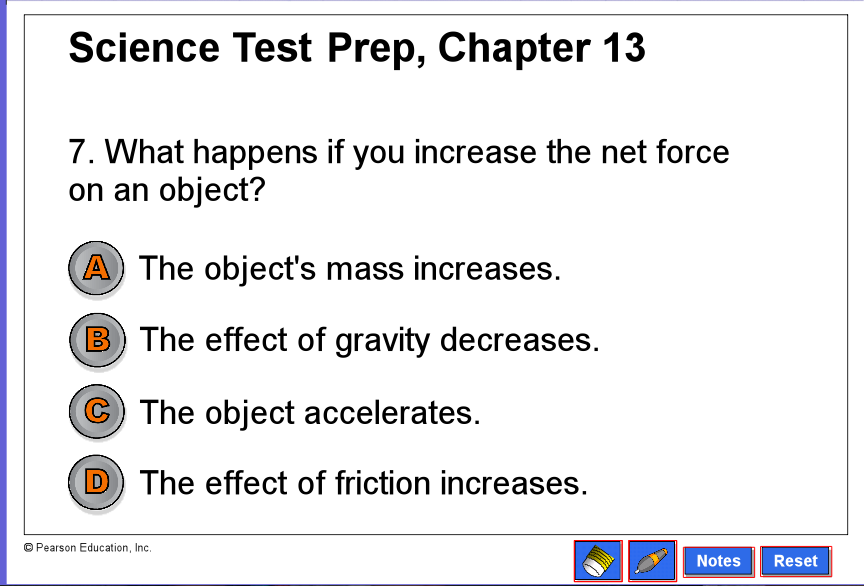
We are getting ready to take a test at the end of our Force and Motion unit in science, and so were ready to review today.  Instead of playing a game, or just answering questions out of the book, we used a flipchart on the ActivBoard that had questions we could answer using the ActivExpressions.  Here’s a random page from the flipchart we were using, to give you a better idea of what we were doing:

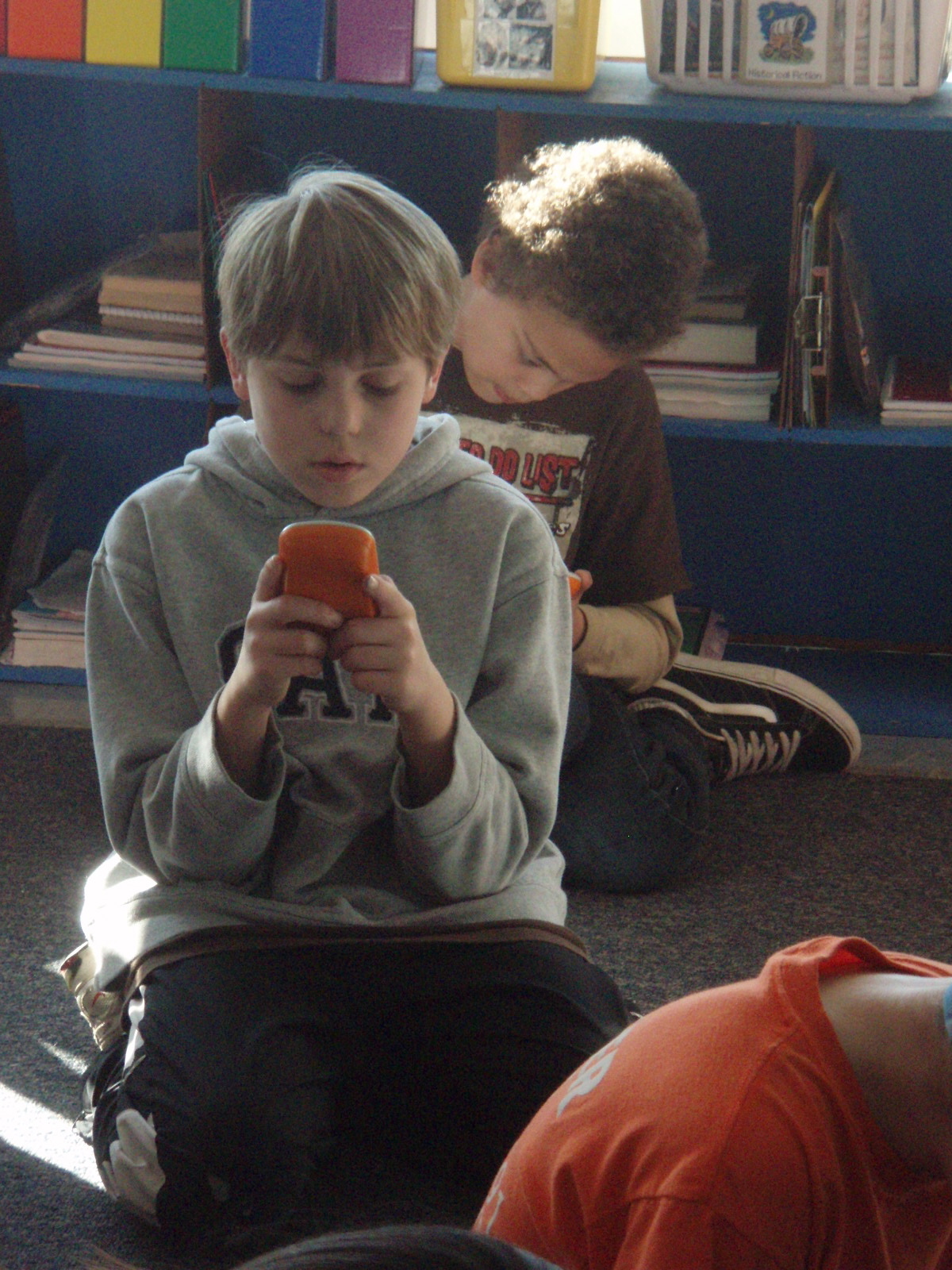
There were a couple of questions where the kiddos had to text in their answer, and they TOTALLY LOVED that part of our science review:


I loved how I kept hearing them say that, “This is so fun!”  My class loves science and socials studies (well they love everything we do, really), but you gotta love how a little change in the format, and an addition of a gadget and you’ve got their attention.   We will definitely we using these again soon.  Well, tomorrow, actually, because we didn’t finish today. 🙂

Robinson Road Rules

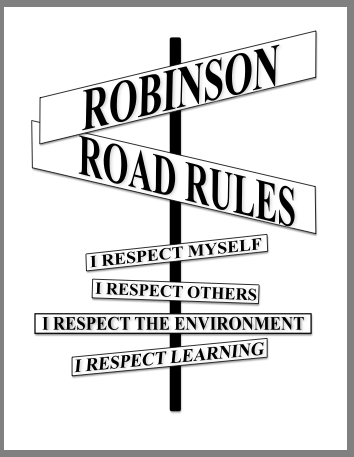
This post is part information, part reminder.  I figured that since we’ve been talking so much about respect (or the lack thereof) in our classroom lately, I’d remind us of the Road Rules that govern the behavior expectations in our school.

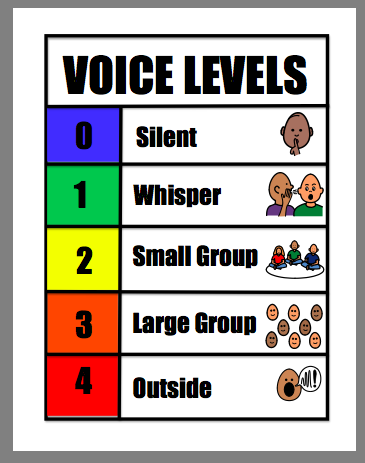
At Robinson, we have many “universals” that everyone everywhere knows and uses.  One of them is an attention-getting signal.  If an adult needs the attention of the kiddos they are working with–remember, anyone, anywhere: teacher, teaching assistant, principal, custodian, etc–they say “May I have your attention please?” while they hold up their hand and count backwards from 4 to 0.  Why 4 to 0, you ask?  Because that coordinates with another universal–our voice levels.

Again, this is an “everyone, everywhere” kind of thing–these signs can be seen everywhere in our school from the cafeteria to classrooms and library to hallways.  There are also signs around that designate which voice level should be used in each area.  It really helps us all to be on the same page as far as expectations, and is really working.   The hallway, for example, is a LEVEL 1 zone, and so the rule is “If you need to talk, you need to whisper.”  This goes for everyone, even teachers.  That’s really hard sometimes, for my kids and for me!

Then the overarching expectations for the whole school are called the Robinson Road Rules.  There are four of them:

Having this framework as the foundation for how we do things at our school is so helpful to both teachers and students alike.  It enables every adult in our school to support every learner because we’re all speaking the same language!  Kids know the language and use it, and since it’s everywhere it’s predictable–there are no surprises or questions about what to do or how to do it.  The rules are the rules and everyone knows them. 🙂

What expectations do you have at your school?  Have you tried building-wide universals? As a parent, what do you hear your kids saying about the Robinson Road Rules?

Rethinking, Rebuilding and Redecorating Rm. 201

Remember this?  Since then we’ve done several other math warmups about geometry and decimals.  But we’ve also been doing some other things–things that started out with math and quickly spread to other areas of our life together in Rm. 201.

Let me explain…

The other day I asked my kiddos a question, and after I did, I realized–by listening to the crickets and seeing their confused faces–that they didn’t get it.  So I rephrased it, and also took them on a little tour to help explain what I meant.

One of the things I’m working on is making our room look and feel like it’s as much a place for mathematicians as it is for readers, writers, and scientists.  So I took them to a place that I knew would help them get a feel for what that looks like–our neighbor next door, Mrs. LeSeure’s 5th grade class.

We sneaked in very quietly and looked around.  The directions  were to pay attention to what they saw that told them that math happened in that room, things that maybe they didn’t see in our own classroom.  We then came back and brainstormed what we noticed.

Here’s what our list looked like:
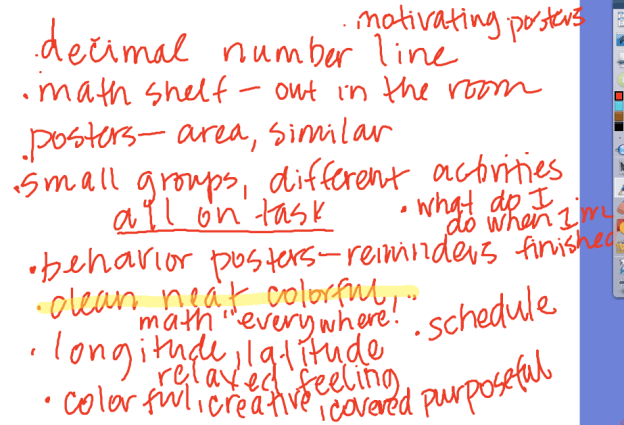
Ok, I know–you’re distracted by the messy handwriting.  I promise, it’s not usually that bad.  I was writing fast. 🙂

What was really great about what they put on the list was that they noticed things that I know that Pam specifically did for her math environment, but they also caught on to the things about how the room felt, the subliminal messages that were being sent in that space.

As you can see on our chart, Mrs. LeSeure’s class has things that help her students in math, like anchor charts from things they’ve just learned about, like area/perimeter and the difference between similar and congruent, both from our recent 2D geometry unit.  But my students also talked about how her classroom felt.  They said that it felt relaxed.  It was clean and neat and colorful.  This was where I had to be brave.  I had to remember that just because they said her room was like that didn’t mean that ours wasn’t, or that I am a bad teacher, or that her class is better than ours.  It just meant that Rm. 202 had some things that ours doesn’t have, different things.  Things that we want to add to our own room.

Most of what they were saying actually went way beyond the original math-related question I asked.  They went deep.  And they made me nervous.  But like I said, I had to be brave.  Their statements dug deep to the reasons why some things happen in our room, the reasons why we sometimes struggle with paying attention and why it seems like we don’t know what to do next, or why we waste our learning time.  They were really great comments, actually, and come down to the fact that our room just really isn’t working for us anymore.  That was the part I had to be brave about–I am, after all, the one who designed that room, and created the environment in the first place.

Remember when I showed you what it looked like the first time I came in during the summer?  And then how it started to change as I put it together?  Well, even since then, many things have changed since we first started together in August.  But on Wednesday we were talking again about how more change needed to be made.  I loved how Evan put it when he said, “I don’t mean to be mean, but you arranged the room without us, and we’re the ones who spend the most time here.”  And you know what? He’s totally right!  It’s really funny how that whole thing works, really, with the teacher planning and arranging and setting up the room for a group of kiddos she doesn’t even know yet, without their input.  I know it’s just what has to be done, but it would make sense that the people spend all that time and energy there every day should have some say in how it looks.  And feels.

So that’s when it happened.  I gave them a chance to suggest changes they thought should be made.  I asked them to tell me, and to even draw a map if they wanted to, what they thought about what we could take out and what we needed to move.  Everyone got busy, some by themselves and some in pairs or small groups, making lists and floor plans to help us all see the vision of what we could do.

It was so very cool to “see” the classroom through so many new sets of eyes.  I obviously look at and pay attention to different things than my students do as I go through the learning day.  It was also really cool how similar their maps were when we sat down to look at them.  For example, there at least 3 different groups who suggested that our classroom library move to another part of our room (a place where I originally was going to put it, actually, but then changed my mind about) and how everyone agreed that the cubbies as a divider between the carpet and Table 3 just didn’t work.  Most of them had the same idea for how “my” area could change, by turning my desk 90 degrees and putting my computer in a different place.  And I appreciated how they used their new geometry vocabulary to explain it to me!

So I began that very afternoon to make some of the changes that they suggested.  And you know what?  IT LOOKS AMAZING! These kiddos are so darn smart about what they need and what works for them as learners.  They teach me every day, in a respectful and appropriate way, that I don’t know everything! The room has taken on a new and different feel, and most people who have come in have commented on how they like what’s happening.  We’re not quite done yet, but believe me, I’ll definitely show it to you when we’re finished.  I’m really pretty excited about it.  And they are, too.  I love how many kiddos said to me how much they appreciated that they have a say in this.  I’m glad I gave them a say, too.  Because they are saying some pretty great things.

How do you make decisions about your room/environment?  When have you had to be brave?  What ideas do you have for us as we work on the environment of numeracy (and literacy and so on…) in our classroom?

Spread Love, Not Hate

Spread Love, Not Hate

So today is the day! Thanks for joining the bloghop as we speak out against bullying!

I called the last post Perfect Timing, meaning that it was great that I had found the link for this idea at the same time our school was celebrating No-Name Calling Week.  But maybe I should have used that same name again today, as we had another great conversation about what’s been going on with bullies in our classroom.

First, though, a reminder of what happened a few weeks ago.

After that conversation, we made these for our school’s KROB news broadcast to promote No-Name Calling Week:


Dominic tells about a time when he was picked on for his size.


Doniya says she’s sorry for what she’s done.


Kelsey comes clean and apologizes.


Taylor speaks her mind about bullying.


Lauren and Molli talk about the changes that can happen when friends talk and problem solve together.

So, today, as we have for the last few weeks during our class meetings, we came back to the topic of respect and bullying and how we’ve been doing with this.  It seems that all is not perfect in our 5th grade world.  While many in our class wanted to believe that one meeting could change things forever, today we had more concerns bubble up related to how some of us have been speaking to each other in a less than respectful way.

I kind of have a love-hate relationship with this topic lately–I love that they are willing to continue to come back to the table (er, carpet) to talk about it, but I hate that they have to.  I, like many friends in my room, wish it was as easy as saying once that we’ll all change our ways and be friends forever.   Obviously, though, it’s not that simple, and it’s something we’ll continue to work on all year together.

Our meeting was pretty intense at times today, with questions and concerns coming up about some of the same things we dealt with at our first big meeting.  In the end, there were several one-on-one conversations that sparked from it, and we had to just agree to change some pretty big things in the way we deal with our classmates.

As our closing circle, I asked the class to tell me what they would take away from our class meeting today.  I was glad they said what they said; I think they’re reflective like me: at the moment it may not seem like they’ve “gotten” it, but after they have some alone time to process, they come up with some pretty great stuff!  Here’s what they said they learned from our conversation today:

  • I learned we dwell on the past. (Many people mentioned things that had been done to them weeks ago, rather than today or this week.  They were holding on to things that had already been apologized for or that were no longer being done to them.  Many of us were holding grudges and not believing that certain people were changing.)
  • I learned that we should assume positive intent. (I taught them this phrase last week, as a way to work together in a more positive way.  It’s a norm that the teachers in our school work under, and is based on the idea that if we assume that our friends have positive intentions–even if they look or sound like they’re being mean or ugly–we can often avoid problems or confrontations.  We can, after all, only control our own actions, not the actions of others.  We should give our friends the benefit of the doubt, not always assuming that they’re trying to be mean.  Maybe they’re just having a bad day.)
  • I learned that we should say something when someone does something we don’t like, instead of just ignoring it. (Today lots of kids mentioned that they were fed up that others continued to annoy them or do mean things, and they admitted that rather than tell that person to stop, they had continued to let it happen, or responded in an equally mean way.  Eventually, when they were really mad, they’d tell the teacher or bring it up in a class meeting, rather than dealing with it immediately.)
  • I learned that just because someone’s saying my name doesn’t mean they’re saying bad things about me–it might even be a compliment. (Maybe–just maybe–they’re laughing about something completely unrelated to you.)
  • I learned that if someone comes to me and tells me that my friend said something about me, I should go to my friend and find out about it instead of just being mad or doing something mean back.  (Getting the truth out and finding out what really happens helps to clear up misunderstandings.  This is soo much better than being mad at your best friend for what ends up being no reason.)

I can’t decide if I like that class meetings are on Fridays or not.  Sometimes I wish that they could come back the very next day and start working again on getting along and fixing the problems we discussed at our meeting.  But at the same time, I appreciate the space that is afforded us by the weekend.  Being allowed to talk about issues and work through them together, and then have some time (and space away from each other) to continue to think about it on our own before we come back together helps us to be ready to act differently once we see each other again.   Kind of like the “time heals all wounds” idea, a topic that was really hot on Friday can simmer down a little by Monday so we can better respond–rather than react–the very next day.

I love this group of kids I work with this year.  They have their struggles (but what group of people who spends 8 hours everyday closely together doesn’t?), but they are still so willing to work through them.  Deep down they really just want to get along, and they try so hard to figure out how to make that happen.  Even though it’s hard and messy, and sometimes it seems like we’ll never get there, so far we’ve come to some better understandings of each other.  I hope that the lessons we’re learning about relationships this year are ones that will stick with them long after they leave the safety of our Rm. 201 community.

So now it’s your turn:  tell us what you think about our life lessons.  Or tell us about a life lesson you’ve learned lately.  Do you have any advice for us about how to work together or how to work through a conflict?  What advice do you have for us as we tackle bullying head-on?  We’ve love to hear from you!


An Environment of Numeracy

I just started a book study, led by Mrs. Bell and Mrs. LeSeure, on the book Guided Math by Laney Sammons.  I have only read the first few chapters so far, but am really loving it already.  The book is based on the idea of using the strategies that kiddos already know as readers (visualizing, connecting, questioning, rereading, summarizing, etc) in relation to math; the same things that we do to understand what we read can help us understand math (or any other subject, for that matter!).

So, like I said, we’re just at the beginning, but have learned the overview of the big ideas in Guided Math.  Then we were supposed to choose one that we were going to commit to change or add to our math class as we work through the book together.  My goal was to add to the environment of numeracy in my classroom: to find new and innovative ways to add math to parts of our day outside of “math time.”  The goal is to get kids thinking like mathematicians in all parts of their life at school.

One way to do this, even from the minute they walk into the room in the morning is with warm-ups.  These are quick, math-focused questions that kids answer on a chart for everyone to learn from together.  This was our warm-up from this morning:

It wasn’t a ground-breaking question, nor is it the most deeply I’ll ever ask my kids to think, but it got us focused on math right from the beginning.  I loved it when someone said they had no idea what to write and with just one question from a friend, were able to add “I used math when I had to figure out how long I had until I had to leave to go to my dad’s house” to the chart.  That’s what it’s all about really, supporting each other in our learning.

So what math did you use this weekend?  How do you involve your kids in mathematical thinking outside of “math time?”  What suggestions do you have for math questions we can use for a warm-up?  We’ve love to hear your thinking and add to ours!

Geometry Challenge for January 23

Today was one of those days when I decided to totally change my plan for math and it worked out tremendously better than the original plans. Let me tell you about it. 🙂

My kids are used to what I call “geometry challenges”, where they have to prove that a statement is true, by using what they know as mathematicians.  The first one we did was to prove that the shortest distance between two points is a straight line.  They worked alone or with a partner to show how that was true, or to find a way to prove that it wasn’t.  Then next one was to prove that a straight angle equals 180 degrees.  With that one, they used Power Polygons with angles that they know to show whether that statement was true or untrue.  Needless to say, they’ve totally rocked each of those situations, and really shown what they know about geometry.

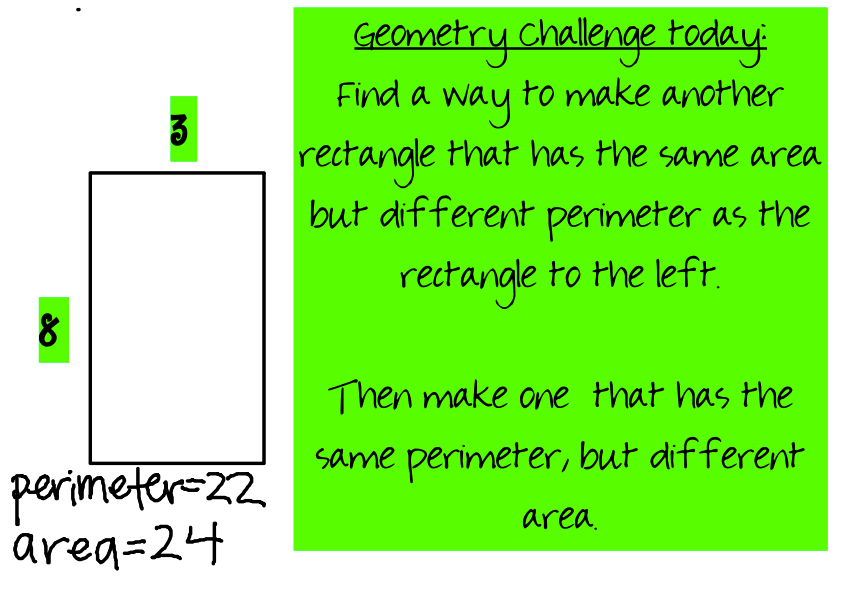
So today I was headed in a totally different direction, but decided to do today’s lesson as a challenge again.  Here is what they were asked to do:

Like in the past, they had amazing things to show for the work on this challenge.  Before I show you what they did, I’m curious to know what your answer would be.  Could you answer this challenge?