World Read Aloud Day!

Last week were AMAZED as Lisa Campbell Ernst came to share her writing life with us.  But on Wednesday we were DOUBLE AMAZED when she agreed to Skype with us to celebrate World Read-Aloud Day 2013.  We’re kind of spoiled around here. 🙂

As I mentioned in my original post, I was trying not to be a groupie, but was forward enough to ask her to help with us with our WRAD plans.  Surprisingly, she said yes, and so I began thinking about what we could do together.

I knew my friends were dying to ask her many more things about her writing life, and specifically to see more of what her writing studio looked like.  And because it was read aloud day, we hoped she would read to us, too!

When she was here, she had told us all about the process of writing The Gingerbread Girl.  She also told us about how she got the idea for the sequel to it: The Gingerbread Girl Goes Animal Crackers.  As I remembered this detail, I knew that was the book I wanted her to read!

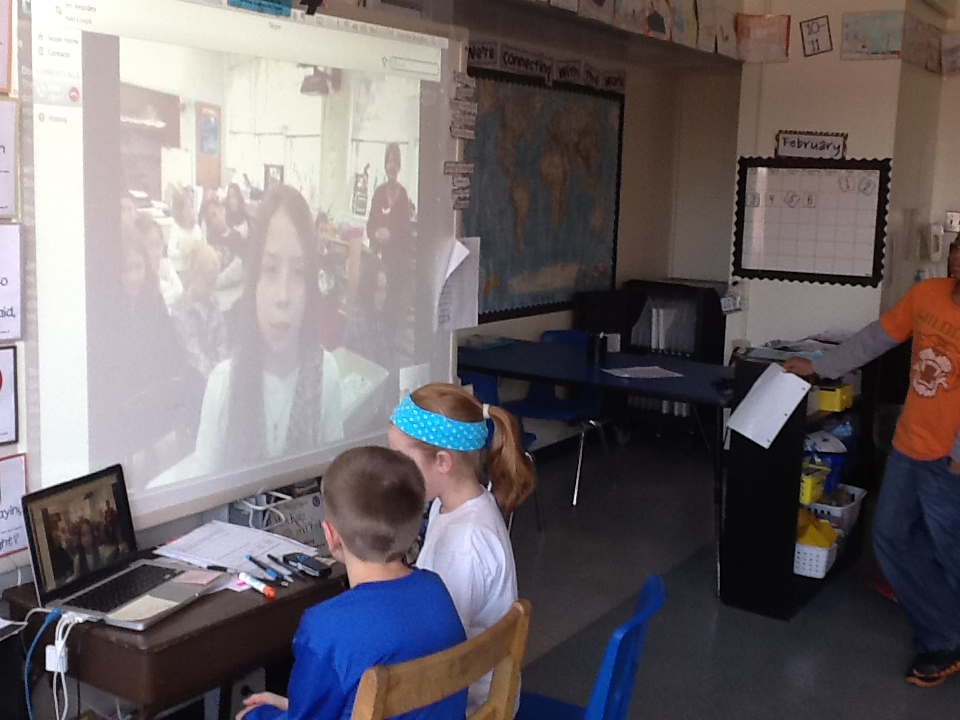
So we settled in for our Skype call with her, and has 40 or so kindergarteners join us for the experience!  I invited my son, Riley’s, class to come up and hear the story (partly because I knew they’d love the book, but selfishly because I knew HE would love it–we are always talking about books and authors at home!).  Then Ms. Weidinger shared it with Ms. Heifner and they came along, too!  WOW–what a great bunch of kiddos gathered to share such a great day!
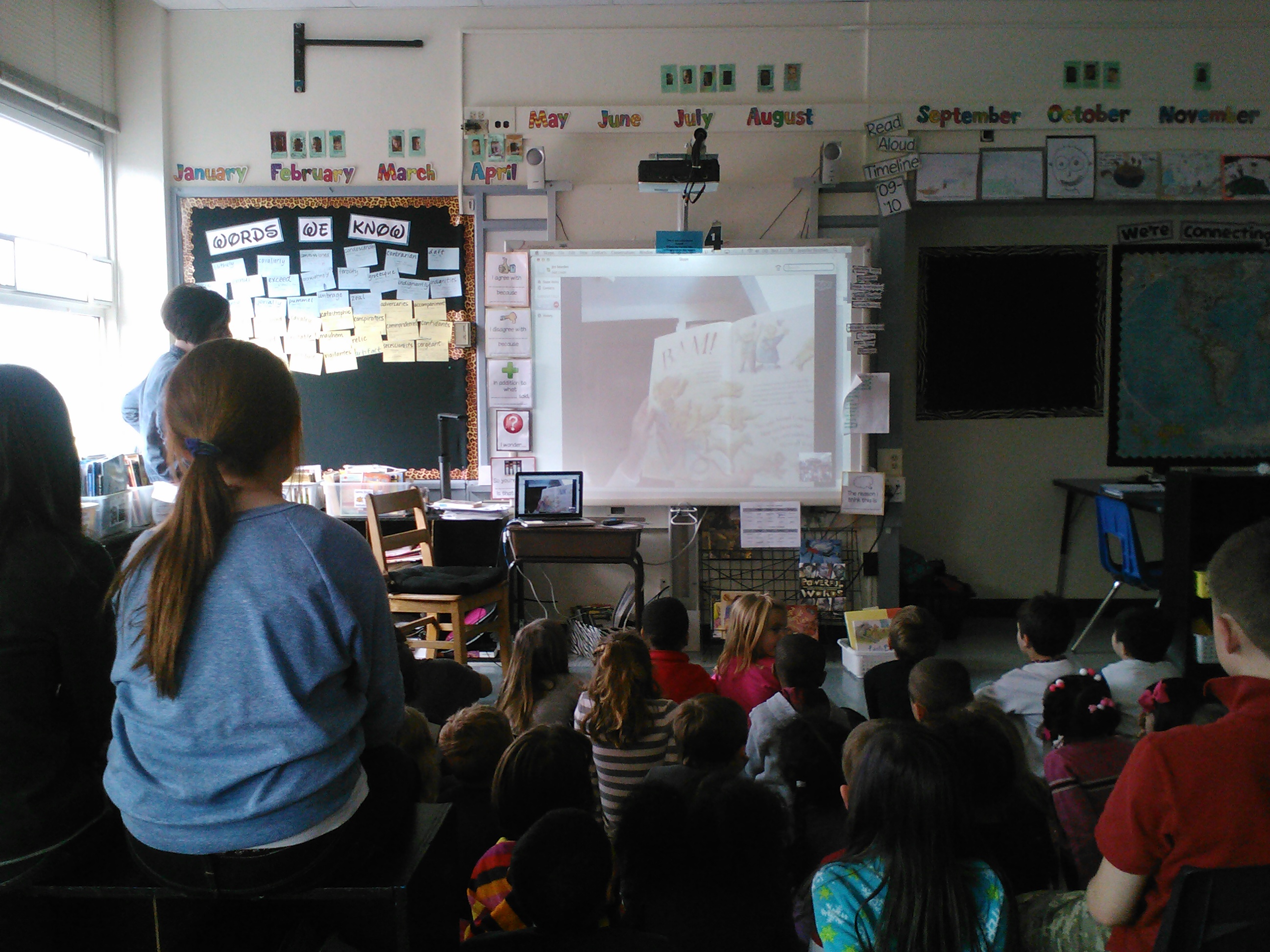
Look at all those kiddos!

Look at all those kiddos!  It’s really cool that little kids and big kids alike can share an experience like this one!

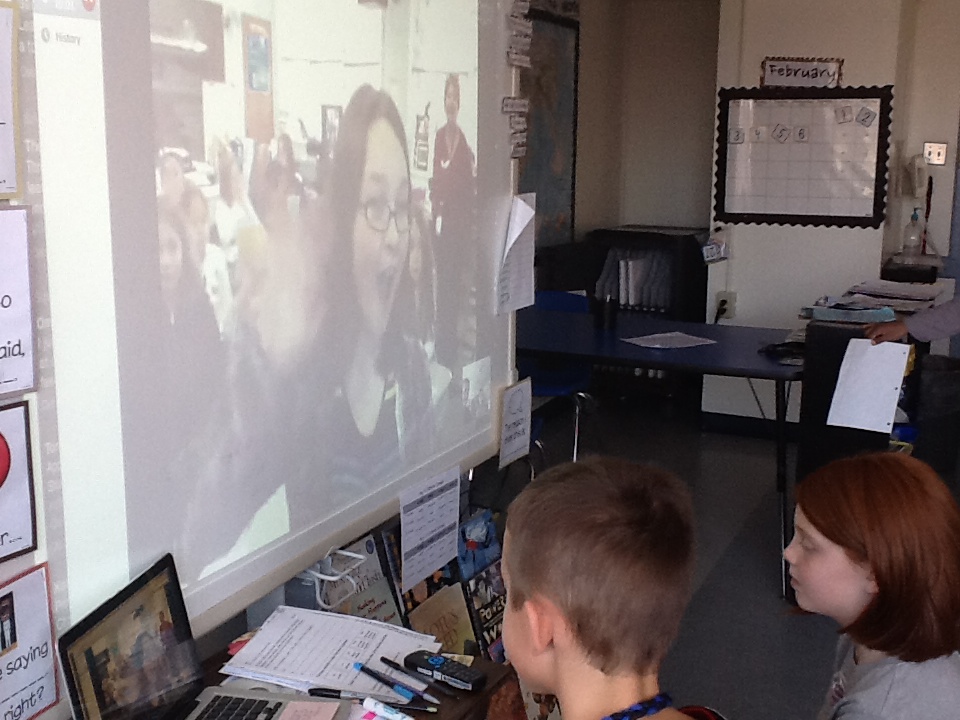
First she read to us.  Here’s a little snippet (although now I’m a little sad I didn’t record the whole story!):

Man, it must be crazy cool (and a little bit weird) to be able to read a REAL book that YOU wrote to other people.  I’m a little jealous.

After we enjoyed her sharing her story with us (which is a MUST READ in our opinion!), our little friends left and we settled in to chat with our new best author friend!  We had some great questions left over from our time with her last week: Will you ever write an autobiography?  Do you like writing fiction or nonfiction better? Can we see more of your office?

Then Peter asked how she made up the little rhymes she used in her Gingerbread Girl books.  Her answer, which made sense, was that a lot of it was just trial and error.  But she also shared with us a handy-dandy tool that we now know no writer should be without:

What an amazing visit with an amazing lady!  I, for one, was inspired to get myself published, and I know my students were inspired as well!  What a treat!  THANK YOU LISA!

How did you celebrate World Read Aloud Day?  Who is your favorite author?  Have you every Skyped with an author?  If so, who? Tell us about it!

Lisa Campbell Ernst Visits Robinson!

Remember how I told you that this last week was CRAZY BUSY and full of great opportunities?!  Here’s another: we had an amazing author (who is from MO, which we love!) visit us on Wednesday–Lisa Campbell Ernst!

This was extra exciting for me, because she was the featured author the first year I was at Robinson.  As a new teacher, I was unfamiliar with her work, but because of that visit (and since then), I’ve become a big fan! She’s had a special author box in our class library for years now, too.  She’s one of my favorites. 🙂

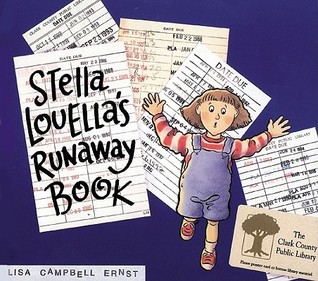
So when I heard she was coming, I was over the moon!  My kids hadn’t really heard of her yet, so Mrs. Meihaus (our FABULOUS librarian) helped us get to know her a little better with a short bio lesson, and by finding us piles and piles of her books to read (she’s published over 30!).  We particularly enjoyed:

We loved this twist on the original!

We loved this twist on the original!

This is the first L.C.E. book I ever heard and is now one of my all-time favorite books!  5th graders love it, too!

This is the first L.C.E. book I ever heard and is now one of my all-time favorite books! 5th graders love it, too!

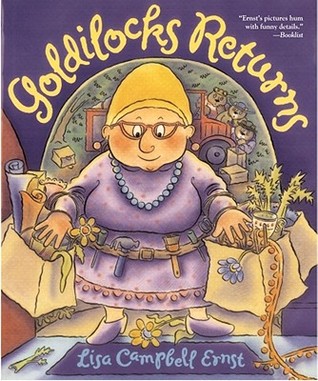
Another twist on a beloved fairytale: what would happen if Goldilocks came back to the scene of the crime, 50 years later?

Another twist on a beloved fairytale: what would happen if Goldilocks came back to the scene of the crime, 50 years later?

4325471-1

This one is nominated for the MO Show-Me Reader Award (which primary students vote for), but big kids love it, too! While they weren't intentional, we saw many connections to Disney's Up.

This one is nominated for the MO Show-Me Reader Award (which primary students vote for), but big kids love it, too! While they weren’t intentional, we saw many connections to Disney’s Up.

We were ready for her, and February 27th was the big day–the big day that almost didn’t happen because of a blizzard in Kansas City the day before.  Luckily she made it here and was ready to present to us!

DSCN1754

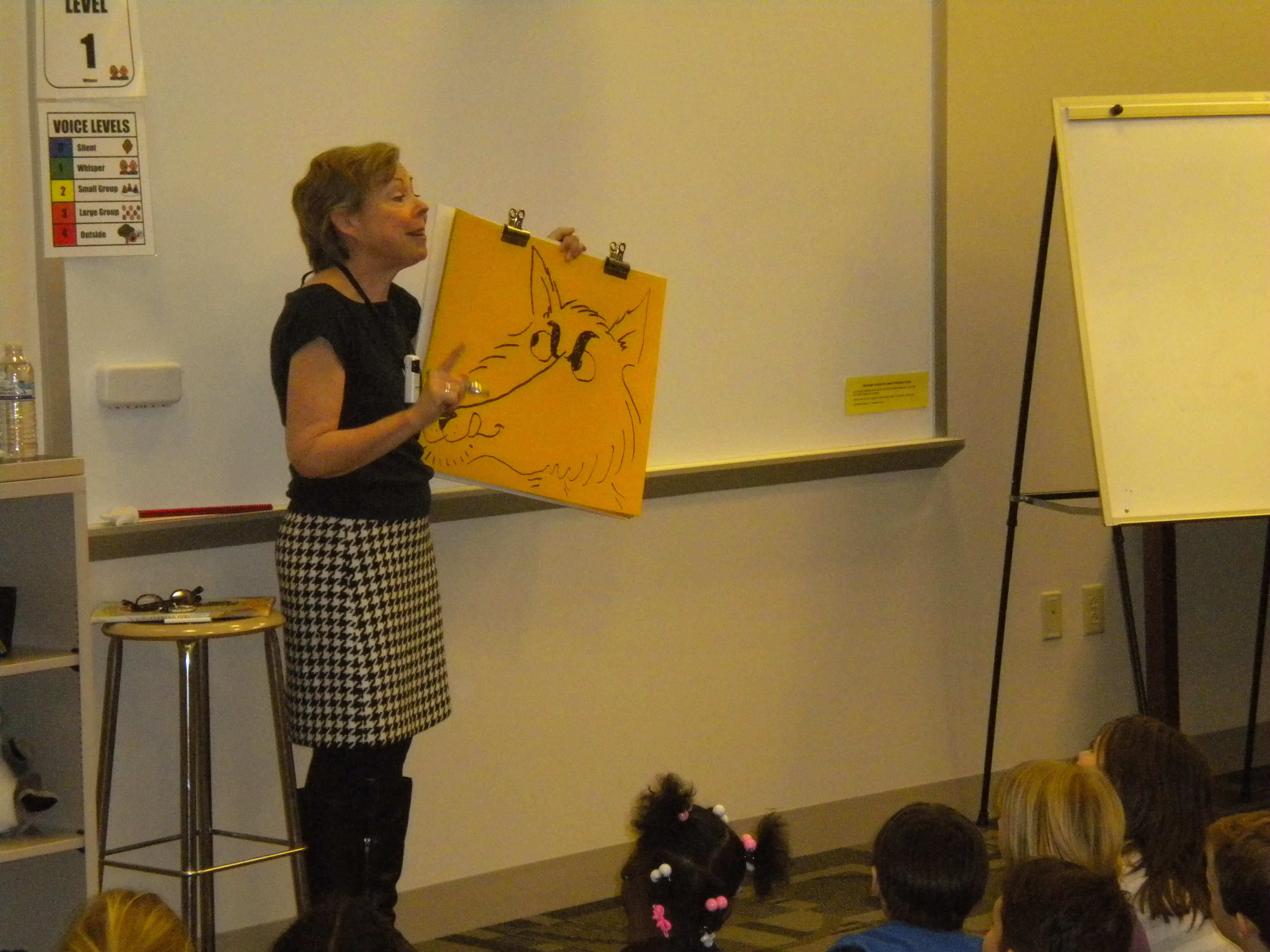
See that fox? It’s the villain from The Gingerbread Girl and she was showing us how to draw him! She even made one for our school to keep! It’s on display by the library now. 🙂

Some of the best parts were the stories she told about how she decides on the ideas for her books.

Some of the best parts were the stories she told about how she decides on the ideas for her books.

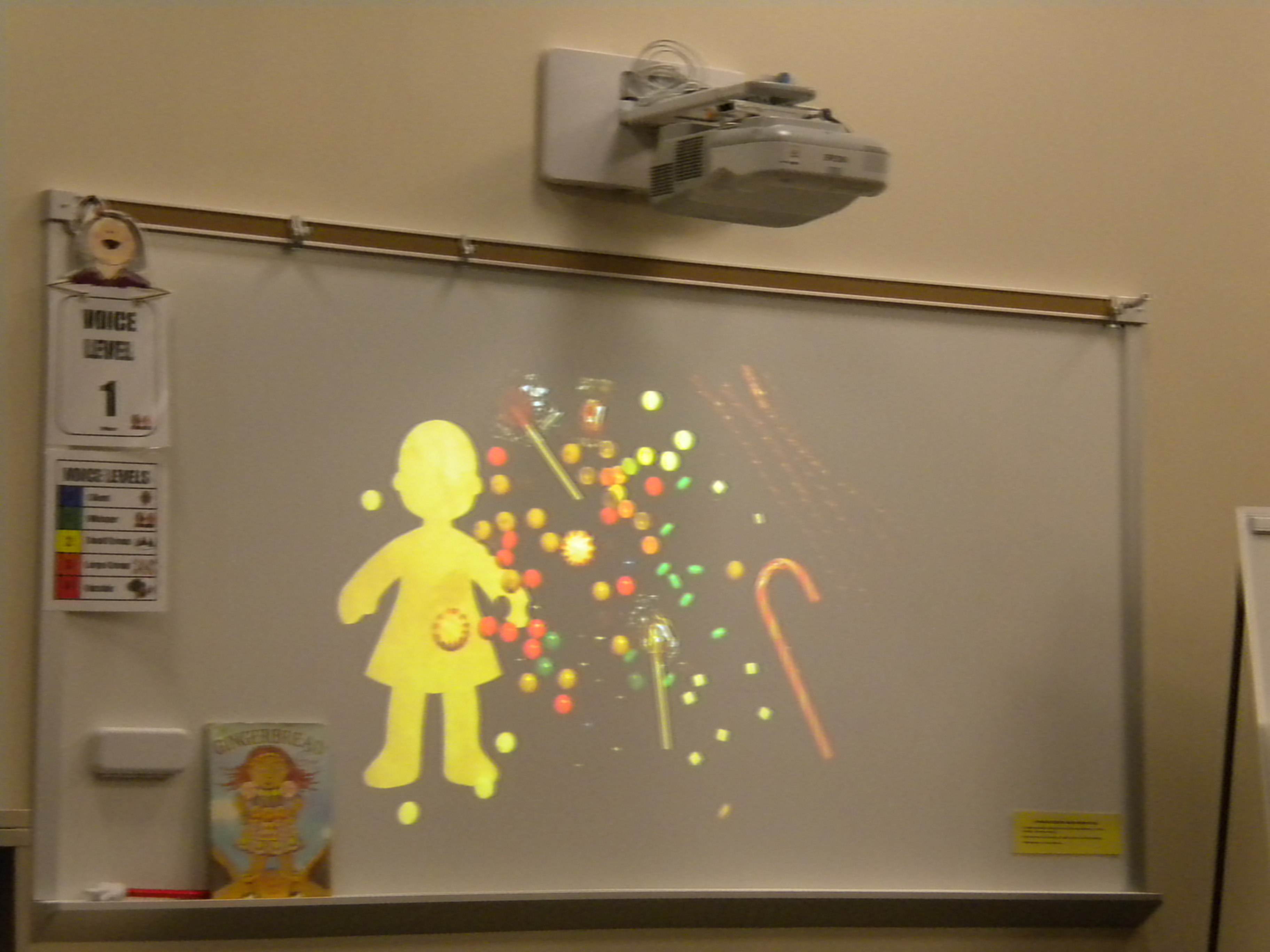
Pictures of actual candy to help with drawing the Gingerbread Girl's candy body

Pictures of actual candy to help with drawing the Gingerbread Girl’s candy body

DSCN1779

And drawing a Gingerbread Girl is harder than you think!

We really enjoyed listening to hear talk about her process as a writer.  She showed pictures of her studio, too, which was also loved (and wanted to actually see the inside of in person!).  There was a lot of time left at the end for questions, and many of ours were answered.  Most wanted to know where she gets her ideas, how long it takes to write a book and how she got started as an author (and answer is that she used to be a graphic designer, which led her to illustrations, which led her to writing–something she’d loved doing since she was a little girl!).

Once the presentation was over, and everyone else left, we found ourselves the last ones in the library and could not pass up a photo opportunity!

Say cheese!

Say cheese!


And I couldn’t either, when we ate lunch together later that day:

Gotta love being in the same room with a mentor author that you love! What great a conversation I got to share!  It's amazing how much you can learn in 20 minutes!

Gotta love being in the same room with a mentor author that you love! What great a conversation I got to share! It’s amazing how much you can learn in 20 minutes!

Oh, and one more thing I couldn’t pass up was asking Lisa if she’d be willing to Skype with us for World Read Aloud Day tomorrow–which she was willing to do!  We’re excited to continue our conversation tomorrow afternoon.  I’ll be sure to share soon!

Mystery Skype–Ecuador Style!

This week we were busy with a whole LOAD of fabulous things, but maybe our favorite was when we did a Mystery Skype with Ms. Turken on Thursday!  She is a beloved teacher who used to work at our school, but who has taken a year away to teach English in Ecuador.  That’s pretty amazing, right?

Well, when we had an opportunity to chat with her, we were beyond excited!  The best part, though, in my mind, was that most kiddos in my class didn’t know that she was where she was, so we decided to do a Mystery Skype with her.

IMG259

It started in much the same way as the ones we’ve done previously this year–with us asking questions, using the computer and our big world map to figure out clues related to the answers, and then narrowing in on the location of our Mystery Skyper.

Sammy uses Google to help us figure out Ms. Turken's location.

Sammy uses Google to help us figure out Ms. Turken’s location.  I think at this point we’re even trying to zoom in as far as her town–Riobamba.

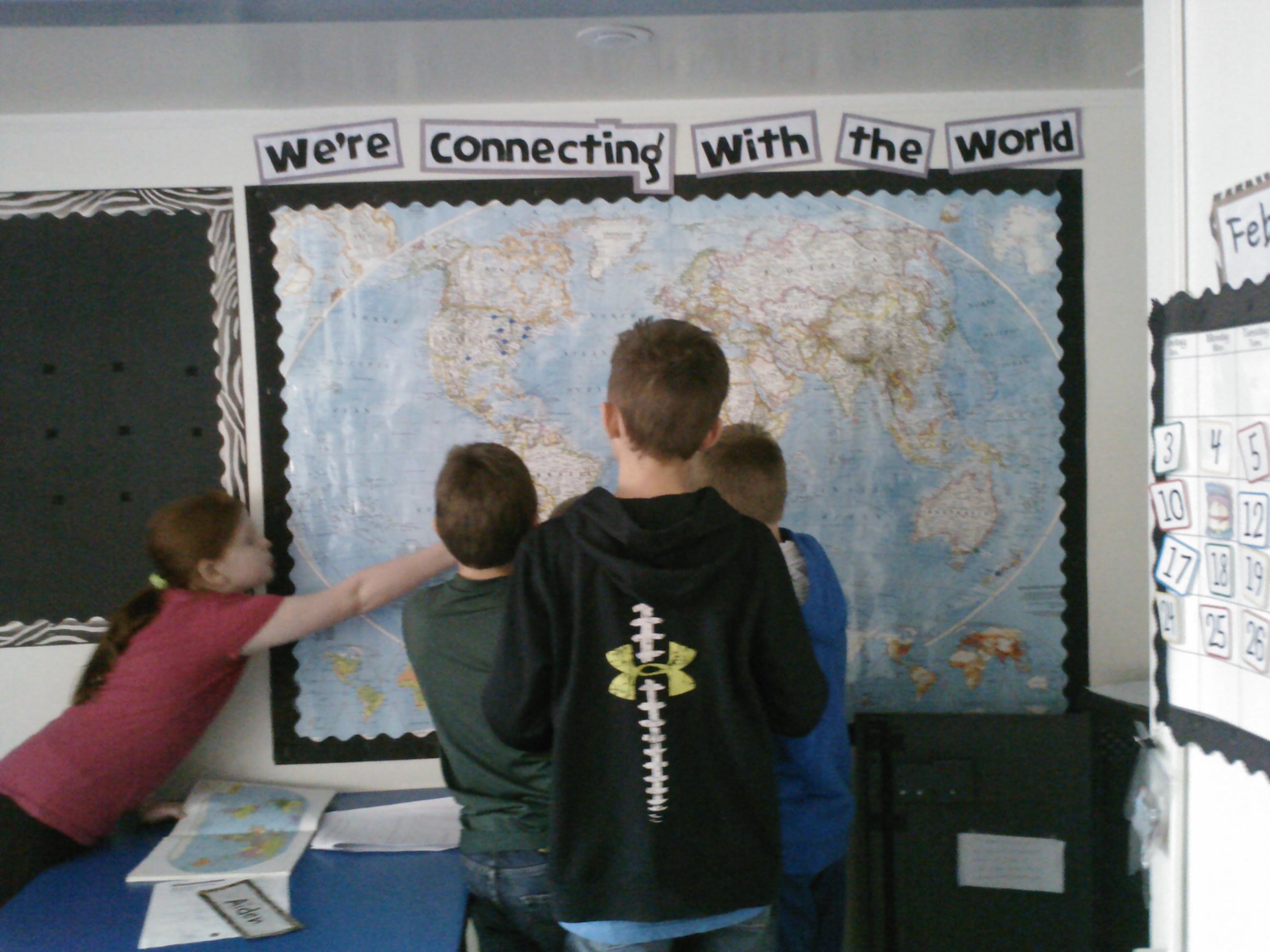
This map has been a very busy place in our classroom lately!

This map has been a very busy place in our classroom lately!

This was a special Mystery Skype, though, for a couple of reasons.  First of all, Mr. Kieschnick’s class came to sit in with us, so that they could learn how to do Mystery Skype, too.  That meant that we had 40 heads to help us figure out the clues instead of just our 20!  We kept talking, too, once we knew Ms. Turken’s location, since, of course, the real reason we called was to visit with our old friend.  She told us all about her life in Ecuador, including the food, her classroom where she teaches English, and she even gave us a little tour of the house where she’s living.  We learned many things about her (which I think I will leave for my students to tell you in the comments!), and had a great conversation.

So many kids in the room for this one!  That's Mr. Kieschnick in the corner of this picture.

So many kids in the room for this one! That’s Mr. Kieschnick in the corner of this picture.

And then, something very cool–and unexpected–happened.  Since Ms. Turken teaches English, but has to know how to both speak and understand Spanish to do that, someone asked that she speak to us in Spanish so we could hear what they sounds like.  Well, that’s a little bit weird unless you have a reason to be saying something, or someone to speak to in Spanish.  Remember how I told you that Mr. K’s class was there?  Well, a friend of his, Andres, piped up and offered to have a quick conversation with Ms. Turken in Spanish while we all watched and listened.  Perfect!

Ms. Turken began by asking him about school (escuela).  They went back and forth, and I know enough Spanish that I could figure out they were talking about math (mathematicas) and books (libras).  So while I couldn’t join in on the conversation, I could at least follow along.  Sophia, whose dad is from Peru, was also helpful in translating much of it to those sitting by her.  It was so cool to see the looks on everyone’s faces while Ms. Turken and Andres rattled away in another language–I know I heard “How do they do that?” several times and definitely saw big smiles and wide eyes on the faces of many.

Thank you, Ms. Turken, for a great morning, getting to know more about you and the adventures you are having in Ecuador!  We’re excited to learn more (she sent us questions to research) and to speak to you again soon!

Adios!


Literature Circle Reflection

Happy Thursday, friends!

I can’t believe that you’ve made it through your first round of Literature Circles already!  You did a FABULOUS job of being responsible with your reading, asking thoughtful questions and engaging in a civil discussion with your classmates!

Now that you’re finished, I want you to reflect on how it went.  On your blog, please respond in sentences to these questions:

1. What was your favorite thing about the Literature Circle process?  Give reasons for your thinking.

2. What was a question you asked that really got your group talking?  Why did it?

3. What is something you wish, if you participated in another Literature Circle?

4. Give some ideas for a book you might like to read with another group.  Be sure to captitalize and underline the title, and write the author if you know it. 🙂

I can’t wait to read your reflections!  Happy writing!

Mrs. Bearden


Feast Week Part 7: THE FEAST!!

Ok, so I’m not at all sure how it got to almost the end of February and I didn’t tell you about the final part of Feast Week!  I know…I’m sorry!  But you’ve been reading blog all along, right?  We’ve been busy!

But here’s perhaps the most important part of the whole thing we called Feast Week–the feast!  (And just in case you haven’t read the first parts of Feast Week, you can find the first one here, and then the others are linked from there.  It’s worth your time if you haven’t read them!)

The day had finally arrived, and we were excited.  But no, we were not excited about the fact that Winter Break was just a day away, or because we’d be off for 14 days–we were excited because all of our hard work with fractions and recipes and cooking and baking and planning was about to pay off!

And it went even better than we’d hoped.  Thanks to some fabulous parents who were willing to let us throw out this crazy idea of our Winter Party to them (and then just told them to run with it!), we ended up with a lovely, delicious meal that helped us all see the fruits (and hams and green beans and ice cream pies) of our labors.  It was definitely a  FABULOUS FIFTH GRADE FRACTION FEAST!!

Anticipating our fabulous feast as we wait outside the cafeteria!

Anticipating our fabulous feast as we wait outside the cafeteria!

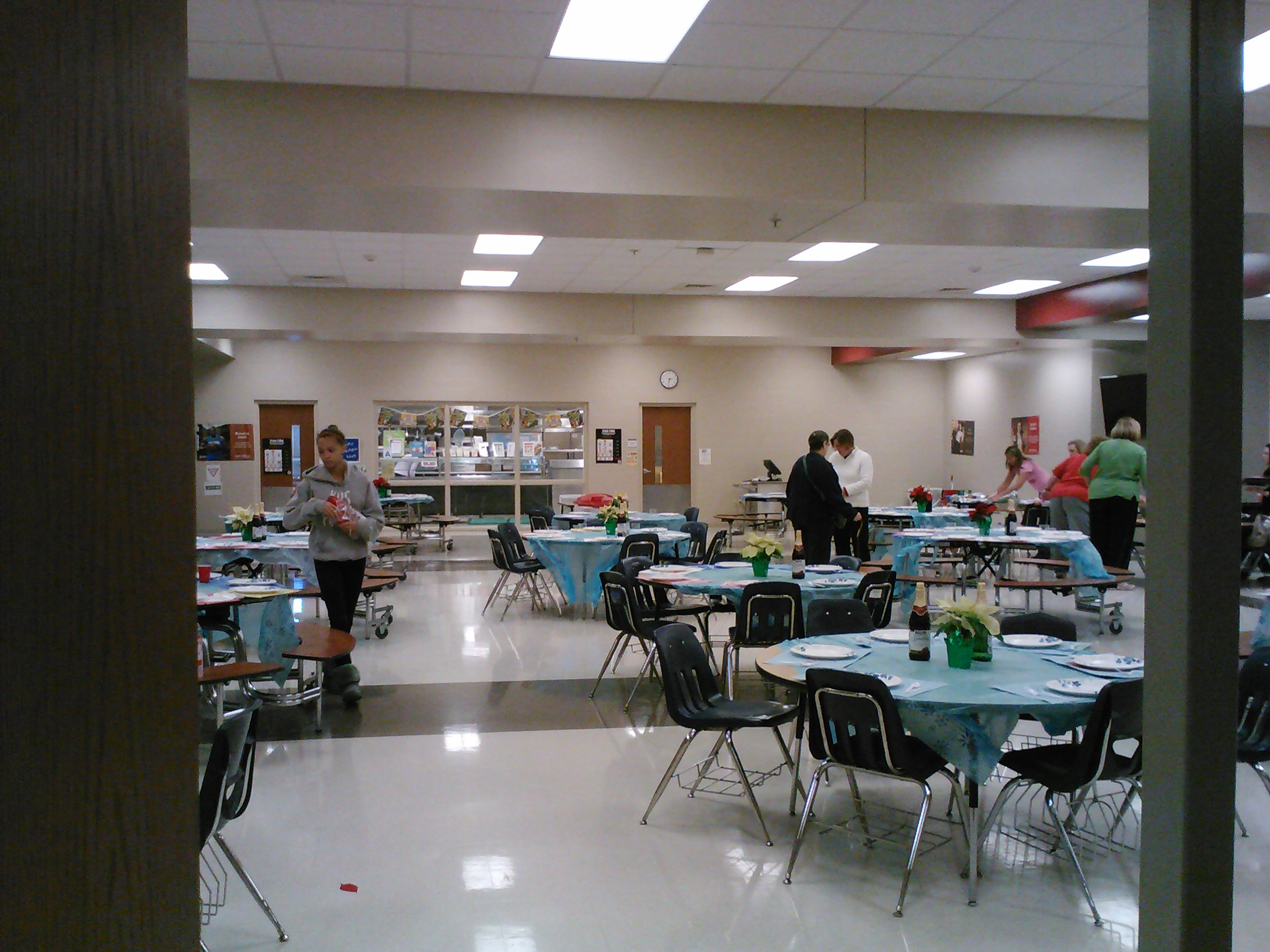
Looks good, doesn't it? Tablecloths and centerpieces and everything!  So elegant!

Looks good, doesn’t it? Tablecloths and centerpieces and everything! So elegant!

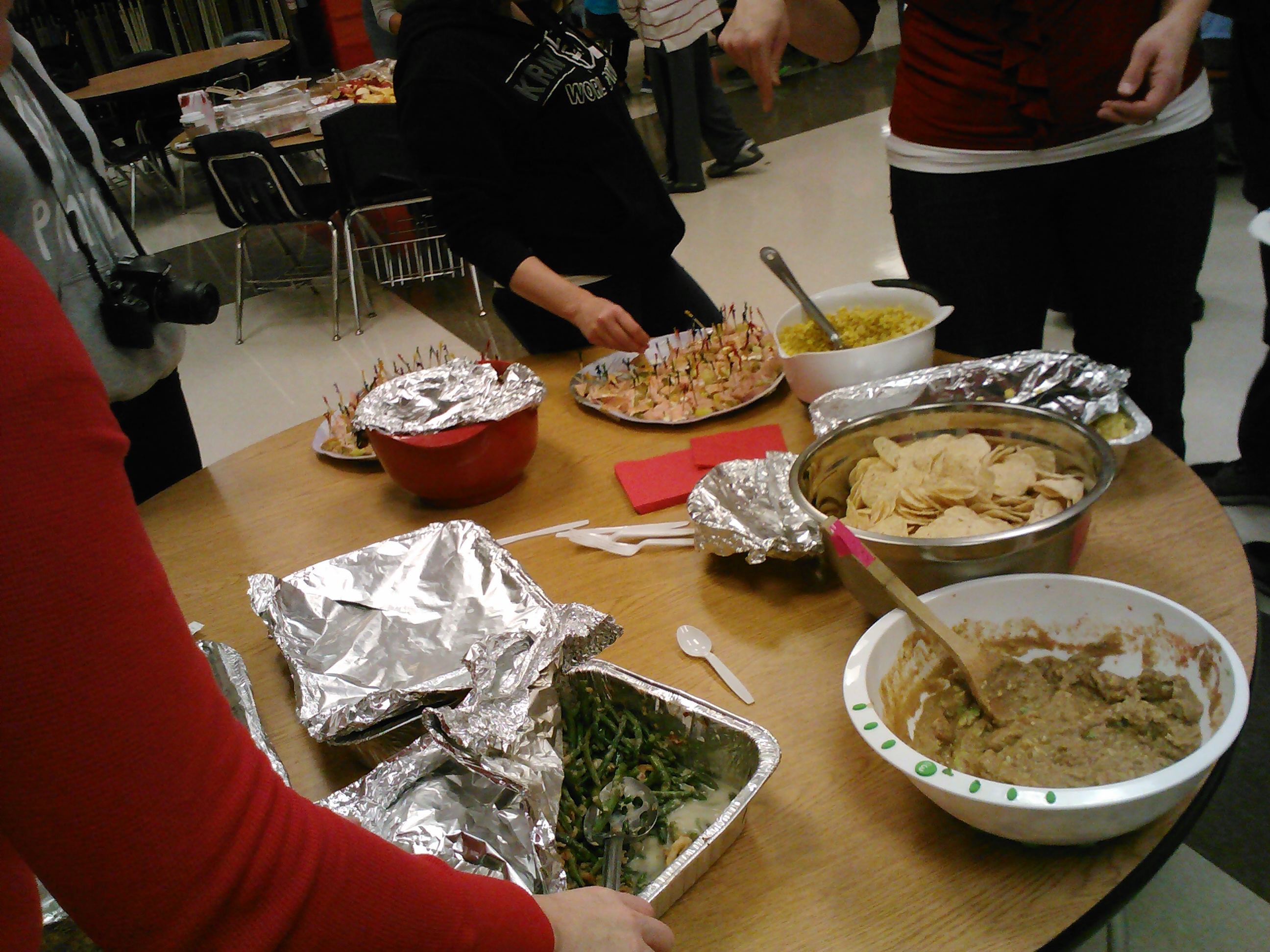
Here's our handiwork!  Looks yummy!

Here’s our handiwork! Looks yummy!

IMG678

That bowl is guacamole–I promise, it was pretty good!

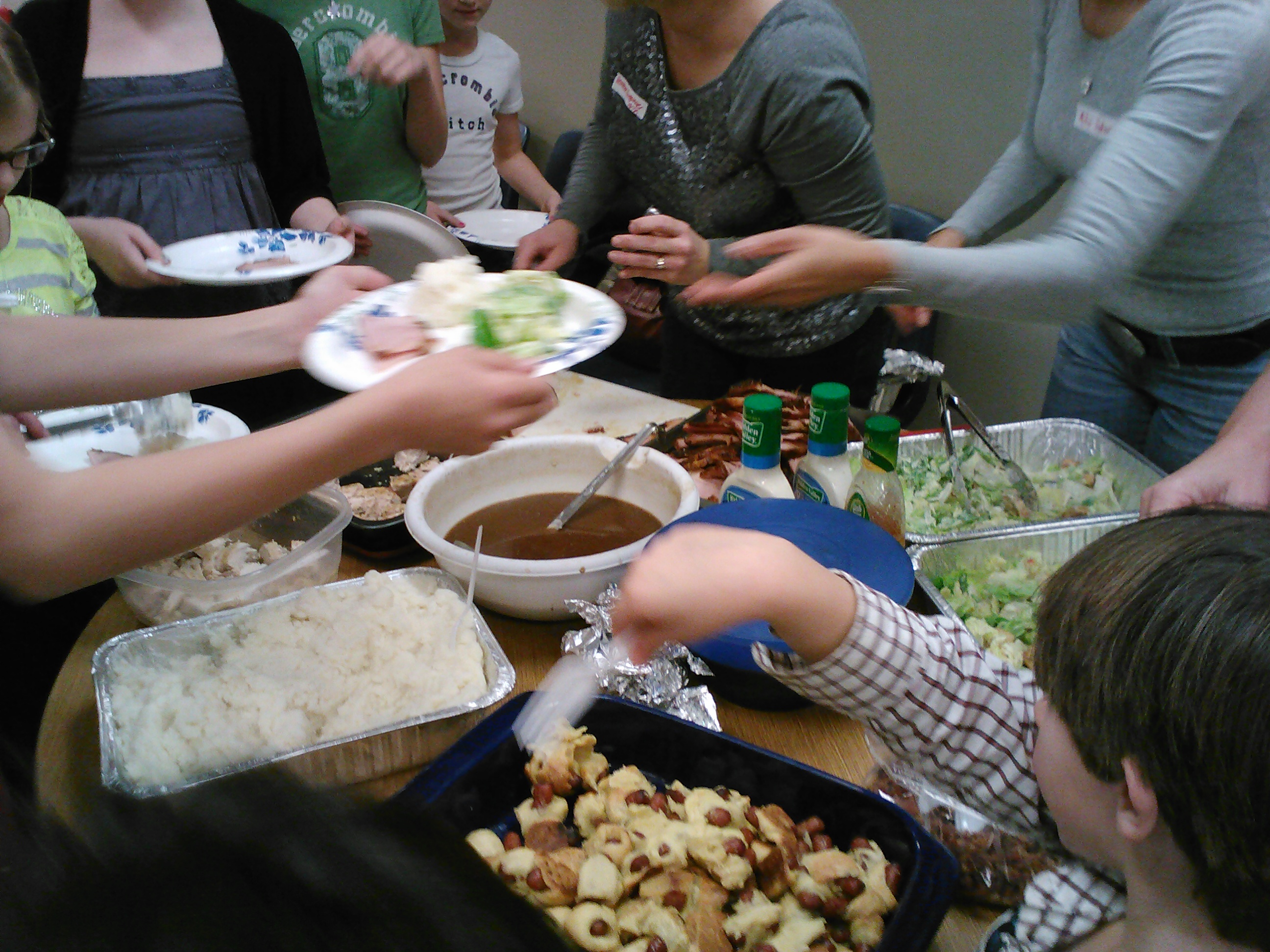
Moving through the line

Moving through the line–sausage snack wraps were a hit!

A toast to food, fun and friends!  (and fractions!)

A toast to food, fun and friends! (and fractions!)

IMG669 IMG670 IMG672 IMG674

WE LOVE FEAST WEEK!

WE LOVE FEAST WEEK!


EDUC 573: Week 6–Google Anyone?

I am becoming more tech-savvy as time goes on.  For me, the best way to tackle anything new is to jump in fearlessly with both feet, get really wet and figure it out as I go.  Building the plane as I fly it, so to speak.  Not without purpose or meaning, but without having to know all of the ins-and-outs before I am willing to get started.

I’m far enough into my teaching career that I learned long ago that I didn’t have all the answers.   And honestly, I didn’t even try to fake it very long because kids are smart.  They know when you don’t know, and how much more freeing is it when we admit that?  When we learn together and not pressure ourselves to know everything.  I LOVE that it’s known that in our room, everyone is a teacher and a learner.  I think I’ve said before (even here!) that it’s our room, not my room.

Well, then, it didn’t take long on this new tech journey to figure out that I may have times when I don’t really know what’s going to come next, or what to do about it when something goes wrong.  But I’m ok with that.  Like I said in the beginning, for me the best learning is in-the-moment-getting-really-messy learning.  I have to see it and talk about it and try it for it to make sense.  And even with technology this works.  Nothing has broken beyond repair yet, and no one has died as I’ve tried new things.  And we’ve even had a little fun.

So I mentioned that this week was about all things Google.  Well, it was about other things, too, but Google’s the thing I’m having the hardest time dealing with.

Let me explain…

We also read an article this past week by “Orchestrating the Media Collage” (Ohler, 2009).  In it, he talked about how the definition of literacy is changing, and that “being able to read and write multiple forms of media and integrate them into a meaningful whole is the new hallmark of literacy.”  He had many great points about how important writing is to the thinking process (and as much as you know I love writing, you know I totally agreed with that!), and about how quickly people (educators) these days abandon the tried-and-true for the brand new, not necessarily thinking about the consequences.  He noted that one of the most important things we need to be able to do is to know just what tool to use and when; I agree with this statement related to all things education, not just technology.  Having a toolbox full of sharp tools is crucial to any teacher, and knowing just when to pull out which tool for which job is even more important.

And so here’s my Google connection…

This week we also played around with Google Apps for Educators.  Here’s where I will boldly tell you that I am not a fan of Google Docs (I know–gasp!).  As I wrote in my discussion board post this week:

Ok, so I want to like Google Docs.  I really do.  But I’m just not sold yet.

I have been dabbling for a little while, but until this week I hadn’t really looked in earnest at the how/why/what, etc. of how Docs could work in the classroom.  I have participated in Google Docs collaboration as an adult (mainly in staff meetings and as a means of rewriting our school’s mission statement with a small group of teachers), but haven’t seen any examples of how to use it with my students in a way that makes sense to me.  In many of the videos and such I’ve seen online, the scenarios involve high school or middle school, which is obviously a very different world than I live in.  Every kid in my school has a Google account (given to them by the district), so they have access to their own Google Drive.  I know that could be a place to store our work rather than fussing with the server we usually use, but even the logistics of getting that all initially set up makes my head hurt.  Here’s another bit of brutal honesty about Google Docs–I’m a font snob and the way they look is so unappealing!  As a visual learner (and just being me in general), aesthetics and look matter to me and not having the same options as in Word or Pages is a major reason why I haven’t yet jumped in with both feet.  I like the idea of collaborative writing–and writing is a passion of mine, too, so connecting it with tech could be a great marriage–but am not sure how yet to incorporate this.

So obviously I’m on the fence.  I want to commit, but haven’t yet seen enough that Google Docs does differently that what I’m already doing in other places or with other things.  Can you help convince me?  I’d love more elementary examples of real, meaningful work that can incorporate Google Docs or forms.

I got some suggestions for what to do from both classmates and my PLN on Twitter, but I’m still having the hardest time understanding how and when it makes more sense to use this  than what I’m already doing. I cannot seem to wrap my head around this whole “collaboration” thing with Google.  Maybe the hard part for me is that we are always collaborating in our learning, but I don’t see why we’d do it online when we could just talk to each other, or share a pen.  My students very rarely do projects at home (which is one place/time that I know is mentioned when talking about benefits), but maybe what’s also good is that whatever the file is that is being created can be accessed by everyone whenever they need it?  Like if someone is gone and they’re the one who has all the “stuff”–the rest of the group can still function?  Is that it? Even in that scenario, though, I can easily see how we could figure out a way around it using what we currently have in place.

Another classmate suggested that perhaps in the beginning I use my Google Drive more as an archive for my students, uploading documents and other things that they may need to see or reference for an assignment.  Someone else mentioned how there is the capability to add other fonts to use in your Docs, which is encouraging to me.

But I’m still not convinced that right now is the right time for me to make the jump into this part of the Google world.  I don’t want to be too quick to abandon my tried-and-true for the brand-new, just because I hear that I’m “supposed to.”  I guess for now I will continue to dabble, perhaps by trying another Google App that makes more sense to me.  I am thinking about installing Google Reader, and am also working a little with Google Sites because of this class I’m taking; I can see benefits with both of these apps really easily.  Perhaps after a little more time spent swimming around in the shallow end of this pool, I’ll be ready to jump in deep and give Docs a try.

What advice to you have for this Google newbie?  Which is your favorite Google app to use with your students?  Why do you love it?  I’d love to hear from anyone who’s willing to share, but especially from elementary teachers who are farther on this journey than me and loving it.  Share your thoughts in a comment below! 🙂

Math Warm-Ups February 11-14, 2013

Another 4-day week for us, but only a 3-day warm-up week because of some very messy cubbies that needed to be attended to on Tuesday morning.  Happy calculating!

Monday

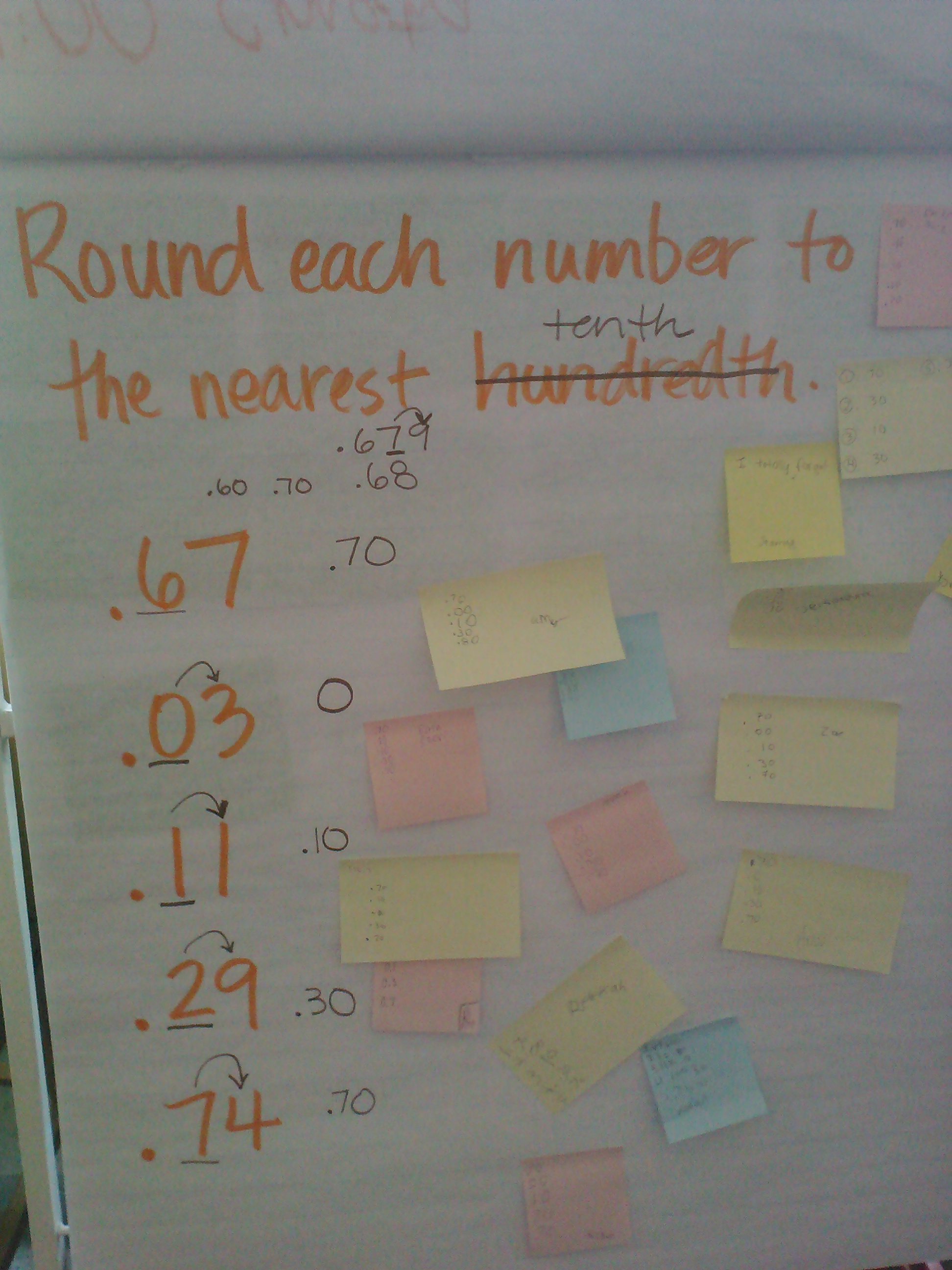
IMG157Can you catch the mistake I made in this warm-up question?  I didn’t catch it until we started discussing how to do it and figured out that you can’t round a decimal to the hundredths place if it’s already a hundredth!  So we changed it to tenths.  Oops.  HATE it when that happens, but LOVE that it continues to teach my kiddos I’m not perfect.  Teachers don’t know everything and they do make mistakes.  And we know how to solve problems like that when they happen.  So I guess in some ways this was a double-whammy warm-up: two lessons in one!  Only wish I’d planned it that way….:)

Tuesday

Oh, yeah, we were cubby cleaning.  There was too much mess to take a picture, so nothing to share here.

Wednesday

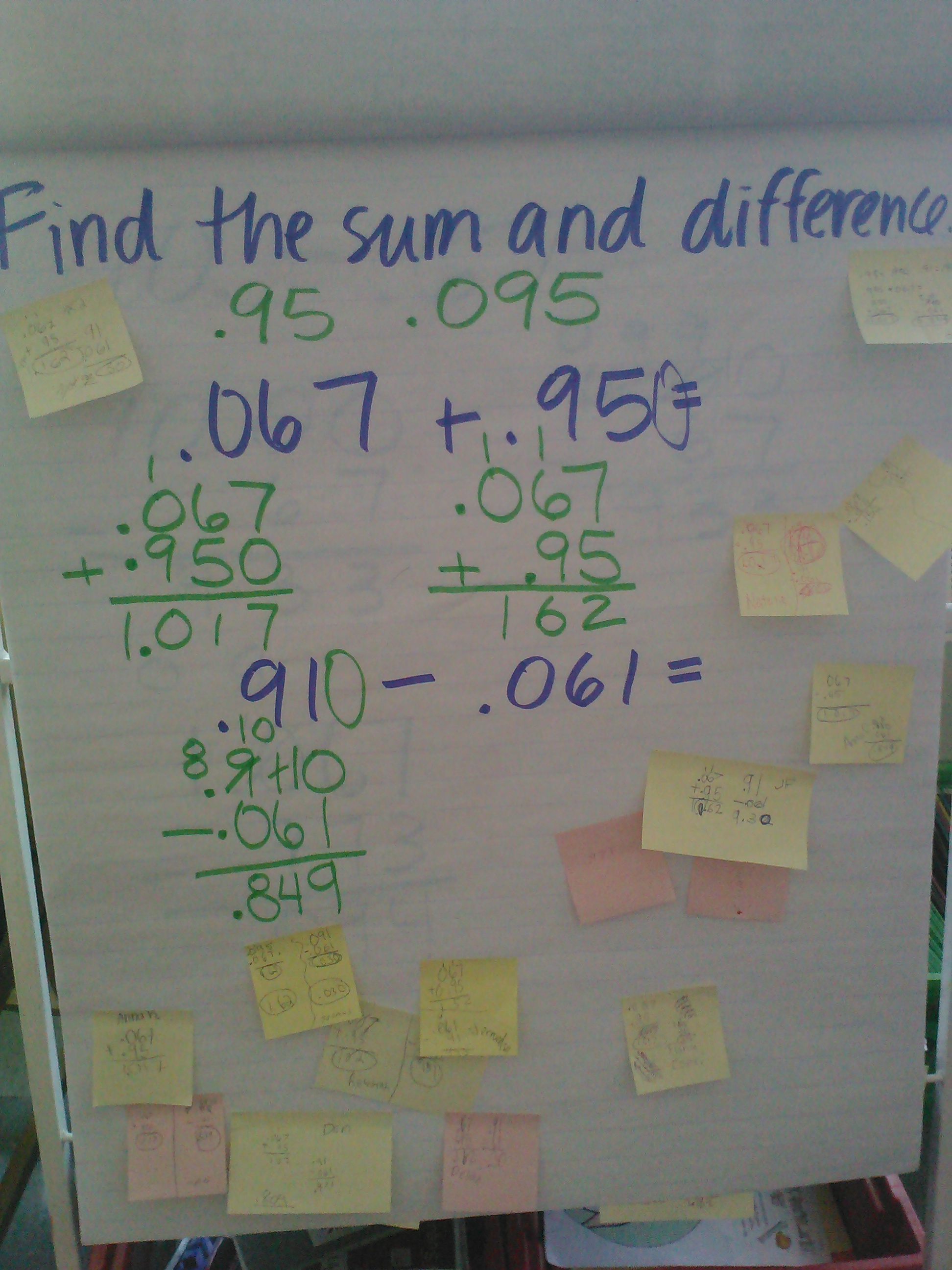
IMG158We had been working on place value and rounding with decimals for about a week and were ready to move on to adding and subtracting, which I was figuring would be pretty straightforward, and so relatively easy.  The way this one was worded, though, caught a couple of kiddos because they wouldn’t remember what “sum” and “difference” meant–definitions we reviewed as we went over the problems.

That second problem sparked another one, too, which was a goodie:

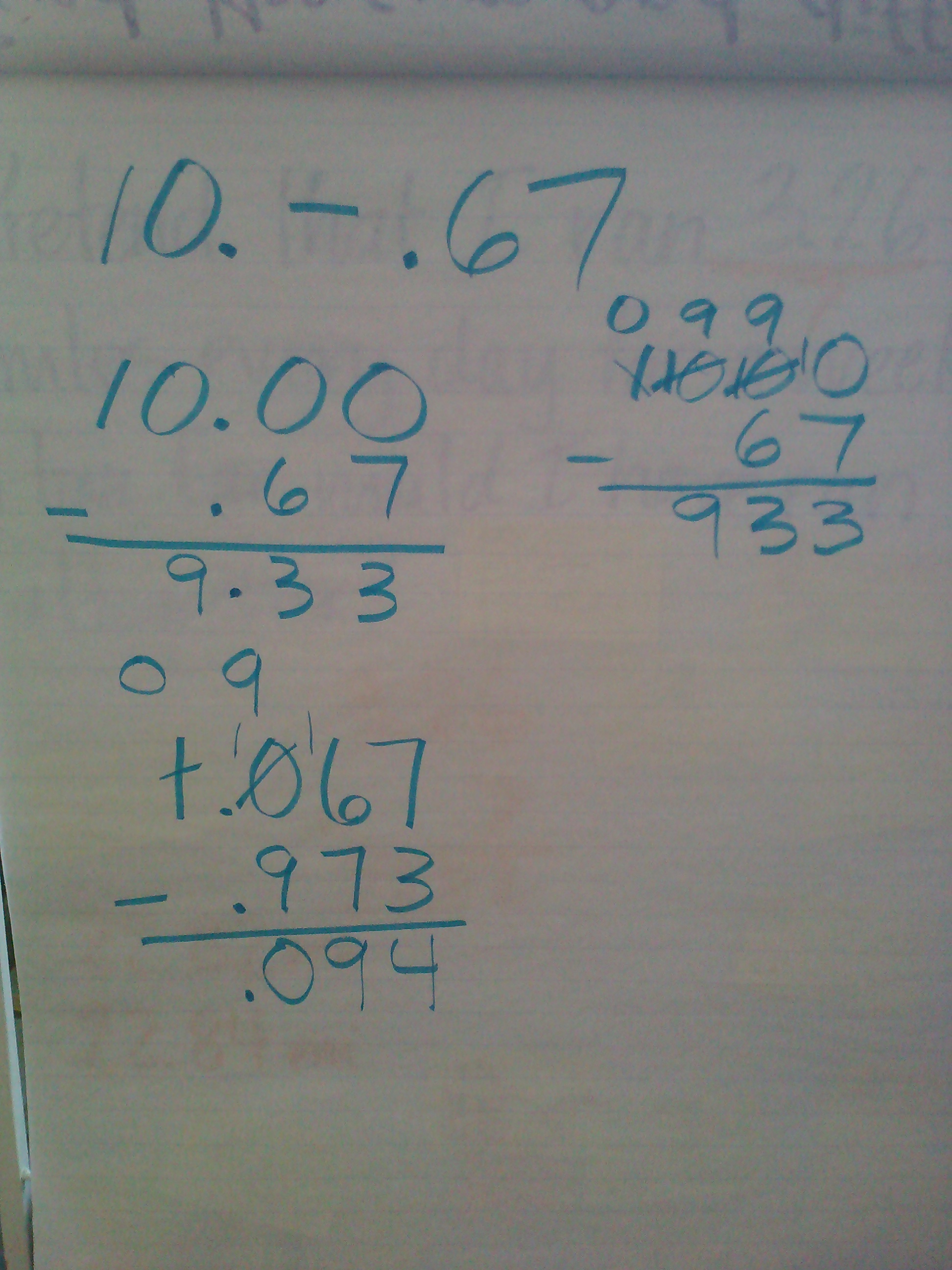
IMG159What do you do when you have a whole number and you subtract a decimal?  There isn’t a decimal to line up.  Or is there??

Thursday

IMG160There’s a joke in this warm-up (that’s probably only funny to me and my class).  See, we were noticing on Wednesday that many of the word problems we have in our math book involve running (Sally ran .89 of a mile on Monday, 2.3 miles on Tuesday and .5 miles on Wednesday, etc.).  In our groups we’d been talking about how guilty those references made me feel since I’ve been REALLY lazy about my running the last few months.  So Thursday I made the problem all about my running.  But since I can’t lie about what’s really happening, I made sure to say that we should pretend that I ran all those miles last week.

But aside from making us all laugh at my funny joke, there was another reason I wrote the problem the way I did.  We are going to be moving into multiplication of decimals next week and I wanted to see what they could do with that.  The problem could easily be answered without multiplying, too, for those that weren’t ready yet–and some just used repeated addition to get the answer–but some did try multiplication as a strategy.  Many of those figured out just what to do with the decimal point, and did so in a logical way–which I loved!  Rather than spouting off the rule about having the same number of decimal places in the answer as in the problem, they used what they know about the problem.  They got to the number 2282, and when thinking about what the final answer should be, thought “Well it can’t be 2.282 because that’s not even as far as she ran in one day.  It can’t be 228.2 because number is WAY too big.  22.82 makes sense because 3 miles times 7 days is 21 miles and the answer has to be a little bigger than that.”  THAT is the kind of thinking I look for and was so excited to see as I threw them this new concept.  It makes me excited to hear and see more as we dig in deeper this upcoming week!

These Are a Few of My Favorite Things (To Read To My Students!)

Remember how I told you about EdCampStl?  One of the great people I met (or was actually reintroduced to) was Ms. Ferguson, who had done some work in my school several years ago.  We found out we both teach 5th grade and are both named Jen, which was a funny coincidence.

Well, since we are both 5th grade teachers, the conversations we shared were mostly around comparing what we do and how.  So when she asked about my favorite read-alouds, I figured that both for her and for me (and for you!), I’d write a whole post about it! Here are a few of my favorite things to read to my students!

I have written about read aloud before here and here, and you can probably tell it’s a big deal in our classroom.  I am so excited to share a good book with a group of kids who have never heard of it before, and even more excited when they love it as much as me!  Let me tell you about some of my go-to reads:

1. There’s a Boy in the Girls’ Bathroom by Louis Sachar (When I taught 4th grade, I always started our year together with this one.)

2. Crash by Jerry Spinelli (One of my all-time favorites that I read EVERY YEAR! Well except this one, because they heard it last year.  😦 )

3. Clementine by Sara Pennypacker (Even big kids love the antics of Clementine!   It’s a great end-of-the-year fast read, too.)

4. Fig Pudding by Ralph Fletcher (See that note about Crash?  DITTO on this one.  Read it EVERY YEAR and it’s a classic, for sure!)

5. Who’s Stealing the 12 Days of Christmas? by Marsha Freeman

6. Who’s Stealing Halloween? by Marsha Freeman (These are great, easy mysteries that my kiddos always love.)

7. The Trumpet of the Swan by E.B. White (As a child, I have fond memories of my 3rd grade teacher reading this one aloud to me, and so I had to return the favor to my students!)

8. The City of Ember by Jeanne DuPrau (I did this one totally backwards and saw the movie first, but once I read the book, I was really sold!)

9. Pleasing the Ghost by Sharon Creech

10. Granny Torrelli Makes Soup by Sharon Creech

11. Walk Two Moons by Sharon Creech (This is another one of my EVERY YEAR reads.  Oh, and can you tell I’m a Sharon Creech fan?)

12. Frindle by Andrew Clements (I’m not usually an Andrew Clements fan (I know–gasp!!), but this is a great first book because it’s fun and easy for everyone to dig into.)

13. Go Big or Go Home by Will Hobbs (I found this book because it was nominated for the Mark Twain award a couple of years ago and it’s on my “good” list now.)

14. Found by Margaret Peterson Haddix (Also a Mark Twain nominee–what a twisty story!  We were on the edge of our seats the whole time with this one.)

15. I Am David by Anne Holm (This was another saw-the-movie-first one, but I am now so in love with David’s story that this is an EVERY YEAR book now!)

16. The Boys Start the War by Phyllis Reynolds Naylor (Great beginning of the year read aloud–everyone loves it!)

17. Chasing Lincoln’s Killer by James L. Swanson (I found this one last year after a recommendation from my husband, who is also a teacher.  It’s a little graphic, but is an interesting non-fiction read aloud that kept my students riveted!)

18. Marshfield Dreams by Ralph Fletcher (Also a recommendation from my husband, this is Ralph Fletcher’s memoir and is the PERFECT companion to read with Fig Pudding.  Perfect picture of how your writer’s notebook informs your writing!)

19. Because of Mr. Terupt by Rob Buyea (This is a brand new one, but will become an EVERY YEAR book next year when I read it again!  What a great beginning-of-the-year read to set the tone for the year.  We learned a lot about how to treat each other well with this one!)

20. Wonder by R.J. Palacio (WE LOVE AUGGIE! This is one of the most heartfelt, meaningful reads I’ve come across in a long time.  Another EVERY YEAR read!)

21. Theodore Boone: Kid Lawyer by John Grisham

22. The Miraculous Journey of Edward Tulane by Kate DiCamillo (Yet another recommendation from my hubby–man does he know good books!–that will become an EVERY YEAR read for me.  Great, moving story with amazing vocabulary.)

23. The One and Only Ivan by Katherine Applegate (Just started this one with my class, but I KNOW they’re going to LOVE it!  This one just won the Newbery, which confirms that it’s a great book, but I as already in love.  Moving and life changing.)

Whew!  That’s a lot longer list than I thought it’d be!  There are just so many good ones!

What are your favorite read alouds?  Are any the same as mine?  Share your favorites here–maybe I’ll have to add them to my list! 🙂
 

Math Warm-Ups February 4-8, 2013

We had a pretty much normal week with warm-ups, so I have five to share!  This week we started working on decimals, and our warm-ups were related.

Monday

IMG133


Tuesday

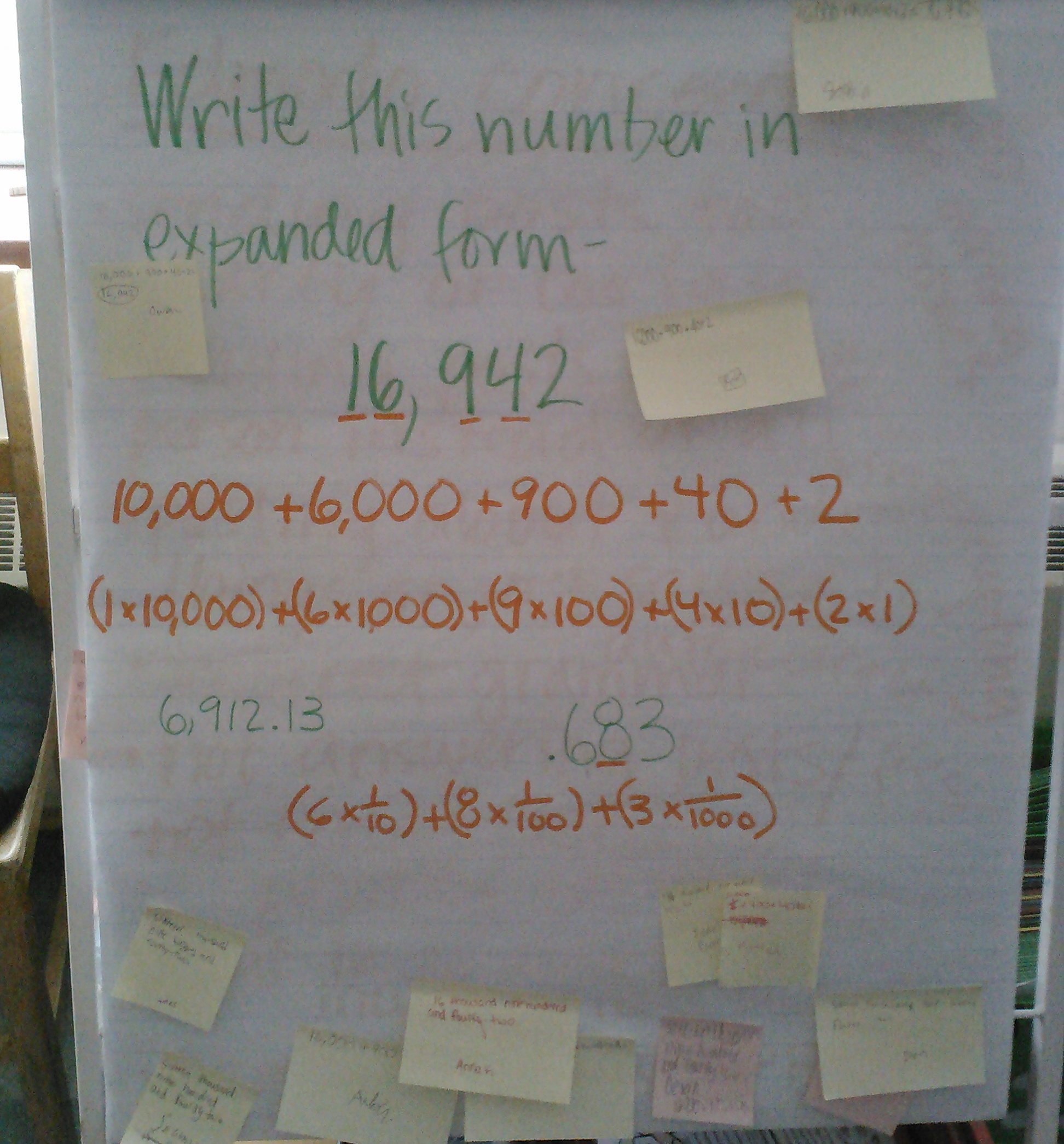
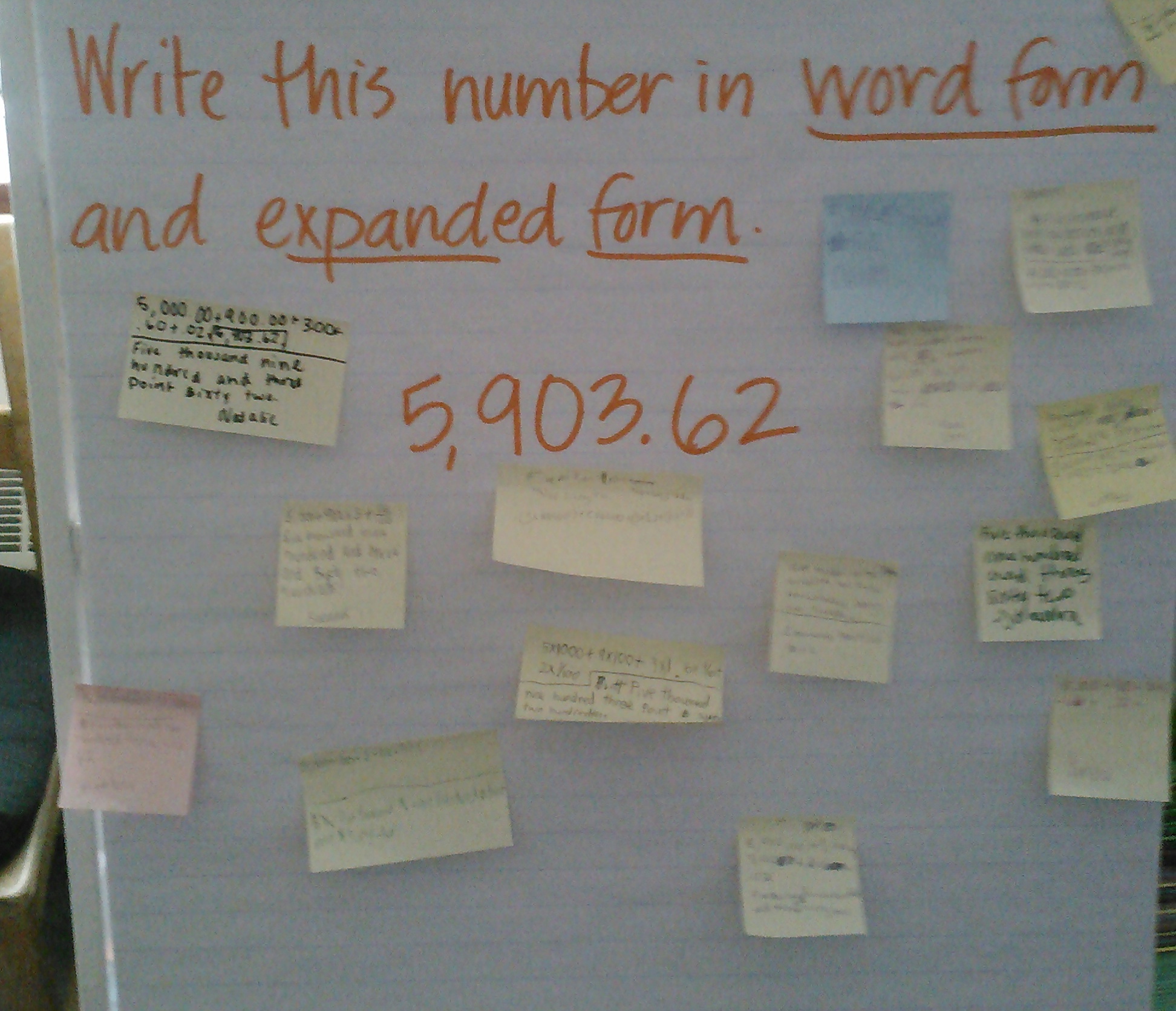
IMG134There are two notes to make about this warm-up: 1) that should say “expanded form” rather than “extended form”, and 2) I realized after I’d written it that they weren’t ready to talk about that yet.  Sometimes I’ll do a warm-up about a brand new concept, especially if we’re going to talk about it that day in rotations, but that just didn’t make sense for this one.  I was out with a sick baby, and we weren’t going to talk about it for another couple of days, so we skipped that part until later.


Wednesday

IMG135


Thursday

IMG136So this was the day when we came back to expanded form.  I was glad that we waited, because I could tell from their responses that they didn’t have a clear idea about what it meant.  Many wrote the number in words–which is word form instead of expanded form.  Once I showed them what it was, many remembered, and so after the whole number we tried it with a decimal (the part at the bottom).  The whole idea of expanded from with decimals is new (both to my students and to me!) and was added in because of changes we’re making to align closer with Common Core standards.  Once you start talking about how it works, though, it’s really the same idea as with a whole number.  Most picked up on it pretty quickly.


Friday

IMG138

New Friends in New Jersey

Yes, we did it again.  Third Skype in three weeks!  This one was a little different from the first Mystery Skype and the second one we did last week.  This time the location wasn’t a mystery; 4th graders from Lakehurst, NJ wanted to connect with students in the Midwest since their class was studying our region, so we just chatted.  SO many thanks to Mr. Bedell (@jasontbedell) for setting it up and Ms. Lambusta for being game to try Skype for the first time with her class!

The structure was similar to what we’ve done before, but since we knew that our new “friends” were going to ask us a whole slew of questions, we decided to find a way to give everyone more “screen time” during our Skype session.  I paired everyone up and they had two jobs: answer a question and ask a question.  We went through the first round and they asked us, then we asked them some questions.

IMG_0706IMG_0712 IMG_0711 IMG_0708

We were really interested to find out that one of the “specials” classes the 4th graders went to was Spanish.  There were lots of ooohs and ahhhs when they shared that nugget; kids in our school district don’t have an option for a foreign language until middle school.  We learned that Minecraft is a big deal both in NJ and MO, that they lived close to the ocean and were affected by Hurricane Sandy, and that their school is near a naval base.  Pizza was a popular school lunch (as are chicken nuggets!), and kids from both classes like to play sports games on their game systems.

IMG_0713

We had a great conversation with our new friends in New Jersey and then began thinking and talking.  We talked about whether we liked Mystery Skype or this type of chat better.  It was pretty much 50/50; many liked the “guessing” part of a Mystery Skype because it was a challenge to their brains, and many others liked the “regular” Skype because they liked the opportunity to ask and answer questions more related to them than geography.

That got us thinking about other ways we could use Skype.  Ames suggested that there were probably lots of other things that could be a mystery when we Skype besides location.  That comment made me think of a list I read from Krissy Venosdale (@ktvee) where she shared ideas for just that!  We also thought we could combine them both and first figure out the location, then get to know them better like we did this time.  Both great ideas!

I am so excited with how excited my students are during these types of activities.  They thirst for new ideas and enjoy trying new things, especially when they involve technology.  I LOVE that they trust me when I say, “Hey, I heard about this–how about we try it?!”  They are game for ANYTHING!

Besides being excited to try this again, we’re excited to invite other classes to join us!  One of our 5th grade neighbors is going to sit in on our next Mystery Skype so they can learn more about it.  Maybe we could even start marking our Skypes on our map of connections and try to get every state!  Wouldn’t that be cool?!

So…do YOU want to Skype with us?  Comment here or contact me on Twitter (@jenbearden).  We’d love to meet you!