I Need Your Help!

The rush to get ready for school is in full swing, and I need your help (you being the parents in my classroom or  friends of mine who want to donate something fabulous to my class or whatever other category you might fit into as a generous person) to finish up a couple of things:

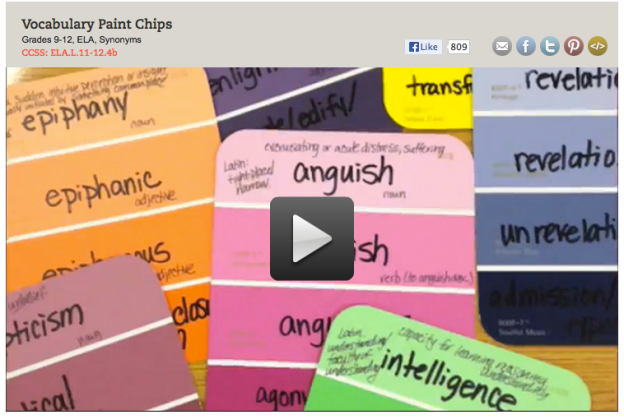
I am going to try a new idea with how to engage with vocabulary this year, similar to our Words We Know board from last year…

As we read books together, we investigate words we don't know, and connect them to what we do know to help make sense of them.

As we read books together, we investigate words we don’t know, and connect them to what we do know to help make sense of them.

…but is even more visually appealing and organized:

Screen Shot 2013-07-31 at 8.22.14 PM(I feel like I should apologize for the fact that this is not actually the video, but instead a link to Teaching Channel where you can find it.  Silly embed code just did not want to work….)

So as I was at Home Depot today, I grabbed 20 or so paint chips, but would LOVE IT if you could help me collect even more!  I figure they would notice less if 10 or 20 people grabbed a small stack then if I filled up my cart!  Any color will do. 🙂

Secondly, as we are working to more deeply engage readers with nonfiction text this year, I am beefing up that section of my classroom library.  I want to put in lots of different kinds of nonfiction text at many different levels.  The upper end is really in need of some attention, and following a great suggestion (from somewhere or someone really smart–I just can’t remember who), I’m adding in college textbooks and technical manuals, as well as travel books and whatever else might be of interest to a kid (and believe me, 10 and 11 year olds are interested in TONS of different topics!).

If you happen to have any books you need to clean out at home or if you’re shopping at Goodwill or a garage sale, and you see anything you think our class would benefit from, could you grab it for us?  I’d love to be able to do an even better job of surrounding my students with rich, complex, challenging text that they can dig into! (Ok, and that being said, ANY other books you’d want to donate would be TOTALLY welcomed as well….we’re easy here in Rm. 202 🙂 ).

You can feel free to leave me a comment here if you can help us, send me a message on Twitter or Facebook or even just drop it off at school in the office with my name on it!  THANK YOU in advance for whatever kind of help you can give! The readers in Rm. 202 GREATLY APPRECIATE you! 🙂

Welcome to Rm. 202 (2013)!

Welcome to Rm. 202!

I am so excited you’re here!

Please proceed with caution, and read carefully….

The following letter contains 2125 words that will begin to shape your fifth grade year. Be sure you have time to read them all carefully. You may like to have your parents sit and read with you so you can all be excited about fifth grade together.You should also have dancing shoes on (true story) and a video camera handy (extra credit).

Ready? Of course you are! Because you are about to become…

Fifth Grade and Fearless!

I am excited for the year ahead – but first, I need your help in knowing what next year is going to look like.


Yes, your help!

What next year holds, is, in large part up to you. I have my plans, my ideas, my goals….what about you?

I know some of you may have sneaked a peek at the letter I sent your parents, or may already know me, so this next part may be a bit of a review.  Too bad.  Keep reading anyway. 🙂  I have been teaching for 13 years and every one of them has been at Robinson!  I even did my student-teaching there long ago, so Robinson is definitely my home-away-from-home.  In my real home–which is in St. Peters–I have a fabulous family that I love dearly.  My husband, Grant, is a teacher, too, in Wentzville.  He has taught 4th and 5th grade like me, too.  Fun, right?  We have a 6YO, Riley, who will be at Robinson, too (he has Mrs. Appelbaum).  I am sure you’ll get to know him really well as we got through the year together.  We also have a little girl named Allison–we call her Allie–who is 2 1/2.  We LOVE (yep, love) Disney World, and travel there often.  We also just like to hang out together at home (or anywhere, really) and spend time with each other.  So that’s me.  What about you? Can’t wait to learn more about YOUR family!

Like I said, I have been teaching for 13 years, and every year, I begin the school year as a different person. I decide on that first day and then every day thereafter, who I am as a teacher. What is important to me. What I want to accomplish. What I want my students to see when they come to school. I choose that. I don’t let other people tell me who I will be and I don’t just be who I think other people want me to be. I read, I think, I write and then I decide.

Who Will You Be? (This is a big question – take your time to think about this!) Will you be the kid who has brilliant ideas? The kid who loves math? The kid who looks to help other people? The kid who……? Fresh start. Clean slate. We all get one (that includes you!) and we all get to begin fifth grade as the person we want to be.

What is important to you? (This is another big question and one I am really curious about so I will ask it twice.) What is important to you?

There are lots of things that are important to me: my husband and my kids, sharing ideas, reading, writing, being able to have a conversation, making things, discovering things, sharing what I know, sleeping in, staying up late and knowing when to say sorry.

As a teacher, there are a few more things that are important to me:

* YOU!:   You’re the reason I’m there, after all right?  It is important for me to get to know you, and know you well.  Not just as a learner, but as a kid, too.  I want to know what you like, what you don’t like, what makes you tick.  Who you are.  That’s ok, right? 🙂

* Respect: If you’ve been around Robinson for longer than 5 minutes you know that respect is a HUGE part of our culture.  It’s pretty much what we’re all about.  I expect respect to be a huge thing in our classroom.  I will respect you, and I expect you to respect me, as well as everyone else in our community.  This counts when we agree and even when we don’t.  I have a saying that I learned from my good friend Mrs. Ford years ago, that is really important with this whole respect thing.  It’s this: You are not the sun.  In other words, the world does not revolve around you, and there are lots of other people in our classroom that have needs, wants, likes, dislikes, etc., that we need to take into account.  I love you, but I love everyone else, too!

* Mistakes:  I expect you to make them.  Yep, I said it.  I want things to be hard for you.  I want you to struggle.  If you need more than one try or lots more practice with a concept, you’ll get it.  If you need to show me what you know in a different way, then we’ll figure it out.  If  you need me to repeat something or explain it for you in another way, I’ll do.  If you need a big, fat challenge–watch out, you’ll get one! No, I’m not crazy, I just want you to try things that may be tricky at first.  I want you to learn to work through it when it’s hard and figure out what to do.   I want you to feel the joy and success when you learn something new and it’s because you persevered!  Not everything will be easy here. And that’s ok. We’re in it together and I’ll help you all along the way. 🙂

* Collaboration: I love to share ideas and get ideas and try new things and even when those things fail, I know I am just one step closer to finding what does work. I love to work with other teachers to figure things out and find new solutions to old problems.  But just as much as working with adults, I love to collaborate with students.  I love to hear what you’re thinking, how you’re feeling about things, what you think would be the best way to learn something.  Even when you don’t agree with me, or have a plan that is completely different than mine, I want you to share it!  It’s our classroom, and often your ideas are WAY better than mine.  I know I’ll share lots of examples with you about how that’s happened to me over the years.

Aside from collaborating with me, though, you’ll be collaborating with each other!  You will have lots of opportunities to share with your classmates, to give your ideas, ask questions, prove your reasoning and challenge each other.  I expect that we will work together to help EVERYONE in our class be the best they can be.  Together we’ll achieve much more than we would if we tried to do it on our own. 🙂

I like to say that in our room, everyone is a teacher and a learner.

* Questions: I found a quote I love by a guy named Tony who loves learning. “No one cares what you know. What the world cares about is what you do with what you know.” Think about that. Chew it over. We can all Google and find stuff out – but then what? After we know stuff, what we do with it = inquiry. And that is what the world cares about. Me too. You?

* Time is precious: So are you. I don’t like wasting time and I especially don’t like wasting your time. That means I try to come to school ready, fired up, and prepared to make a ruckus (I like to think that a ‘ruckus’ is the sound your brain makes when it is challenged to be creative, thoughtful, inquisitive and world-changing – it is a beautiful sound).  I hope–and expect–that you will come into our classroom every morning ready to learn, ready to work hard, ready to put your very best foot forward.  We only have so many days together, and we need to make the most of every single one of them.  We’ve got so much to do! 🙂

* Technology : I  love technology because it allows me to connect to new ideas. I like to think about what I want to do and look for tools to help me do it. I want to hear your ideas on technology and what works for you. We will be using technology in many new and exciting ways this year, so get ready!  You’ll be blogging, using iPads and laptops (yep, you get your very own iPad Mini VERY SOON!), working on the ActivBoard, making videos of your learning and trying out many new things that we may not even know about yet.  Whatever we do, though, the goal is always learning.  We will use technology in meaningful ways to better create new knowledge.  Excited?  I know I am!

* Community: our class, our families, our school, our neighborhood, our city, our state, our country, our world. There are so many amazing people doing amazing things. I bet you can think of ten amazing people who do amazing things right now. We need to hear those people’s stories. Your mom and dad should be on that list. They are awesome. (Assignment one; email me List of Awesomeness about people in your family* -*family = people you love and are connected to even if they don’t happen to live in your house or share your last name).

* Taking risks: I like to take risks.   I hope you do too. It is scary sometimes and it fails sometimes but sometimes, more often, it is just A-MAZ-ING! Usually when you do something scary you do things you never thought you could.  You surprise yourself.  And then you want to do more! Someone smart once said “Fear and Excitement are shades of the same color”. Cool, huh?

HANG IN THERE….THE END IS NEAR!

OK…if you made it this far and are still with me, congratulations, you are a rockstar. Stop reading right now and do some kind of victory dance.  No really, go ahead.  Dance.  I’ll wait.  Better yet, have someone video tape your dance and send it to me!  I’ll even post it on our blog! (Did you see the posts where I did that from last year’s class?  They didn’t believe that I’d do it, either. 🙂 )

So….what now? How can you best prepare for the extreme awesomeness of fifth grade?

  1. Have a great summer! Be extraordinary.
  2. Read something.  Write something.  Wonder something.  This’ll get your learning muscles warmed up. 🙂
  3. If you have any questions you can always email me. Anytime. No question to big or too small.
  4. Think about what I said about being who you want to be. Most importantly, remember that everyone else in our class is thinking about that too. Be gracious to those who are brave enough to set lofty goals and make the effort to become an even better version of themselves.
  5. Look around your house (or your computer, maybe) for a picture of your family.  I’d love to be able to decorate our room with us–pictures of all the people who help make us who we are and who encourage us to do our best.  I want to be able to fill our window sills, bookshelves, walls–wherever there’s room–so please bring a 3×5 or 4×6 framed picture with you to Open House or on the first day of school.  And if you don’t have one, don’t worry!  We’ll take your picture!

Despite having now used about two thousand words, there are no words to describe how excited I am about working with you next year!

Here’s To Being Fifth Grade and Fearless!

♥ Mrs. Bearden

PS. If you didn’t get up and dance before and are now wishing you did, there is still time to do it. Anytime. Send me that video with your best moves (extra credit).

When you have had a chance to relax, digest this letter (maybe talk about it with your family or friends) and get your fifth grade brain tuned up, I would love for you to write to me to introduce yourself, ask questions, maybe respond to something you read in this letter that made you think.

I look forward to hearing from you before the end of the summer!

Mrs. Bearden: Email–jennifer.bearden@kirkwoodschools.org; Phone–314-213-6100 x4214 (after August 15)

Facebook: http://www.facebook.com/MrsBeardens5thGradeClass

Twitter: @jbeardensclass

Blog: feel free to leave me a comment here to let me know what you thought, what you wonder, how your summer has been, etc….this is always a great place to talk to me! 🙂

**Thanks to @terSonya and Mrs. Hong for help with writing this post! Like I said, I love to share ideas!**

Things Teachers Do in the Summer: READ!

So as I was writing that quick “I’m sorry” post yesterday, I ended with a statement that seemed like a great idea for a series of posts: things teachers do in the summer.  And no, it’s not just a sit-around-on-the-beach-and-drink-Mai-Tais kind of thing, either.  I’ve been busy!  Let me tell you about it. 🙂

I love to read.  My husband might disagree with that statement, as he is one of those people who goes to bed with a book (or his iPad) every night, and always has a new book, magazine, graphic novel or whatnot ready to be devoured.  I, on the other hand, am more of a sporadic reader, choosing more carefully what I take time to read.  Unfortunately, during the school year, that time is mainly spent on professional reading; I only have so much time and want it to be useful.  Unfortunately,  my “free” reading is usually saved for the summer.  I like to get started on reading the new Mark Twain nominees that I might try for read alouds, as well as any other MG novels I’ve heard about and the other professional titles I didn’t have time for during the school year.

Here’s what I’ve been reading so far:

Screen Shot 2013-07-21 at 9.53.42 PM

Pie by Sarah Weeks

This one was the first on my Mark Twain list, mainly because Sarah Weeks was the only author on the list that I recognized.  I am excited to share it with my students, and I’m hoping it will be enjoyed by everyone.  One of my favorite parts of the book is the recipes that are included at the end of every chapter.  PIE is the name of the pie shop started by Alice’s Aunt Polly, and the story revolves around the fate of the shop–and Aunt Polly’s prize-winning pie crust recipe–after she passes away.  Besides loving the story, I’m excited to try the pie, too!  This book combines two of my loves–reading and baking. 🙂

Screen Shot 2013-07-21 at 10.01.55 PM

Missing on Superstition Mountain by Elise Broach

Here’s another one from the Mark Twain list, and another one that I am excited to share with my class.  This one is an adventure, and I love that there are both strong boy and girl characters.  There were moments when the dialogue was a little unnatural, and it was a little long for my tastes, but I’m glad I made it to the end.  This one will be great, too, because there are several others that kiddos could choose to read if they like this one.   Reminded me a little bit of Go Big or Go Home by Will Hobbs, which was a Mark Twain nominee several years ago.

Screen Shot 2013-07-21 at 10.26.04 PM  Barn Boot Blues by Catherine Friend

This is a city-girl-moves-to-the-country story (also a MT nominee) about Taylor McNamara.  She moves to a     farm  just before school starts and fights to fit into the new world she’s in.  I love the way Friend shares Taylor’s thoughts, as well as how the character interacts with her family and friends.  She’s sarcastic–and so am I–which is probably why she’s such a likeable character for me.  The story is a big predictable, but in some ways, that’s what makes it a good read.  Read this one in a few hours because I couldn’t put it down!

Screen Shot 2013-07-21 at 10.35.24 PM

Close to Famous by Joan Bauer

This book was similar to PIE, in that it was a girl trying to find her way in the world with food as her guide.  This time though, it was cupcakes!  This was the first book I’ve read by Joan Bauer (but I’ve since found several that I’ve put on my TBR list!), and it was a good one.  The only thing that was a bit annoying to me (just my opinion, obviously) was the Food TV personality that is in the book–the scenes where she pretended to have her own cooking show and idolized celebrity chef Sonny Kroll were a little silly.  Overall, I enjoyed it, though, and I could see how many readers might like it, too!  Now I can officially vote for my favorite Mark Twain book because I’ve read the required 4 titles.  Oh wait…it’s not for teachers??  Bummer.

Screen Shot 2013-07-21 at 10.41.38 PMNotice & Note: Strategies for Close Reading by Kylene Beers and Robert E. Probst

I figured here would be a good place to add in some professional reading (partly because some of the novels I read were recommended here!).  I found this book during the spring, on Twitter, namely because my tweep Shannon Clark (@shannonclark7) started a Twitter chat (using the hashtag #nnnchat) and a Facebook group for teachers to discuss it.  I have heard its ideas mentioned at more than one workshop this summer, too, so needless to say I was excited when it finally showed up on my doorstep!  The main premise of the book is how to teach kids to read closely, by introducing them to “signposts” that are included in many novel texts; once kids know the signposts they start to find evidence of them in books they read independently and these noticings and notes help them better understand what they are reading.  I’m definitely going to incorporate these lessons (and this mindset about reading in general) into our Reader’s Workshop work this year.  This book made me really excited for school to start!
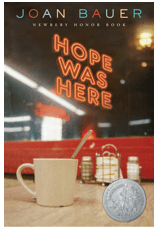
Screen Shot 2013-07-21 at 10.50.16 PMHope Was Here by Joan Bauer

Recognize the author’s name?  Funny how I’d never heard of her, but then once I did, I find her work everywhere!  This text is used as a mentor text in some lessons in Notice & Note, so I figured I should probably read it. 🙂  It’s food-related too, but this time is set in a diner.  Again there’s a girl who is fatherless and is trying to figure out who she is and where she fits into the world.  Included this time is a secondary plot that involves a mayoral race in the small town in Wisconsin, as well as a budding romance between the main character and the cook in the diner where she works.  Hope Was Here was definitely a page-turner, and I enjoyed every word.

The Book WhispScreen Shot 2013-07-21 at 10.56.45 PMerer by Donalyn Miller
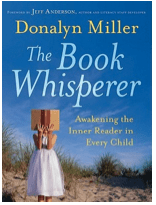
Here’s another one I found on Twitter (thanks to @donalynbooks), and one that I cannot believe I waited this long to read!  I’ve always been a proponent of student choice in their reading, and this book helped me be more clear on why it’s a good idea.  The stories she shares and the alternatives to help give students more say in their reading were inspirational.  I really loved the “ultimate book list” at the end of the book where she shared some key titles to have in your classroom library.  It’s become my new shopping list!
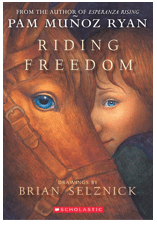
Screen Shot 2013-07-21 at 11.08.58 PMRiding Freedom by Pam Munoz Ryan

I hate to admit how many books I have in my class library that I know are great titles, but that I have never read.  Also, it’s really sad to admit how little historical fiction I share with my students.  So, when I saw that this book was on Donalyn Miller’s Ultimate Book List, I knew I had to read it.  It was a great story based on the life of Charlotte Parkhurst, who (I learned) was a famous stablehand, stagecoach driver, and probably the first woman to ever vote!  Add this to my read aloud list for sure. 🙂

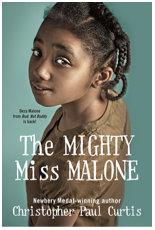
Screen Shot 2013-07-21 at 11.21.08 PM The Mighty Miss Malone by Christopher Paul Curtis

Last summer, I finally (I know–I shouldn’t admit this) read (well listened to) the classics by Christoper Paul Curtis–Bud, Not Buddy and The Watsons Go to Birmingham–1963.  Like with so many other titles in my library, I have no idea why I’d never read them, but I had not.  My husband (who I mentioned before is a very prolific reader, and a teacher, also) had shared these with his classes many times over and couldn’t let another minute go by without enlightening me as to why they were so fabulous.  We listened to them in the car on the way to Florida during our vacation, and they were instant hits with our son (who was 5YO at the time) as well.  So fast forward to this year’s vacation, and another CPC hit was made with our family.  This one is set in Gary, Indiana, but has connections to Flint, Michigan where Bud is from, and if you pay attention (or if you know the story of Bud, Not Buddy) you realize that Deza Malone and Bud cross paths in a camp in Detroit along the way.  I love the realism with which Curtis writes, and I love the conversations I was able to have with my son about the themes in the book.  I’m excited to share this story with my 5th graders, and begin the conversation with them, too!

Screen Shot 2013-07-21 at 11.19.45 PM

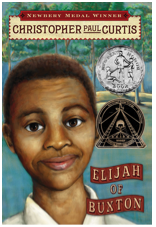
Elijah of Buxton by Christopher Paul Curtis

I told you we liked this author, right?  Here’s another one that Grant had shared with his students that surprisingly I didn’t know.  Ok, not true.  I have it in my classroom but I’ve never read it.  Again, lame, I know.  I have to admit that I liked the overall premise of this book, but then once we started listening I couldn’t get into it.  Everyone else was entertained, but I just had a hard time following.  And then I heard the end and it made the whole thing worth it.  Now I want to go back and reread the whole thing over again, both so I can see the text (remember we listened to it), but also so I can catch all that I missed the first time around.  Definitely worth my time, I think.

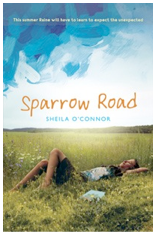
Screen Shot 2013-07-22 at 1.07.44 AMSparrow Road by Sheila O’Connor

Just when I thought I was finished with my list of Mark Twains, I uncovered another one that I read that I’d forgotten about!  I wonder if the reason it didn’t come to mind right away was that it was another one that took me a while to get into.  It’s weird, and I don’t know if it was on purpose, but there seem to be similar themes running through many of the nominees this year–families that are displaced for some reason or another (who all seem to be running away from something), girls who don’t know their fathers (and are therefore searching for him), and food or food service.  All of those are present in this one, too, with a little bit of art thrown in for good measure.  I enjoyed the style of writing of this book, and though it took me a while to get into the story, I eventually got on a roll and was satisfied with the ending.

So…there are still a few weeks of summer left (although they seem to be fleeting fast!), and so I still have some reading to do.  I’m in the middle of two different professional reads (also about reading), have a book on Essential Questions by Wiggins and McTighe on my TBR pile, as well as some new writing resources from Calkins, new math resources from Fosnot and at least 3 or 4 MG novels that I want to finish.  Will there be time??  Cross your fingers with me.  And maybe try out something  from my list that were new to you! Please let me know what you think! I love to talk books with other readers. 🙂

Test-Day Preppers

Every year, for six days in April, we, like loads of other elementary school kids around the country head into Test Day.  In Missouri we take what we call MAP, or the Missouri Assessment Program, in Communication Arts, Math and Science.  And we, like loads of other elementary school kids around the country prepare for that testing.

But this is where we’re different.  Well, at least different from some classes.  Before I go on, I feel like I should explain that I am not a copy-lots-of-packets-and-fill-in-bubbles-for-a-whole-month-before-the-test kid of teacher, who stops everything else and focuses just on test prep.

In fact, I’d say that I’ve been preparing my students to do well on the MAP since our first day in August, by asking them to read closely, think critically, work neatly, solve problems and explain their thinking.  In that way, they are ready to demonstrate that learning when asked to show what they know on our state tests.

In addition to that, there are a few things we do to help pump us up, build our confidence and help alleviate the stress related to high-stakes standardized testing:

1. Talk about testing as a genre.

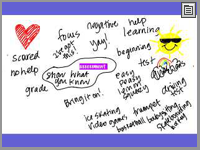
While I do not spend weeks and weeks having students fill in bubbles and complete packets and packets of practice tests for each subject, we do spend time looking at and talking about what the tests will look like.  We unpack the tests (which are examples of released items that have previously been on our MAP, or are examples from other states’ whose tests are similar to ours) and talk about what we notice.  We compare “real” reading and writing with “test” reading and writing.  We noticed that much of that difference comes in the purpose for the reading/writing  (“they” choose that for us instead of us making the decision) as well as they content or structure of the reading/writing (“they” choose what the text looks like, rather than our having a say in it).  We talk about how to tackle these differences and what to do when we don’t have control over it; we discuss what we do have control over–the strategies we use and the ability to do well.  We break apart the word assessment, as well, and dig into the connotations we have for that word.

Words that came into our heads when I first said the word "assessment."  Some were obviously positive, and some were not.

Words that came into our heads when I first said the word “assessment.” Some were obviously positive, and some were not.

We all agreed that this state assessment, like every other assessment they encounter (both inside and outside of school), is really about showing what they know.  Their goal should be to do their best.  That’s it.  🙂

2. Encourage problem solving, risk taking and confidence by introducing Monday Motivations.

Our "Quote Worthy" wall with quotes that encourage us to do our best--on everything we do--not just the test.

Our “Quote Worthy” wall with quotes that encourage us to do our best–on everything we do–not just the test.

There have been many more added since this picture, all with the intent on reminding students that they have much in them that they can pull from, and that they can do so many great things if they just believe it and then make a choice to make it happen.  Each of the last few weeks I’ve shared a quote that we would then discuss, write about, and connect with other quotes we know.  These because a part of our classroom lexicon, and you’ll hear students using these encouraging words often when they talk to each other.  🙂

3. Talk about and work with words.

As we read books together, we investigate words we don't know, and connect them to what we do know to help make sense of them.

As we read books together, we investigate words we don’t know, and connect them to what we do know to help make sense of them.

While this is not specifically related to testing, it helps students on their tests, as they are asked to demonstrate their understanding of reading and writing.  All year long, we’ve been collecting words we didn’t understand, breaking them apart and looking at their parts to help figure out what they mean.  This helps us connect new words to these parts that we know, helping us to make sense of what we’re reading.  We’ve found words in other texts and made connections to writing, as well, by using new words we’ve learned.  And since vocabulary is connected to spelling, our word work supports that piece, as well.

4. Review concepts.

Some of what students are asked to do on tests requires them to apply processes and strategies to new situations, like with reading and writing about an unfamiliar text.  Some of it, however, is directly related to remembering facts.  For us, this is especially true in science, where anything they’ve learned since kindergarten is fair game!  In order to remind them of what they know, we watch a series of videos (many of which they’ve seen before) and then create a class poster of “big ideas” form each set of concepts.  They work with a partner to create a representation of each big idea, similar to what we did when we were studying Native Americans earlier this year.

After we created all of our posters, I had them do a gallery walk with a partner, discussing what each image represented.  They were to make notes with their partners, again reviewing and talking about concepts they’ve learned previously.  Hopefully both these posters and conversations will come to mind when they encounter any of these things on their tests (even after the posters are covered up and the conversations are over!).

5. Covered up content with encouraging words.

There are many things that are no-nos during testing, which includes anything hanging on our walls that might suggest content, strategies, etc.  But rather than take all of the things down (our decimal place value chart, punctuation study chart, science posters, calendar), we cover them up.  The idea is that even if you can’t see the actual content on the poster, your brain will fill in the information that you’ve been looking at on them for all of these weeks, thus making them helpful anyway!  We also took the opportunity to throw in words and phrases that would be encouraging.  For every class those words are different, and this year’s were by far the most creative!

This slideshow requires JavaScript.

I think the fact that they are words that we actually say, that they’ve been using all year, they are even more powerful.  These words bring back memories of meaningful conversations we’ve had, strong memories of moments when they’ve overcome struggles and achieved goals.  These words, which are perhaps a bit silly, are theirs.  And they are powerful.

6. Get families involved.

A week or so before testing starts, I send a request to families to ask for their support in helping us get ready for the MAP.  Like I mentioned before, one important piece to the puzzle (in my opinion) is alleviating stress.  One way I do that is to invite families to write letters to their student.  They send these encouraging words to me before the test, and then I pass them out just before we get started.  These notes are like an extra special hug from home at a time that could be really stressful, and they work wonders.  I do the same thing and write students notes about how proud I am of them, how much I believe in them, and how “they got this!”  Often, some of the quotes we’ve been studying together show up here as an added encouragement.

7. Feed their brains.

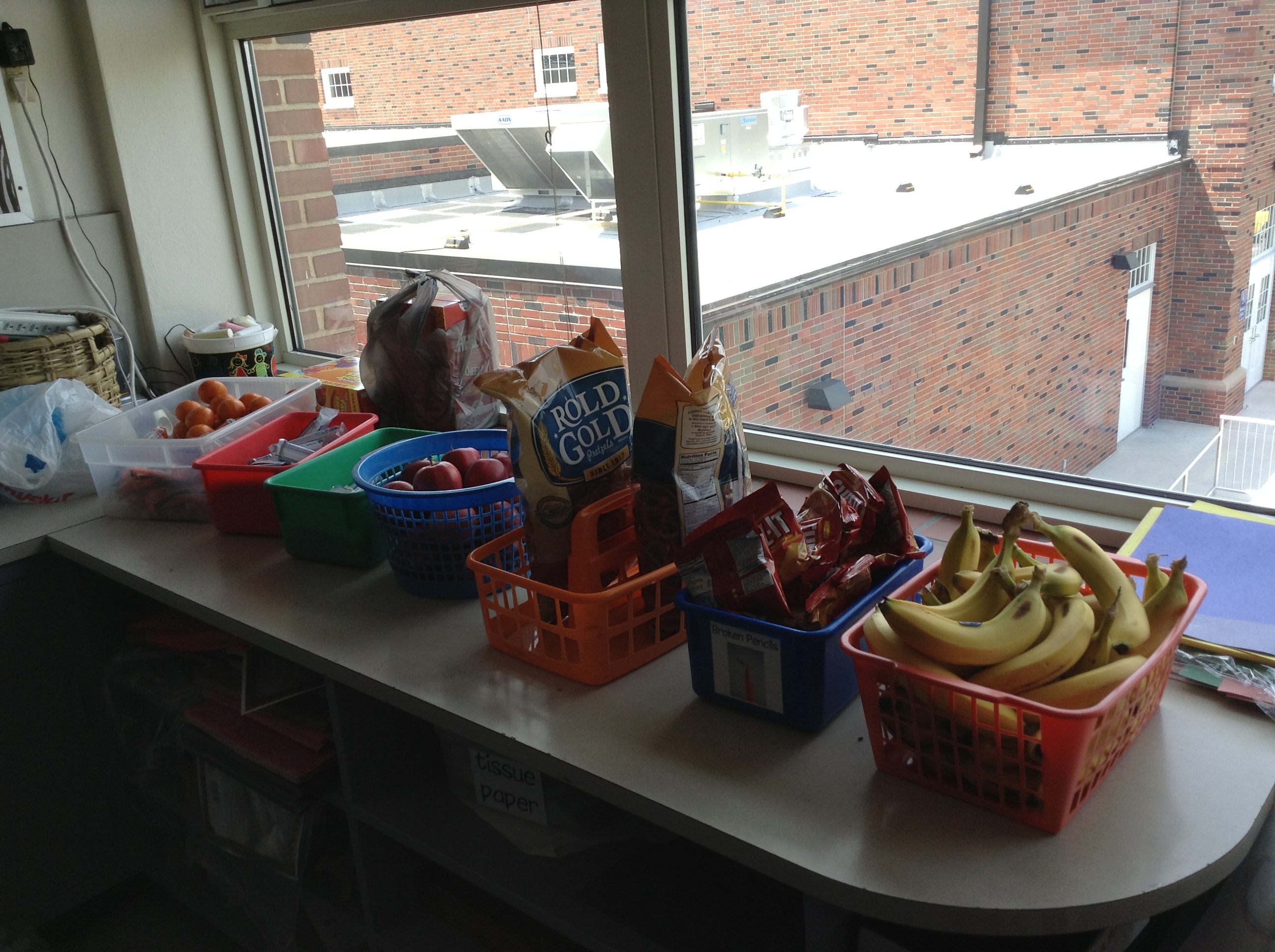
In the same letter home about writing a letter, we also ask for help with sending healthy snacks for our testing days.

Yum!  Our testing snacks include lots of fresh, "real" food that good fuel for working brains!

Yum! Our testing snacks include lots of fresh, “real” food that good fuel for working brains!  Included are things like Cuties, carrots, apples, cheese sticks, cheese crackers, granola bars, cereal bars, pretzels and bananas.

There is also a fresh stash of mints and gum, which help wake up tired brains and keep their minds engaged.


So really, while it’s a big deal, it’s all pretty simple.  I believe it is my job (from the first day of school), to encourage my students to be thinkers, readers, writers, mathematicians, and learners.  I see it as my goal to help them feel confident and ready, so that these six days in April are really no different than anything we’ve been doing all year.

How do you prepare for testing?  We’d love to hear about what it looks like in your school!


I Speak Greek When I Teach Math–PART 3

Hopefully you’ve caught the first two parts of this story already.  If not, they are here and here.  🙂

After we had our cooking lesson, we got back into our groups to do a re-try of our posters.  Another thing that my friend Pam mentioned to me when we were talking about what could have gone wrong was that maybe the paper they were using was too big.  What?!  Something that simple?  It’s funny, because I hadn’t really considered that before she said it, but as soon as she did, it made perfect sense.  They only had a certain amount of information to share with other mathematicians, and many groups ended up with lots of white space they didn’t know what to do with.  Maybe it wasn’t a factor in our troubles, but it was worth taking a look at.  So as we started again, we used smaller posters. 🙂

We tried something else with this investigation, too–we invited another class (who didn’t know anything about our problem) to do our gallery walk with us.  This, we thought (ok, well I thought) would give us an even better idea of how we could revise our first drafts, since it was a “cold read” for them–they could only use the information we gave them to make sense of our mathematical ideas, rather than the context of the problem or background knowledge of the process.  So we invited Mrs. Hong’s class to work with us.  This was a PERFECT situation, because they had just finished a big problem, too, and needed someone to help them revise, too.  Match made in heaven, right?

This slideshow requires JavaScript.

I mentioned in my last post that I’ve been thinking about incorporating more with cooking into math next year, and this whole trade-classrooms-and-do-a-gallery-walk thing is another idea my team is considering doing more of.  We want to be more purposeful in how we create real-life, meaningful scenarios for our kiddos to solve, then use the knowledge and ideas of each other to help make the work even better.  Seeing another version of a problem you’ve also solved is very different than looking at a poster that is completely new. The mathematician has a much bigger job to do for these new viewers; every word, number and symbol they write is a clue to help them figure out the puzzle.

So what have you done with posters, gallery walks or real-life problem solving in your class?  What advice do you have for us as we work to continue these ideas with our mathematicians for next year?  We’d love to hear your thoughts. 🙂


iPad Scout Reflections Week 3 (and 4): Getting in a Groove

I knew it would happen eventually, and I think during week 3 it happened: we got into an iPad groove.  So in some ways that makes this week’s reflection really fabulous, and in some other ways it might make it really boring.

After the first week of highs and lows, and the second week‘s videos, I was excited to see what Week 3 would bring us.  I was hoping that it would bring some sort of “normalcy,” where we wouldn’t have our noses constantly in our iPads and were somehow thinking of them as tools instead of toys.  And to some extent that’s what happened.

The most exciting part of the week for me, I guess, was how my kids are starting to come up with really great ways to use our iPads to enhance our learning.  We’d already been using Educreations for annotating videos explaining our learning, using Notability to mark up text we were reading and taking pictures to help us save documents we could use later easily in another place.  And up to that point, much of what I was asking them to do with their new tools (outside of the iMovies they’re making for fun, blog posts they write for themselves and some other stuff like Edmodo) had been my idea.  Then we started talking about poetry.

As like with every other unit, they were to publish their pieces, self-evaulate using our writing rubric, and then turn in their work (not rocket-science, I know).  And ZB had a great idea of how to do it.  Just like we had been doing in Educreations to explain our thinking in math, ZB had an idea of how we could do the same thing for writing.

First we published our poems using Pages (the app on our iPads instead of the program on our laptops), which we could now save in our Dropbox folders.  Also in the Dropbox was the rubric, which I could easily share for each kiddo to upload.  Then came ZB’s idea: maybe we could put pictures of them both on a page in Educreations and then explain why we scored ourselves that way.  GENIUS–especially since the “4” on most of our rubrics is to “explain the reasons behind your choices.”    So they took a screen shot of their poem, and laid a screen shot of the rubric right next to it:

Screen Shot 2013-04-26 at 9.11.23 PM And as they scored themselves on the rubric, they could explain to me why they thought their poem showed that, and could make connections to the text of their poem at the same time.  This type of thing, before we had our iPads, was possible, but would take FOREVER because I’d have to have a separate conversation with each writer in order to gain the information about their thinking.  Great idea, ZB!

Now, I must take a minute to insert a short story of a frustrating “apportunity” we had related to these videos.  It’s related to the fact that Educreations is a GREAT place to create videos, but not such a great app to use if you want to do anything with those videos.  And of course I didn’t know this until after we’d done all kinds of work with it.  As I struggled to find a way for my kids to be able to share their work with me, I found this FAQ on the Educreations website that helped me find an answer to my problem.  A negative answer.

Screen Shot 2013-04-26 at 9.29.44 PM

Lame, right?  Yeah…great information I wish I’d had before we started.  And so this meant that what I had thought were great opportunities for my students to share their thinking with me were now just stuck on their iPads.  Well, unless I wanted to lug them all home.  Which was kind of not the point of going 1:1 and being electronic and such, you know?

Well, since then, I have learned a couple of things that solved our problems:

1.  You can get around the exporting problem if you sign up for an Educreations account.  That way you have the option of emailing your video to someone or copying the URL link of to post or use.   I found out I can also give my students a course code that will allow me to have access to their videos via the website.  They don’t even have to send them to me now; I can just click on each students’ file from one screen at the same time.

2. Notability also works in a similar way, and can be more easily shared or saved in Dropbox, Evernote, or a variety of other ways.

3. Explain Everything is a great app that combines all of the things that both Educreations and Notability can do, and has many other great options that will grow with your students as they get older and/or learn to do new things with their devices.  Downside?  It costs $2.99, but does offer a volume discount if you buy in bulk.  We’re considering this one as an option to Educreations.    Doodlecast Pro could do the same thing, and might be great for younger students (it’s also $2.99). 

Screen Shot 2013-04-26 at 9.43.11 PM               Screen Shot 2013-04-26 at 9.44.08 PM


So this past week was technically Week 4, but with MAP testing taking up much of our time and energy, there is not a lot of iPad news to share.  The one thing I will mention, though, which I guess fits in the “high” category, came from our class meeting today.

As always, the last question we answered before we started our discussion was “What do you want to talk about from the week?”  As you can see, man people had the same idea:

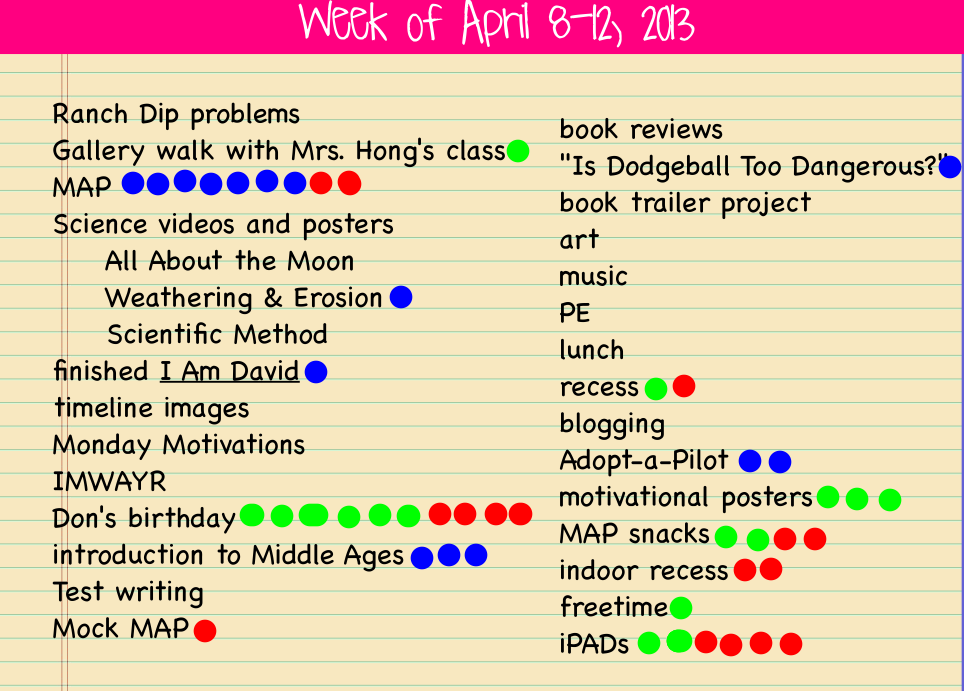
The red dots mention are what kiddos wanted to talk about.  Their conversations could be positive or negative, but these are the pressing issues of the week.

The red dots mention are what kiddos wanted to talk about. Their conversations could be positive or negative, but these are the pressing issues of the week.

Ok, so I know Don’s birthday was a big topic of conversation (because many people wanted to wish him well and tell him how awesome he is), but they also wanted to talk about iPads.  What I loved was that unlike past weeks conversations when there was a lot of discussion about what NOT to do, today they wanted to talk about how great it’s going!  The discussion was about how we’ve all figured out how to do things, aren’t playing around so much anymore, and how they’re helping us as learners.  Of course I was interested in hearing more about that last thing, so I dug for evidence.  They mentioned things like being able to get and send documents to me electronically instead of having to always get papers, as well as how easily they can look up answers to things they’re wondering about and just how much more interesting doing their work on the iPads has been.  And I’ve been excited at how much more collaboration there has been in spite of everyone being 1:1; many people worry that kids will be “plugged in” constantly and not interact with other students.  I’m happy to see that this hasn’t been the case in our room so far.  We’re just finding better ways to collaborate, communicate and curate.

IMG_0784

Don and Ames look at a common text on Educreations as we practice editing together.

IMG_0785

Anna and Fiona can look at the same text on their separate devices as they discuss how they’d improve the paragraph to make it easier for the reader to understand.  Since they’d uploaded the picture into Educreations, they can mark on the text right on their iPads and then save their thoughts to come back to later.

IMG_0786

Devan and Peter work to edit punctuation and capitalization in a text uploaded from our shared Dropbox folder.

IMG_0791

iPad minis make it easy to have everyone look at the same text at the same time, but then interact with it in whatever way works for them as a learner.

IMG_0792

And they’re portable and small, making them easy to go anywhere–even the rug–unlike when we were only using our laptops for these kinds of things.


So we’re about halfway home.  4 weeks in and 4 weeks to go in the Scout.  And with MAP finishing up this next week, we’ll have some more time in our schedule to explore what our iPads will help us do.  Stay tuned for more on the book trailer project we’re in the middle of.  That is definitely something that would have been inconceivable before we were 1:1.  Exciting times ahead!

Just like always, it’s your turn now.  Thoughts? Suggestions? We’d love your feedback on what’s going on in our room! 🙂


I Speak Greek When I Teach Math–PART 2

Wow–I’ve been doing a horrible job with updates lately!  I’ve left this one hanging for over a week, and I’m sure you were waiting on the edge of your seat to hear the rest of the story, right?  Well, thanks for being patient. 🙂   The “rest of the story” will actually end up being told in two more parts.

Remember how we were working with a problem about ranch dip and I was baffled by what was going so wrong?

Screen Shot 2013-04-17 at 8.55.41 PM

Ranch dip problem, part 1

Part 2

Part 2

Well, what I don’t think I told you last time was that I had a conversation with a colleague of mine, who happens to be a fabulous math teacher, too, and we agreed there could have been many reasons why this was trickier than I had intended.  I decided to tackle these issues one at a time.  The first one we thought of was related to the context.

I think I may have taken for granted the fact that my kids would know about teaspoons, tablespoons and just the whole act of mixing it all together.  There were actually several kiddos who could not relate to what I was talking about with making the dip, so I decided to fix that problem.  I hoped that using the recipe would help them better understand what I was asking them to figure out.  So we got cooking!

IMG_0748

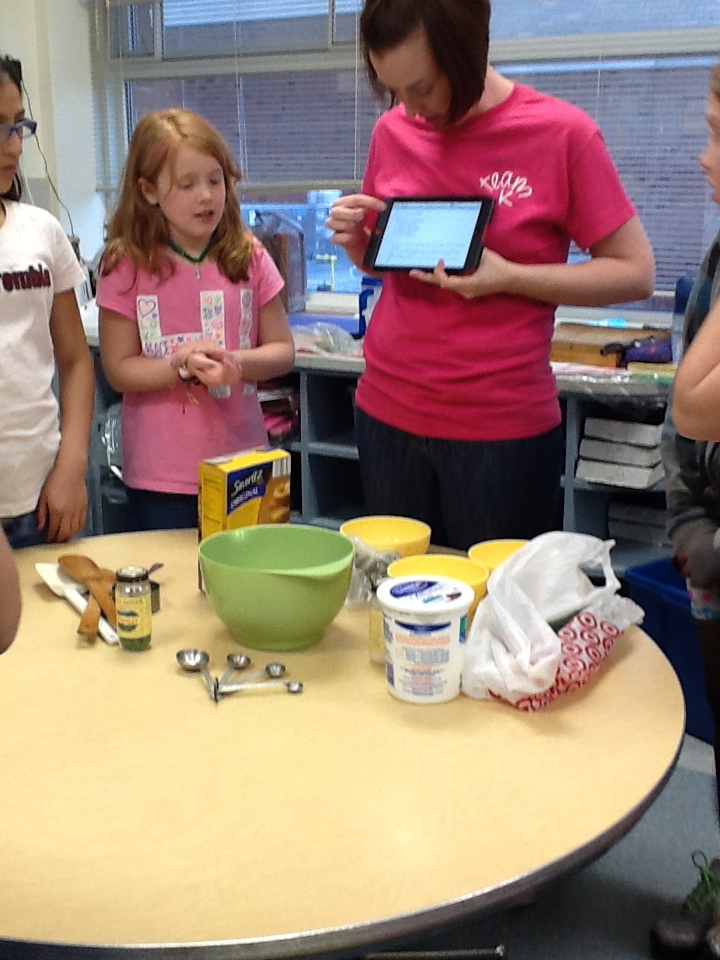
First, we reviewed the recipe and talked ingredients so we made sure we knew what to do. See how handy our iPads are for jobs like this? 🙂

IMG_0751

Sorry, this ones a little blurry, but we’re smelling the spices the recipe called for: onion powder, garlic powder, parsley and dill. Many hadn’t ever seen these before!

IMG_0754

Oh, and there’s basil in it, too! Smells yummy already!

IMG_0756

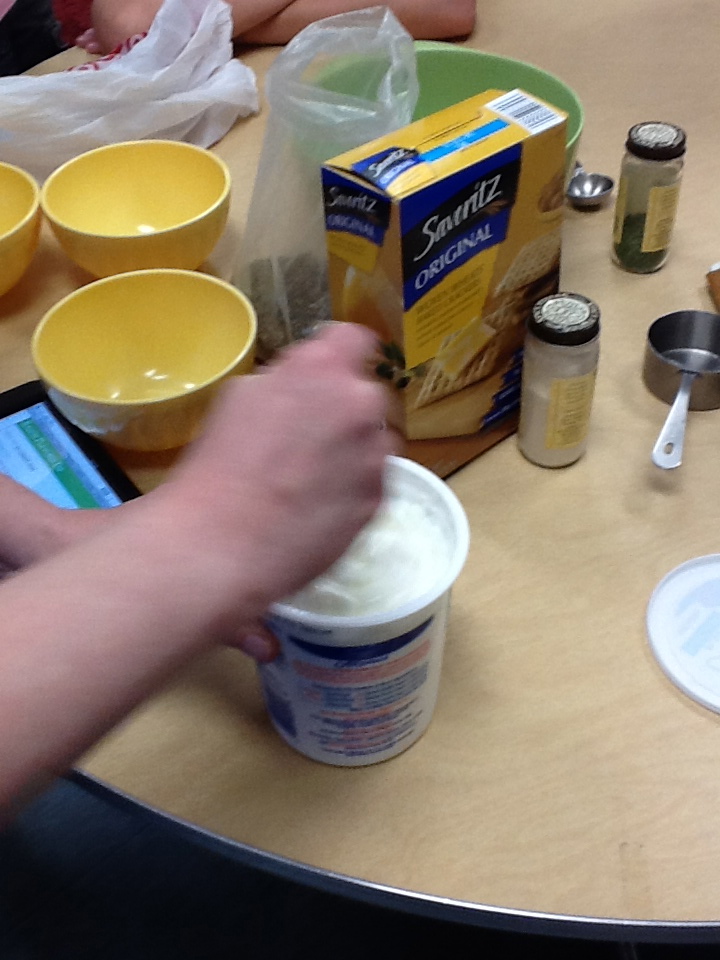
The recipe calls for sour cream, but I decided to use plain yogurt instead. Man, I must have been stirring fast!

IMG_0757

We discovered another part that was important (and in many cases missing) knowledge–knowing the difference between the sizes of teaspoons and tablespoons. Knowing that there are 3 teaspoons in a tablespoon was necessary for use in the final answer, but this was hard for some kids to image without seeing it.

IMG_0760

Spice mix ready to be stirred!

IMG_0764

We needed a 1/2 cup of yogurt for every tablespoon of spices.

IMG_0768

Looking good!

IMG_0774

I forgot a knife. 😦 Cutting a cucumber with the back of a fork is harder than it looks! Eventually I made it happen, though. 🙂

IMG_0776

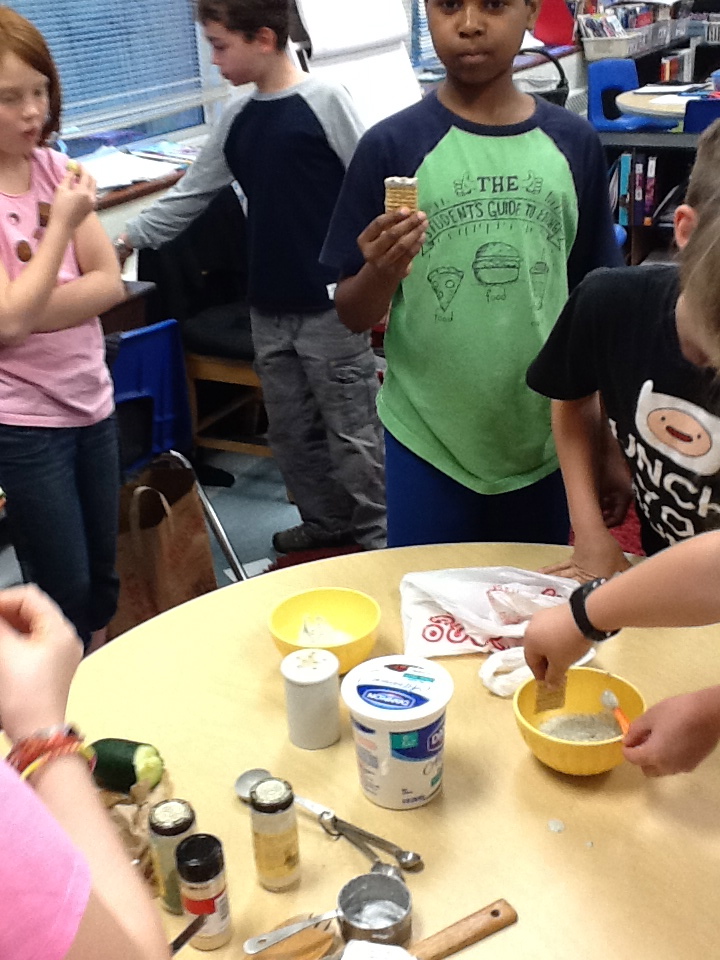
Yum! Ranch dip with cucumbers and Triscuits for our morning Math snack!

So while my cooking class didn’t solve every problem we were having (which I’ll tell you about in Part 3), I do think it gave many of them the ability to make connections they were unable to make before.  And there is so much math (and science) in cooking and baking, I don’t know why we don’t do more of it.  TOTALLY wish my classroom had a kitchen!  It has also made me and my team think about how we want to purposefully involve more of these types of activities into our classes for next year.  We’re thinking it would be a great addition and preparation for next year’s Feast Week, too.

How do you use cooking in your classroom?  What connections do you make for your kiddos to math and science?  Or maybe even reading and writing? We’d love to hear your thoughts and suggestions as we make plans for next year. 🙂

Math Warm-Ups April 15-19, 2013

Yeah, I know I’m posting this a week late.  Sorry! But better late than never, right? 🙂  (I also feel like I must explain that there are no warm-ups to post from this week–state testing left us with a different schedule than what’s normal.)

Monday

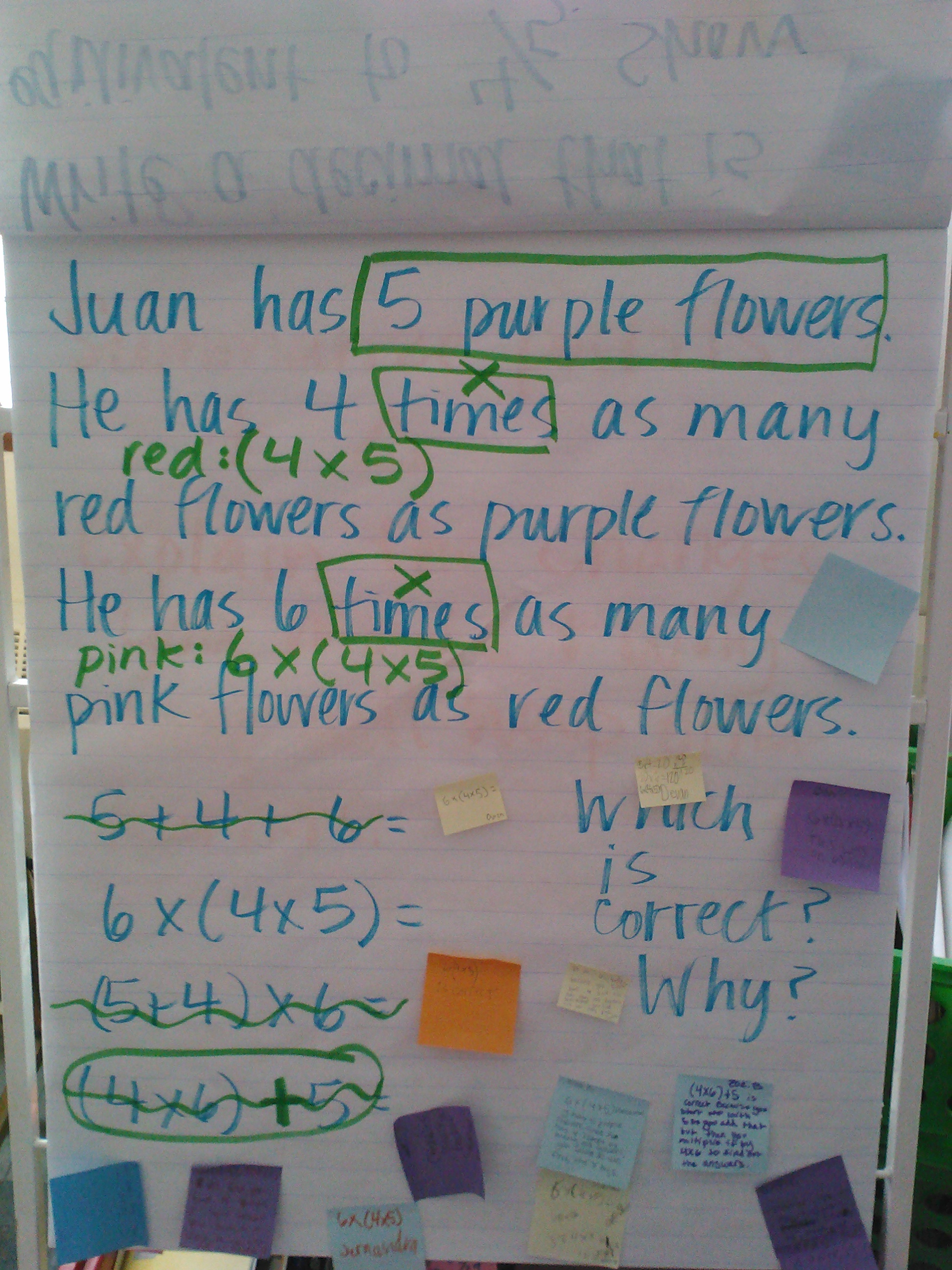
5th graders always need to practice division!

5th graders always need to practice division, and decimal division takes even more practice!


Wednesday

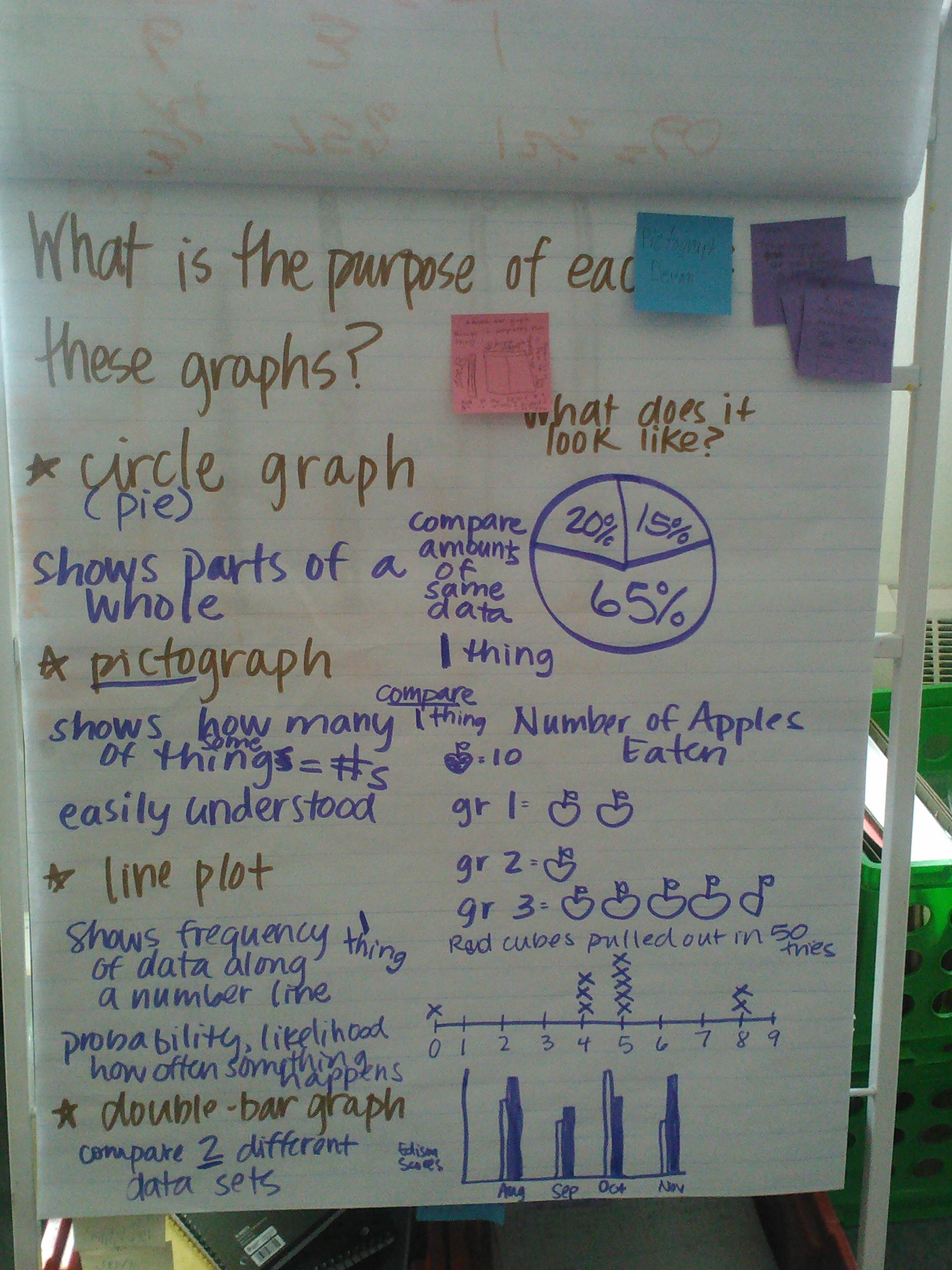
Often the problems we work on for morning warm-ups are from our monthly Edison assessments.  This was one that many of us got wrong, so it showed we needed to review graphs and their purposes.  It's a busy chart, I know, but that usually means we had a GREAT conversation around the problem!

Often the problems we work on for morning warm-ups are from our monthly Edison assessments. This was one that many of us got wrong, so it showed we needed to review graphs and their purposes. It’s a busy chart, I know, but that usually means we had a GREAT conversation around the problem!


Thursday

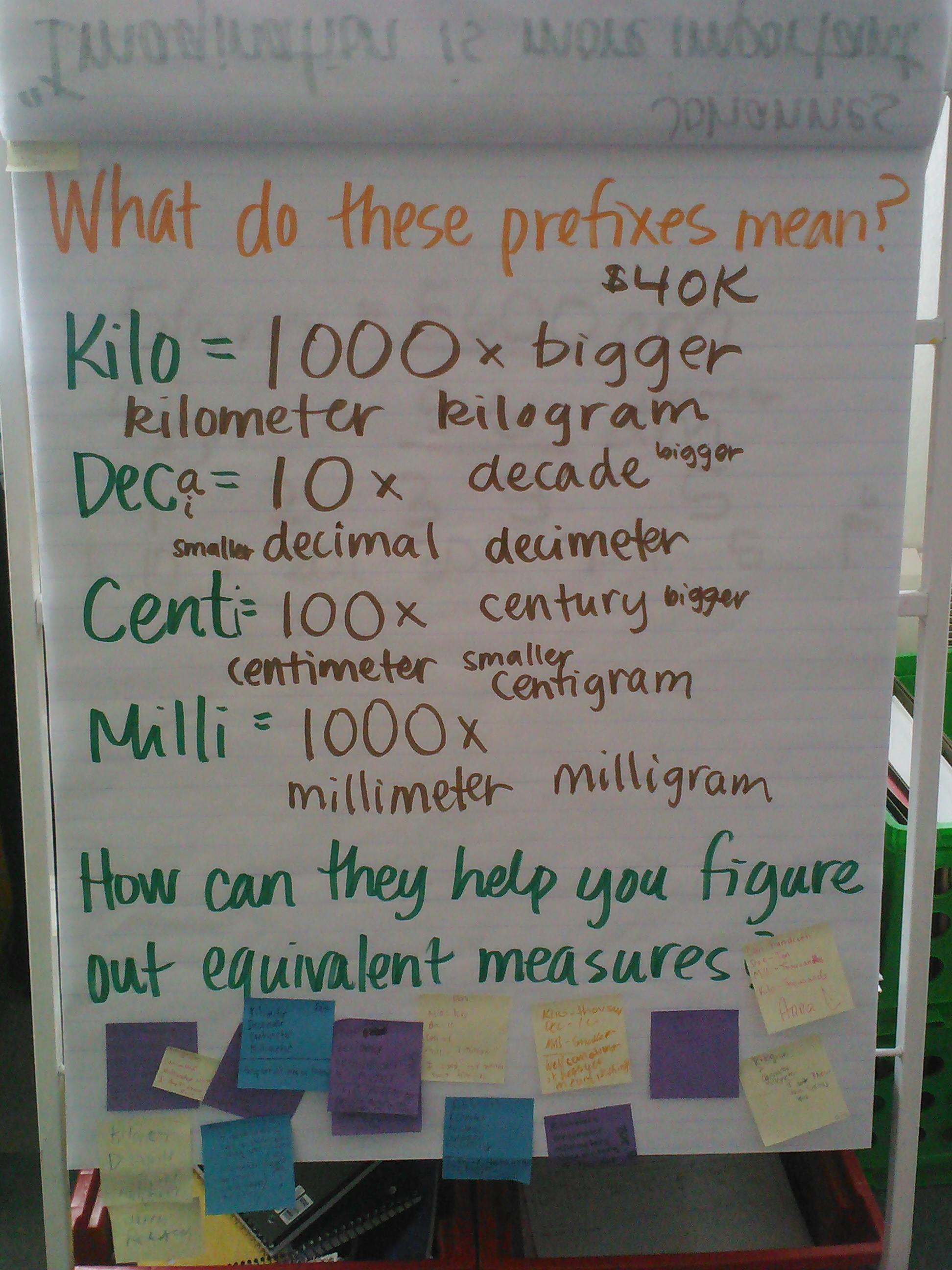
Another thing we needed to talk about was measurement and the prefixes you use in the metric system.  After this, we did some work with find equivalent measures.  Have you ever heard of how King Henry Usually Drinks Chocolate Milk?  This was very helpful to us in our equivalents work.

Another thing we needed to talk about was measurement and the prefixes you use in the metric system. After this, we did some work with find equivalent measures. Have you ever heard of how King Henry Doesn’t Usually Drink Chocolate Milk? This was very helpful to us in our equivalents work.

How did you use math warm-ups this week?  Leave us an example!  Maybe we could try a problem together with you next week!

I Speak Greek When I Teach Math

Or maybe it’s Spanish or Chinese or Pig-Latin, but today I felt like I was definitely not speaking English to my kiddos during math.  Meaning no one understood what I was trying to explain, and many kids ended up more confused than when we first started.  WHAT?  It’s not like I’m new at this, nor to the topic.  We were even working on a problem that I made up!  Needless to say, we all wanted to throw in the towel, or rip up our papers and start over.  Or something else that you shouldn’t do when you’re frustrated.  And no, in case you’re wondering–we didn’t.  But we did put the problem away until tomorrow when we’re fresh and can tackle it again.  And I am already armed with a different plan for how to address it, but am hoping you can help me, too!  (And by the way, after how fabulous the first round of problems-with-posters went the other day, this was all the more mind boggling!)

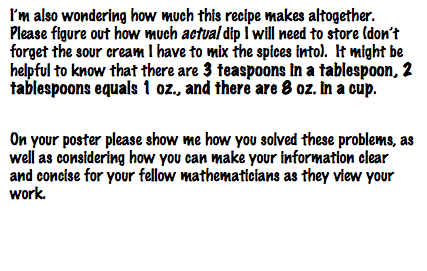
Ok, so I’m hoping that you can help me figure out what might be making my friends so confused.  Here is the problem that we were working on yesterday and today:

Screen Shot 2013-04-17 at 8.55.41 PM

This problem is 1) based on a real-life problem, 2) uses math skills we already have (or at least that are not new!), and 3) really just focuses on making sure they use clear and concise notation to record their solution and thoughts.

Part 2

Part 2

PLEASE give me feedback on parts you see that may  have tripped them up.  After working on it for two days, I see a couple of things, but I really expected this to be a rather simple fraction problem; the difficulties they were having were not ones I had anticipated.  My hope was they could focus on the poster part, as a prep for how they’d answer questions as we start testing next week.  Instead, now they’re all convinced that math is hard and confusing.  Pretty much a teacher fail, huh? 😦

Thoughts?  Oh, and I guess it’s a given that I want you to be nice.  Truthful, but nice, please. 🙂  And maybe you could even tell me what you think the answer is.  That might help me see if the problem reads the way I intended it to.  THANK YOU, FRIENDS!

Math Warm-Ups April 8-12, 2013

Wow–how has it been a whole month since I last posted math warm-ups?  Oh, yeah, because MARCH was crazy–including a SNOW DAY and SPRING BREAK right next to each other.  And not that April is any less busy, but at least this week could be considered somewhat normal.  Oh, not it wasn’t–I had a sub on Tuesday.  But hey, what’s normal anyway, right?  Regardless, here are some recent math warm-ups I haven’t shared yet.

First of all, a couple from last week:

This one was to help discuss fraction place value, and also to help us talk about writing clear and concise answers to questions like these (in preparation for MAP testing in just over a week).

This one was to help discuss fraction place value, and also to help us talk about writing clear and concise answers to questions like these (in preparation for MAP testing in just over a week).

Can you tell I ran out of paper and didn't have a chance to get more for a couple of days?  Sorry. :)  This one is another place value one, hoping that students would see the relationship between money and fractions, and how they can just "move" the decimal (by multplying by 10), rather than having to use the algorithm to solve the problem.

Can you tell I ran out of paper and didn’t have a chance to get more for a couple of days? Sorry. 🙂 This one is another place value one, hoping that students would see the relationship between money and fractions, and how they can just “move” the decimal (by multiplying by 10), rather than having to use the algorithm to solve the problem.

This week’s warm-ups:

Wednesday

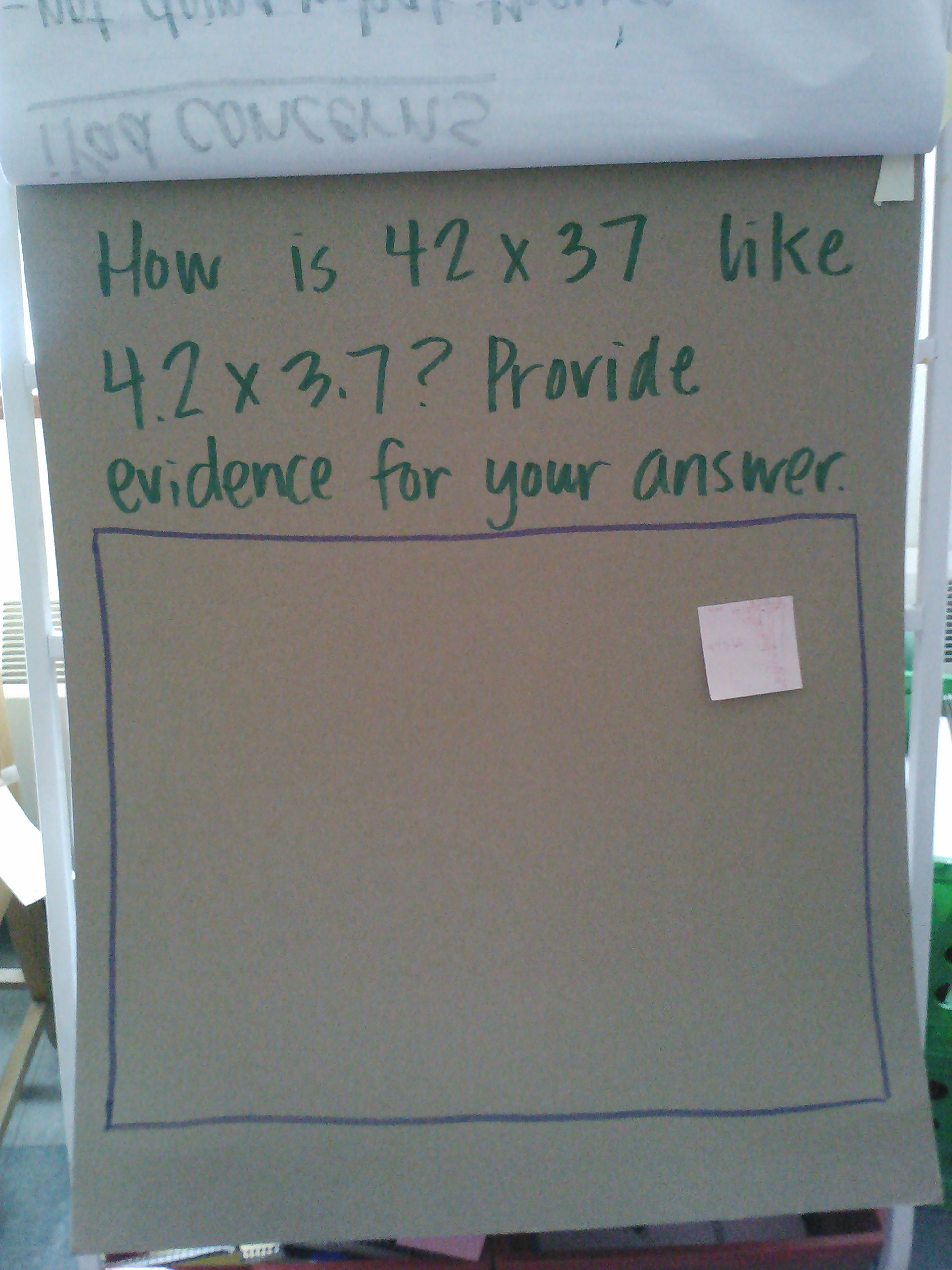
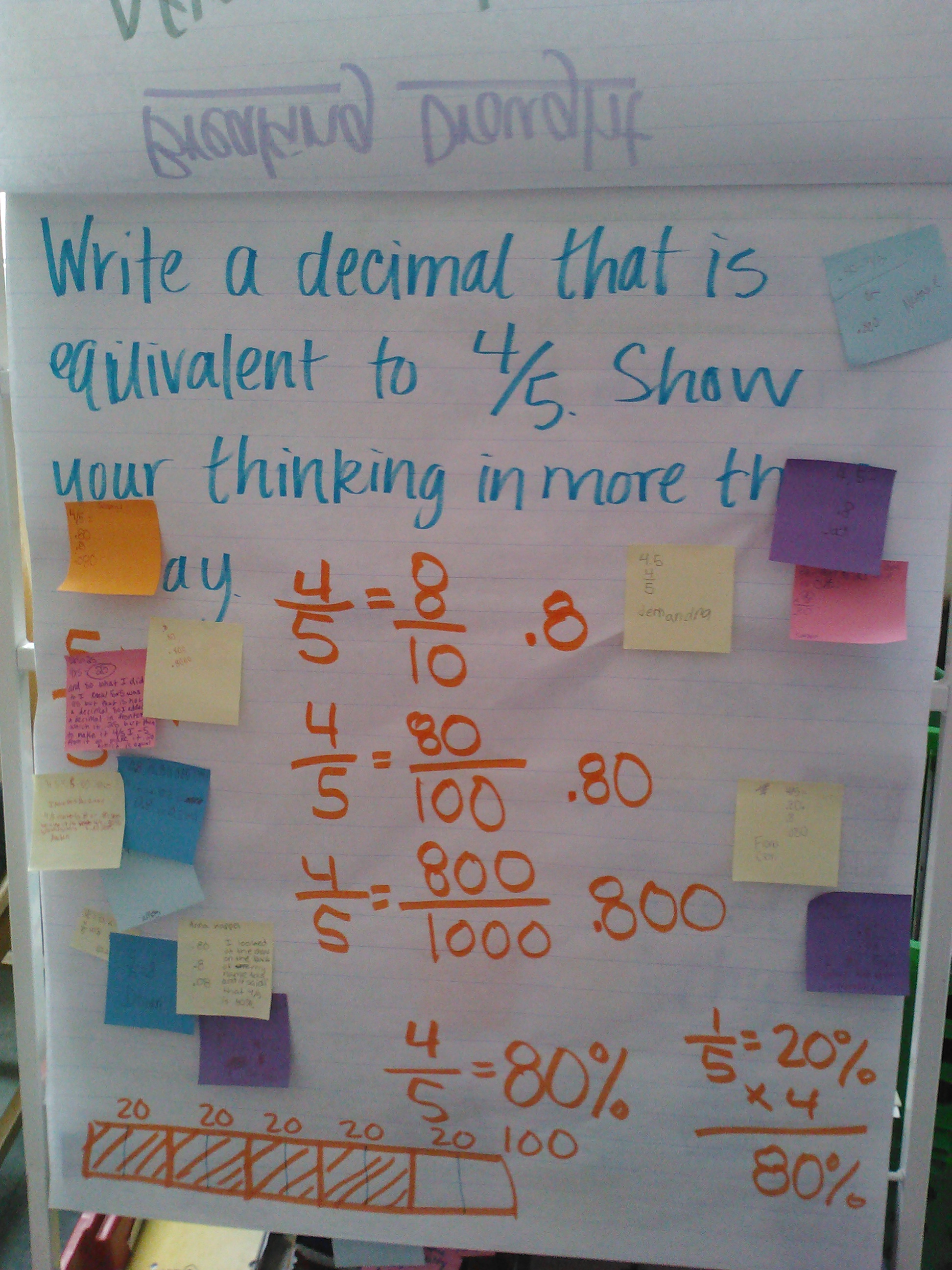
We needed to reminded (again) about equivalent fractions, as well as their tie to decimals.

We needed to reminded (again) about equivalent fractions, as well as their tie to decimals.

This one came right off of our Edison benchmark practice from this month.  We're using the problems on that assessment to help us analyze the "why" of the ones we get wrong.  This can help us not make those same mistakes again the next time we encounter them.

This one came right off of our Edison benchmark practice from this month. We’re using the problems on that assessment to help us analyze the “why” of the ones we get wrong. This can help us not make those same mistakes again the next time we encounter them.

This is another Edison problem, but I changed the numbers.  Many students are still not remembering to make the denominators the same before they add.  This one also elicited great conversations around simplifying answers--both how and why here as well.

This is another Edison problem, but I changed the numbers. Many students are still not remembering to make the denominators the same before they add. This one also elicited great conversations around simplifying answers–both how and why here as well.


I’m hoping I’m back in the routine of posting warm-ups.  Sorry if you’ve missed them! 🙂