Dot, Dash, Slash, Comma (And All That Other Stuff, Too…)

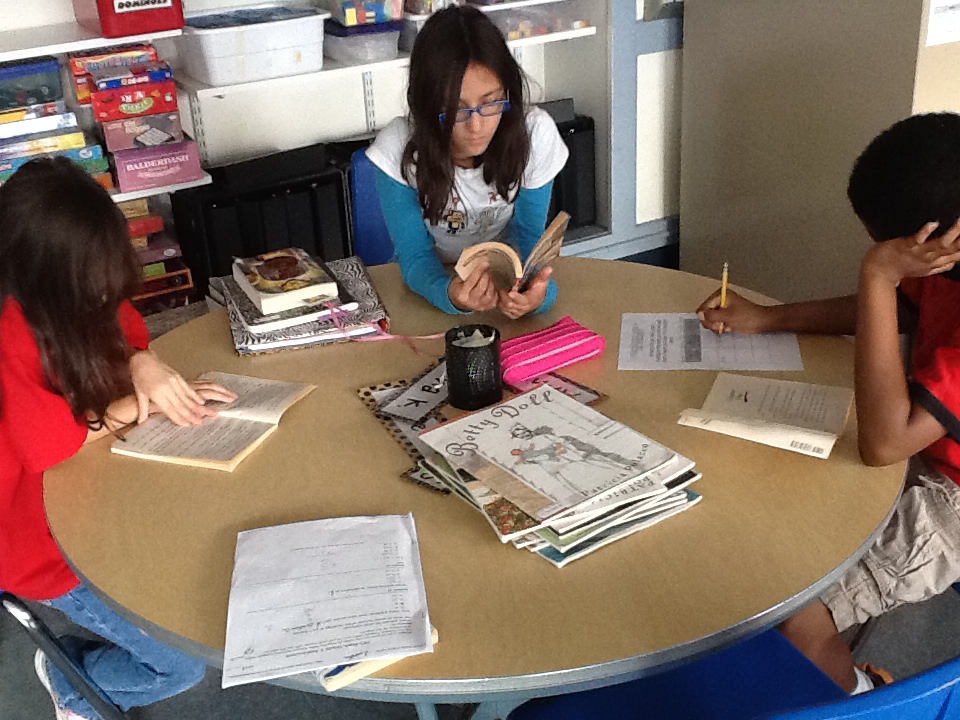
We have been on a journey these last few weeks.  It’s a journey many of my students have never been on before.  And it’s related to these piles of books:

Can you see it?  All the punctuation goodness on that table?  No?  Well my kiddos can now.   Let me tell you about it. 🙂

Punctuation is a funny thing.  No?  You never thought of it that way?  Well, it’s one of those things that has gotten a bad wrap for a long time, and without good cause–in my opinion.  Many people (including most kids!) think of punctuation as a bad word.  It’s just a you-have-to-go-back-and-add-it-in-the-right-place-at-the-end-because-your-teacher-told-you-too kind of a thing.  Not a this-really-matters-and-helps-me-as-a-writer kind of thing.  And that’s too bad.  Punctuation is a powerful tool for a writer, and I want my kiddos to know that.  But it’s only a powerful tool if you know how to use it, and most of my kids don’t.  At least not yet.  With this goal, we started 2nd quarter Writer’s Workshop.

After spending a bit of time on what they already knew (or thought they knew) about punctuation, I asked them to tell me if they’d ever thought about what it meant.  Most said no.  Some even groaned a little bit at the beginning of this conversation when I said the word.  It was obvious that they’d never had a positive experience with this topic, and that made me a little sad.    As a means to hook them in, and get them to understand my goal for this study, we visited a section of a book we have read together and all love: Because of Mr. Terupt by Rob Buyea.  I found a place in the book I knew we could all chew on together; the paragraph right before the big action in the book was a great place to dig in.  I asked them to talk to a partner next to them about why the highlighted sentence was written the way it was, and how it would be different if it had been written without the given punctuation.  We discovered that the punctuation (which was mainly a series of commas) was there to force us as the readers to slow down.  The part just before was fast-paced, crazy and choatic; the commas made us slow down and pay attention to what was happening next.  And what happened next was the climax of the story–without it, the rest of the book wouldn’t have happened.

So remember that pile up there?  After we set the table, and got them feeling a little more love for this idea of punctuation, I put them into study groups.  They had one goal (ok, I guess it was really two): find examples of punctuation in the texts they were given, and figure out what it means when authors use it.  They had a chart to fill out with their partners and a big chunk of time to search.

After the groups had a couple of days to study (yep, you heard right–they worked diligently on this treasure hunt for 2 days!), we gathered to collect our thinking on a big class chart.  They took turned sharing the marks they found and telling the rest of us what they thought it meant. For some this was hard thinking, since they hadn’t done it before.  By the end of the first day we had this:

Ok, that’s not exactly true.  We had all but the hyphen part, but hey–good stuff, right?  They were amazed that they had figured all this out, and that they did it all without me telling them what it was.

The second day we added some thinking about hyphens:
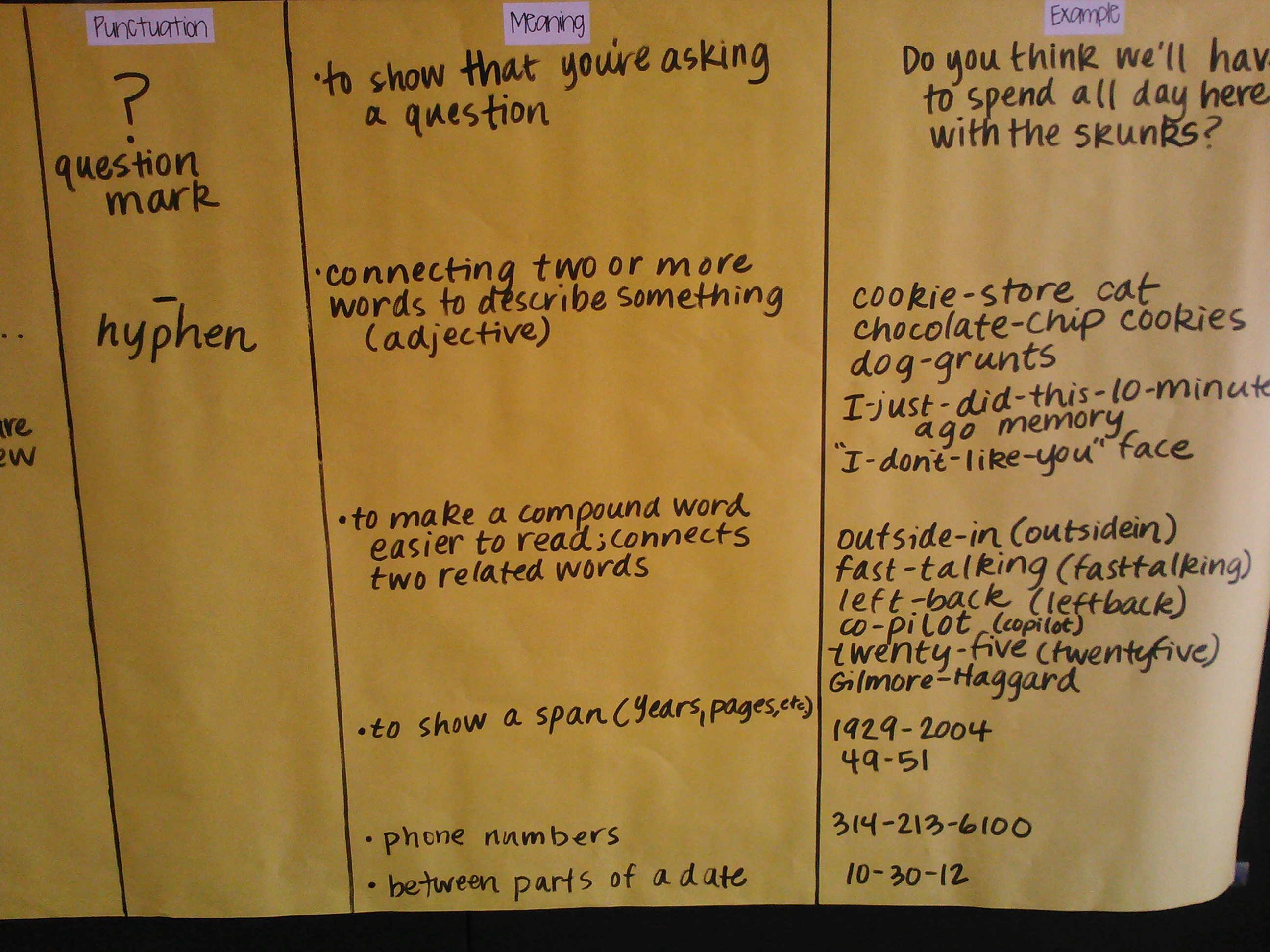
I wish I would have recorded this conversation, because it was so great!  It started with the discovery that a hyphen (-) and a dash (–) are actually two completely different punctuation marks, which mean (and are used in) completely different ways! (Did you know that?) This totally blew some kiddos’ minds and so we had to dig in a little deeper to figure out what each meant.  And hyphens were first.  The first two meanings were hard to explain, but once we started to find examples in the texts we were reading that fit each one, it became more clear.

Since then, we’ve come back every day to add a little more smart thinking.  So far (and we’re only a little past halfway done), we have another whole chart the size of this one, plus we’ve started a third.  The things they are discovering are amazing.  The most amazing–and meaningful–part is that they’re doing it all for themselves.  I’m not pouring the information into their heads, or having them spend time correcting sentences in an isolated exercise for morning work; we’re learning together and really focusing in on what these marks mean.  They’re beginning to care, and they’re beginning to notice these marks more and more–in their reading and now in their own writing!  They are aiming to use them in new ways, and can even tell you how a paragraph is punctuated as I read it aloud to them.  Often I’ll stop after we’ve read something in our chapter book and ask “What do you think that looks like?” and they can tell me exactly what kind of punctuation is there!

Teaching about punctuation is not hard.  But it is time-consuming, and it does require me to know more than I may have first considered about the topic, as well.  But the time that is definitely well spent.  These friends are walking away from each conversation we have with a new understanding of how to they can use punctuation just like word choice, organization, paragraphing, and voice to create a more meaningful experience for the reader.   Pretty cool, right? 🙂

Now the first section hangs on our windows, where it will be there for us to use for the rest of the year!  The goal (and I think they will make it!) is to make their punctuation chart “6 windows” long.  So far we’re at 4 or 5, and still going!  SO MUCH LEARNING!!

What are your feelings about punctuation?  How did you learn about it when you were in school?  How do you teach punctuation in your class?  If you’re a parent, what are you noticing (or hearing) about punctuation with  your student?  Please comment and let us know what you’re thinking! 🙂

Happy Halloween! (A few days late…)

So yeah…Halloween was last week.  Sorry!  I haven’t gotten it up on the blog yet.  Hope you aren’t mad at me for making you wait for this cuteness.

At our school, Halloween is a fun-filled afternoon of costumes, parades and parties.  This year, though, we started a new tradition for our parade.  Next to our school, a great place called Aberdeen Heights was recently built.  We’ve formed a great relationship with them and many classes in our school have connected with the residents there.  So our parade, instead of going around our school went down the street and through their campus!  We had such a great time sharing our costumes, and waving at all the happy residents who came out to see us.  The weather that afternoon was a bit chilly, but so nice and sunny that we hardly even noticed the nip in the air.

Somehow I only managed to get one (not so great) picture of our parade.  Sorry. 😦

After the parade, we came back to school for our party.  There was a group of great parents who planned it for our grade level, and each classroom had a different activity.  We rotated through the fun for an hour or so.  Again….I was having such a great time I guess that I didn’t manage to take very many good pictures.  But I’ll share what I have:

What a great combination of costumes!

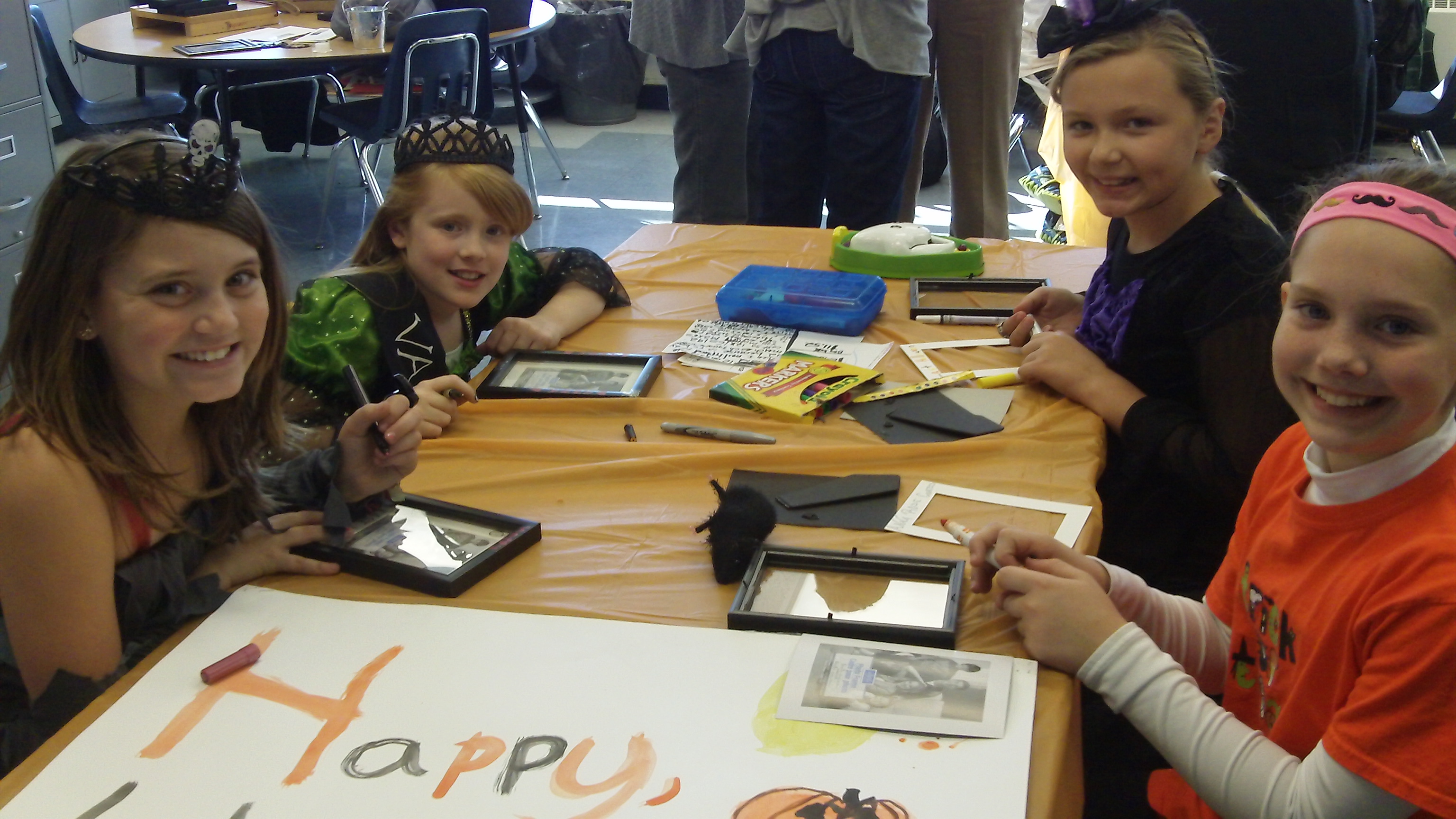
Making frames: Anna K., Rosalee, Natalie and Anna C.

Smile! More fun with Fiona, ZB, Sophia and Jack.

Keelan, Peter, Aiden and Seamus making a Halloween frame for pictures we took together.

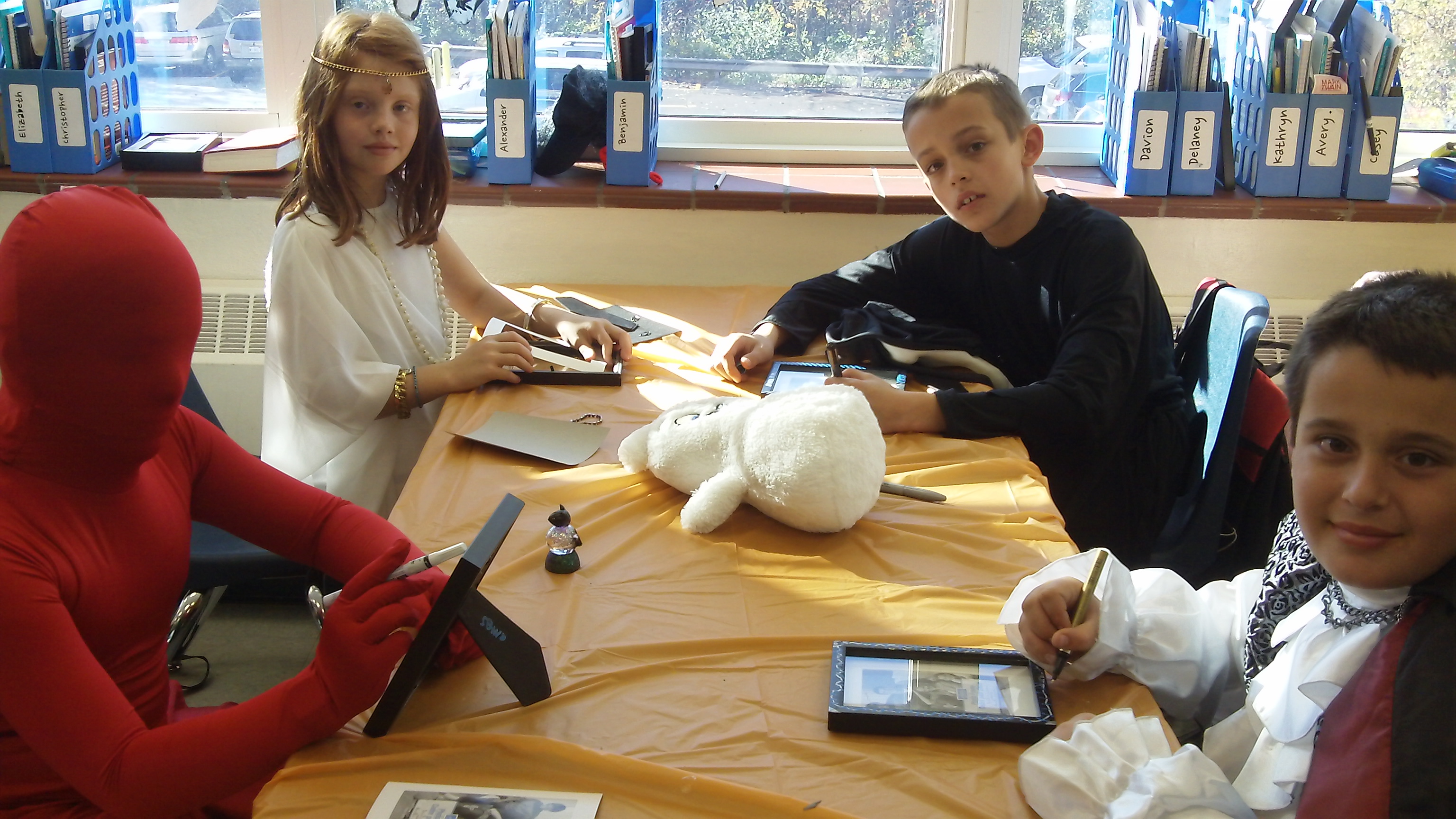
Sammy, Owen, Ames (yep, I promise that’s him in there!) and Don

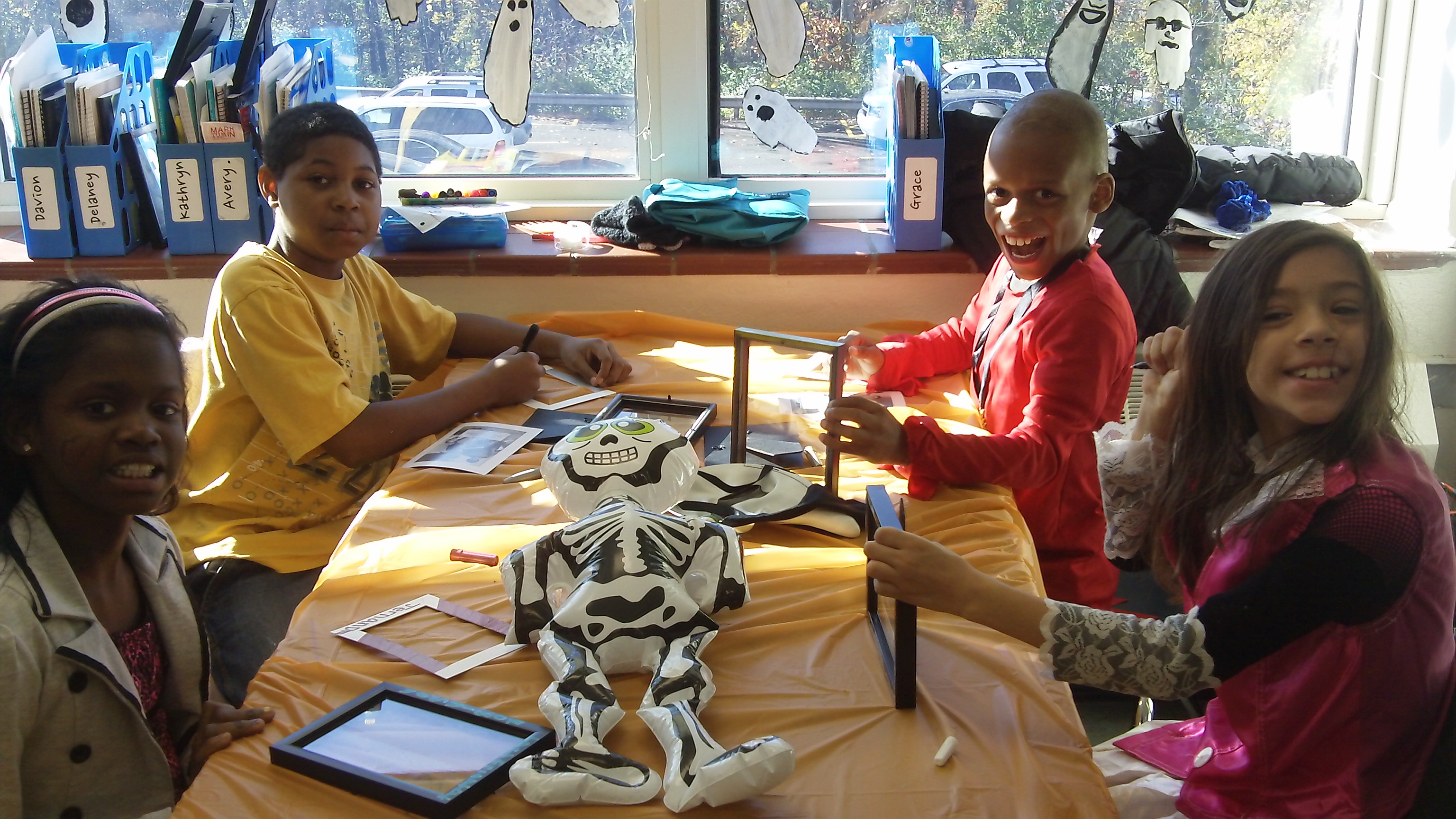
Devan, Damonte, Jernandra and Rebekah

Along with the picture frames and photo booth, we also played some games and ate some fabulous Halloween goodies!  The rotation idea was a super one, and the kids seemed to like it.  Thanks to all the great volunteers who made this happen for us!

And now one last bit of Halloween fun:

Mrs. Hong, Mr. Kieschnick, me and Mrs. Brown

Happy Halloween!  How did you spend it?  We’d love to hear about your Halloween traditions. 🙂

Math Warm-Ups Oct. 29-Nov. 2, 2012

This week’s warm-ups–already!  Aren’t you proud?!  Another week of review of things we’ve already done, but needed to tweak a little bit.

Monday

This warm-up was in response to a reflection I had them write the Friday before.  I asked them to tell me what they’d learned during Box Factory, how their thinking had changed, and what questions they still had.  These were ones that came up on several kiddos’ papers.  This was an opportunity for me to see what other kids’ ideas were before I just answered the questions for them.  And what I had hoped would happen did–the other kids in the class gave responses that cleared it up for us all. 🙂

Tuesday

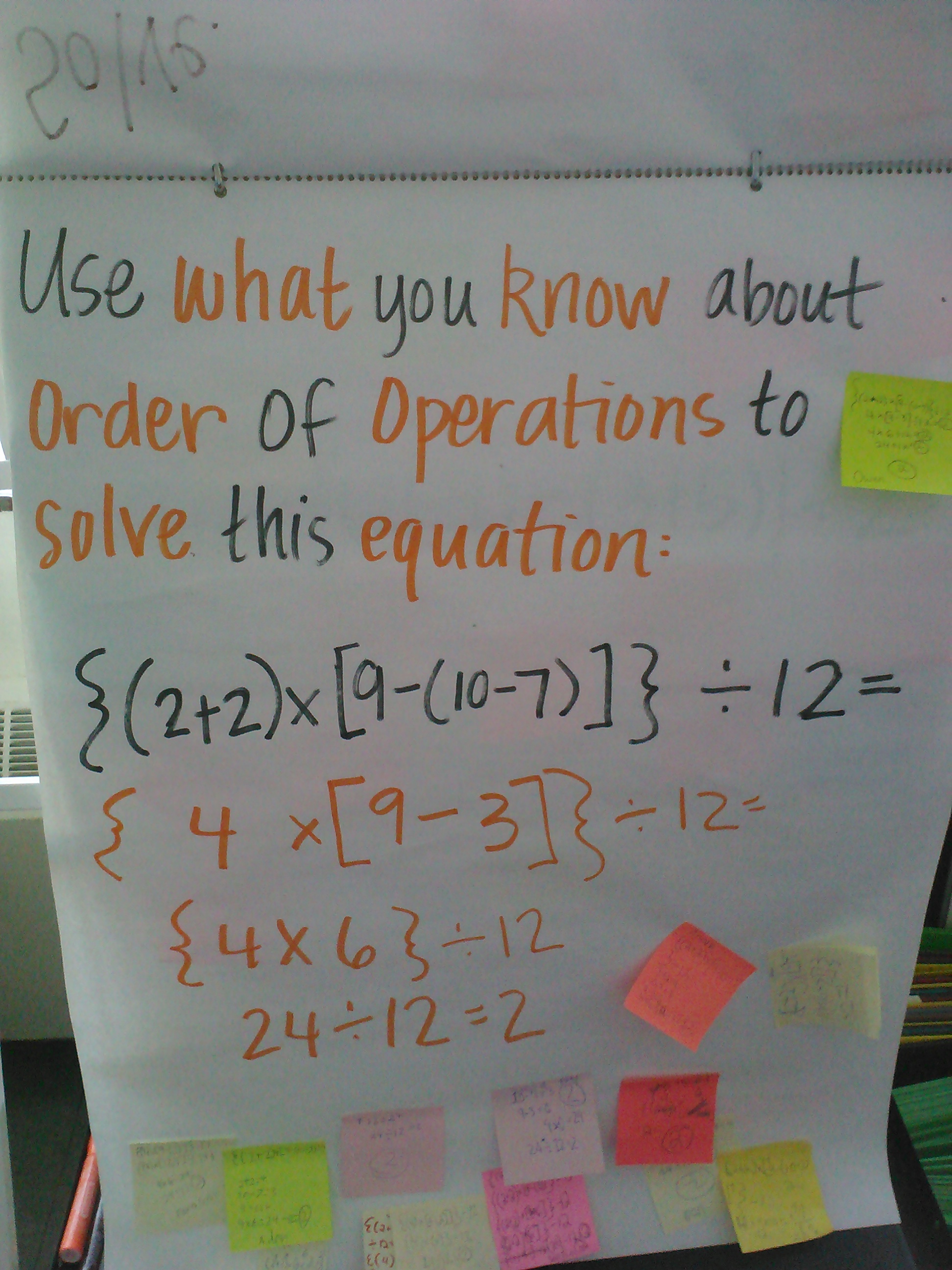
This equation gave us a good reminder of the order of operations, and how you have to DIVIDE or MULTIPLY before you ADD or SUBTRACT.  We ended up with answers of 4 and 16, and had to discuss which one was correct.

Wednesday

This one was from Halloween, can you tell?

Thursday

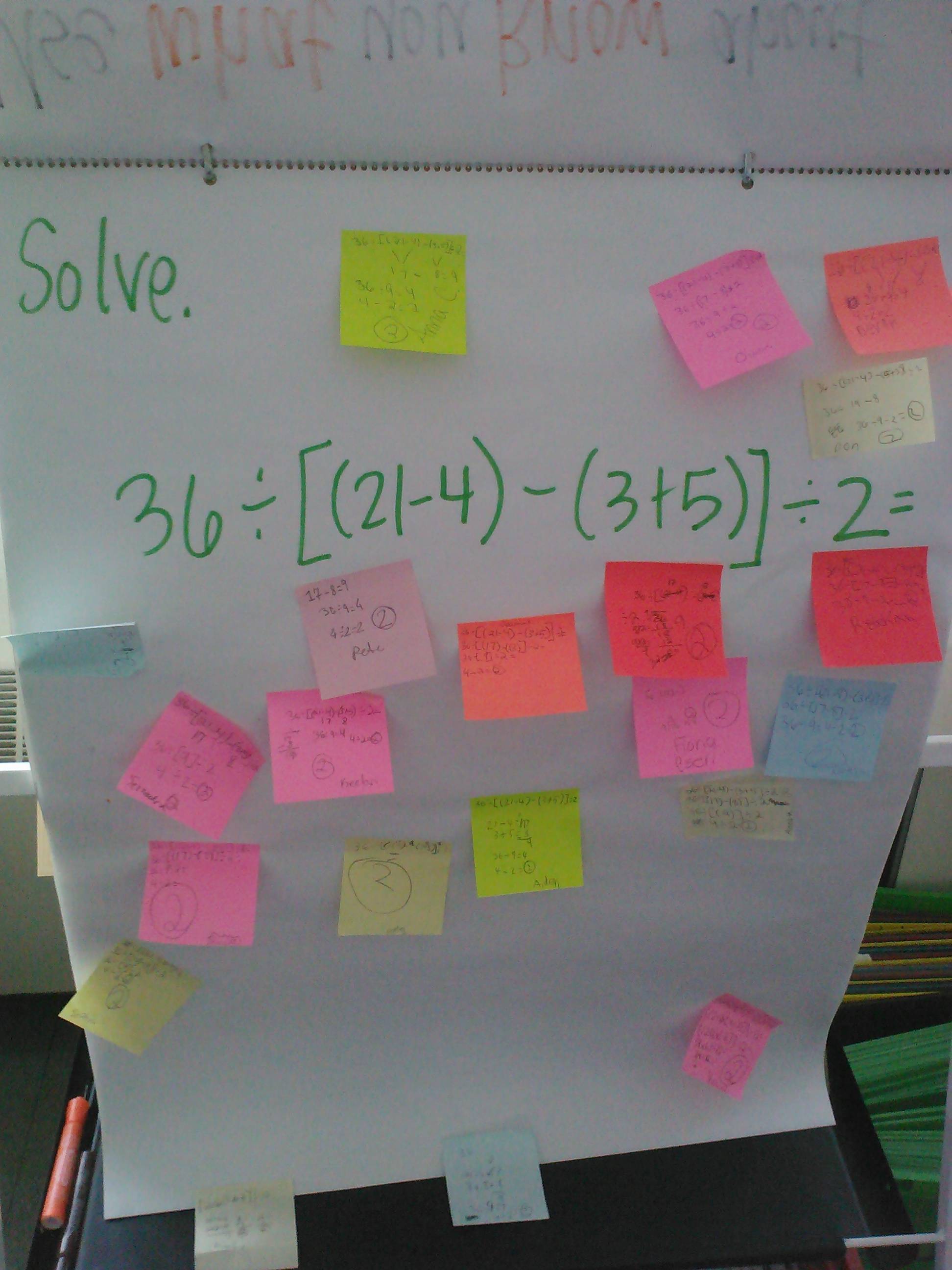
The discussion of “which comes first” came up again, only this time the answer was that it didn’t matter since both of the signs were division.  You would just do the in order from left to right.

Fridays are a little crazy in our classroom in the morning because many of us come in later due to Instrumental Music, so no Warm-Up today.  Enjoy working through these and let us know what you think.  🙂

What’s All This “Box Factory” Business?–Part 1

You may have heard me or my students mention the Box Factory lately, and wondered what in the world we were talking about.  Let me tell you about this fabulous math work we’ve been doing lately.
In 5th grade, we have a unit on 3D geometry, focused around finding volume of different kinds of rectangular prisms and figuring out a formula for how to do this (l x w x h or b x h).  This year we incorporated a unit by Cathy Fosnot, which created a context for this learning.  Enter the “Box Factory.”

The basic premise of the investigation is that kids work in a box factory and have to figure out certain things related to volume and surface area (although these things are not specifically named until later in the unit).  There were three parts, and kids worked small groups to investigate the answers to these questions:
1.  If the box factory wanted to create boxes that held 24 items, how many different boxes could they create?  What would the dimensions be of those boxes? Which box would be the cheapest one to produce? There were 16 possible answers to this question, and the students used cubes, graph paper, equations, drawings, or whatever necessary to figure it out.  They had to then create a poster to show their strategies and explain their thinking to show to the other groups.

2. How much cardboard would you need to cover each of these boxes? This one extended the conversation into surface area, and invited students to now look at the outside of the box, instead of just the inside.  Most groups figured out that if they used the formula (2 x L) + (2 x W) + (2 x H) to determine how much cardboard they’d need.  The cheapest boxes to make would be ones that are closest to the shape of a cube, as opposed to a long, skinny box.

3.  If the factory created three sizes of cube-shaped boxes–2 x 2 x 2, 3 x 3 x 3, and 4 x 4 x4, how many units could each hold?  If it costs 12 cents per unit, how much would each box cost?  This one looked at the inside again, and added another layer of multiplication (with money) to figure out the final answers.


All throughout this investigation (which goes for about 10 days), the focus is on kids discovering strategies for volume, rather than just giving it to them.  Through the posters they create and the Math Congress conversations we share, they are also working on sharing and representing their thinking.  They are learning how to make their representations clear and concise so that other people can understand exactly what they did.

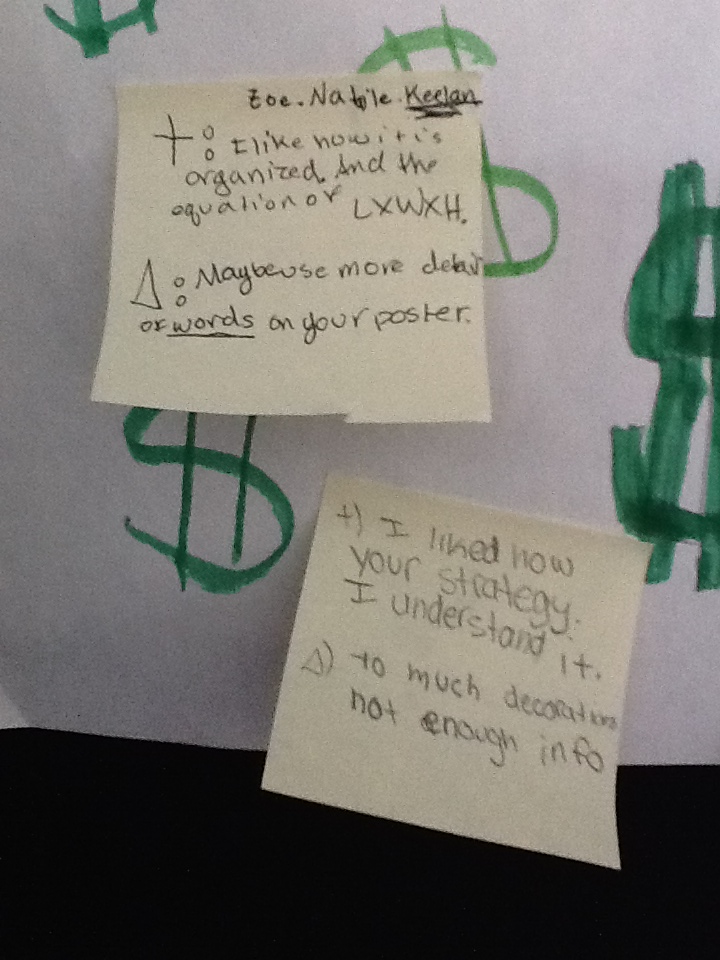
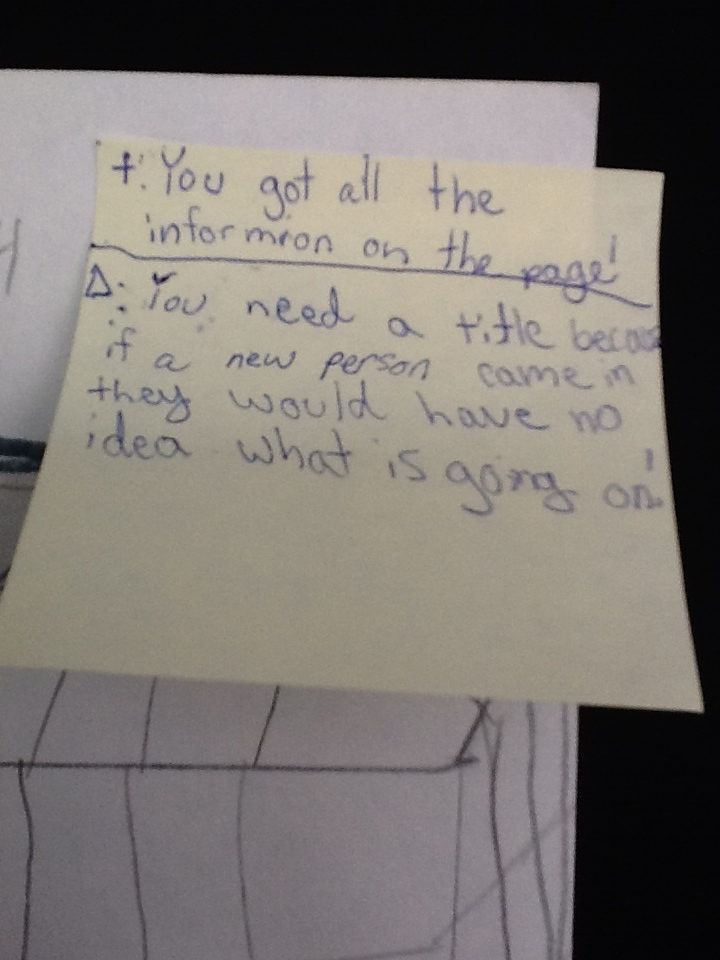
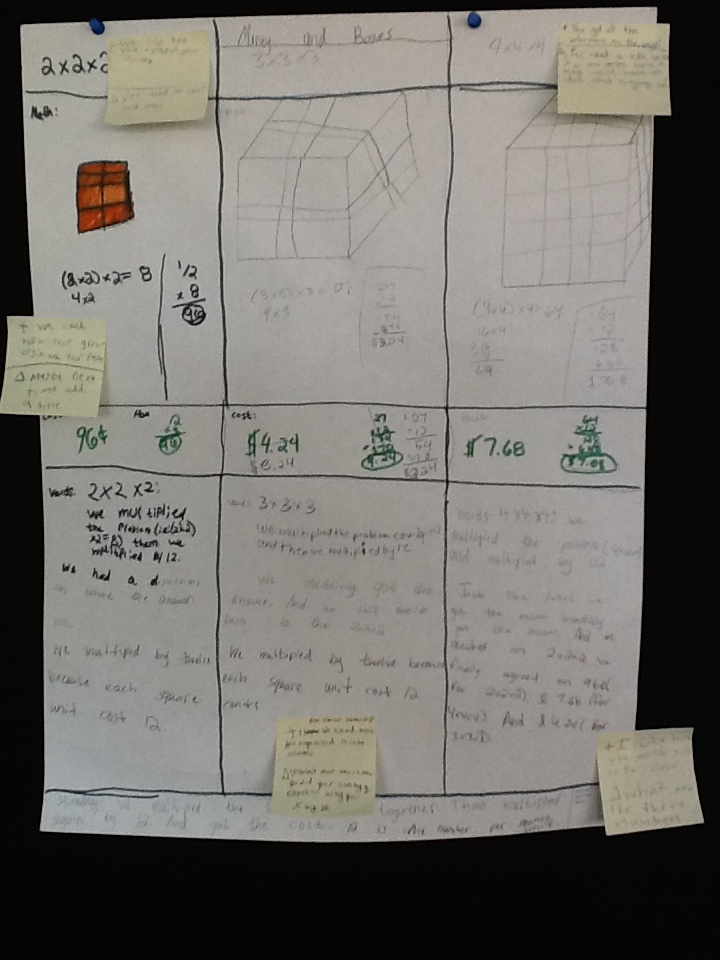
This poster-sharing part is not new to me in Math Workshop.  But Fosnot’s unit added a layer I’ve never thought of before in math–revision.  Much like when mathematicians publish proofs (and like we’d just spent time on in Writer’s Workshop!), students were able to get feedback from others on what worked, what was confusing, what they should add or take away.  They they had the opportunity to revise and edit their posters before they shared.  With each new poster they created, they added new ways of showing their thinking clearly.   They did this by discussing with their group, and then leaving suggestions on post-its.  We used the “Plus-delta” model to share something we liked and something we’d change:


So by the third time around, we were pretty great at showing thinking on our posters.  Even though you didn’t see all the steps, you can still appreciate the clarity and organization of these:


Have you ever done a Cathy Fosnot unit before?  How have you used revision and feedback in math to clarify thinking? What strategies do you use for teaching volume? We’d love to hear about it!

More Math Warm Ups from October 2012

I hate that I don’t have dates on these.  That’s what happens when you get too lazy busy to post them in the week you actually did them!  But hey, it’s better than they’re here, right?  These were from the last couple of weeks of school.  We’ve been studying volume, which I hope you can tell from the questions I asked.

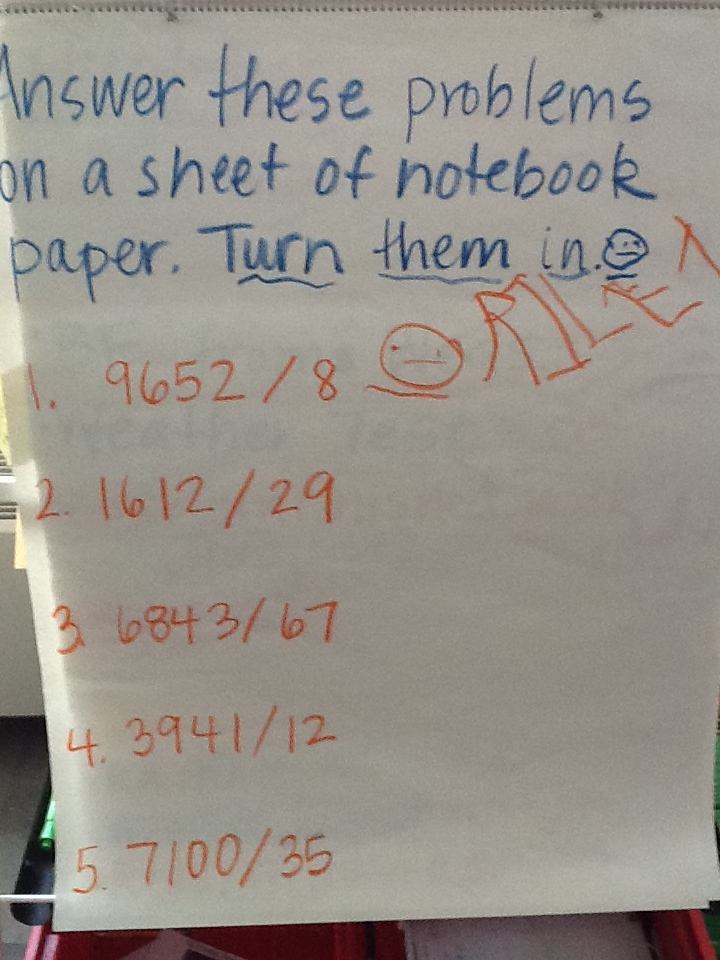
This was one a review at the end of a division unit that we just did.  Needed to double check that they hadn’t forgotten how to do it with 4-digit numbers!


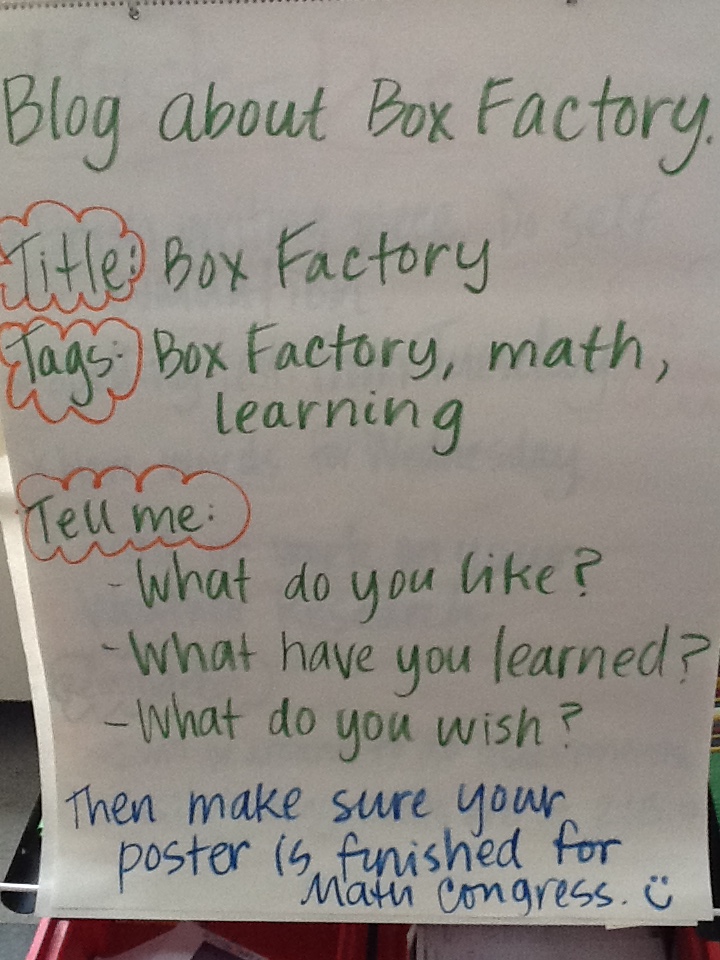
This one is a great example about how we use our blogs in every subject, and on this day we were writing about math.  Box Factory had given us much to talk about, and this was their chance to show me what they’d learned.  Be sure to check out what they said on our blogs.  They used the tag Box Factory to organize these posts.  The second day this one was up, I added the last part, since some needed to get ready for Math Workshop later in the day.


My son, Riley, who is in kindergarten, go involved with this warm-up.  He has been working on drawing smiley faces, as well as learning to underline, so he wanted to put his mark on our chart this day.  Again, we went back to division for added practice.


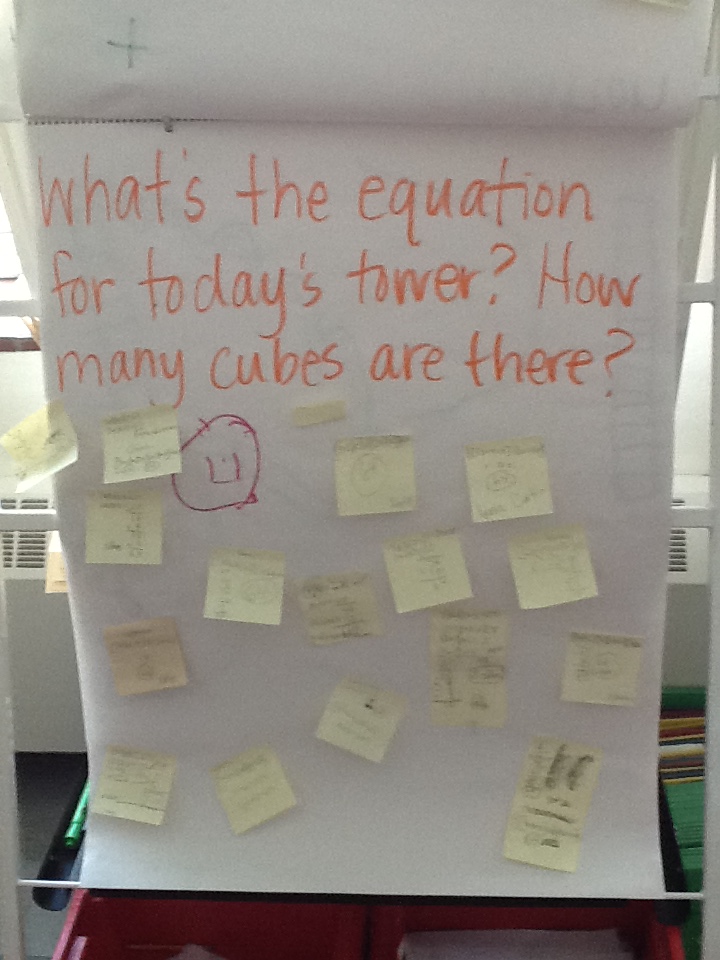
This one was an extra special warm-up, because it totally came up by accident.  The backstory is that a few days before, Riley had been building with the multilink cubes in our room and created this tower:

The more I looked at it, I thought it would be a great extension of the volume work we’d just done.  My hope was that kiddos would see that they could use the formula for volume that they’d just learned to find how many cubes were in the main rectangular prism and then add on the top “extra” ones.  And that’s exactly what they did.  (And again, you see Riley practicing his teaching–and writing–skills as he contributed to making the chart.)


This was the next day, to give them another similar type of tower.  This time it looked like this:

Similar idea, too: there are two big prisms, plus a little one that is 2 x 2 x 3 in the middle, then those 4 extra ones on the side.  Again, my friends did not disappoint, and figured out how they could use what they already know to figure it out.  Riley was very impressed with their smart thinking, and was eager to learn what they had figured out when I picked him up at the end of the day.


There was one more tower–which I guess I didn’t get a picture of, sorry!–and the focus today was really more on how to write what we did, how to record the thinking when you do it in steps.  This connected really nicely to all the work we had done previously with grouping symbols and order of operations.  Love that!

Stay tuned in the next few days for this week’s warm-ups.  I promise I won’t make you wait as long as you did for these. 🙂