Lego Challenges With Mrs. Sisul

We had an amazing 1st-day-back-from-Spring-Break today!  Our principal, Mrs. Sisul, has been learning about engineering and STEM with Legos, and volunteered to come set us up with some Lego challenges if we were interested.  Well, yes, of course, Rm. 202 friends were interested!  Luckily she was free this afternoon and came on up with her big ‘ole box of Legos!  Check out what happened! 🙂

She started with a quick reminder of what STEM means (Science, Technology, Engineering and Mathematics), and then introduced what we would be doing: every kid would get a card with a challenge and they would work to do that challenge with Legos.  Pretty straightforward, right?  Well, they she led us through a great line of thinking about how we work best, and how kiddos would have the choice of how they tackled the challenge: alone, with a partner, a group of 3, a group of 4–whatever worked for each kiddo.  She shared her example that she knows that as a learner she likes to be able to bounce ideas off of another learner, and so she’d focus on finding another person to work with.  She asked me to share my strategy, and I talked about how I knew that that plan would DEFINITELY not work for me.  I am the kind of learner who needs to process and plan by myself first, and then I might want to work with someone else to blend ideas, get a critique or ask a question.  I know that if I went with a partner right off the bat, I wouldn’t have anything to share with them–so if I was Mrs. Sisul’s partner, I wouldn’t be a very helpful partner!  Right off the top I could tell that Rm. 202 kiddos were thinking about what would work for them, and they knew what would be best.  We had all sorts of groups–singles, partners and groups of 3.  Some kiddos worked alone, but right next to another friend so they could get feedback that way.

Ok, once teams were developed, Mrs. Sisul gave the guidelines for how kiddos would get their Legos.  She walked them through a planning session where they were to really think through what kinds of Legos they’d need.  She would call names of kiddos 3-4 at a time, and they’d have 30 seconds to “block shop” and then get started.  Once everyone had an initial visit to the pile, they were free to come back for more.  And since it would be virtually impossible for me to explain the amazingness with which these kiddos followed this protocol, I had to record it.  Check out what it was like when Mrs. Sisul dumped the Legos:

Once we got started, I roamed around and got some footage of them working. I know, kiddos wanted me to do the challenges, too–but I couldn’t document it to share with you if I did that!  Maybe next time. 🙂

Here are some videos that share more of their thinking while they got started:

This one has some great thinking about what happens when things are hard (which this was for some of us!):

There’s one more, and it’s really the one I’m the most tickled about.  It’s an example of what happened in our room when we put 20 kids and 2000 Legos together.  I want you to think about what you see first, but then I’ll tell you why I liked it:

As I watched this video, I noticed these things:

  • quiet voices
  • pleases and thank yous
  • kiddos finding pieces for others
  • sharing
  • everyone just taking what they needed
  • no one grabbing, hogging or arguing
  • kiddos respectfully letting others into the circle
  • focus
  • engagement
  • motivation
  • laughter
  • encouragement
  • respect for self, learning, others and the environment

What did you see? (Please leave us a comment and let us know–Rm. 202 kiddos would LOVE to hear what you thought and would LOVE to know you watched their super hard working!)

Ok, I know you’re wondering what some of those challenges looked like, and how they tackled them.  Here are some examples.  And yes, they told me I could. 🙂

This was definitely one of those touchstone moments in our classroom that we will return to for many days and weeks to come (darn, I only wish we’d done it earlier in the year!).  I know that we walked away with many things (and I hope to share what those were in THEIR WORDS soon), but one of them definitely was that there is not one way to solve a problem.  We could each access each of these challenges in our own way, and use whatever skills, ideas–and Legos!–that we wanted to in order to achieve our goal.  One friend even decided to do the same challenge twice to make it even harder for himself!  We are builders and thinkers and problem-solvers in Rm. 202 and this was definitely right up our alley!  Come back any time, Mrs. Sisul!
Second Grade Math Warm-Ups: Week of February 8-11, 2016

This was another of those weird weeks in the Winter where we have less than a full week of school.  Oh, yeah, and we celebrated Valentine’s Day today which made for a funny schedule.  AND then you add in ridiculous Missouri weather and an accident (oh, no, not mine–just one that added an hour to my commute!) and this week has already been the longest in ages.  What? It’s only Thursday? Well here’s to a professional development day tomorrow, then. 🙂

So…a short week and a crazy day today means I have only three warm-ups to share.  I think they’re pretty good ones, though.  Made for great conversations.  Enjoy!  Oh, yeah, they’re all about money again.

Monday

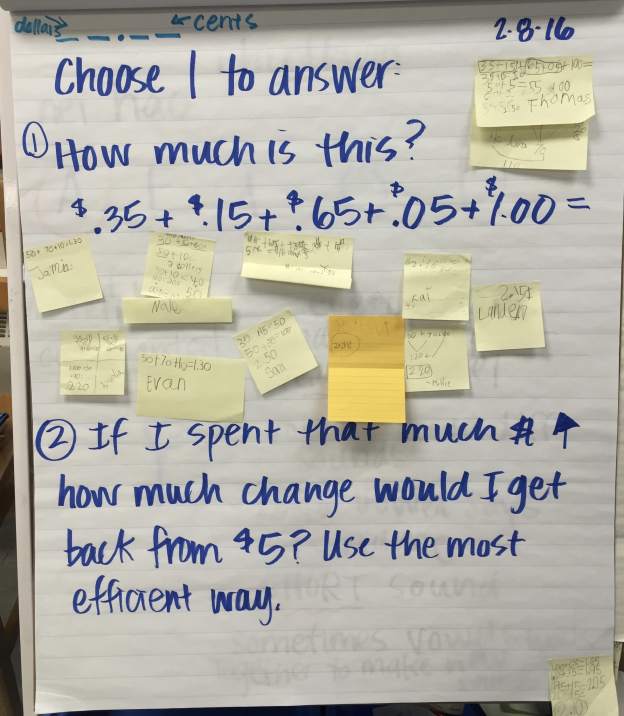
This was the first time I’d asked a money question written in equation form.  Many were confused by seeing cents written as dollars (they kept saying “Why did you put a dollar sign there?”), and so we had to clarify that during our debrief.

IMG_0548-min

Tuesday

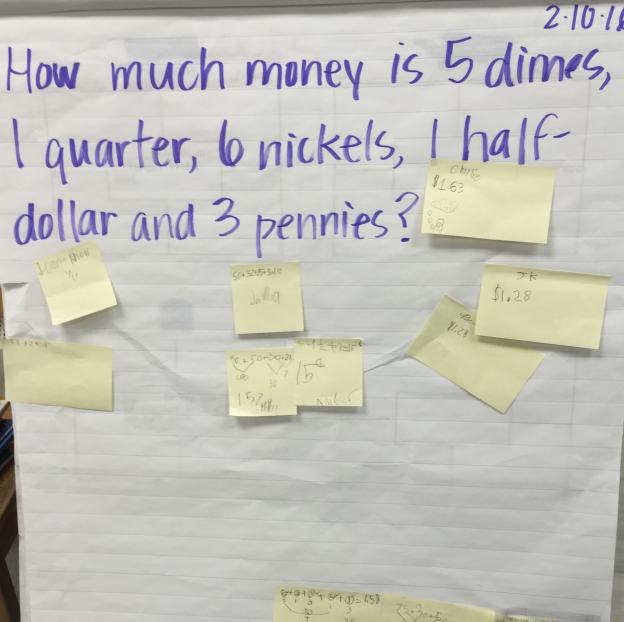
This was a challenge to think of amounts in more than one way.  They did pretty well with it, though.

IMG_0471-min


Wednesday

When we talked about this one, we had some great conversations about efficiency when counting coins, and how making piles of dollars (starting with the biggest coins) is a quick way to figure out the total.  We also practiced making $.25 in multiple ways (not just a quarter).  We called it “Mickey Mouse” when we found 2 dimes and a nickel, so 2 Mickeys and a 2 quarters makes a dollar, as does 2 Mickeys and a half dollar.  Just so you know. 🙂

IMG_0549-min

Second Grade Math Warm-Ups: Week of November 16-20, 2015

I apologize for the fact that it’s been nearly THREE WEEKS since I last wrote on this blog.  I’m not even sure what happened.  Oh wait, I do.  Life happened.  And I was tired.  It was one of those times in life when you have to do really cool things and take pictures of really cool things, but not write about it, you know?  Oh well, here’s to trying to fix that.  Starting now.  So onward we go!

Monday

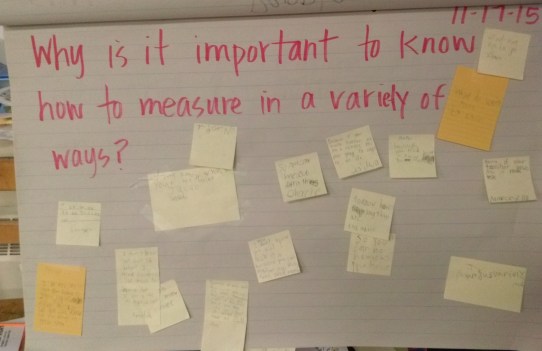
We were starting a new unit in math this past week, so the warm-ups were no longer addition and subtraction.  This one is connected to some essential questions we will be chewing on throughout the unit, as well as serving as a way for me to know with what background knowledge everyone is starting.

CAM02480-min

Tuesday

Another essential question from our unit…

CAM02482-min

Wednesday

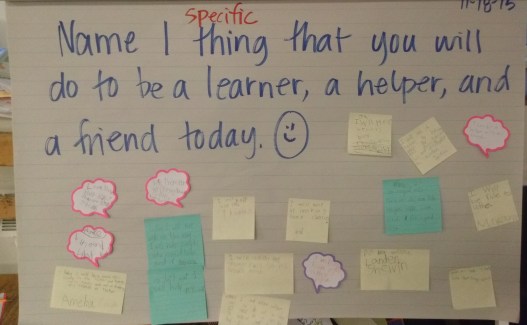
This pic is obviously NOT a math warm-up but is instead a view of where we were on this particular morning.  I sometimes use our warm-up routine as a way to make plans for our day, or to highlight a goal that we will all be working on together.  This was related to the work we were doing last week with remembering to focus on caring for others rather than just ourselves first.

CAM02484-minThursday

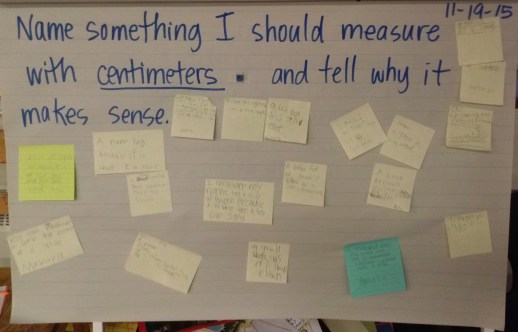
Back on track with measurement.  🙂

CAM02485-min

This last one isn’t a math warm-up, nor do I remember what day it’s from, but it was a great example of how math happens all the time in our room!  Oh, and it used skills we had just learned in our last unit, so it was great practice.  We were starting a new chapter book (Thanksgiving on Thursday by Mary Pope Osborne–a Magic Treehouse book), and were interested in knowing when the first Thanksgiving took place.  We figured out we could subtract or count up to figure it out.  We decided to use the Circle, Split, Subtract with a Number line strategy that we had learned.  It worked! 🙂 And….Thanksgiving started a long time ago. 🙂

CAM02481-min

Whew!  It feels good to be back in the blogging game again. 🙂  Thanks for coming back to read!

Second Grade Math Warm-Ups: Week of October 12-16, 2015

This week we began a new unit on adding and subtracting within 100 (which is actually a unit we had last year, as well, so should be something that we remember.  Should…time will tell if that’s true. LOL 🙂 ).

This time around we’re focusing more on making sure mathematicians are flexible and can show their thinking in more than one way.  As with last time, we’ll also make sure they can choose a strategy appropriately based on the numbers (rather than just which strategy the like best or is easiest for them), and we’ll also continue to work on being clear with our communicating our mathematical thinking.

Here we go!

The first strategy we worked on for this unit is called HTO, or hundreds/tens/ones.  Yeah, it’s kind of an obvious name for what they are doing, so I guess it works. 🙂

IMG_5508-minEach kiddo has a workbook where we’re showing our thinking, and I had to share what Emily’s looked like after I taught this strategy.  She kind of liked it. 🙂

 Here’s more about how that strategy works:

HTO_strategy-min

First you mark the first number on the chart (98) and then add on tallies to show the second number (31). Then look to see if you can find any tens or ones you need to move over to the next column. Finally, add down the columns to find your answer.

Ok, so this post is a little misleading, because that was the only warm-up I have to share.  The rest is more from what we did in our conversations in math.  Hope that’s ok. 🙂

On Friday, we started another strategy that is Adding on the Numberline (and actually using another strategy called Circle/Split/Add):

We still have a strategy or two to teach, and then we’ll just practice them until they’re solid.  The thing I have to keep reminding kiddos (especially those that are focused on being RIGHT and being FAST) is that this unit is as much as communicating and being flexible as it is about finding the right answer (although, OF COURSE that’s also expected. 🙂 ).

The Writing Process–in Math??

Yep, you read correctly.  We’ve been learning the writing process–mainly in regards to our work in Writers’ Workshop–but also in math!

A few years ago, when our school started working with Cathy Fosnot and Mathematics in the City, I learned about how many parallels there are between communicating in mathematics and communicating in most any other setting.  At the time it was kind of mind-blowing to think about how mathematicians revise and edit their work just like authors.  After hearing more, and thinking it through, and then trying it with kids, it made sense.

So…as with many other things I learned about with older kids, and protocols that I know work well with any age, we’re talking about the writing process in mathematics again.  In 2nd grade. 🙂

The first unit we worked through this year was about place value, and was related in many ways to money; this made sense to kiddos and helped them think through how to “trade” 1s for 10s, 10s for 100s and just how to make groups in different ways to “make” a number.

One day they were challenged to consider this story:

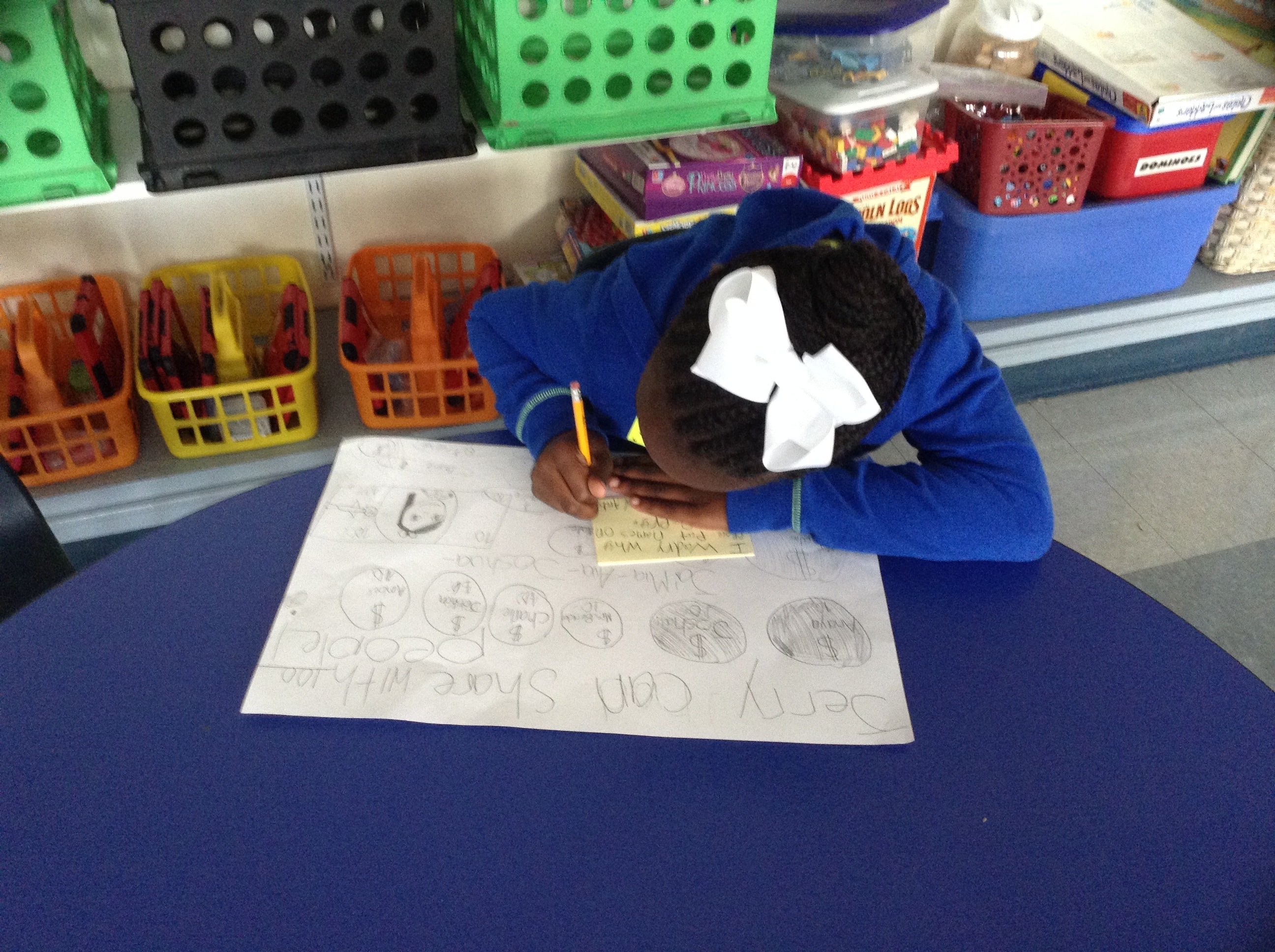
Screenshot 2015-10-08 20.37.03-minWith their elbow partner they were supposed to figure our the answer to that question: If Jerry has $1000 to share, with how many people could he share a $10 bill?

Kiddos worked for almost 2 math periods to figure out their answer (which was really the answer to the question of how many 10s are in 1000) and clearly share their thinking on a poster.  For many, the answer of how many people was easy, the way to share their ideas not so much.

As a means of helping them know when they were “finished,” we discussed these parameters for their work:

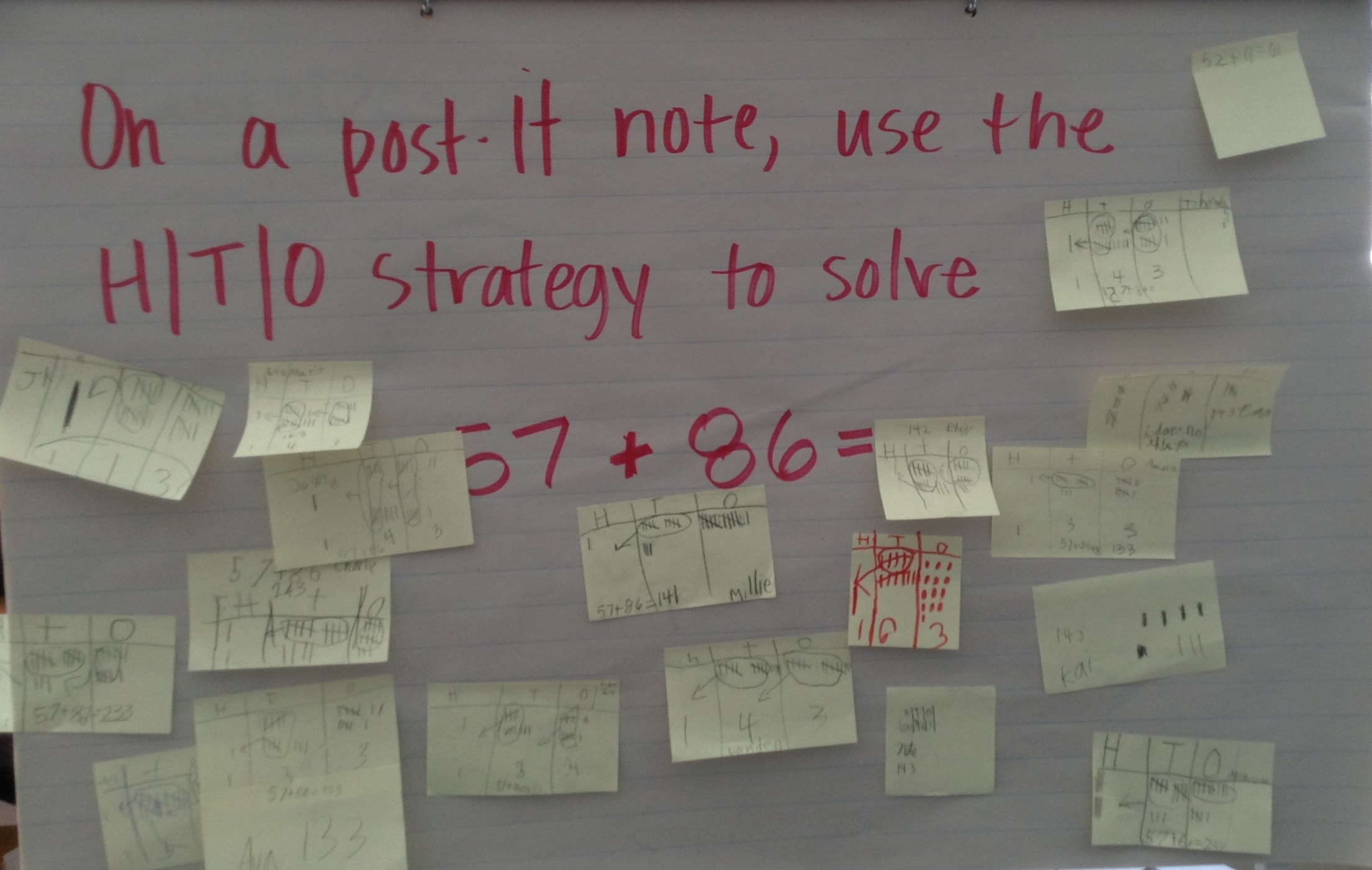
Screenshot 2015-10-08 18.51.45-minAfter we had our posters finished, we were ready for our gallery walk.  During a Gallery Walk, students put their posters out for other mathematicians to read and comment upon–with the goal of helping deepen mathematical thinking and help create more meaningful representations.  It works much like a writing celebration, which is a great connection because all of our kiddos know how to do that. 🙂

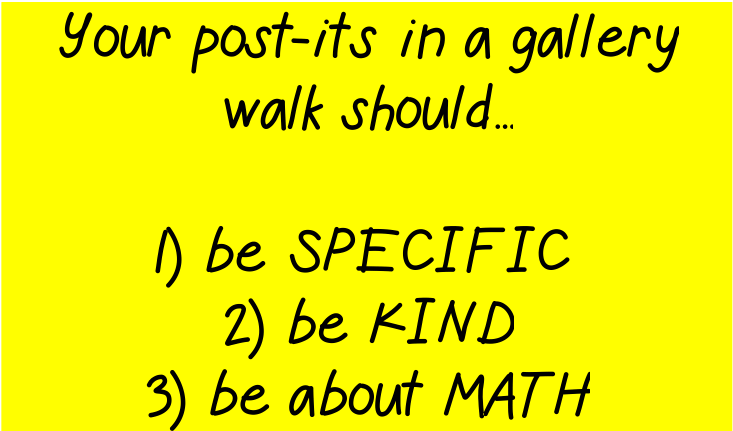
Before we were ready to start commenting on others’ work, we needed a review of how to make effective, meaningful notes on our friends’ work.  We sat for a quick refresher using this flipchart:

Screenshot 2015-10-08 18.51.56-minThen we practiced recognizing helpful comments that followed the guidelines.  I gave examples and non-examples, and then we modified the ones we have given a thumbs-down (which mean they were not specific, kind or math-related).

After that, we were off to work in our gallery walk.

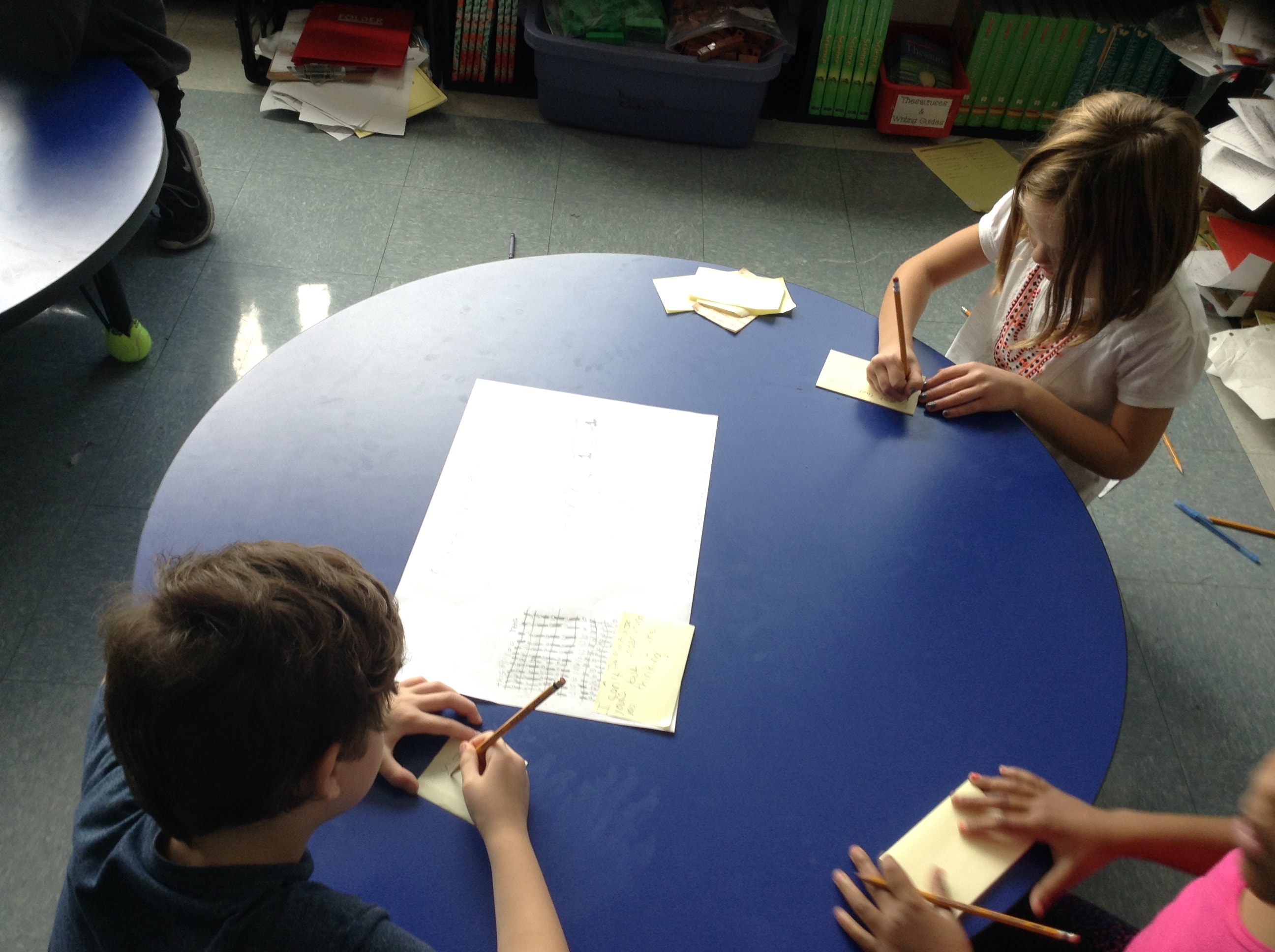
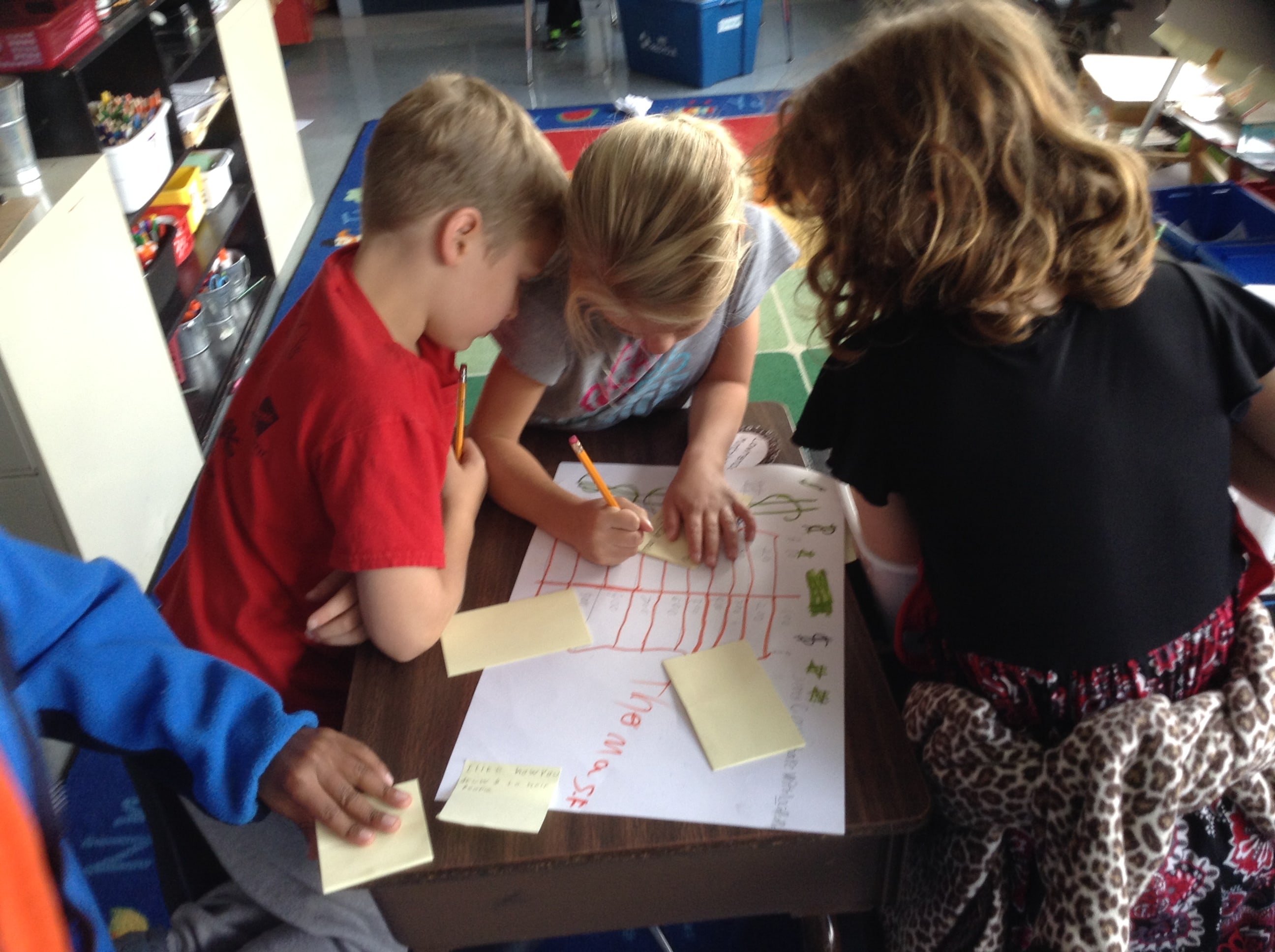
IMG_5395-min IMG_5396-min IMG_5397-min IMG_5398-min

We did pretty great with our first walk of the year, and I’m sure kiddos brought their kindergarten and first grade knowledge with them to help as they shared their thoughts with other groups.  I was impressed with how questions were used and kids were specific with what parts didn’t make sense or that they thought others could improve upon.

After adding comments, partners were given a few minutes to review what others had shared.  In order to debrief and think about how to use this to help us next time, partners had to share out with the larger group one thing they would do to revise their poster to make it better (and ideally we’d have taken time to actually revise them, but we ran out of time!).  Next time we are ready for a math congress and gallery walk, we’ll definitely come back to this moment and remember what we learned. 🙂

What’s On the Agenda?

The beginning of the year brings with it many things: new faces, new clothes, new experiences, new books to read, and assessments.  Lots of assessments.  Luckily for me, I know many of my students really well already, since we were together last year, but even still I need to learn the “2nd grade version” of them.

One particular assessment that I have a love-hate relationship with is the F&P (that’s just what we call it because it’s from Fountas and Pinnell; it’s a reading assessment).  I love it because of the deep, rich information it gives me about my kiddos as readers and how it helps me tailor my instruction to just what they need.  I kind of hate it, though, because it takes FOREVER to administer.  It involves a student reading a book to you aloud and then answering the comprehension questions to demonstrate their understanding of the text (there are both fiction and non-fiction titles included).

Sounds easy, right?  Well it is relatively easy to administer, but when you add in the fact that there are 21 students in my class and sometimes you have to read 2 or 3 stories until you find the student’s instructional level, you can quickly add up to a lot of time necessary to finish the job.

So, that’s where the idea of the agenda comes in.  It’s my attempt at having my students working on meaningful, important learning activities independently so that I can spend time 1-on-1 with students to finish my assessments.  Win-win, right?

We did this kind of thing on a smaller scale last year a couple of times, which gave me the courage to try it again now that we are 2nd graders.  The difference this go-round was that the time frame was longer (two school days instead of a morning) and that the assignments were on a little bit bigger scale (last time it was mostly finish-up work).

Now, before I gave it to my students I ran it by one of my most important helpers–my son, Riley, who was a 2nd grader last year.  Even at 8, he’s really good at looking at things I’m considering and thinking about them in terms of what other students would say.  And he did have some thoughts.  He suggested that there was TOO MUCH on the page and that many kiddos (him included) would be overwhelmed by the number of things they had to do.  I appreciated this insight, and actually had a plan, then, for how to modify the list for those that might need more support.

Wednesday morning came and it was time to share my crazy-cool plan with my students.  I was SUPER excited with how enthusiastic they were about the whole thing.  They were blown away with how they could make so many important choices, with how they got to decide when they would do each thing (meaning we’d have all different subjects and projects happening at the same time!), and with how fun the opportunities sounded!

So here’s what the agenda looked like:

Students could choose to do them in any order and spend as much time as they needed to on each one, with the goal of being done by the end of the second day.  We had a conversation before we got started about different ways to tackle such a big list, as well as how we would have to work responsibly and respectfully so that everyone could complete the challenge.  At several points throughout the days we stopped for check-ins, to have students share insights they were having, ask questions about things they may have been confused about, or make suggestions for how to make the work more manageable.

Overall, I was SUPER impressed with how things went!  I would have to say that the way they were able to manage their time and materials was even beyond what I expected.  Before we started, we made a big deal about how the important part was that they were able to work independently, freeing me up to finish my reading interviews with everyone.  It was great to hear how they problem-solved together, sometimes asking multiple classmates until they found their answer.  I do have to mention on conversation I overhead that I thought was particularly funny (and helpful!).  Someone was asking what they were supposed to do on a certain assignment, and a friend’s matter-of-fact response was “Well did you read the directions yet?  That’s why she wrote all that on there for you–so you’d know what to do!”  Hee hee.  Yes, I giggled a little at her answer.  But she was right. 🙂  And yes, she did offer help when the kiddo came back because he had a question about those directions. 🙂  Many times I heard friends reminding each other not to bother me or even asking “How can I help you?” when they knew their friend needed something.  Nice!

Having done this once, and getting really positive reviews on it from my students, I will definitely be doing it more regularly this year.  Ideally, I’d have some version of this happening all the time, with me having time to pull small groups and do 1-on-1 teaching as often as I could to help meet individual needs.  I feel like there are structures in place already in our classroom that allow for that focused attention, but anytime I can add more student choice into the mix, I’d say that’s a good thing.

So as I go into it a second time, I’m considering these questions:

  1. Were there too many things on the list?  What students may have been overwhelmed by the sheer length of the list? How can I better modify the agenda to meet the needs of every student?
  2. Were the activities the “right” ones?  What else could we have done (with content or with product) to push thinking and challenge kids to dig deep with their learning?
  3. Is it necessary for students to complete everything on the list?  Would a “must-do” and “can-do” type list be more ideal?  Is there a way for students to be more in charge of what was on the list?  Could they be given a learning target or essential question to investigate and then plan the activity they’d do to address that focus?

Regardless of what we decide to do next time, I’m excited for how this first attempt went.  Kids were focused, they had fun, they got things done, they made decisions, they solved problems, and I got some assessments completed.  And I even had a couple of teachers visiting from another school who happened to pop in while we were doing this and they said it was working.  Gotta love outside eyes to help you make sure it’s not all in your head!  Way to go, Rm. 202 kiddos!!

Getting Started with Math: How Much is Your Name Worth?

In the first days of school, our goals are both that kids get into subjects as well as that they build relationships with each other (just like last year!).  One of our first forays into math this year was with a challenge about names.

The original activity was called “How Much is Your Name Worth?” and was all about how each letter of your name is worth a certain amount (i.e. a=1, b=2, c=3, etc.).  While it was definitely a math challenge for some (we might have forgotten how to add over the summer!! LOL), it was also a reminder of how sometimes things are harder than we thought and we need to work through the tough parts.

For me, it was also an invitation to revisit the activity I was asking them to do and change what was tricky.  Not because I wanted to make it easier, but because we realized that the directions on the first try were really confusing.  Some were stuck with what to do, not how to do it.  So I made a new sheet, and also invited a new question to the challenge that they could attempt with a partner (which added another level to the activity).  Their new question was:

Screen Shot 2015-08-22 at 2.01.44 PM

The other thing that happened here was watching kids as they solved the problem of who’s name was most expensive by thinking about both the length of the names, and which letters were included.  There were resources everywhere that could help them if they knew they were there: the lunch sheet, our checkoff grids, the word wall, the helper chart, our mailboxes, our cubbies–the list went on and on!

In the end we didn’t really ask the question of who’s name was most expensive, but we all got our math brains moving, solved some problems together and worked with our friends!  That’s a great start in my book!

First Grade Math Warm-Ups: Week of May 4-May 8, 2015

I had thoughts all last week of how I couldn’t wait until the Warm-Ups post to brag on the awesomeness that happened, but alas, I guess I saved it anyway….so get ready, this is definitely NOT first grade math happening here, people!

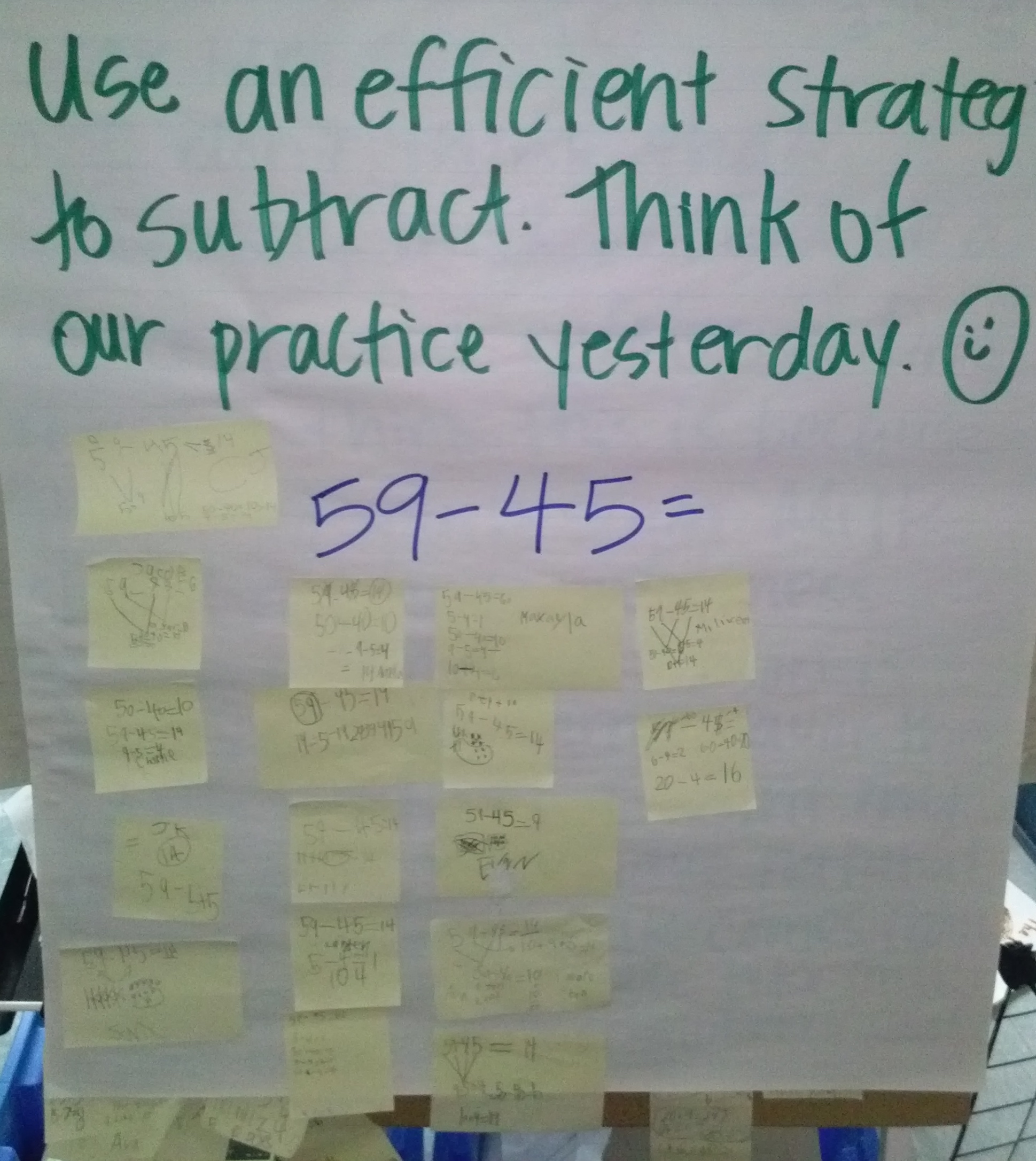
We had three problems this week, and they were all in the same vein–2-digit subtraction where kiddos were asked to try ALL 4 STRATEGIES we’ve worked on in our class this year.  And they were up to the challenge, even though it had been a while since we’d worked on subtraction.  I was SUPER impressed, and I think they were, too!

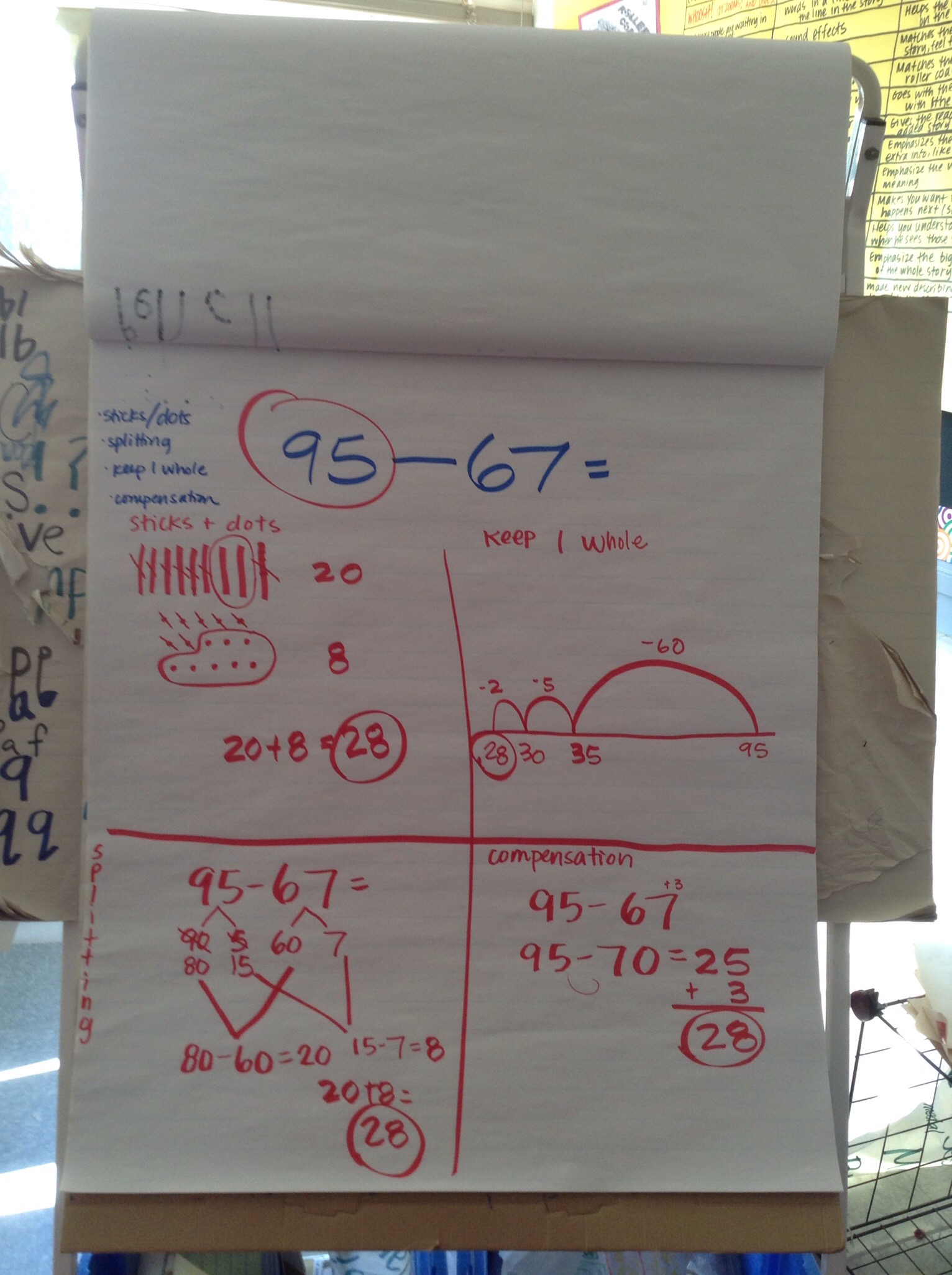
The benchmark in 1st grade says that only have to be able to subtract to 20, but since we were doing addition to 100, we went ahead and followed along with subtraction as well (why stop them if they can go farther??).  They also only had to be able to do it in 2 ways, but again, I think it’s good to be flexible with strategy and begin (even as a first grader) to learn which strategy is best for the numbers.  In this case we used each strategy each time, but talked about which ones made the most sense.  Let me show you the part we were most proud of:

IMG_3072I don’t know if you can tell, but that’s not an ordinary 2-digit subtraction problem.  Nope–it’s one that will need to use what we used to called regrouping but that honestly now we don’t really call anything.  It’s just what you do to make the problem work!  Please also notice that there’s no “stacking” or traditional algorithms here and these littles can still figure out the solution.  Nice, right?  I know some wouldn’t believe it’s possible….:)

My favorite part is when we started with sticks and dots, and we realized that we couldn’t do what the numbers told us to do–we couldn’t take 7 dots away from the 5 we had drawn.  Millie noticed it right away and then we had a great conversation about what we could do about that.  Makayla suggested that actually there were 10 dots inside each of the sticks we drew (how’s that place value work for ya?). We decided if we crossed off that last stick (which represents a 10) and added those 10 dots instead to the dots already there, then we could do it.  We ended up with 15 dots (ones) that we could take 7 away from.  We used the double-minus-1 problem of 14-7 is 7 so 15-7 is 8 to get that part of our answer.

Then, when we tried to do the same problem with splitting, we ran into the same problem–we didn’t enough to do that part of our problem.  Since we had just done it, we knew we could try it again, and moved the 10 from our 90 to make 80 and then the 5 became 15.  Voila!  It all worked out. 🙂

This is some pretty amazing stuff, and I’m impressed to hear both their fearlessness and pride when they figure out what to do.  I also love how differently 1st graders seem to tackle problems like this that are hard, or challenging, or that don’t at first seem like they’ll work–they just jump in and try something and see what happens.  They haven’t yet learned that they can’t do it, they aren’t worried about whether or not they make a mistake, they know they have many tools in their toolboxes that they can use till they figure it out.  I hope to be able to encourage this kind of approach to problem solving as I work with them again next year—crossing my fingers that I can help them keep that mindset for longer than maybe they would have…there’s hope at least. 🙂

Walker’s Club UPDATE–Using 10s to Add Laps

I’m sure you know about our Walker’s Club competition that is happening at Robinson for April.  Well, I’m SUPER excited to say that two weeks strong our class is in the LEAD!!!  We have done both amazing walking AND amazing adding as we figured out our totals.

This week (well really the week ends tomorrow), we used a strategy that I stole learned from my neighbor Ms. Turken to add our laps.  Instead of using the strings to make combinations of 10 (like we had many times previously), we each wrote our lap total on an index card and used these cards to create combos.  It was a great way to be able to manipulate the numbers in an easier way, and actually SEE the 10s–they made piles, after all.

Thomas and C.J. worked hard this morning to add up our mid-week total for Week 3 of the competition.  Their work looked like this (they did the card work, and I put it on the chart):

Way to go Rm. 202 kids–for walking and adding in an amazing way!! 🙂
First Grade Math Warm-Ups: Week of March 9-13, 2015

Sorry, I’m a few days (ok, weeks!) late with these warm-ups.  Spring Break happened and I had forgotten to snap pictures of them before I left for my vacation.  Oops.  But alas, they were still there when I got back today, and so here they are for you.  And man, are they worth the wait. Hee hee. 🙂

Monday

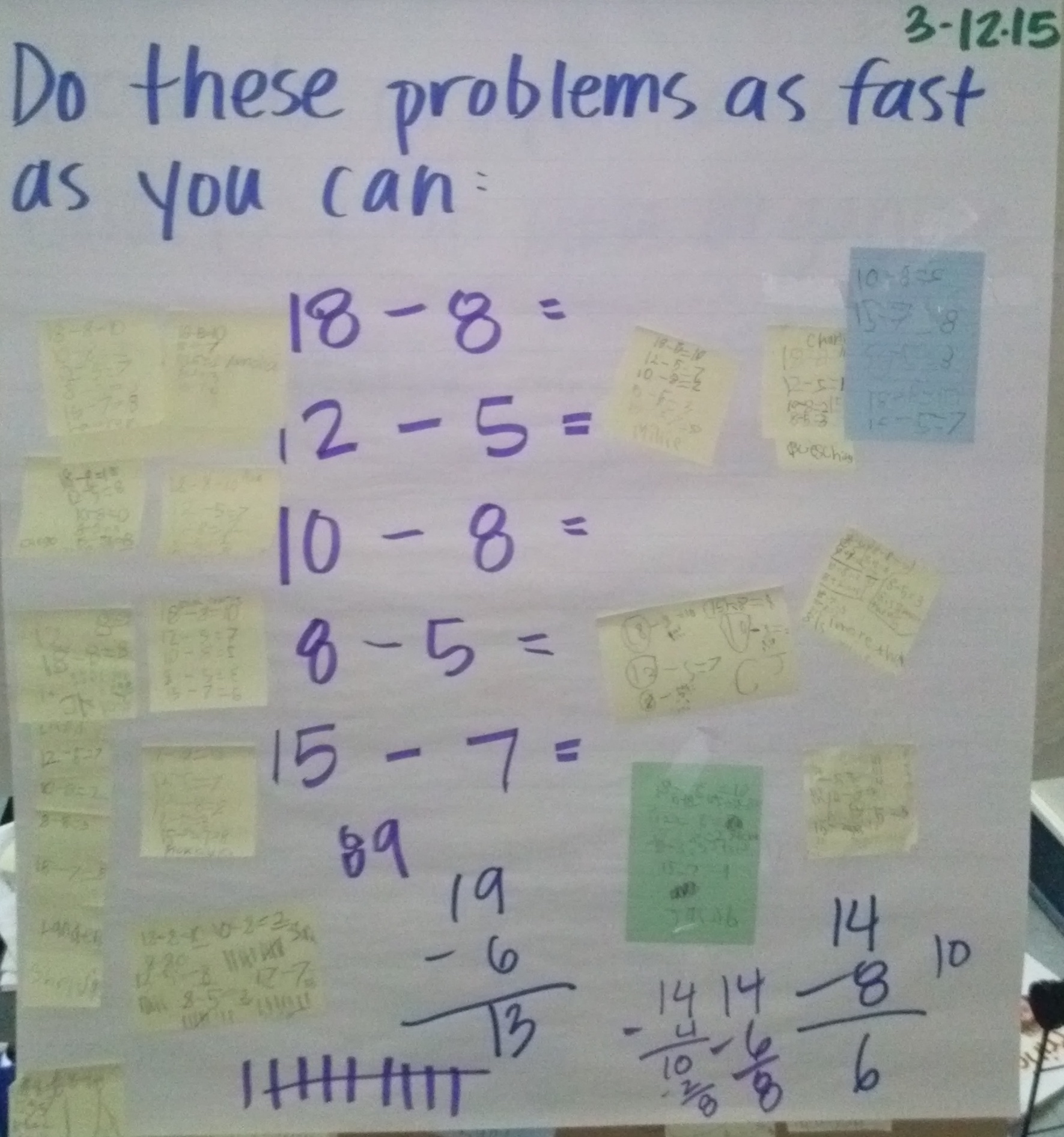
This week was the last week before the end of our quarter, and so we were wrapping up our work with addition and subtraction.  There were a couple of things that I wanted to highlight with our problems–the connections between adding and subtracting strategies, and using mental math for quick facts up to 20.  This one again helped lead them to see how what they know about addition can help them with efficient subtraction. More about all of those strategies listed there later…

CAM01767Tuesday

Yeah, somehow I didn’t get that “y” on the end of strategy in the picture (I promise I wrote it there correctly!)…again, more on that practice we did later…it involves some pretty great explanation videos.  Worth the wait (but isn’t everything I write on this blog?! Kidding, just kidding!).

CAM01761Wednesday

Again, with our focus on strategies, I wanted to point out that good mathematicians know when to use a strategy as well as why to use it in that situation.  This one didn’t really have a “right” answer (many strategies make sense with these numbers), but it was important for kiddos to explain their reasoning for which strategy they chose to use.

CAM01764Thursday

Wanted to get a quick temperature read on kiddos and their ability to do these facts quickly.  Most could do them quick and painlessly, using what they know about other problems to help (like tens and doubles), which is exactly what I was looking for!

CAM01765Friday

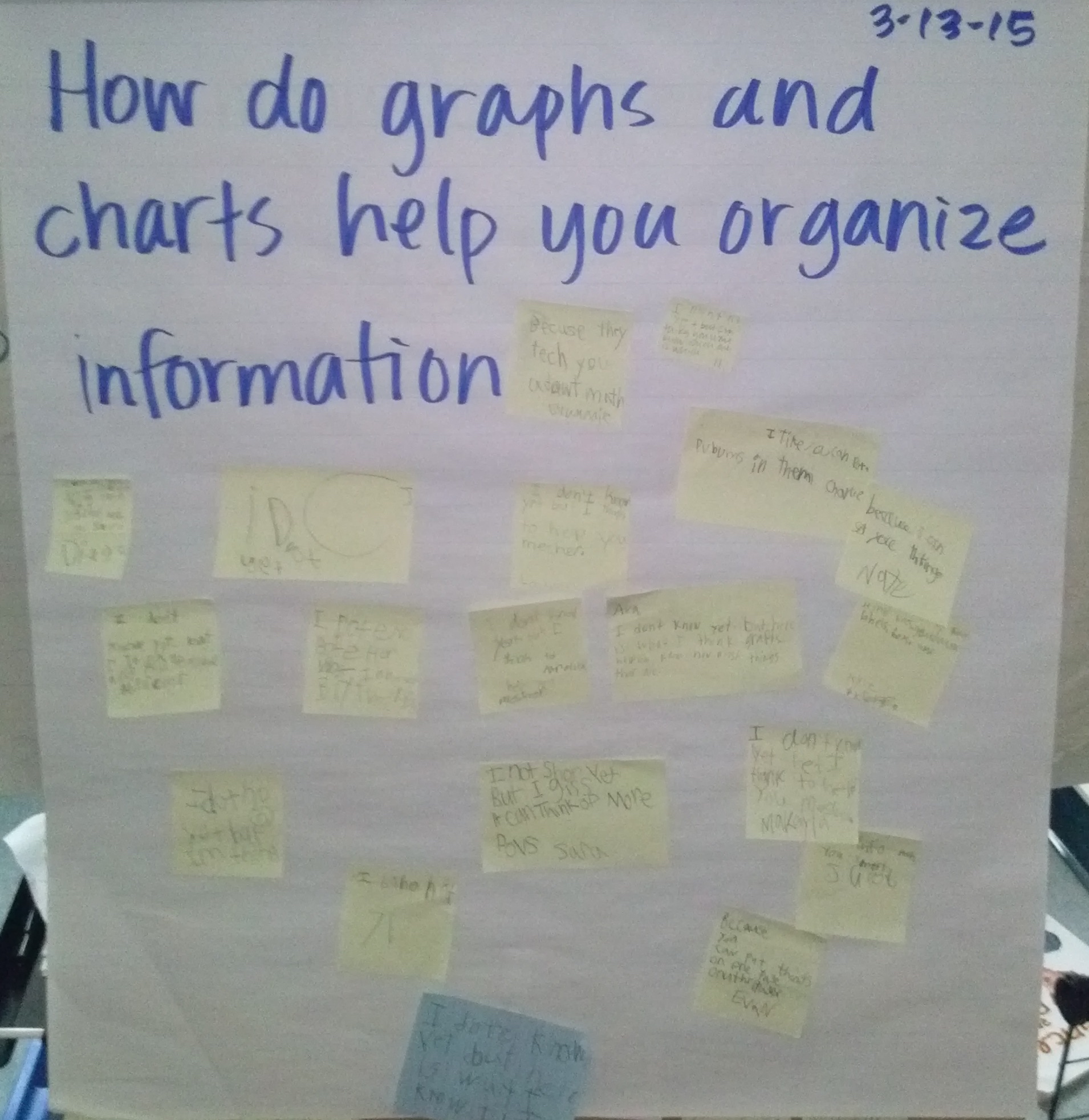
This last warm-up before the end of our quarter (and what I considered a well-deserved break for everyone!) gave a sneak peek to next quarter’s work with graphs, charts and measurement.  Needless to say, since it was a preview, not many kiddos knew what to say to this one…

CAM01766You know, seeing all of these charts reminds me of the suggestion I got from a reader once about using Padlet to do this electronically.  Does anybody have any personal experience they can share?  I’d love to hear about how it’s working (or I guess not working would be helpful, too!) for you.  Appreciate the help and advice, friends! 🙂