Mystery Skype!

What a great opportunity we had today–we did our first Mystery Skype!

Because of the connections I’ve made on Twitter, I’ve been exposed to many new things that seem right up our alley, and Mystery Skype was one of them.  The basic idea is that you Skype with another class–somewhere in the world–only you don’t know where they are (ok, well I knew where they were, but the kiddos did not)!  You ask each other yes or no questions that help you narrow in on the location of the other class.

We waited patiently until 10:35 when they called–Ms. Venosdale’s 6th grade class.  We answered the call, with nervous but excited feelings in our stomachs.  I had already set it up so that they would lead, since we’d never done it before, and so they asked the first question.  They asked, “Are you near a major body of water?”  Our answer, of course, was yes–the Mississippi river is just a hop, skip and a jump to our east.  Our first question was (we hoped) a good one, too–“It’s 10:35 here, is it the same time where you are?”  We had been having a conversation about time zones just before we answered the call, and so they thought this one would help narrow down (and so eliminate) much of the world  if their answer was yes.  And it was!

I wish I had grabbed the list of all the questions, because we kept one, and I wish that we had a picture to share–but we didn’t take one.  We had coordinated “jobs” before we got started: some were charge of the map, some were in charge of writing down what we learned from our new friends, some were in charge of writing down the questions we each asked (so that we could look at them for ideas for the next time), someone was in charge of asking the questions and the rest of us worked to synthesize the clues and figure out what to ask next.  It was really cool how a room full of about 20 people could all be involved in the same conversation in such different ways.

In the end, we found out that our new found friends were actually calling us from very close by in Missouri!  Hillsboro, actually.  That was surprising to them, too, because they’re used to chatting with people from much farther away!

All in all, we had a great time, met some new “friends” and figured out that we need to brush up on our Missouri geography a bit.  🙂  We already have our next Mystery Skype on the calendar for next Friday and are VERY EXCITED for it!  I’m interested to see the way their questions change and improve each time, and for what it will be like when we talk to someone from a place where we’ve never been.  It’ll be very cool to learn what life is like in that other next of the woods!

Until then–have you every been a part of Mystery Skype?  Who did you “meet?”  What suggestions do you have for us as we try again with another class?  Tell us your story–we’d love to hear from you!

Our Own Bill Nye

We love Bill Nye!  You know, the Science Guy?


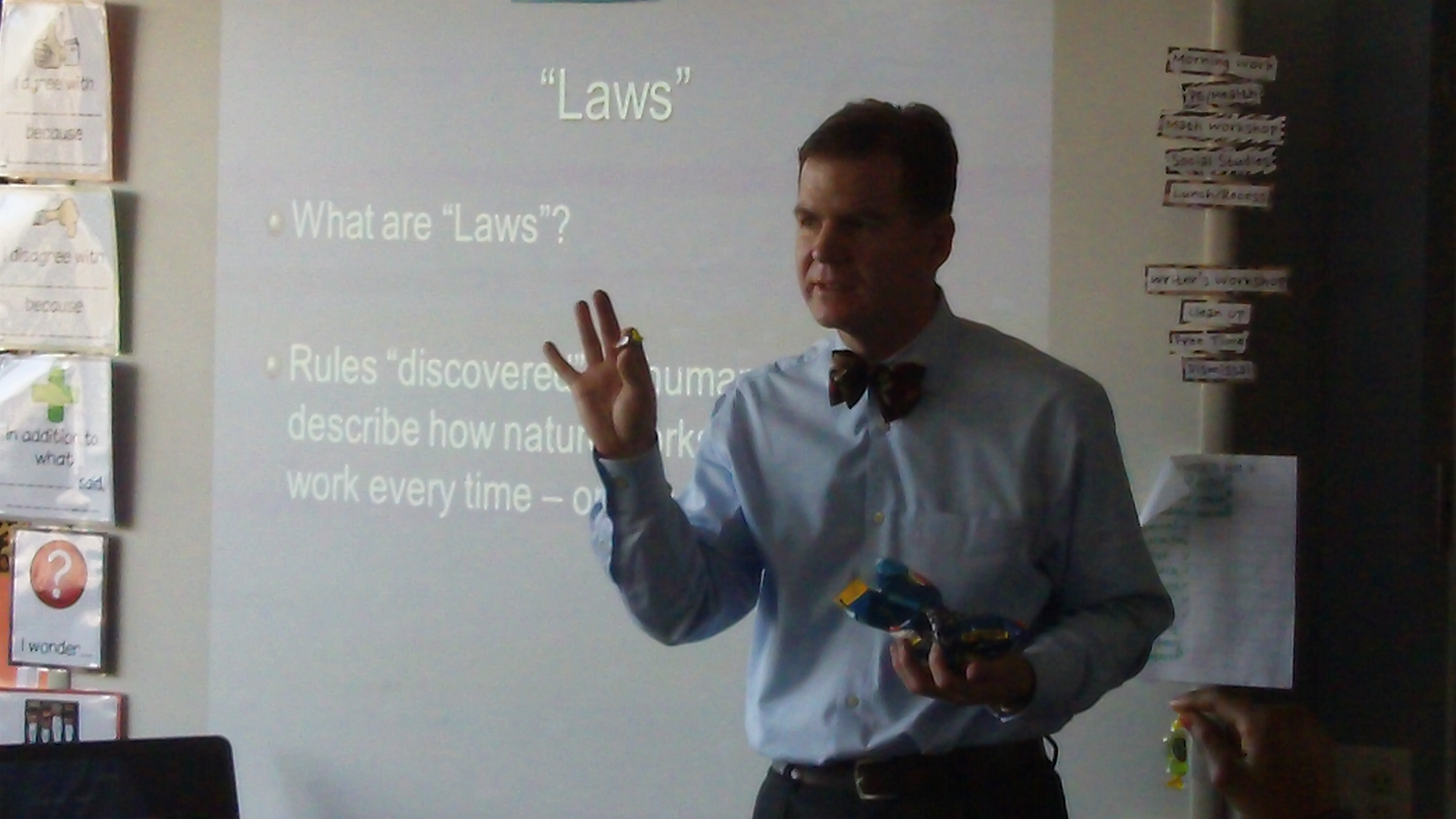
Well, we had a visit from our very own Bill Nye, who’s real name is Mr. Browning.  He LOVES physics and LOVES to talk about it, and we LOVE to learn, so it was a match made in heaven.  He came today to teach us about Newton’s Laws of Motion.


109_0049

One of the things we loved about Mr. Browning was his enthusiasm.  He was really excited about this, and that made us excited, too.  Plus he had props.  Lots of props.  Props that he used to guide us through activities that modeled what we were talking about.  He also shared some really interesting videos from the ESA that showed Newton’s Laws in the gravity-free environment of the International Space Station.  What a great day!


Newton’s First Law

An object at rest stays at rest and an object in motion stays in motion with the same speed and in the same direction unless acted upon by an unbalanced force.

Mr. Browning in action:

ESA video:


Newton’s Second Law

The acceleration of an object as produced by a net force is directly proportional to the magnitude of the net force, in the same direction as the net force, and inversely proportional to the mass of the object.

Mr. Browning (with Rosalee and Rebekah) in action:

ESA video:


Newton’s Third Law

For every action, there is an equal and opposite reaction.

Mr. Browning in action:

ESA video:


FOR SURE we will remember this day and Newton’s laws for a long time to come!  THANK YOU, Mr. Browning, for making science fun and exciting. 🙂

Now it’s your turn: what did you learn about Newton’s Laws of Motion? What else can you teach us about Newton?  What’s your favorite thing about science?  We’d love to hear from you!

Edmodo Have-a-Go

Remember how I told you about Edmodo the other day?  Today’s the day we’re going to try it out!  You will need to use the link here to get to the login page.  While you’re there, look around, and then I want you to consider these things:

1. Can you figure out what to do?  Is it easy?  What are some confusing parts that you have a question about?

2. What kinds of things do you think we could use this to do in our classroom?  Why do you think that would be a good idea?

3. Would you use Edmodo at home?  (if you know that at this point)  Why or why not?

Ok, lastly, I want you to post something.  It can be about anything right now, but I want you to think about adding a question so that people can respond.  This will feel pretty much the same as writing on your blog, only WE will be the only ones who can see it.  This will be a little assessment to let me see how much we figured out and then what I need to do next so we can get started.

GOOD LUCK and have fun learning about Edmodo today!

EDUC 573: Week 1–Getting Started

This was the first week of a new Masters class.  And while I try to find something to apply in every class I take, this might be the best one yet, as it’s related to technology!

While I am by no means an expert, I do consider myself to be reasonably tech-savvy.  It hasn’t always been that way, but over the last year and a half to two years, I’ve been jumping in and trying things that I’ve never done before–blogging, kid-blogging, Twitter (for my own learning), my class Facebook page and Twitter feed, as well as just learning to use new apps on the iPads at school (for myself and my students).  It’s been great fun to try new things and see them immediately helpful to my students.  I think my favorite part has been the impact that my blog has had on the world.  Ok, maybe not impact necessarily, but it’s definitely encouraging when people around the world that you don’t even know read, comment on and retweet things you post!  Makes what I write feel more meaningful and is motivating to keep me going.  🙂

So since I’ve already been on this technology journey for a while, many of the things we read and watched for class this week were review.  But, like with most things in life, if you pay close attention, you fill find something that you can learn.  And I did! Let me tell you about it…

This week we watched a series of videos from Darren Wilson, a teacher and tech-leader in Texas, about Inspired Classrooms.  While much of what we shared were things I was already doing, I did catch one thing that was FABULOUS and that I will start using even as soon as tomorrow!

One of his main suggestions was to use a class blog to document and record learning, but also (here’s the new thing) as a place to give assignments.  What??  I’d never thought of that before, but as soon as he said it, I knew it was something I had to try!  Up to this point, I’ve only used my blog as an after-the-fact place to reflect on things I’ve done, to share experiences with our families and other readers around the world or to record what we’re learning for a later date.  His suggestion, instead, was to use the blog as a place to share in-the-moment type things, to post articles, projects or assignment directions.  In small groups, kiddos would read the post, do what it says and then “turn in” their work by posting a comment with their thoughts.  Duh!?  Why hadn’t I thought of that before?  So simple but so powerful.

And so that’s what I’m going to do tomorrow.  I shared the idea with my kids and they also thought it was a FABULOUS one!  And, like they do with most things, had a great idea for how we could use it: as a rotation in our math schedule.  We already have a station that is Activ Activity–usually a game or flipchart activity that they do as a group on the Activ Board.  Sammy suggested that I could post their directions for that activity on the blog and they could give their answer during that station.  Brilliant!

Please be sure to check back soon to see how it went!  I am pretty sure it’ll be great, because I know the kids who’ll be doing the work, and they’re pretty great. 🙂

A Writing Celebration!

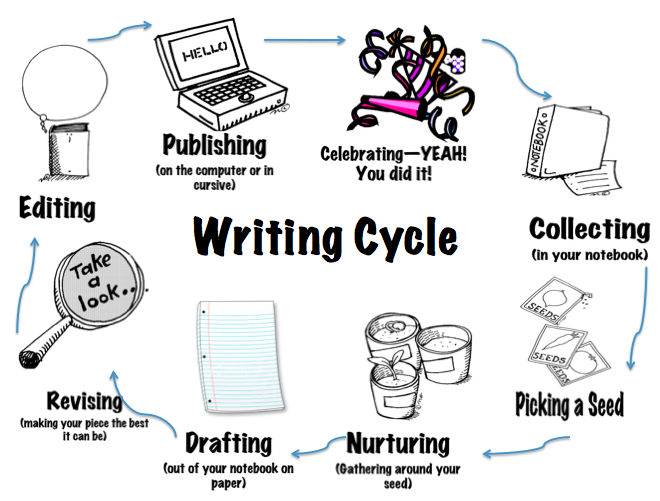
I figure that most people teach the Writing Cycle as a means to publish a piece of writing, right?  Well, I do, and it’s kind of a big deal in our room.  I start at the very beginning of the year (after I’ve set up our Writer’s Workshop routines and introduced Writer’s Notebooks, that is 🙂 ), teaching my writers about the writing cycle–what it is, why writers do it and how it will help them as we go through the year together.
In the back of our Writer’s Notebooks we have a a place where we keep notes related to mini-lessons I’ve taught.  One of the first things that goes in there is this:

We spend the first writing cycle, then, learning about how to do each part, and end up with a fabulous piece of writing that we’ve worked really hard on!  And so what does that mean next?  We celebrate!

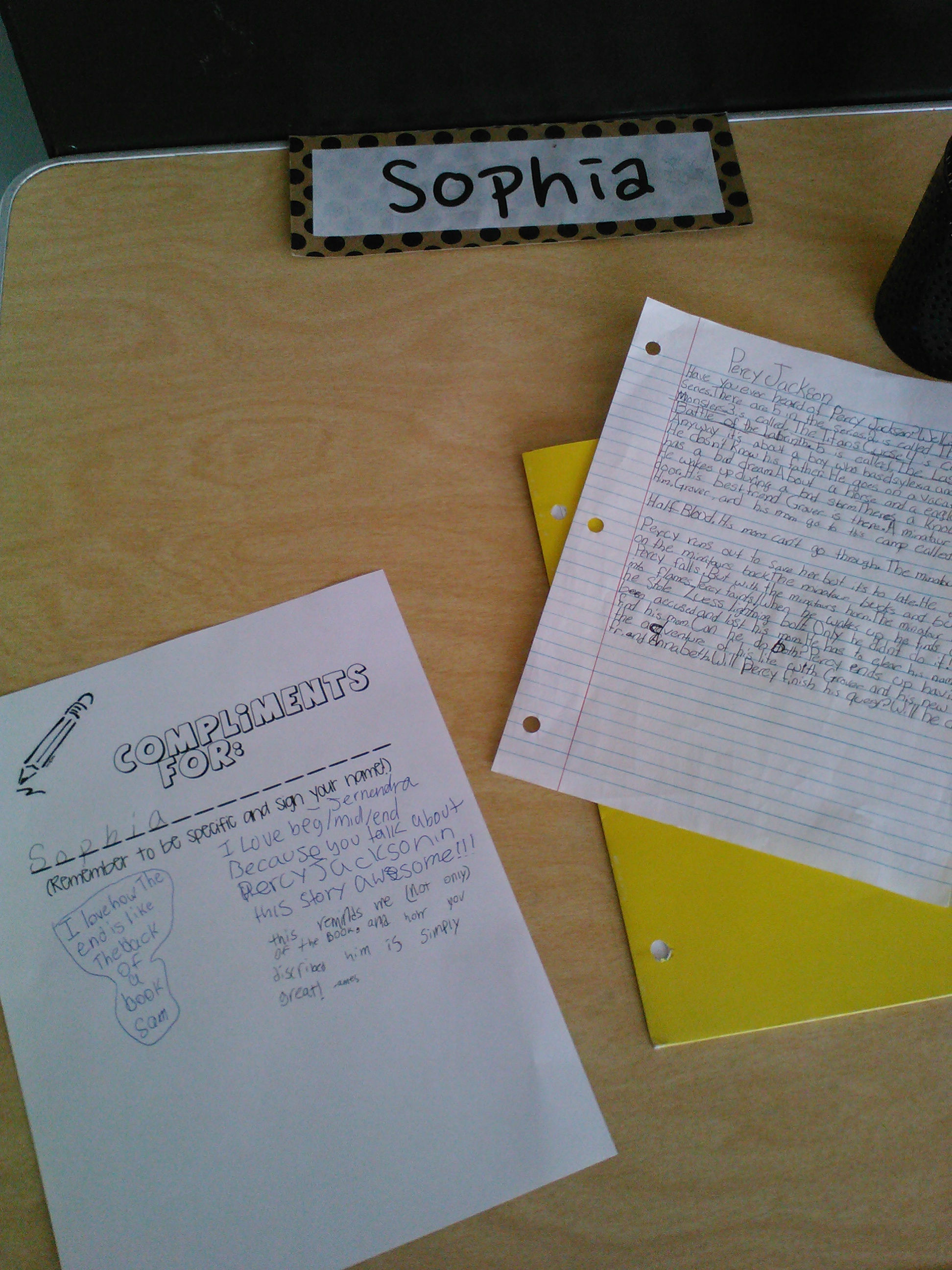
There are many things that our class does to celebrate our writing and “send it out into the world,” but this time, we decided to have a Writing Museum (structured much like our Reading Museum from the beginning of the year) so that we could sample each others’ writing and leave compliments.

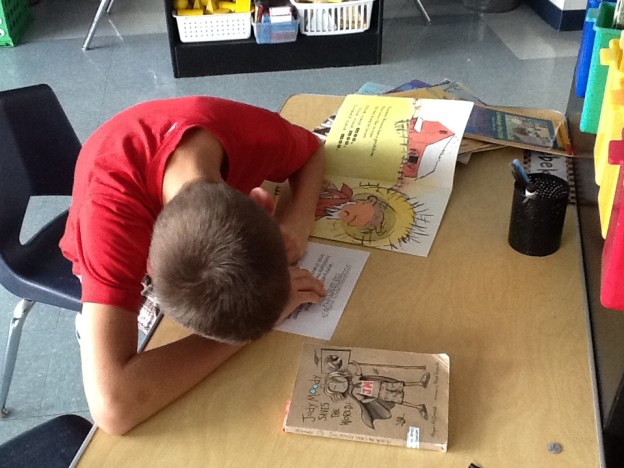
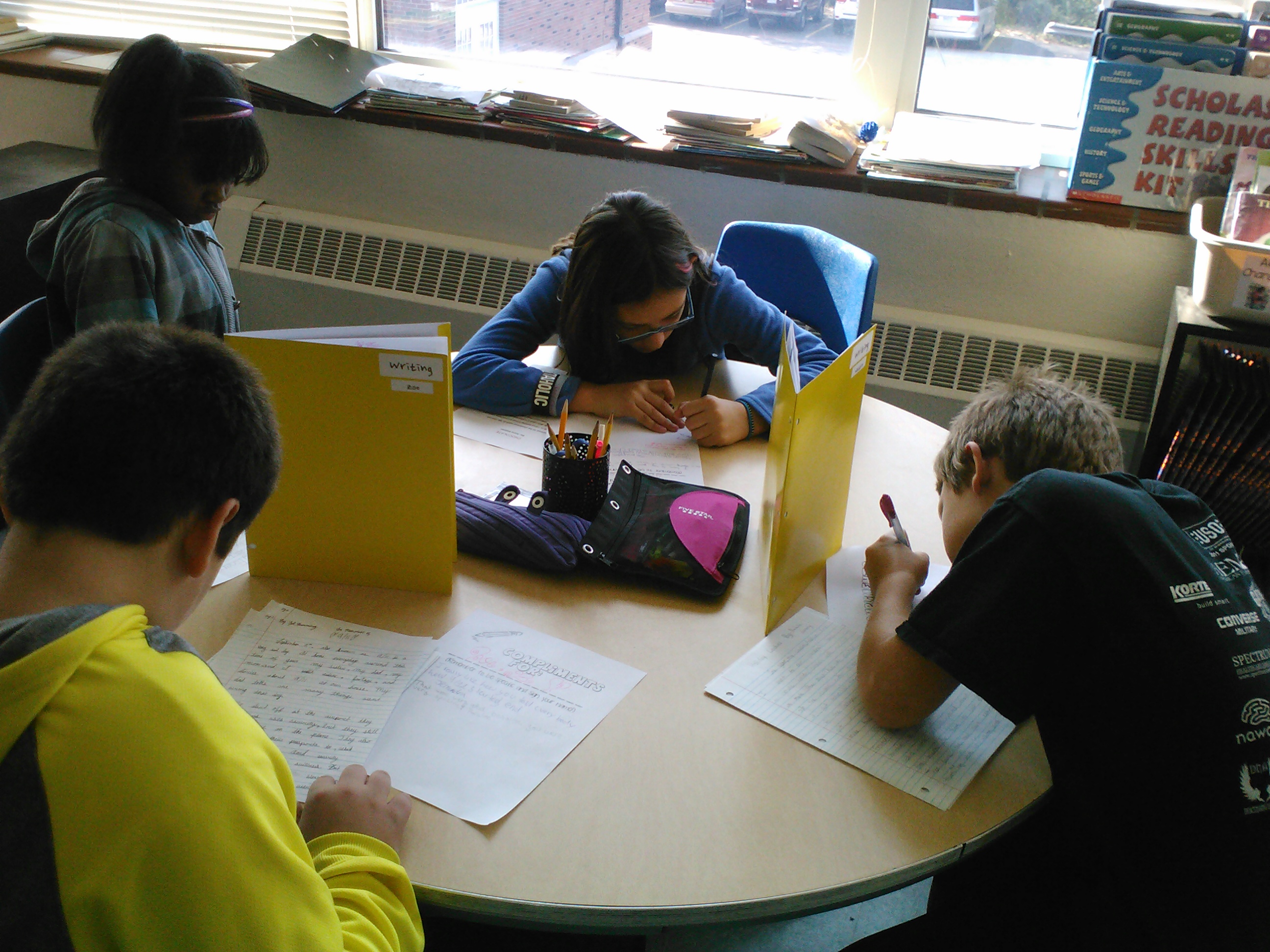
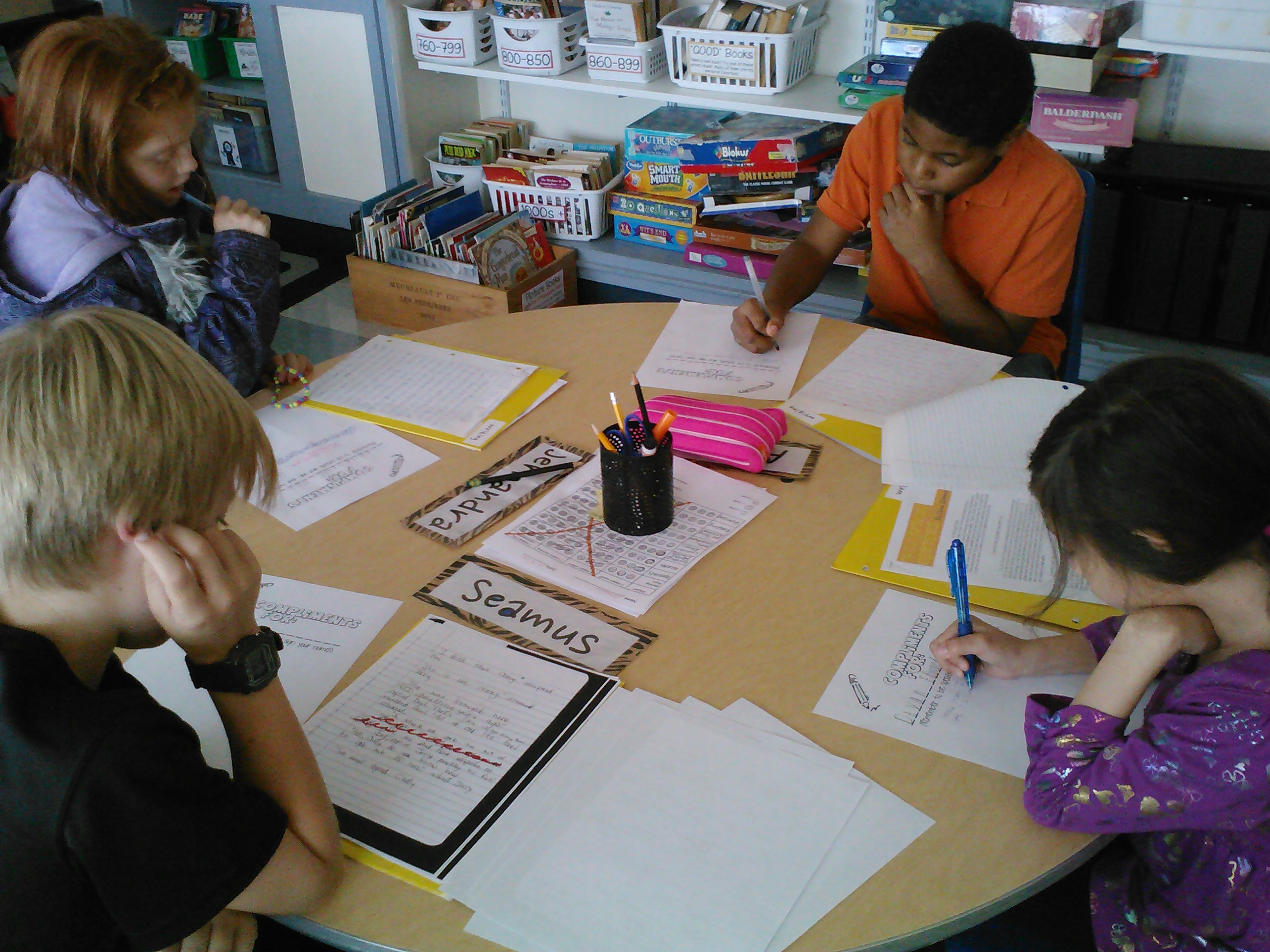
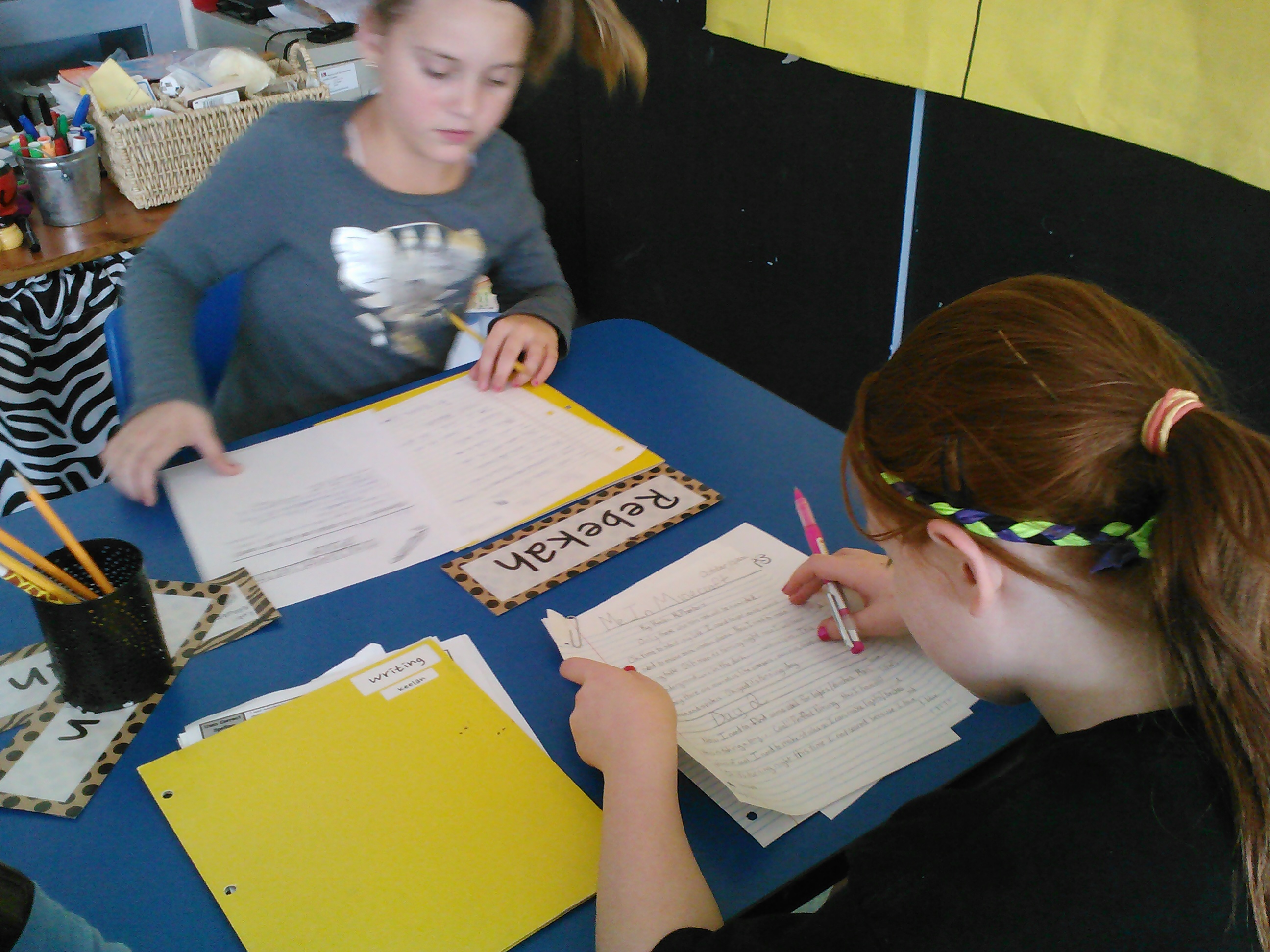
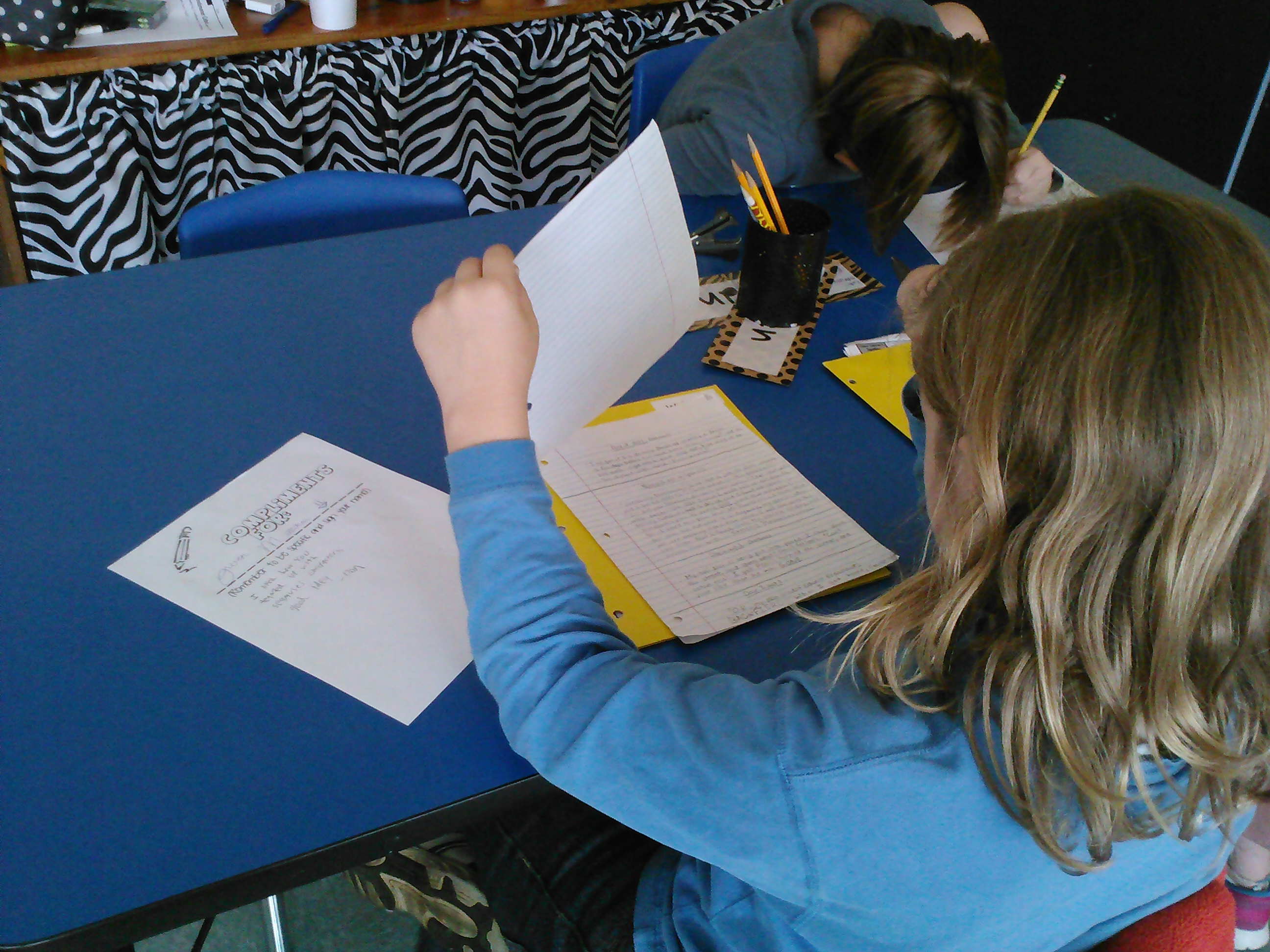
So when the “exhibits” were set up and the music started playing, Rm. 202 writers spent the next bit (well actually it was more like 30 minutes or more!) reading the work of others and leaving kind words for our friends.  If only you could have heard how amazingly quiet it was the room during this time!  Writing is important business in our class, and we took this (as we do most things!) very seriously. 🙂

Each person set out their writing piece, along with a compliment sheet for others to write on. 🙂

I love how they’re all sitting with their heads in their hands.  Something about that seems like they’re deep in thought, doing some serious business!

How do you celebrate writing? 🙂

What’s All This “Box Factory” Business?–Part 2

If you read the first post I wrote about Box Factory, then you know about the investigation we finished recently related to volume and surface area.

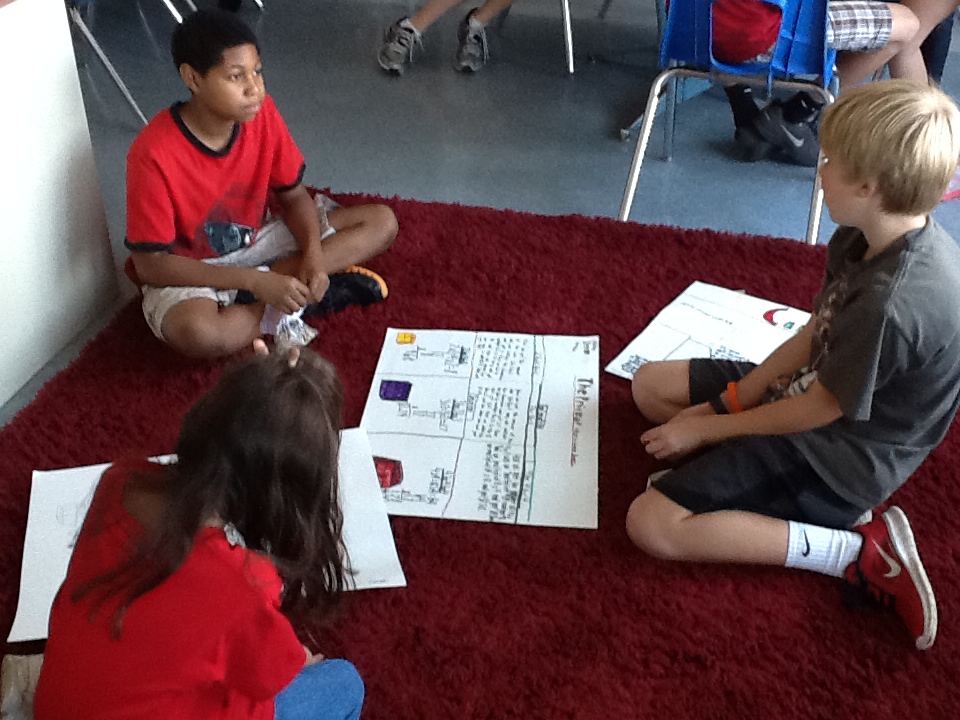
I think that perhaps one of the most powerful parts of the unit came on the last when each group did a reflection of all that they had accomplished during the unit.  I gave them all the posters they had created during our study and asked them to consider these things with their group mates:

They analyzed and discussed, and then went to write their reflections to turn in to me.

It was really great to read about all they’d accomplished during this unit–in their own words.  Time after time they mentioned how it was hard at first, but then as they kept trying or as their group mates helped them, they figured it out.  They noted how helpful the Math Congress comments were to them, and how these thoughts helped them revise their representations for the next time.  They all agreed that this had been a positive experience, and when asked what questions they still had, many said, “When can we do Box Factory again?”  🙂

Robinson Goes HOLLYWOOD!

See the guy in this picture?:

Well, he’s a movie-maker.  A real one.   Ok, I don’t think he’s a Hollywood movie maker, but he does work at a local university as a filmmaker, and he was making a movie with footage of our class!

Our school is working on a movie to highlight the fabulous things we do each day with teaching and learning, and I was asked to talk about how technology has changed the way I teach and the way kids learn in my classroom.  I did a short piece earlier in the day, and then he came to take some shots of us as we utilized the iPads during our math rotations.  My kiddos were pretty excited about being famous!  Can’t wait to see the finished video that showcases the amazing things that happen at our school every day.  It’s a fabulous place to work and learn!

Here are a few more that I took while he was there:

I took this opportunity to introduce my friends to QR codes, which they were really excited about using!


Dot, Dash, Slash, Comma (And All That Other Stuff, Too…)

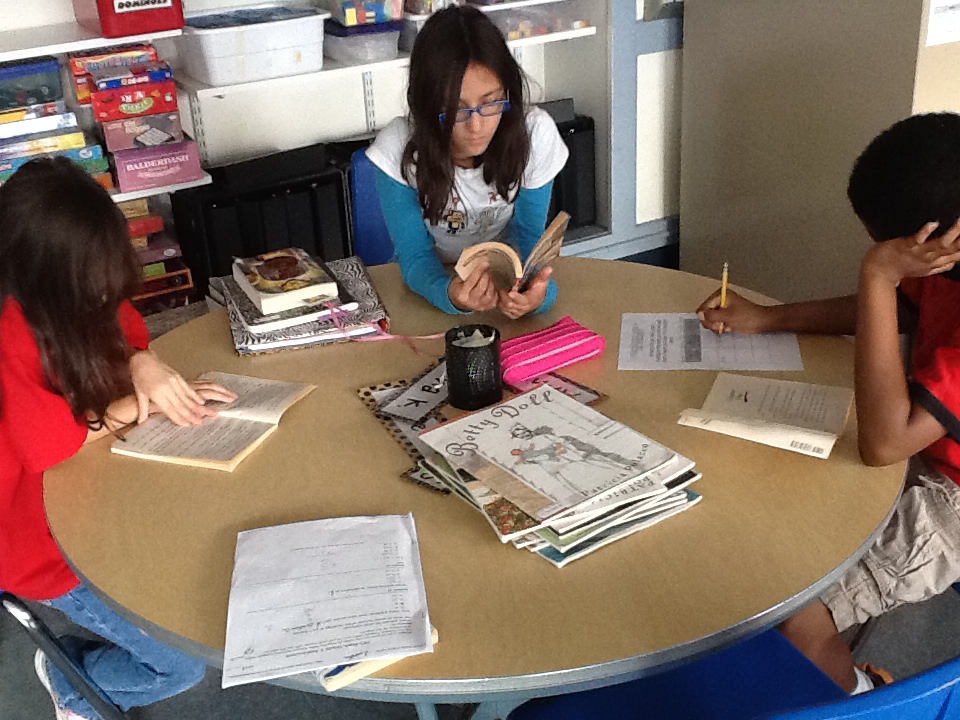
We have been on a journey these last few weeks.  It’s a journey many of my students have never been on before.  And it’s related to these piles of books:

Can you see it?  All the punctuation goodness on that table?  No?  Well my kiddos can now.   Let me tell you about it. 🙂

Punctuation is a funny thing.  No?  You never thought of it that way?  Well, it’s one of those things that has gotten a bad wrap for a long time, and without good cause–in my opinion.  Many people (including most kids!) think of punctuation as a bad word.  It’s just a you-have-to-go-back-and-add-it-in-the-right-place-at-the-end-because-your-teacher-told-you-too kind of a thing.  Not a this-really-matters-and-helps-me-as-a-writer kind of thing.  And that’s too bad.  Punctuation is a powerful tool for a writer, and I want my kiddos to know that.  But it’s only a powerful tool if you know how to use it, and most of my kids don’t.  At least not yet.  With this goal, we started 2nd quarter Writer’s Workshop.

After spending a bit of time on what they already knew (or thought they knew) about punctuation, I asked them to tell me if they’d ever thought about what it meant.  Most said no.  Some even groaned a little bit at the beginning of this conversation when I said the word.  It was obvious that they’d never had a positive experience with this topic, and that made me a little sad.    As a means to hook them in, and get them to understand my goal for this study, we visited a section of a book we have read together and all love: Because of Mr. Terupt by Rob Buyea.  I found a place in the book I knew we could all chew on together; the paragraph right before the big action in the book was a great place to dig in.  I asked them to talk to a partner next to them about why the highlighted sentence was written the way it was, and how it would be different if it had been written without the given punctuation.  We discovered that the punctuation (which was mainly a series of commas) was there to force us as the readers to slow down.  The part just before was fast-paced, crazy and choatic; the commas made us slow down and pay attention to what was happening next.  And what happened next was the climax of the story–without it, the rest of the book wouldn’t have happened.

So remember that pile up there?  After we set the table, and got them feeling a little more love for this idea of punctuation, I put them into study groups.  They had one goal (ok, I guess it was really two): find examples of punctuation in the texts they were given, and figure out what it means when authors use it.  They had a chart to fill out with their partners and a big chunk of time to search.

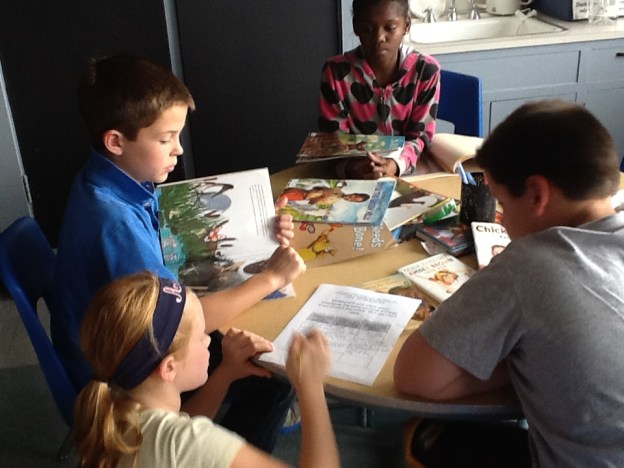
After the groups had a couple of days to study (yep, you heard right–they worked diligently on this treasure hunt for 2 days!), we gathered to collect our thinking on a big class chart.  They took turned sharing the marks they found and telling the rest of us what they thought it meant. For some this was hard thinking, since they hadn’t done it before.  By the end of the first day we had this:

Ok, that’s not exactly true.  We had all but the hyphen part, but hey–good stuff, right?  They were amazed that they had figured all this out, and that they did it all without me telling them what it was.

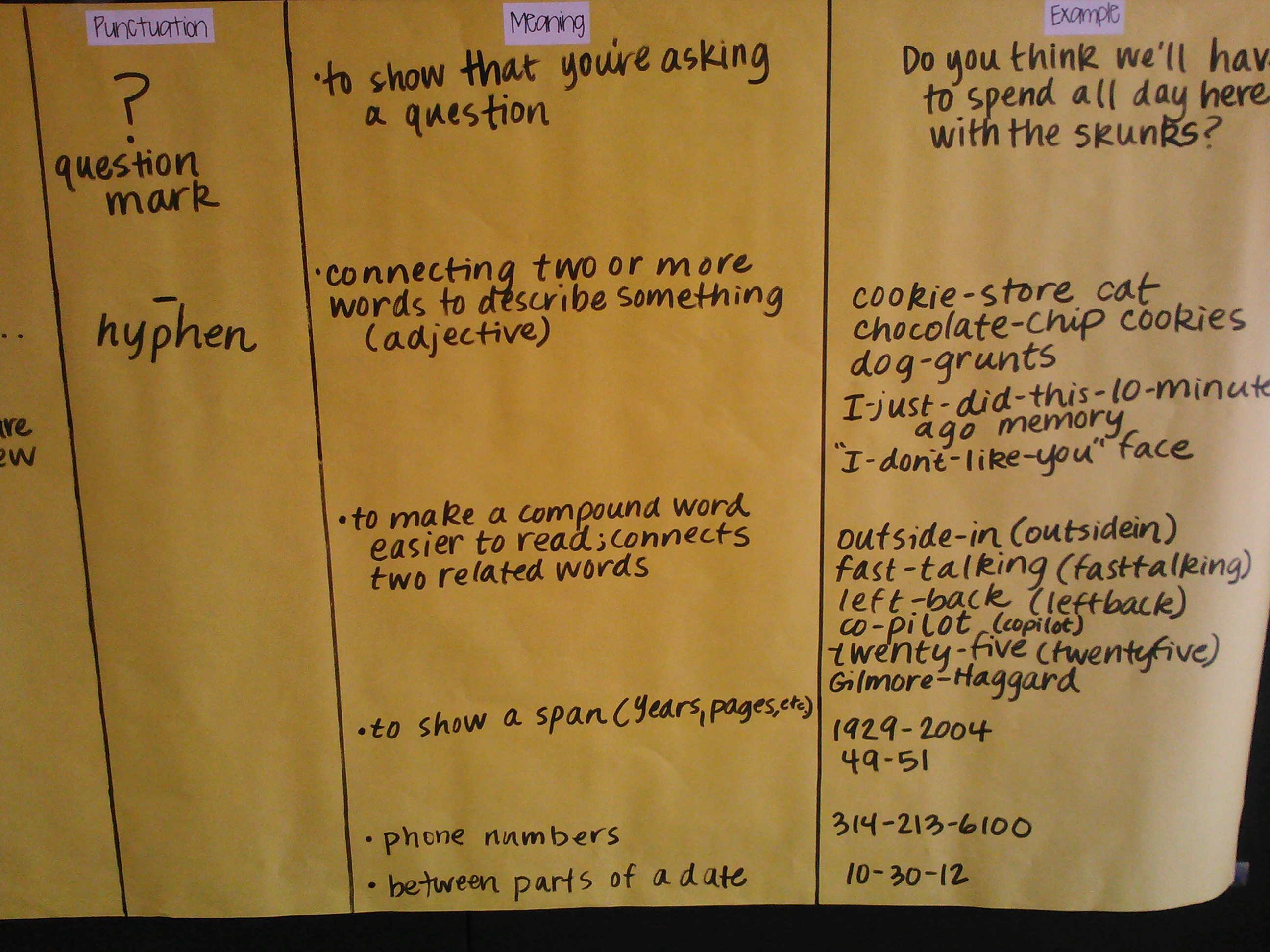
The second day we added some thinking about hyphens:
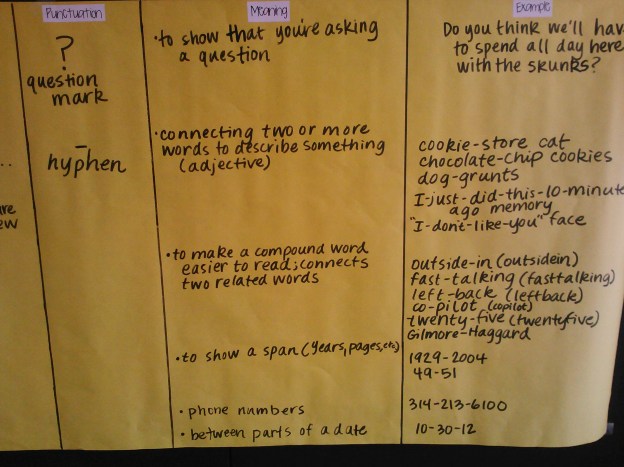
I wish I would have recorded this conversation, because it was so great!  It started with the discovery that a hyphen (-) and a dash (–) are actually two completely different punctuation marks, which mean (and are used in) completely different ways! (Did you know that?) This totally blew some kiddos’ minds and so we had to dig in a little deeper to figure out what each meant.  And hyphens were first.  The first two meanings were hard to explain, but once we started to find examples in the texts we were reading that fit each one, it became more clear.

Since then, we’ve come back every day to add a little more smart thinking.  So far (and we’re only a little past halfway done), we have another whole chart the size of this one, plus we’ve started a third.  The things they are discovering are amazing.  The most amazing–and meaningful–part is that they’re doing it all for themselves.  I’m not pouring the information into their heads, or having them spend time correcting sentences in an isolated exercise for morning work; we’re learning together and really focusing in on what these marks mean.  They’re beginning to care, and they’re beginning to notice these marks more and more–in their reading and now in their own writing!  They are aiming to use them in new ways, and can even tell you how a paragraph is punctuated as I read it aloud to them.  Often I’ll stop after we’ve read something in our chapter book and ask “What do you think that looks like?” and they can tell me exactly what kind of punctuation is there!

Teaching about punctuation is not hard.  But it is time-consuming, and it does require me to know more than I may have first considered about the topic, as well.  But the time that is definitely well spent.  These friends are walking away from each conversation we have with a new understanding of how to they can use punctuation just like word choice, organization, paragraphing, and voice to create a more meaningful experience for the reader.   Pretty cool, right? 🙂

Now the first section hangs on our windows, where it will be there for us to use for the rest of the year!  The goal (and I think they will make it!) is to make their punctuation chart “6 windows” long.  So far we’re at 4 or 5, and still going!  SO MUCH LEARNING!!

What are your feelings about punctuation?  How did you learn about it when you were in school?  How do you teach punctuation in your class?  If you’re a parent, what are you noticing (or hearing) about punctuation with  your student?  Please comment and let us know what you’re thinking! 🙂

Math Warm-Ups Oct. 29-Nov. 2, 2012

This week’s warm-ups–already!  Aren’t you proud?!  Another week of review of things we’ve already done, but needed to tweak a little bit.

Monday

This warm-up was in response to a reflection I had them write the Friday before.  I asked them to tell me what they’d learned during Box Factory, how their thinking had changed, and what questions they still had.  These were ones that came up on several kiddos’ papers.  This was an opportunity for me to see what other kids’ ideas were before I just answered the questions for them.  And what I had hoped would happen did–the other kids in the class gave responses that cleared it up for us all. 🙂
Tuesday

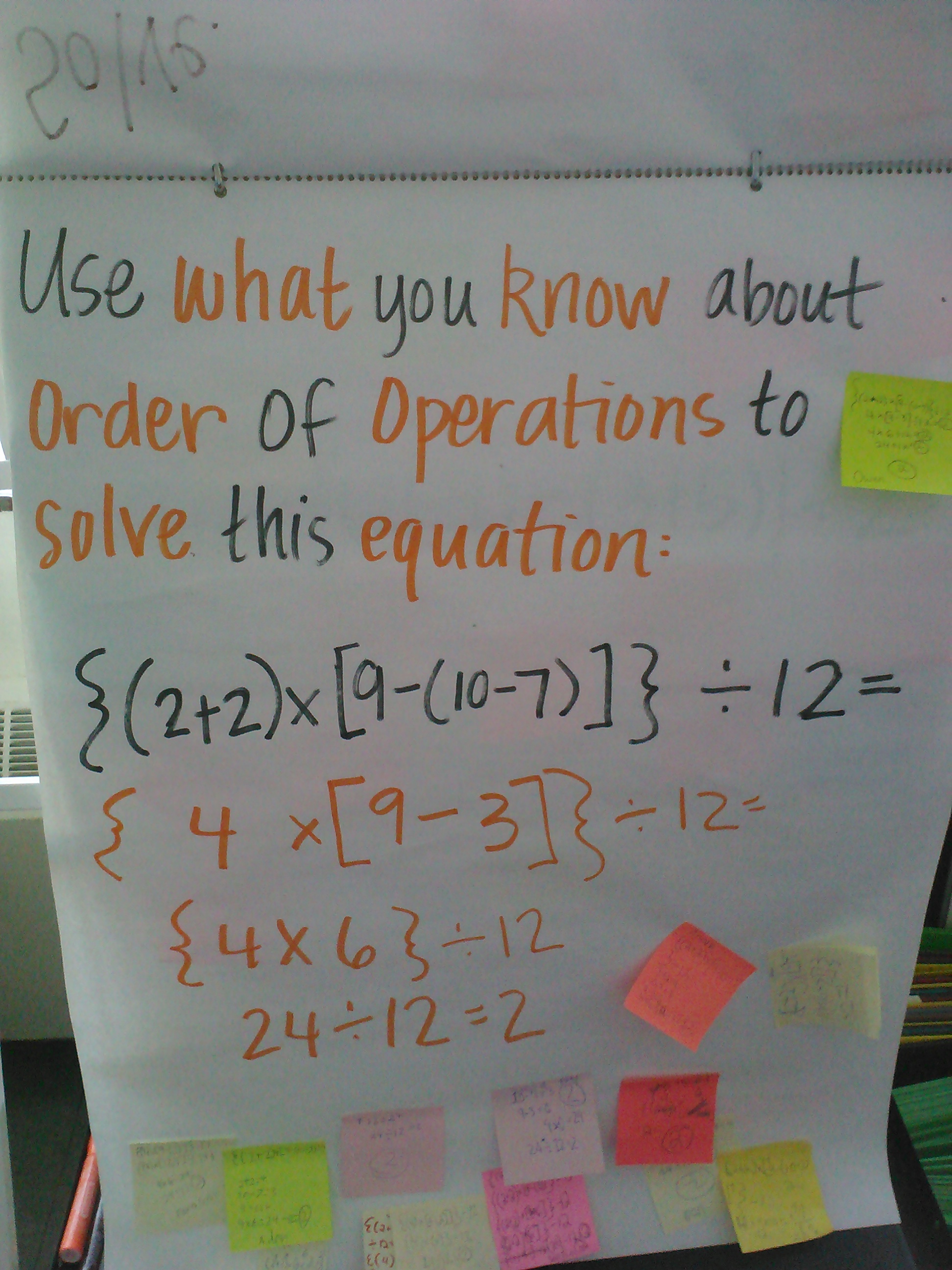
This equation gave us a good reminder of the order of operations, and how you have to DIVIDE or MULTIPLY before you ADD or SUBTRACT.  We ended up with answers of 4 and 16, and had to discuss which one was correct.

Wednesday

This one was from Halloween, can you tell?

Thursday

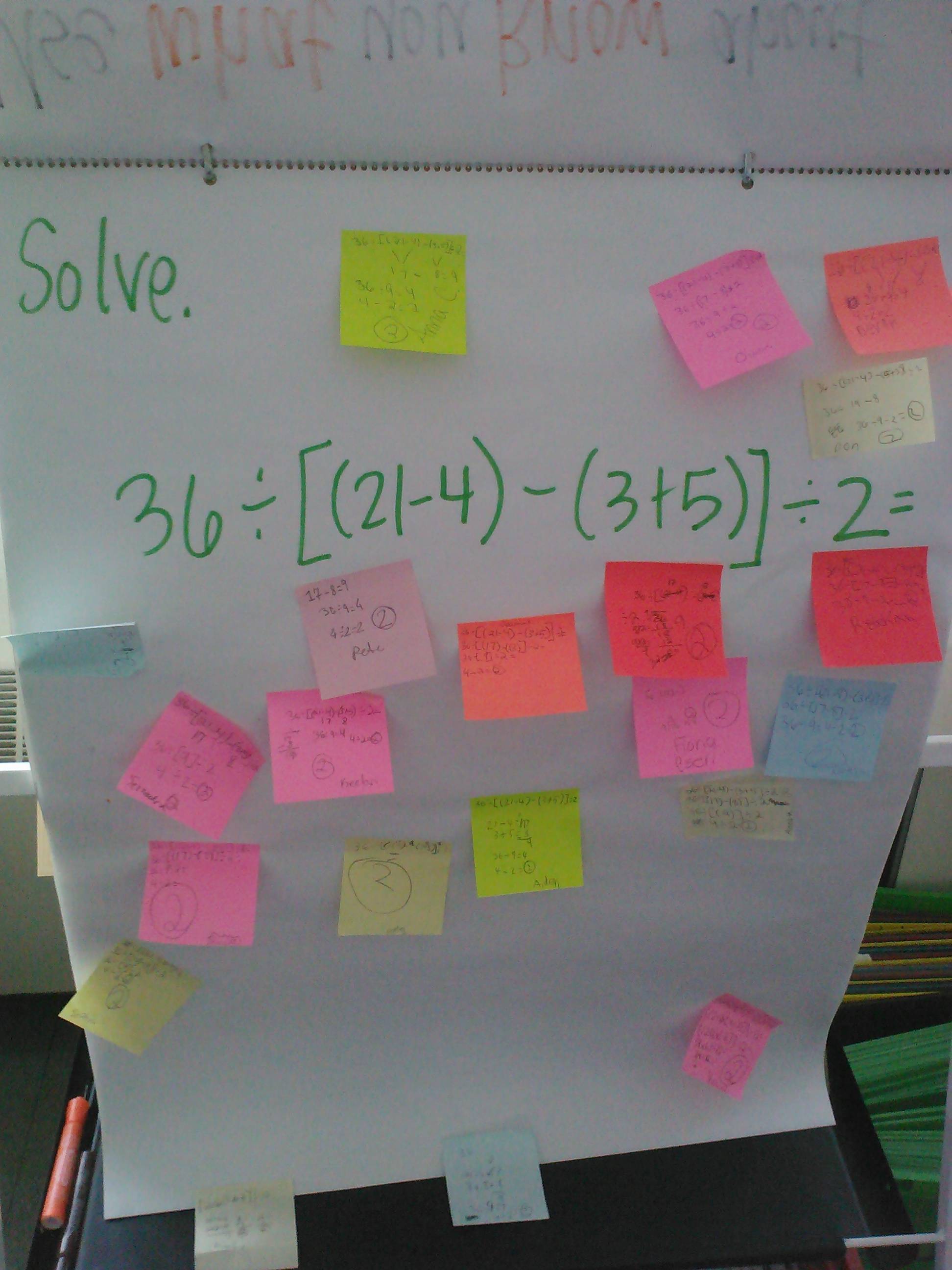
The discussion of “which comes first” came up again, only this time the answer was that it didn’t matter since both of the signs were division.  You would just do the in order from left to right.

Fridays are a little crazy in our classroom in the morning because many of us come in later due to Instrumental Music, so no Warm-Up today.  Enjoy working through these and let us know what you think.  🙂

What’s All This “Box Factory” Business?–Part 1

You may have heard me or my students mention the Box Factory lately, and wondered what in the world we were talking about.  Let me tell you about this fabulous math work we’ve been doing lately.
In 5th grade, we have a unit on 3D geometry, focused around finding volume of different kinds of rectangular prisms and figuring out a formula for how to do this (l x w x h or b x h).  This year we incorporated a unit by Cathy Fosnot, which created a context for this learning.  Enter the “Box Factory.”

The basic premise of the investigation is that kids work in a box factory and have to figure out certain things related to volume and surface area (although these things are not specifically named until later in the unit).  There were three parts, and kids worked small groups to investigate the answers to these questions:
1.  If the box factory wanted to create boxes that held 24 items, how many different boxes could they create?  What would the dimensions be of those boxes? Which box would be the cheapest one to produce? There were 16 possible answers to this question, and the students used cubes, graph paper, equations, drawings, or whatever necessary to figure it out.  They had to then create a poster to show their strategies and explain their thinking to show to the other groups.

2. How much cardboard would you need to cover each of these boxes? This one extended the conversation into surface area, and invited students to now look at the outside of the box, instead of just the inside.  Most groups figured out that if they used the formula (2 x L) + (2 x W) + (2 x H) to determine how much cardboard they’d need.  The cheapest boxes to make would be ones that are closest to the shape of a cube, as opposed to a long, skinny box.

3.  If the factory created three sizes of cube-shaped boxes–2 x 2 x 2, 3 x 3 x 3, and 4 x 4 x4, how many units could each hold?  If it costs 12 cents per unit, how much would each box cost?  This one looked at the inside again, and added another layer of multiplication (with money) to figure out the final answers.


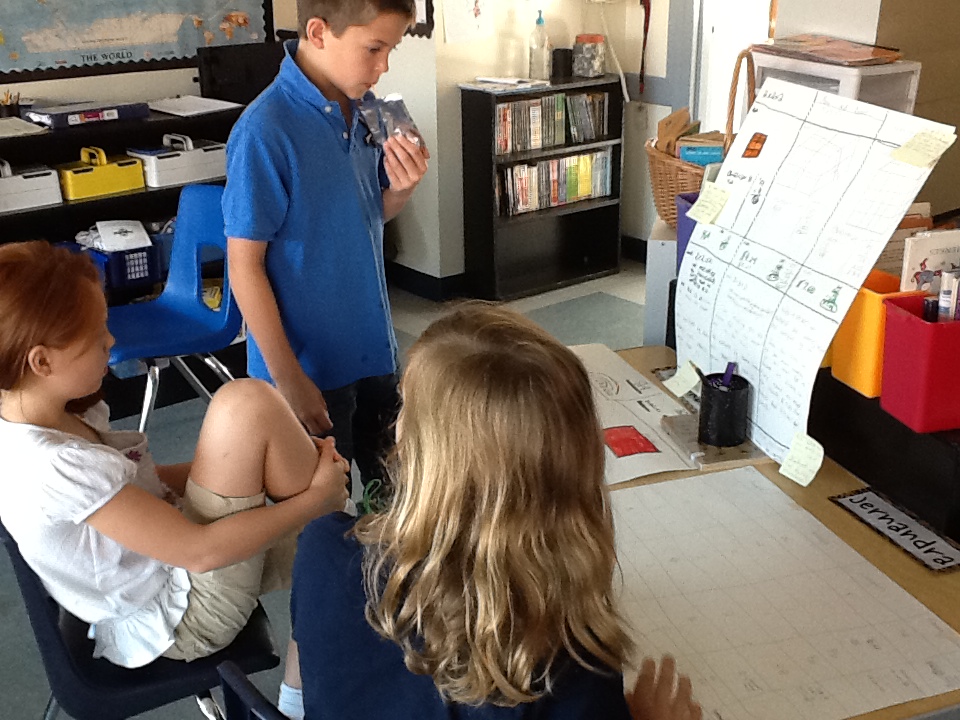
All throughout this investigation (which goes for about 10 days), the focus is on kids discovering strategies for volume, rather than just giving it to them.  Through the posters they create and the Math Congress conversations we share, they are also working on sharing and representing their thinking.  They are learning how to make their representations clear and concise so that other people can understand exactly what they did.

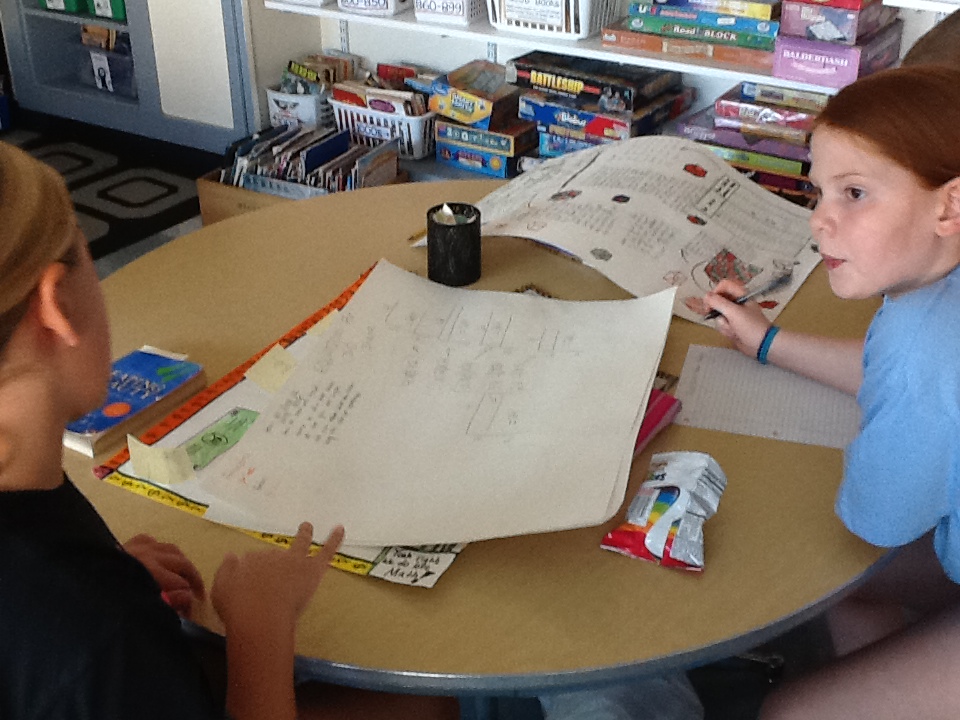
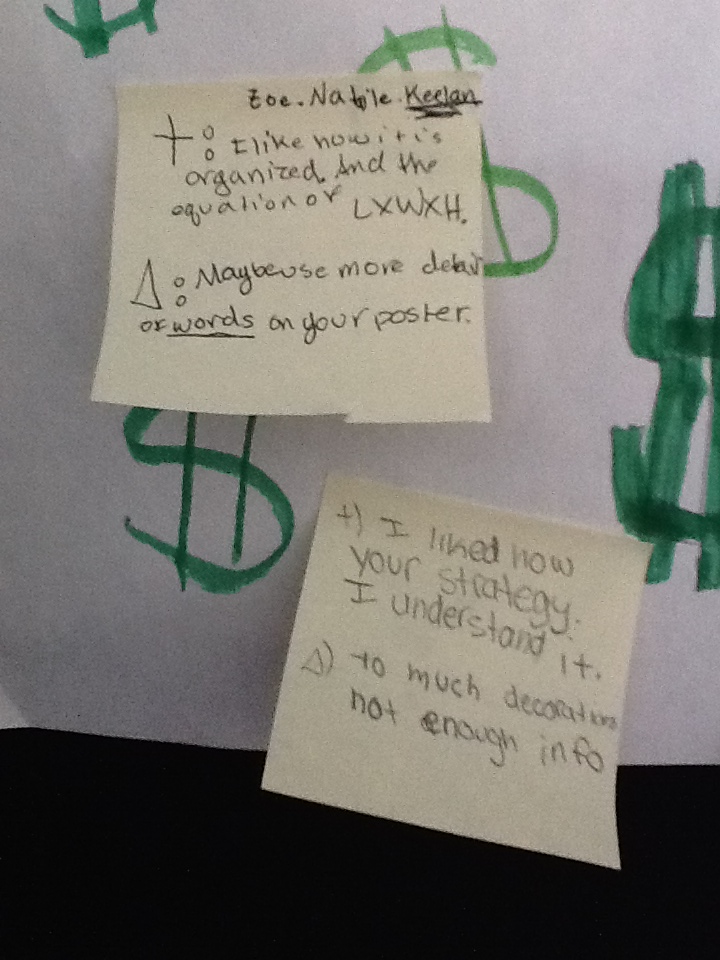
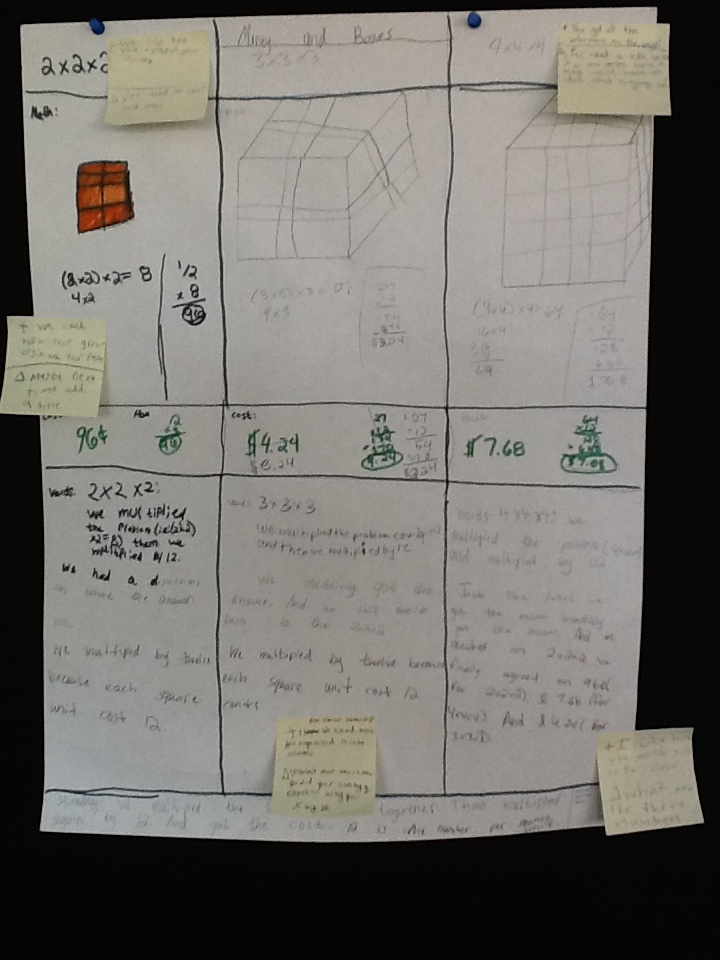
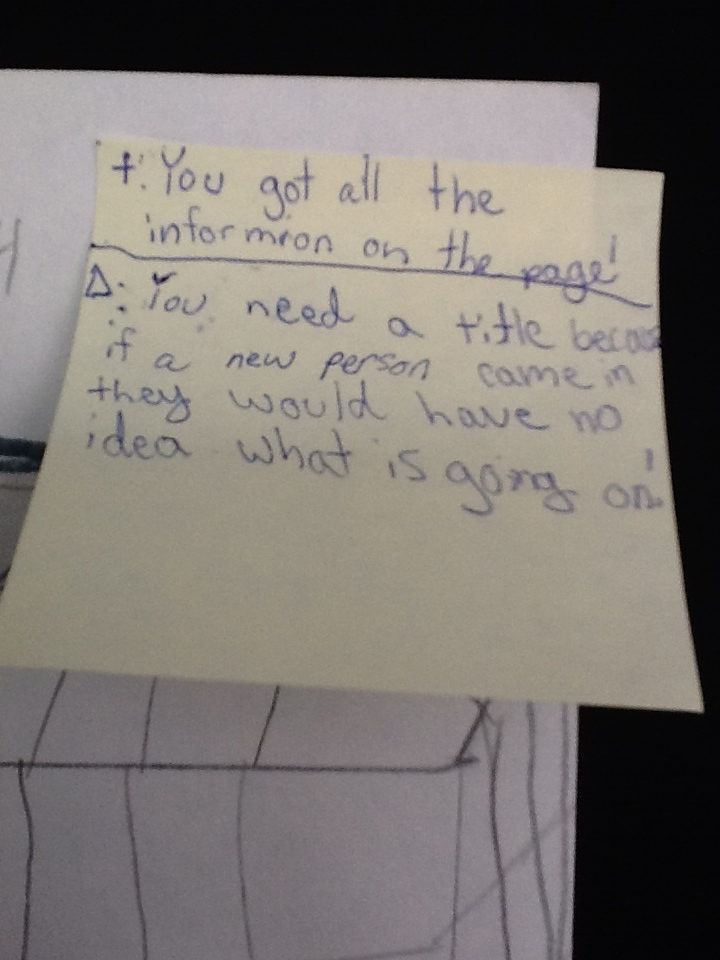
This poster-sharing part is not new to me in Math Workshop.  But Fosnot’s unit added a layer I’ve never thought of before in math–revision.  Much like when mathematicians publish proofs (and like we’d just spent time on in Writer’s Workshop!), students were able to get feedback from others on what worked, what was confusing, what they should add or take away.  They they had the opportunity to revise and edit their posters before they shared.  With each new poster they created, they added new ways of showing their thinking clearly.   They did this by discussing with their group, and then leaving suggestions on post-its.  We used the “Plus-delta” model to share something we liked and something we’d change:


So by the third time around, we were pretty great at showing thinking on our posters.  Even though you didn’t see all the steps, you can still appreciate the clarity and organization of these:


Have you ever done a Cathy Fosnot unit before?  How have you used revision and feedback in math to clarify thinking? What strategies do you use for teaching volume? We’d love to hear about it!