No More Hungry Bellies

Our school is holding a food drive to benefit KirkCare, an organization that helps families in our school district.  Like any other food drive, kids are invited to bring cans and boxes of non-perishable food items to donate to the cause.  Here’s a little peek into how a conversation about the food drive went in our classroom on Friday.

First, a little bit of a back story.  Last week, a friend in our class decided to donate money for the drive instead of food (thanks, J!), and so he gave me $31.  I held on to it for a few days, and then decided I wanted him (and a whole lot of other kids–including my son) to actually see what that $31 could get at the grocery store, so I asked J if he would mind if I went shopping with the money he gave.  He was totally fine with it, and so I took my 4YO son, Riley, to the store with me that evening.  I wanted to show him what we were doing at school, and teach a lesson about hungry kids and helping others.

I explained to Riley (at a 4YO level, of course) how there are some kids in the world, and in our neighborhood even, who don’t have food to eat when they need it.  Their mommies and daddies can’t just go to the fridge or the pantry when they ask for something and give it to them.  Sometimes they have to go to bed with hungry bellies because there just isn’t anything to eat.  Irony or not, this whole conversation took place right at his dinner time, so I was able to connect how lucky he was that I could get his dinner ready for him at that time; I shared how much it would hurt me to have to tell him, “I’m sorry, baby, there’s no dinner tonight.” 😦

So off we went to the store, with the purpose of getting as much as we could with our $31 to help fill the box at school for the food drive.  He was really eager to find things that he knew other kids would like, and to be able to help someone else.  I was really proud of how he kept talking about what he was doing, and was excited to be a part of it.  We talk a lot about “filling buckets” in our family and he liked that he was filling way more than 1 person’s bucket with this shopping trip.  So at the end of our time, we had a cart full of food and a lot of people in our hearts who we were excited to feed.  I had Riley guess how many items we’d purchased, and he was right–61!  He said, “We can fill 61 people’s buckets, Mommy!” (More on filling buckets in another post if you’re not sure what that means.  In short, it’s about being kind and respectful to others and making them feel good. See the link I added for the book the whole thing is based on.)

Here’s what our class put in the box on Friday, between the money J gave me and some other things Riley, R, K and I donated.  Amazing, what a few people can do in one day, isn’t it?
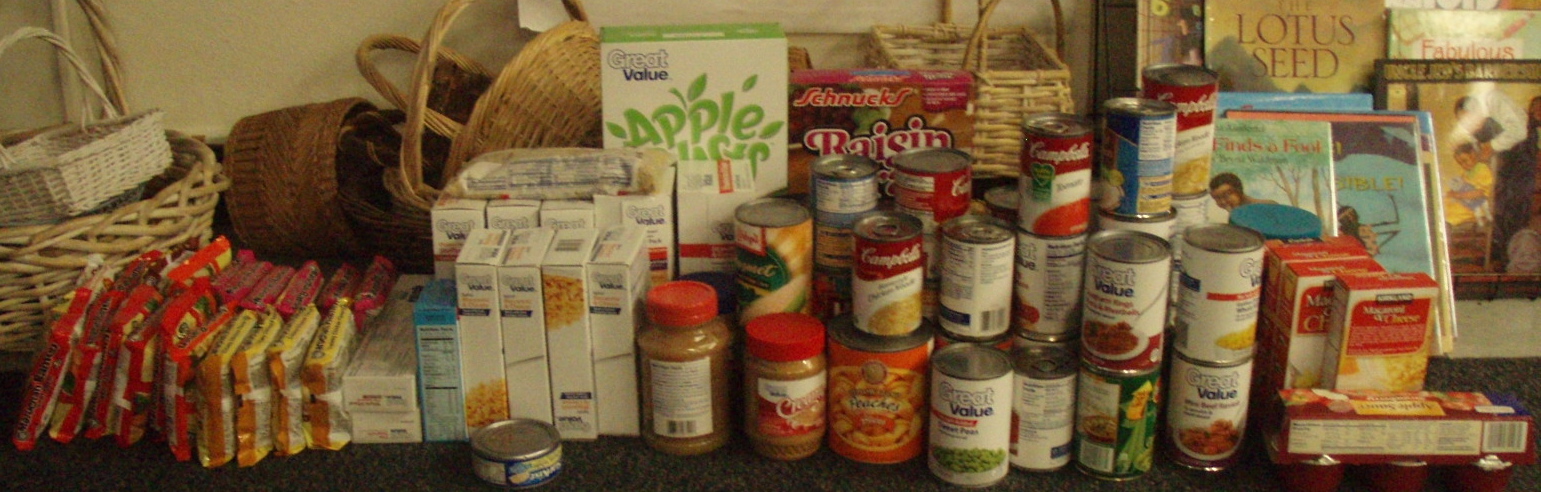
So fast forward to Friday at school in my class.  Our librarian had shared several ideas for books and videos to show that connected with the idea of homelessness in our country, with hopes that our kids would understand more about why they should give to the food drive, and who they could be helping in the process.  We started with a conversation trying to answer these questions: Who will this food drive benefit? If you’ve already given, why did you choose to?  If you haven’t, why not?  This got us started, but for the most part the answers were really generic; many just knew that it was supposed to help people that needed it, and they had donated just because they did.  Didn’t seem like there was any real reason–it’s just what you’re supposed to do when your school is doing a food drive.

The next question I asked was related to homelessness.  I wanted to get an idea about where they were with who is homeless, why they might be, etc.  Most ideas that were shared put images in our heads of grown-ups who live in the inner city, who have a cup or something in their hand to collect money.

Next, we watched a Reading Rainbow video that focused on homelessness.  The book featured in it was Fly Away Home by Eve Bunting. We had already read this book, but our focus had been on practicing inferring, rather than the topic of the story.  It’s a story about a little boy and his dad who live in an airport because they can’t afford to find a place to live.  The boy in the story tells all about how they make it work and how they try to be invisible.  Listening to the story this way–hearing a kid’s voice instead of mine–and thinking of it through the lens of the food drive and helping the less fortunate made many of my kiddos think of the story in a very different way.  The same story–but under different circumstances–was more meaningful.

Besides just the story, this episode featured the story of the Castro family.  The children in the family talked about how they had lost their house to a fire, and after their father had lost his job, they couldn’t find anywhere that they could afford to live.  For two weeks, the family lived in their car.  That’s 6 people living in a small sedan.  For two weeks.  They shared about how their mom couldn’t buy milk for the little sisters in the family, and how they had to go to bed hungry and crying.  The son (who looked like he was probably the same age as my kiddos) talked a lot about being scared and having to move to a shelter. In the end, the family was able to find some affordable housing.

When we finished the video, we debriefed.  Many kiddos were really touched by what they had seen.  The feel in the room was a somber one, and there were real tears in some eyes.  I had them talk with their partner about their initial thoughts, and then we shared out together.  I was really impressed by how touched so many of them were.  They acknowledged that our original idea about homelessness was wrong.  L mentioned that the families in the stories were homeless because of something they couldn’t control, like a fire or natural disaster.  E noted that the stories were more about hunger than homelessness, and that you could have a home and still not have enough food to eat.  C and K were really touched by how appreciative the kids in the stories were for the little bit that they had (the boy in the Castro family talked about how he had done flips over the place their family finally found to rent).  We just talk about all the things we want, and how we want more and more.  They thought that many of us take lots of things for granted.

While I didn’t intend to, I found myself in tears many times during this conversation.   It just got to me, imagining having to tell my babies that I couldn’t afford to feed them–especially the story about the girl’s little sisters.  I know some of my students felt uncomfortable, but I could tell that many of them just realized it as an honest reaction to someone else’s suffering.

We talked for a long while about our thoughts, and I was really touched by the compassion in all of their voices.  I could tell that they didn’t see the lesson as a guilt trip, but rather as a challenge.  They left the carpet ready to take on the world, wanting to make sure that there were no more hungry bellies at bedtime.  They want to do what they can to help others.  Because now so many of them understand that when we talk about helping “people in need,” we’re talking about kids who might be their age, who might be in their classroom–kids in their neighborhood and their school.  For many, this was a big surprise; they think it happens to people far away that they’ll never meet.

So I’m excited to see what this means for our Food Drive box on Monday.  I’m even more excited to see what it means for their willingness to share even far beyond Monday.  I hope that the conversation we had on Friday stays with them for a while and spurs them on for further action.  We’re going to talk next Friday about a service-learning project that our class can take on starting in January, and I’ll be interested to see what their ideas may be.  No matter what they come up with, I know they’ll do great things to affect our community.
Learning Is Messy


Today was our last day of school before Thanksgiving break.  And so traditionally, that means that we do things that are a little bit nontraditional in our schedule.  For math, that meant that I put the kiddos to work.

Here’s what I mean…

For many years, my husband and I have taught together.  Well not really together, like in the same school or anything, but we’ve always taught the same grade or the one just behind.  So since that’s the case, we’ve been known to do some of the same things in our classrooms.  One such thing is the Thanksgiving Dinner project in math that comes during these last two days of school.

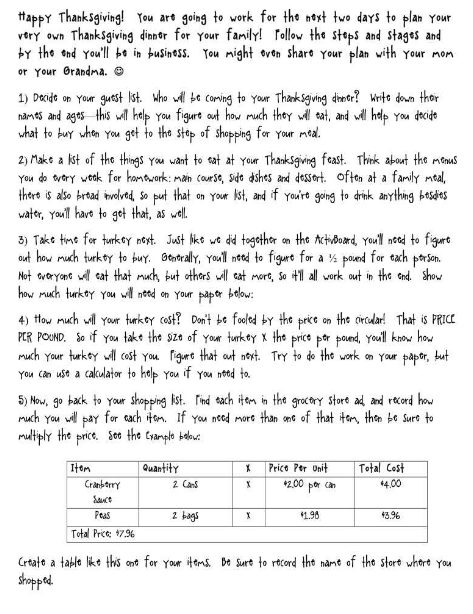
The idea is pretty simple–plan and shop for the Thanksgiving meal for your family.  The directions for my class this year looked like this:

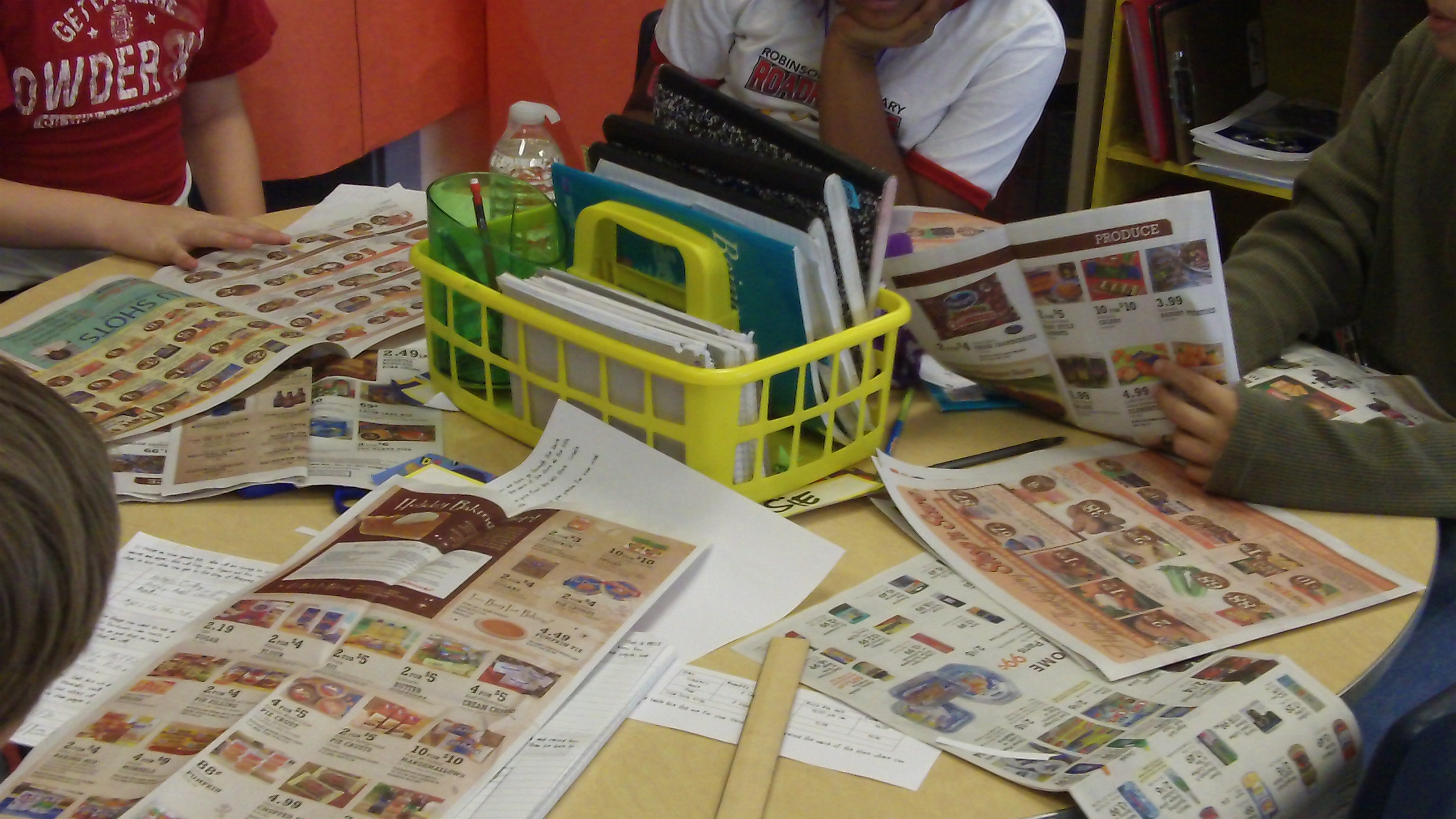
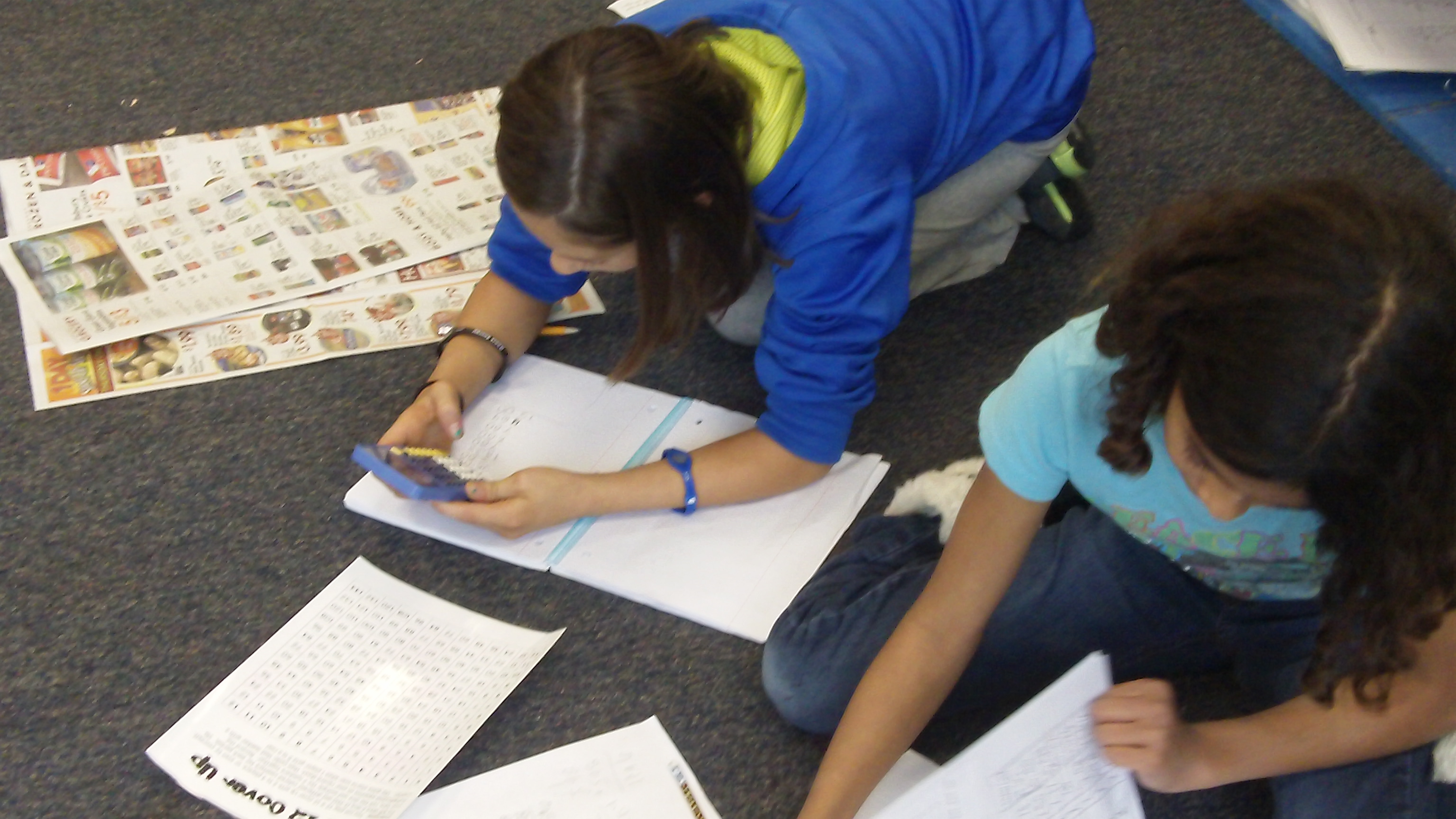
What’s cool is what happens after you give all the directions and answer all the questions and set them all loose to figure it out for themselves.  Check it out.  Like I said, learning can get a little messy.  But it’s a really good kind of messy. 🙂

Z was so focused on his meal, searching diligently through each circular to find just the right foods!


Love how my friend M is so into the paper in this one!  Can you see her behind there?


The other cool thing, besides a messy classroom and lots of kids saying things like “this is really fun!” or my friend D asking me to copy his plan so he could share it with his mom (love that!), was the togetherness that this project brought as they worked with each other.  Truly a family feel in Rm. 201 today!


Happy Thanksgiving, friends!


Lessons from a 4-year-old

Kids say the darndest things.  And if we really listen to what they say, we can usually learn something from them.  This was the case the other night when I was having a conversation at dinner with my son, Riley, who is 4-years-old.  He announced very matter-of-factly that “If you wanna have a friend, you gotta be a friend.”  I asked him to tell me more about that, and he told me “That’s what Ms. Liz says.” Now I know that she probably says that to the class as a whole, but I also know that she probably needs to say that specifically to my son more often then I’d like.  We continued the conversation with more about what that saying meant, and how he knew if he was being a friend.  I was glad to hear his thoughts and could tell that he’d really been working on how to do just those things.

We talked about this phrase on Friday in our own classroom.  I shared it with a small group of friends who were trying to work out how to really care about each other and work together as a team.  We decided that as simple as that phrase is–a 4YO can understand it, afterall, on some level–that is is really more involved that you might first think.  We discussed at length what it might look like to a 5th grader.  And then we put a plan in place to start living it out.

And then even as I’ve gone through this weekend, I’ve realized that there are implications for me, too, as an adult.  I’m learning the same lesson that my son and my students are, just on a different level.

So it’s true what they say: “If you wanna have a friend, you gotta be a friend.”

What does that mean to you?  Feel free to add your thoughts and comment!

“Blog Worthy” Part 3: Talk-a-Mile-a-Minute

My students love to talk.  I do, too, so I can’t blame them.  I remember myself as a 5th grader, even, and remember that the thing I got in trouble for most often was talking when it was somebody else’s turn.  So whenever I can, I try to give them opportunities to talk while we’re learning.  Partly so that they won’t fill in the space with talk about non-learning things, but also because learning is a social thing; talking is part of how you make meaning.

So frequently we play a game called Talk-a-Mile-a-Minute.  It’s a vocabulary game, and can be used in any subject, with any set of words.  I think I introduced it in math (because there is a TON of vocabulary there!), but we have also played it with science and social studies terms.  Today we played it with new terms from our Ancient West Africa unit in social studies.  It’s fun, they can talk and be active, and they learn something.

Here’s how it works:

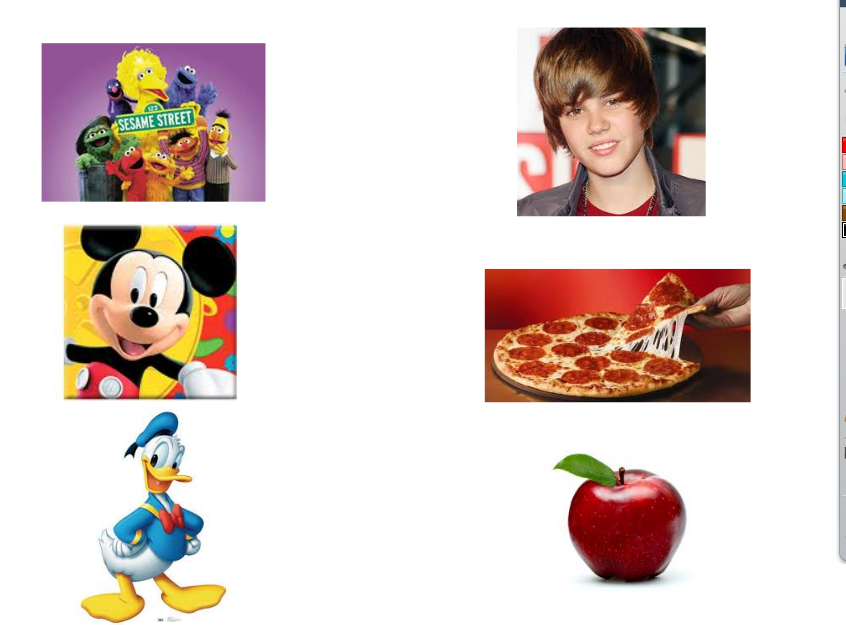
Kids choose a partner to work with.  Partners sit “eye-to-eye, knee-to-knee” in front of the ActivBoard.  The person with their back to the board is the guesser, and the person who can see the board is the describer.  I put up a screen with words they should know (or that they are working on), and the describer has one minute to get the guesser to say all of them.  The first time we played it, we did several practice rounds, and instead of words there were pictures, like this:

The goal is to be as descriptive as you can, without saying what the word starts with or rhymes with.

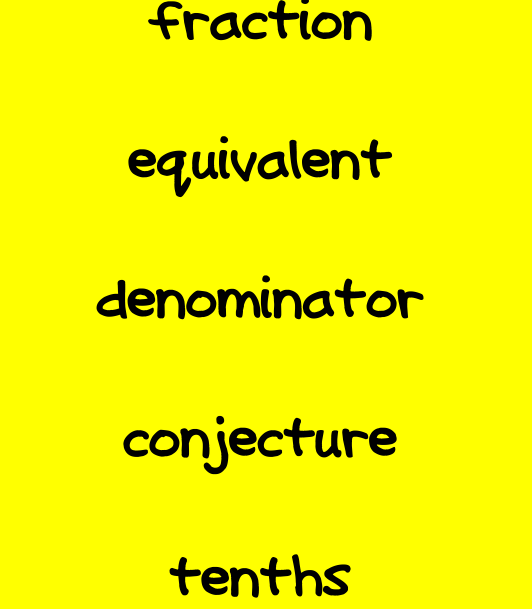
The first round was pretty easy, so then we tried it with words:

Here are some terms we used yesterday in math:

And here’s today’s version for Social Studies:

How well do you know these words?  Play with your child and see how it goes!

“Blog-Worthy” Part 2: Closing Circle

One of my favorite parts of the day is the last few minutes.

Ok, I know what you’re thinking.  No, it’s not because they’re about to leave, it’s because that’s when we have our Closing Circle.  We end our day together reflecting on what we did as learners.

I know I got the idea for the Closing Circle from someone–probably several someones–and I’m not sure who it was, but I will officially say thanks to Mike Holdinghaus, Heidi Ford and Grant Bearden for this idea.  I am sure I’ve probably tweaked and changed it a little, like teachers often do, but the general idea is the same–appreciate those people we’ve spent the day with and compliment them for the hard work we’ve done together.

The name implies alot: we sit in a circle at the close of the day.  I choose someone to start (this is usually random) and that person starts off by complimenting someone who helped them as a learner at some point during the day.  We go around the circle and each person shares, using the starter “I compliment ________ for…”  They are allowed a “pass” the first time around, if they can’t think of something, and then we fill in with all of those people in the second go-round.

One of the reasons I love this time of day is because it allows us time to reflect on what has actually happened; what we’ve learned, the fun we’ve had, the struggles we may have overcome.  Another reason is because usually they notice things that I didn’t, or think about them in a different way than I would have.  I love that even this early in the year, they’ve figured out that giving a compliment like “You helped me think about that in a way I’d never thought of before” is more thoughtful than “You played with me at recess today.”  Obviously there are times when the compliments are on the surface level like that–but then, sometimes, that’s what really matters to the kid who says it.

There are many days when we don’t get to the closing circle because the last few minutes are nutty and we run out of time.  Those days just don’t feel “right” to me.  And usually someone notices it, too, and makes sure to say so.  Then we always make sure that the next afternoon we make time to meet and close together.  Love it that they love this time as much as me.  It’s just a part of our classroom culture, and is a part that helps everyone leave on the same high note, ready to come back for more tomorrow. 🙂

“Blog-Worthy” Part 1: Table Points

We started something new in our classroom today.  Well, we  do that almost every day, so really it was just like every other day.  But today my students requested that I blog about this one.

Starting today, we’re tracking “Table Points.”  Every week, each table group can earn points for their table for doing the right thing; for following the universals of our school (we call them the Robinson Road Rules).  They never know when I will award them, or how many I will give.  They can be earned as a whole group or I can decide to give them just to one person (but they count for the whole table) for doing something extra amazing.  At the end of the week, the table with the most points earns lunch with me on the following Monday.

I got the idea for table points from my hubby, who also teaches elementary school.  He started using table points in his classroom a few years ago, and after seeing it work really well and hearing how excited his kids were about it, I was interested in trying it in my own classroom.

I think kids intrinsically really want to do the right thing.  Sometimes things get in the way of that and they do kooky things like talk in line and stare out the window during reading time or doodle on their paper instead of answering the math problems.  But deep down in there most kids want to follow the rules and act in a respectful way.  Sometimes they need some motivation and encouragement to do so–or just recognition when they do it without being asked.

That’s where table points come in.  Today I gave 10,000 points for being the first table to be cleaned up and quiet for lunch.  I gave 10,000 more points to every table for waiting quietly in the line for us to go to lunch (this is hard for us to do most days).  Table 1 and Table 4 earned 5,000 points for spending all of their writing time really focused on adding new, thoughtful entries to their notebooks.  Tomorrow I might give points for doing morning work quietly or picking up other people’s messes up off the floor without being asked.   It might be 10,000 points or 5,000 points or just 1 point.  The amount of points is not important, and neither is when they earn them.  I think it’s that they earn them, and that they never know how I’m going to do it.

During our Closing Circle today (an activity that happened to be another thing that they thought was blog-worthy), I loved how S complimented her tablemates for helping her earn so many points today.  She thanked them for staying focused and working together.  Together.  They had decided at the beginning of the day that they were going to do whatever they could to make sure they were on task, engaged and doing the right thing.  And since they had all made it their goal, they achieved it.  Each person had a small part in the success of the whole group.

I am excited to see who “wins” lunch with me on Monday.  It could be anybody, but no matter who it is who, we’re all winners because we’re focused on being better, more focused, respectful learners.  And we’re doing it together.

Class Meetings: A Lesson in Democracy

We had a class meeting today.  I love class meetings.  They are such a great way to solve problems, give everyone a voice, work together as a team, learn something new.

Last year, because of a new protocol introduced in our district, I started doing class meetings in a different way than I had done for so many years before.  At first I wasn’t sure about how it would work–mainly because it was new and new is sometimes scary–but jumped in with both feet and gave it a try.

We schedule class meetings once a week and there is a set way we do it each time:

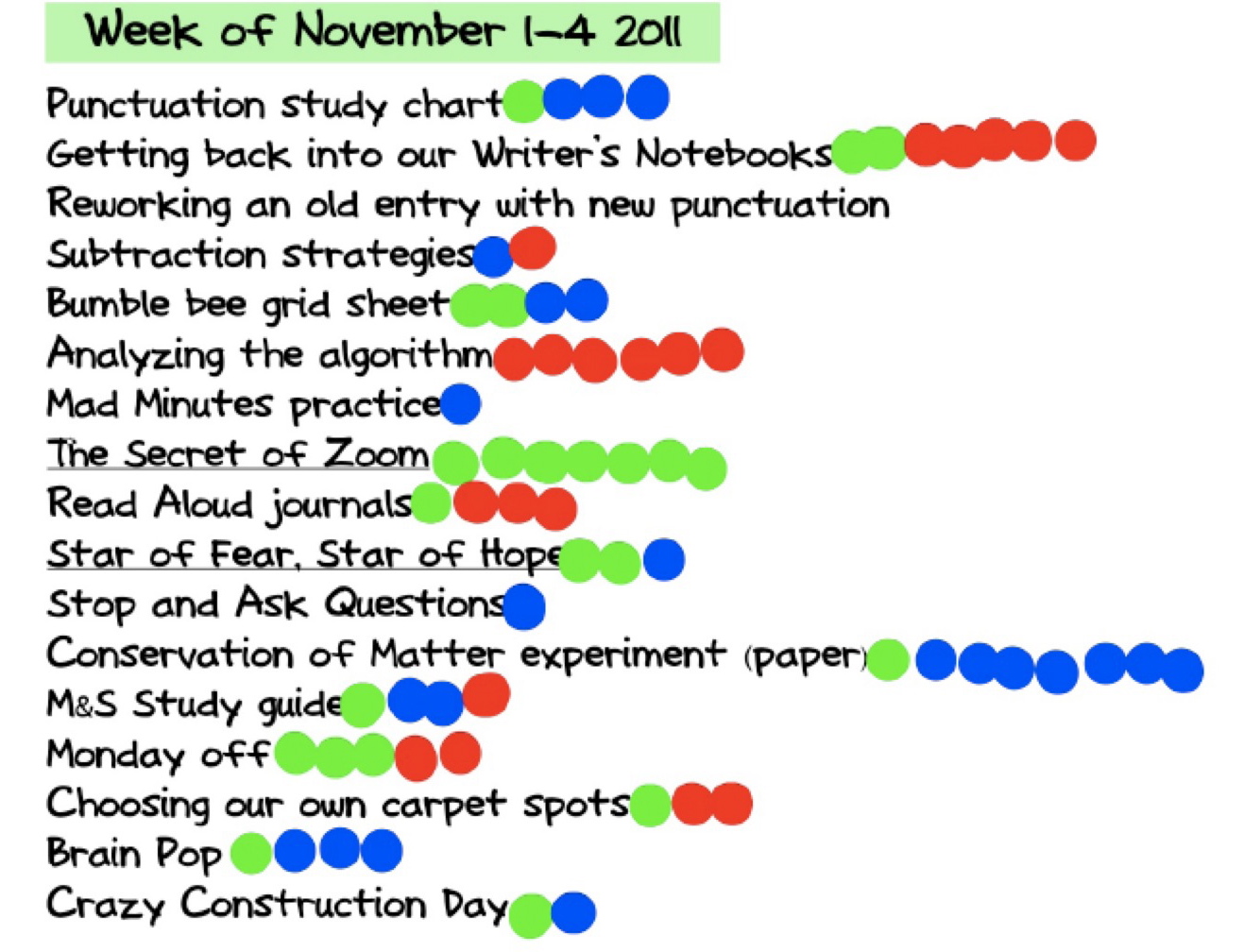
1.  I start with a list of the things we’ve done during the week.  Usually this includes the activities we’ve done, books we’ve read, concepts we’ve worked on, and then also includes any special things we do.  Last week that was a special musical performance and meeting with our Learning Buddies.  We review this together and kiddos can add anything that I may have forgotten.

2.  We sit in a circle and then mark the list according to three criteria:

  •      With green dots, we mark the activities we like the most.  Each kiddo gets one choice.
  •      With blue dots, we mark the activities where we think we learned the most.  Again, everyone gets one choice.
  •      Lastly, with red dots, we mark the activities that we think we could improve upon, work on, or do better at the next time.

Someone is the timer for this section, and allows us 2 minutes for each round.   A student puts the dots on the ActivBoard flipchart with the pen.  This is what our flipchart looked like from today’s meeting:

3.  After these steps, then we work!  By looking at what we’ve marked, we decide what we should discuss; usually it is the item with the most red dots. The timer allows us 15 minutes to discuss the problem and work on a solution together.

4.  After we’ve reached consensus (more on this later), we decide what we’re going to try and then start doing that.

For the past few weeks, our discussions have been around the volume of our voices, choosing smart carpet spots, or other behavior-related issues.  Today, though, something really cool happened.

See how there are red dots by “getting back into our Writer’s Notebooks” and “analyzing the algorithm?”  Those were both topic-related items, based on how well we did something in writing and math, rather than how well we followed (or not followed) the rules of school.

Well, we decided to talk about Writer’s Notebooks, and what came up as a result was nothing short of amazing.  For the next 15 minutes, my students discussed (without raising their hands, which we’ve been working on!) how they feel like they haven’t been doing the best job of coming up with good ideas to put in their writer’s notebooks, and how they need to really get back into the routine of writing.  They made suggestions of how they could do this, calmly and respectfully, and worked hard together to decide on a plan of action.  I was most impressed by the leaders that naturally rose to the top, how the others listened to them as they led, and how many kiddos invited others who hadn’t said anything yet into the conversation.  Somebody even got up–without being prompted–and started keeping a list of who had shared (and how often they spoke), so she would know who we still hadn’t heard from.  There were a couple of times that they started to get off track or started talking over each other, but both times someone was there to calmly remind us of our job or of the time we had left.  The best part was that this time that person wasn’t me–I’ve been working on talking less during class meetings. 🙂

Today was a great picture of what kids can do when they are allowed to identify real problems and then work to solve them.  I didn’t have anything to do with the decision made today–outside of setting up the framework for discussing it–and they came up with a completely doable solution, that everyone was happy with.

And so now a word on consensus….in our meetings we don’t vote on an idea; we work to try to reach a consensus.  That is, work on the problem until we get a feel that most of the group is happy with the plan.  Unlike voting, it doesn’t become an “us against them” kind of thing, and the most popular or loudest voices don’t get to make the decision.  By allowing more than just choice A and choice B (like in a vote), often times choice C will arise; a choice that is often a combination of the first two, or is even better than what we originally mentioned.  And the best part is that usually that final solution suggestion comes from the quietest voice on the carpet, the one who has been sitting and listening and then finally has the courage to speak their mind.

I am so proud of my learners.  I am so glad that my friend Mike Holdinghaus taught me how to do class meetings this way.  I am so glad that we take time out to learn important things like how to have a civil discussion, how to make a decision and how to work together.   This is good stuff, people, good stuff.  And it’s all stuff that they’ll need and use long after they leave me for middle school. Hopefully for the rest of their lives. 🙂


Read-Aloud Timeline

One of the most important learning times in our classroom is read-aloud (chapter book).  I use this time to introduce kids to authors and books they may not know, as well as working on strategies that good readers use and practicing how to talk about books.

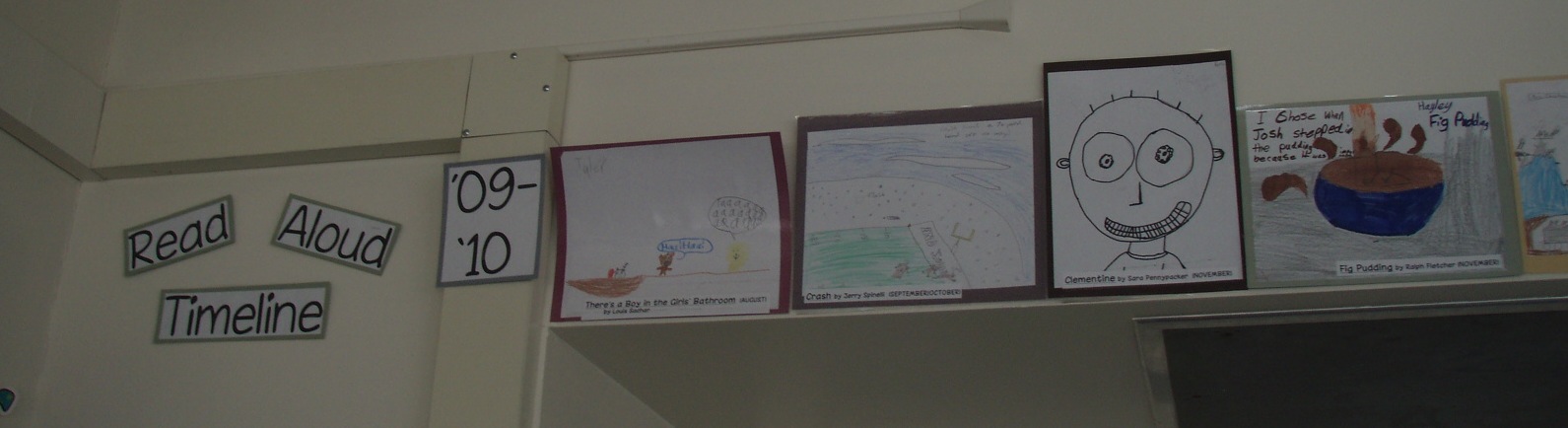
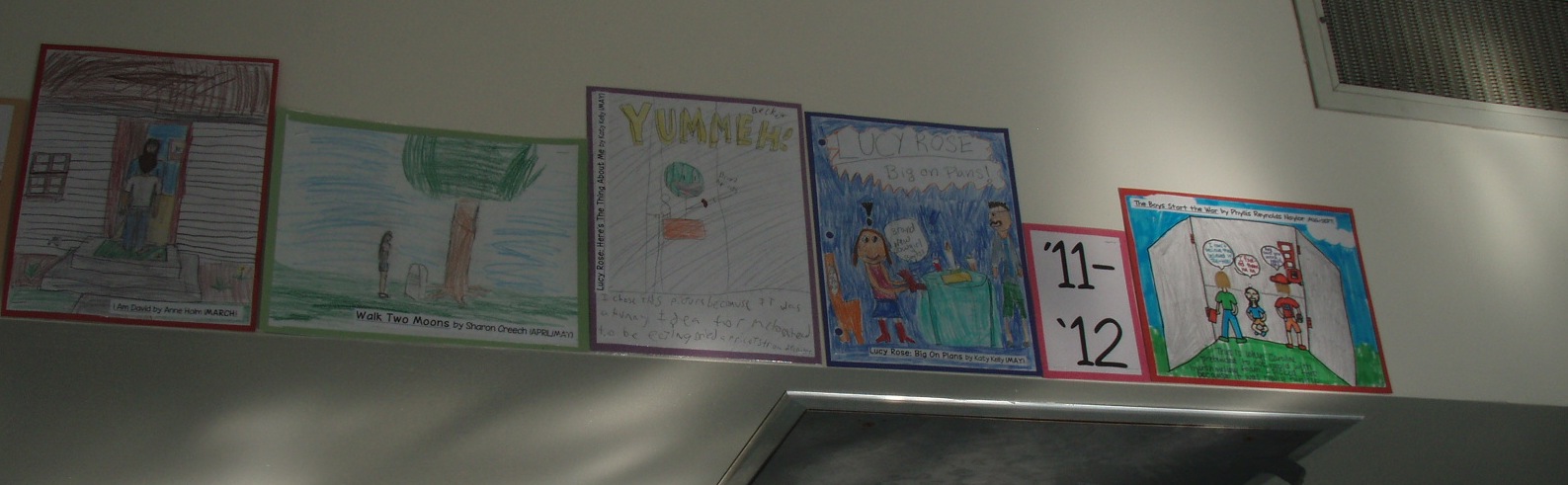
We recently finished The Boys Start the War, by Phyllis Reynolds Naylor.  I’m sure you heard how funny and interesting it was, and how there are at least 12 or 13 other books with these characters that we could read next.  Well, once we were finished, I introduced a structure that we will use after every chapter book we read: the read-aloud timeline.

Here are some pictures of what it looks like in our room:

I know the pictures don’t really do it justice, so make sure you stop by to see the real thing!  It’s been really great to incorporate a good reader strategy (creating images) with remembering what we’ve read.  At the end of the year, each kiddo will get a book of all of their images together, for their own timeline of our reading year.  So glad I’ve started this in our classroom!  Ask your kiddo to tell you what they love about it.  And stay tuned for an update–we just finished Crash yesterday, so it’ll go up this week. 🙂

Highlights: The 1st two weeks of 5th grade

I have had good intentions.  Intentions that included adding new blog posts every day of school.  And obviously those intentions did not end up resulting in new blog posts yet.  But here’s a new one.  And I’ll make it worth your while.  I promise. 🙂

So since it’s called “highlights”, I’m going to give you the big ideas of what we’ve been doing so far, and hopefully your 5th grader can fill in the details.  Hopefully.  There are at school every day, afterall.

Ok, so let’s get started:

Reading: Reader’s Workshop has officially begun in Rm. 201!  We have made reading posters to share our likes/dislikes as readers, taken a reading survey, read The Lotus Seed, Something to Remember Me By and Everybody Cooks Rice together, had our first check-out from the Robinson library, gone on a scavenger hunt in our classroom library, took our first SRI assessment on the computer, read Hansel and Gretel and discussed how to trail our thinking as we read and then–you guessed it–we read!  I love how excited this class is to dig into books!  Next week we’ll start to focus on strategies that good readers use to make sense of text.

Writing:  We have already begun so much work as 5th grade writers!  From day one, your writer was busy thinking about ideas for stories, putting thoughts on paper.  We have gotten our Writer’s Notebooks, and spent sometime making them our own.  We talked about how our WNBs should be a snapshot of who we are; we should be able to tell whose notebook it is without even checking the name, but just by looking at what’s on the cover.  This week we started Being a Writer, which is the program that will support our writing work this year.  So far we’ve read The True Story of the Three Little Pigs by Jon Scieszka (which we learned is pronounced CHESS-ka), as well as The Frog Prince Continued, then talked about how to retell familiar fairy tales in a new way.   As a community-building activity, we played a game called “2 Truths and a Lie”, then lifted a line from what we had written to expand our thinking.  We will dig in further to the Writing Life next week as we continue our journey as writers together.  I cannot say enough how excited I am about sharing my writing life with your kiddos!  I loved this quote from someone today as I was writing in my own notebook: “Wow.  You have a Writer’s Notebook?  I’ve never seen a teacher write in their  notebook during the school day before.”  I’m hoping that there’s already a connection forming there–we are growing as writers together this year!

Math: The mathematicians in Rm. 201 have already been very busy!  We started the year by playing a few math games (Dice Duel and Contig), as well as learning how to correctly roll dice in 5th grade. (Really.  Ask your kiddo to tell you all about how I hate the sound of dice on the tables! 🙂 )  We took a math survey, and then dug right into our first unit in 5th Grade Investigations: Finding Factors and Prime Numbers.  So far we’ve learned (or reviewed) vocabulary related to multiplication–factor, product, multiple, prime number, square number, composite number, array, dimensions–and started working on finding factors of a variety of numbers.  We worked number puzzles, and started an activity called Quick Images for ten-minute-math.  This subject has soo much to tell–be sure to have a conversation with your kiddo about all that’s been going on.  Feel free to use this to help them get started talking about what’s been going on.

Community:  An crucial part of the beginning of our year is beginning to grow our classroom community.  We do this by working together to create things, learn procedures and routines that will be used in our room and throughout Robinson, and learn more about each other so we can celebrate our differences and build on our similarities.  We’ll continue to revisit this idea all throughout the year, to keep our connections strong.

Read- Aloud: Read aloud (chapter book) is a integral part of our classroom.  While it is fun, it is also an important time when we think and talk about books.  The choices I make for books during Read Aloud are often Mark Twain award nominees, or have topics related to the curriculum in our class.  The first book this year is called The Boys Start the War, and is a big hit already!  Have your reader tell you about how we use the strategy of “say something” to share with our partners, and have them introduce you to BOT graphs.

I am sure that there’s probably something I’ve missed.  I’m amazed at how quickly time flies when we’re so busy and having so much fun!

Stay tuned for more updates on the fun and learning in Rm. 201.  Maybe next time there’ll be pictures. 🙂