Feast Week Part 3: What’s For Dinner?

If you haven’t checked them out yet, be sure to read Part 1 and Part 2 of our Feast Week journey. 🙂  If you have, welcome back!

While we thought it would never actually arrive, December 17–the first day of Feast Week–finally came and we were ready to get started!  Our kiddos had done such an amazing job with all that they had to learn about fractions, and were now ready to apply that to a real-world situation.  They were super excited and very motivated.

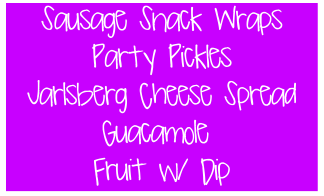
Our class was responsible for appetizers.  While they were a little sad because they wanted to do dessert (everyone did, really!), they came with really great suggestions for what we could make for our portion of the meal.  Everyone came with family-favorite recipes from home, and we had some decisions to make about which we were going to use.  We got into our tribes to make these decisions, and narrowed the list down to these yummy choices:

Screen Shot 2013-01-06 at 9.15.12 PM

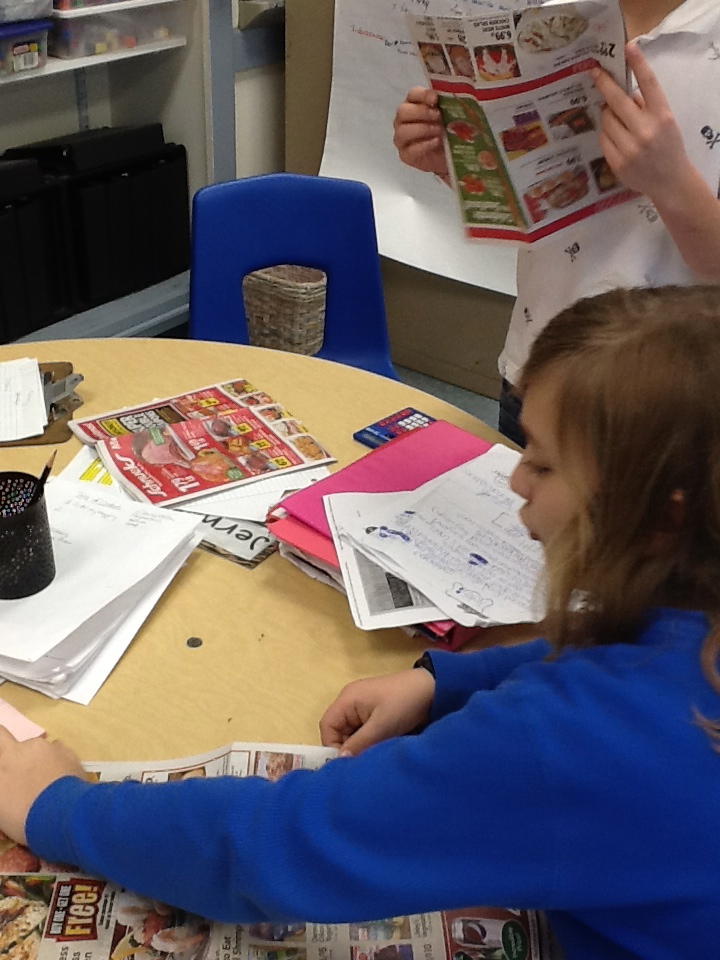
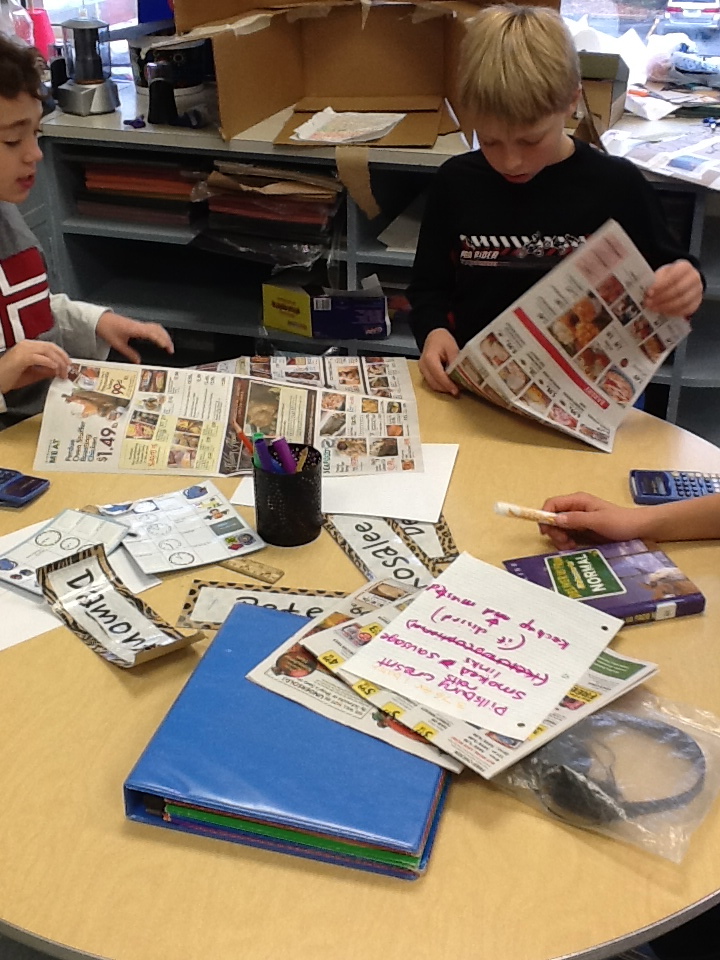
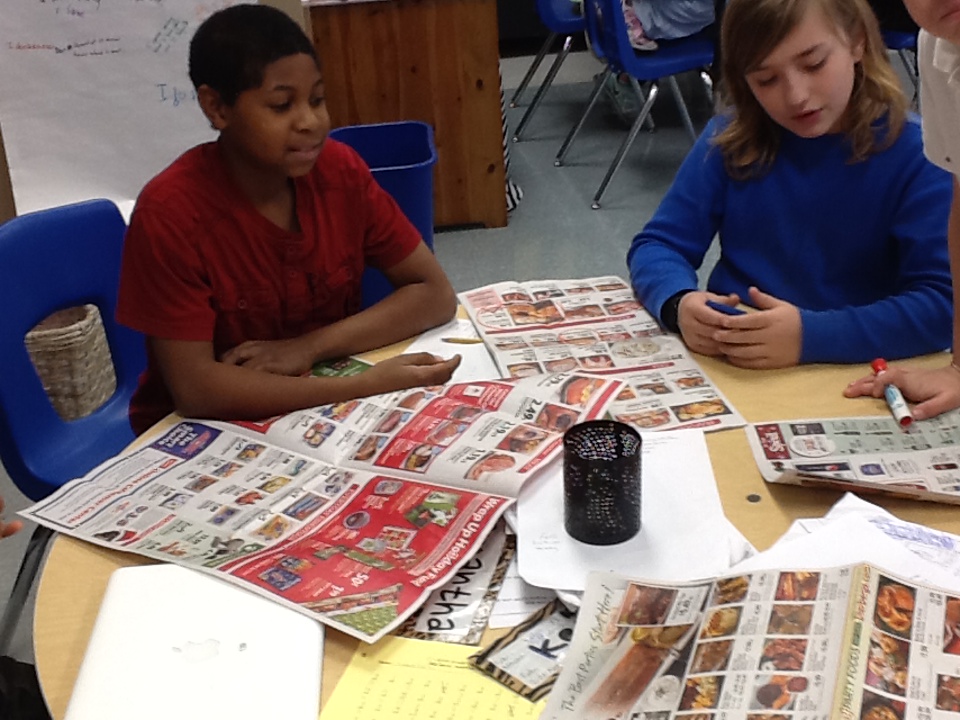
The next step was to shop for ingredients.  Using the circulars from Schnucks and Dierbergs, tribes got busy finding ingredients and figuring out how much their recipe would cost using these directions:

Screen Shot 2013-01-06 at 9.23.48 PM

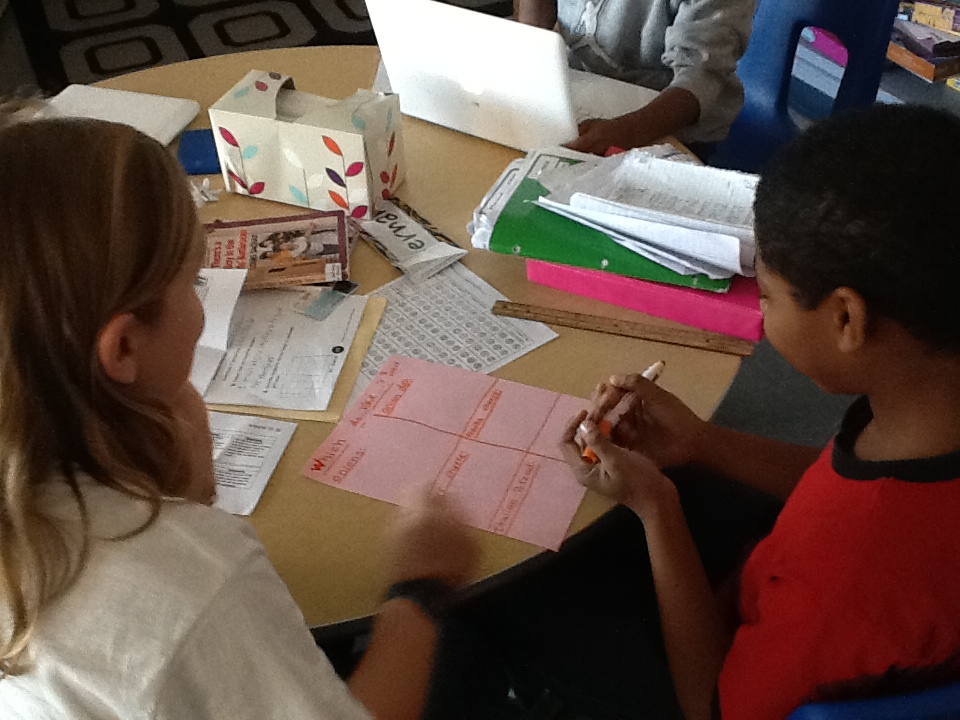
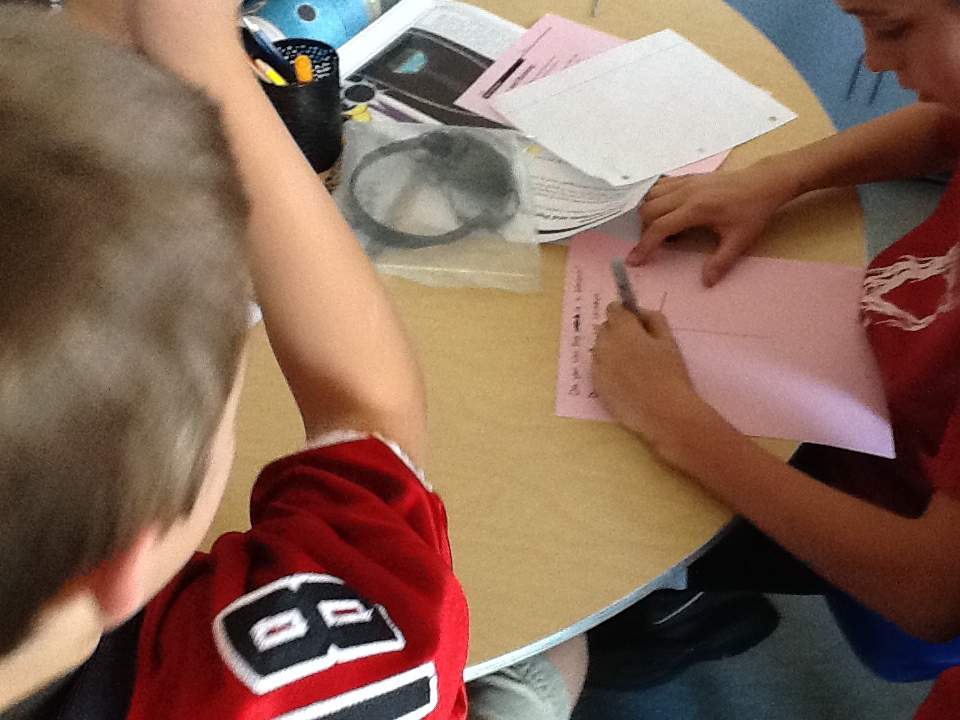
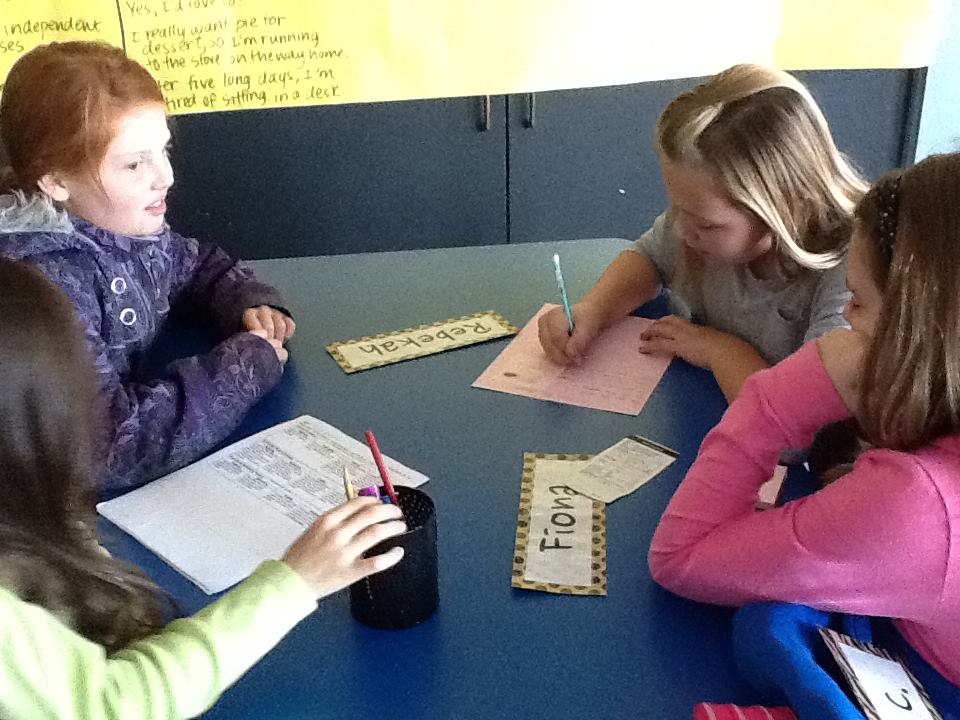
As with everything they do, kiddos took on this job with much seriousness and concentration.  They had to feed 85 people after all!

IMG_0611 IMG_0612 IMG_0613 IMG_0614 IMG_0615 IMG_0616 IMG_0619 IMG_0620

IMG_0631 IMG_0630 IMG_0629 IMG_0628

Read about Part 4 of Feast Week here!

Feast Week Part 2: How I Learned Fractional Parts Without Thinking About Pizza

In case you missed Feast Week Part 1, check it out here.

Feast Week was born, and we had decided what (and how) we were going to teach that big, deep list of concepts about fractions.  We utilized the UbD template for planning the unit, focusing on what we wanted the outcomes to be and then how we’d get them there.

And then we told our kids about it.  And they were BEYOND excited!  We were giddy about the plan, and my students were as eager as me to start our fraction work so we could head down the road toward the beginning of the actual Feast Week.  And just as we had hoped, this was just the motivation that 81 5th graders needed to get through a really hard unit on fractions.

But first we had to learn about fractions.  The unit was broken down into eight big ideas:

1. What are fractions anyway?

2. How are fractions related and equivalent to percents and how can they be used to solve problems?

3. How do you find fractional parts of a group (i.e. what is 2/5 of 30 students)?

4. How do you add and subtract fractions?

5. How can you multiply a whole number by a fraction? What does it mean and why would I need to do it in real life? (As a side note: this one was cool, because it is the same as finding the fractional part of a group–they just didn’t know that back at the beginning of the unit)

6. How can you multiply a fraction by a fraction?  What does it mean and why would I need to do it in real life?

7. How can you divide a whole number by a fraction? What does it mean and why would I need to do it in real life?

8. How can you divide a fraction by a whole number? What does it mean and why would I need to do it in real life?

The really fabulous (yes, I know I say that word a lot, and yes, I do it on purpose 🙂 ) thing about this unit was how many times I heard the words “Wow, this is easy!”  And how surprised so many kids were that it was easy.  For some reason, fractions is a four-letter-word to most people and honestly, I think that’s why so many of us (including me!) had so much trouble figuring them out.

We use Investigations as a math resource in our district, and I have always loved the way it works through math concepts–always starting with the why before showing the how.  And it was no different with fractions.  We did not start with straight number problems where we colored in pies that were the same amount, or with “this is the algorithm for adding fractions.”  We started with the why–or the “what” really.  What is a fraction, and how does it relate to percents, which are something that everyone already knows about.

Our fraction unit introduced many graphic organizers for kiddos to use to represent their math thinking, and the first one we used was a 10 by 10 grid.  We used it to find fourths (again, going back to something they already know), and figured out what fractions and percents we knew from those: 1/4 is 25%, 2/4 is equivalent to 1/2 and 50%, 3/4 is 75%.  Then I blew their minds when I showed them how they could find eighths on the same grid.  Yep, even though 8 is not a factor of 100.  Again, we had them think about what they knew and how they could use that knowledge to figure out something they didn’t know.  (I’ll let you stop right now and see if you can figure out how to do it.  Go ahead, I’ll even give you a 10 by 1o grid to use.)

Screen Shot 2012-12-31 at 9.46.44 PM

Yeah, so I’m sure you’ve figured it out, but I’ll show you anyhow:  If you find fourths, then think about what an 1/8 is.  It’s half of a 1/4, right?  Yep, 1/4=2/8.  Since you know that 1/4 is 25%, then you can easily figure out that 1/8 is the same as 12 1/2%.  Now you can use that to figure out the percent that is equivalent to any fourth or eighth, just by adding more of them.  3/8 is 37 1/2% because you know 2/8 (1/4) is 25% and then 1/8 is 12 1/2%.  Crazy, right?  I LOVE THIS PART!!  It’s so freeing to kids who have thought all along that fractions are impossible, too hard for them, some secret that they haven’t been told.  But now it’s just another puzzle–and they have the pieces to help them solve it!  This fraction/percent equivalence plays a HUGE part in the whole rest of the unit, so we spend lots of time at the beginning working with those numbers in different ways to help get it sold in their minds.  They had a chart they used as a resource, as well, throughout the unit.  Math doesn’t have to be a mystery.  It isn’t something you have to memorize.  You have tools and you just have to know when and how to use them!

          Screen Shot 2012-12-31 at 10.27.43 PM                      Screen Shot 2012-12-31 at 10.27.53 PM

Another organizer we used were 4 x 6 and 5 x 12 rectangles.  They’re arrays, just like the 10 x 10 grids, but work better for other numbers that have factors like 3, 4, 5 and 6 (thirds, fourths, fifths, sixths, etc.). We could use them to find the fractional parts of almost any number that way.

109_0043

These were used when we moved on to finding thirds and sixths (which you can do with percents, as well, too).  These were cool, too, when they figured out that 1/3 was 33 1/3% and that 1/6 is half of that.  That’s a crazy question: what is 1/2 of 33 1/3?  Wish I would have recorded them figuring out that it’s 16 2/3%. Really.  It is.  Try it.  Here, let me show you:
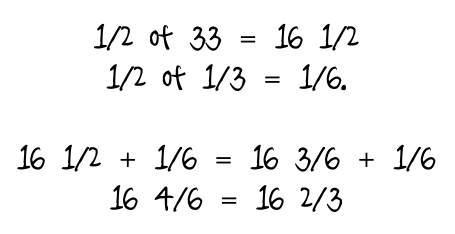
Screen Shot 2012-12-31 at 10.46.30 PM

The first time I did that it heard my head.  The second and third times it did, too.  Yeah, I’ll admit it.  Some of the things I ask my kids to do seemed crazy in the beginning.  Mainly because it’s not how I learned it, but this time around it totally makes sense.   I wonder what it would have been like to do math like this when I was a kid…

(Ready for Part 3?  Find it here.)

Feast Week Part 1: The Birth of Feast Week

First of all, Happy New Year!  I don’t know when you’re reading this, but I’m writing it during Winter Break, on New Year’s Eve Eve.  This is a time of year I both love and hate: the fresh start that comes both personally and professionally in January is one of my favorite things–there is an air of anticipation of new and wonderful things to come; the fact that Spring Break isn’t for another two months is a little disheartening.  Winter can be long in Missouri.

That being said, I am excited to tell you a story about what was happening in my classroom–well all the 5th grade classrooms at my school really–during the months of November and December.  It was a fun and exciting time in our school, full of learning and anticipation; an eagerness that had nothing to do with holidays or vacations.  We were doing hard work, focused on something that at that time seemed like it was forever in the future: Feast Week 2012.

Screen Shot 2012-12-30 at 7.44.32 PM

This year I have a whole team full of new friends, and with that comes new ways of doing things–mainly just because we have all done it differently in our previous teaching “lives,” and because we want to plan new things together.  So…when it came time to talk about fractions and how we were going to teach that dreaded fabulous unit, we knew it was something we wanted to do together.

First we looked at what we had.  I have taught a fraction unit of some sort for the last 7 or 8 years, in 4th and 5th grade.  Previously, we really just had to get our friends to a solid understanding of what “fraction” means (part of a whole), and be able to use fraction/percent equivalents to solve problems related to parts of a group.  There was also a small part that included adding and subtracting fractions, using the equivalents as the basis (rather than finding common denominators, which is a common practice).

This year, however, our school district is really trying to dig into the new Common Core Standards–hoping to get a feel for what they ask of our kids and how they’ll change things for us as teachers.  This is happening most deeply in math; all of our curriculum and rubrics were rewoven to match the CCSS this past summer.

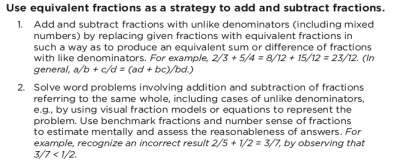
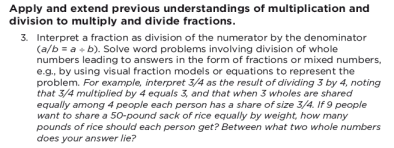
Now, instead of just the basic foundation like I mentioned previously, our kids have to be able to do this:

Screen Shot 2012-12-30 at 7.22.48 PMScreen Shot 2012-12-30 at 7.23.10 PMScreen Shot 2012-12-30 at 7.23.43 PMScreen Shot 2012-12-30 at 7.24.25 PMScreen Shot 2012-12-30 at 7.24.41 PM

Can I be honest here for a minute and tell you that we were a little FREAKED OUT by all of that!  Unfortunately, until you get to know the CCSS really well, and dig into what they mean and are actually asking your kids to do, I find that they are written in a really complicated way.  Needless to say, the first time we even read those expectations we were scared: how were we supposed to get 10- and 11-year-olds to be able to do those things (and do them well, with a deep understanding) if we couldn’t even understand what the standards said?

So after we picked our jaws up off the floor, dried our tears, and got our heart rates back to a somewhat normal rate, we sat down to figure out just how we were going to tackle these things with our students. We began with the belief that they could do it, we could do it and we were going to do it well.  We wanted to do it in a meaningful, authentic and real-life way that would help build a “forever and always” understanding, rather than just an “I-get-this-now-but-will-forget-it-after-I-take-the-test-next-week” understanding.   That meant rewriting assessments, possibly reworking assignment and activities and rethinking our own working knowledge of fractions.

And so Feast Week was born.  It began as an assessment idea, really, but quickly melded into more of a celebration–a culminating activity that would incorporate all that we expected our kids to know and be able to do.  It was to take place the last full week before Winter Break, and would include all that goes into creating a Winter Feast–planning, shopping, cooking, and then of course, eating!  We based it on an activity I had done in previous years around Thanksgiving where I had students use the circulars from the grocery stores to plan dinner for their family.  In that scenario, however, the whole situation was hypothetical.  In this reincarnation, it was for real.  We set the 5th Grade Fraction Feast to take place as our Winter Party, and the kiddos were entirely responsible for making it happen.  Talk about real-life.  Authentic.  Engaging.  Motivating.

And yes, it was.  None of it was easy.   And yes, I can admit there may have been some tears shed along the way.  But we made it, and yes, it was FABULOUS!

Hopefully you’ll hang on for the rest of the story of Feast Week! I promise it’ll be worth your time.  🙂

(**Be sure to read Part 2 here!**)

Math Warm-Ups Nov. 26-30, 2012

This week we had five whole days of school!  And even better, we had five math warm-ups!  Check ’em out!

Monday

IMG593


Tuesday

IMG594

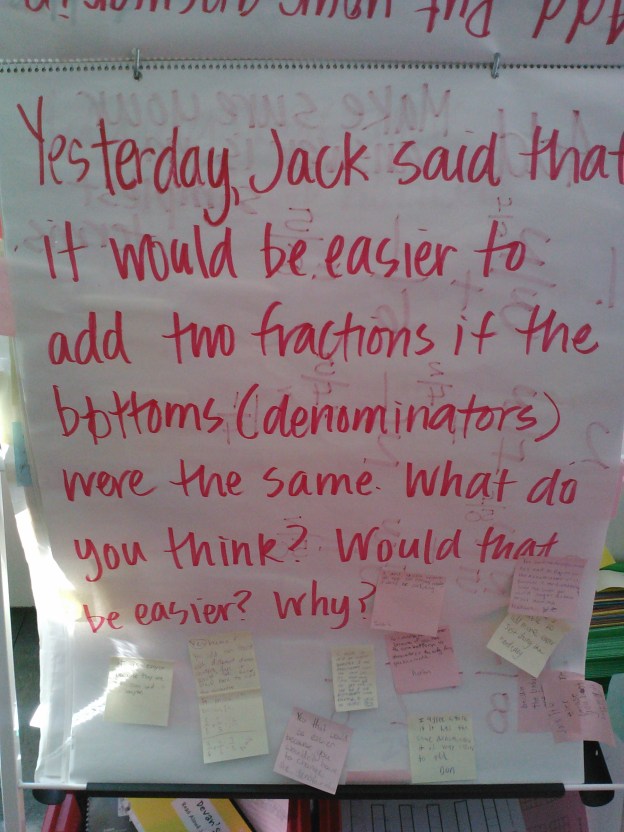
This warm-up question illustrates just how authentic and real-life I try to make these.  This one really came from a conversation I had with a group as they were working on the problem I gave during work time on Monday.  It was just where I wanted us to go, and so presenting it as a warm-up made sense.  And when it can be suggested as a kid’s idea instead of mine–which it really was, anyway–that’s even better.


Wednesday

IMG590

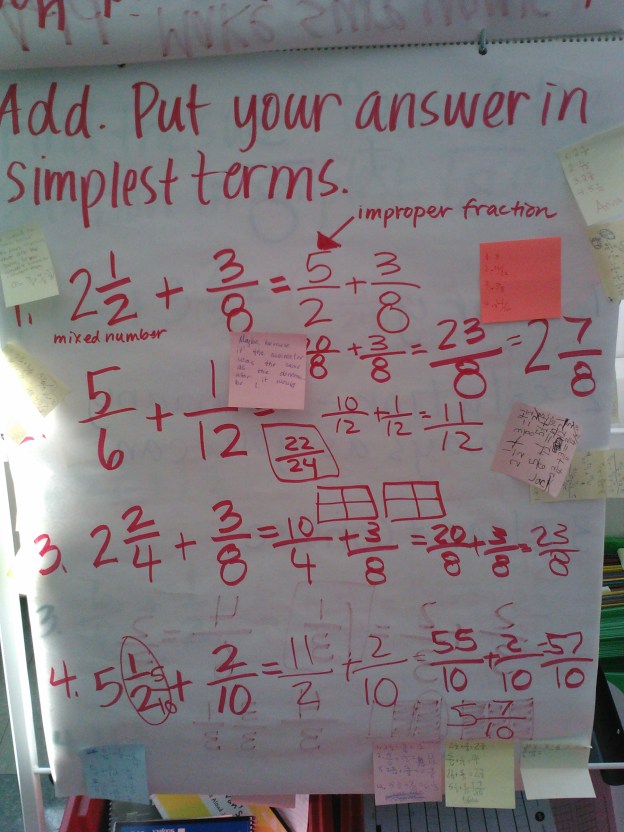
As they did these warm-ups, the focus was on finding common denominators to help them add.  Rather than finding the LCM, however, I want them to connect these to work we’ve already done with fraction-percent equivalents; they know they can double or halve certain fractions to make other ones.  Mostly we’ve worked with thirds, fourths, fifths, sixths, eighths, and tenths, but I threw that 25 and 50 one in there to see if they could transfer the thinking to a similar problem.  They could. 🙂


Thursday

IMG591

This one reminded (or introduced to some) us of important vocabulary of improper fractions and mixed numbers.  As we added these, they focused on changing the mixed number to an improper fraction, adding them, and then reducing it to simplest terms.  Notice how the last one has the fraction circled?  It was on this problem that someone figured out that we could add the whole numbers and then just add the fractions and put them back together.  Smart, huh?  Again–this was so much more meaningful that they discovered it on their own, than if I just told them that they could do that as a shortcut.


Friday

IMG592

These problems encouraged my friends to focus on the strategy we had discovered at the end of the warm-up the day before, and also threw in some vocab we already knew (sums).  By the end of this conversation, there some kids who were smiling, which was nice considering all the frowns I’d seen early on in the week.  🙂

On a side note…sorry for the mess of the charts this week.  I ran out of chart paper and had to use the backs, too!  It’s resourceful, right?  Or just messy…not sure which. 🙂


Math Warm-Ups Nov. 12-16, 2012

With last week being Thanksgiving, I wasn’t able to get the warm-ups posted for you.  So here they are, but a couple of extra pics of what we’ve been doing with fractions in math lately.  That makes up for it, right? 🙂


Tuesday


Wednesday


Thursday


Also this week, though not as Warm-Ups were these charts:


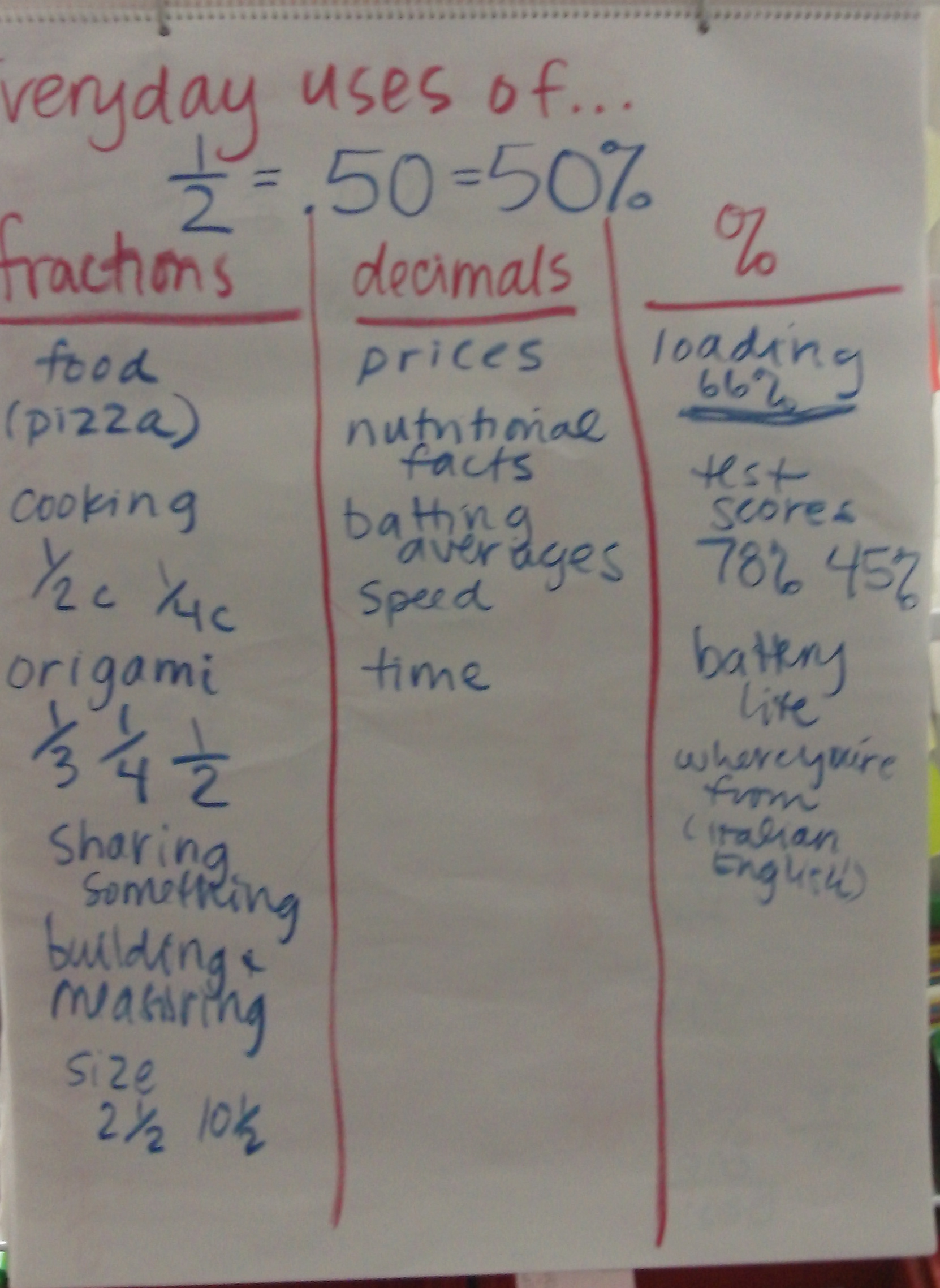
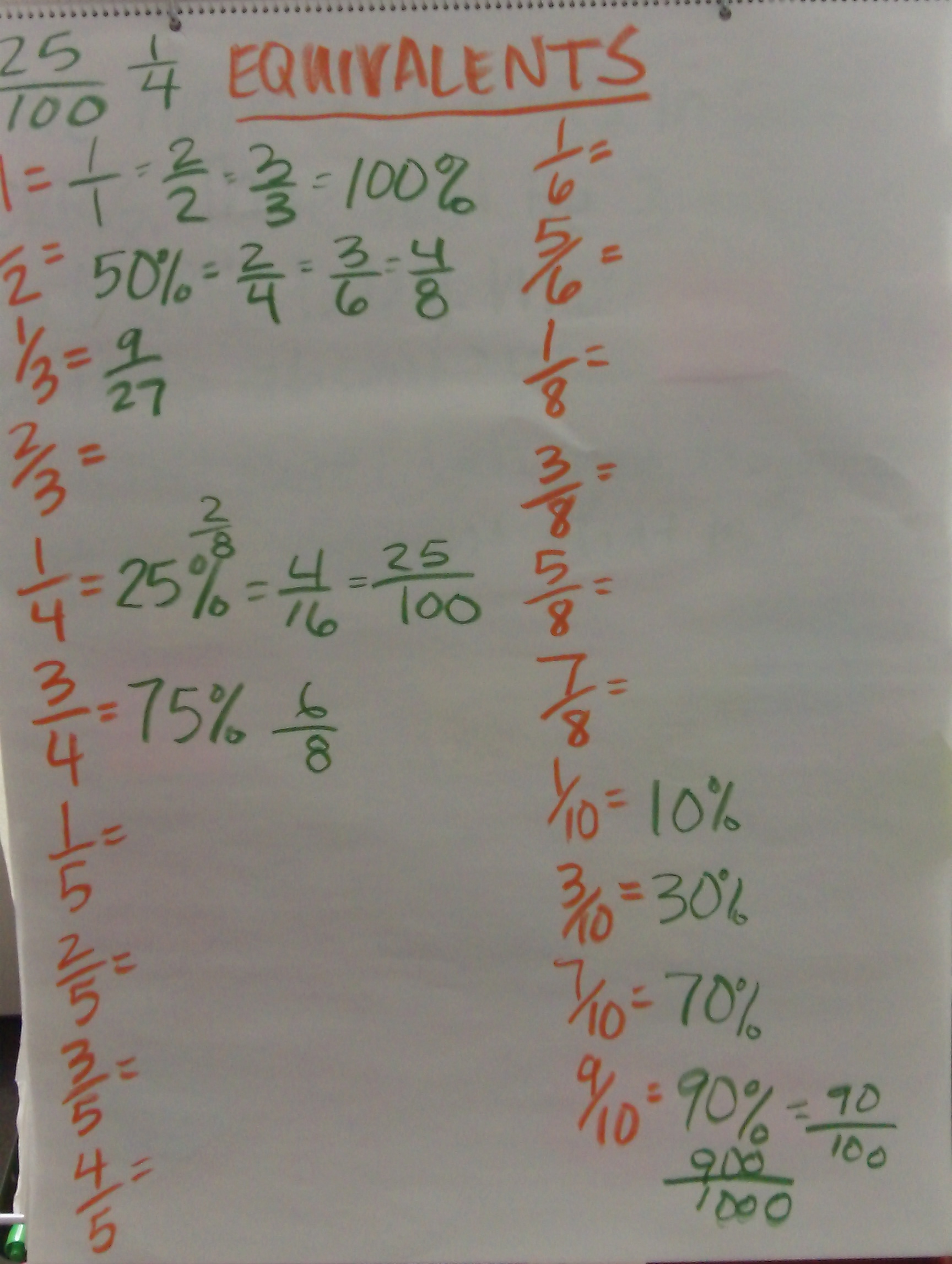
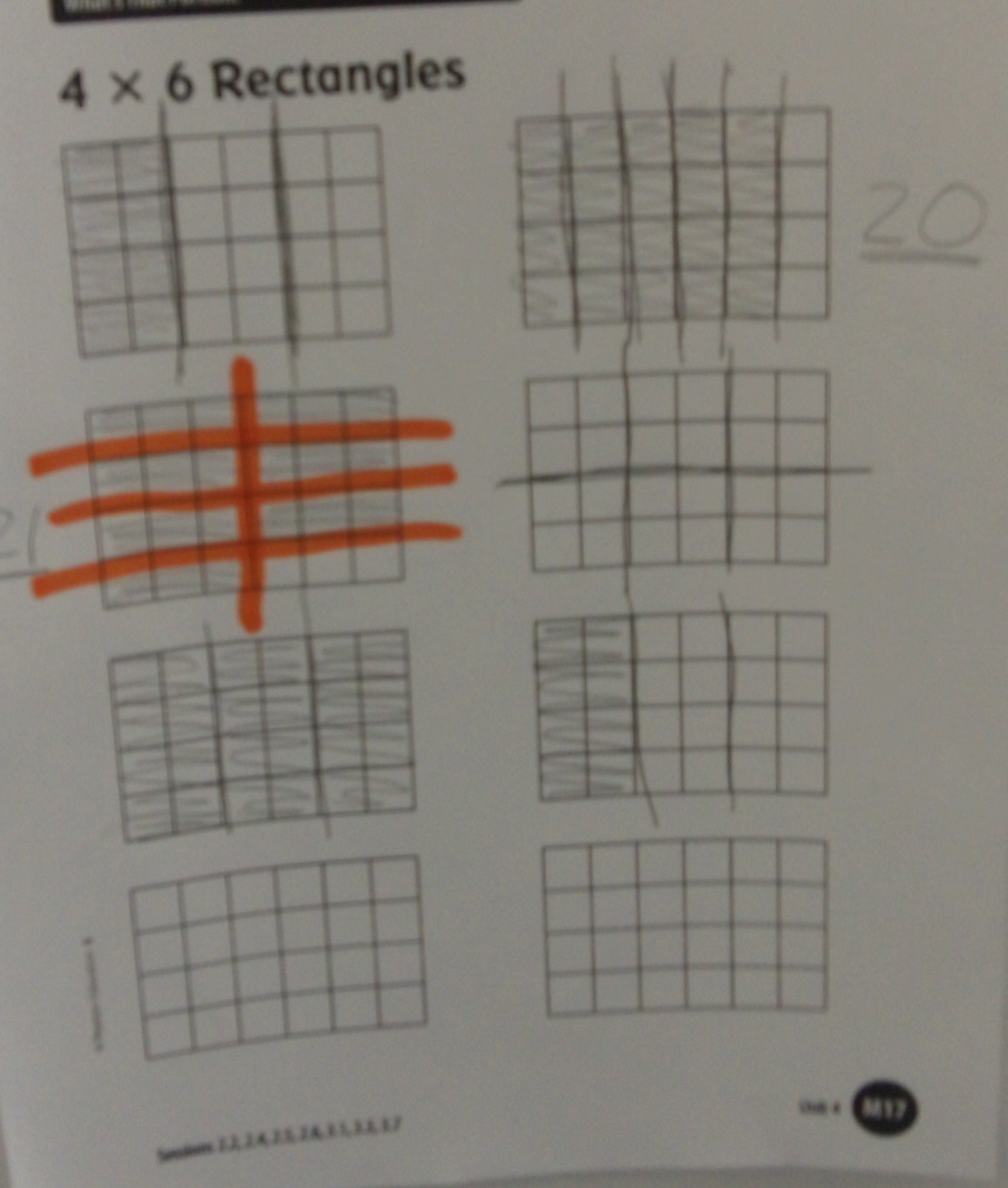
The whole focus of this fraction unit we’re in the middle of is that kiddos use equivalents–often fraction/percent equivalents–to solve problems and figure out the fractional part of a group.  It’s a pretty cool way of thinking, and makes so much more sense to many kids than the way I know I learned about fractions.  We’ve also been working on using grids to “see” how much the part is, so that we can find an equivalent or add another part to it.  We might take a 4 x 6 grid, then and break it into eighths, thirds or sixths by just drawing lines like this:


It’s pretty magical, actually, how thinking this way has made a once very negative topic make so much more sense to so many kiddos!  Stay turned for more about how we’re tackling fractions in a fun, “real” and authentic way!

What’s All This “Box Factory” Business?–Part 2

If you read the first post I wrote about Box Factory, then you know about the investigation we finished recently related to volume and surface area.

I think that perhaps one of the most powerful parts of the unit came on the last when each group did a reflection of all that they had accomplished during the unit.  I gave them all the posters they had created during our study and asked them to consider these things with their group mates:

They analyzed and discussed, and then went to write their reflections to turn in to me.

It was really great to read about all they’d accomplished during this unit–in their own words.  Time after time they mentioned how it was hard at first, but then as they kept trying or as their group mates helped them, they figured it out.  They noted how helpful the Math Congress comments were to them, and how these thoughts helped them revise their representations for the next time.  They all agreed that this had been a positive experience, and when asked what questions they still had, many said, “When can we do Box Factory again?”  🙂

Robinson Goes HOLLYWOOD!

See the guy in this picture?:

Well, he’s a movie-maker.  A real one.   Ok, I don’t think he’s a Hollywood movie maker, but he does work at a local university as a filmmaker, and he was making a movie with footage of our class!

Our school is working on a movie to highlight the fabulous things we do each day with teaching and learning, and I was asked to talk about how technology has changed the way I teach and the way kids learn in my classroom.  I did a short piece earlier in the day, and then he came to take some shots of us as we utilized the iPads during our math rotations.  My kiddos were pretty excited about being famous!  Can’t wait to see the finished video that showcases the amazing things that happen at our school every day.  It’s a fabulous place to work and learn!

Here are a few more that I took while he was there:

I took this opportunity to introduce my friends to QR codes, which they were really excited about using!


Math Warm-Ups Oct. 29-Nov. 2, 2012

This week’s warm-ups–already!  Aren’t you proud?!  Another week of review of things we’ve already done, but needed to tweak a little bit.

Monday

This warm-up was in response to a reflection I had them write the Friday before.  I asked them to tell me what they’d learned during Box Factory, how their thinking had changed, and what questions they still had.  These were ones that came up on several kiddos’ papers.  This was an opportunity for me to see what other kids’ ideas were before I just answered the questions for them.  And what I had hoped would happen did–the other kids in the class gave responses that cleared it up for us all. 🙂

Tuesday

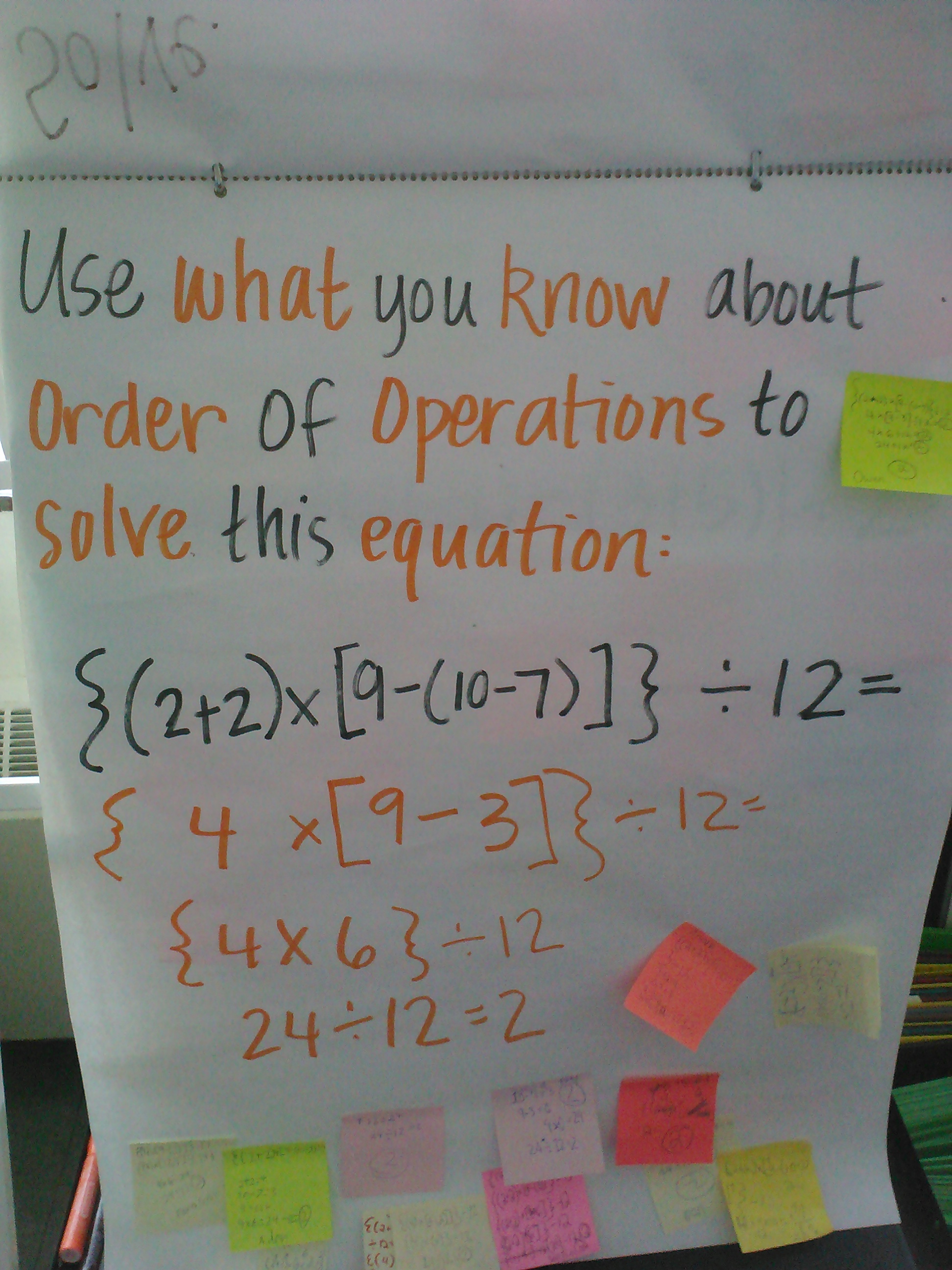
This equation gave us a good reminder of the order of operations, and how you have to DIVIDE or MULTIPLY before you ADD or SUBTRACT.  We ended up with answers of 4 and 16, and had to discuss which one was correct.

Wednesday

This one was from Halloween, can you tell?

Thursday

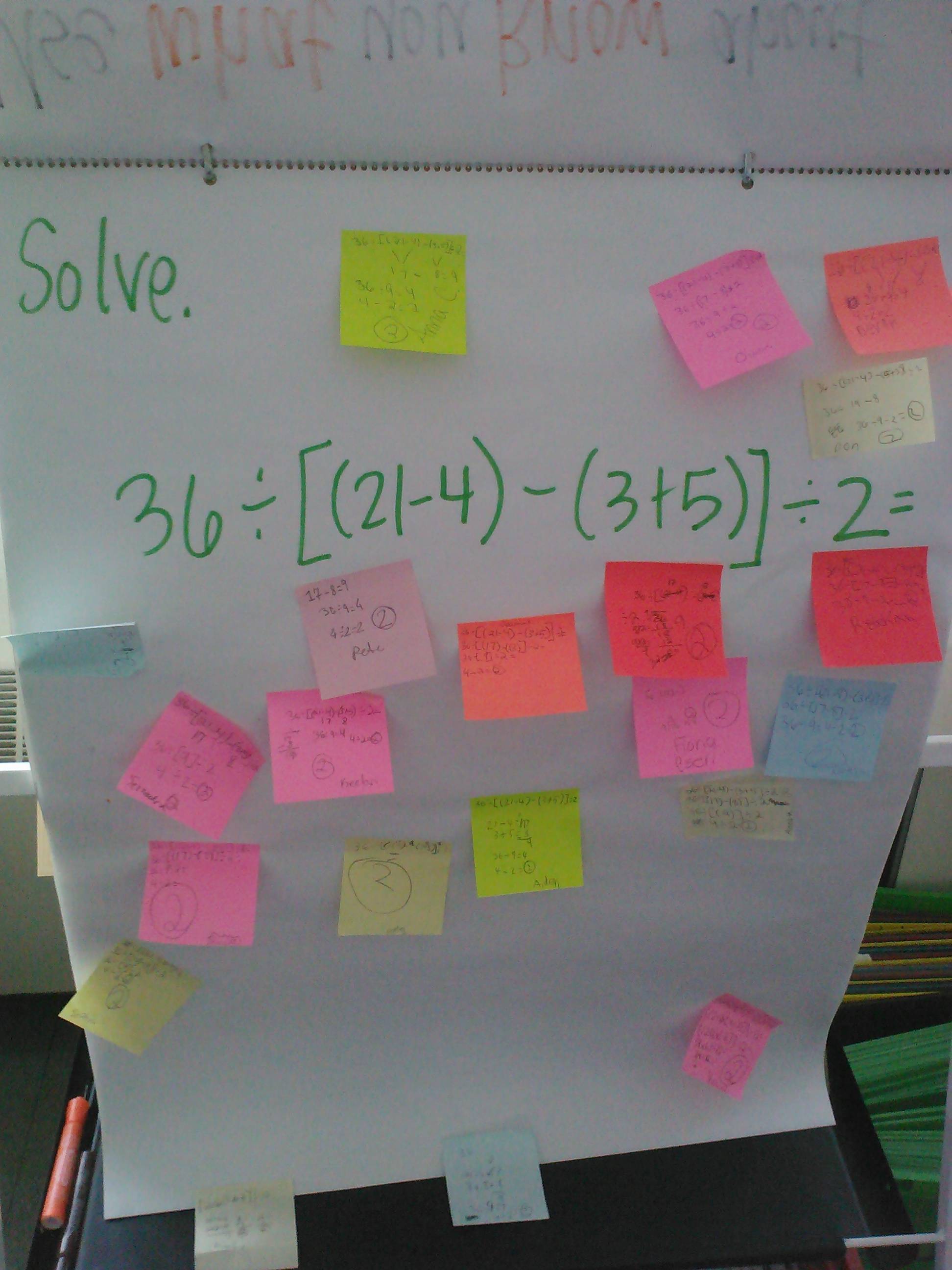
The discussion of “which comes first” came up again, only this time the answer was that it didn’t matter since both of the signs were division.  You would just do the in order from left to right.

Fridays are a little crazy in our classroom in the morning because many of us come in later due to Instrumental Music, so no Warm-Up today.  Enjoy working through these and let us know what you think.  🙂

What’s All This “Box Factory” Business?–Part 1

You may have heard me or my students mention the Box Factory lately, and wondered what in the world we were talking about.  Let me tell you about this fabulous math work we’ve been doing lately.
In 5th grade, we have a unit on 3D geometry, focused around finding volume of different kinds of rectangular prisms and figuring out a formula for how to do this (l x w x h or b x h).  This year we incorporated a unit by Cathy Fosnot, which created a context for this learning.  Enter the “Box Factory.”

The basic premise of the investigation is that kids work in a box factory and have to figure out certain things related to volume and surface area (although these things are not specifically named until later in the unit).  There were three parts, and kids worked small groups to investigate the answers to these questions:
1.  If the box factory wanted to create boxes that held 24 items, how many different boxes could they create?  What would the dimensions be of those boxes? Which box would be the cheapest one to produce? There were 16 possible answers to this question, and the students used cubes, graph paper, equations, drawings, or whatever necessary to figure it out.  They had to then create a poster to show their strategies and explain their thinking to show to the other groups.

2. How much cardboard would you need to cover each of these boxes? This one extended the conversation into surface area, and invited students to now look at the outside of the box, instead of just the inside.  Most groups figured out that if they used the formula (2 x L) + (2 x W) + (2 x H) to determine how much cardboard they’d need.  The cheapest boxes to make would be ones that are closest to the shape of a cube, as opposed to a long, skinny box.

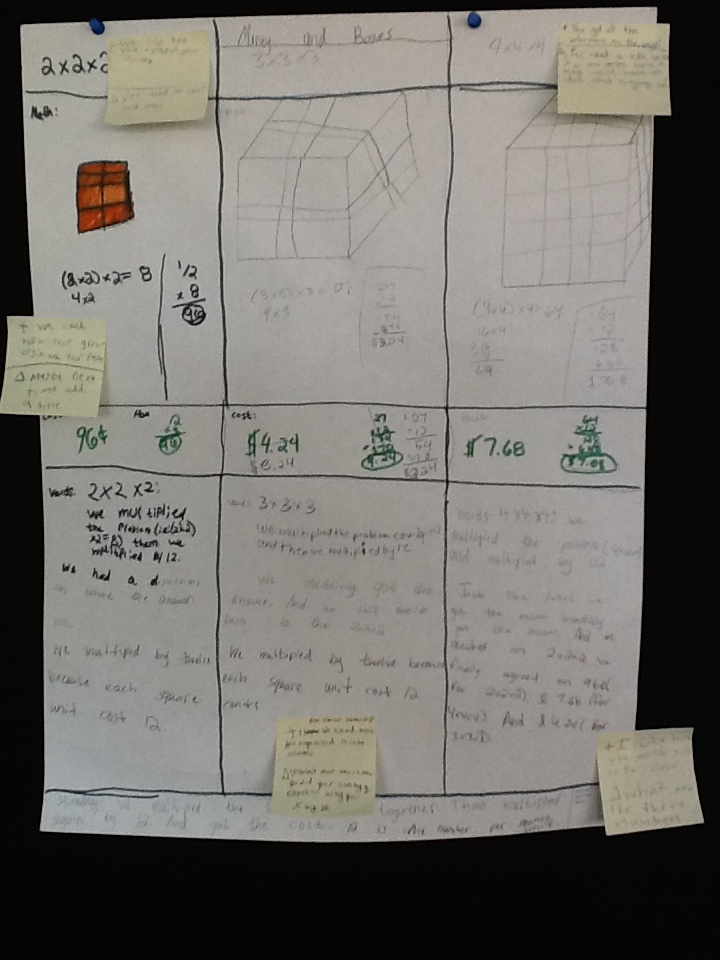
3.  If the factory created three sizes of cube-shaped boxes–2 x 2 x 2, 3 x 3 x 3, and 4 x 4 x4, how many units could each hold?  If it costs 12 cents per unit, how much would each box cost?  This one looked at the inside again, and added another layer of multiplication (with money) to figure out the final answers.


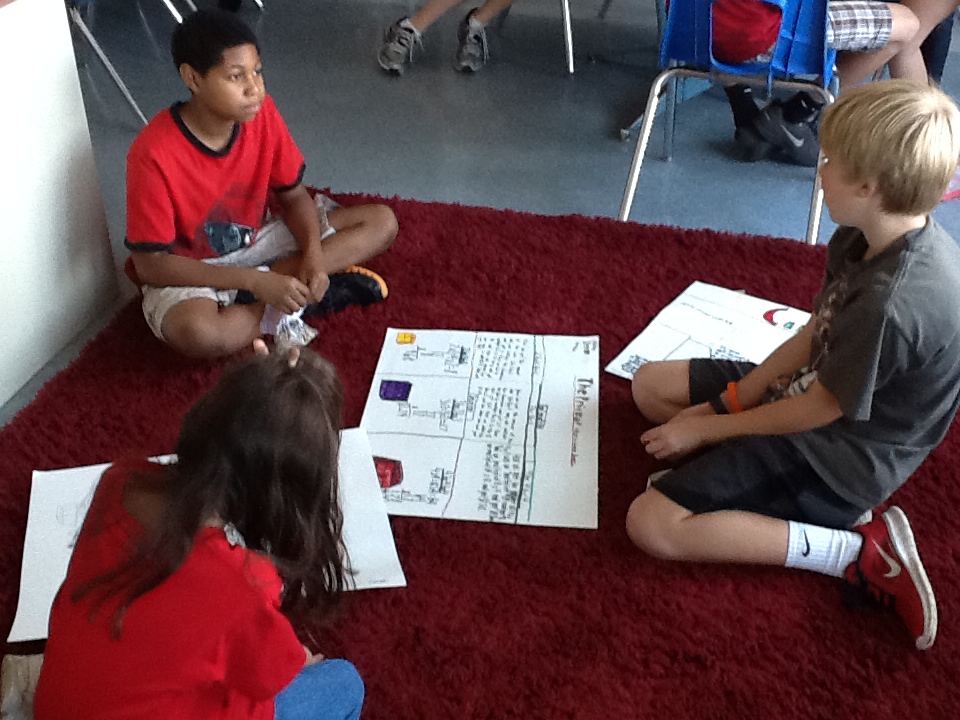
All throughout this investigation (which goes for about 10 days), the focus is on kids discovering strategies for volume, rather than just giving it to them.  Through the posters they create and the Math Congress conversations we share, they are also working on sharing and representing their thinking.  They are learning how to make their representations clear and concise so that other people can understand exactly what they did.

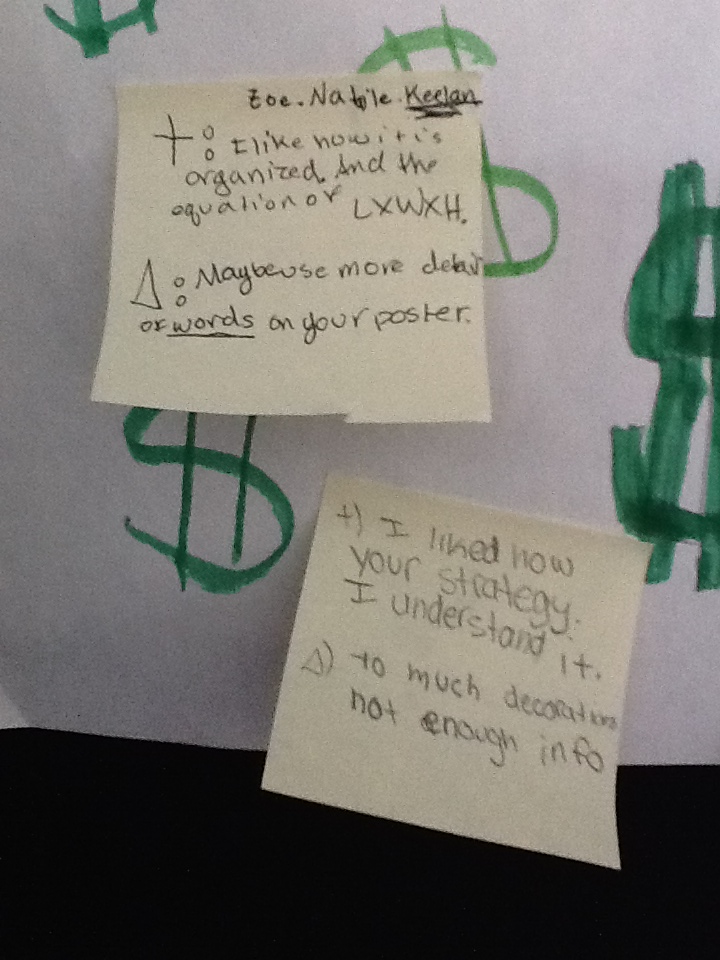
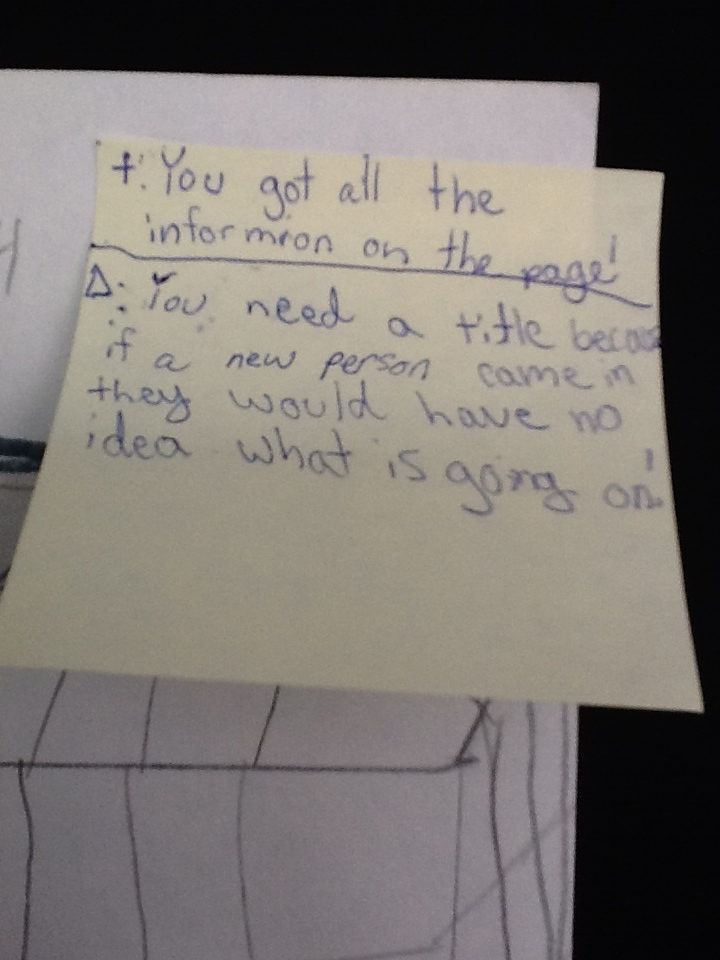
This poster-sharing part is not new to me in Math Workshop.  But Fosnot’s unit added a layer I’ve never thought of before in math–revision.  Much like when mathematicians publish proofs (and like we’d just spent time on in Writer’s Workshop!), students were able to get feedback from others on what worked, what was confusing, what they should add or take away.  They they had the opportunity to revise and edit their posters before they shared.  With each new poster they created, they added new ways of showing their thinking clearly.   They did this by discussing with their group, and then leaving suggestions on post-its.  We used the “Plus-delta” model to share something we liked and something we’d change:


So by the third time around, we were pretty great at showing thinking on our posters.  Even though you didn’t see all the steps, you can still appreciate the clarity and organization of these:


Have you ever done a Cathy Fosnot unit before?  How have you used revision and feedback in math to clarify thinking? What strategies do you use for teaching volume? We’d love to hear about it!

More Math Warm Ups from October 2012

I hate that I don’t have dates on these.  That’s what happens when you get too lazy busy to post them in the week you actually did them!  But hey, it’s better than they’re here, right?  These were from the last couple of weeks of school.  We’ve been studying volume, which I hope you can tell from the questions I asked.

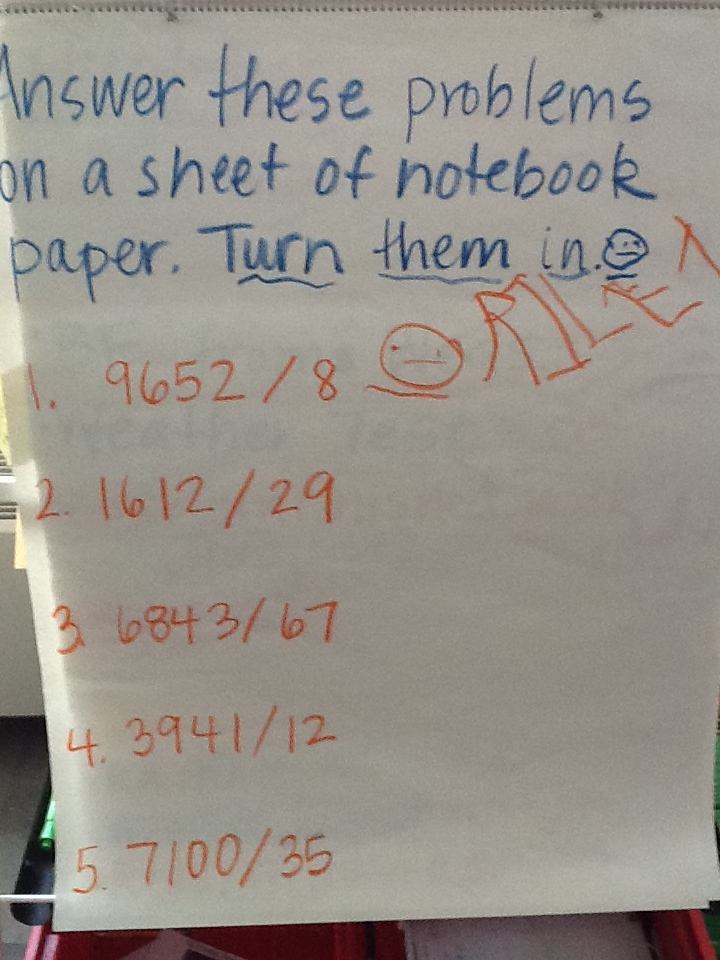
This was one a review at the end of a division unit that we just did.  Needed to double check that they hadn’t forgotten how to do it with 4-digit numbers!


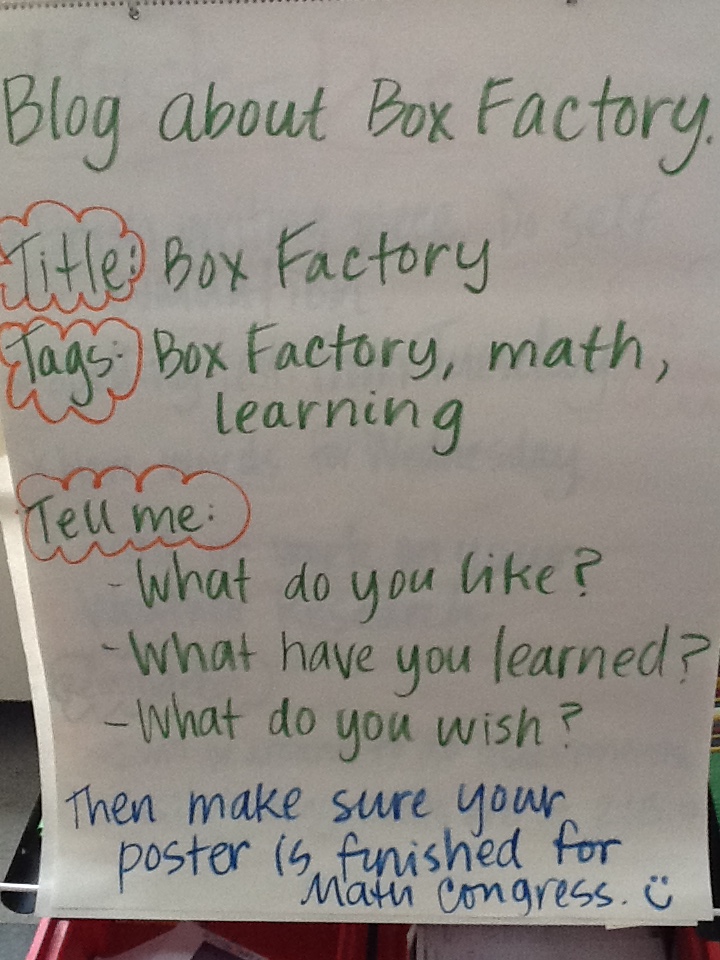
This one is a great example about how we use our blogs in every subject, and on this day we were writing about math.  Box Factory had given us much to talk about, and this was their chance to show me what they’d learned.  Be sure to check out what they said on our blogs.  They used the tag Box Factory to organize these posts.  The second day this one was up, I added the last part, since some needed to get ready for Math Workshop later in the day.


My son, Riley, who is in kindergarten, go involved with this warm-up.  He has been working on drawing smiley faces, as well as learning to underline, so he wanted to put his mark on our chart this day.  Again, we went back to division for added practice.


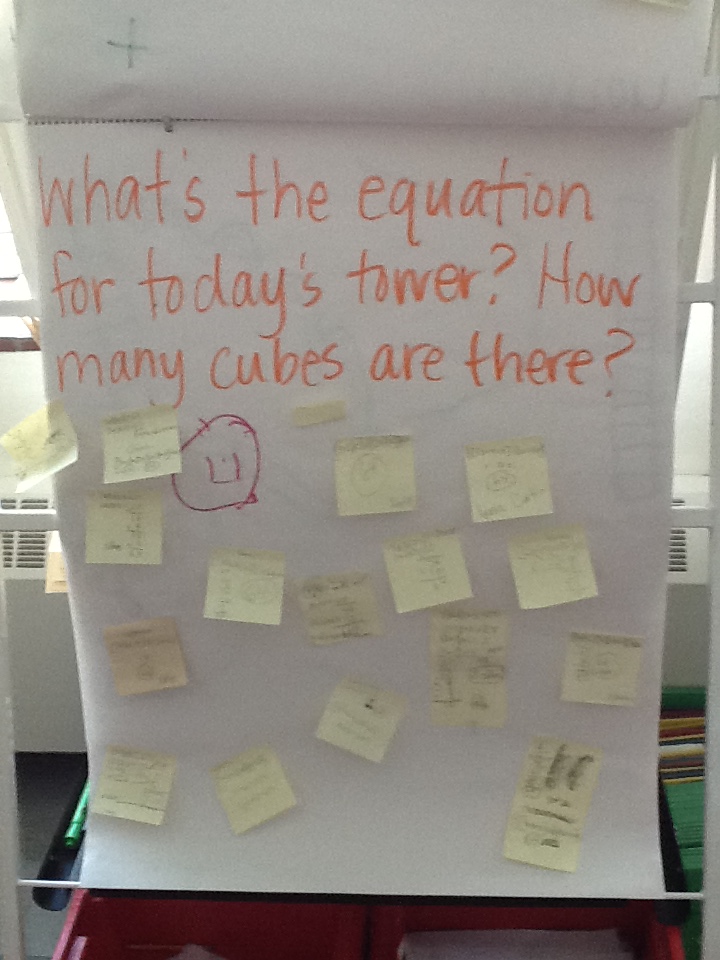
This one was an extra special warm-up, because it totally came up by accident.  The backstory is that a few days before, Riley had been building with the multilink cubes in our room and created this tower:

The more I looked at it, I thought it would be a great extension of the volume work we’d just done.  My hope was that kiddos would see that they could use the formula for volume that they’d just learned to find how many cubes were in the main rectangular prism and then add on the top “extra” ones.  And that’s exactly what they did.  (And again, you see Riley practicing his teaching–and writing–skills as he contributed to making the chart.)
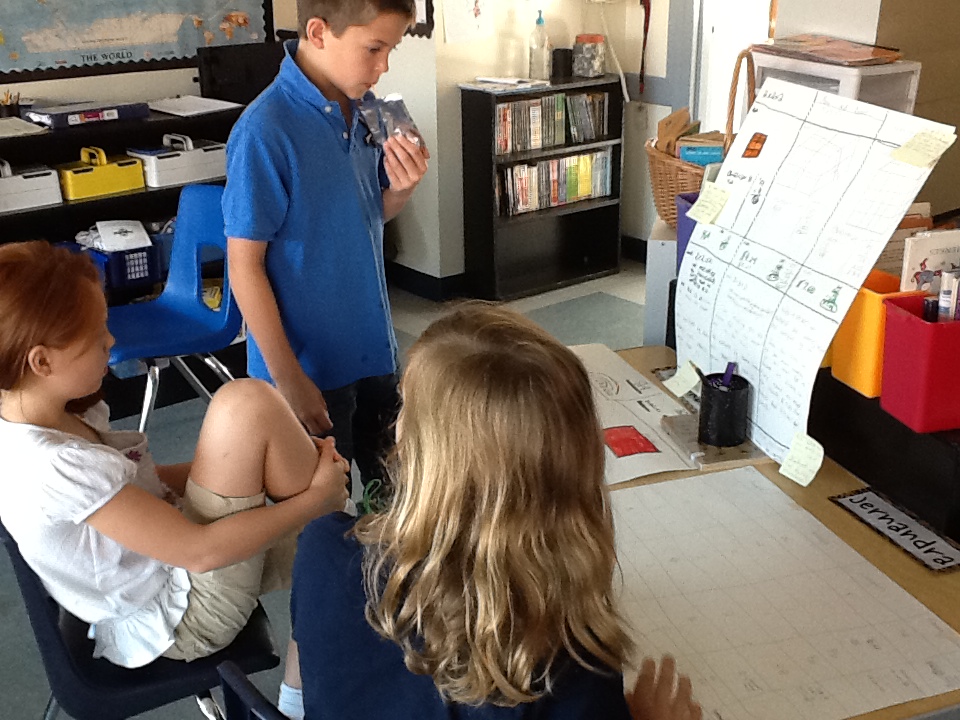


This was the next day, to give them another similar type of tower.  This time it looked like this:

Similar idea, too: there are two big prisms, plus a little one that is 2 x 2 x 3 in the middle, then those 4 extra ones on the side.  Again, my friends did not disappoint, and figured out how they could use what they already know to figure it out.  Riley was very impressed with their smart thinking, and was eager to learn what they had figured out when I picked him up at the end of the day.


There was one more tower–which I guess I didn’t get a picture of, sorry!–and the focus today was really more on how to write what we did, how to record the thinking when you do it in steps.  This connected really nicely to all the work we had done previously with grouping symbols and order of operations.  Love that!

Stay tuned in the next few days for this week’s warm-ups.  I promise I won’t make you wait as long as you did for these. 🙂