EDUC 573: Week 4–Creativity and Critical Thinking?

This past week we read the article Why Creativity Now: A Conversation with Sir Ken Robinson (Azzam, 2009).  Several points from the article stuck out to me as I considered the answer to the question raised: Are creativity and critical thinking opposed to each other?  Can they exist together?

I guess I’ve always considered myself a creative person.  Until recently, though, I’m not sure I’d have been able to define what that meant.  I could tell you what it didn’t mean, though–my creativity did not involve being able to draw or dance.   In many ways I have always thought of my creative side coming out in relation to making things out of other things–scrapbooking, cards, sewing, etc.  I believe I have a knack for writing in a creative way, as well, but that was pretty much it.  Like I said, don’t ask me to create a song, do improv, draw (anything), or create a sculpture out of clay.  And so just like a misconception mentioned in the article, I equated my creativity with just artistic things.

So what does that have to do with my teaching life?  Or my students for that matter?  Well once I became a teacher, I like to think that that creative side merged with my “thinking” side as I began to work to create situations for my students where they could figure out how they best create new things.  Partly through learning I’ve done just this semester already, I have begun to do even more to allow my students choice in their learning.  Being able to decide upon the topic,  who they will work with and what type of product (if any) they will end up with is highly motivating to students–boys especially.   As we just completed our student-led conferences, I can’t tell you how many students (from both genders) mentioned that they really enjoy the projects we do because they get to make choices about their learning and because they don’https://20somethingkidsand1kookyteacher.wordpress.com/wp-admin/post.php?post=2319&action=edit&message=10t have to “just sit and listen.”  The way these projects are laid out also encourages the “forever and always” type of learning I’m hoping to give my students; I want these concepts to be useful forever, not just for now.

This part of the article was also especially important, in my opinion:

Also, we’re living in times of massive unpredictability. The kids who are starting school this September
will be retiring—if they ever do—around 2070. Nobody has a clue what the world’s going to look like in
five years, or even next year actually, and yet it’s the job of education to help kids make sense of the
world they’re going to live in.

I work a lot with Fortune 500 companies, and they’re always saying, “We need people who can be
innovative, who can think differently.” If you look at the mortality rate among companies, it’s massive.
America is now facing the biggest challenge it’s ever faced—to maintain it’s position in the world
economies. All these things demand high levels of innovation, creativity, and ingenuity. At the moment,
instead of promoting creativity, I think we’re systematically educating it out of our kids.

Now more than ever, it would be utterly futile for me to try to educate my students for the world I live in.  The world of now.  These kiddos are growing up in a time of massive change, where they will have to be able to be ready for jobs that don’t even exist right now.  The possibilities are endless, really.  And I think that one way that I can do my part to help prepare them for that unknown future is to encourage them to think today.  I want them to be able to make rational, logical decisions and then act upon them.  Even if right now those decisions are about who to work with and what to create, it’s a start.

But even still, this point is made regarding teaching creativity:

I make a distinction between teaching creatively and teaching for creativity. Teaching creatively means
that teachers use their own creative skills to make ideas and content more interesting. Some of the
great teachers we know are the most creative teachers because they find a way of connecting what
they’re teaching to student interests.

I hope that I respond to this well when I tell my kiddos I want them to know that they can create knowledge, that they are responsible for their learning.  I am not going to just give them all the answers– say “Here, do it this way.”  I love how often times the way I imagined doing it isn’t at all the best way; my students many times suggest much better ideas for how lessons will go than what I originally planned.  But I have to be willing to let that happen.  I have to be ok with not knowing all the answers or risking looking dumb in front of a class of 5th graders because I don’t know what to do next.  I have to be willing to take risks and let them take the reins.  My job is that of facilitator, not dictator.  It is our classroom, not mine.  We are all students and we are all teachers in Rm. 202.

And so yes, I do agree that creativity and critical thinking can coexist.  I have seen with my own eyes the way a kiddo will dig deep into a subject because I’ve given them just enough guidance and structure to get them going and then I let them go.  And where they ended up was beyond even where we envisioned at the beginning.  Not because I told them to, but because they made the choice, the plan and then made it happen.

Azzam, A. M. (2009). Why creativity now? A conversation with Sir Ken Robinson. Educational Leadership, 67(1), 22-26.

Mystery Skype Take 2

Last week we participated in our first Mystery Skype.  It was great fun, and we were looking forward to our next opportunity, which came this week!  On Friday, we were able to connect with Ms. Copland’s 4th graders–a connection we made from some friends I have on Twitter.

We had some basic knowledge this time around, since we’d done it before, but we were determined to improve on some things.  For one, we knew that we’d need to have more maps out, and to already have our computer ready–if we needed a map or some other resource that wasn’t in our atlas.  And since I didn’t have pictures from our first try, I knew I wanted to have a photographer ready for this call.   It was great to have some teachers comment on our blog in the meantime, too, offering great suggestions for how they do Mystery Skype.  Thanks to Mrs. Kneller, Mrs. Venosdale (who was our Mystery Skype call last week!), Mrs. Bowman, and Ms. Ripp (who didn’t comment on our post, but who is definitely one of my go-to teachers on topics like this!) for sharing your Mystery Skype know-how with us!

This time the set up of our call was a little trickier (at least for me!) because there was a time difference to take into account.  I cannot tell you how many times I checked and then double-checked if the times we were throwing out were for Central (where we are) or Eastern time.  Finally we settled on a 9:40 EST phone call.  This meant that I would have less of my class present for the beginning of the call (since we don’t really start school until 8:45 CST), but it worked out ok, I think.  We were able to get started with 7 or so students and then the rest joined us as they trickled in.

So we were prepared with our first question to be related to time zone, because last time it gave us great info to start narrowing down where our Mystery Skype friends were located.  But then, I had a smart cookie who saw this on the message board on my Skype page where I’d been talking to Ms. Copland prior to our call:

Screen Shot 2013-02-02 at 9.59.39 PM

We didn’t need our time zone question anymore, because my friends had already figured out that our new friends were calling from somewhere east of us.

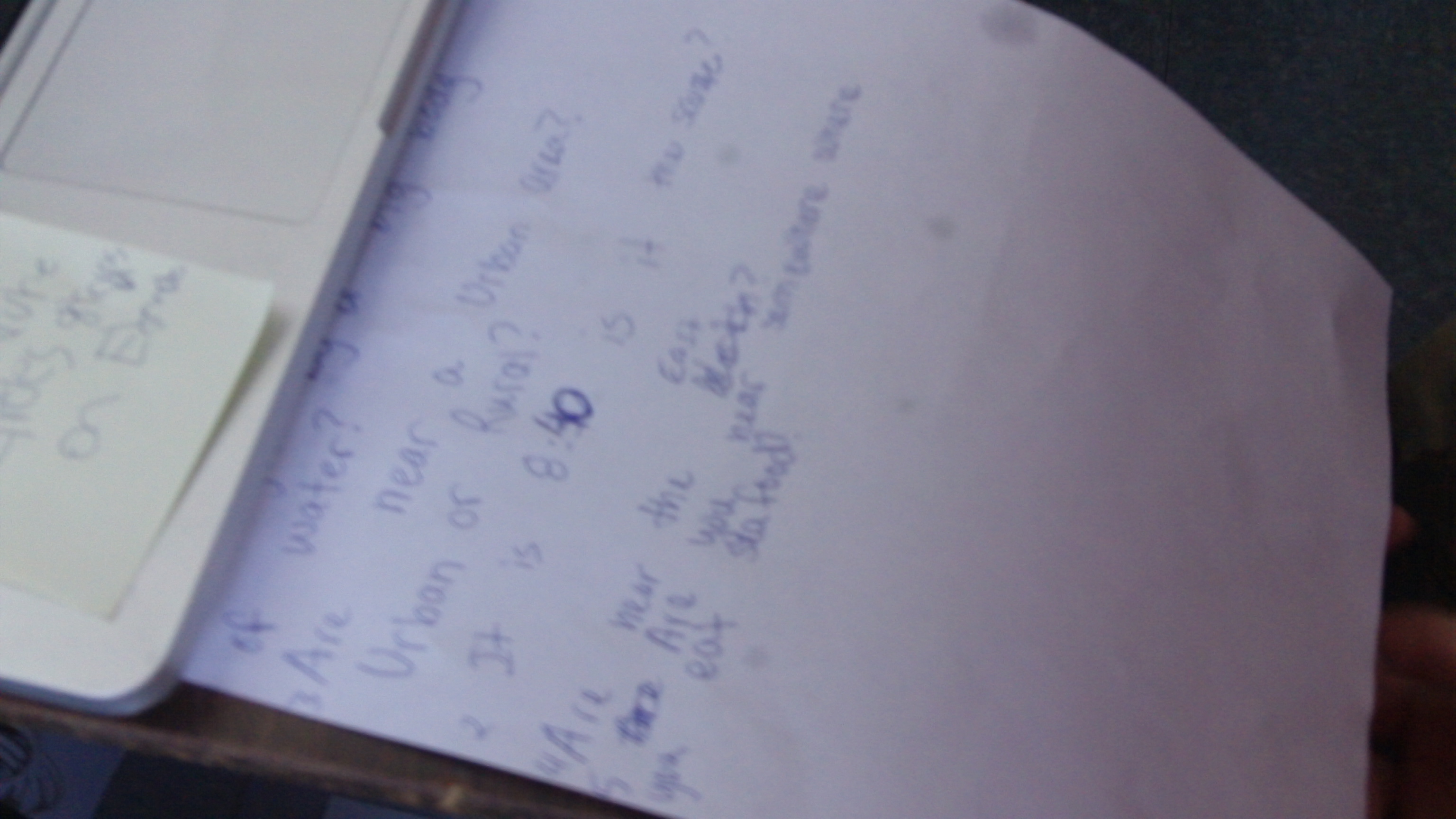
This time we had “stricter” rules that you had to get 10 clues before you could guess the other classes’ location, so we kept careful track of their answers to our questions.

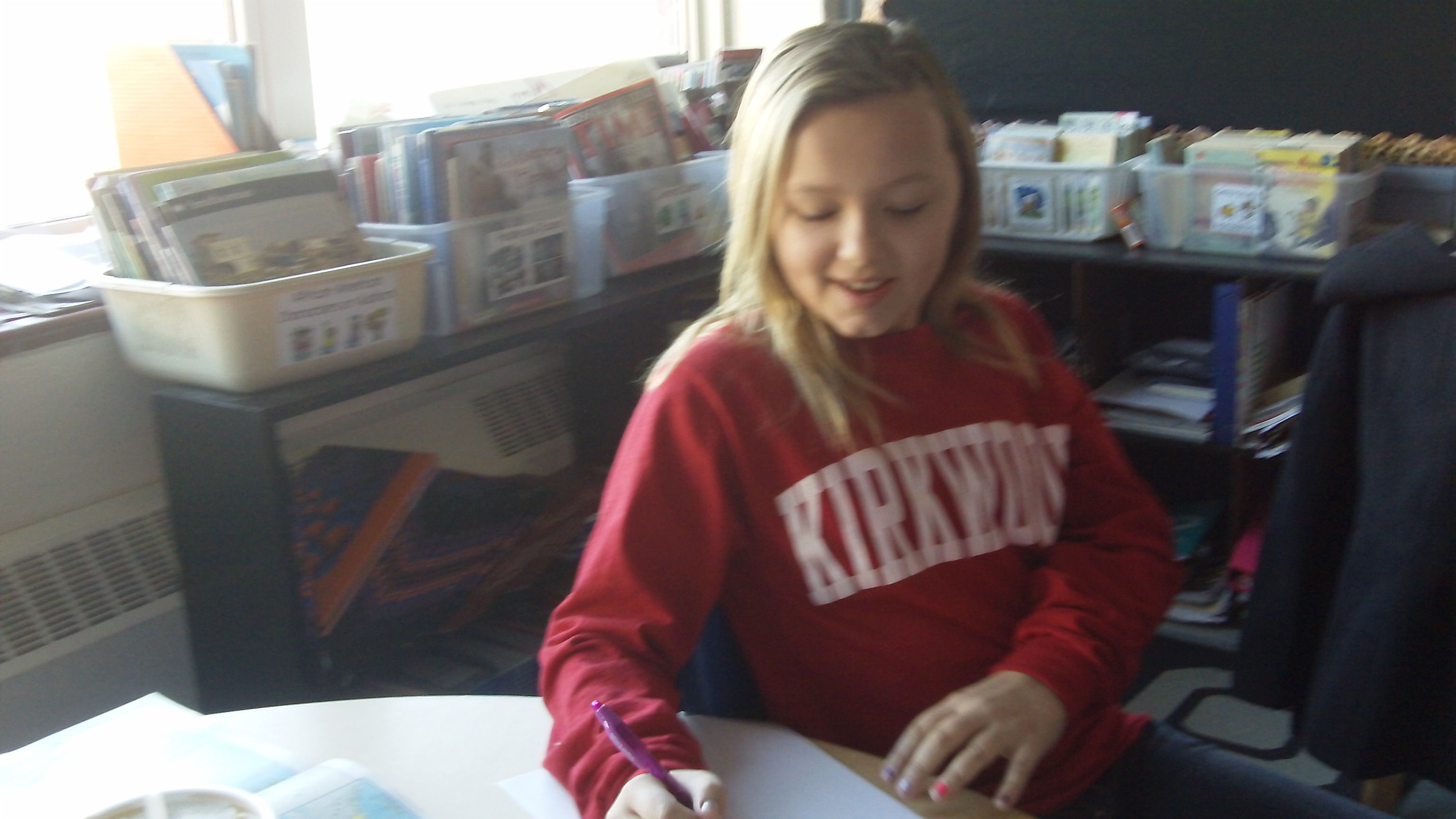
109_0001109_0006

I was pretty impressed by the questions that the kiddos thought of this time, but even more surprised by the initial prediction that Seamus made on the state they were in.  Once he knew they were in the eastern US, he said, “I bet they’re in Massachusetts.”  It was kind of a fluke, related to the fact that his dad is from Boston, but was indeed the place we were supposed to be guessing!   So with Massachusetts knowledge in his head, he began to gear our questions toward MA facts that would help us decide if that was indeed the mystery state.

109_0003109_0008


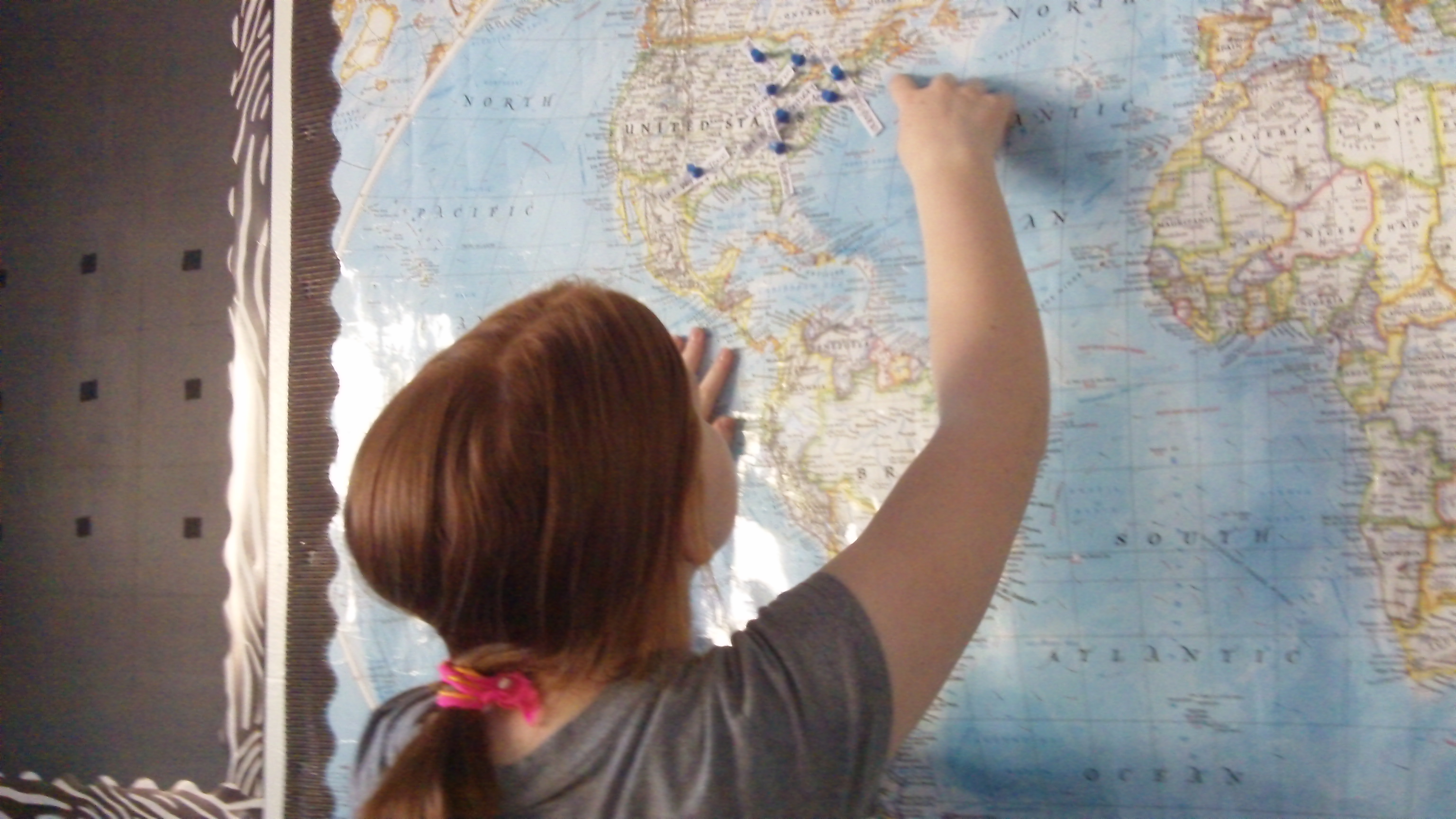
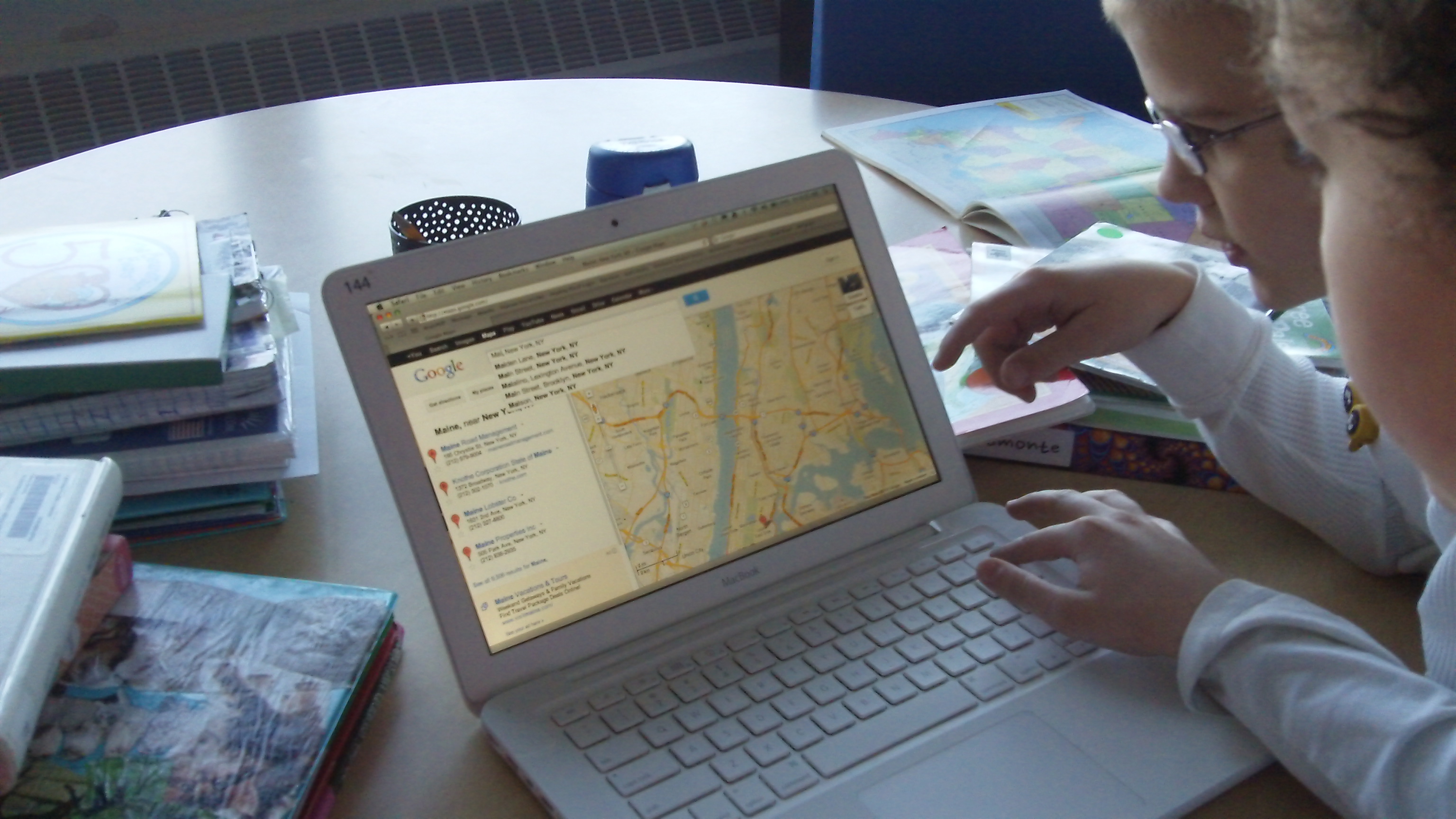
As the rest of the class starting arriving, more and more kiddos got involved in the work, using the big map on our wall, the computer and the atlas.

109_0010109_0012109_0005

I was so impressed by how well this one went!  Last time we were a little fuzzy on our own MO geography, and so we knew we needed to brush up on that before this call.  This time we knew the answers to the questions they asked, used many resources at our disposal to figure out which questions to ask, and also paid attention to the details we saw in their room to help narrow down our guess on their location–like the fact that someone close to the camera was wearing a Boston Red Sox shirt!  We asked them about that, but they quickly pointed out all the other teams represented in the room–including our very own St. Louis Cardinals!

What a great time we had!  We’re definitely Mystery Skype missionaries now, and are helping connect other teachers in our school to this great activity!  Another 5th grade class is going to visit during our Mystery Skype next week (yep, already have another one on the calendar!) so that they can learn how it works.  So cool!

Yay for Mystery Skype!

109_0004

One more resource I found was this list of other ways to use Mystery Skype, posted by Krissy Venosdale (@ktvee) on her blog, venspired.com.  Excited to try some of these others in the future!


Math Warm-Ups January 28-February 1, 2013

Another busy week in Rm. 202!  This week we only had three warm-ups because of our schedule.  Enjoy solving them!

Monday

IMG127This warm-up was a nod to the next part of our geometry unit–coordinate grids.  We’re also going to continue to practice “old” skills like adding fractions to keep them fresh–and because many kiddos still didn’t quite get it during our fraction unit.


Tuesday

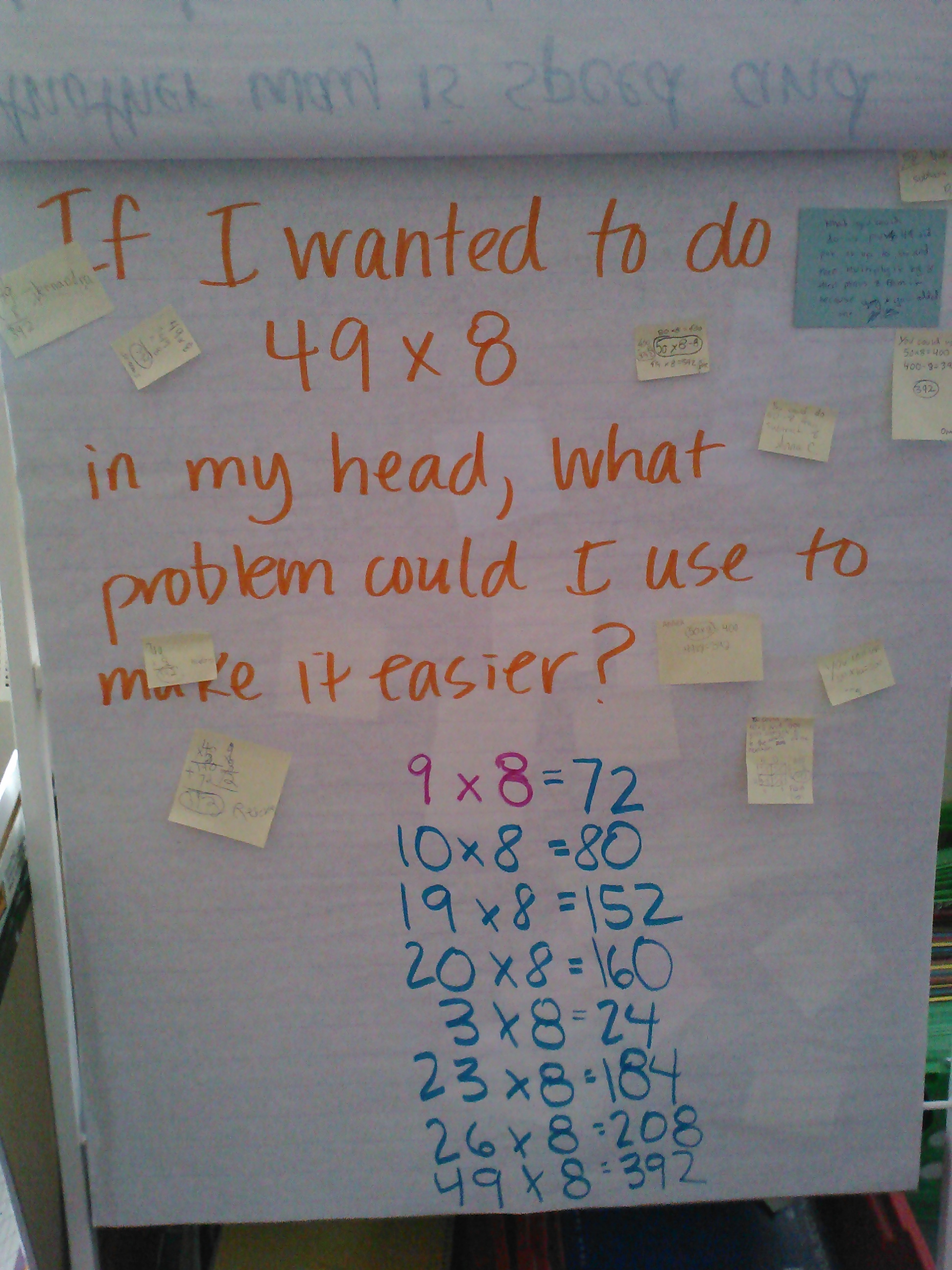
IMG128One thing that I want to make sure I always highlight for my kiddos is the fact that they know many things that help make math easier in their heads than on paper.  I want them to be flexible thinkers, and know how to do things in more than one way.  This one was a way to get them thinking about using  known (in this case a multiple of 10) to help them figure out a problem.  Below it is the number string that we worked through after the initial conversation.


Wednesday

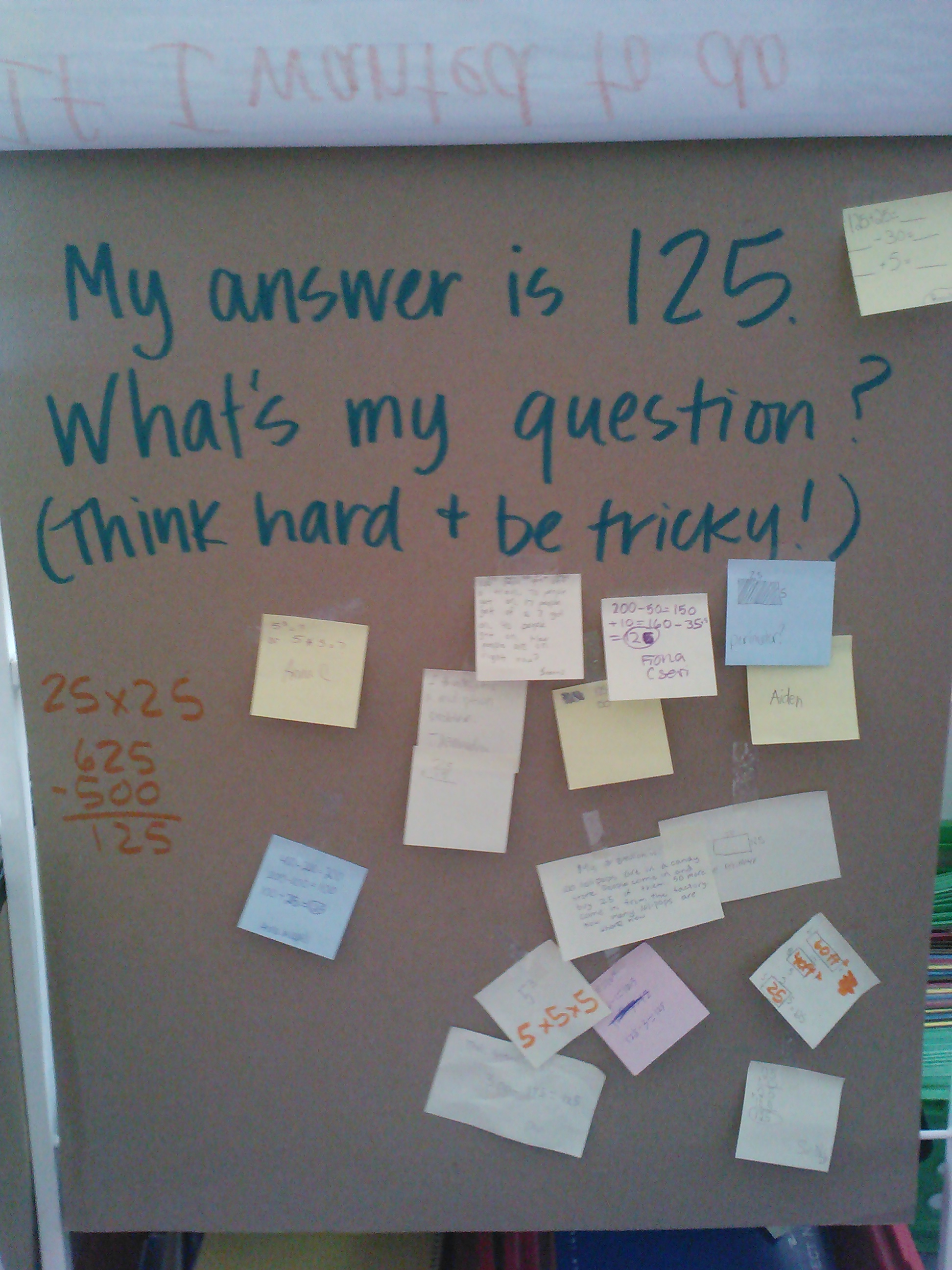
IMG129Can you tell we ran out of chart paper this day?  Nothing like using every last bit of it!  While this question could have been seen as “easy” to some, I was hoping that since we’d done these before, kiddos could dig deeper and share a problem that was harder than just this plus this equals 125.  I LOVED it when Luke through out a problem with exponents!  We had a great conversation about how they work, and the best part is that we’re going to do more with them during our upcoming decimal unit–as we discuss expanded form.  It’s so great when kid provides a natural connection without even knowing it!  You can’t plan that kind of stuff.  Beautiful. 🙂