Trying Something New: Writing Warm-Ups

So hopefully by now you’ve seen posts about how we use math warm-ups to reinforce and extend what we’re working on in our current math unit.

Well…math warm-ups have been working SO WELL for us, that I finally got around to trying something I’ve been thinking about for a while–writing warm-ups.

First a back story…

Everyone knows that learning the mechanics and grammar of writing is important.  But what is the best way to teach it?  For many years, I did what many people do–give kids lots of sentences to edit and correct, hoping that they would then transfer that “learning” into their writing.  One year I even turned daily edits into a weekly quiz, so that I could be sure I was assessing this work we were doing.  And I guess it worked ok.  Kids showed me that they knew how to capitalize correctly, use basic punctuation and pick the “right” word depending on the question they were asked.  But yet they didn’t do a great job of doing this in their writing.  It was like they had never encountered the rules for punctuation, capitalization or grammar.

This puzzled me, and I was curious about what else I could do to improve these skills in my students’ writing.  After learning from a smart friend of mine, and doing a little reading on my own, I had some different thoughts about what was better practice in this area.  For one thing, I abandoned Daily Edits.  These exercises, after all, only gave my students exposure to these skills in isolated situations–situations that made them unable to transfer the knowledge.  The thinking in not doing them, is that when all that students see is the wrong way to use mechanics and grammar, they may subconsciously be learning that wrong way to do it.  It’s totally against the logic of why I did those activities, but after I heard it, it made perfect sense.

So fast forward a few months: I began doing a punctuation study as a means of helping  my students discover and learn more about how writers use punctuation.  I wanted them to see the right ways that writers use punctuation to make meaning; I wanted them to learn why they should want to know how to punctuate correctly, not just “because my teacher told me to follow these rules.”

And so for several years I’ve also wanted to try something else.  Something that finally happened this past week.

The basic idea of the Writing Warm-up is to show my students a piece of writing (that I choose specifically based on what I want my students to discover) and ask them what they notice.   I want them to look for things the writer does with words, spacing, punctuation, etc., that they could then try in their own writing.  And unlike with daily edits, I can highlight a specific skill by showing them a quality piece of writing demonstrating the right way to do it, rather than one filled with mistakes.

So far we’ve only had three of these warm-ups, and here they are:

#1

IMG596

This first one, from a beloved read aloud we finished recently, had all sorts of “good stuff” to discover.  I specifically picked it because we were trying to figure out more about how to use the semi-colon, but obviously they found many other things I hadn’t expected.  We worked on this one together with the document camera so everyone could see it on the big screen.  They had their own copy of the text, too, so that they could take notes if they wanted to.

#2

IMG595This one gives you a better idea of logistically how we manage these warm-ups.  Unlike the math version, we use the ActivBoard instead of the easel.  Instead of doing them in the morning, our writing warm-ups happen right when we return from lunch and recess.  Their “bellringer” before they head to read aloud is to check out the text, then jot an idea on a post-it what they think they can learn.  They put the post-it on the text near the thing they noticed.  Then, at the beginning of our Writer’s Workshop lesson, we return to this text and have a quick conversation before moving on to the main daily lesson.

#3
IMG620

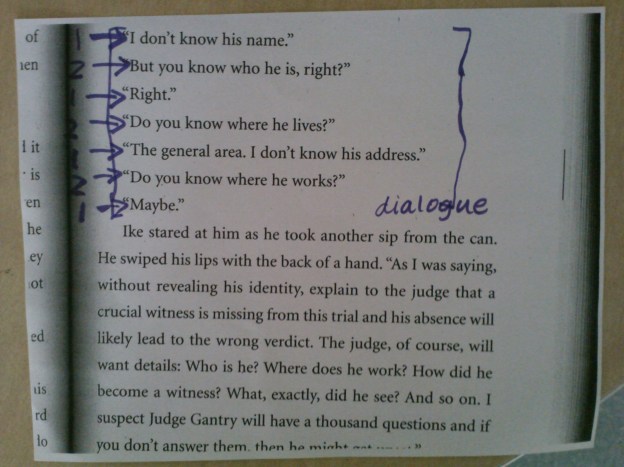
Another excerpt from our current read aloud Theodore Boone, Kid Lawyer, one that I chose specifically because of the dialogue included.  We’re in the middle of a fiction writing cycle, and there is an expectation that they will include dialogue in those stories.  We’ve already discussed how commas work in this situation, and so this is an extension–how you start a new paragraph each time a new character starts, to help your reader keep track of who is speaking without having to write “he said” each time.  The cool part is that most of them mentioned this without me even prompting them!  Good stuff.

The verdict is still out on whether these warm-ups will do what I want them to, but then again we’ve just started.  At the very least, it’s a good start for us, and my writers love them, so there’s good potential.  We’ll keep you updated. 🙂

How do you teach grammar and mechanics?   What do you think of Writing Warm-ups? Leave us a comment and tell us what you think. 🙂
Fiction Frenzy!

We have been busy over the last week collecting new ideas in our notebooks as we start a fiction writing unit.  As with every unit I teach, there are specific strategies that I teach about how to collect for that genre; the idea is that these can then be used over and over again once you know how they work.

Together throughout the week we read several books together, then looked at an idea we could pull out of that book to use in our writing.  First we read The Wreck of the Zephyr by Chris Van Allsburg and talked about how to meld real and imaginary events into the same story.  Then we read Nothing Ever Happens on 90th Street by Roni Schotter, and talked about how to collect “interesting people” to use as characters.  We also tried a strategy that Eva, the girl in the story, uses when she asks “What if?” and then twists the story in an interesting way.  On Thursday we read Moira’s Birthday by Robert Munsch, and brainstormed “messy situations” that we could use in our stories to add interest, conflict and fun.  Lastly, we tried something that I knew my writers had probably never done, and that I knew they’d love.  And they did.  🙂

Let me tell you about it.

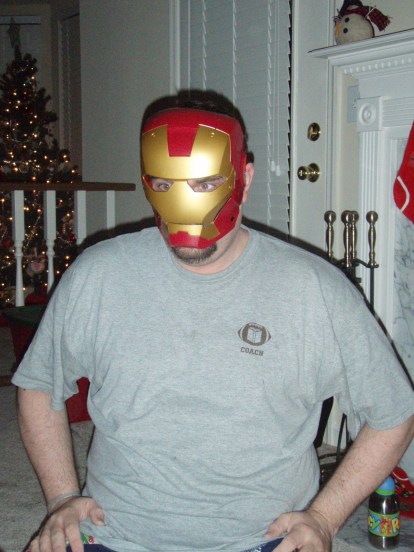
The big idea was that kiddos were given pictures from which to get inspiration for a story.  The strategy was a lot like something we did at the beginning when we first started our Writer’s Notebooks.  The first time around, though, the pictures were from magazines, and this time they were from my iPhoto albums.  Yep,  pictures of my kiddos–I knew my school kiddos would be excited about this one and give it their all.  They really love anything related to my family, which I love, too.

We rotated pictures around the room, two at a time, and kids brainstormed ideas for stories that they could write.  Each time they got a new picture, they could then start a new idea, or add on to the one they were already writing.  Here are the pictures we used for inspiration:

OLYMPUS DIGITAL CAMERAOLYMPUS DIGITAL CAMERAOLYMPUS DIGITAL CAMERAOLYMPUS DIGITAL CAMERAOLYMPUS DIGITAL CAMERAOLYMPUS DIGITAL CAMERAOLYMPUS DIGITAL CAMERAOLYMPUS DIGITAL CAMERAOLYMPUS DIGITAL CAMERAOLYMPUS DIGITAL CAMERA

The activity was really fun, and I am pretty sure that many of these ideas will become the seeds they’ll choose to publish.  Be sure also see the posts about it on our blogs.  Maybe you could even try it yourself.  What stories would you come up with from these pictures? Comment and tell us about it!  We’d love to use your stories as inspiration, too! 🙂

Mancala!

I’ve told you about our Learning Buddies, right? What?  I haven’t?  Man…what have I been doing?

Ok, so quick explanation: at our school, each class is paired up with another class–one from a primary grade and one from an intermediate grade.  We spend time together doing fun and fabulous things together, learning and growing together.  Sometimes we read, sometimes we write, often times we just play games together.  We are lucky enough to be buddies with a fabulous group of second graders from Mrs. Uhles’ class.  We love them and try to get together as soon as we can!

So…the afternoon before we left for Thanksgiving break, we had our buddies up to play some games together.  We had just finished a study on Ancient West Africa, and had learned how to play Mancala–which is an ancient African game–and we wanted to share it with our little friends.

IMG519IMG524IMG520IMG521

We were able to find a way to play Mancala online, too, so we got to show our buddies how to use QR codes, as well as the new iPads!  Double fun.  🙂

IMG526IMG522

Do you have Learning Buddies?  What do you do together? Tell us about it!

Math Warm-Ups Nov. 26-30, 2012

This week we had five whole days of school!  And even better, we had five math warm-ups!  Check ’em out!

Monday

IMG593


Tuesday

IMG594

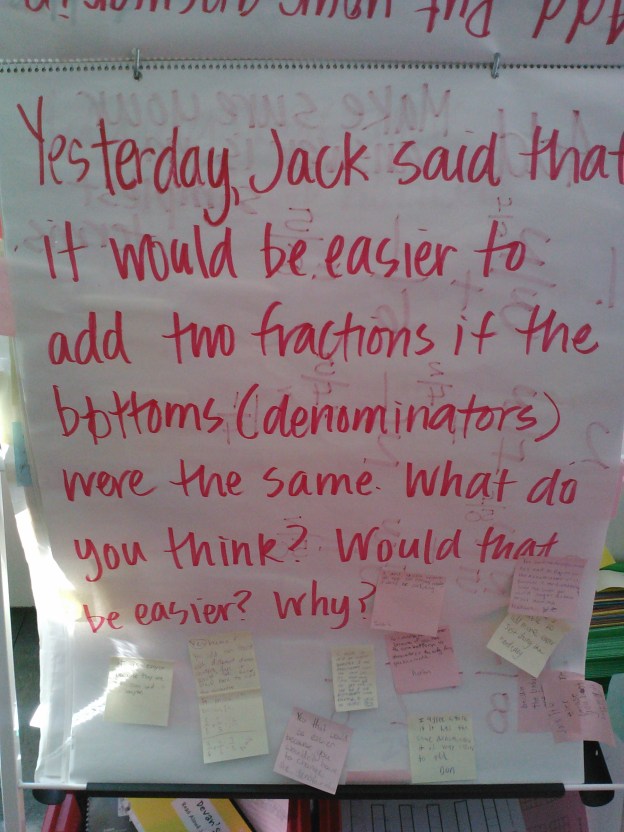
This warm-up question illustrates just how authentic and real-life I try to make these.  This one really came from a conversation I had with a group as they were working on the problem I gave during work time on Monday.  It was just where I wanted us to go, and so presenting it as a warm-up made sense.  And when it can be suggested as a kid’s idea instead of mine–which it really was, anyway–that’s even better.


Wednesday

IMG590

As they did these warm-ups, the focus was on finding common denominators to help them add.  Rather than finding the LCM, however, I want them to connect these to work we’ve already done with fraction-percent equivalents; they know they can double or halve certain fractions to make other ones.  Mostly we’ve worked with thirds, fourths, fifths, sixths, eighths, and tenths, but I threw that 25 and 50 one in there to see if they could transfer the thinking to a similar problem.  They could. 🙂


Thursday

IMG591

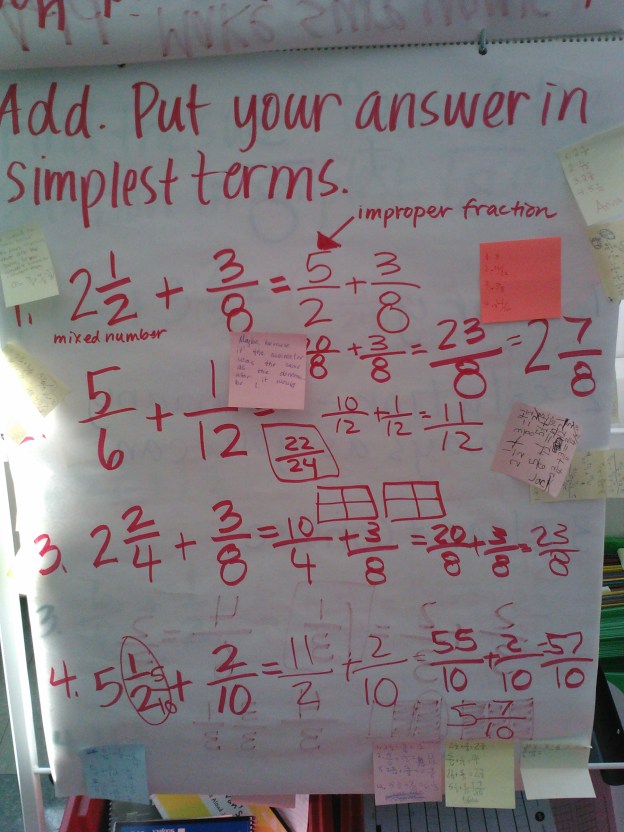
This one reminded (or introduced to some) us of important vocabulary of improper fractions and mixed numbers.  As we added these, they focused on changing the mixed number to an improper fraction, adding them, and then reducing it to simplest terms.  Notice how the last one has the fraction circled?  It was on this problem that someone figured out that we could add the whole numbers and then just add the fractions and put them back together.  Smart, huh?  Again–this was so much more meaningful that they discovered it on their own, than if I just told them that they could do that as a shortcut.


Friday

IMG592

These problems encouraged my friends to focus on the strategy we had discovered at the end of the warm-up the day before, and also threw in some vocab we already knew (sums).  By the end of this conversation, there some kids who were smiling, which was nice considering all the frowns I’d seen early on in the week.  🙂

On a side note…sorry for the mess of the charts this week.  I ran out of chart paper and had to use the backs, too!  It’s resourceful, right?  Or just messy…not sure which. 🙂


I am Loved (or Happy Birthday, Mrs. Bearden!)

I love how kids celebrate things, especially birthdays. 🙂  Remember the ice cream party from last year?
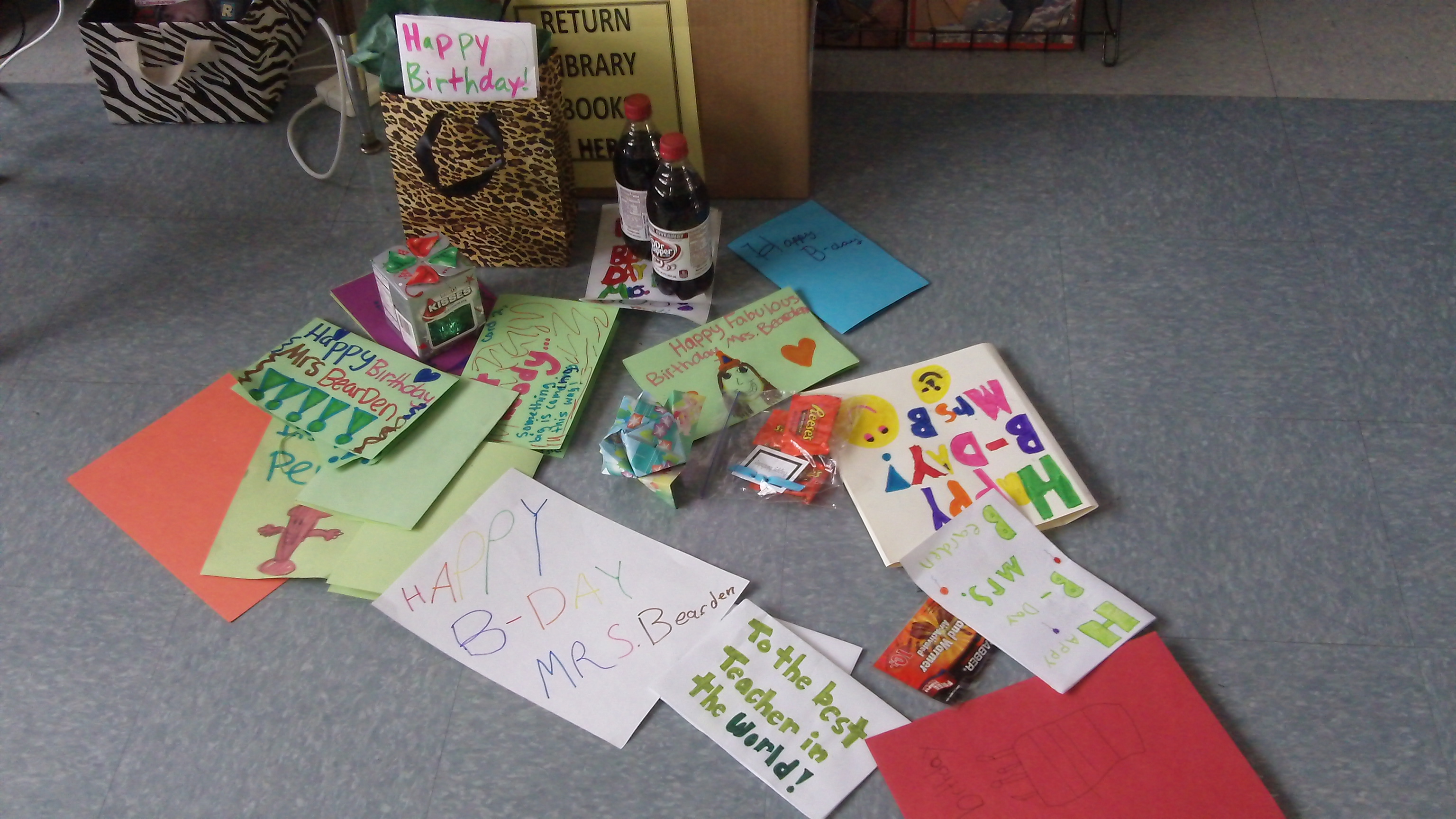
My birthday was last week, and this is what welcomed me that Thursday morning:


Wait–it gets better!  I also got a new hat and some handmade jewelry:


Fiona wore some FABULOUS glasses with a sweet message:


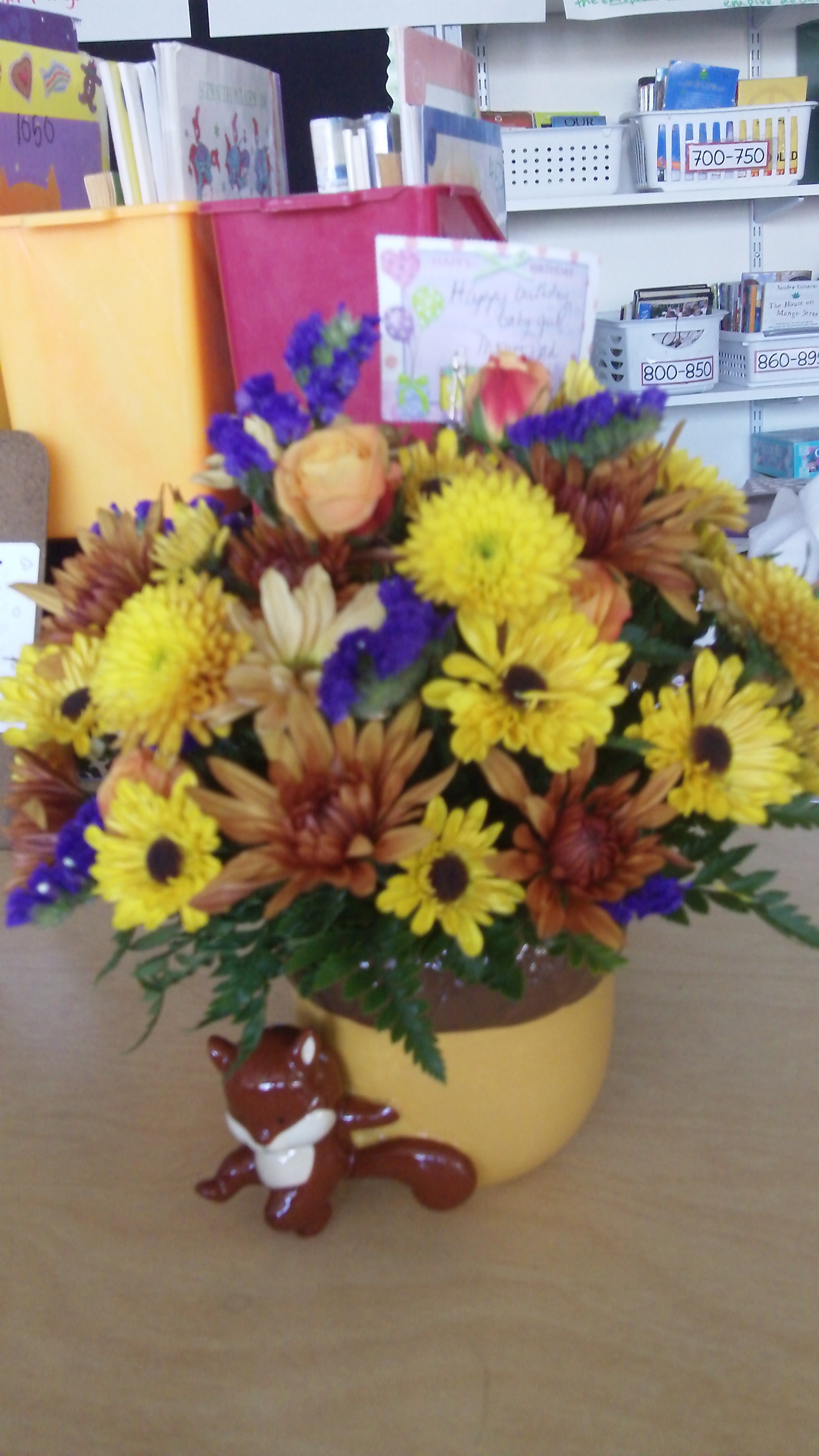
And my parents even sent me flowers.  Nice, right?

I somehow didn’t get pictures of the cookie treats I brought, nor did I get recordings of the compliments my 5th grade friends shared with me during my “party,” but let me assure you those were great, too!  Thank you friends, for making me feel so special!

Math Warm-Ups Nov. 12-16, 2012

With last week being Thanksgiving, I wasn’t able to get the warm-ups posted for you.  So here they are, but a couple of extra pics of what we’ve been doing with fractions in math lately.  That makes up for it, right? 🙂
 

Tuesday


Wednesday


Thursday


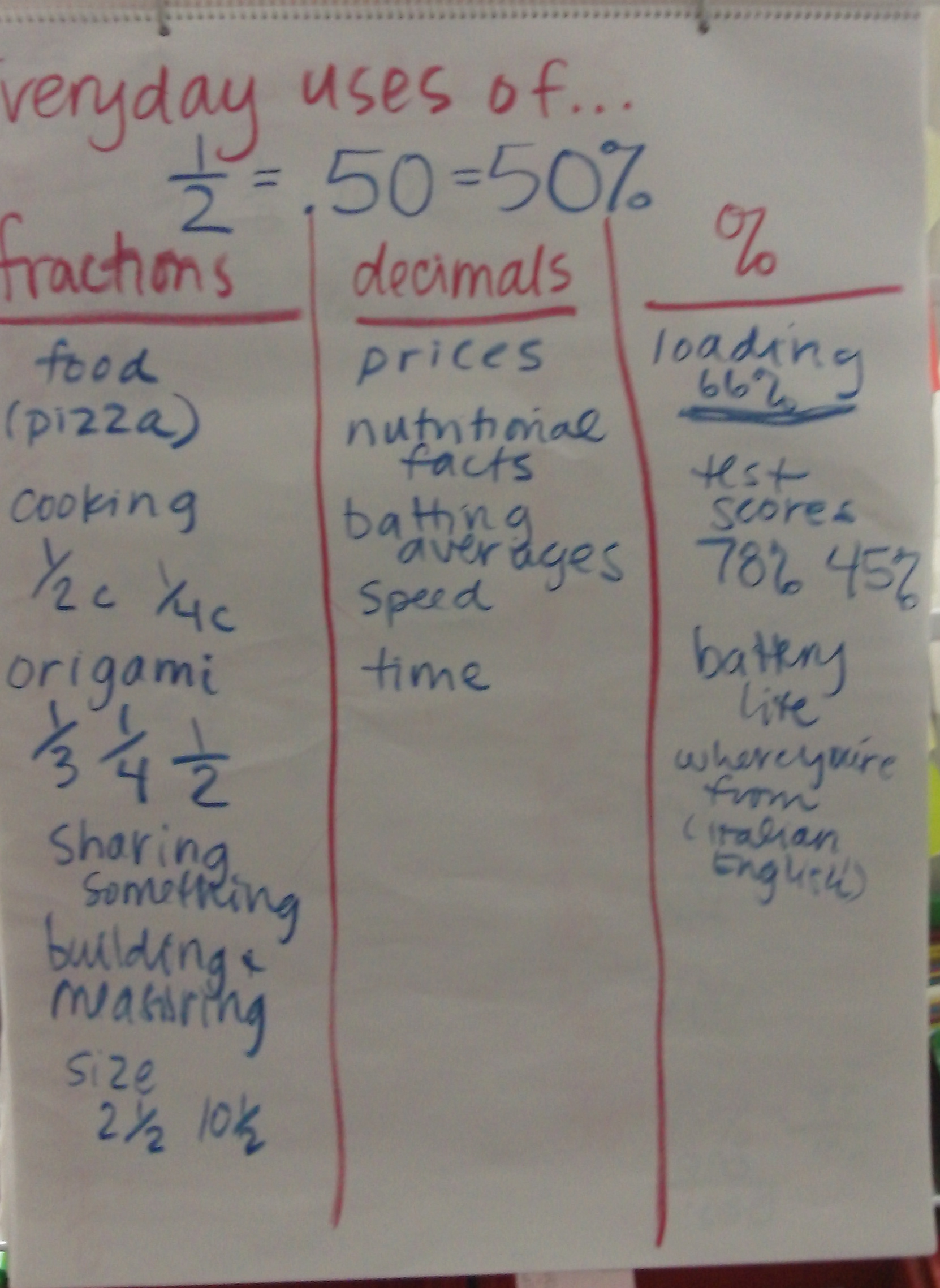
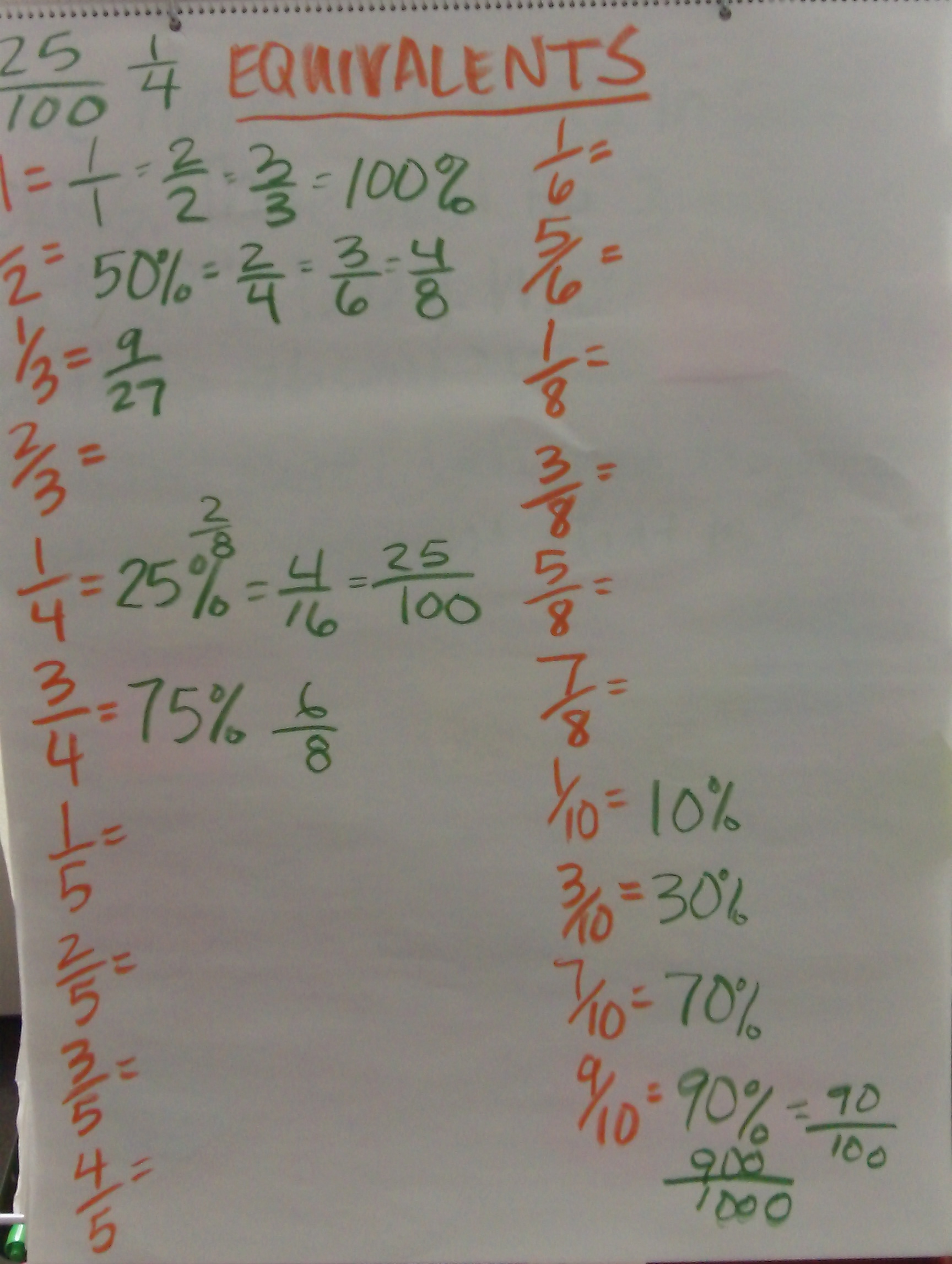
Also this week, though not as Warm-Ups were these charts:


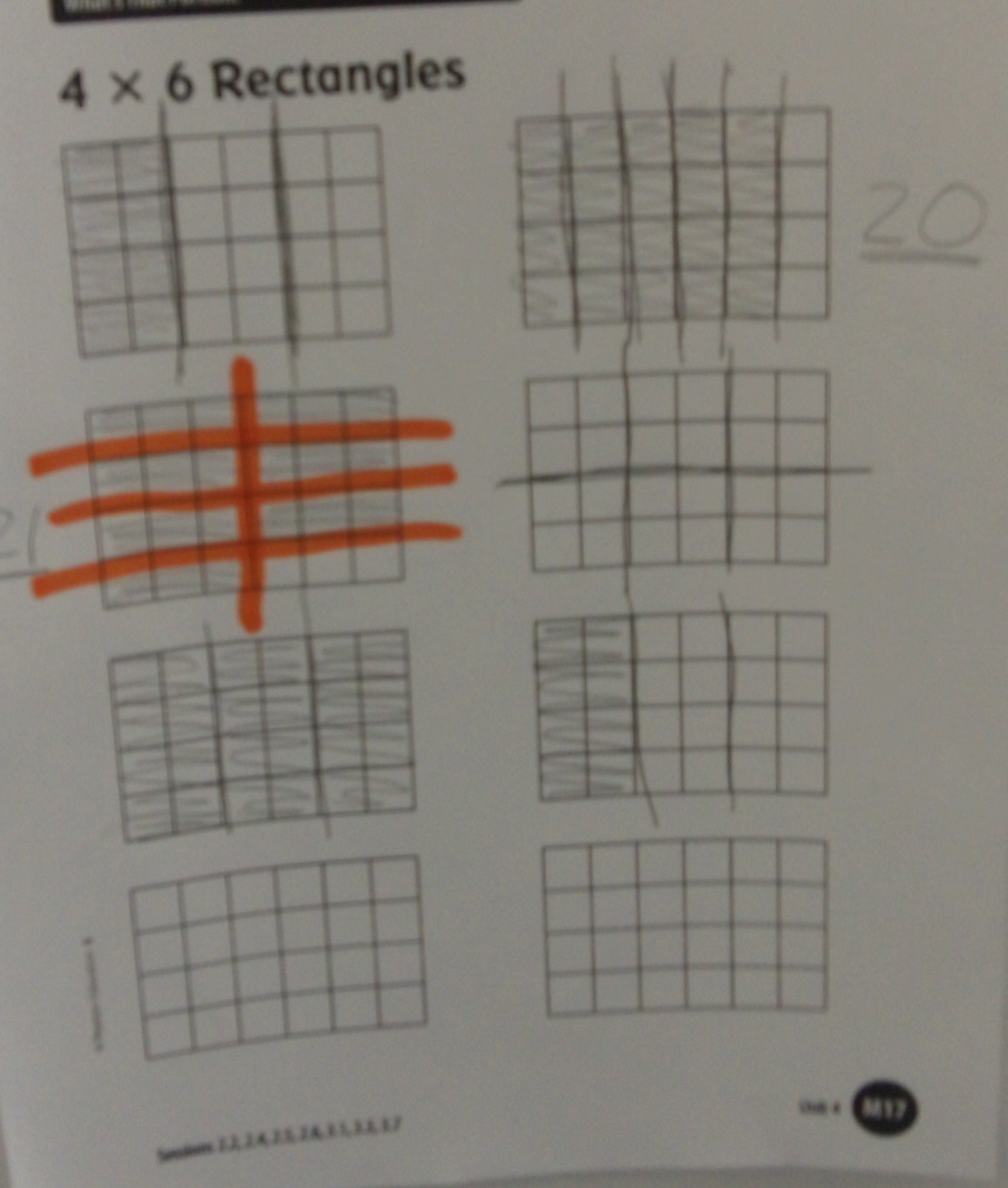
The whole focus of this fraction unit we’re in the middle of is that kiddos use equivalents–often fraction/percent equivalents–to solve problems and figure out the fractional part of a group.  It’s a pretty cool way of thinking, and makes so much more sense to many kids than the way I know I learned about fractions.  We’ve also been working on using grids to “see” how much the part is, so that we can find an equivalent or add another part to it.  We might take a 4 x 6 grid, then and break it into eighths, thirds or sixths by just drawing lines like this:


It’s pretty magical, actually, how thinking this way has made a once very negative topic make so much more sense to so many kiddos!  Stay turned for more about how we’re tackling fractions in a fun, “real” and authentic way!

No One Died Today!

But boy, I’m sure some of them were worried about it.

Yes, of course, I’m kidding!  Let me tell you about what I mean. 🙂

I wrote yesterday about the writing cycle and our recent celebration.  Well, if you remember the way the cycle works, after you celebrate, you start over again with a new project.  In this case, we’re working on Personal Narratives.  We spent a couple of weeks collecting memories and other stories in our Writer’s Notebooks and then picked a seed and nurtured it with some help from our writing partners, and then today we were ready to draft.

Here’s the basic directions about drafting in our classroom:

Now, the first time through the cycle we didn’t do it exactly this way, and maybe I even let them just use the version that was collected in their notebooks.  But this time I made them do it “right.”  At least my right way.  And that’s when they thought they would all die….

I started our mini-lesson with a reminder about how I wanted them to draft, and then showed them how to do it with the seed I had chosen.  It was based on this entry from one of my Writer’s Notebooks:

So, as they watched and listened, I read, then reread my piece to get the big idea of how I’d written it in my head.  The second time I also paid attention to the parts I really liked and knew I wanted to include in my draft.  We talked about how those were parts that we read and said to ourselves: “Man, that’s good…”  Those are the highlighted parts.  Then I read it again, and had most of what I wanted to say ready to write down.

And that’s when it got scary.  Now, I’ve told my kids that I wouldn’t ask them to do anything I haven’t done or wouldn’t be willing to do myself.  And writing is an especially good example of this idea.  I always go through the cycles with them; we write together and make mistakes together and grow together.  So today, that meant that we would draft together.

We sat in front of our ActivBoard, and I was ready to write my story using the document camera so they could see it.  And I’m not kidding when I say that I TOTALLY understood the feeling that kids get when you ask them to do things like this for the first time.  I really didn’t know what I was going to write and I had an audience waiting for me to write something fabulous!  Luckily, my kids understand how to be gracious and go-with-the-flow with me, and so they supported me through this struggle.

After what seemed like forever, I had a rough-draft version of my piece.  And just like I told them might happen, I think I liked most of the new version better:

And so after we reviewed the steps: read, reread and highlight the “Man, that’s good…” parts, reread and then start writing, I sent them off.  DON’T EXPECT THIS TO BE PERFECT, I tell them, because we’re going to work on revising it anyway.  Give yourself a break and just write your story. 🙂  But still, there were so many frightened faces in the bunch; I really did think someone was going to throw up over these directions I had just given them.

I think, though, because they trust me and they trust the process–no matter how different or crazy it seems at first–they did what I asked.  The next thing I saw were kiddos all over the room drafting in a way they never had before, and not dying.  They really were able to do it, and it wasn’t as hard as they thought it would be.  But even it if was, that was ok.  “Hard is good!” is another saying I have, because, as we have also talked about many times before, “hard” is an opportunity to learn and to do things that amaze you.

Maybe the two best things that came out of today were this:  one friend came to me and told me that even though this was hard, she was glad that she’d done it–the version she wrote today was even better than what she thought she could do; and another friend–who usually has trouble finishing a draft quickly, and who was a little unsure about this process when we got started today–finished his whole rough draft, and was able to do it in a fabulous way! I even got chills when I read a line from his piece because it was that good!

Today was another example of many that I hope I teach my friends this year: just because something is hard doesn’t mean it’s not worth it.  Hard is good, and many times when you persevere through something you first think is a challenge, you are amazed at what you’re able to do.  And that amazement motivates you to keep going and do something amazing again! 🙂

What have you done recently that amazed you?  How have you persevered through something hard? Do you have a writing story to share with us?  We’d love for you to share your thoughts!

A Writing Celebration!

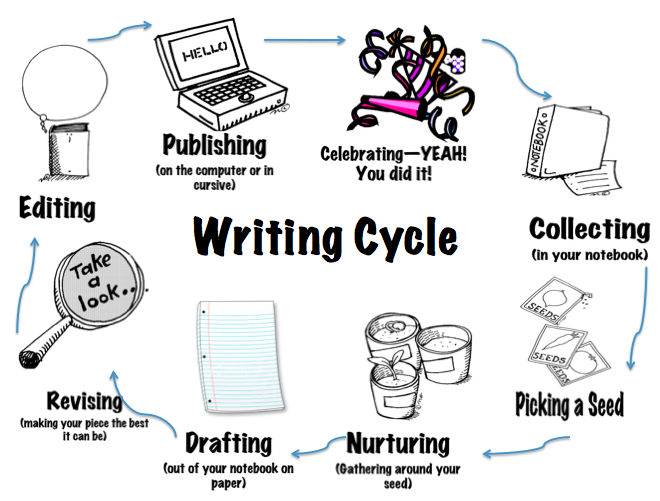
I figure that most people teach the Writing Cycle as a means to publish a piece of writing, right?  Well, I do, and it’s kind of a big deal in our room.  I start at the very beginning of the year (after I’ve set up our Writer’s Workshop routines and introduced Writer’s Notebooks, that is 🙂 ), teaching my writers about the writing cycle–what it is, why writers do it and how it will help them as we go through the year together.
In the back of our Writer’s Notebooks we have a a place where we keep notes related to mini-lessons I’ve taught.  One of the first things that goes in there is this:

We spend the first writing cycle, then, learning about how to do each part, and end up with a fabulous piece of writing that we’ve worked really hard on!  And so what does that mean next?  We celebrate!

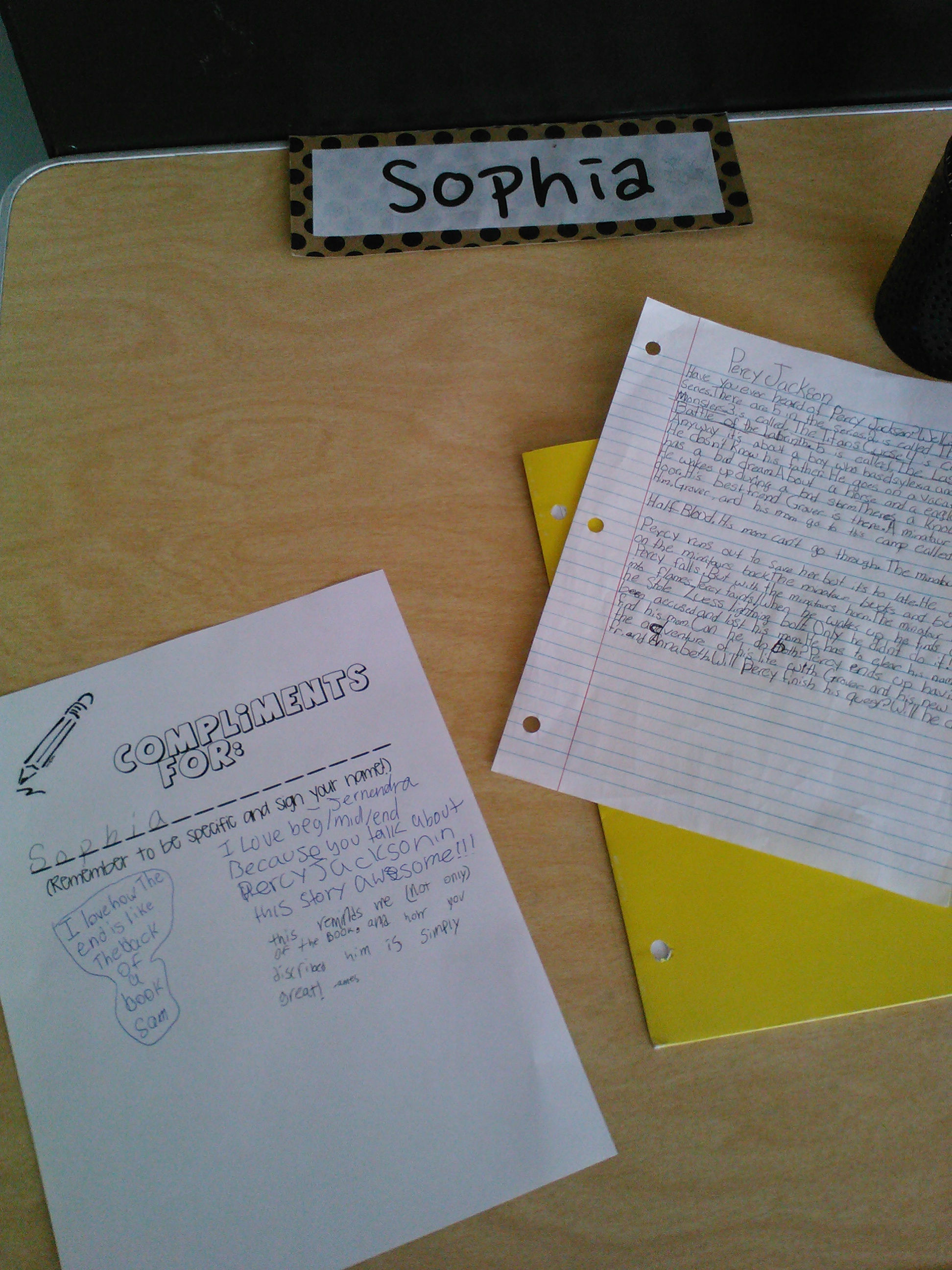
There are many things that our class does to celebrate our writing and “send it out into the world,” but this time, we decided to have a Writing Museum (structured much like our Reading Museum from the beginning of the year) so that we could sample each others’ writing and leave compliments.

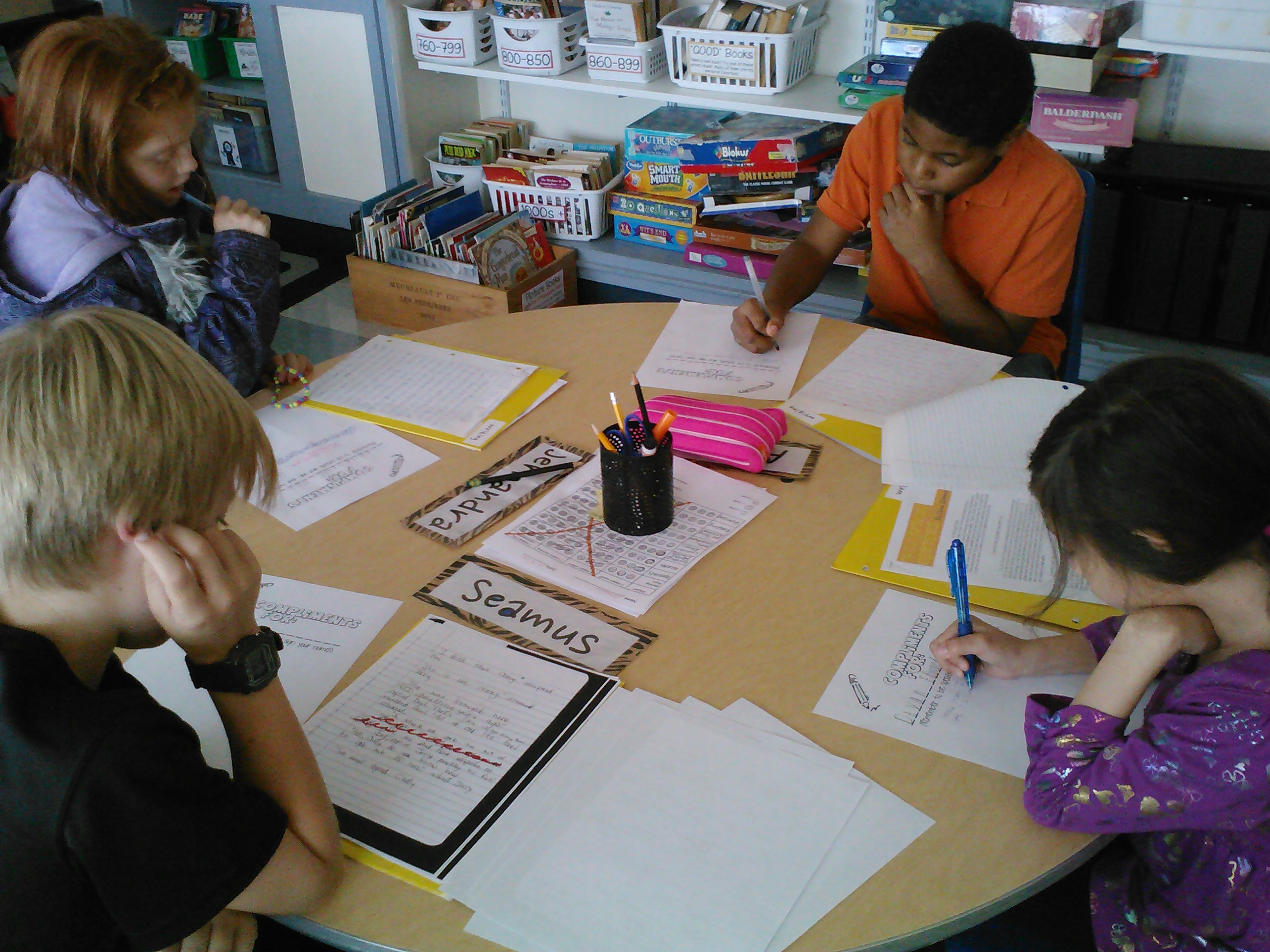
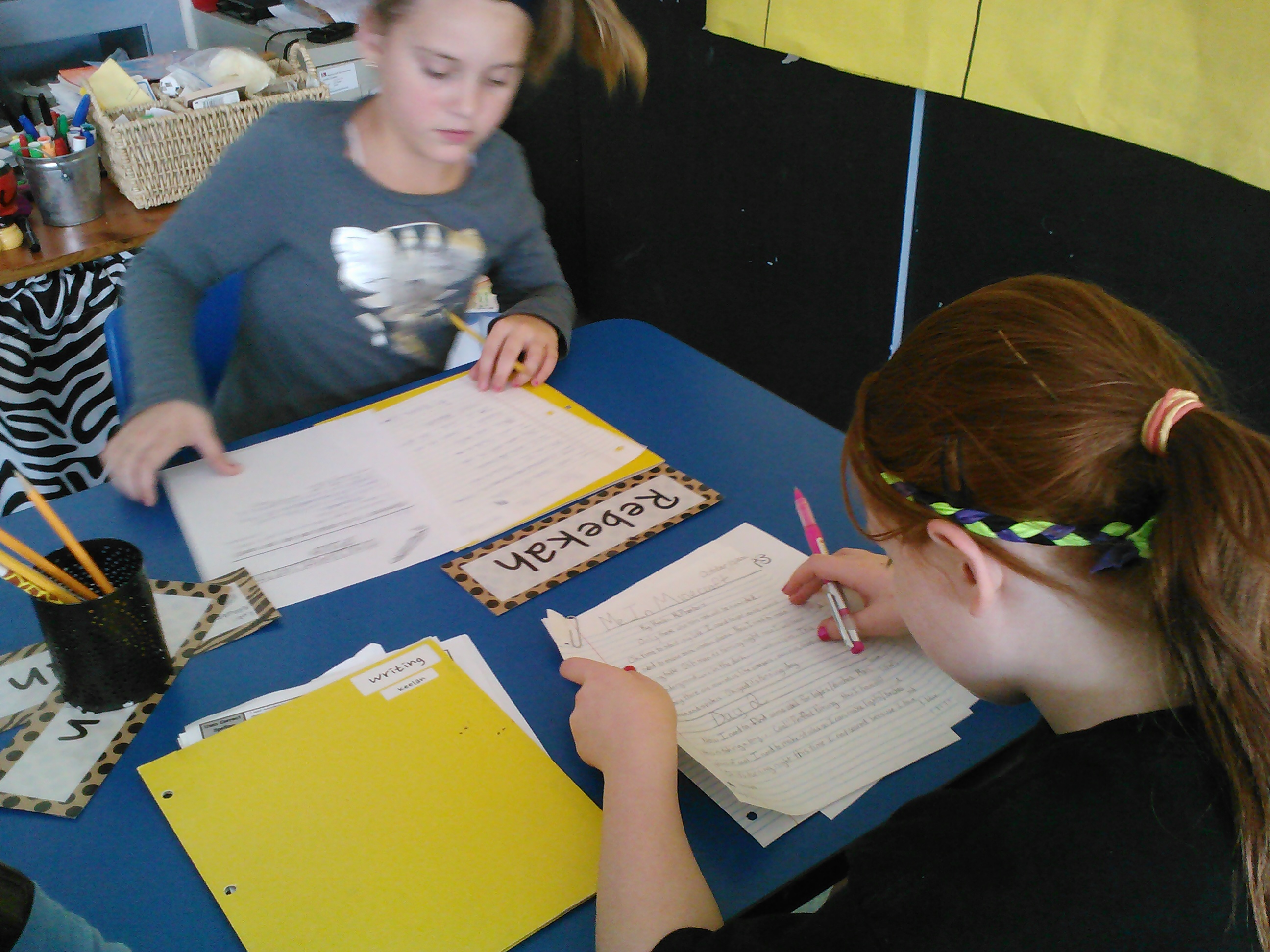
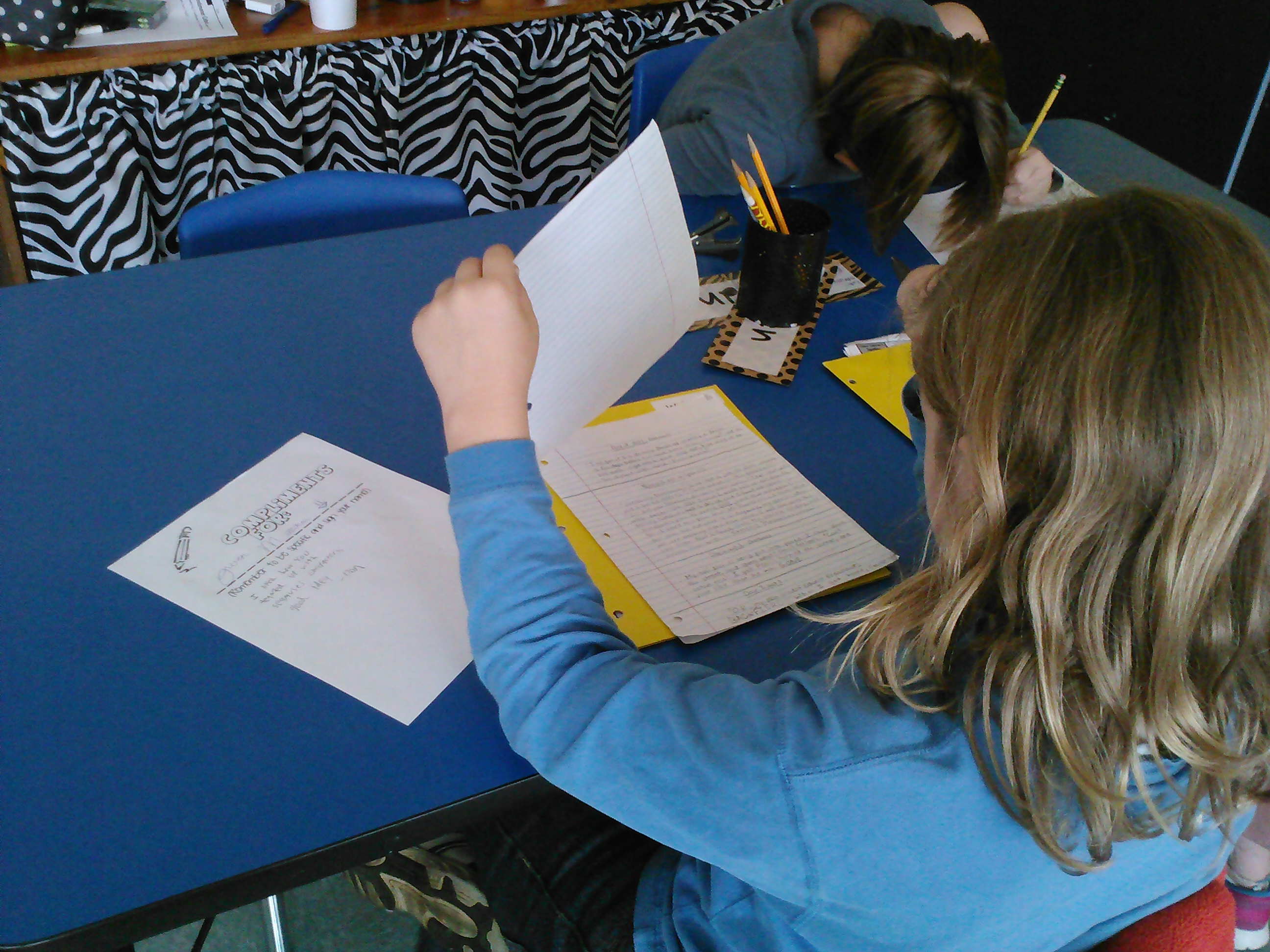
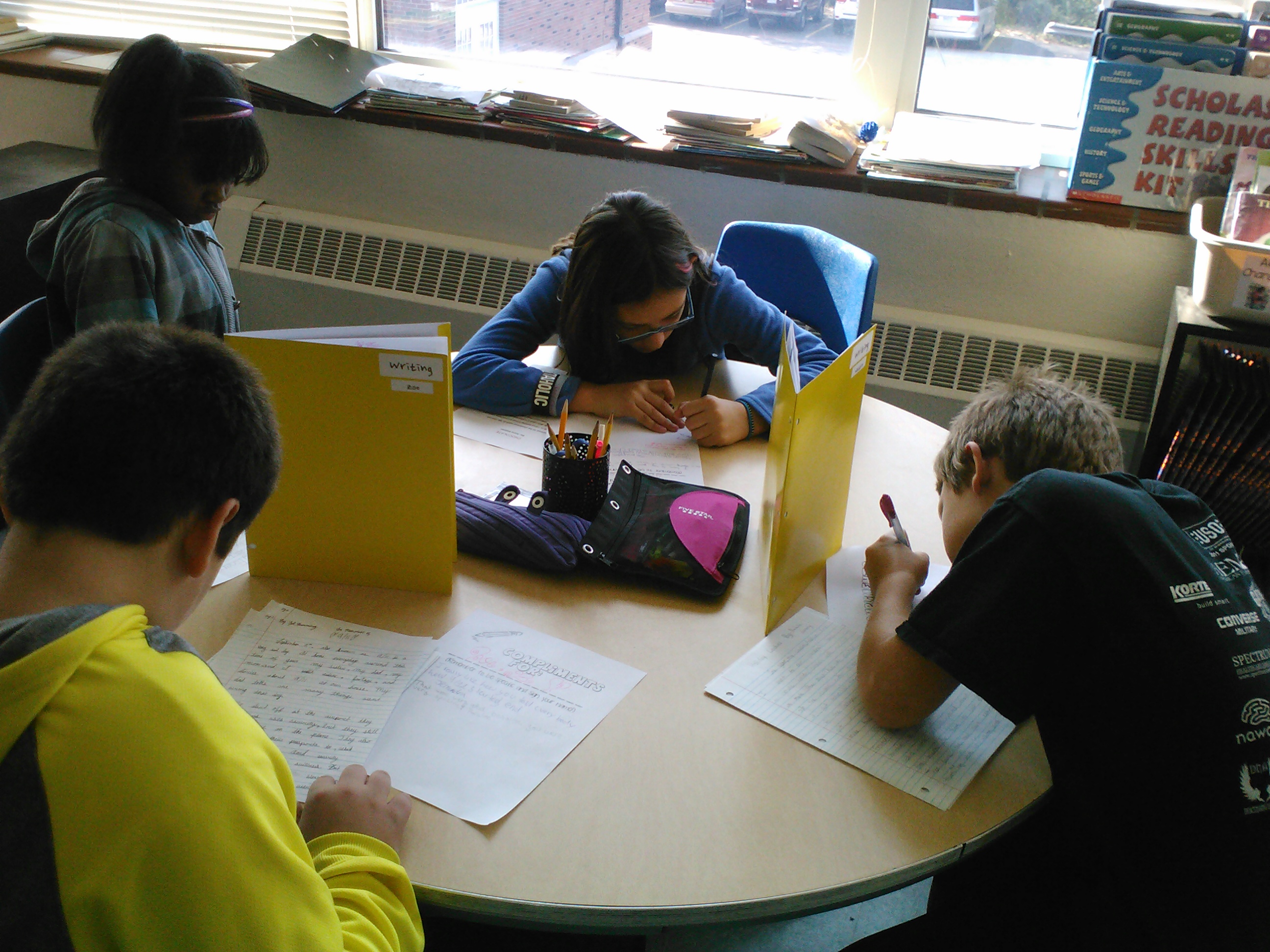
So when the “exhibits” were set up and the music started playing, Rm. 202 writers spent the next bit (well actually it was more like 30 minutes or more!) reading the work of others and leaving kind words for our friends.  If only you could have heard how amazingly quiet it was the room during this time!  Writing is important business in our class, and we took this (as we do most things!) very seriously. 🙂

Each person set out their writing piece, along with a compliment sheet for others to write on. 🙂

I love how they’re all sitting with their heads in their hands.  Something about that seems like they’re deep in thought, doing some serious business!

How do you celebrate writing? 🙂

Math Warm-ups Nov. 5-9, 2012

This was a slim week for math warm-ups.  We didn’t have school on Tuesday because of Election Day, and then I guess since we were in between units, there were really any good questions that came to mind.  That being said, I feel like I should apologize for these; they may not be very helpful to those of you who were here to get ideas.  Next will be better.  I promise. 🙂


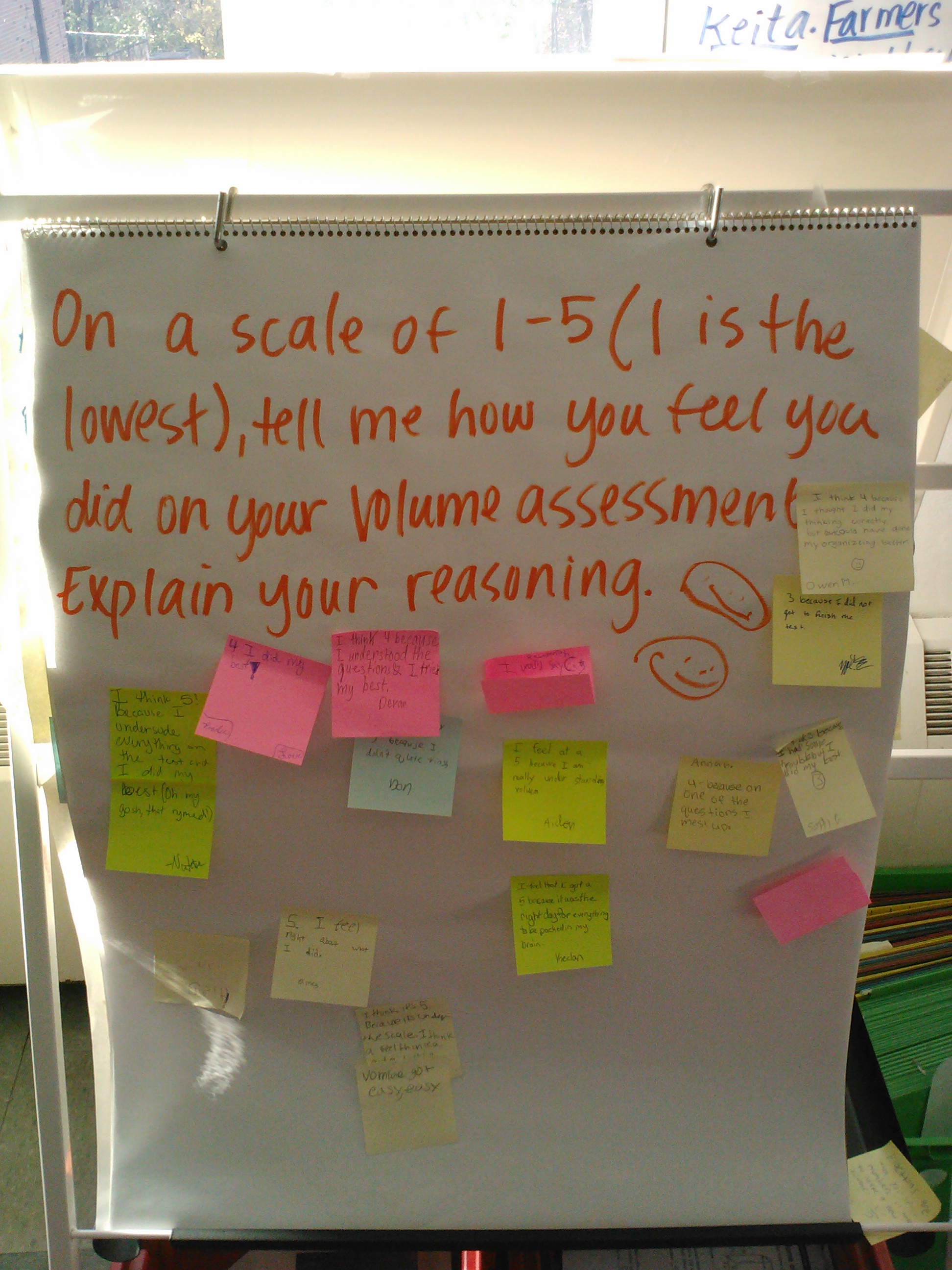
I think this one was from Monday.  It was related to an assessment that my friends had finished the week before.  I was out of the classroom for a meeting when they did it, so partly this question was to get a better feel for how they perceived their performance on it.  I’m glad I asked, because their words told me more than the note from the sub about how it had gone.  They felt better than it had at first seemed they did.

Image


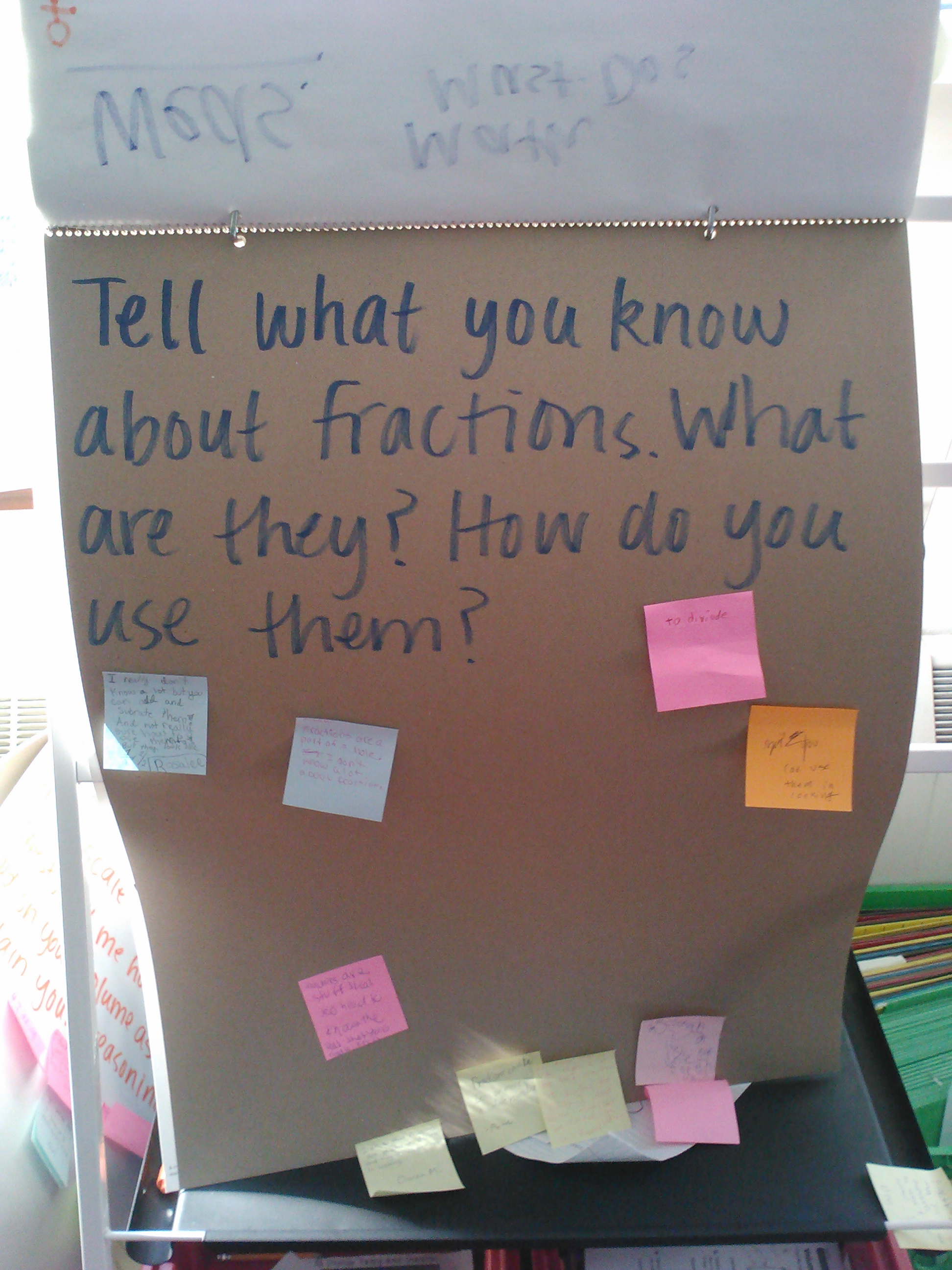
I don’t think we had another warm-up until Friday, and this was it.  At the beginning of a unit, I usually ask this same type of tell-me-what-you-already-know question. 🙂

Image

Thanks for reading!